
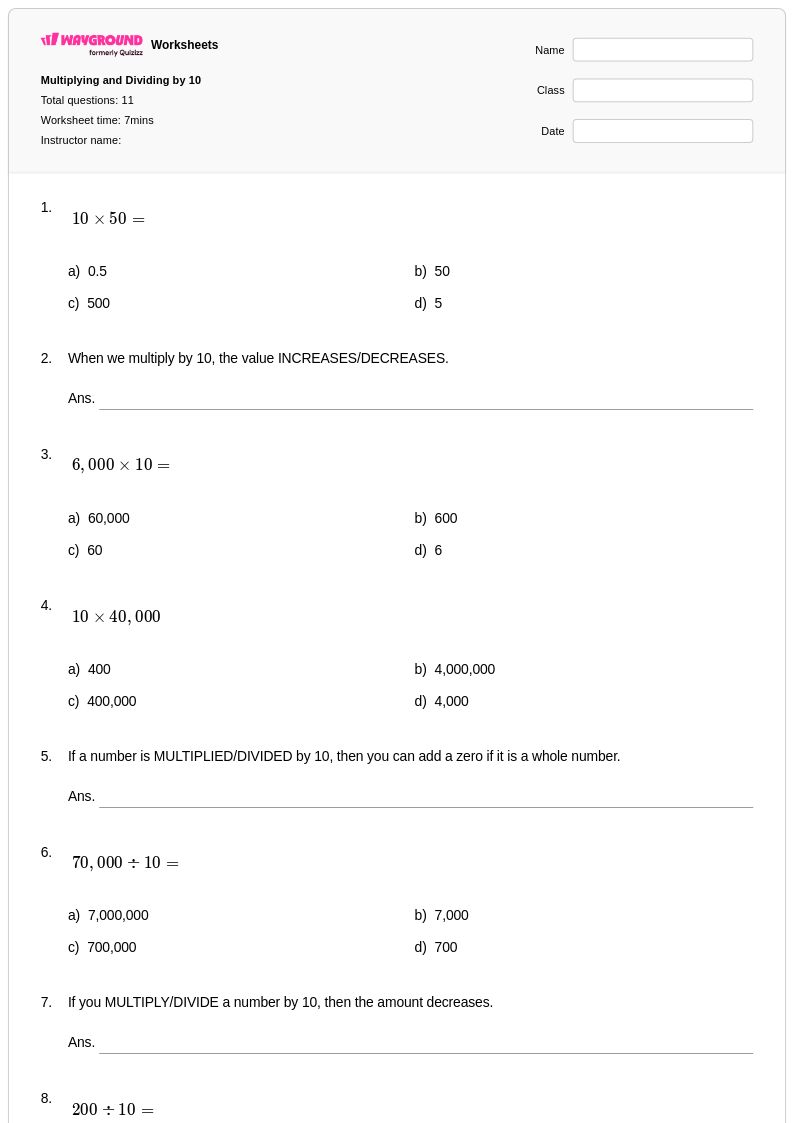
11 Q
5th
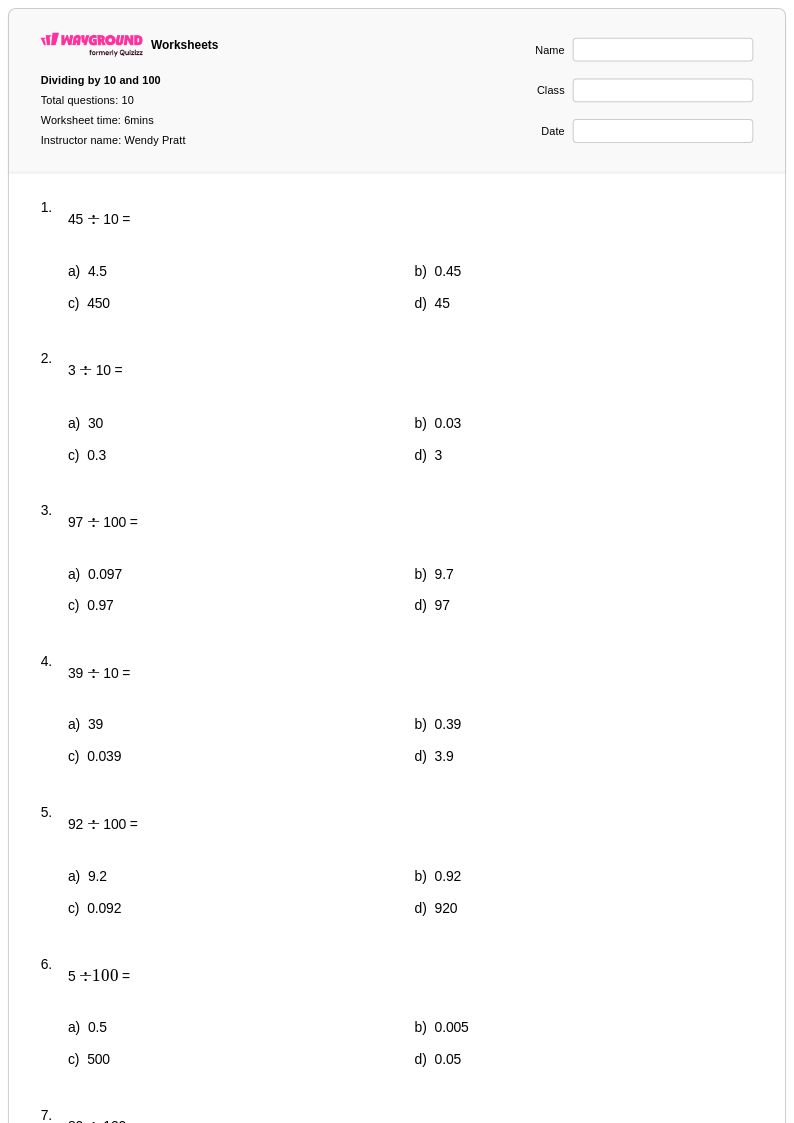
10 Q
4th
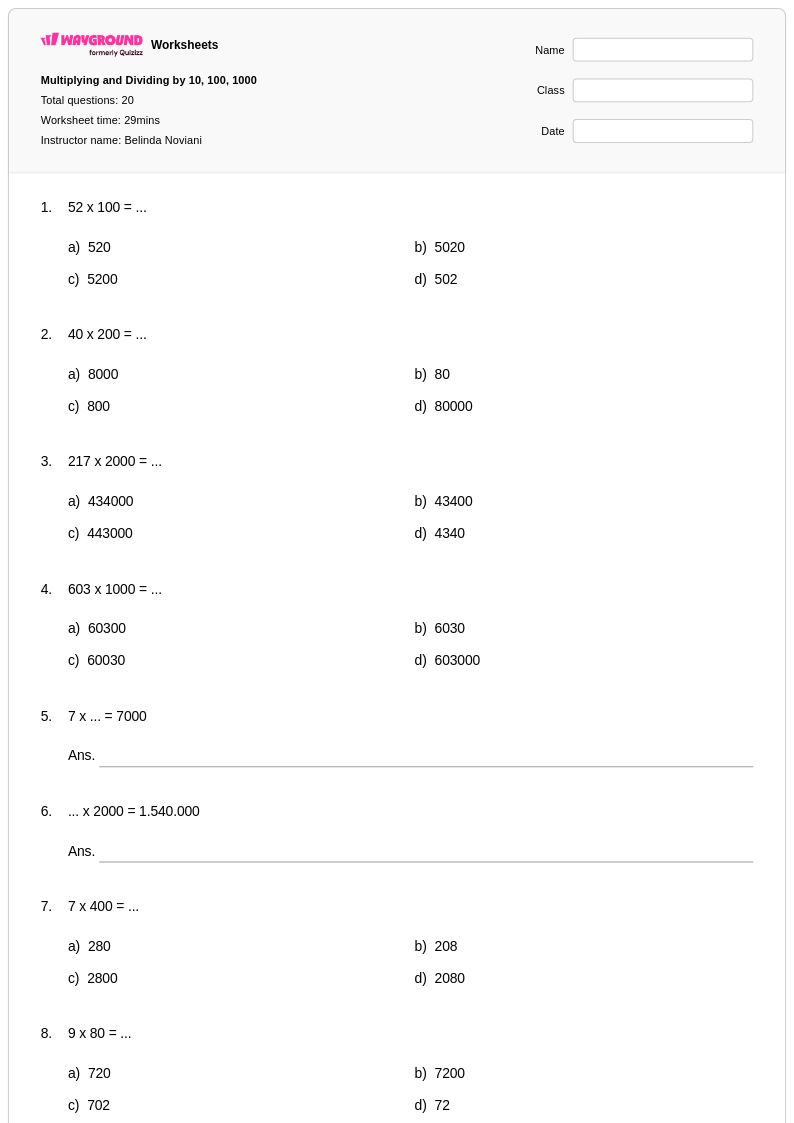
20 Q
5th
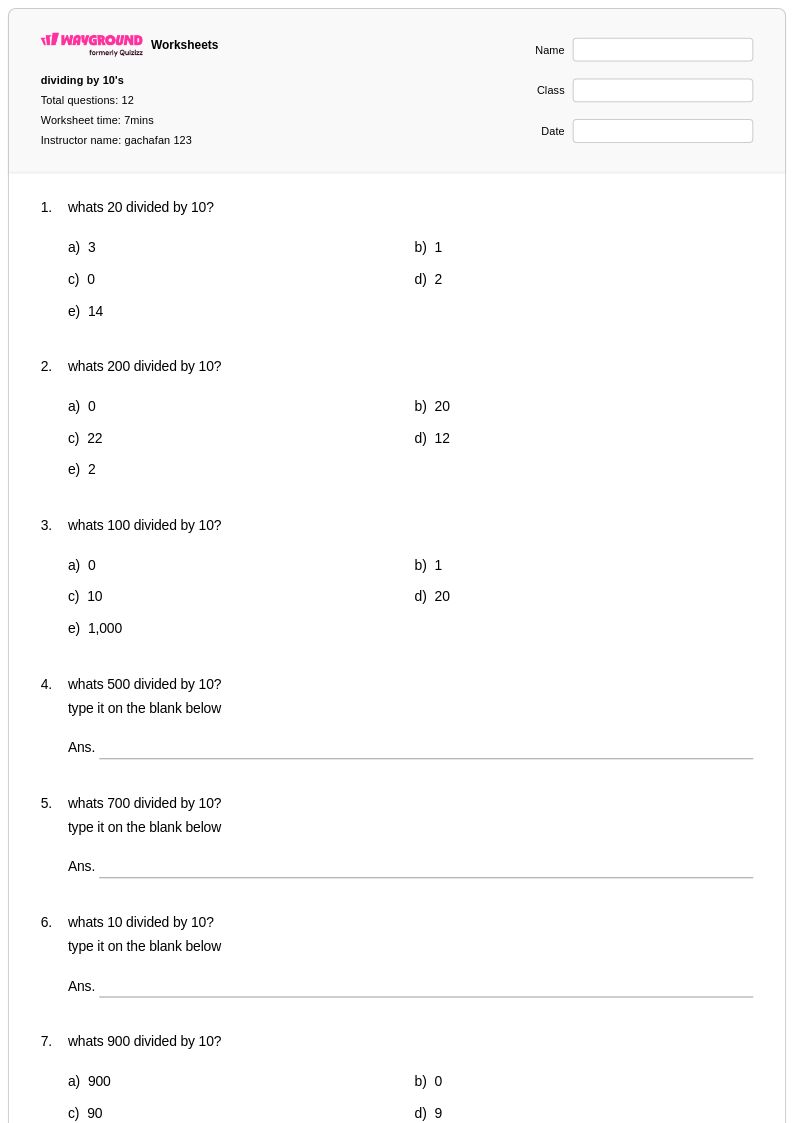
12 Q
3rd
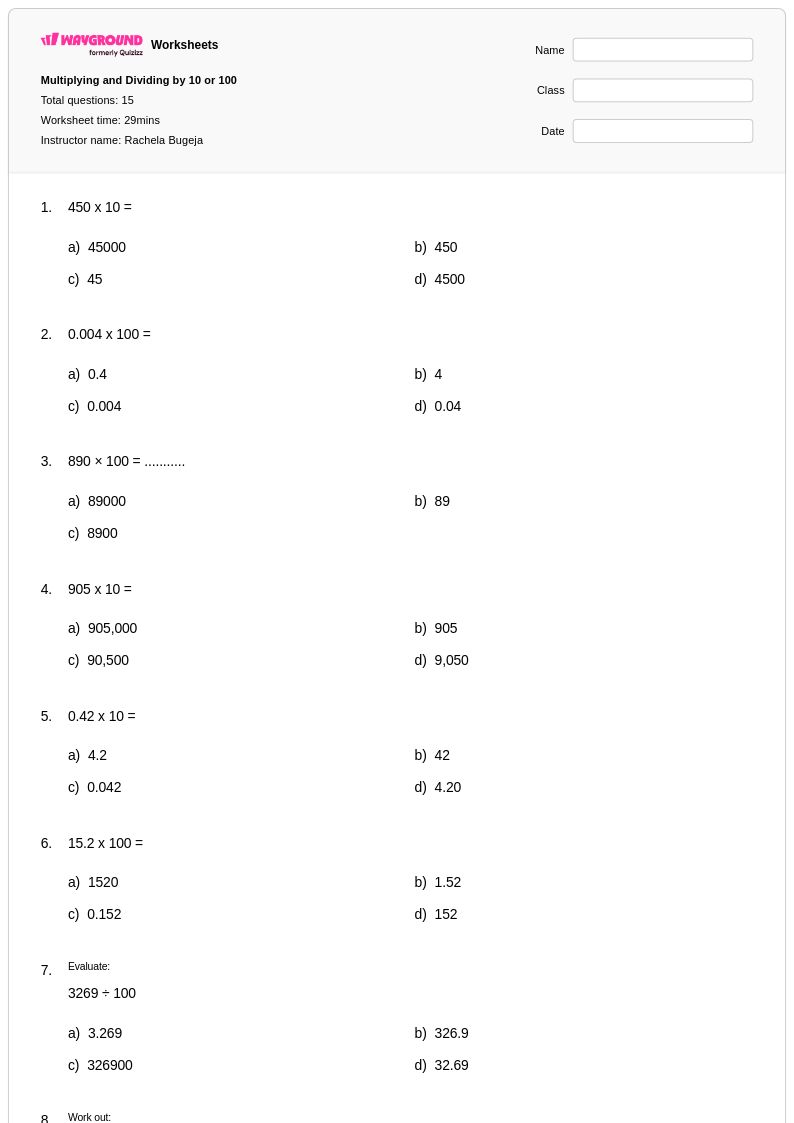
15 Q
5th
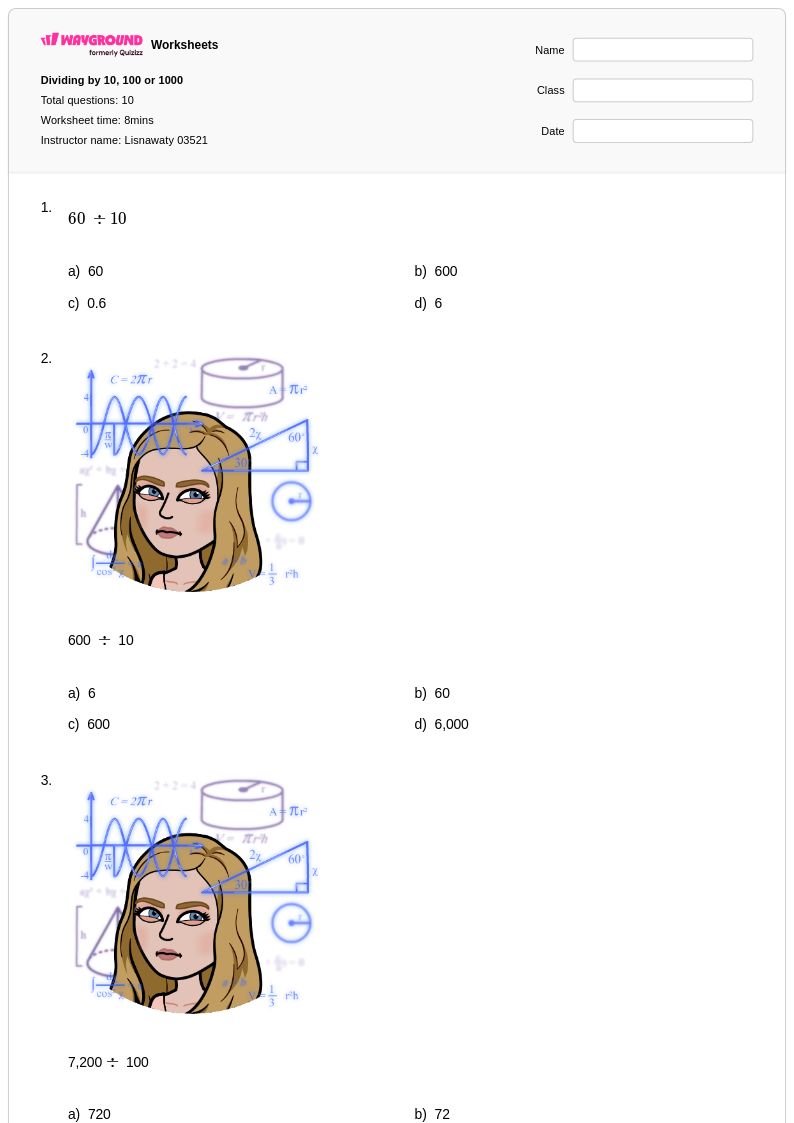
10 Q
3rd
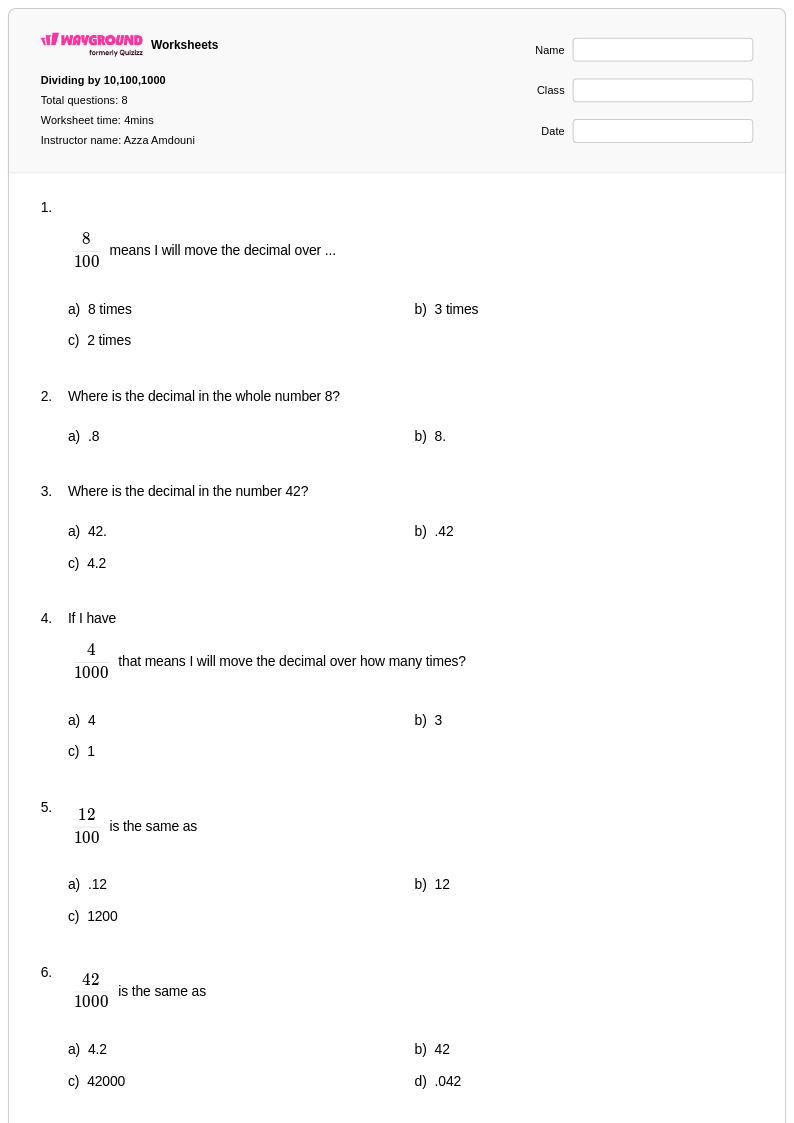
8 Q
1st - 5th
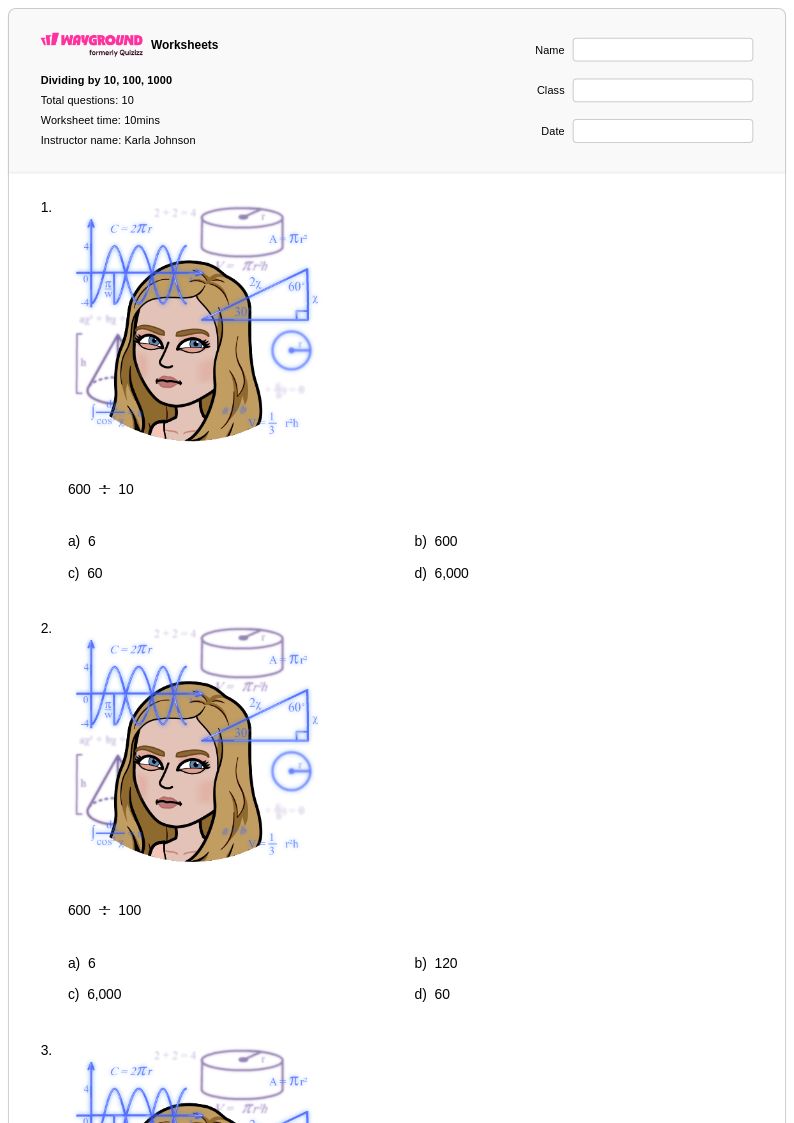
10 Q
4th - 5th
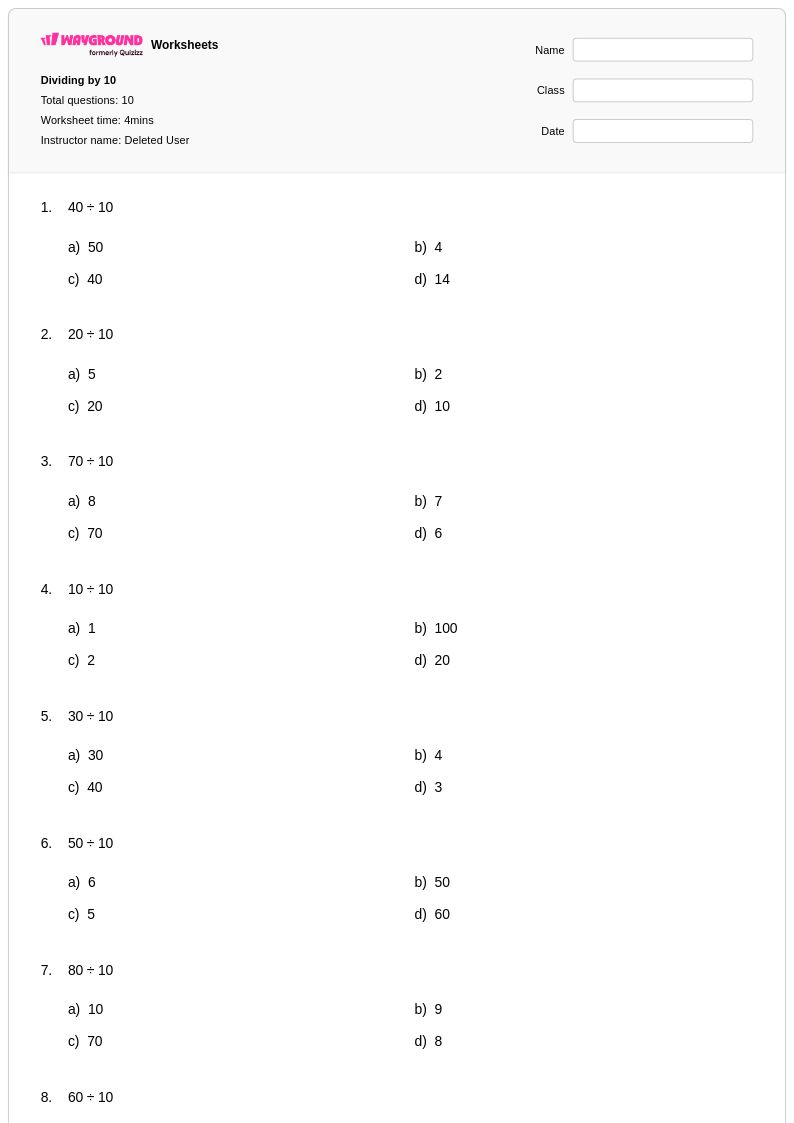
10 Q
3rd
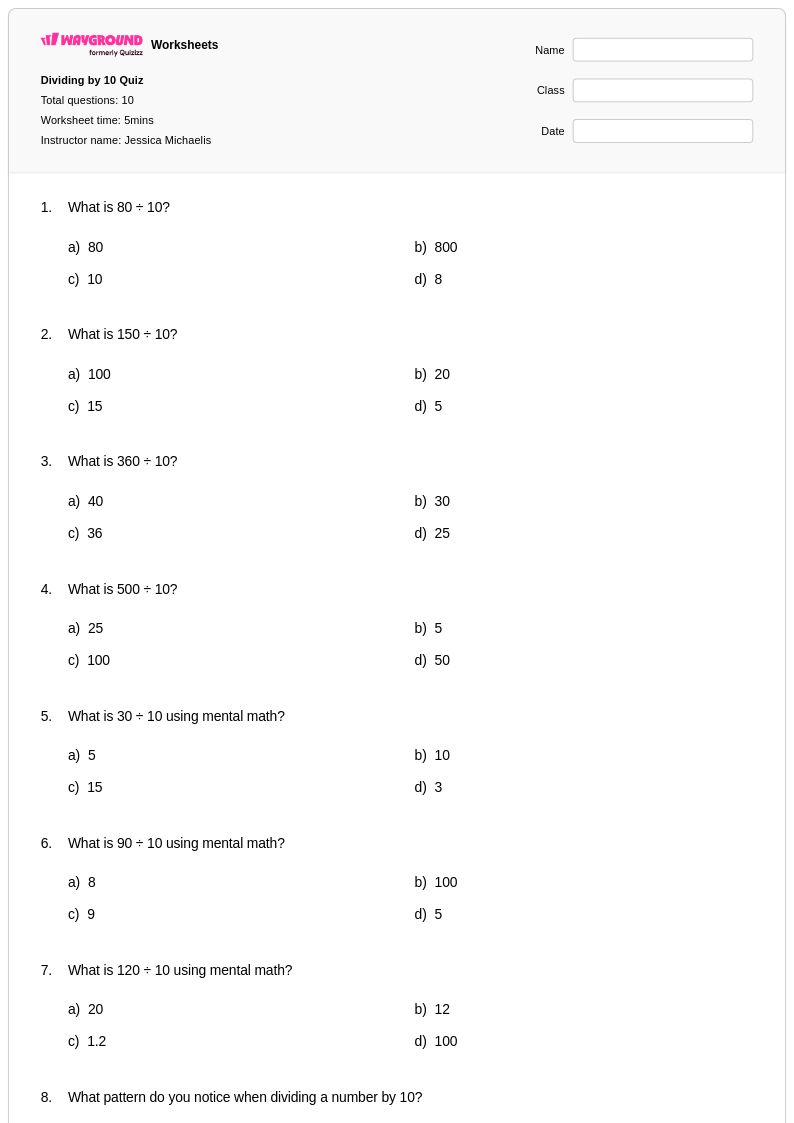
10 Q
5th
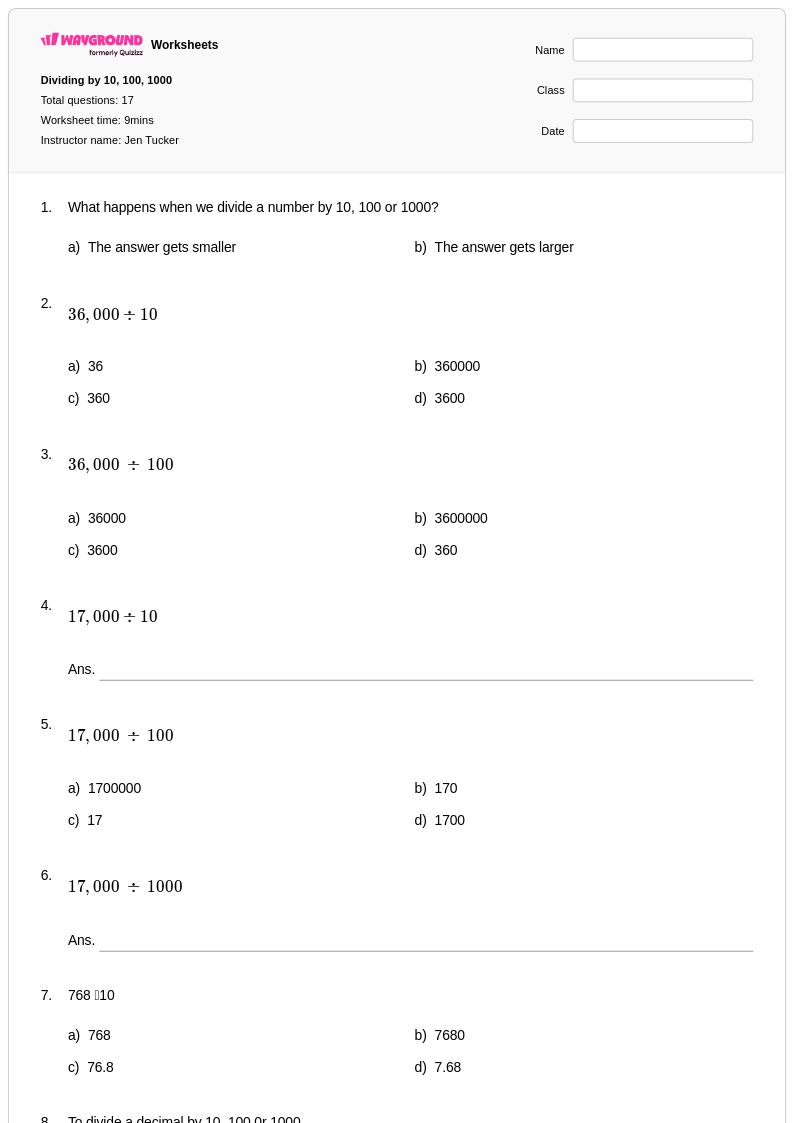
17 Q
6th - 8th
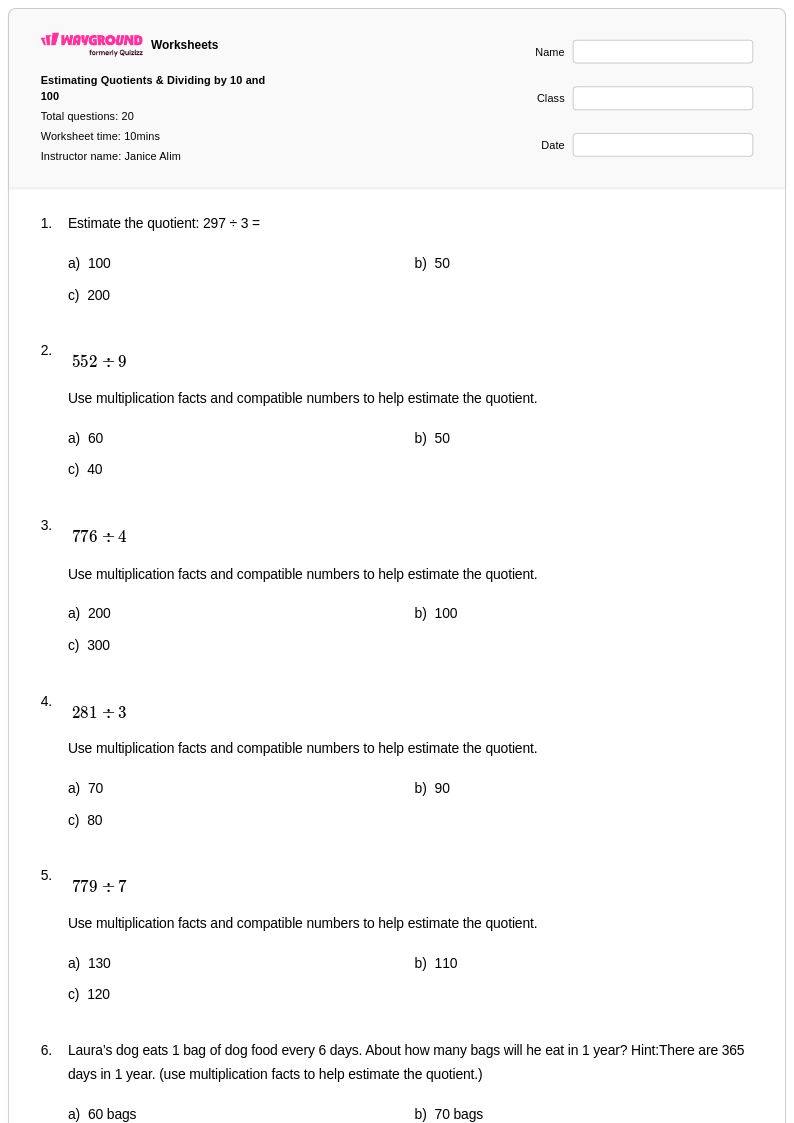
20 Q
3rd
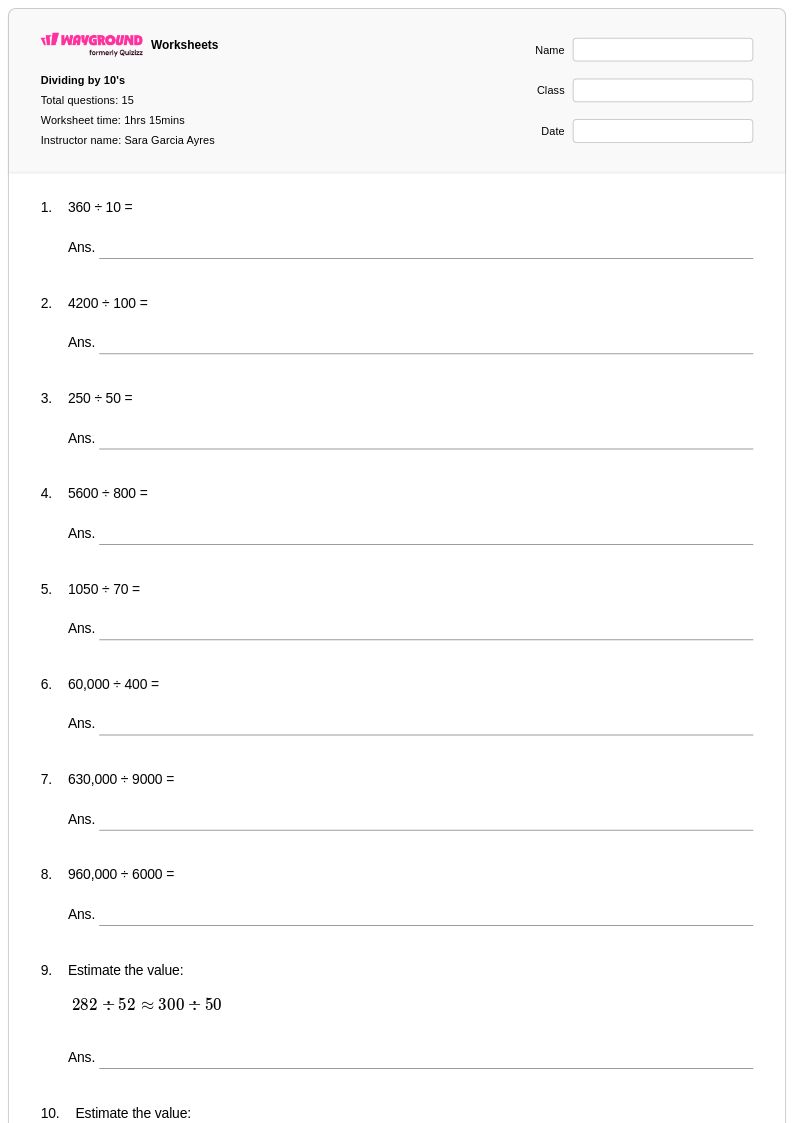
15 Q
5th
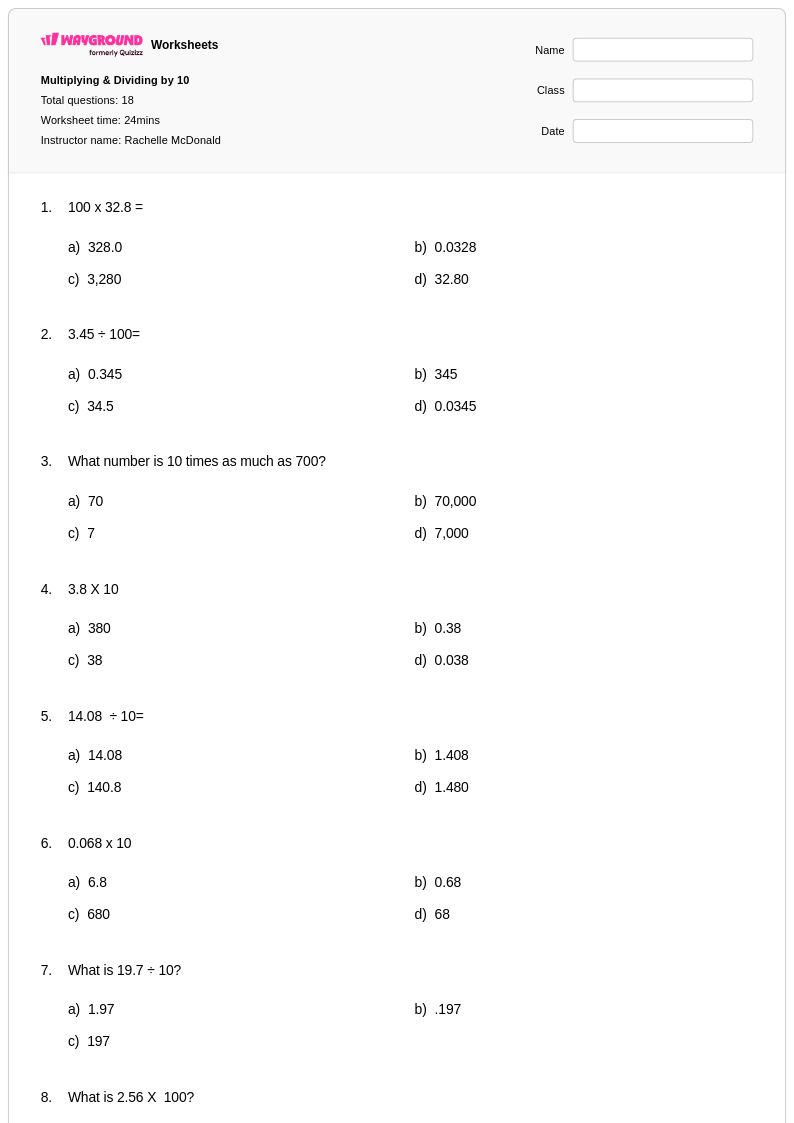
18 Q
5th
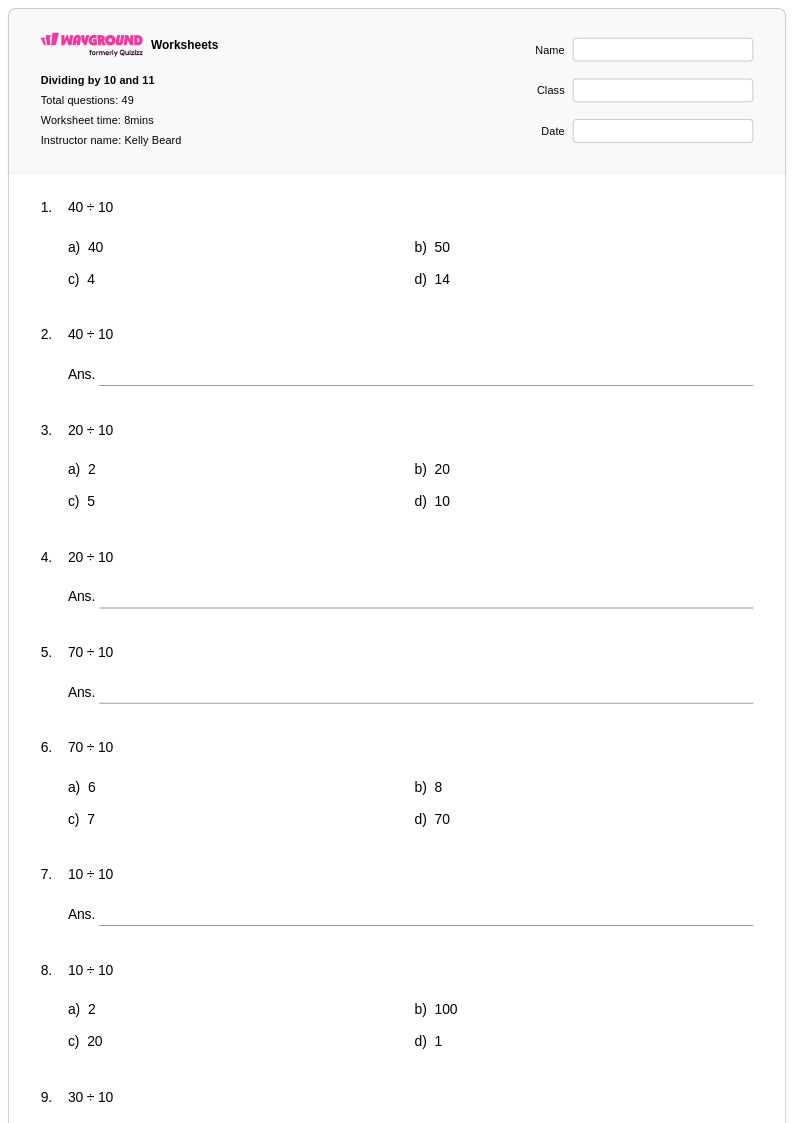
49 Q
3rd - 5th
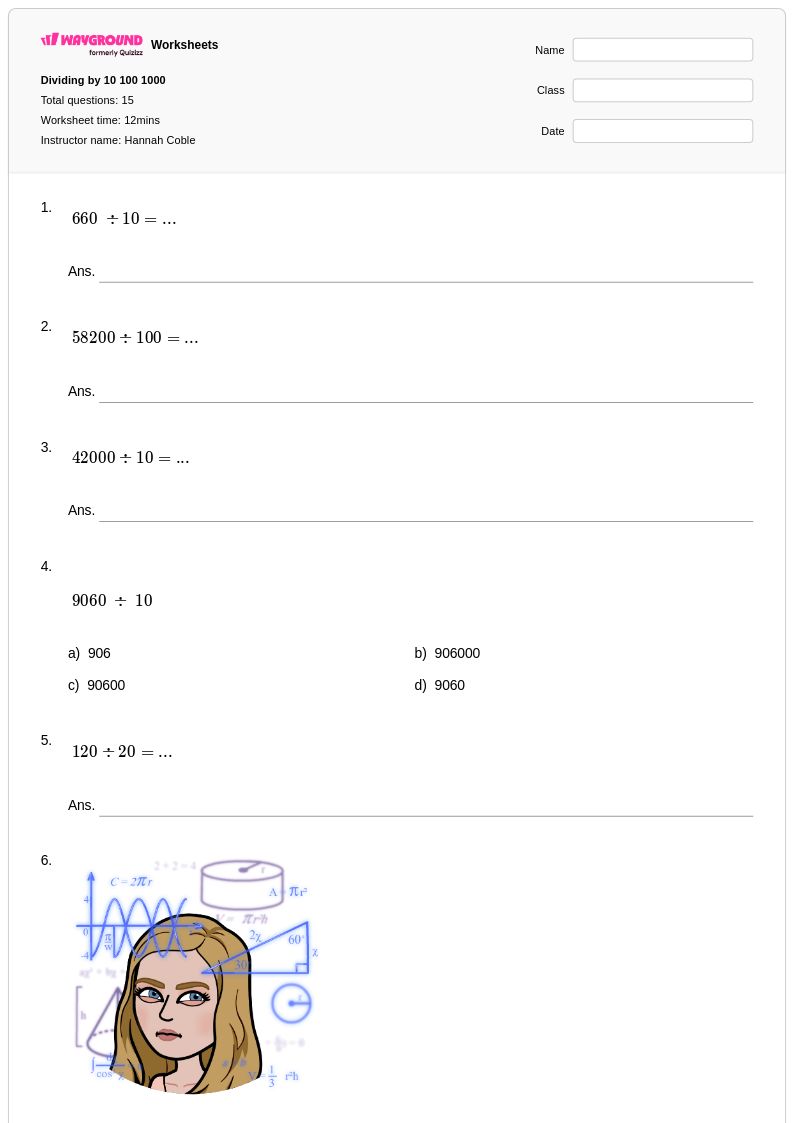
15 Q
5th
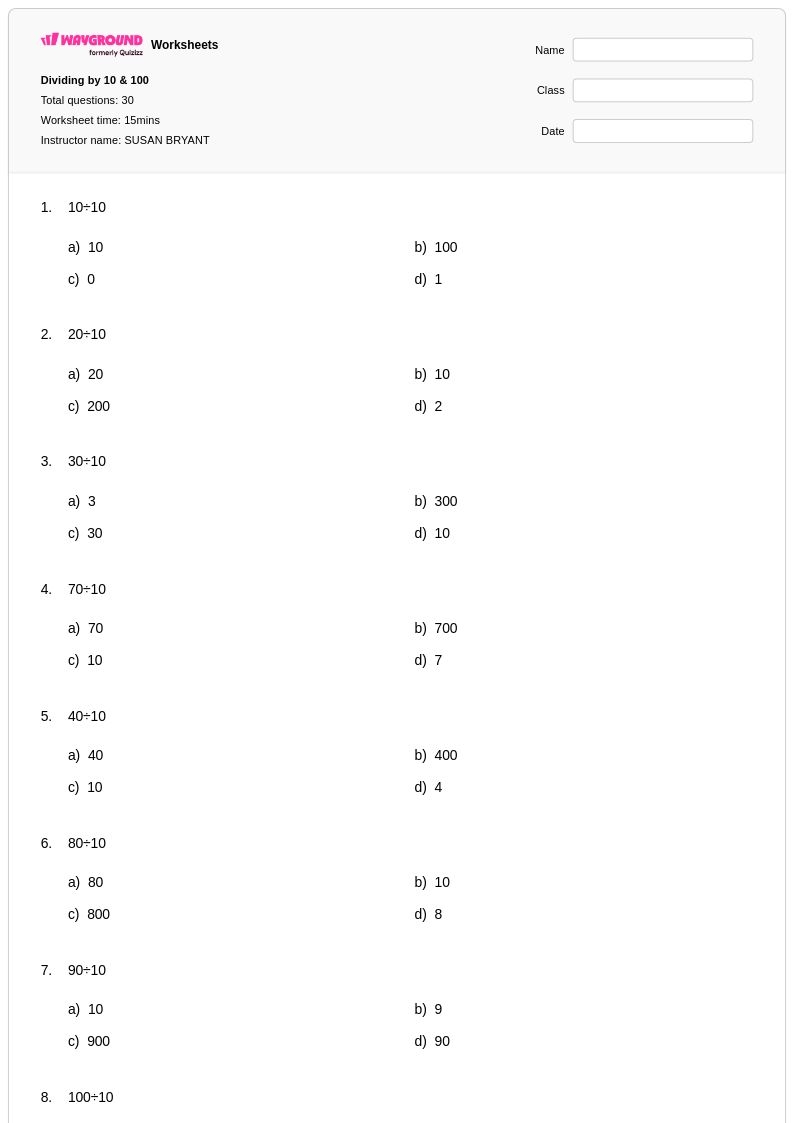
30 Q
4th

12 Q
5th
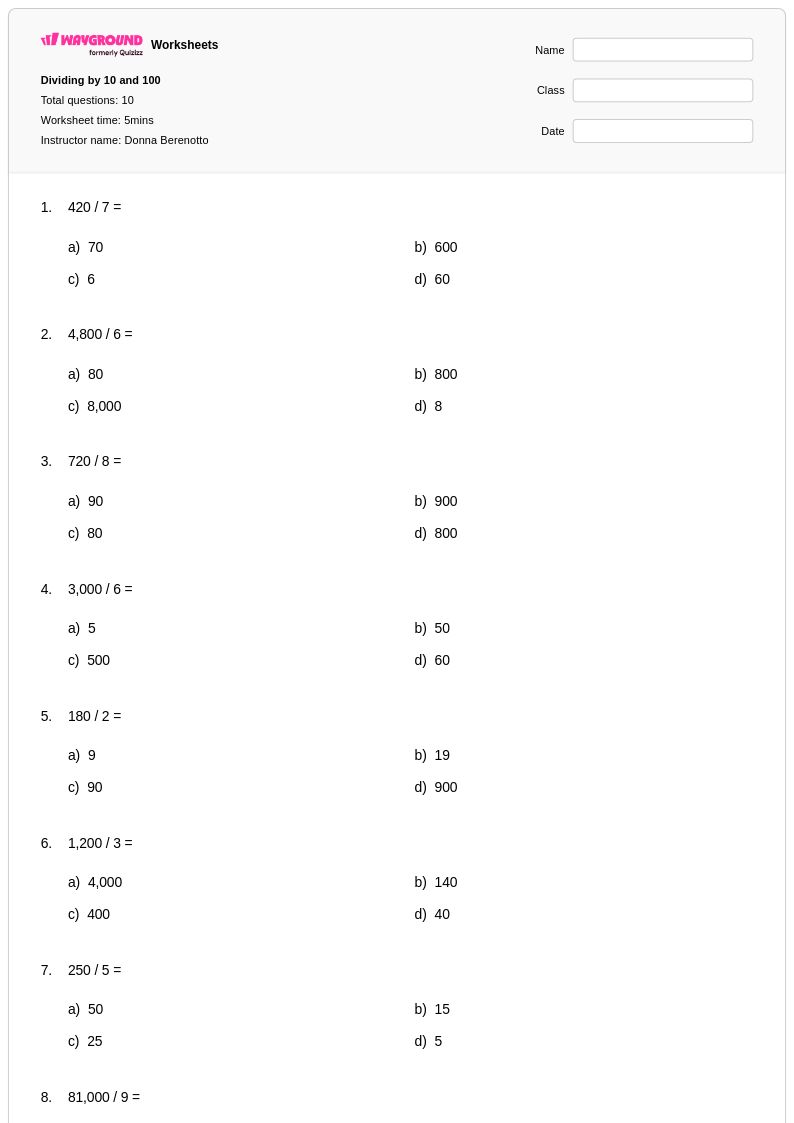
10 Q
4th
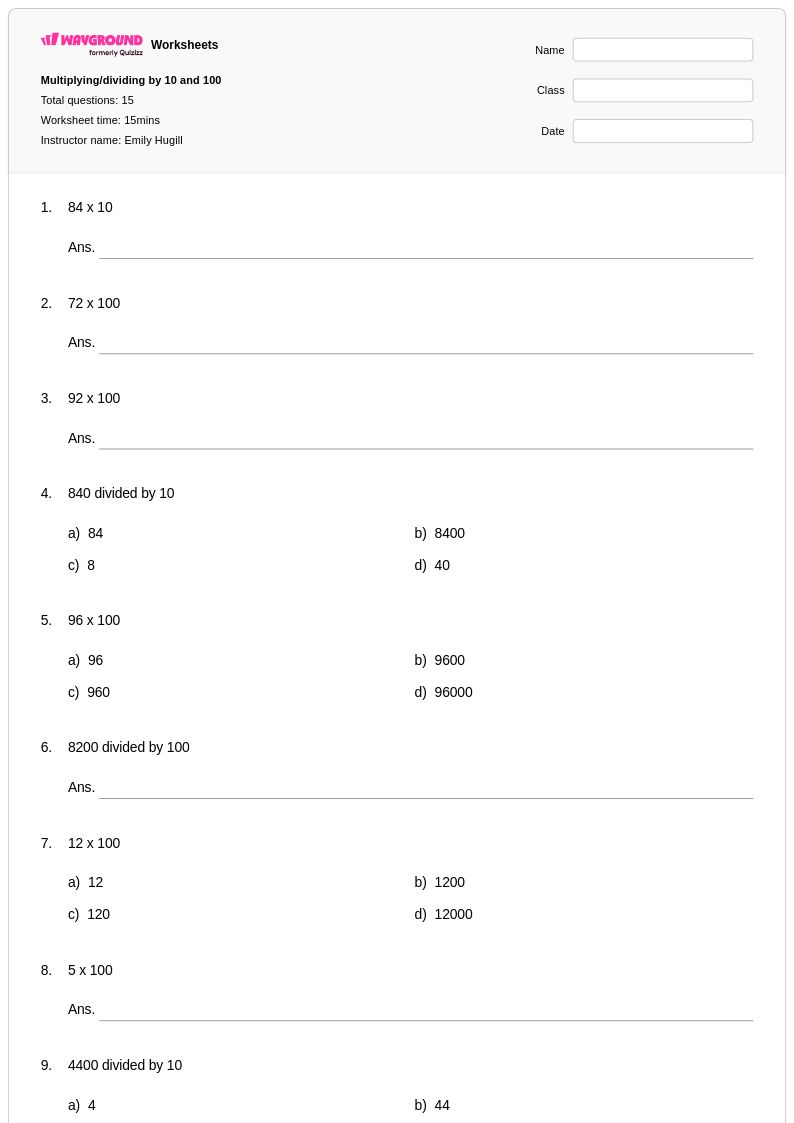
15 Q
2nd - 3rd
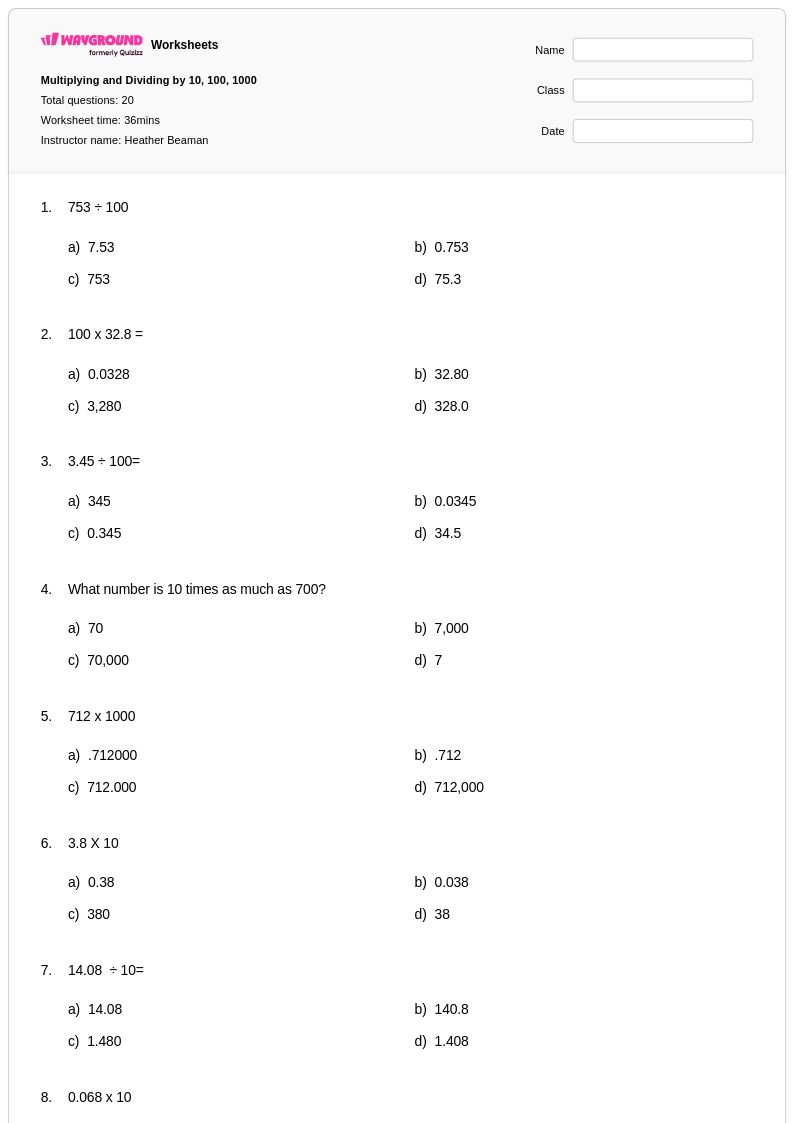
20 Q
4th - 6th
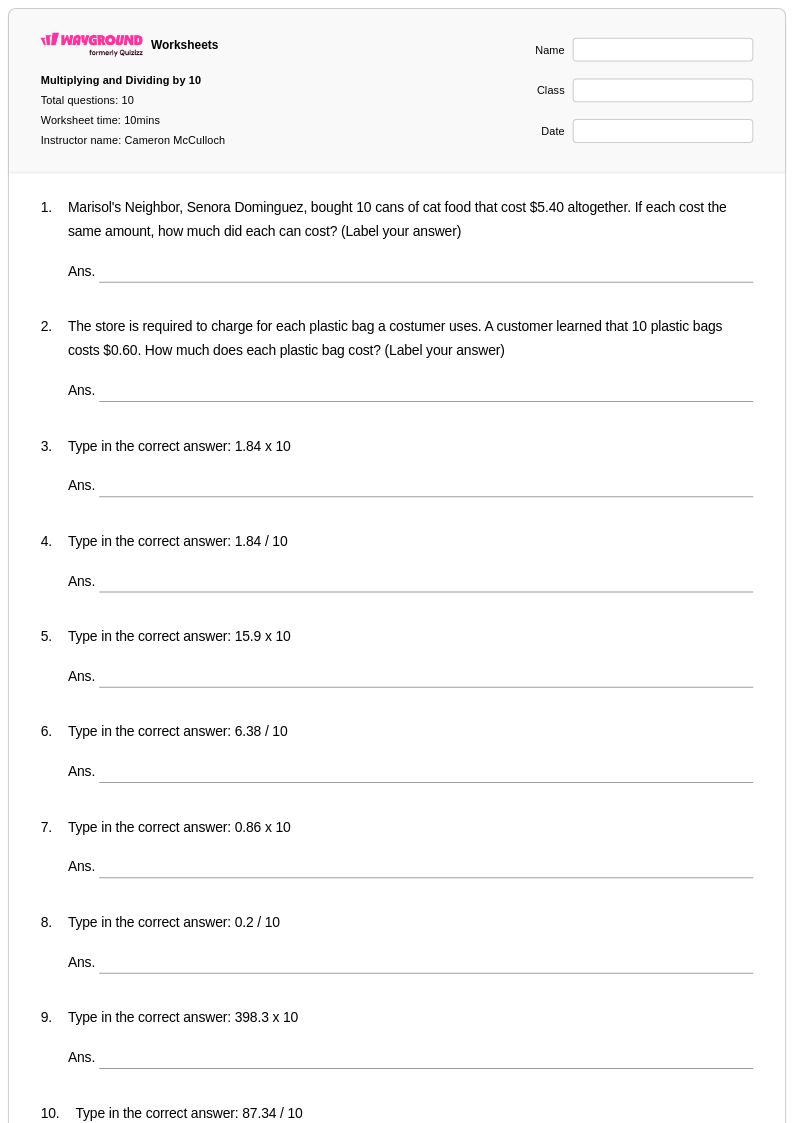
10 Q
5th
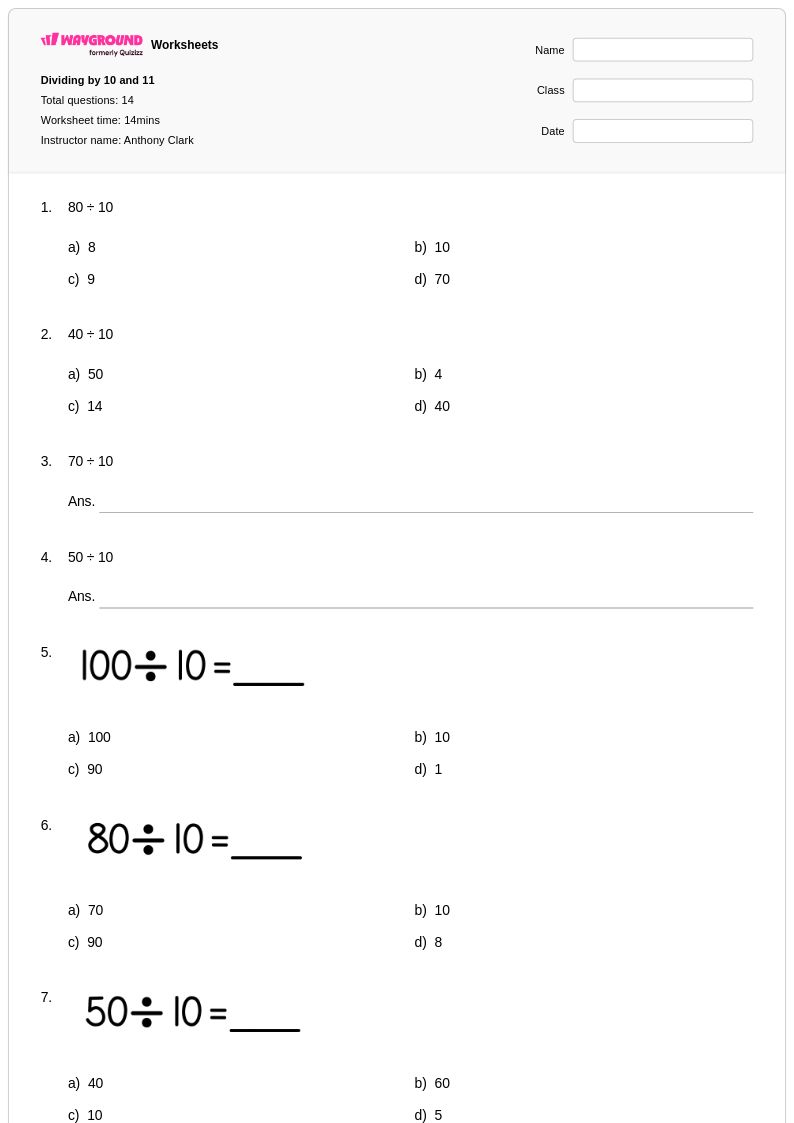
14 Q
6th - Uni
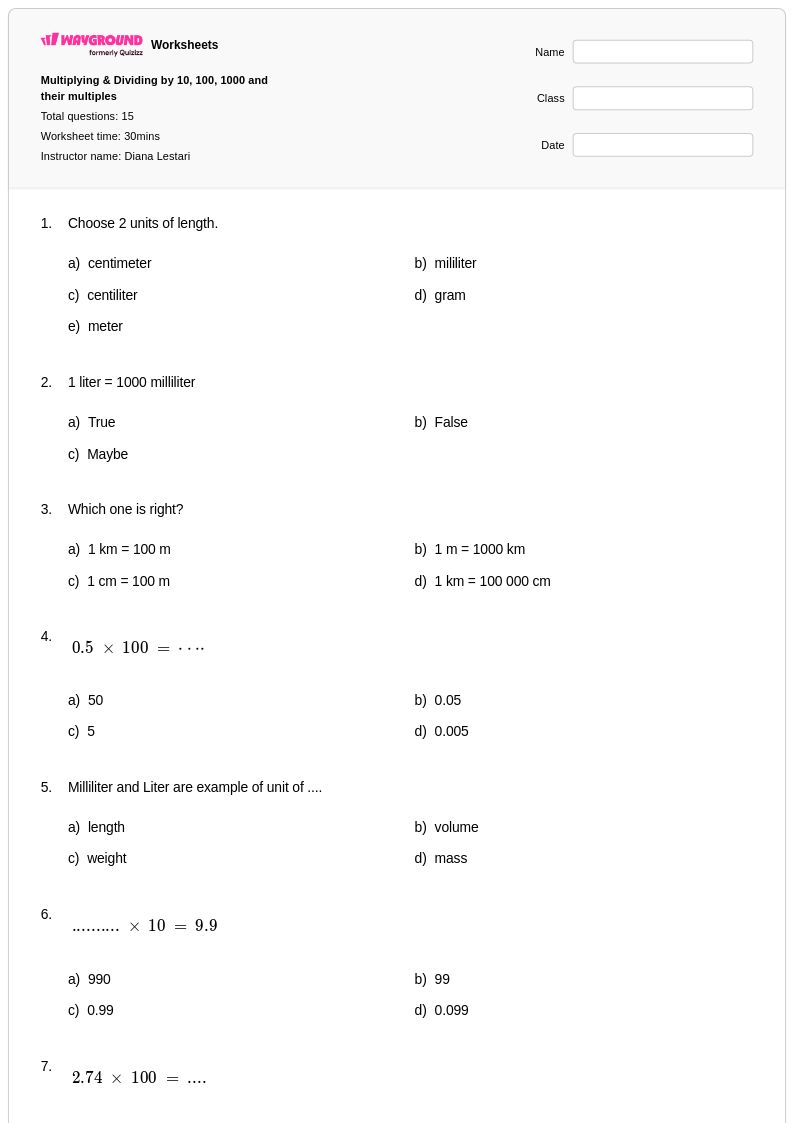
15 Q
5th
Explore Dividing by 10 Worksheets by Grades
Explore Other Subject Worksheets for kindergarten
Explore printable Dividing by 10 worksheets for Kindergarten
Dividing by 10 worksheets for kindergarten students provide foundational exposure to early division concepts through age-appropriate visual representations and manipulative-based activities. These educational resources from Wayground (formerly Quizizz) introduce young learners to the concept of equal sharing and grouping using concrete objects, pictures, and simple scenarios that make abstract mathematical thinking accessible. The practice problems focus on hands-on experiences where students can physically separate sets of 10 items into equal groups, building essential number sense and early algebraic thinking skills. Each worksheet includes clear visual cues and scaffolded exercises that progress from concrete manipulation to pictorial representation, with comprehensive answer keys that help educators assess student understanding. These free printable resources serve as valuable supplements to classroom instruction, offering kindergarten teachers structured practice materials that align with developmental mathematics standards for early learners.
Wayground (formerly Quizizz) supports kindergarten educators with an extensive collection of teacher-created worksheets specifically designed for introducing division concepts to young learners. The platform's robust search and filtering capabilities allow teachers to quickly locate age-appropriate dividing by 10 materials that match their students' developmental needs and learning objectives. These differentiation tools enable educators to customize worksheets for various ability levels within their kindergarten classrooms, ensuring that both emerging mathematicians and more advanced students receive appropriate challenges. The resources are available in both printable pdf formats for traditional classroom use and digital formats for technology-enhanced learning environments. Teachers can effectively utilize these materials for initial skill introduction, targeted remediation for students who need additional support with early division concepts, and enrichment activities that extend learning for students ready to explore more complex mathematical relationships involving groups of ten.
FAQs
How do you introduce division concepts to kindergarteners?
Is dividing by 10 actually appropriate for kindergarten?
What do kindergarten dividing by 10 worksheets look like?
How do I use these worksheets with kindergarteners?
How can I support diverse learners in kindergarten with these worksheets?