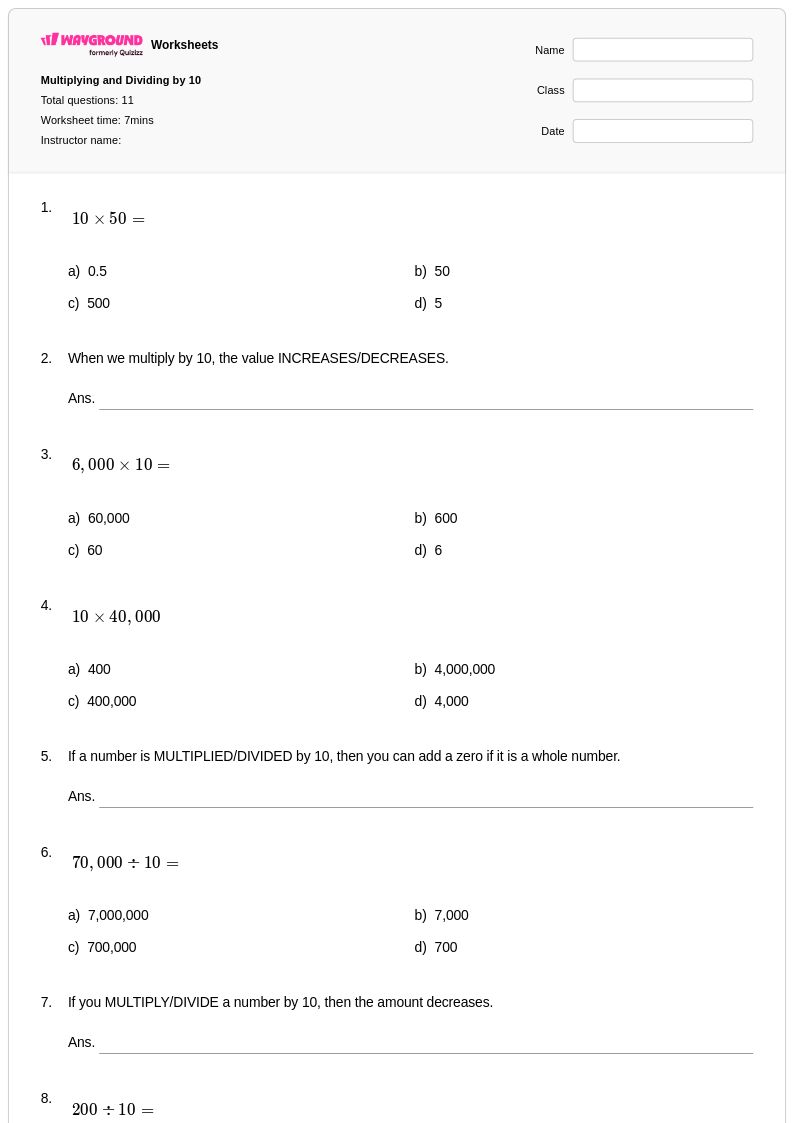
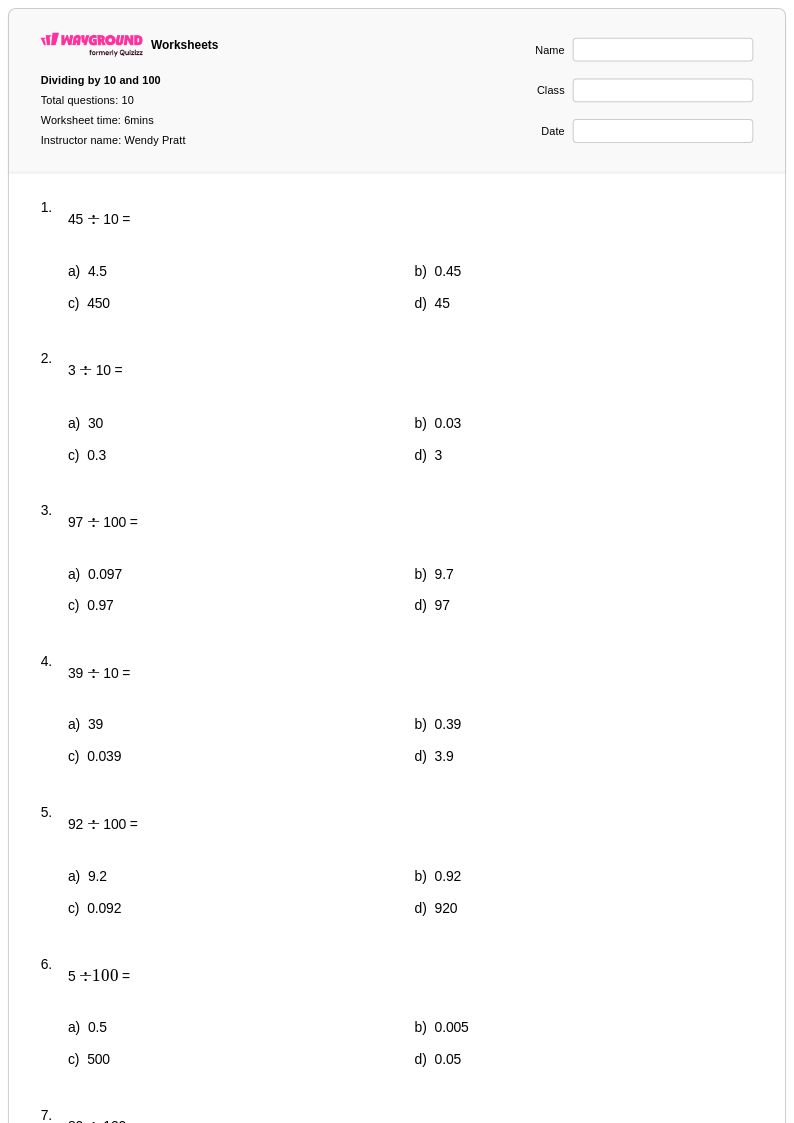
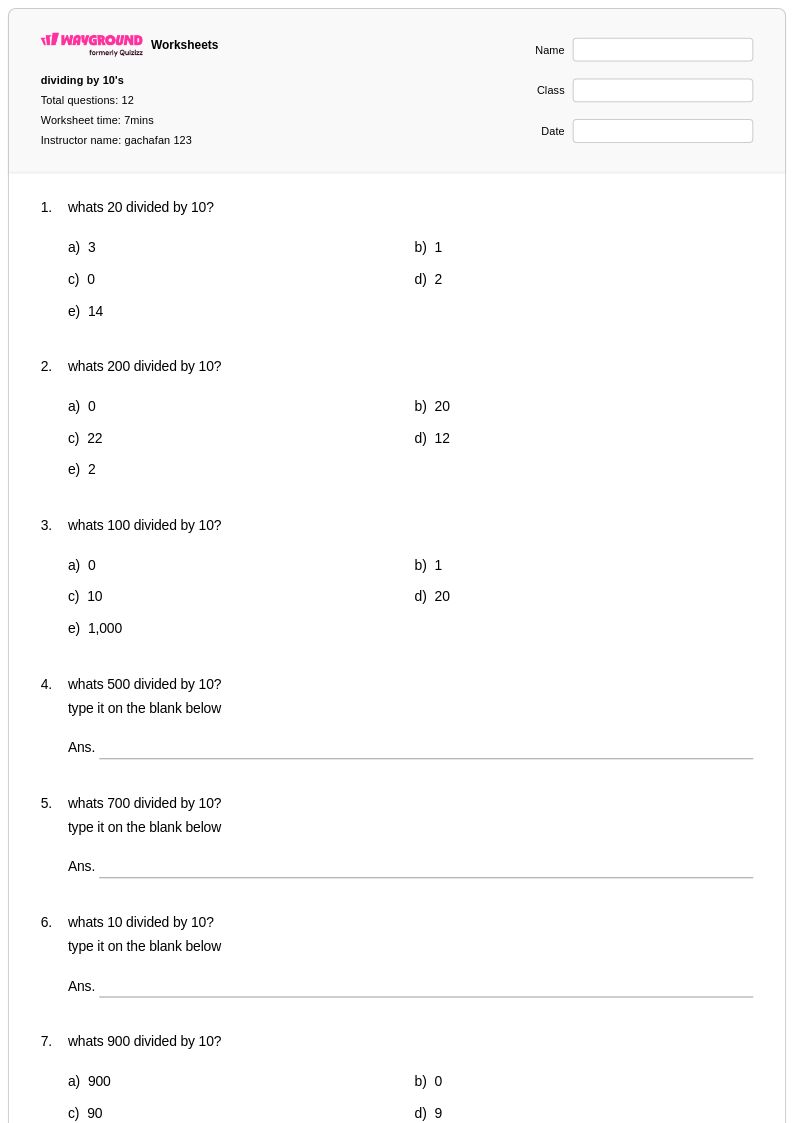
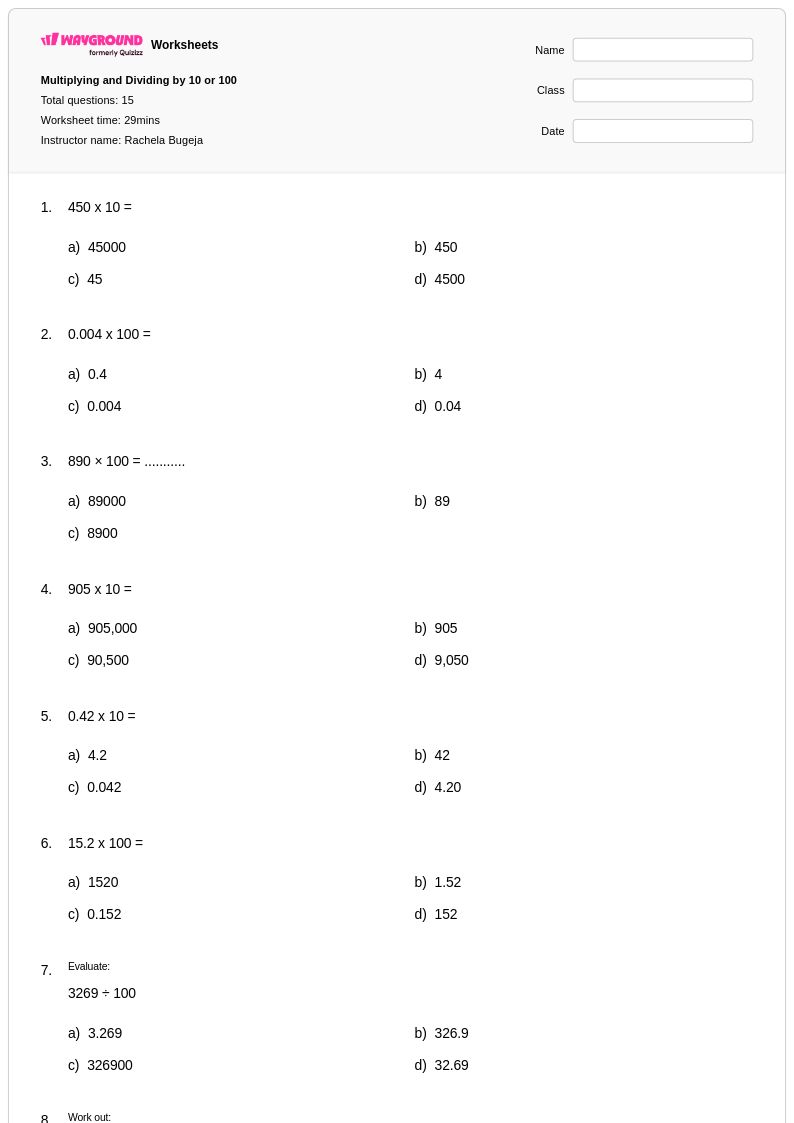
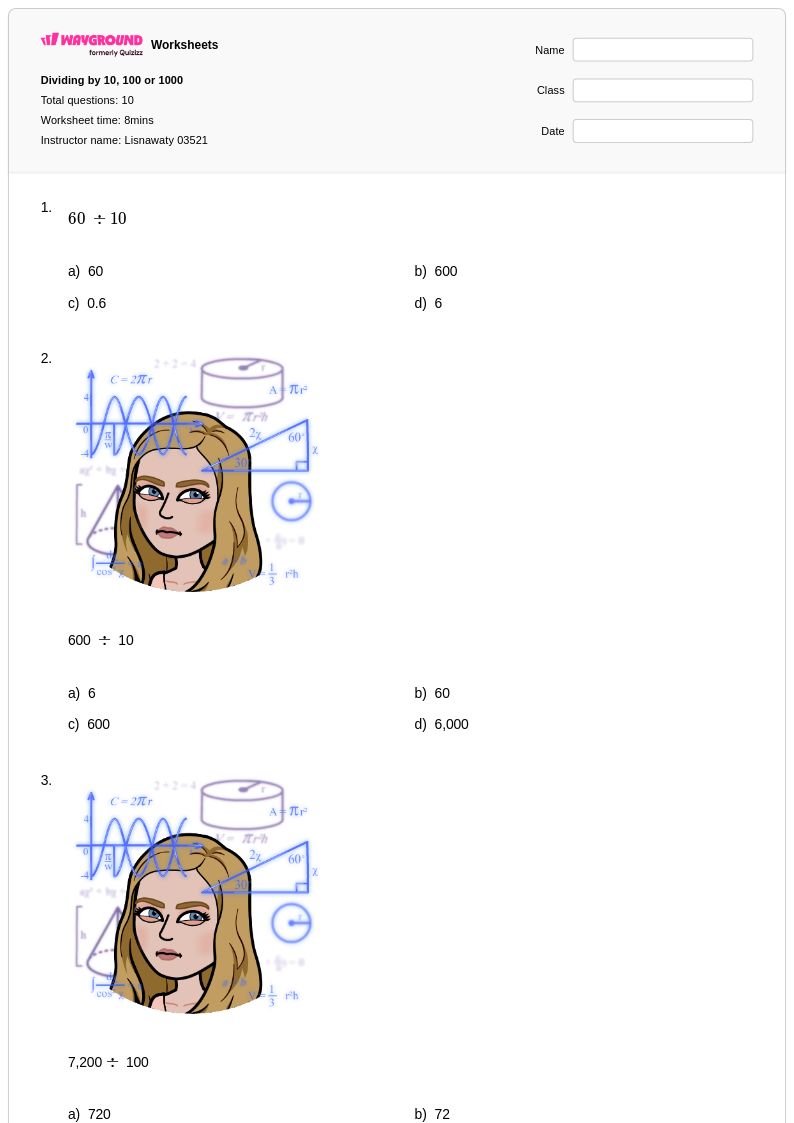
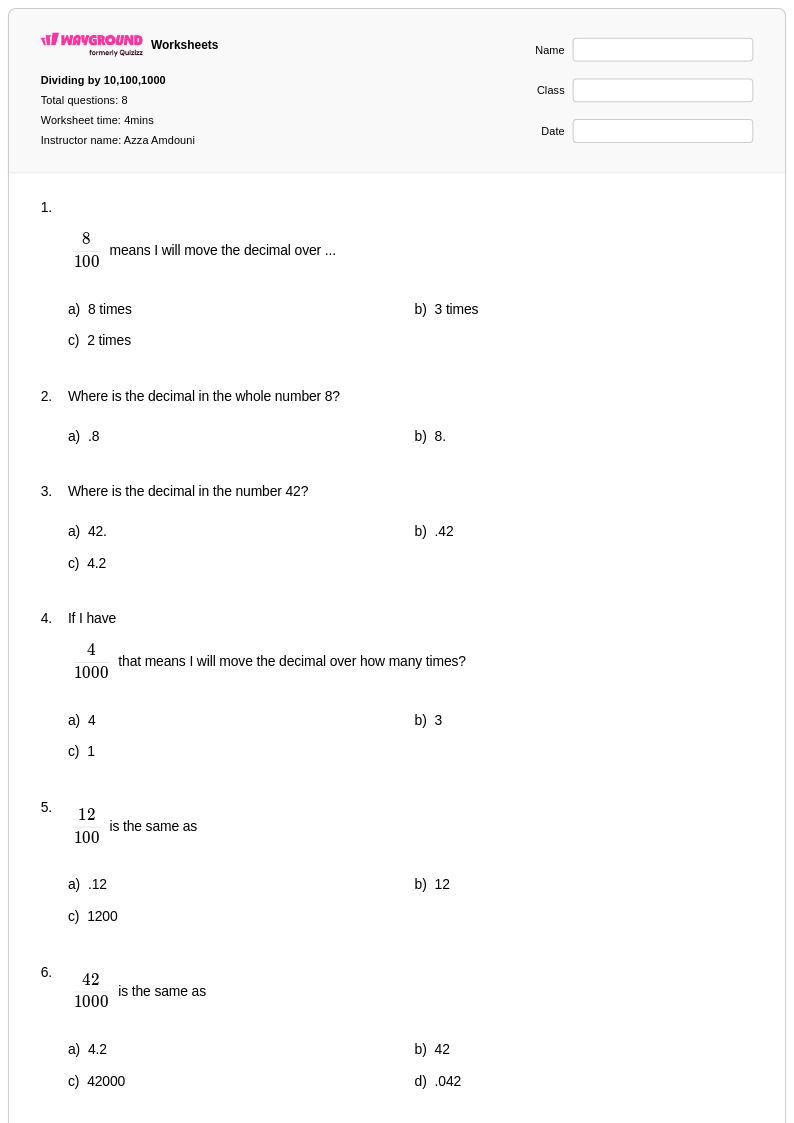
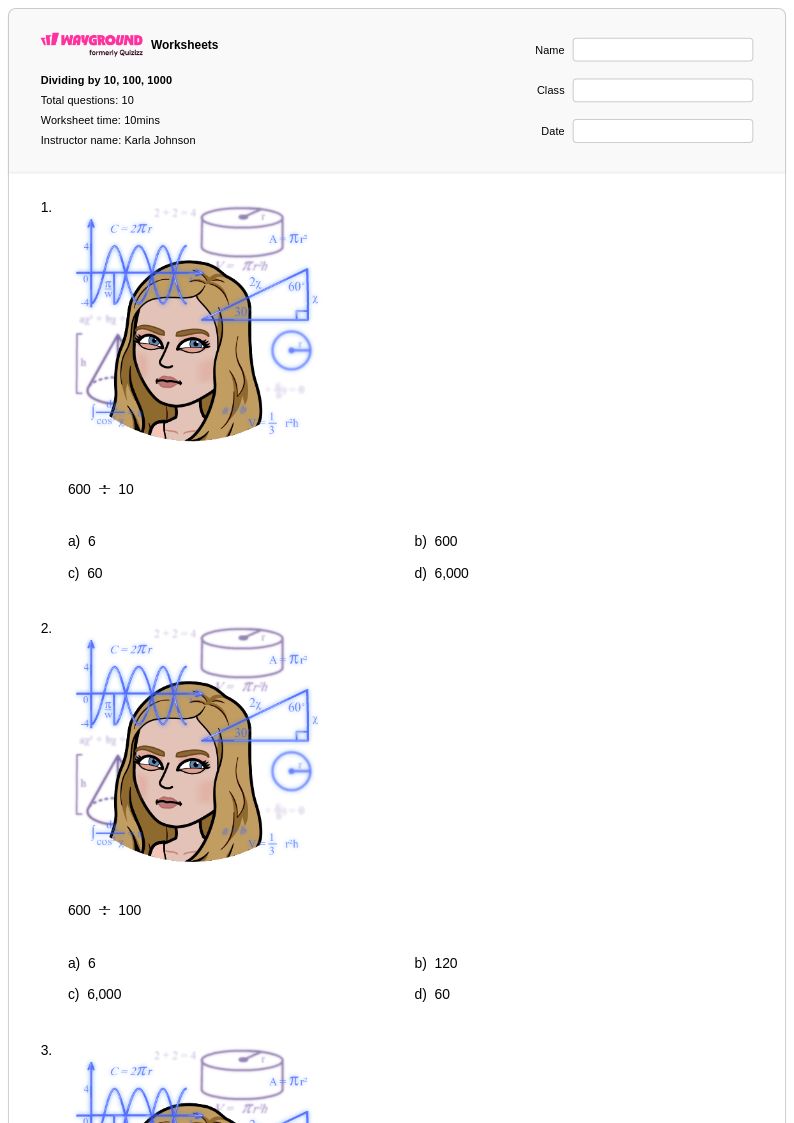
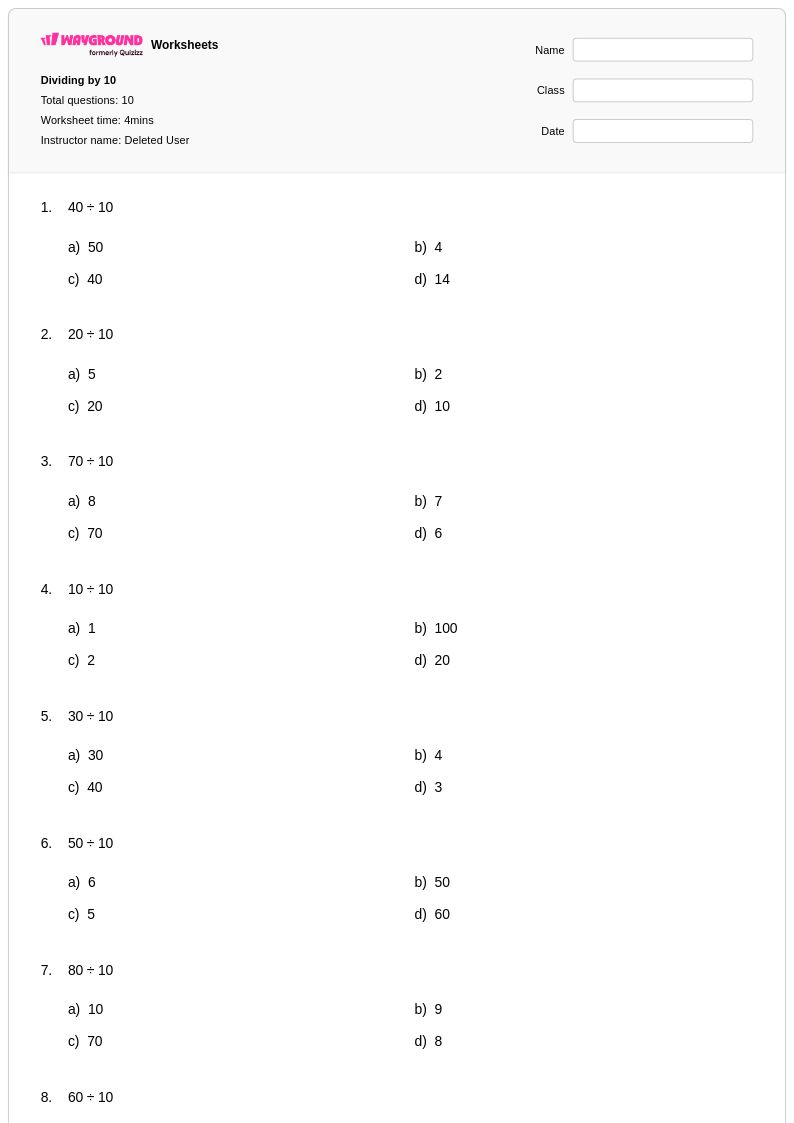
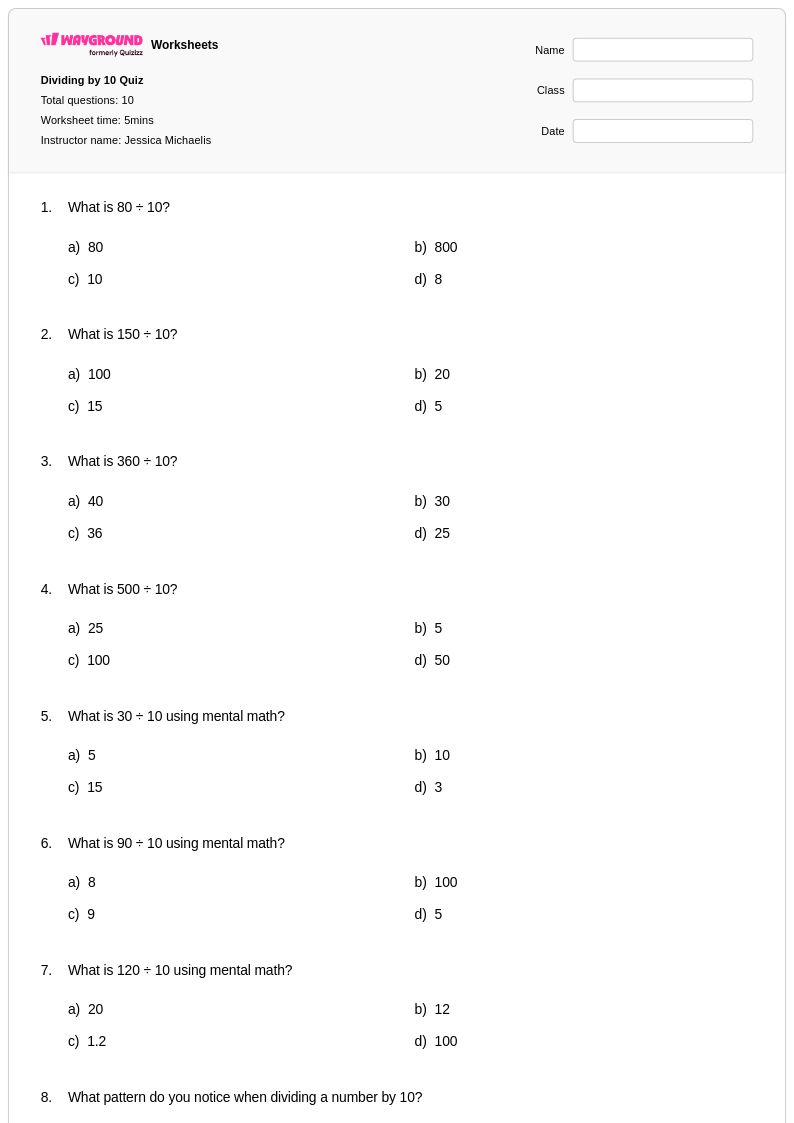
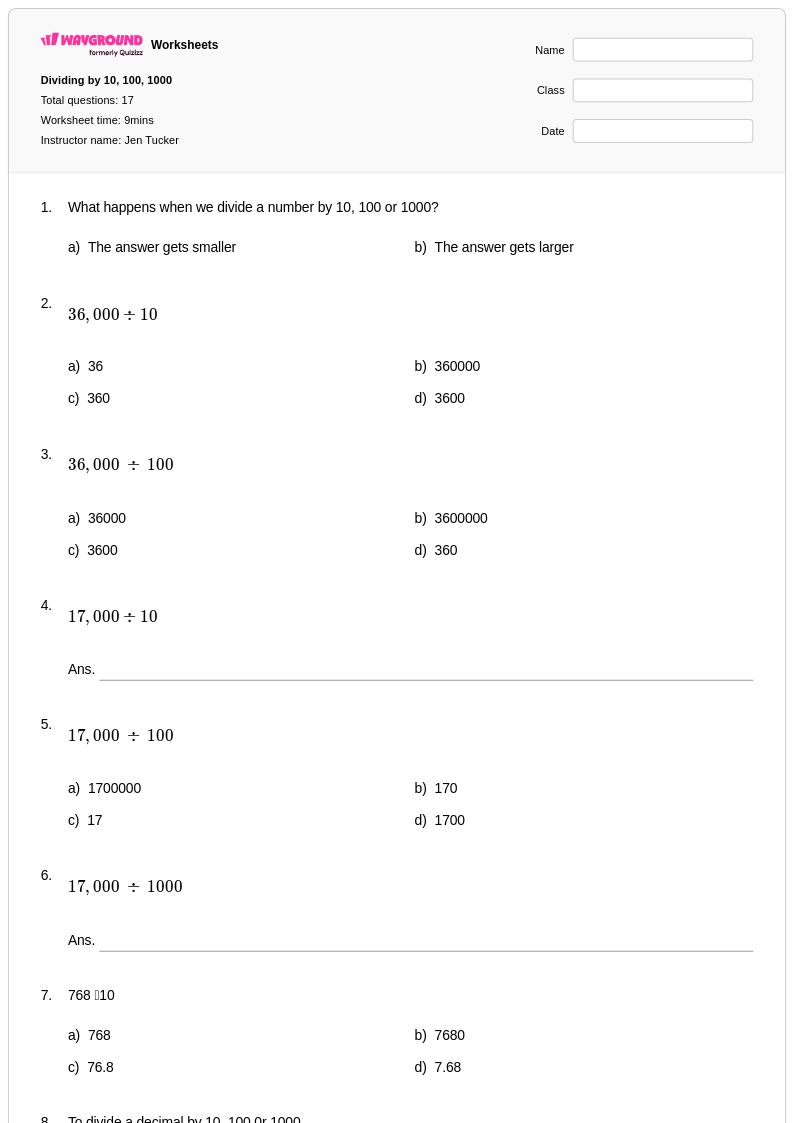
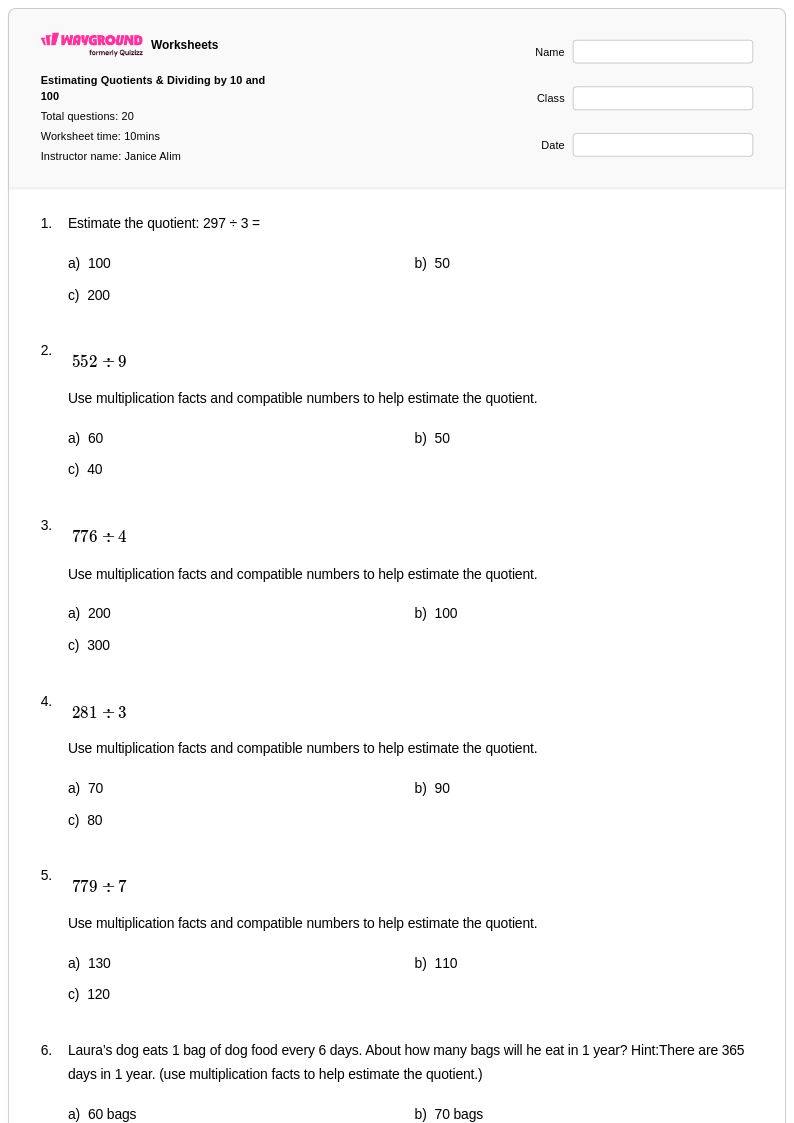
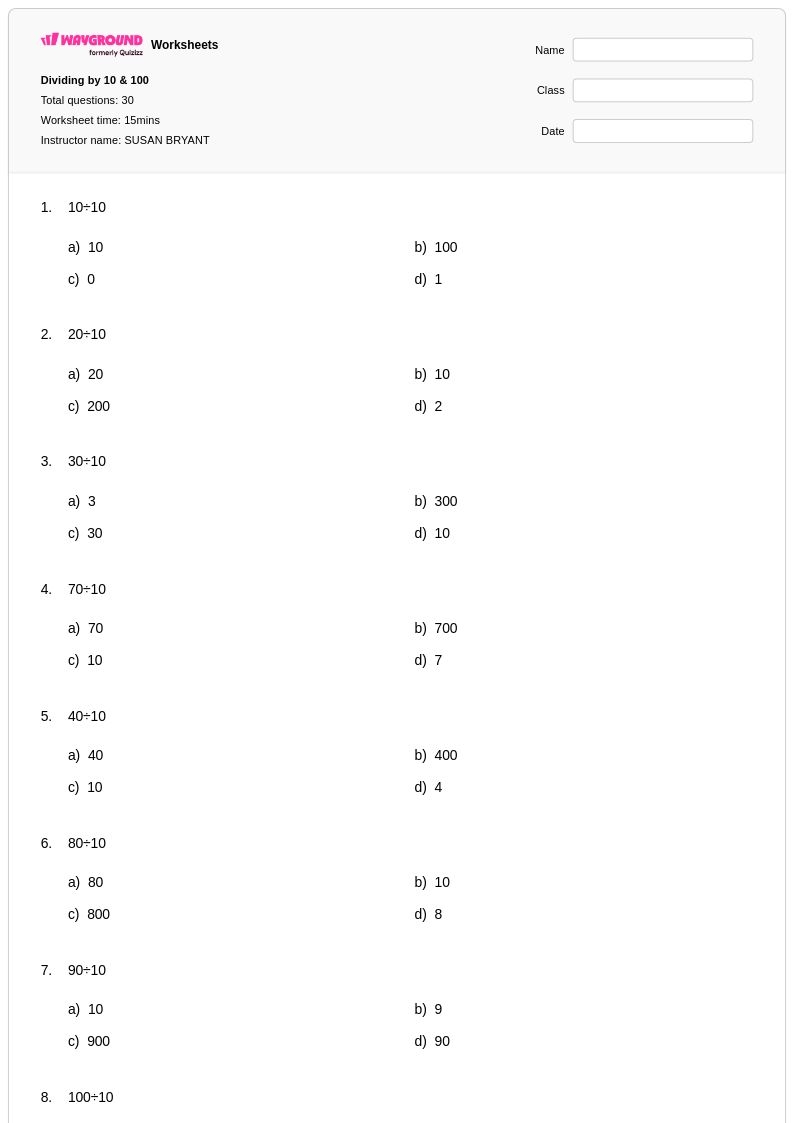
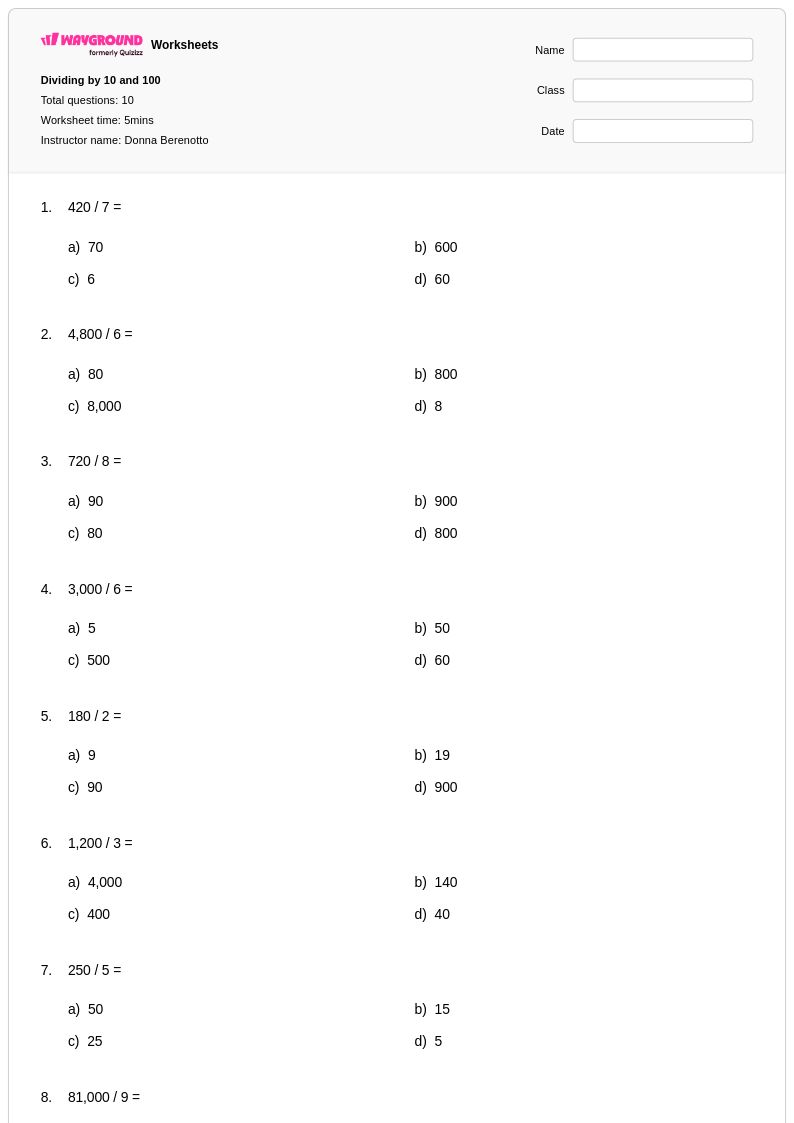
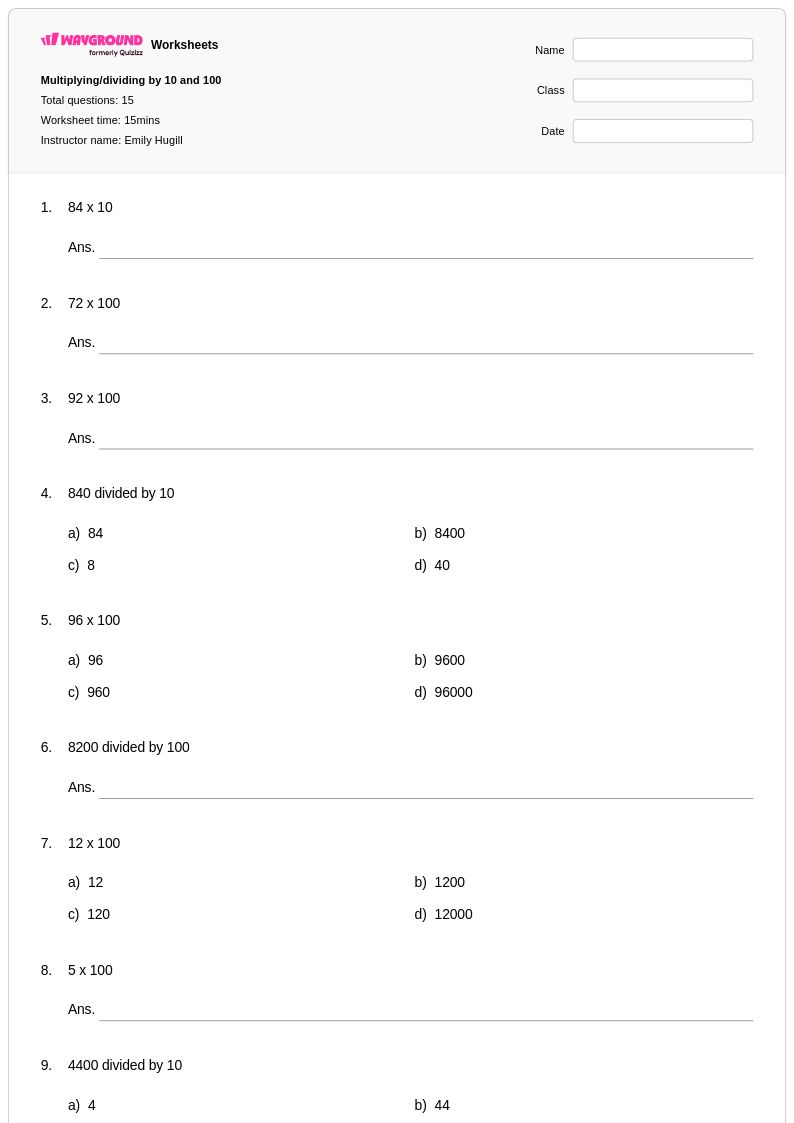
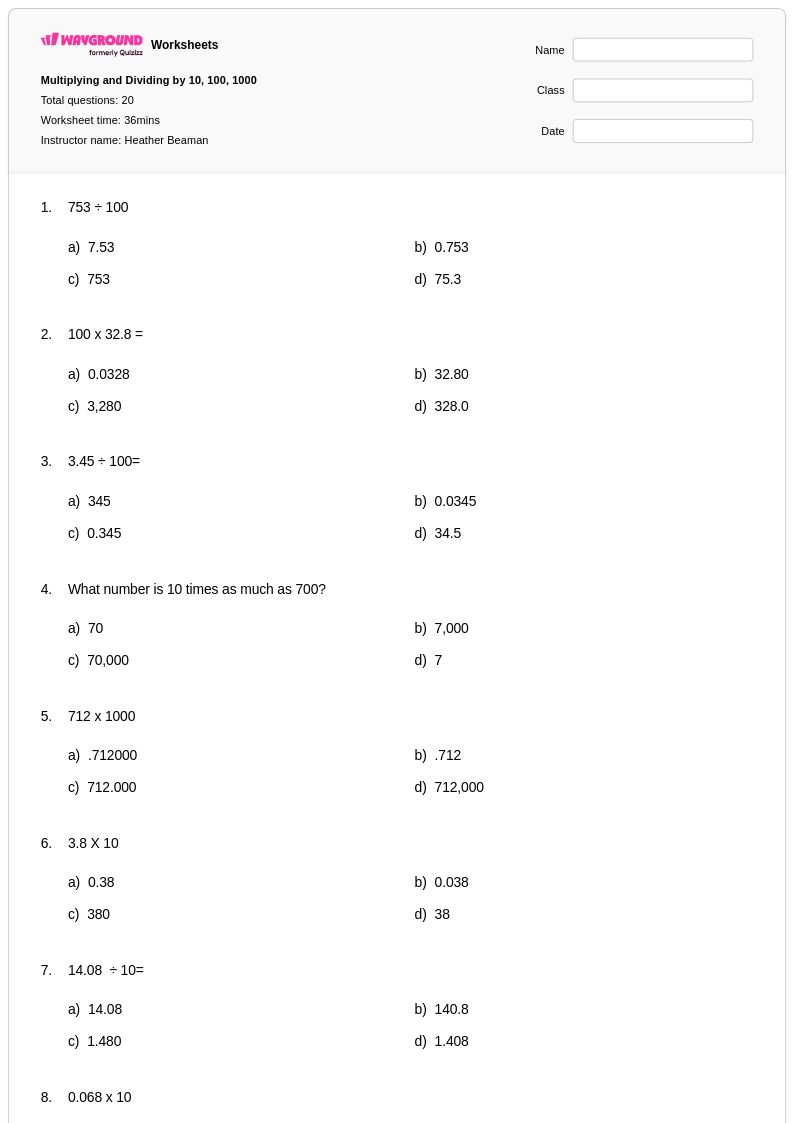
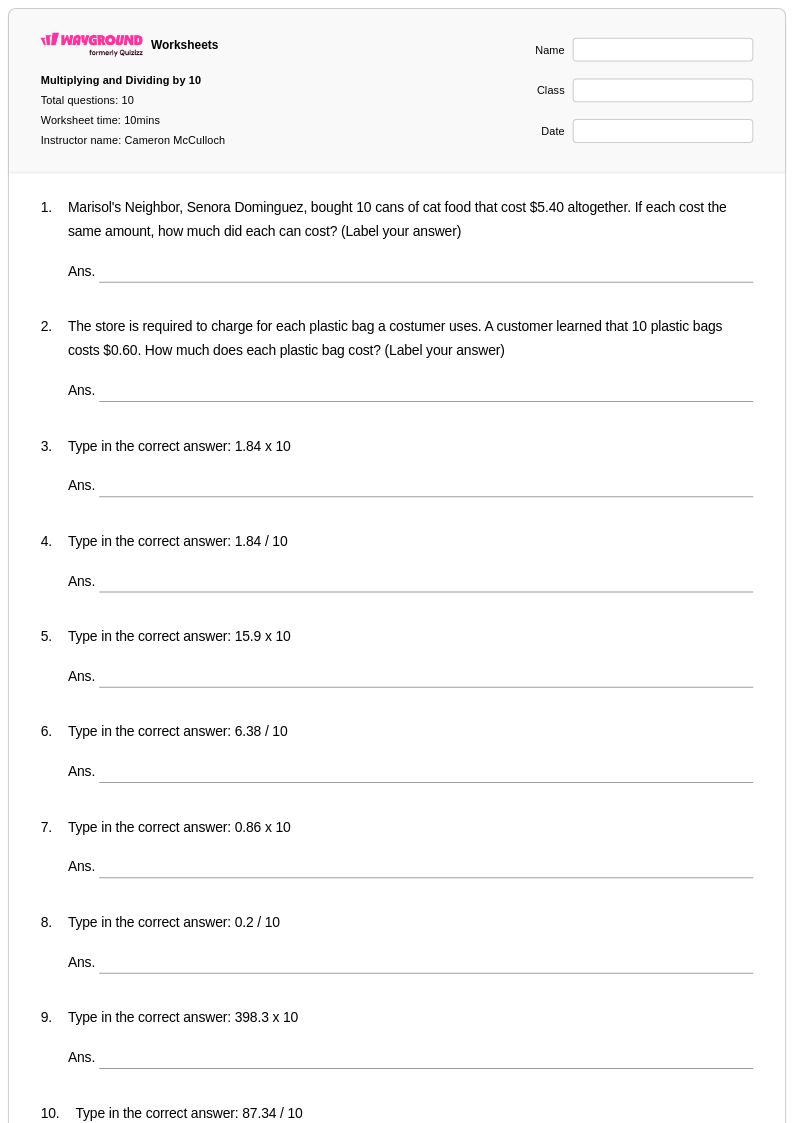
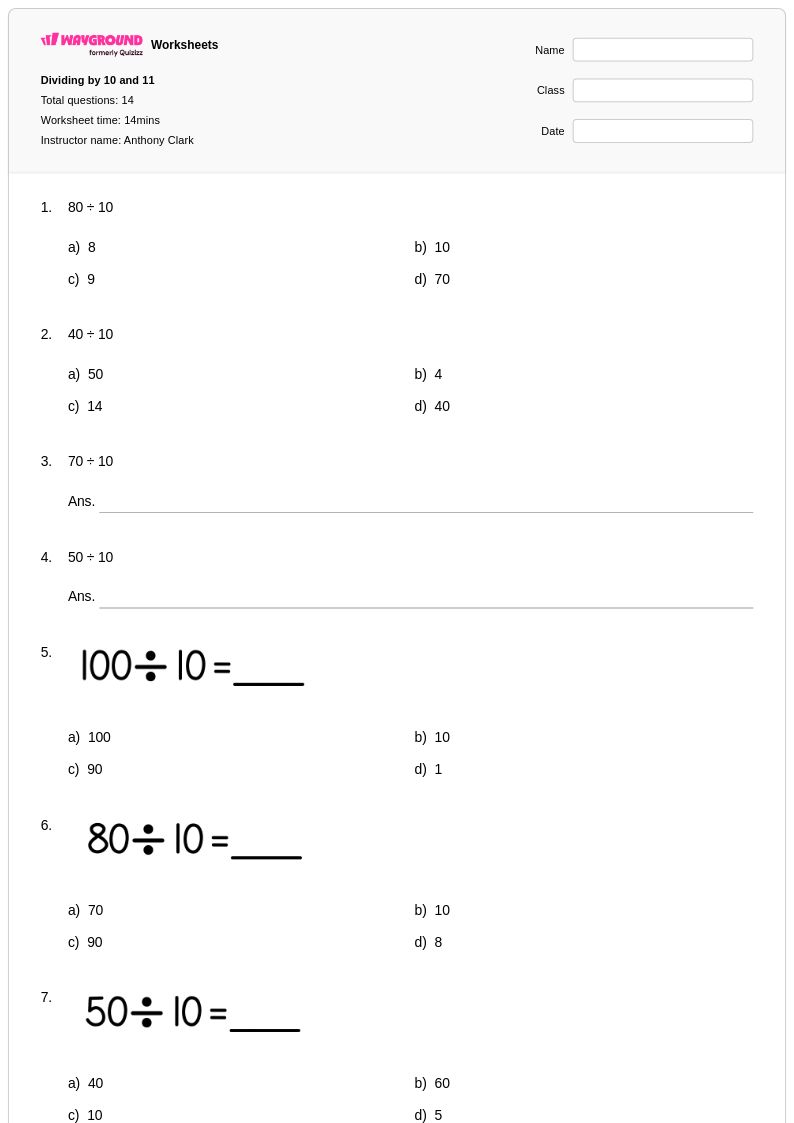
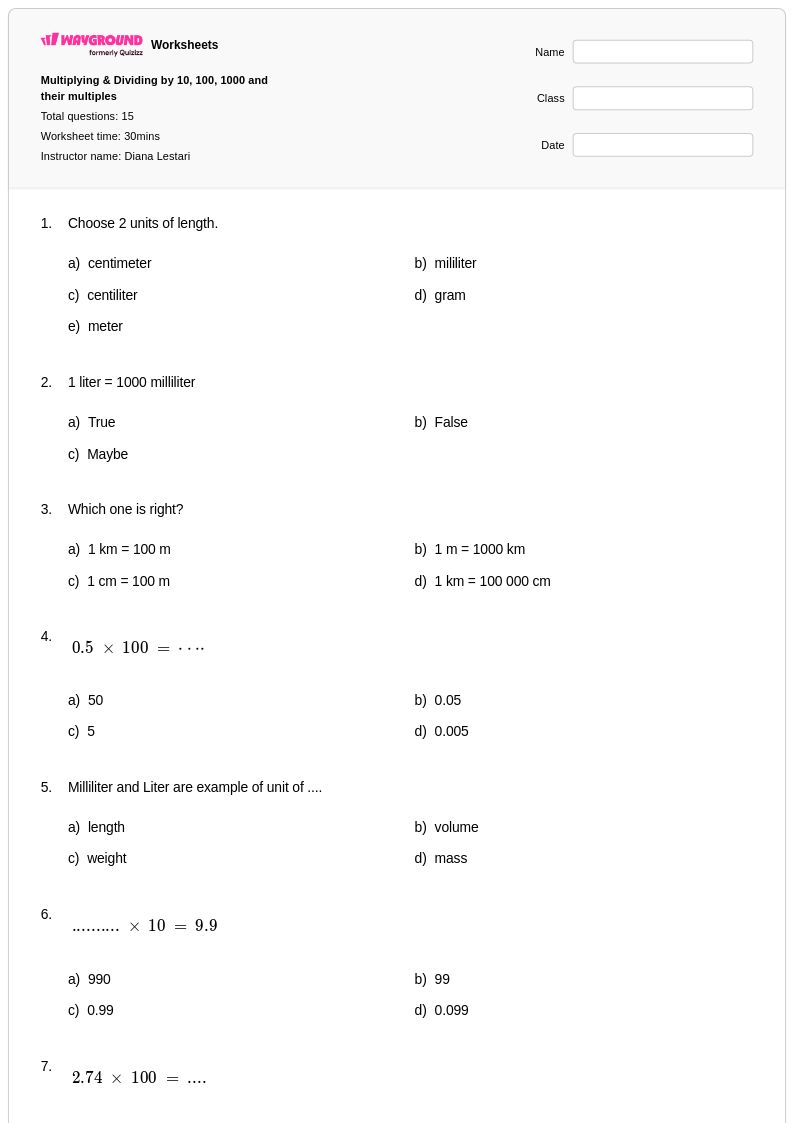
Free dividing by 10 worksheets and printables help students master division shortcuts through engaging practice problems, complete with answer keys and downloadable PDFs for effective mathematical learning.
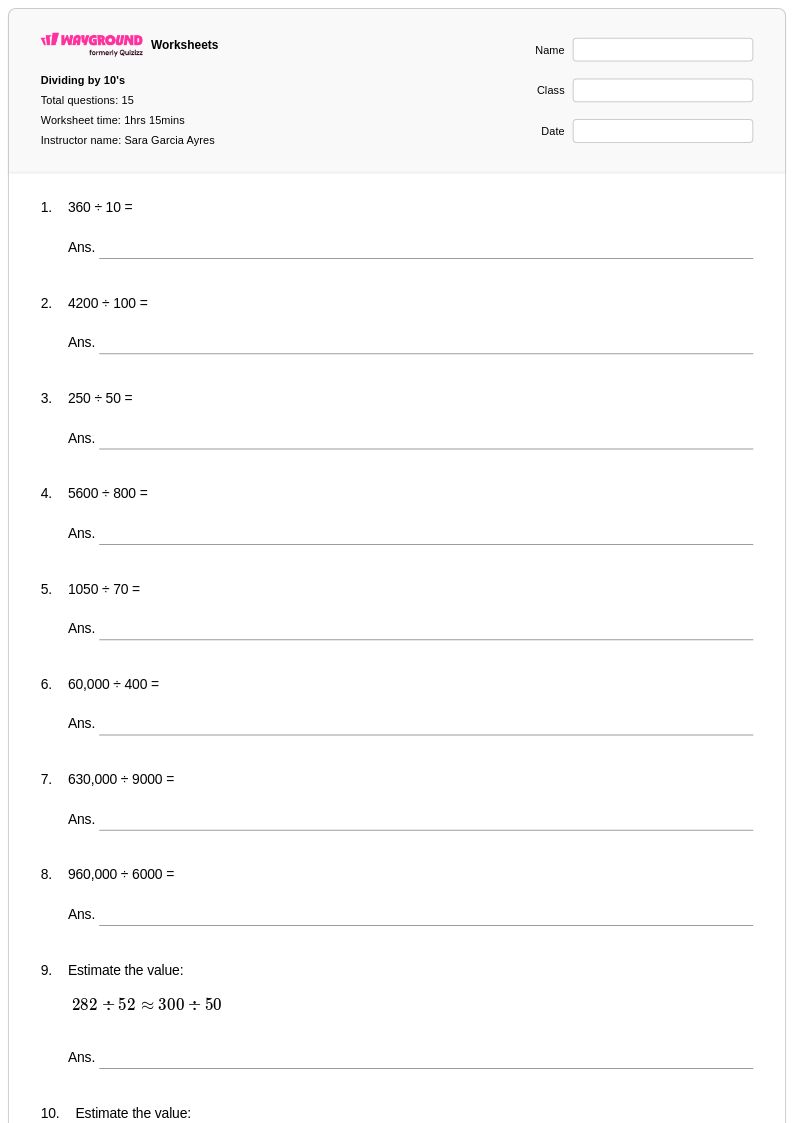
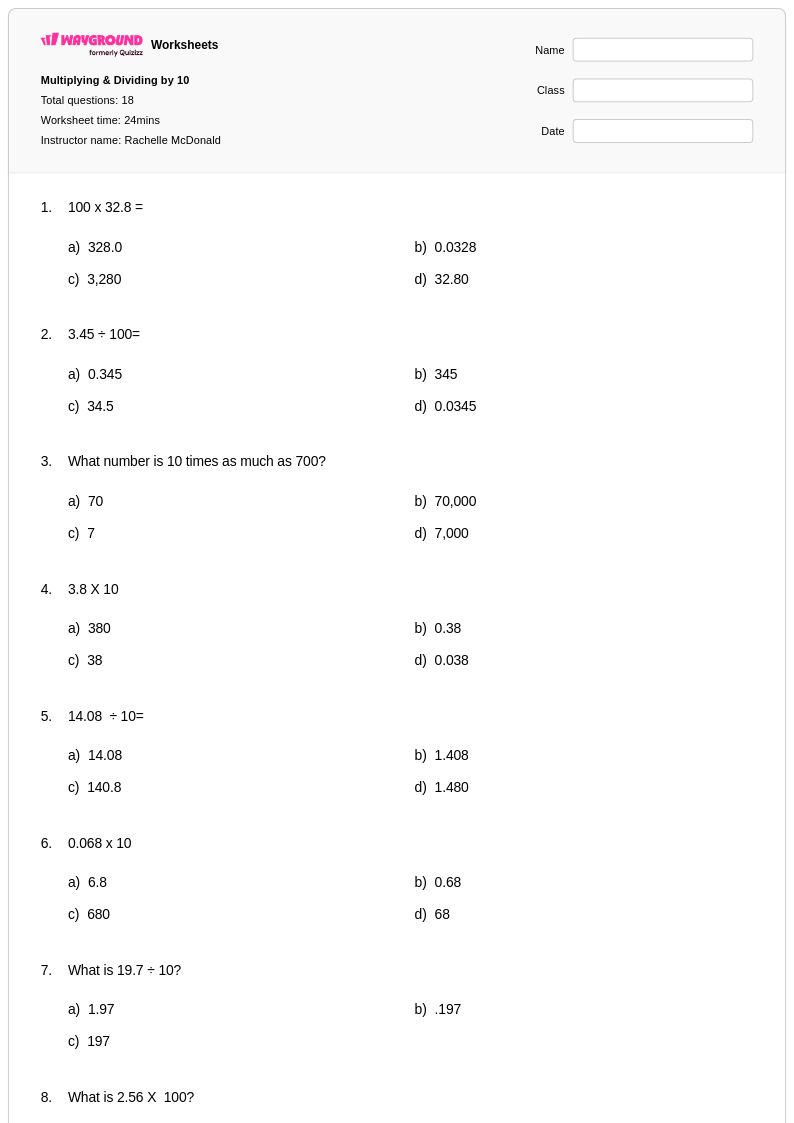
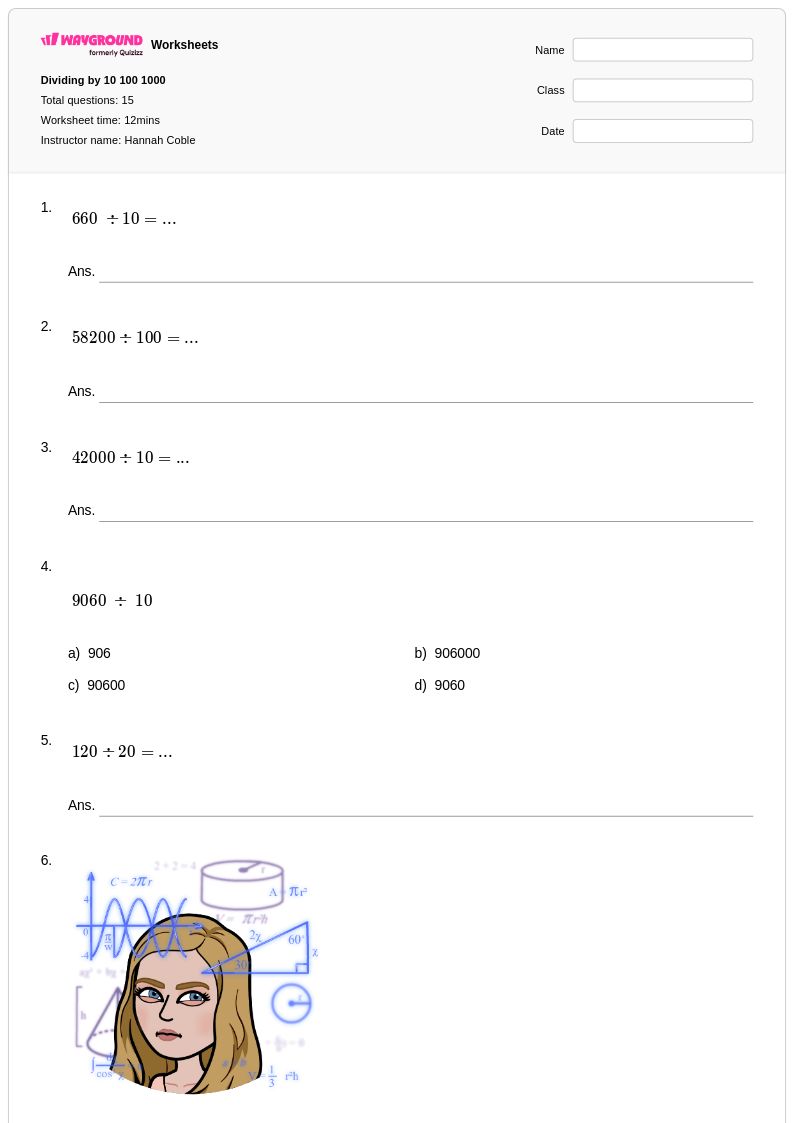
Dividing by 10 worksheets available through Wayground (formerly Quizizz) provide students with essential practice in understanding place value patterns and decimal operations. These comprehensive resources help learners master the fundamental concept that dividing by 10 moves each digit one place to the right, effectively shifting the decimal point one position left. Students develop fluency in recognizing that 240 ÷ 10 equals 24, and 3.5 ÷ 10 equals 0.35, building critical number sense for more advanced mathematical concepts. The collection includes varied practice problems that progress from whole numbers to decimals, complete with detailed answer keys and free printable pdf formats that support both classroom instruction and independent study.
Wayground (formerly Quizizz) empowers educators with millions of teacher-created dividing by 10 worksheets that streamline lesson planning and differentiated instruction. The platform's robust search and filtering capabilities allow teachers to quickly locate resources aligned with specific learning standards and student needs, whether for initial concept introduction, skill reinforcement, or remediation support. Flexible customization tools enable educators to modify existing worksheets or combine multiple resources to create targeted practice sets, while both printable and digital formats accommodate diverse classroom environments and learning preferences. These comprehensive worksheet collections support teachers in providing systematic practice opportunities that build mathematical confidence and procedural fluency in division concepts.
FAQs
How do I teach dividing by 10?
The most effective entry point is place value: when you divide by 10, every digit shifts one place to the right, which moves the decimal point one position left. Start with whole-number examples students can verify by counting (100 ÷ 10 = 10, 240 ÷ 10 = 24), then extend to decimals (3.5 ÷ 10 = 0.35). Using a place value chart as a visual anchor helps students see the shift rather than memorize a rule — once they can predict the result before calculating, the concept has landed.
What exercises help students practice dividing by 10?
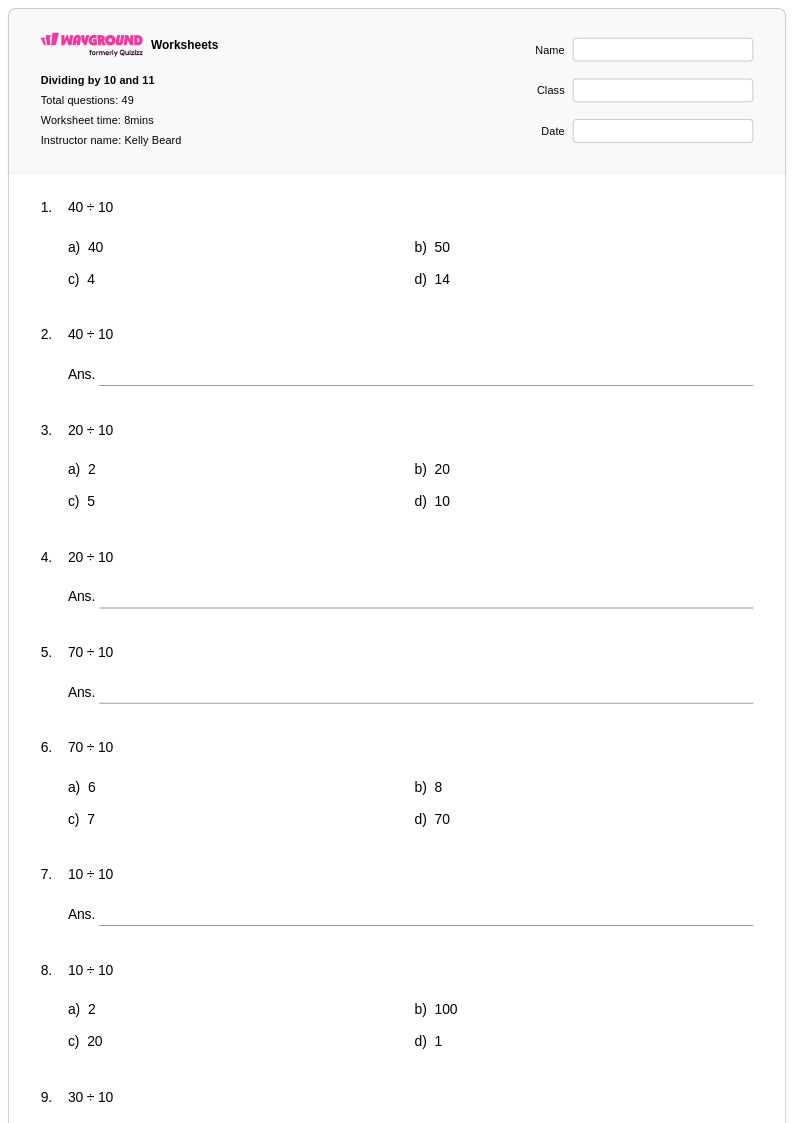
The most productive practice moves from whole numbers to decimals in deliberate steps: fluency with multiples of 10 first (80 ÷ 10, 350 ÷ 10), then non-multiples (47 ÷ 10), then decimals (6.2 ÷ 10). Pattern-recognition exercises — where students complete a sequence and describe the rule — build deeper understanding than isolated computation drills. Wayground's dividing by 10 worksheets progress through these stages with varied problem types and include a complete answer key for immediate feedback.
What mistakes do students commonly make when dividing by 10?
The most common error is treating division by 10 as "remove a zero" — which works for multiples of 10 but breaks down entirely with decimals or non-multiples. Students who rely on that shortcut will write 47 ÷ 10 = 4 instead of 4.7. A related mistake is shifting the decimal in the wrong direction, confusing division by 10 with multiplication by 10. Catching these early means asking students to explain *why* the digit moves, not just *that* it moves.
How do I use Wayground's dividing by 10 worksheets in my class?
Each worksheet comes with a complete answer key, so you can assign it for independent practice or homework without extra prep. For paper-based practice — useful if your school is managing screen time — print the PDF and grade submissions using the Wayground for Teachers app, which lets you scan or capture student work directly. If you prefer a digital route, host the worksheet as an interactive quiz on Wayground so students complete it on a device and results come back to you automatically.
Is dividing by 10 aligned to Common Core standards?
Yes. Common Core treats dividing by 10 as a place value concept rather than a standalone division fact. In the upper elementary progression, students are expected to explain why dividing by 10 shifts digits one place to the right — the same understanding that later underpins multiplying and dividing decimals by powers of 10. Mastery here is the direct prerequisite for working fluently with decimal operations in grades 5 and 6.
How can I differentiate dividing by 10 practice for mixed-ability classes?
The concept has a natural scaffold built in: whole-number problems are accessible entry points, while decimal problems demand stronger place value understanding. For students who need more support, Wayground lets you reduce answer choices to lower cognitive load or enable Read Aloud so the question is read to them. For the worksheet itself, you can adjust font size or apply a dyslexia-friendly font — same problems, more accessible format — without creating an entirely separate assignment.