Master division strategies with Wayground's comprehensive collection of free worksheets and printables, featuring step-by-step practice problems and complete answer keys to help students develop effective mathematical problem-solving techniques.
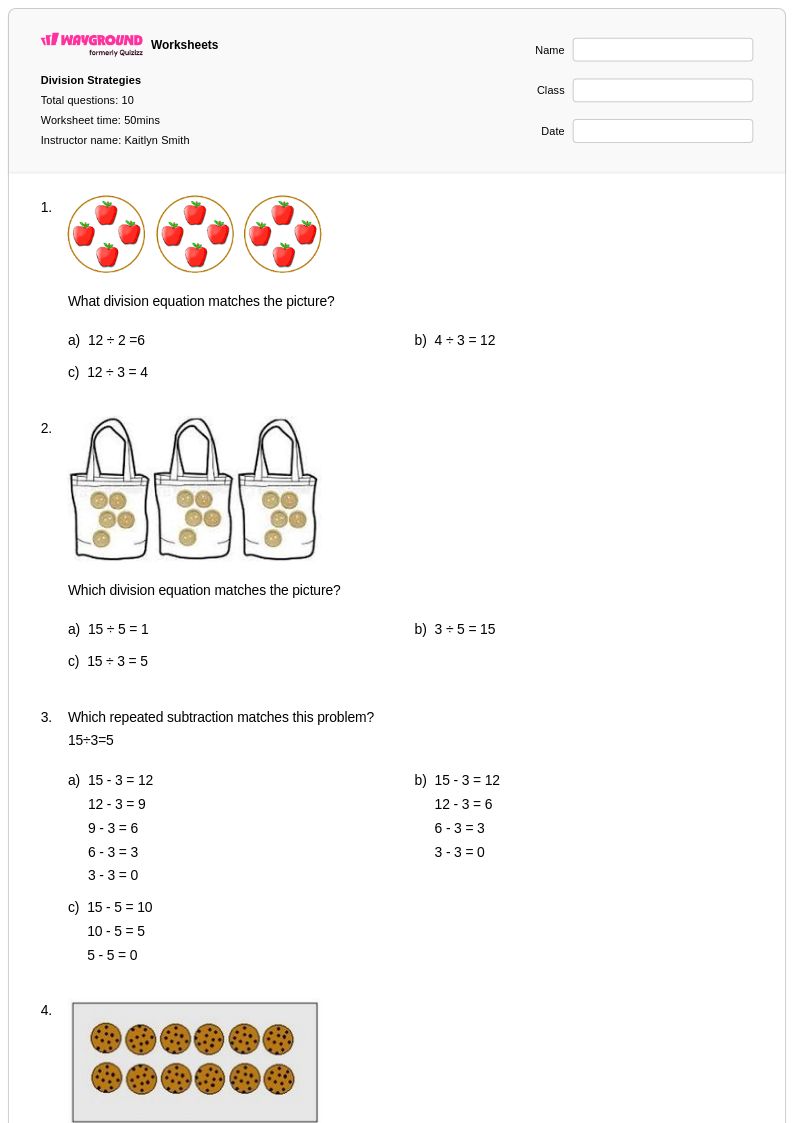
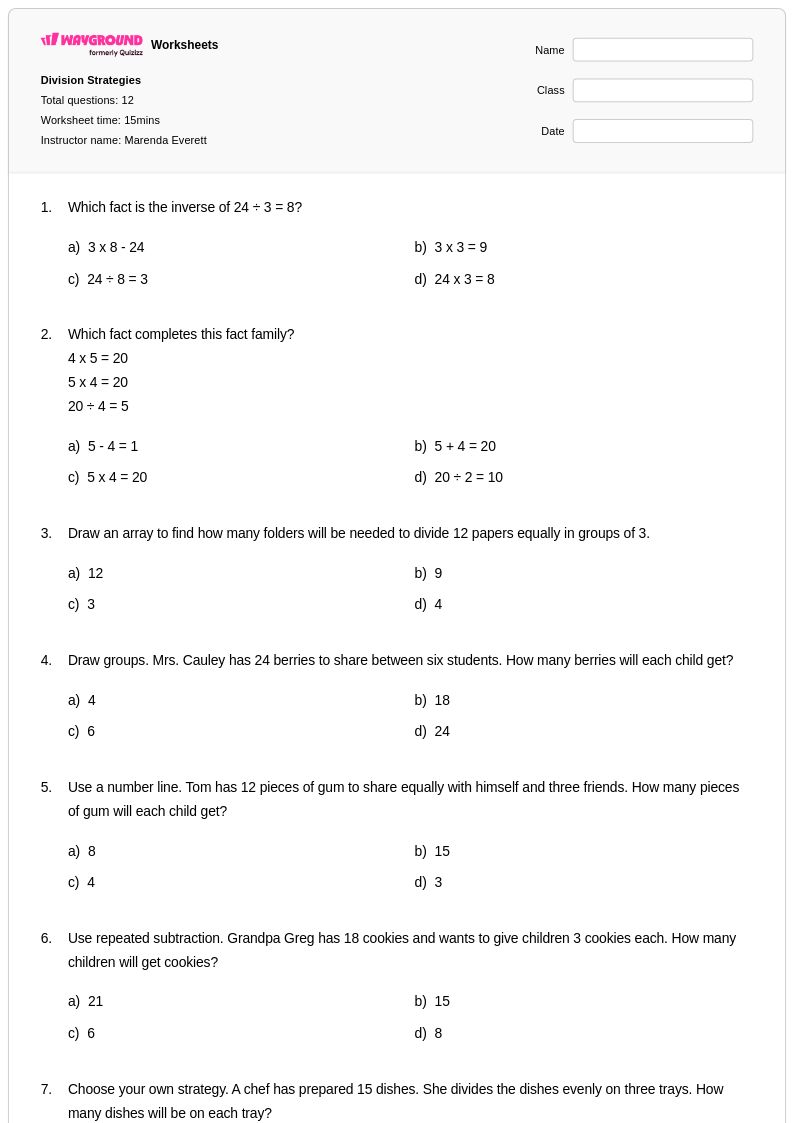
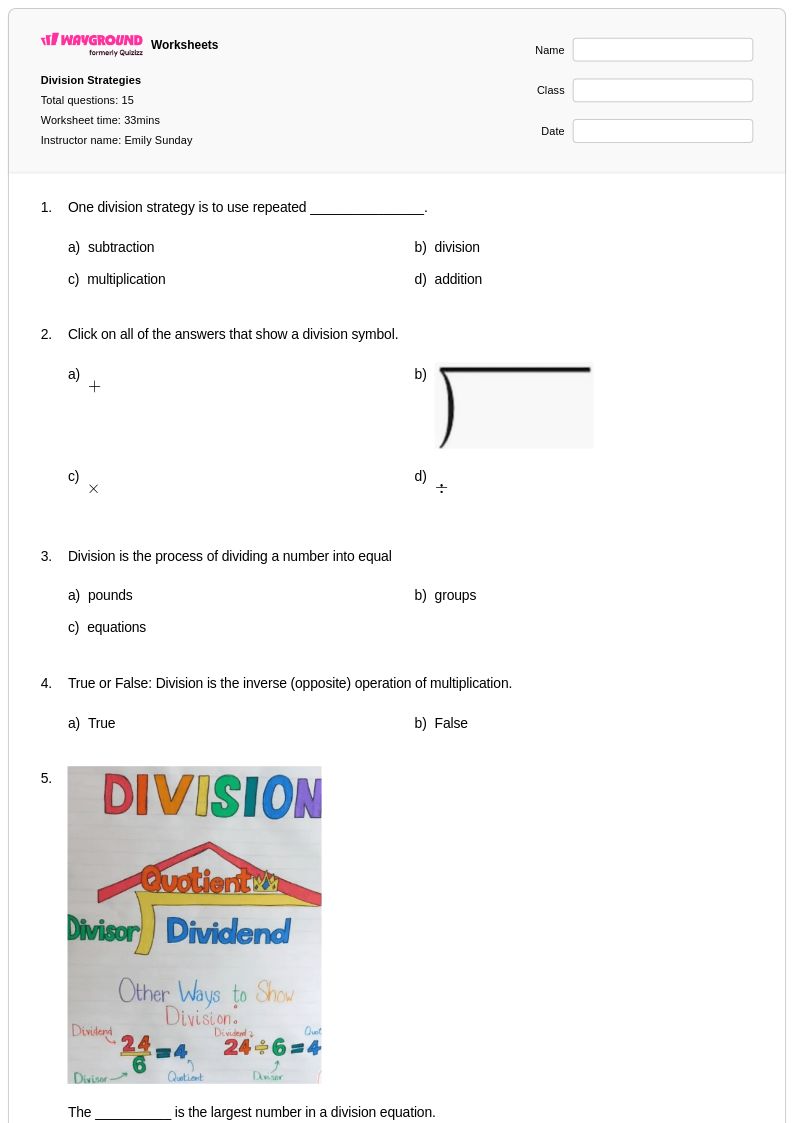
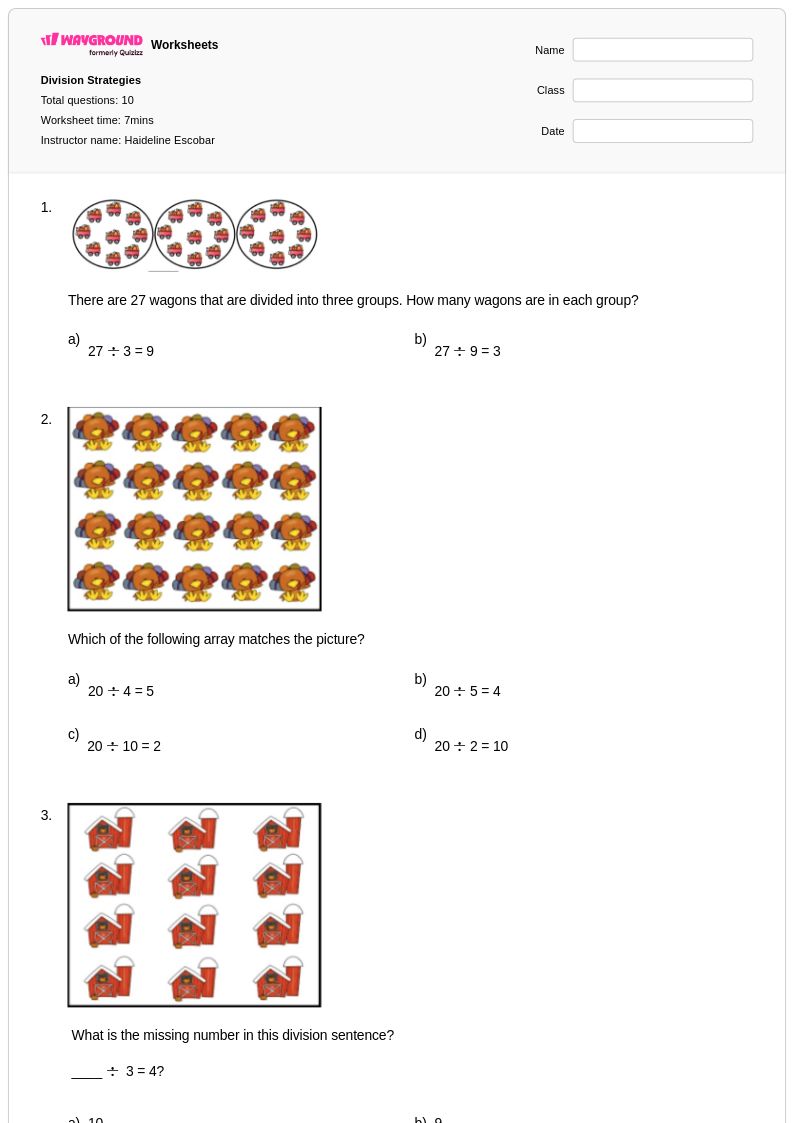
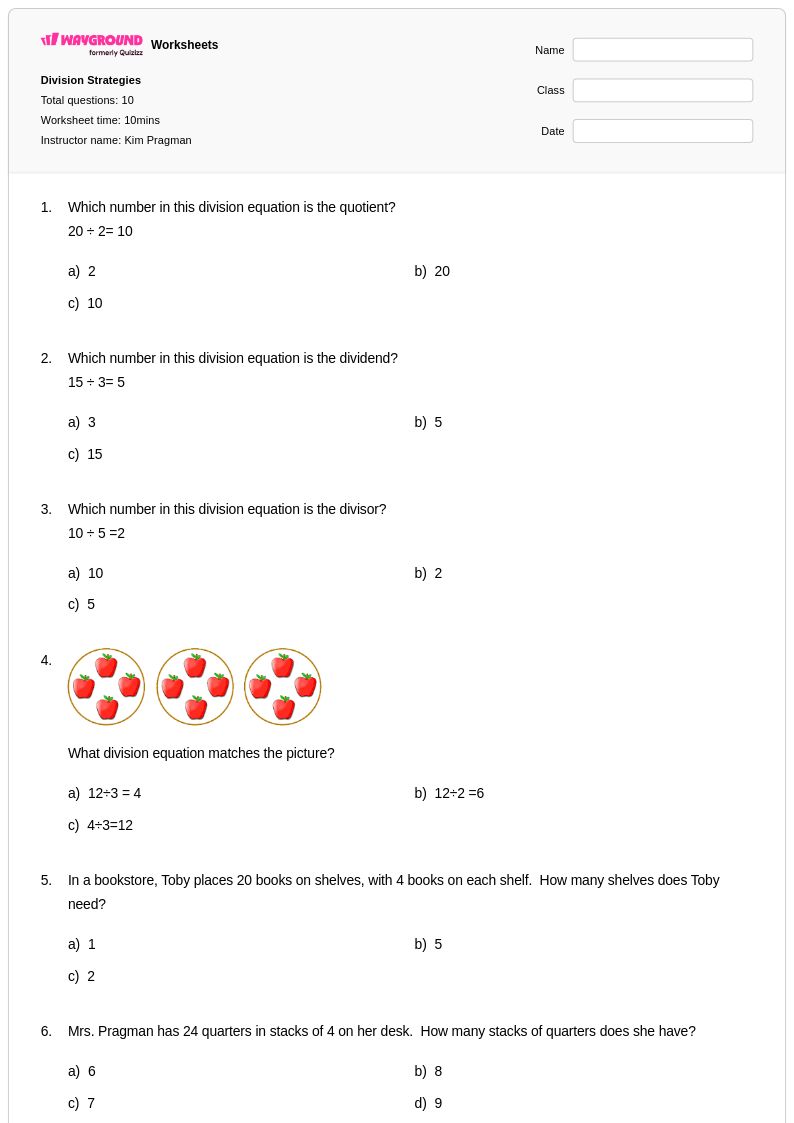
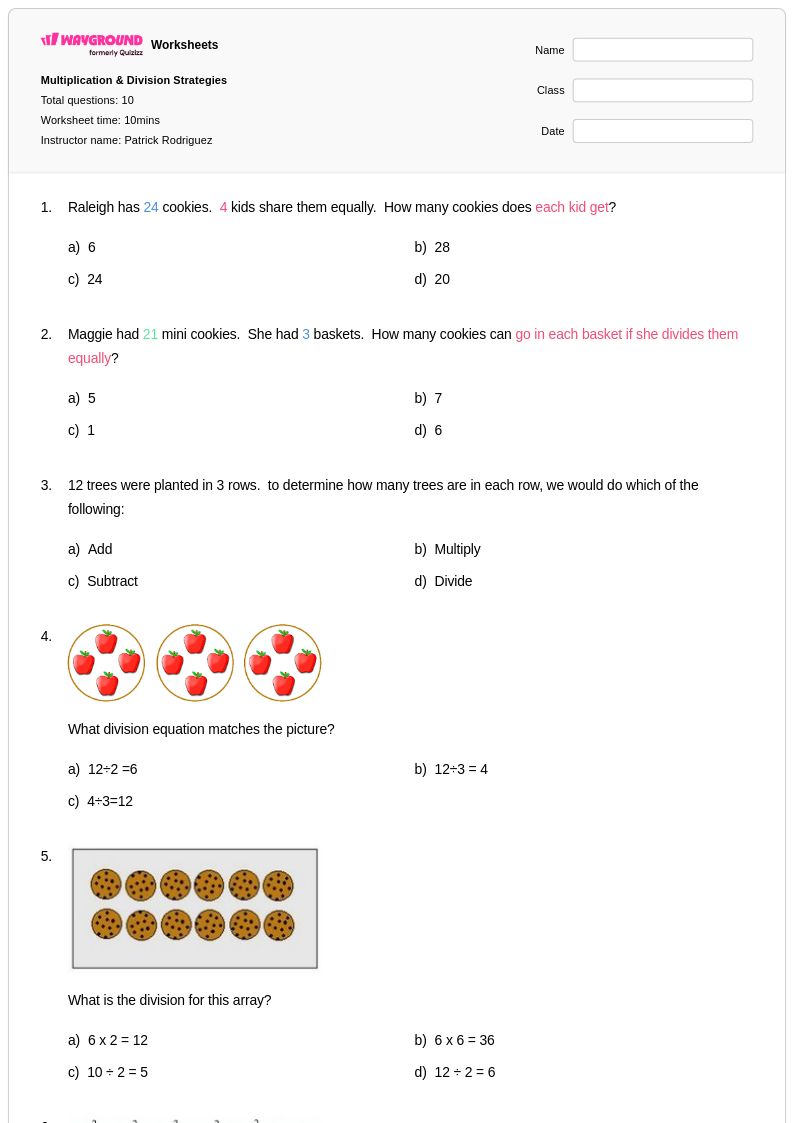
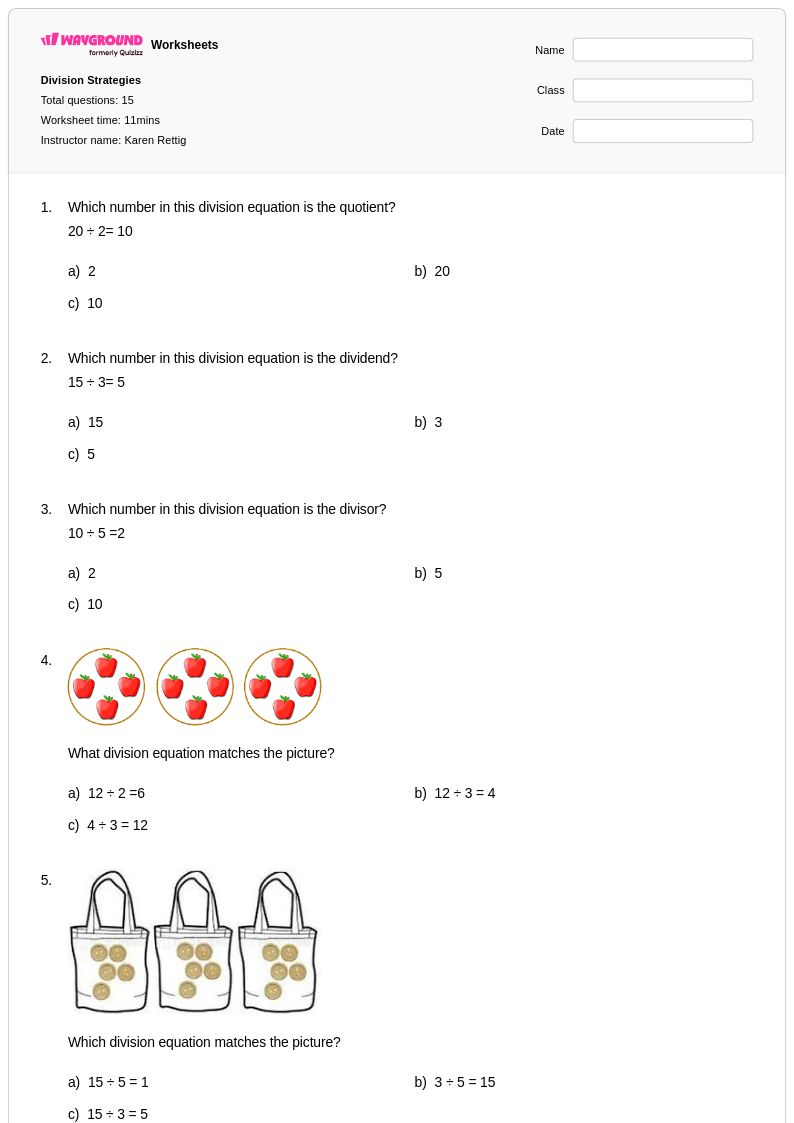
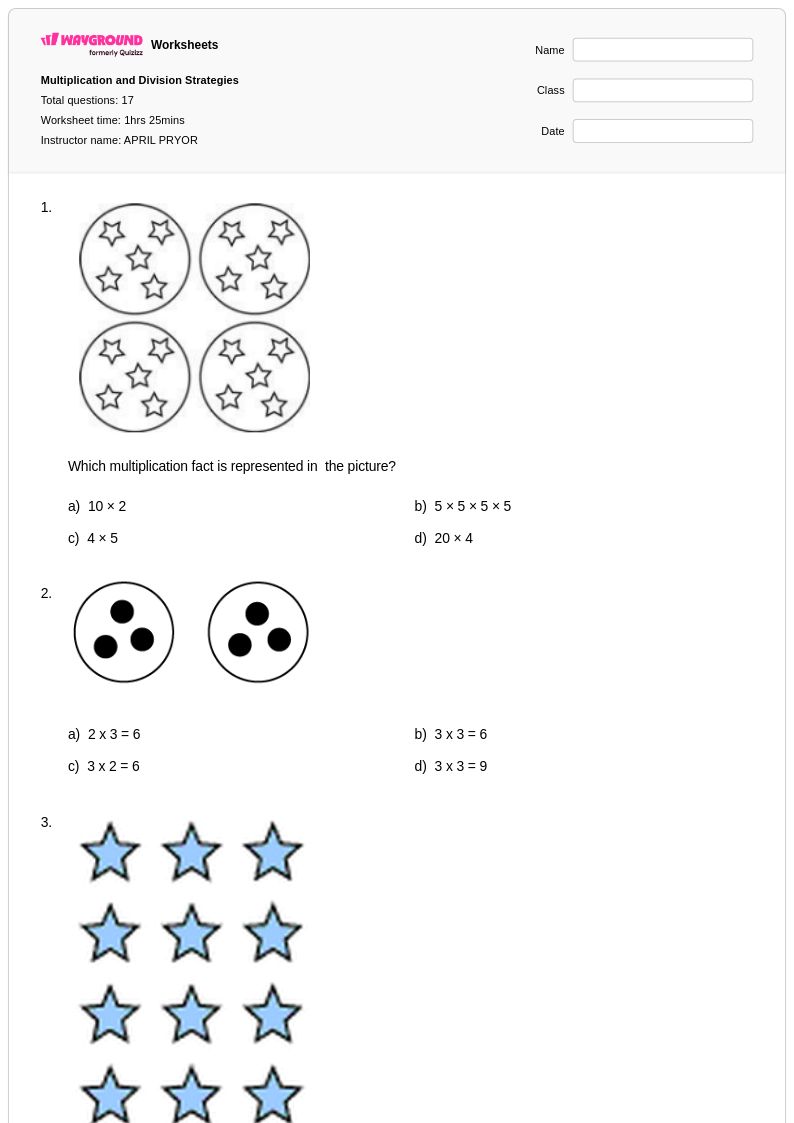
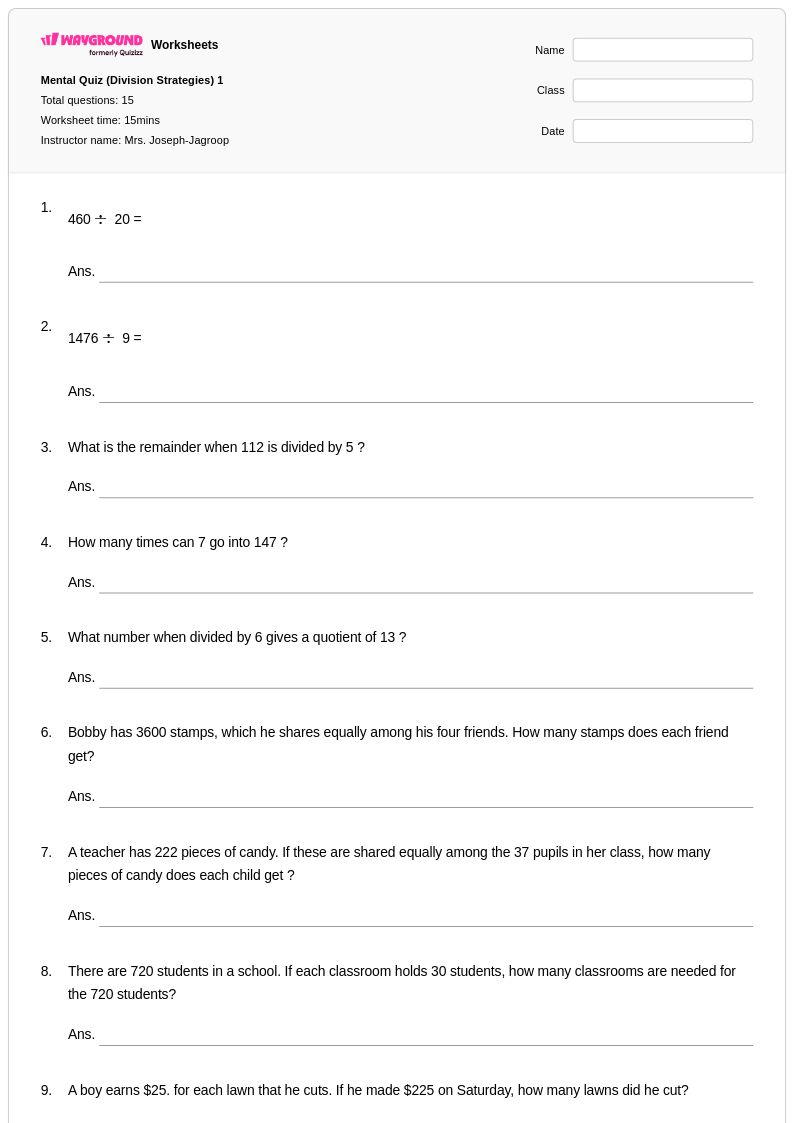
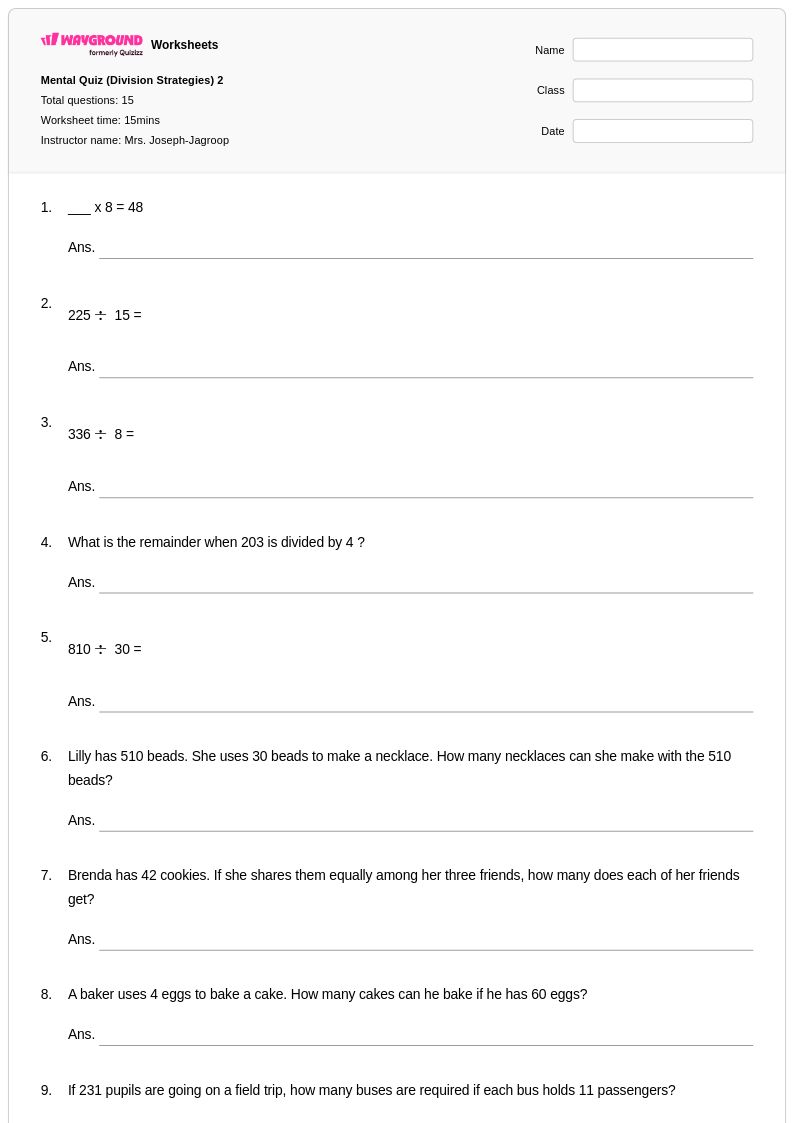
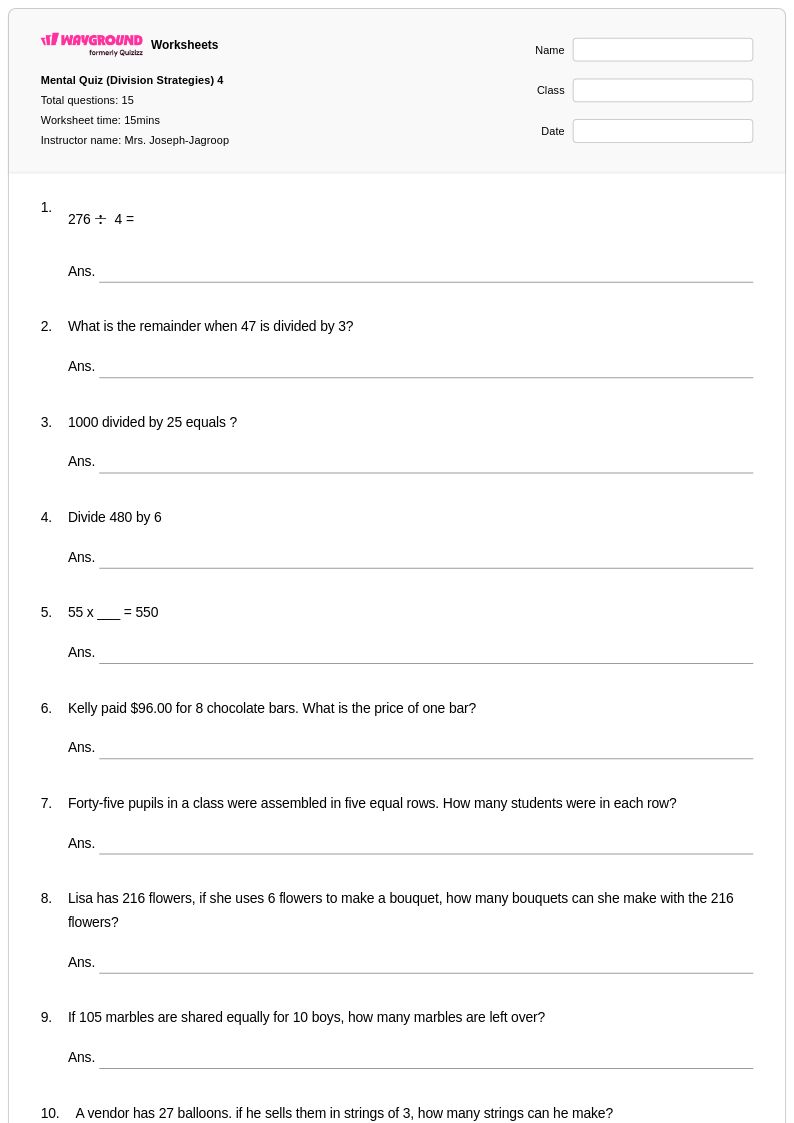
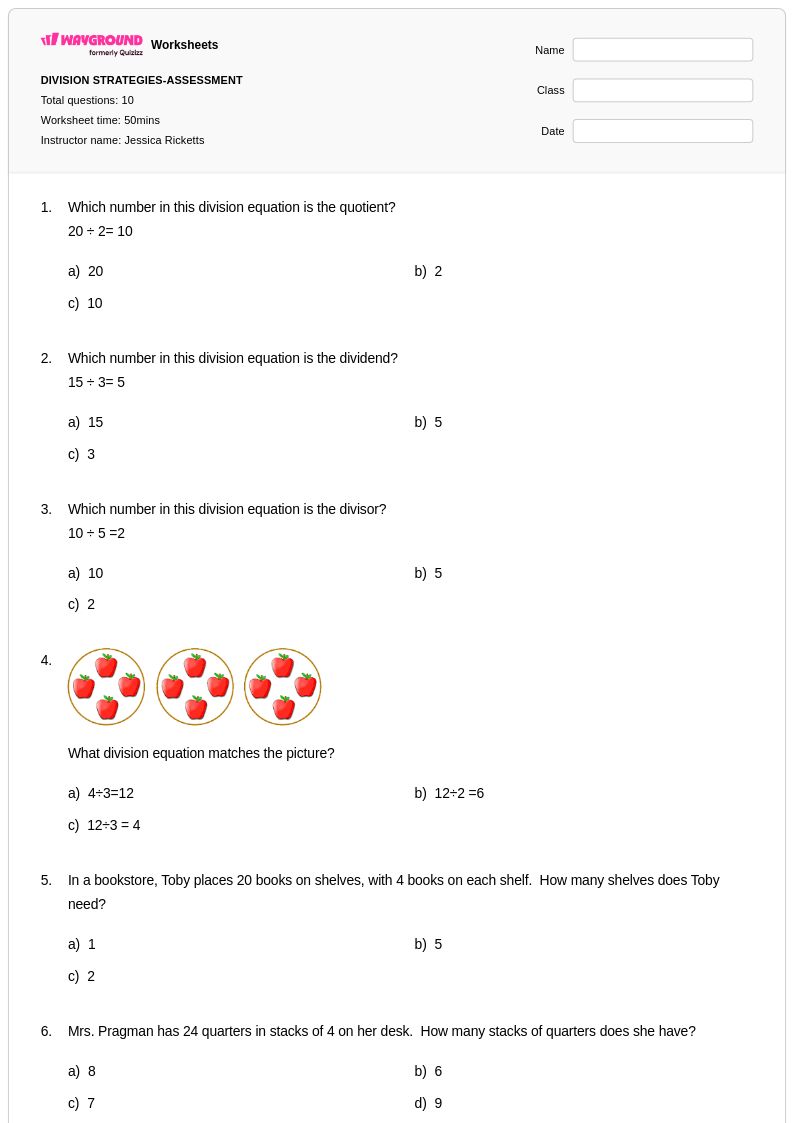
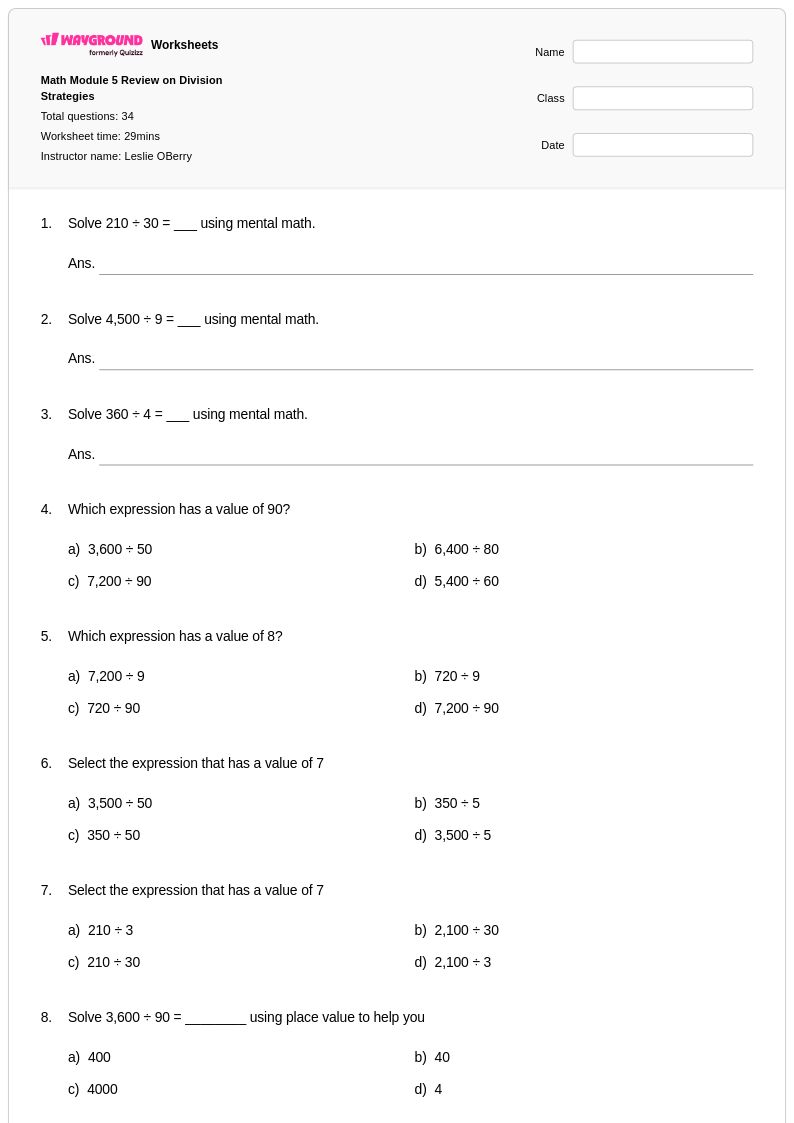
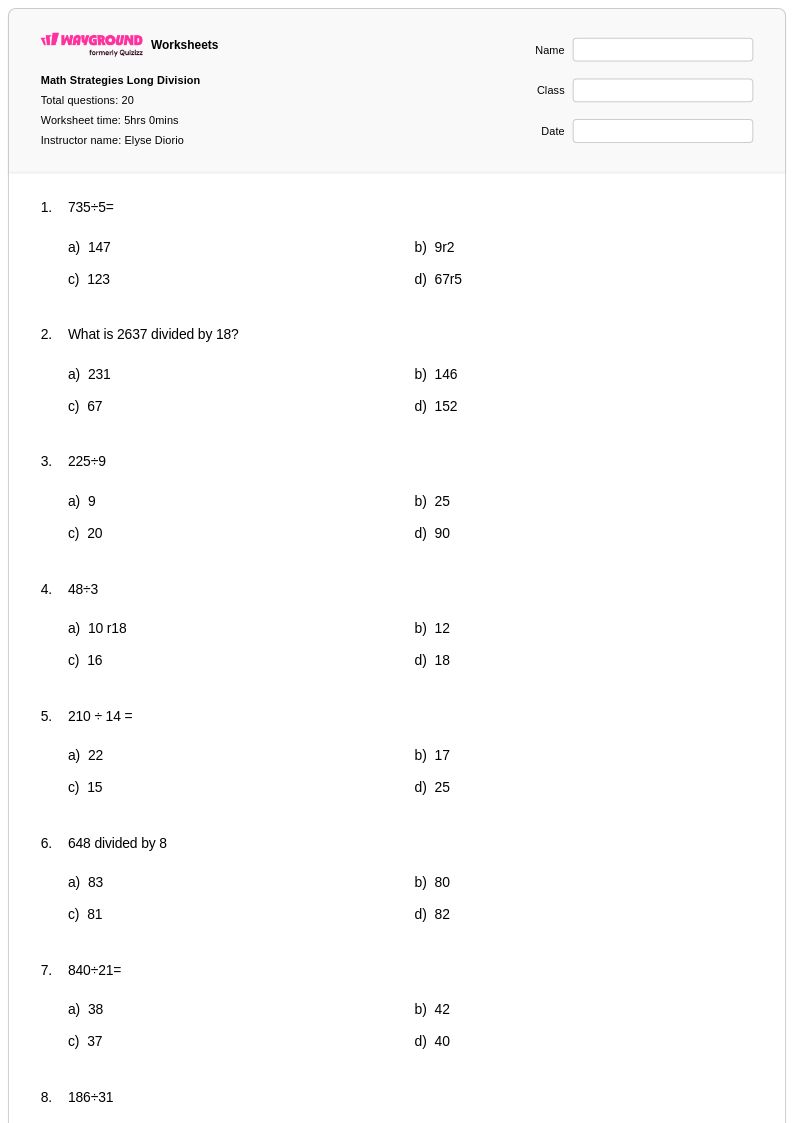
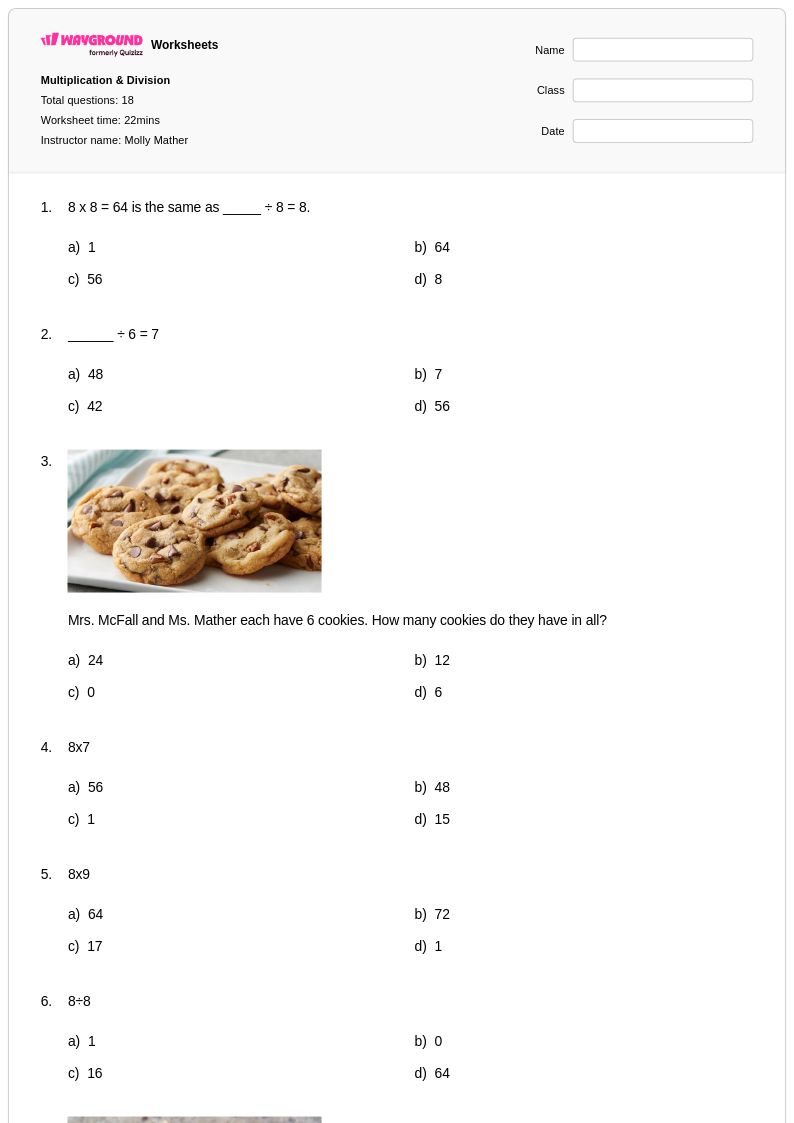
Division strategies worksheets available through Wayground (formerly Quizizz) provide comprehensive practice materials that help students master essential computational methods and build conceptual understanding of division operations. These carefully designed resources focus on multiple approaches to division, including long division, partial quotients, repeated subtraction, and area models, allowing students to explore different pathways to solve division problems effectively. The worksheets strengthen critical mathematical skills such as number sense, estimation, place value understanding, and multiplicative reasoning while building fluency with division facts and multi-digit calculations. Each worksheet comes with a complete answer key and is available as free printables in pdf format, making it easy for educators to incorporate these practice problems into their instruction and provide students with immediate feedback on their mathematical thinking.
Wayground (formerly Quizizz) supports mathematics educators with an extensive collection of teacher-created division strategies resources, offering millions of worksheets that can be easily accessed through robust search and filtering capabilities. The platform's standards-aligned materials enable teachers to quickly locate appropriate content for their specific curriculum needs, while built-in differentiation tools allow for seamless customization to meet diverse learning requirements. These division strategies worksheets are available in both printable pdf format and interactive digital versions, providing flexibility for classroom instruction, homework assignments, and independent practice sessions. Teachers can effectively utilize these resources for lesson planning, targeted remediation with struggling students, enrichment activities for advanced learners, and ongoing skill practice that reinforces mathematical concepts across different learning modalities and instructional contexts.
FAQs
How do I teach division strategies to elementary students?
Start with concrete methods before moving to abstract ones. Repeated subtraction gives students a way to see division as a process, not just a fact to memorize. From there, area models and partial quotients help students handle multi-digit problems by breaking them into manageable chunks. Long division comes last — once students understand what they're doing and why, the algorithm makes sense rather than feeling like a set of arbitrary steps.
What exercises help students practice different division strategies?
The most effective practice asks students to solve the same problem using two different strategies and compare their work. This builds flexibility rather than dependence on a single method. Repeated subtraction problems, partial quotient charts, and area model diagrams each isolate a different layer of understanding, so rotating among them gives students a fuller picture of how division works.
What mistakes do students commonly make when learning division strategies?
Three errors come up repeatedly: forgetting to account for remainders, misaligning place value when using partial quotients, and treating repeated subtraction as a counting exercise without connecting it to the division equation. Students also tend to abandon a strategy mid-problem when it gets messy rather than working through it — which is worth addressing directly, since persistence with a chosen method is part of building fluency.
How do I use these division strategies worksheets in my classroom?
Each worksheet is available as a printable PDF or as a digital quiz hosted on Wayground — same problems, either format. For digital sessions, students submit answers directly on the platform. For paper practice, you can grade printed submissions using the Wayground for Teachers app, which lets you scan or capture student work. Every worksheet includes a complete answer key, so feedback is immediate either way.
How does Common Core sequence division strategies across grade levels?
Common Core introduces division conceptually in Grade 3 through equal grouping and the relationship between multiplication and division, then extends it in Grade 4 to multi-digit division using strategies like partial quotients and area models. By Grade 5 and 6, students are expected to apply standard algorithms fluently. Division strategies worksheets sit squarely in the middle of that progression — they're the bridge between understanding what division means and executing it efficiently with larger numbers.
How can I differentiate division strategies practice for mixed-ability classes?
Wayground lets you create alternate versions of the same worksheet with adjusted font size, wider spacing, or a dyslexia-friendly font — useful when the barrier is readability rather than math. For students who need more support during a digital session, you can enable reduced answer choices to lower cognitive load, or turn on Read Aloud so the question is read to them. These settings apply per student, so the rest of the class works with default settings without any disruption.