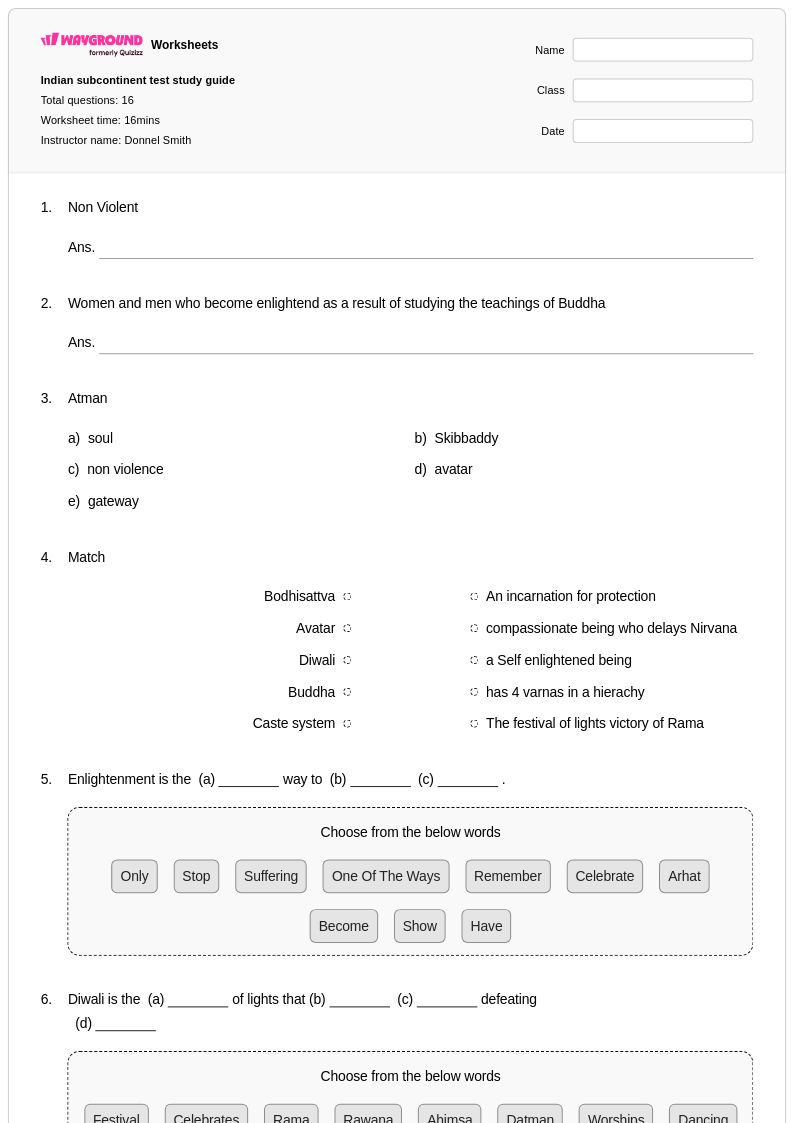
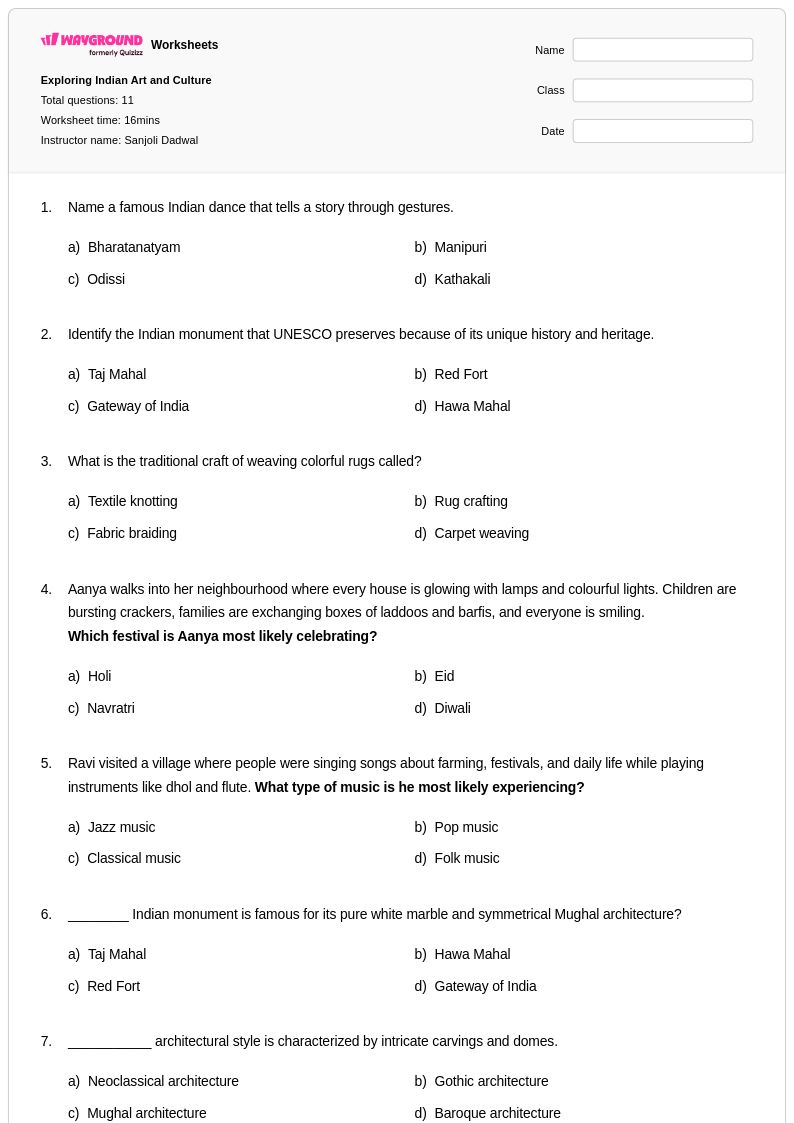
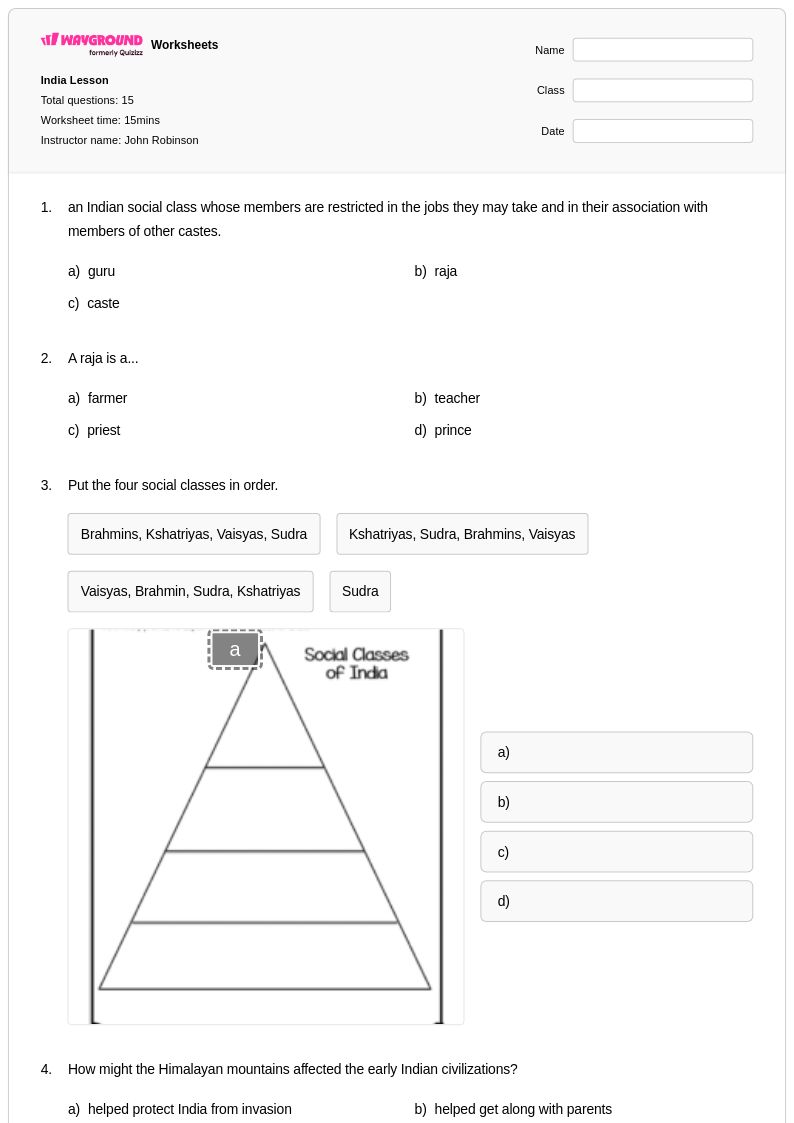
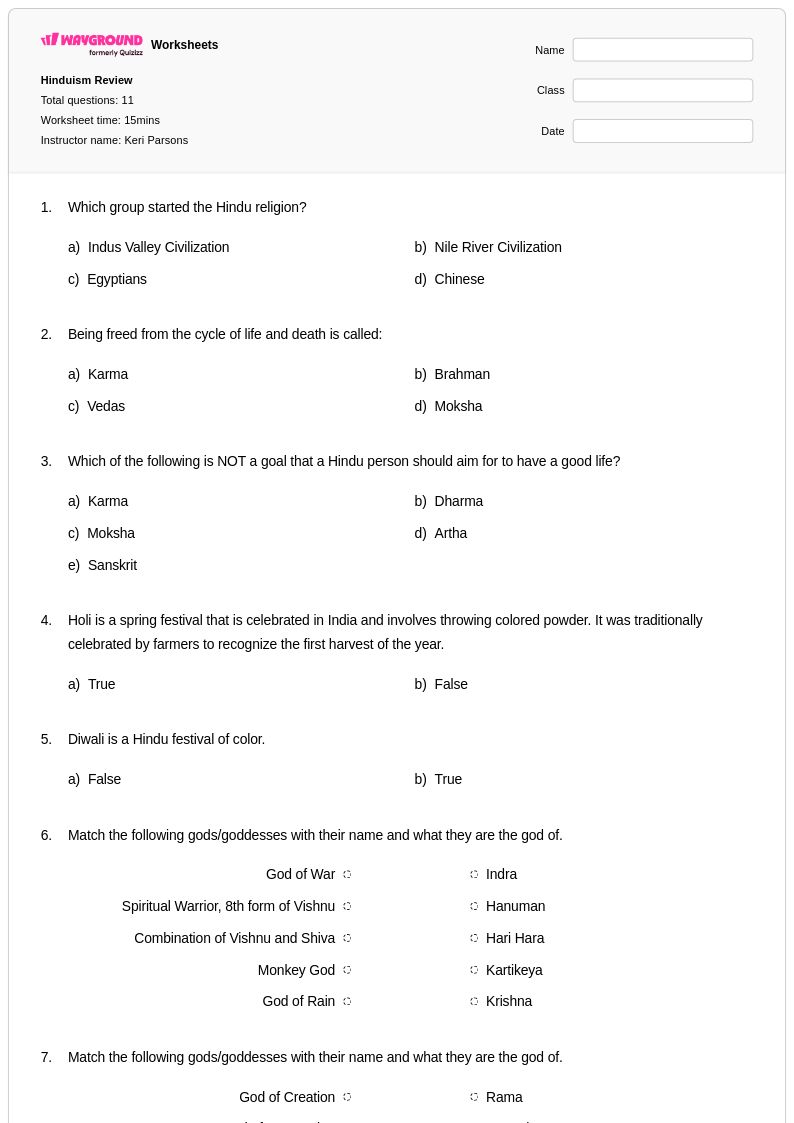
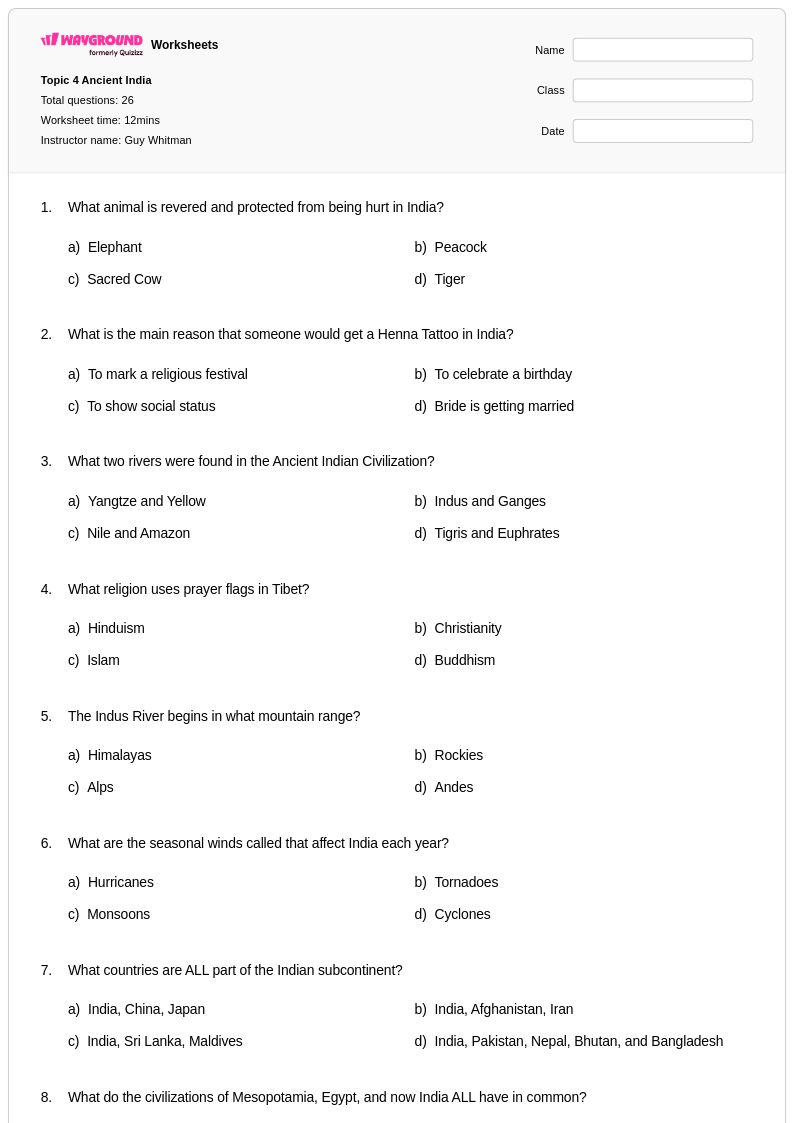
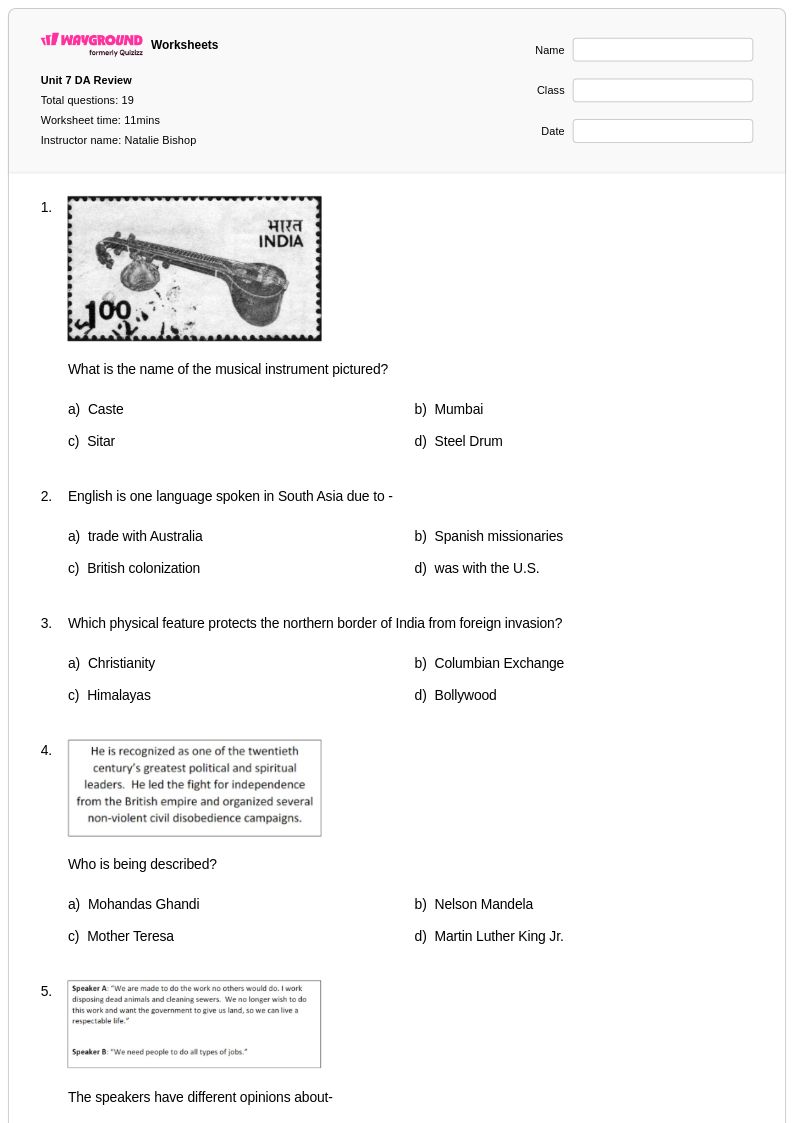
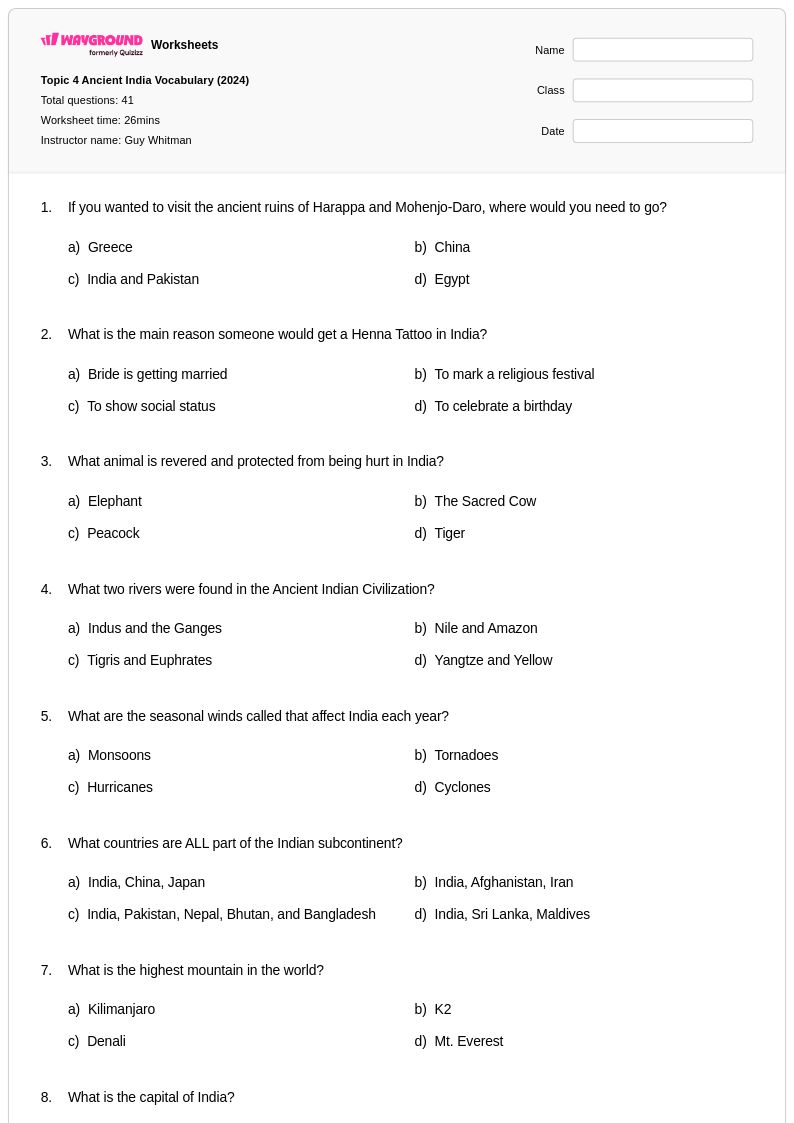
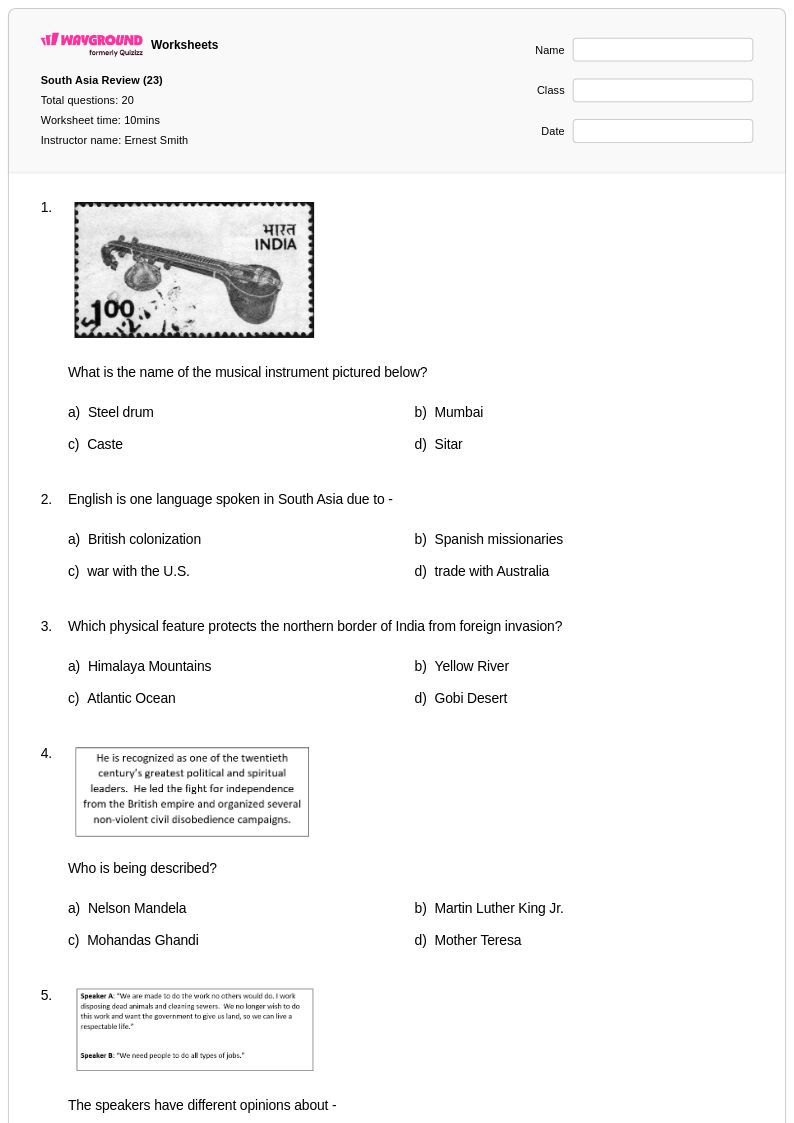
Explore Grade 7 Diwali worksheets and printables that help students learn about this vibrant Hindu festival of lights, featuring free PDF resources with practice problems and answer keys.
Diwali worksheets for Grade 7 students available through Wayground (formerly Quizizz) provide comprehensive educational resources that explore the rich cultural traditions and significance of this important Hindu festival of lights. These expertly designed worksheets strengthen students' understanding of global cultures, religious practices, and community celebrations while developing critical thinking skills about cultural diversity and interfaith awareness. The collection includes detailed practice problems that examine Diwali's historical origins, traditional customs like rangoli art and diyas, regional variations across different countries, and the festival's role in building community connections. Students engage with authentic materials that feature primary source documents, cultural artifacts, and personal narratives, with each worksheet including a comprehensive answer key to support independent learning. These free printables cover essential topics such as the religious mythology behind Diwali, economic impacts of festival celebrations, and cross-cultural comparisons with other festivals of light, making complex cultural concepts accessible through structured activities and thoughtful questioning.
Wayground (formerly Quizizz) empowers teachers with millions of educator-created Diwali resources that support diverse classroom needs and learning objectives in Grade 7 social studies instruction. The platform's robust search and filtering capabilities allow teachers to quickly locate materials aligned with cultural studies standards, while differentiation tools enable customization for various skill levels and learning styles within the same classroom. These flexible worksheet collections are available in both printable pdf formats for traditional classroom use and digital formats for technology-enhanced learning environments, supporting seamless integration into existing lesson plans. Teachers utilize these resources for comprehensive planning of cultural units, targeted remediation for students needing additional support with global awareness concepts, and enrichment activities that deepen understanding of world religions and festivals. The extensive customization options allow educators to modify content complexity, adjust question formats, and incorporate multimedia elements that enhance student engagement with Diwali's cultural significance while building essential skills in cultural analysis and respectful cross-cultural communication.
FAQs
How do I teach Diwali to elementary or middle school students?
Teaching Diwali effectively starts with grounding students in its core meaning: the victory of light over darkness and good over evil, observed across Hindu, Sikh, Jain, and some Buddhist communities. Introduce the five-day festival structure, then layer in specific traditions such as rangoli art, diyas, traditional foods, and family customs. Using primary sources and cultural comparisons helps students move beyond surface-level exposure toward genuine cultural awareness. Connecting Diwali to broader themes of community, celebration, and global citizenship gives the lesson lasting relevance in a social studies context.
What kinds of activities help students practice understanding Diwali's cultural significance?
Practice activities that work well for Diwali include analyzing primary sources about the festival's religious and historical origins, comparing how Diwali is celebrated across different regions and communities, and examining the symbolism behind specific traditions like lighting diyas or creating rangoli. Critical thinking tasks that ask students to explore themes such as light overcoming darkness or the role of community in celebration deepen comprehension beyond factual recall. Worksheets that combine reading passages with guided questions help students build both content knowledge and analytical skills simultaneously.
What misconceptions do students commonly have about Diwali?
A frequent misconception is that Diwali is exclusively a Hindu holiday, when in fact it is also observed by Sikh, Jain, and some Buddhist communities, each with distinct historical and spiritual reasons for the celebration. Students often assume the festival is a single day rather than a five-day observance with different traditions on each day. Another common error is treating Diwali as a monolithic, uniform celebration, when regional and community variations mean practices, stories, and customs can differ significantly. Addressing these misconceptions early builds more accurate and respectful cultural understanding.
How can I use Diwali worksheets to support diverse learners in my classroom?
Diwali worksheets on Wayground can be used in both printable PDF format for traditional classroom settings and in digital formats for technology-integrated or hybrid environments. For students who need additional support, Wayground's platform offers accommodations such as Read Aloud, which allows questions and content to be read to students, and reduced answer choices to lower cognitive load. Extended time can also be configured per student for digital assignments, ensuring equitable access without singling out individual learners. These settings are reusable across sessions, which reduces setup time when the same accommodations are needed for future cultural studies lessons.
How does teaching Diwali fit into a social studies curriculum?
Diwali fits naturally into social studies units on world cultures, world religions, global citizenship, and multicultural awareness. It provides a concrete, well-documented example for exploring themes such as the role of tradition in community identity, how celebrations vary across cultures and regions, and the relationship between religious belief and cultural practice. Incorporating Diwali into curriculum supports standards related to cultural understanding, respect for diversity, and cross-cultural comparison, making it a meaningful anchor for broader conversations about global communities.
What should students be able to demonstrate after completing a Diwali worksheet?
After completing a Diwali worksheet, students should be able to explain the festival's religious and historical origins, identify the communities that observe it and why, and describe specific traditions such as the five-day structure, rangoli, diyas, and traditional foods. They should also be able to articulate the central themes of the festival, including the symbolism of light overcoming darkness, and recognize that celebrations vary across regions and communities. Stronger students should be able to draw cross-cultural connections and reflect on how Diwali relates to broader concepts of tolerance, community, and multicultural understanding.