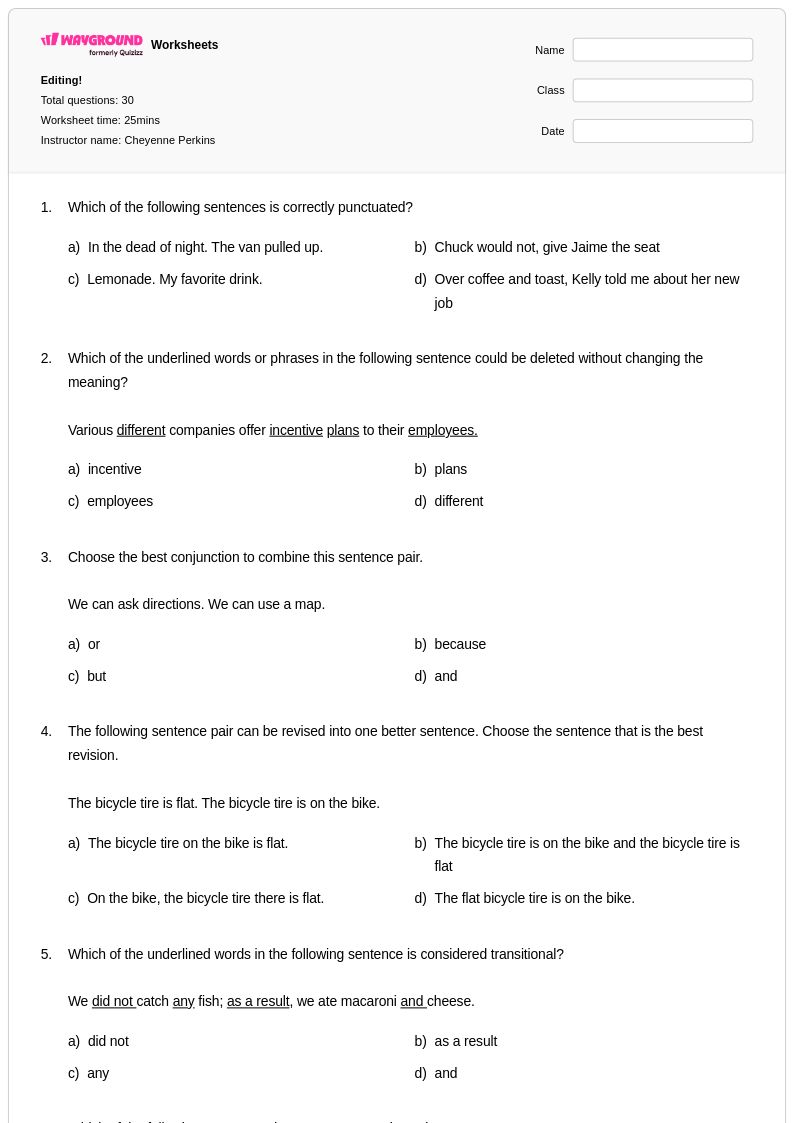
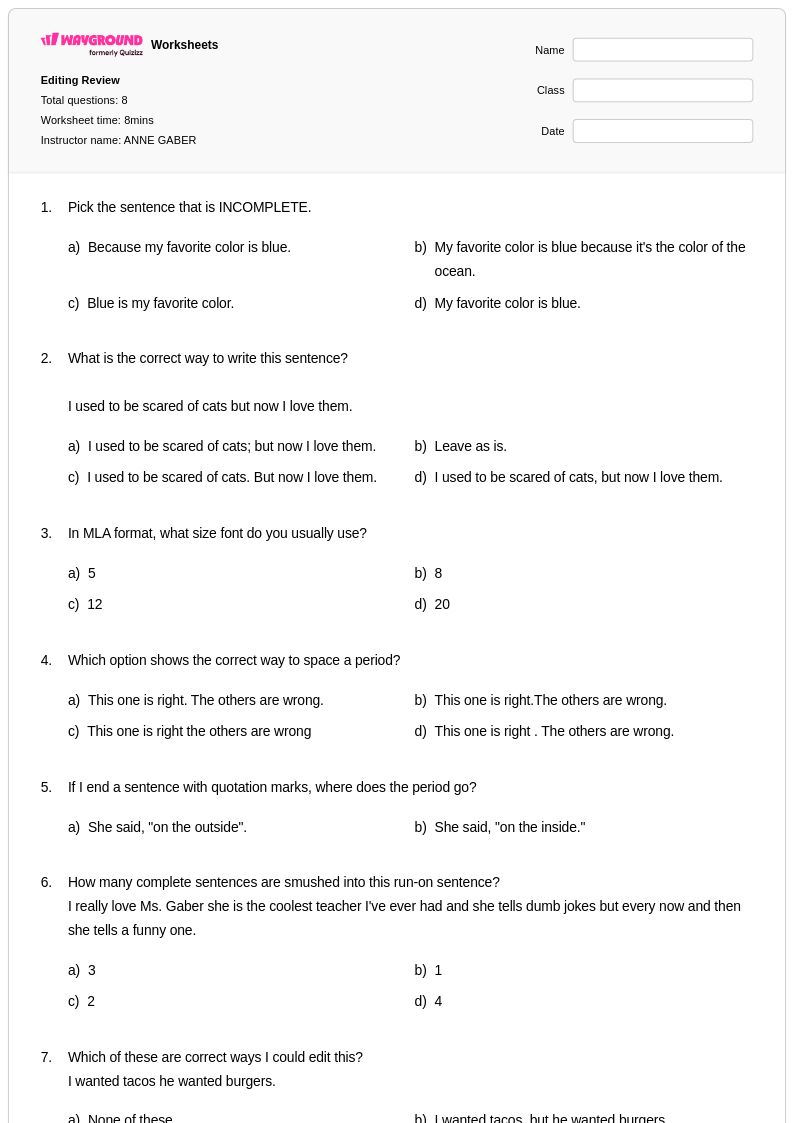
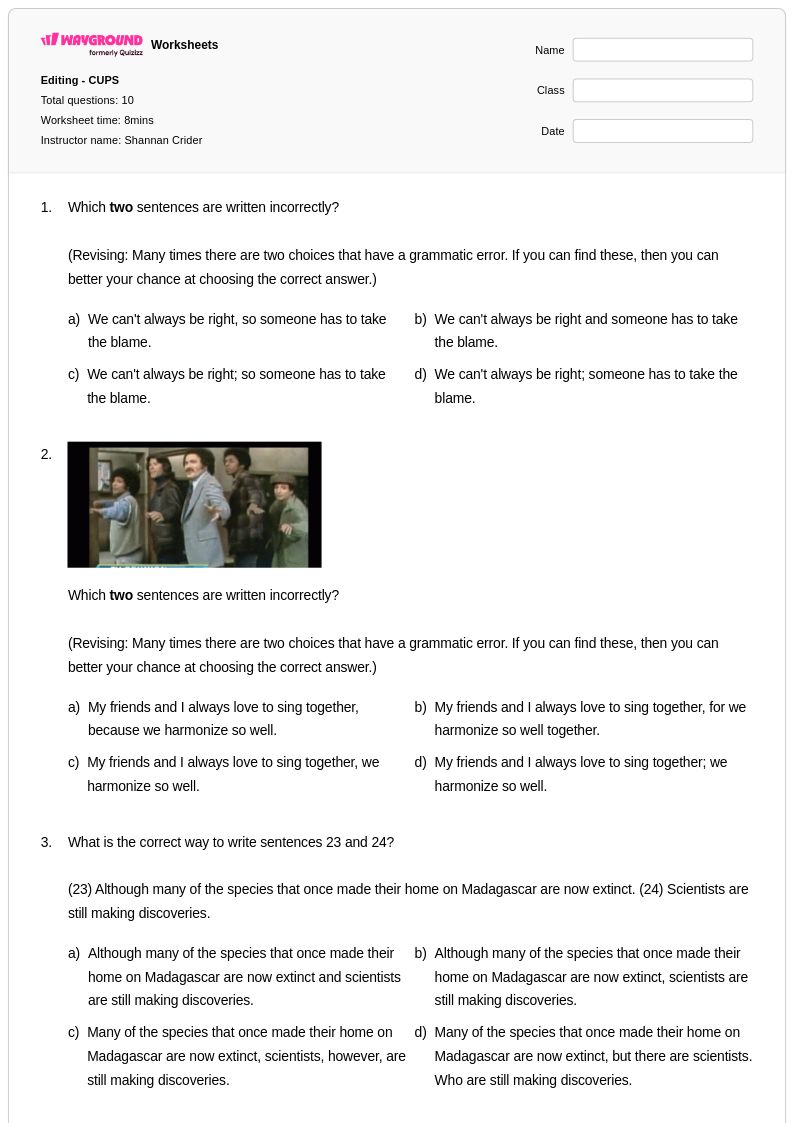
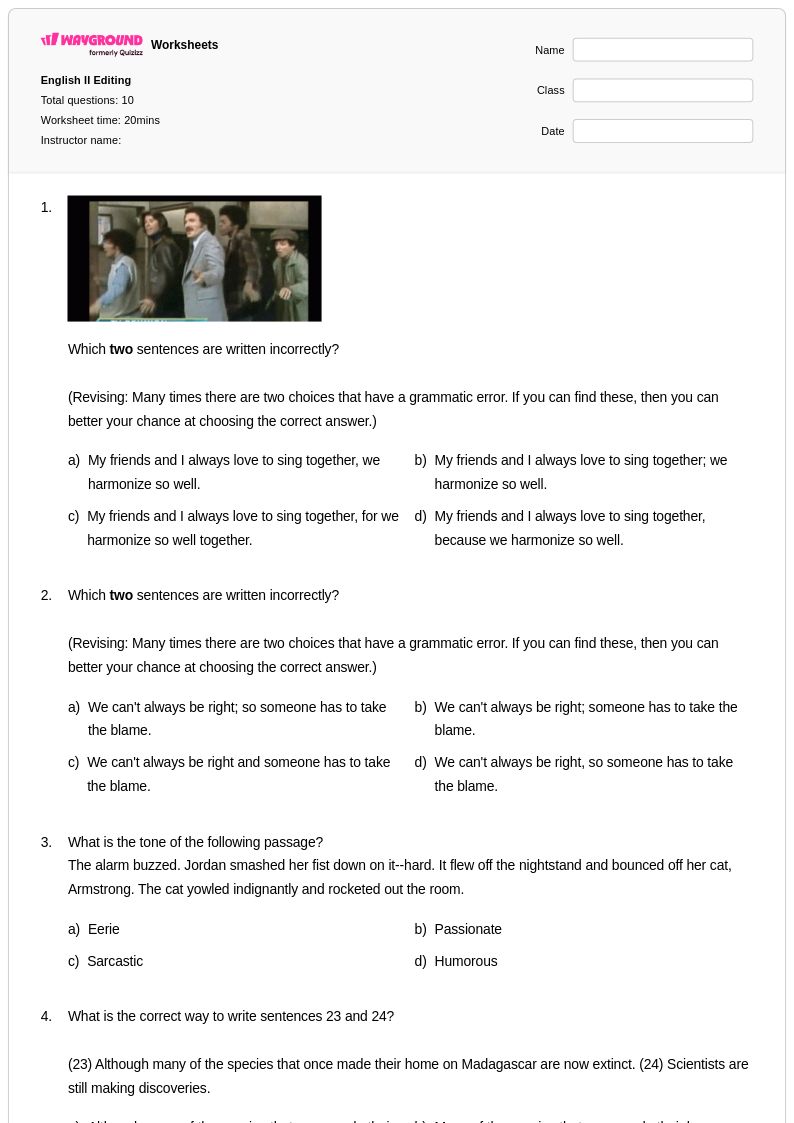
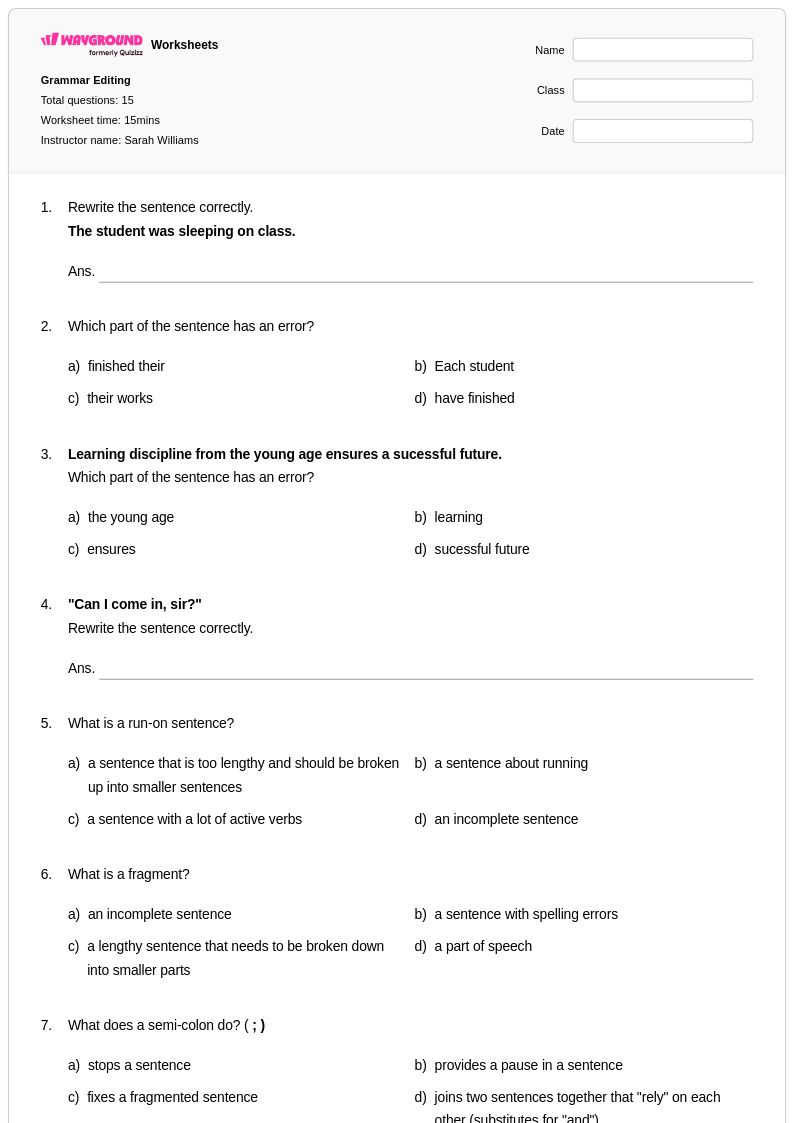
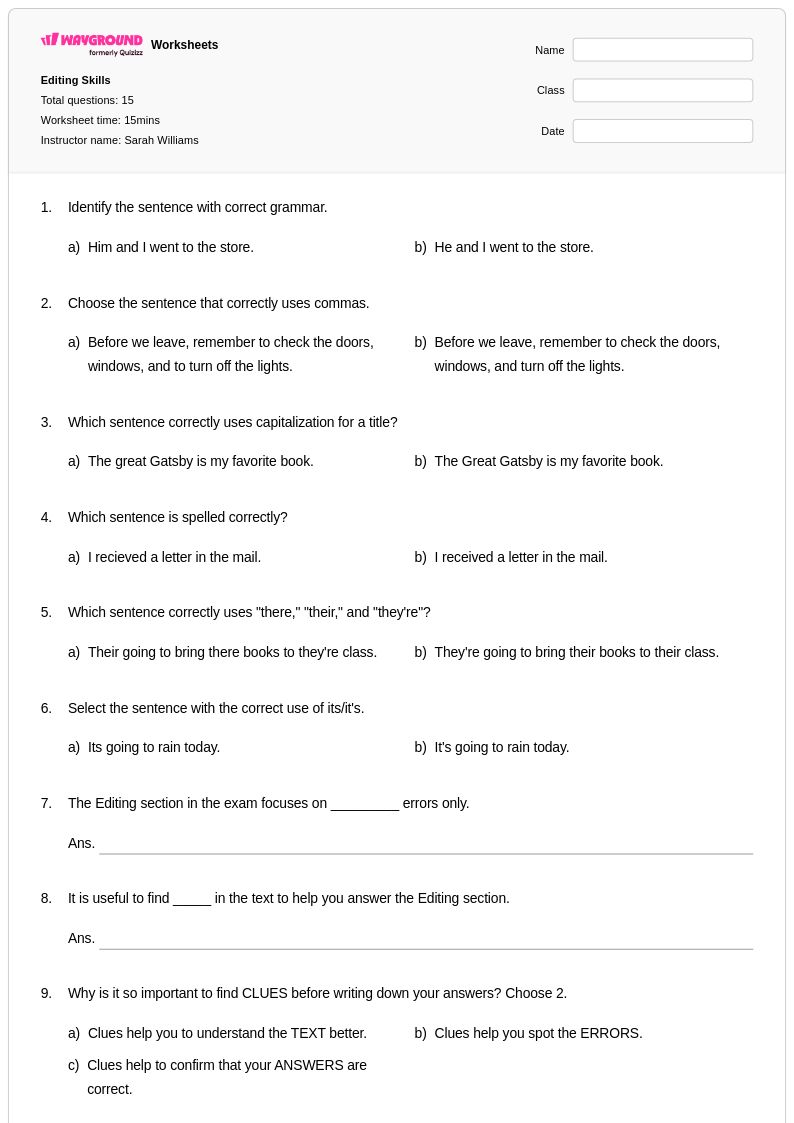
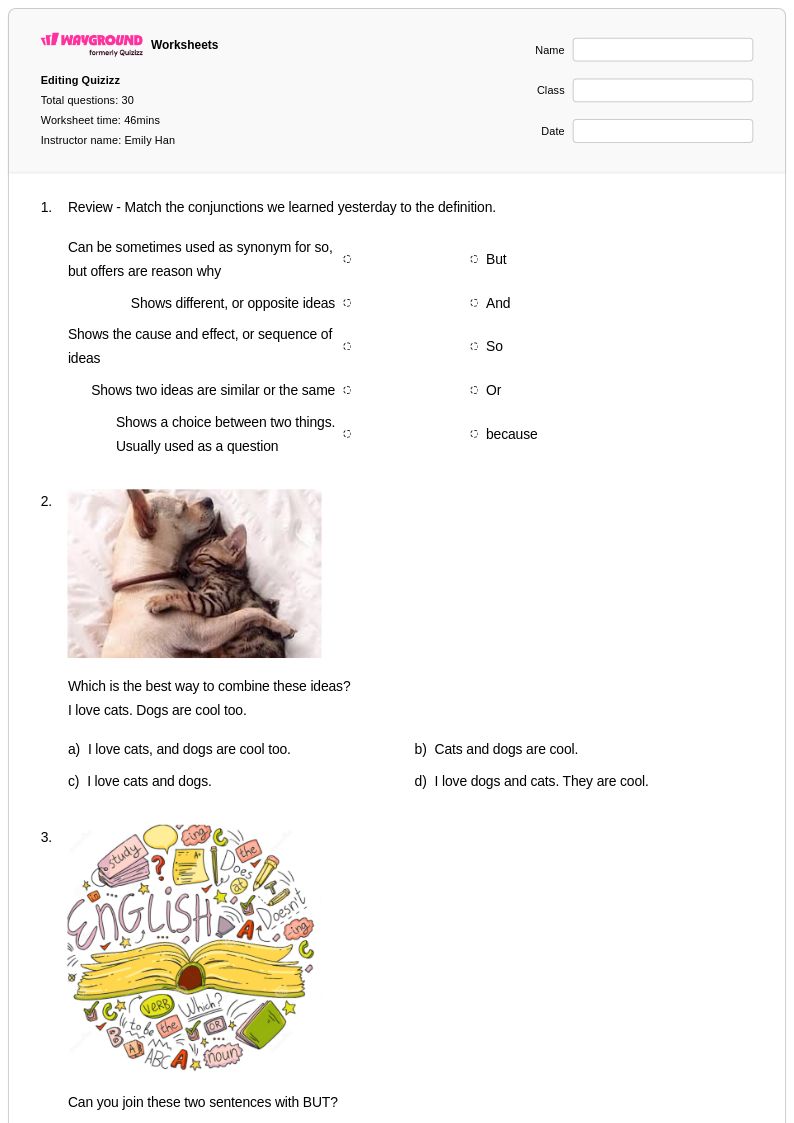
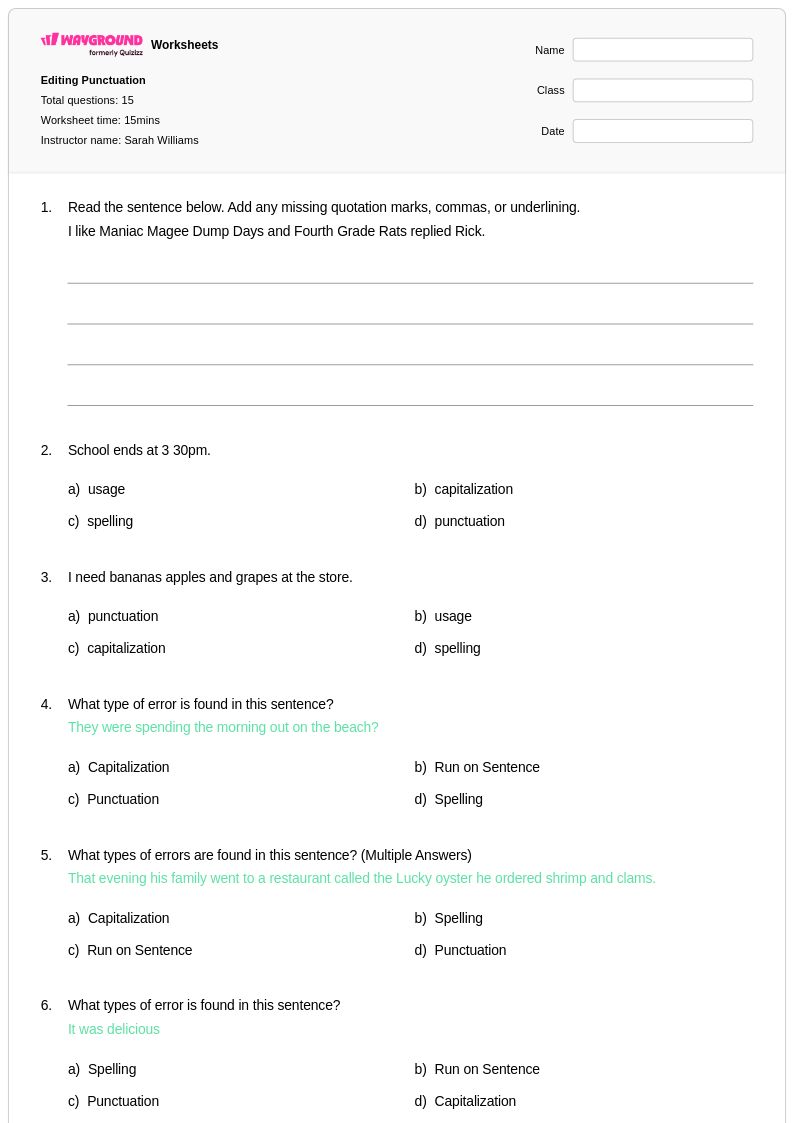
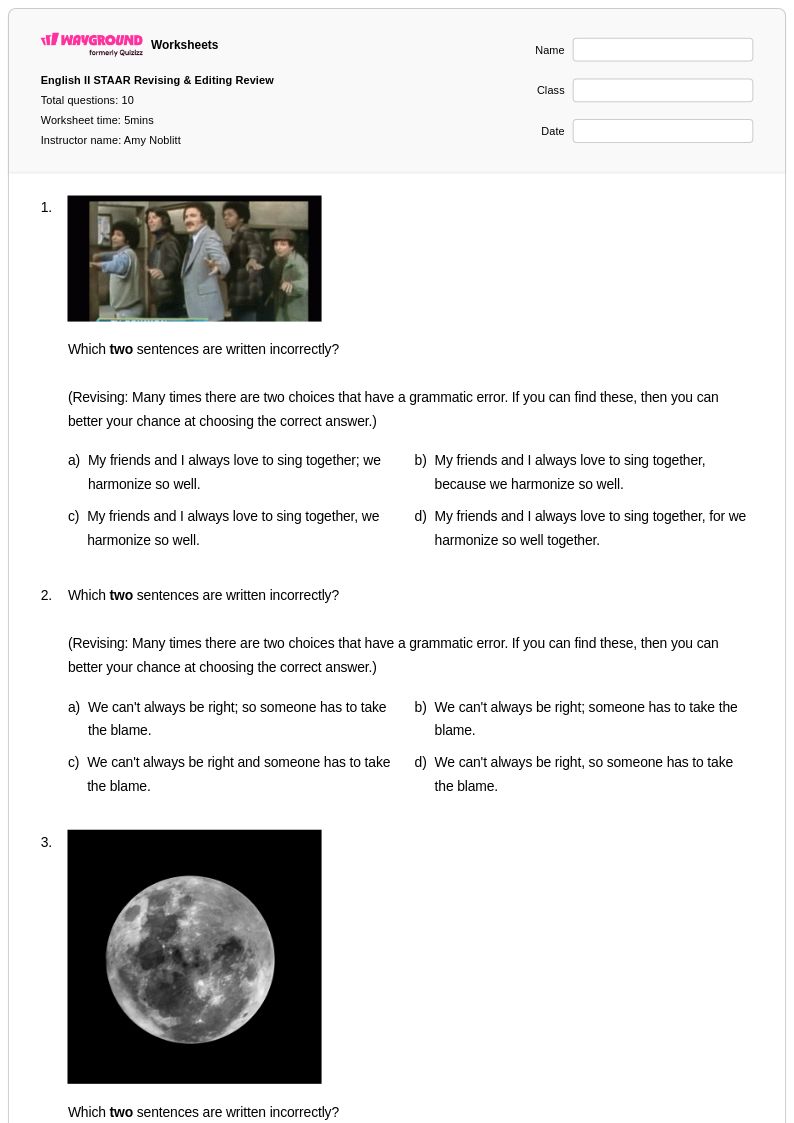
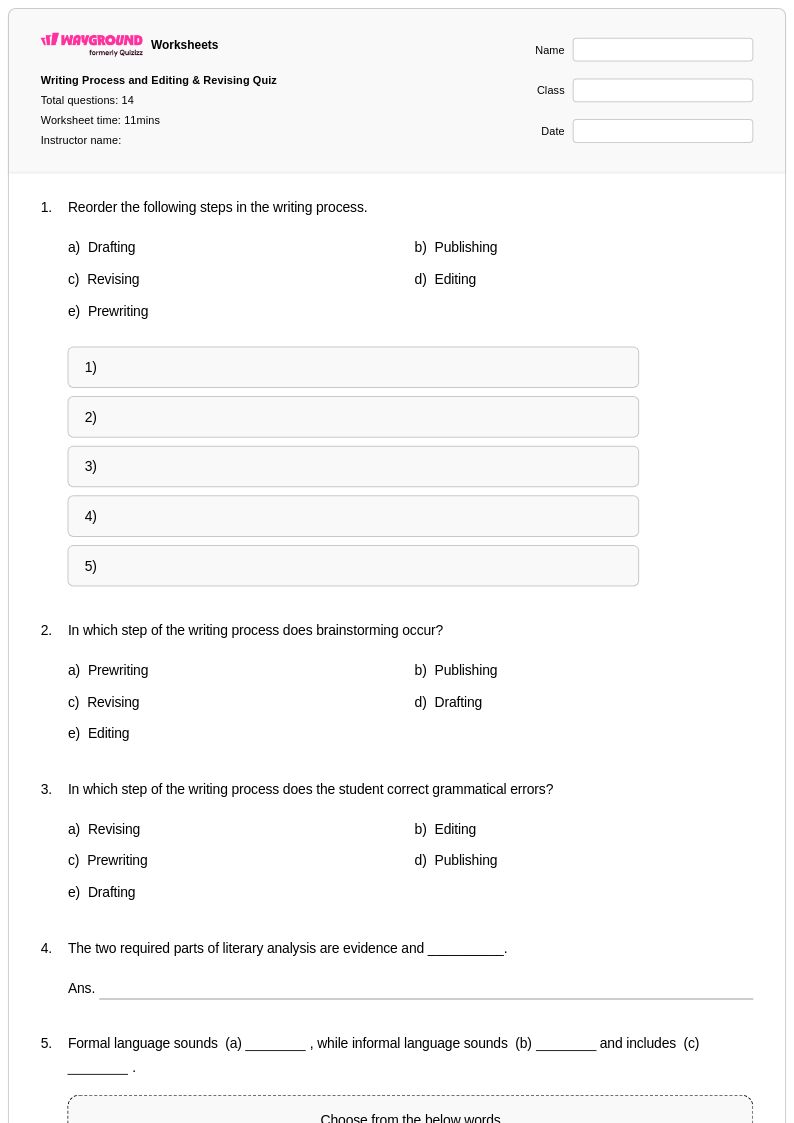
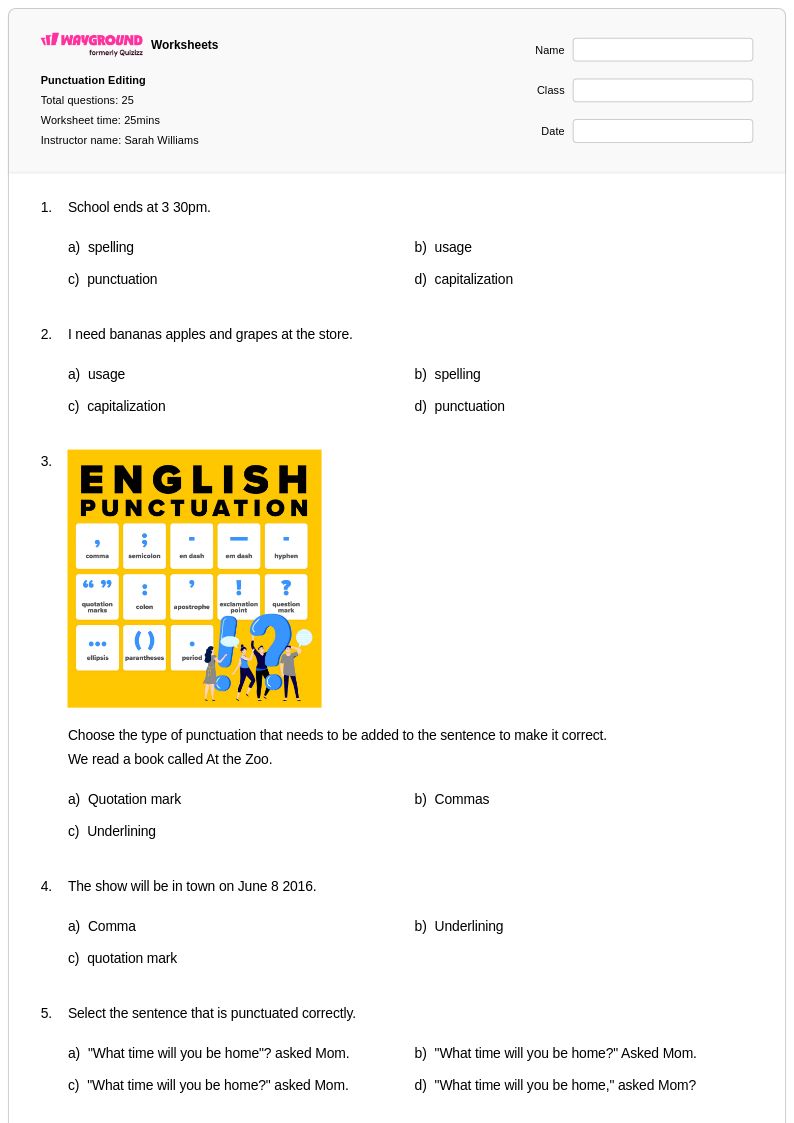
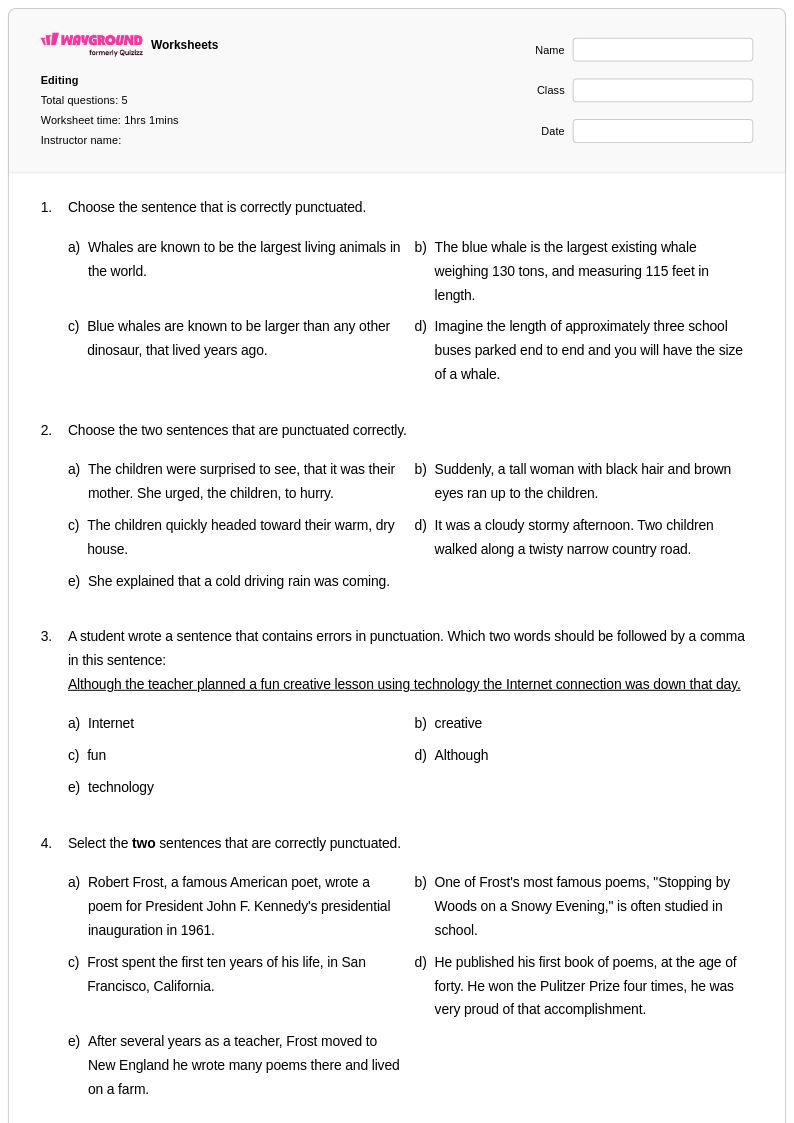
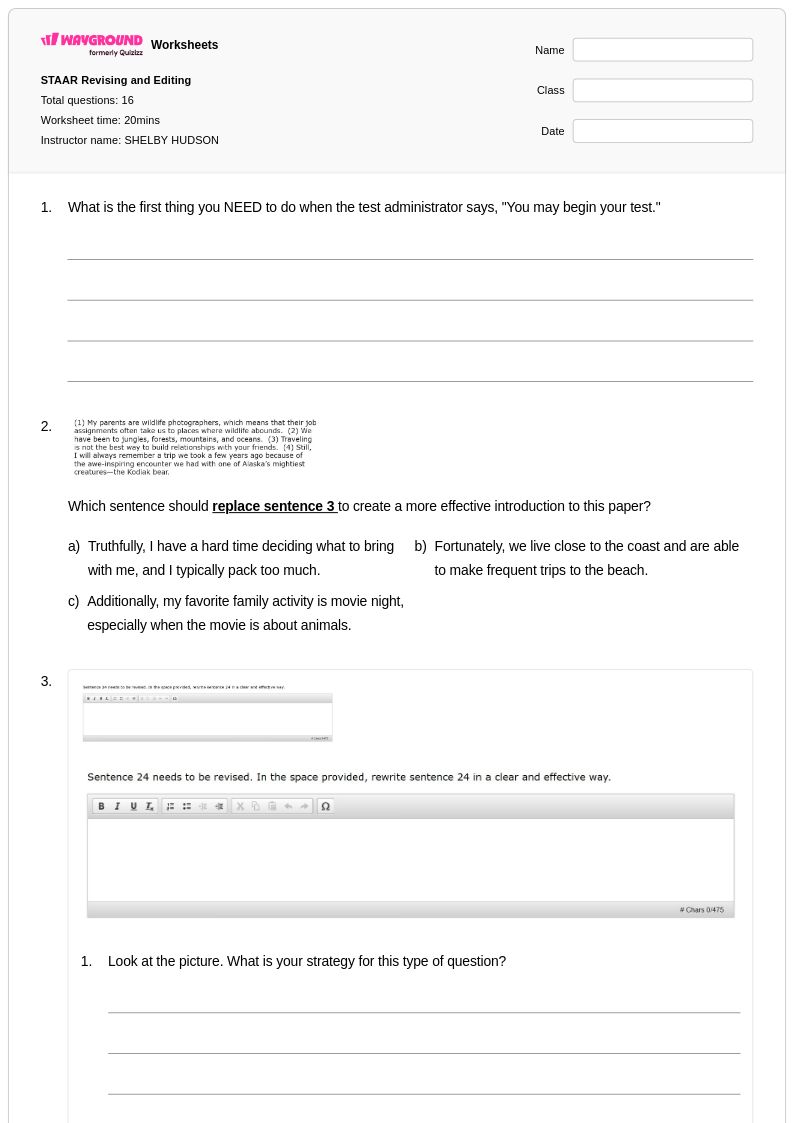
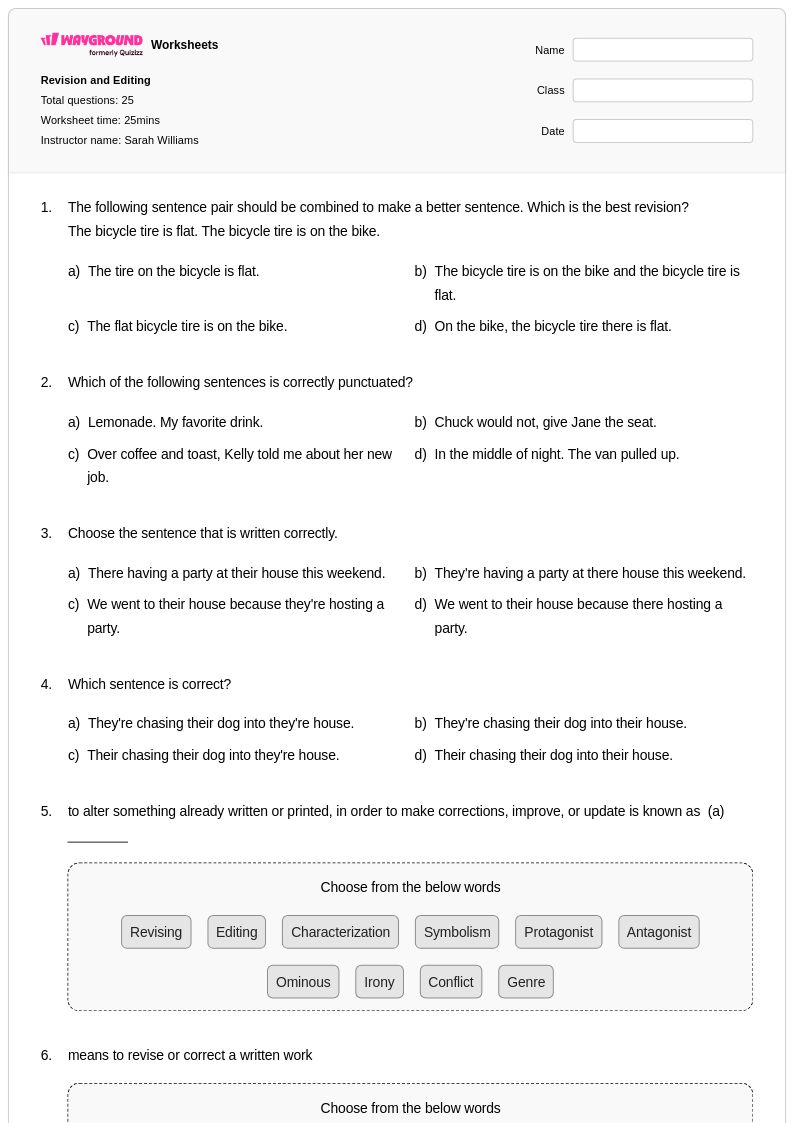
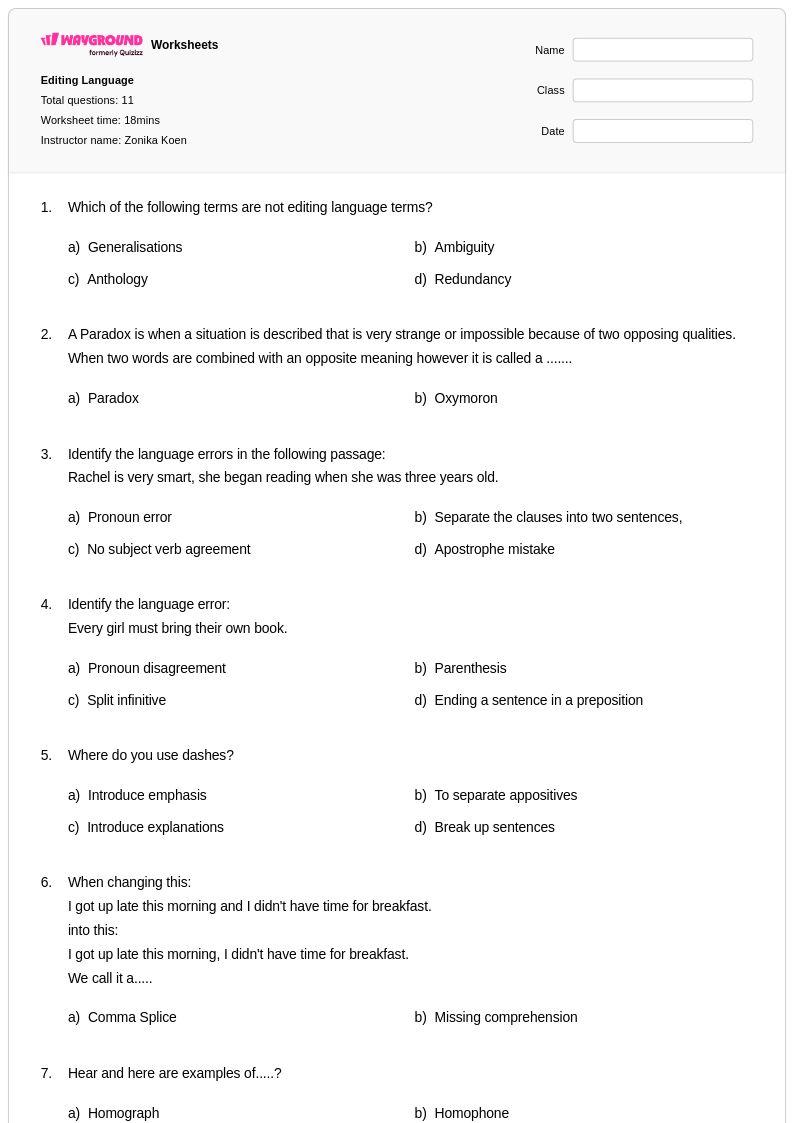
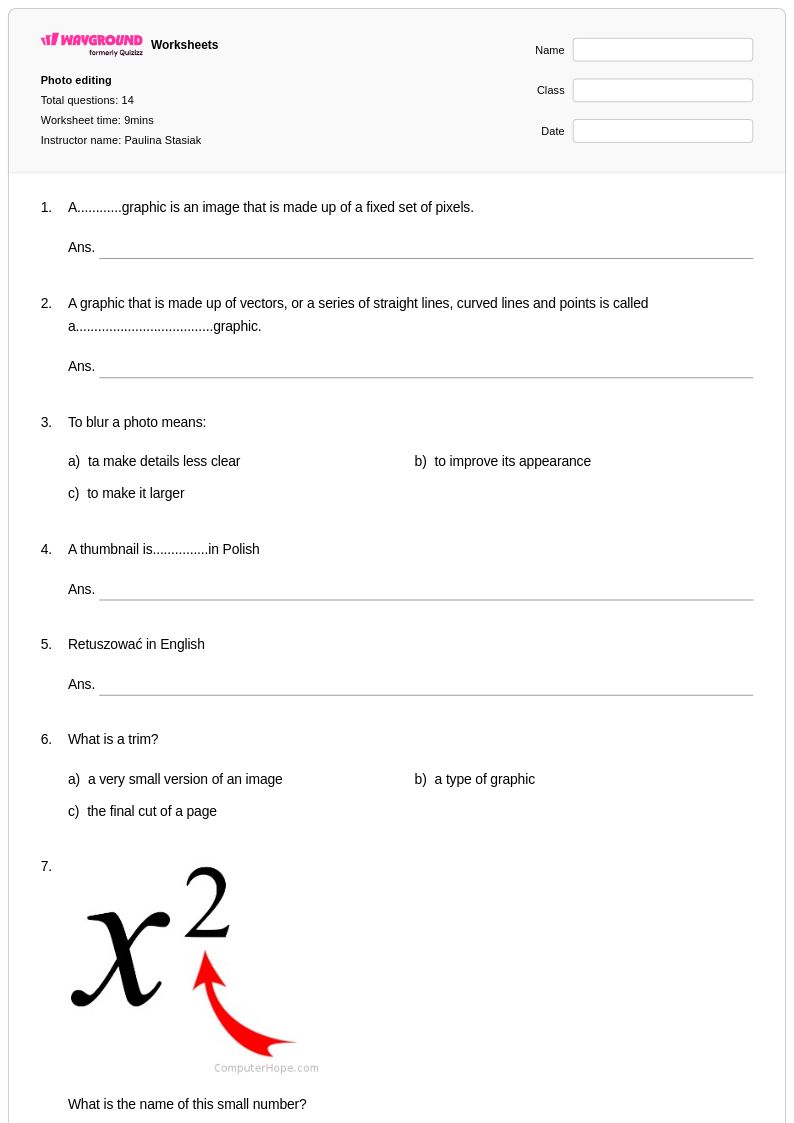
Grade 11 English editing worksheets and printables help students master proofreading, revision techniques, and grammar correction through comprehensive practice problems with detailed answer keys from Wayground.
Editing worksheets for Grade 11 students available through Wayground (formerly Quizizz) provide comprehensive practice in the critical final stage of the writing process, helping students develop the meticulous attention to detail required for polished, professional writing. These carefully designed resources focus on advanced editing skills including identifying and correcting complex grammatical errors, improving sentence structure and flow, eliminating wordiness and redundancy, and ensuring consistency in tone and style throughout longer pieces of writing. Students engage with authentic texts that require sophisticated editing decisions, working through practice problems that mirror real-world editing scenarios they will encounter in college and professional settings. Each worksheet includes detailed answer keys that not only provide corrections but also explain the reasoning behind editorial choices, making these free printables valuable tools for both independent study and classroom instruction.
Wayground (formerly Quizizz) supports educators with an extensive collection of teacher-created editing worksheets, drawing from millions of resources that can be easily accessed through robust search and filtering capabilities. Teachers can quickly locate materials that align with specific curriculum standards and differentiate instruction by selecting worksheets that target particular editing skills or accommodate varying ability levels within their Grade 11 classrooms. The platform's flexible customization options allow educators to modify existing worksheets or combine elements from multiple resources to create targeted practice sessions for remediation or enrichment. Available in both printable pdf format and interactive digital versions, these editing worksheets seamlessly integrate into diverse teaching environments, enabling teachers to provide consistent skill practice whether students are working in class, at home, or in hybrid learning situations.
FAQs
How do I teach editing skills to students?
Effective editing instruction begins with modeling the process explicitly — show students how to read for one type of error at a time rather than trying to catch everything at once. Start with high-frequency issues like punctuation and capitalization before moving to more complex concerns like sentence clarity and paragraph cohesion. Using mentor texts and sample passages gives students low-stakes practice before applying the same skills to their own writing.
What is the difference between editing and revising in the writing process?
Revision focuses on the larger elements of writing — reorganizing ideas, strengthening arguments, and improving clarity of meaning — while editing addresses surface-level corrections such as grammar, punctuation, spelling, and sentence structure. Students often conflate the two, which is why teaching them as distinct, sequential steps is important. Revision happens first, editing last, and worksheets that target each separately help students internalize that distinction.
What exercises help students practice editing skills?
Effective editing practice includes error-correction exercises where students identify and fix mistakes in sample paragraphs, sentence-combining tasks that strengthen syntax awareness, and peer editing activities using structured checklists. Worksheets that present authentic writing scenarios — rather than isolated grammar drills — build the analytical habits students need to transfer editing skills to their own work. Regular, short practice sessions are more effective than infrequent long ones for building automaticity.
What mistakes do students commonly make when editing their writing?
One of the most common errors is reading what they intended to write rather than what is actually on the page, causing students to miss spelling and word-choice mistakes. Students also frequently overlook run-on sentences and comma splices because the sentences feel natural when read aloud. Another persistent issue is inconsistent verb tense, particularly in narrative writing where students shift between past and present without realizing it.
How can I differentiate editing instruction for students at different skill levels?
For students who struggle, narrow the focus to one or two error types per session and reduce the volume of text they are editing at a time to avoid cognitive overload. More advanced students can work with longer, more complex passages or take on peer editing roles that require them to articulate feedback. On Wayground, teachers can apply accommodations such as reduced answer choices and read aloud features to individual students, allowing the same worksheet to serve a range of learners without creating separate materials.
How do I use Wayground's editing worksheets in my classroom?
Wayground's editing worksheets are available as printable PDFs for traditional classroom use and in digital formats for technology-integrated environments, giving teachers flexibility depending on their setup. Teachers can also host editing worksheets as a live or self-paced quiz on Wayground, which allows for real-time progress monitoring and instant feedback for students. Answer keys are included with each worksheet, supporting independent practice, self-assessment, and efficient grading.