
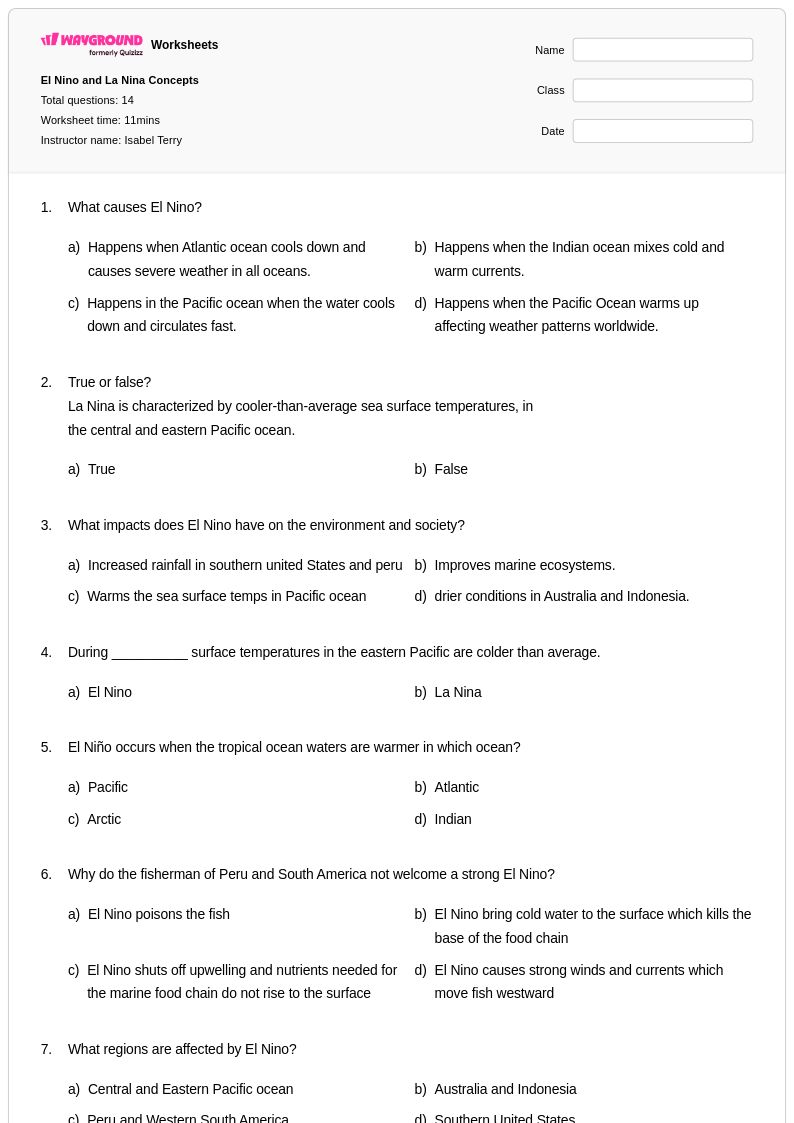
14 Q
9th - 12th
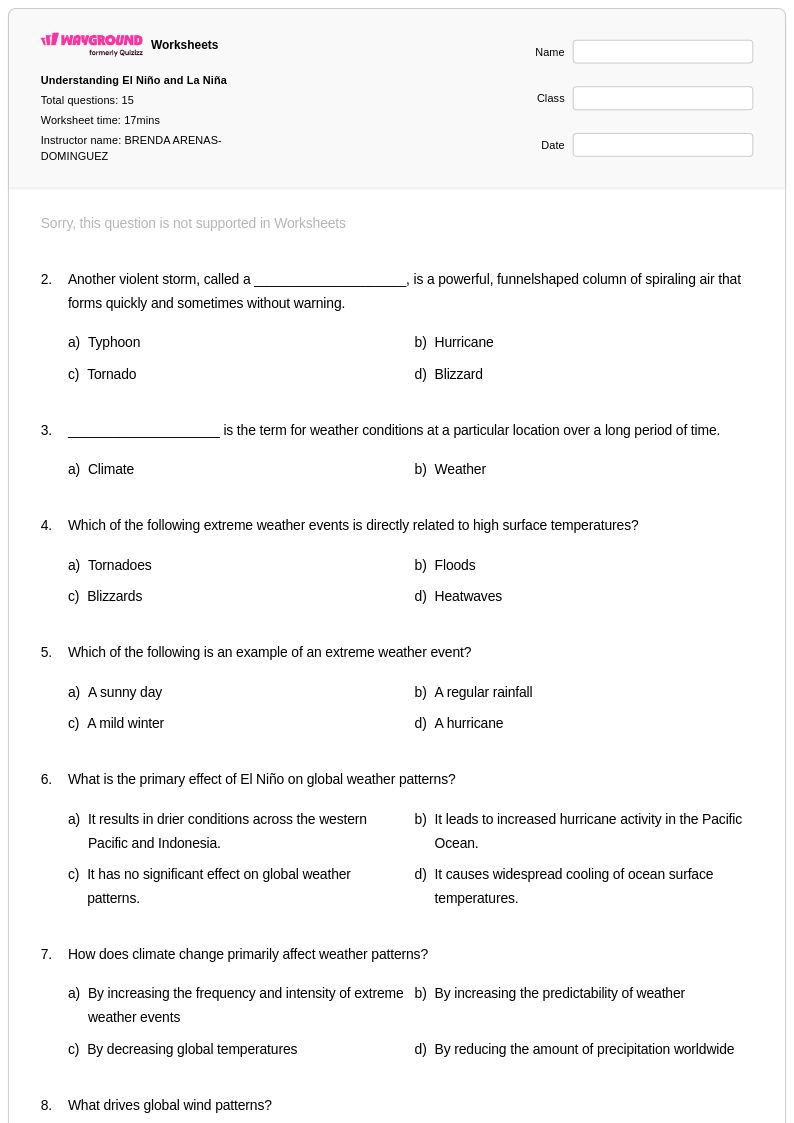
25 Q
9th
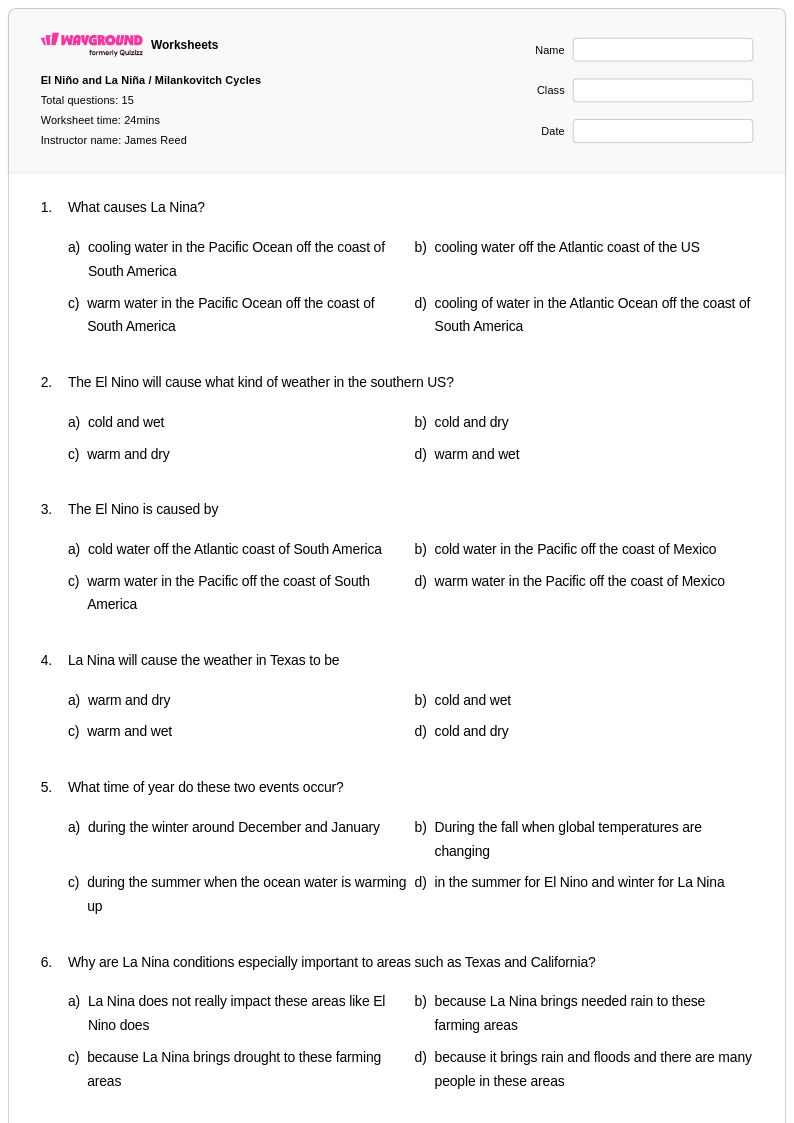
15 Q
9th - 12th
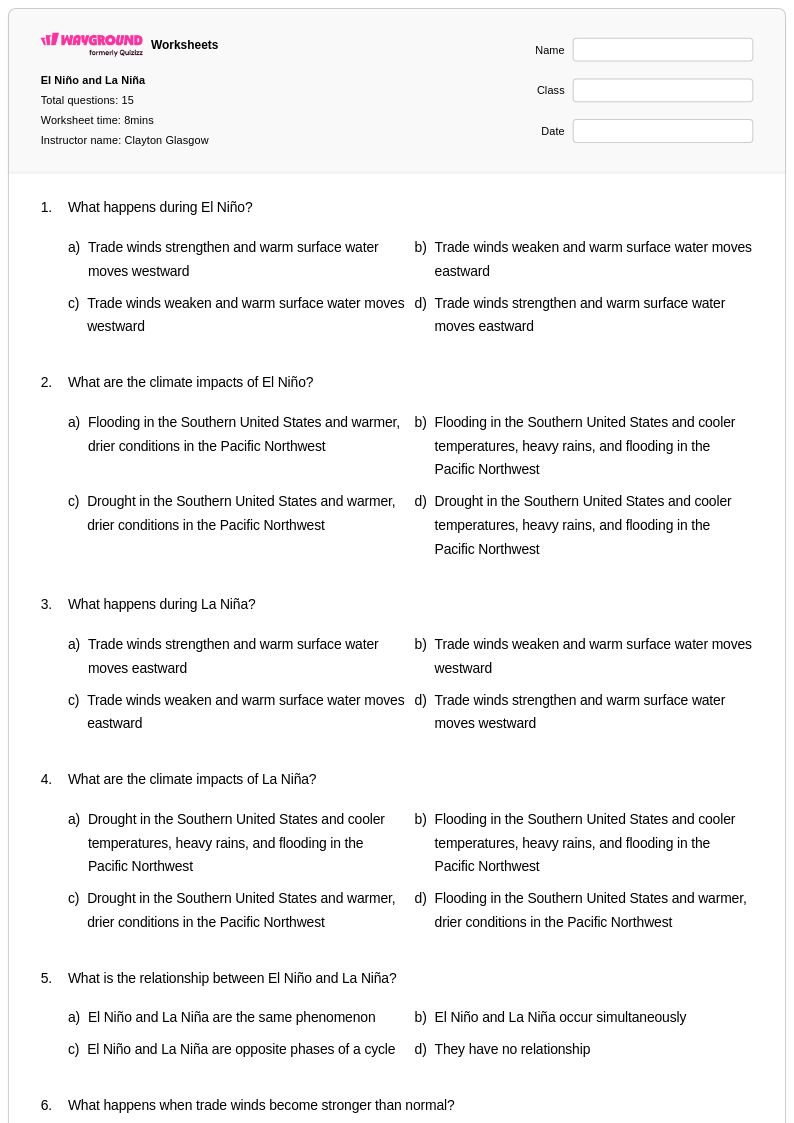
15 Q
9th - 12th
10 Q
9th - 12th
10 Q
9th - 12th

11 Q
9th - 12th
20 Q
9th
17 Q
9th - 12th
24 Q
9th
12 Q
9th - 12th
24 Q
6th - Uni
15 Q
9th - 12th
5 Q
9th - 12th
26 Q
8th - Uni
7 Q
9th
10 Q
9th
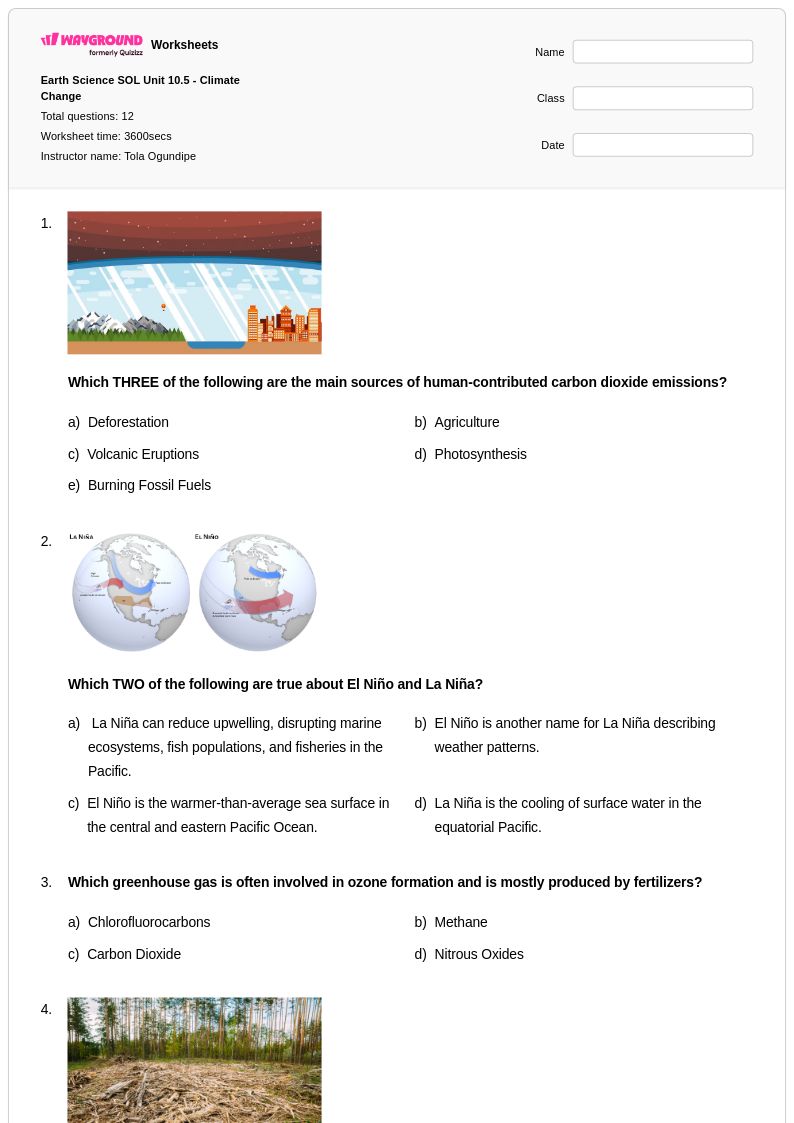
12 Q
9th - 12th
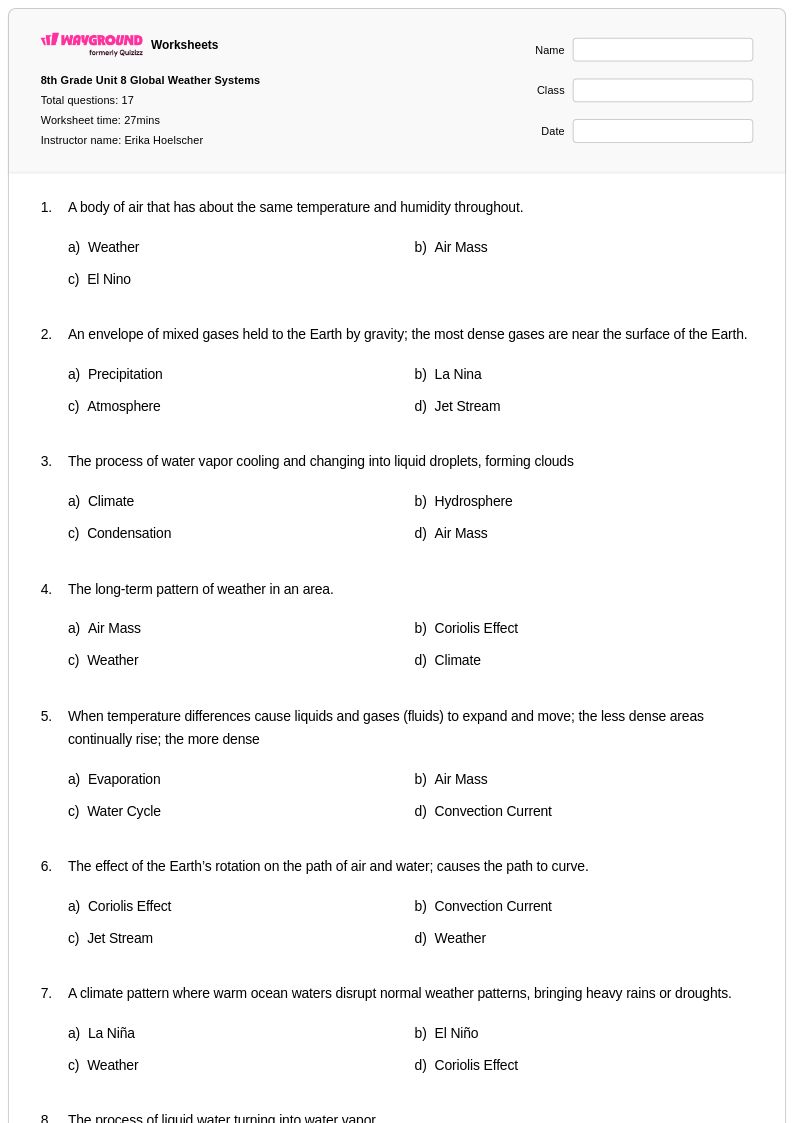
17 Q
8th - Uni
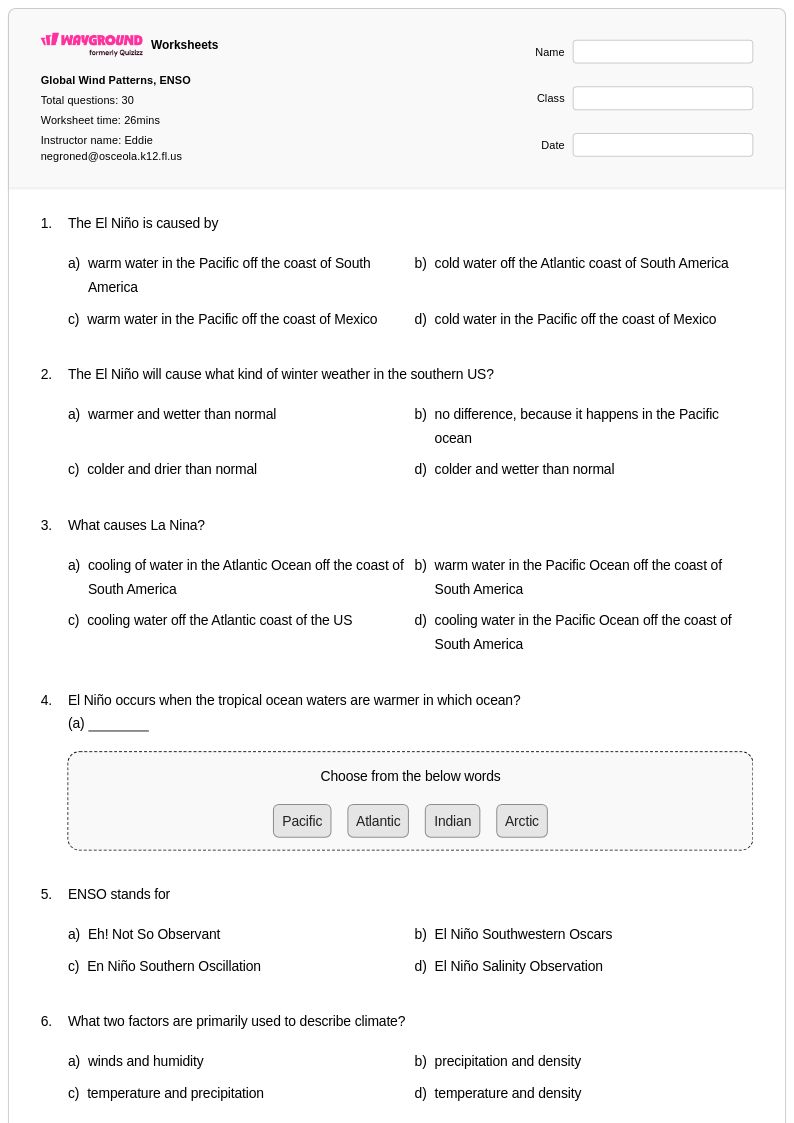
30 Q
9th - 12th
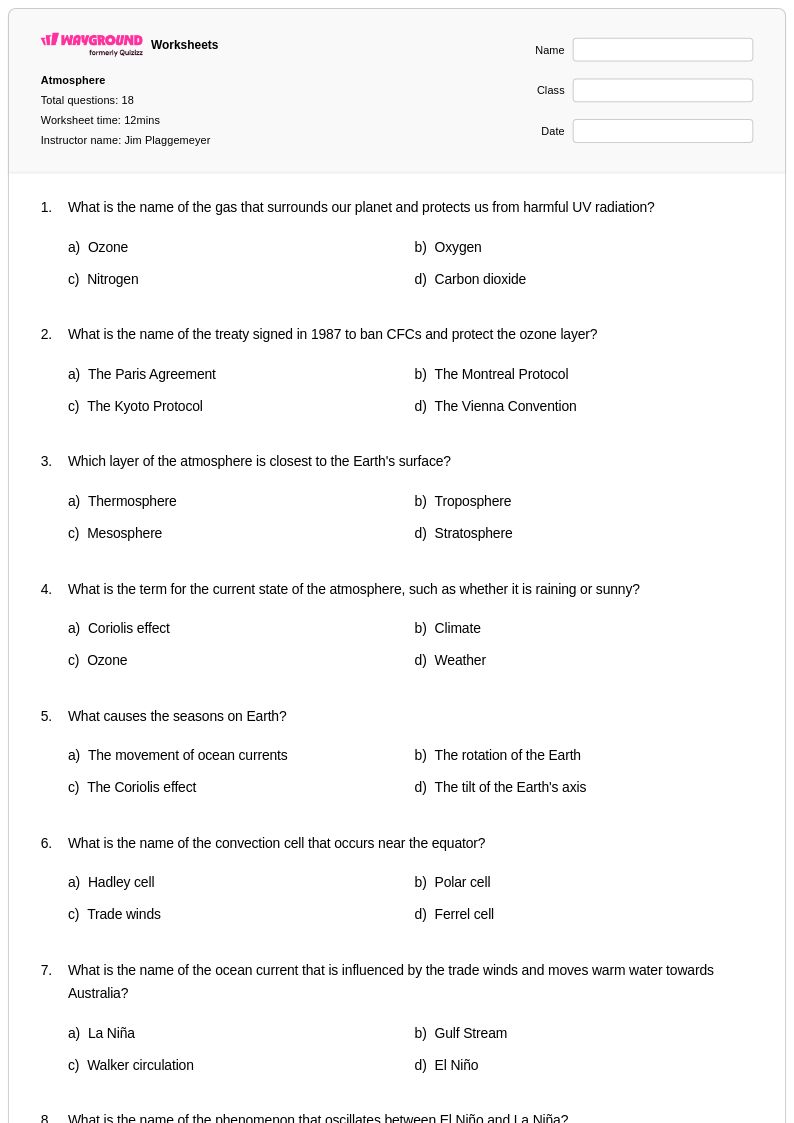
18 Q
9th - 12th
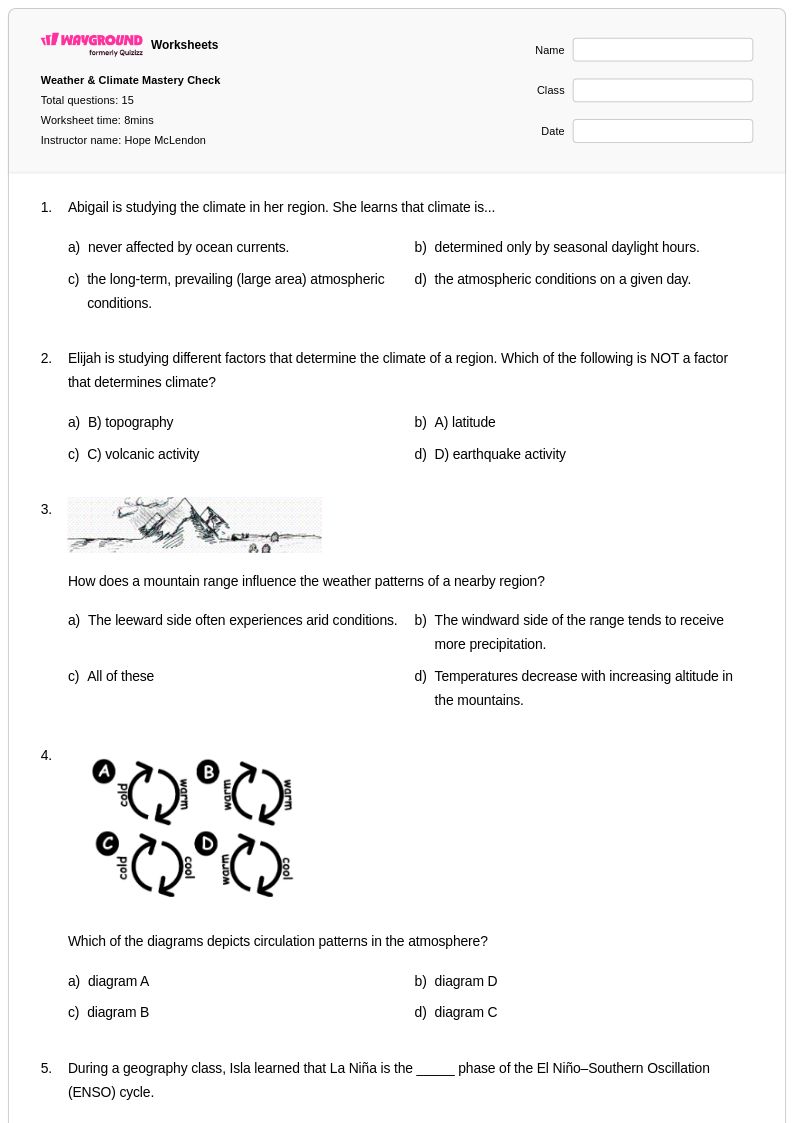
15 Q
9th
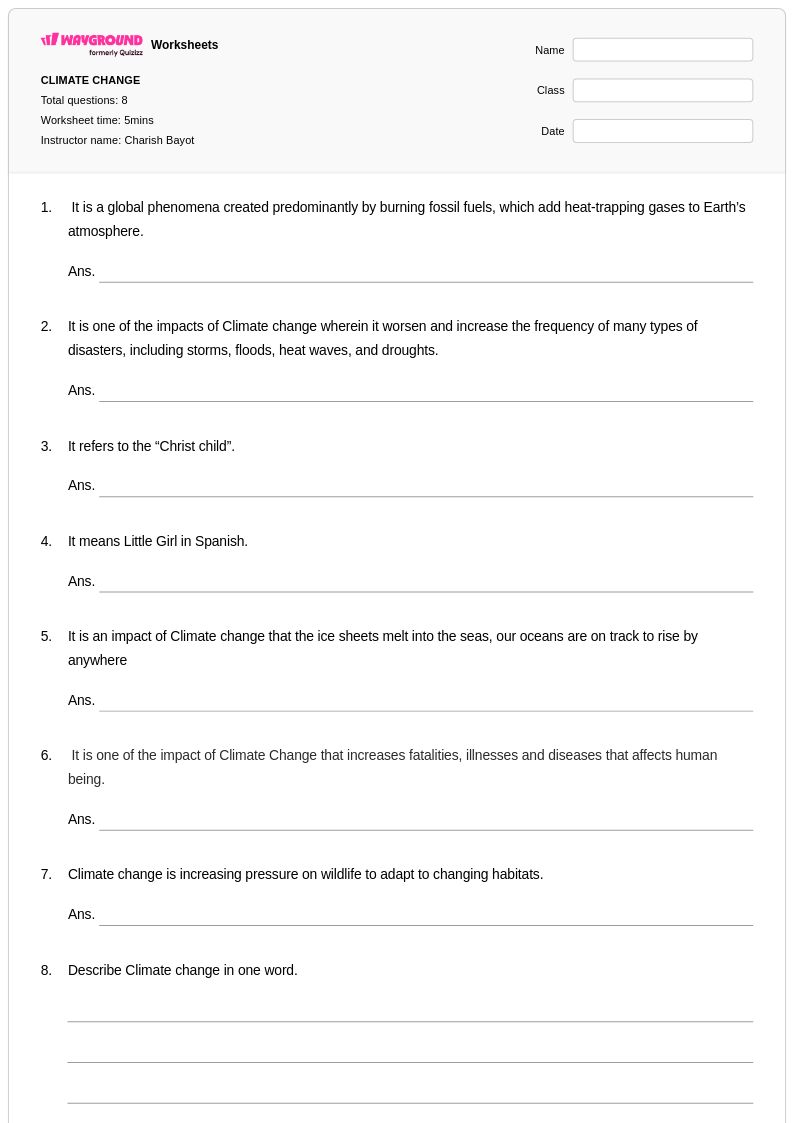
8 Q
9th
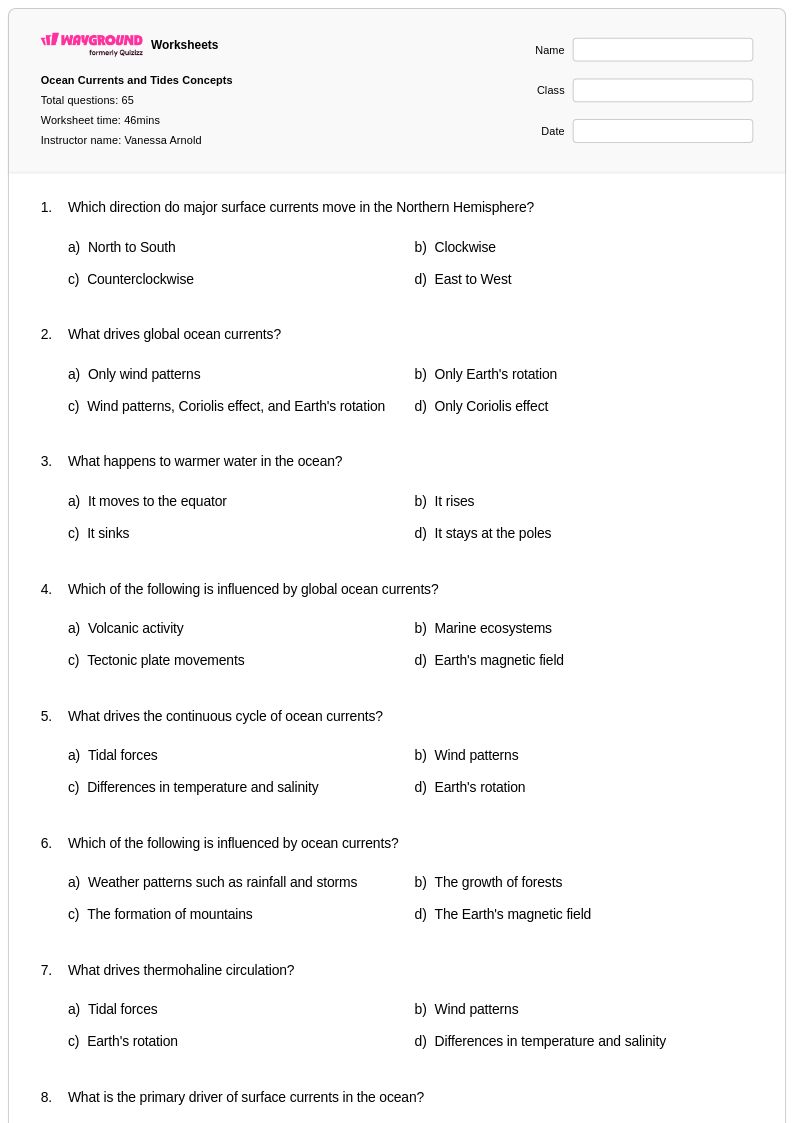
65 Q
9th - 12th
Explore El Niño and La Niña Worksheets by Grades
Explore Other Subject Worksheets for grade 9
Explore printable El Niño and La Niña worksheets for Grade 9
El Niño and La Niña worksheets for Grade 9 students available through Wayground provide comprehensive practice with these critical oceanic-atmospheric climate phenomena that significantly impact global weather patterns. These carefully designed educational resources help students master the complex interactions between ocean temperatures, atmospheric pressure systems, and resulting climate variations across the Pacific region and beyond. The worksheets strengthen essential skills including data interpretation of sea surface temperature anomalies, analysis of precipitation and temperature pattern changes, and understanding of teleconnections that link these phenomena to droughts, floods, and extreme weather events worldwide. Students work through practice problems that examine the Southern Oscillation Index, thermocline behavior, and trade wind variations, with complete answer key materials provided to support independent learning and assessment preparation in both free printable and digital pdf formats.
Wayground's extensive collection of teacher-created El Niño and La Niña resources draws from millions of high-quality educational materials specifically aligned with Grade 9 Earth and Space Science standards. The platform's advanced search and filtering capabilities enable educators to quickly locate worksheets that match their specific instructional needs, whether focusing on the Walker Circulation, ENSO cycle periodicity, or regional climate impacts. Teachers benefit from robust differentiation tools that allow customization of content complexity and question types, making it simple to provide appropriate challenges for diverse learners while addressing remediation and enrichment goals. The flexible format options, including both printable worksheets and interactive digital versions, support various classroom environments and learning preferences, streamlining lesson planning while ensuring students develop strong analytical skills for interpreting climate data and understanding these fundamental drivers of global weather variability.