Free Printable Geologic Time Worksheets for Grade 9
Explore Wayground's comprehensive collection of Grade 9 Geologic Time worksheets, featuring free printables and practice problems with answer keys to help students master Earth's geological history and timescales.
Explore printable Geologic Time worksheets for Grade 9
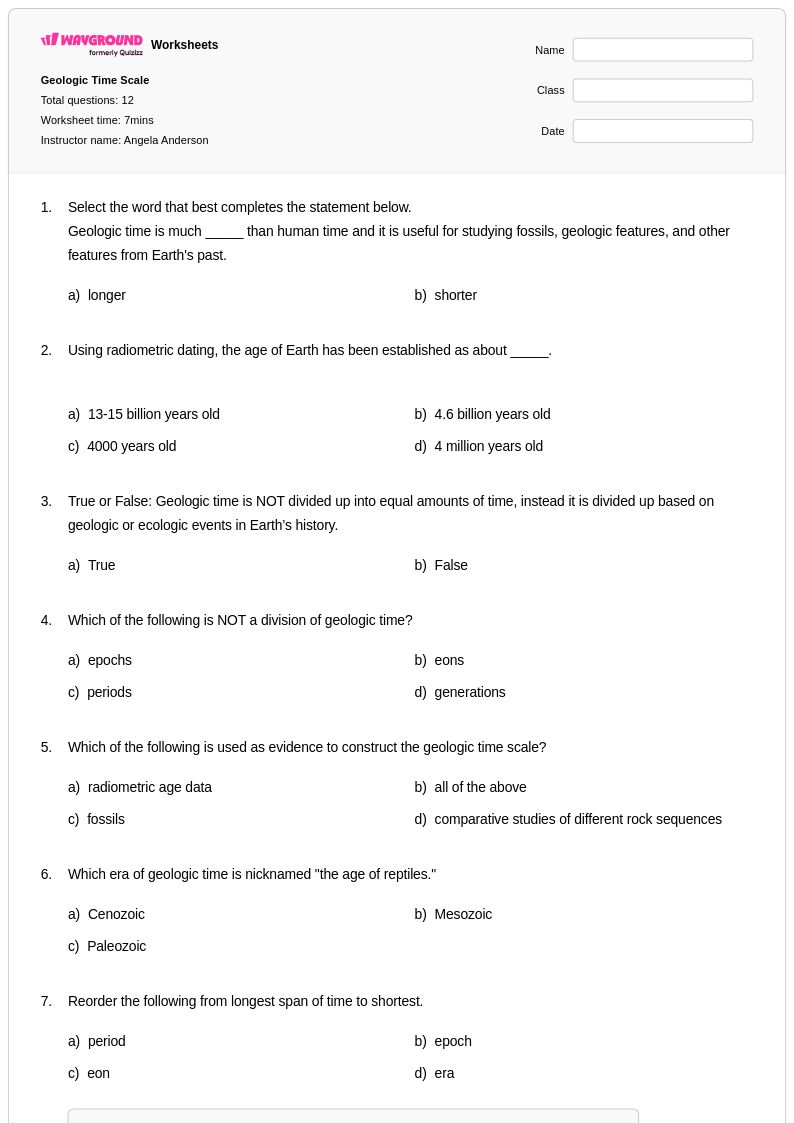
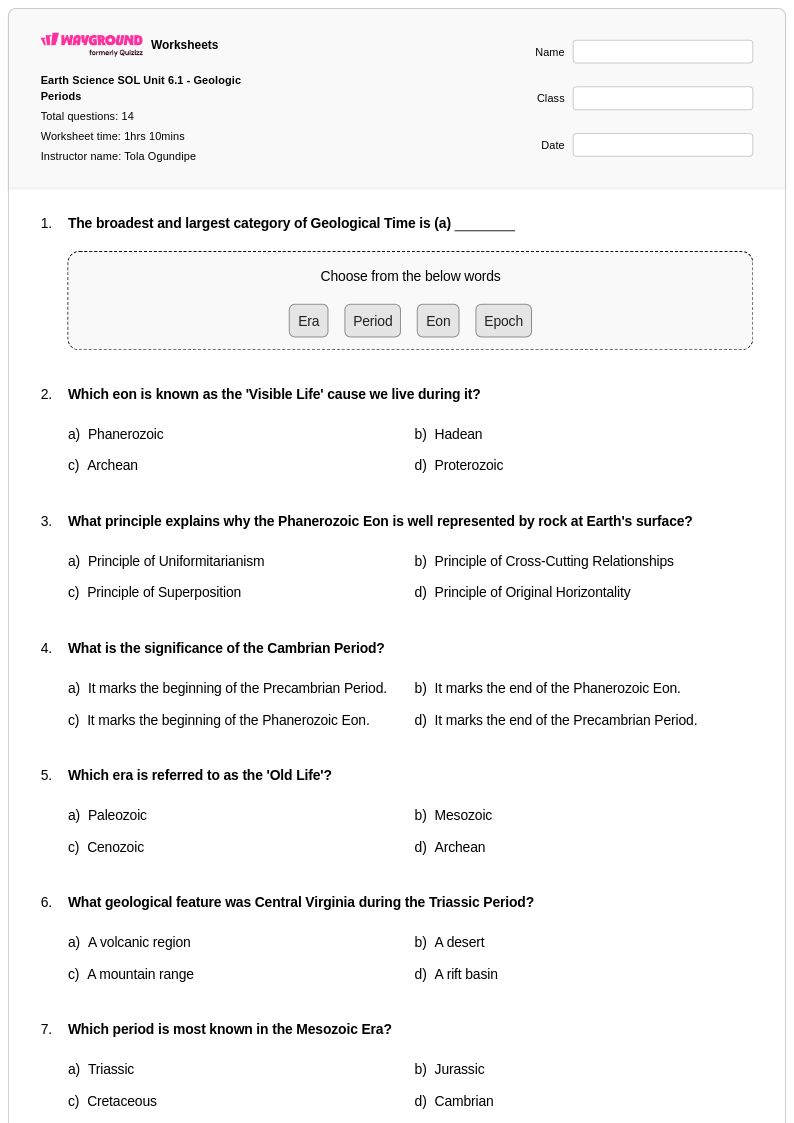
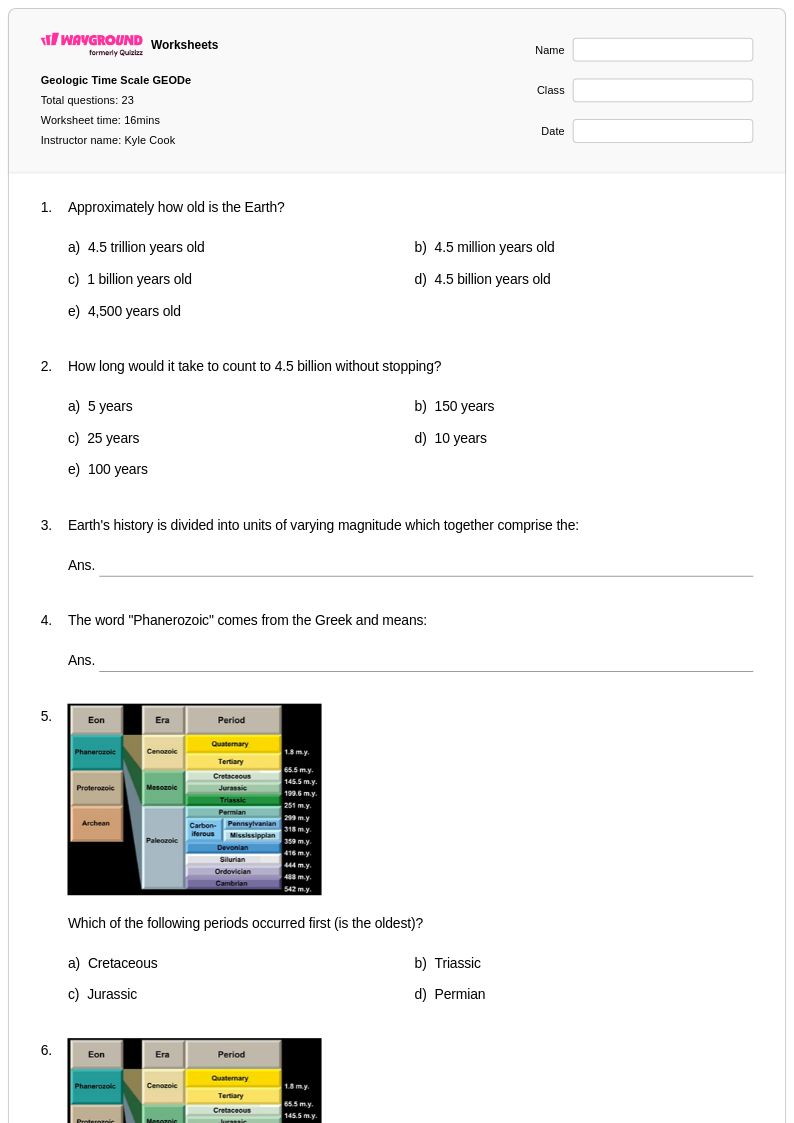
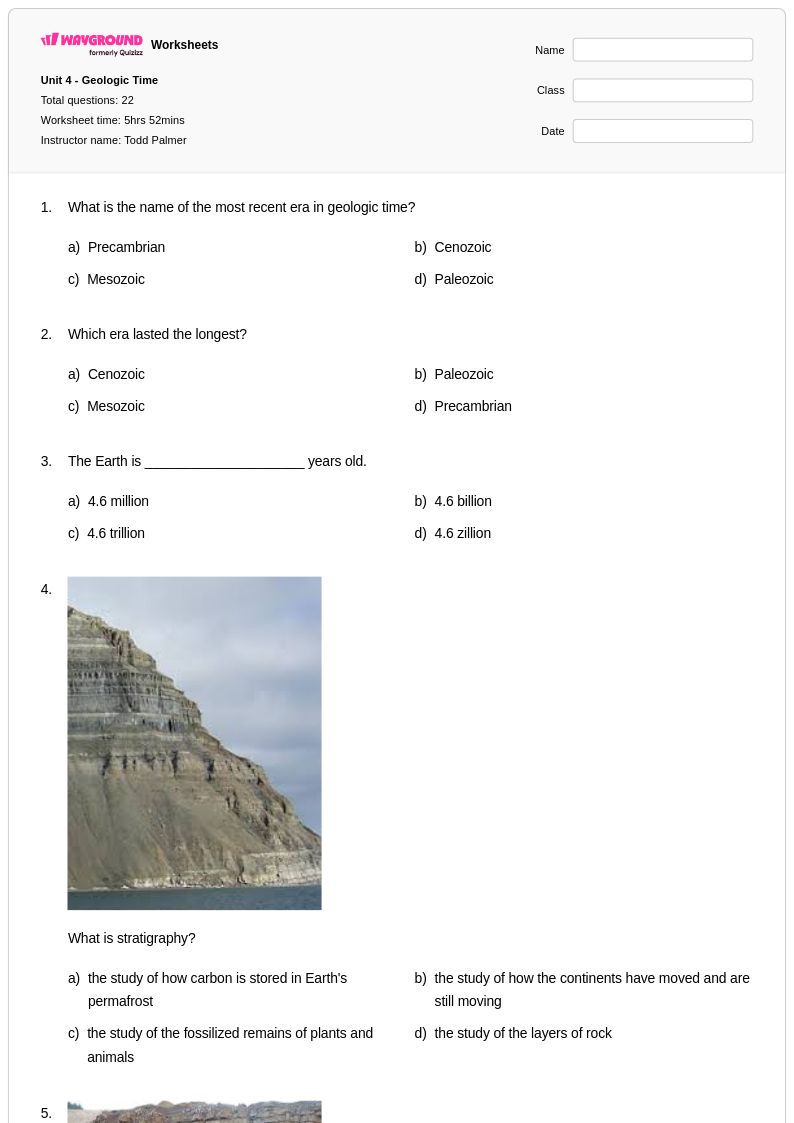
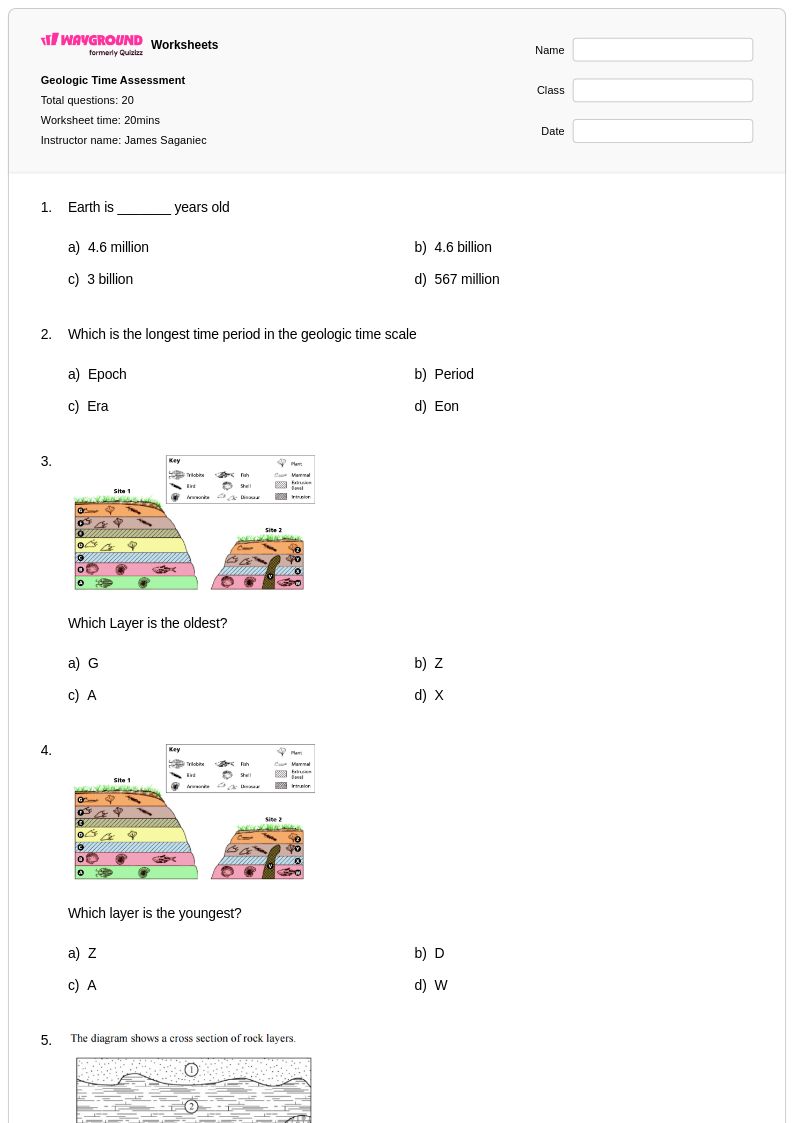
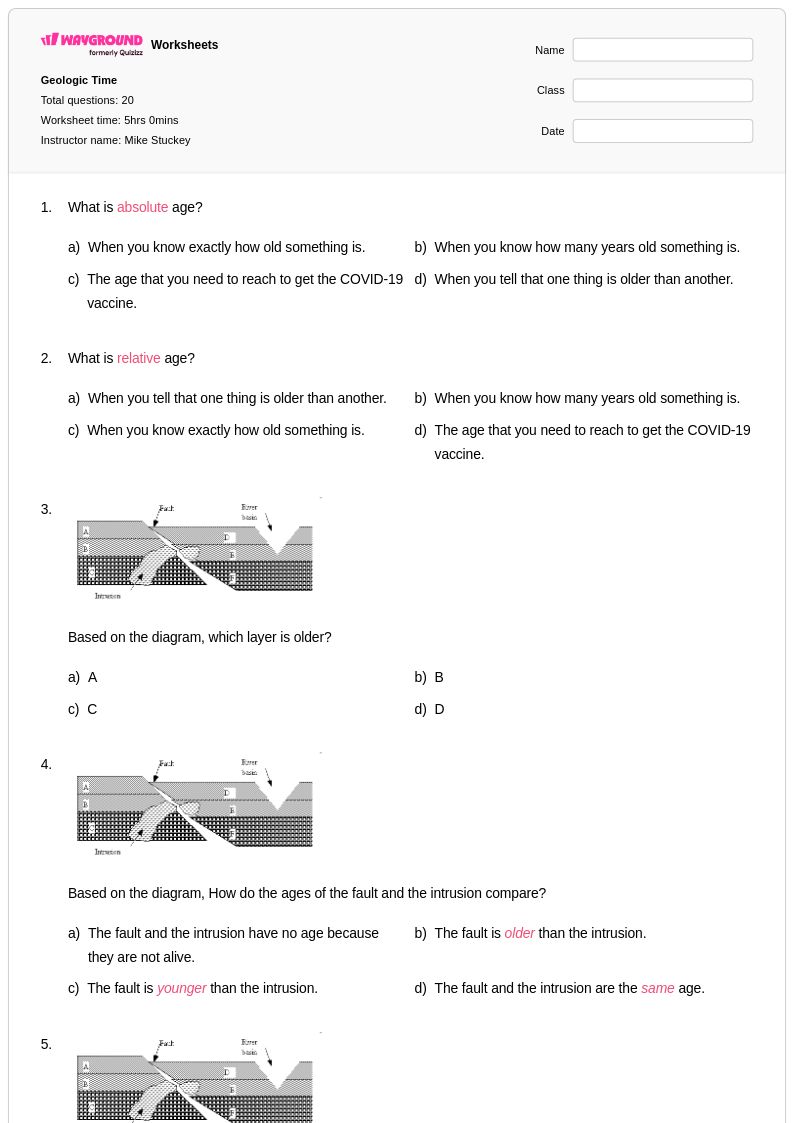
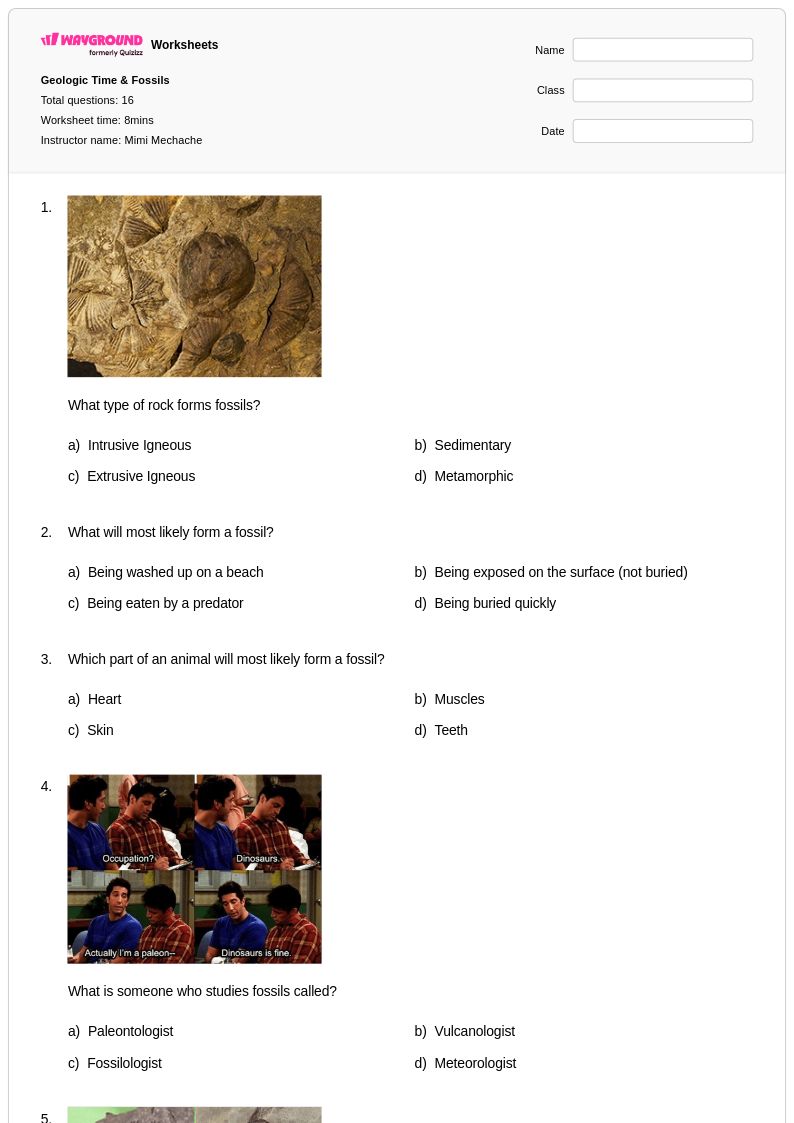
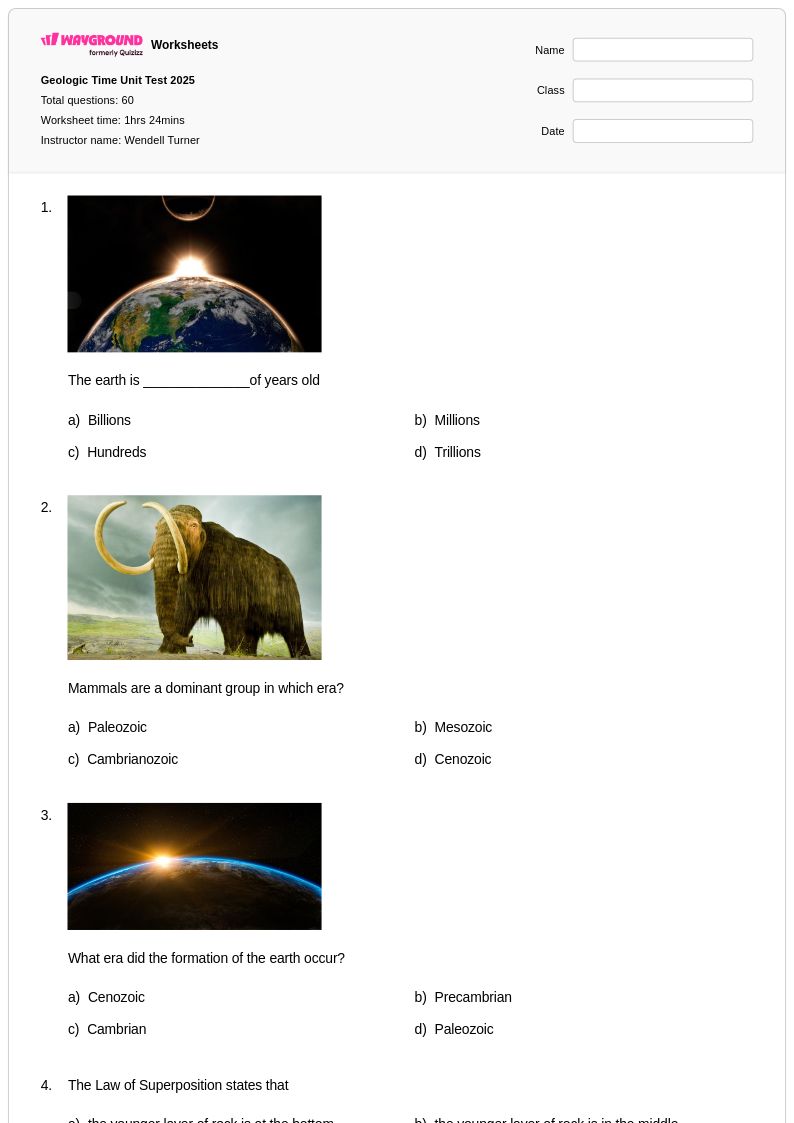
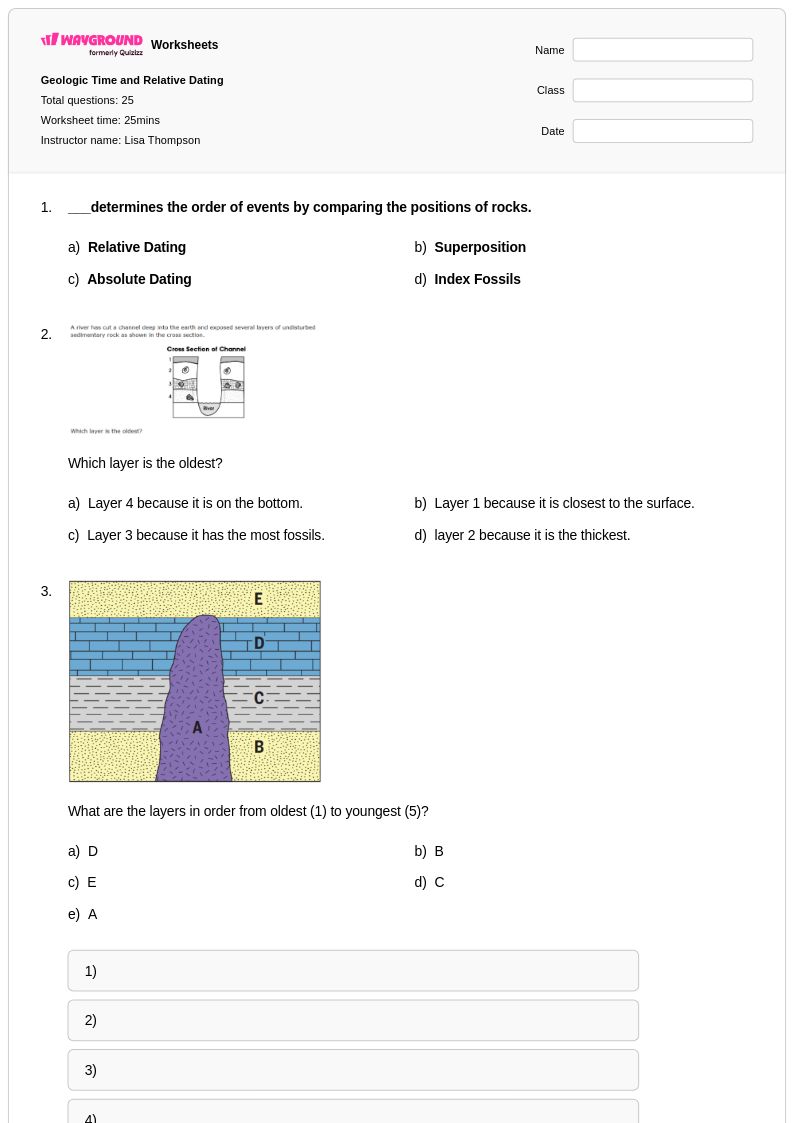
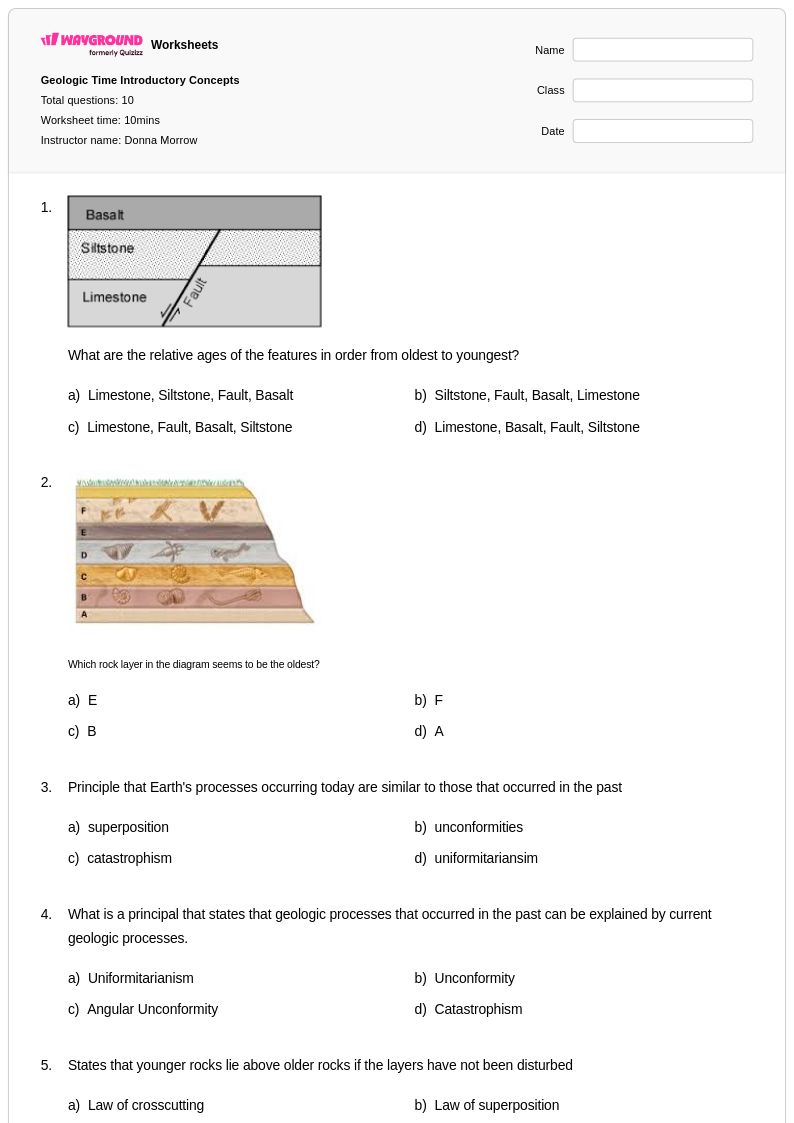
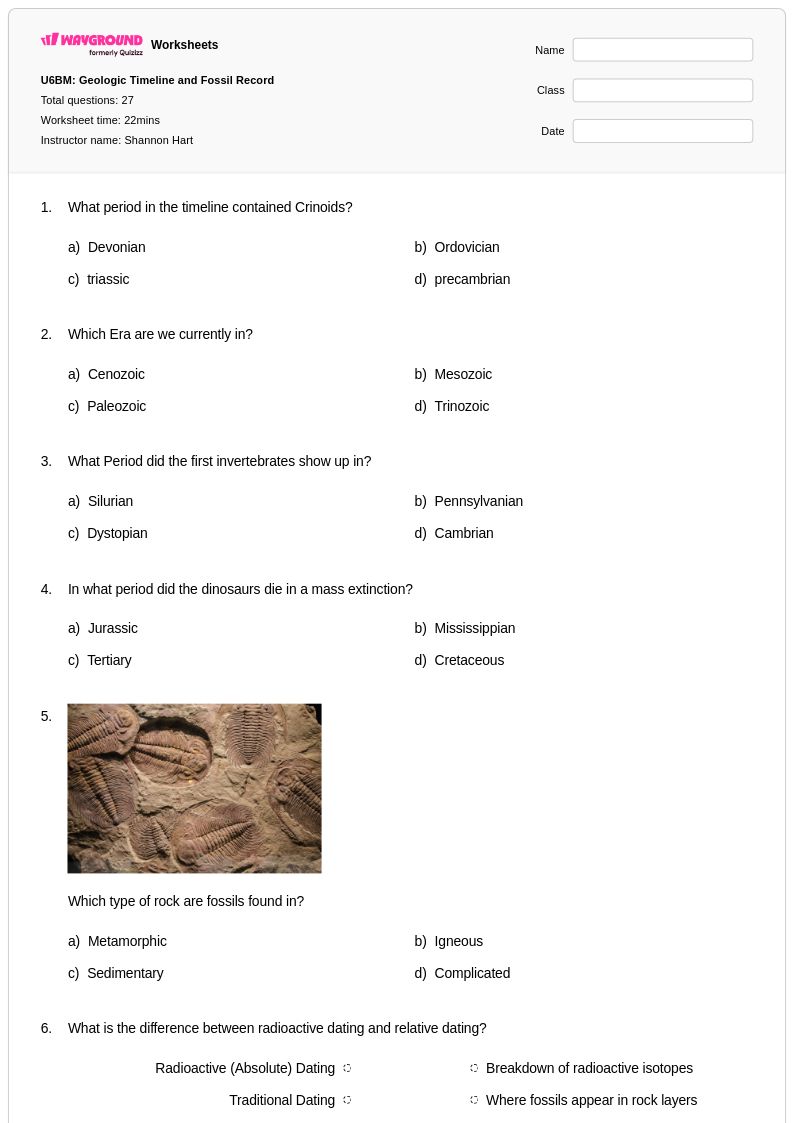
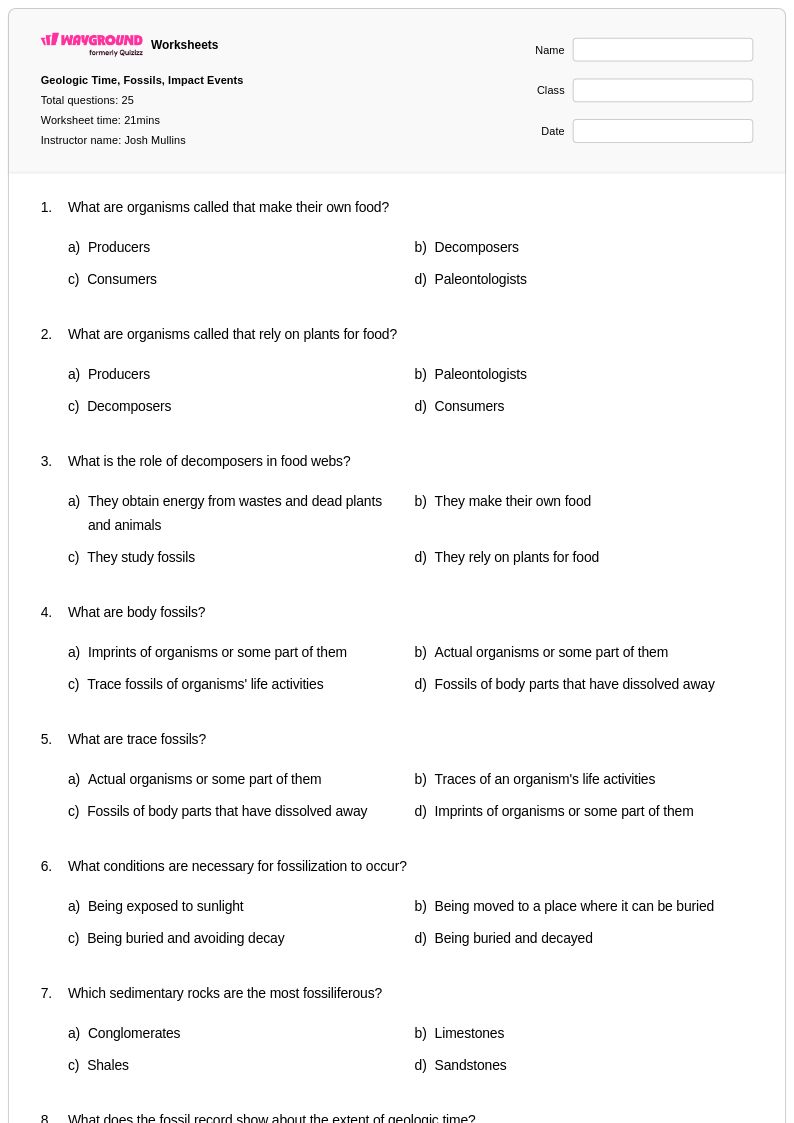
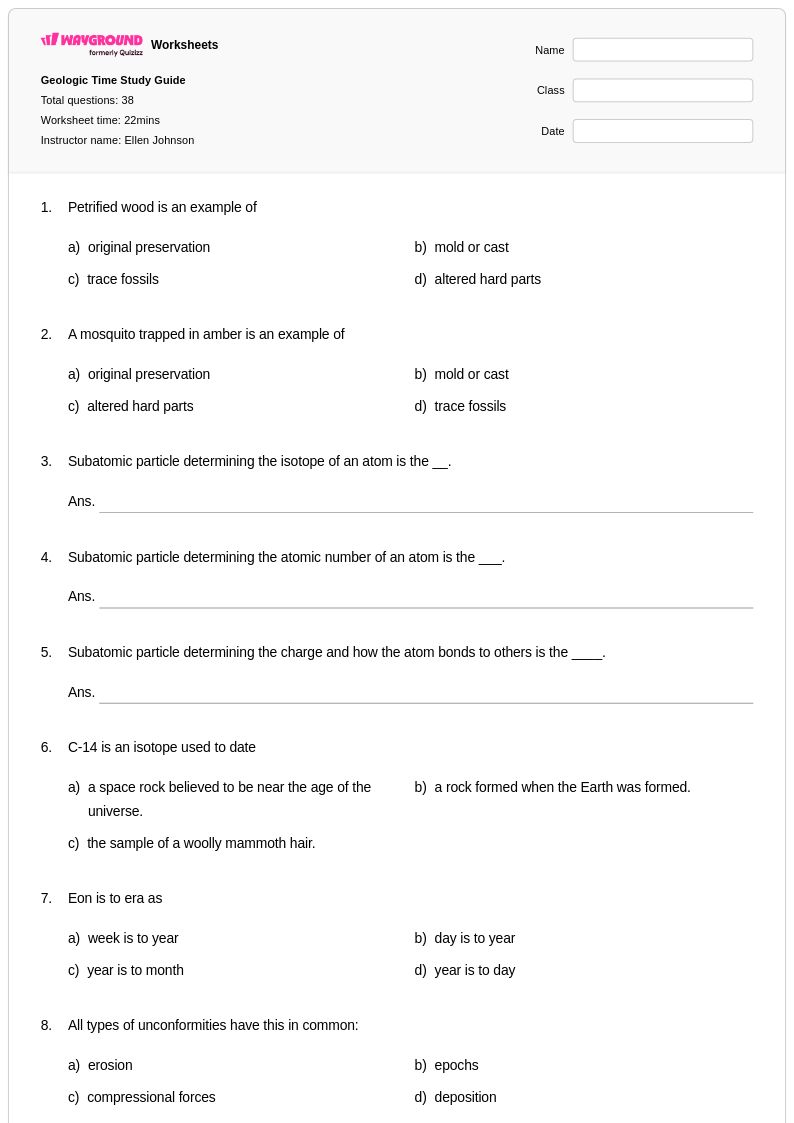
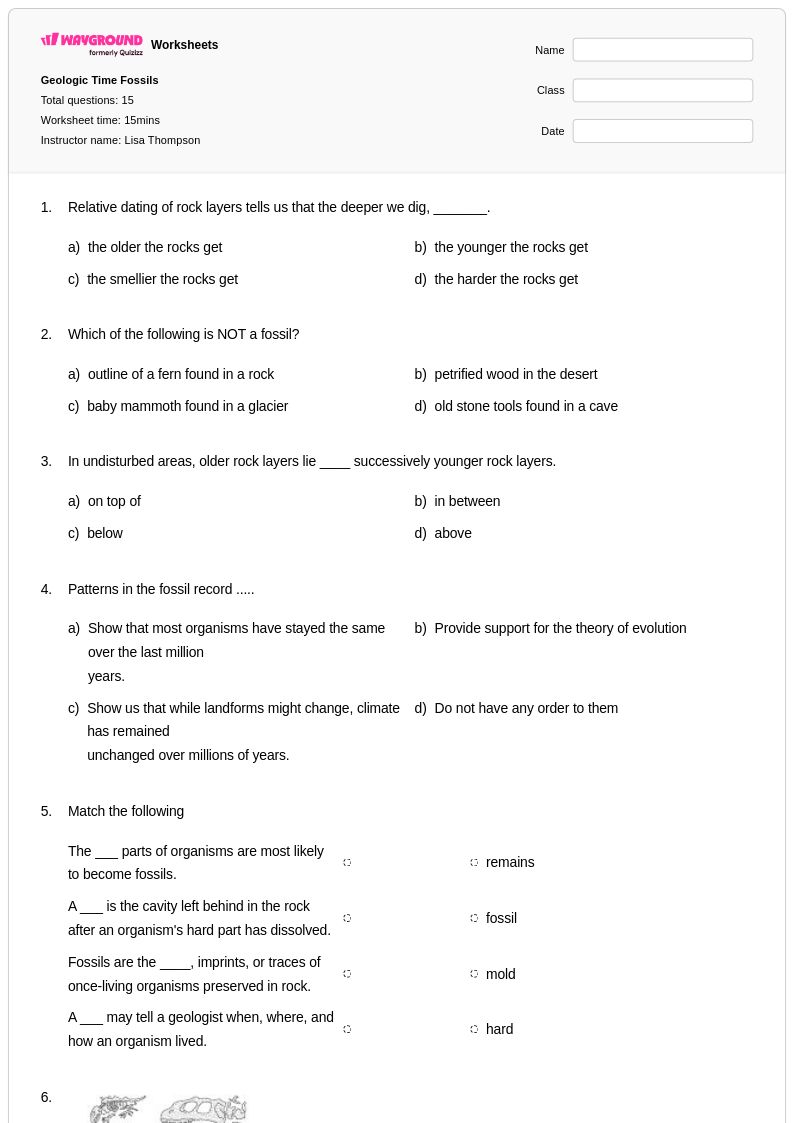
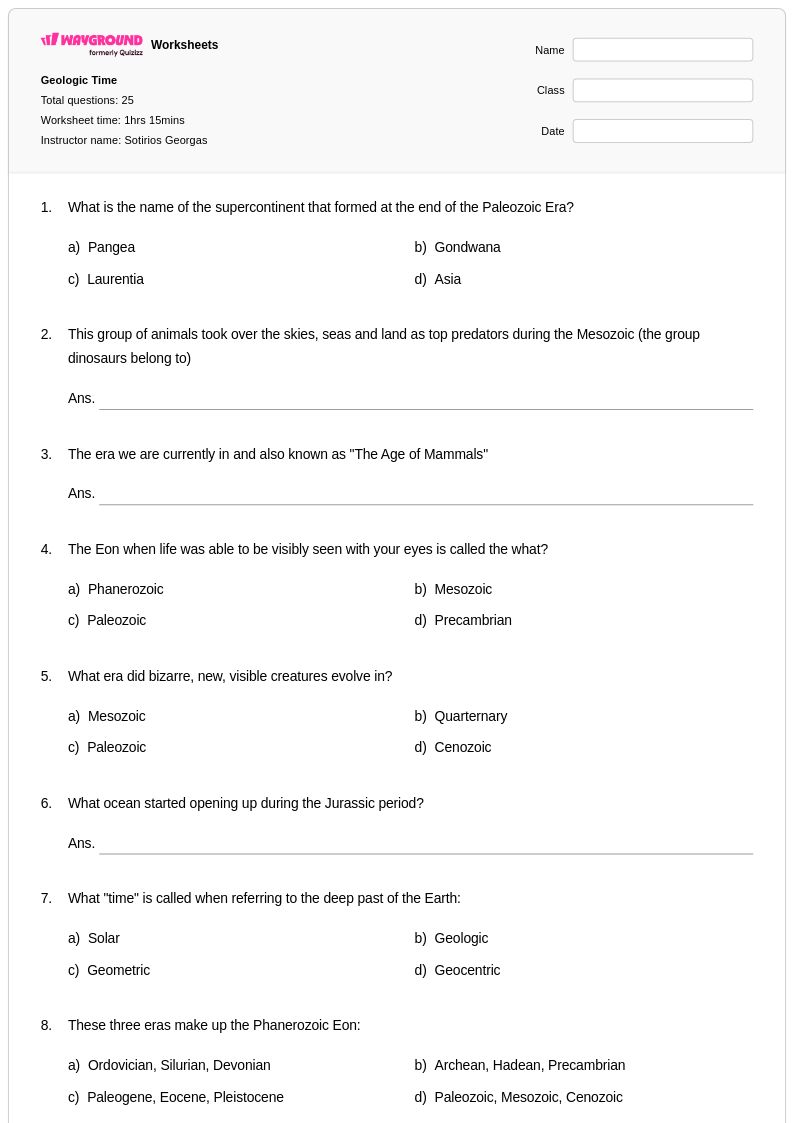
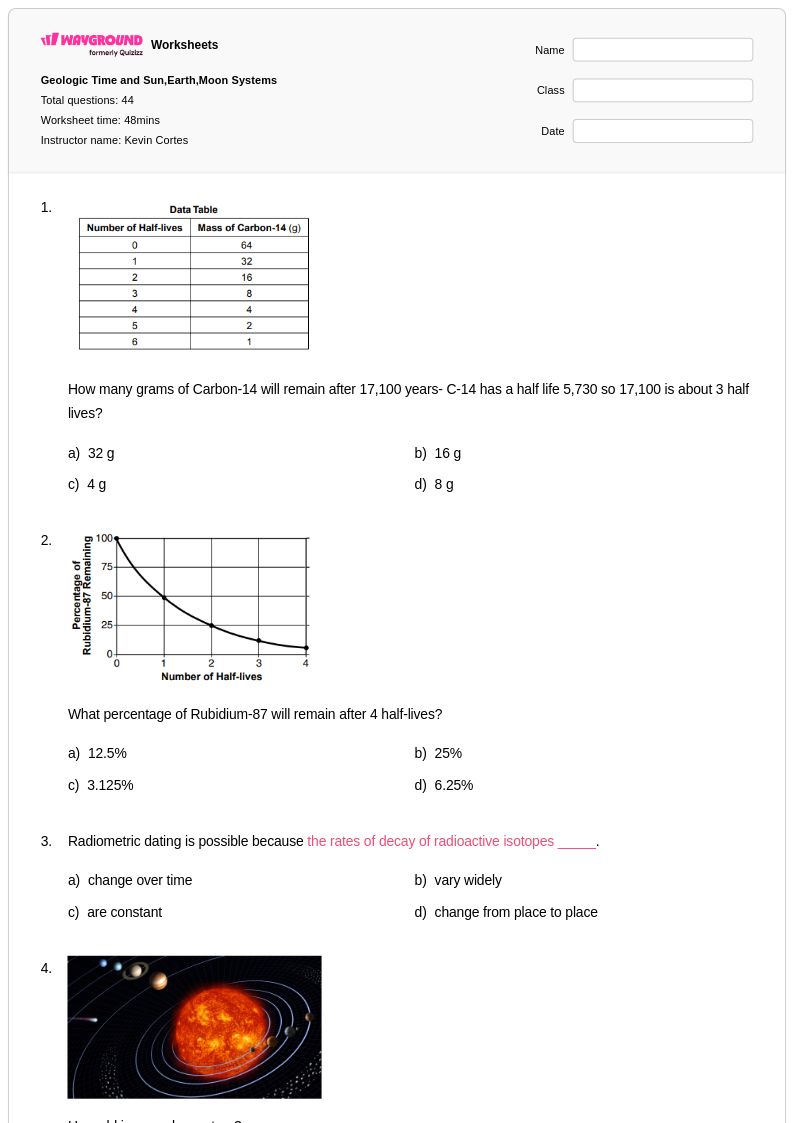
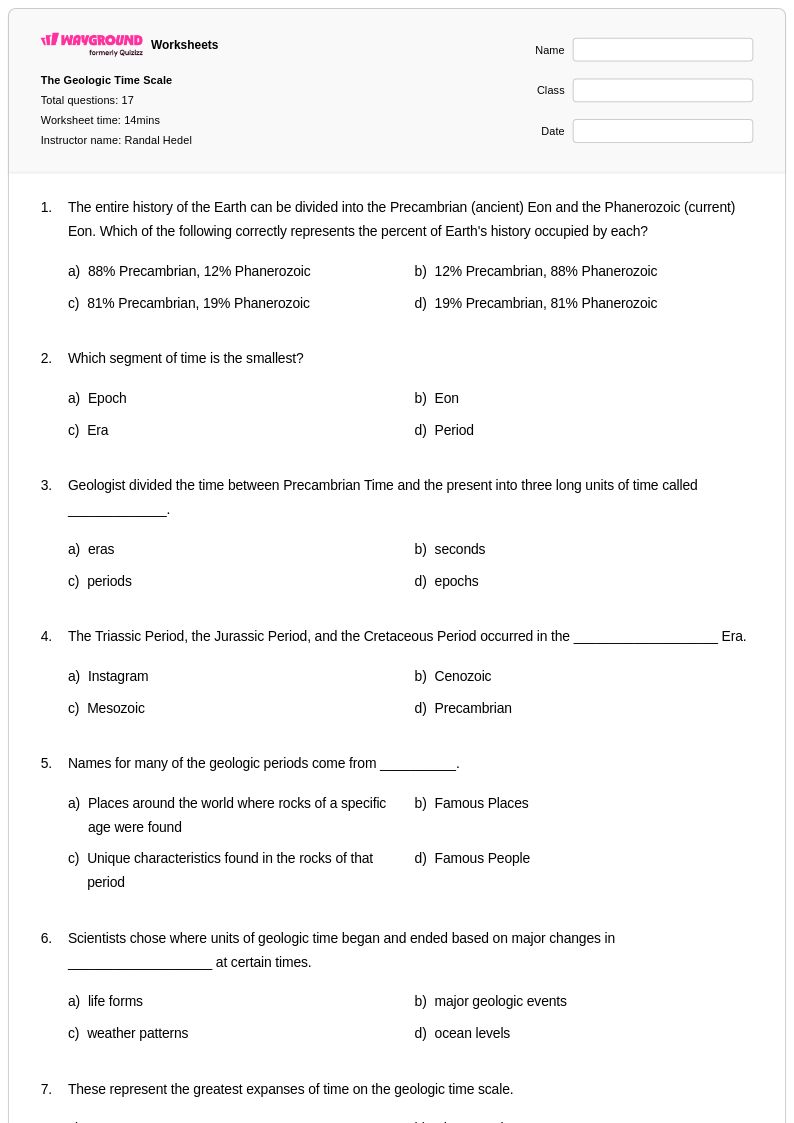
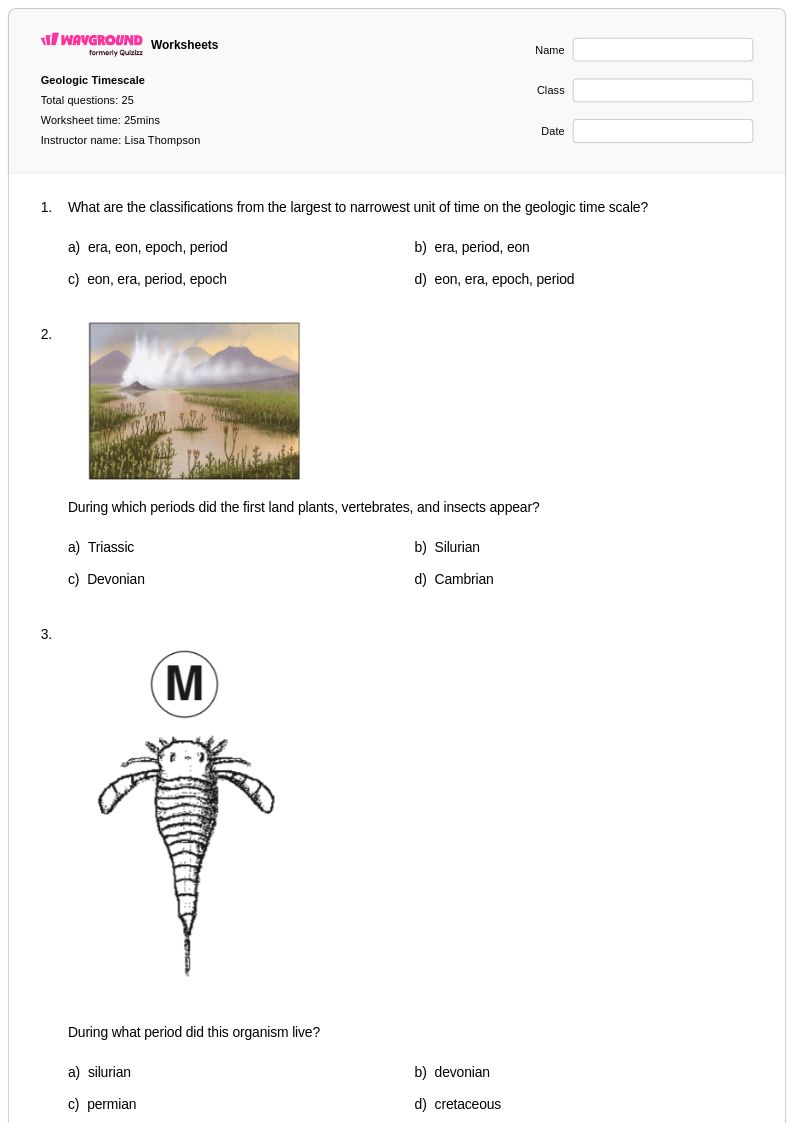
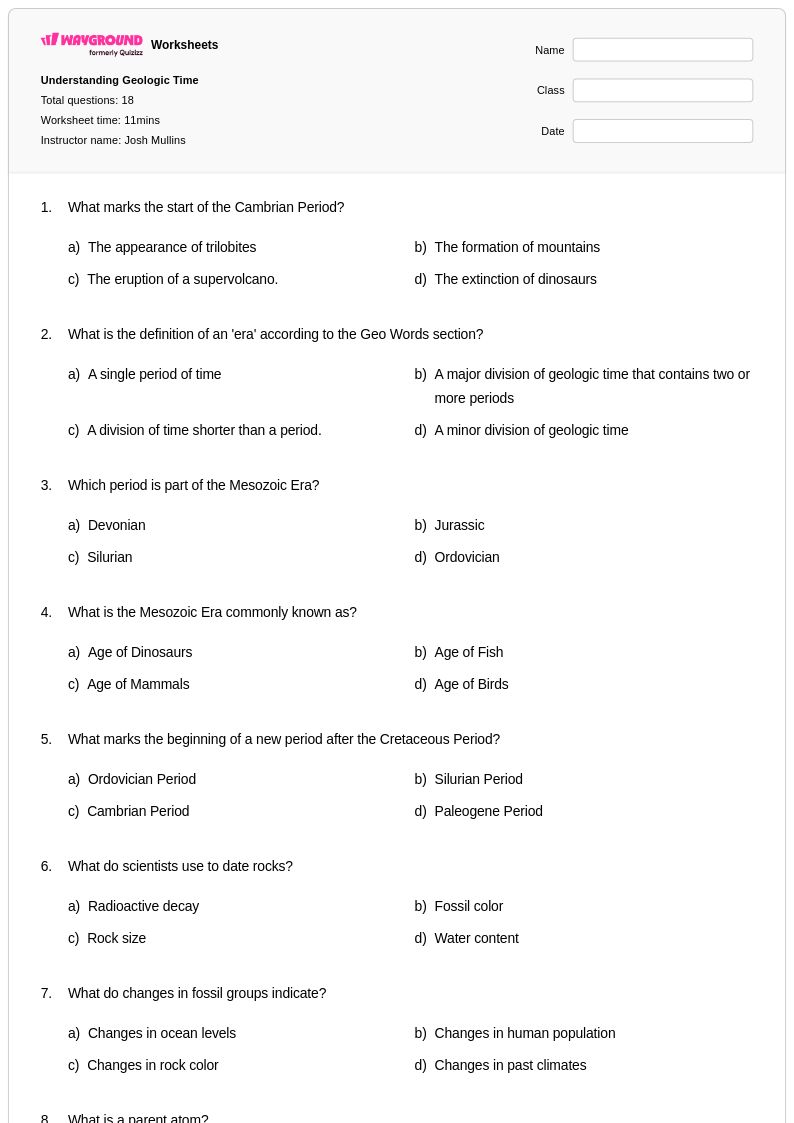
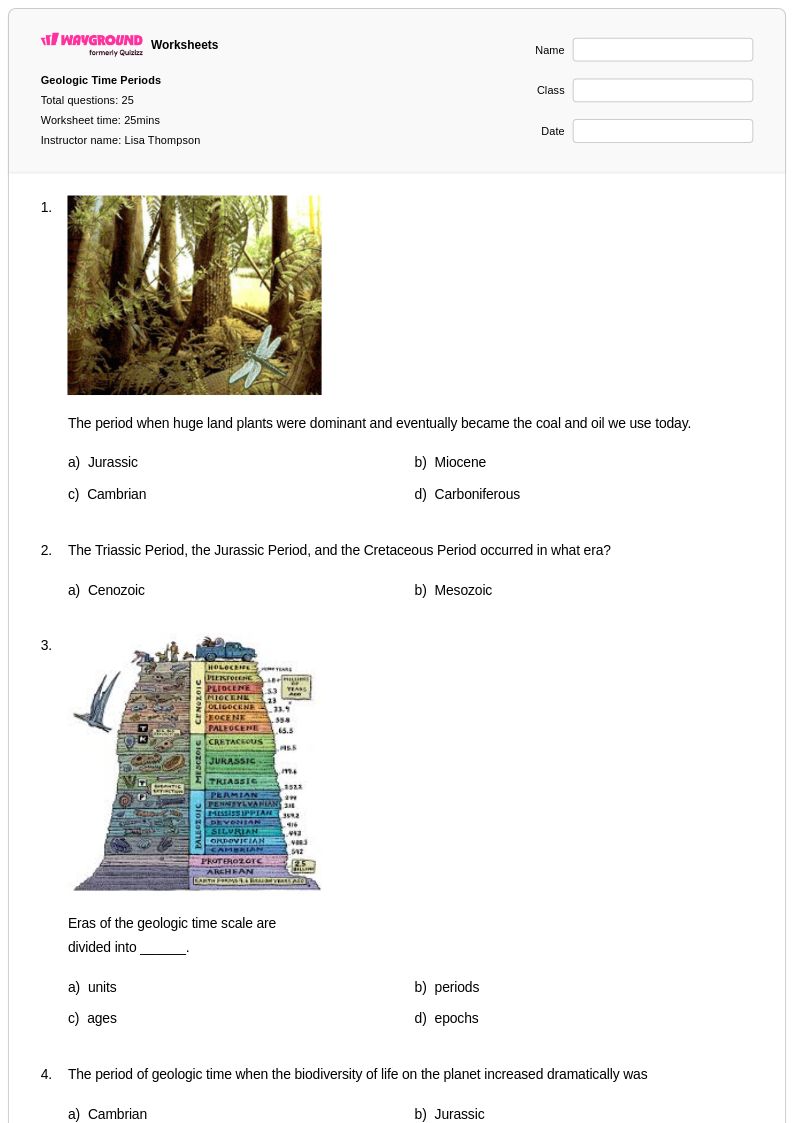
Geologic Time worksheets for Grade 9 students available through Wayground (formerly Quizizz) provide comprehensive practice with Earth's vast temporal framework, helping students master the complex concepts of deep time that define our planet's history. These carefully designed resources strengthen critical thinking skills as students learn to interpret geological evidence, construct and analyze time scales spanning billions of years, and understand the relationships between major geological and biological events. The collection includes practice problems that guide students through relative and absolute dating techniques, fossil succession principles, and the major eras, periods, and epochs that organize Earth's history. Each worksheet comes with a detailed answer key to support independent learning, and teachers can access these materials as free printables in convenient pdf format, making them ideal for both classroom instruction and homework assignments.
Wayground's extensive library contains millions of teacher-created Geologic Time resources that support Grade 9 educators in delivering engaging, standards-aligned instruction about Earth's chronological framework. The platform's robust search and filtering capabilities allow teachers to quickly locate worksheets that match specific learning objectives, whether focusing on radiometric dating, index fossils, or major extinction events. These differentiation tools enable educators to customize content for diverse learning needs, providing both remediation support for struggling students and enrichment opportunities for advanced learners. Available in both printable and digital formats including pdf downloads, these resources streamline lesson planning while offering flexible implementation options that accommodate various teaching styles and classroom technologies, ensuring students develop a solid foundation in understanding the immense scale of geological time.
FAQs
How do I teach geologic time to students who struggle to grasp deep time?
The most effective approach is to use scaled analogies that translate 4.6 billion years into something physically tangible, such as a toilet paper roll, a football field, or a 24-hour clock. Once students have a spatial or temporal anchor, introduce the major eons, eras, and periods in sequence before asking them to place events on a timeline. Layering in fossil evidence and radiometric dating methods after students have the structural framework helps connect abstract timescales to observable geological evidence.
What exercises help students practice reading and constructing a geologic time scale?
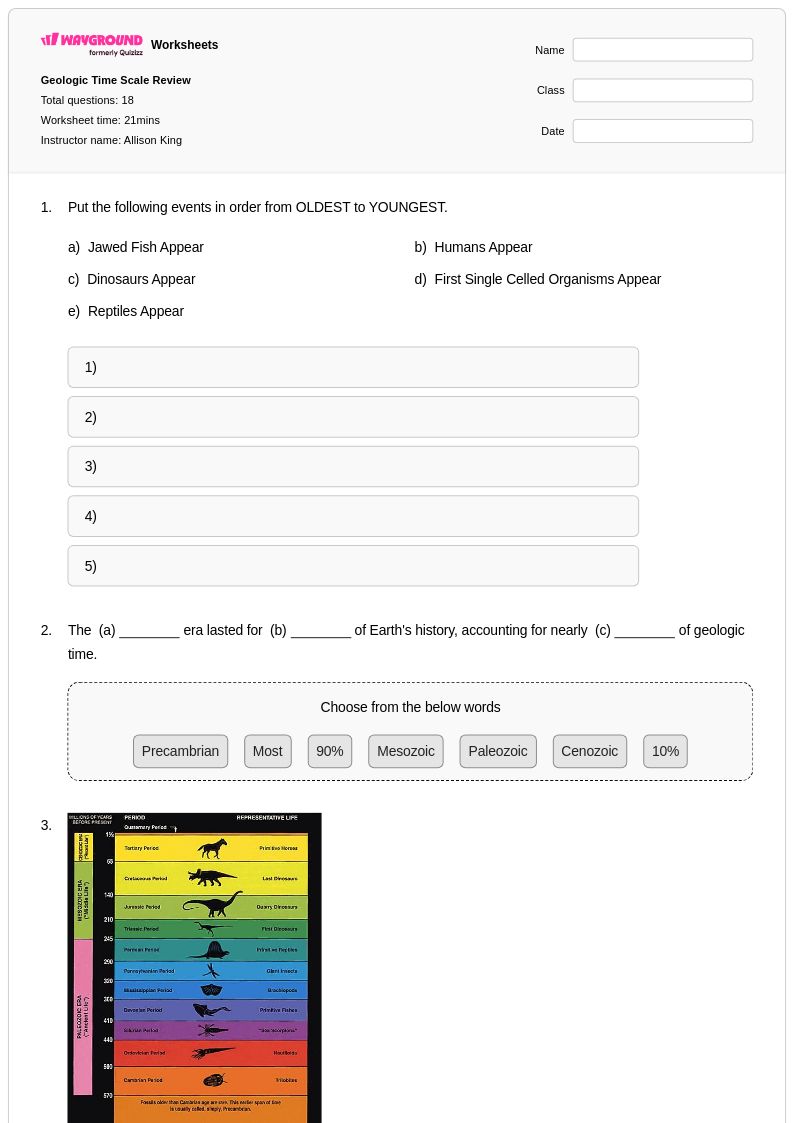
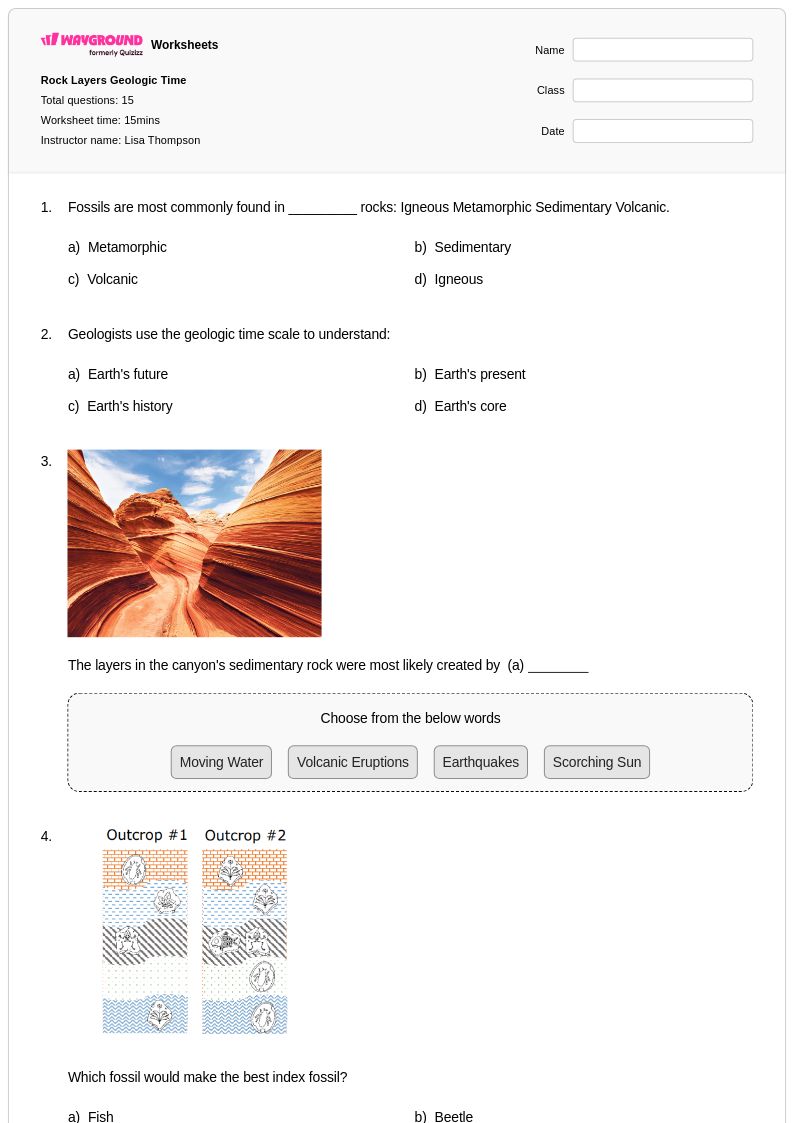
Effective practice exercises include placing major geological and biological events in chronological order, calculating the relative duration of each eon or era as a percentage of Earth's total history, and identifying index fossils associated with specific time periods. Practice problems that ask students to distinguish between absolute dating (radiometric) and relative dating (stratigraphic principles like superposition and original horizontality) reinforce the two core methods used by geologists. Repeated exposure to constructing and labeling time scale diagrams builds the fluency students need to interpret these accurately on assessments.
What mistakes do students commonly make when learning about geologic time?
One of the most persistent misconceptions is that evolution and extinction events happened gradually and evenly across time, when in reality mass extinctions like the end-Permian event were geologically abrupt. Students also frequently confuse relative and absolute dating, applying radiometric logic to sedimentary contexts where it does not apply directly. Another common error is misreading geologic time scales by treating all divisions as equal in duration, when eons like the Precambrian represent far more time than all subsequent eras combined.
How can I differentiate geologic time instruction for students at different skill levels?
For students still building foundational understanding, focus on the four major eons and the major mass extinction events before introducing period-level detail. Advanced learners can be challenged with radiometric dating calculations, analysis of index fossil assemblages, and evaluating how the geological time scale has been revised over time as new evidence emerged. On Wayground, teachers can apply accommodations such as reduced answer choices or read-aloud support to individual students, and adjust content complexity across the class without disrupting the experience of other learners.
How do I use Wayground's geologic time worksheets in my classroom?
Wayground's geologic time worksheets are available as printable PDFs for traditional classroom use and in digital formats for technology-integrated environments, so they work whether students are at desks or on devices. Teachers can also host worksheets directly as a quiz on Wayground, giving students an interactive experience while automatically collecting responses. Each worksheet includes a complete answer key, making them practical for independent practice, guided instruction, or remediation sessions focused on specific misconceptions about Earth's timeline.
How do I help students understand the difference between relative and absolute dating?
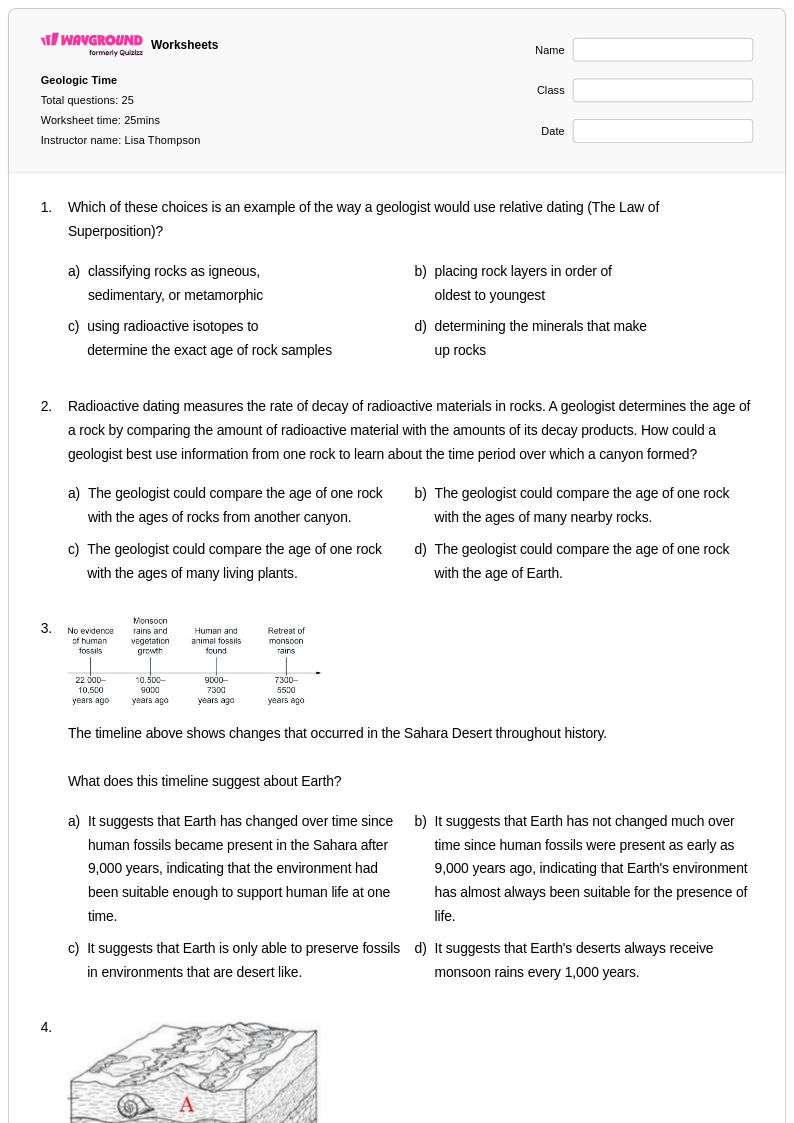
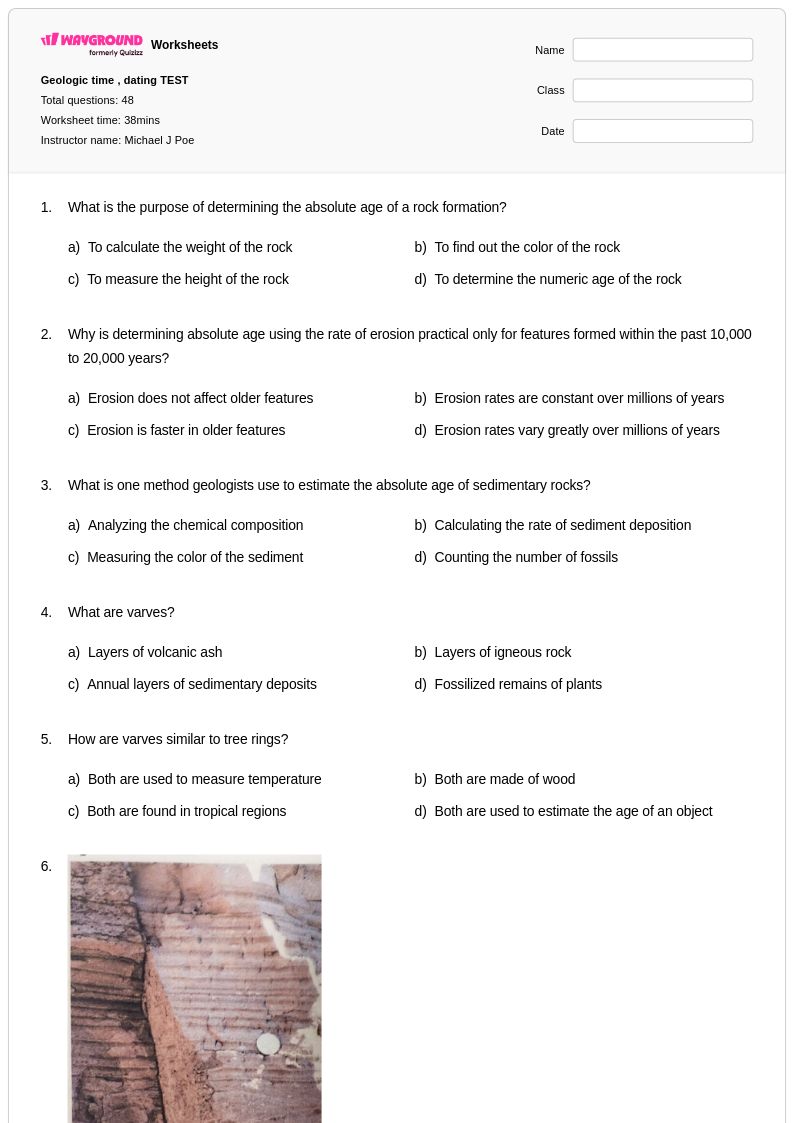
Start by grounding relative dating in the observable principles students can reason through logically, such as superposition (older layers are beneath younger ones) and the presence of index fossils with known temporal ranges. Then introduce absolute dating as a separate method that uses radioactive decay rates to assign numerical ages, making clear that the two approaches are complementary rather than competing. Practice problems that ask students to apply each method to the same rock scenario help cement the distinction and show why geologists use both.