Free Printable Electrical Load Calculation Worksheets for Grade 12
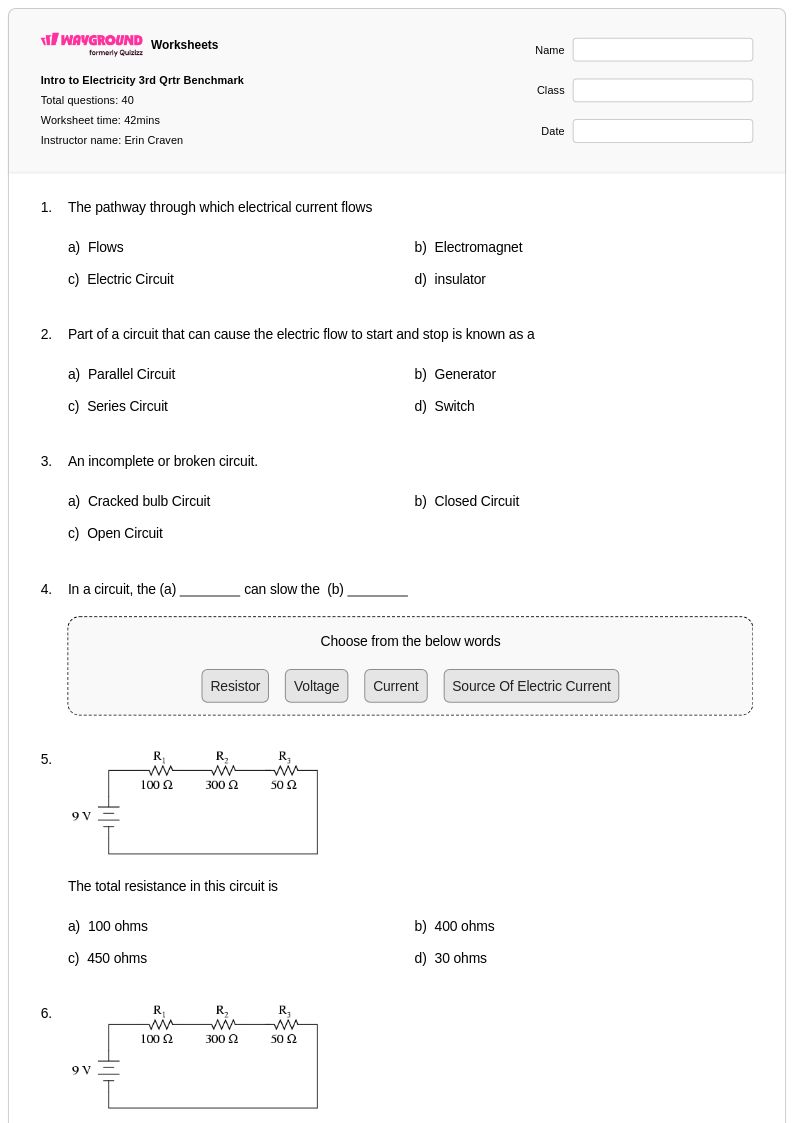
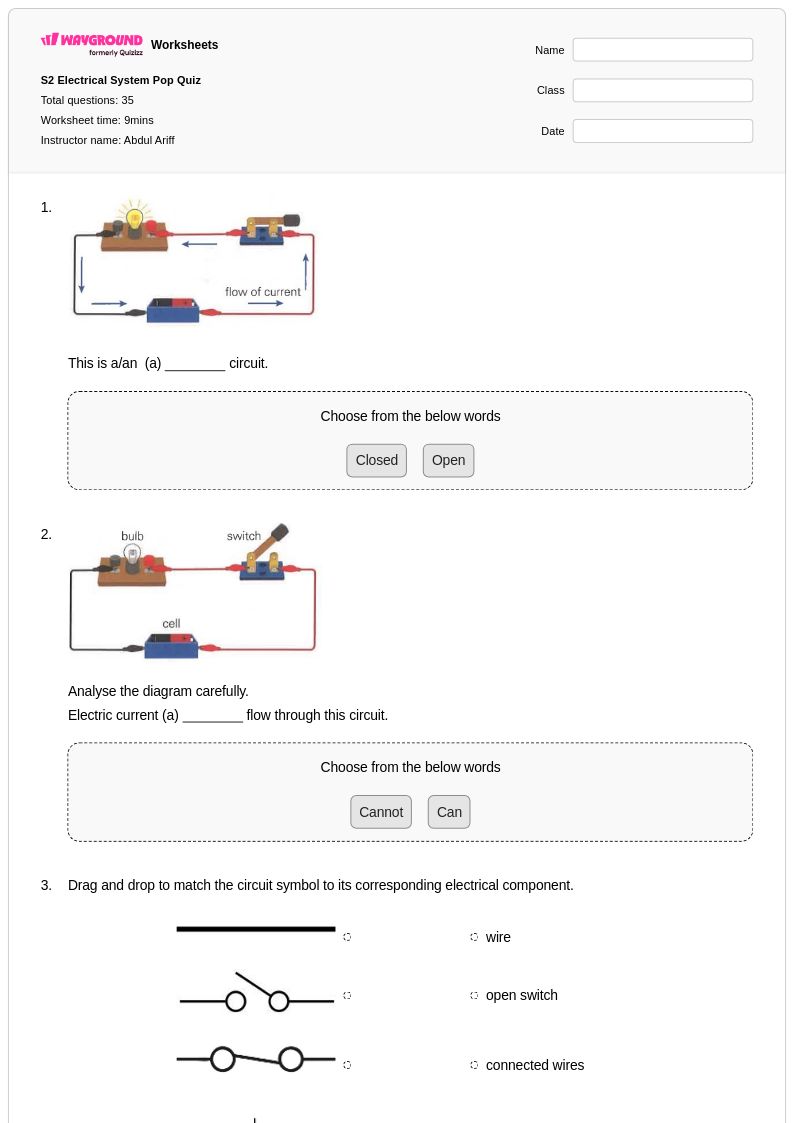
Enhance Grade 12 physics mastery with Wayground's comprehensive electrical load calculation worksheets, featuring printable PDFs, practice problems, and answer keys to help students master power distribution and circuit analysis fundamentals.
Explore printable Electrical Load Calculation worksheets for Grade 12
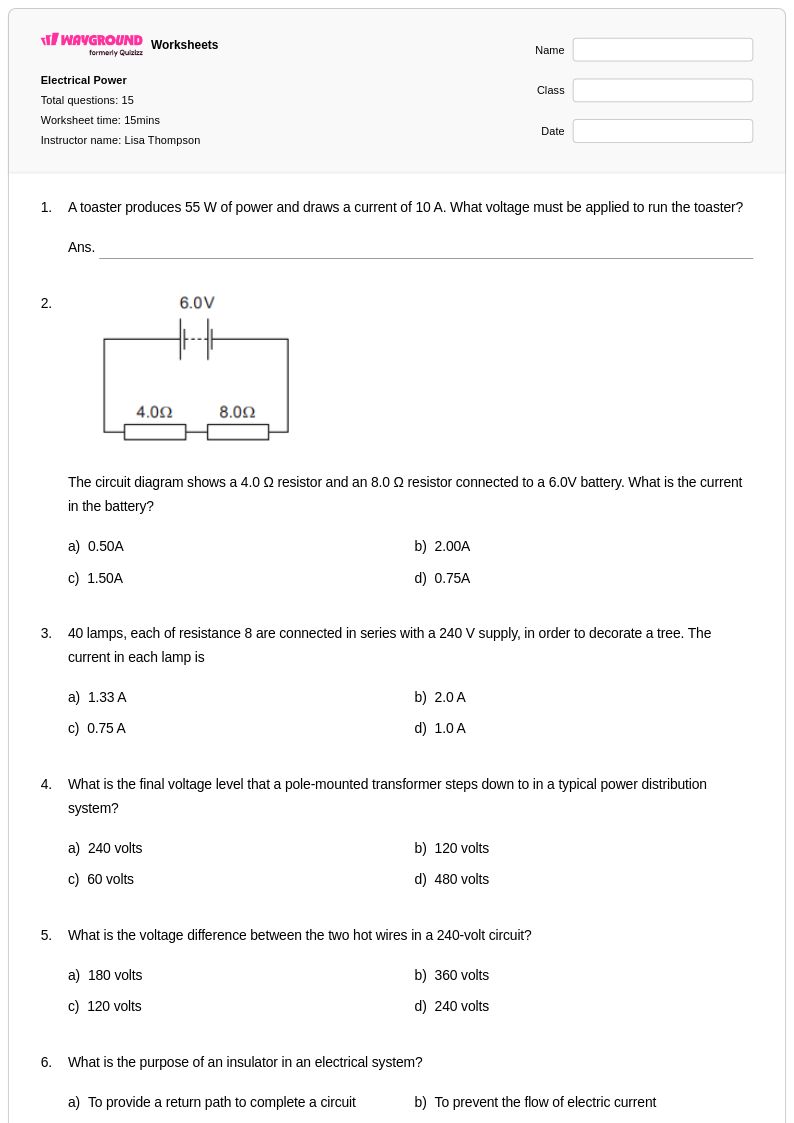
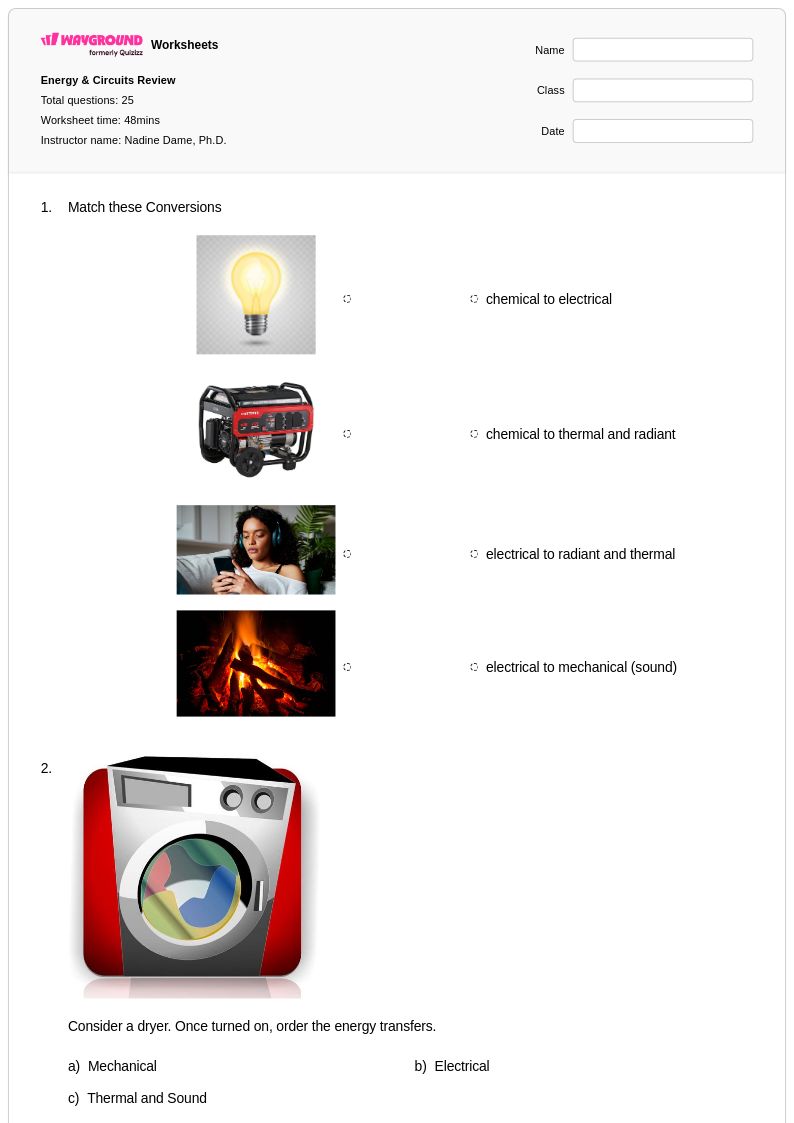
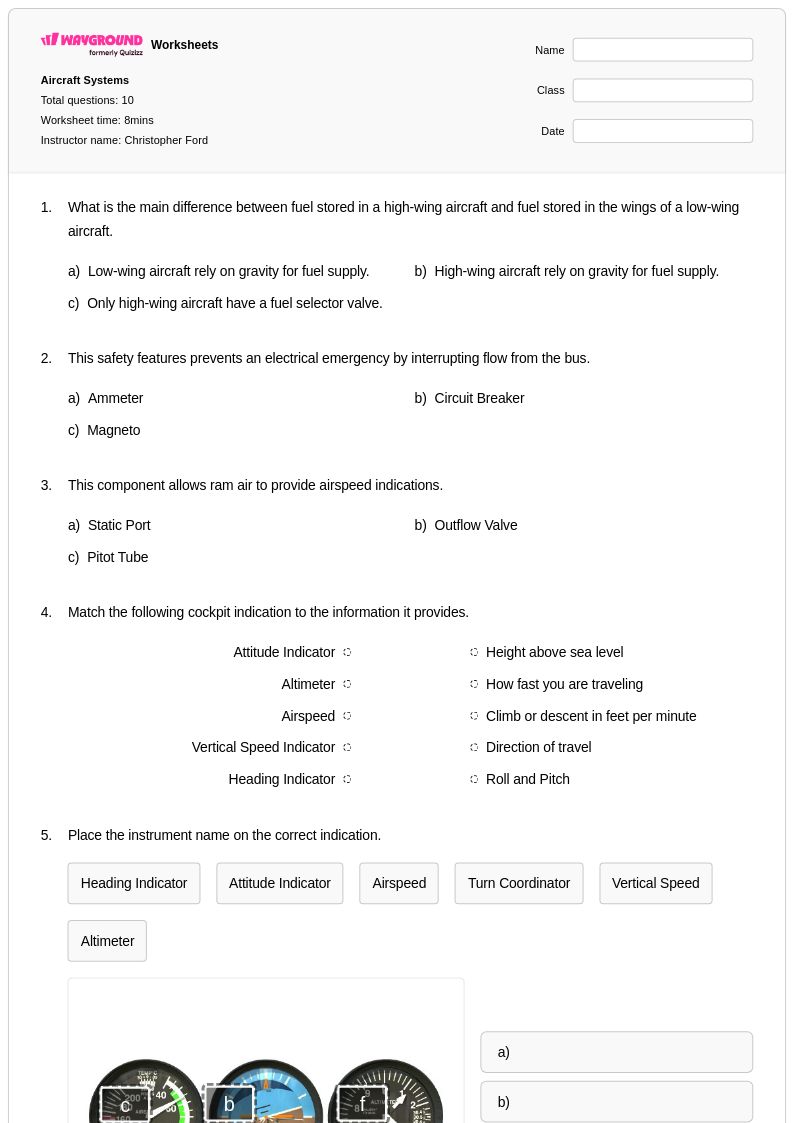
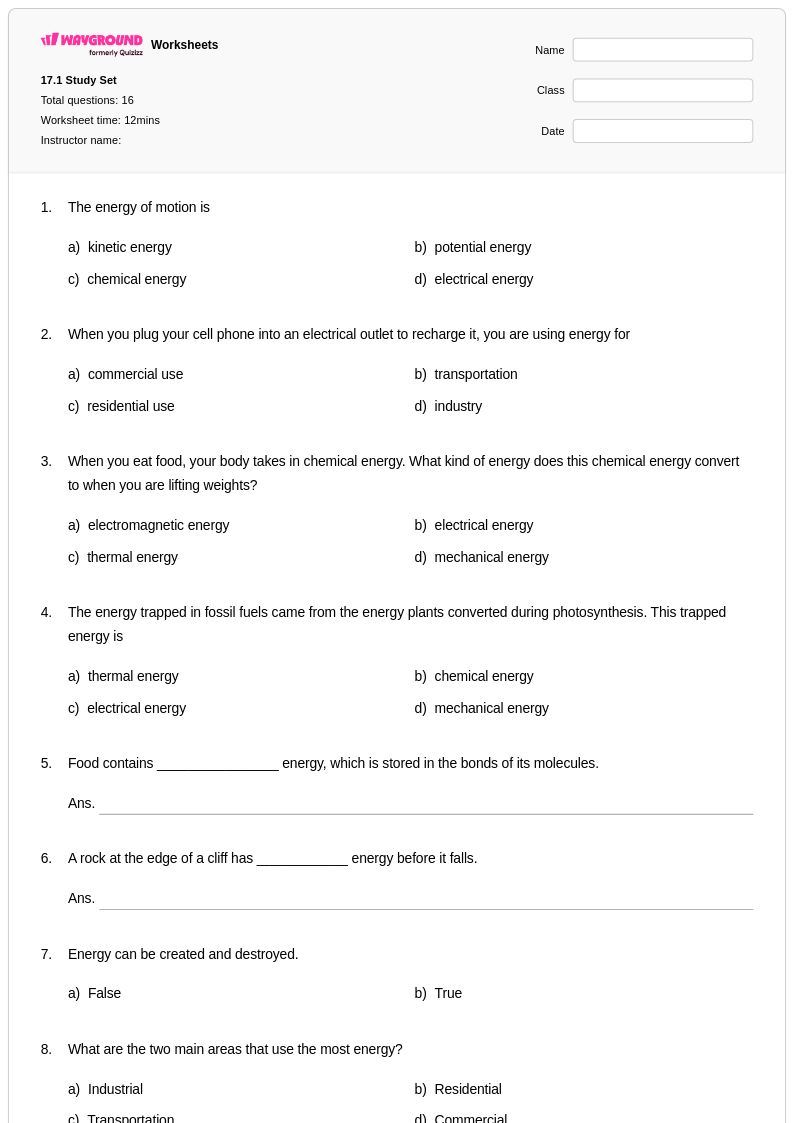
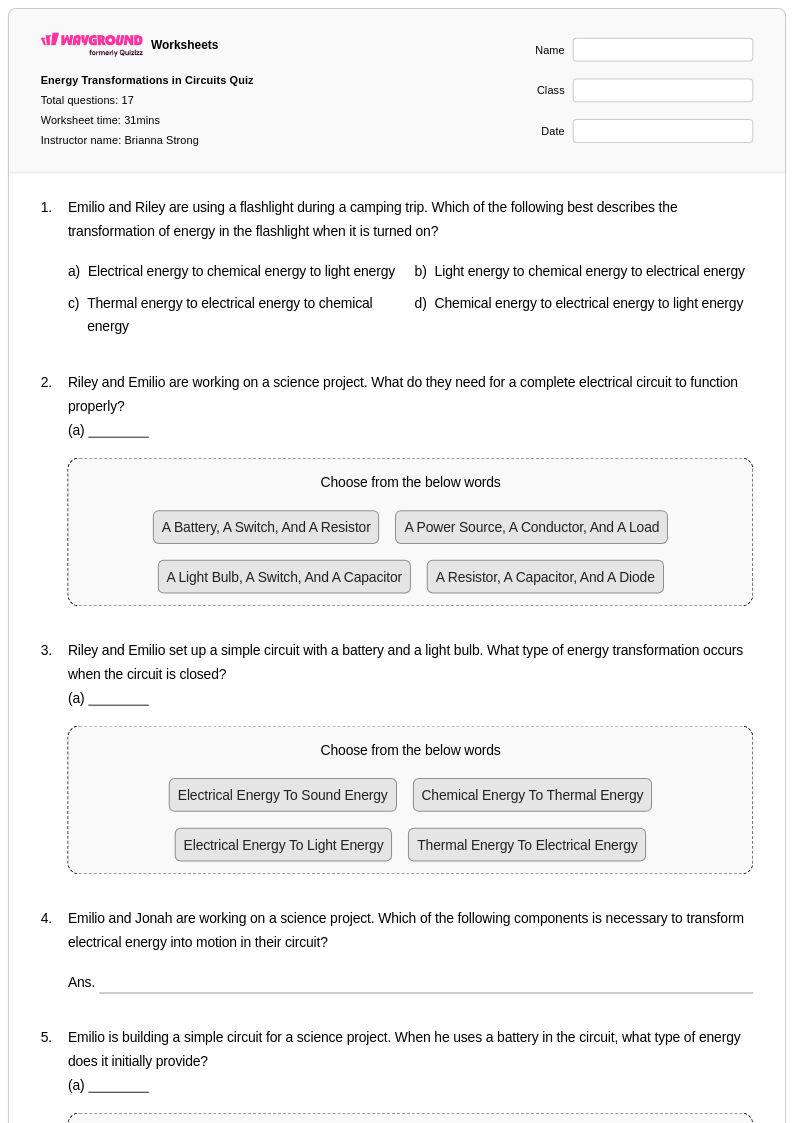
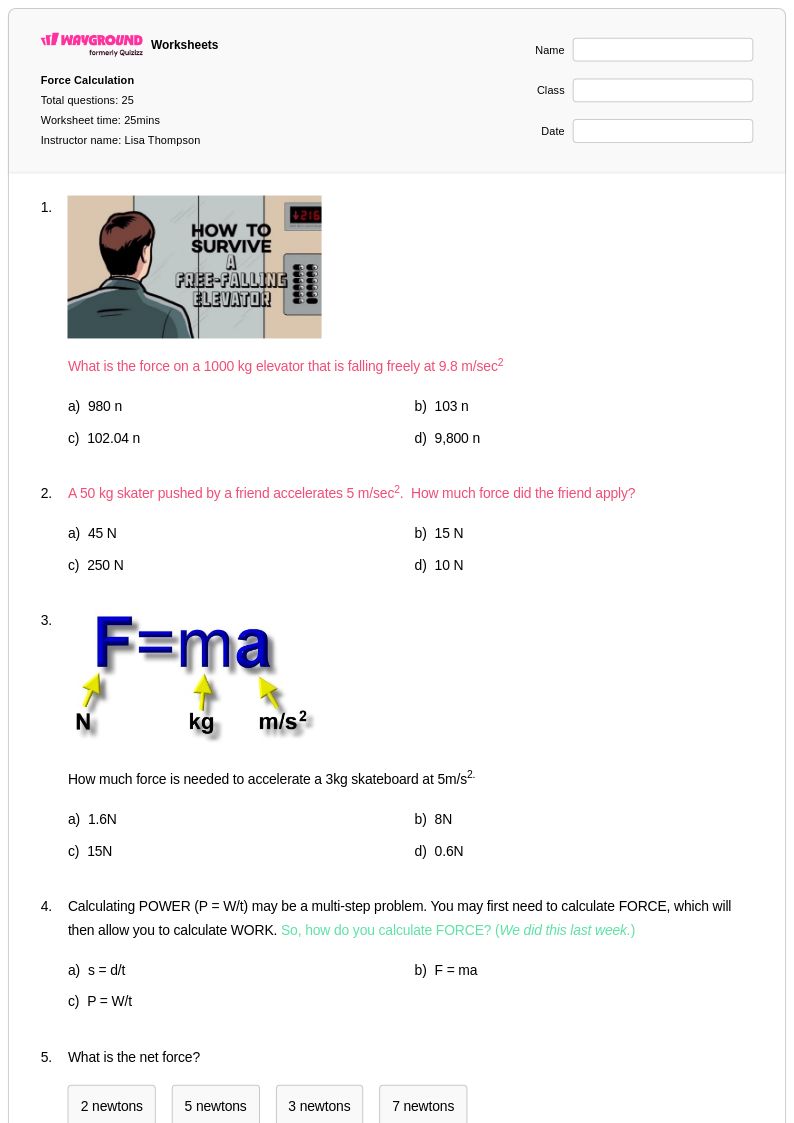
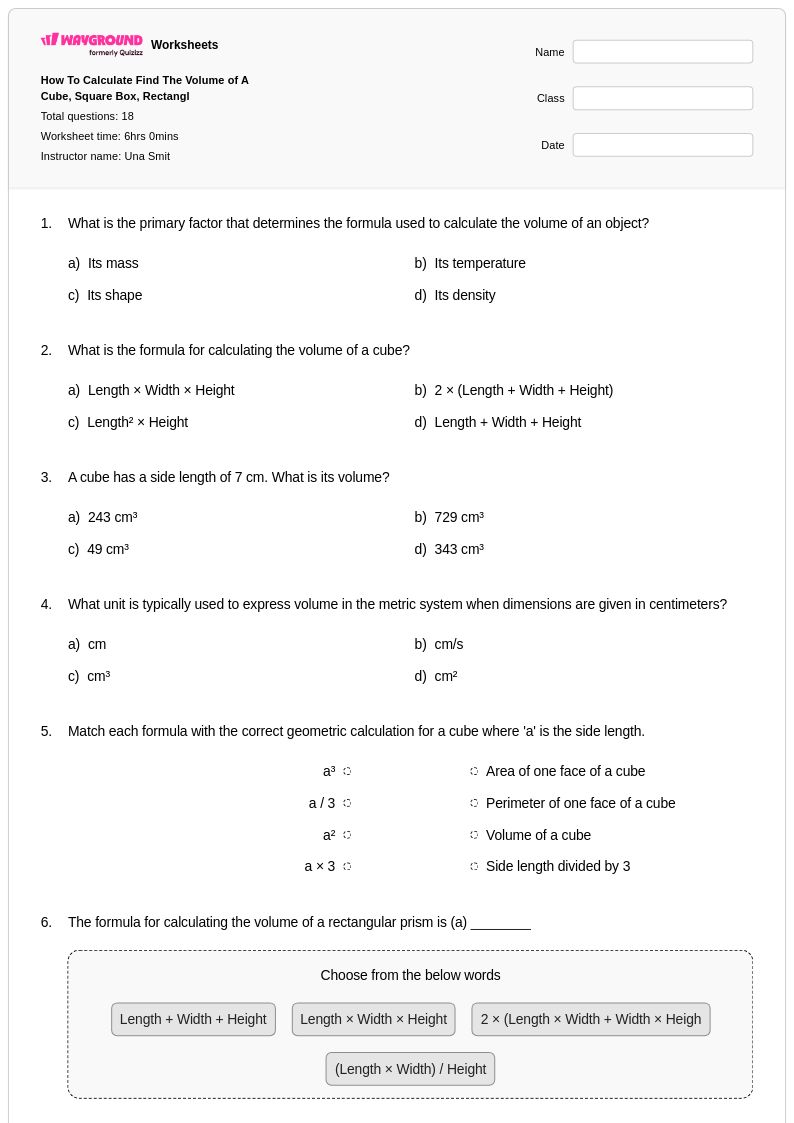
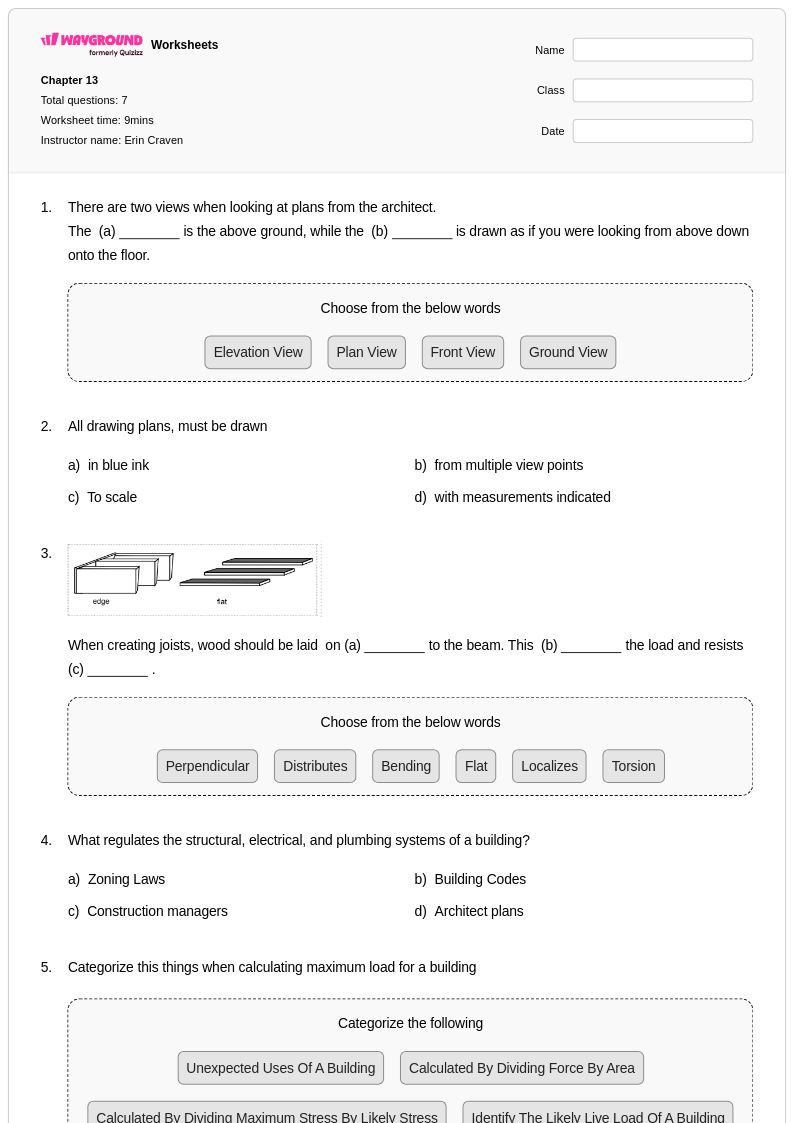
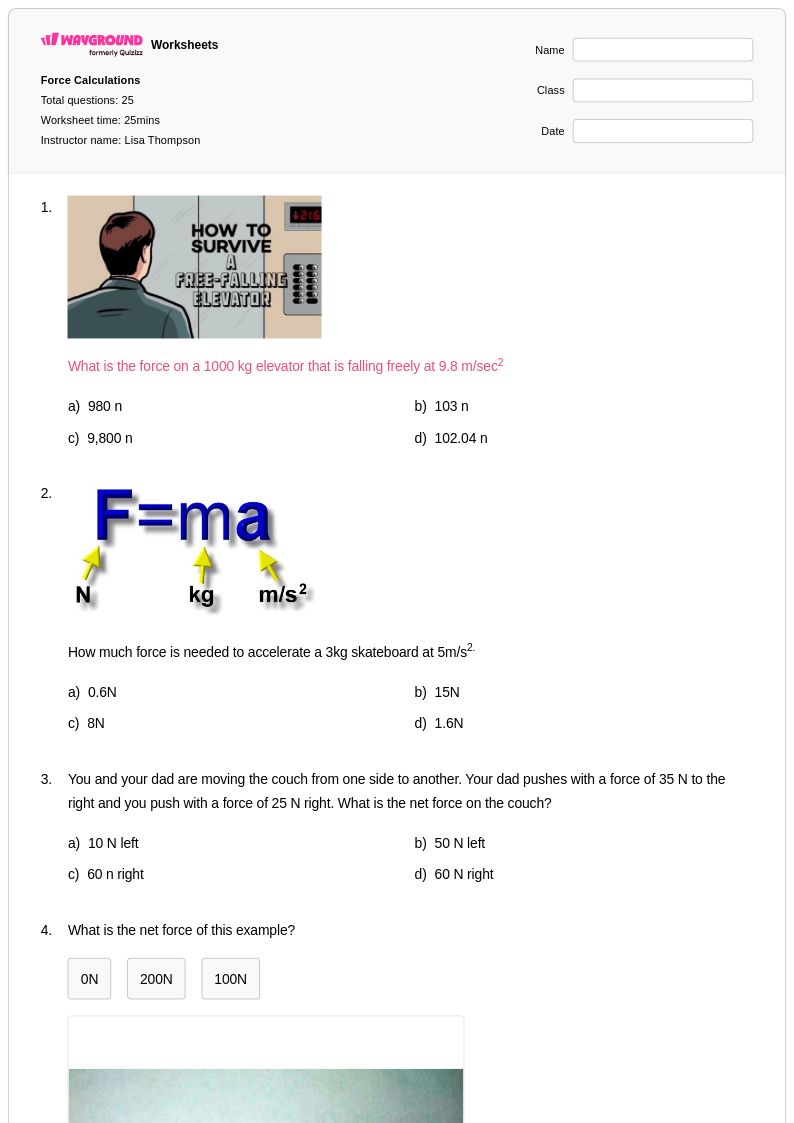
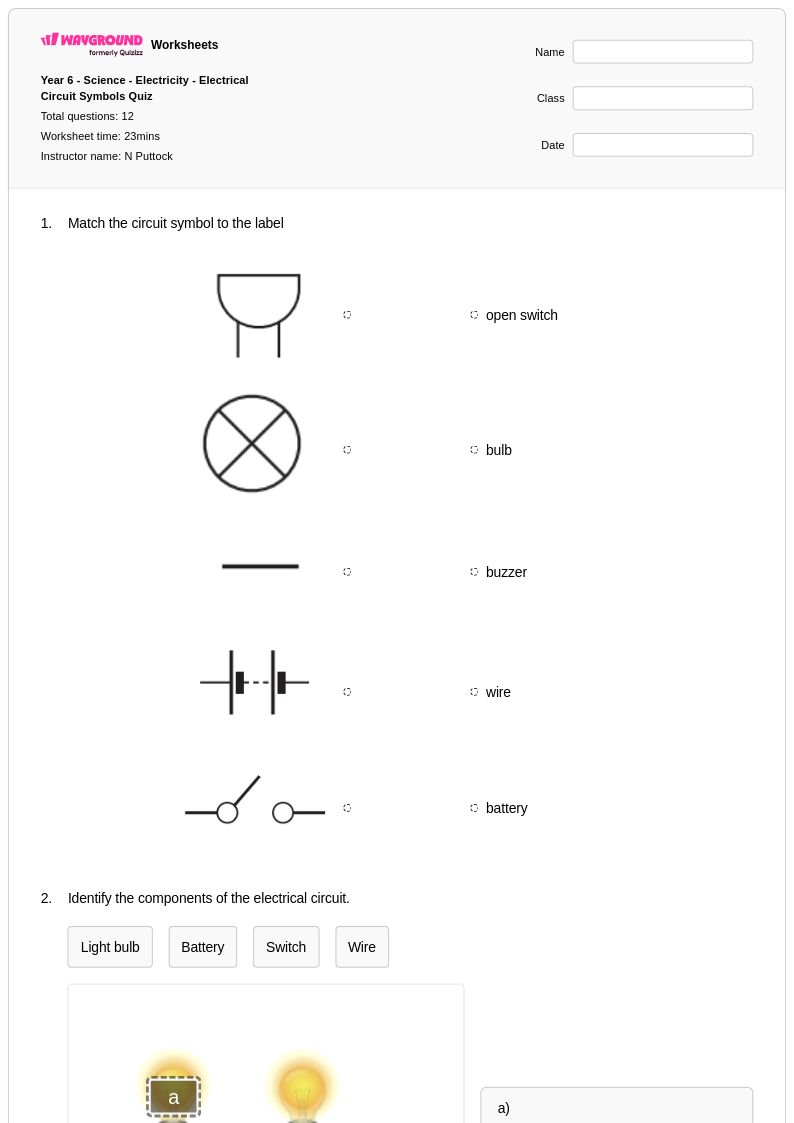
Electrical load calculation worksheets for Grade 12 physics provide students with essential practice in determining power requirements, current flow, and voltage distribution across electrical circuits and systems. These comprehensive worksheets strengthen critical analytical skills as students learn to calculate total electrical demand, determine appropriate circuit breaker sizes, and analyze power consumption patterns in residential and commercial applications. Through systematic practice problems, students develop proficiency in applying Ohm's law, power formulas, and load factor calculations while working with real-world scenarios involving motors, lighting systems, and appliances. The collection includes detailed answer keys and free printable resources that guide students through complex multi-step calculations, ensuring they master both theoretical concepts and practical applications essential for advanced physics coursework.
Wayground (formerly Quizizz) supports physics educators with millions of teacher-created electrical load calculation resources that streamline lesson planning and provide targeted skill practice opportunities. The platform's robust search and filtering capabilities allow teachers to quickly locate worksheets aligned with specific physics standards and learning objectives, while differentiation tools enable customization for varying student ability levels. These comprehensive collections are available in both printable pdf formats and interactive digital versions, providing flexibility for classroom instruction, homework assignments, and independent study sessions. Teachers can effectively use these resources for remediation with struggling students, enrichment activities for advanced learners, and systematic skill building that prepares Grade 12 students for higher-level electrical engineering concepts and real-world problem-solving applications.
FAQs
How do I teach electrical load calculation to students?
Start by grounding students in the foundational relationships between voltage, current, and power using Ohm's Law and the P=VI formula before moving into circuit-level analysis. Introduce load calculation through simple single-circuit scenarios like residential lighting before scaling up to series and parallel circuits, wire sizing, and circuit protection requirements. Using real-world contexts such as home electrical panels or industrial motor installations helps students connect the math to practical application.
What practice problems are most effective for electrical load calculation?
Effective practice problems for electrical load calculation should progress from single-circuit power consumption problems to multi-circuit scenarios involving series and parallel loads. Once students are comfortable with basic calculations, introduce problems involving power factor corrections, demand factors, and three-phase systems to build toward advanced application. Authentic scenarios drawn from residential wiring, commercial lighting, and industrial installations give students the context needed to transfer their skills beyond the worksheet.
What mistakes do students commonly make when calculating electrical loads?
One of the most common errors is confusing power, voltage, and current relationships, particularly misapplying the P=VI formula when one variable is unknown. Students also frequently treat series and parallel circuits interchangeably, leading to incorrect total load values. When working with more advanced problems, students often overlook power factor and demand factor adjustments, which can cause significant calculation errors in three-phase or industrial system problems.
How can I differentiate electrical load calculation instruction for students at different skill levels?
Differentiation in electrical load calculation should separate introductory power and current problems from more complex load analysis tasks involving power factor corrections and three-phase systems. For students who need additional support, Wayground's reduced answer choices feature can lower cognitive load during digital practice, while the Read Aloud option supports students who benefit from hearing problem text. Advanced students can be challenged with industrial electrical design problems and demand factor applications, while struggling students receive targeted practice on foundational power and current relationships.
How do I use Wayground's electrical load calculation worksheets in my classroom?
Wayground's electrical load calculation worksheets are available as printable PDFs for traditional classroom use and in digital formats for technology-integrated learning environments. Teachers can also host worksheets as a quiz directly on Wayground, which provides immediate feedback and progress tracking for students. All worksheets include complete answer keys with step-by-step solution methods, making them equally useful for guided instruction, independent practice, and remediation.
How do I assess student understanding of electrical load calculation?
Formative assessment in electrical load calculation should probe whether students can accurately apply Ohm's Law and power formulas before moving to circuit-level problems. Look for errors in how students handle series versus parallel load analysis, as these are common stumbling points that indicate gaps in foundational understanding. For summative assessment, problems that require students to determine wire sizing, circuit protection requirements, or demand factors for a multi-circuit system effectively reveal whether they can integrate multiple calculation steps.