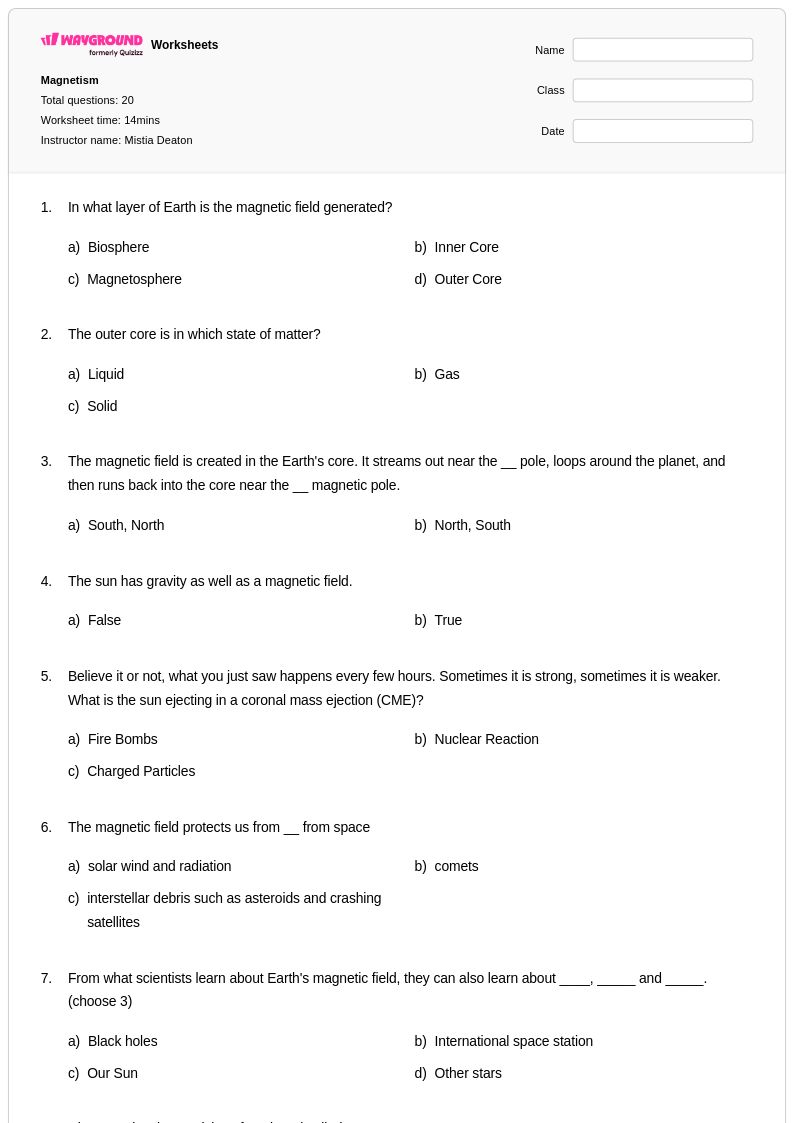
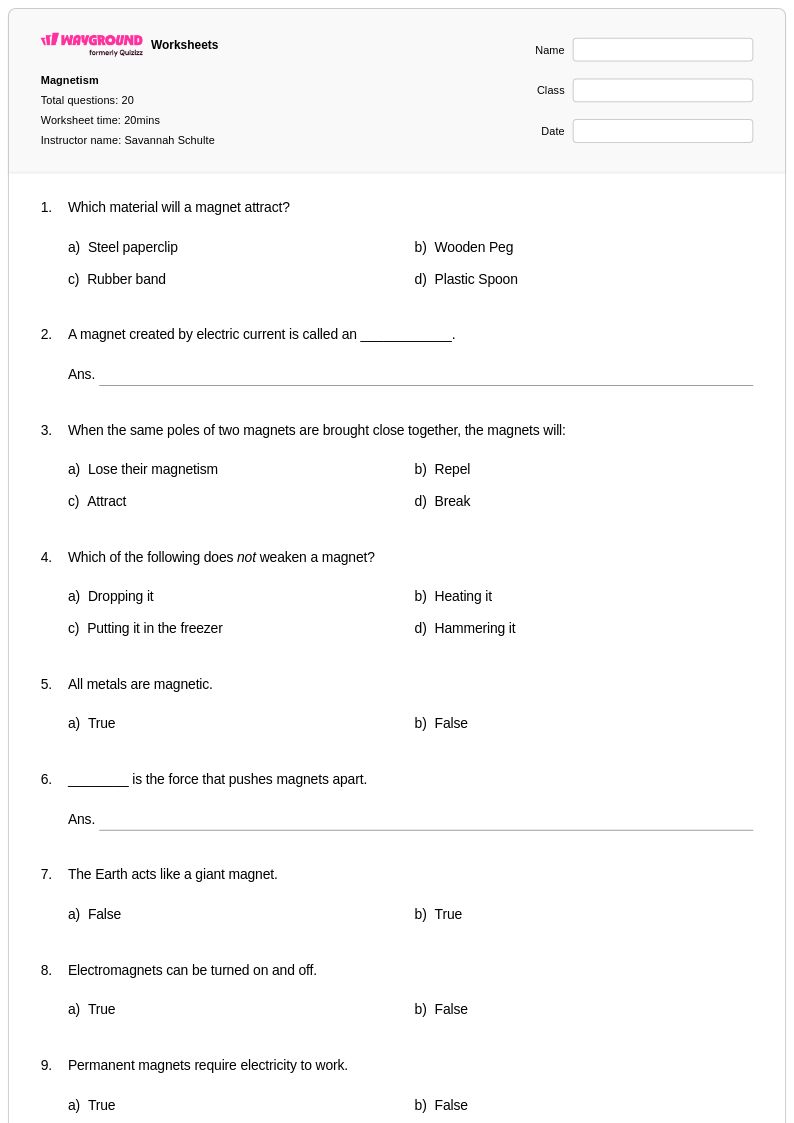
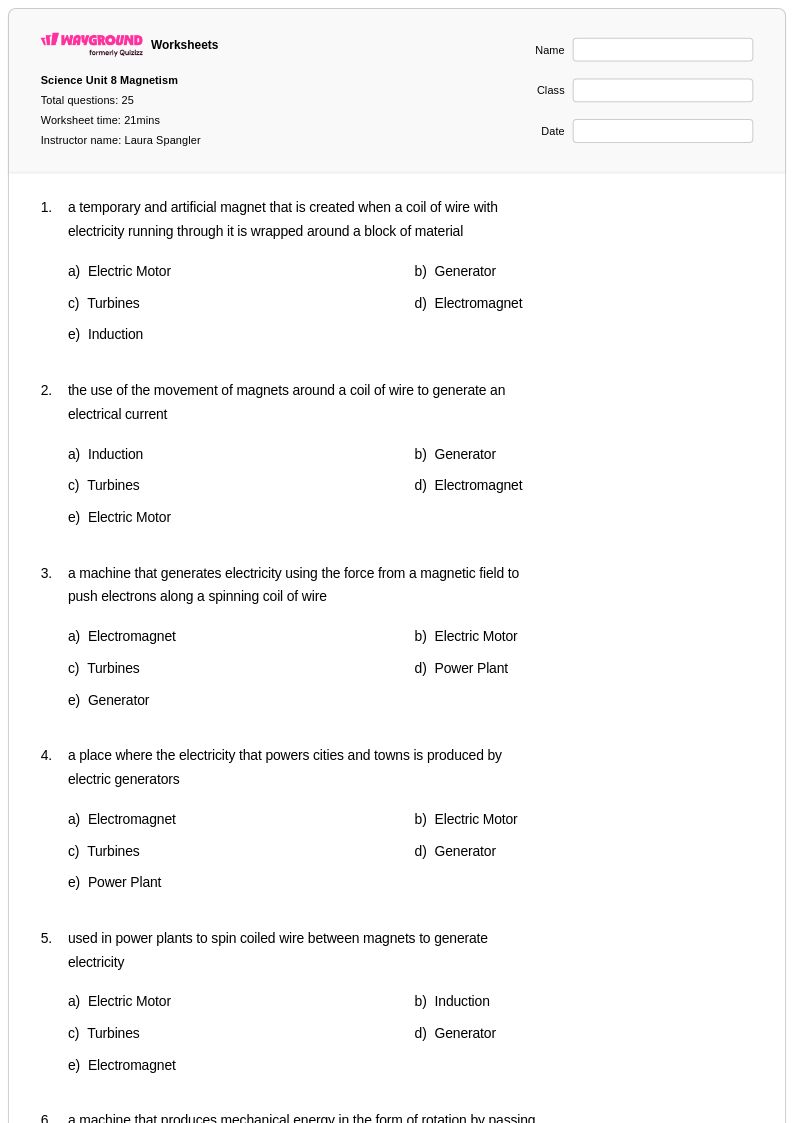
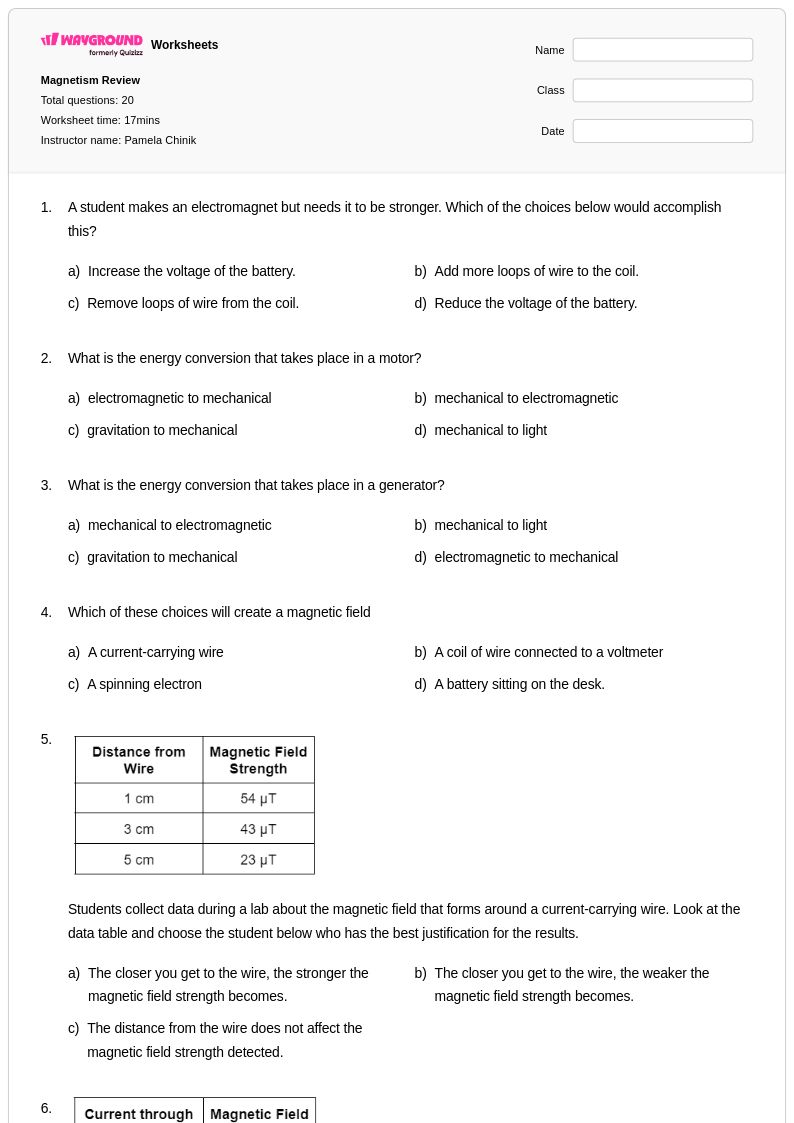
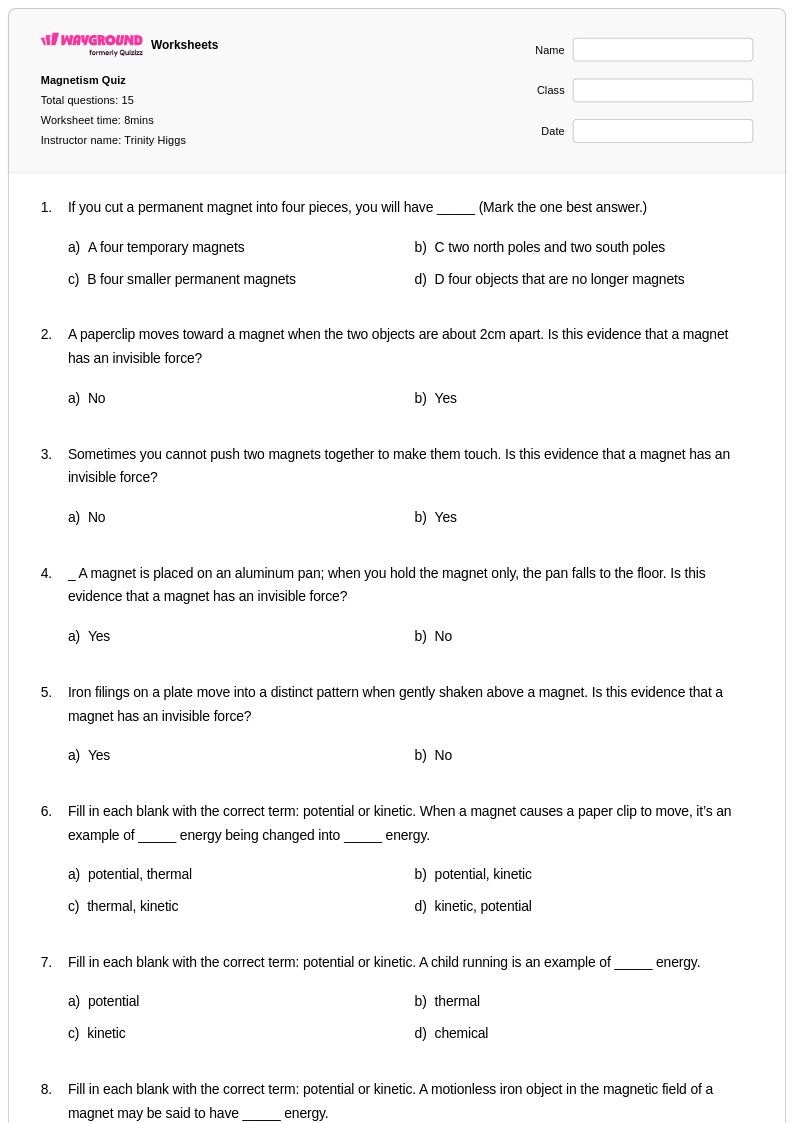
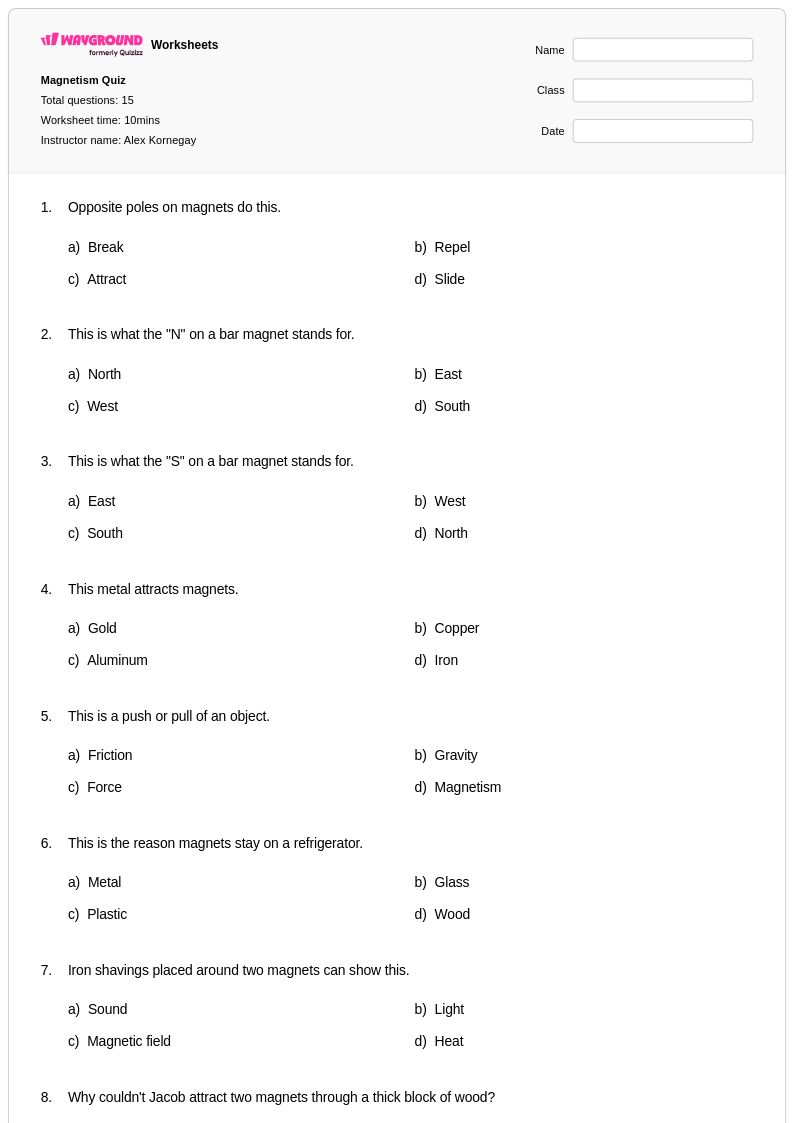
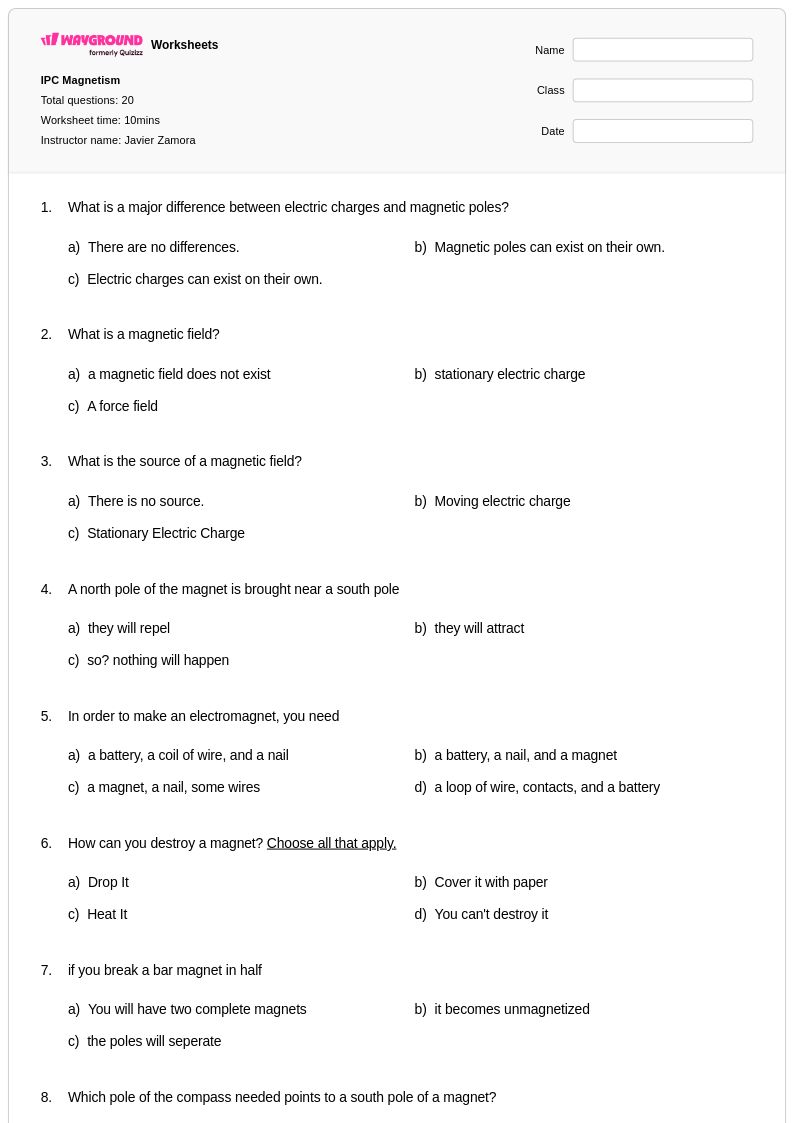
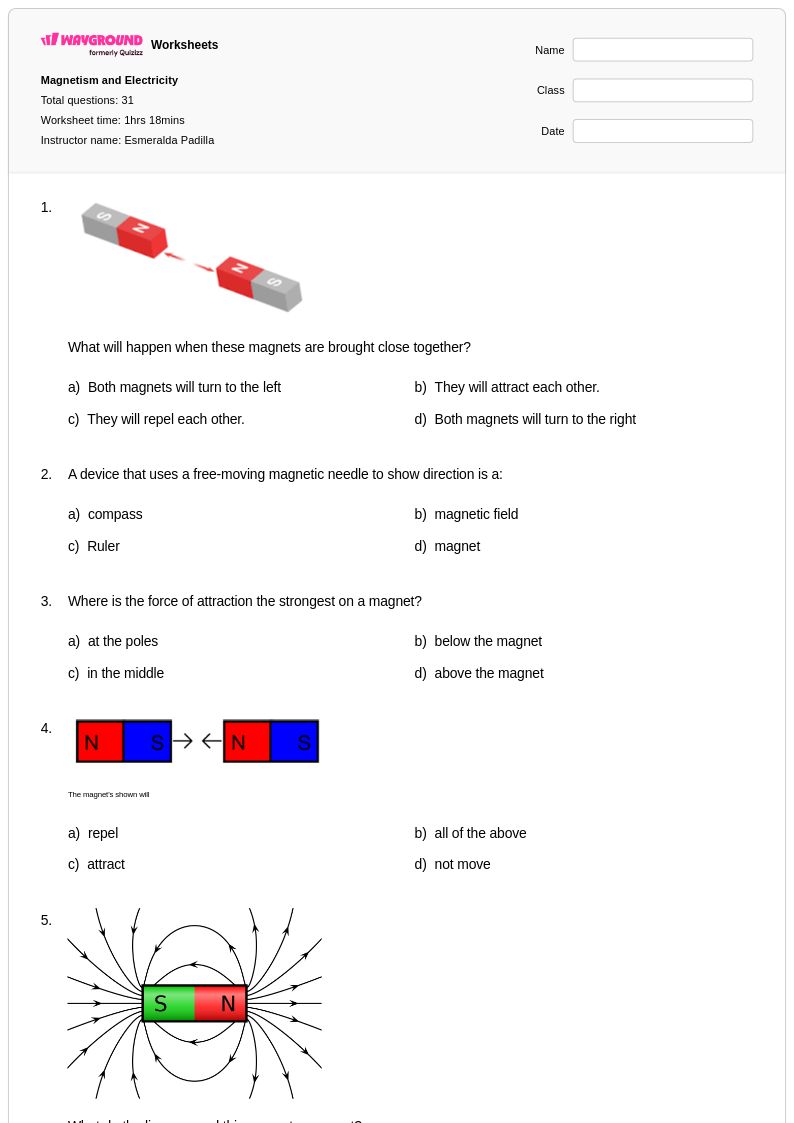
Enhance Grade 12 physics understanding with our comprehensive magnetism worksheets featuring free printables, practice problems, and answer keys that help students master magnetic fields, electromagnetic induction, and magnetic forces through Wayground's expertly designed PDF resources.
Explore printable Magnetism worksheets for Grade 12
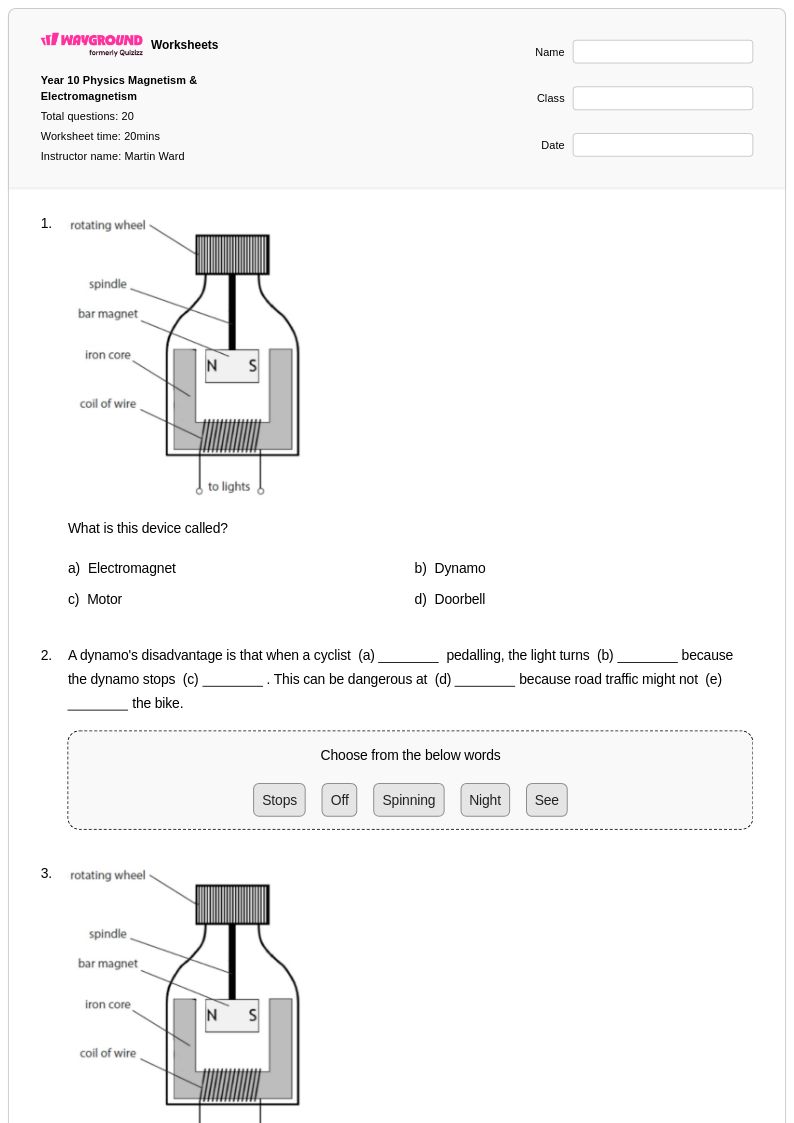
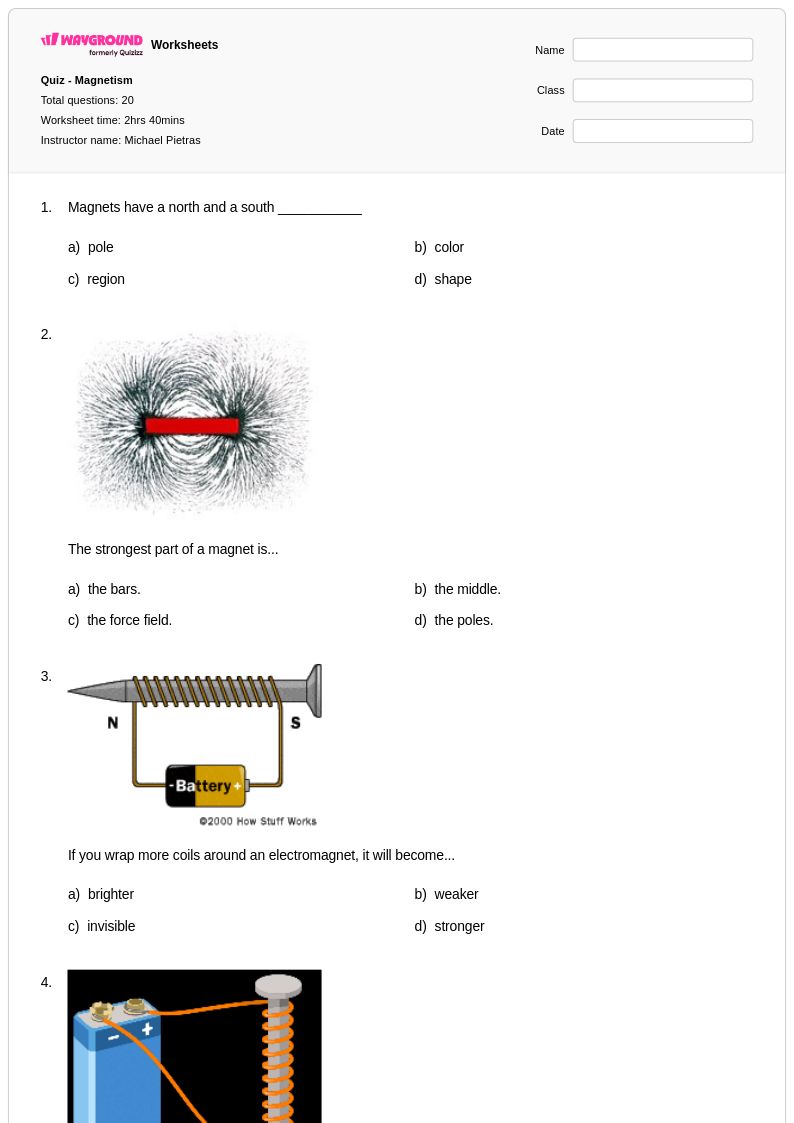
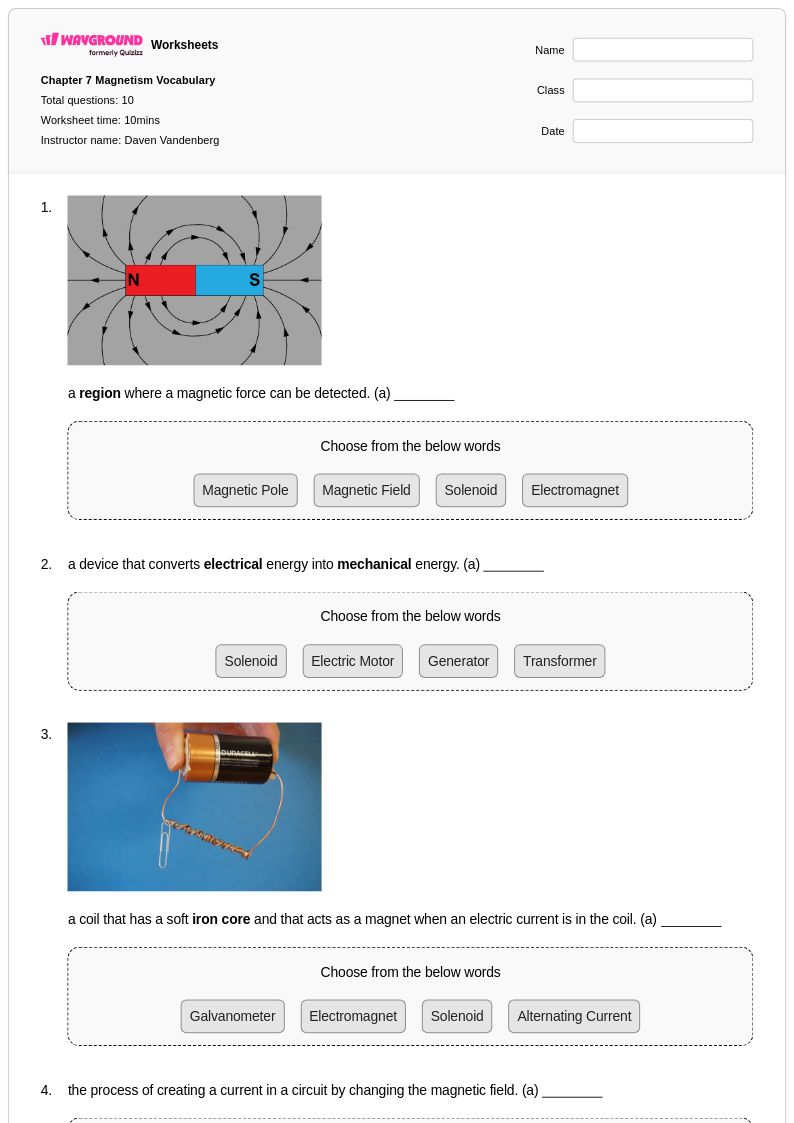
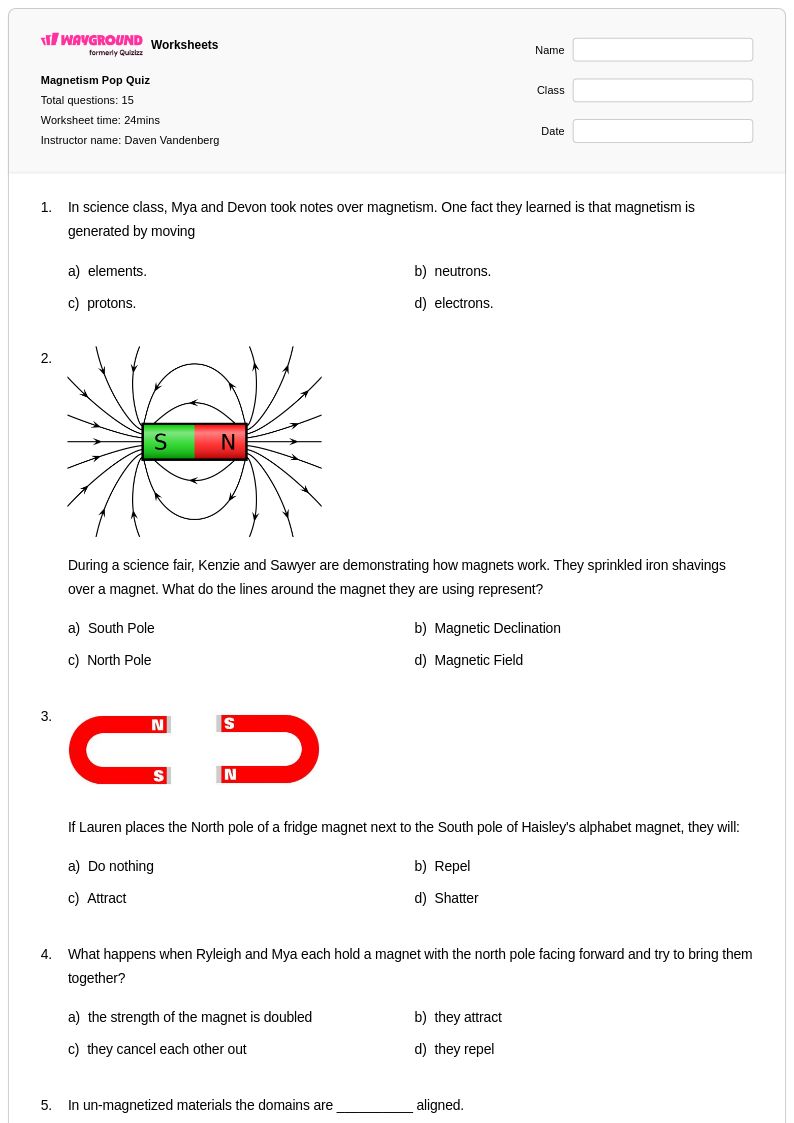
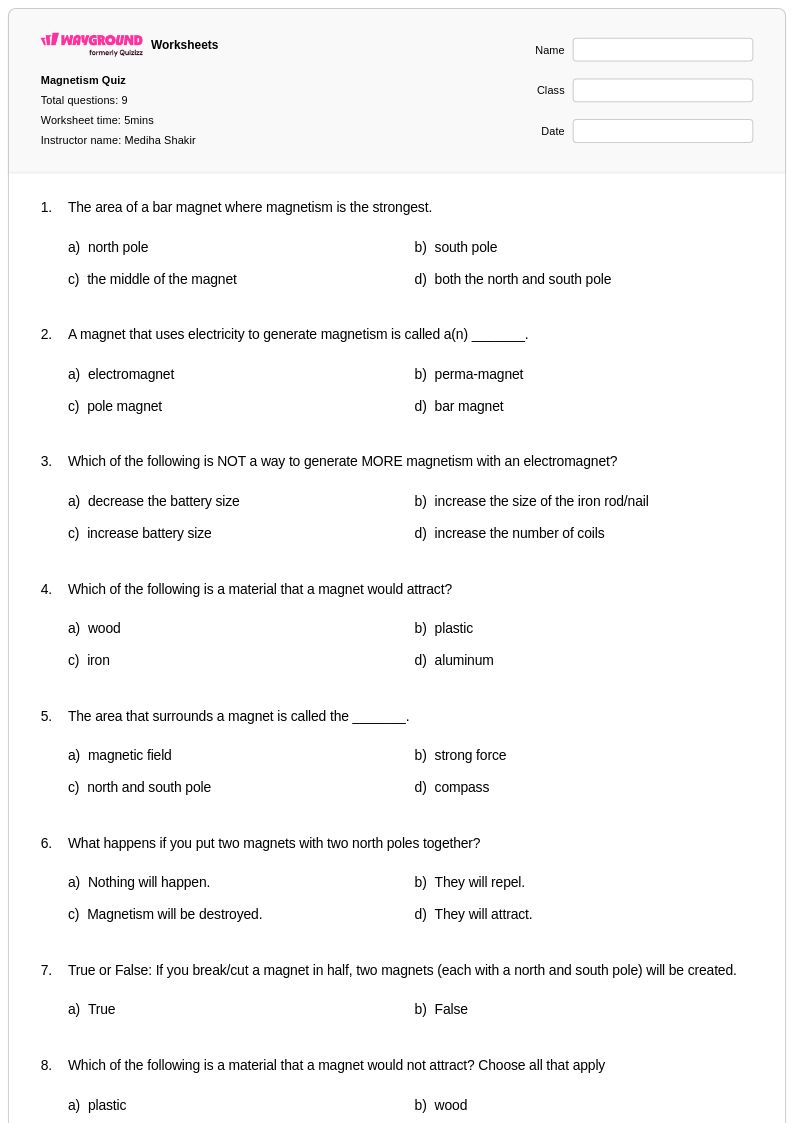
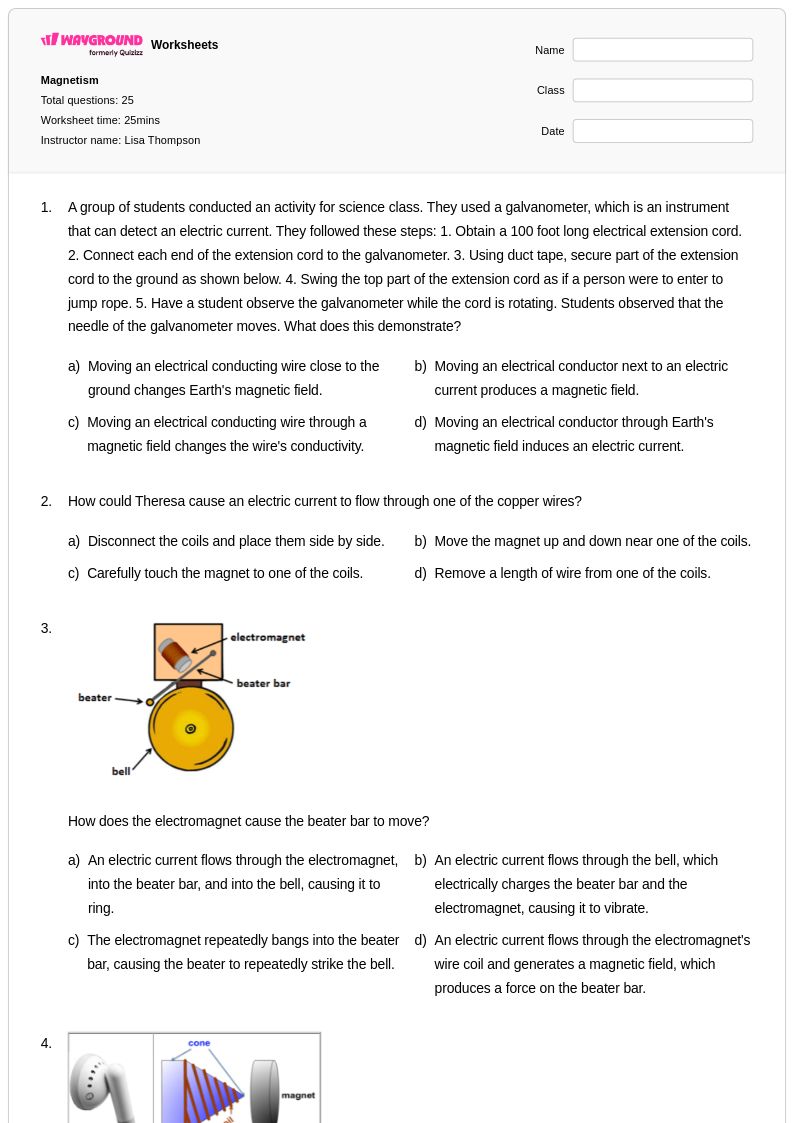
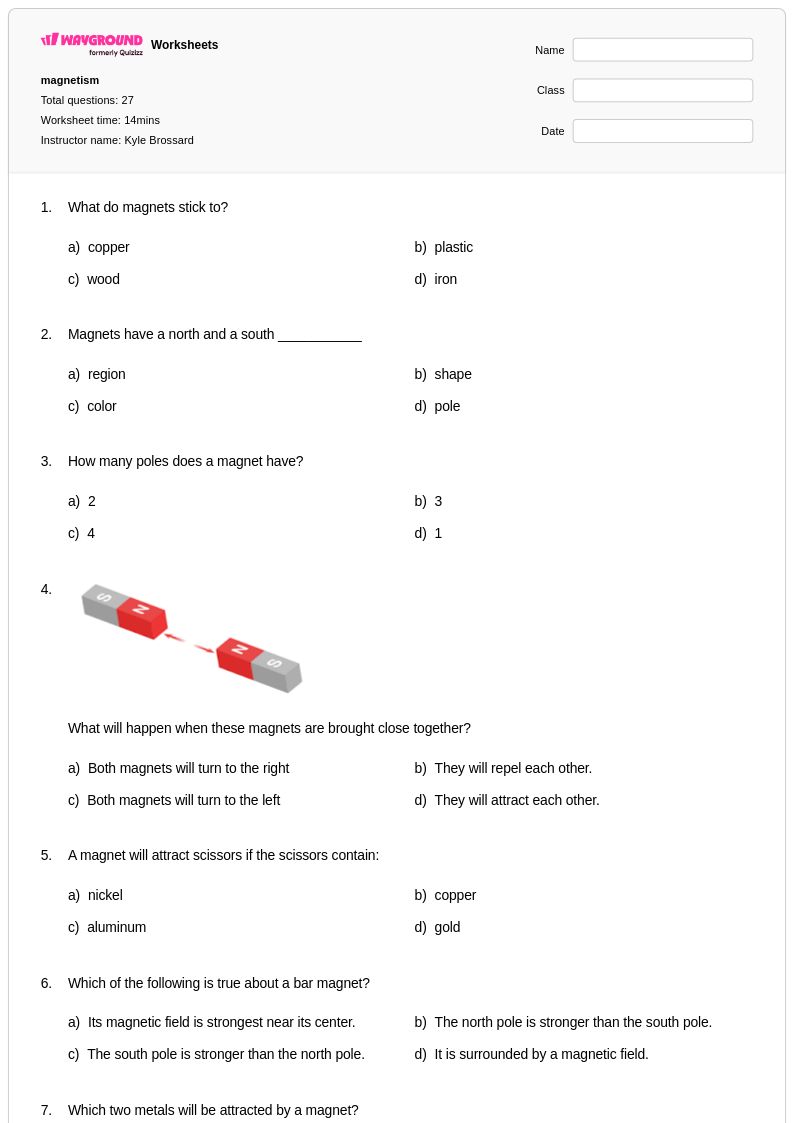
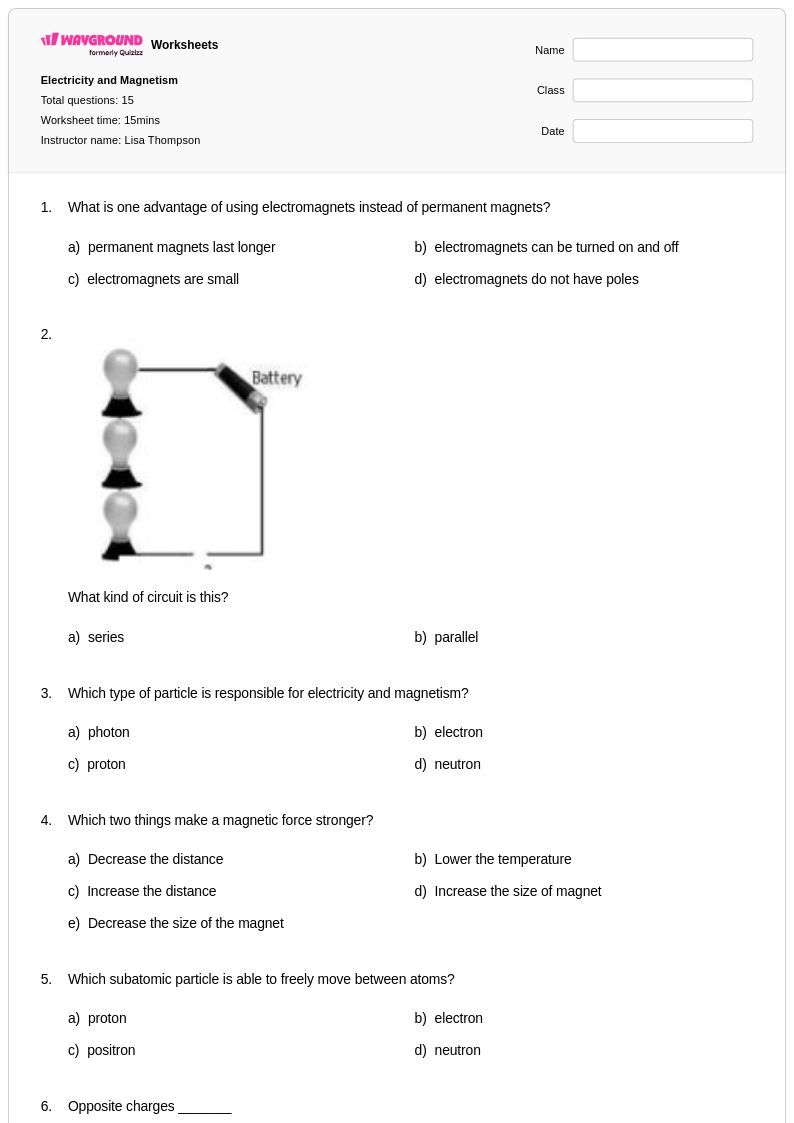
Magnetism worksheets for Grade 12 physics students available through Wayground (formerly Quizizz) provide comprehensive coverage of advanced electromagnetic concepts essential for college-bound students. These expertly crafted resources strengthen critical skills in analyzing magnetic fields, understanding electromagnetic induction, exploring the relationship between electricity and magnetism, and solving complex problems involving magnetic forces on charged particles and current-carrying conductors. Students engage with practice problems that cover topics such as Faraday's law, Lenz's law, magnetic flux, and the behavior of charged particles in magnetic fields. Each worksheet collection includes detailed answer keys to support independent learning and self-assessment, while the free printables in pdf format ensure accessible study materials for both classroom instruction and homework assignments.
Wayground (formerly Quizizz) empowers physics educators with millions of teacher-created magnetism resources that streamline lesson planning and enhance student learning outcomes. The platform's robust search and filtering capabilities allow teachers to quickly locate worksheets aligned with specific physics standards and learning objectives, while differentiation tools enable customization based on individual student needs and abilities. Teachers can access materials in both printable pdf formats for traditional classroom use and digital formats for technology-enhanced learning environments, providing flexibility for diverse instructional approaches. These comprehensive worksheet collections support targeted skill practice, remediation for struggling students, and enrichment opportunities for advanced learners, enabling educators to address the full spectrum of student abilities while ensuring mastery of complex magnetism concepts required for success in advanced physics coursework.
FAQs
How do I teach magnetism to students effectively?
Effective magnetism instruction typically begins with concrete experiences, such as having students observe magnetic attraction and repulsion firsthand before introducing abstract concepts like field lines or electromagnetic induction. From there, teachers can scaffold instruction by connecting magnetic properties to real-world applications like electric motors, generators, and compasses. Building from basic pole interactions toward more complex electromagnetic relationships helps students develop lasting conceptual understanding rather than surface-level recall.
What exercises help students practice magnetic forces and fields?
Practice exercises that ask students to predict the behavior of magnetic poles, draw and interpret field line diagrams, and solve problems involving electromagnetic induction are especially effective for reinforcing core magnetism concepts. Scaffolded problem sets that move from identifying basic magnetic properties to analyzing the relationship between electricity and magnetism give students repeated exposure at increasing levels of complexity. Mixing conceptual questions with applied problem-solving ensures that students can both explain and use what they have learned.
What common mistakes do students make when learning about magnetism?
One of the most persistent misconceptions is that magnetic poles behave identically to electric charges, leading students to incorrectly assume that a magnetic pole can exist in isolation. Students also frequently confuse the direction of magnetic field lines, drawing them as originating from the south pole rather than the north pole. Another common error is treating magnetic force and gravitational force as equivalent in strength, which can cause mistakes when interpreting how magnets interact with different materials.
How can I differentiate magnetism instruction for students at different skill levels?
For students who need additional support, reducing the complexity of diagrams, providing labeled reference sheets for magnetic field line conventions, and allowing extended time on multi-step electromagnetic problems can make a meaningful difference. Advanced learners benefit from open-ended application problems that require them to connect electromagnetic induction to real-world technologies. On Wayground, teachers can apply individual accommodations such as extended time, read aloud, and reduced answer choices to specific students, so struggling learners receive targeted support without disrupting the experience for the rest of the class.
How do I use Wayground's magnetism worksheets in my classroom?
Wayground's magnetism worksheets are available as printable PDFs for traditional classroom use and in digital formats for technology-integrated environments, making them easy to deploy whether students are in-person or working remotely. Teachers can also host worksheets as a quiz directly on Wayground, enabling interactive practice with built-in answer tracking. Each worksheet includes a complete answer key, so grading and providing feedback is straightforward regardless of the format used.
How do I connect magnetism to electricity in my lessons?
The relationship between electricity and magnetism is best introduced through the concept of electromagnetic induction, where a changing magnetic field generates an electric current. Teachers often use the examples of generators and transformers to make this relationship concrete and relevant. Presenting paired problems that first address magnetic fields in isolation and then introduce current-carrying conductors helps students see the two phenomena as deeply connected rather than separate topics.