Free Printable Equal Sharing Worksheets for Grade 3
Grade 3 equal sharing worksheets from Wayground help students master division concepts through engaging printables and practice problems, complete with answer keys for effective learning.
Explore printable Equal Sharing worksheets for Grade 3
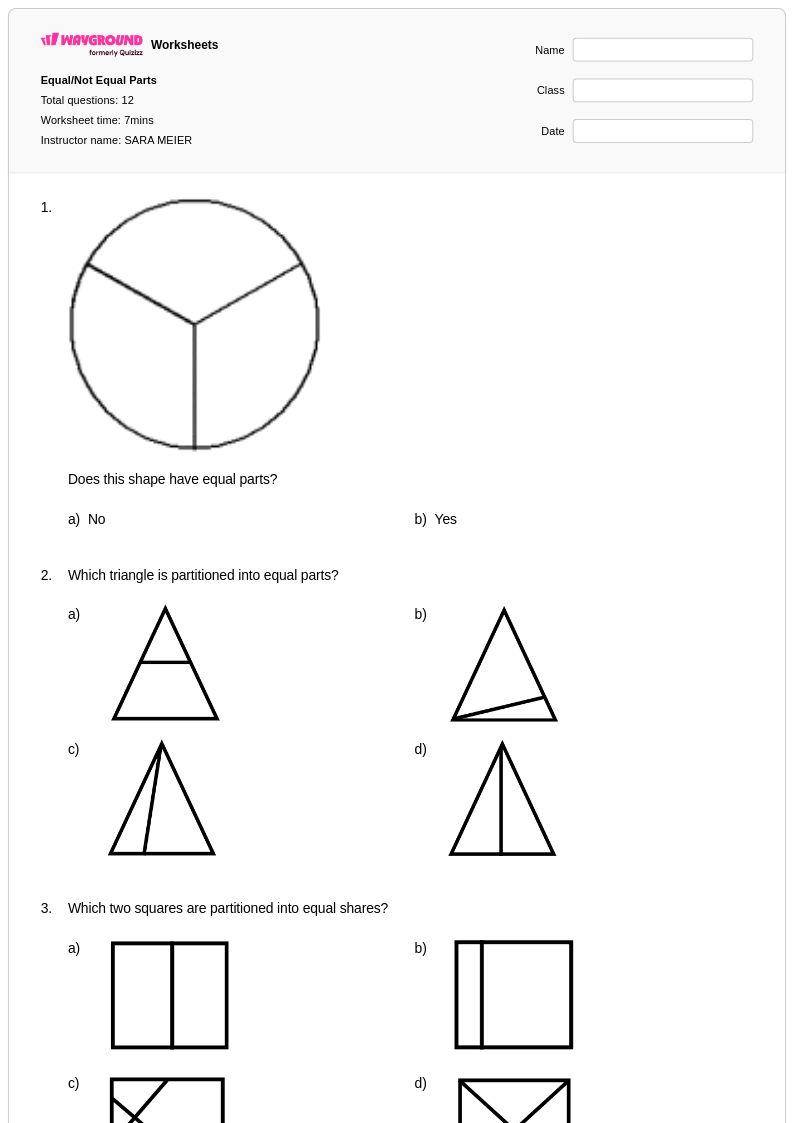
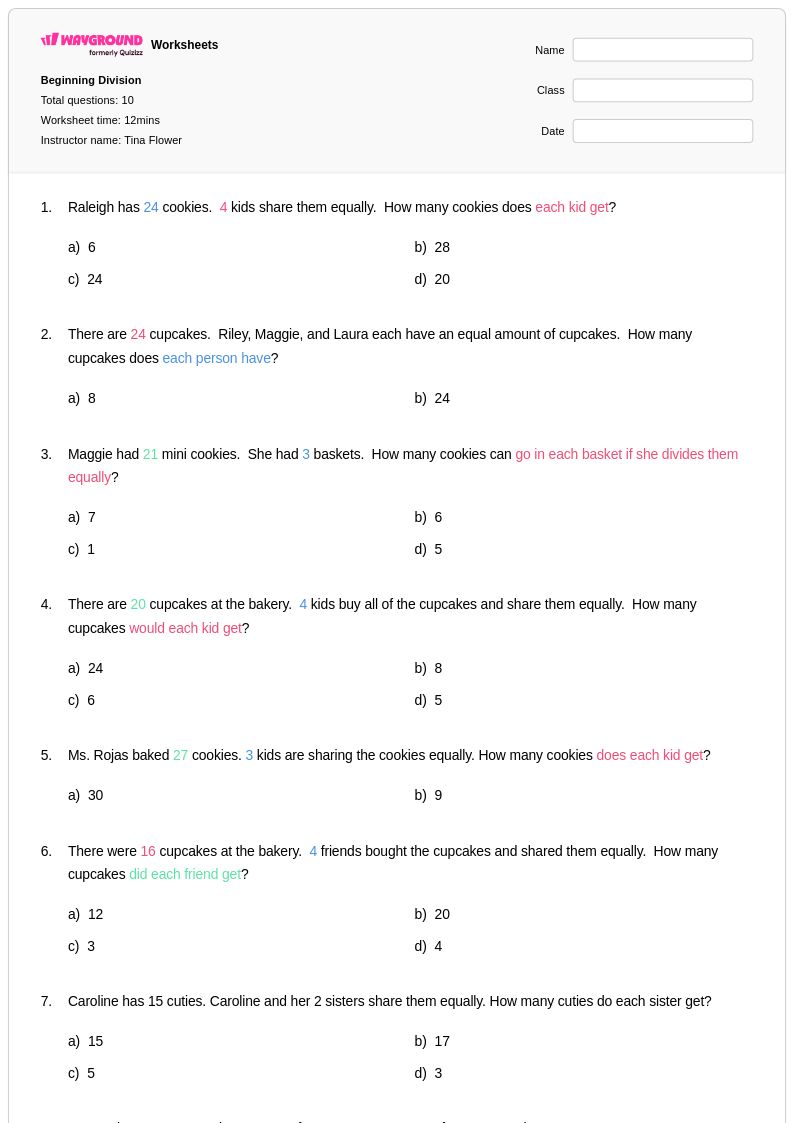
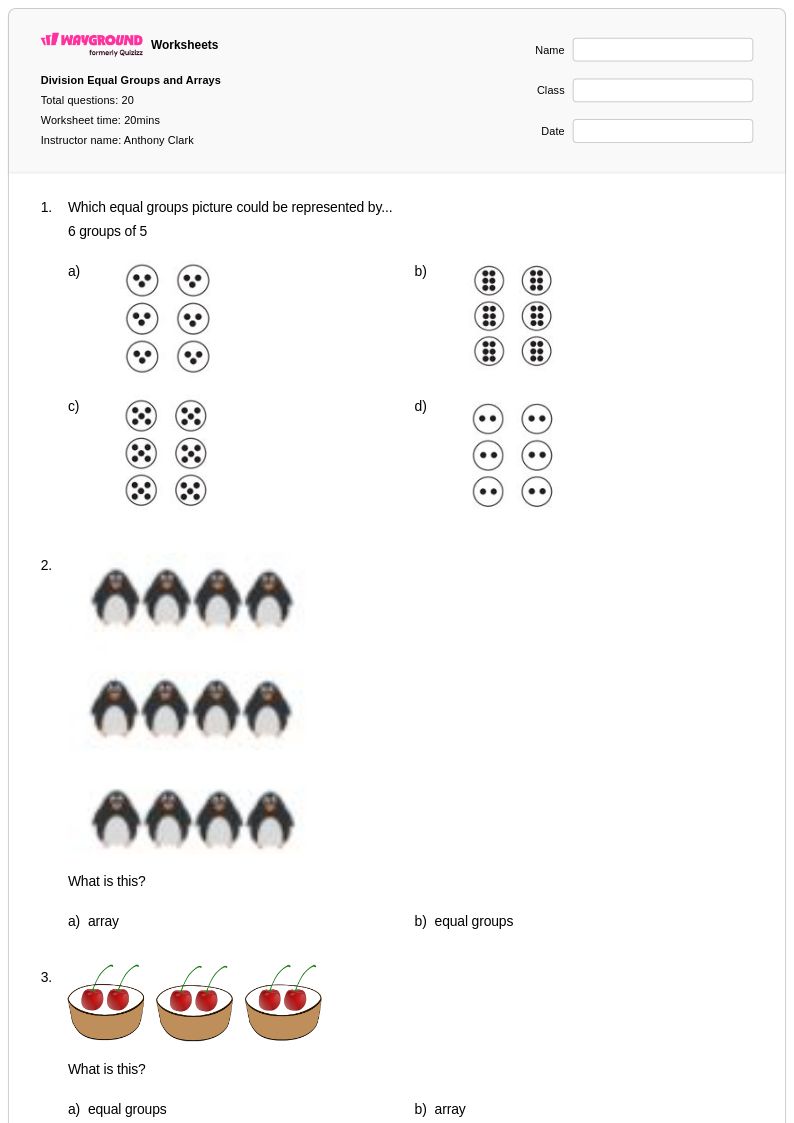
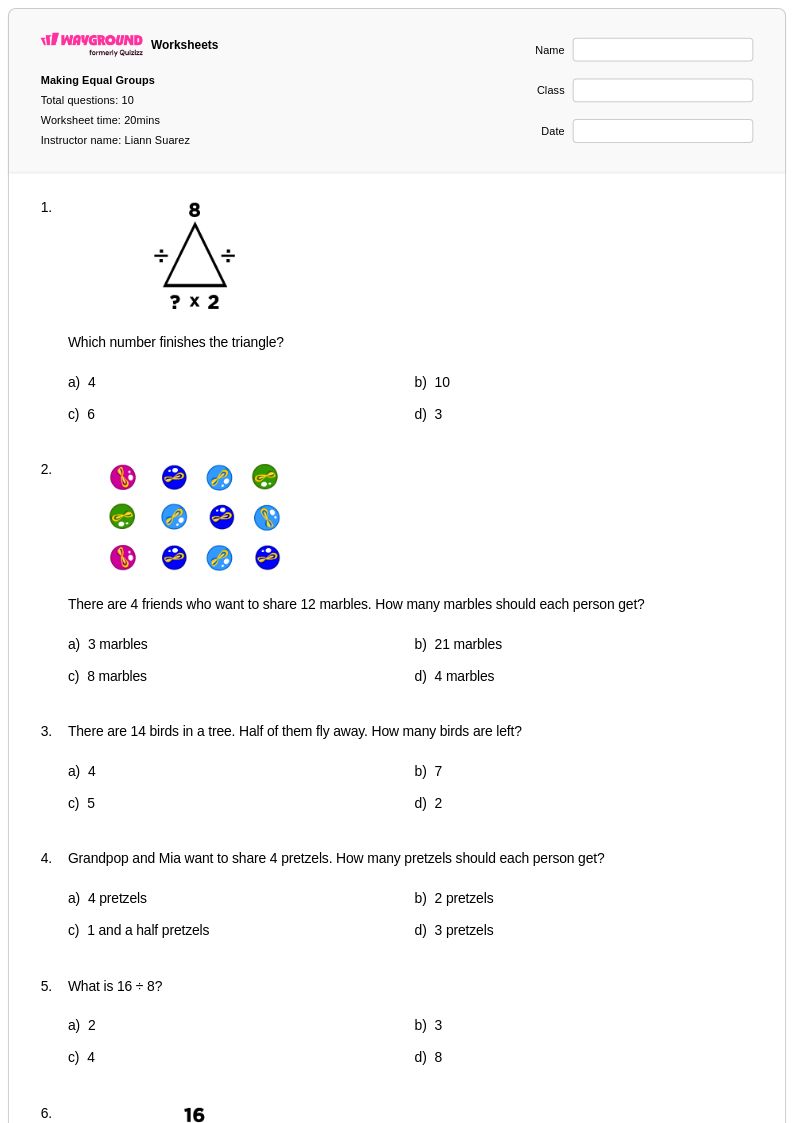
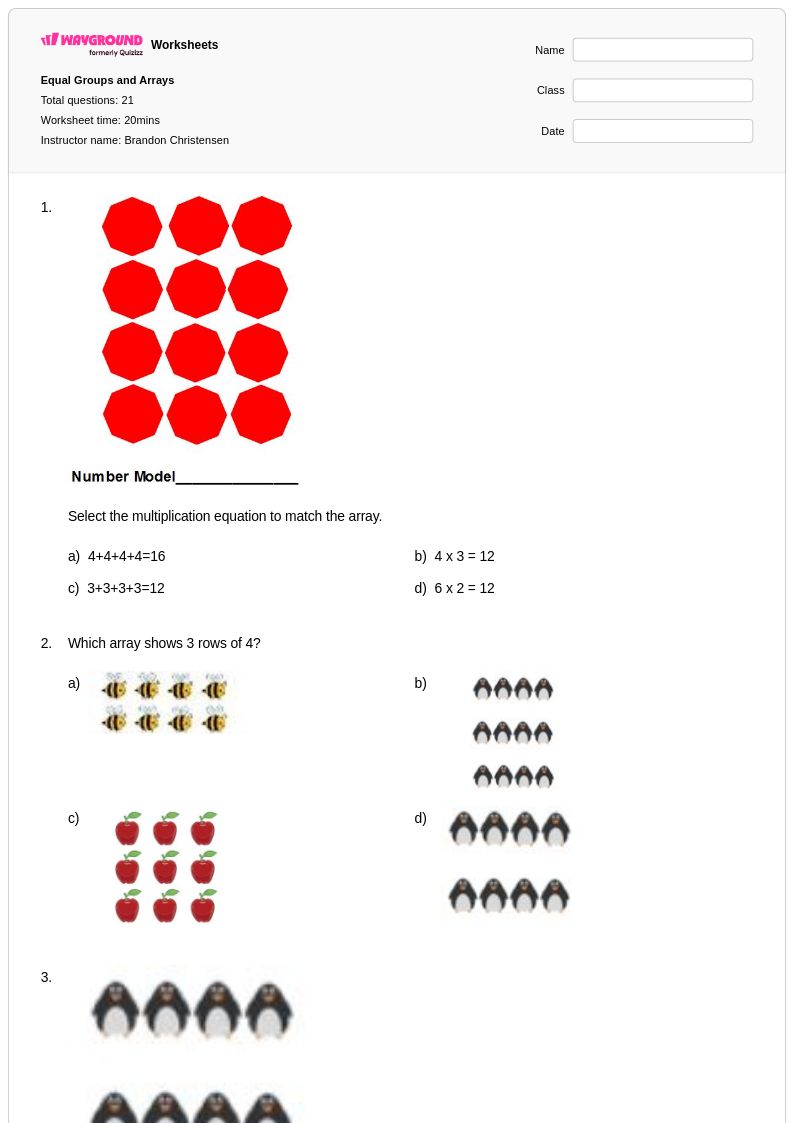
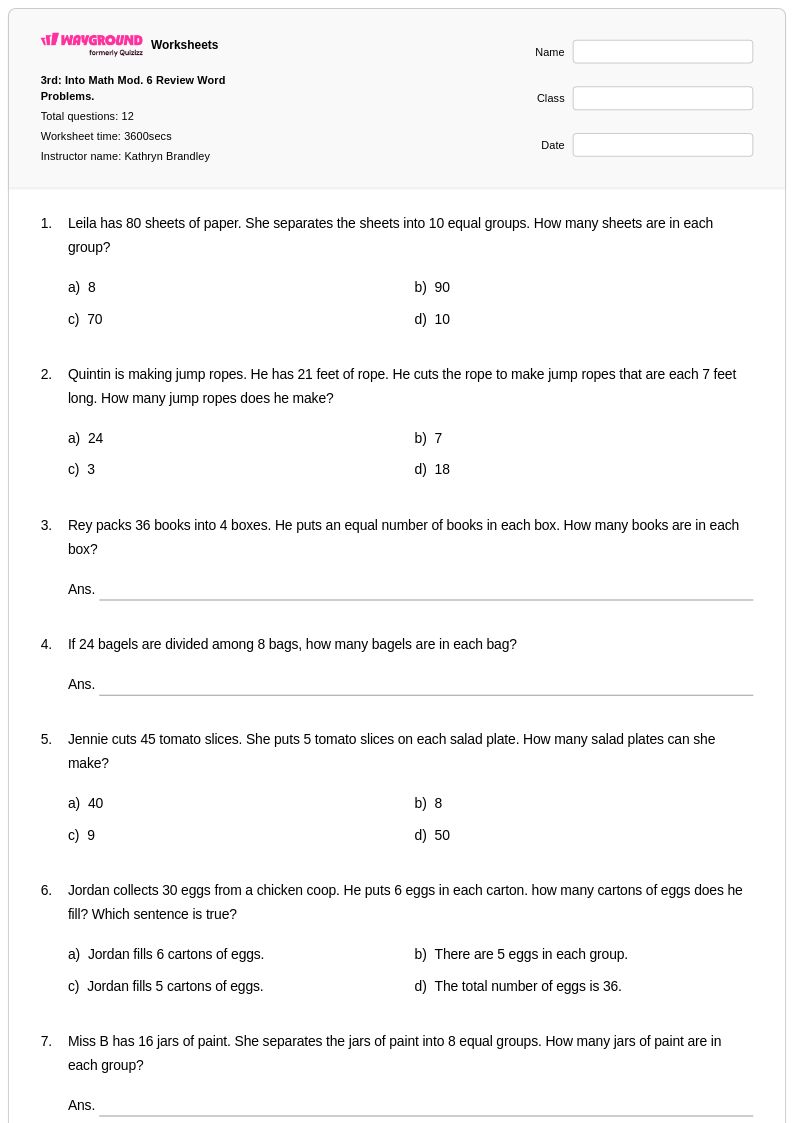
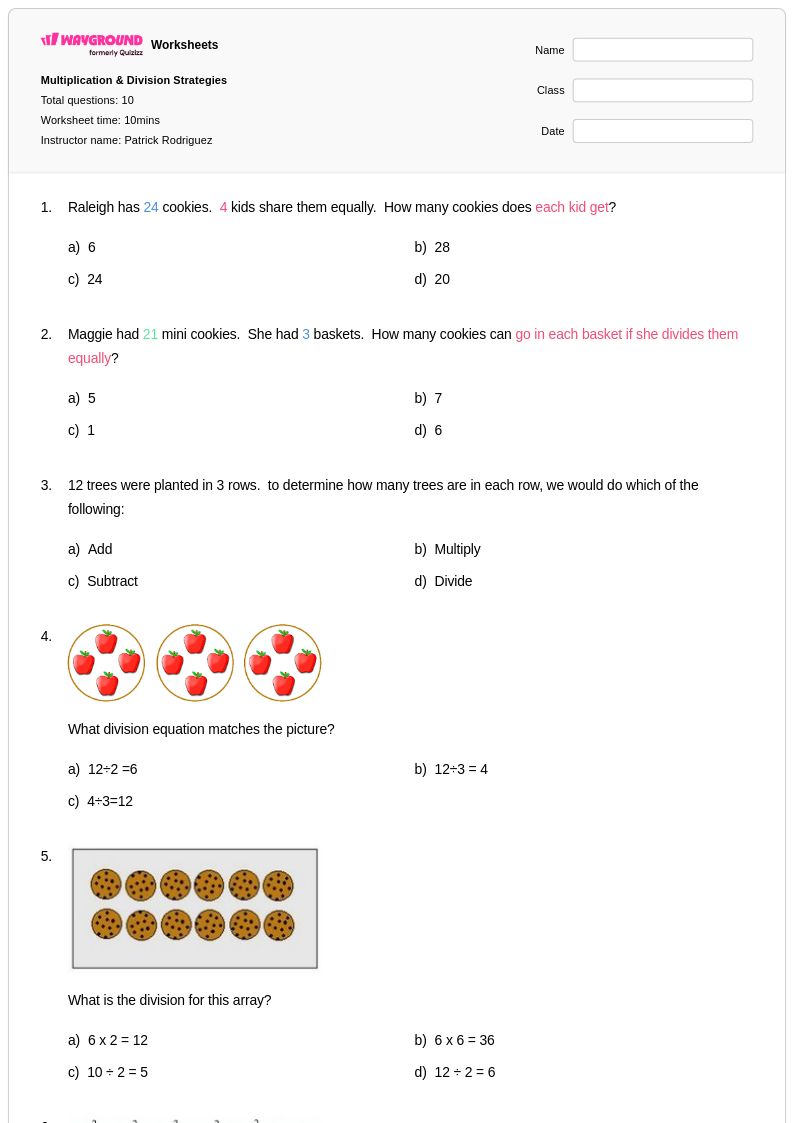
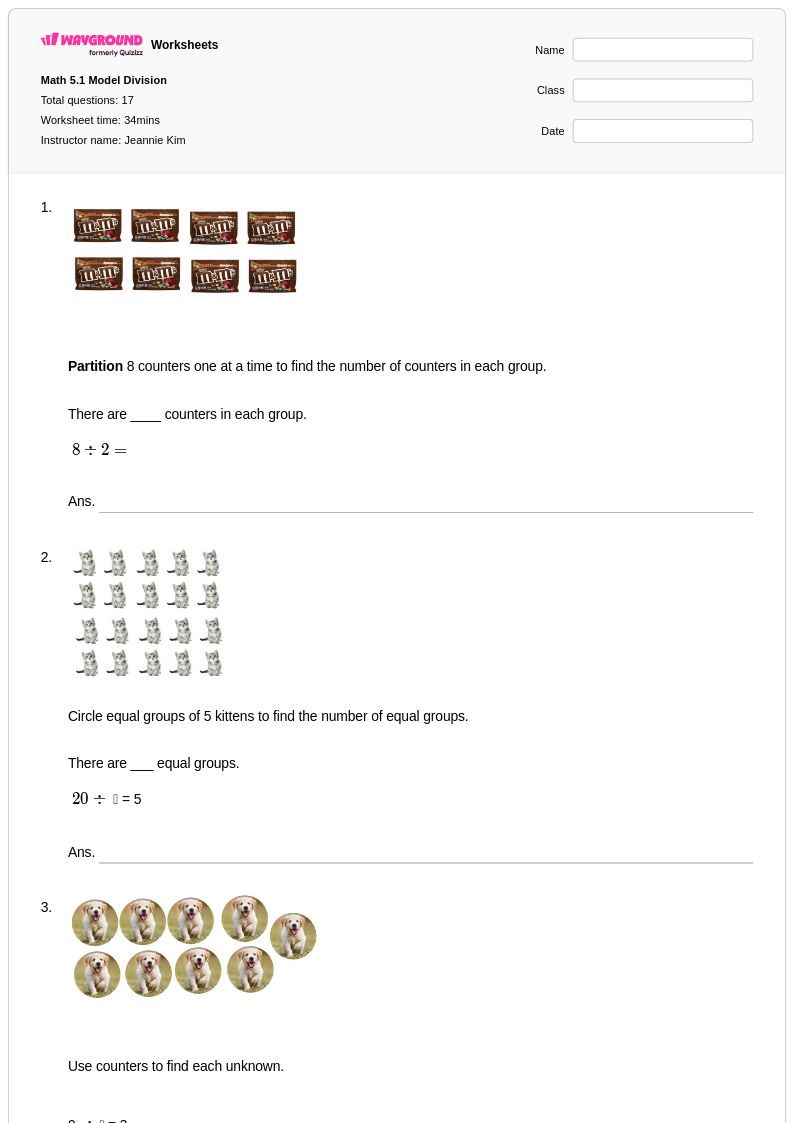
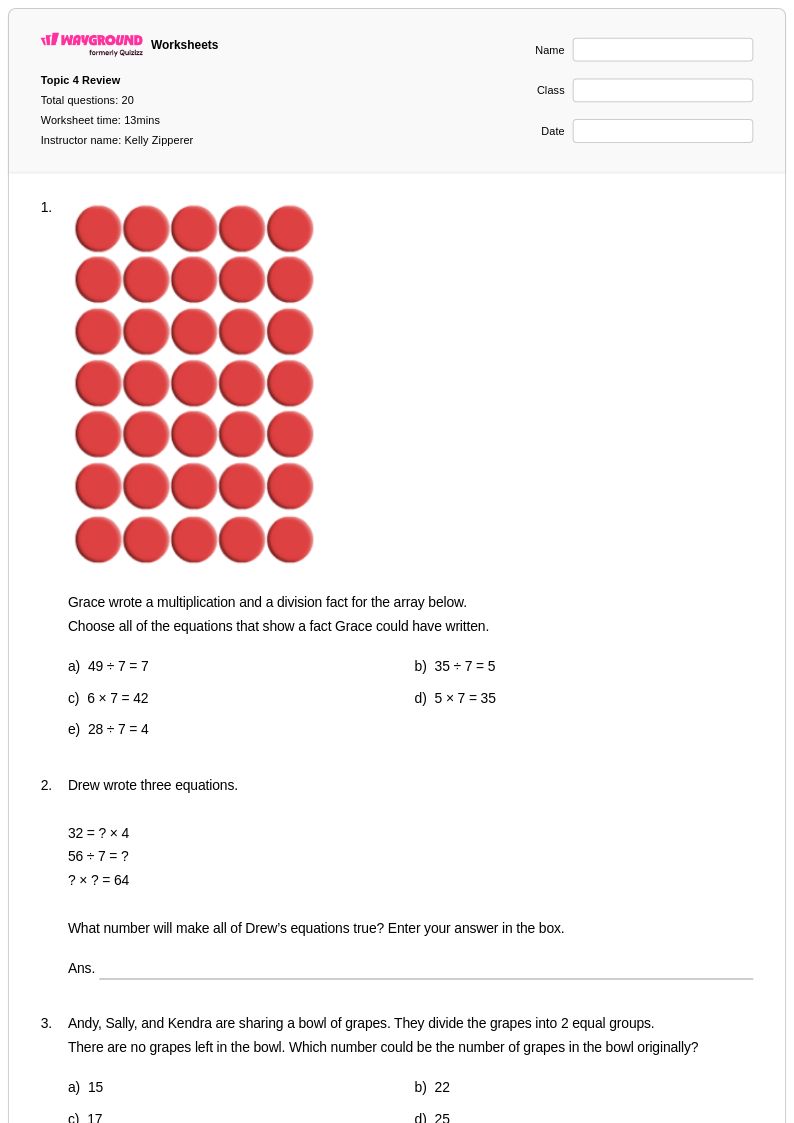
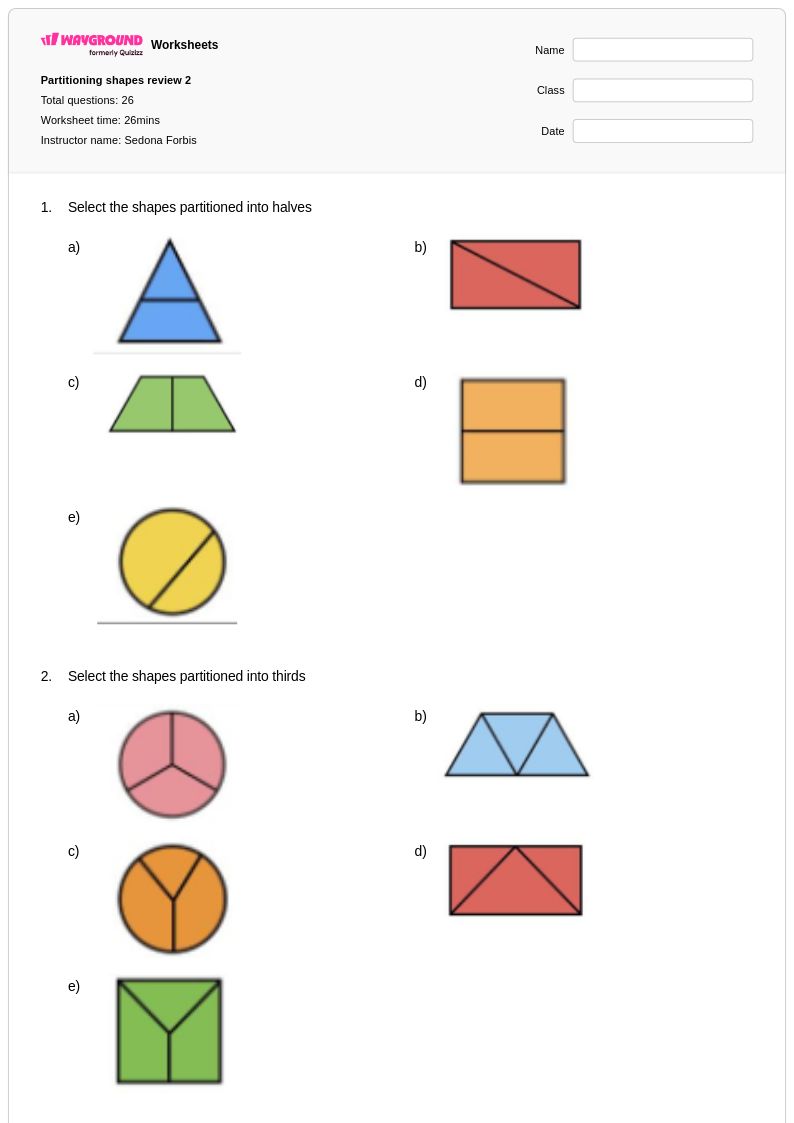
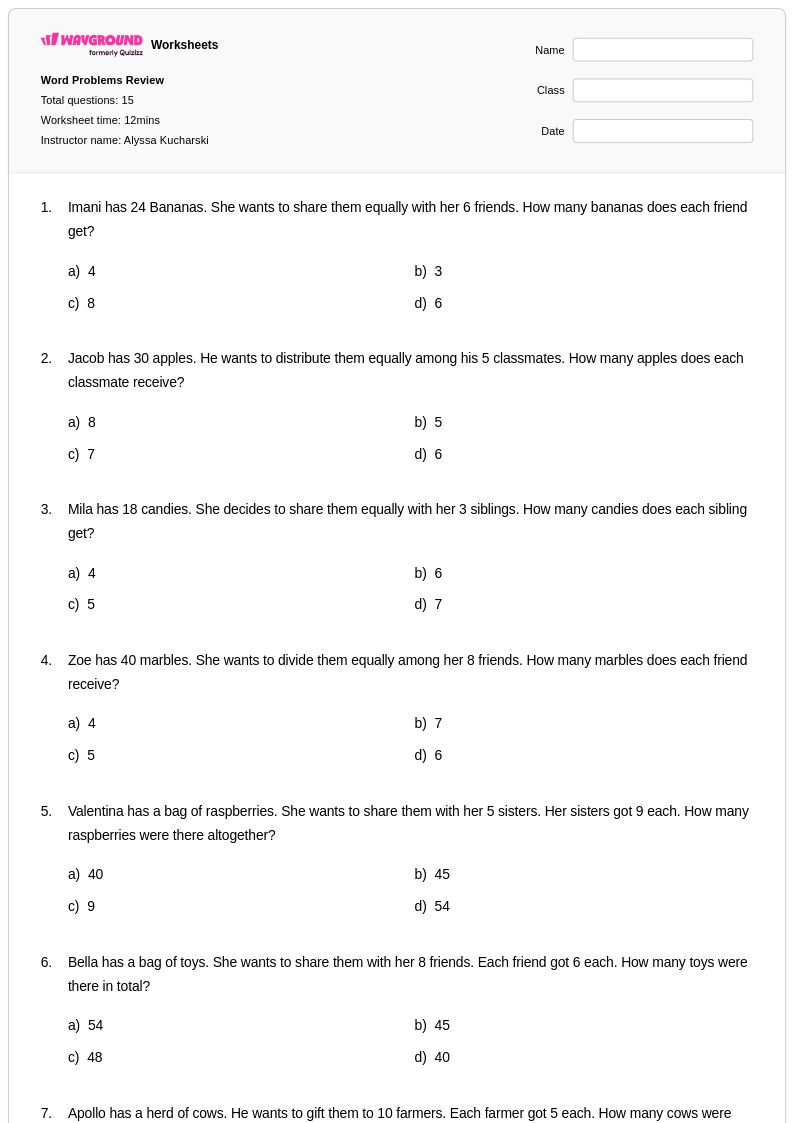
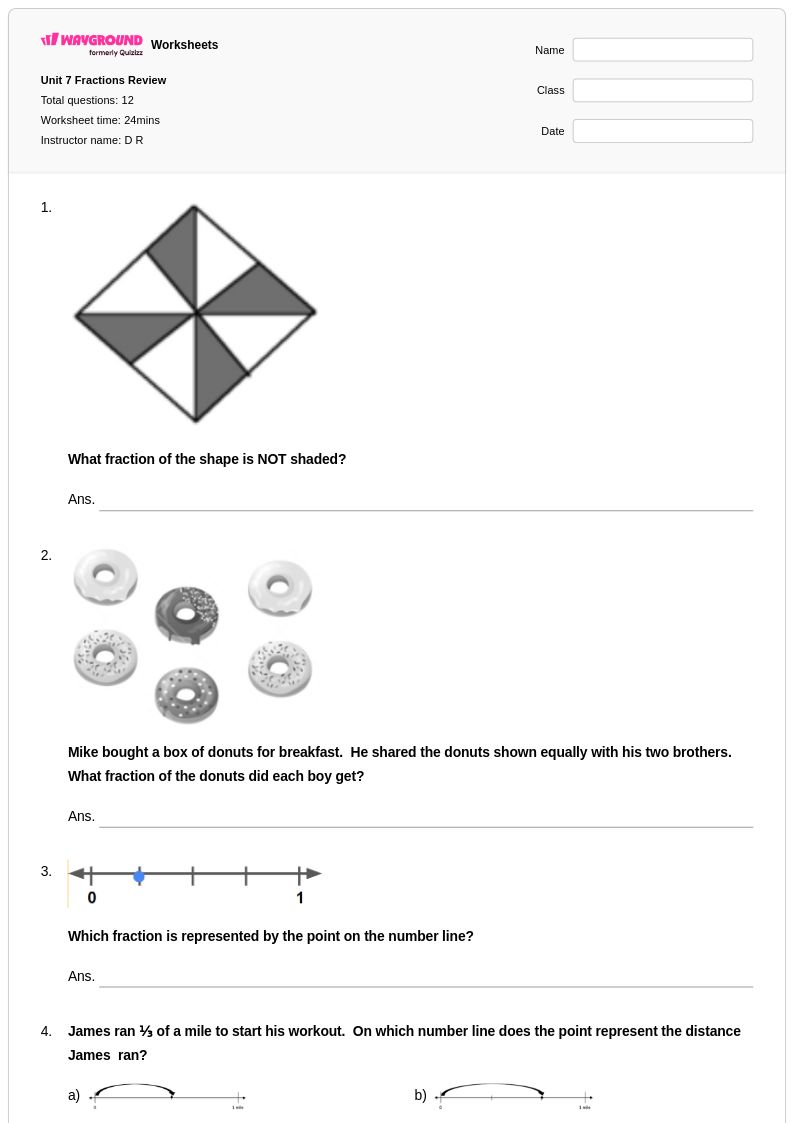
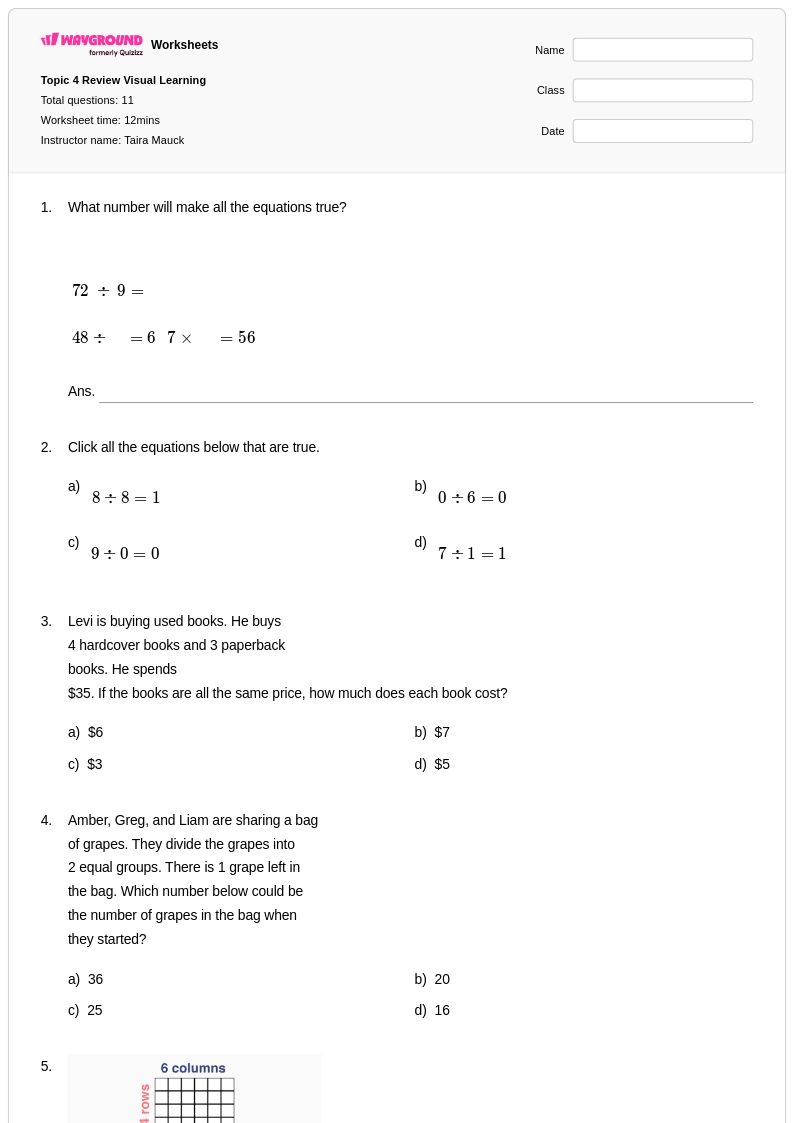
Equal sharing worksheets for Grade 3 represent a fundamental building block in elementary mathematics education, helping young learners develop essential division concepts through concrete, relatable scenarios. These comprehensive worksheet collections from Wayground (formerly Quizizz) guide students through the process of distributing objects, quantities, and sets into equal groups, strengthening their understanding of fair distribution and early division principles. Each worksheet features carefully crafted practice problems that progress from simple visual models using manipulatives and pictures to more abstract numerical representations, with complete answer keys provided to support both independent learning and guided instruction. These free printables and pdf resources emphasize hands-on problem solving, encouraging students to explore concepts like remainders, grouping strategies, and the relationship between multiplication and division through engaging, age-appropriate contexts such as sharing toys, distributing treats, or organizing classroom materials.
Wayground (formerly Quizizz) empowers educators with an extensive library of millions of teacher-created equal sharing resources specifically designed to meet Grade 3 mathematics standards and diverse classroom needs. The platform's robust search and filtering capabilities allow teachers to quickly locate worksheets that align with specific curriculum requirements, learning objectives, and student ability levels, while built-in differentiation tools enable seamless customization for remediation and enrichment purposes. These versatile materials are available in both printable pdf formats for traditional paper-based instruction and digital formats for interactive learning experiences, giving teachers maximum flexibility in lesson planning and implementation. The comprehensive collection supports targeted skill practice, formative assessment, and progressive concept development, helping educators identify learning gaps, reinforce foundational understanding, and build student confidence in mathematical reasoning and problem-solving strategies essential for future success in division and algebraic thinking.
FAQs
How do I teach equal sharing in Grade 3?
Grade 3 is where equal sharing becomes formal division, so the teaching goal shifts from building intuition to connecting that intuition to notation and facts. A strong approach: present a sharing scenario students can solve by drawing, then show how the same situation is written as a division equation, then connect it to the related multiplication fact. Students who already understand equal sharing conceptually usually make this transition quickly — the challenge is students who've been computing without understanding, and for them, going back to drawings briefly is worth the time.
What equal sharing practice is most useful for Grade 3 students?
At this level, the most valuable practice combines three things: problems with remainders (so students learn that equal sharing doesn't always come out even), problems that ask students to write both the division and the related multiplication equation, and word problems where students have to decide what the remainder means in context. Wayground's Grade 3 worksheets progress from visual models to these more abstract and applied problem types.
What misconceptions do third graders have about equal sharing and division?
Two are especially common. First, students treat remainders as errors — they think they've done something wrong if objects are left over, rather than understanding that remainders are a normal part of division. Second, many students can execute a division procedure but can't explain what the quotient represents in a word problem context. Both misconceptions point to the same gap: students need more practice connecting the numbers in a division equation back to the sharing situation that generated them.
How do I use Wayground's Grade 3 equal sharing worksheets?
Each worksheet includes a complete answer key and is available as a printable PDF or a digital assignment hosted on Wayground. Paper works well for independent practice and assessments — print the PDF, assign it, and use the Wayground for Teachers app to scan and grade submissions. Digital hosting is useful for immediate feedback during practice: students see results right away, which helps when you want them to self-correct before a concept solidifies incorrectly.
How does equal sharing align with Common Core expectations for Grade 3?
Grade 3 is the year Common Core formally introduces multiplication and division, and equal sharing is the conceptual entry point. Students are expected to interpret division as finding the number of equal groups or the size of each group — both of which are equal sharing scenarios. From there, the standard builds toward fluency with division facts within 100 by connecting each division fact to its multiplication counterpart. Equal sharing work in Grade 3 isn't a warm-up to division; it is the foundation the standard is built on.
How can I differentiate equal sharing practice for my Grade 3 class?
For students still building confidence, Wayground's Read Aloud accommodation removes the reading barrier from word problems so they can focus on the math. Reducing answer choices is also useful for students who get overwhelmed by options before they've worked through the problem. On the worksheet side, you can increase font size or apply a dyslexia-friendly font for students who need it — these are set per student, so the rest of the class works from the standard version without any change to their experience.