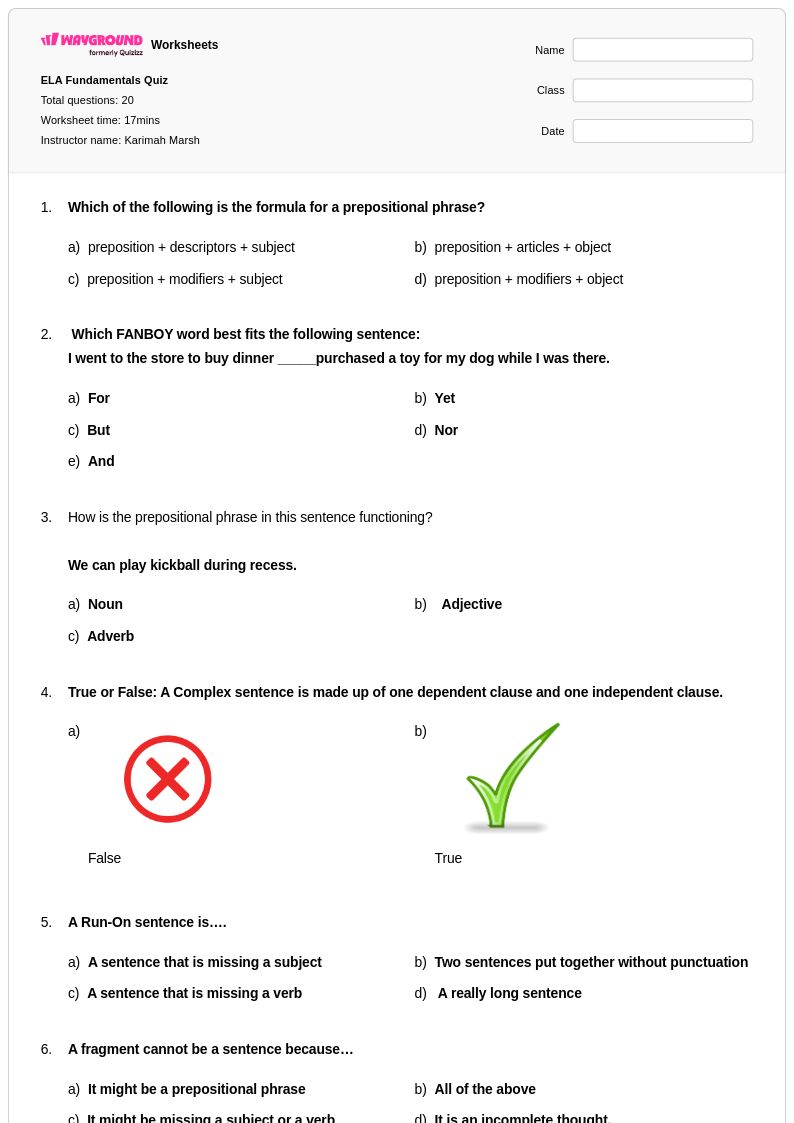
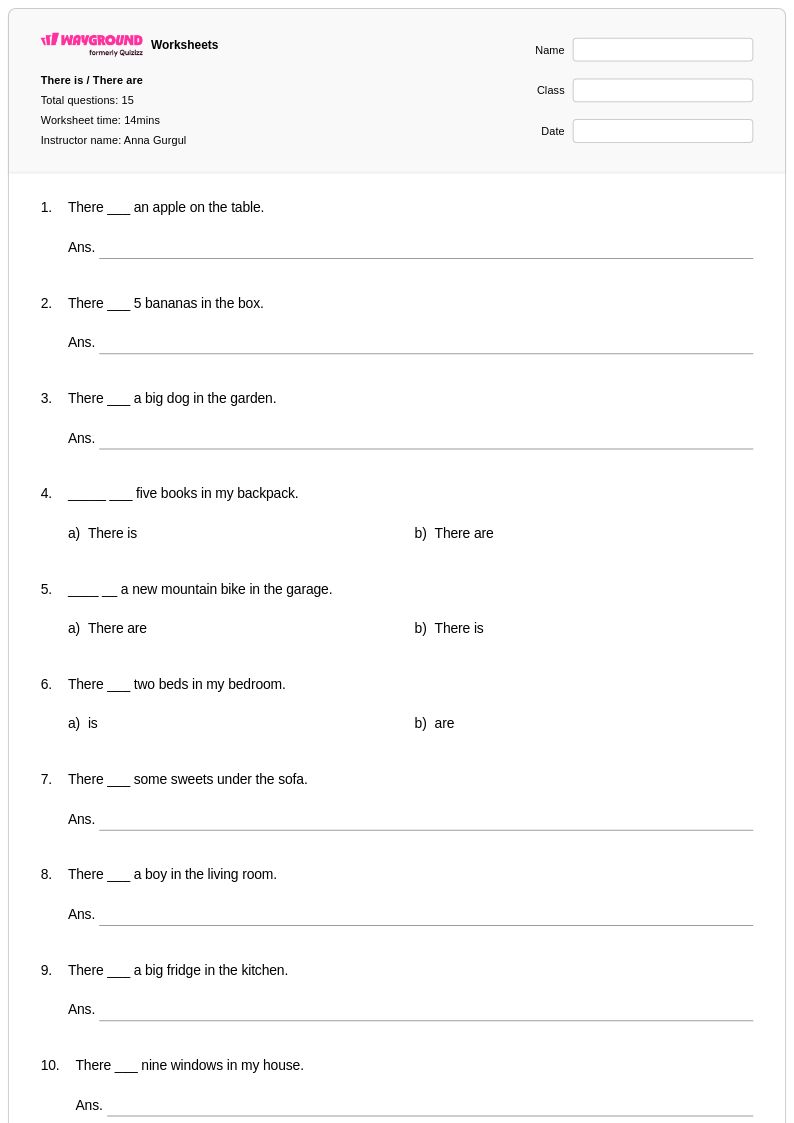
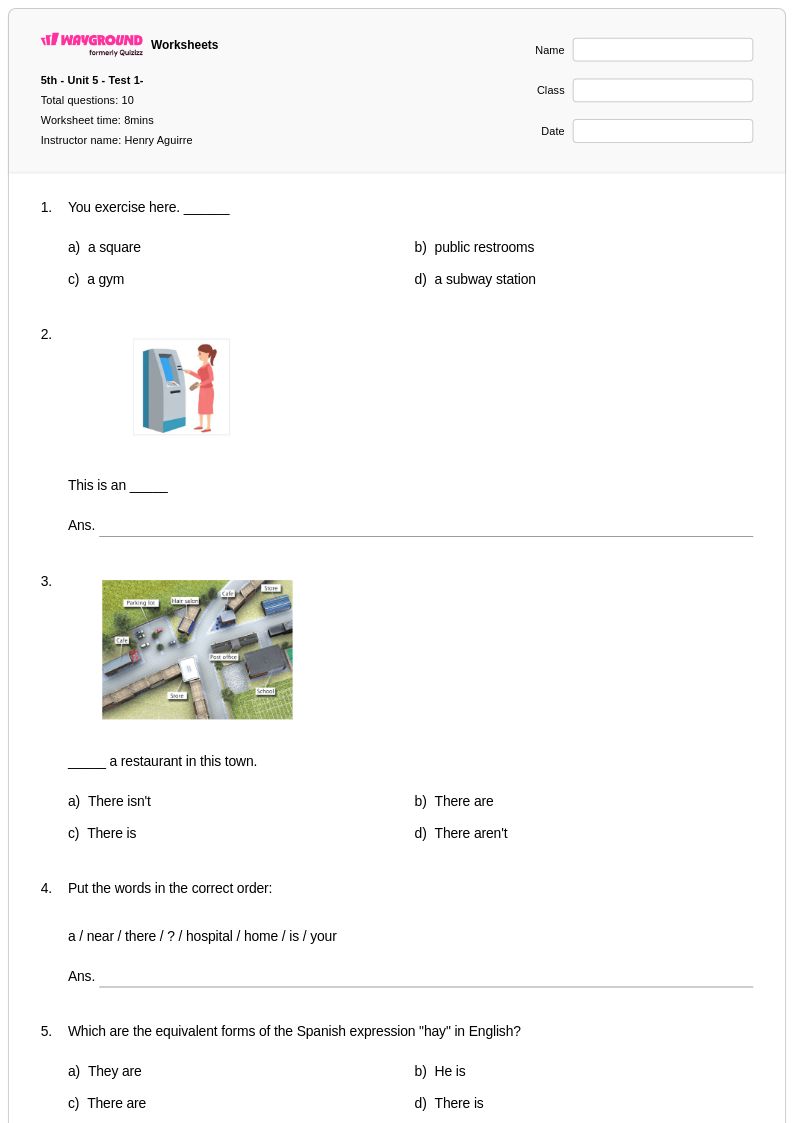
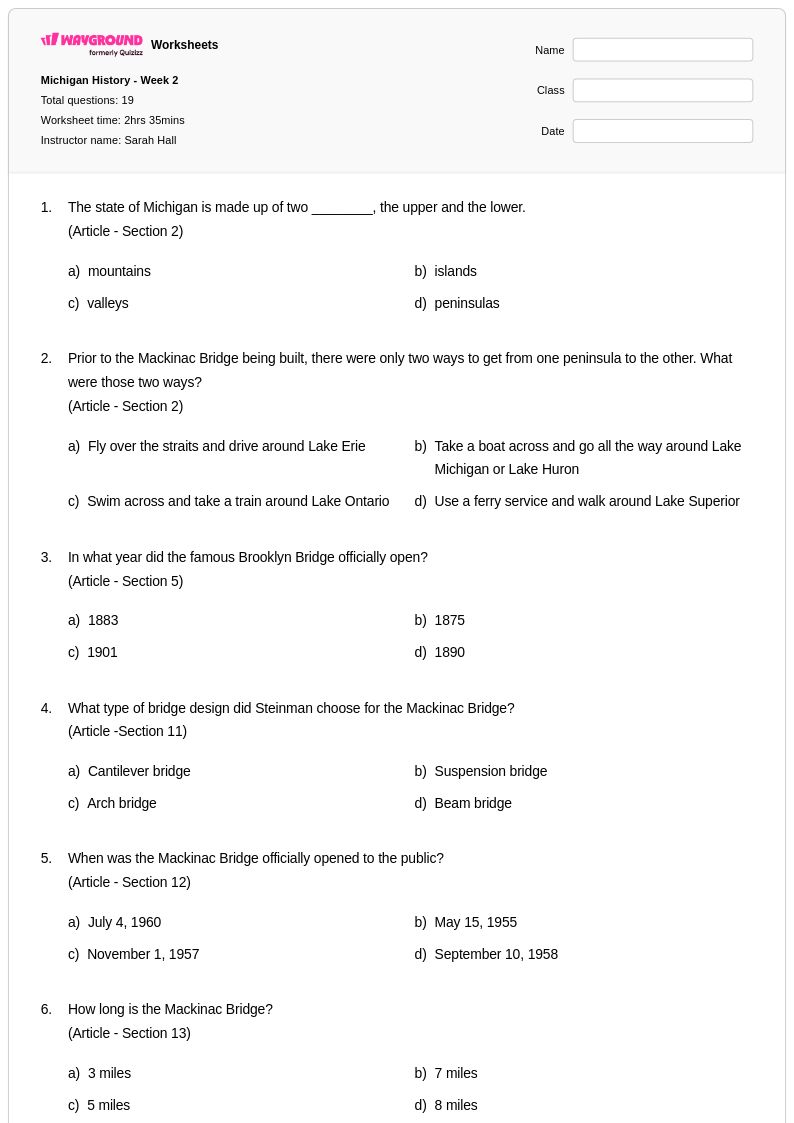
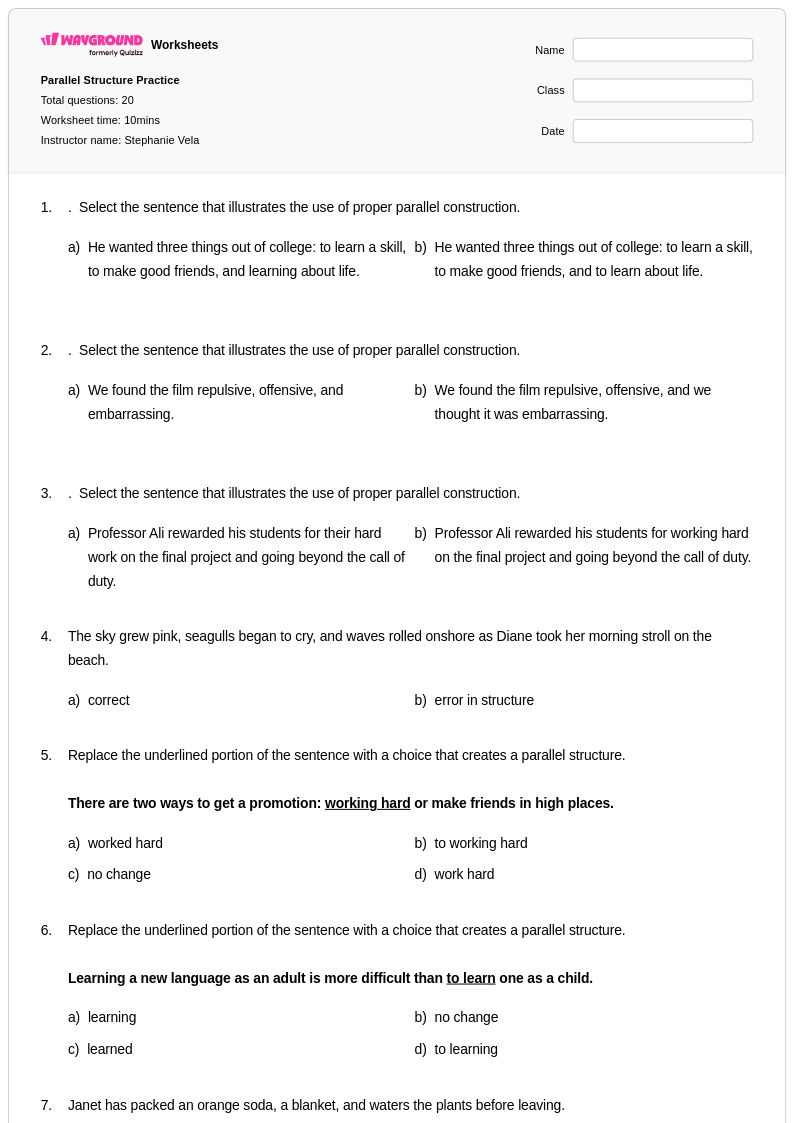
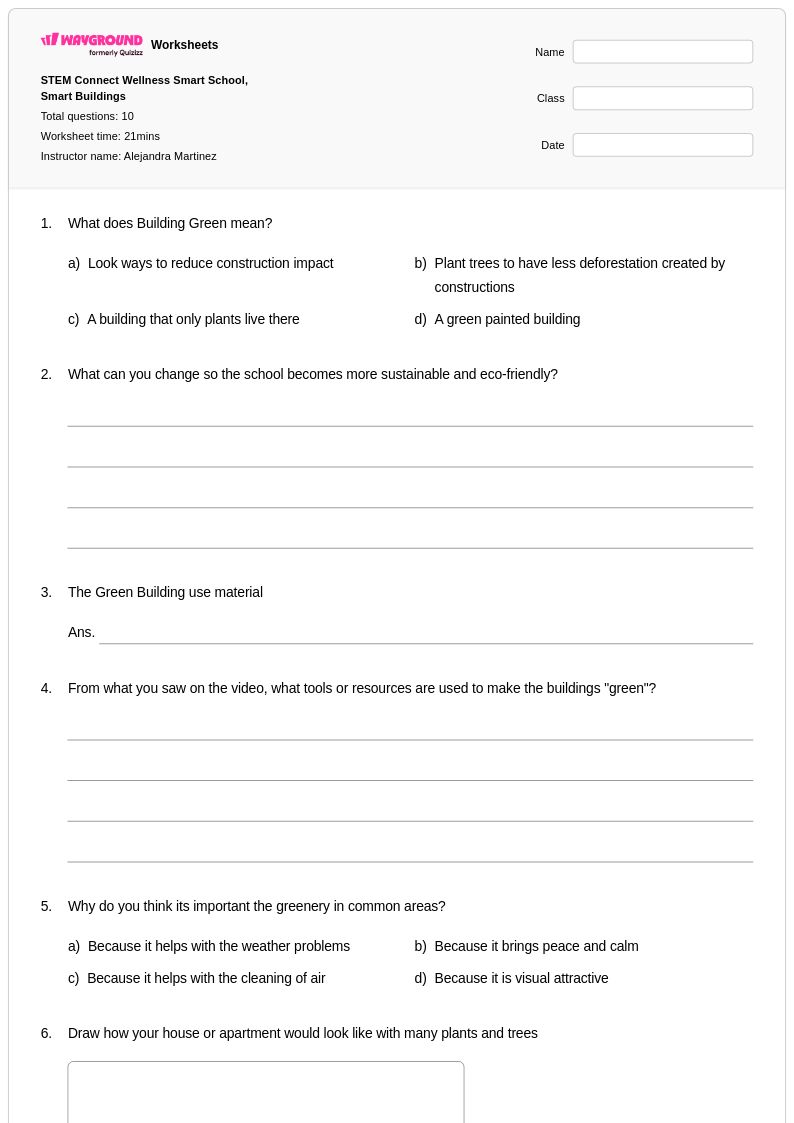
Wayground's free existential constructions worksheets offer comprehensive printables and practice problems to help students master this essential grammar concept, complete with PDF downloads and answer keys for effective learning.
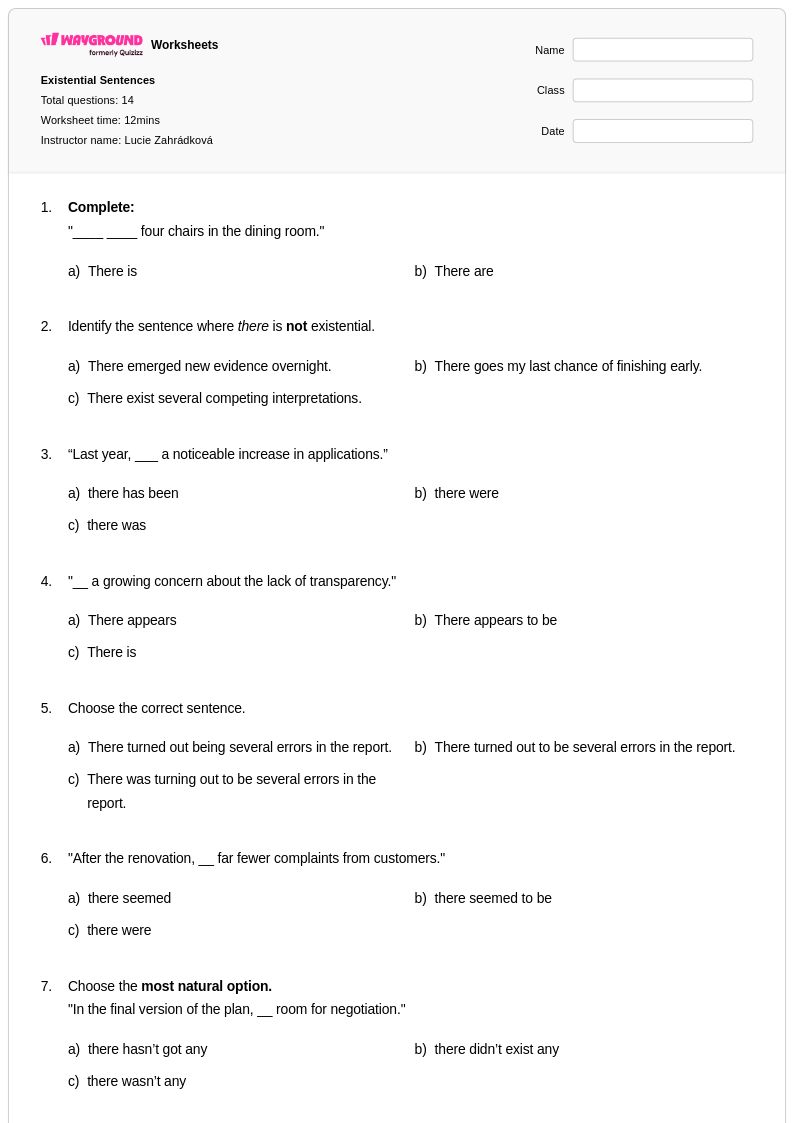
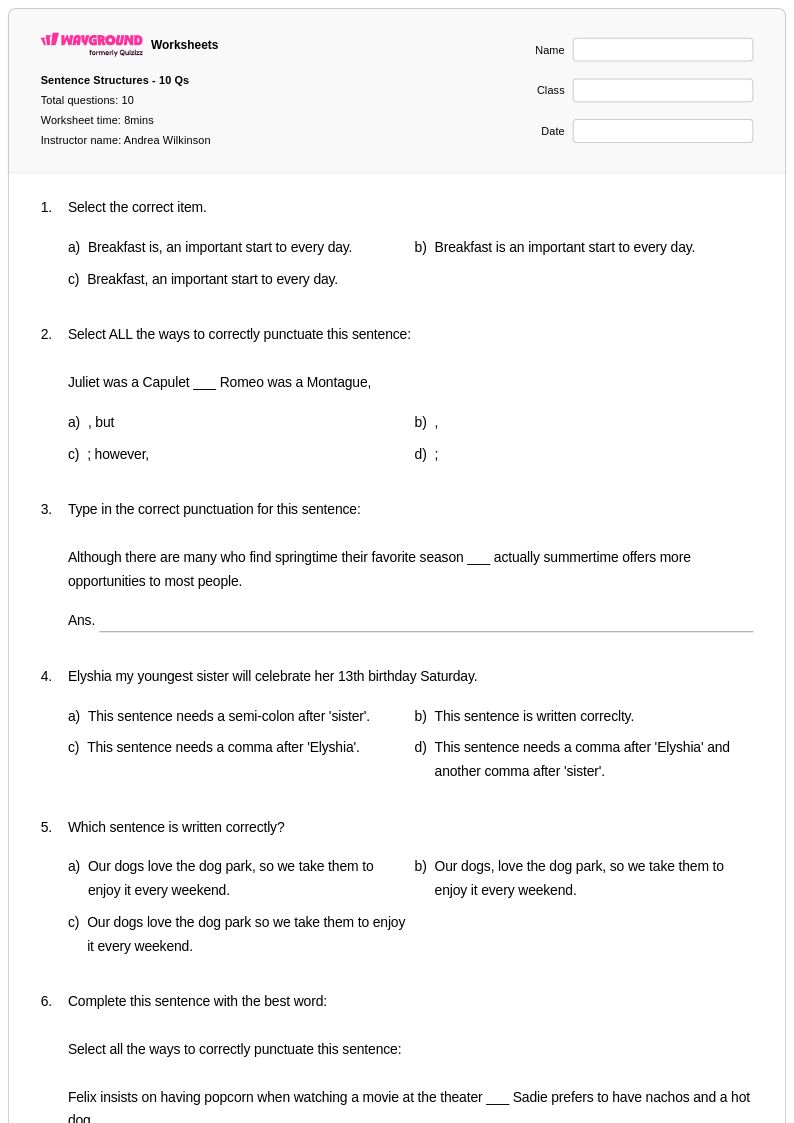
Existential constructions represent a fundamental grammatical structure in English that students must master to achieve sophisticated written and verbal communication skills. Wayground (formerly Quizizz) offers comprehensive worksheet collections focused on existential constructions, helping students understand and practice sentences that begin with "there is," "there are," "there was," and "there were." These worksheets strengthen students' ability to recognize and correctly form existential sentences while developing their understanding of subject-verb agreement in these unique grammatical patterns. The practice problems included in these free printable resources guide learners through various exercises, from basic sentence identification to complex construction challenges, with each worksheet featuring a detailed answer key to support independent learning and immediate feedback.
Wayground (formerly Quizizz) empowers educators with millions of teacher-created resources specifically designed to support existential construction instruction through robust search and filtering capabilities that allow quick access to appropriate materials. Teachers can easily customize these worksheet collections to match their specific curriculum needs, differentiating instruction for diverse learners while maintaining alignment with language arts standards. The platform's flexible format options include both printable pdf versions for traditional classroom use and digital formats for technology-integrated learning environments. These comprehensive tools streamline lesson planning by providing ready-to-use materials for skill practice, targeted remediation for struggling students, and enrichment opportunities for advanced learners, ensuring that all students develop mastery of these essential grammatical structures through systematic, scaffolded practice.
FAQs
How do I teach existential constructions in English grammar?
Start by introducing the core structure: sentences that open with 'there is,' 'there are,' 'there was,' or 'there were' use an expletive subject rather than a true grammatical subject, with the real subject appearing after the verb. Help students see that the verb must agree with this post-verb noun, not with 'there.' Modeling sentence transformations — converting standard sentences into existential constructions and back — is one of the most effective ways to make this structure explicit and memorable.
What exercises help students practice existential constructions?
Effective practice moves from recognition to production: begin with sentence identification tasks where students locate and label existential constructions in context, then progress to sentence transformation exercises and open-ended writing prompts that require students to construct their own existential sentences. Exercises that isolate subject-verb agreement within these structures are especially useful because agreement errors are the most common problem students encounter when using 'there is' and 'there are.'
What mistakes do students commonly make with existential constructions?
The most frequent error is subject-verb agreement: students often default to 'there is' regardless of whether the following noun is singular or plural, producing constructions like 'there is many students in the hall.' A related misconception is treating 'there' as the grammatical subject, which leads to confusion when students try to apply standard agreement rules. Targeted practice that requires students to identify the true subject before selecting the correct verb form directly addresses both of these error patterns.
How can I differentiate existential construction instruction for mixed-ability learners?
For students who struggle, reduce cognitive load by starting with highly controlled exercises that use familiar vocabulary and simple noun phrases, so the grammatical pattern itself stays in focus. For advanced learners, push beyond basic accuracy by asking them to analyze how existential constructions function rhetorically in published texts or to revise paragraphs by deliberately inserting or removing these structures to change emphasis. On Wayground, teachers can apply accommodations such as reduced answer choices or read-aloud support to individual students, allowing the same worksheet to serve the full range of learners without requiring separate materials.
How do I use Wayground's existential constructions worksheets in my classroom?
Wayground's existential constructions worksheets are available as printable PDFs for traditional classroom use and in digital formats for technology-integrated environments, including the option to host them as a live quiz on the platform. Each worksheet includes a complete answer key, making them suitable for independent practice, homework, or small-group remediation without requiring additional teacher preparation. Teachers can filter and customize materials to match specific curriculum goals, then assign them directly to students or print them for paper-based lessons.
At what grade level should existential constructions be introduced?
Students naturally use existential constructions in speech from an early age, but formal instruction typically becomes relevant in upper elementary through middle school, when writing expectations require consistent subject-verb agreement and grammatical precision. Explicit teaching is especially valuable for English language learners at any grade level, since existential constructions do not map directly onto equivalent structures in many other languages. Remediation at the high school level is also common, particularly for students whose writing shows persistent 'there is/there are' agreement errors.