Free Printable Figurative Language Worksheets for Grade 11
Enhance Grade 11 students' understanding of figurative language with Wayground's comprehensive collection of free worksheets, printables, and practice problems featuring detailed answer keys to master metaphors, similes, and literary devices.
Explore printable Figurative Language worksheets for Grade 11
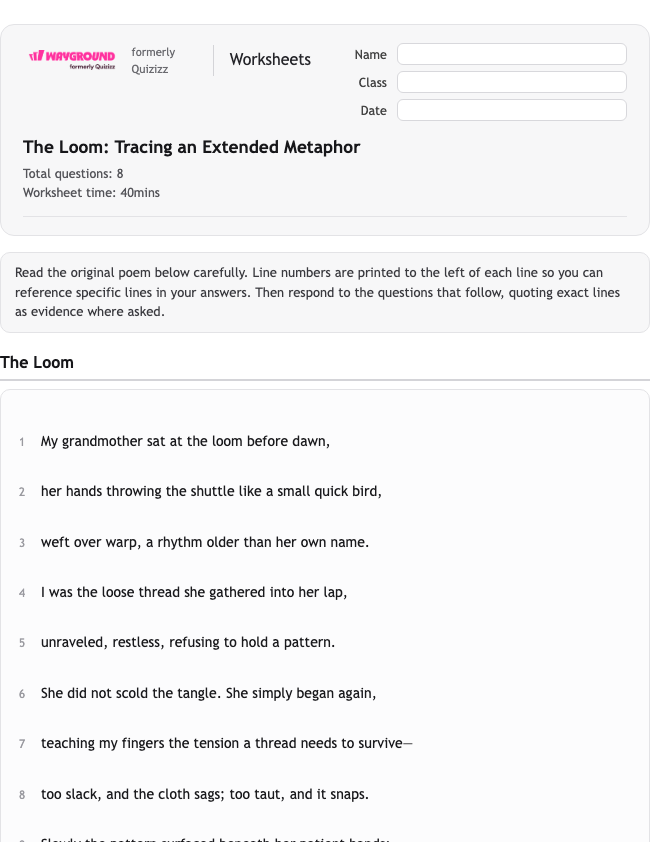
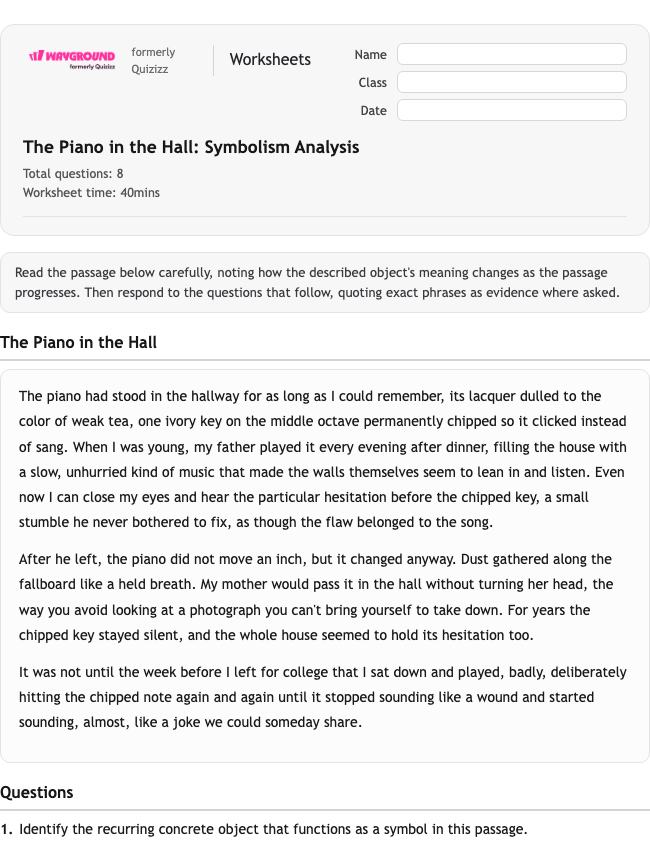
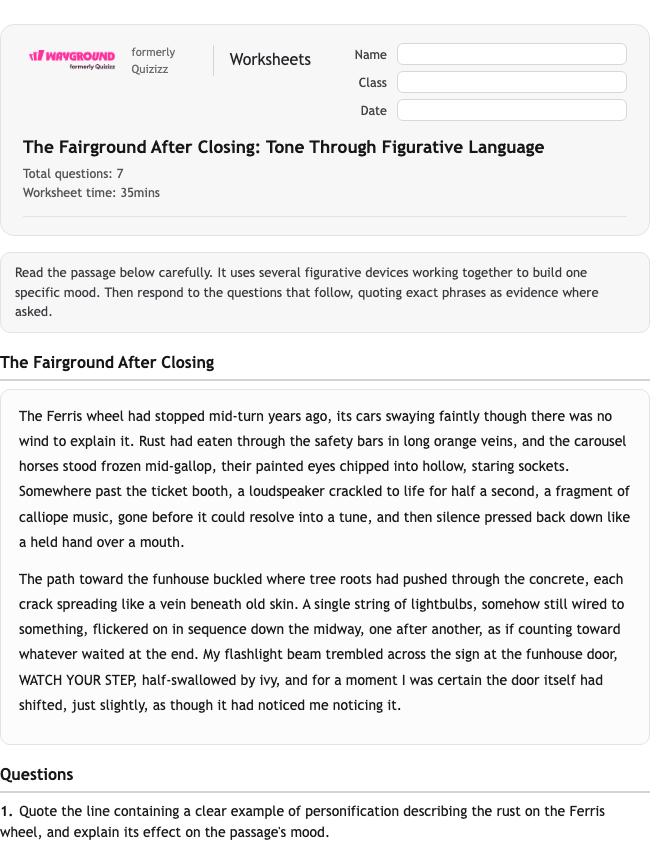
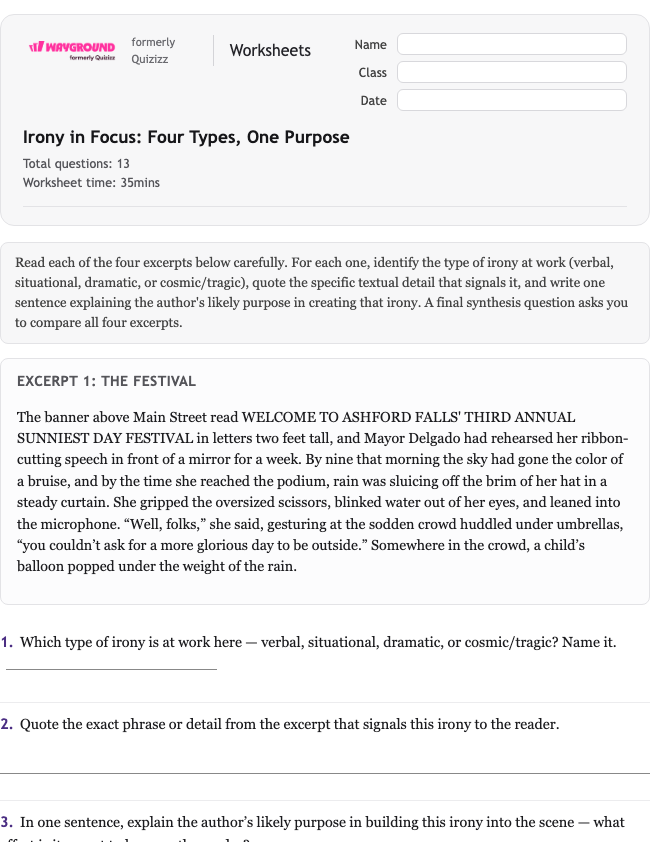
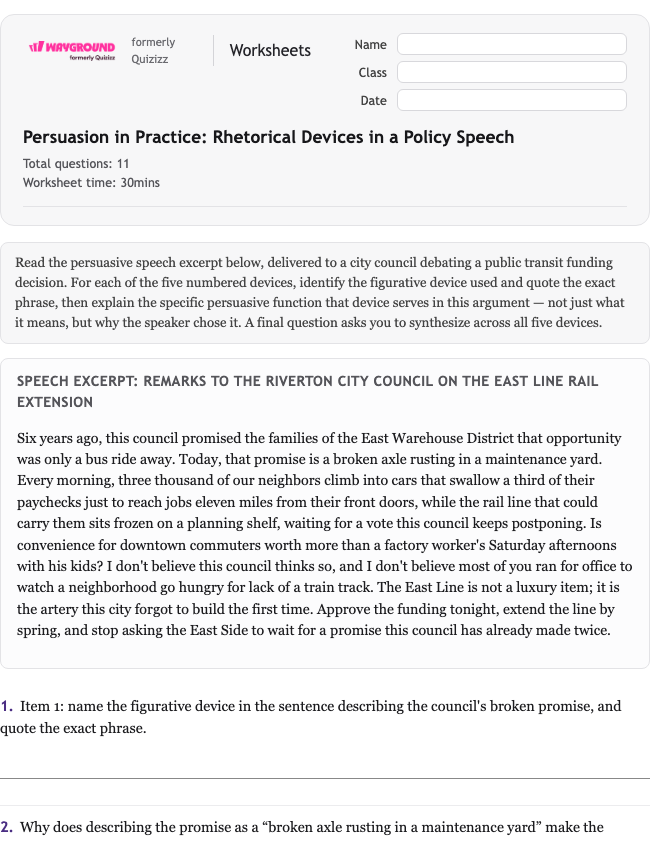
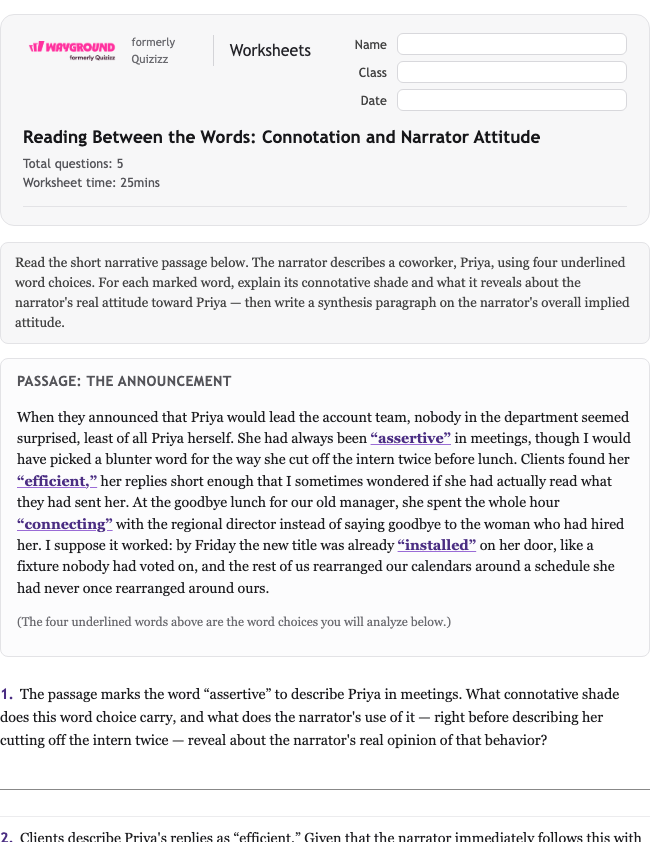
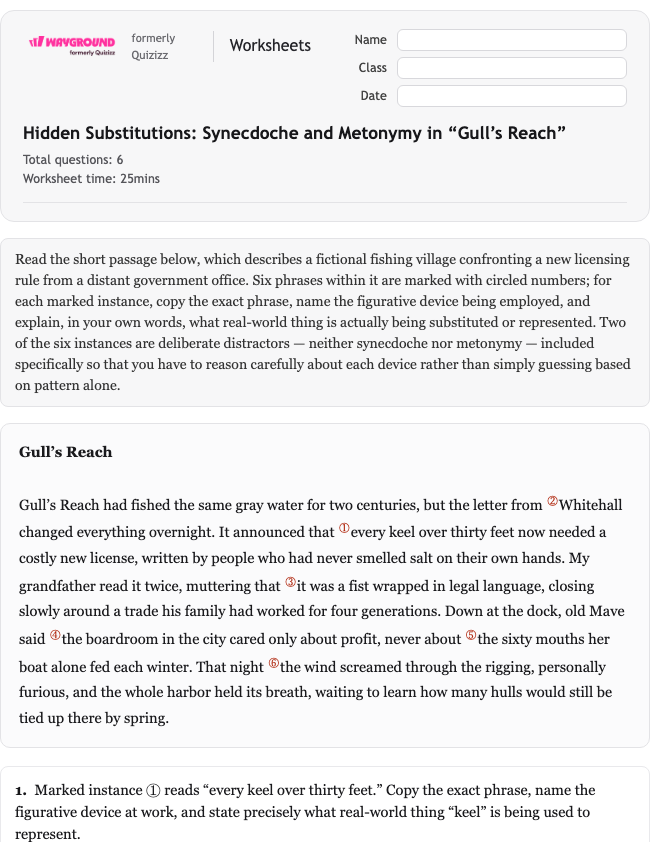
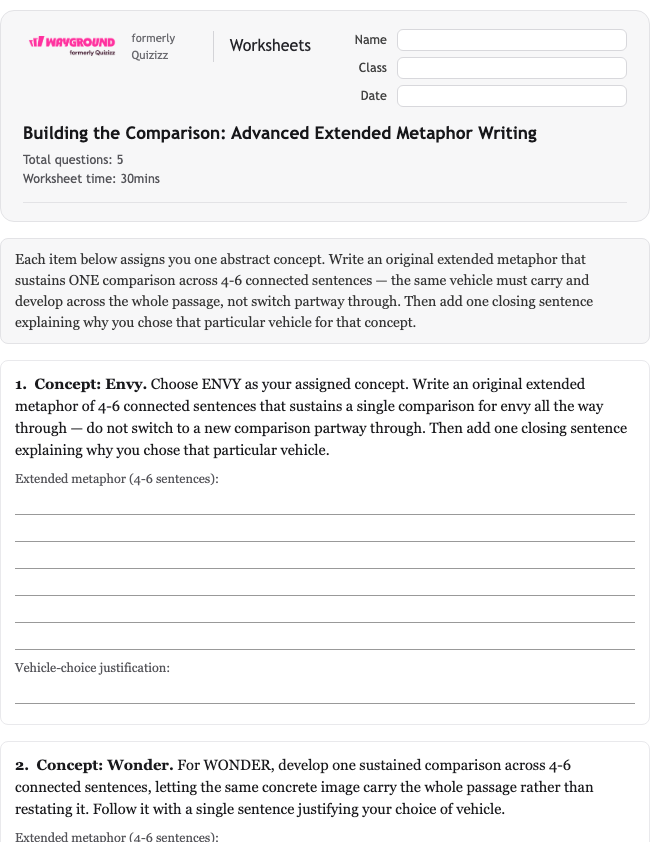
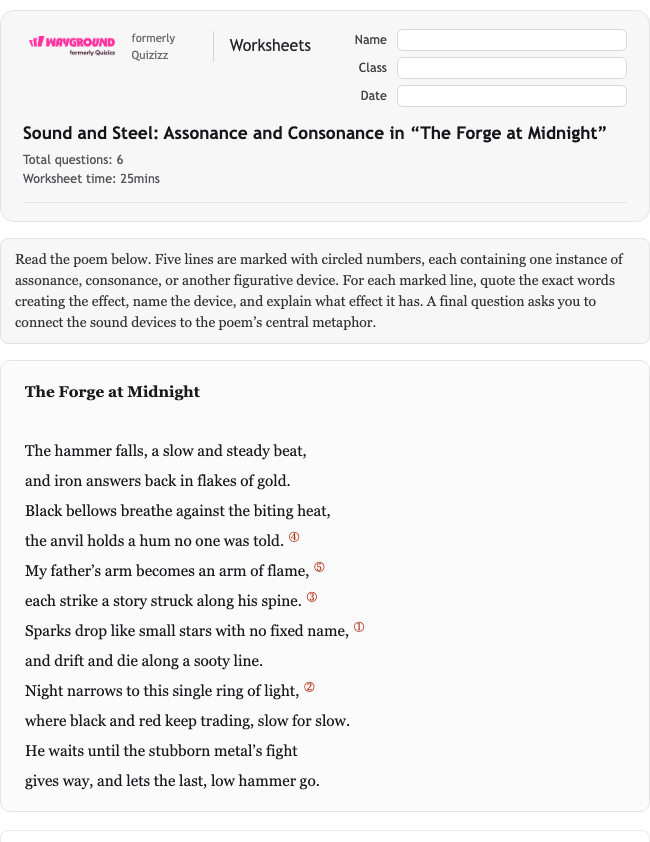
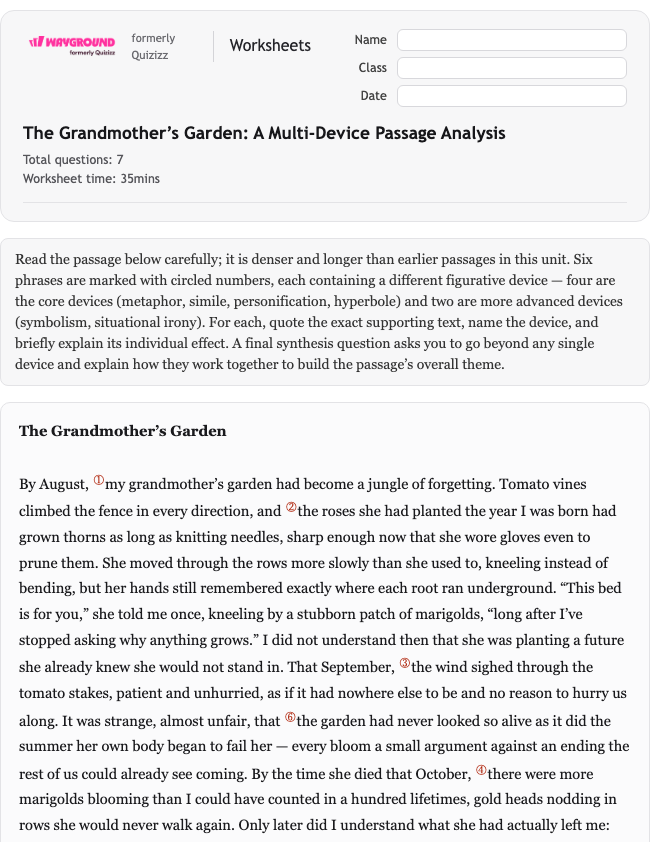
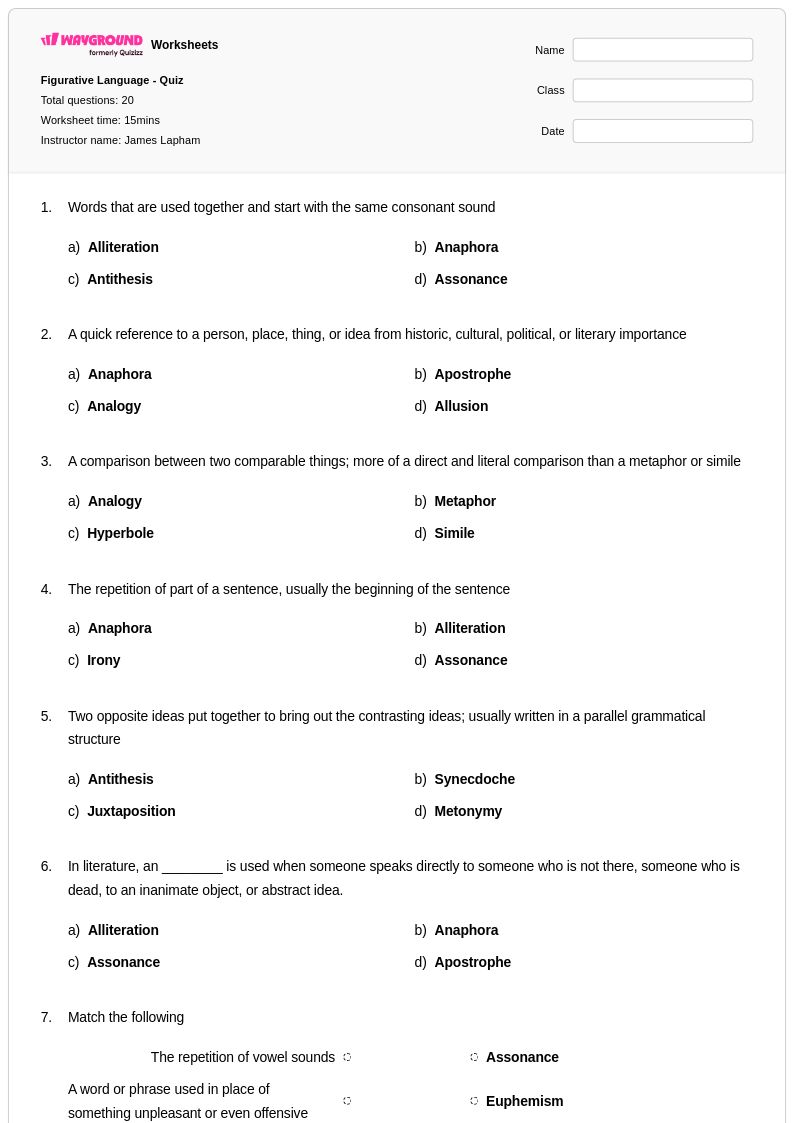
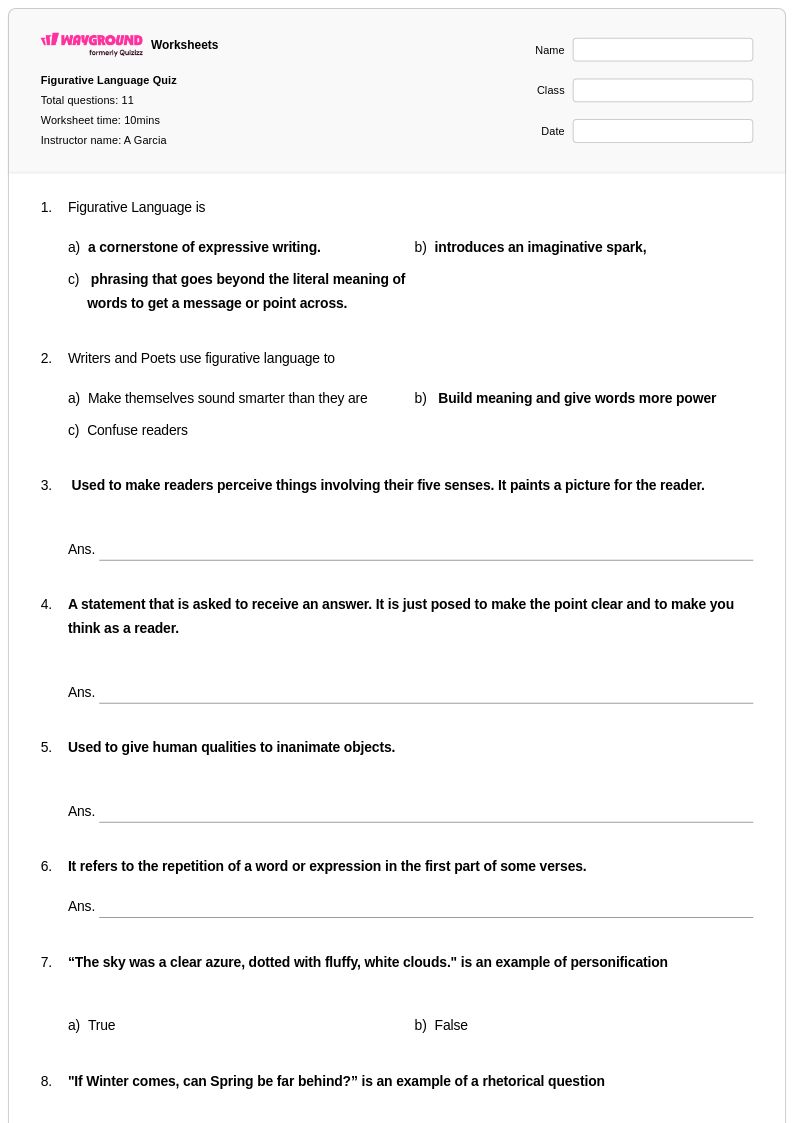
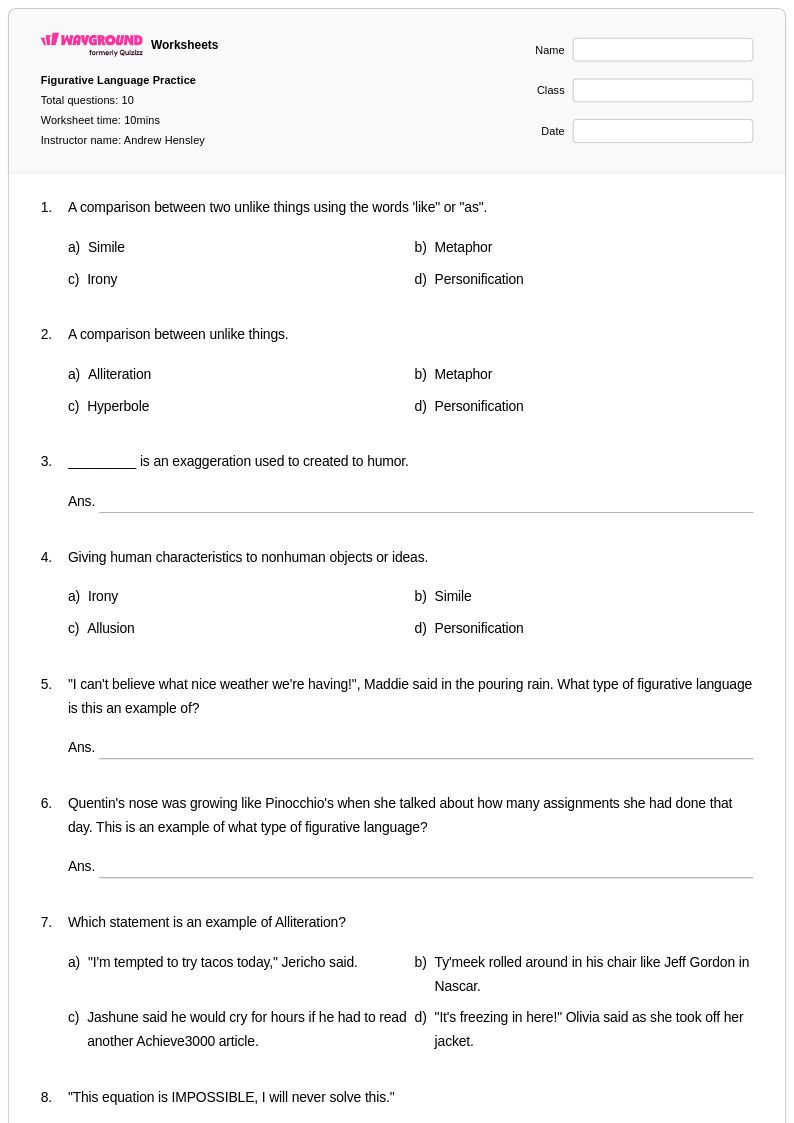
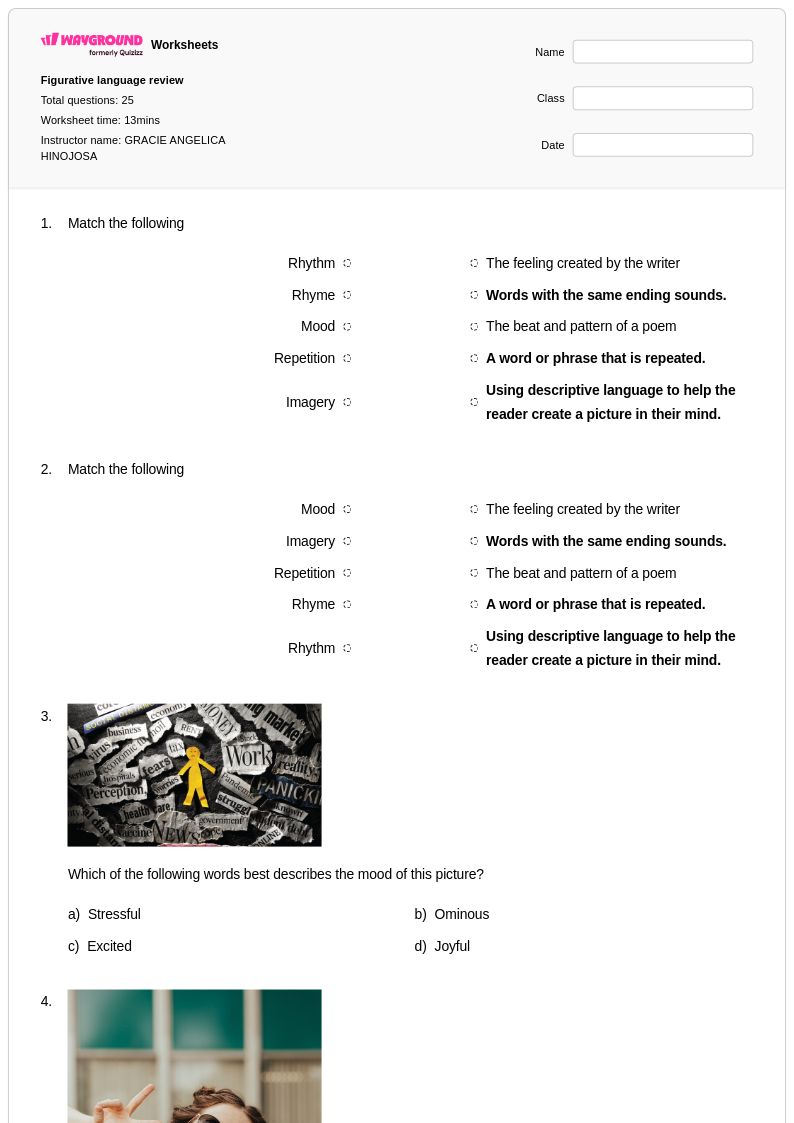
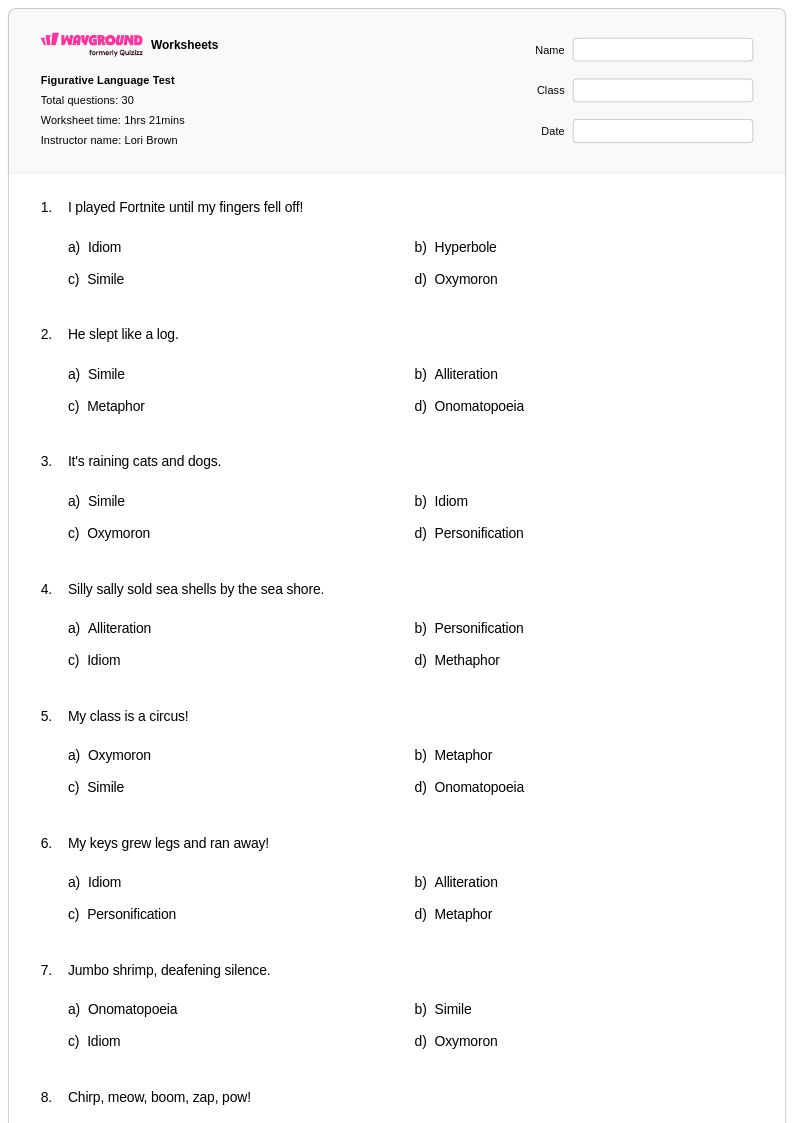
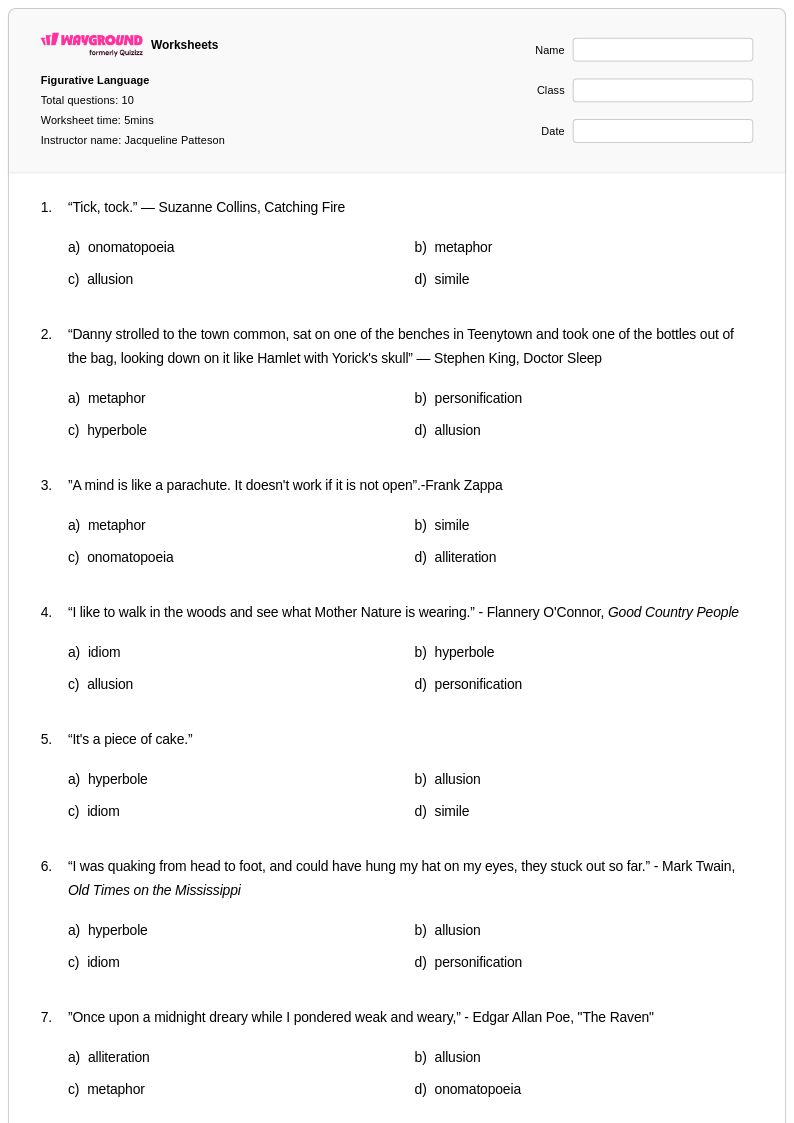
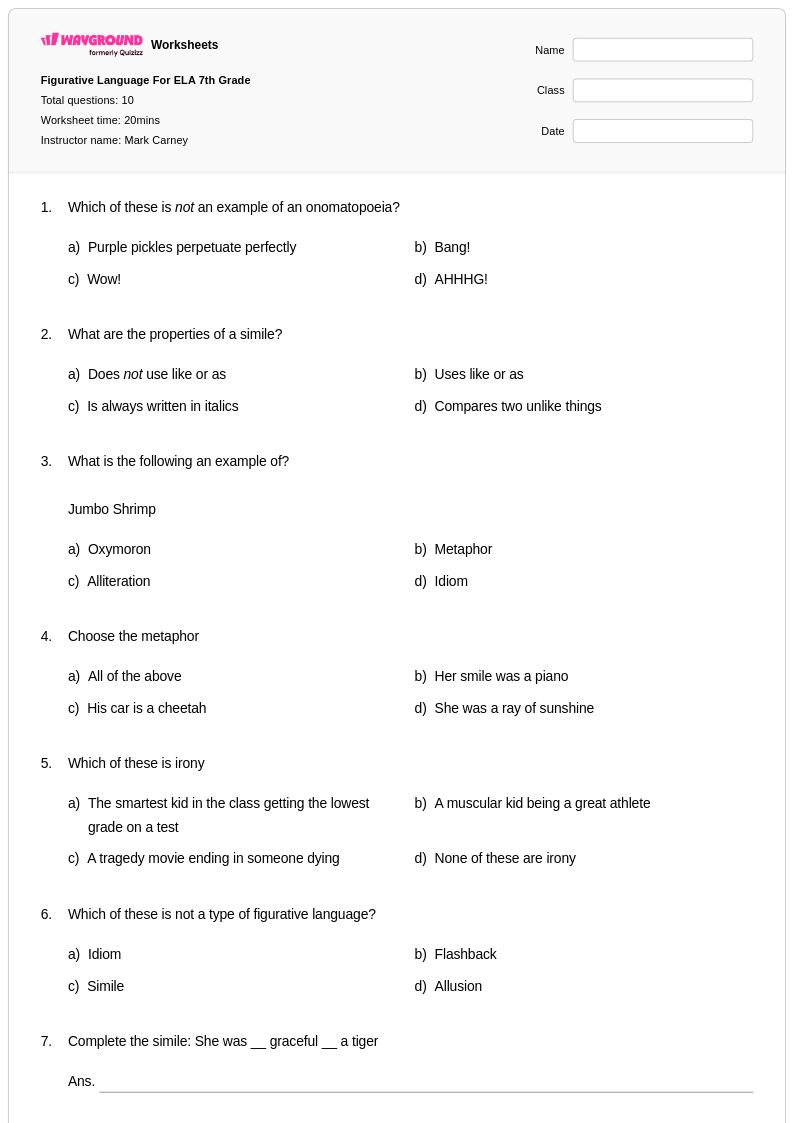
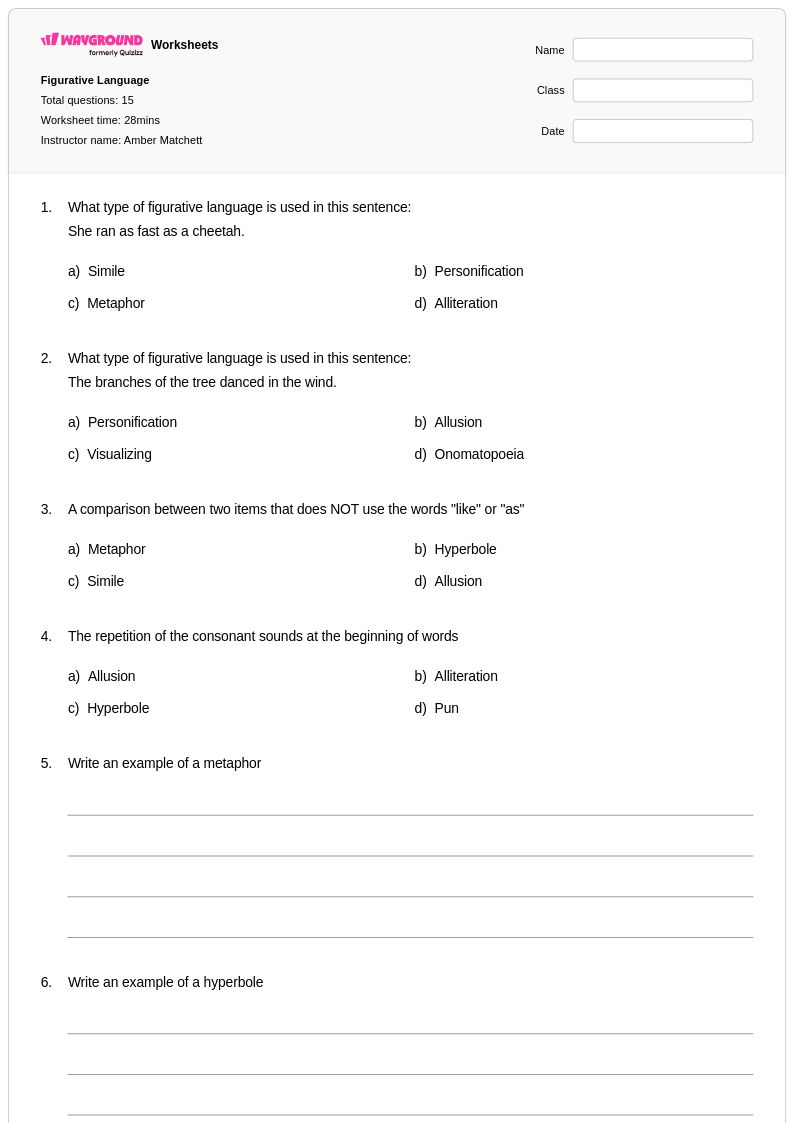
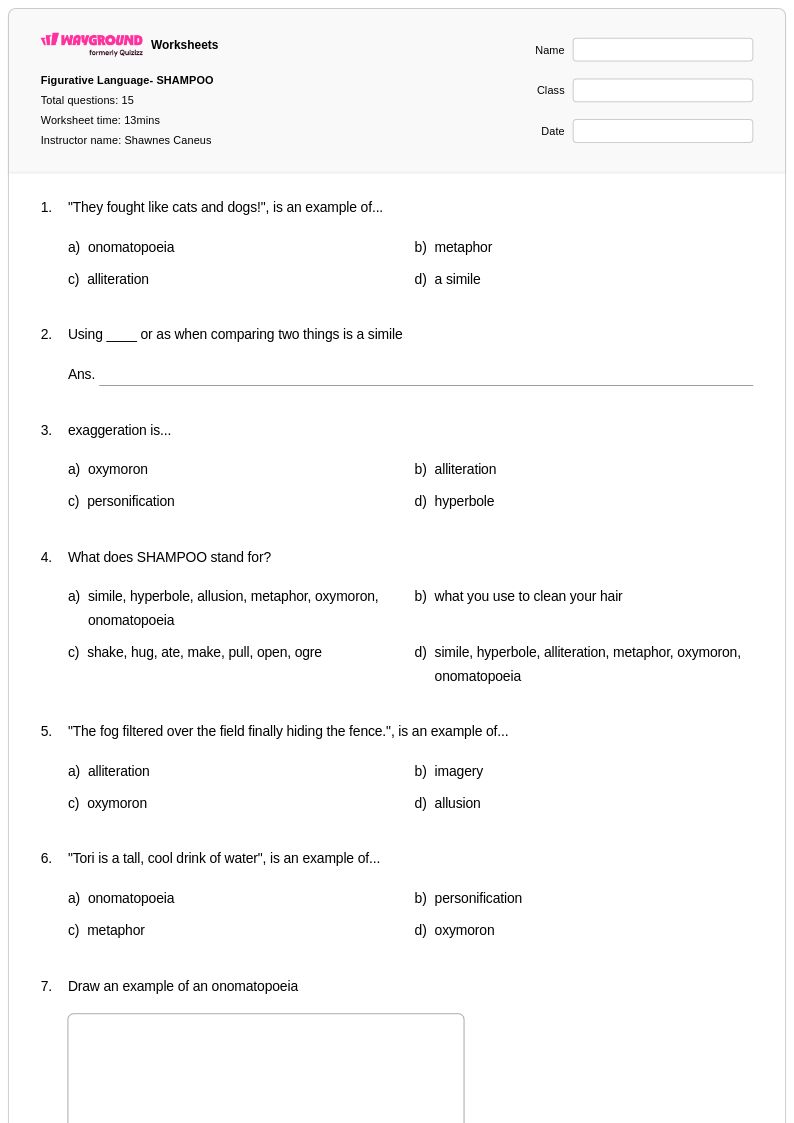
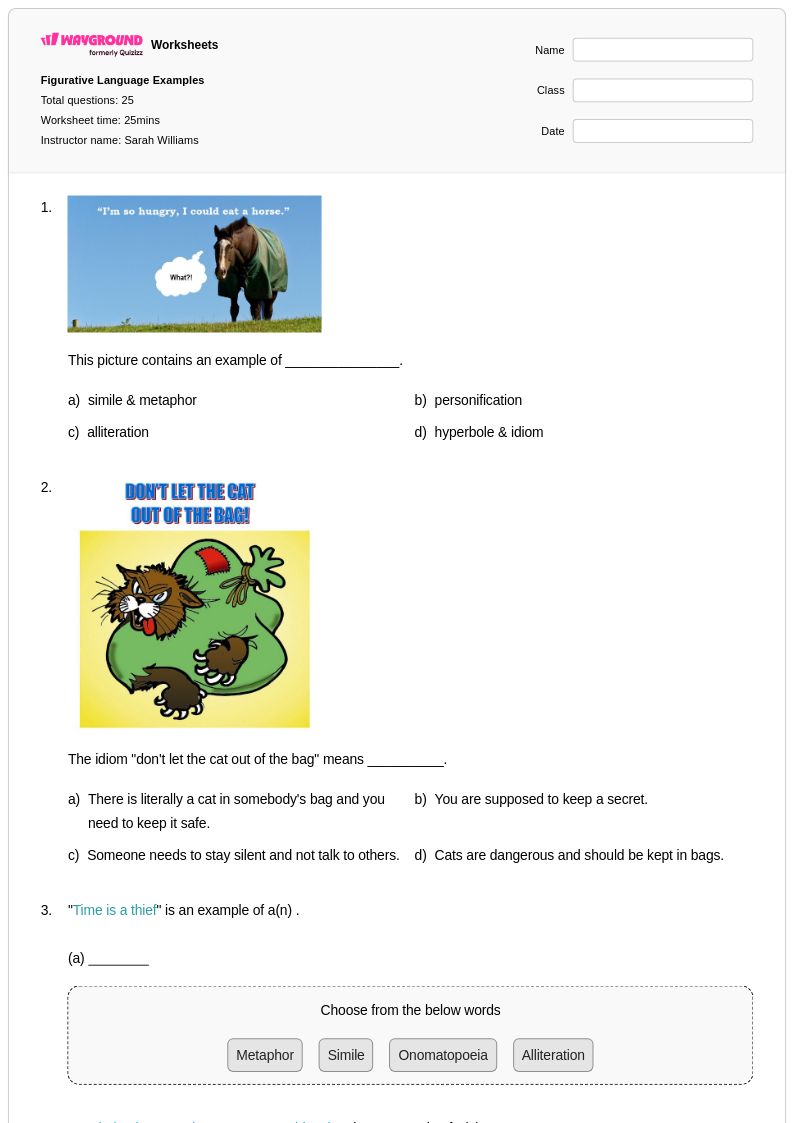
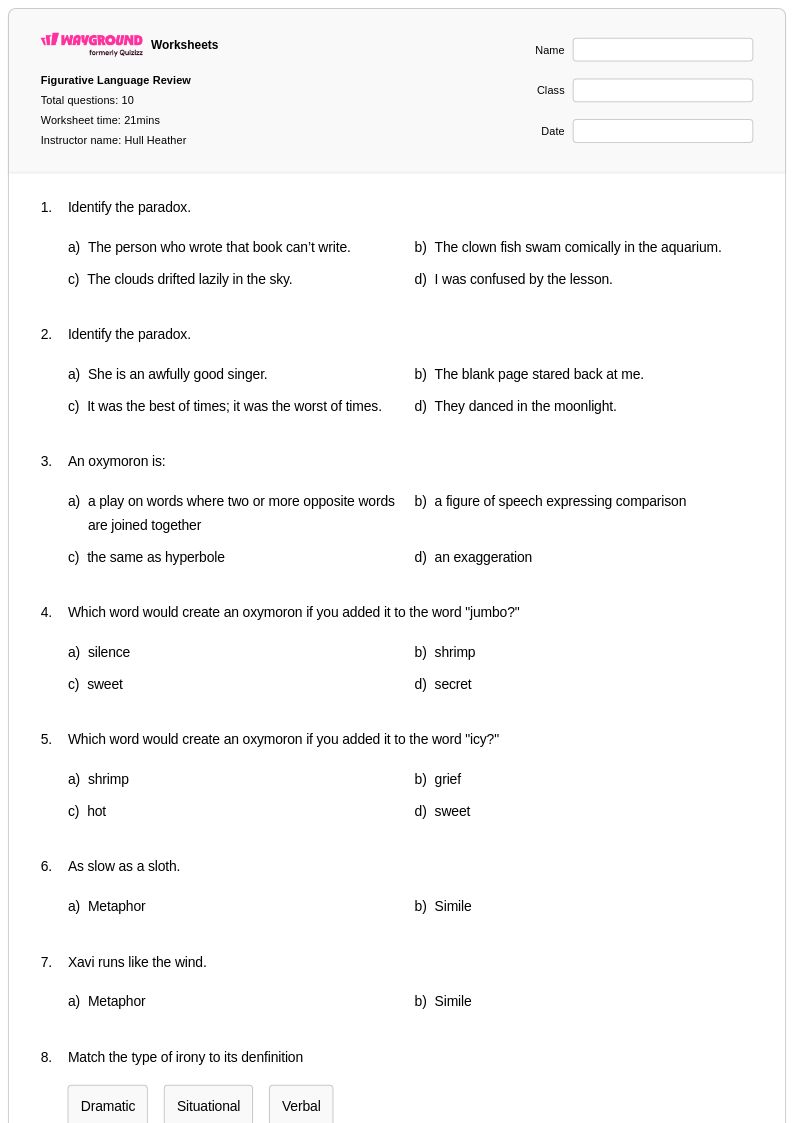
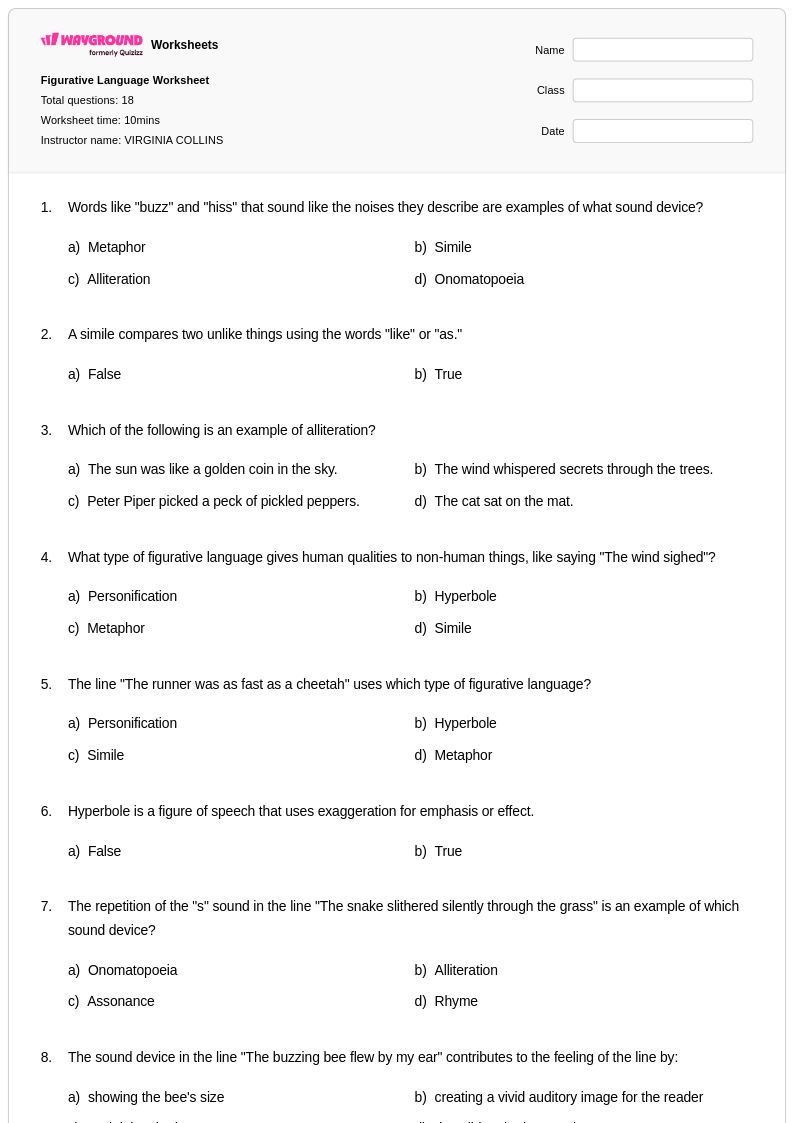
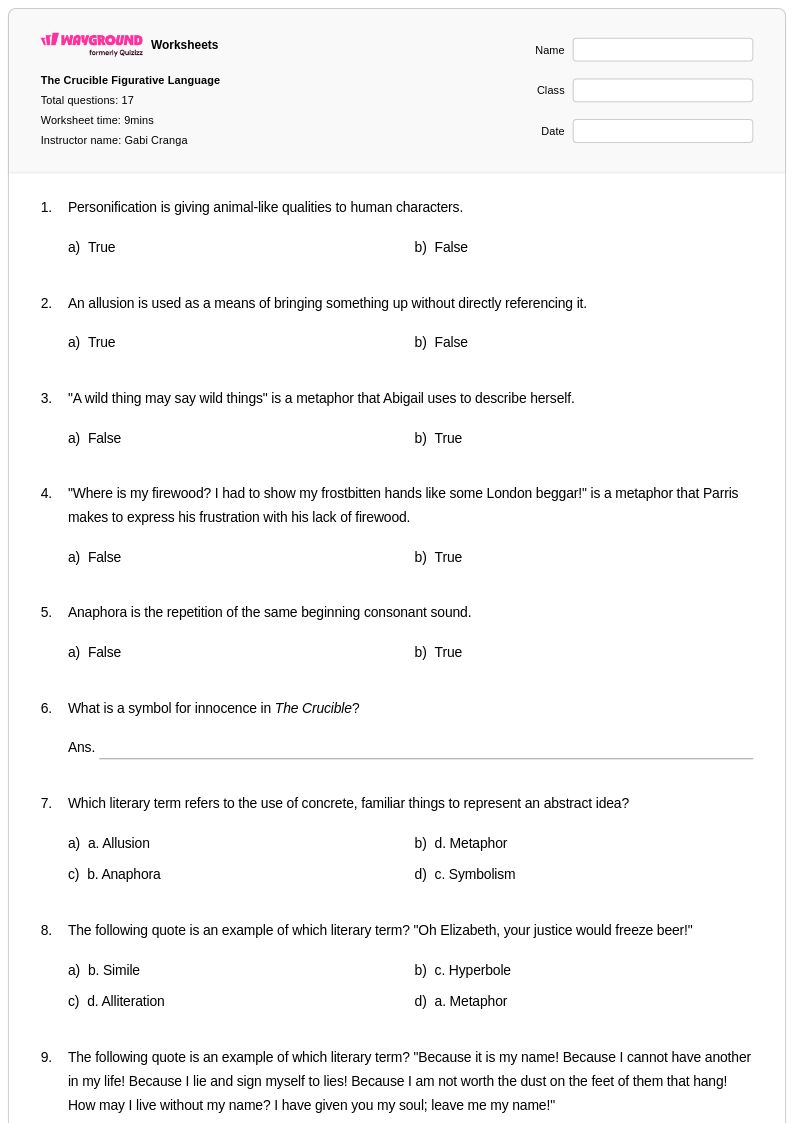
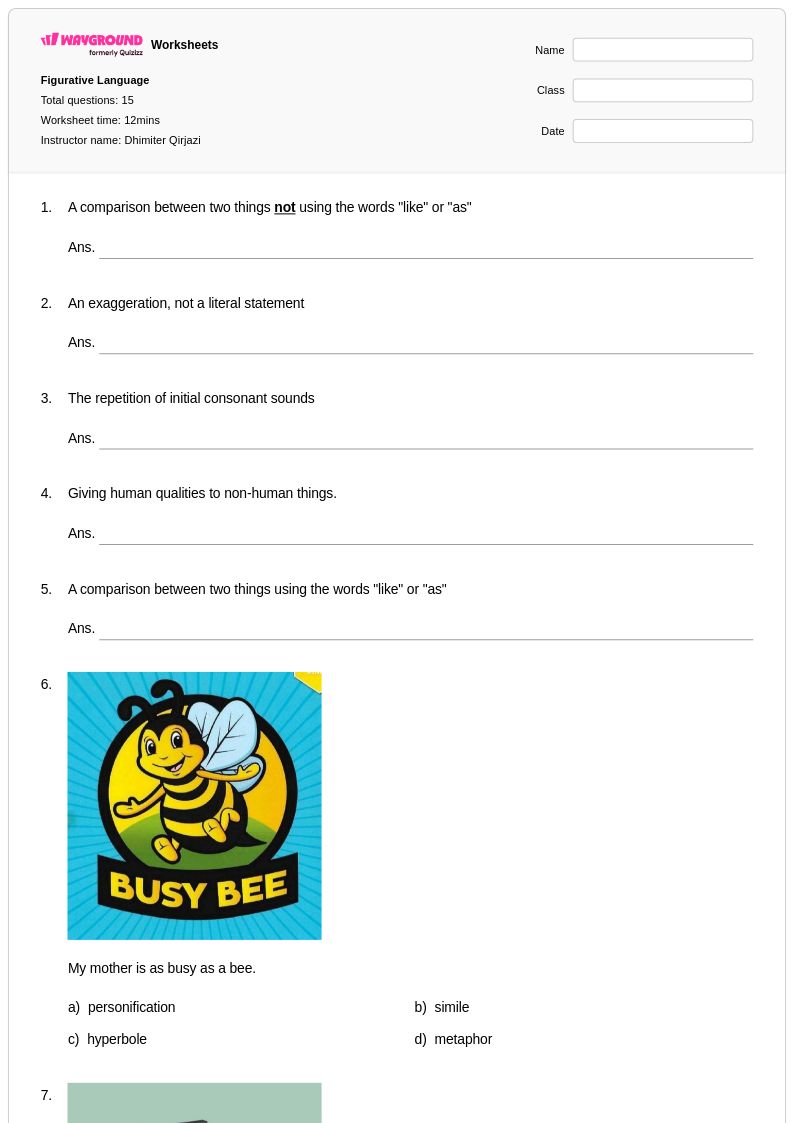
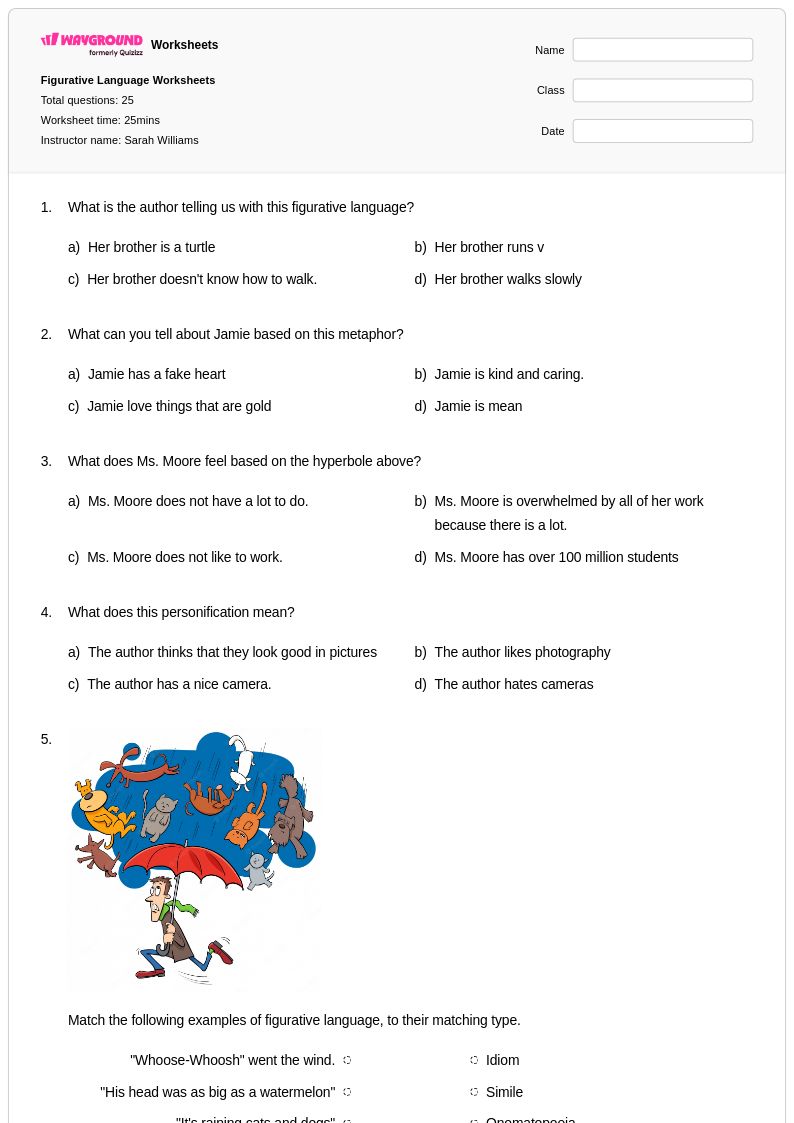
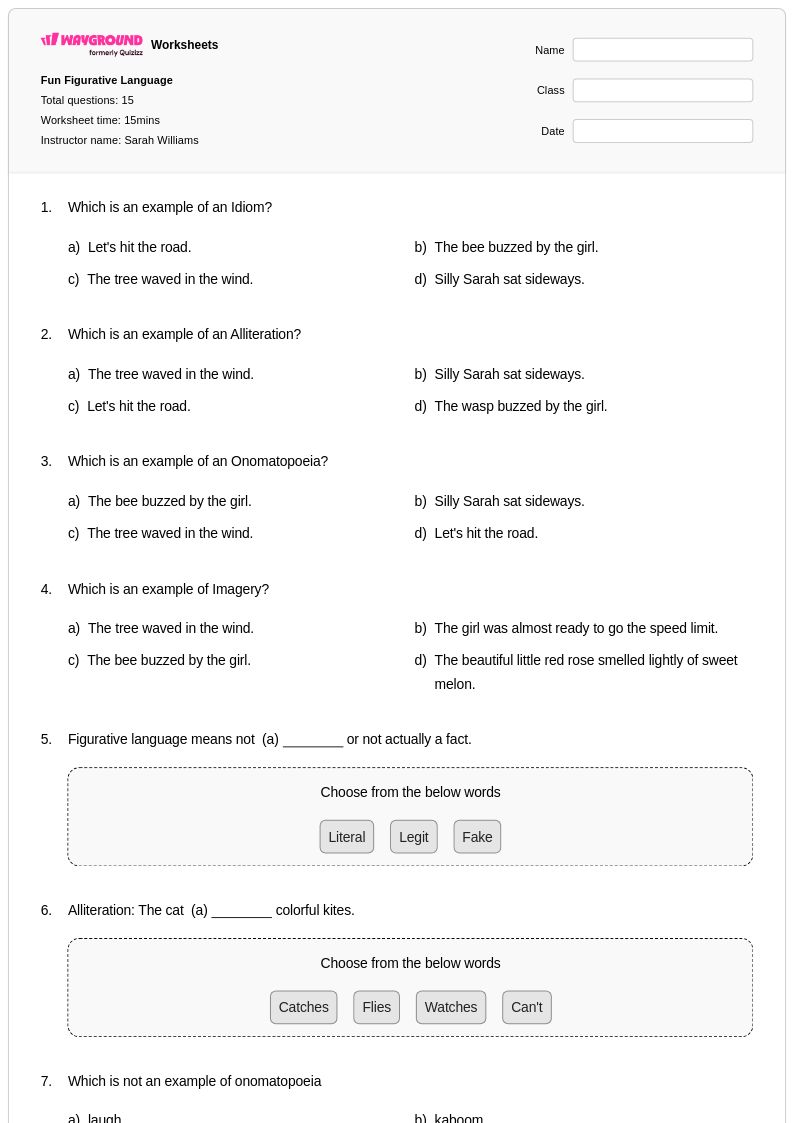
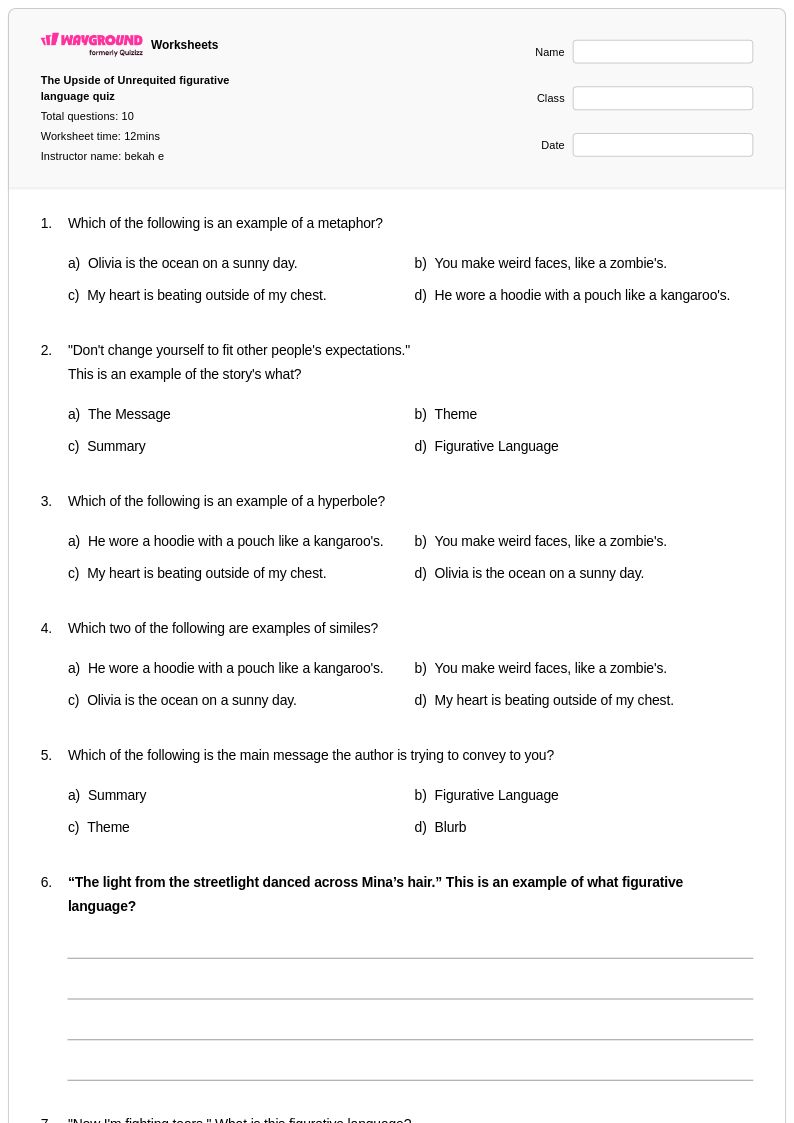
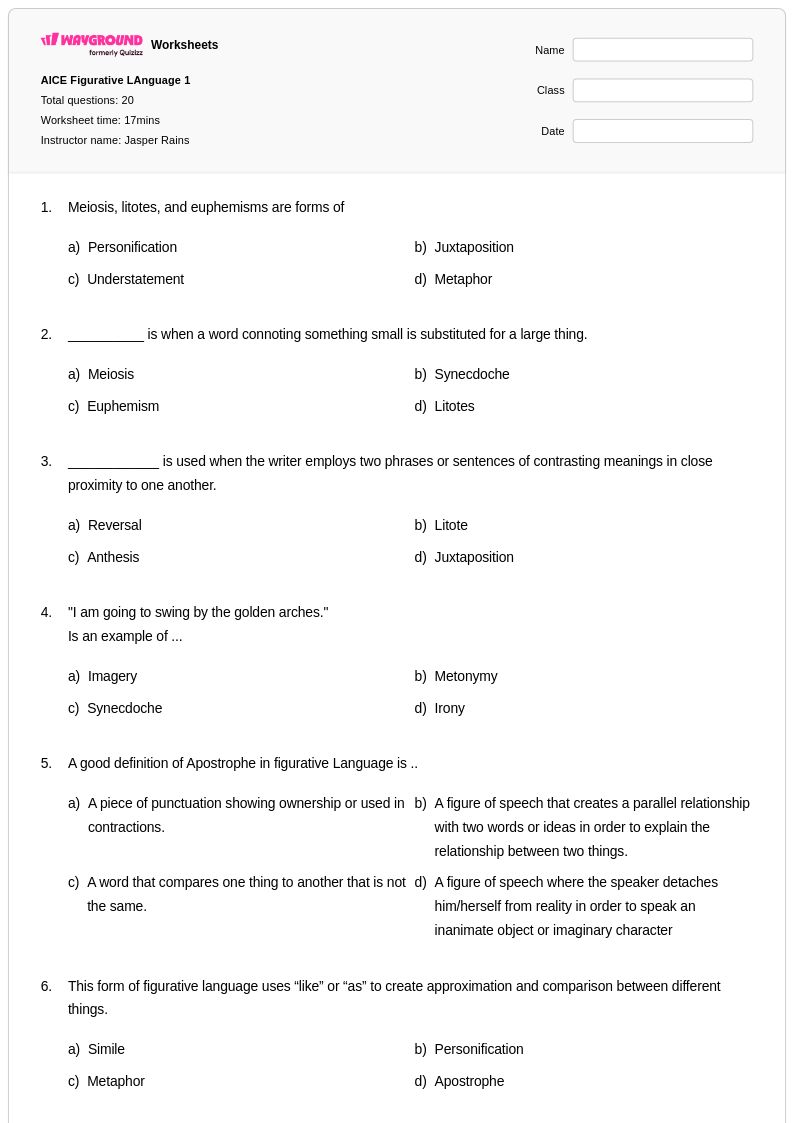
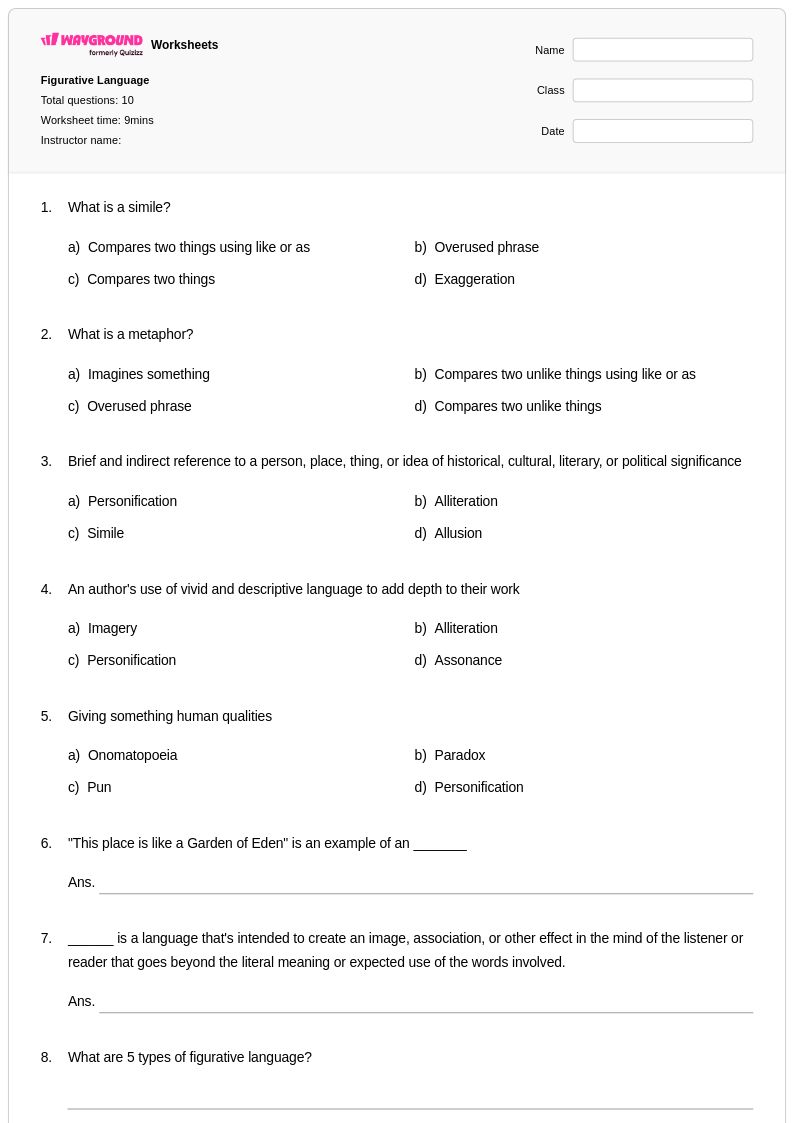
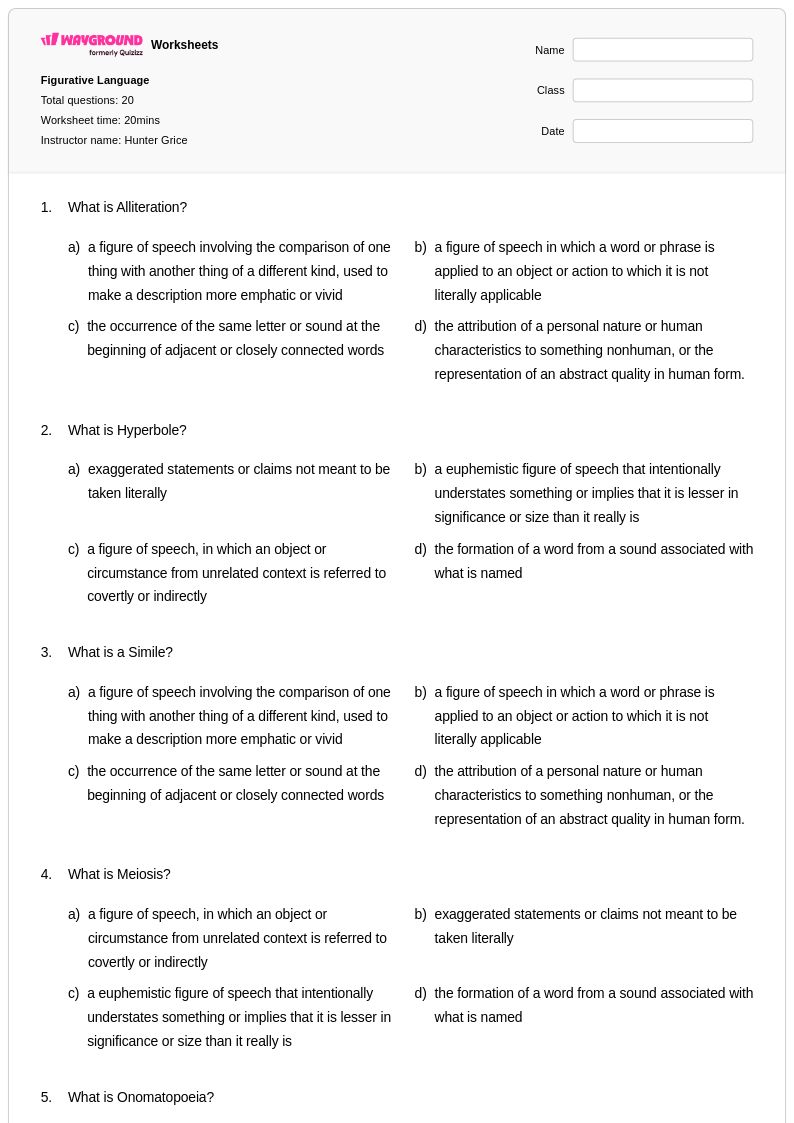
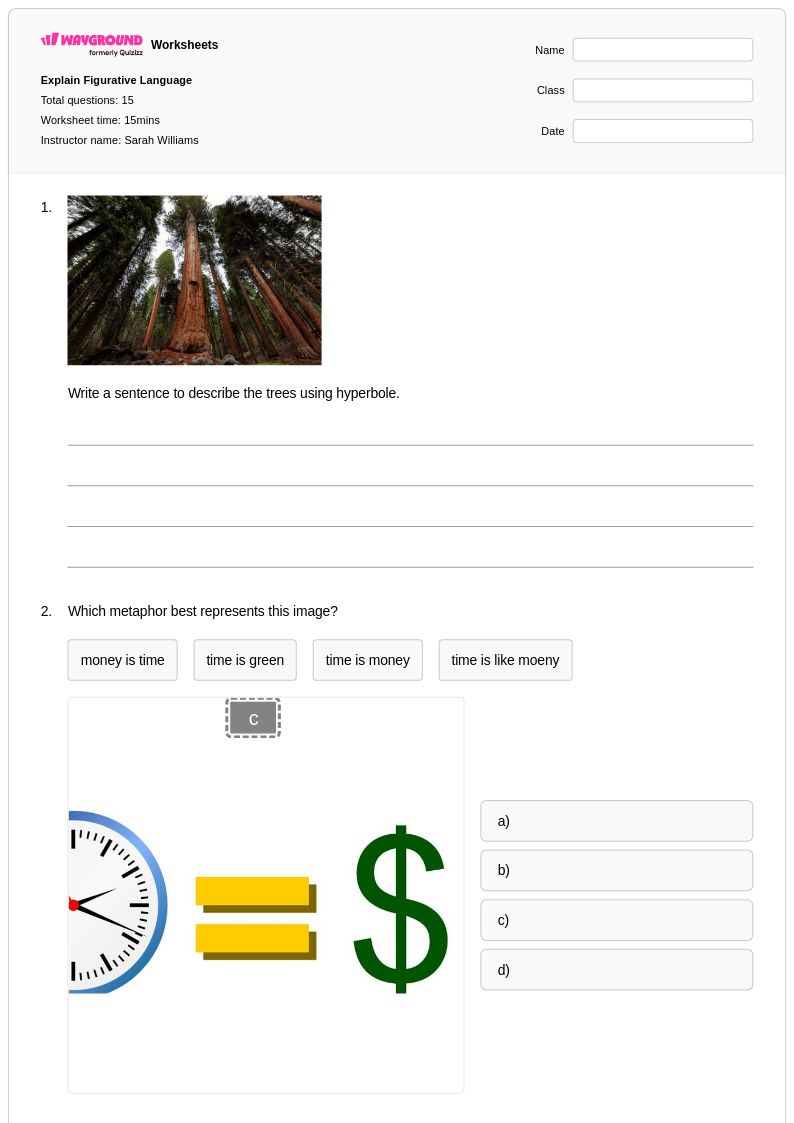
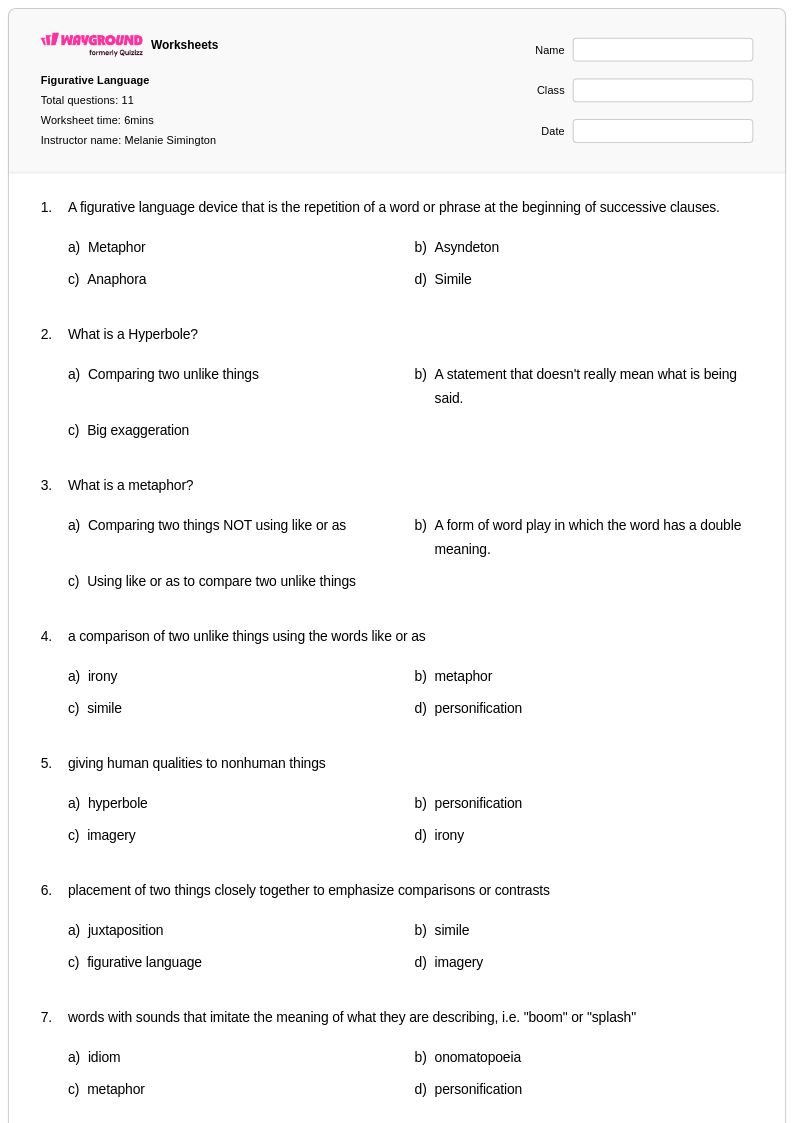
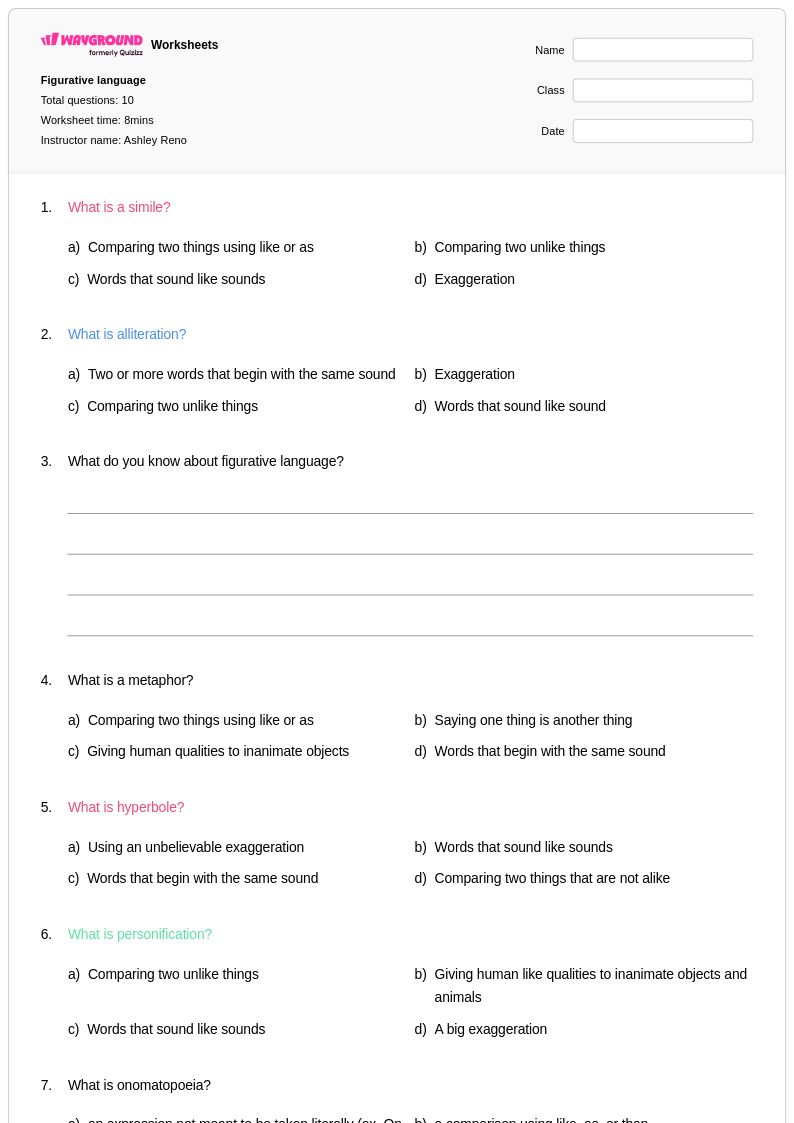
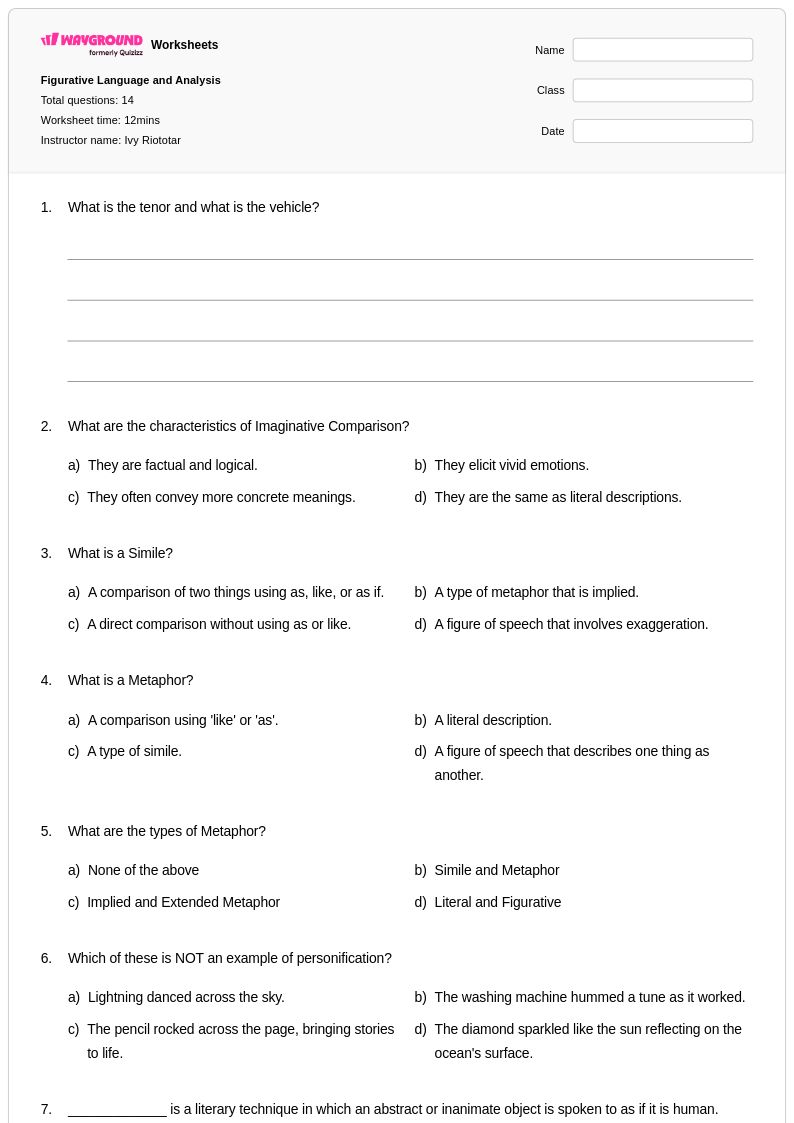
Figurative language worksheets for Grade 11 students available through Wayground (formerly Quizizz) provide comprehensive practice in identifying, analyzing, and interpreting sophisticated literary devices including metaphors, similes, personification, symbolism, alliteration, and irony. These carefully designed printables strengthen critical thinking skills essential for advanced literary analysis, helping eleventh-grade students decode complex texts and understand how authors craft meaning through non-literal language. Each worksheet includes detailed practice problems that challenge students to recognize figurative language in context, explain its purpose and effect, and demonstrate mastery through written responses, with complete answer key materials provided in convenient pdf format for both independent study and classroom assessment.
Wayground (formerly Quizizz) supports English teachers with an extensive collection of teacher-created figurative language resources specifically tailored for Grade 11 curriculum standards and learning objectives. The platform's robust search and filtering capabilities allow educators to quickly locate worksheets that match their specific instructional needs, whether focusing on particular literary devices, text complexity levels, or assessment formats. Teachers can access millions of professionally developed materials in both printable and digital formats, customize content to differentiate instruction for diverse learners, and seamlessly integrate these resources into lesson planning for skill practice, remediation, and enrichment activities that prepare students for advanced literary analysis and standardized assessments.
FAQs
How do I teach figurative language to middle school students?
Start by anchoring each device to a concrete, memorable example students already know — song lyrics, sports commentary, and everyday expressions work well for similes, metaphors, and idioms. Introduce one device at a time before asking students to compare multiple types, since conflating them early is a leading source of confusion. Once students can identify each device in isolation, move to authentic texts where they analyze how the author's choice of figurative language shapes meaning and emotional tone.
What exercises help students practice identifying figurative language?
Identification exercises that embed figurative language in short passages of authentic text are more effective than isolated sentence drills because they mirror actual reading conditions. Tasks that ask students to name the device, quote the relevant phrase, and explain its effect build both recognition and interpretive skill simultaneously. Progressing from basic labeling exercises to author's-purpose analysis ensures students develop deeper comprehension rather than surface-level pattern matching.
What mistakes do students commonly make when learning figurative language?
The most frequent error is confusing similes and metaphors, particularly when metaphors are implied or extended across multiple sentences rather than stated outright. Students also frequently misread idioms and hyperbole literally, especially English language learners who may not have prior exposure to culturally specific expressions. Another common misconception is treating personification as any description of a non-human object rather than recognizing that it specifically attributes human actions, emotions, or qualities to that object.
How can I differentiate figurative language instruction for struggling readers?
For struggling readers, reduce cognitive load by presenting one device at a time with visual anchors — a chart showing the device name, definition, and a familiar example — before moving to text-based identification. On Wayground, teachers can enable the Read Aloud accommodation so students hear passages read to them, removing decoding barriers so they can focus on interpretation. Reduced answer choices can also be applied to individual students in digital activities, lowering the difficulty threshold without altering the content for the rest of the class.
How do I use Wayground's figurative language worksheets in my classroom?
Wayground's figurative language worksheets are available as printable PDFs for traditional classroom use and in digital formats for technology-integrated or remote learning environments, and can also be hosted as a quiz directly on Wayground. Each worksheet includes an answer key, so teachers can assign them for independent practice, small-group work, or homework without additional preparation. The collection covers devices ranging from alliteration and onomatopoeia to oxymoron and sarcasm, making it practical to select materials that match a specific lesson focus or standard.
How do I assess whether students truly understand figurative language or are just memorizing definitions?
Surface memorization becomes visible when students can define a metaphor but cannot explain what a specific metaphor in a passage means or why the author chose it over literal language. Assessment tasks that require students to analyze author's purpose — asking 'what effect does this create?' rather than 'what device is this?' — reveal deeper understanding. Including open-ended prompts where students write their own examples of a given device in a meaningful context is one of the clearest indicators of genuine comprehension.