
25 Q
9th - 12th
20 Q
11th - 12th
22 Q
6th - Uni
184 Q
9th - 12th
55 Q
5th - Uni
15 Q
7th - Uni
20 Q
9th - 12th
25 Q
9th - 12th
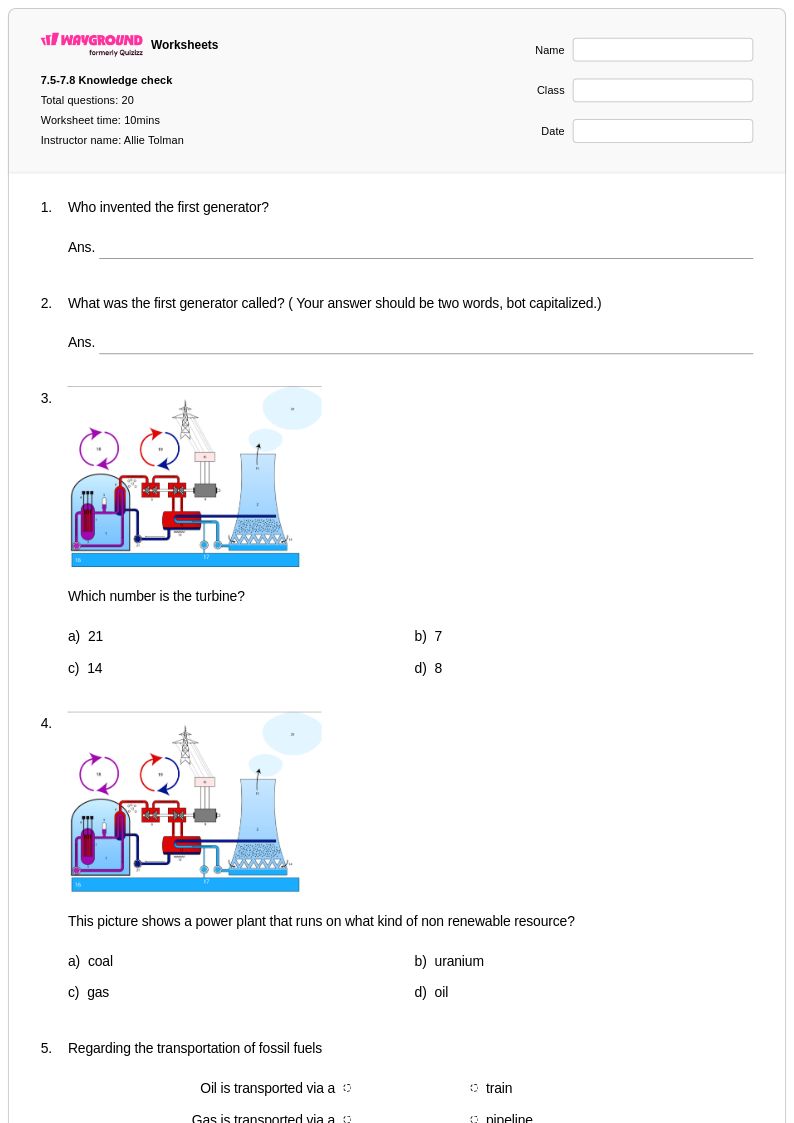
20 Q
9th - 12th
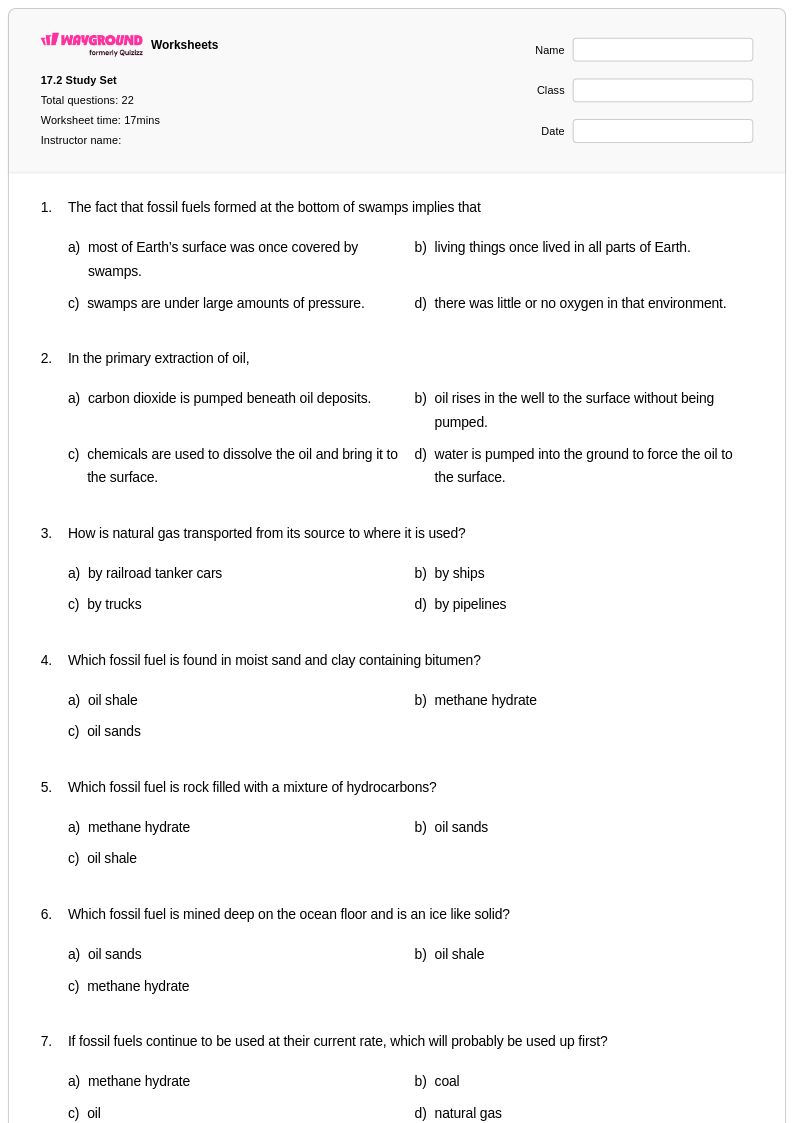
22 Q
9th - 12th
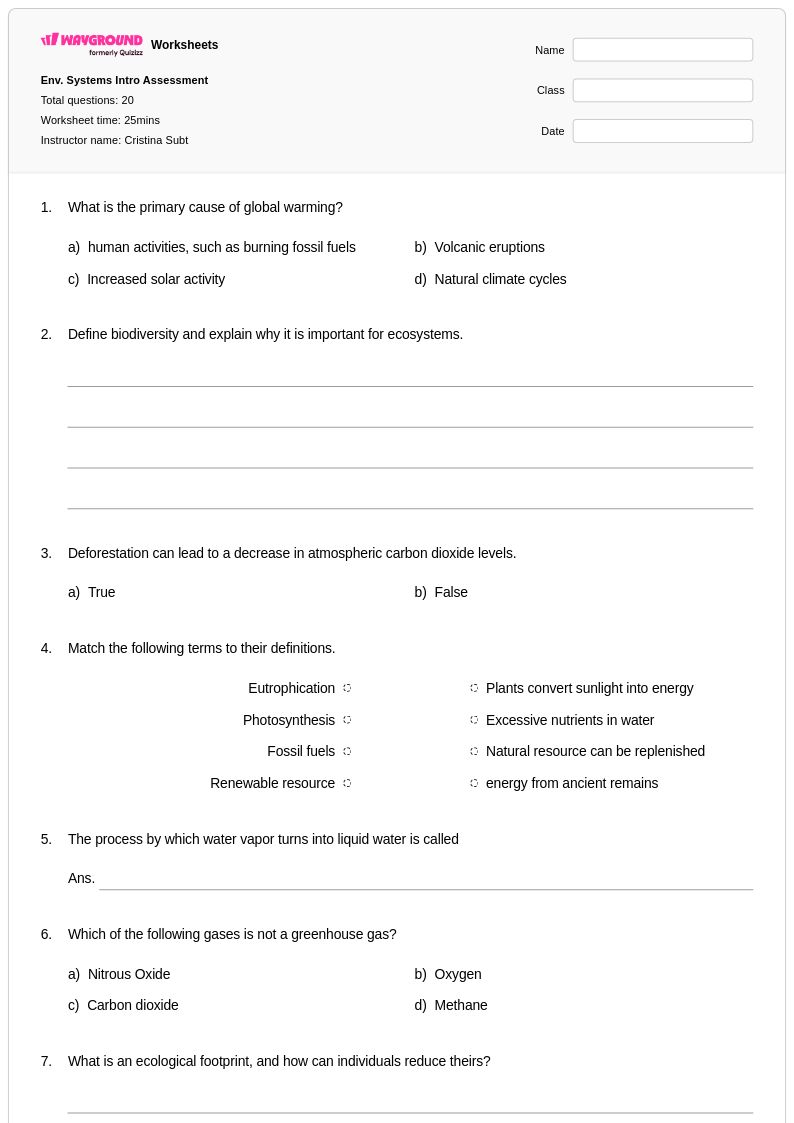
20 Q
12th
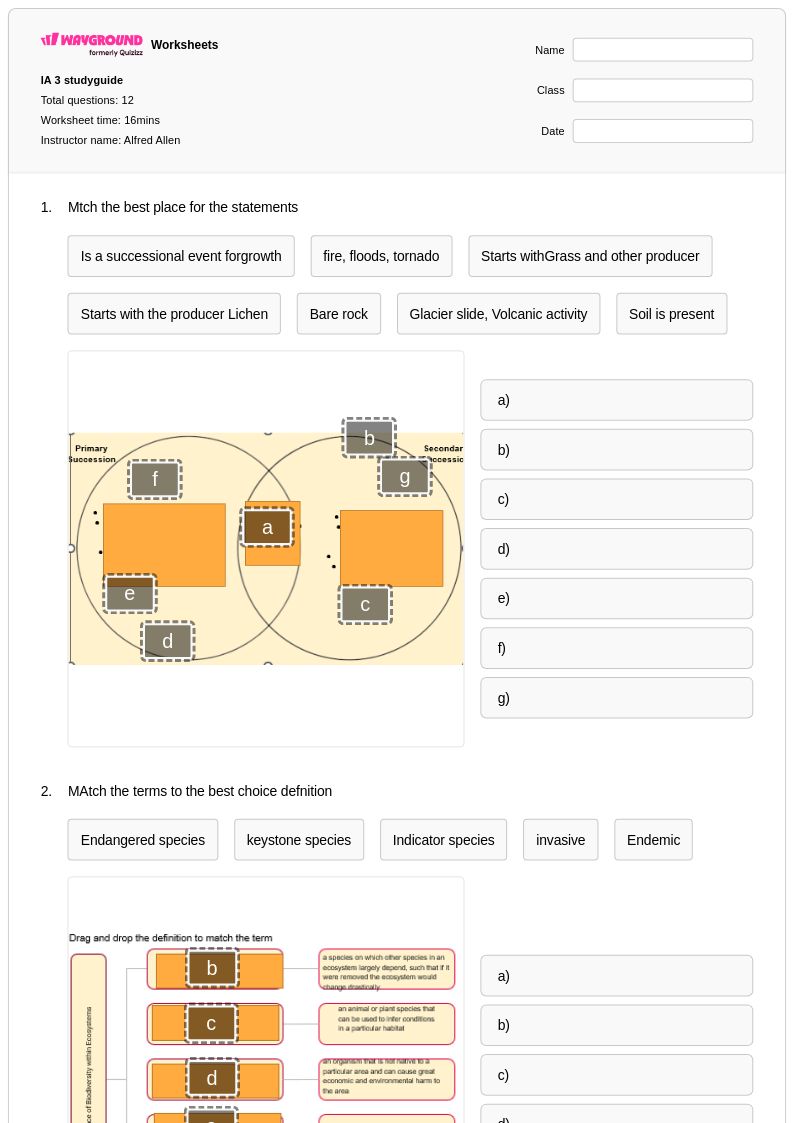
12 Q
9th - 12th
22 Q
9th - 12th
16 Q
9th - 12th
20 Q
9th - 12th
20 Q
9th - 12th
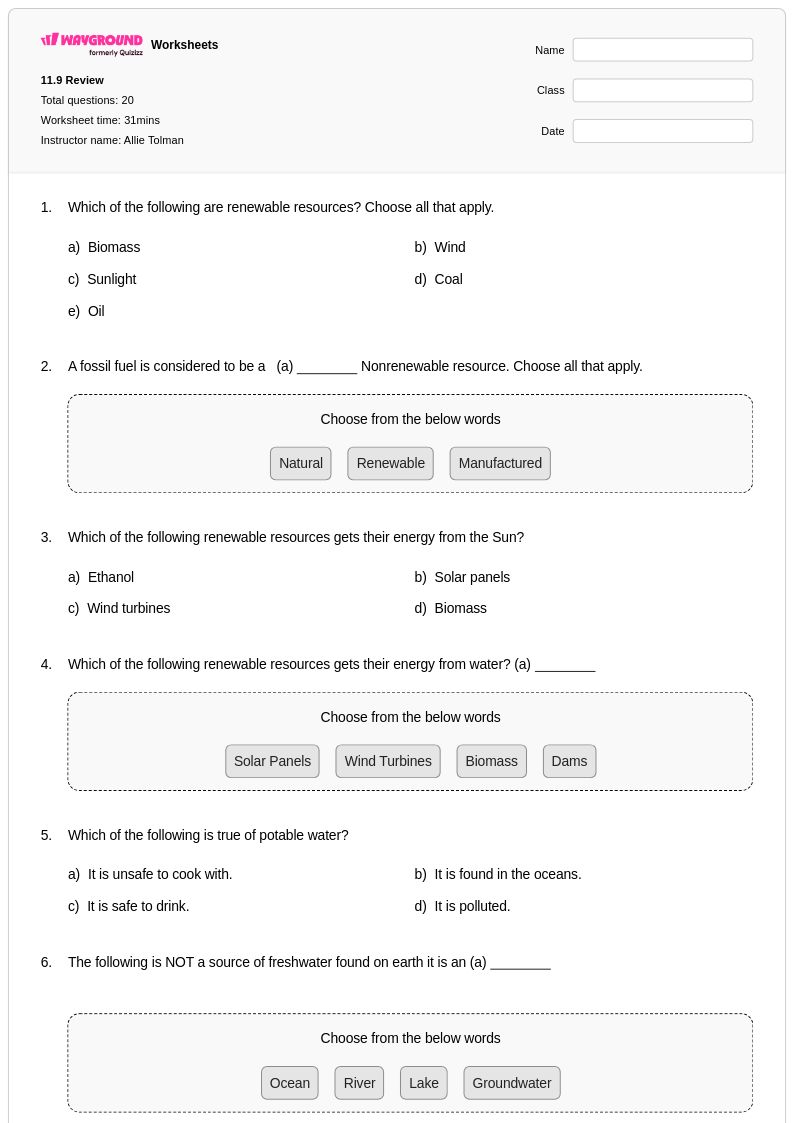
20 Q
9th - 12th
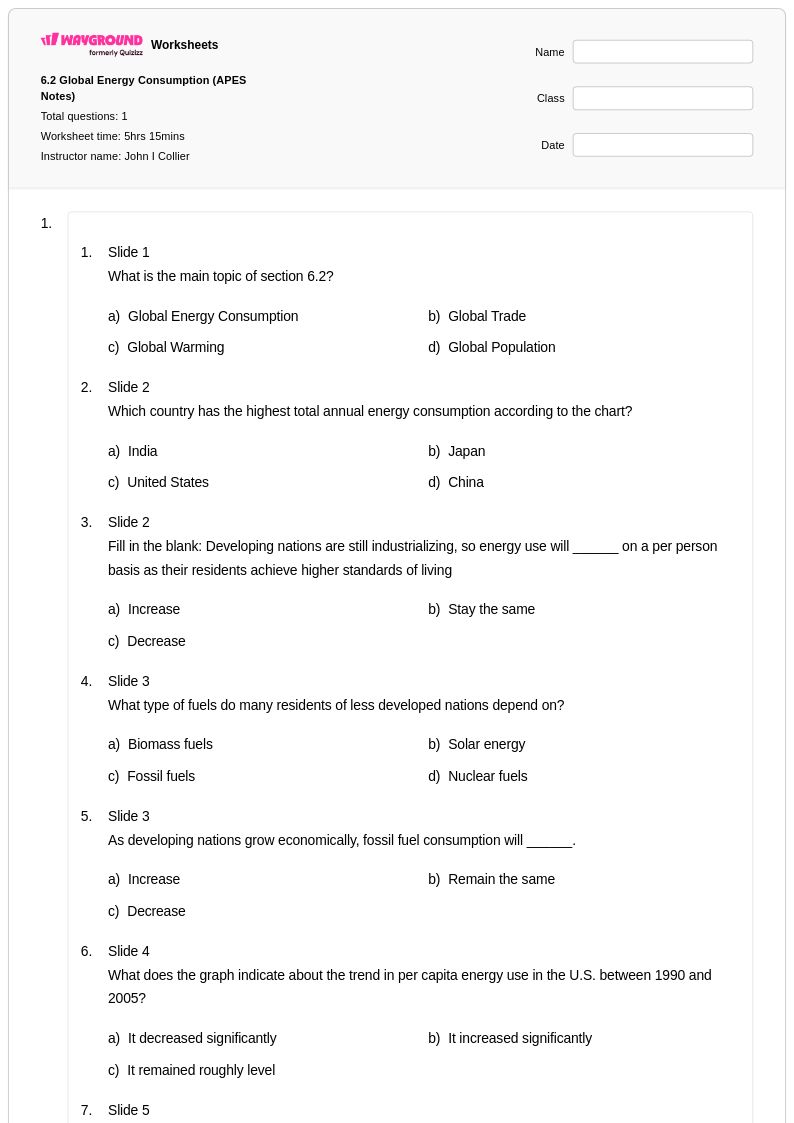
21 Q
12th
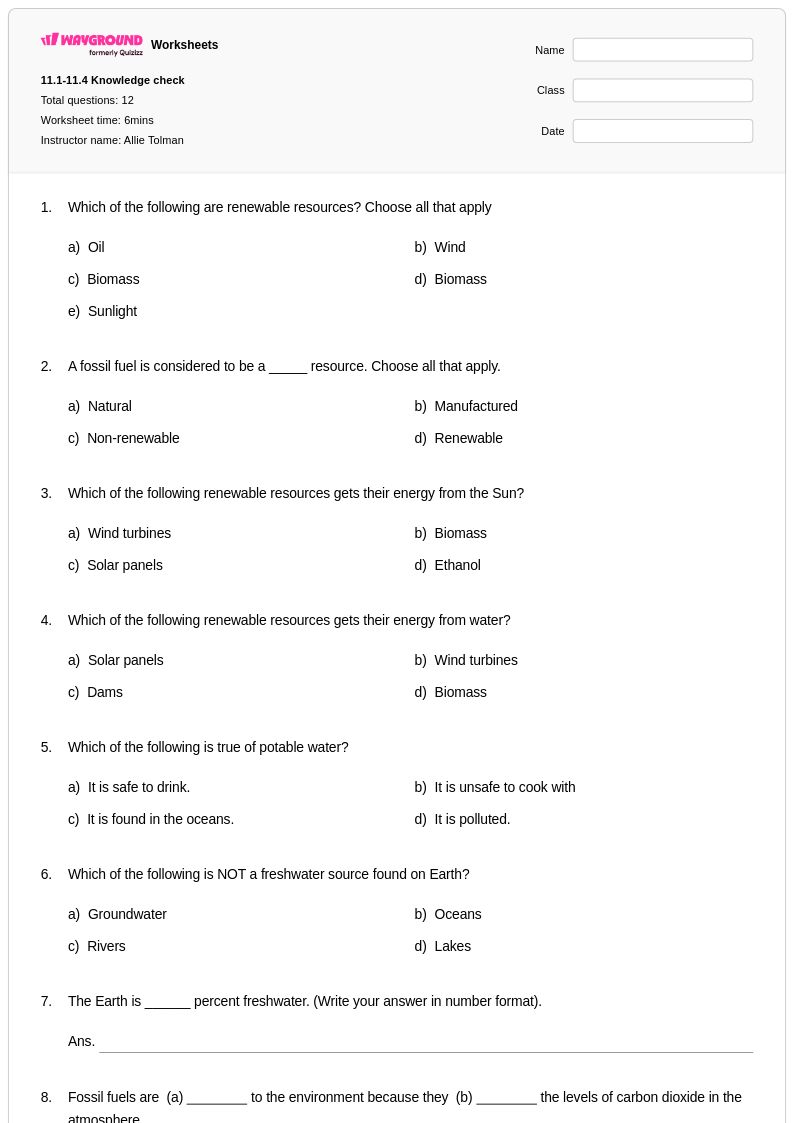
12 Q
9th - 12th
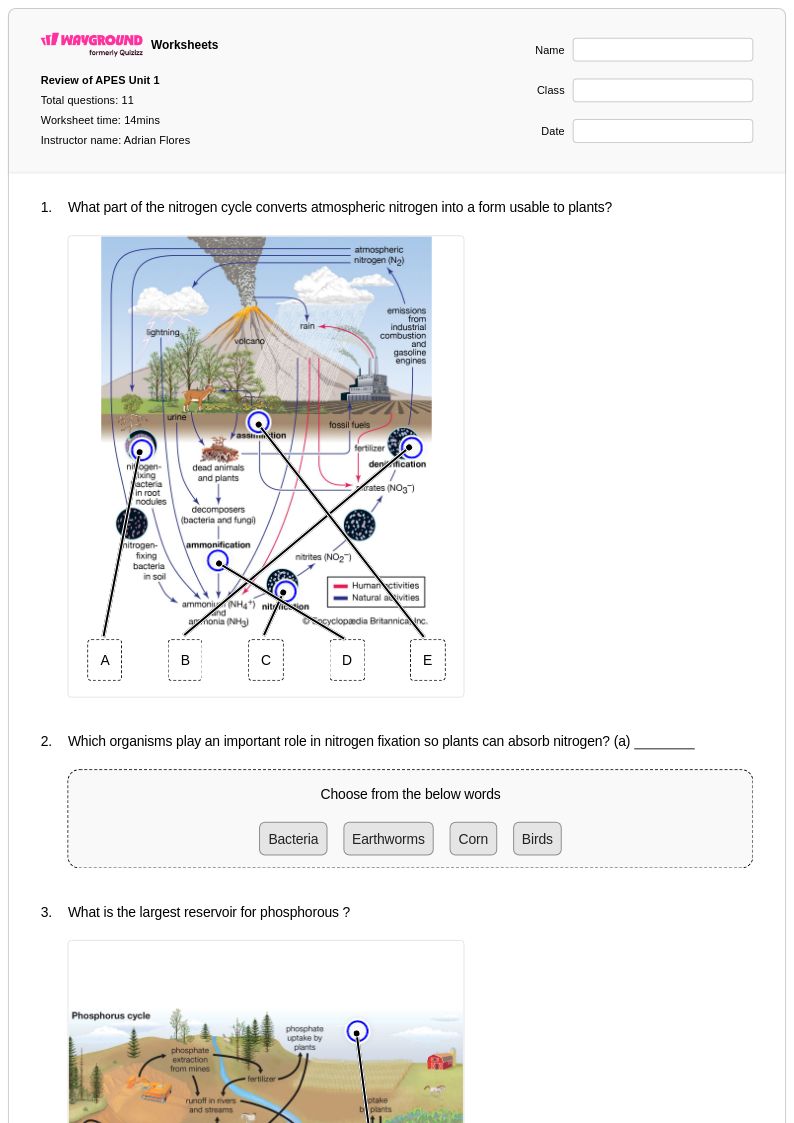
11 Q
12th
21 Q
9th - 12th
27 Q
9th - 12th
20 Q
9th - 12th
18 Q
9th - 12th
Explore Other Subject Worksheets for grade 12
Explore printable Fossil Fuels worksheets for Grade 12
Fossil fuels worksheets for Grade 12 students available through Wayground (formerly Quizizz) provide comprehensive coverage of hydrocarbon energy sources, their formation processes, extraction methods, and environmental impacts. These educational resources strengthen critical analytical skills by engaging students with complex geological concepts including sedimentary rock formation, organic matter decomposition, and the time scales required for petroleum, natural gas, and coal development. Students work through practice problems examining fossil fuel reserves, energy conversion efficiency, and carbon cycle interactions while developing proficiency in interpreting geological cross-sections and energy production data. The printable worksheets include detailed answer keys that support independent learning and allow educators to assess student understanding of thermodynamic principles, combustion reactions, and the economic factors influencing global energy markets. These free resources challenge advanced learners to evaluate the sustainability of fossil fuel consumption and analyze alternative energy transitions through quantitative problem-solving exercises.
Wayground (formerly Quizizz) supports educators with millions of teacher-created fossil fuel worksheets specifically designed for Grade 12 Earth and Space Science instruction. The platform's robust search and filtering capabilities enable teachers to locate resources aligned with specific curriculum standards while offering differentiation tools that accommodate diverse learning needs within advanced science classrooms. These customizable worksheet collections are available in both printable pdf formats for traditional instruction and digital formats for technology-integrated learning environments. Teachers utilize these comprehensive resources for lesson planning, targeted remediation of complex geological concepts, and enrichment activities that extend learning beyond basic fossil fuel identification to include geochemical analysis and energy policy evaluation. The extensive library facilitates skill practice across multiple learning objectives, from understanding hydrocarbon molecular structures to analyzing the environmental consequences of fossil fuel extraction and consumption in contemporary energy systems.
FAQs
How do I teach fossil fuels to middle or high school students?
What worksheets or activities help students practice fossil fuel concepts?
What misconceptions do students commonly have about fossil fuels?
How do I use Wayground's fossil fuels worksheets in my classroom?
How can I differentiate fossil fuels instruction for students with different learning needs?
What grade level is appropriate for fossil fuels worksheets?