Free Printable Phosphorus Cycle Worksheets for Grade 12
Explore comprehensive Grade 12 phosphorus cycle worksheets and printables that help students master nutrient cycling processes through engaging practice problems, free PDF resources, and detailed answer keys available on Wayground.
Explore printable Phosphorus Cycle worksheets for Grade 12
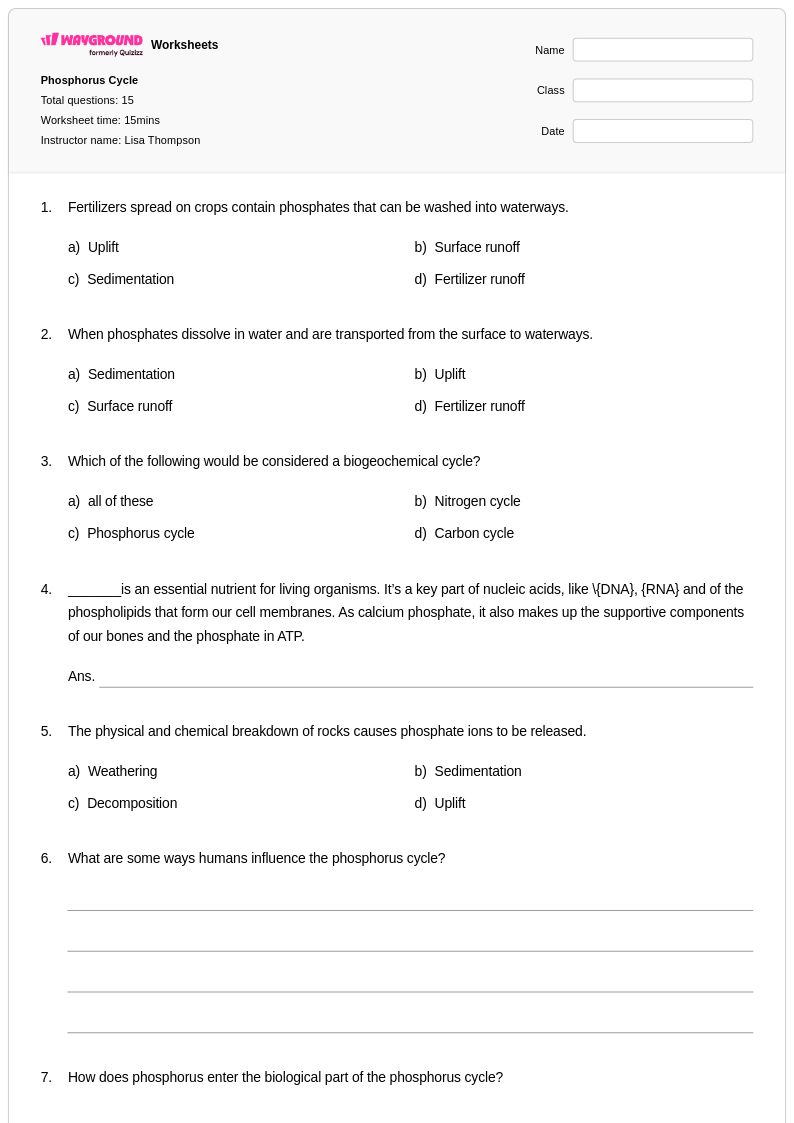
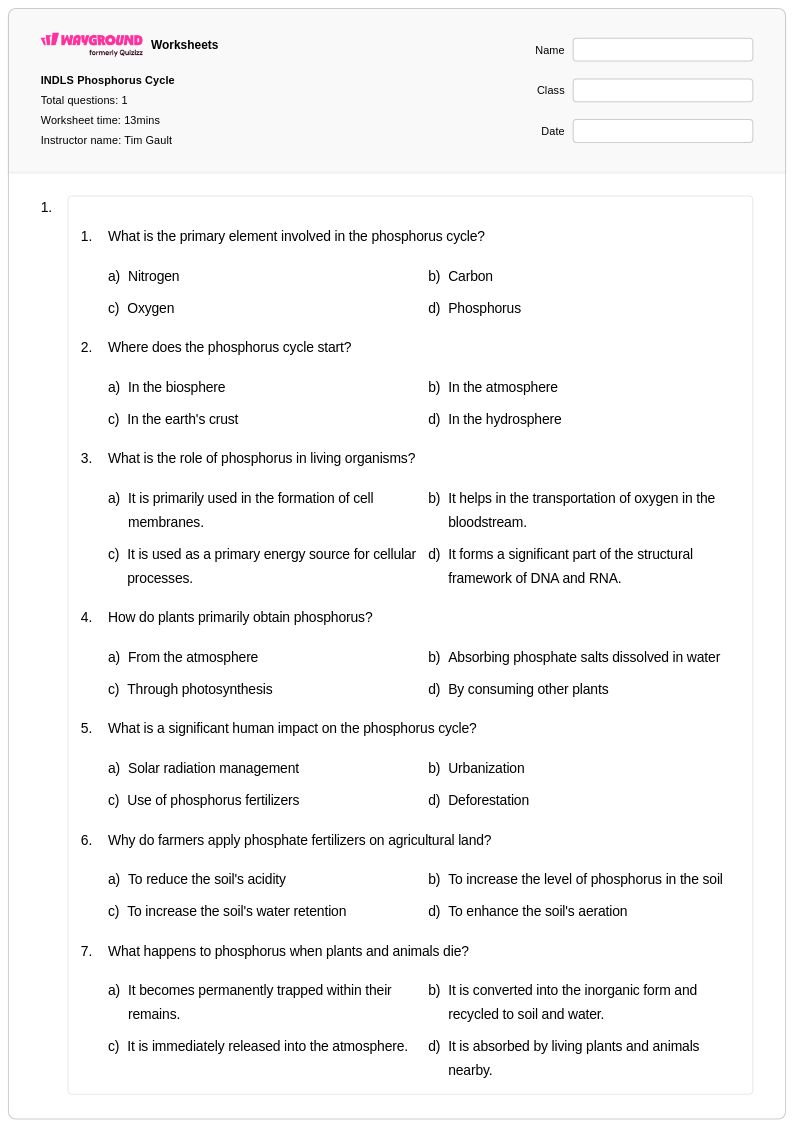
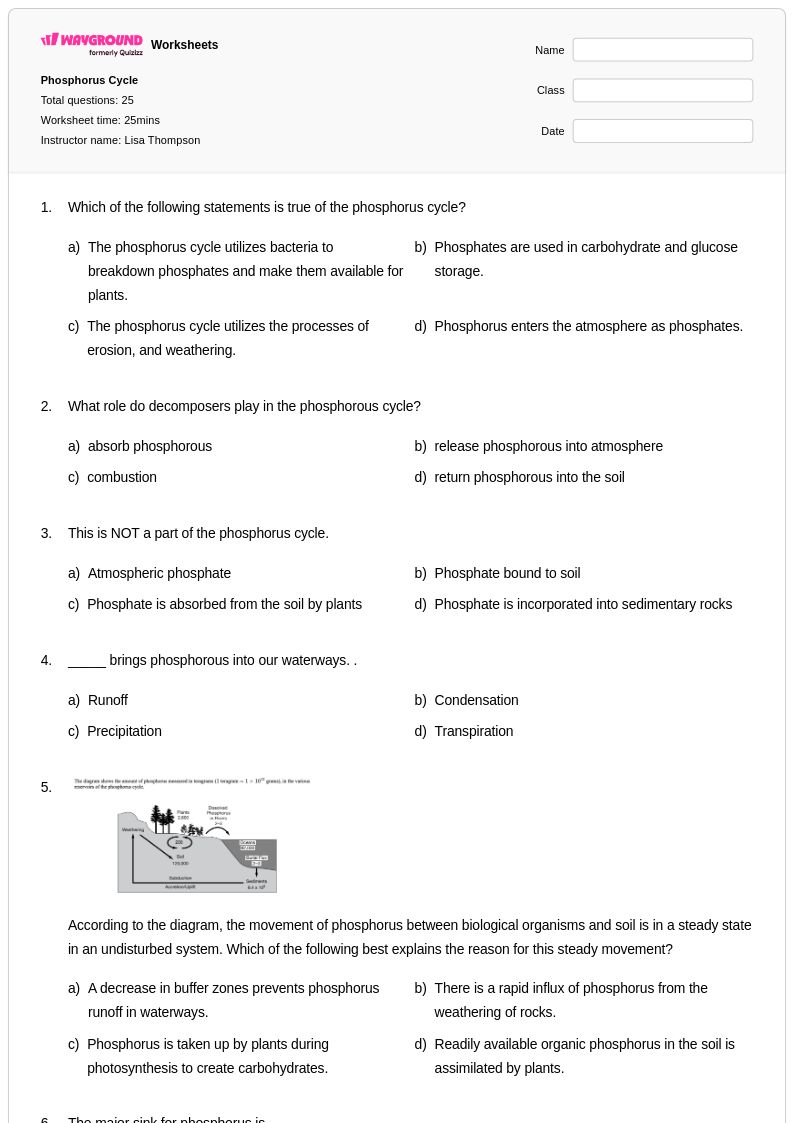
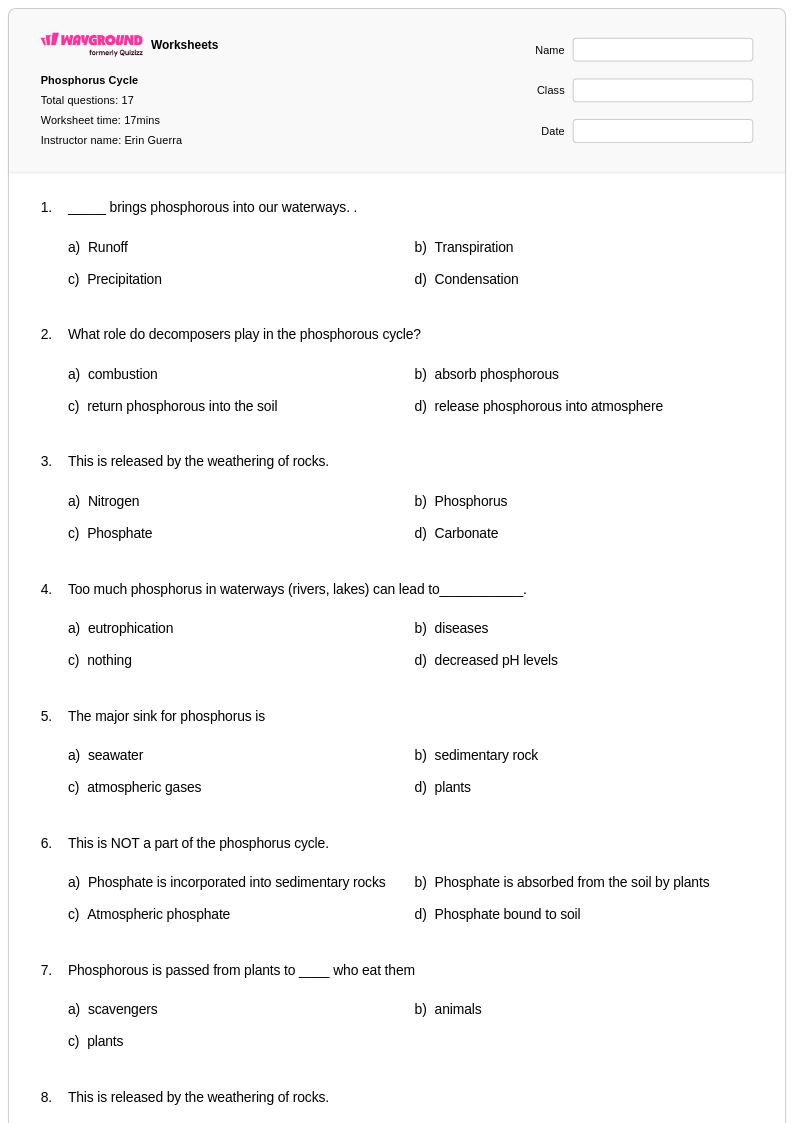
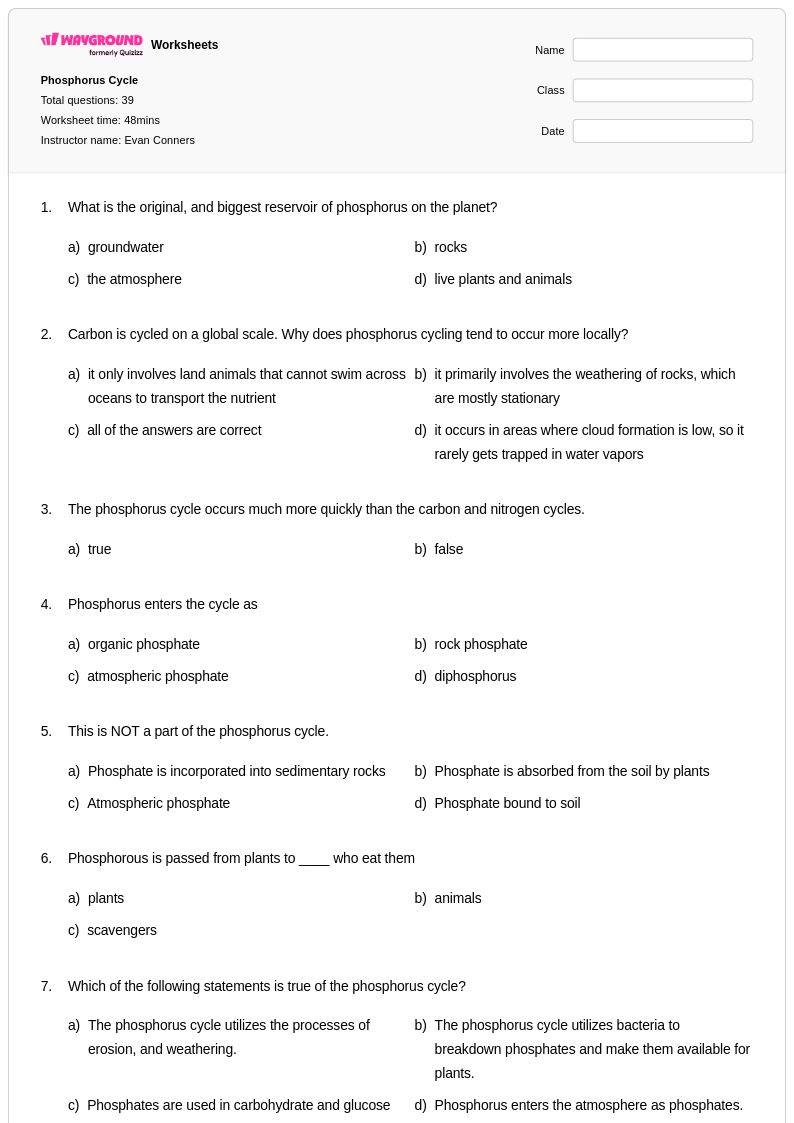
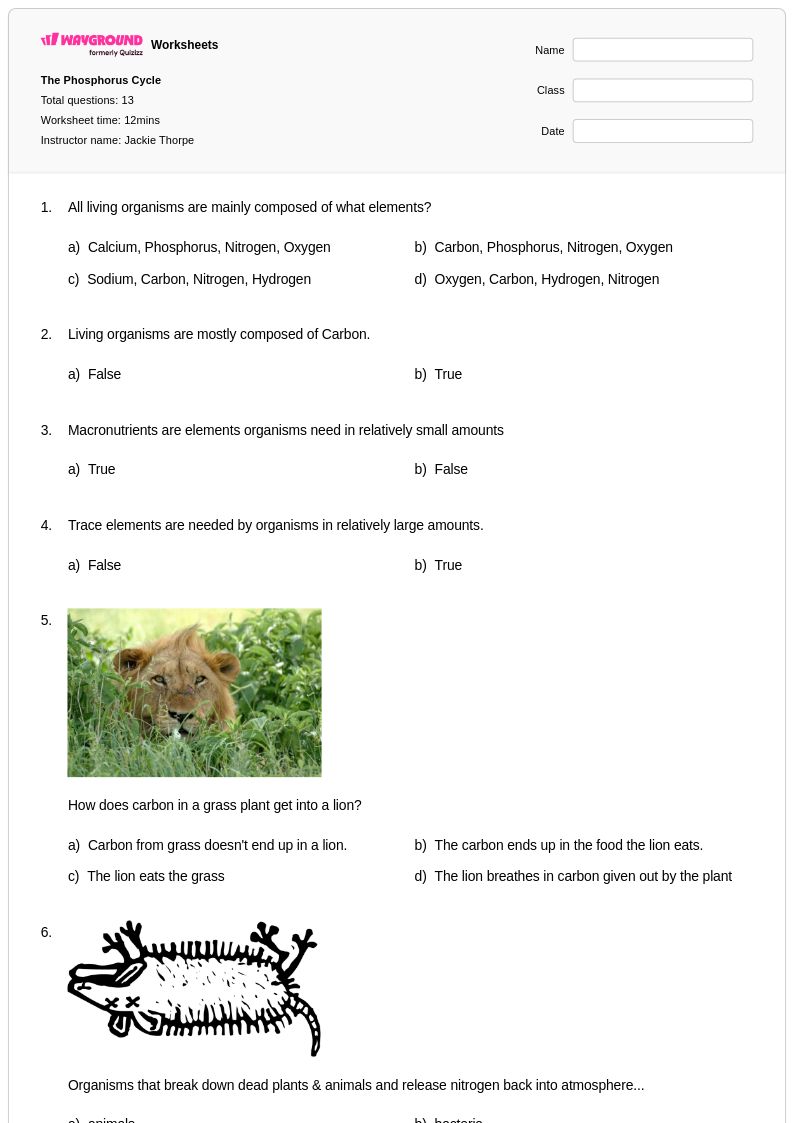
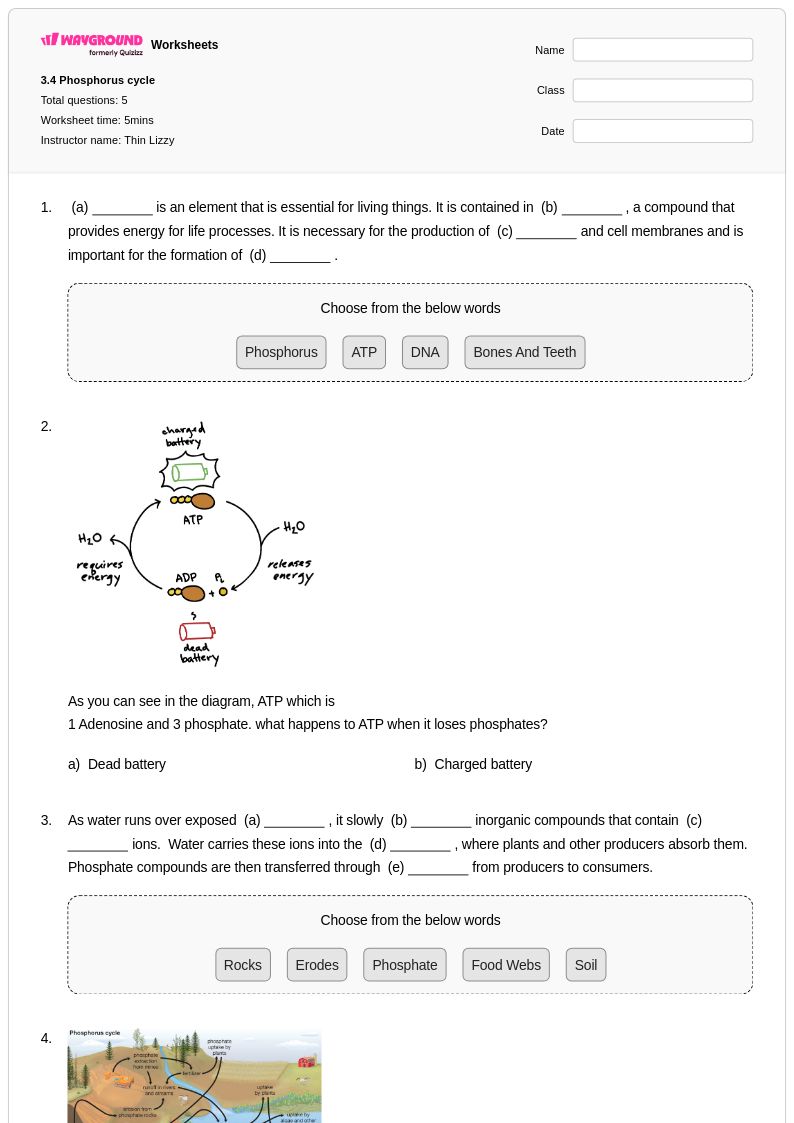
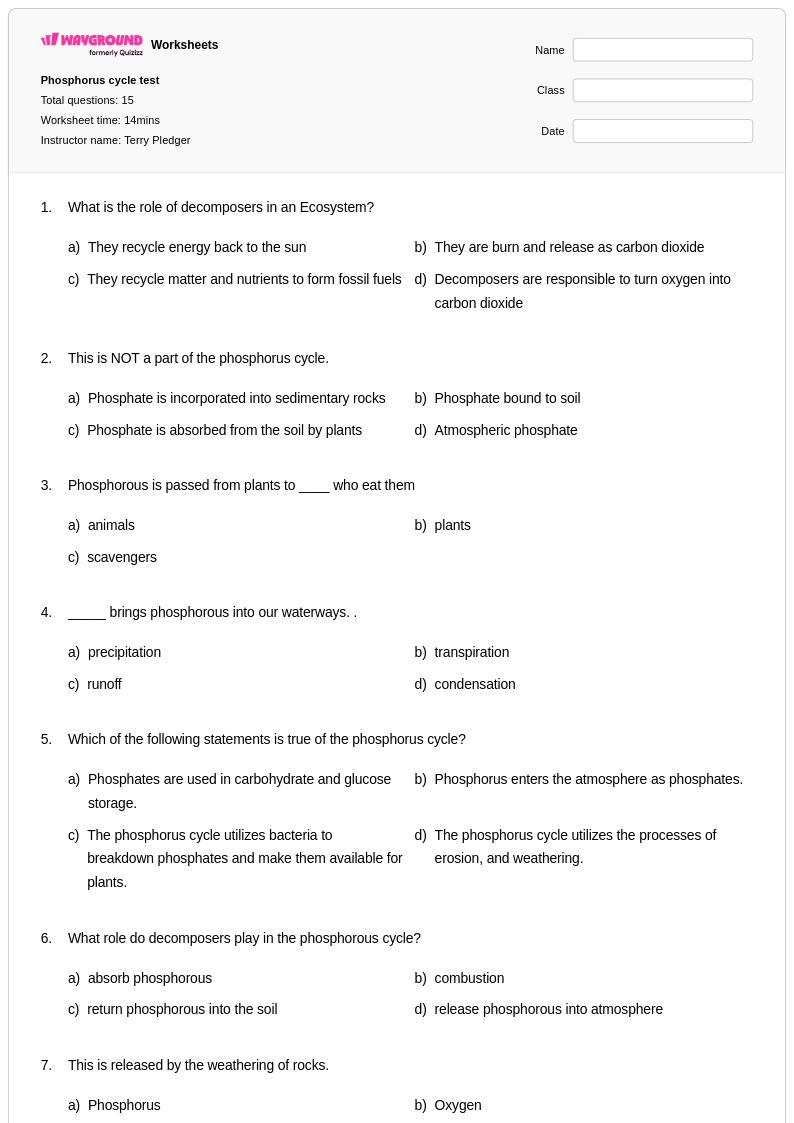
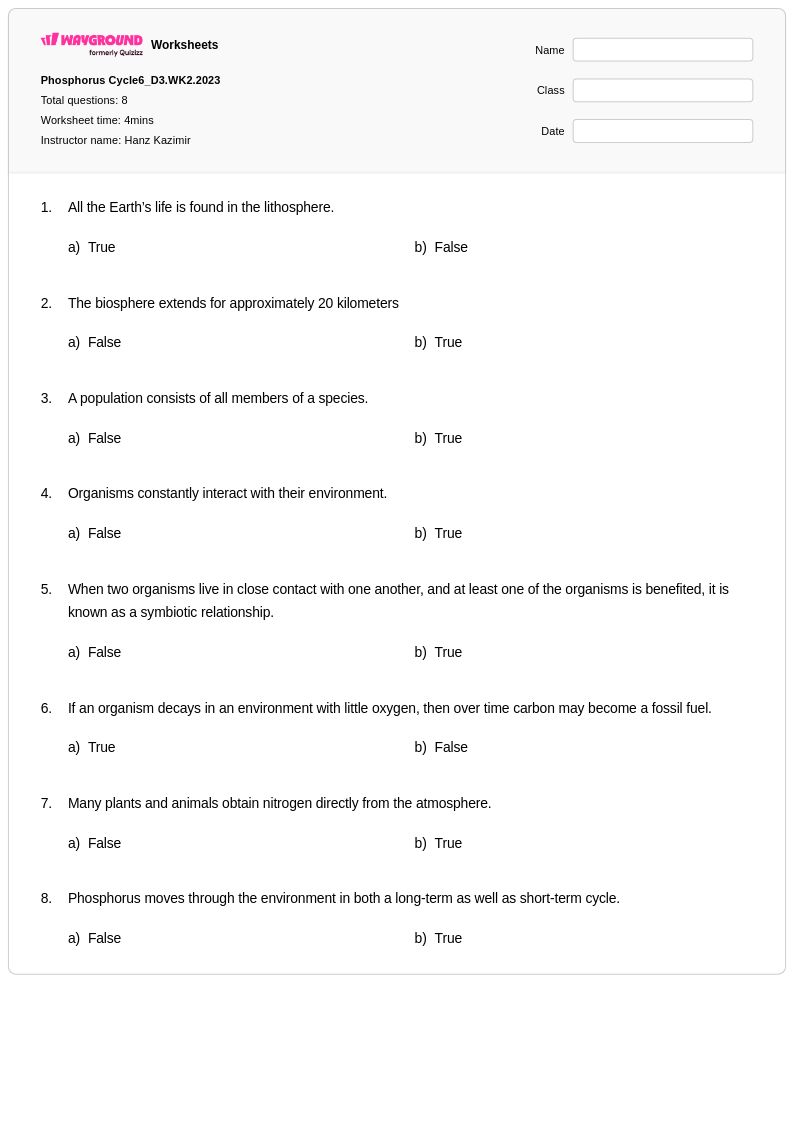
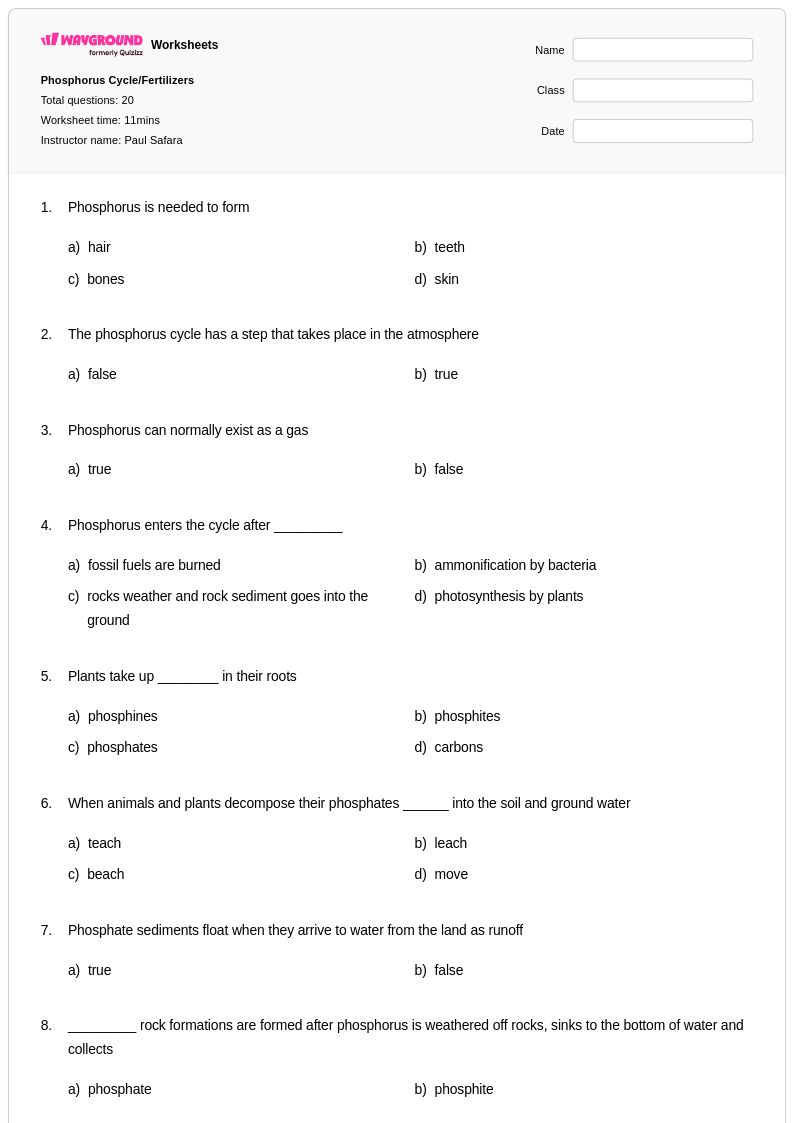
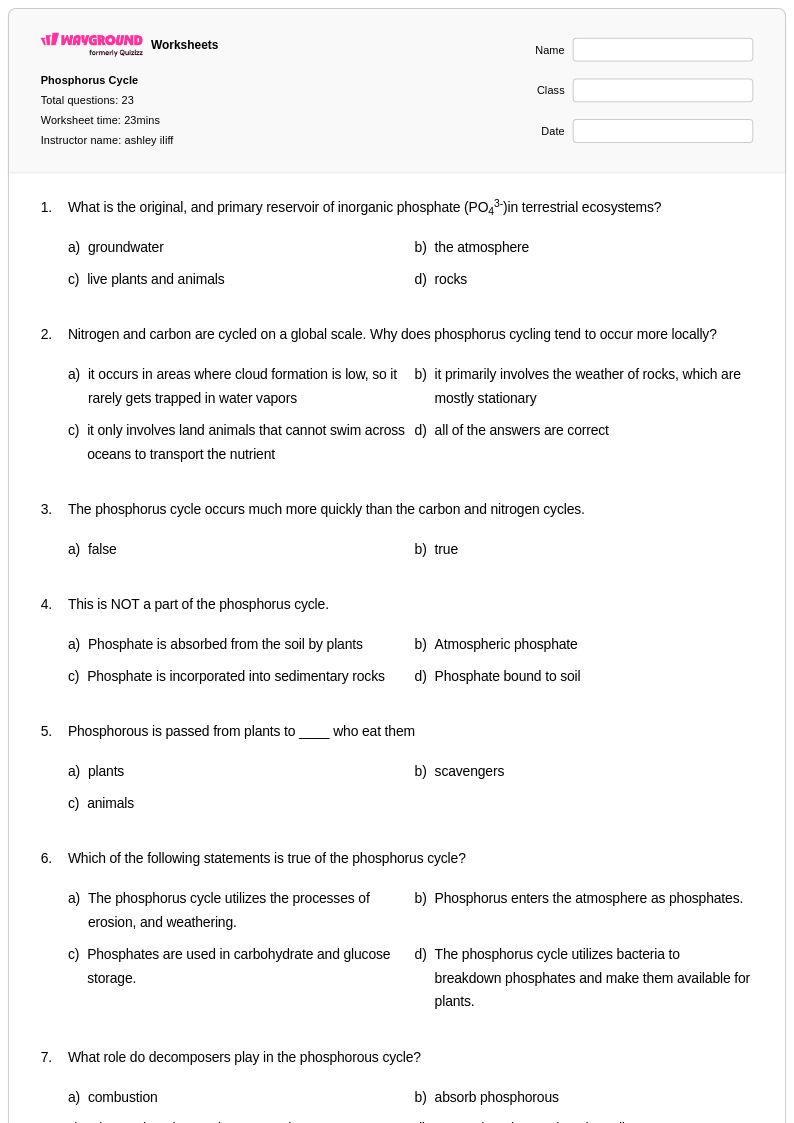
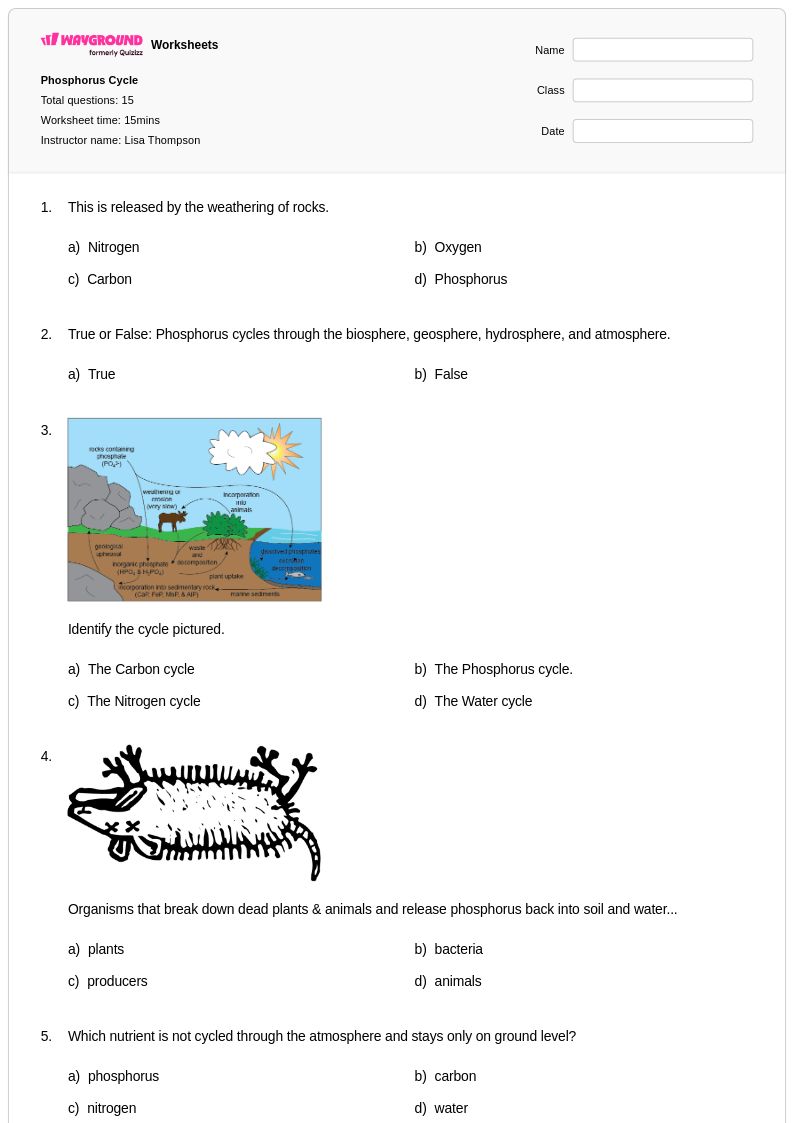
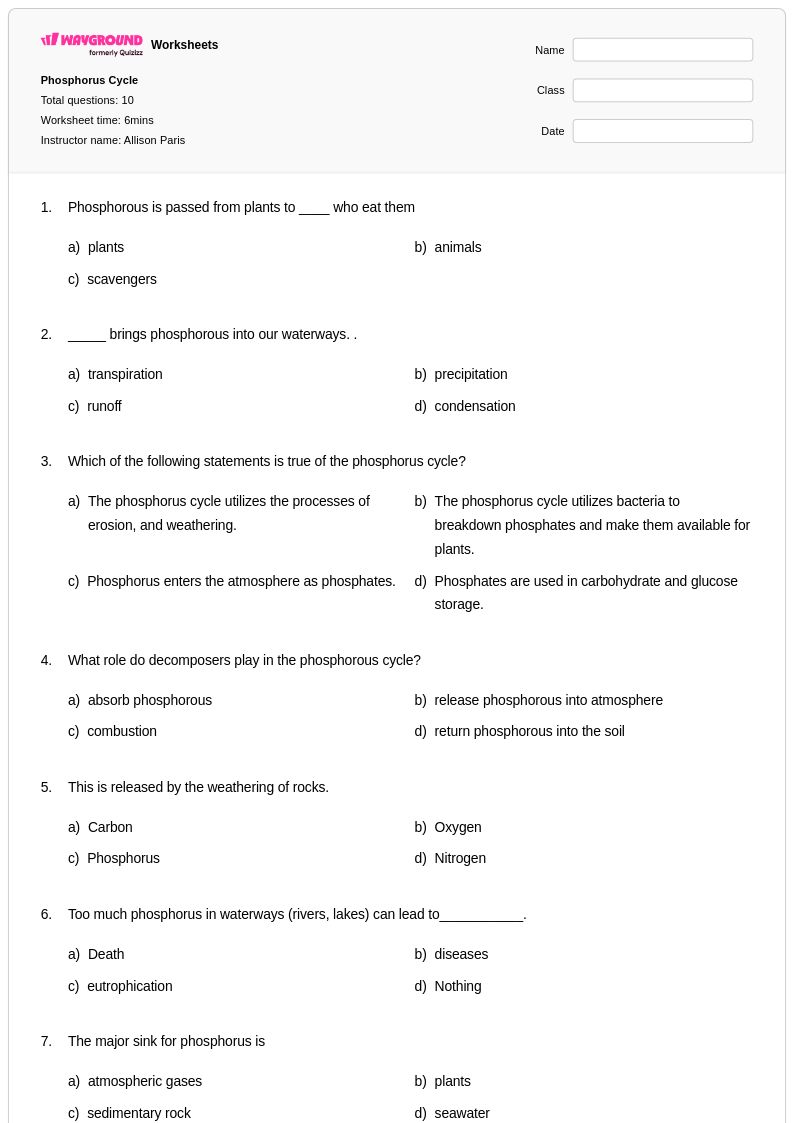
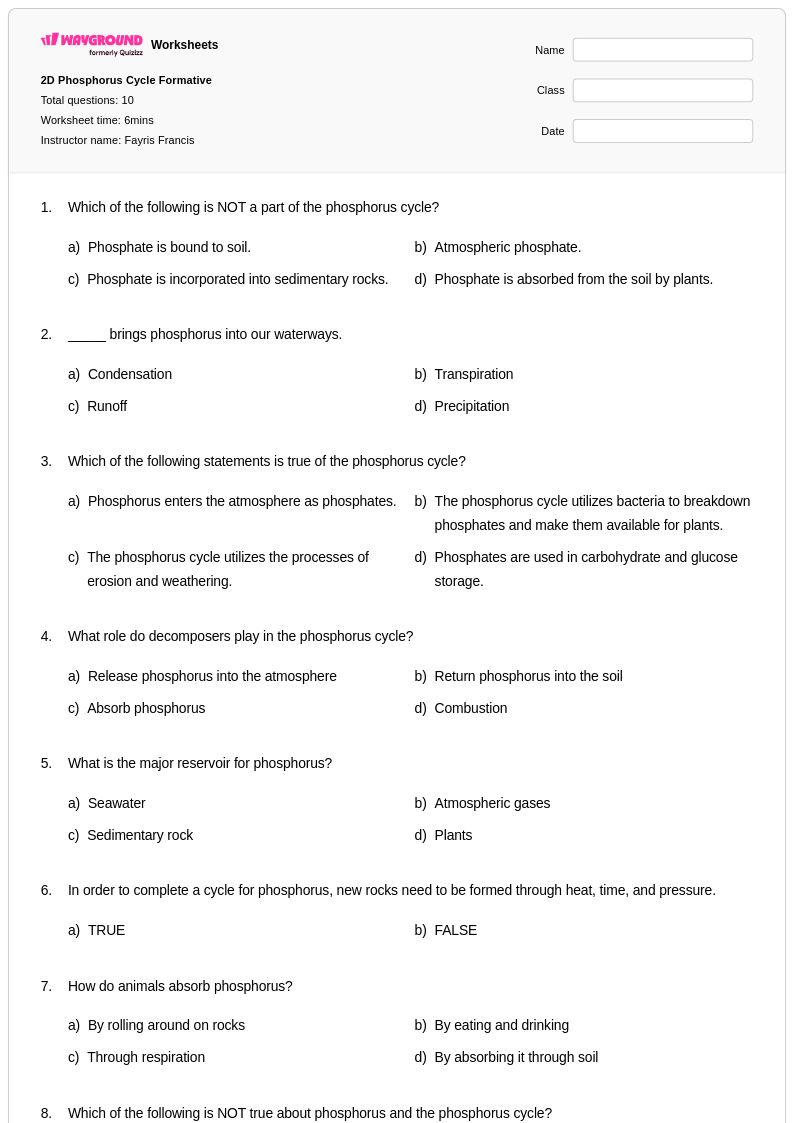
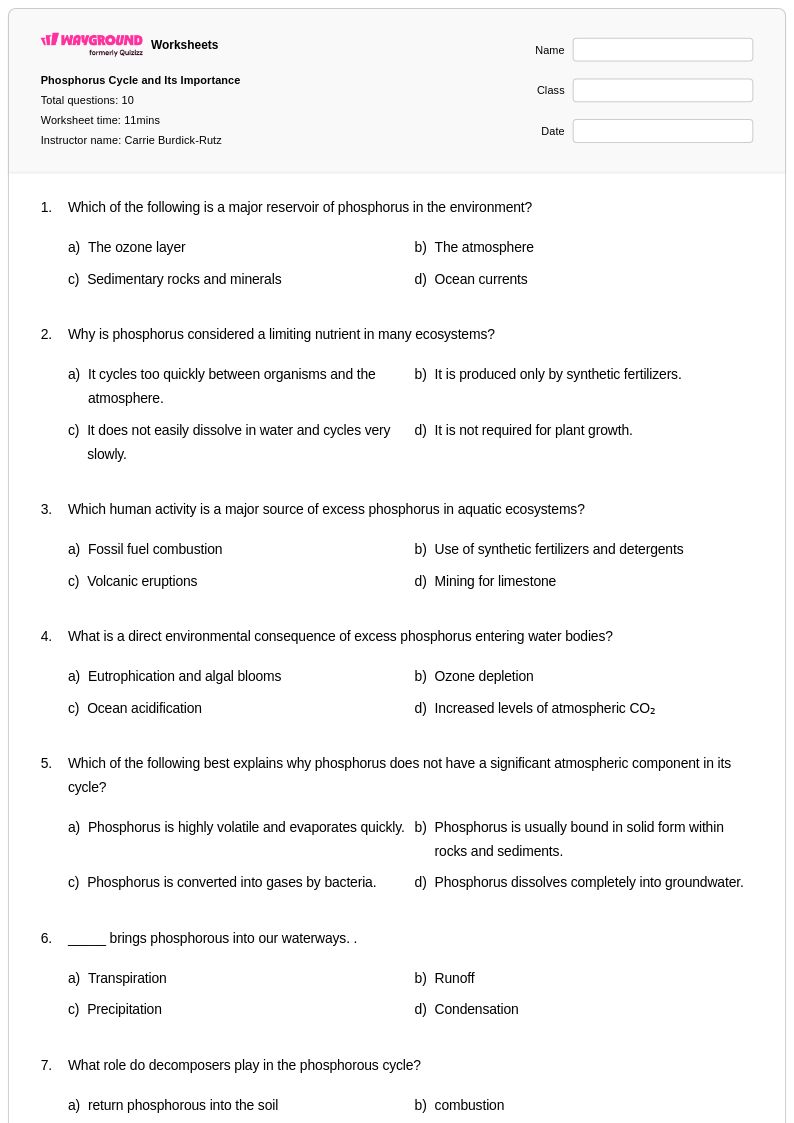
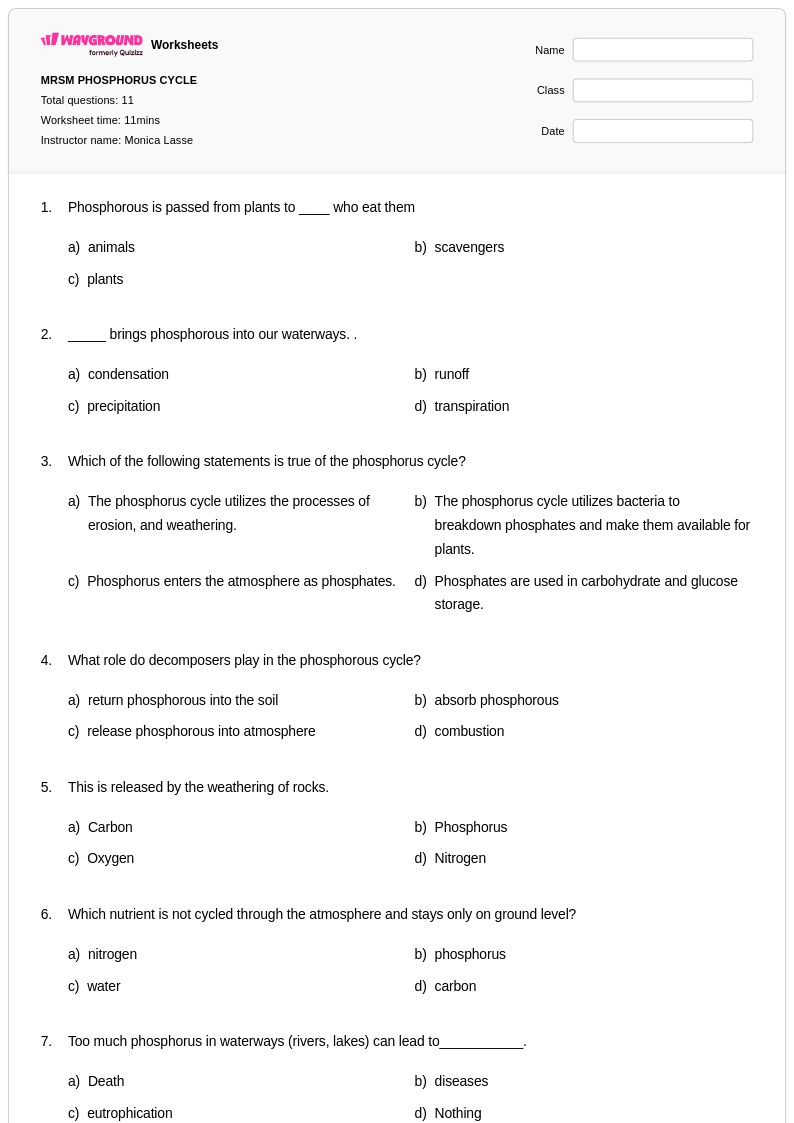
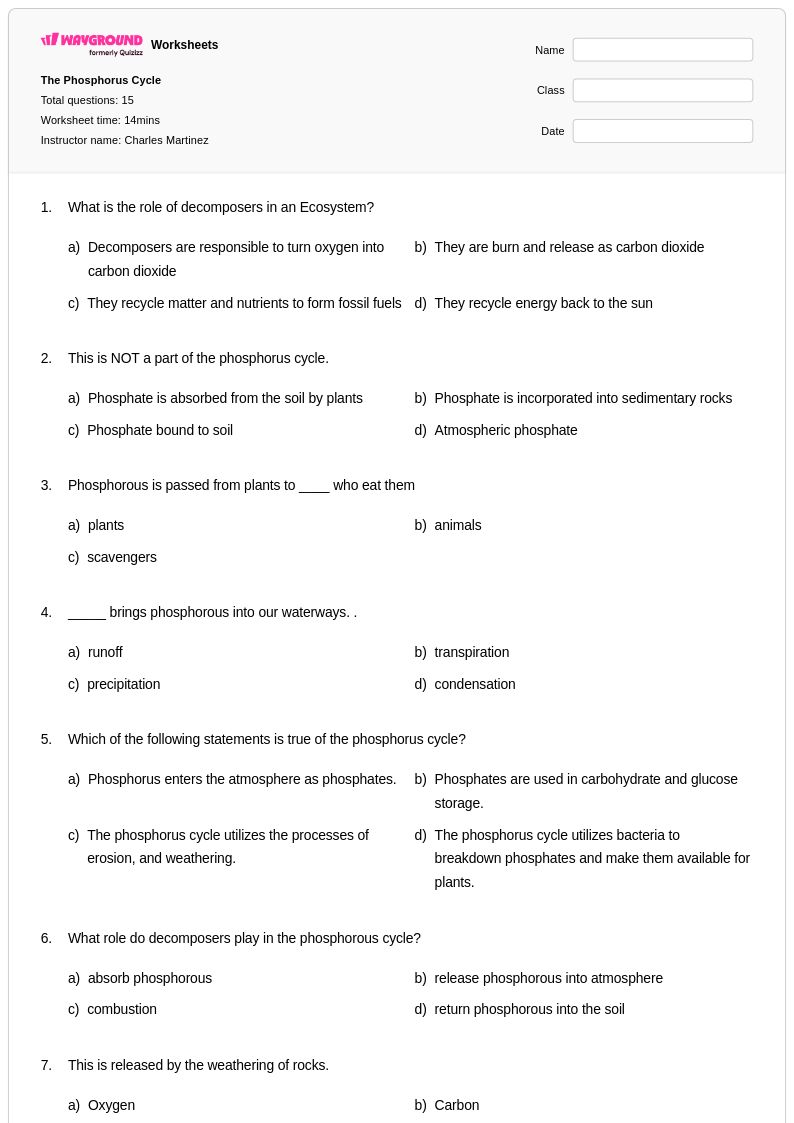
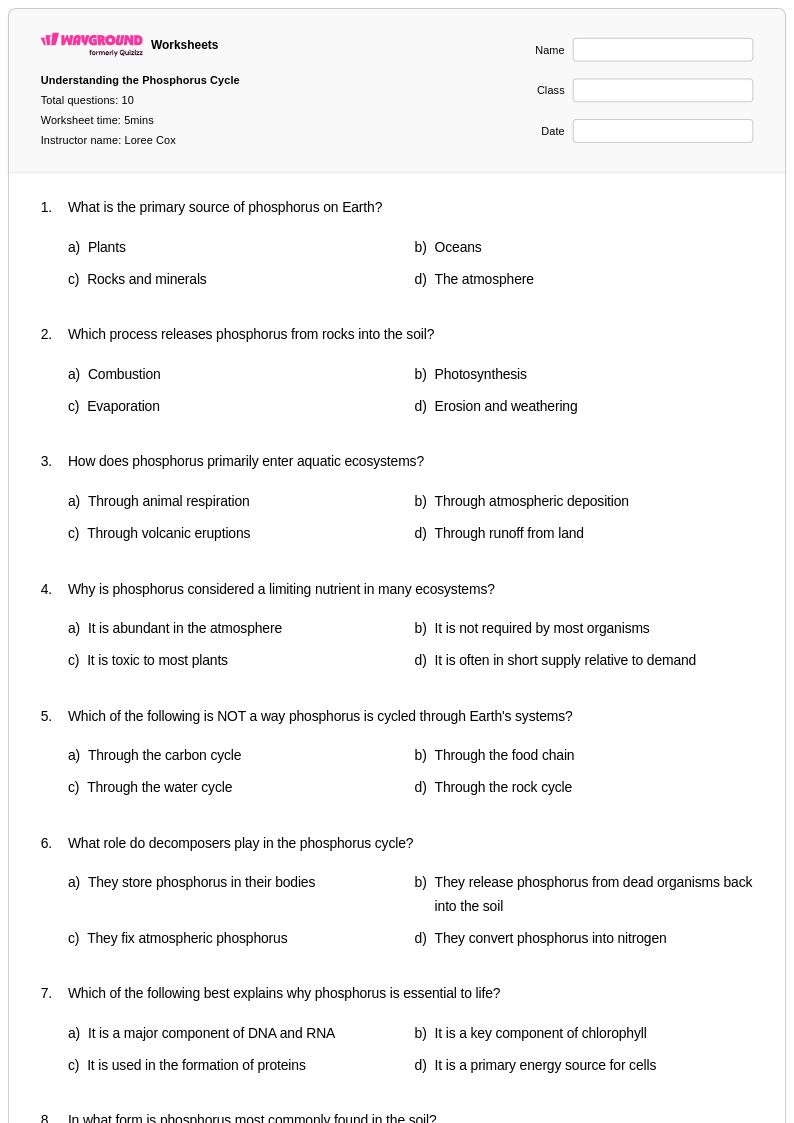
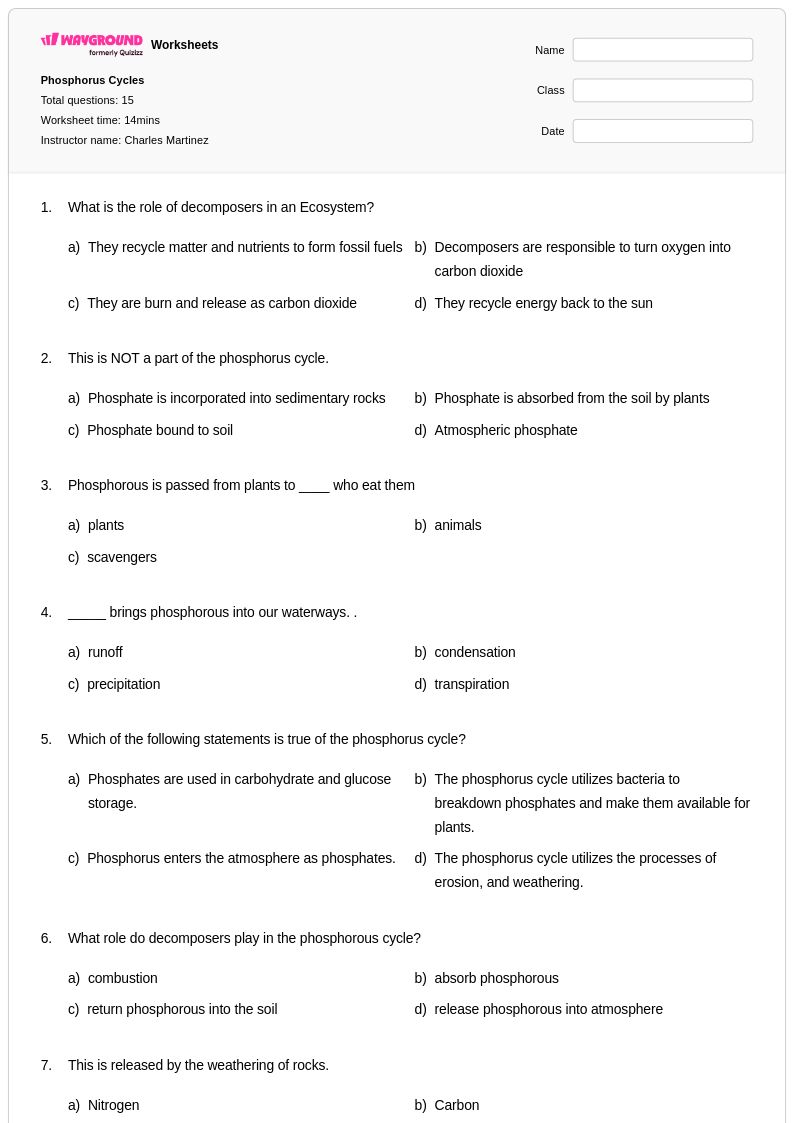
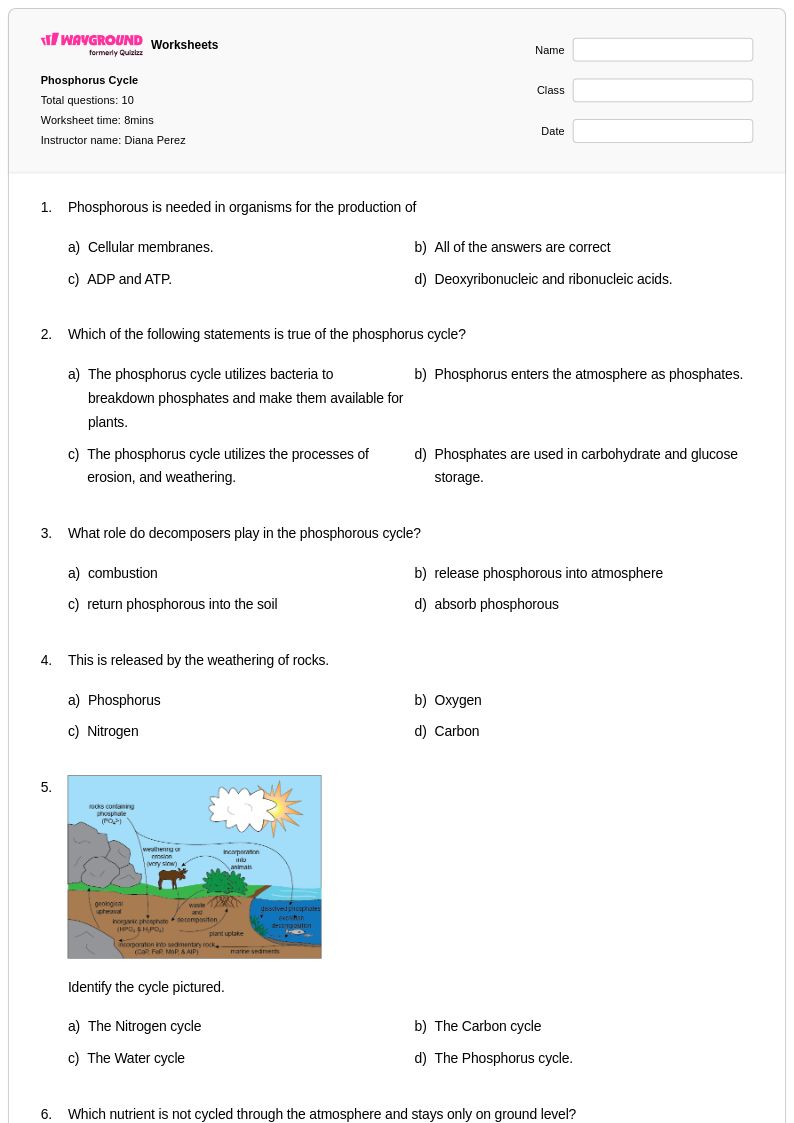
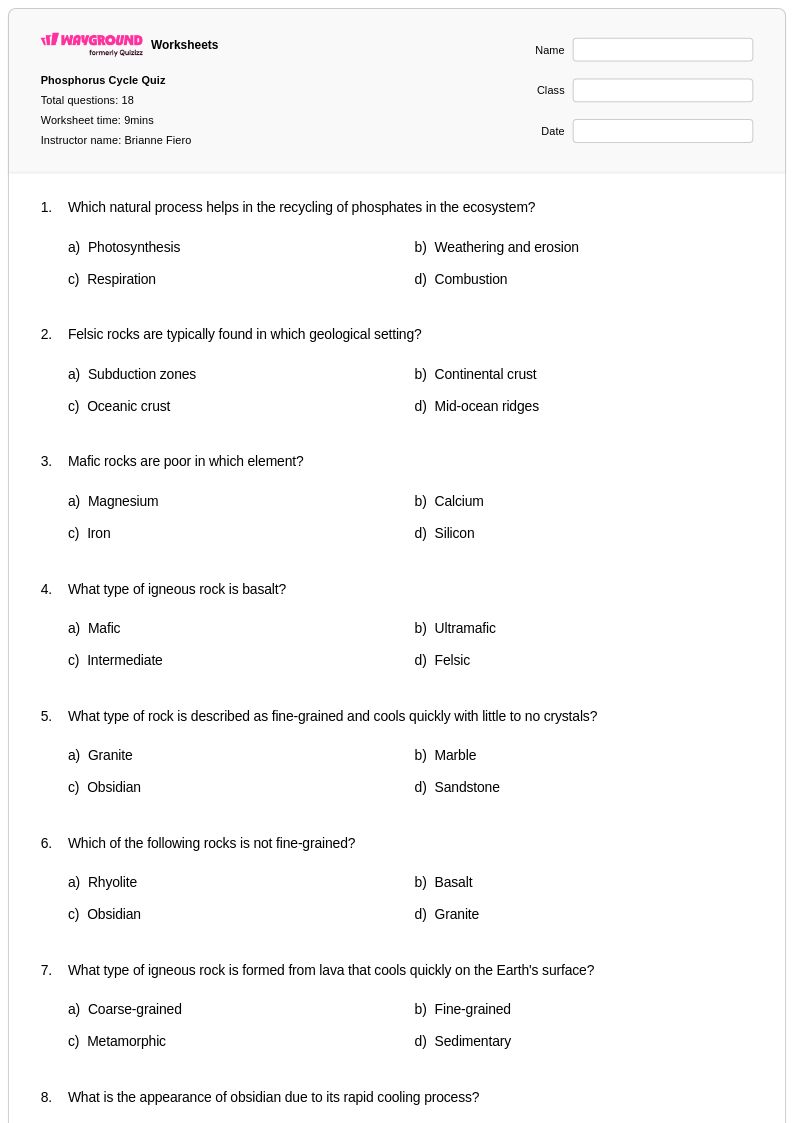
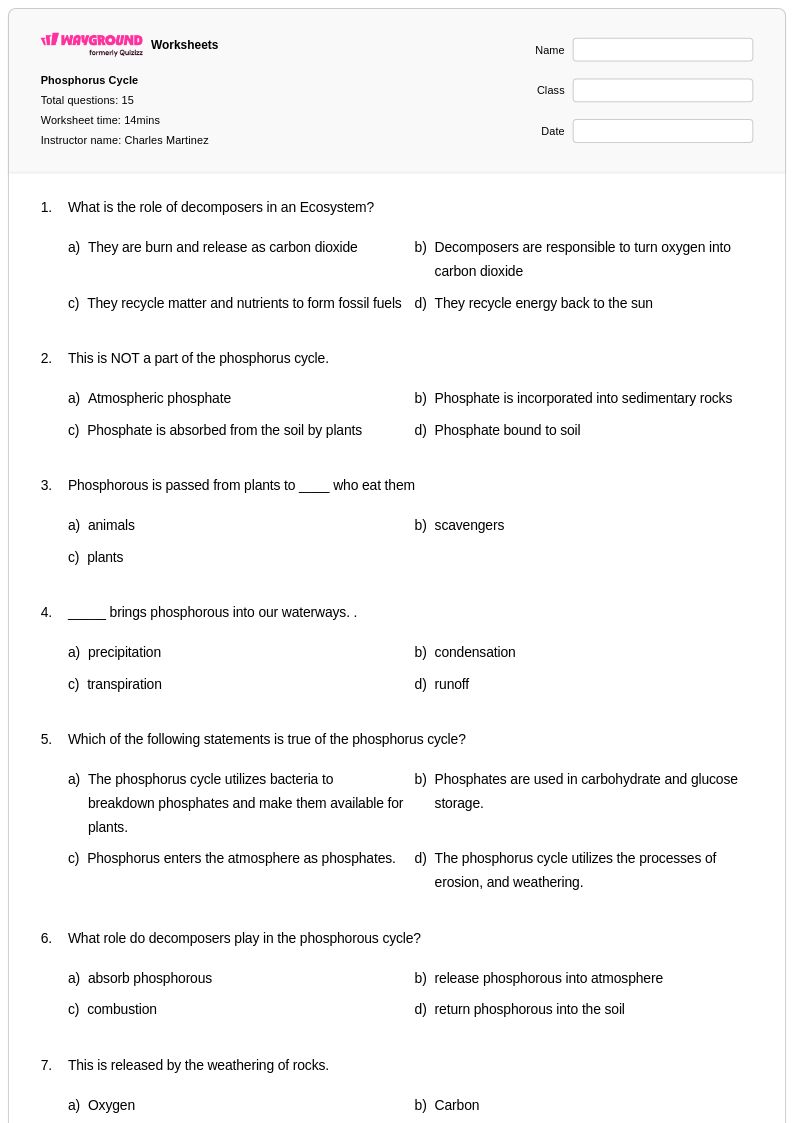
Phosphorus cycle worksheets for Grade 12 students available through Wayground (formerly Quizizz) provide comprehensive coverage of this essential biogeochemical process that governs phosphorus movement through Earth's systems. These expertly designed educational resources strengthen students' understanding of phosphorus reservoirs, including sedimentary rocks, ocean sediments, and biological tissues, while developing critical thinking skills about nutrient cycling limitations in ecosystems. The practice problems within these worksheets challenge students to analyze phosphorus transformations between organic and inorganic forms, examine the role of weathering in phosphorus release, and evaluate human impacts on natural phosphorus cycles through agricultural practices and mining activities. Each worksheet includes detailed answer keys and is available as free printables in pdf format, enabling students to master complex concepts such as phosphorus availability as a limiting factor in primary productivity and the geological timescales involved in phosphorus cycling.
Wayground (formerly Quizizz) empowers educators with an extensive collection of millions of teacher-created phosphorus cycle resources specifically aligned with Grade 12 Earth and Space Science standards. The platform's advanced search and filtering capabilities allow teachers to quickly locate worksheets that target specific aspects of phosphorus cycling, from basic nutrient flow diagrams to advanced biogeochemical modeling exercises. These differentiation tools support diverse learning needs through customizable difficulty levels and varied question formats, while the flexible digital and printable pdf options accommodate different classroom environments and teaching preferences. Teachers utilize these comprehensive worksheet collections for strategic lesson planning, targeted remediation of misconceptions about nutrient cycling, enrichment activities for advanced learners exploring environmental chemistry connections, and systematic skill practice that builds student confidence in analyzing complex Earth system interactions.
FAQs
How do I teach the phosphorus cycle to my students?
Start by anchoring instruction in the physical origin of phosphorus: unlike carbon or nitrogen, phosphorus enters the cycle through the weathering of phosphate rocks rather than from the atmosphere. From there, trace the element's movement through soil, plant uptake, transfer through food webs, decomposition by bacteria and fungi, and eventual sedimentation back into geological deposits. Using a diagram-labeling activity or pathway-tracing worksheet helps students build a sequential mental model of the cycle before tackling more complex ecosystem interactions.
What exercises help students practice the phosphorus cycle?
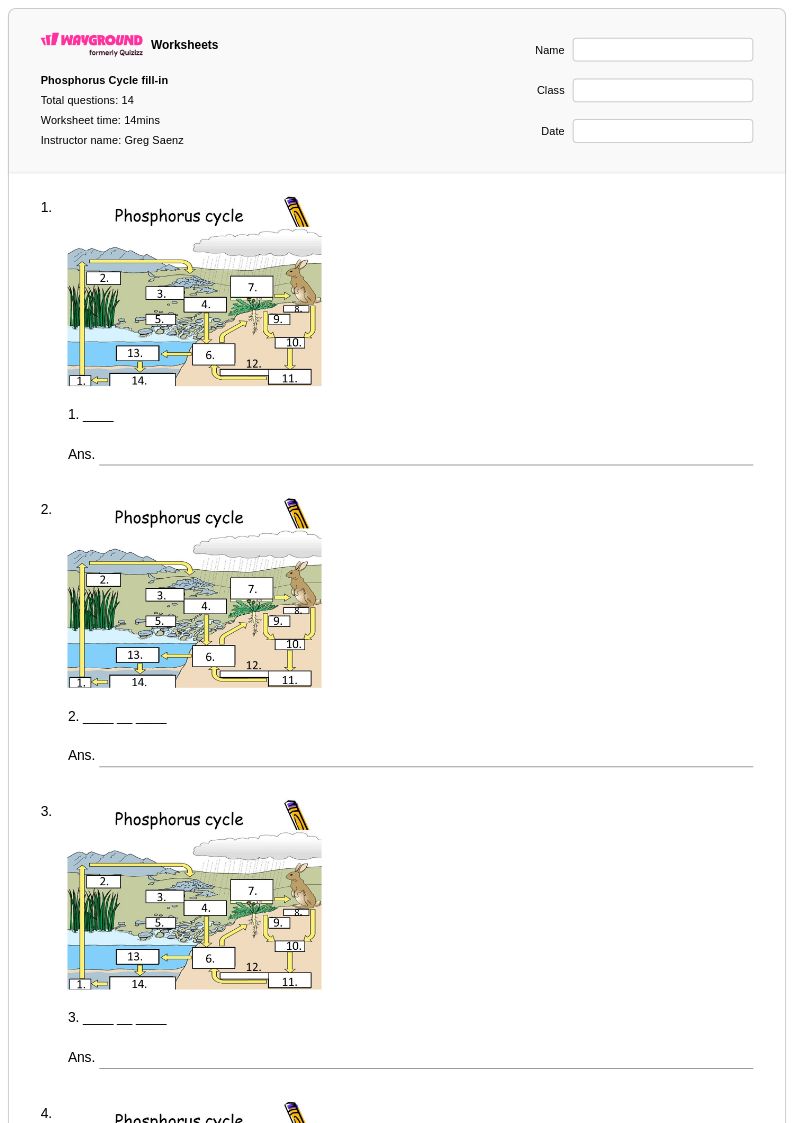
Effective practice exercises include labeling diagrams of the phosphorus cycle, sequencing the stages from weathering through sedimentation, and answering scenario-based questions that ask students to predict what happens when a stage is disrupted, such as over-application of phosphate fertilizers. Fill-in-the-blank and short-answer questions that require students to name specific processes like decomposition, leaching, or plant uptake reinforce precise vocabulary. These types of structured practice problems, like those found on Wayground's phosphorus cycle worksheets, build both conceptual understanding and scientific literacy.
What common mistakes do students make when learning the phosphorus cycle?
The most frequent misconception is confusing the phosphorus cycle with the nitrogen or carbon cycles, particularly assuming that phosphorus cycles through the atmosphere the way those elements do. Students often miss that phosphorus has no significant atmospheric phase and moves primarily through geological and aquatic pathways. Another common error is overlooking the role of decomposers in returning phosphorus to the soil, which can cause students to treat the cycle as a one-way process ending at sedimentation rather than a continuous loop.
How does the phosphorus cycle connect to real-world environmental issues I can use in class?
The phosphorus cycle is directly tied to issues like agricultural runoff and eutrophication, making it an ideal topic for connecting classroom science to current environmental concerns. When excess phosphate from fertilizers enters waterways, it triggers algal blooms that deplete oxygen and devastate aquatic ecosystems, a process students can analyze as a case study in biogeochemical disruption. Incorporating news articles or data sets alongside worksheet practice helps students see the phosphorus cycle not as an abstract diagram but as a process with measurable consequences.
How do I use Wayground's phosphorus cycle worksheets in my classroom?
Wayground's phosphorus cycle worksheets are available as printable PDFs, making them easy to distribute in a traditional classroom setting, and in digital formats for technology-integrated or hybrid learning environments. Teachers can also host the worksheets as interactive quizzes directly on the Wayground platform, enabling real-time student response tracking. For students who need additional support, Wayground offers built-in accommodation tools including read aloud, extended time, and reduced answer choices, all configurable at the individual student level without disrupting the rest of the class.
How can I differentiate phosphorus cycle instruction for students at different levels?
For students who are still building foundational knowledge, start with simplified pathway diagrams that focus only on the major stages: weathering, plant uptake, decomposition, and sedimentation. Advanced students can engage with extended analysis questions that require them to evaluate how human activity, such as mining or fertilizer use, alters natural phosphorus flow. On Wayground, teachers can apply student-level accommodations such as reduced answer choices or read aloud to support struggling learners while other students complete default versions of the same worksheet simultaneously.