Free Printable Lab Practical Worksheets for Grade 12
Master Grade 12 Earth & Space Science lab practical skills with Wayground's comprehensive collection of free worksheets, printables, and practice problems featuring detailed answer keys and PDF formats for hands-on learning success.
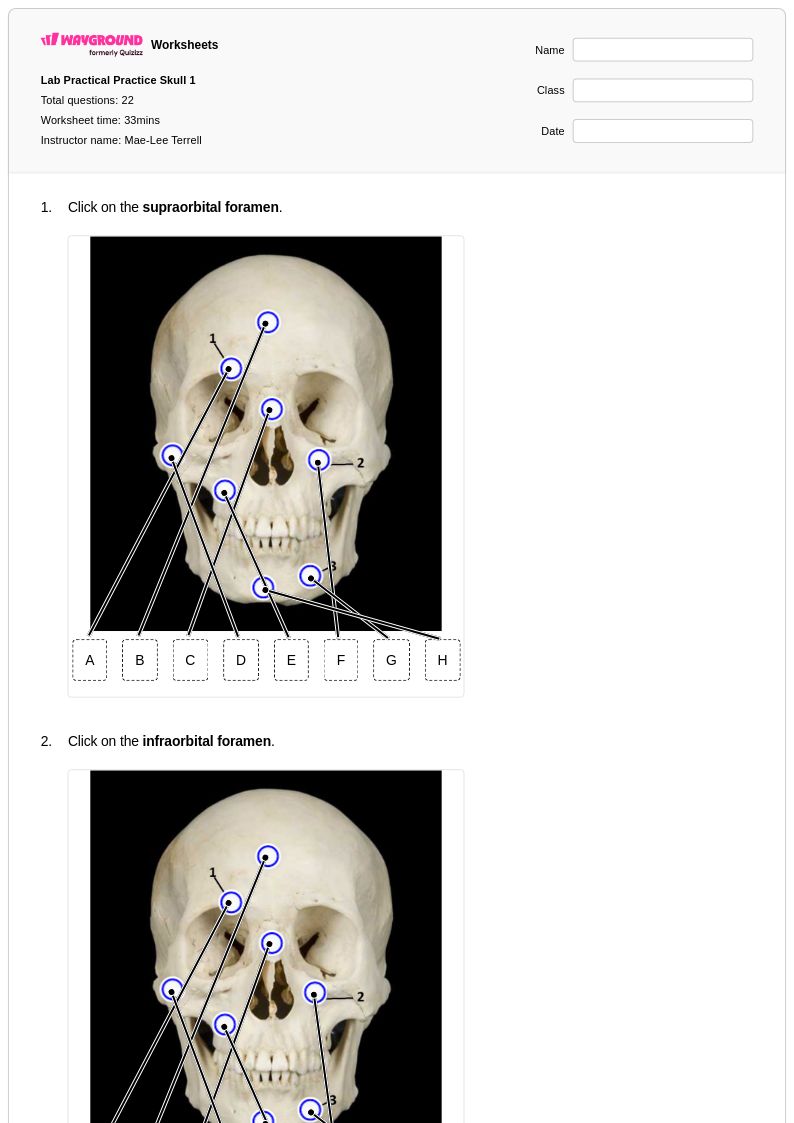
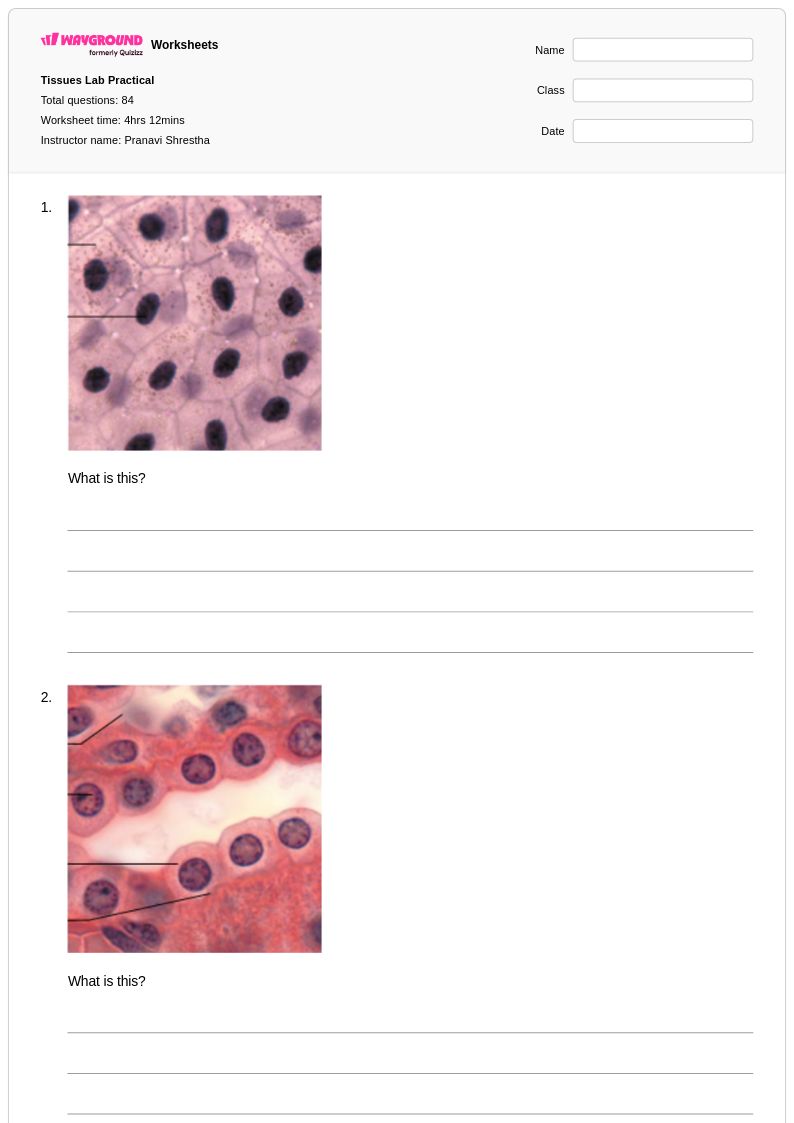
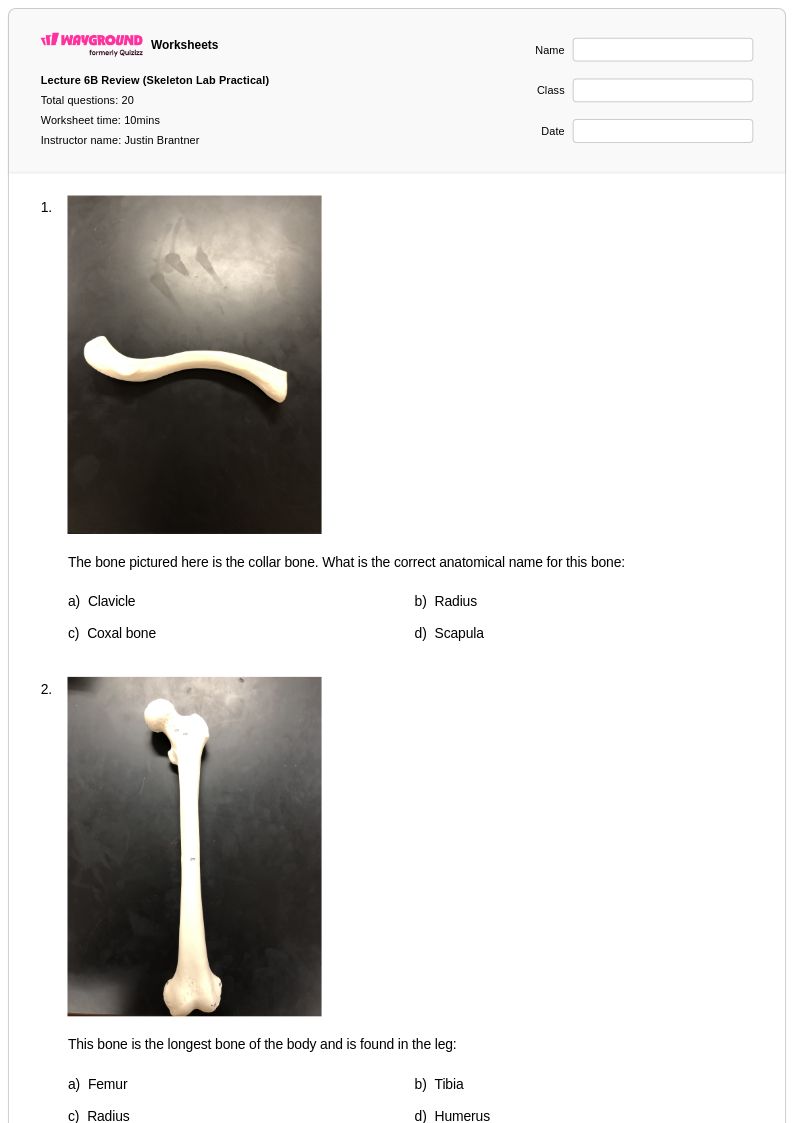
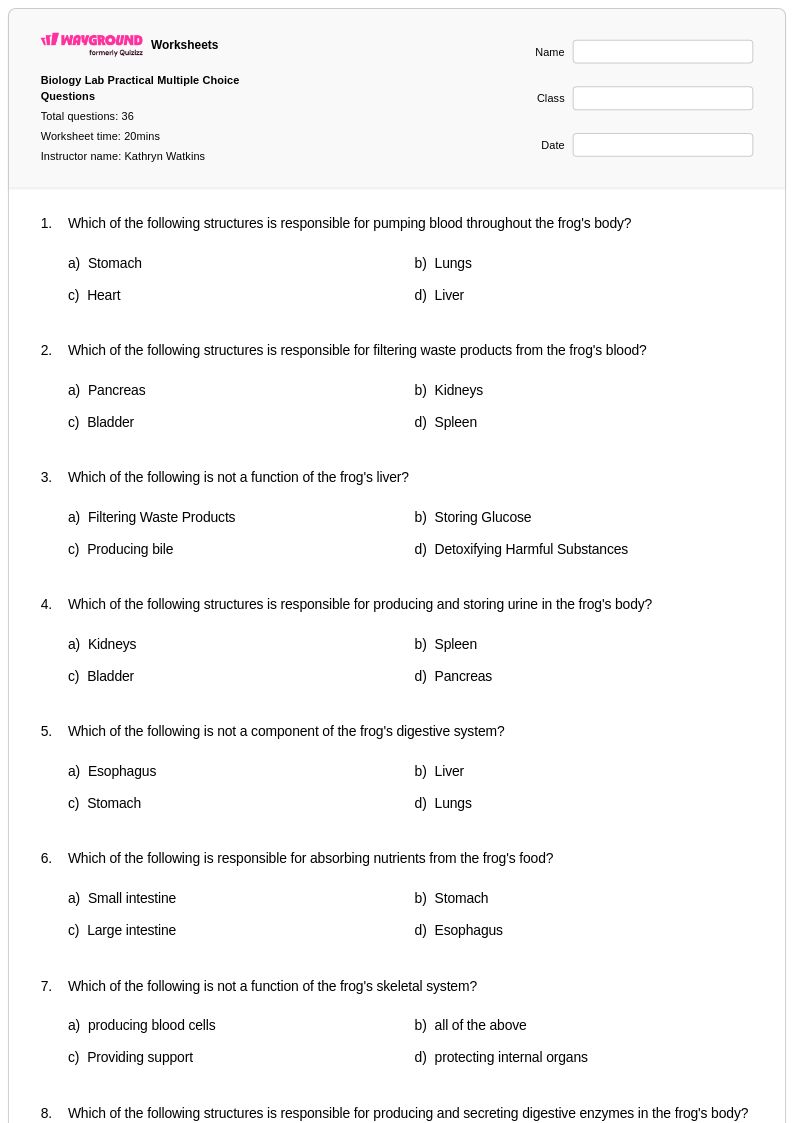
Explore printable Lab Practical worksheets for Grade 12
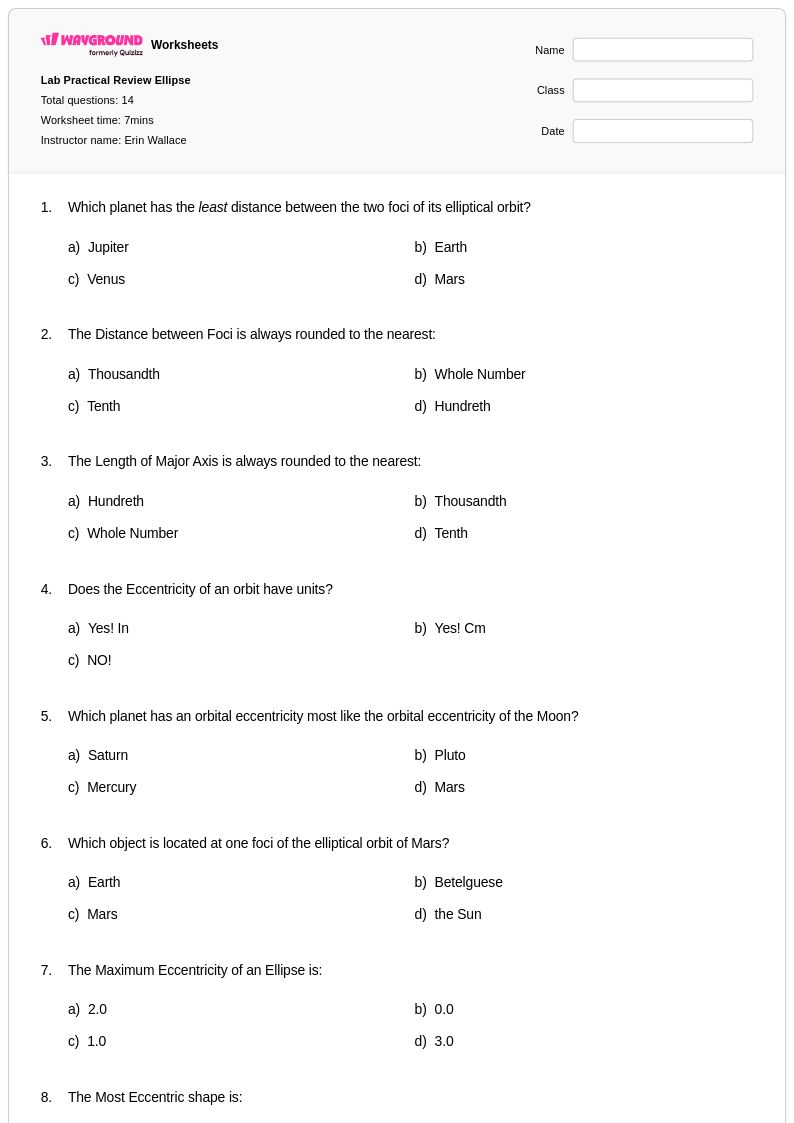
Grade 12 Earth and Space Science lab practical worksheets available through Wayground provide essential hands-on assessment tools that bridge theoretical knowledge with real-world scientific investigation skills. These comprehensive resources focus on developing students' ability to design experiments, collect and analyze data, use scientific instruments, and draw evidence-based conclusions about planetary systems, geological processes, atmospheric dynamics, and astronomical phenomena. The worksheets strengthen critical thinking through practice problems that simulate authentic laboratory scenarios, from analyzing rock and mineral samples to interpreting satellite imagery and calculating orbital mechanics. Each resource includes detailed answer keys and step-by-step procedures, available as free printables that guide students through complex scientific methodologies while reinforcing proper lab safety protocols and data recording techniques essential for advanced Earth and space science study.
Wayground's extensive collection of teacher-created Grade 12 Earth and Space Science lab practical materials offers educators access to millions of professionally developed resources with robust search and filtering capabilities that streamline lesson planning and assessment preparation. The platform's standards-aligned content supports differentiated instruction through customizable worksheets that can be modified to accommodate varying skill levels, from remediation activities for struggling students to enrichment challenges for advanced learners. Teachers benefit from flexible delivery options, including printable pdf formats for traditional lab settings and digital versions for hybrid learning environments, enabling seamless integration into diverse classroom configurations. These comprehensive tools facilitate targeted skill practice in scientific reasoning, data interpretation, and experimental design while providing educators with reliable resources for formative assessment, lab preparation, and comprehensive review of complex Earth and space science concepts.
FAQs
How do I teach lab practical skills in Earth and Space Science?
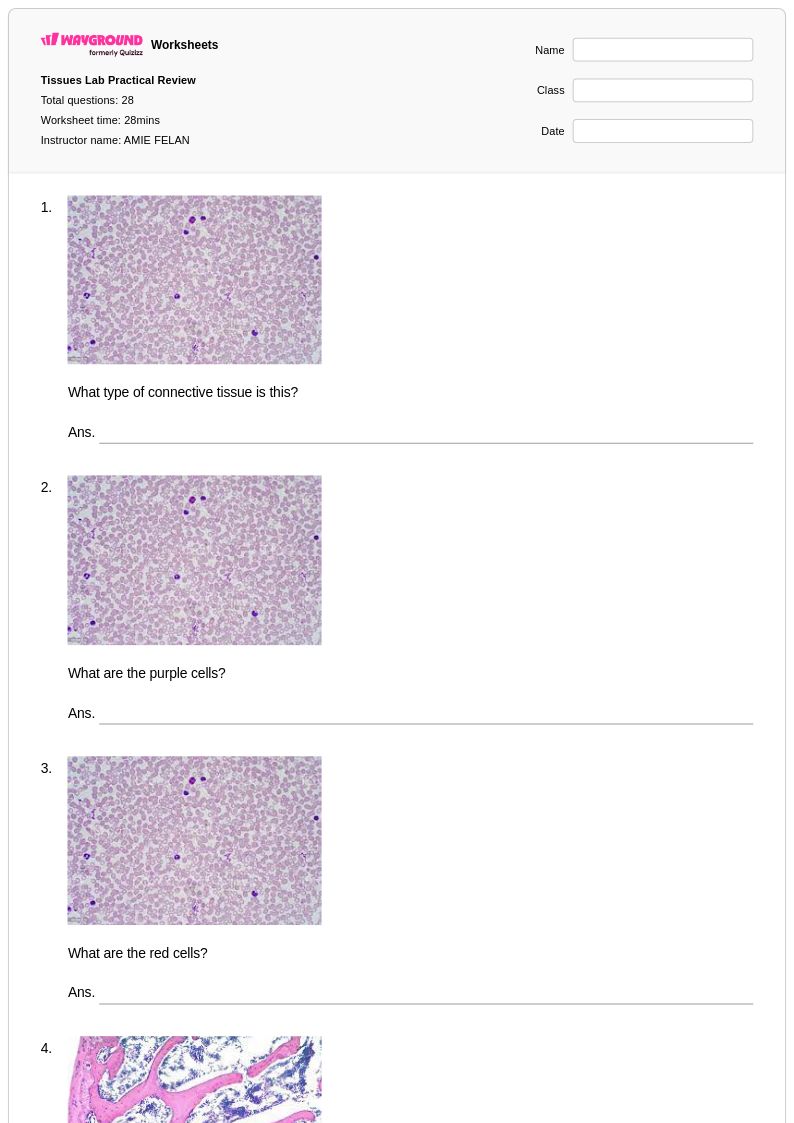
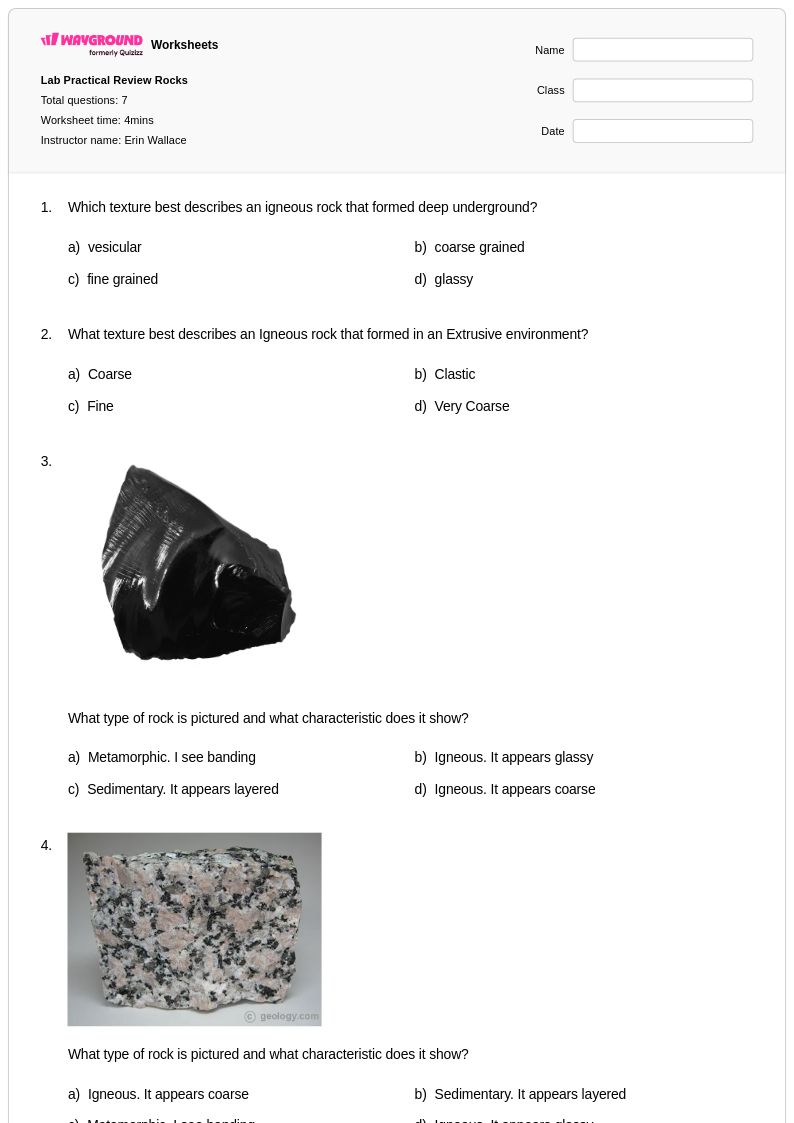
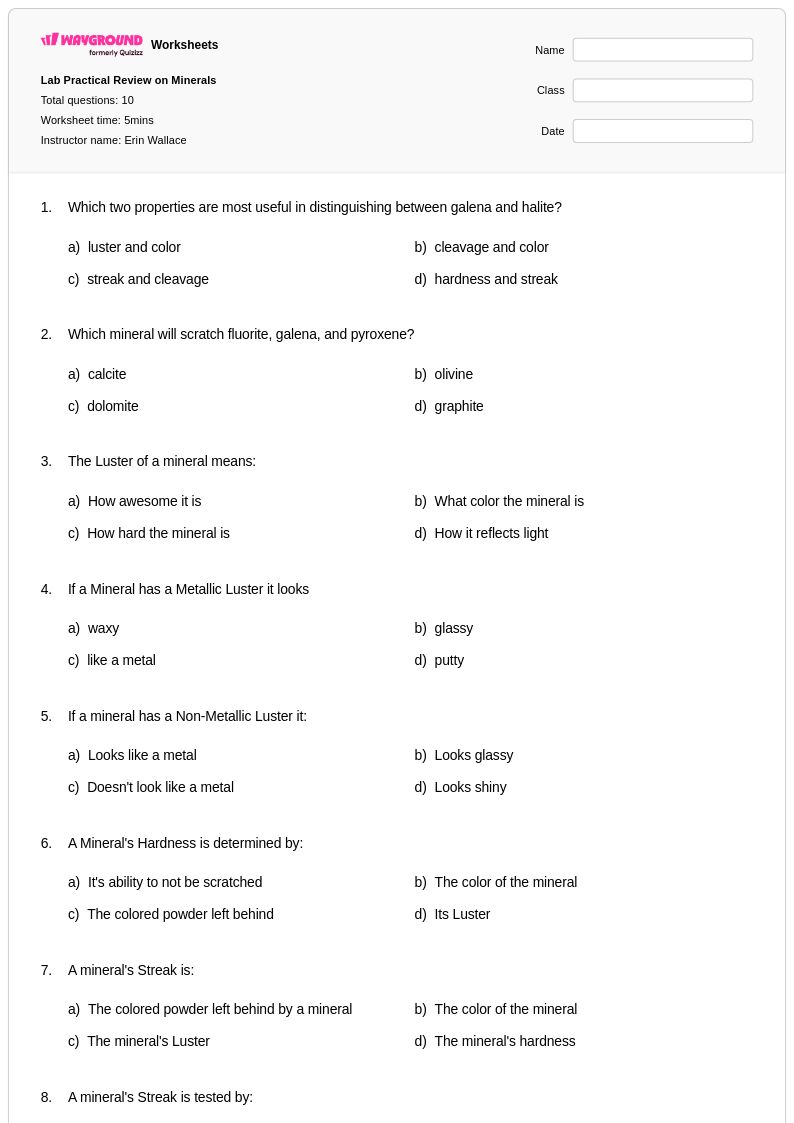
Teaching lab practical skills in Earth and Space Science requires students to engage with hands-on, station-based tasks that mirror the format of formal lab examinations. Effective instruction builds student proficiency in scientific measurement, hypothesis formation, and evidence-based reasoning through repeated exposure to realistic laboratory scenarios. Rotating students through stations focused on rock and mineral identification, celestial observation, weather pattern analysis, and data interpretation gives them the breadth of experience needed to perform confidently during assessed practicals.
What exercises help students practice for a lab practical in Earth and Space Science?
The most effective lab practical practice exercises include station-based activities, data analysis challenges, rock and mineral identification tasks, celestial observation exercises, and weather pattern investigations. These exercise types directly replicate the conditions students encounter in formal lab exams, helping them build familiarity with procedures and reduce test anxiety. Repeated engagement with practice problems across geology, astronomy, meteorology, and oceanography ensures students can transfer skills across the full scope of Earth and Space Science content.
What mistakes do students commonly make during lab practicals in Earth and Space Science?
Students frequently struggle with accurate scientific measurement, often misreading scales, instruments, or units, which undermines the validity of their data. A second common error is incomplete or unsubstantiated hypothesis formation, where students state a hypothesis without grounding it in prior evidence or observations. In rock and mineral identification tasks specifically, students often confuse properties like luster and cleavage, or rely on color alone rather than applying a systematic identification process.
How can I use lab practical worksheets to prepare students for a formal practical exam?
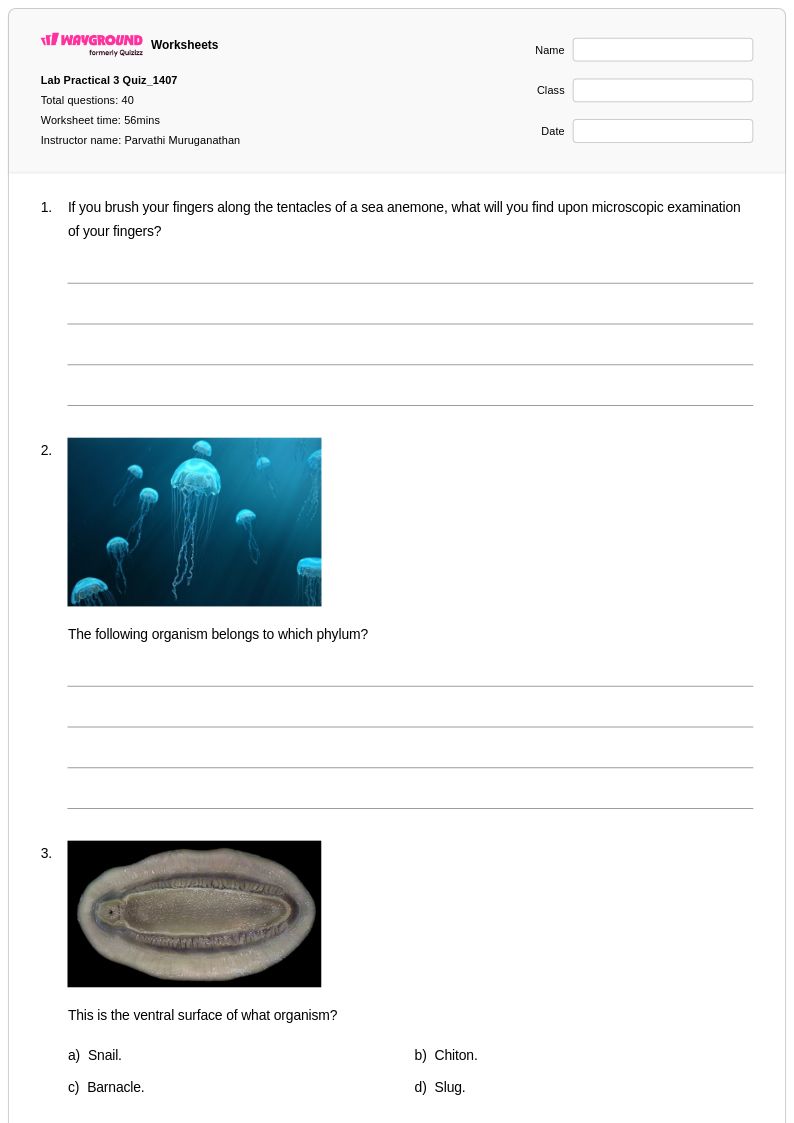
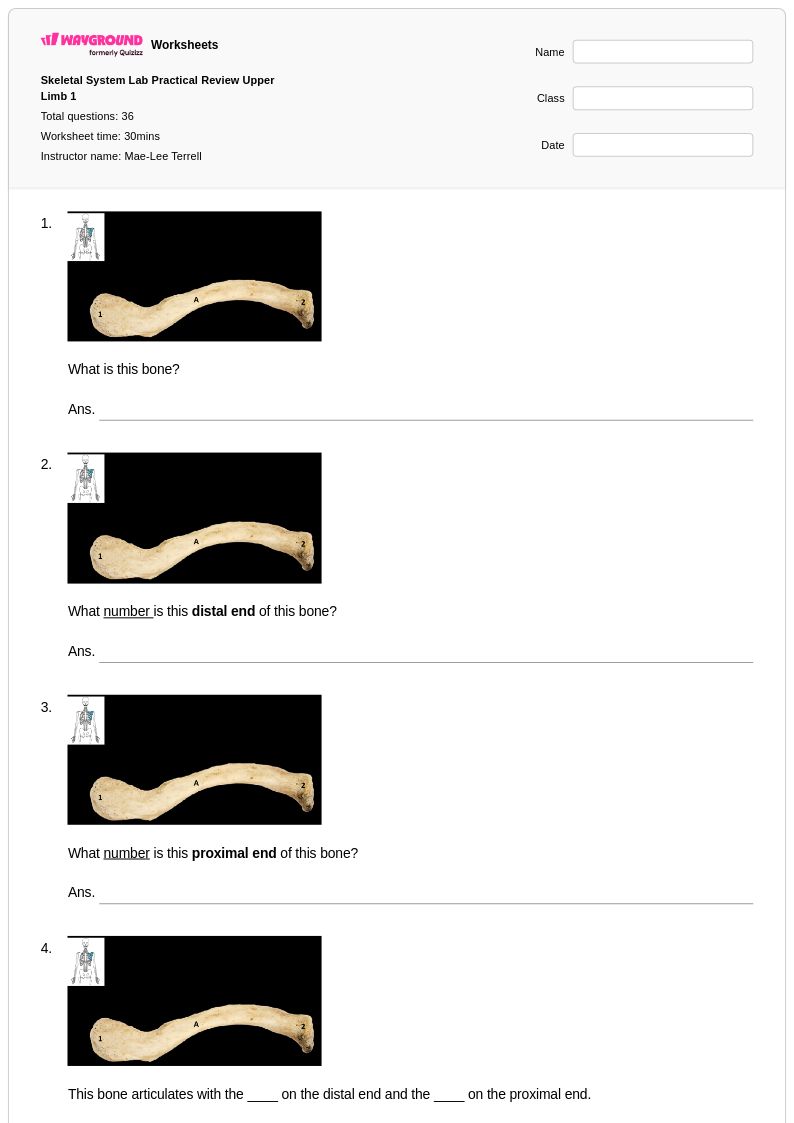
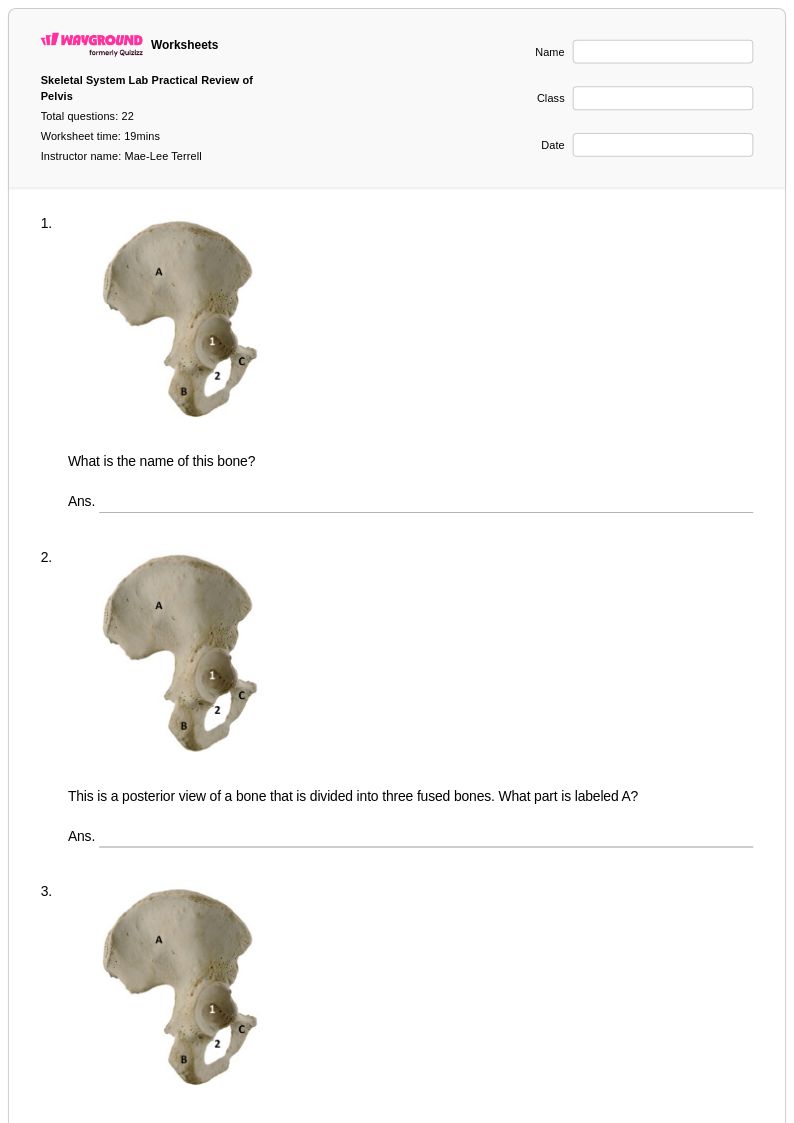
Lab practical worksheets work best as structured preparation tools when used to simulate the conditions of a real exam, including timed station rotations and procedure-based tasks that require students to record observations and draw conclusions independently. These worksheets are available as printable PDFs for traditional classroom use and in digital formats for technology-integrated learning environments, and can also be hosted as a quiz on Wayground. Using both formats allows teachers to assign station-based practice during class and follow-up data analysis tasks as homework or independent study.
How do I differentiate lab practical preparation for students with different learning needs?
Differentiation in lab practical preparation can be supported through Wayground's built-in student accommodation tools, which allow teachers to enable read aloud for students who need questions read to them, reduce the number of answer choices to lower cognitive load, and provide extended time per question for students who need it. These accommodations can be assigned individually or to the whole class and are saved for reuse across future sessions, so teachers do not need to reconfigure them each time. Remaining students receive default settings without notification, keeping the experience seamless for the whole class.
How do I align lab practical worksheets to specific curriculum standards in Earth and Space Science?
When searching for lab practical materials, filtering by subtopic such as plate tectonics, solar system mechanics, or atmospheric phenomena helps narrow results to content that aligns with your specific curriculum standards. Wayground's search and filtering tools are designed to help teachers quickly locate resources matched to instructional goals, reducing planning time. Teachers can also modify existing worksheets or combine elements from multiple resources to build targeted practice sessions for remediation or enrichment.