Free Printable Garrett Morgan Worksheets for Grade 4
Grade 4 students explore Garrett Morgan's groundbreaking inventions and contributions through engaging social studies worksheets, printables, and practice problems with answer keys available as free PDFs from Wayground.
Explore printable Garrett Morgan worksheets for Grade 4
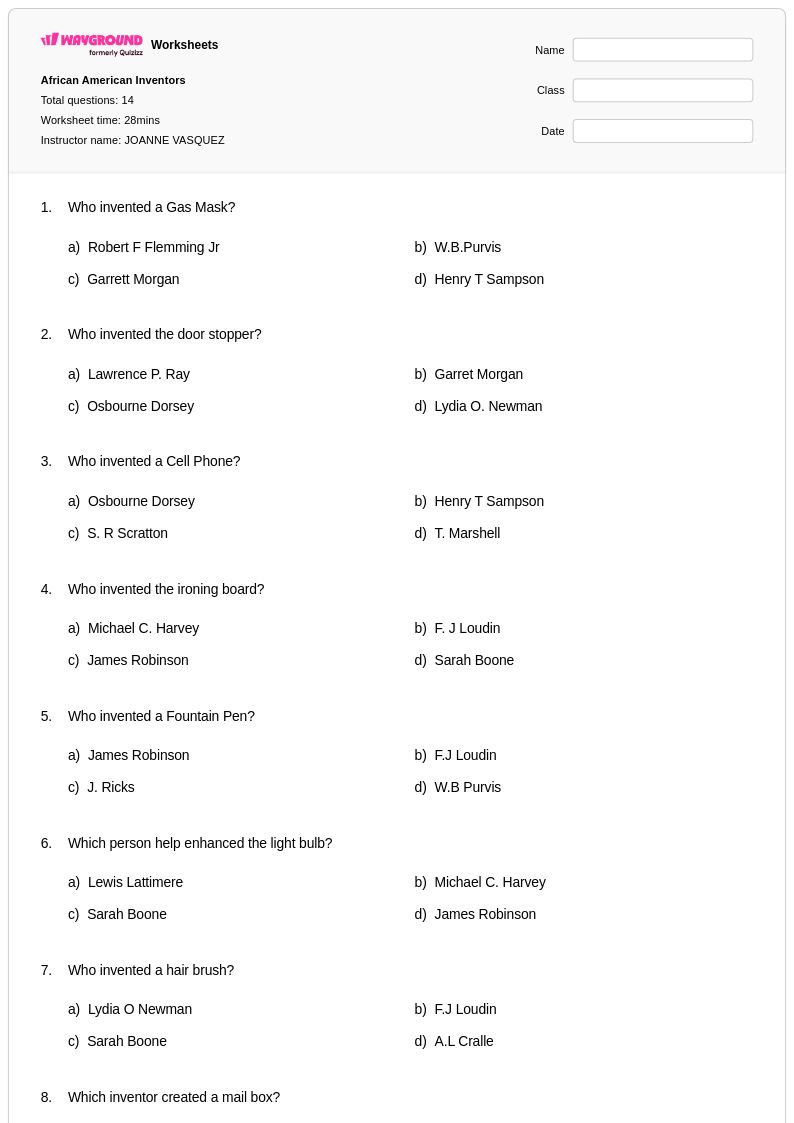
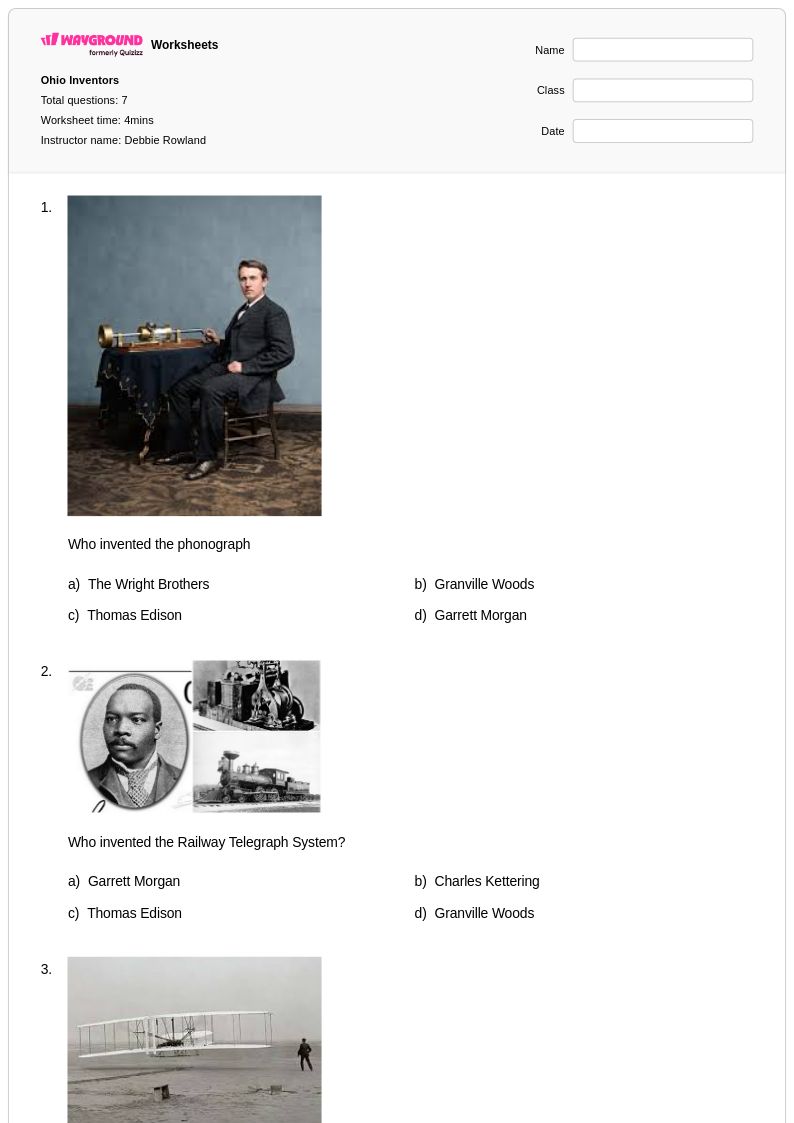
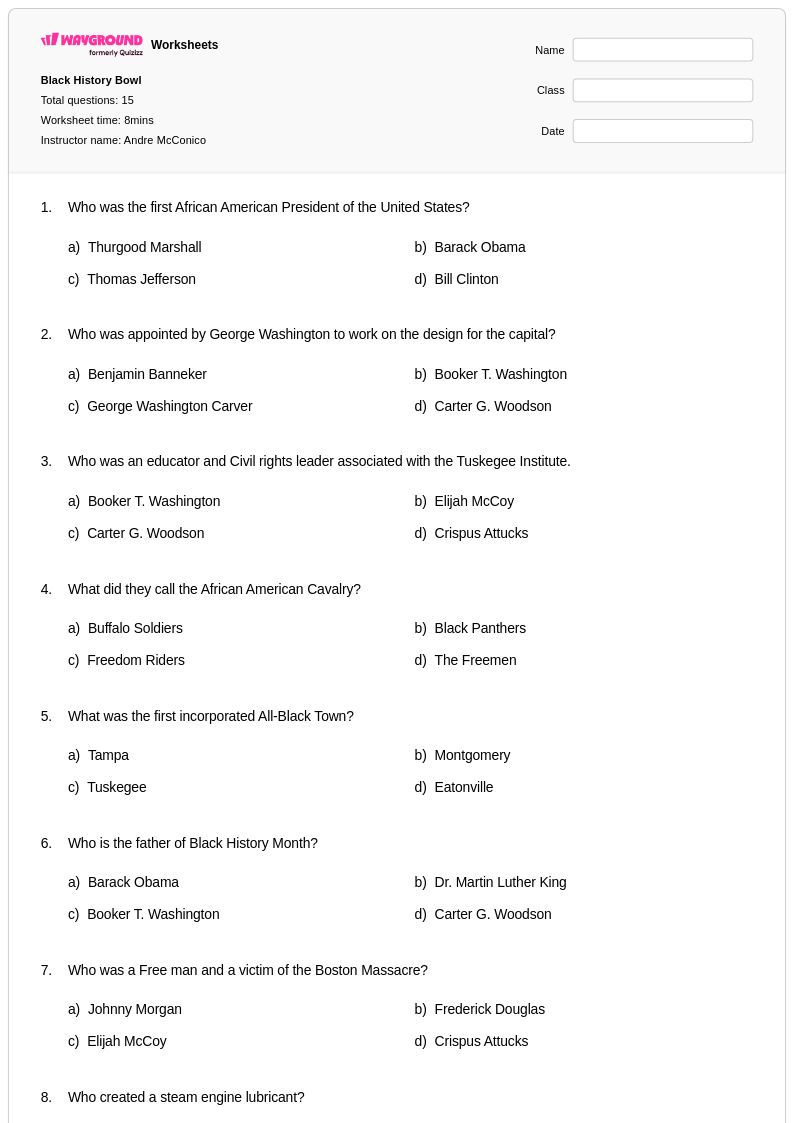
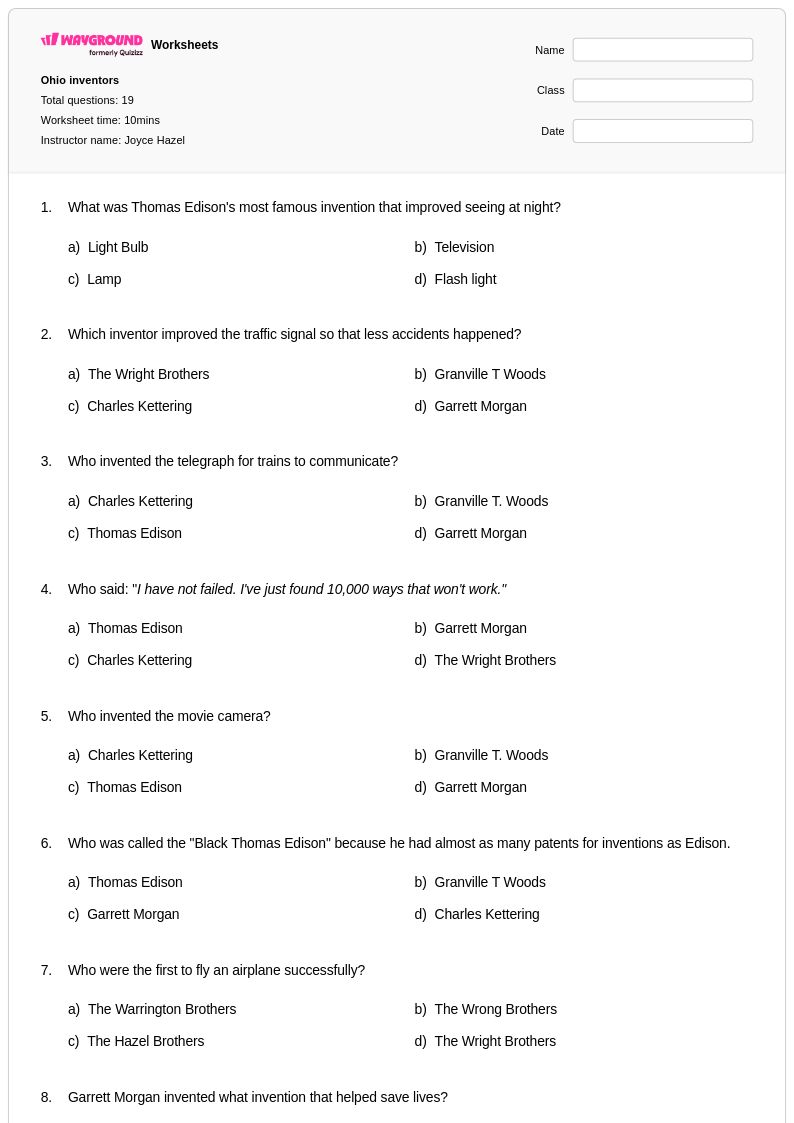
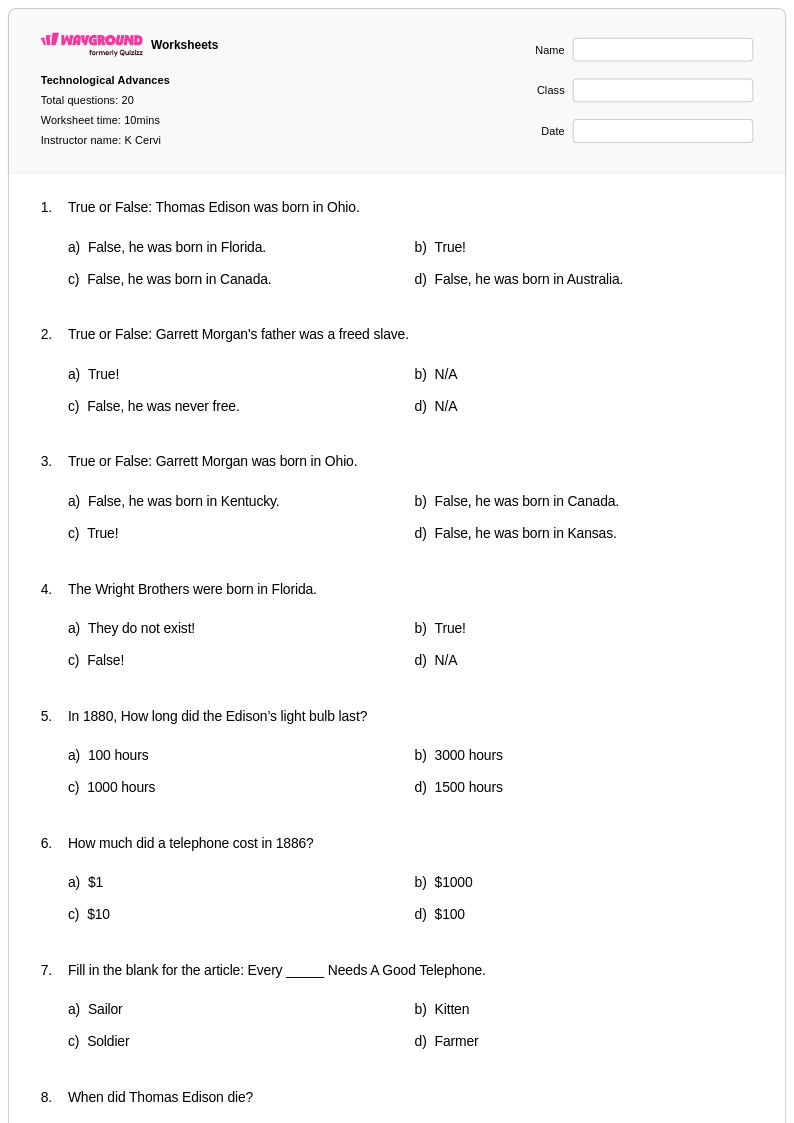
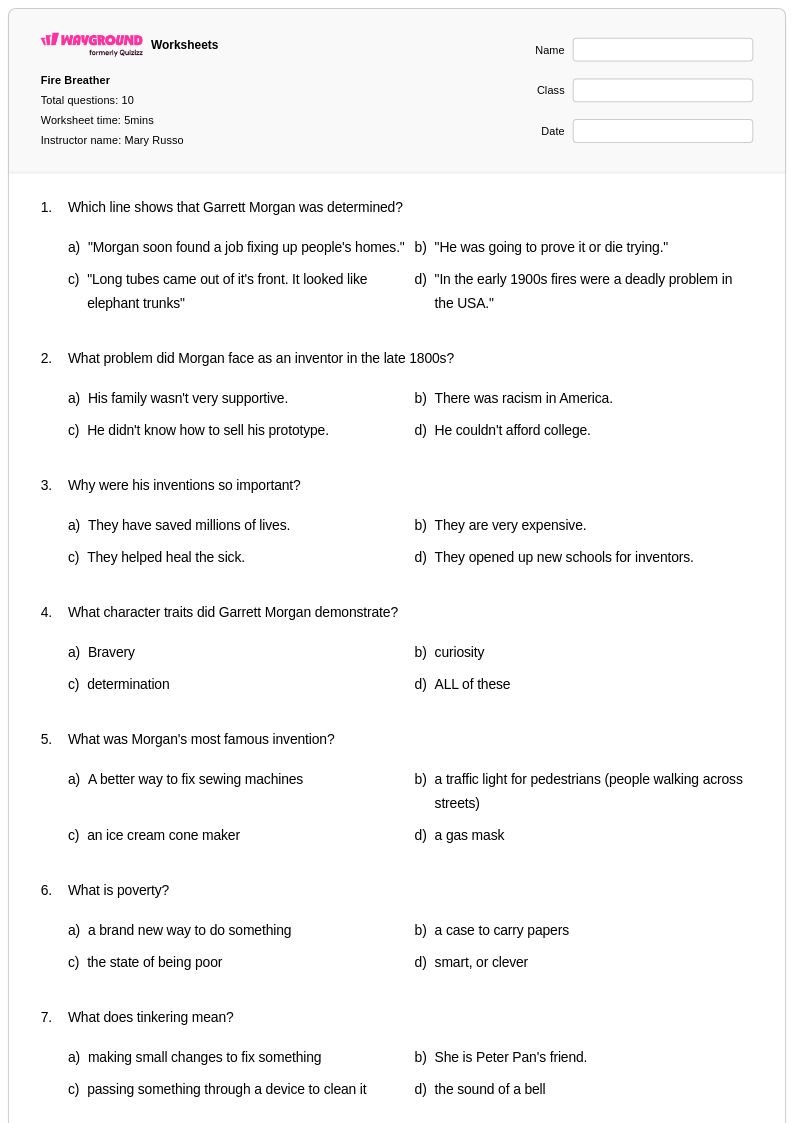
Garrett Morgan worksheets for Grade 4 provide comprehensive learning materials that introduce students to this remarkable African American inventor and his groundbreaking contributions to society. These educational resources help fourth-grade learners explore Morgan's most famous inventions, including the three-position traffic signal and the safety hood that became the precursor to the modern gas mask. The worksheets strengthen critical thinking skills by encouraging students to analyze how Morgan's innovations solved real-world problems and continue to impact our daily lives. Students engage with practice problems that develop reading comprehension, historical analysis, and connections between past innovations and present-day technology. Each worksheet collection includes detailed answer keys that support both independent learning and teacher-guided instruction, with materials available as free printables and downloadable pdf formats for convenient classroom use.
Wayground, formerly Quizizz, empowers educators with access to millions of teacher-created Garrett Morgan worksheet resources that align with Grade 4 social studies standards and community studies curricula. The platform's advanced search and filtering capabilities allow teachers to quickly locate age-appropriate materials that match their specific lesson objectives, whether focusing on Morgan's biographical details, his inventive process, or the broader context of African American contributions to American innovation. Teachers can customize existing worksheets or create differentiated versions to meet diverse learning needs, supporting both remediation for struggling learners and enrichment opportunities for advanced students. The flexible digital and printable formats enable seamless integration into various instructional settings, from traditional classroom lessons to remote learning environments, while comprehensive answer keys and detailed explanations streamline grading and provide valuable feedback for ongoing skill practice and assessment.
FAQs
How do I teach Garrett Morgan to elementary or middle school students?
Teaching Garrett Morgan effectively means anchoring his story in two concrete inventions: the three-position traffic signal and the safety hood, an early gas mask. From there, teachers can expand into themes of perseverance, entrepreneurship, and civic impact by connecting Morgan's work in early 20th-century Cleveland to real problems he observed and solved. Pairing a biographical timeline activity with a primary source analysis gives students both the narrative and the critical thinking practice needed to understand his historical significance.
What kinds of worksheet activities work best for practicing content about Garrett Morgan?
Worksheet activities that ask students to sequence events from Morgan's life, analyze the social problems his inventions addressed, and evaluate the lasting impact of his innovations tend to be most effective. Compare-and-contrast tasks, such as examining traffic safety before and after the three-position signal, help students connect historical events to present-day outcomes. Activities that prompt written responses about perseverance and innovation also build both content knowledge and literacy skills simultaneously.
What misconceptions do students commonly have about Garrett Morgan?
A common misconception is that Morgan invented the first traffic light; he actually invented the three-position traffic signal, which added a caution phase and significantly improved safety over earlier two-position signals. Students also sometimes view his inventions in isolation rather than as responses to specific community needs, missing the connection between his role as an entrepreneur and his motivation to solve public safety problems. Addressing these distinctions early helps students develop more accurate historical thinking.
How can I connect Garrett Morgan's story to broader social studies or science curriculum standards?
Garrett Morgan's life intersects naturally with social studies standards around African American history, innovation, and civic contributions, as well as science and technology standards focused on how inventions solve real-world problems. His story also supports standards related to primary source analysis, historical thinking, and understanding cause and effect in history. Teachers can use Morgan's biography as an anchor text for units on the early 20th century, the Great Migration, or the history of public safety infrastructure.
How do I use Garrett Morgan worksheets from Wayground in my classroom?
Garrett Morgan worksheets on Wayground are available as printable PDFs for traditional classroom use and in digital formats for technology-integrated learning environments, making them flexible for in-class instruction, homework, or remote learning. Teachers can also host the worksheets as a quiz directly on Wayground, giving students an interactive experience while automating progress tracking. All worksheets include comprehensive answer keys, supporting both independent student work and teacher-led instruction.
How do I differentiate Garrett Morgan lessons for students with different learning needs?
For students who need additional support, simplified timeline activities and sentence-frame response prompts can scaffold comprehension of Morgan's biography without reducing the rigor of the content. For advanced learners, open-ended analysis tasks that ask students to evaluate Morgan's impact on modern transportation or compare his innovations to contemporary inventors provide meaningful enrichment. On Wayground, teachers can apply individual accommodations such as read aloud, extended time, and reduced answer choices to specific students, ensuring all learners can access the same core content.