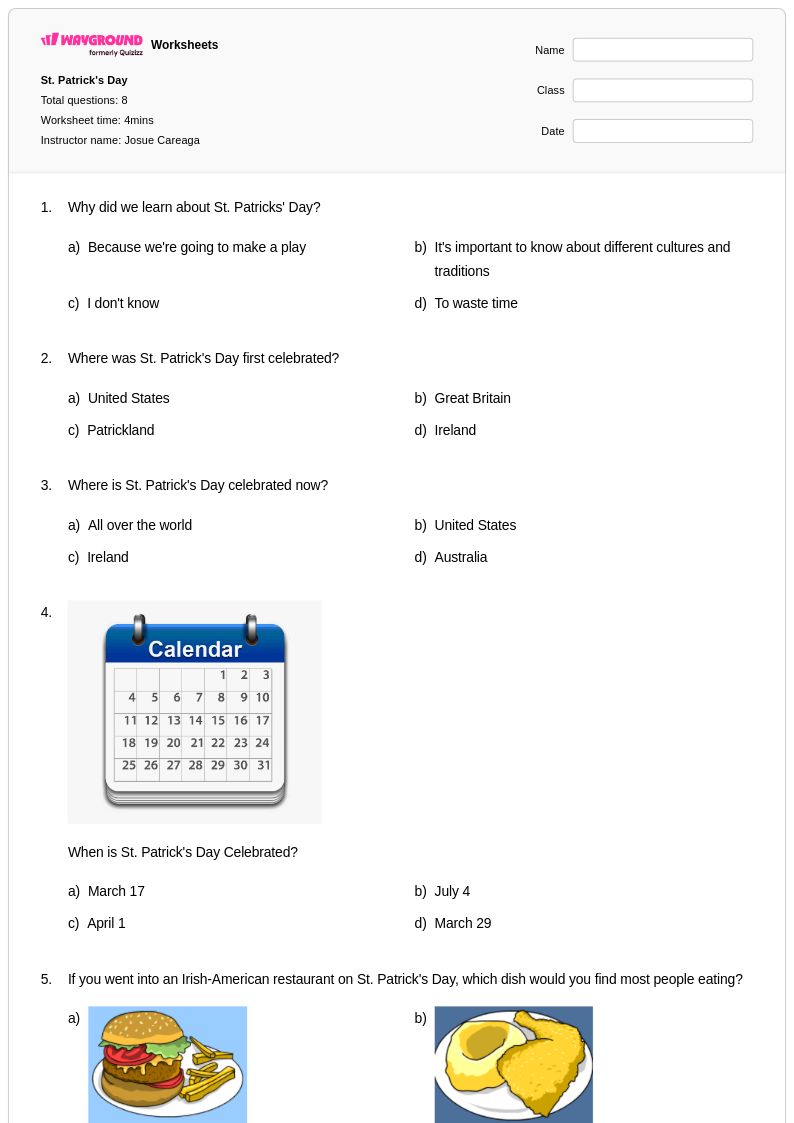
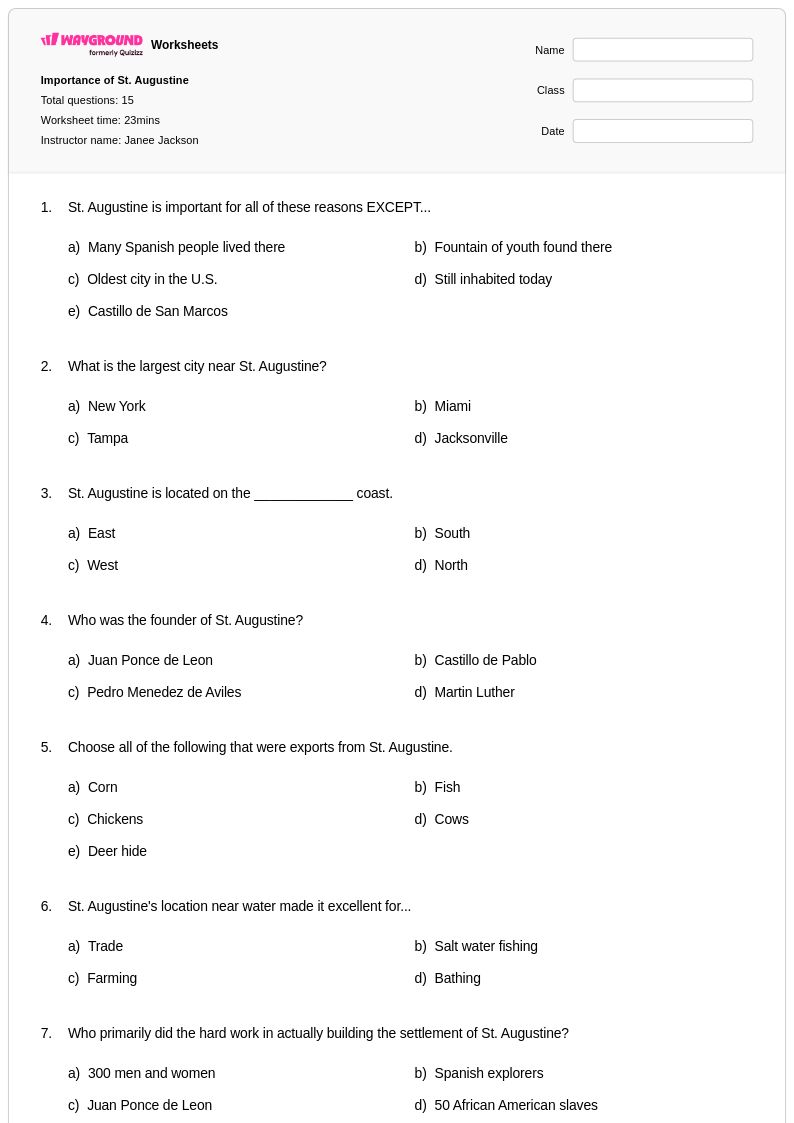
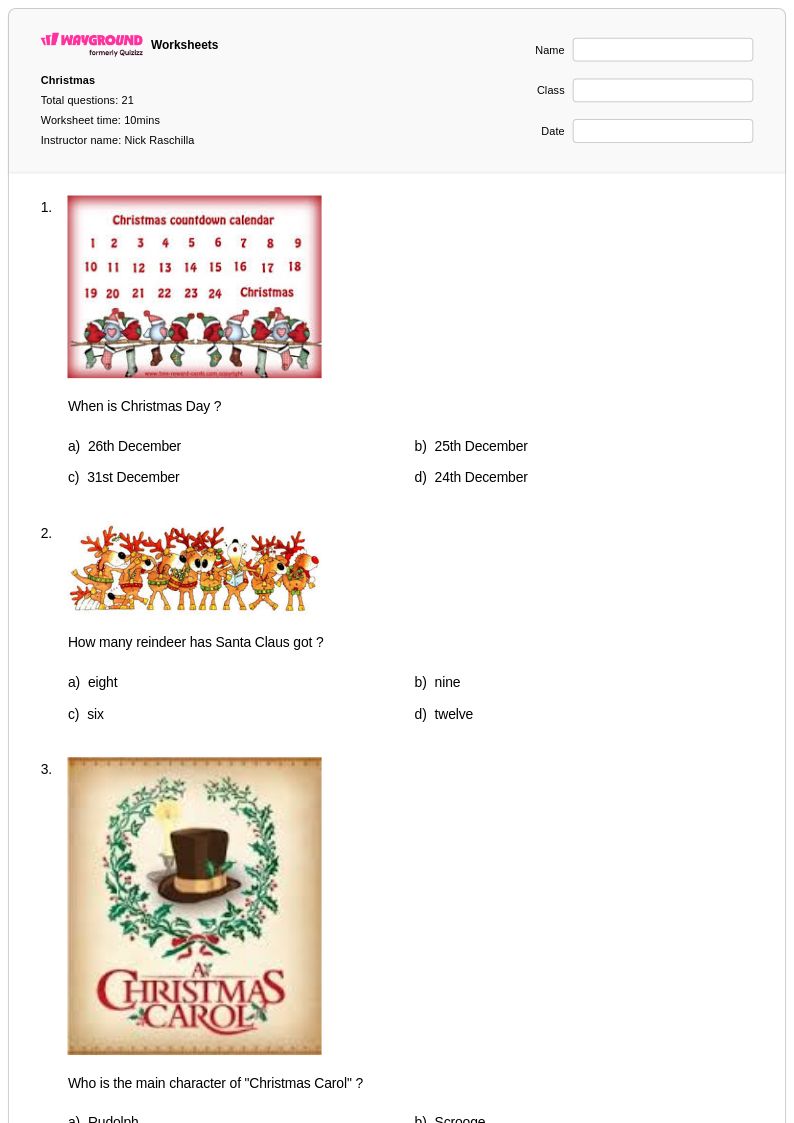
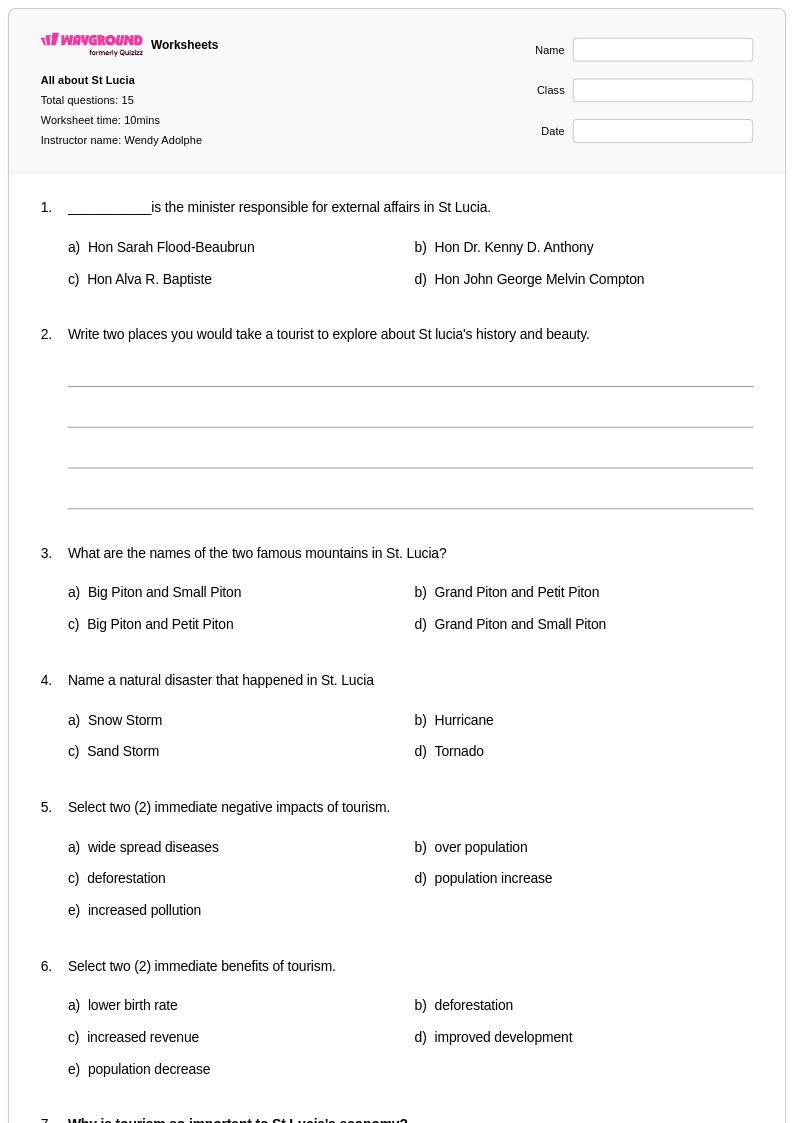
Free Printable St. Nicholas Worksheets for Grade 4
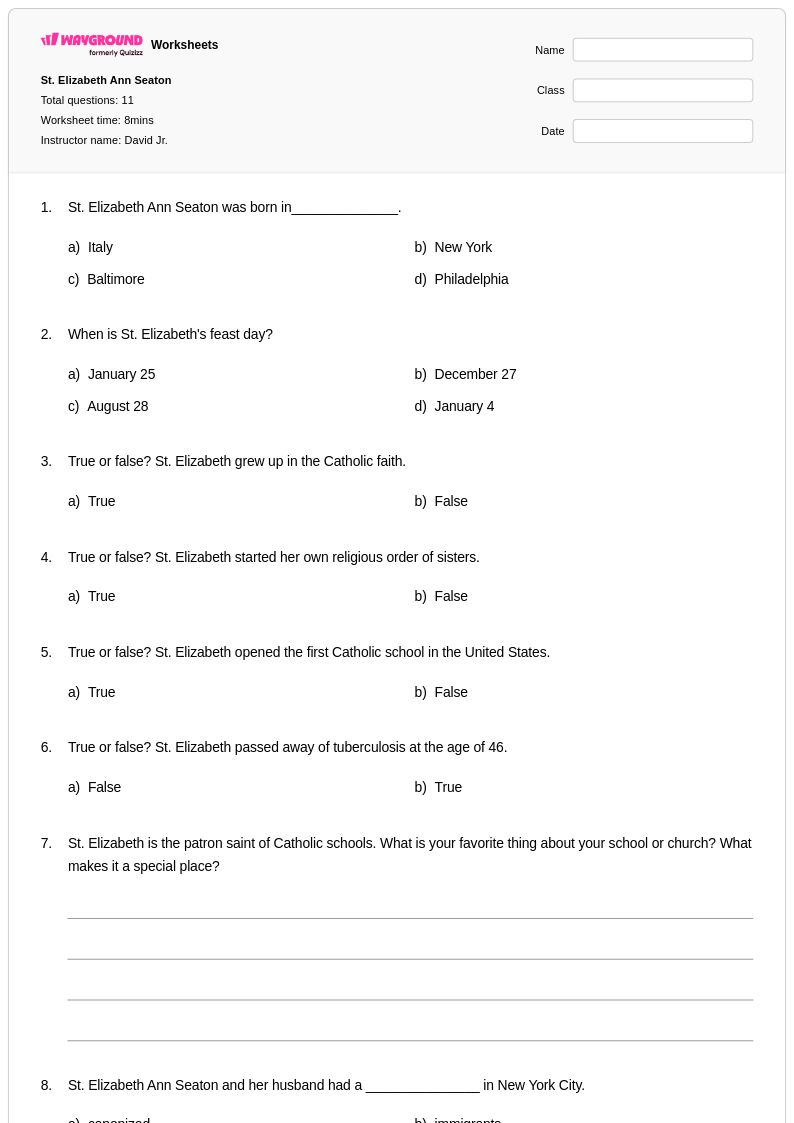
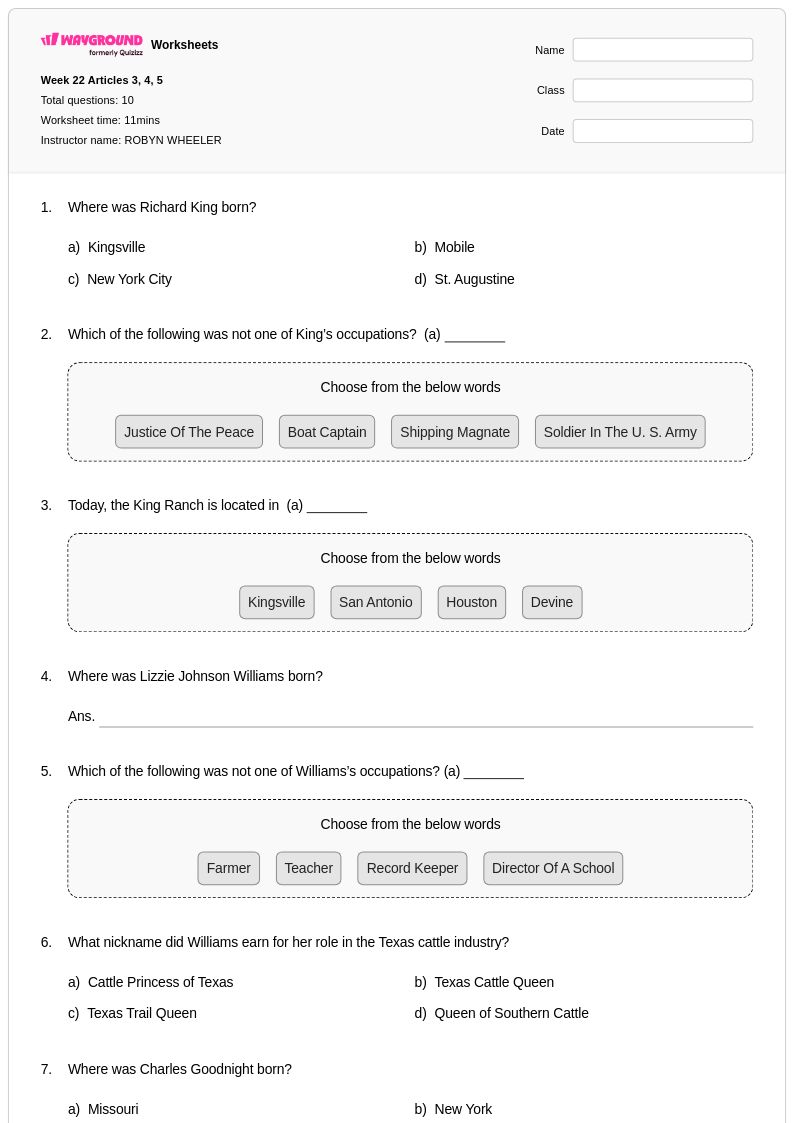
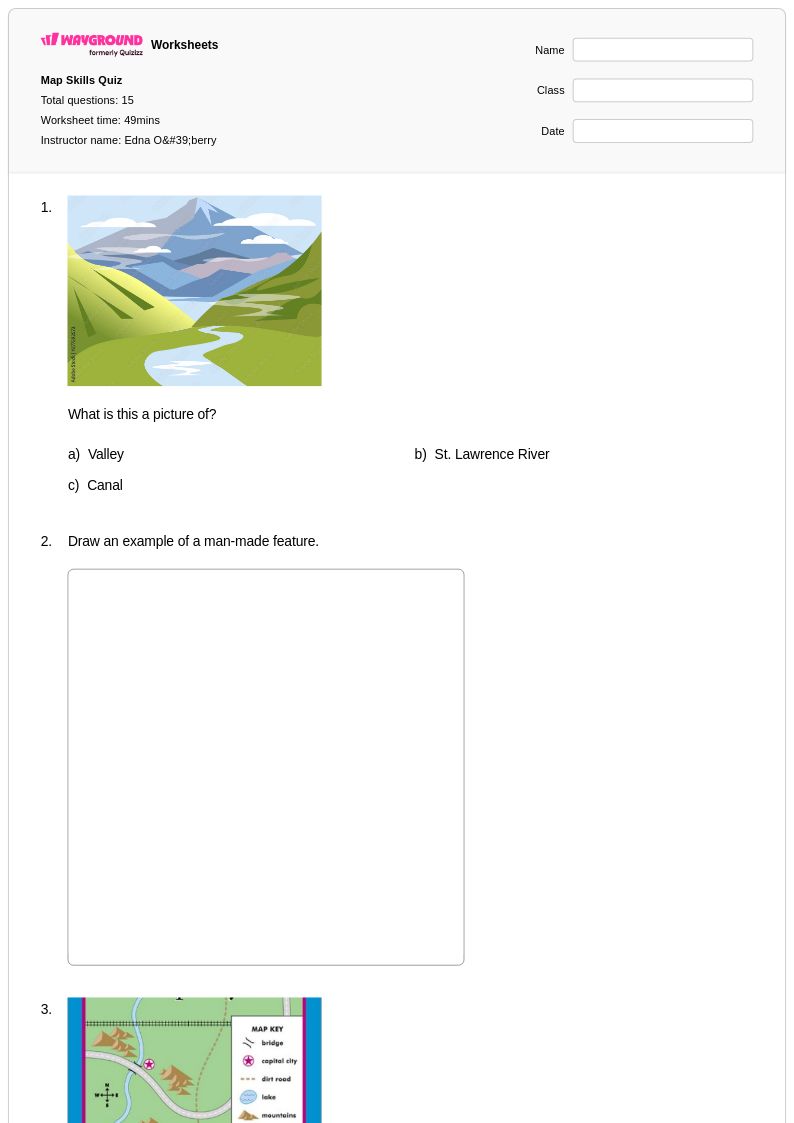
Explore Wayground's free Grade 4 St. Nicholas worksheets and printables that help students discover the cultural traditions and historical significance of this beloved figure through engaging practice problems and comprehensive answer keys.
Explore printable St. Nicholas worksheets for Grade 4
St. Nicholas worksheets for Grade 4 students provide engaging opportunities to explore this beloved figure's cultural significance across different communities and traditions. These educational resources help fourth graders develop critical thinking skills about how the same historical figure can be celebrated differently around the world, from the Dutch Sinterklaas to various European Saint Nicholas traditions that eventually influenced modern Christmas celebrations. Through carefully designed practice problems, students analyze primary sources, compare cultural practices, and examine how stories and traditions travel between communities. The comprehensive collection includes free printables with detailed answer keys, allowing teachers to assess student understanding of cultural diversity, historical influence, and community traditions while building essential social studies skills in cultural analysis and historical thinking.
Wayground (formerly Quizizz) empowers educators with millions of teacher-created St. Nicholas and Community & Cultures resources that support diverse classroom needs and learning objectives. The platform's robust search and filtering capabilities enable teachers to quickly locate grade-appropriate materials that align with social studies standards, while differentiation tools help customize content for varying skill levels within the same classroom. These versatile worksheet collections are available in both printable pdf formats and interactive digital versions, providing flexibility for in-person instruction, homework assignments, or remote learning environments. Teachers can efficiently plan comprehensive units about cultural traditions, create targeted remediation activities for struggling learners, develop enrichment opportunities for advanced students, and implement regular skill practice sessions that deepen students' understanding of how communities preserve and share their cultural heritage across generations.
FAQs
How do I teach students about the historical significance of St. Nicholas?
Start by grounding students in the historical figure of St. Nicholas of Myra, a 4th-century Christian bishop known for his generosity, before connecting that history to the cultural traditions that evolved from his legacy. Use primary and secondary source comparisons to help students trace how a single historical figure shaped celebrations across different countries and time periods. Encouraging students to compare how St. Nicholas is celebrated in the Netherlands, Germany, and the United States, for example, builds both historical thinking and cultural awareness.
What activities help students practice understanding cultural traditions connected to St. Nicholas?
Research-based activities work well here, such as having students chart similarities and differences between St. Nicholas celebrations across cultures using a graphic organizer. Reading comprehension exercises that pair short informational texts with analytical questions help students build evidence-based responses about how historical figures shape modern customs. These kinds of structured practice problems reinforce both content knowledge and critical thinking skills specific to social studies.
What misconceptions do students commonly have about St. Nicholas?
The most common misconception is that St. Nicholas and Santa Claus are the same figure, when in fact Santa Claus is a later cultural construction heavily influenced by Dutch, German, and American traditions that built on the St. Nicholas legend. Students also frequently conflate the religious origins of St. Nicholas with the secular holiday figure, which can lead to oversimplified conclusions in cultural comparison tasks. Explicitly addressing this distinction early in a lesson helps students analyze the topic with greater accuracy.
How do I use St. Nicholas worksheets effectively in my classroom?
St. Nicholas worksheets on Wayground are available as printable PDFs for traditional classroom use and in digital formats for technology-integrated environments, making them flexible across different instructional setups. Teachers can also host these materials as a quiz directly on Wayground, which is useful for checking comprehension after a lesson on cultural traditions or historical figures. For students who need additional support, Wayground's built-in accommodation tools allow you to enable features like Read Aloud or reduced answer choices for individual students without disrupting the rest of the class.
How can I differentiate St. Nicholas lessons for students at different skill levels?
For students who need more support, simplified reading passages paired with scaffolded questions help build foundational understanding of St. Nicholas traditions before moving to comparison tasks. Advanced learners benefit from open-ended analytical prompts that ask them to evaluate how historical figures are reinterpreted across cultures over time. On Wayground, teachers can apply individual accommodations such as extended time or adjusted font sizes through the Students tab, allowing differentiation to happen quietly in the background without singling out any student.
How does studying St. Nicholas connect to broader social studies standards?
St. Nicholas is a strong entry point for standards related to cultural heritage, community traditions, and the influence of historical figures on contemporary society, all of which appear across K-8 social studies frameworks. Analyzing how one figure's story transformed across centuries and continents directly supports skills in historical thinking, cultural comparison, and cause-and-effect reasoning. This makes St. Nicholas content a practical fit within broader units on world cultures, holidays around the world, or the origins of modern traditions.