Free Printable Gettysburg Address Worksheets for Grade 10
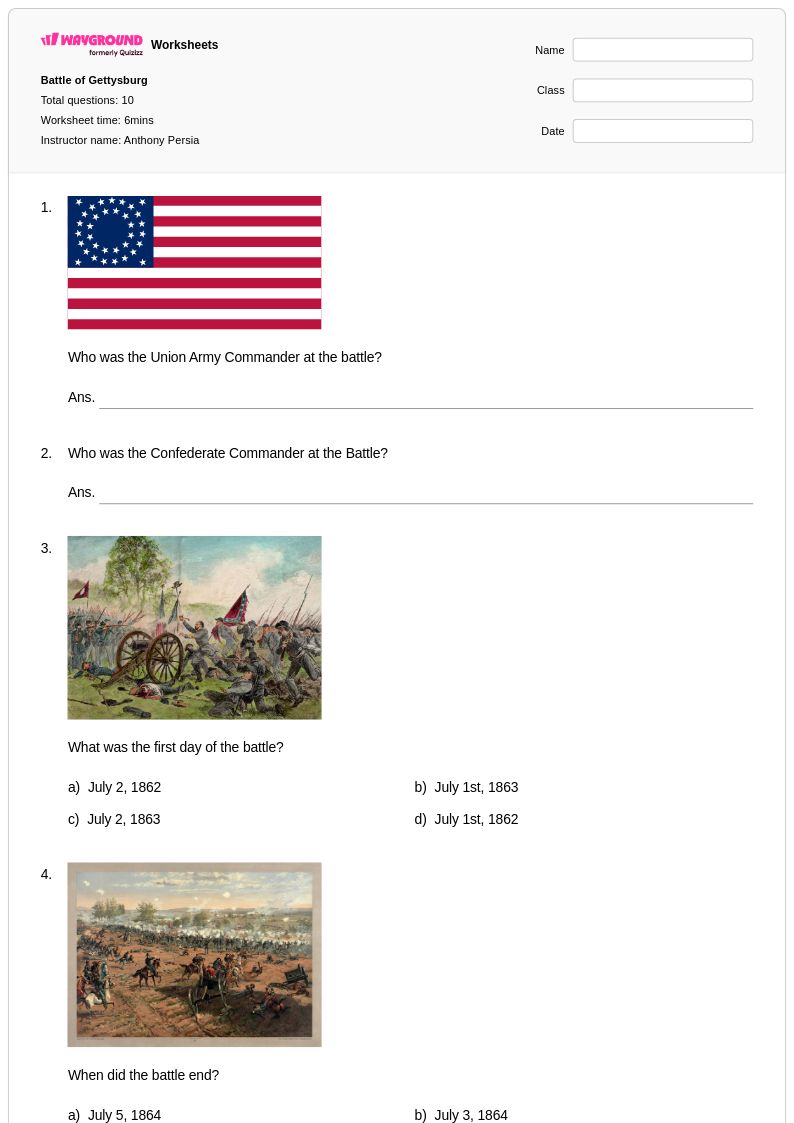
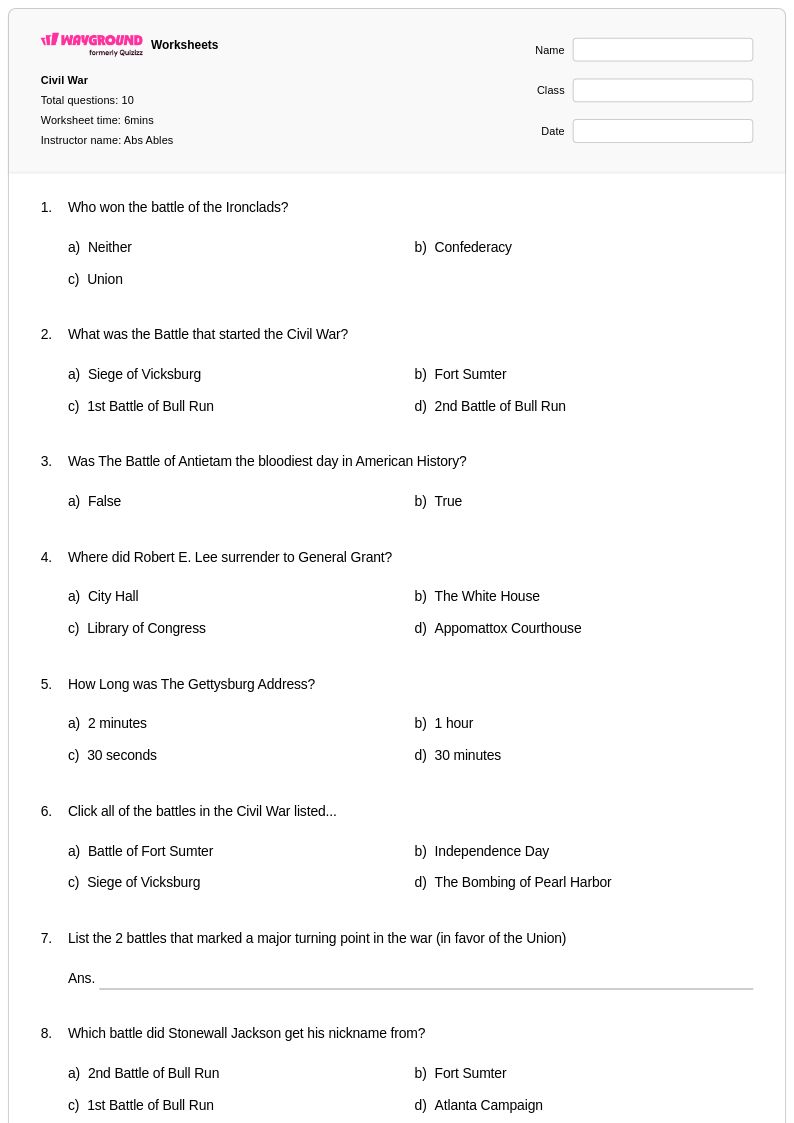
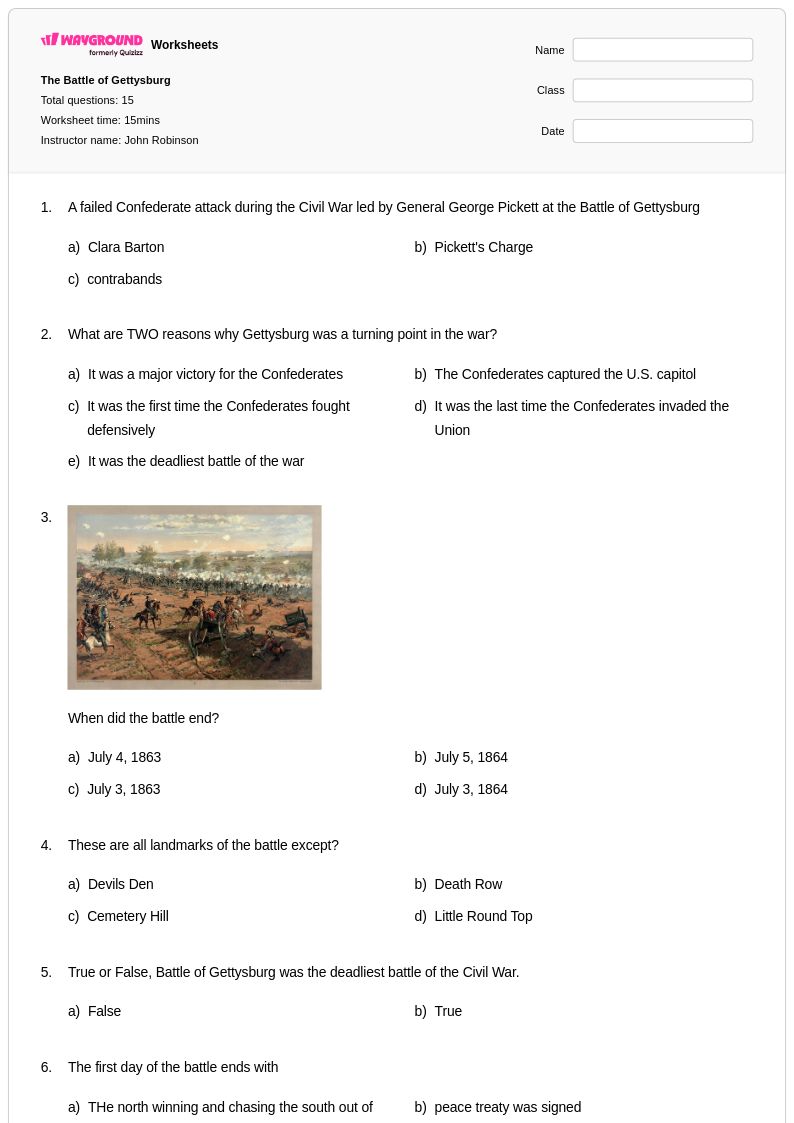
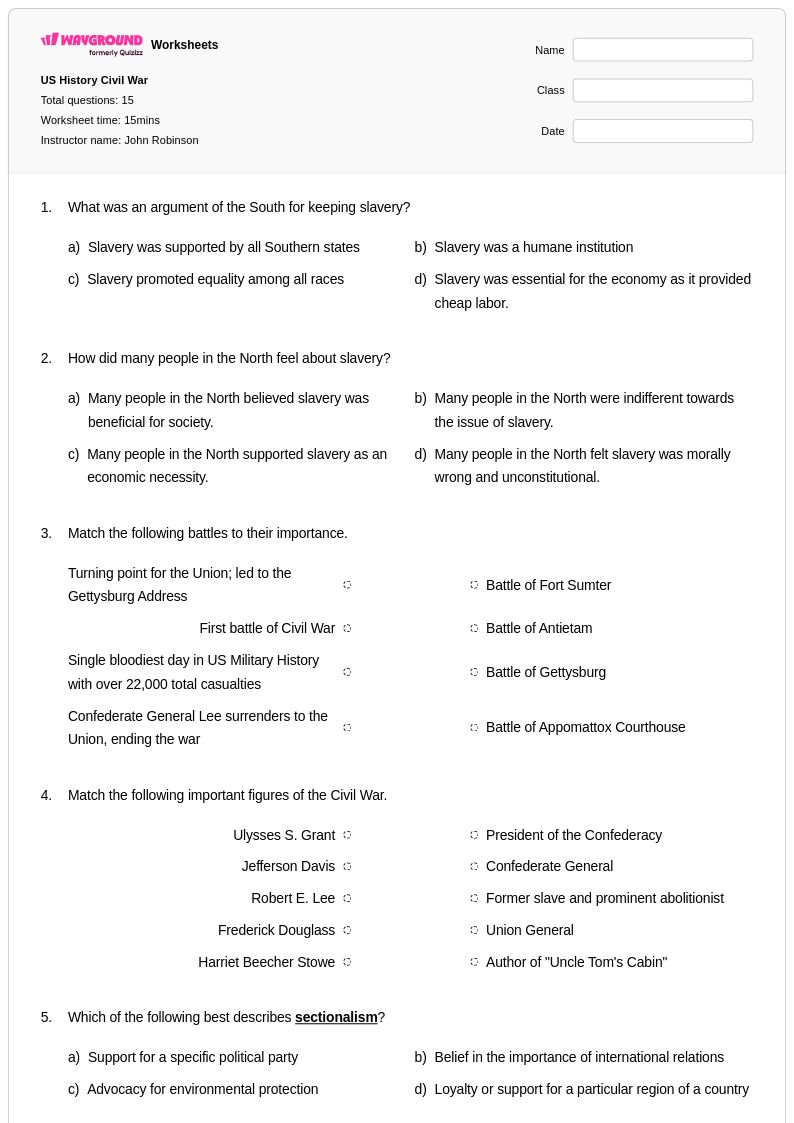
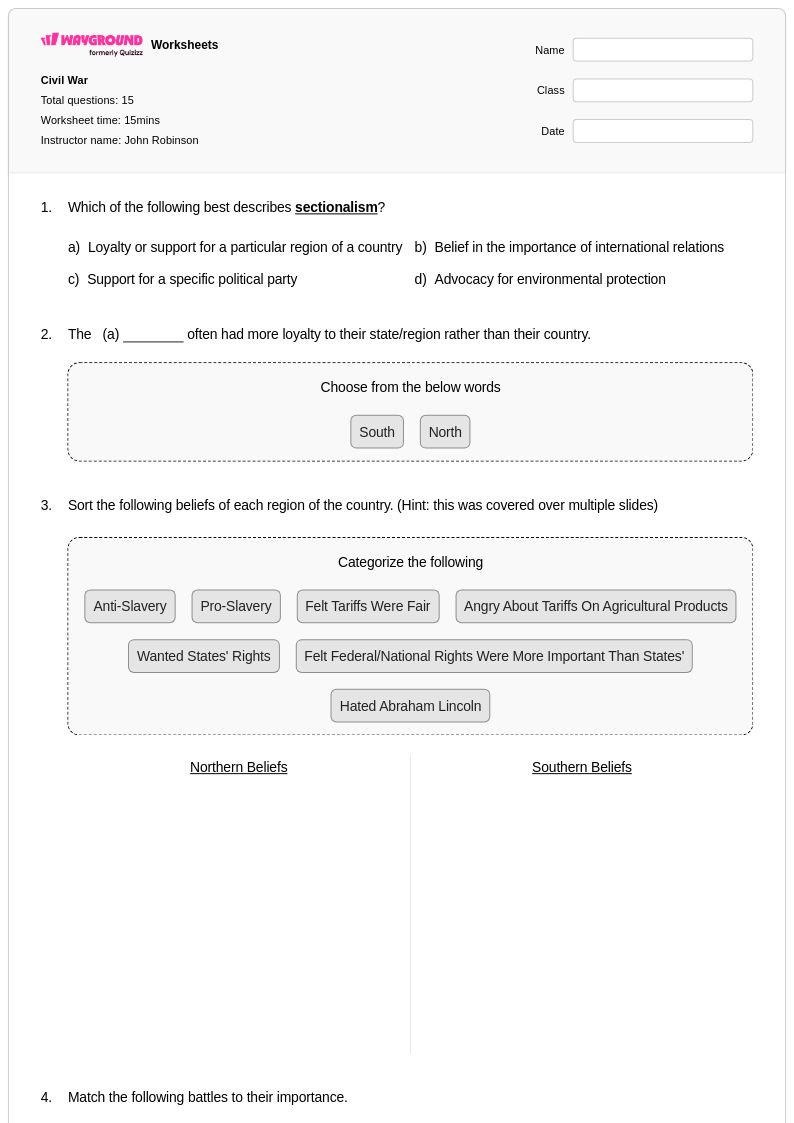
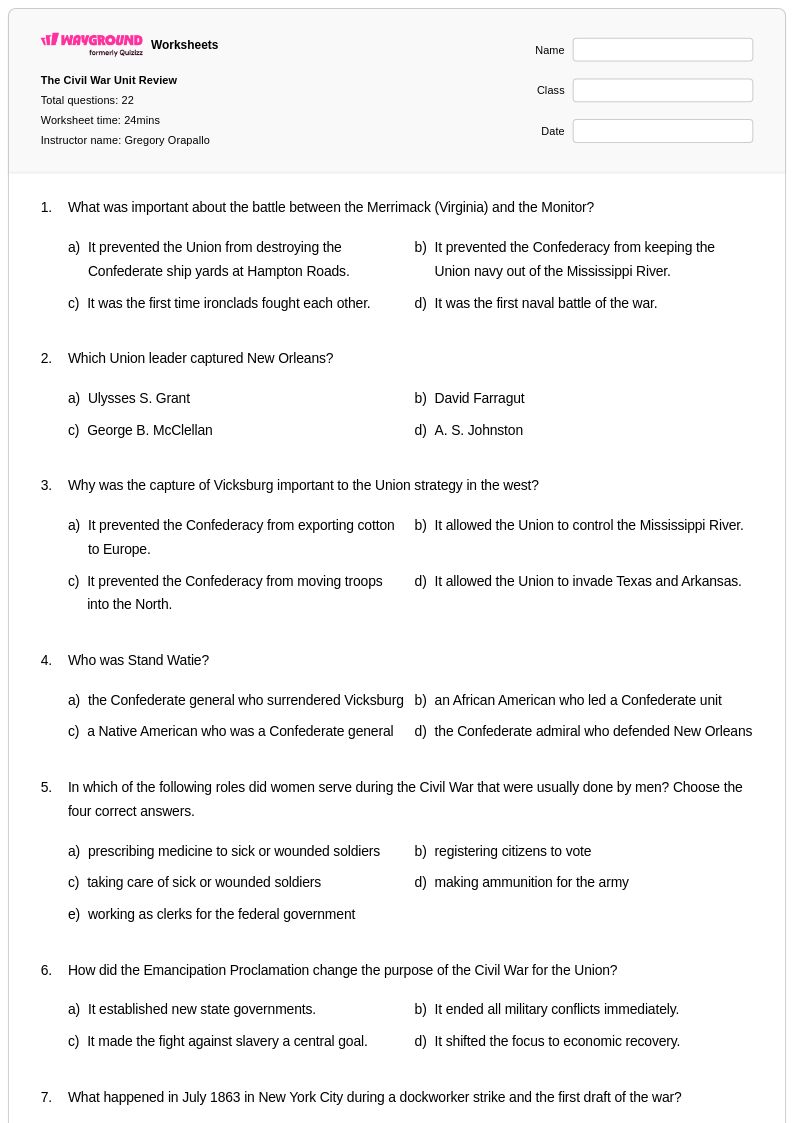
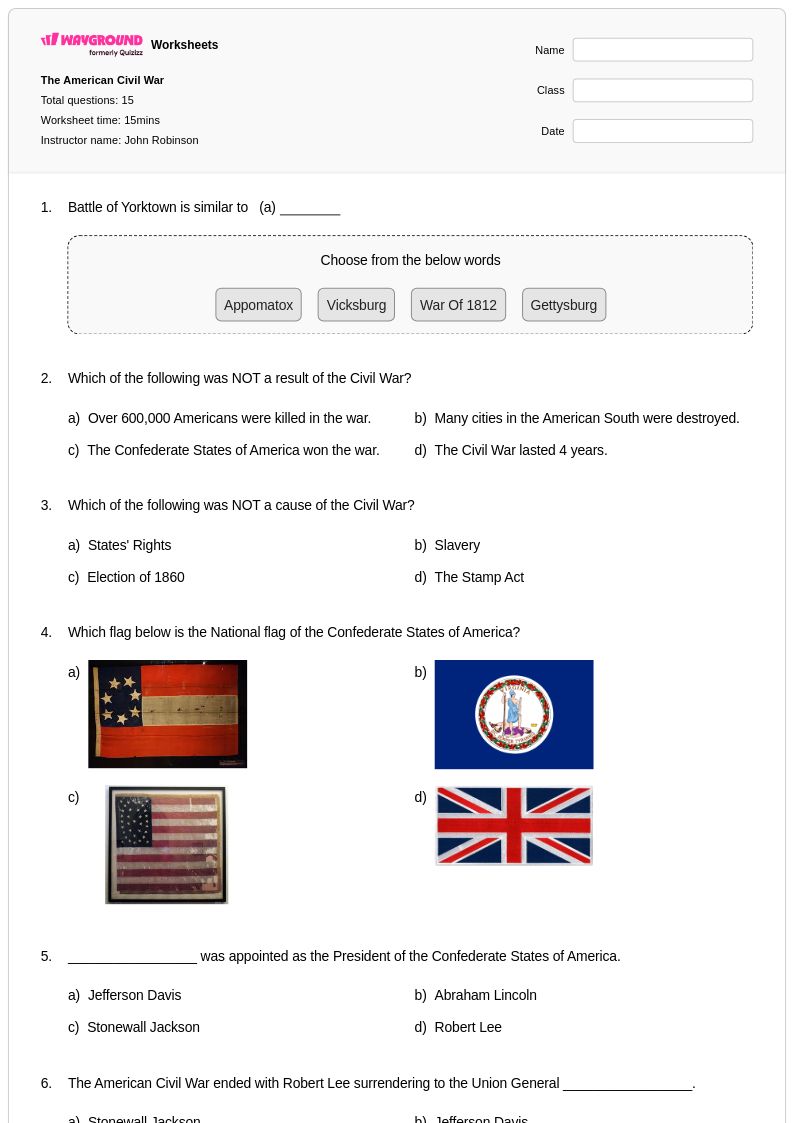
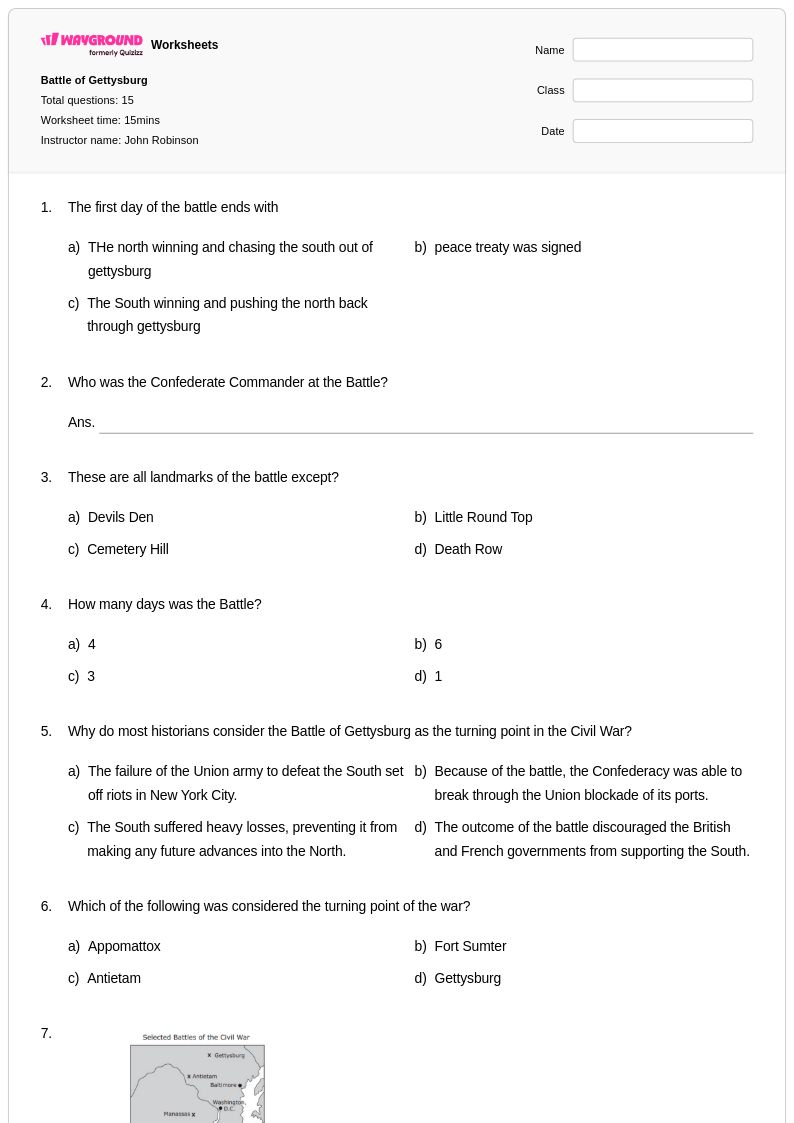
Grade 10 Gettysburg Address worksheets from Wayground offer comprehensive printables and practice problems that help students analyze Lincoln's historic speech, with free PDF downloads and detailed answer keys for effective learning.
Explore printable Gettysburg Address worksheets for Grade 10
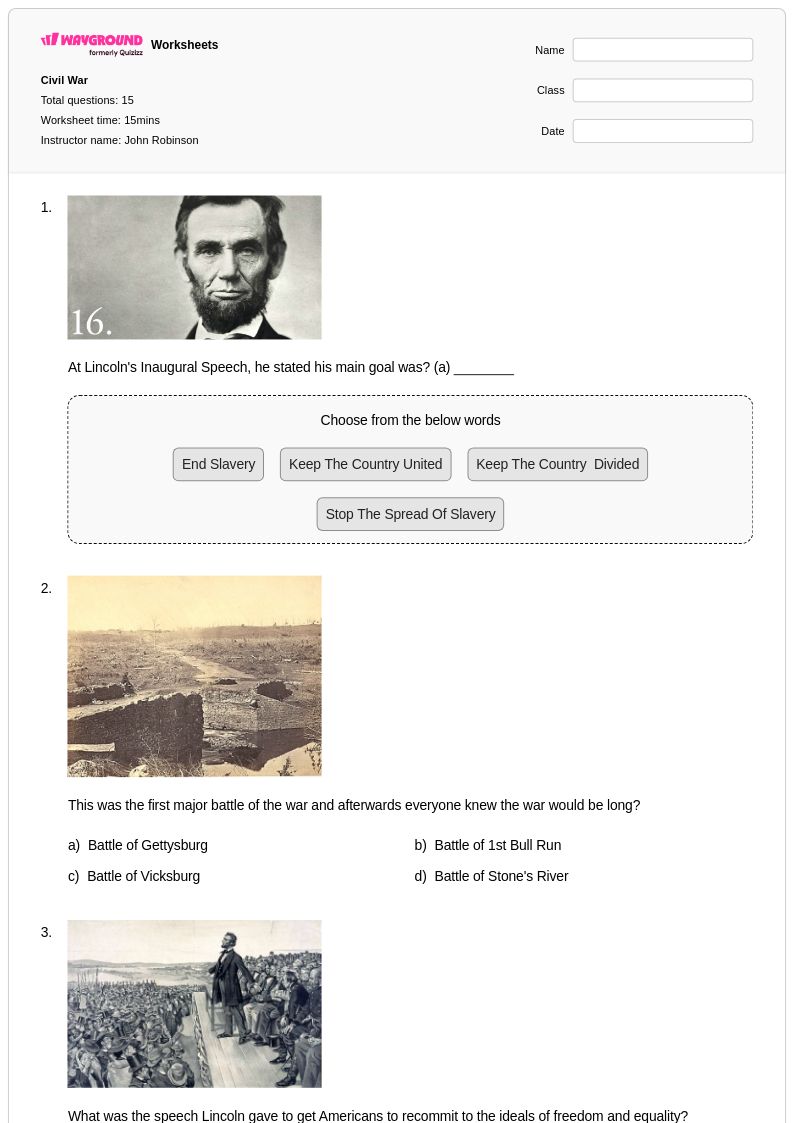
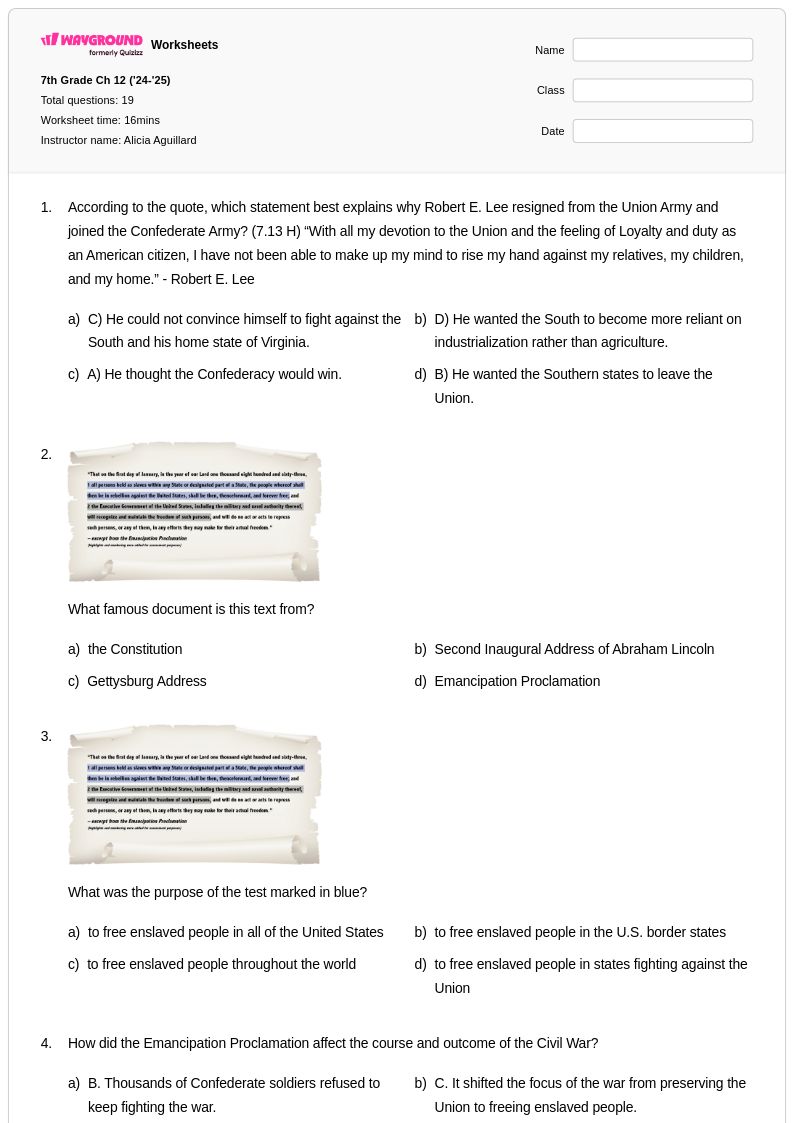
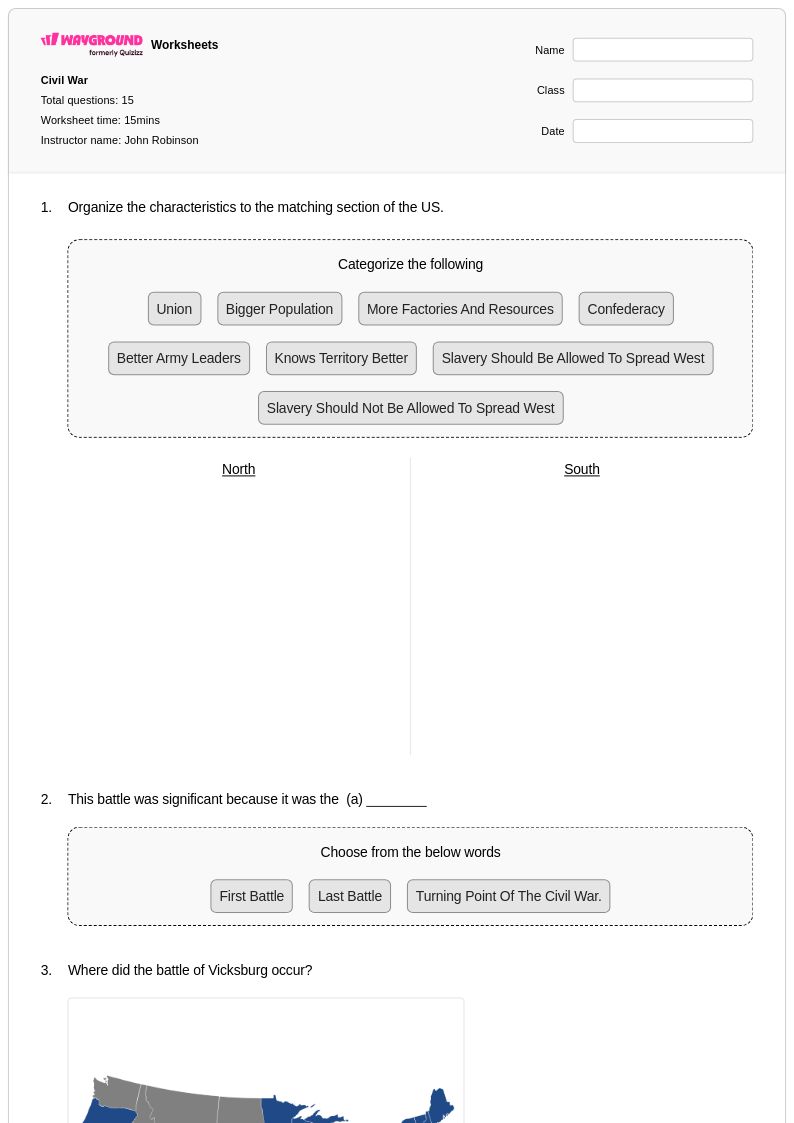
Grade 10 students exploring the Gettysburg Address will find comprehensive worksheet collections through Wayground that illuminate Lincoln's masterful rhetoric and its historical significance within the Civil War era. These educational resources strengthen critical analytical skills by guiding students through close reading exercises that examine Lincoln's deliberate word choices, rhetorical devices, and the speech's broader impact on American identity and democratic ideals. The worksheets feature varied practice problems that encourage students to analyze primary source excerpts, compare different versions of the address, and evaluate how Lincoln's brief but powerful words redefined the purpose of the ongoing conflict. Teachers can access complete answer keys alongside these free printables, ensuring thorough preparation for classroom discussions and assessments that deepen understanding of this pivotal moment in U.S. History.
Wayground supports educators with millions of teacher-created resources specifically designed for Grade 10 U.S. History instruction, offering robust search and filtering capabilities that help locate materials perfectly aligned with curriculum standards and learning objectives. The platform's differentiation tools enable teachers to customize worksheet difficulty levels and content focus, accommodating diverse learning needs while maintaining academic rigor appropriate for tenth-grade analysis. These flexible resources are available in both printable pdf formats and interactive digital versions, streamlining lesson planning while providing multiple options for skill practice, remediation, and enrichment activities. Teachers can efficiently organize comprehensive units around the Gettysburg Address that connect Lincoln's words to broader themes of American democracy, civil rights, and presidential leadership during national crisis.
FAQs
How do I teach the Gettysburg Address to students?
Teaching the Gettysburg Address effectively starts with establishing historical context — students need to understand the Civil War's progression, the Battle of Gettysburg, and the purpose of the cemetery dedication before engaging with Lincoln's words. From there, close reading strategies work well: have students annotate for rhetorical devices, examine Lincoln's word choices, and discuss how the speech reframes the war's purpose around democracy and national unity. Breaking the address into sections and returning to it multiple times deepens comprehension more than a single read-through.
What exercises help students practice analyzing the Gettysburg Address?
Effective practice exercises for the Gettysburg Address include close reading activities that ask students to identify rhetorical devices such as repetition, parallelism, and appeals to shared values, as well as comprehension questions that require students to interpret Lincoln's central argument in their own words. Connecting the speech to Civil War era politics and the broader themes of democracy and national unity helps students move beyond surface-level reading toward genuine historical analysis. Structured written responses asking students to explain the speech's lasting significance are also strong practice tools.
What mistakes do students commonly make when analyzing the Gettysburg Address?
A common misconception is that the Gettysburg Address was universally celebrated immediately after it was delivered — students are often surprised to learn that contemporary reactions were mixed. Students also frequently struggle to distinguish between Lincoln's literal statements and the speech's symbolic weight, treating it as a simple war report rather than a carefully constructed argument about national purpose. Another common error is missing the speech's implicit redefinition of the war's meaning, from a conflict over secession to a test of whether democratic government could survive.
How can I use Gettysburg Address worksheets in my classroom?
Gettysburg Address worksheets on Wayground are available as printable PDFs for traditional classroom use and in digital formats for technology-integrated environments, including the option to host them as a quiz directly on Wayground. This flexibility means you can assign them as independent reading activities, guided small-group work, or formative assessments depending on where your students are in the unit. Complete answer keys are included, which reduces prep time and supports consistent grading across classes.
How do I differentiate Gettysburg Address instruction for students at different skill levels?
For students who need additional support, scaffold comprehension by pre-teaching key vocabulary and providing sentence frames for written responses. Advanced learners benefit from enrichment tasks that require them to compare Lincoln's rhetoric to other Civil War-era speeches or connect his argument to modern democratic discourse. On Wayground, teachers can apply individual accommodations such as read aloud, reduced answer choices, and extended time to specific students, allowing the same worksheet to serve learners across a range of abilities without singling anyone out.
What standards do Gettysburg Address worksheets typically align to?
Gettysburg Address worksheets typically align to social studies and English Language Arts standards covering historical analysis, informational text comprehension, and rhetorical analysis. In social studies, they connect to Civil War content standards and the study of significant primary source documents in American history. In ELA, they support standards related to analyzing an author's purpose, evaluating word choice, and identifying the use of rhetorical strategies in persuasive or ceremonial texts.