Free Printable Presidents on Currency Worksheets for Grade 10
Explore Grade 10 Presidents on Currency worksheets and free printables that help students learn about U.S. historical figures featured on money through engaging practice problems and comprehensive answer keys.
Explore printable Presidents on Currency worksheets for Grade 10
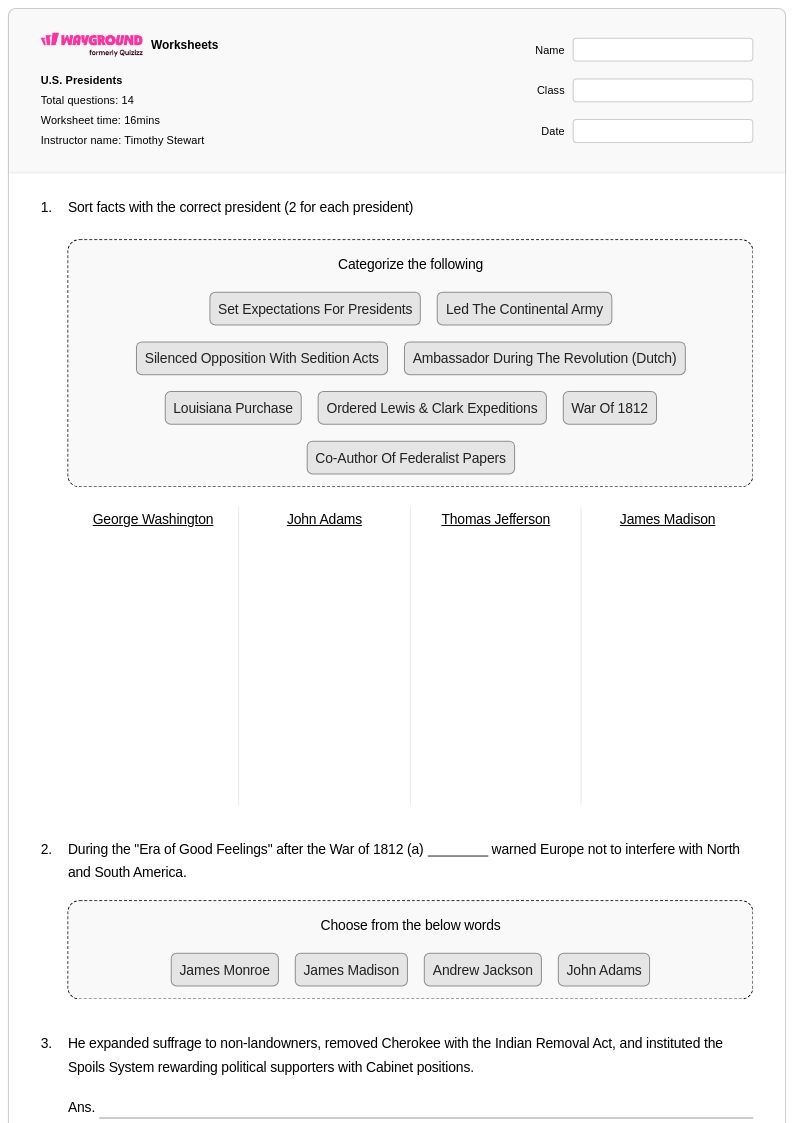
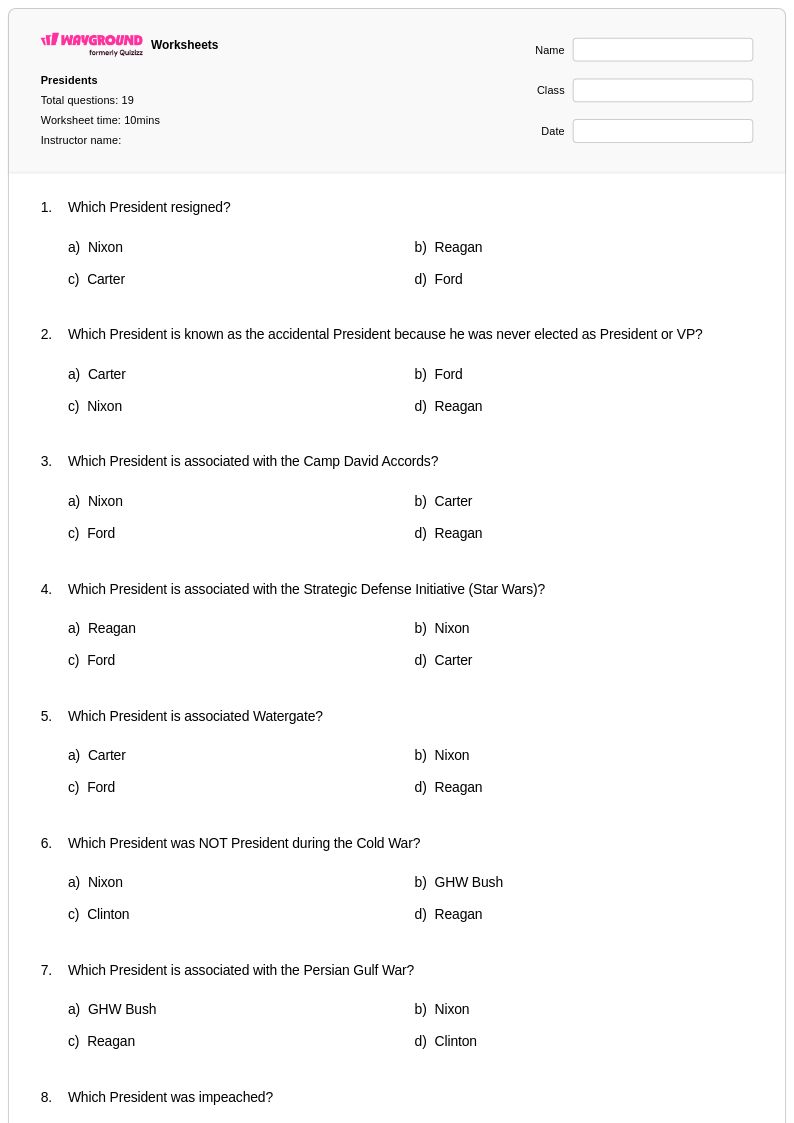
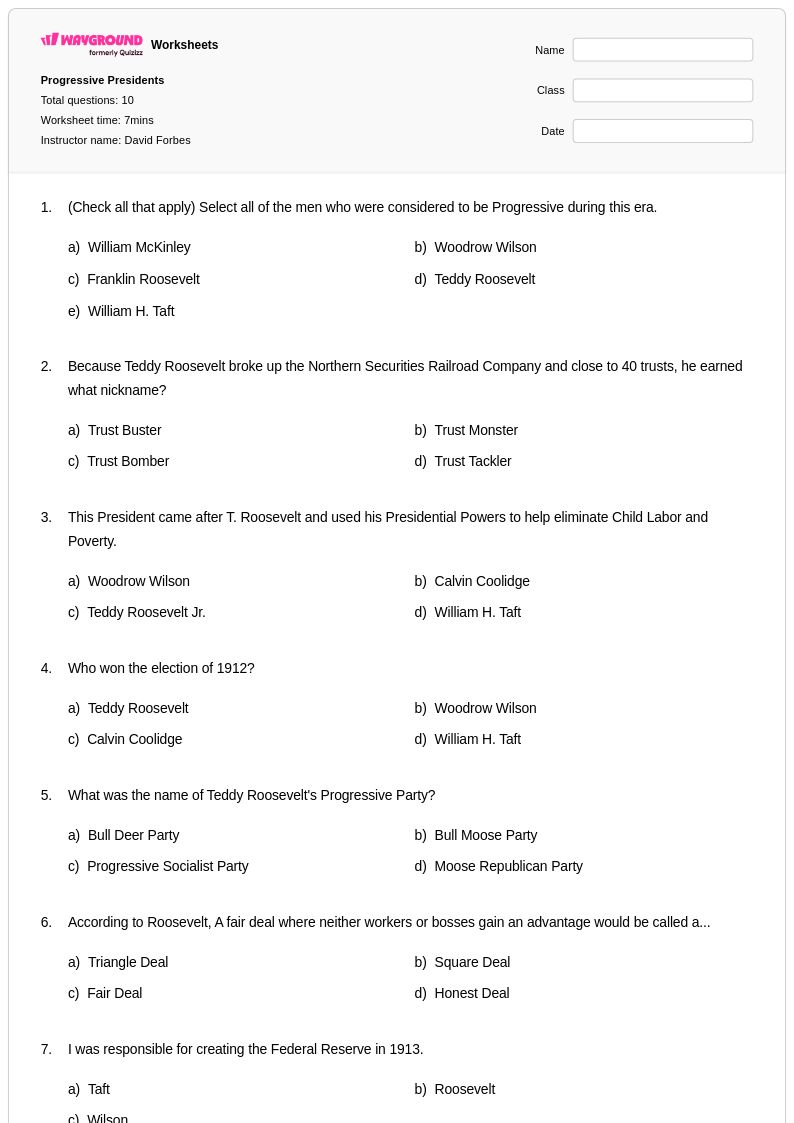
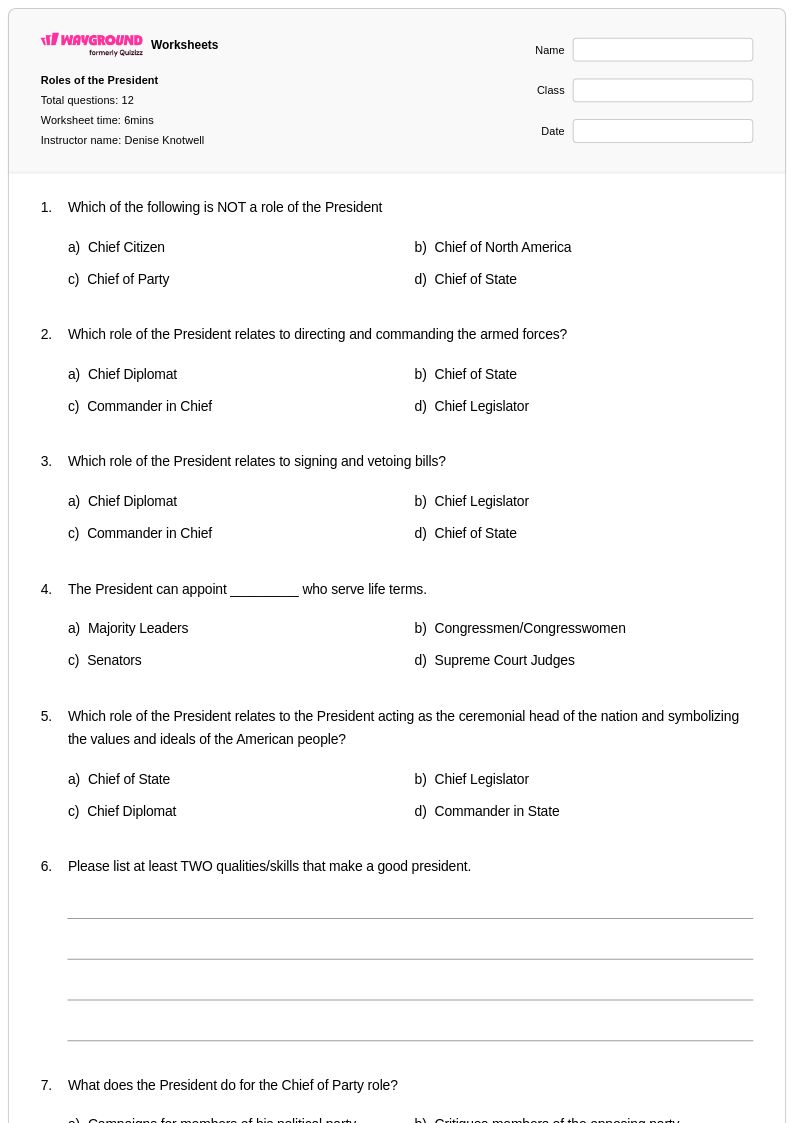
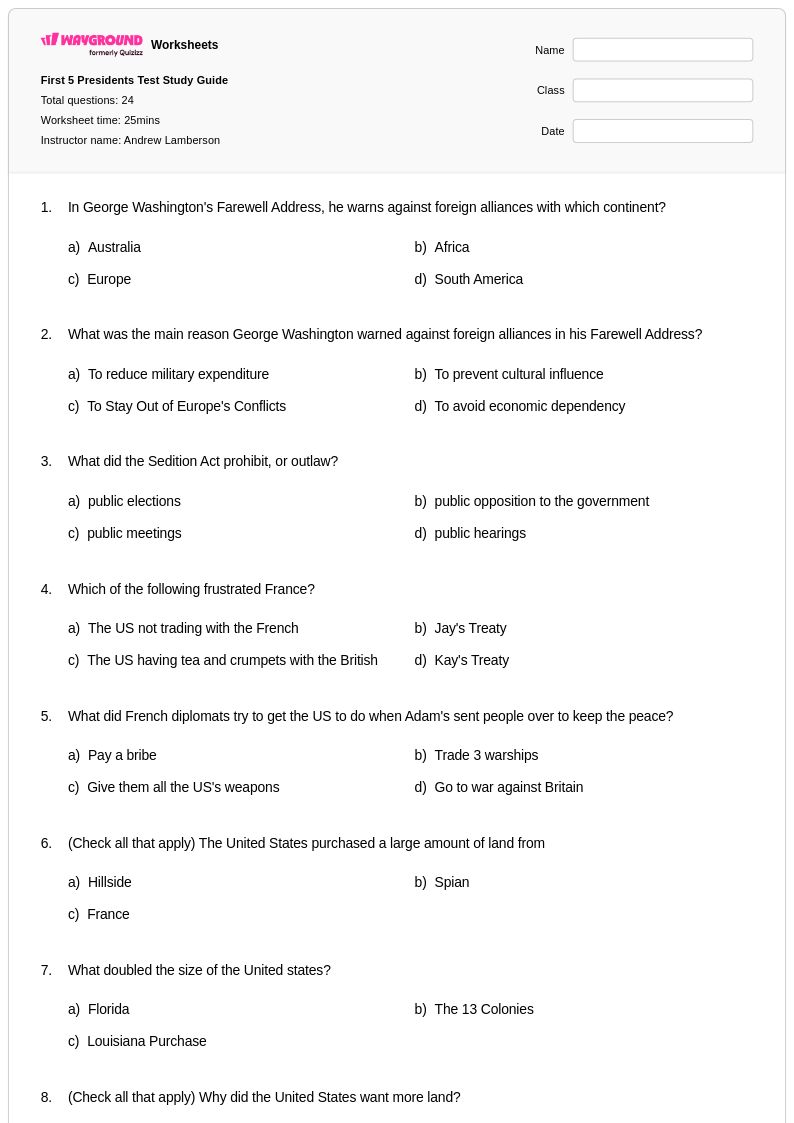
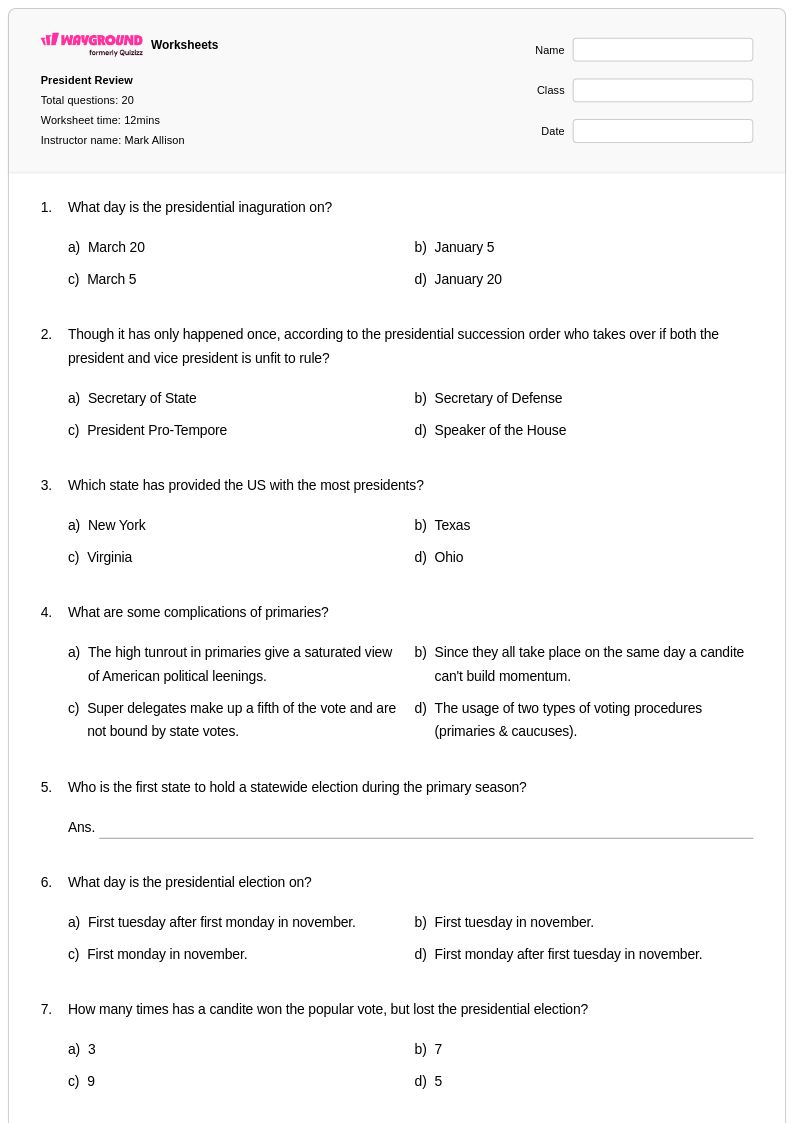
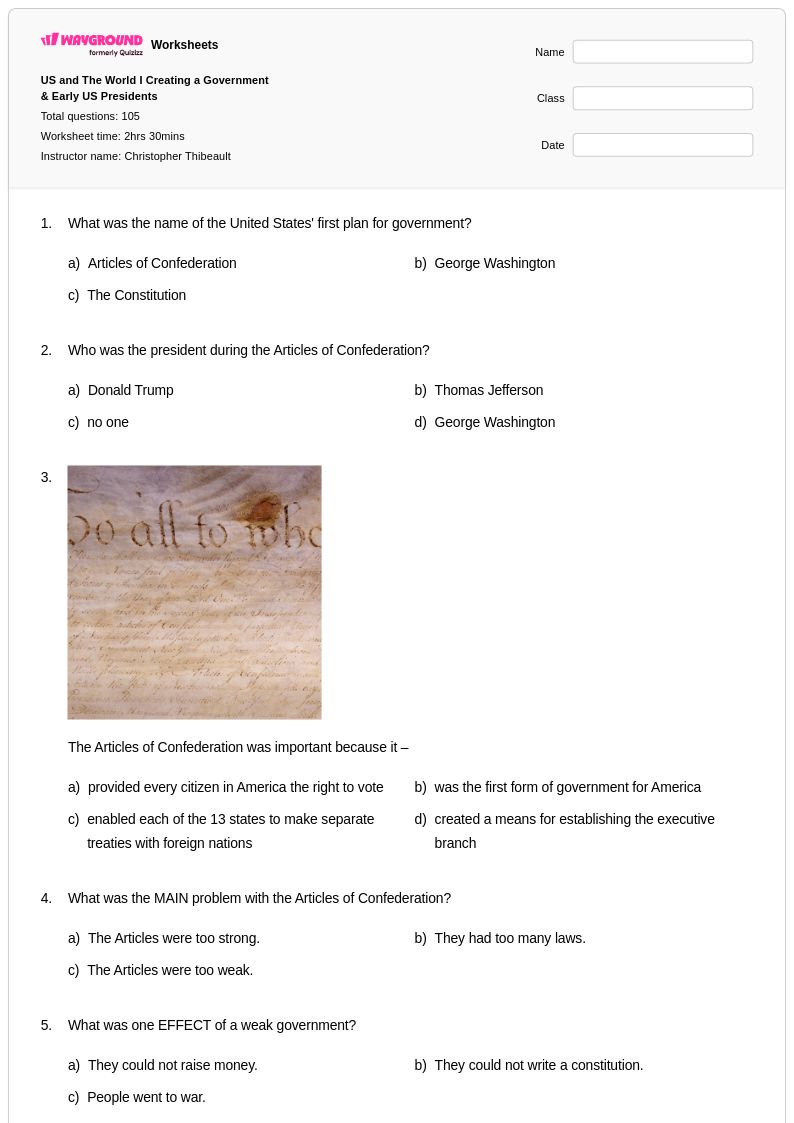
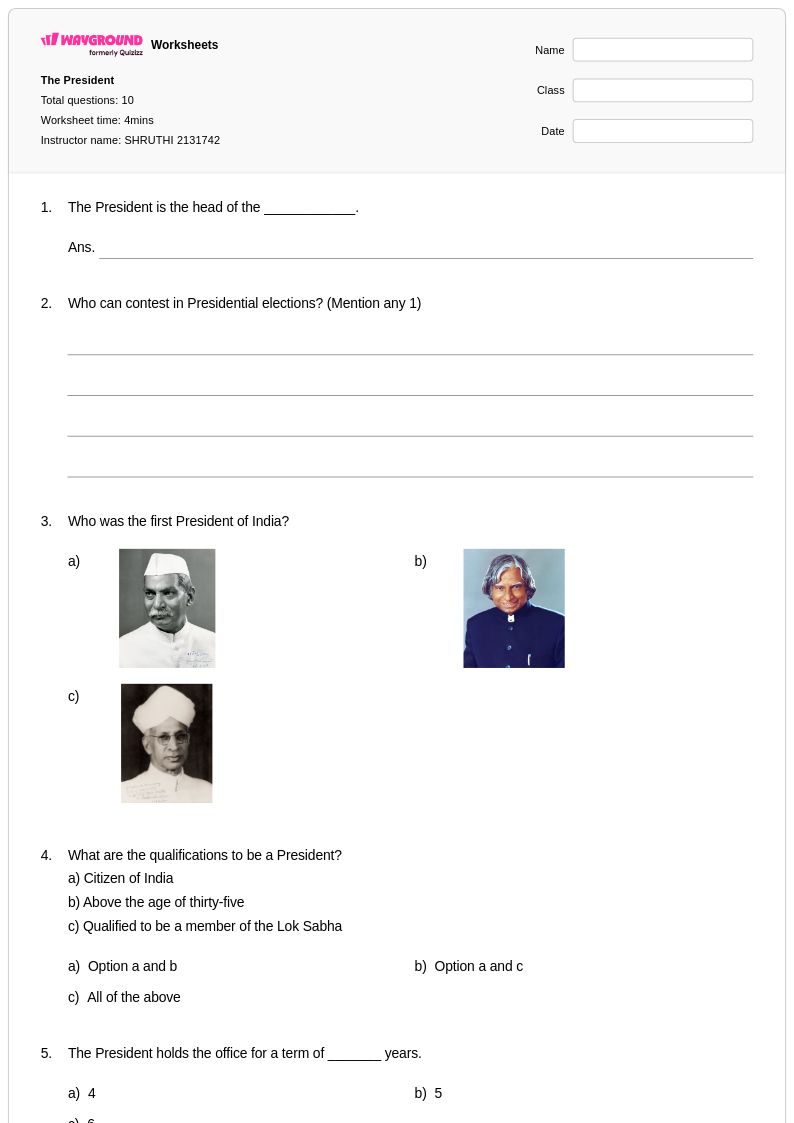
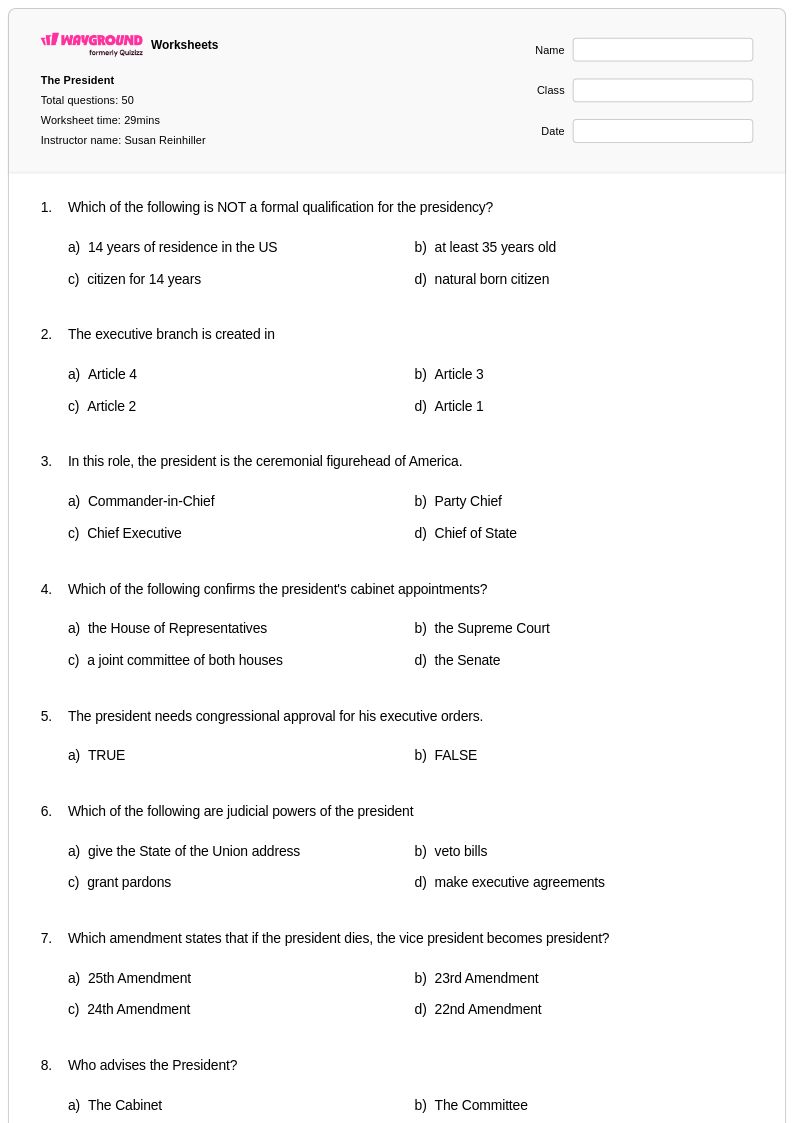
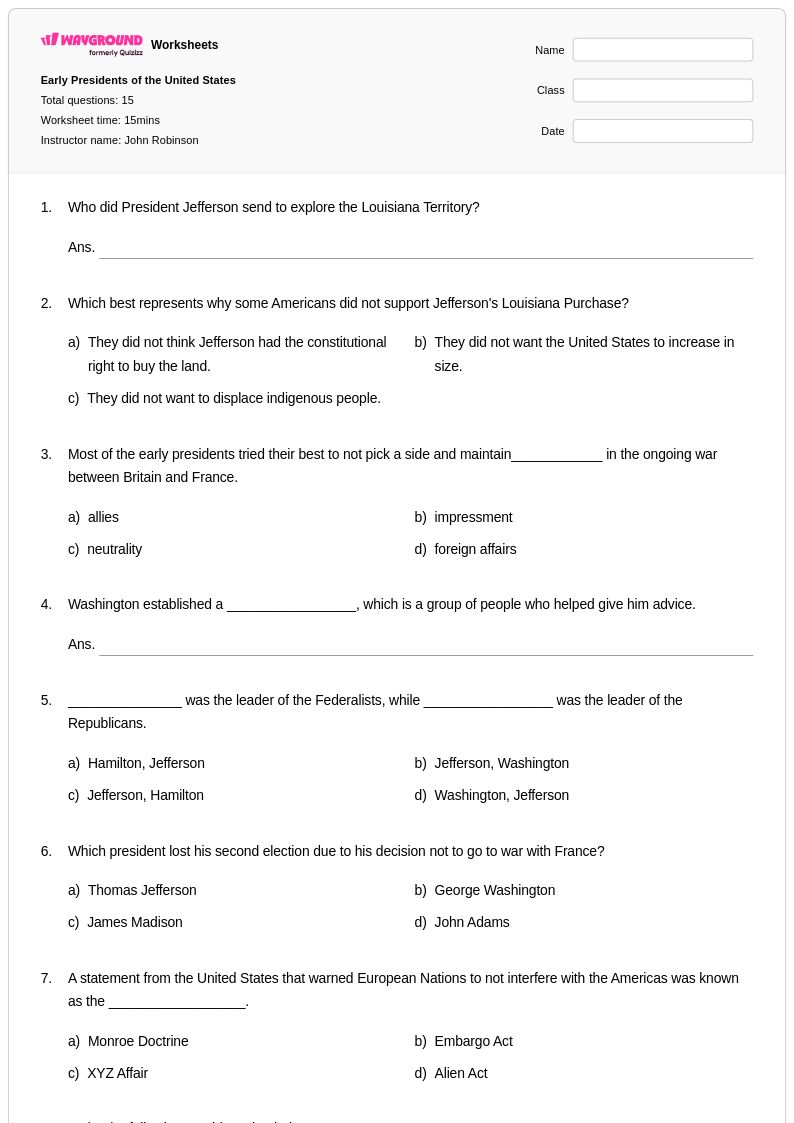
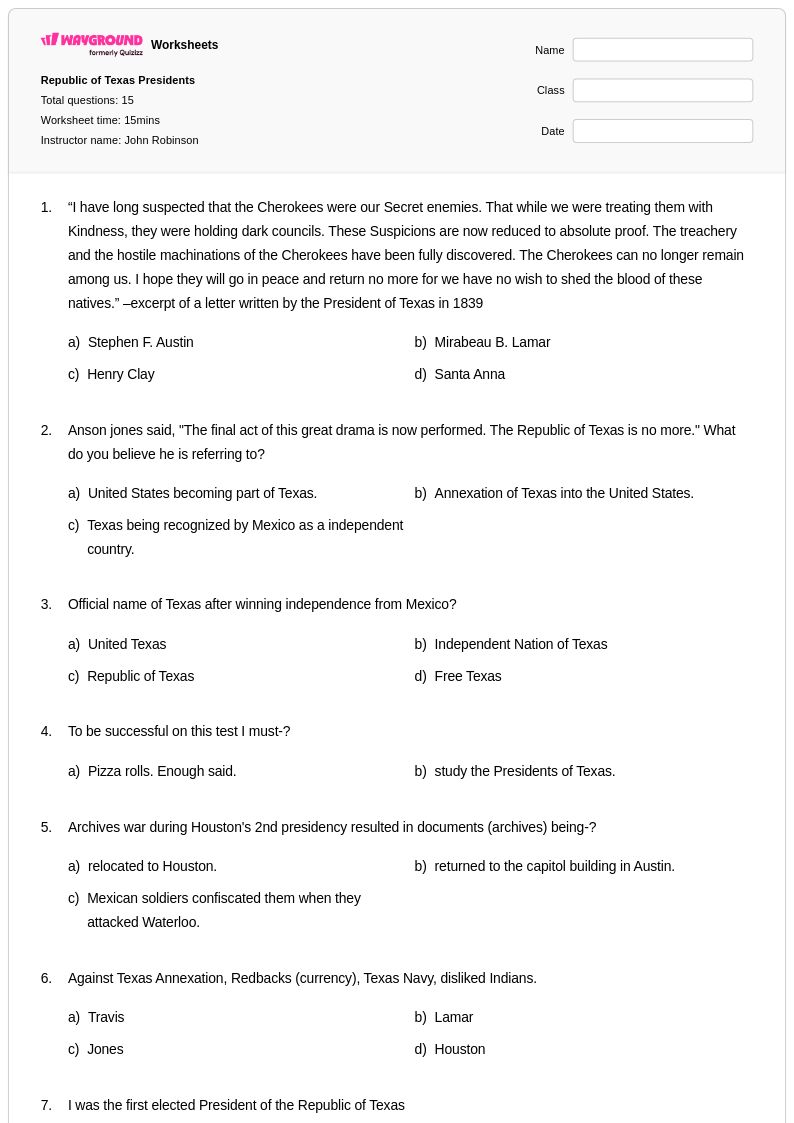
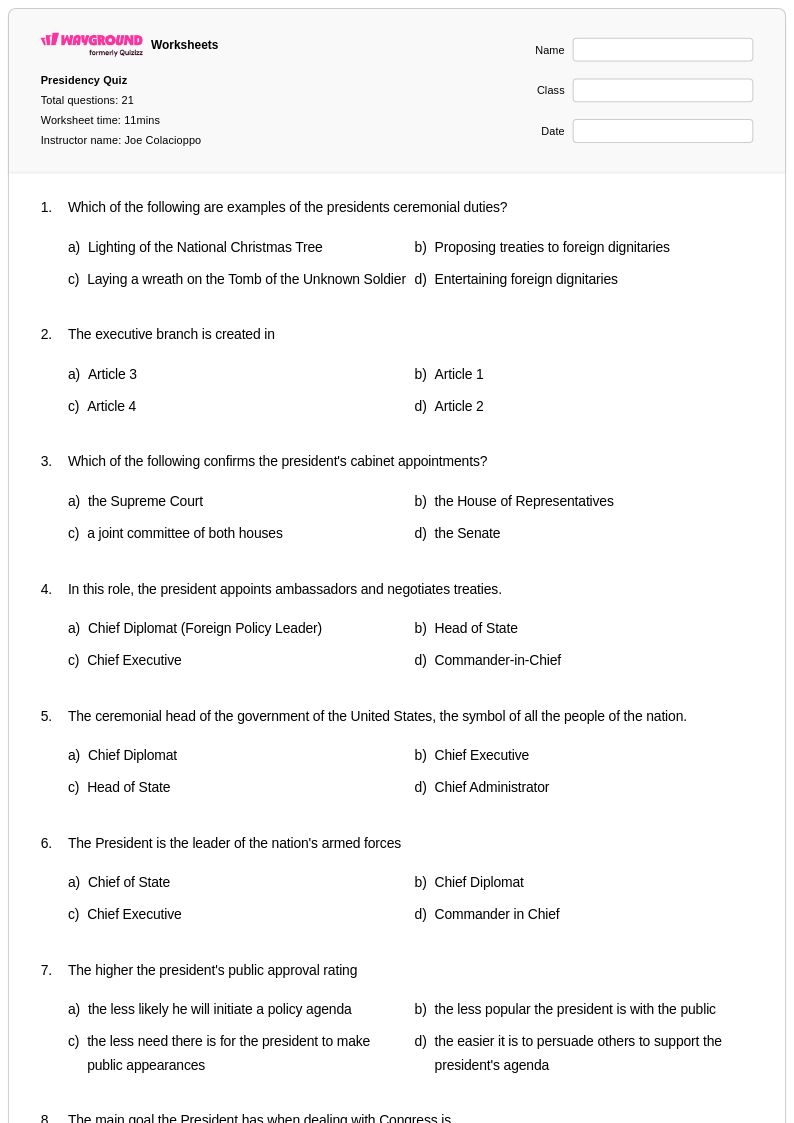
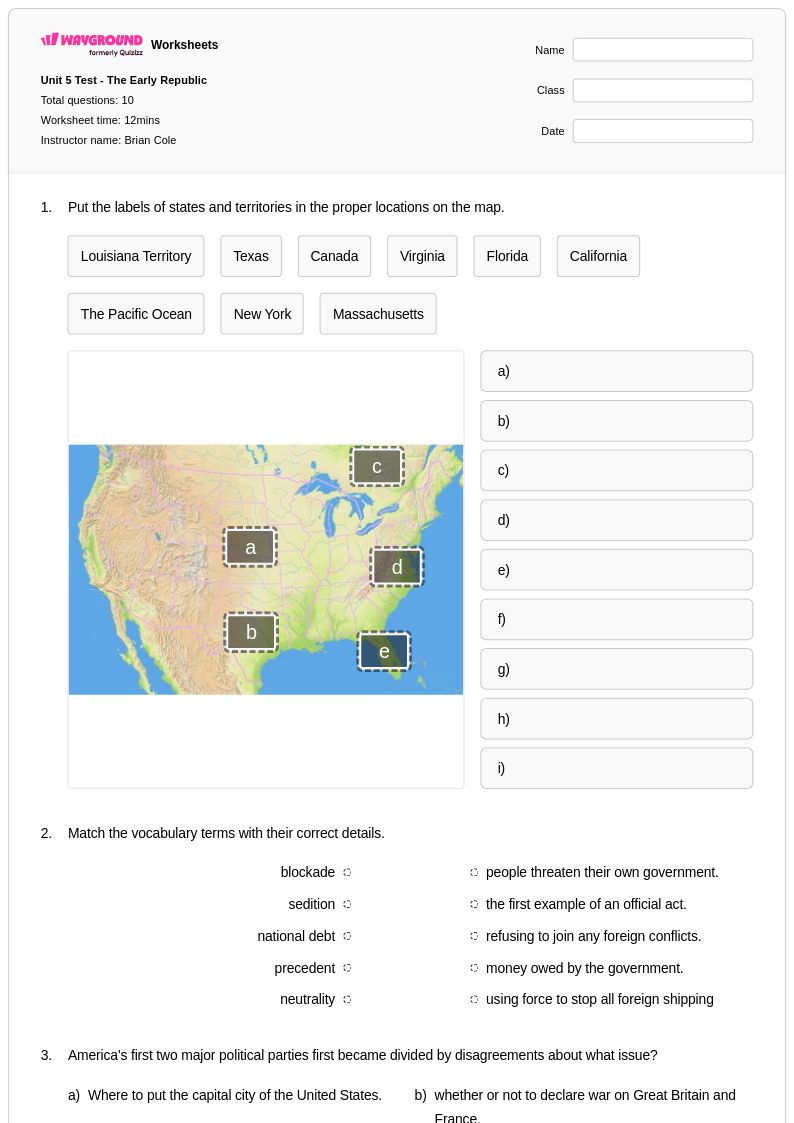
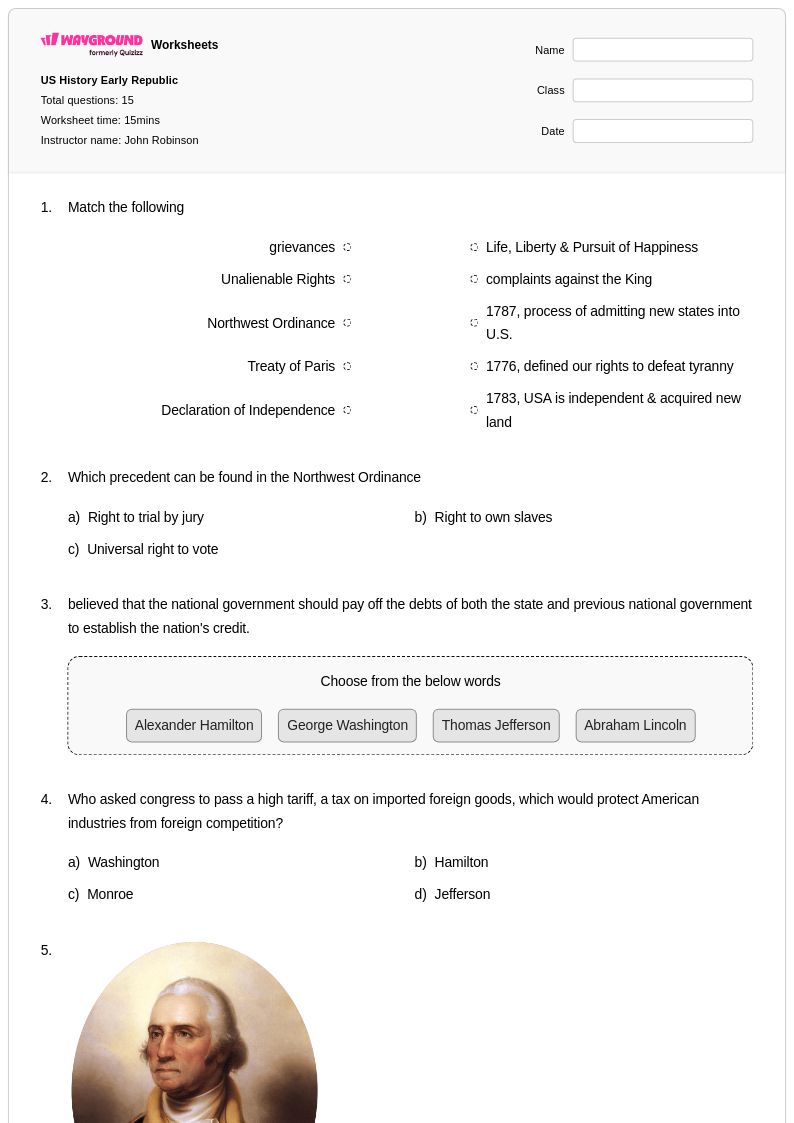
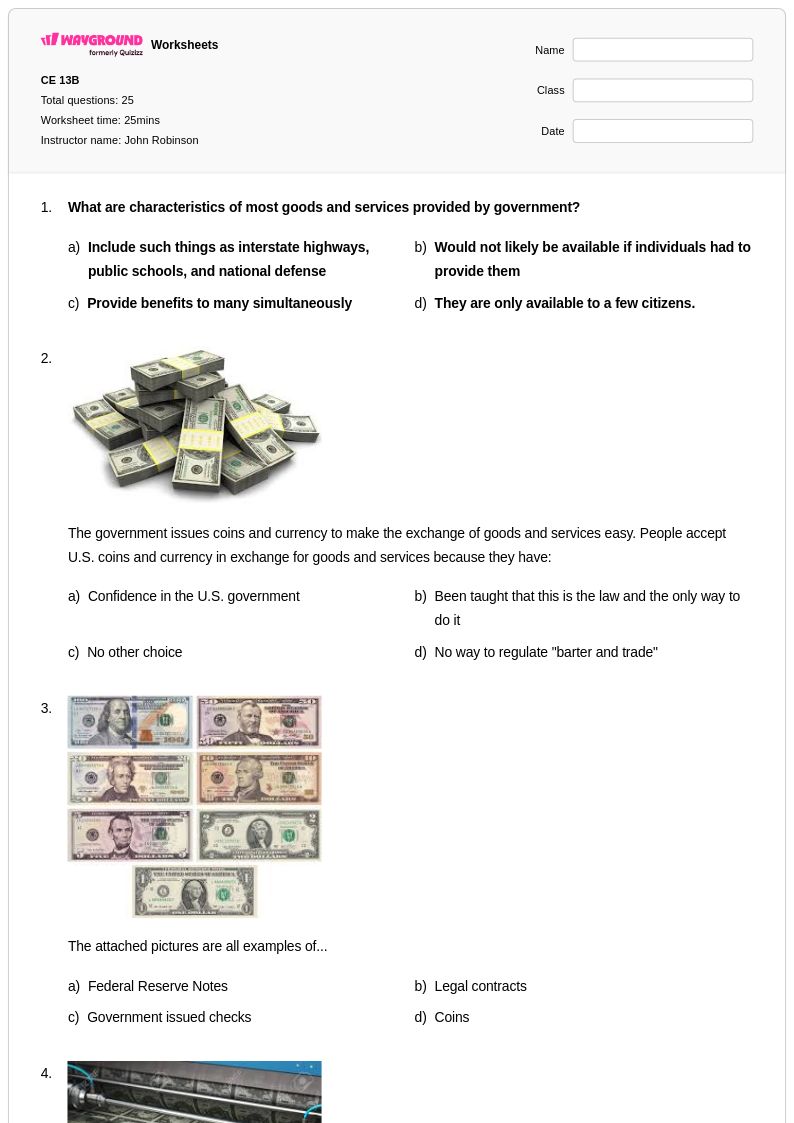
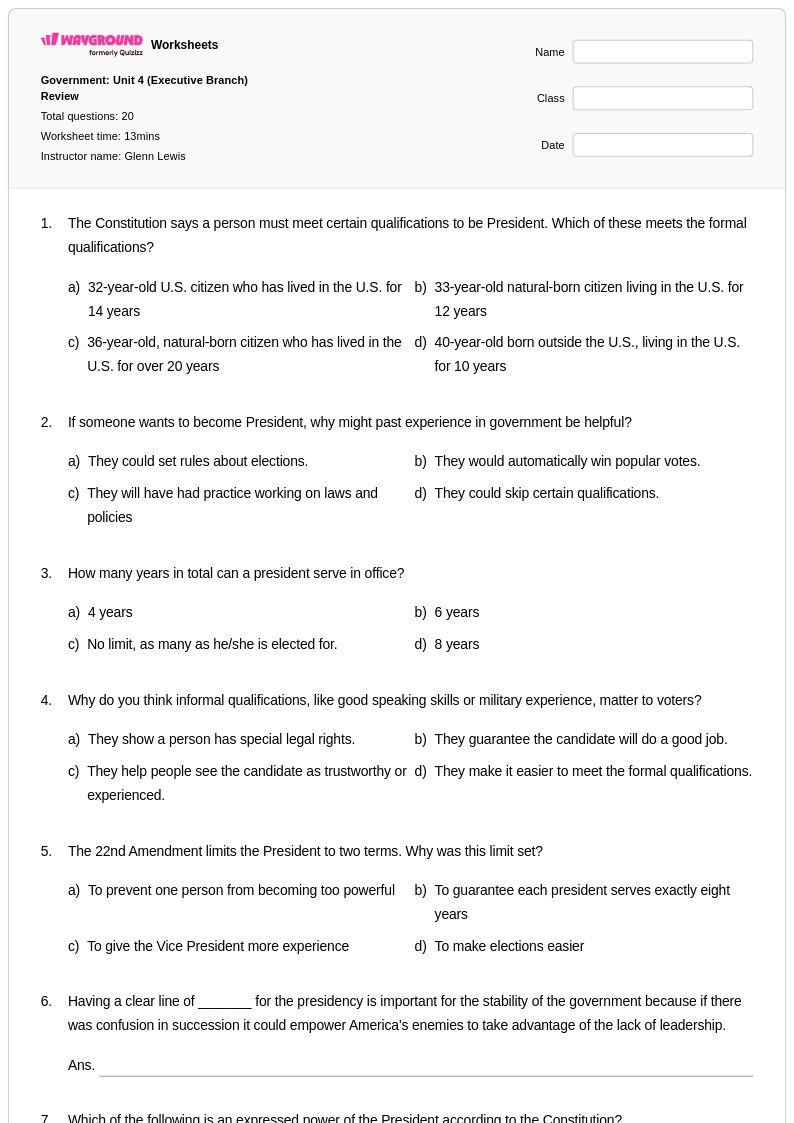
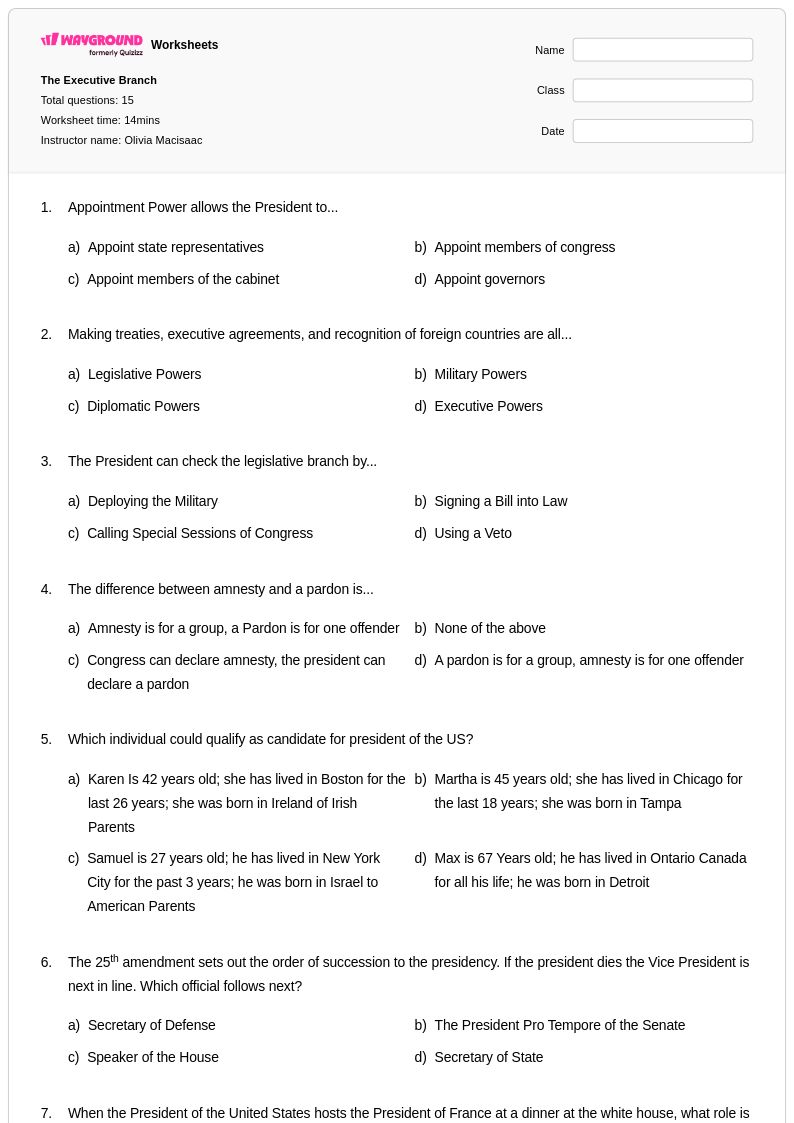
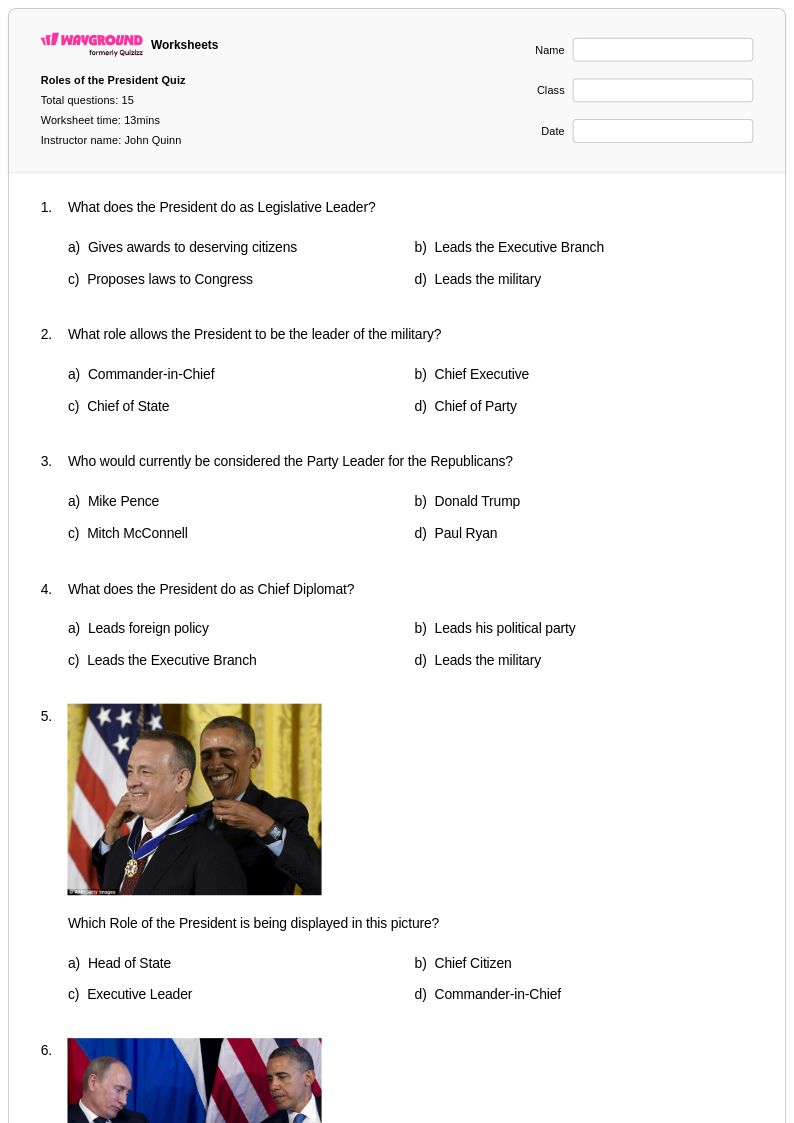
Presidents on Currency worksheets available through Wayground (formerly Quizizz) provide Grade 10 students with comprehensive practice exploring the historical significance of American leaders featured on U.S. money. These educational resources strengthen critical thinking skills by examining why specific presidents were chosen for currency representation, analyzing the symbolism behind these selections, and understanding the connection between presidential legacies and national identity. Students engage with practice problems that require them to identify presidents on various denominations, research the historical context of these choices, and evaluate the lasting impact of presidential leadership on American society. Each worksheet includes detailed answer key materials and is available as free printables in convenient pdf format, making them accessible for both classroom instruction and independent study.
Wayground (formerly Quizizz) supports educators with an extensive collection of teacher-created resources covering Presidents on Currency topics, drawing from millions of professionally developed materials that align with social studies standards. The platform's robust search and filtering capabilities enable teachers to quickly locate worksheets tailored to specific learning objectives, whether focusing on individual presidential biographies, currency evolution, or comparative leadership analysis. These differentiation tools allow instructors to customize content for diverse learning needs, providing both remediation support for struggling students and enrichment opportunities for advanced learners. Available in both printable and digital formats including downloadable pdf versions, these resources facilitate flexible lesson planning and offer varied approaches to skill practice, helping educators reinforce essential U.S. History concepts while building students' analytical and research capabilities.
FAQs
Which presidents appear on U.S. currency and why?
Several U.S. presidents are featured on American currency, including George Washington on the $1 bill, Abraham Lincoln on the $5 bill, Andrew Jackson on the $20 bill, and Ulysses S. Grant on the $50 bill. These leaders were selected based on their historical significance, contributions to the nation, and their symbolic representation of American democratic values. Teaching students to recognize these figures and understand the reasoning behind their selection connects monetary literacy with broader civic and historical knowledge.
How do I teach students to identify presidents on U.S. currency?
Start by introducing each denomination alongside a brief profile of the president featured on it, emphasizing why that individual was considered significant enough to represent the nation on its legal tender. Visual comparison activities work well here — having students match portraits to bills reinforces recognition while anchoring the lesson in historical context. Connecting each president's legacy to the denomination's value or era of circulation helps students move beyond rote memorization toward genuine historical understanding.
What types of practice exercises help students learn which presidents are on which bills?
Effective practice exercises include matching activities pairing presidential portraits to currency denominations, fill-in-the-blank questions requiring students to recall which president appears on each bill, and short-answer prompts asking students to explain the historical rationale behind a specific selection. Sequencing tasks that ask students to order presidents by denomination value or by historical era add an additional layer of analytical challenge. These varied exercise types build both recall accuracy and deeper civic reasoning.
What mistakes do students commonly make when identifying presidents on currency?
A frequent error is confusing non-presidential figures on currency with presidents — for example, students often assume Alexander Hamilton on the $10 bill or Benjamin Franklin on the $100 bill are presidents, when neither held that office. Students also commonly mix up Lincoln and Washington across the penny, $1 bill, and $5 bill without distinguishing between coin and paper currency contexts. Explicitly addressing these distinctions during instruction prevents persistent misconceptions and reinforces careful observation skills.
How can I use Presidents on Currency worksheets in my classroom?
Presidents on Currency worksheets from Wayground are available as printable PDFs for traditional classroom use and in digital formats for technology-integrated learning environments, including the option to host them as a quiz directly on Wayground. The included answer keys allow for quick self-assessment or teacher-led review. These worksheets work well as warm-up activities, homework reinforcement, or exit tickets following a lesson on American history and civic symbols.
How does studying presidents on currency support broader social studies learning?
Examining which presidents appear on U.S. currency teaches students to think critically about how societies choose to commemorate historical figures and what those choices reveal about national values. It naturally connects to broader social studies themes including government, economics, and historical legacy, making it an efficient entry point for interdisciplinary discussion. Students gain practice in historical analysis and civic reasoning by questioning why certain leaders were elevated to this symbolic role over others.