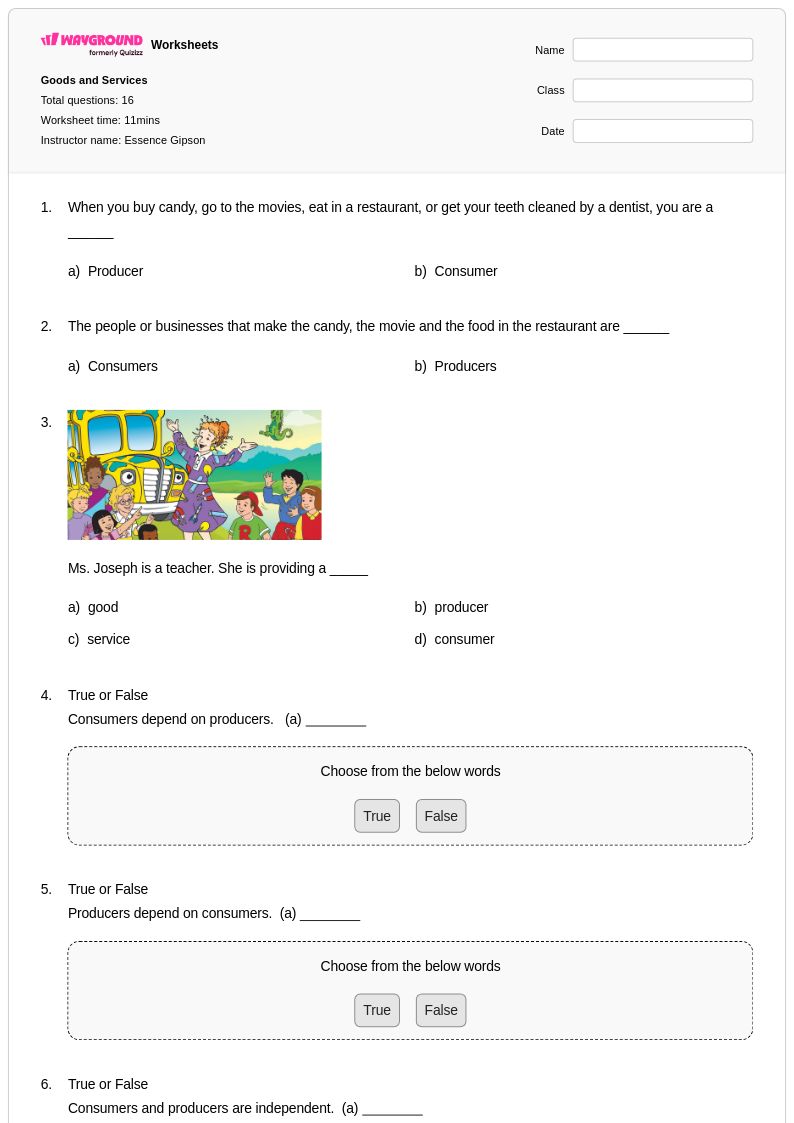
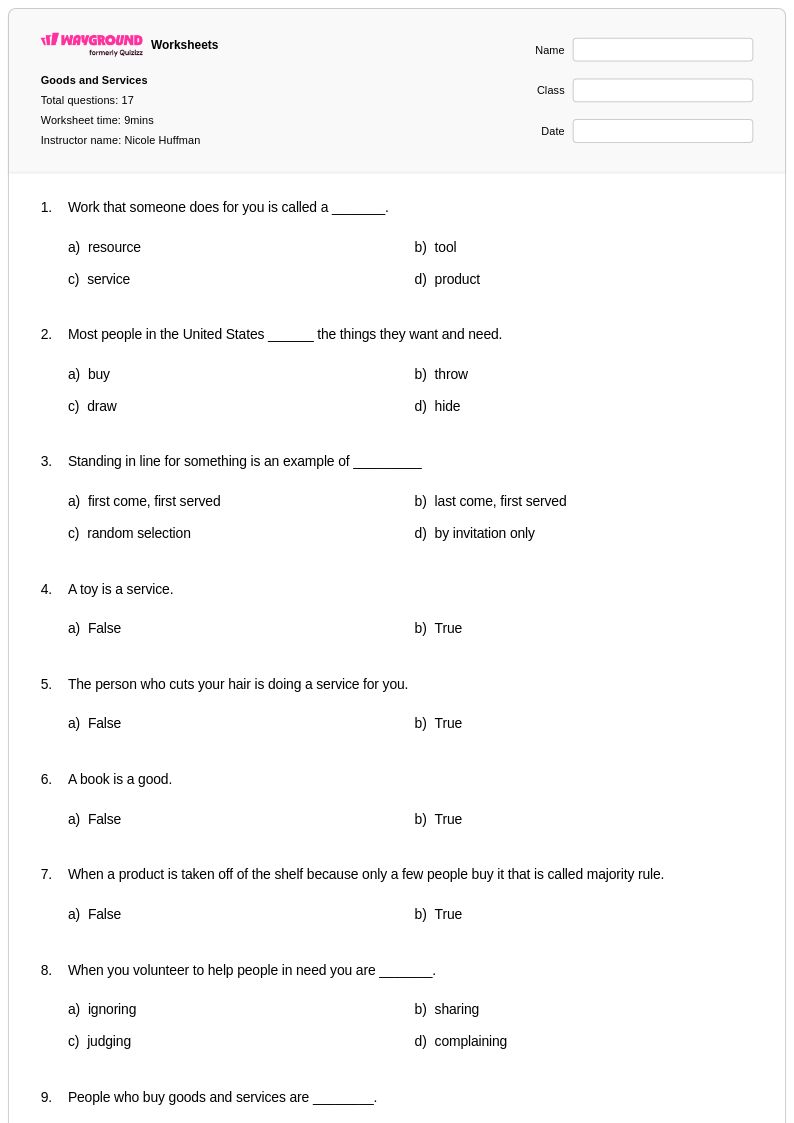
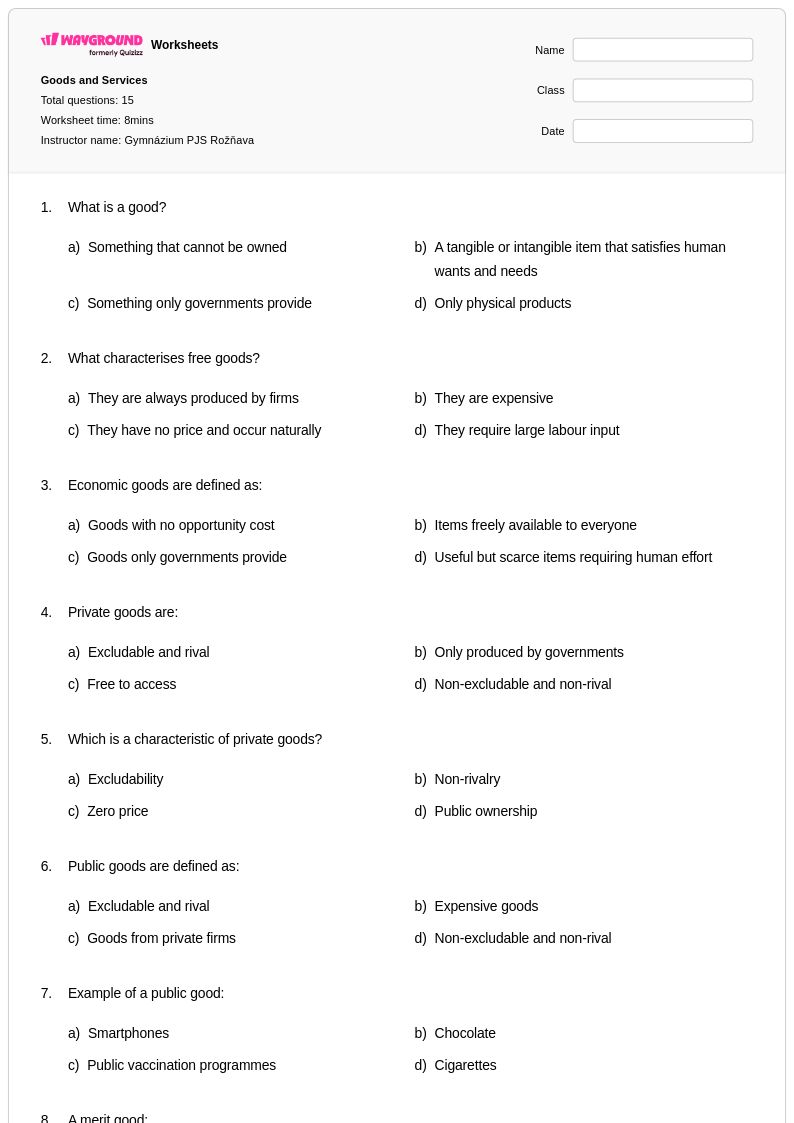
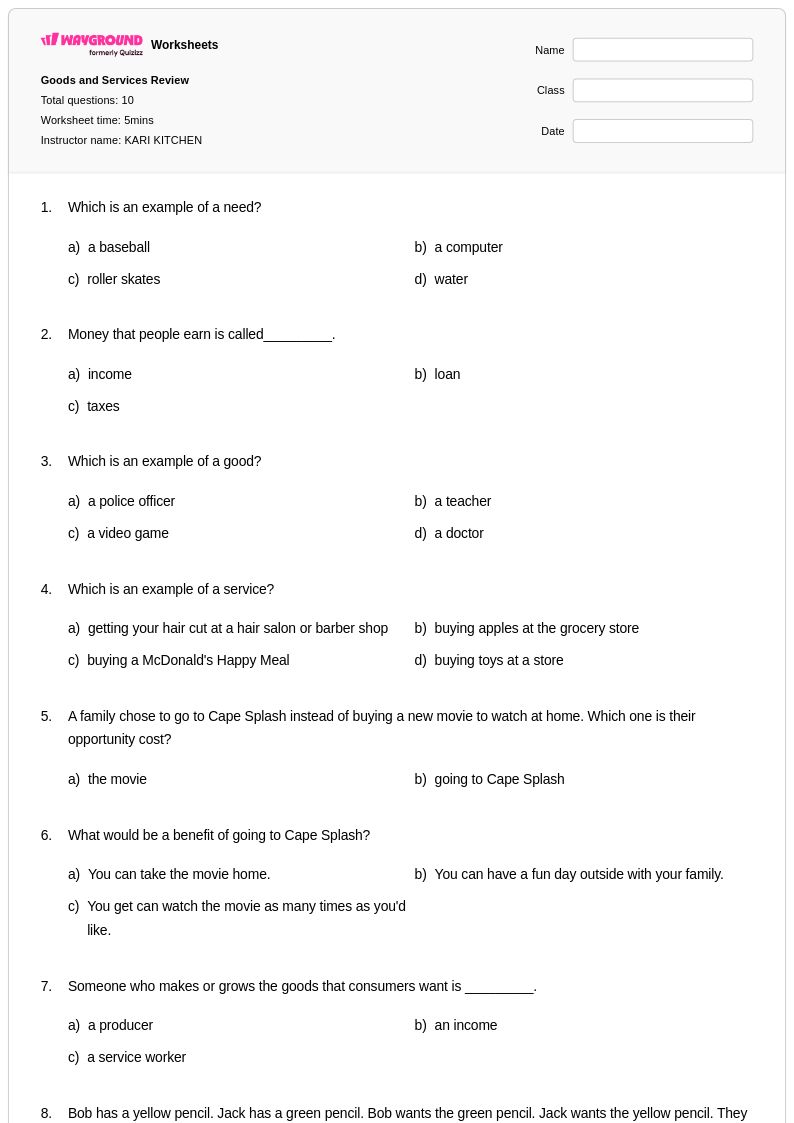
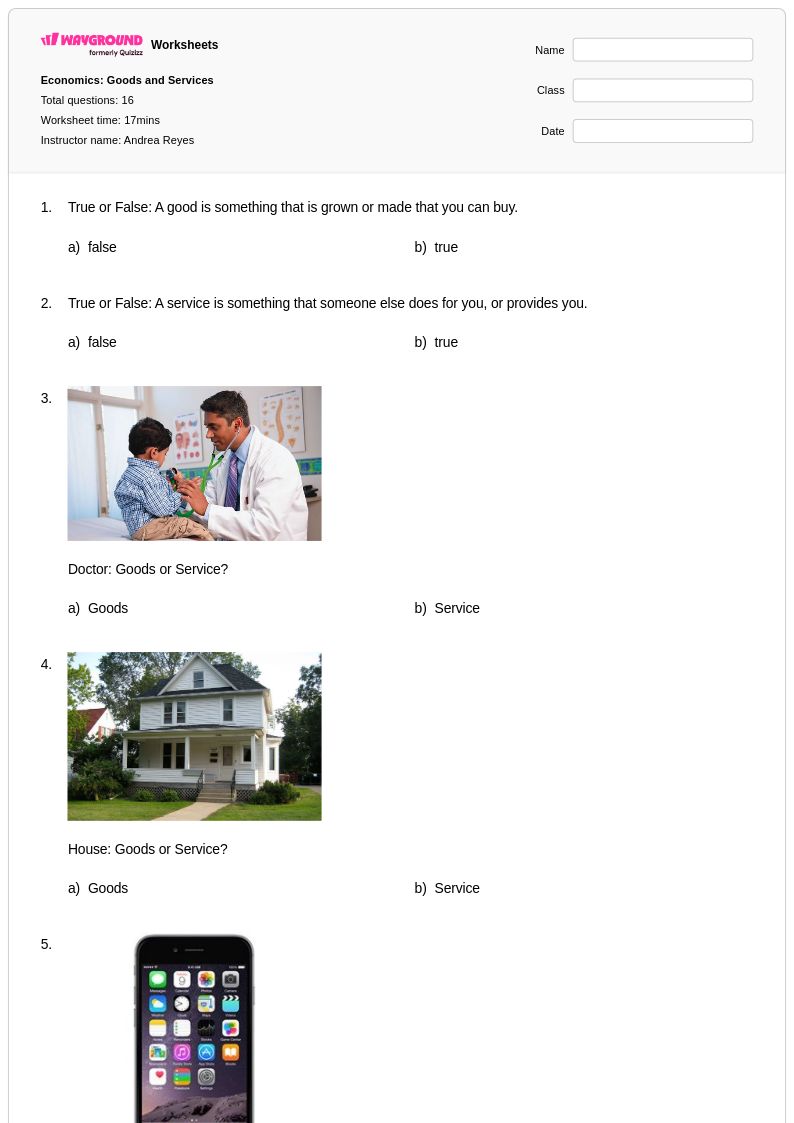
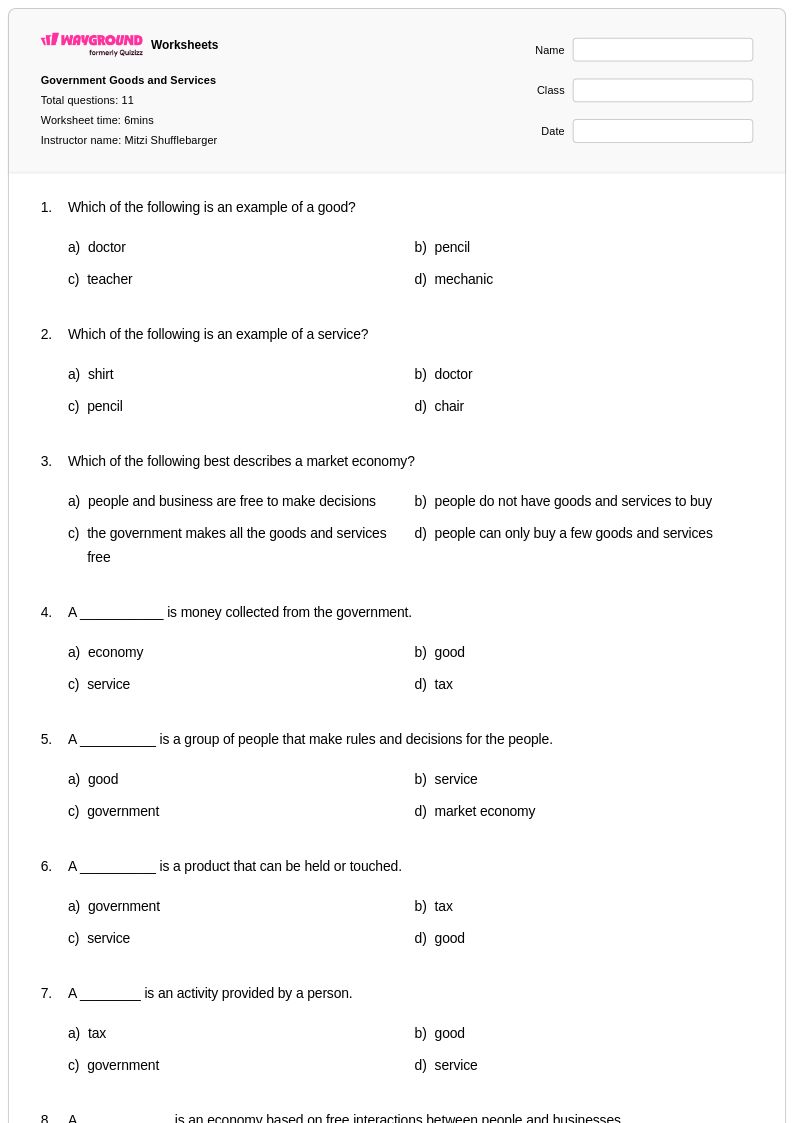
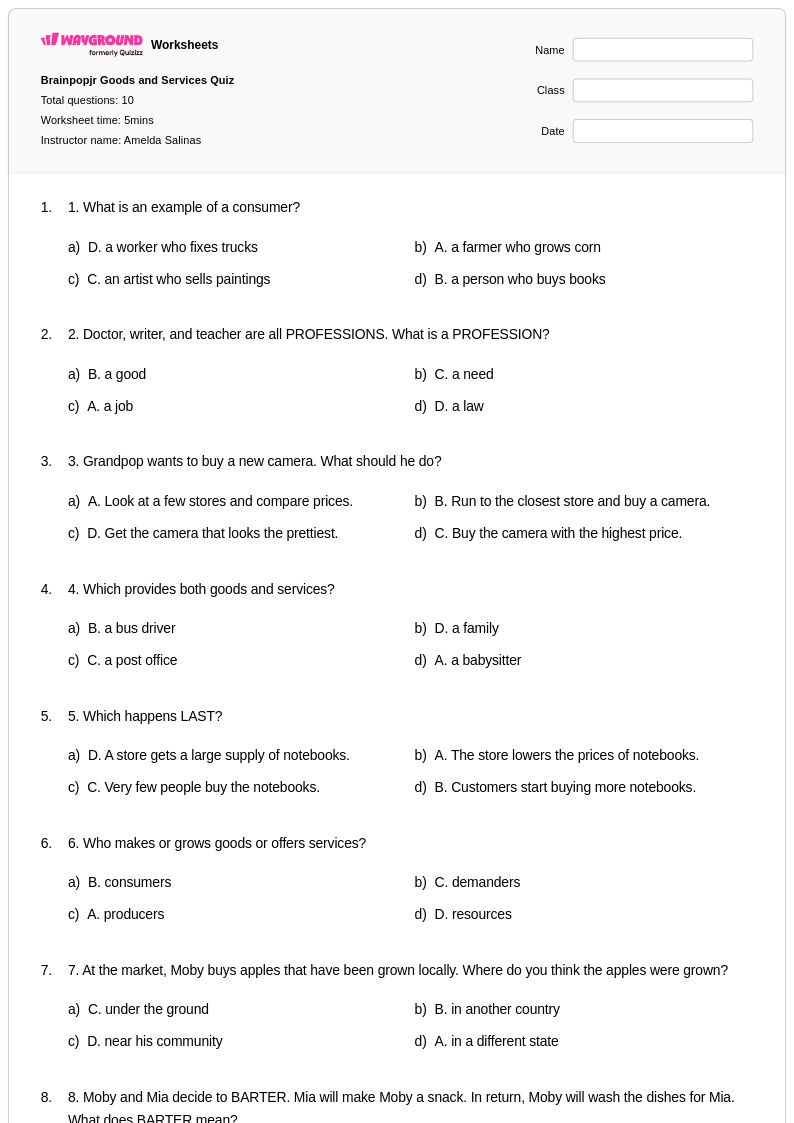
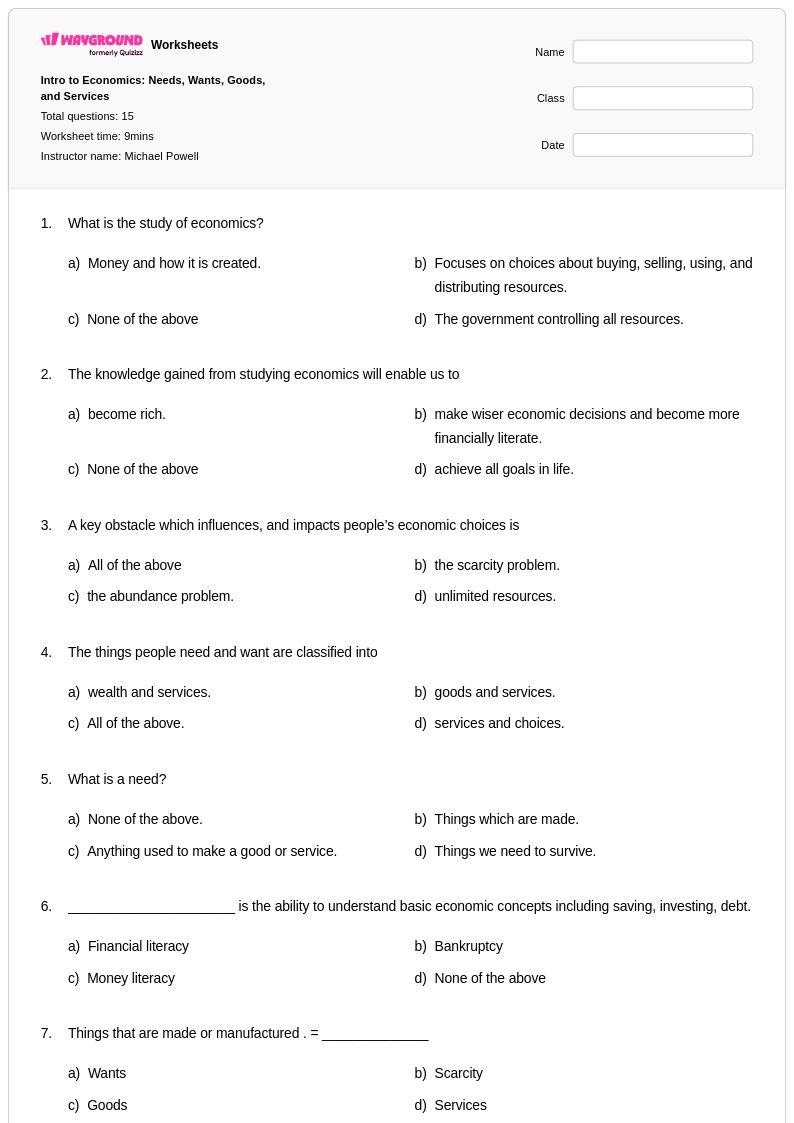
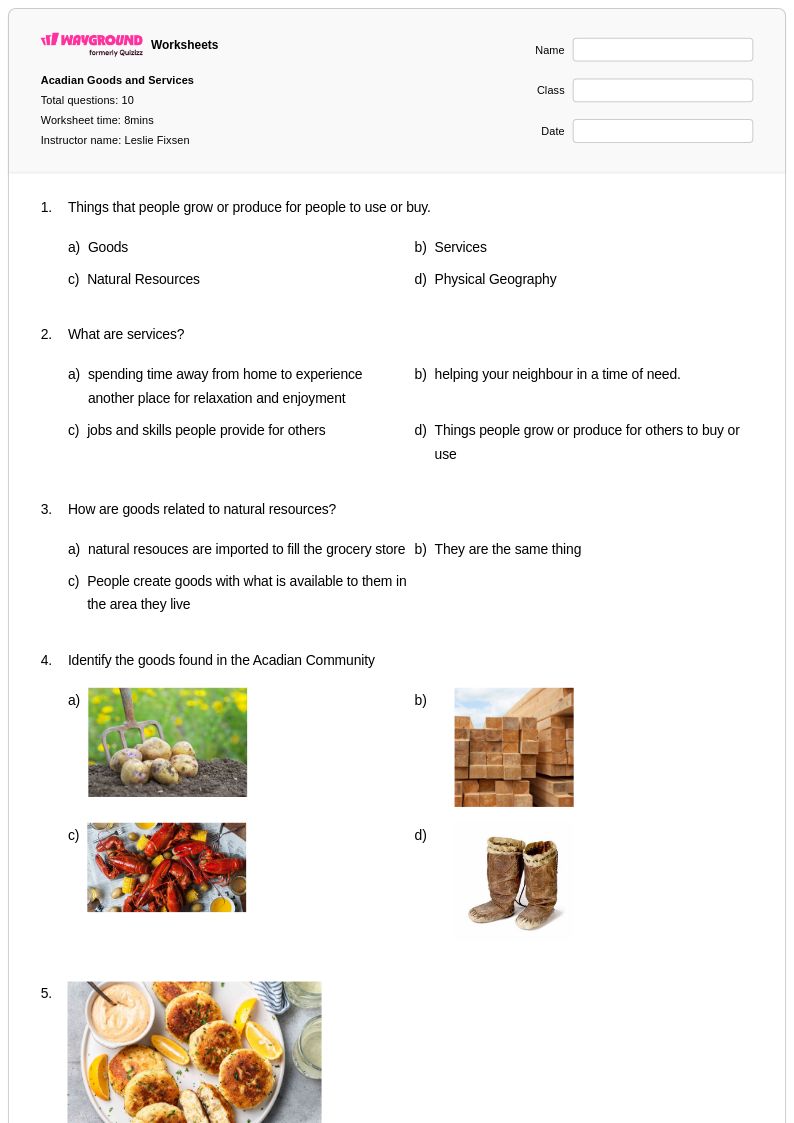
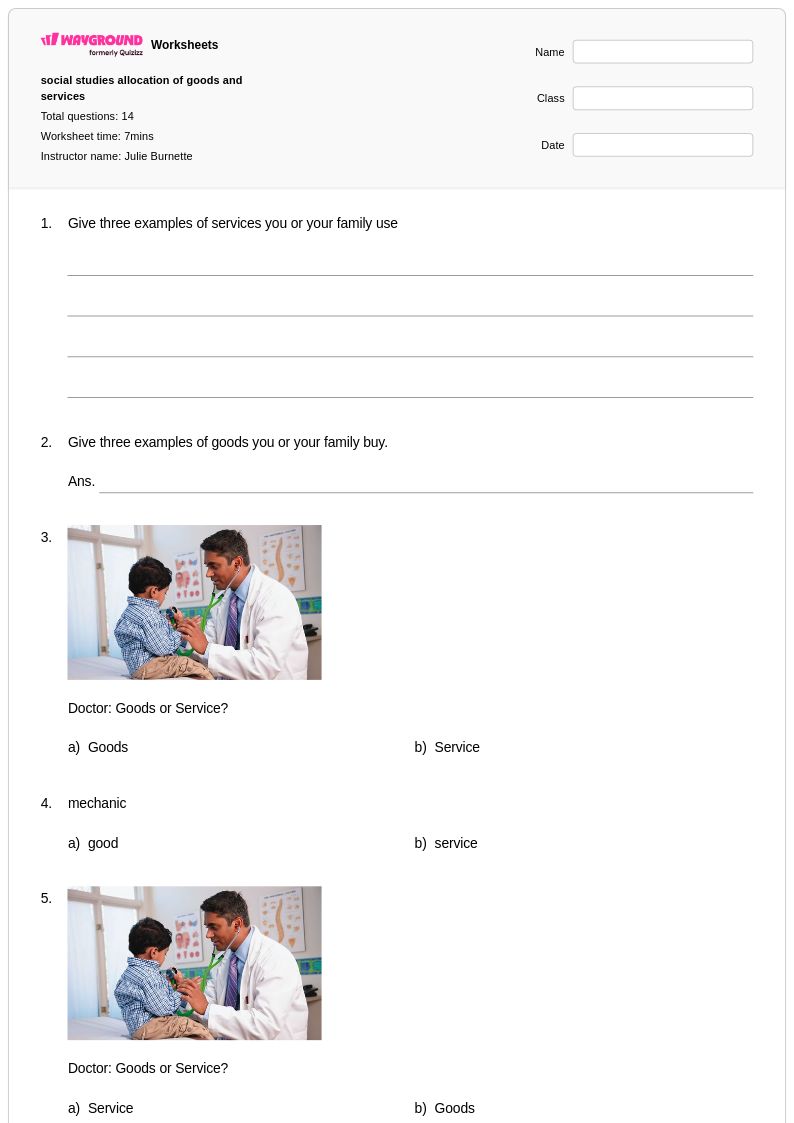
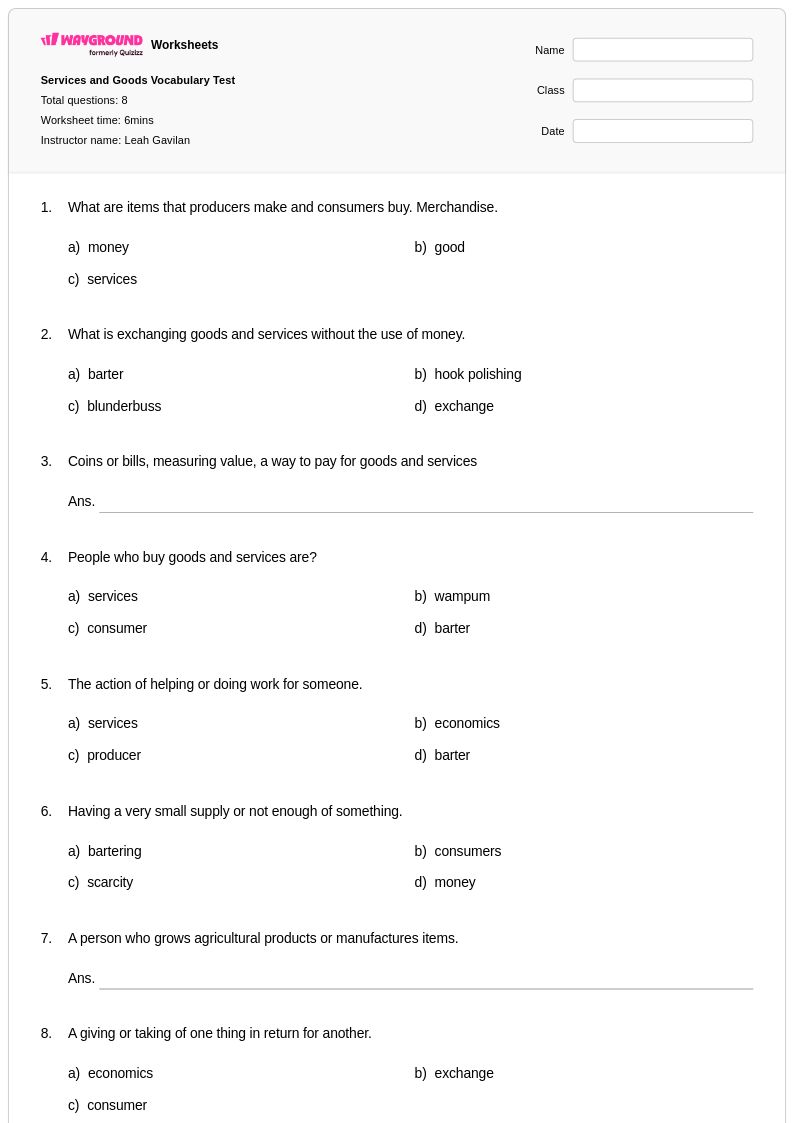
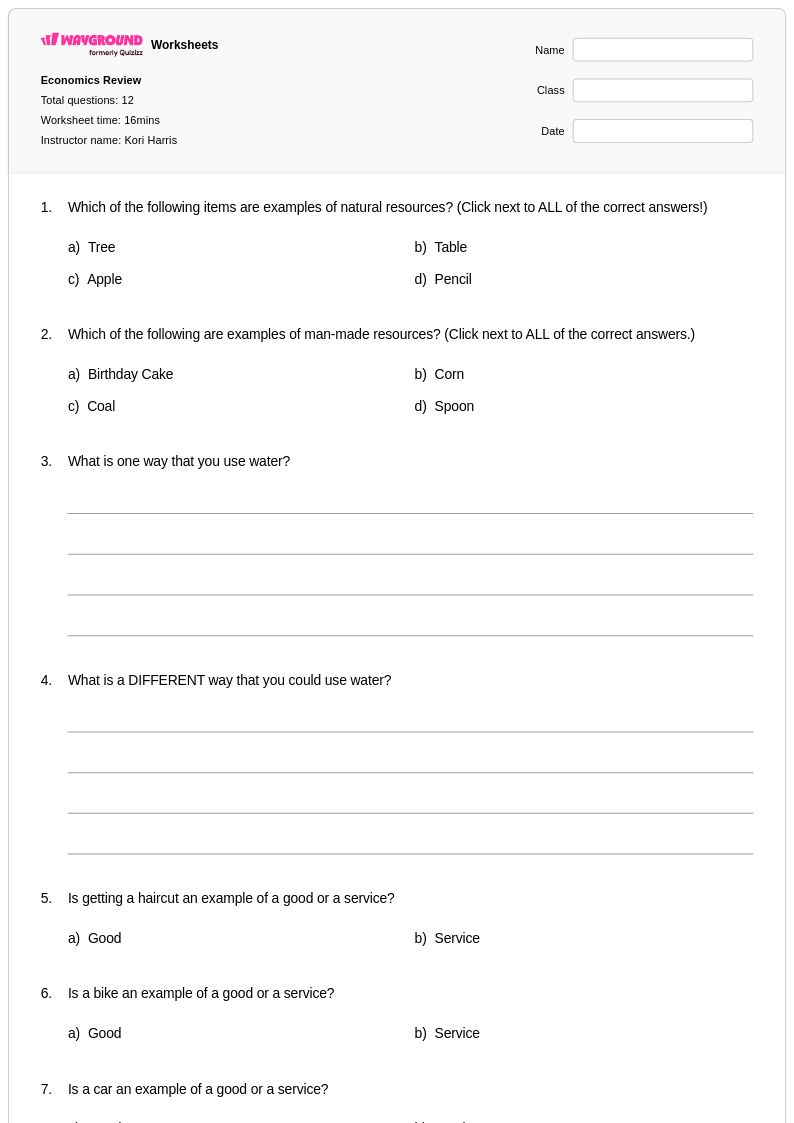
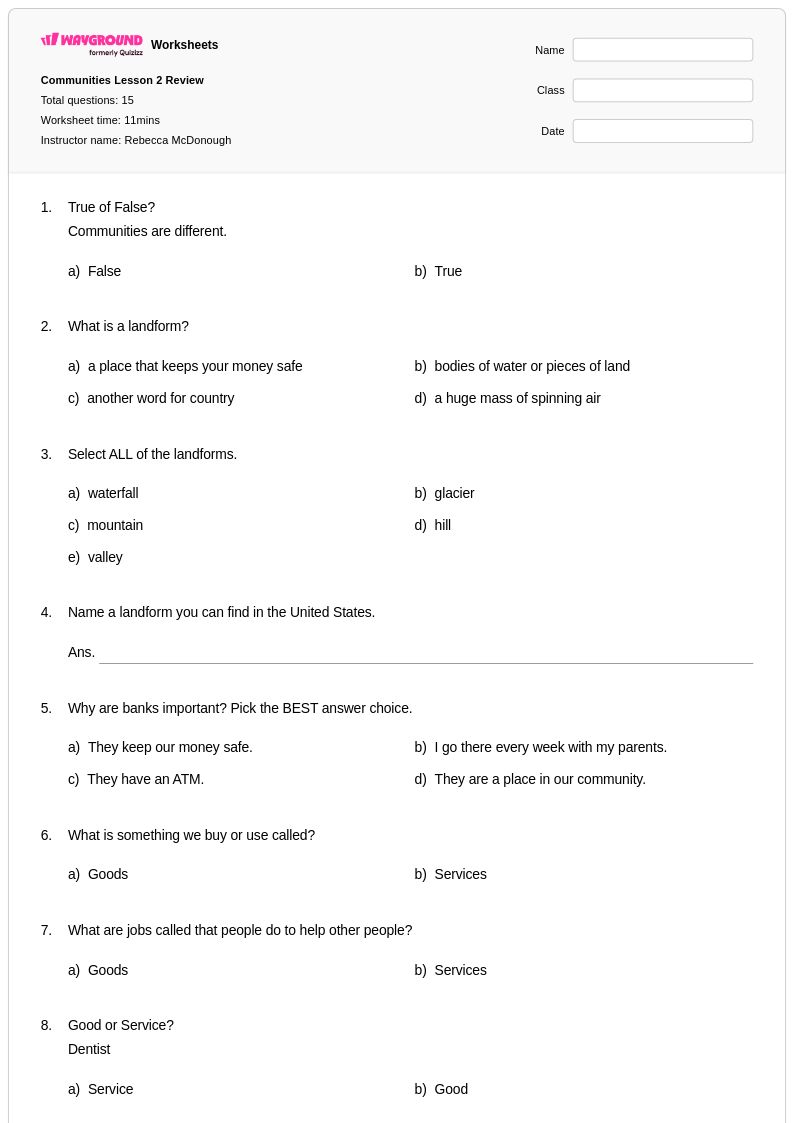
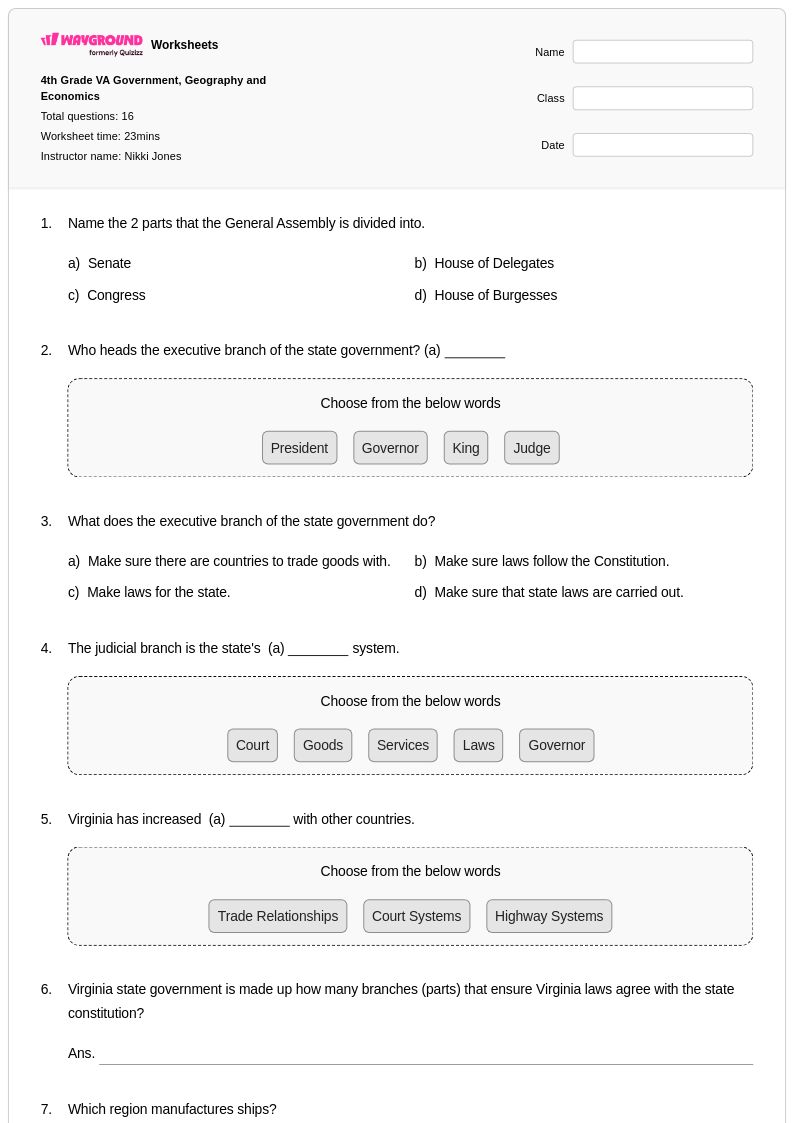
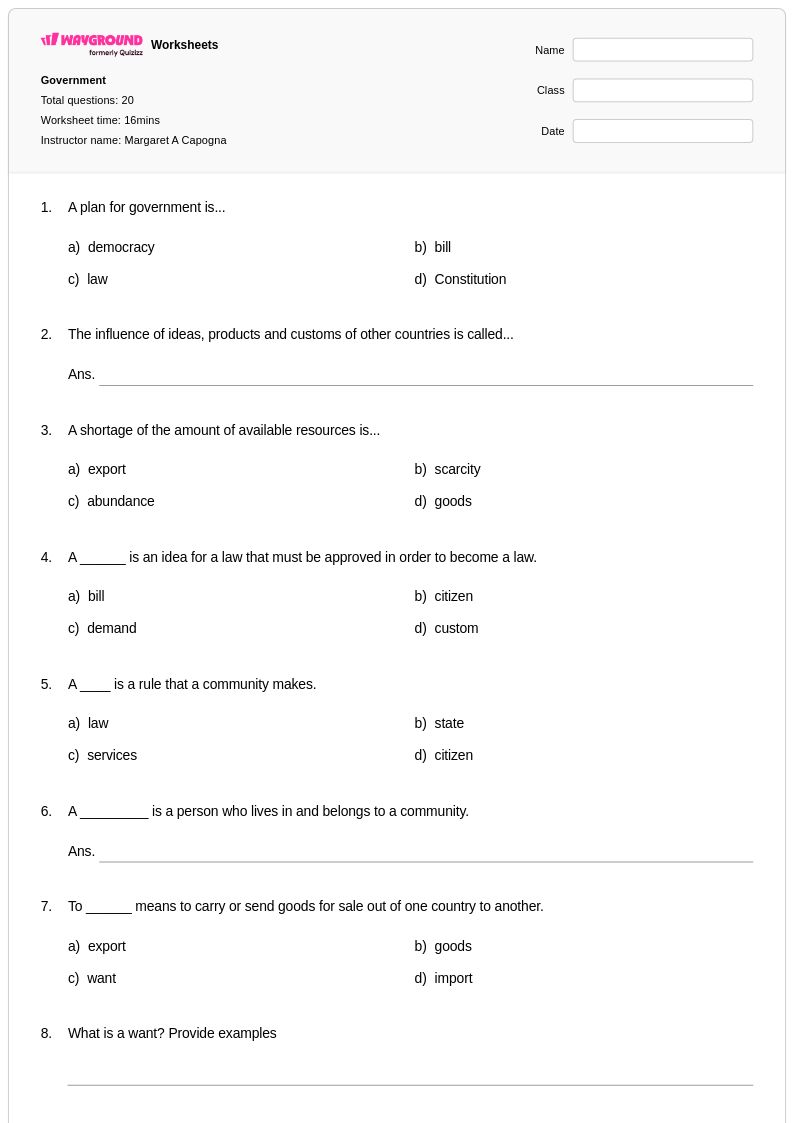
Explore Wayground's free goods and services worksheets with printable PDFs, practice problems, and answer keys to help students understand the difference between products and services in our economy.
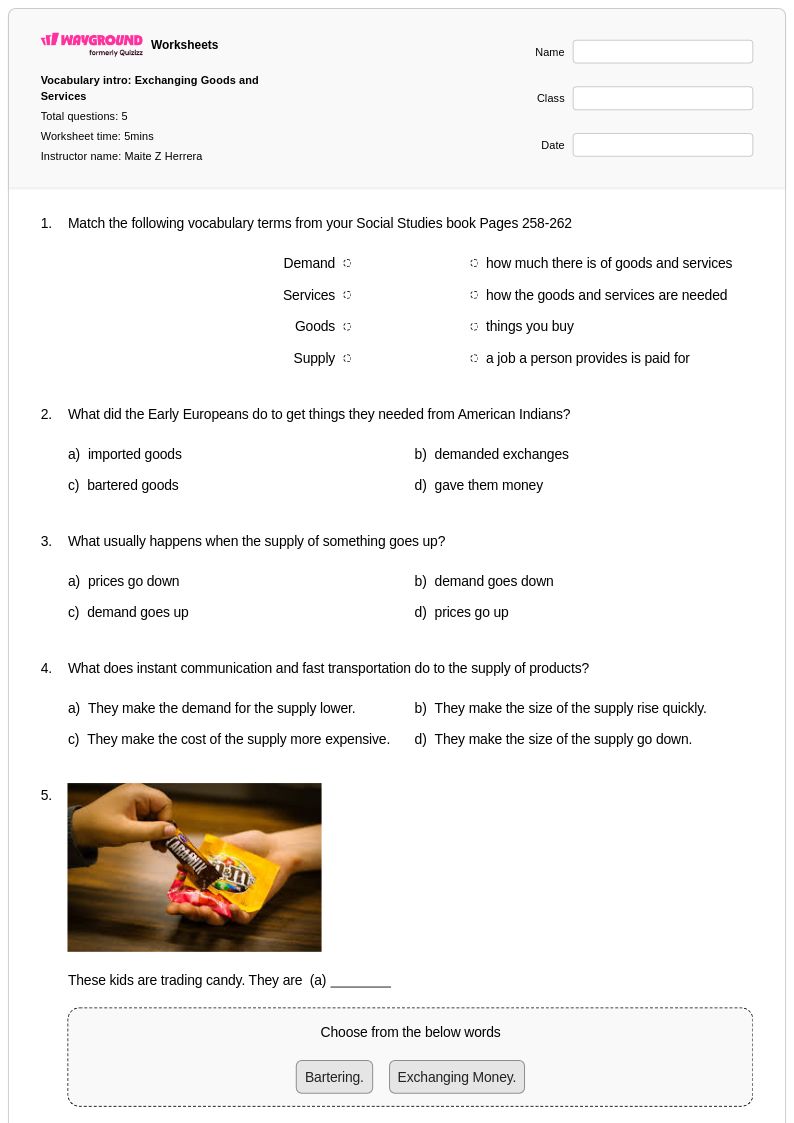
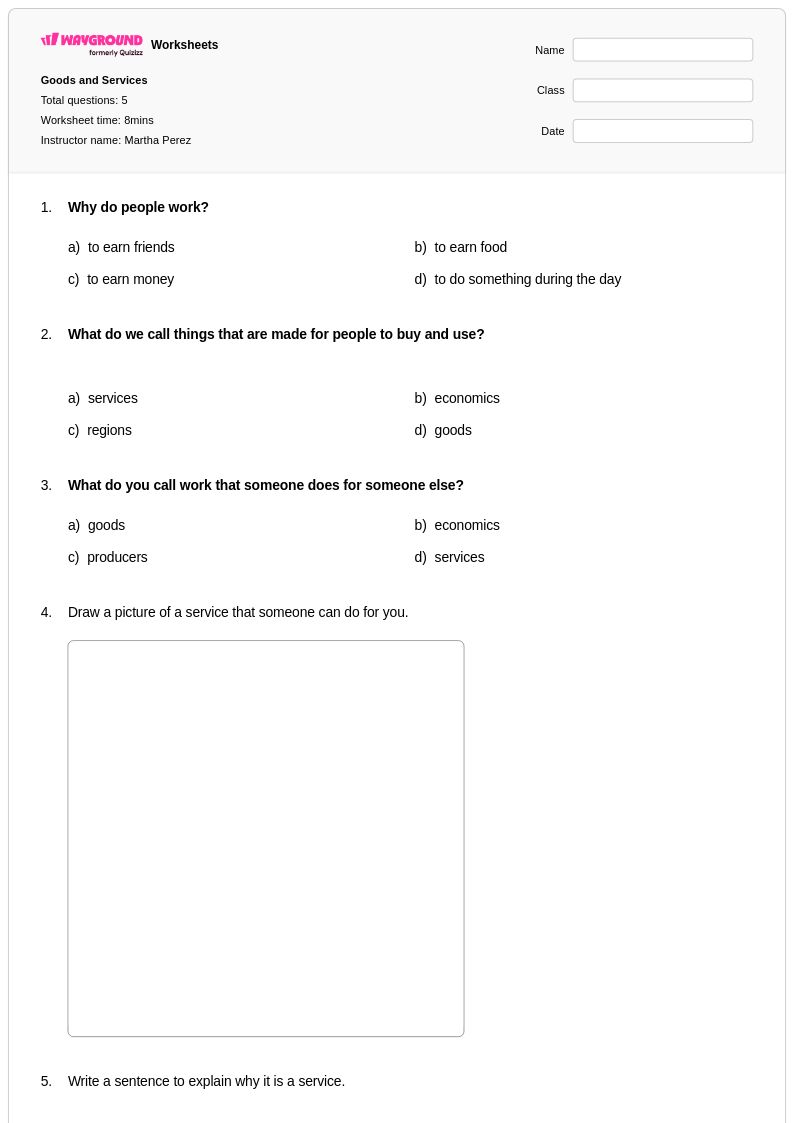
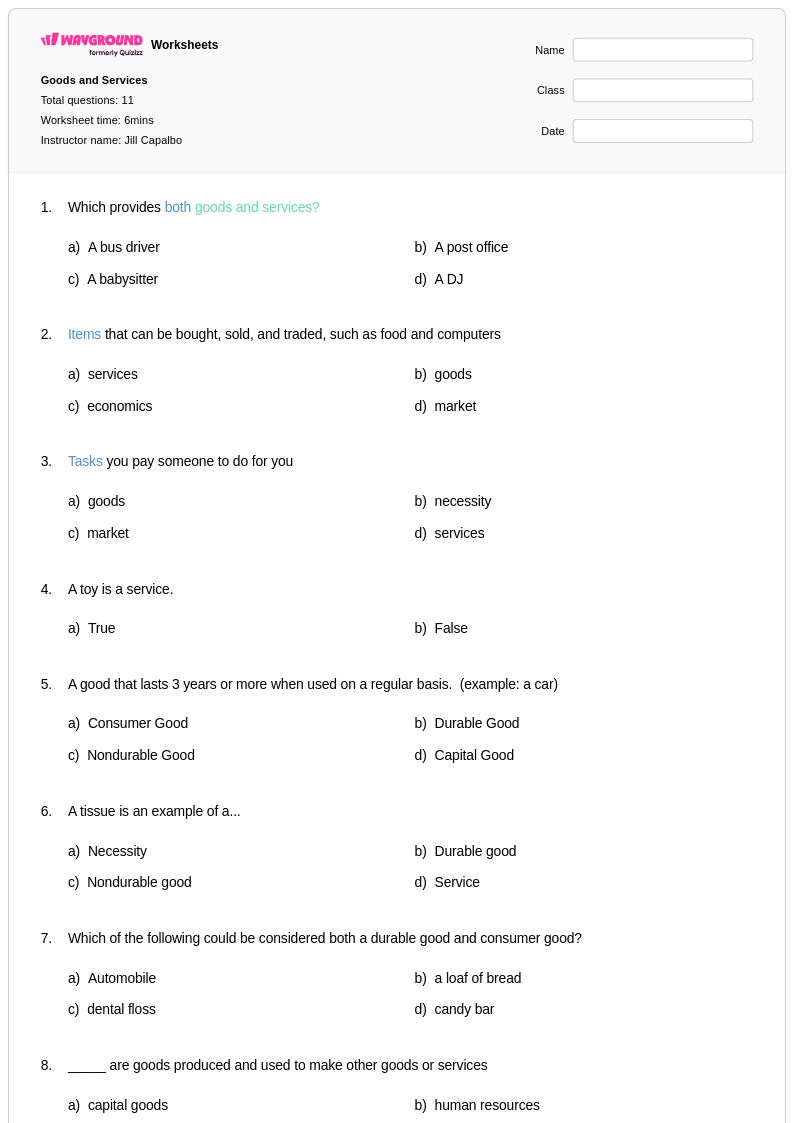
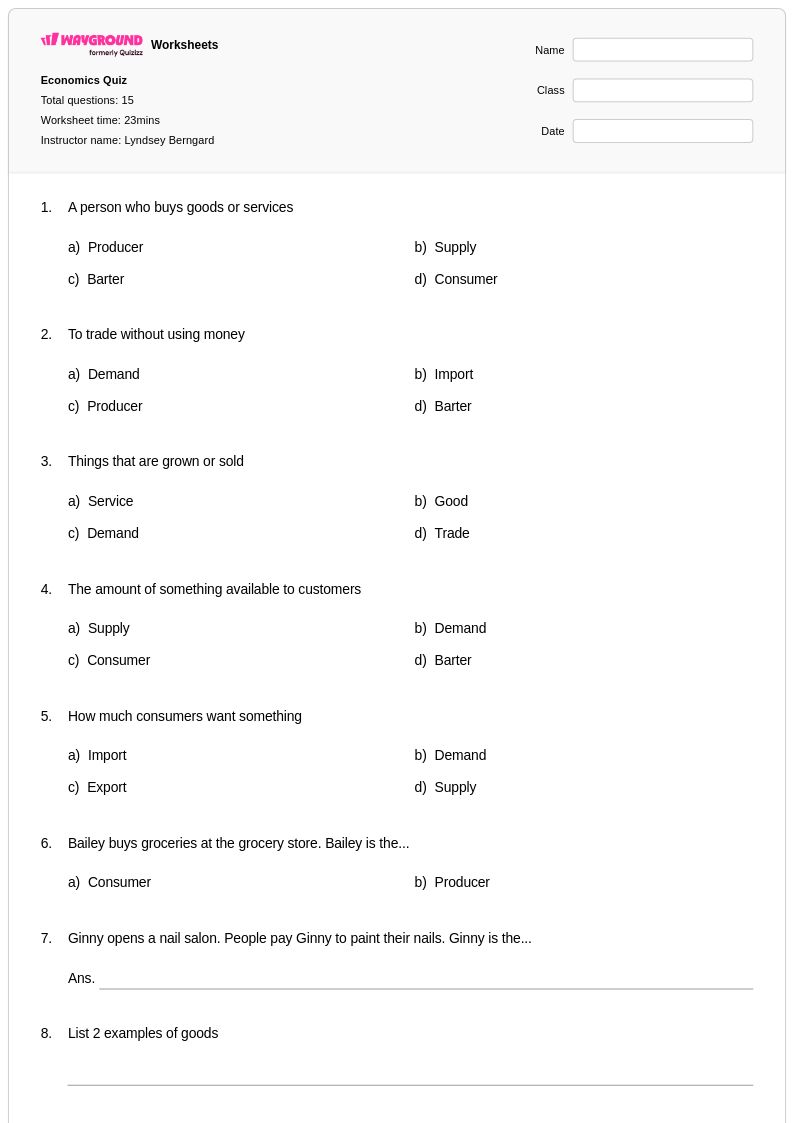
Goods and services worksheets available through Wayground (formerly Quizizz) provide students with essential foundational knowledge about economic concepts that shape daily life and commerce. These comprehensive educational resources help students distinguish between tangible goods like clothing, food, and electronics versus intangible services such as healthcare, education, and transportation. The worksheets strengthen critical thinking skills by challenging students to categorize real-world examples, analyze how goods and services meet human needs and wants, and understand the role of producers and consumers in economic systems. Each resource includes detailed answer keys and is designed as free printables that teachers can easily access in pdf format, featuring practice problems that reinforce vocabulary, comprehension, and application of economic principles through engaging scenarios and interactive exercises.
Wayground (formerly Quizizz) supports educators with an extensive collection of teacher-created goods and services worksheets, drawing from millions of high-quality resources that span various approaches to economic education. The platform's robust search and filtering capabilities enable teachers to quickly locate materials aligned with specific curriculum standards and learning objectives, while built-in differentiation tools allow for seamless customization based on individual student needs and abilities. These worksheets are available in both printable and digital formats, including convenient pdf downloads, making them versatile for classroom instruction, homework assignments, or independent study sessions. Teachers can efficiently plan comprehensive economics units, provide targeted remediation for struggling learners, offer enrichment opportunities for advanced students, and deliver consistent skill practice that builds economic literacy and prepares students to understand their role as informed consumers and future participants in the economy.
FAQs
How do I teach the difference between goods and services to elementary students?
Start by grounding the distinction in students' everyday experiences — ask them what they bought at a store recently (a good) versus what a doctor or barber does for them (a service). Use concrete, familiar examples like food and clothing for goods, and healthcare and transportation for services, before introducing formal definitions. Once students can sort familiar examples confidently, challenge them with edge cases like a restaurant meal, which involves both a good and a service, to build deeper conceptual understanding.
What kinds of practice exercises help students understand goods and services?
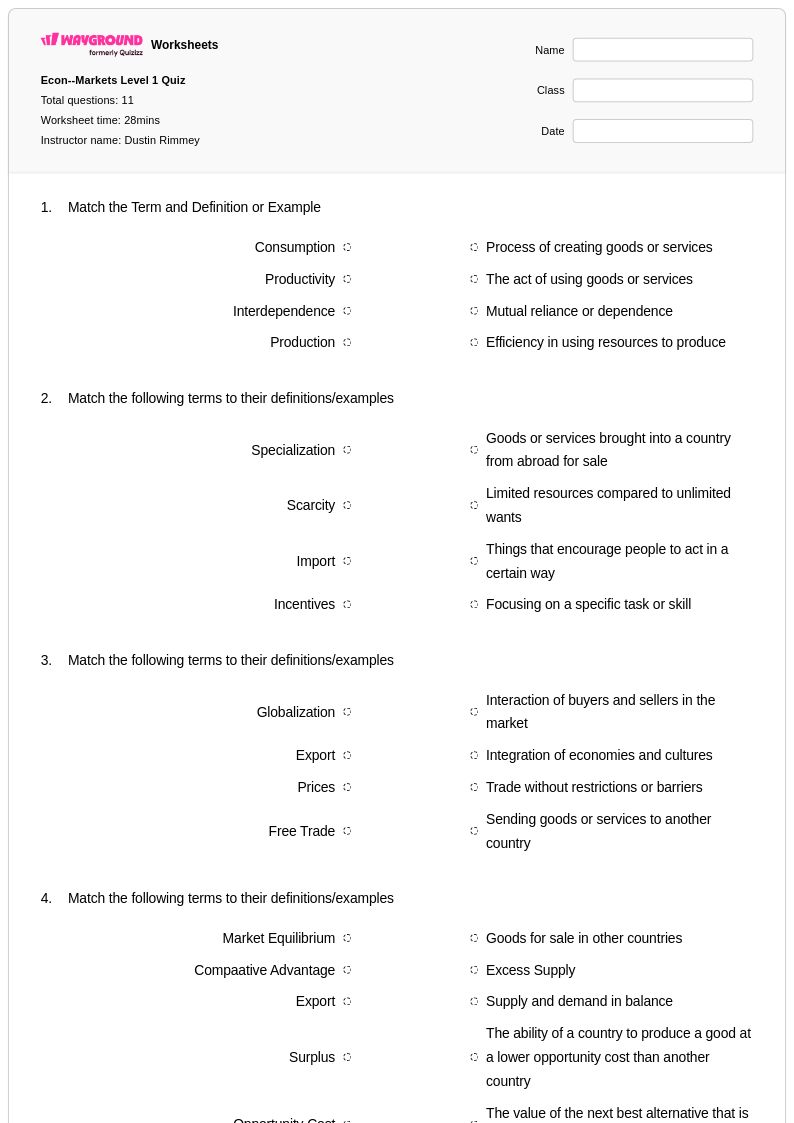
Categorization activities are the most effective entry point — students sort real-world examples into goods or services columns, which builds pattern recognition before moving to analysis. From there, scenario-based problems that ask students to identify producers and consumers in a given situation help them apply the concept rather than just recall it. Vocabulary reinforcement exercises, such as matching terms to definitions or filling in economic scenarios, solidify the academic language students need for assessments.
What mistakes do students commonly make when distinguishing goods from services?
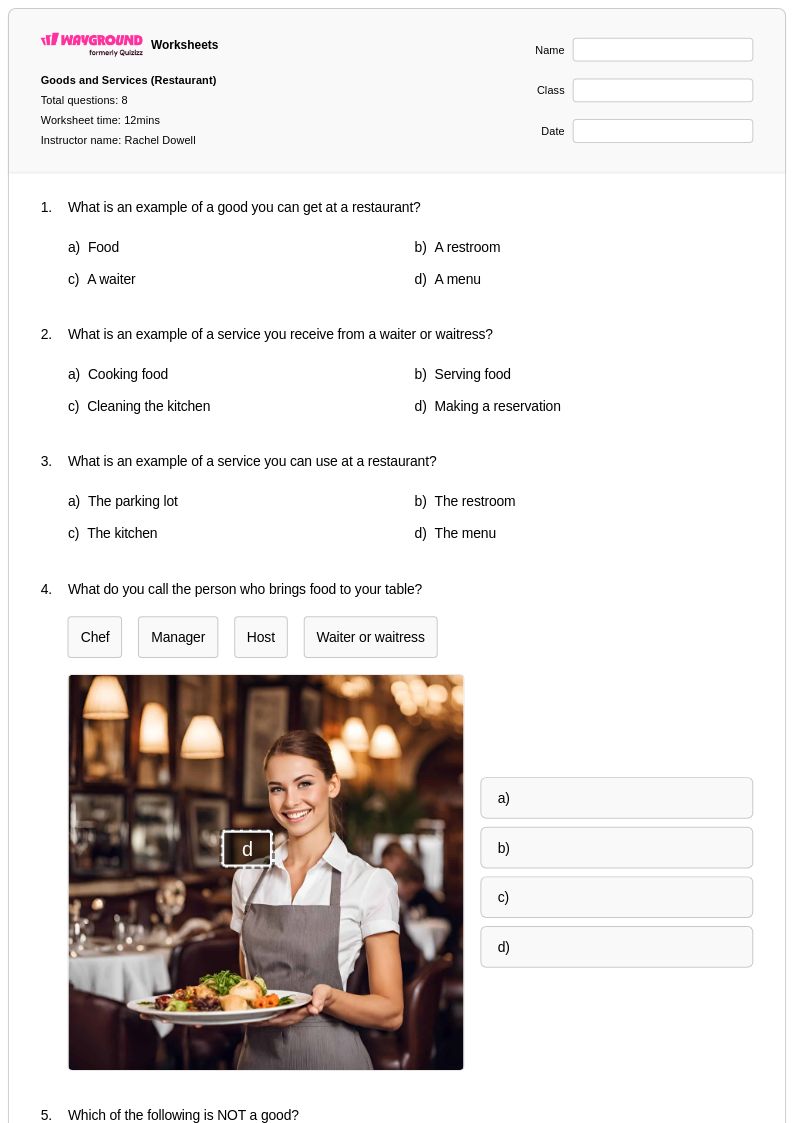
The most frequent error is confusing a business that delivers a service with one that produces a good — for example, classifying a restaurant as only a goods provider because it sells food. Students also struggle with intangible goods like digital downloads, which don't fit neatly into the physical-versus-service divide they've been taught. Another common misconception is treating 'needs' and 'wants' as synonymous with 'goods' and 'services,' which reflects a gap in understanding how both goods and services can satisfy either category.
How do goods and services worksheets connect to broader economics standards?
Goods and services is a foundational concept in most K-6 social studies and economics standards, serving as the entry point for understanding producers, consumers, supply, demand, and market systems. Mastery of this distinction prepares students to analyze how human needs and wants are met within an economy, which underpins later units on trade, money, and entrepreneurship. Worksheets that include producer and consumer roles alongside goods and services classification directly address the interconnected standards most state frameworks require at the early elementary level.
How do I use Wayground's goods and services worksheets in my classroom?
Wayground's goods and services worksheets are available as printable PDFs for traditional classroom use and in digital formats for technology-integrated instruction, so they work equally well as paper handouts, homework packets, or assigned digital activities. Teachers can also host these worksheets as a quiz directly on Wayground, enabling real-time student responses and automatic grading. For students who need additional support, Wayground's accommodation tools allow teachers to enable read-aloud functionality, extended time, or reduced answer choices on an individual basis without disrupting the rest of the class.
How can I differentiate goods and services instruction for students at different levels?
For students who are still developing foundational understanding, focus on highly familiar, concrete examples and reduce the number of answer choices they're sorting between to lower cognitive load. Advanced students benefit from scenario-based problems that require them to explain why something is classified as a good or service and to analyze edge cases involving mixed transactions. On Wayground, teachers can apply individual accommodations such as reduced answer choices or read-aloud support to specific students while the rest of the class works through the standard version of the same worksheet.