Free Printable Great Depression Worksheets for Grade 9
Grade 9 Great Depression worksheets and printables help students explore the causes, effects, and lasting impact of America's economic crisis through engaging practice problems with comprehensive answer keys.
Explore printable Great Depression worksheets for Grade 9
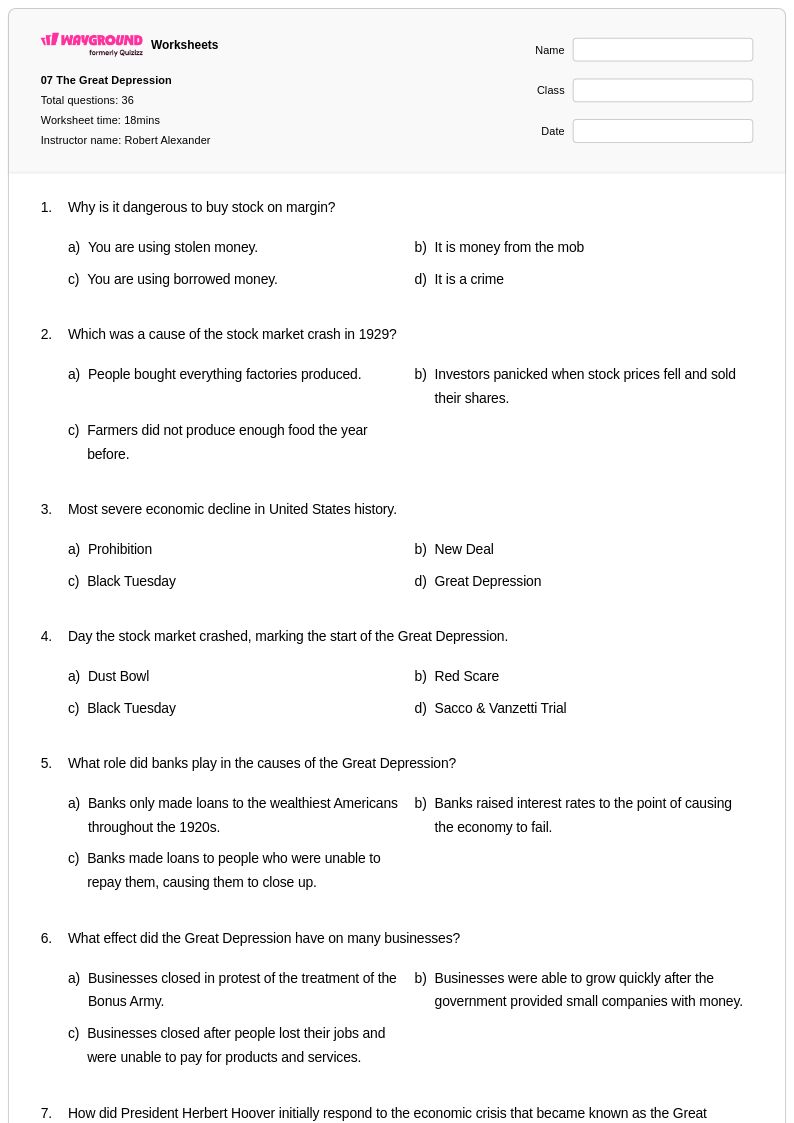
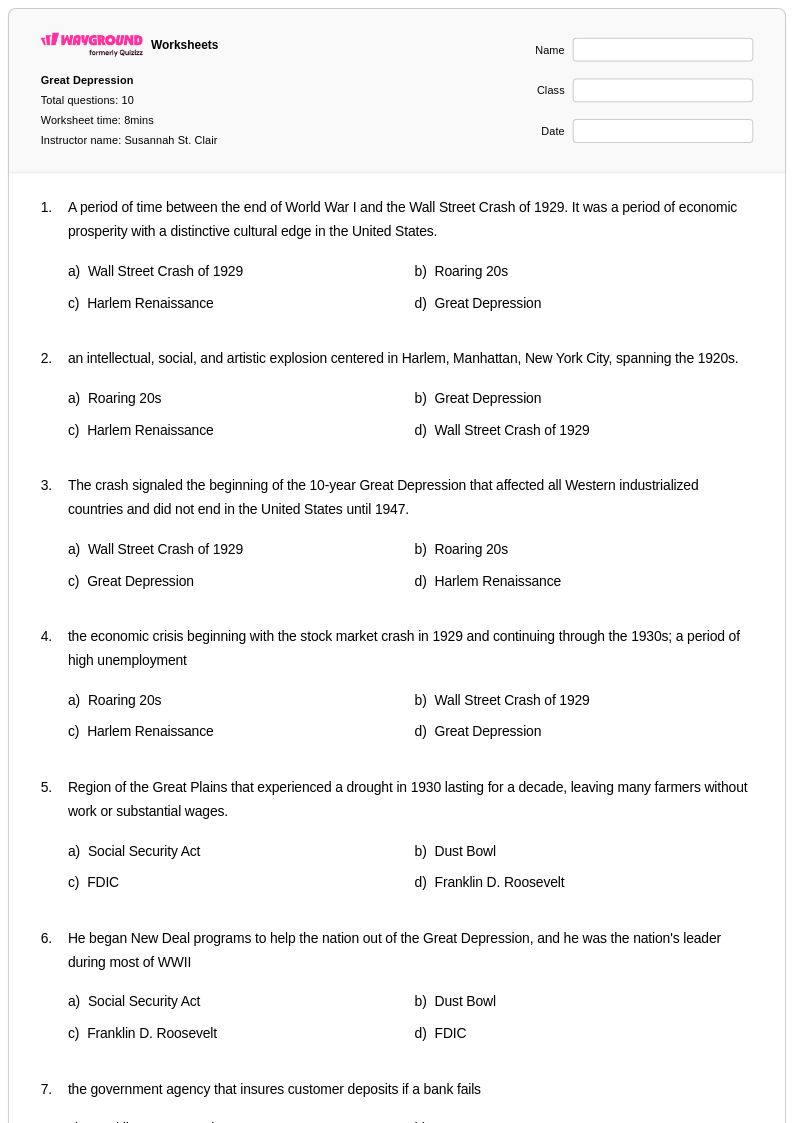
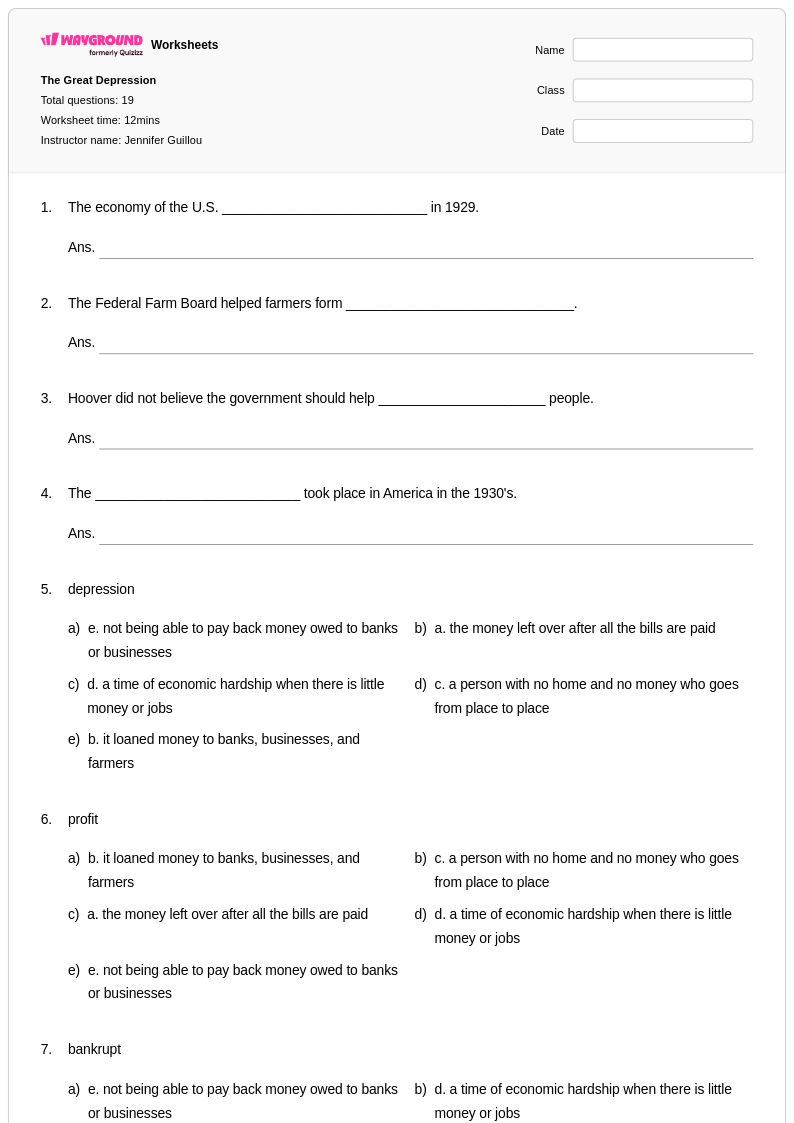
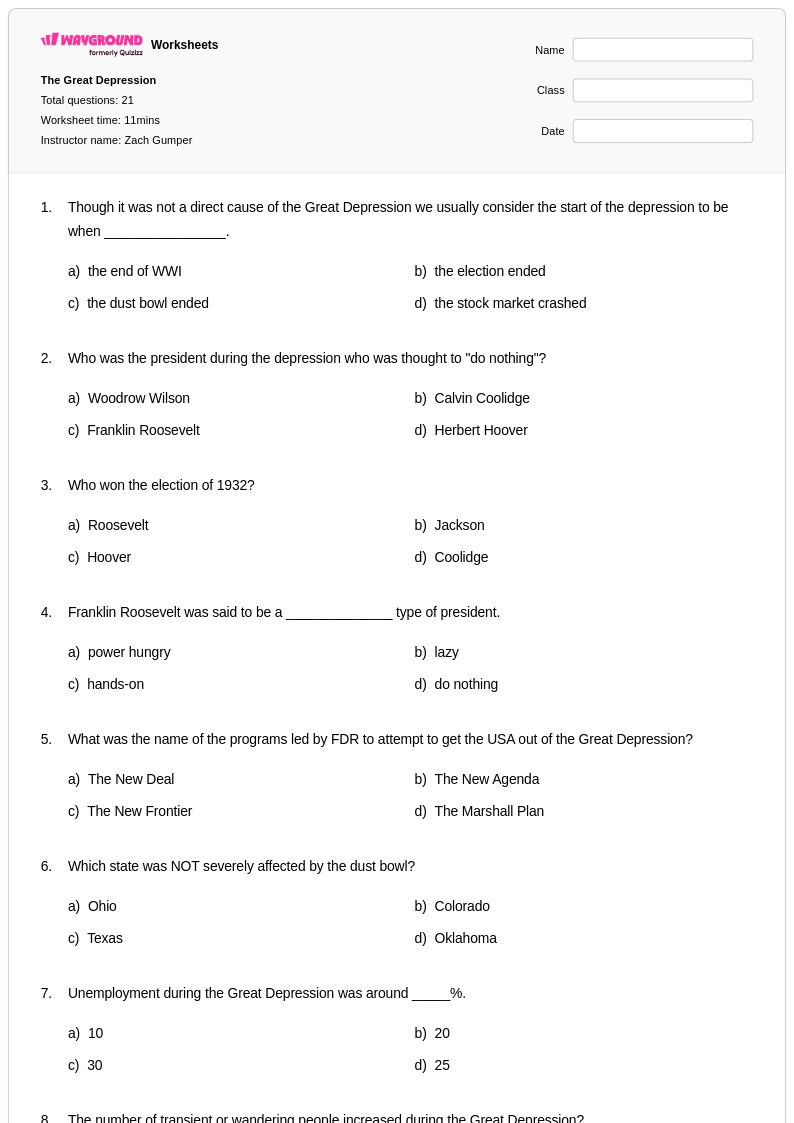
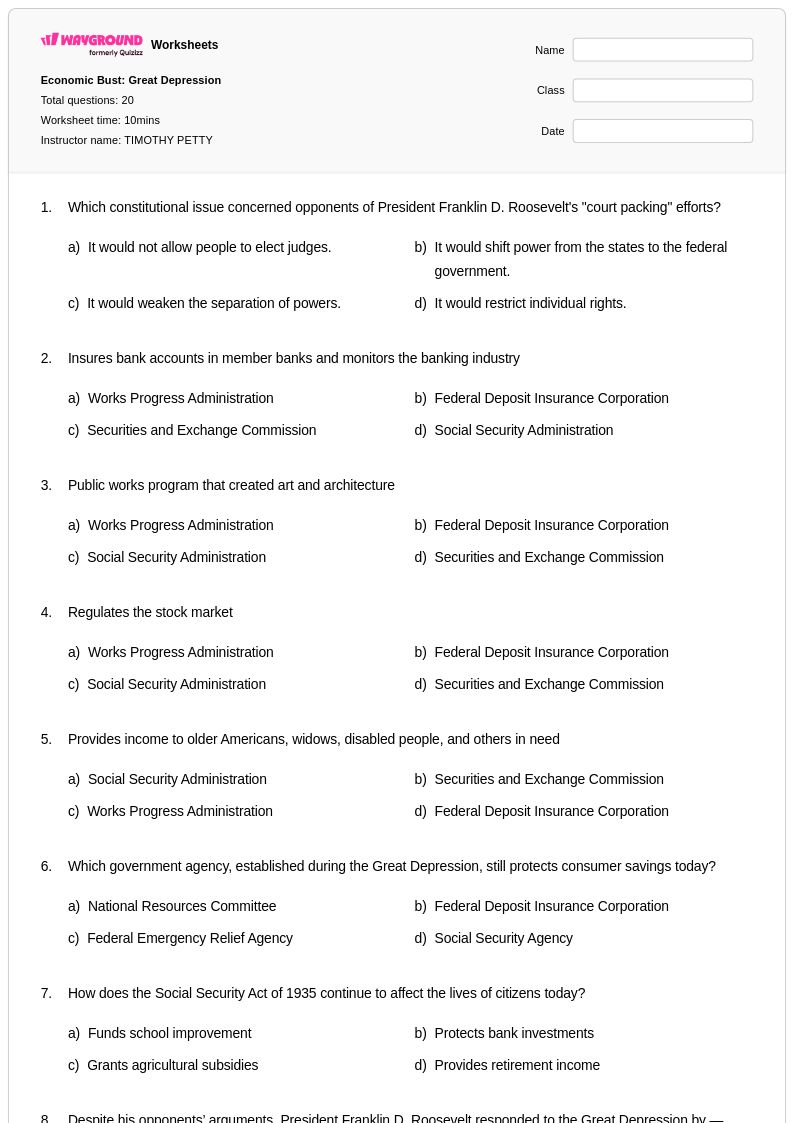
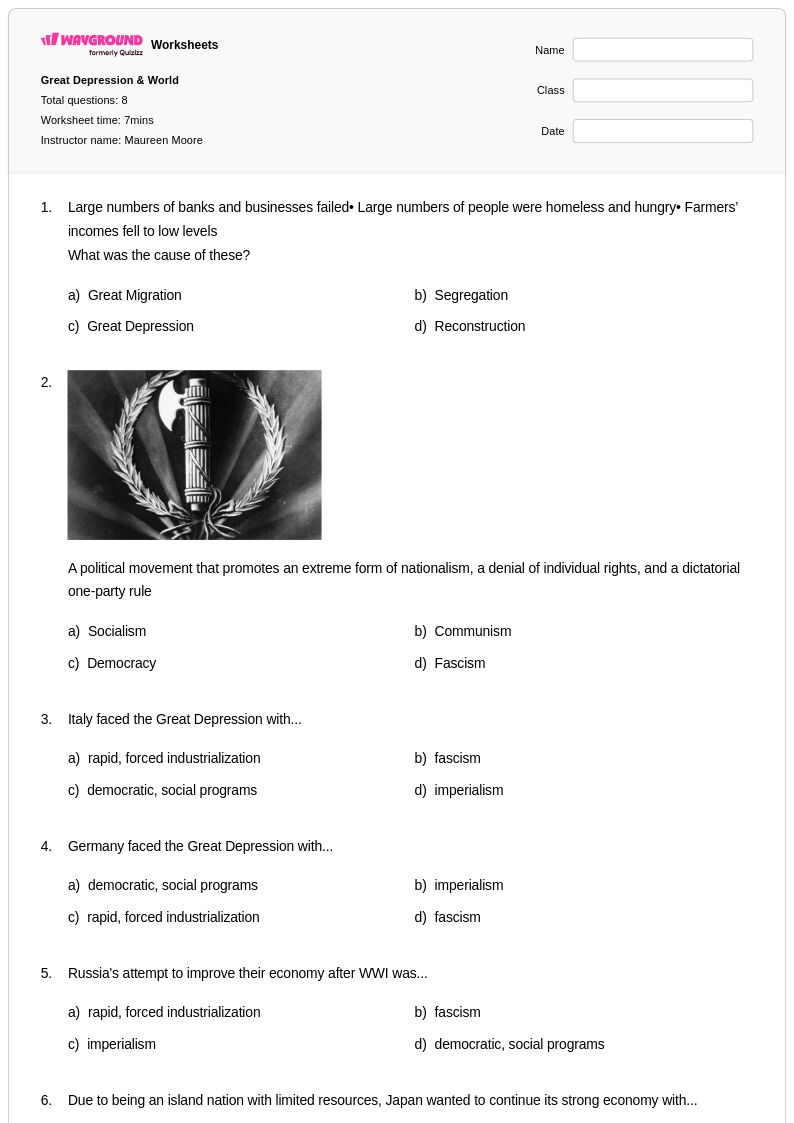
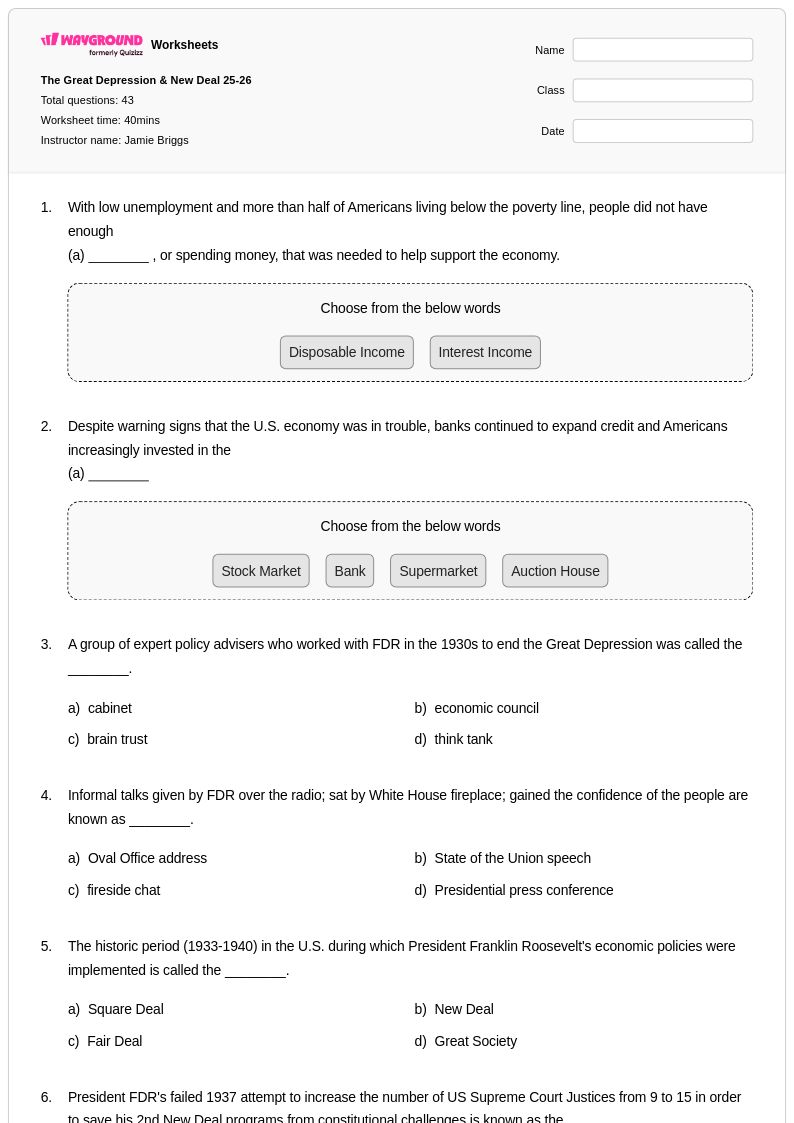
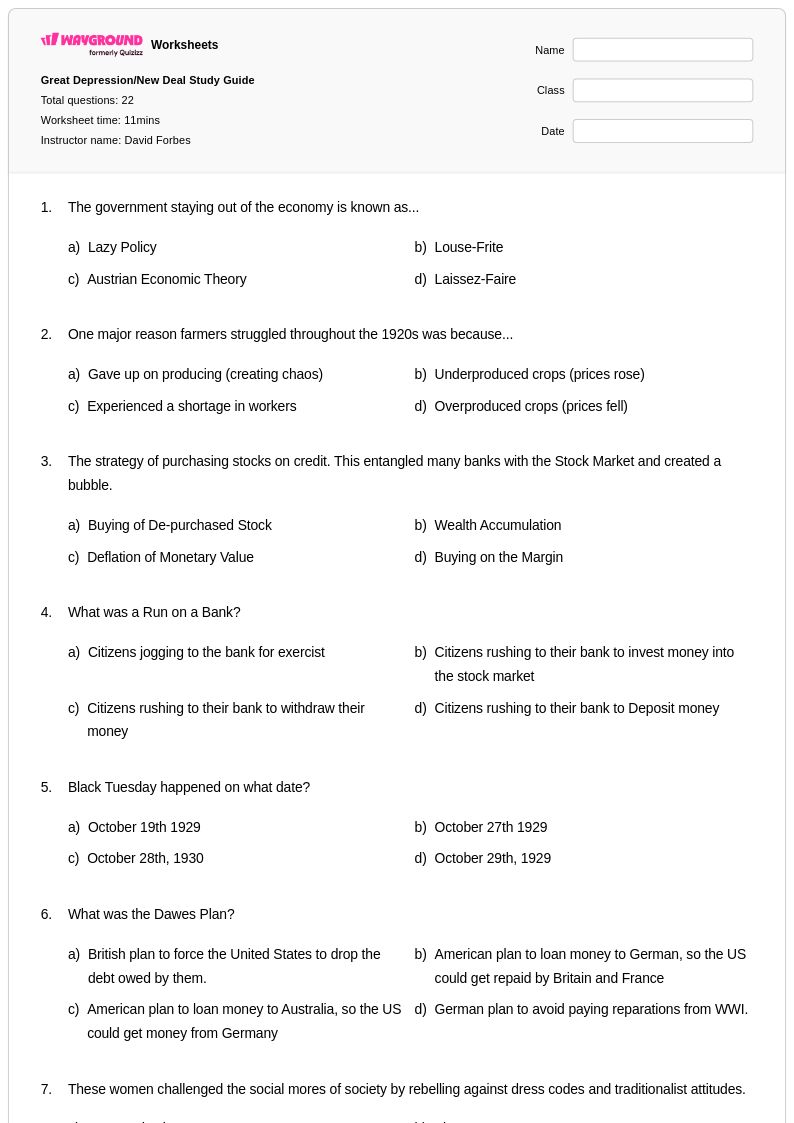
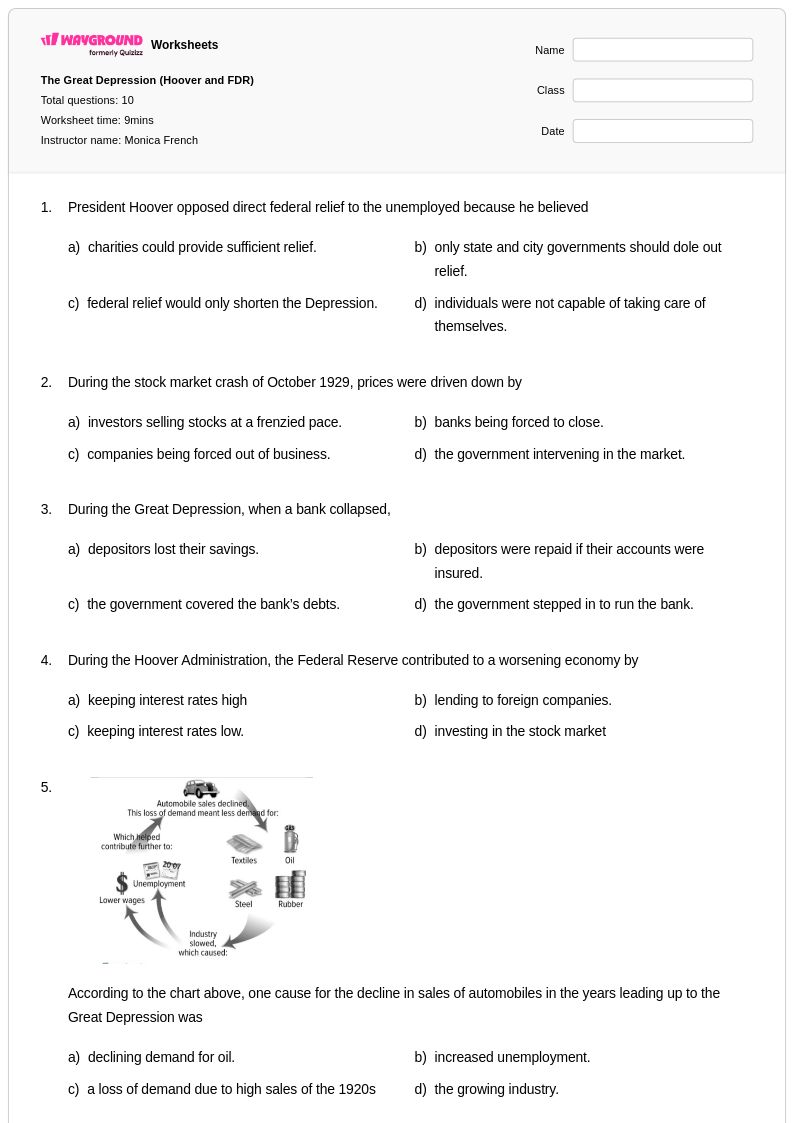
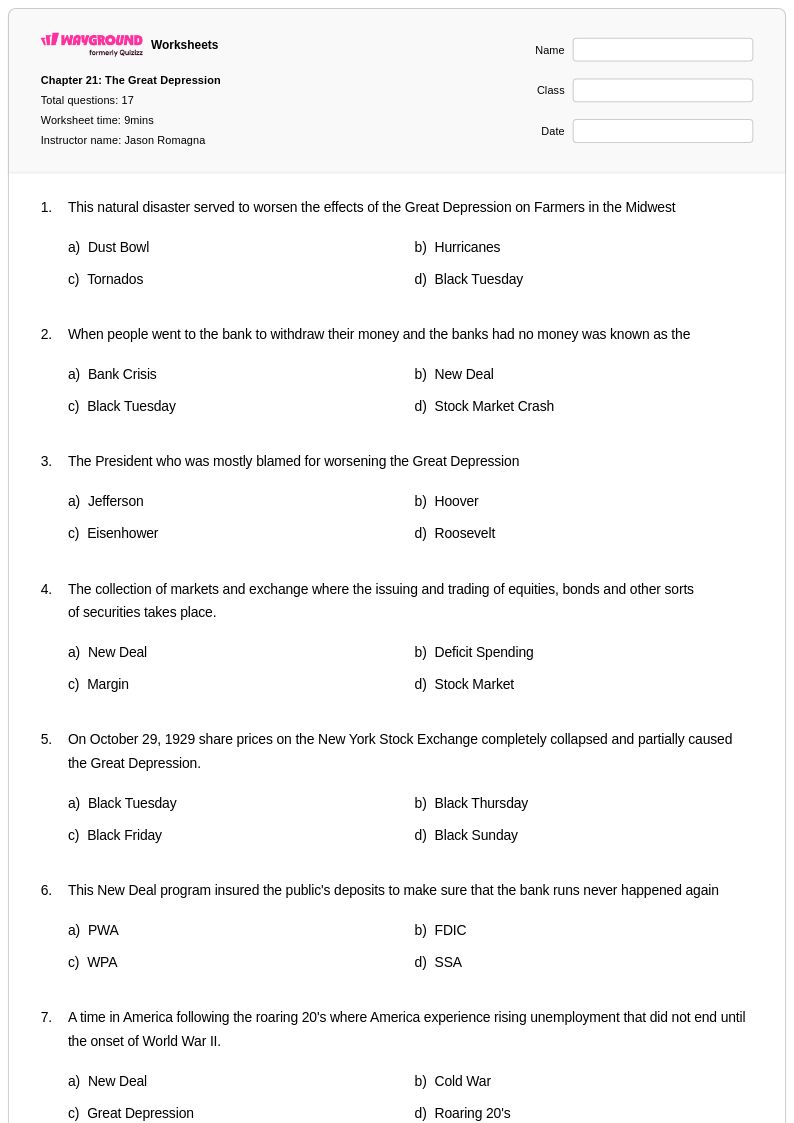
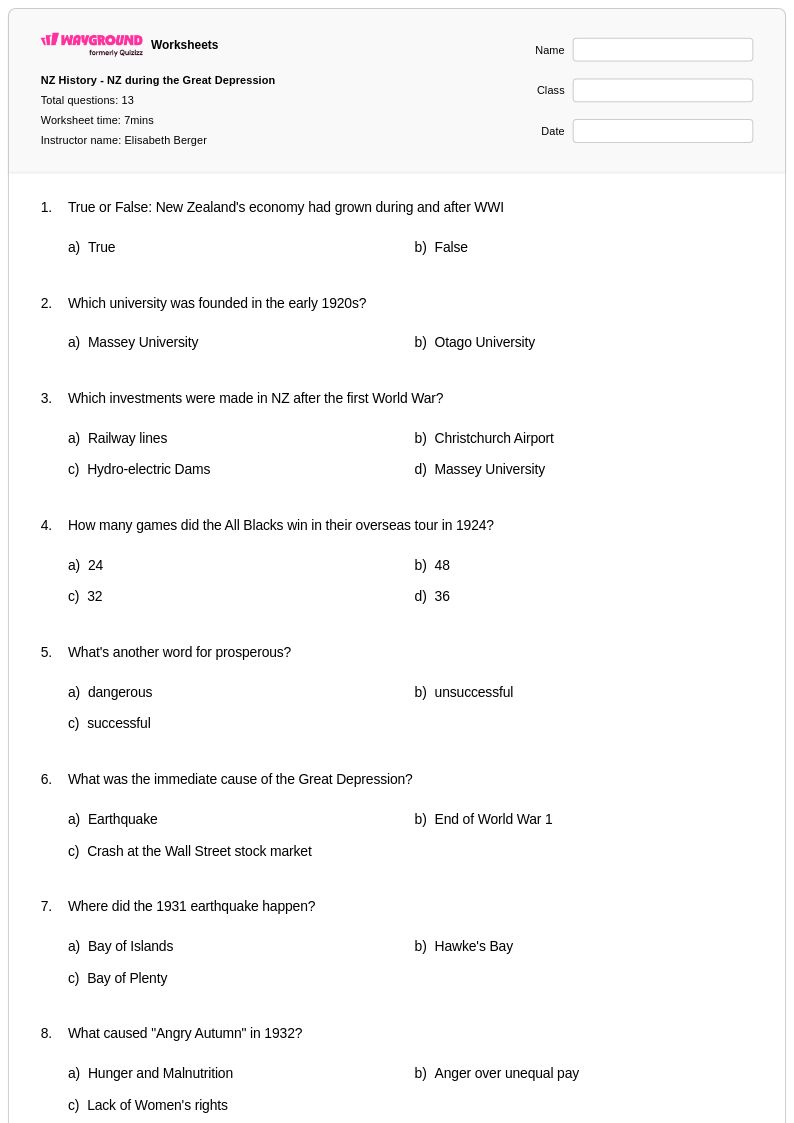
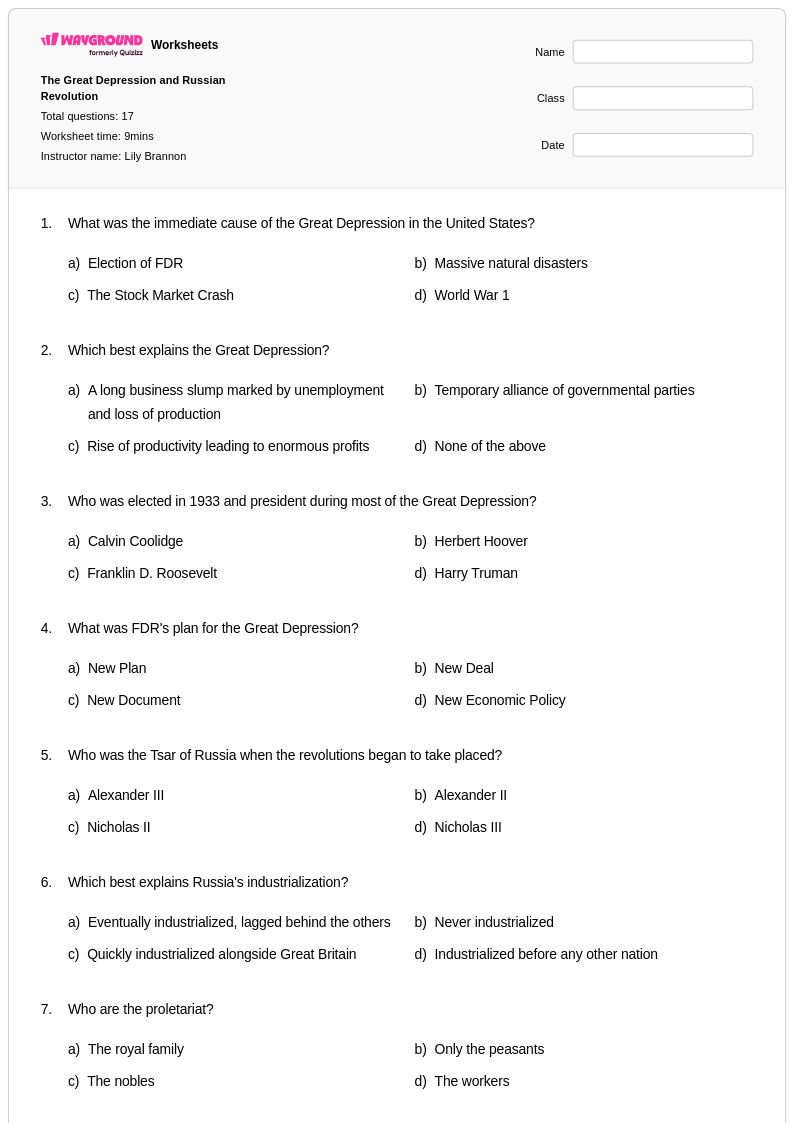
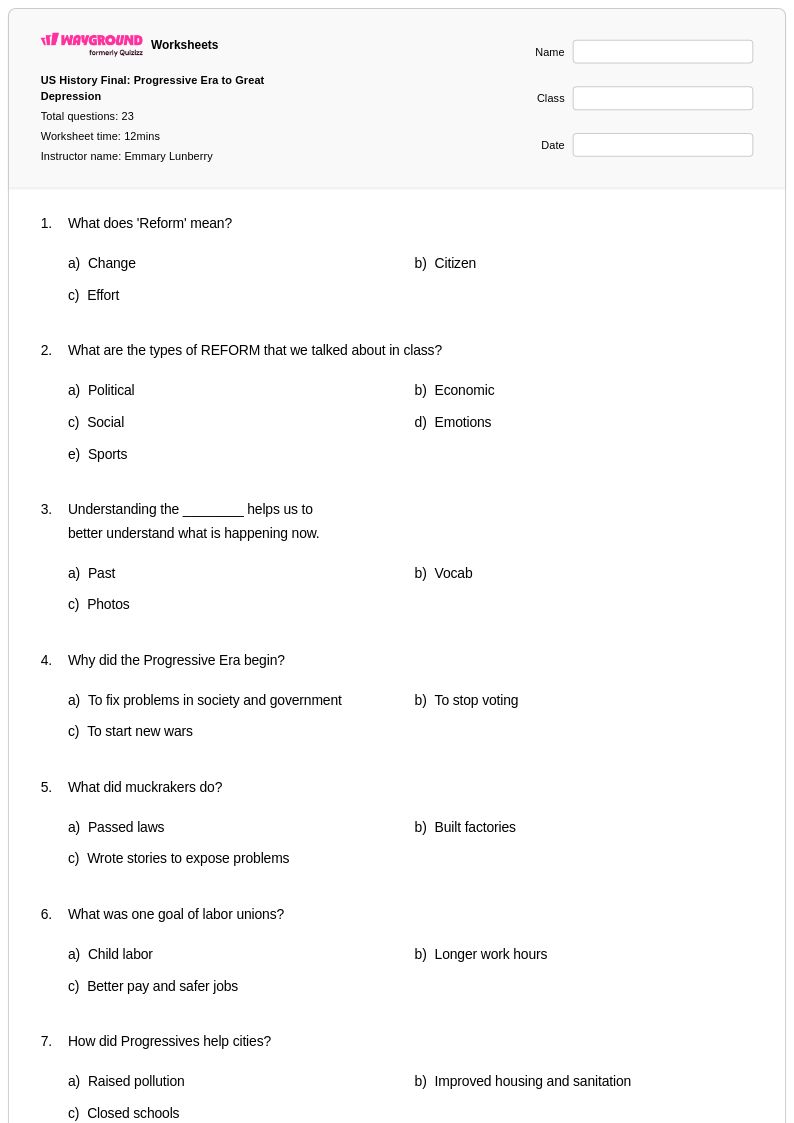
Great Depression worksheets for Grade 9 students available through Wayground (formerly Quizizz) provide comprehensive coverage of this pivotal period in American history, enabling students to develop critical analytical skills while examining the economic, social, and political factors that shaped the 1930s. These carefully designed practice problems guide students through the causes of the stock market crash, the impact on different demographic groups, and the government's response through New Deal programs. Each worksheet includes detailed answer keys that support both independent study and classroom instruction, while the free printable format ensures accessibility for all learning environments. Students engage with primary source documents, statistical data, and historical photographs that bring this transformative decade to life, strengthening their ability to analyze cause-and-effect relationships and evaluate historical significance.
Wayground (formerly Quizizz) empowers educators with millions of teacher-created Great Depression resources that streamline lesson planning and support differentiated instruction for Grade 9 history classrooms. The platform's robust search and filtering capabilities allow teachers to quickly locate worksheets aligned with state and national social studies standards, while customization tools enable modification of content to meet diverse learning needs. These materials are available in both printable pdf format and interactive digital versions, providing flexibility for traditional classroom settings, remote learning environments, and hybrid instruction models. Teachers utilize these comprehensive worksheet collections for targeted skill practice, remediation of challenging concepts like economic indicators and government intervention, and enrichment activities that challenge advanced learners to make connections between Depression-era policies and contemporary economic issues.
FAQs
How do I teach the Great Depression to middle or high school students?
Teaching the Great Depression effectively means grounding students in the causes before moving to consequences. Start with the economic conditions of the 1920s and the stock market crash of 1929, then guide students through the ripple effects: bank failures, mass unemployment, the Dust Bowl, and the political response through FDR's New Deal programs. Using primary source documents alongside economic data helps students move beyond memorization and develop genuine historical thinking skills.
What topics should Great Depression worksheets cover?
Strong Great Depression worksheets should cover the stock market crash of 1929, unemployment rates during the 1930s, the causes and effects of the Dust Bowl, the goals and programs of the New Deal, and the social impact on American families and communities. Including cause-and-effect analysis and primary source interpretation pushes students beyond surface recall and into the analytical reasoning that social studies standards require.
What common mistakes do students make when learning about the Great Depression?
Students frequently conflate the causes of the Great Depression with a single event, treating the stock market crash of 1929 as the sole cause rather than understanding it as one trigger within a broader set of economic vulnerabilities. Another common error is misunderstanding the New Deal, with students either overstating its role in ending the Depression or dismissing it entirely, rather than analyzing its specific programs and their measurable effects on unemployment and economic recovery.
How can I use worksheets to help students analyze cause and effect during the Great Depression?
Cause-and-effect worksheets work well when they ask students to trace a chain of events rather than simply list them. For the Great Depression, this means connecting overproduction and credit expansion in the 1920s to the crash, then following the consequences through bank failures, unemployment, Dust Bowl migration, and government intervention. Practice problems that require students to interpret economic data or evaluate primary sources push this analysis beyond rote recall.
How do I differentiate Great Depression instruction for students at different skill levels?
For struggling students, focus on key vocabulary and simplified cause-and-effect chains before introducing complex economic concepts. Advanced learners benefit from evaluating competing historical interpretations of the New Deal or analyzing primary sources like Dorothea Lange's photography alongside congressional testimony. On Wayground, teachers can modify content complexity and apply individual accommodations such as read aloud support or reduced answer choices, ensuring all students engage with the material at an appropriate level.
How do I use Wayground's Great Depression worksheets in my classroom?
Wayground's Great Depression worksheets are available as printable PDFs for traditional classroom use and in digital formats for technology-integrated environments, including the option to host them as a quiz directly on the platform. Teachers can use the search and filtering tools to find worksheets aligned to specific standards, then customize or adapt them to match particular learning objectives, whether for whole-class instruction, small group remediation, or independent practice.