Free Printable Growth Mindset Worksheets for Grade 8
Develop a growth mindset in Grade 8 students with Wayground's free social studies worksheets and printables that include practice problems and answer keys to build resilience and positive thinking skills.
Explore printable Growth Mindset worksheets for Grade 8
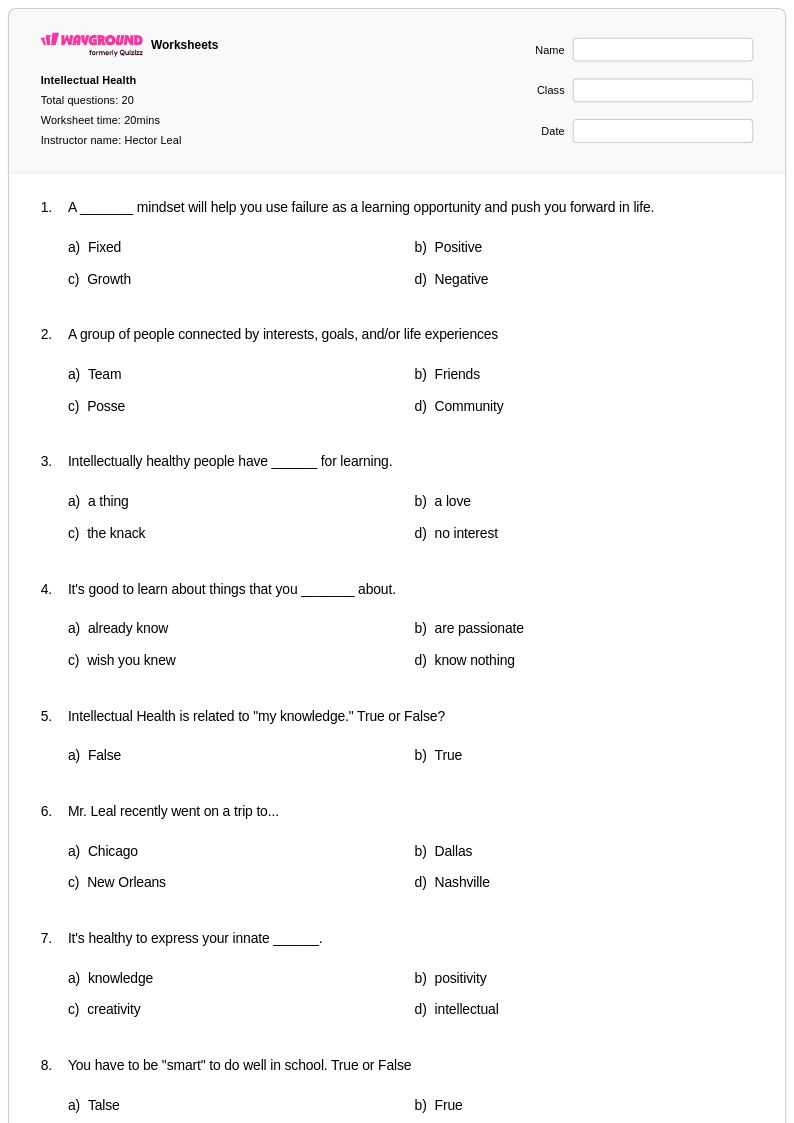
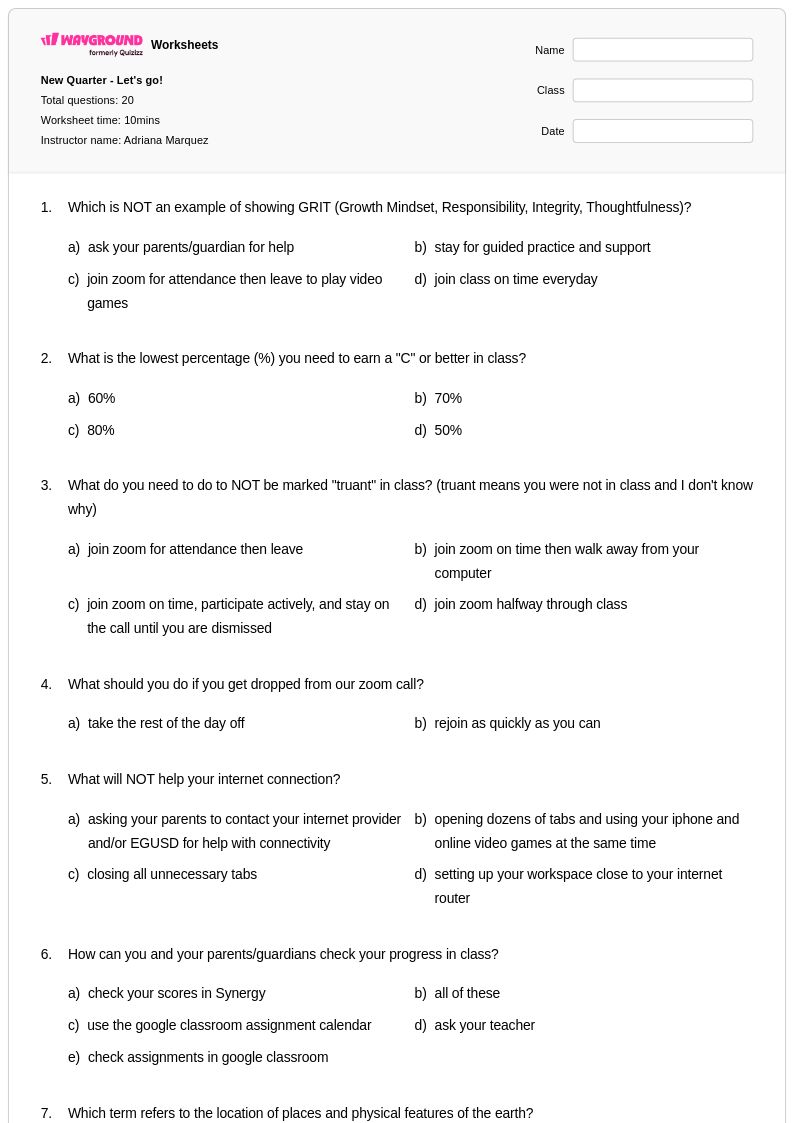
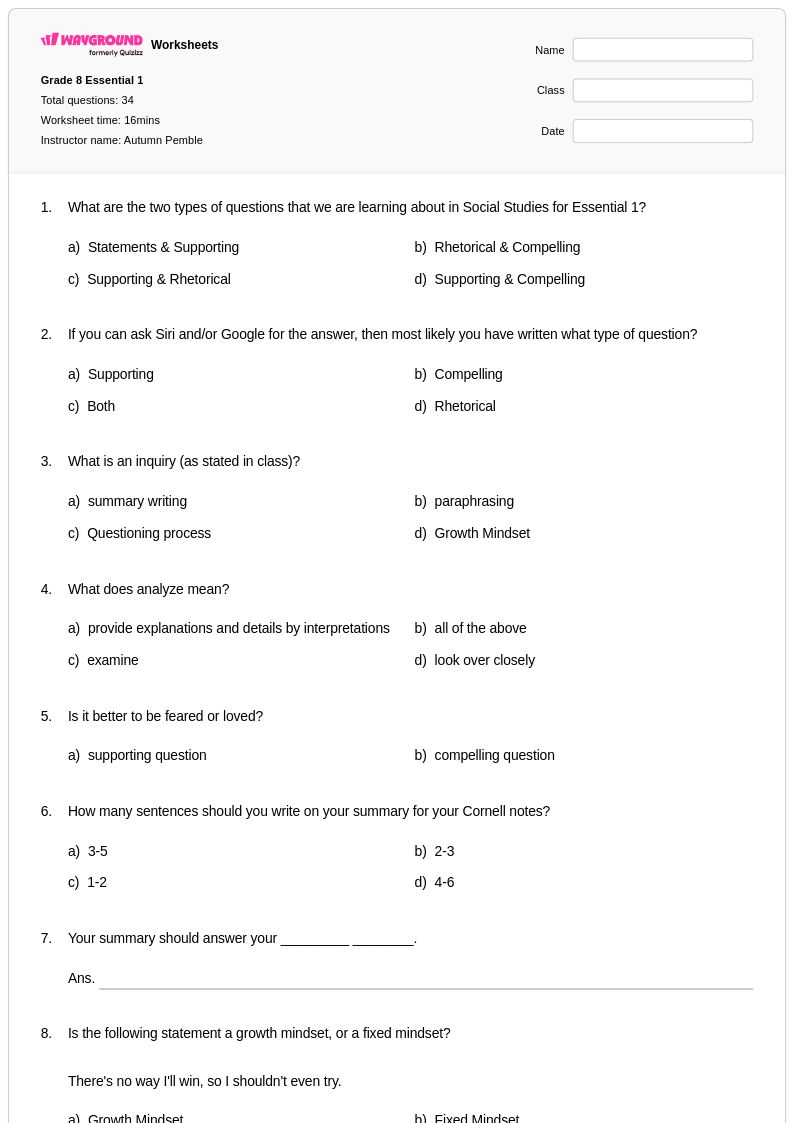
Growth mindset worksheets for Grade 8 students available through Wayground (formerly Quizizz) provide comprehensive resources designed to help middle school learners develop resilience, embrace challenges, and understand the power of effort in academic and personal success. These carefully crafted materials strengthen critical social-emotional learning skills by guiding students through reflective exercises that examine their beliefs about intelligence, talent, and ability. The practice problems within these worksheets challenge eighth graders to identify fixed mindset thinking patterns and transform them into growth-oriented perspectives, while accompanying answer keys support both independent learning and classroom instruction. Teachers can access these free printables in convenient pdf format, making it simple to incorporate evidence-based growth mindset strategies into daily lessons and homework assignments.
Wayground (formerly Quizizz) supports educators with an extensive collection of teacher-created growth mindset resources that streamline lesson planning and differentiated instruction for Grade 8 classrooms. The platform's robust search and filtering capabilities allow teachers to quickly locate worksheets aligned with social-emotional learning standards and specific developmental needs of their middle school students. These versatile materials are available in both printable and digital formats, enabling flexible implementation whether students are working individually, in small groups, or through whole-class activities. The customization tools empower educators to modify content for remediation or enrichment purposes, ensuring that every eighth grader can access growth mindset concepts at their appropriate learning level while building the foundational social skills necessary for academic persistence and personal development.
FAQs
How do I teach growth mindset to students?
Teaching growth mindset starts with helping students understand the difference between fixed and growth mindsets — specifically that intelligence and ability are not static but can develop through effort, persistence, and strategy. Classroom instruction typically includes introducing the concept of brain plasticity, modeling how to reframe challenges as learning opportunities, and building vocabulary around the power of 'not yet.' Consistent reinforcement through structured activities, reflection prompts, and real-world examples helps students internalize these beliefs over time.
What exercises help students practice growth mindset?
Effective growth mindset practice includes activities where students identify fixed vs. growth mindset responses to common challenges, rewrite negative self-talk using 'yet' statements, and reflect on mistakes as learning opportunities. Structured worksheets that walk students through obstacle-response scenarios and effort-outcome connections give learners a concrete framework for applying growth mindset thinking. Regular, low-stakes practice is key to helping students move from understanding the concept to genuinely applying it.
What mistakes do students commonly make when learning about growth mindset?
A common misconception is that growth mindset simply means staying positive or trying harder — students often miss the nuance that it involves strategic effort, seeking help, and learning from feedback rather than just persisting blindly. Some students also apply growth mindset language superficially without changing their actual behaviors or beliefs, which is sometimes called 'false growth mindset.' Teachers should watch for students who celebrate effort regardless of outcome without also reflecting on what they could do differently.
How can I use growth mindset worksheets to support social-emotional learning in my classroom?
Growth mindset worksheets can anchor SEL instruction by giving students structured time to reflect on their beliefs about learning, effort, and failure within a safe, low-stakes format. Activities that prompt students to examine their responses to setbacks, identify personal strengths, and set incremental goals directly support SEL competencies like self-awareness and self-management. Using these worksheets consistently — rather than as a one-time lesson — helps students build the habits of mind that underpin long-term resilience.
How do I use Wayground's growth mindset worksheets in my classroom?
Wayground's growth mindset worksheets are available as printable PDFs for traditional classroom use and in digital formats for technology-integrated learning environments, giving teachers flexibility in how they assign and deliver content. Teachers can also host worksheets as a quiz directly on Wayground, allowing for interactive completion and easier progress tracking. Wayground supports student-level accommodations including read aloud, extended time, and reduced answer choices, making it straightforward to differentiate for diverse learners without disrupting the rest of the class.
How do I differentiate growth mindset instruction for students at different ability levels?
Differentiation for growth mindset instruction often means adjusting the complexity of reflection prompts, the scaffolding provided for written responses, and the amount of modeling offered before independent practice. On Wayground, teachers can apply individual accommodations such as read aloud for students who struggle with text-heavy content, reduced answer choices to lower cognitive load, and extended time for students who need more processing space. These settings can be assigned per student and persist across future sessions, reducing the setup time for ongoing differentiated instruction.