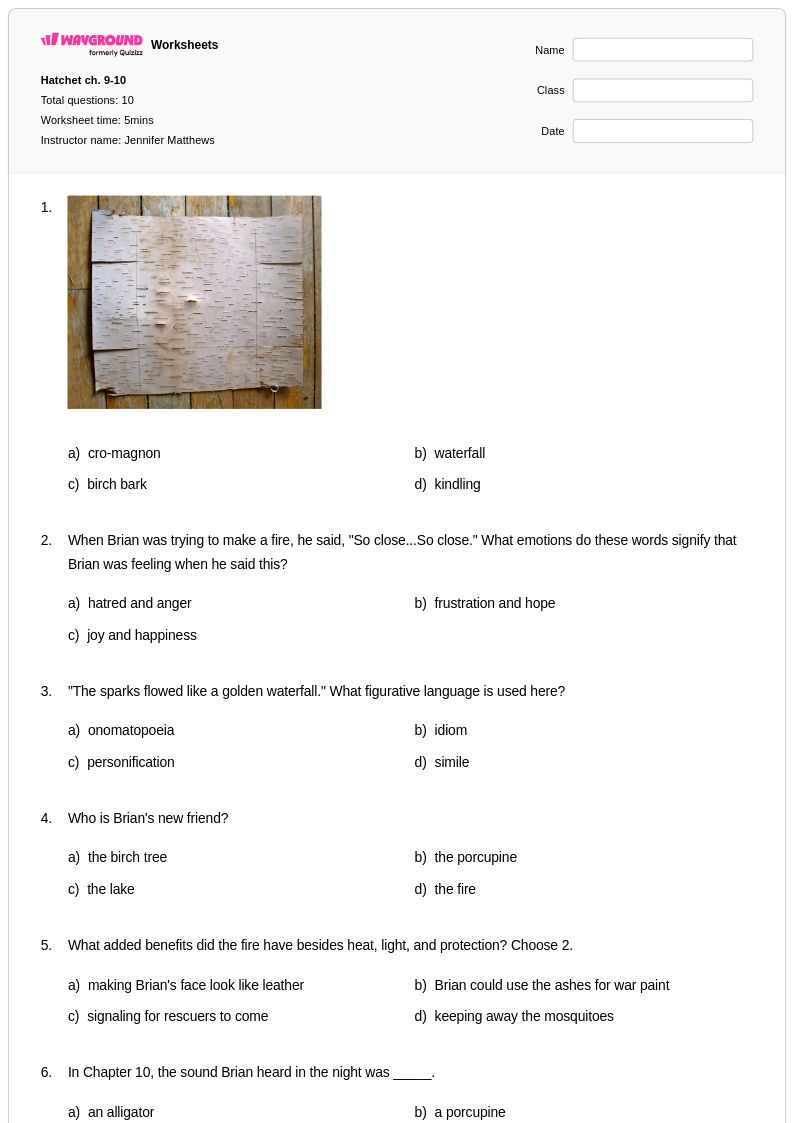
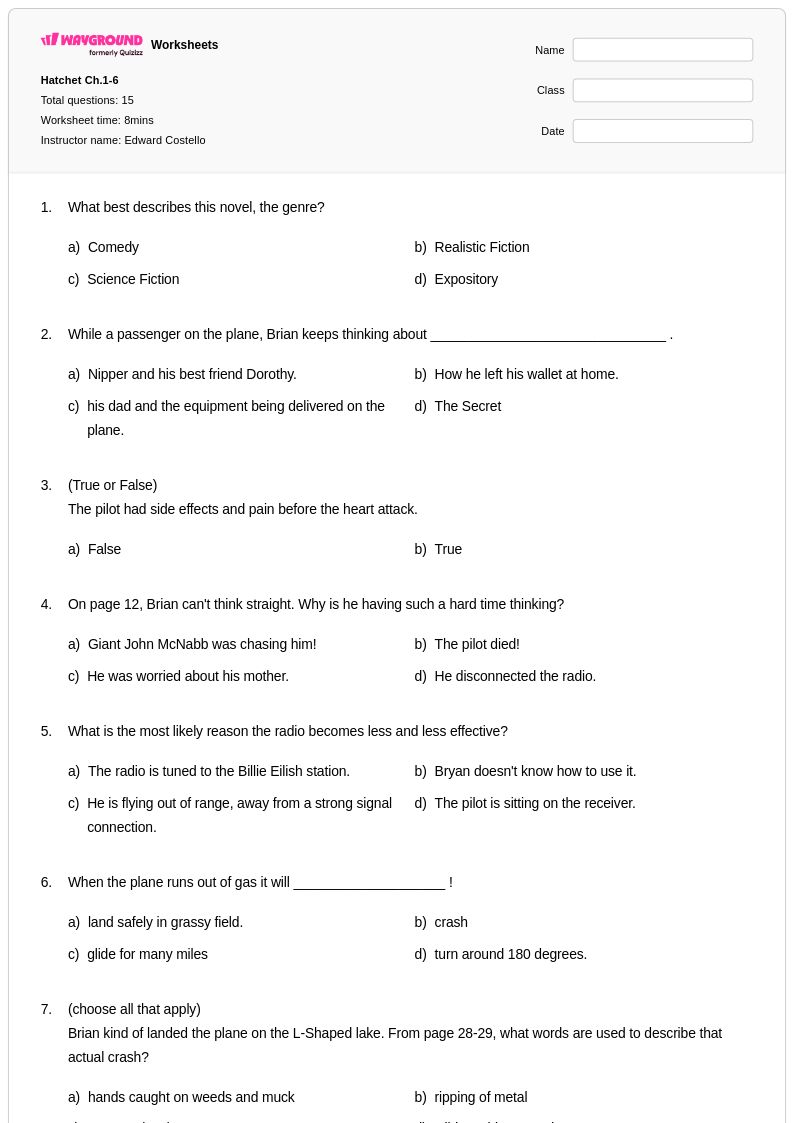
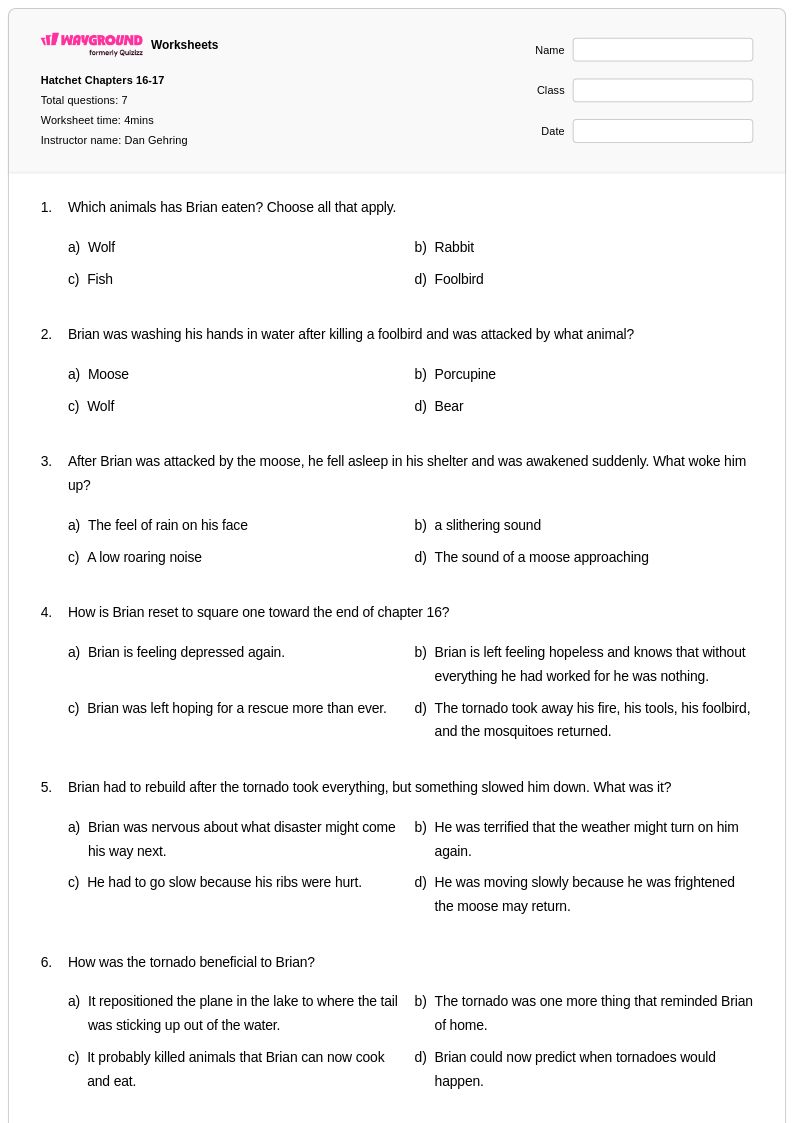
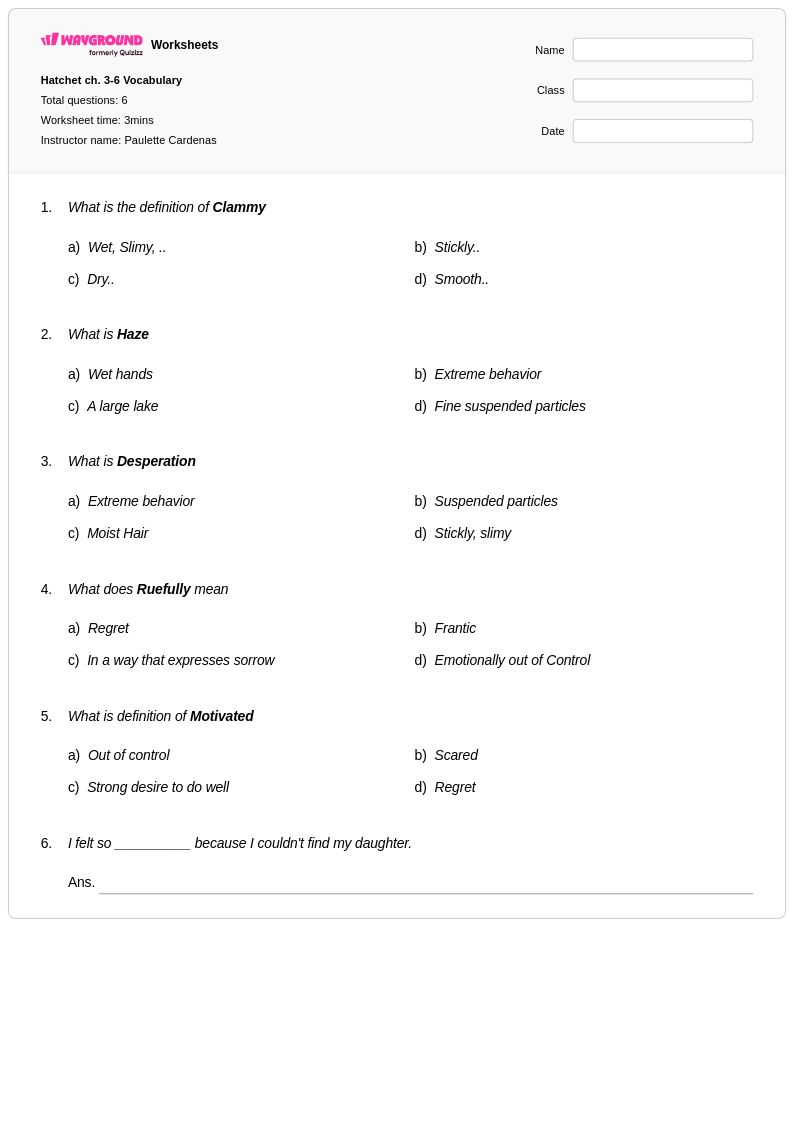
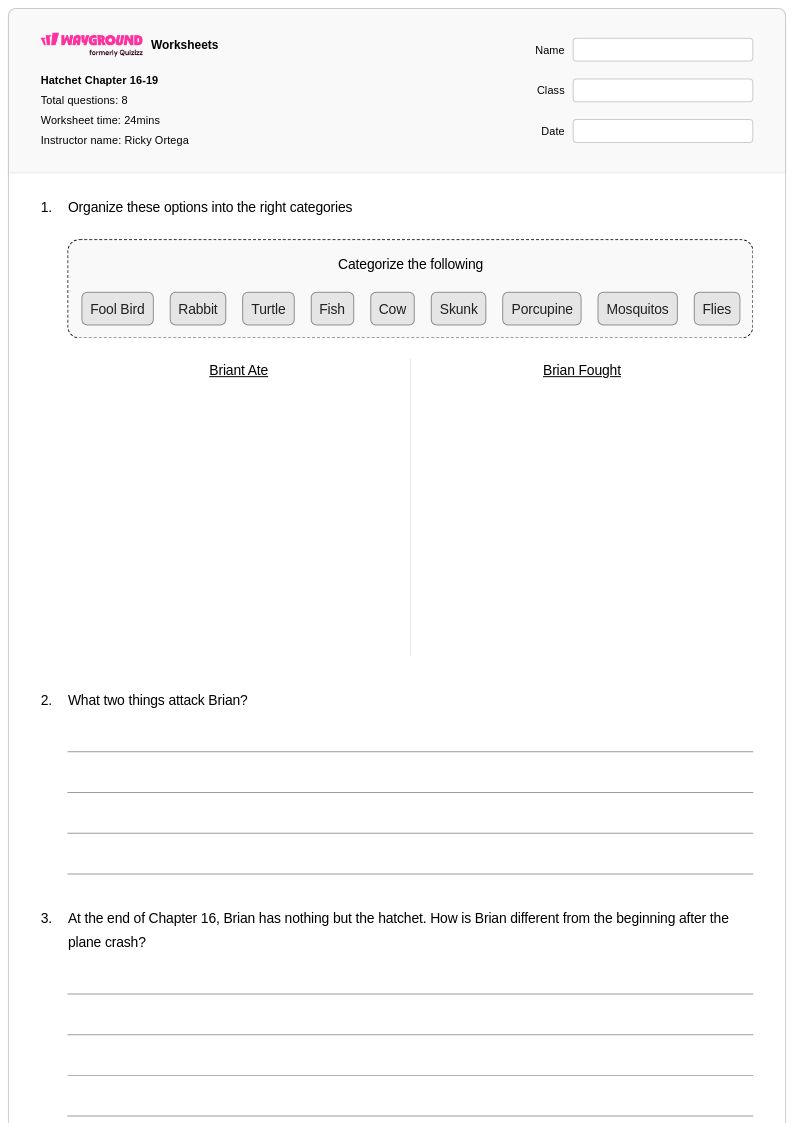
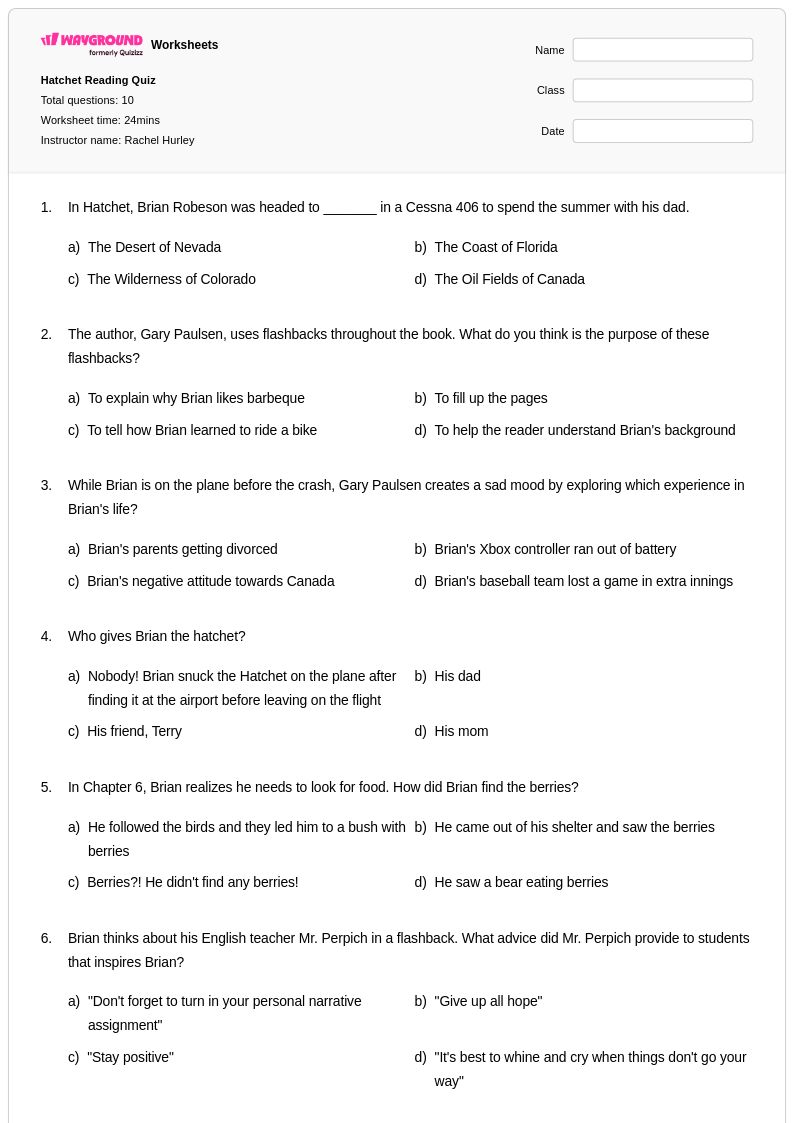
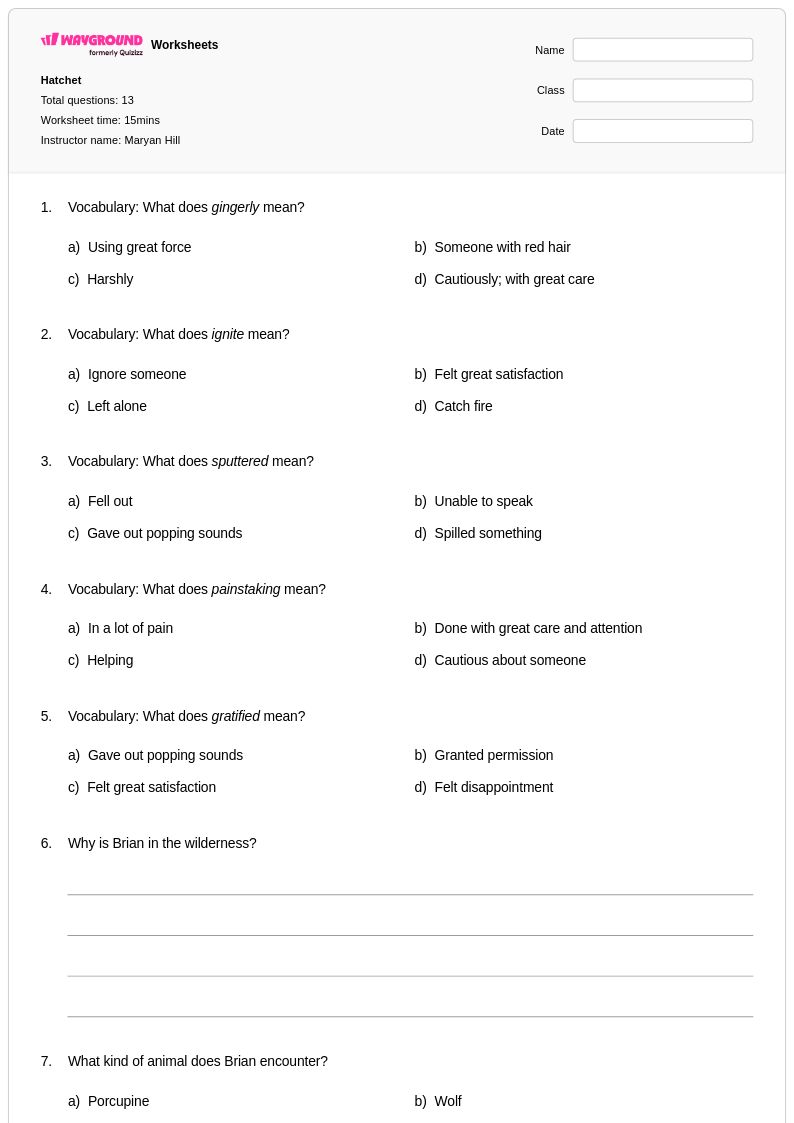
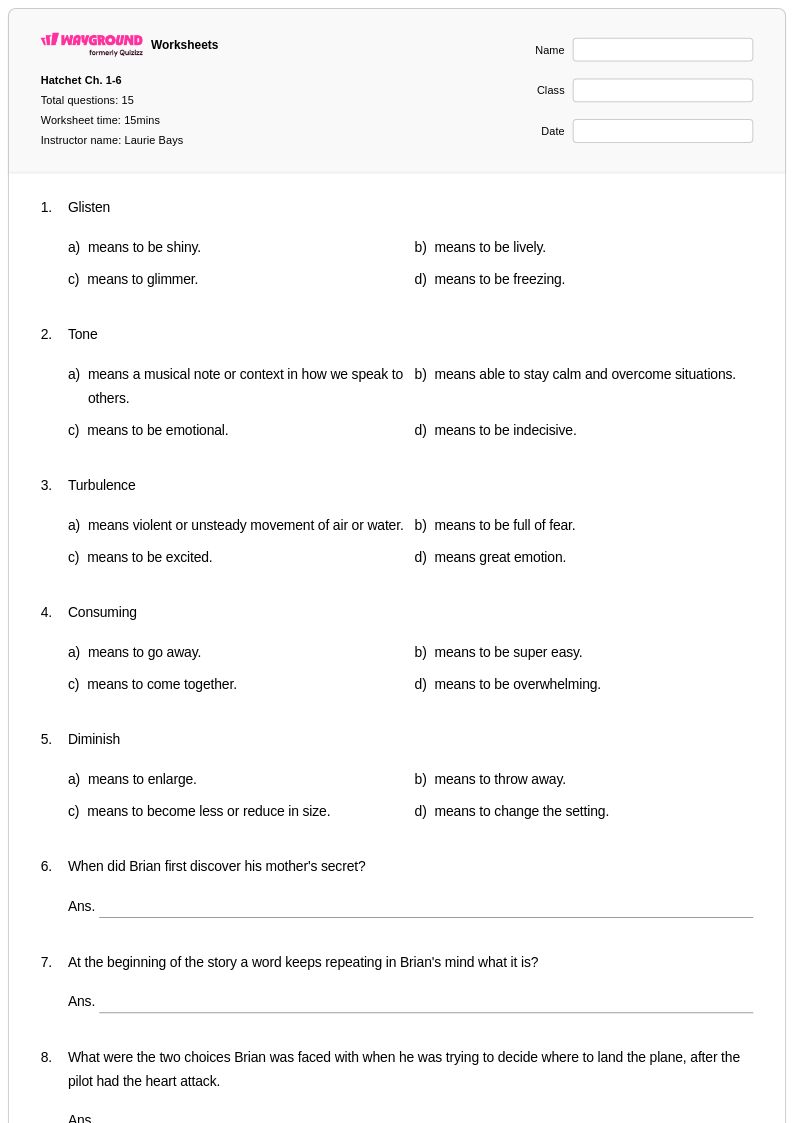
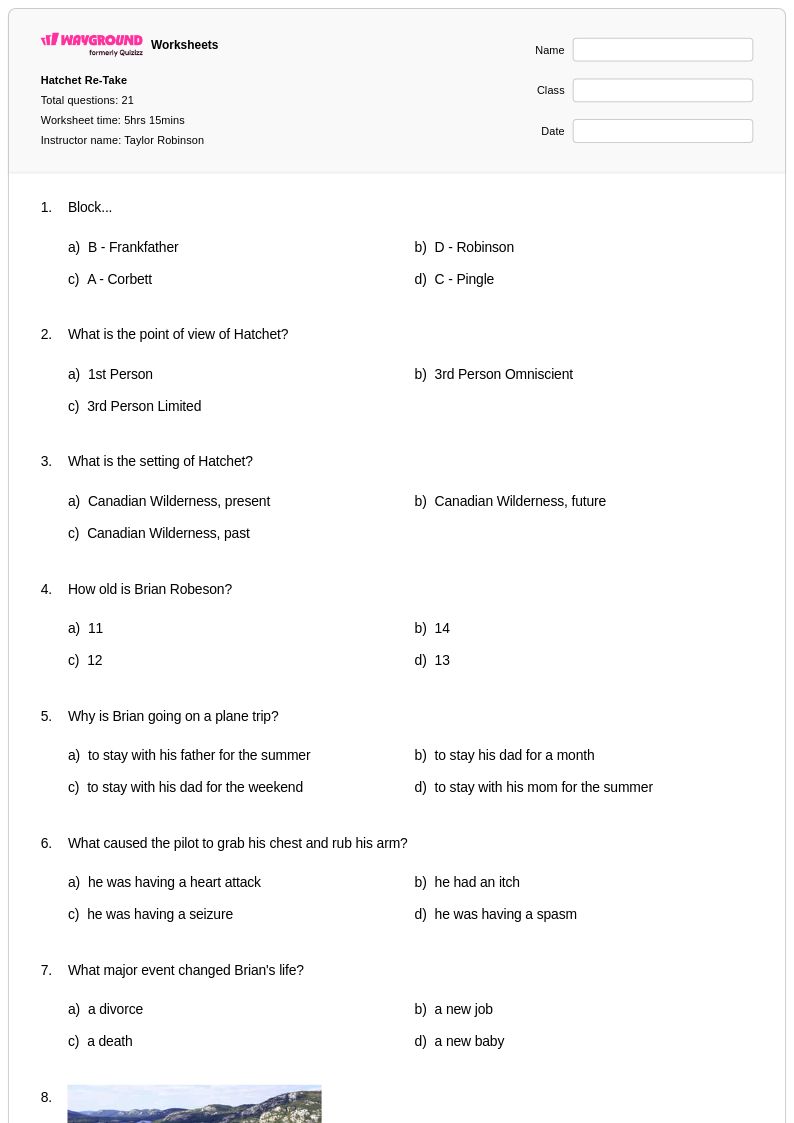
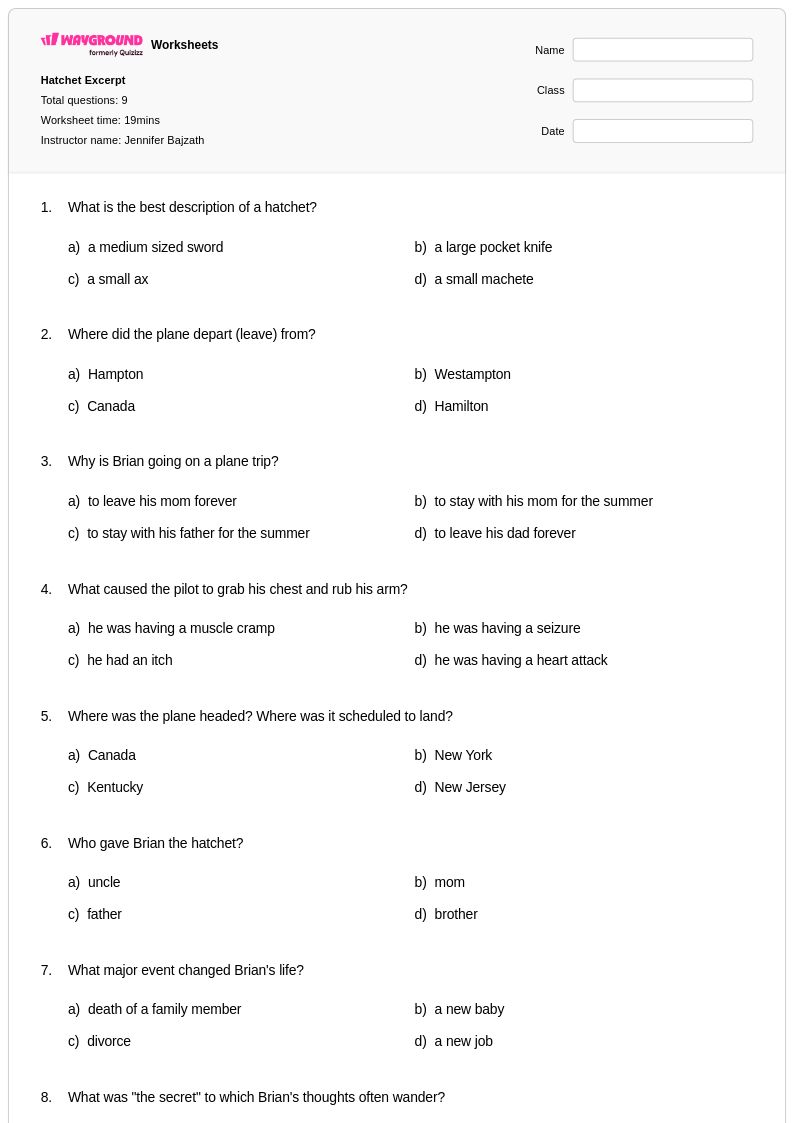
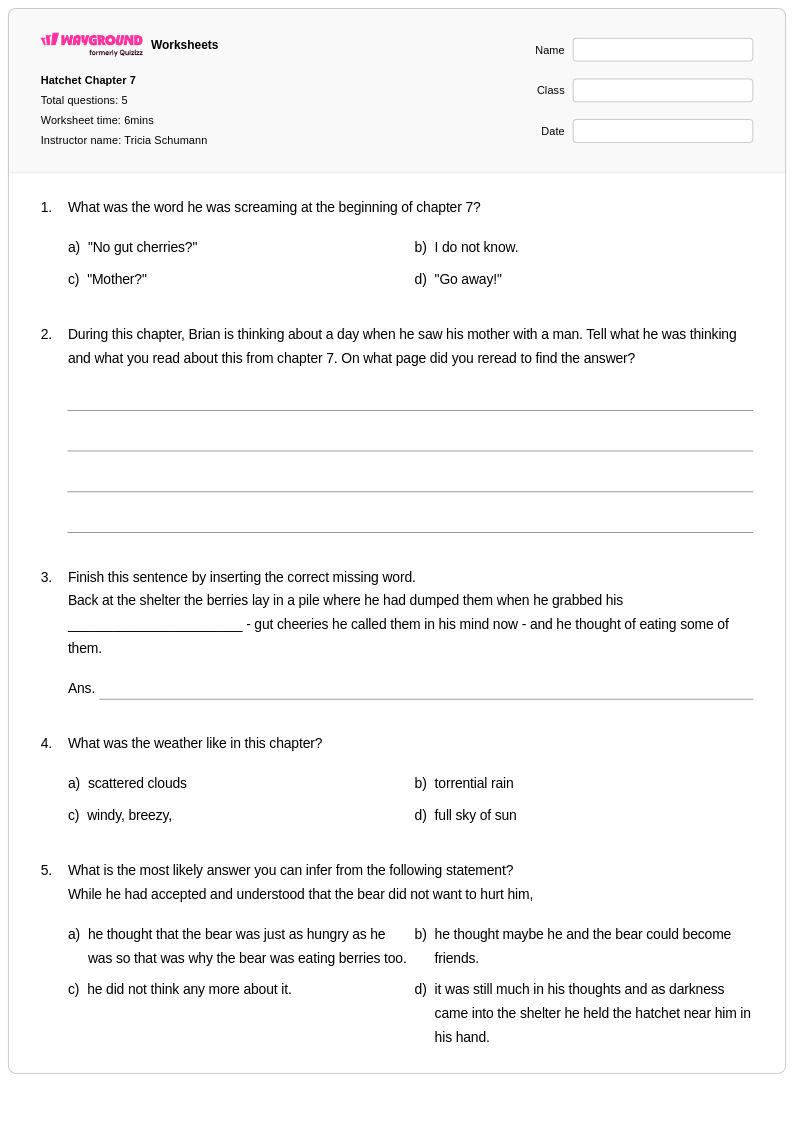
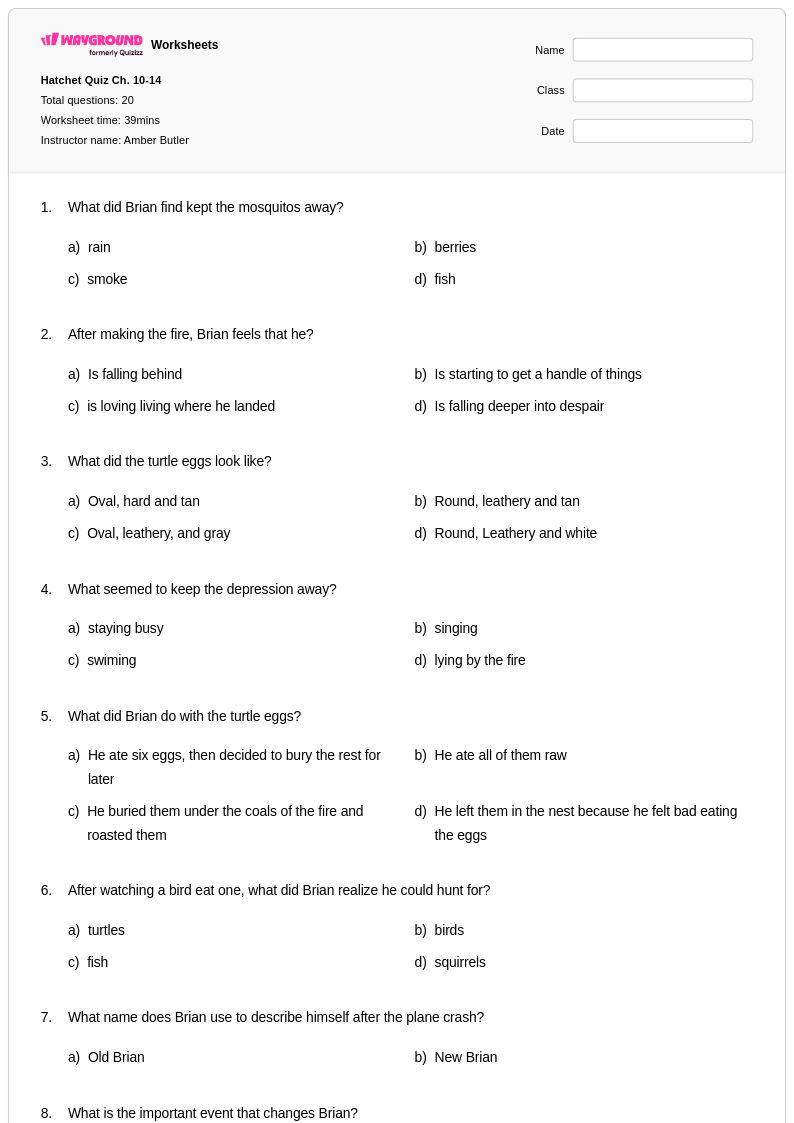
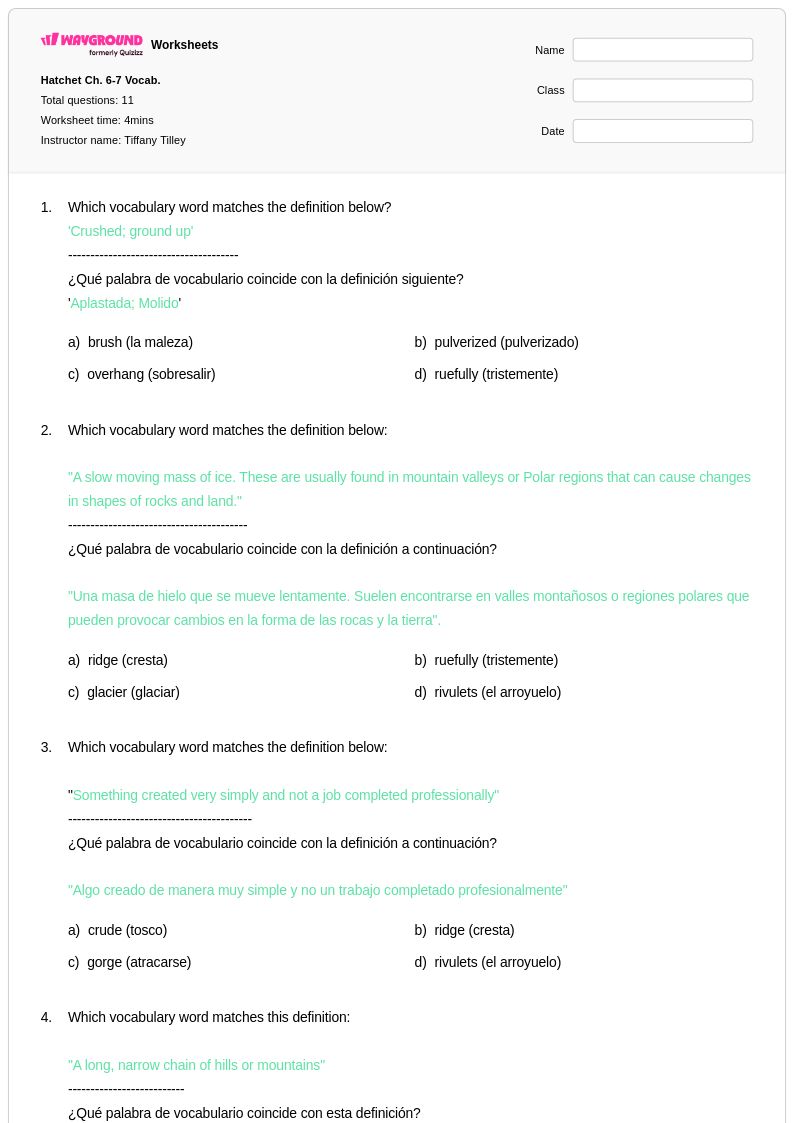
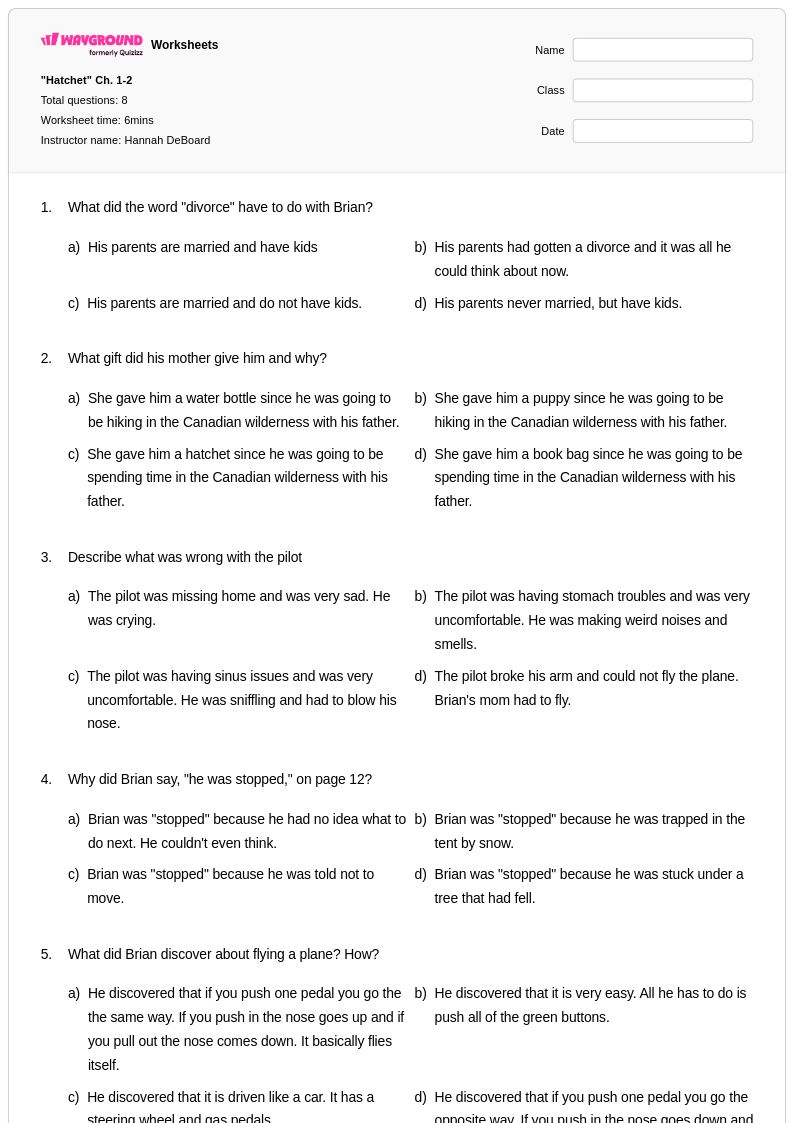
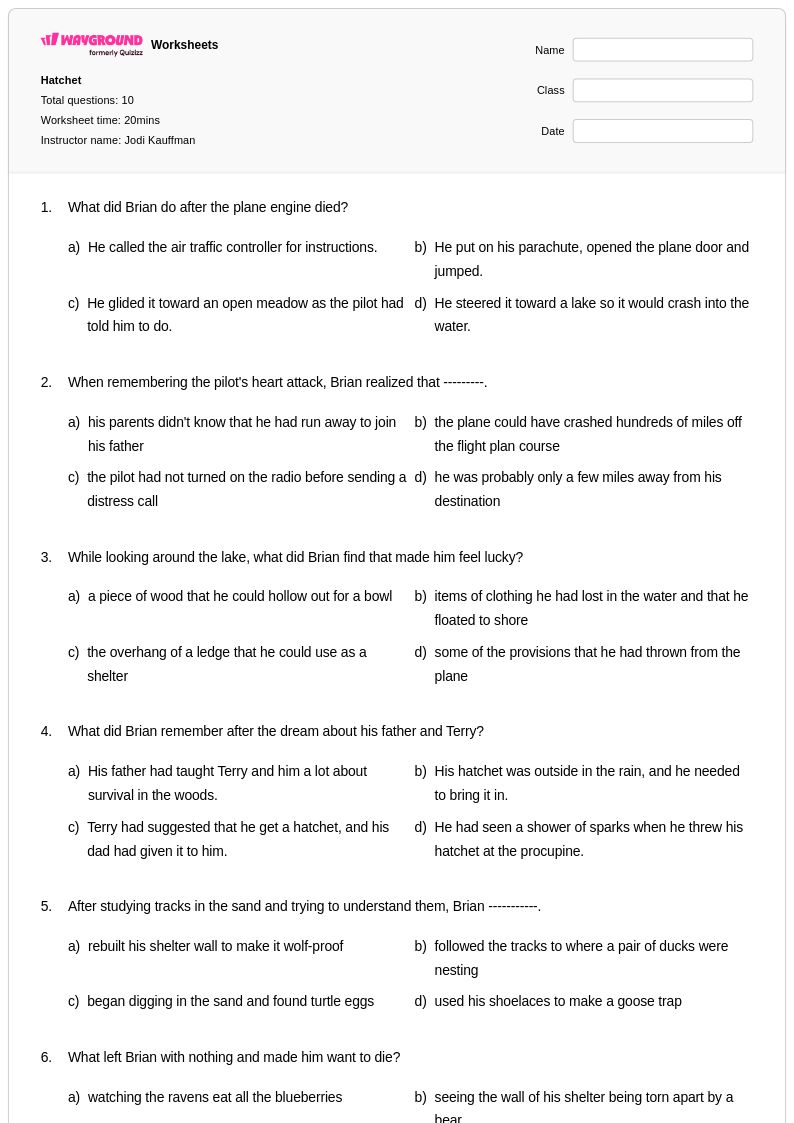
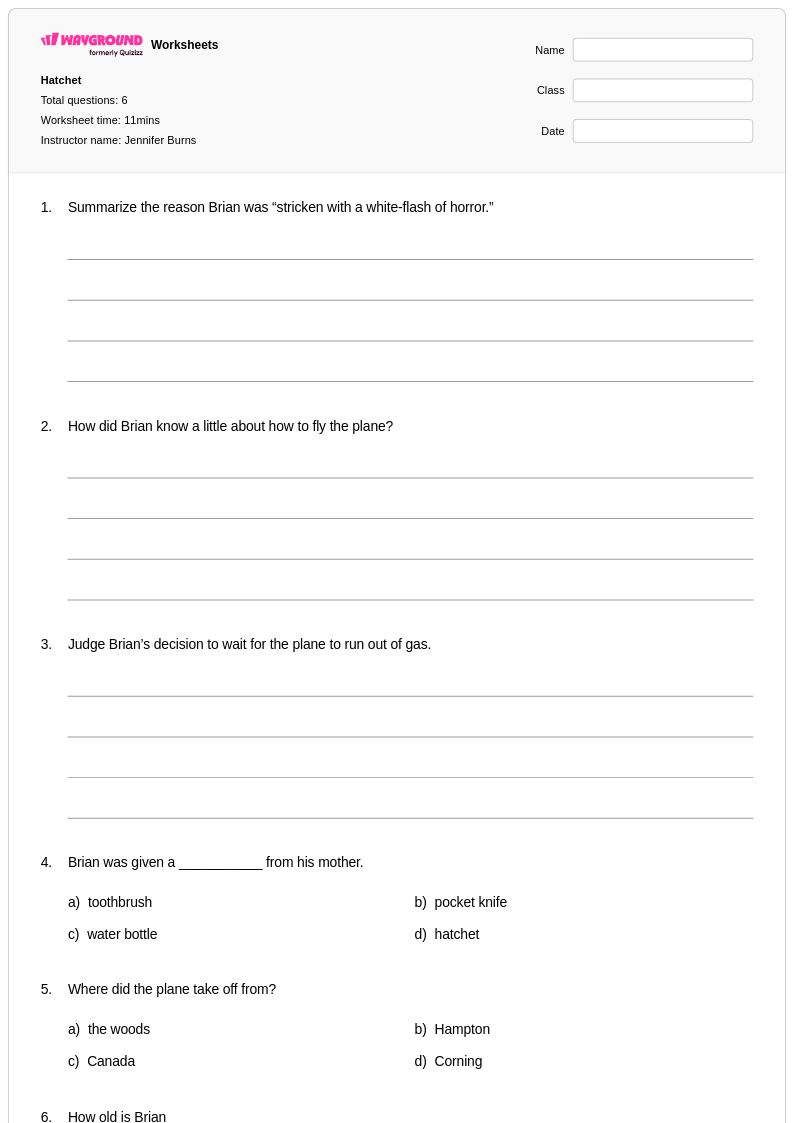
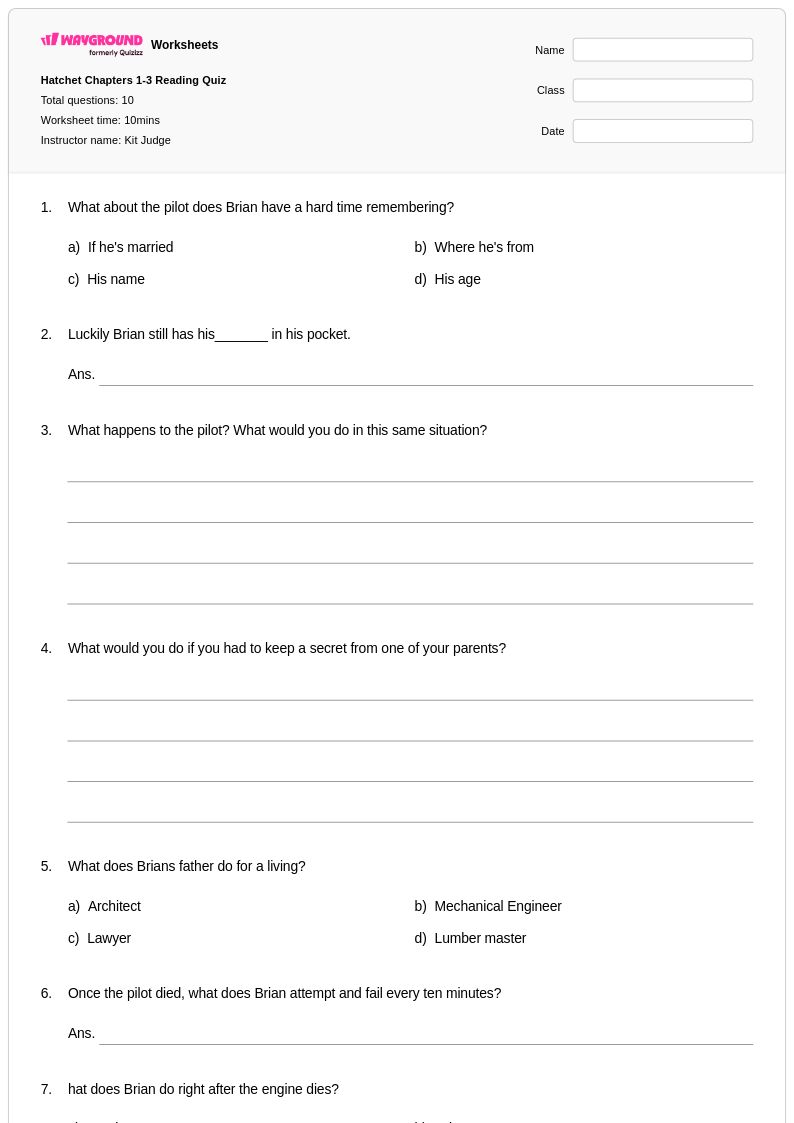
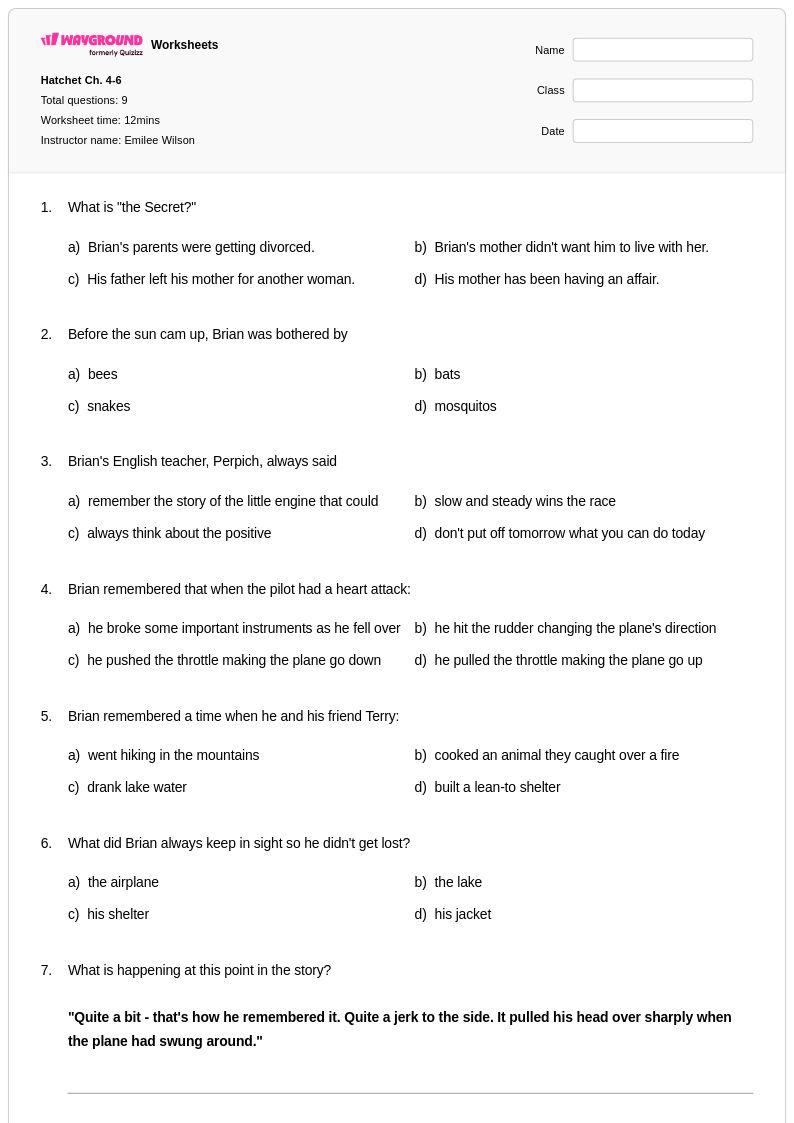
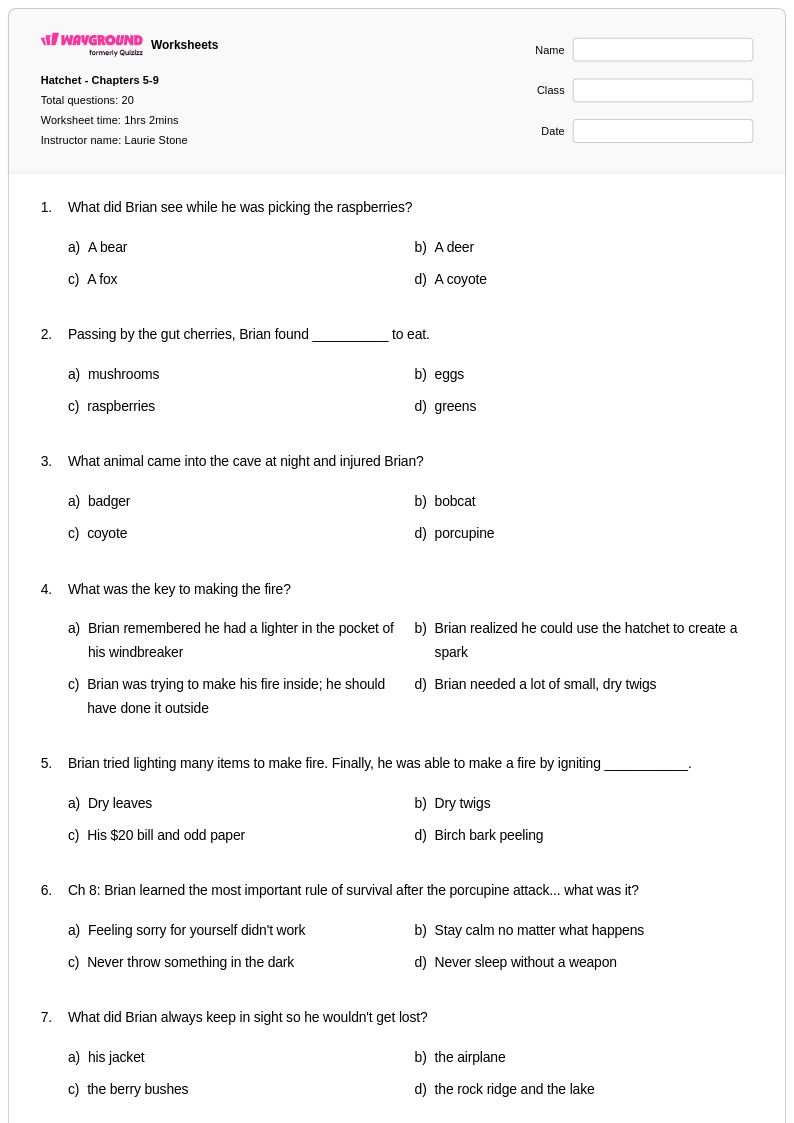
Explore Grade 5 Hatchet novel study worksheets and printables from Wayground that help students analyze Gary Paulsen's survival story through engaging practice problems, comprehension activities, and complete answer keys.
Hatchet novel study worksheets for Grade 5 students available through Wayground (formerly Quizizz) provide comprehensive resources to deepen understanding of Gary Paulsen's survival classic. These expertly crafted worksheets guide fifth-grade readers through critical analysis of Brian's wilderness journey, examining character development, plot structure, theme exploration, and literary devices while building essential reading comprehension skills. Students engage with practice problems that challenge them to analyze Brian's problem-solving strategies, compare his emotional growth throughout the story, and connect survival themes to real-world scenarios. Each worksheet collection includes detailed answer keys to support independent learning and features free printable formats that make classroom implementation seamless, allowing educators to focus on facilitating meaningful discussions about resilience, self-reliance, and coming-of-age themes.
Wayground (formerly Quizizz) empowers teachers with millions of educator-created Hatchet novel study resources that streamline lesson planning and enhance student engagement with this beloved Grade 5 text. The platform's robust search and filtering capabilities help teachers quickly locate worksheets aligned with specific learning standards and differentiated for diverse reading levels, ensuring every student can access meaningful practice opportunities. Teachers can customize these digital and printable pdf resources to match their classroom needs, whether supporting struggling readers through guided comprehension activities or challenging advanced students with deeper analytical tasks. This comprehensive worksheet library serves multiple instructional purposes, from initial skill-building exercises to targeted remediation and enrichment activities, giving educators the flexibility to adapt Hatchet instruction for varied learning objectives while maintaining rigorous academic standards throughout their novel study unit.
FAQs
How do I teach Hatchet by Gary Paulsen in my classroom?
Teaching Hatchet effectively means anchoring instruction in the novel's central themes: survival, resilience, and self-reliance. Teachers often structure units around Brian's psychological and physical transformation, using close reading activities to track how his mindset shifts after each crisis. Pairing comprehension checks with character analysis tasks helps students connect plot events to broader thematic meaning. Vocabulary work tied to Paulsen's descriptive wilderness language also strengthens both reading fluency and literary appreciation.
What reading comprehension activities work best for Hatchet?
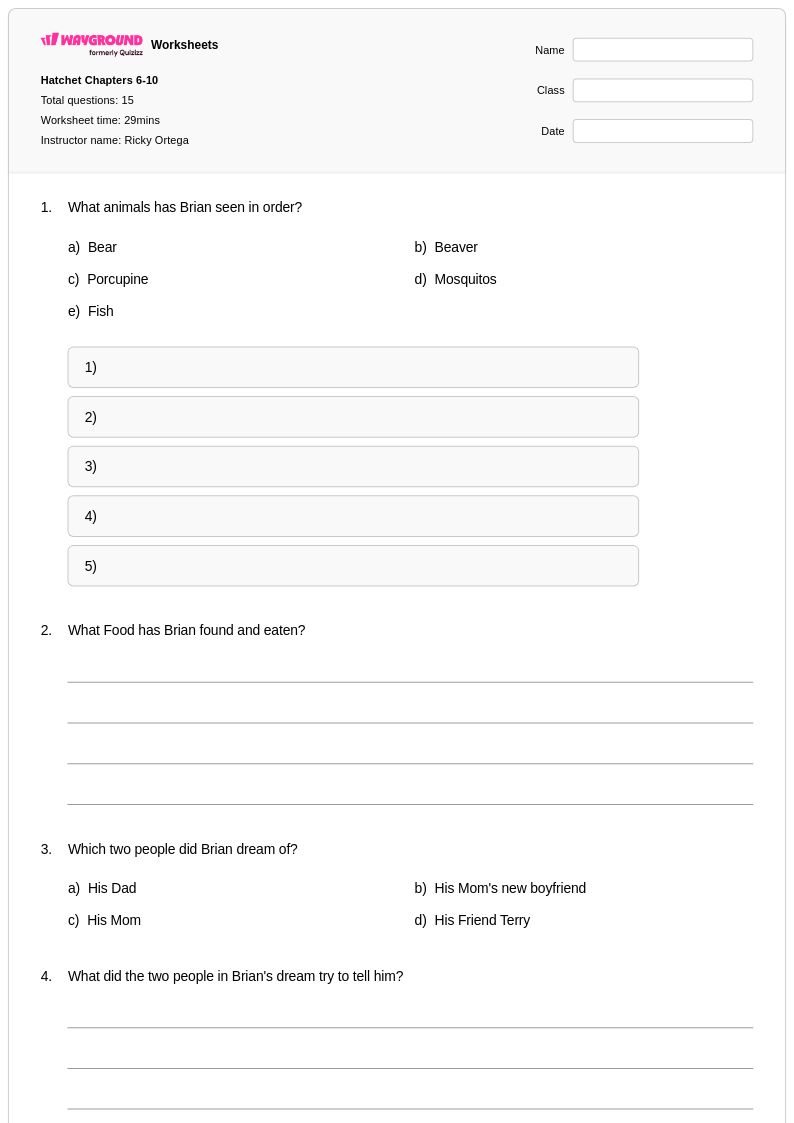
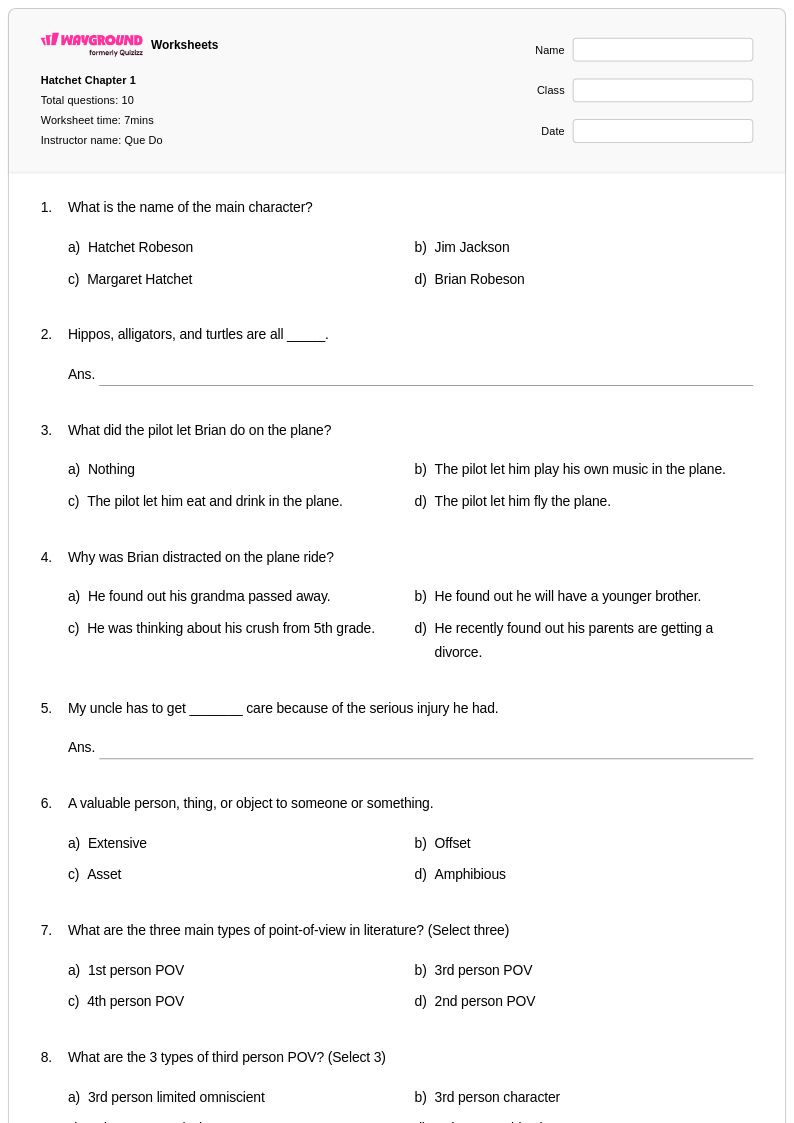
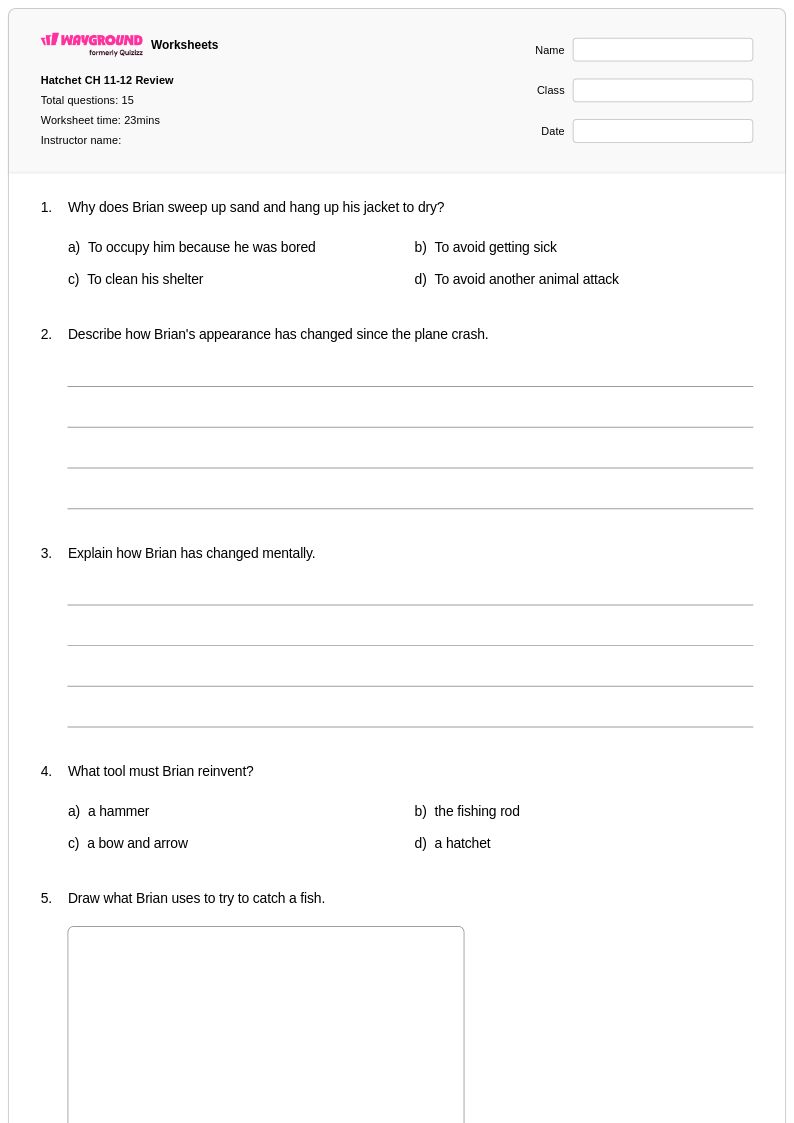
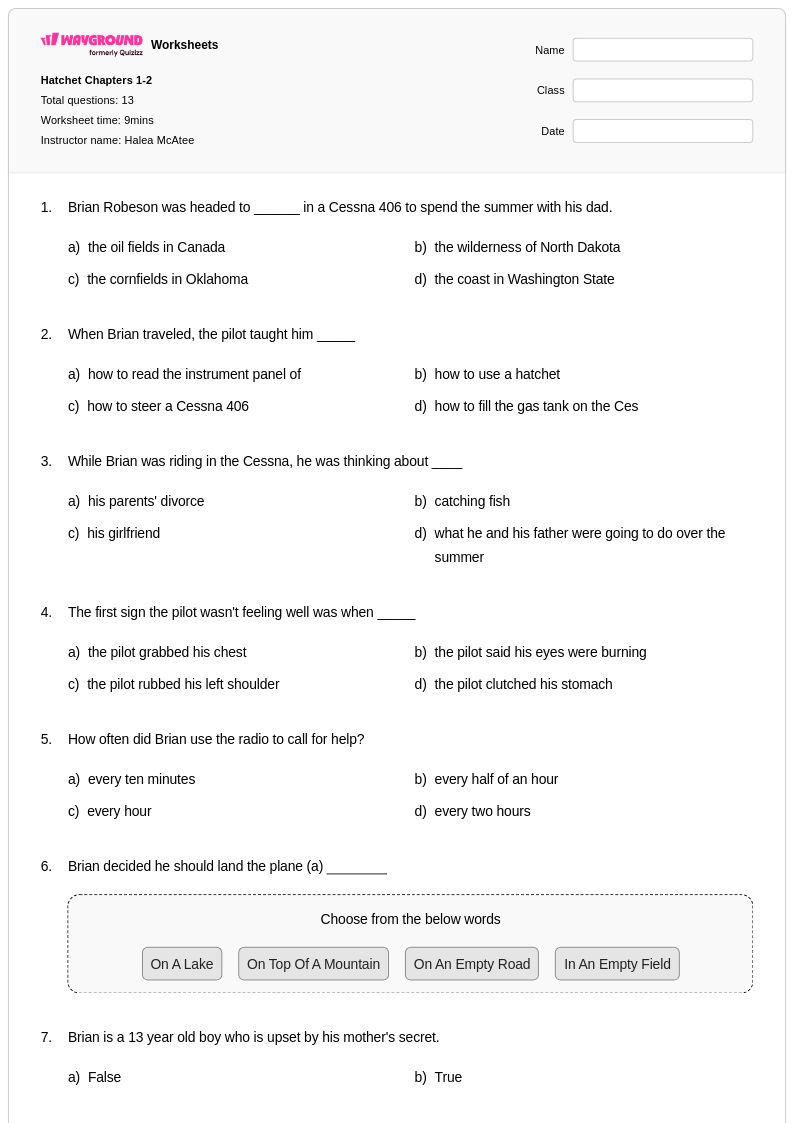
Chapter-by-chapter comprehension questions are highly effective for Hatchet because the novel's episodic survival structure lends itself to incremental reading checks. Activities that ask students to summarize key events, identify causes and consequences of Brian's decisions, and track his emotional state across chapters build both literal and inferential comprehension. Plot sequencing tasks and conflict-mapping exercises are also strong choices for reinforcing narrative understanding.
What literary elements should students analyze in Hatchet?
Hatchet is rich in literary elements that reward close analysis, particularly conflict, symbolism, and character development. The central conflict — Brian versus nature — drives every plot event and connects directly to the themes of self-reliance and resilience. The hatchet itself functions as a symbol of human ingenuity and Brian's growing competence, making it an ideal focus for a symbolism activity. Character growth charts and theme identification tasks help students articulate how these elements work together throughout the novel.
What mistakes do students commonly make when analyzing Hatchet?
A common error is treating Hatchet as a plot-driven adventure story without engaging with its thematic depth. Students often summarize what Brian does without explaining why his choices reflect his internal growth or the novel's themes. Another frequent mistake is conflating the external conflict with the internal one — Brian's struggle with nature is inseparable from his psychological journey, and students who miss this connection tend to write shallow literary analyses. Guiding students to cite specific textual evidence when making thematic claims helps correct both issues.
How can I use Hatchet worksheets to differentiate instruction for different reading levels?
Hatchet worksheets can be differentiated by adjusting the complexity of the analytical tasks assigned — struggling readers benefit from scaffolded comprehension questions with sentence starters, while advanced students can tackle open-ended theme analysis and comparative essay prompts. On Wayground, teachers can apply individual accommodations such as read aloud support, extended time, and reduced answer choices to specific students without disrupting the rest of the class, making it straightforward to support diverse learners within the same assignment.
How do I use Hatchet worksheets from Wayground in my classroom?
Hatchet worksheets on Wayground are available as printable PDFs for traditional classroom distribution and in digital formats for technology-integrated or remote learning environments. Teachers can assign digital versions directly to students and host them as a quiz on Wayground, enabling real-time progress tracking and immediate feedback. Printable versions work well for independent reading response journals, small group work, or guided reading sessions. Both formats include detailed answer keys to support efficient grading and self-directed student review.