Free Printable High Frequency Words Worksheets for Grade 1
Explore our free Grade 1 high frequency words worksheets and printables that help young learners master essential sight words through engaging practice problems, complete with answer keys for effective spelling development.
Explore printable High Frequency Words worksheets for Grade 1
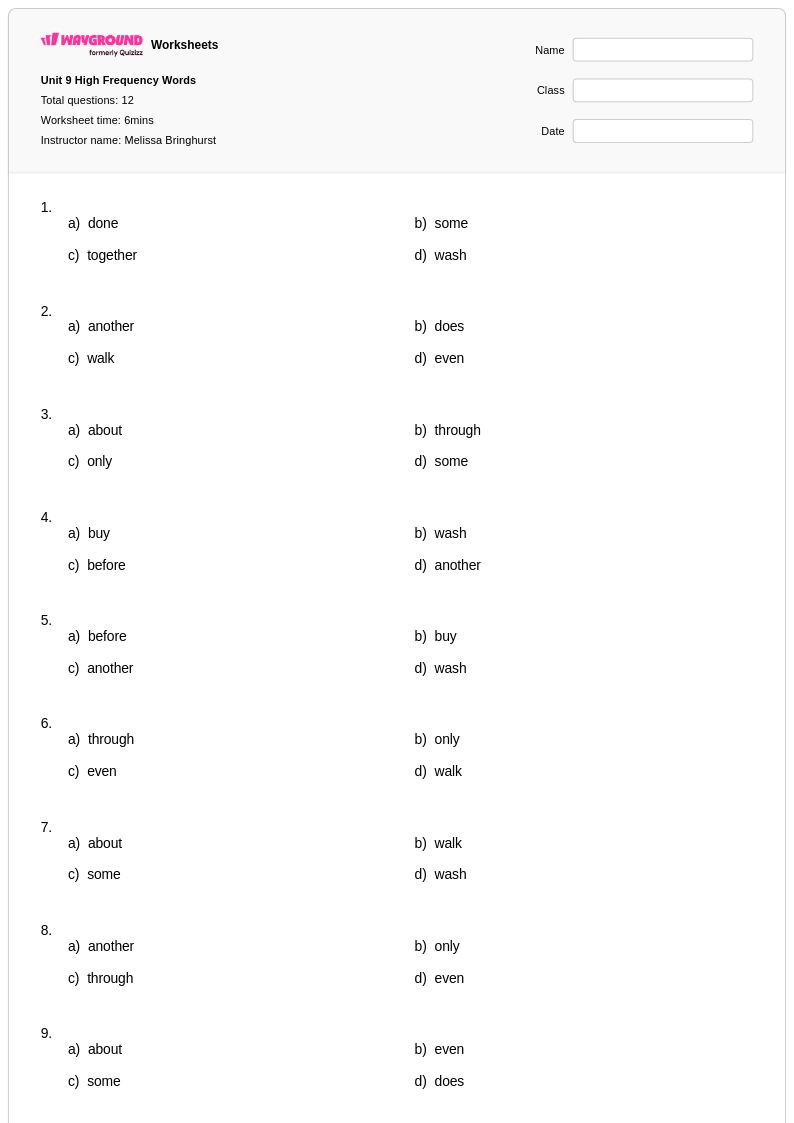
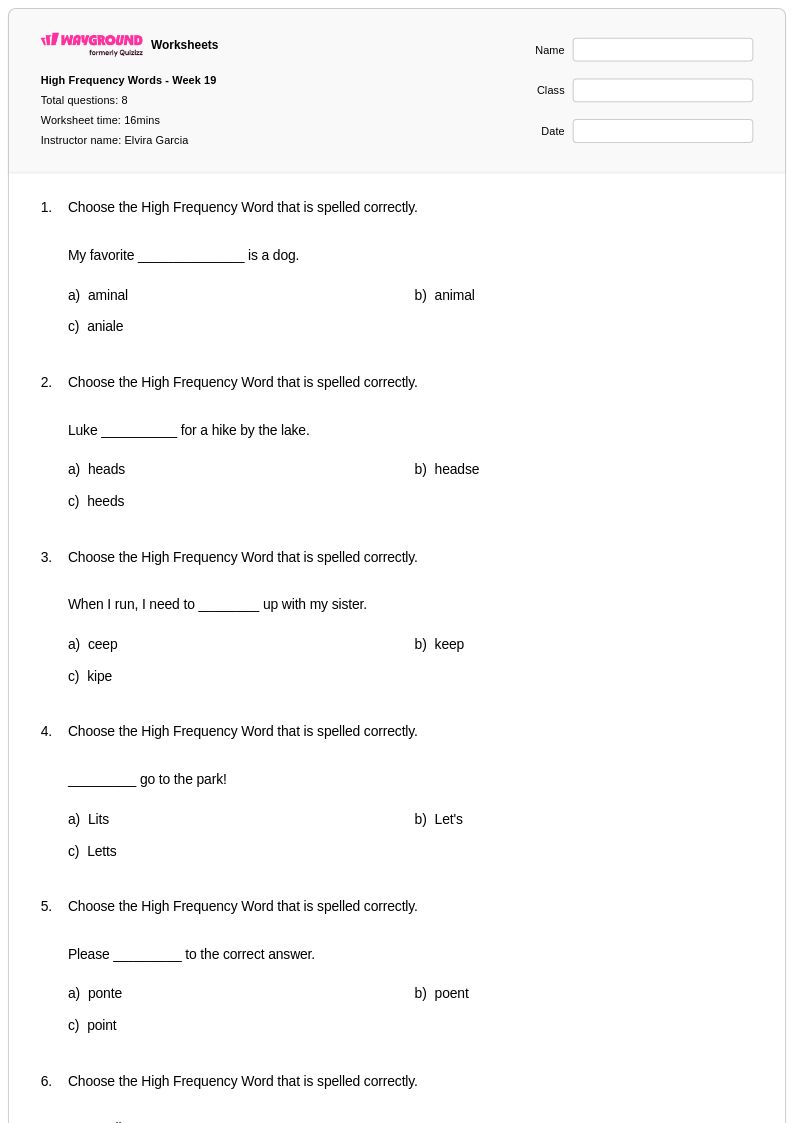
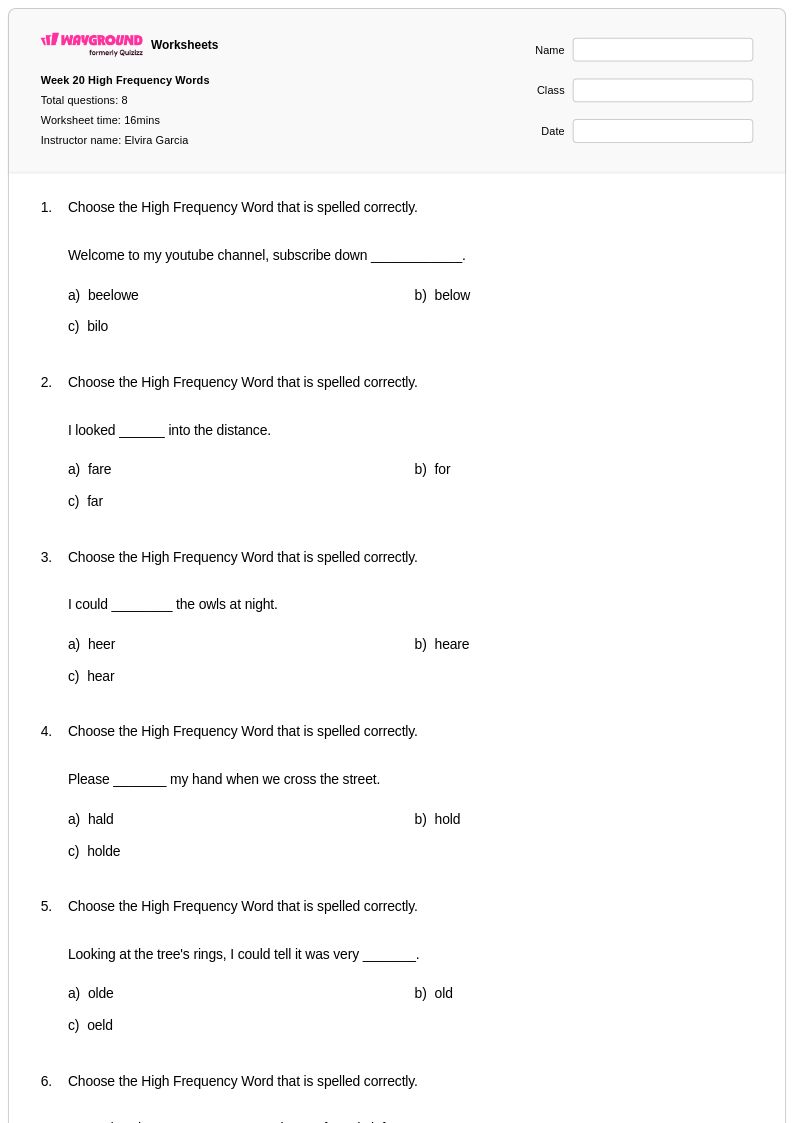
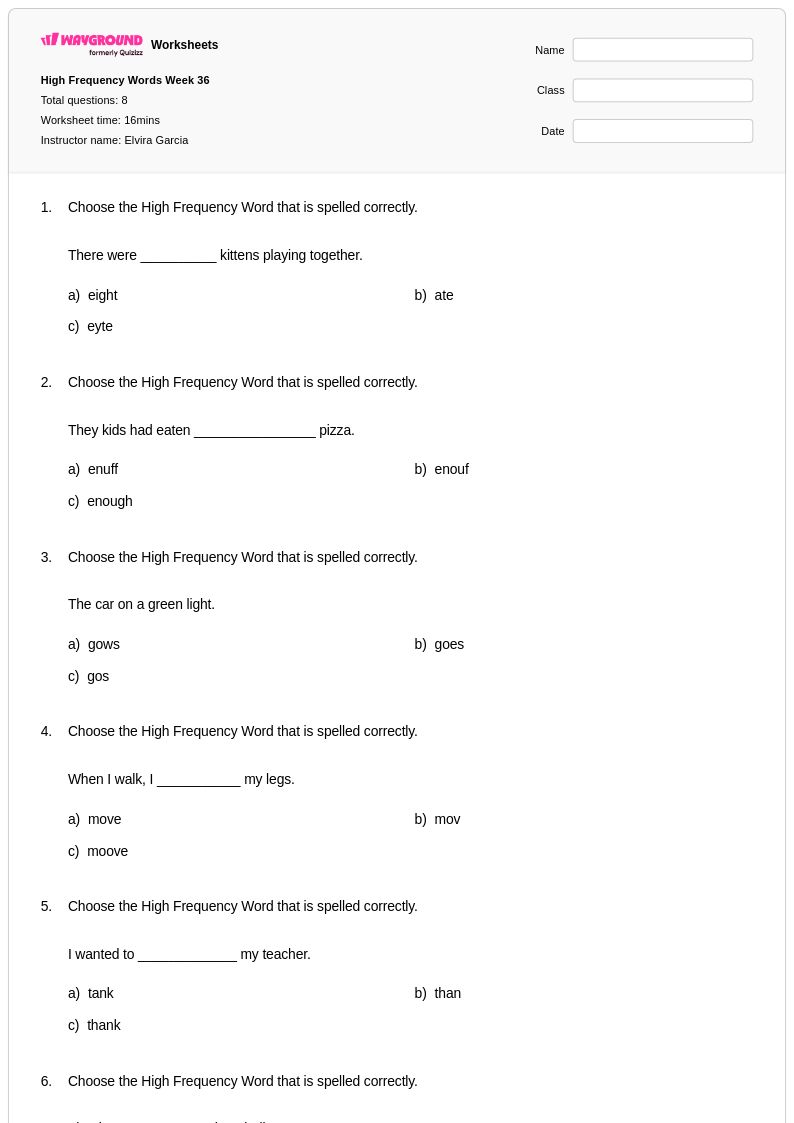
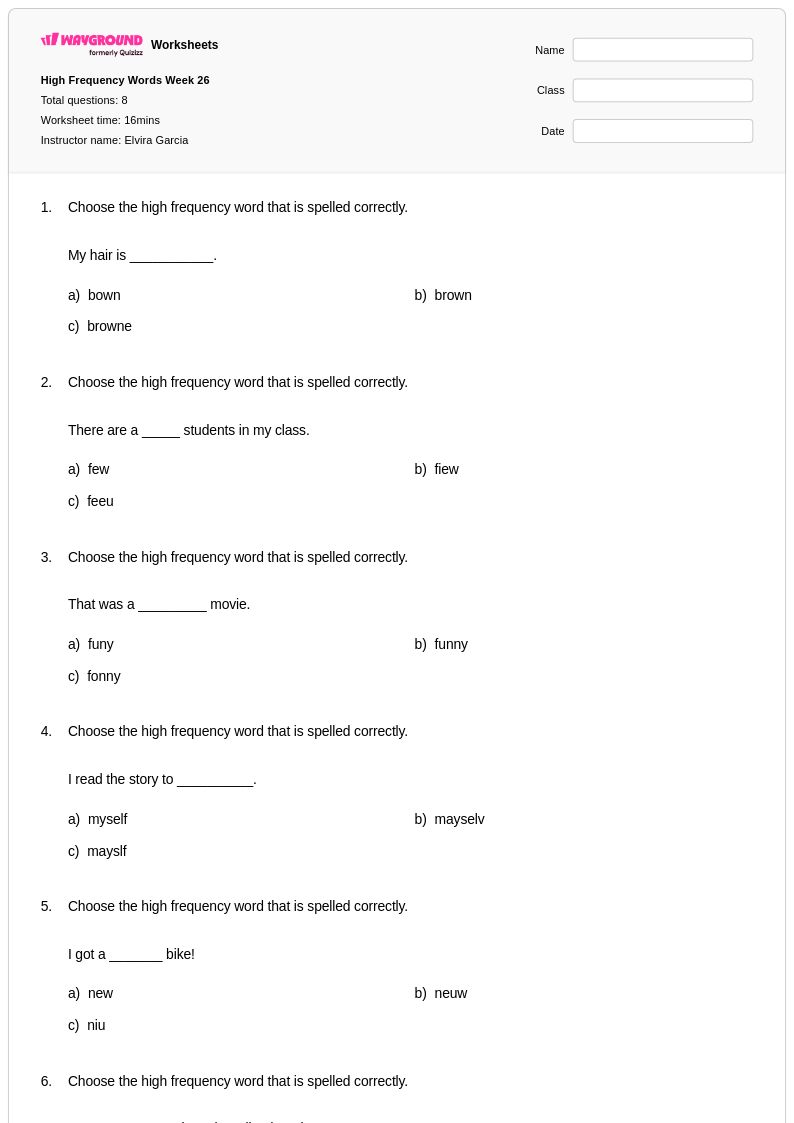
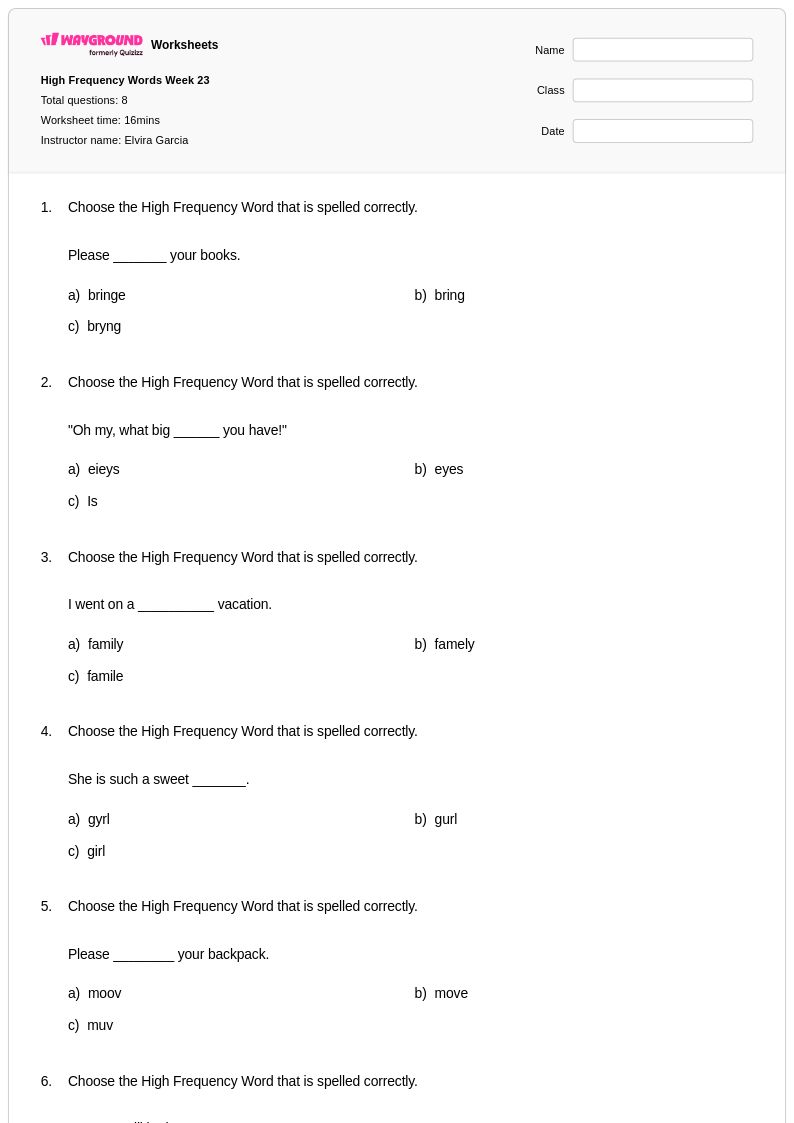
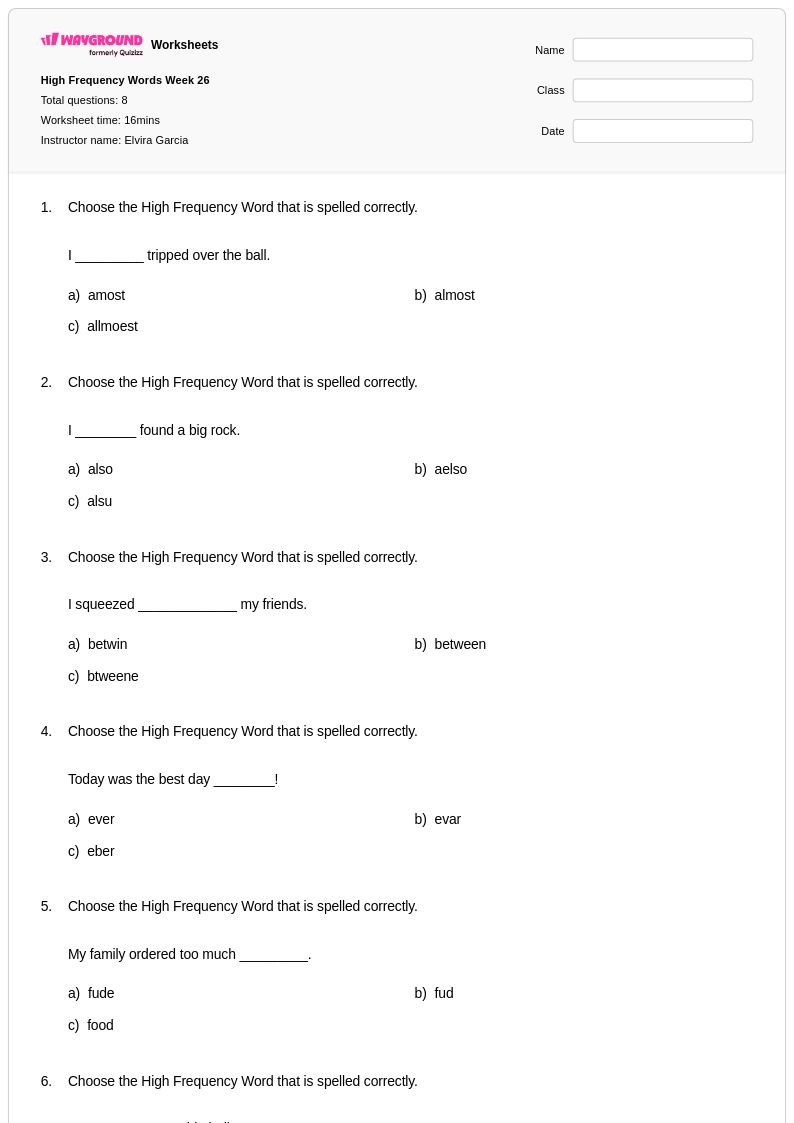
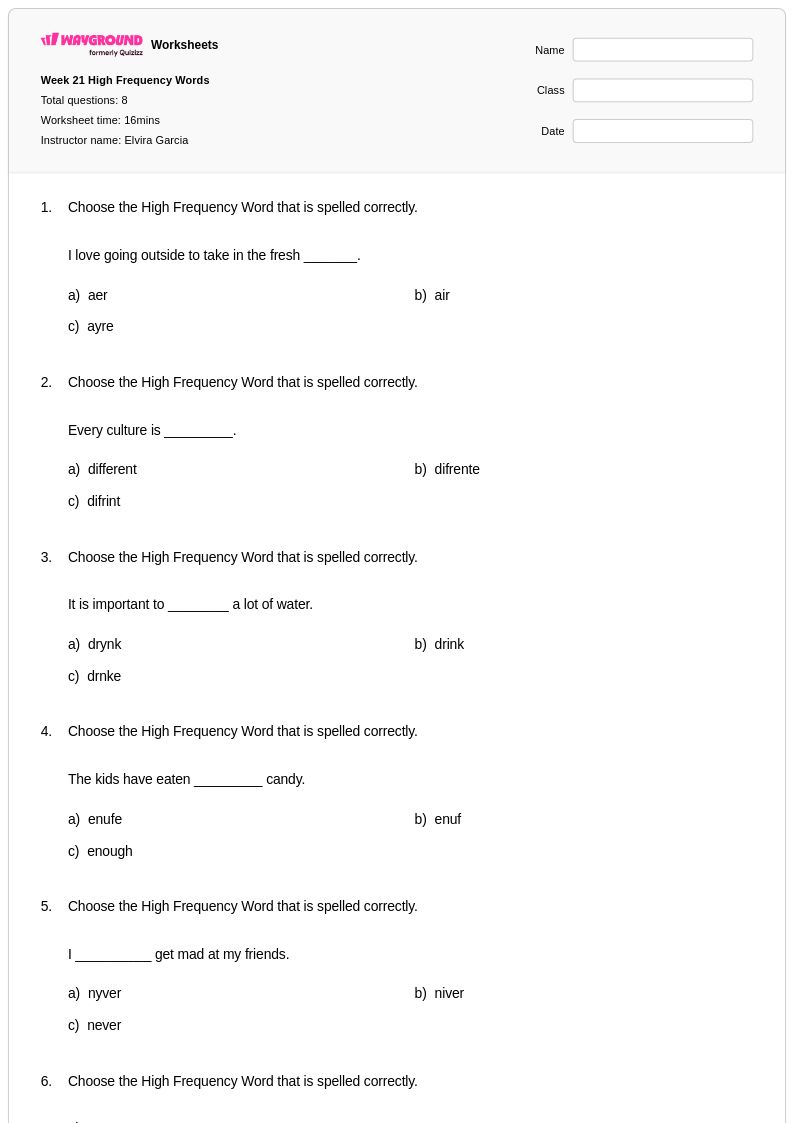
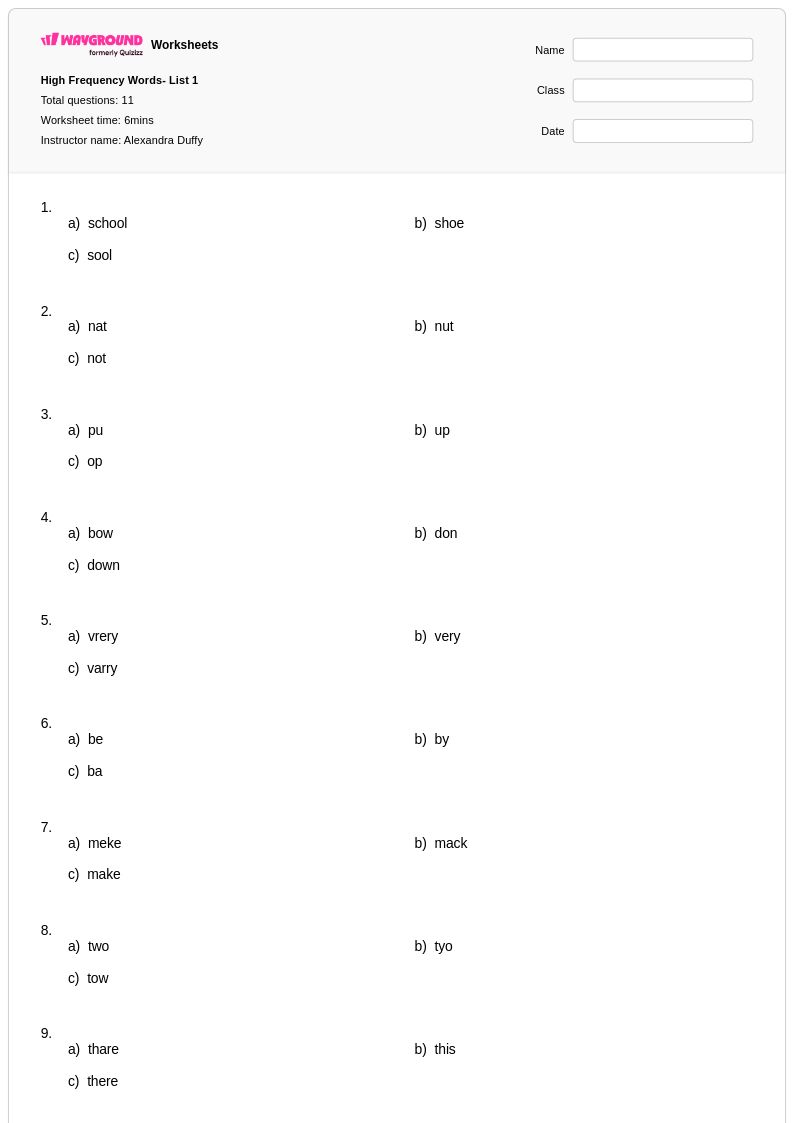
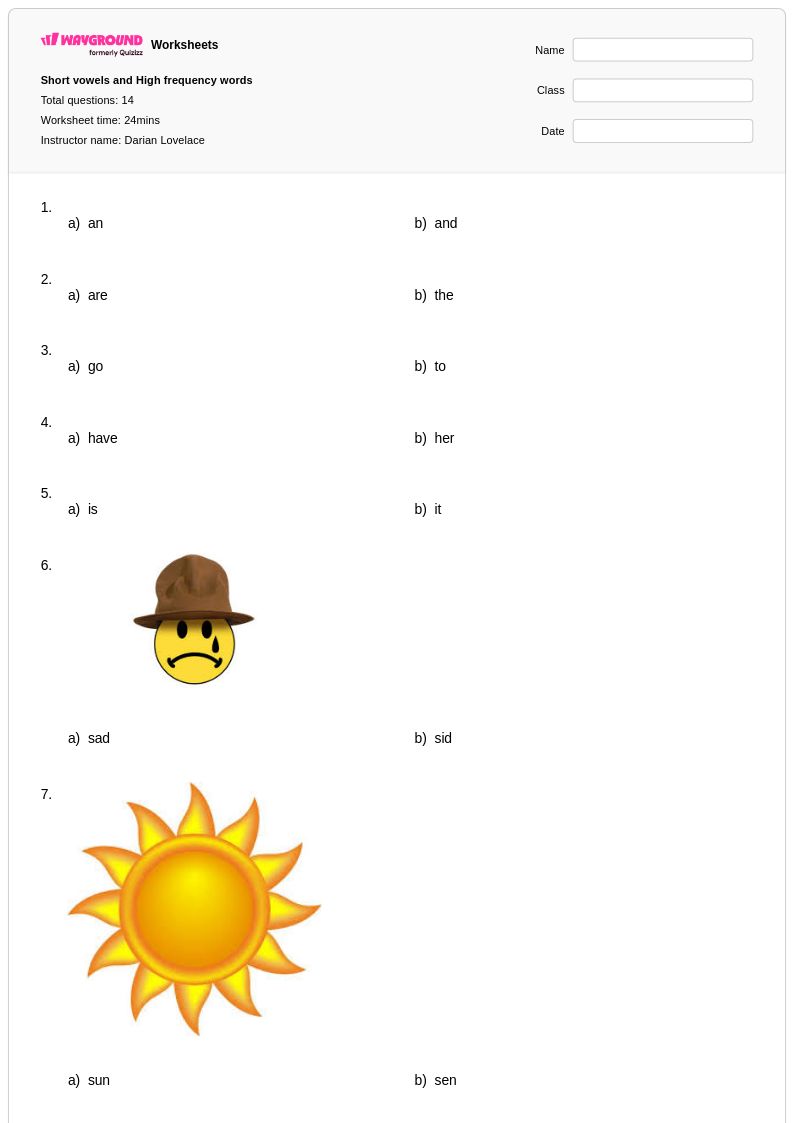
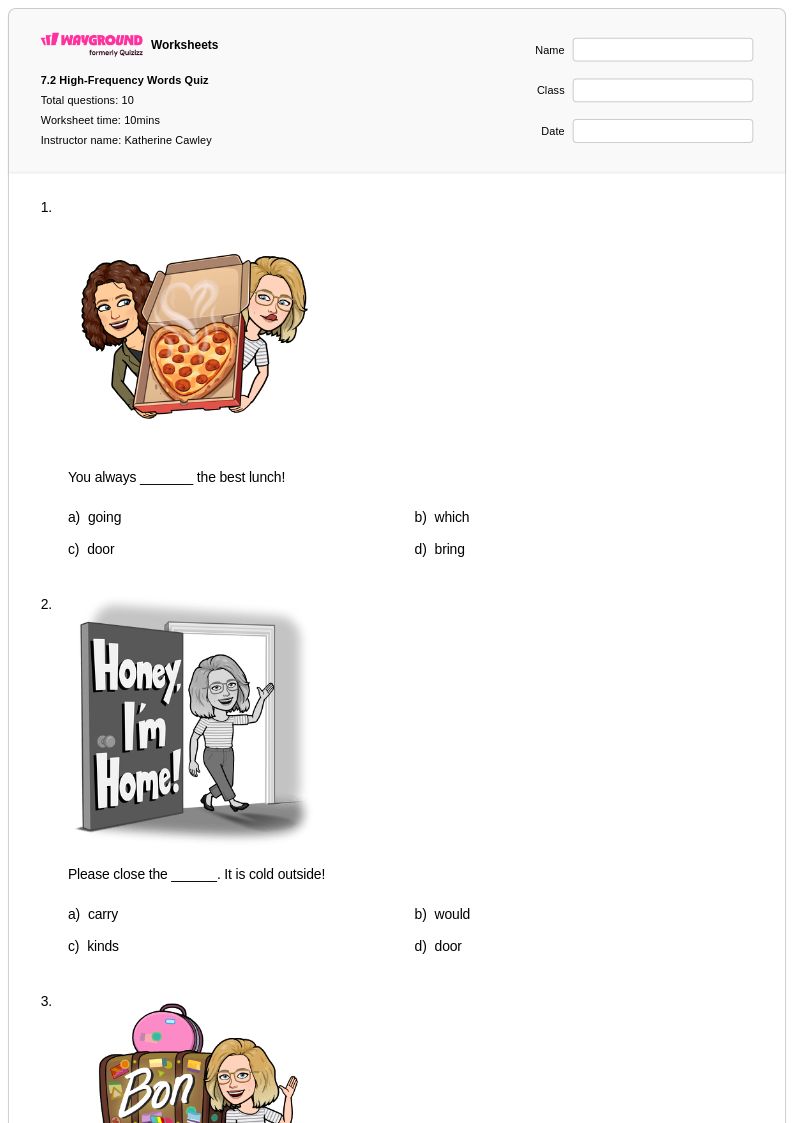
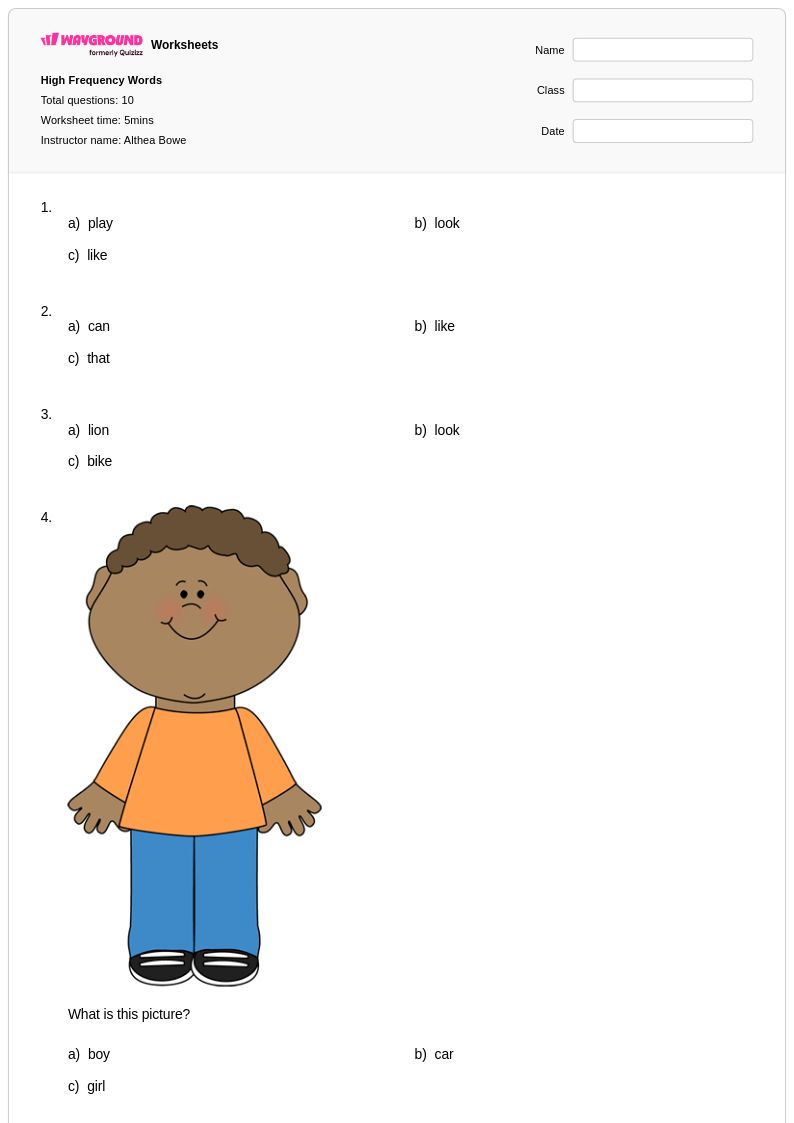
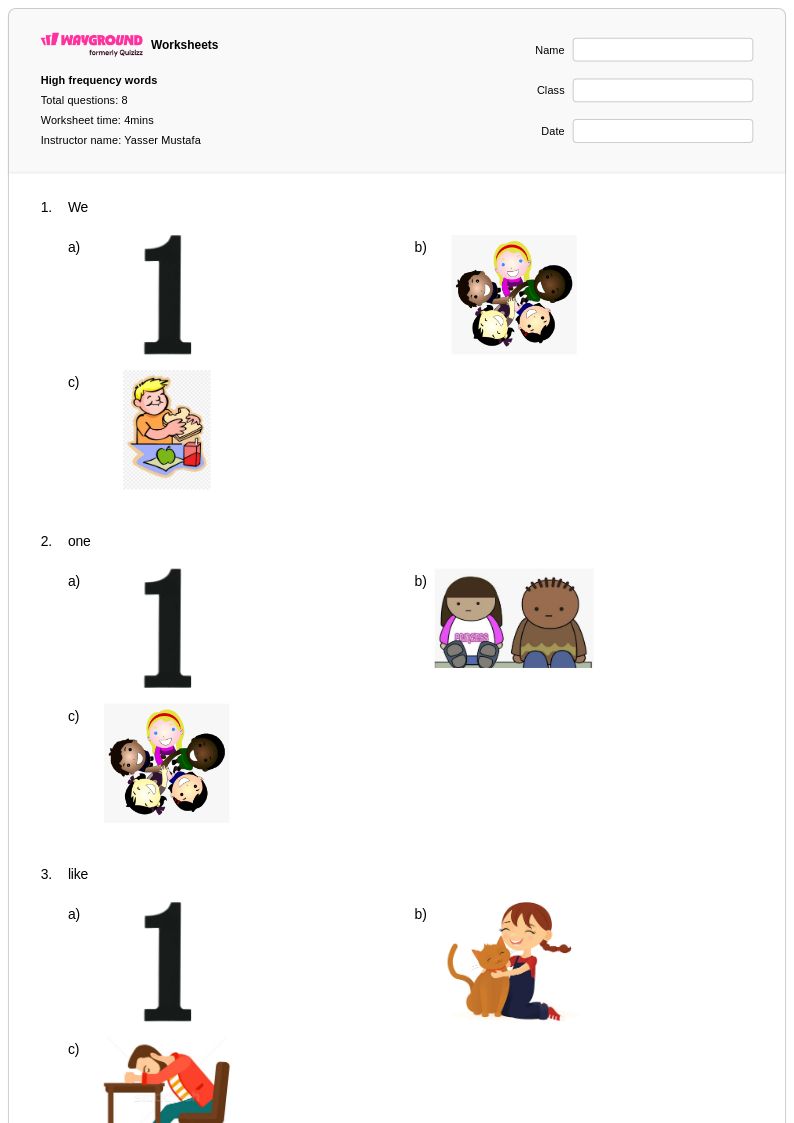
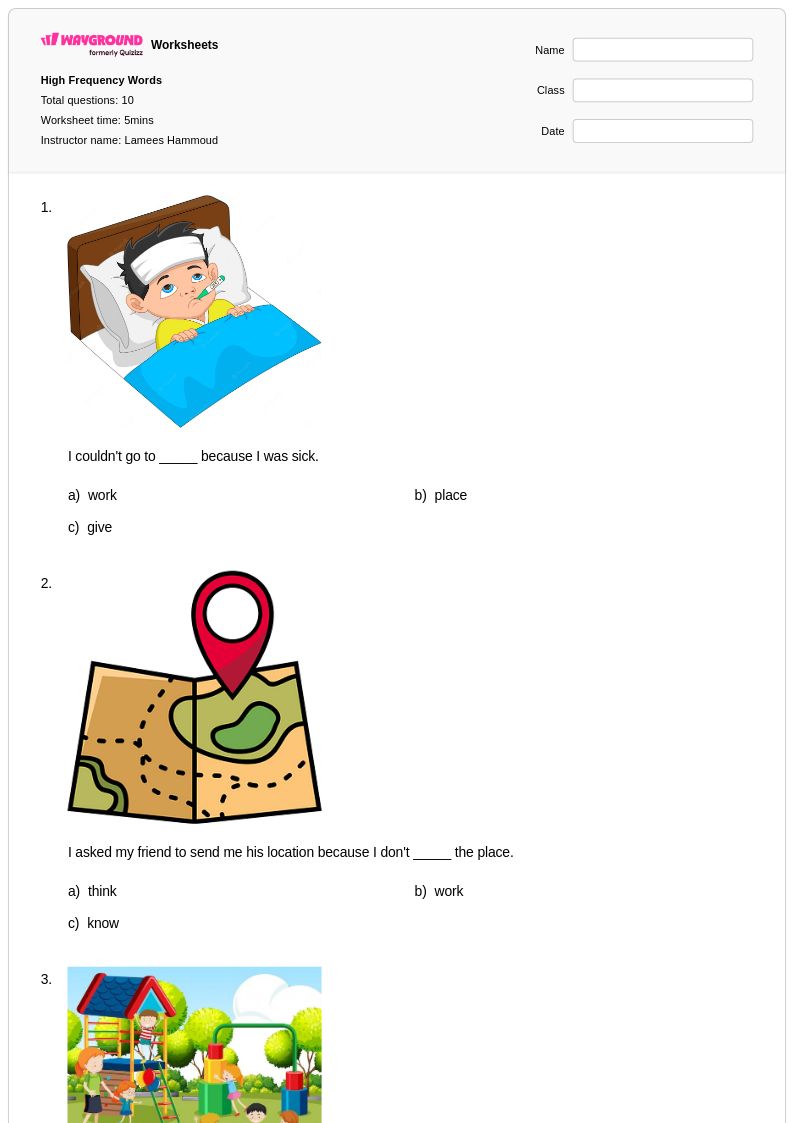
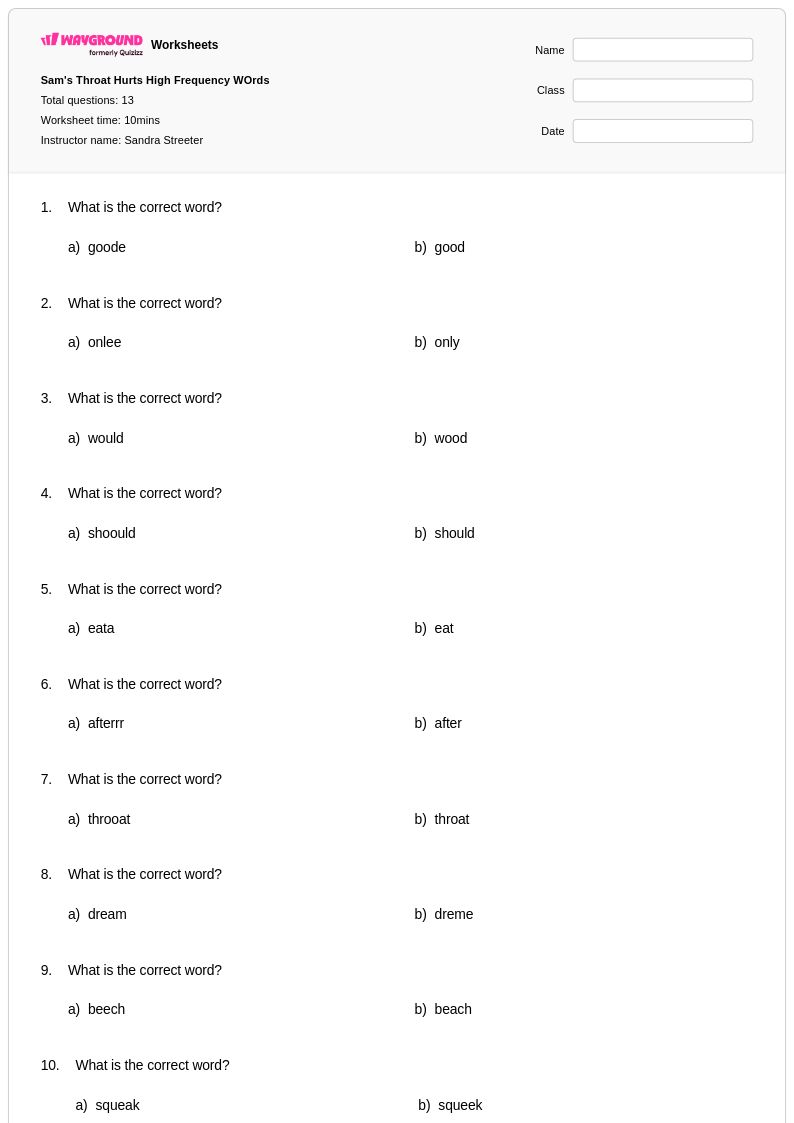
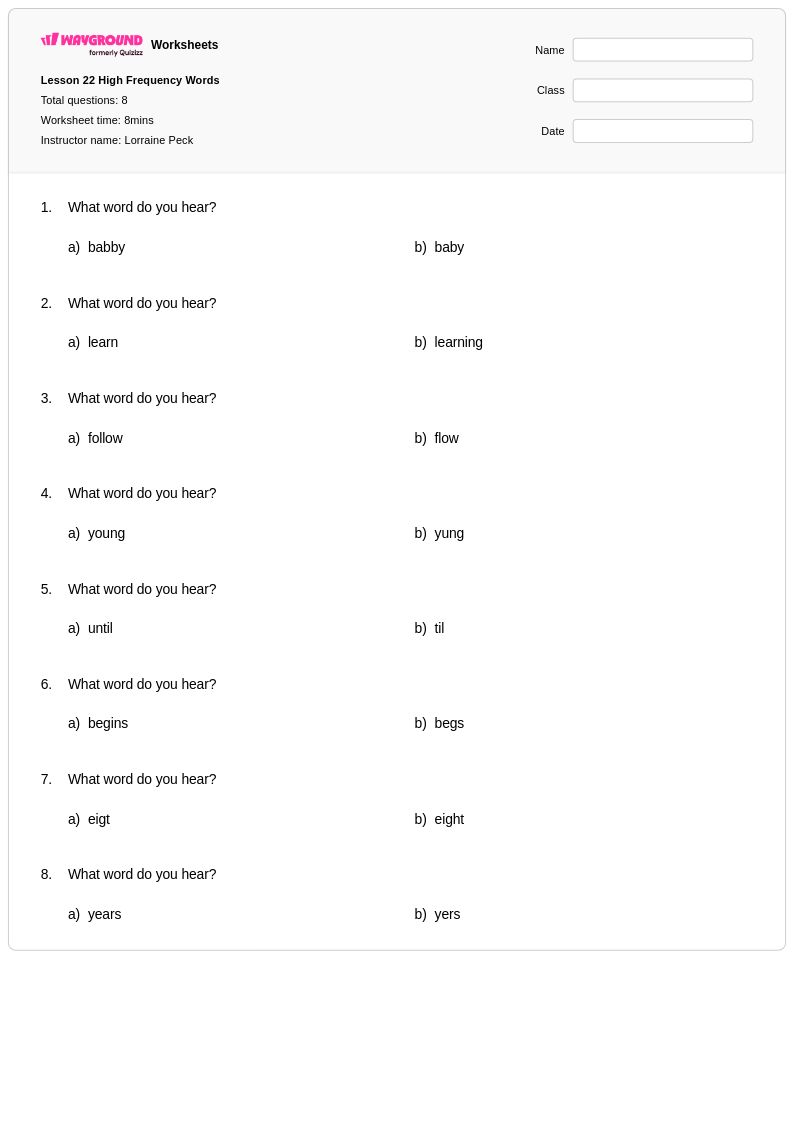
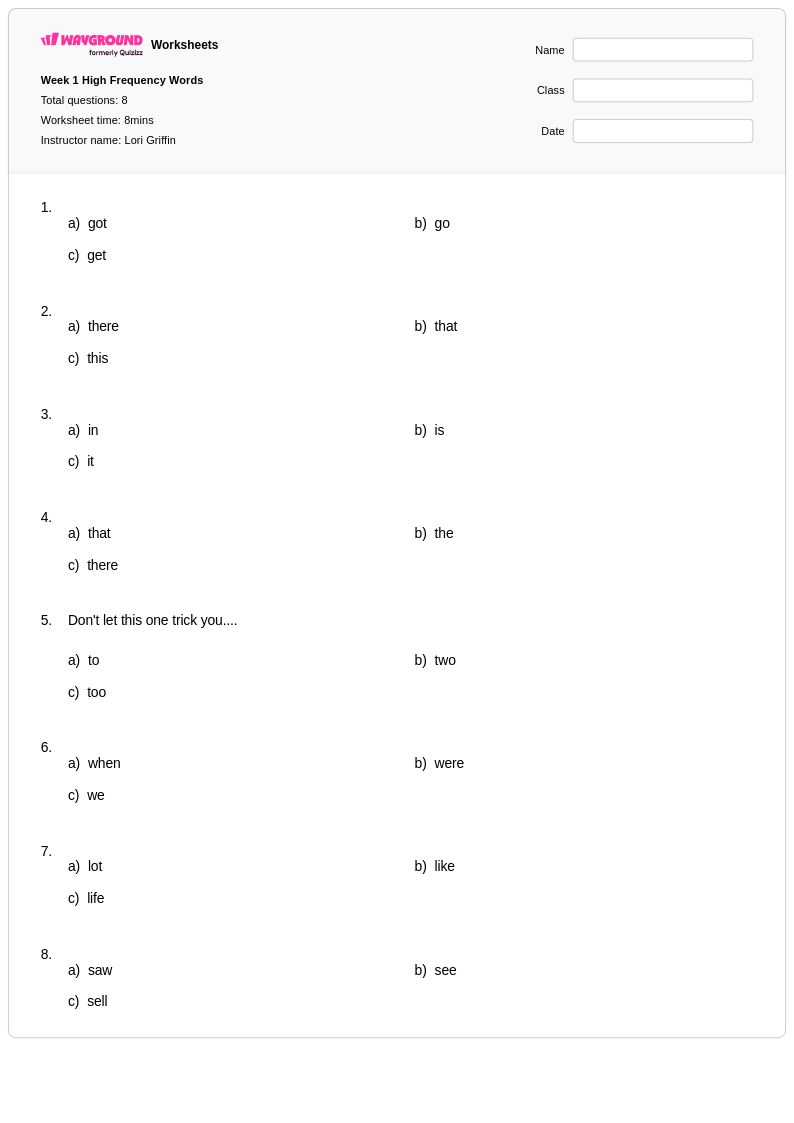
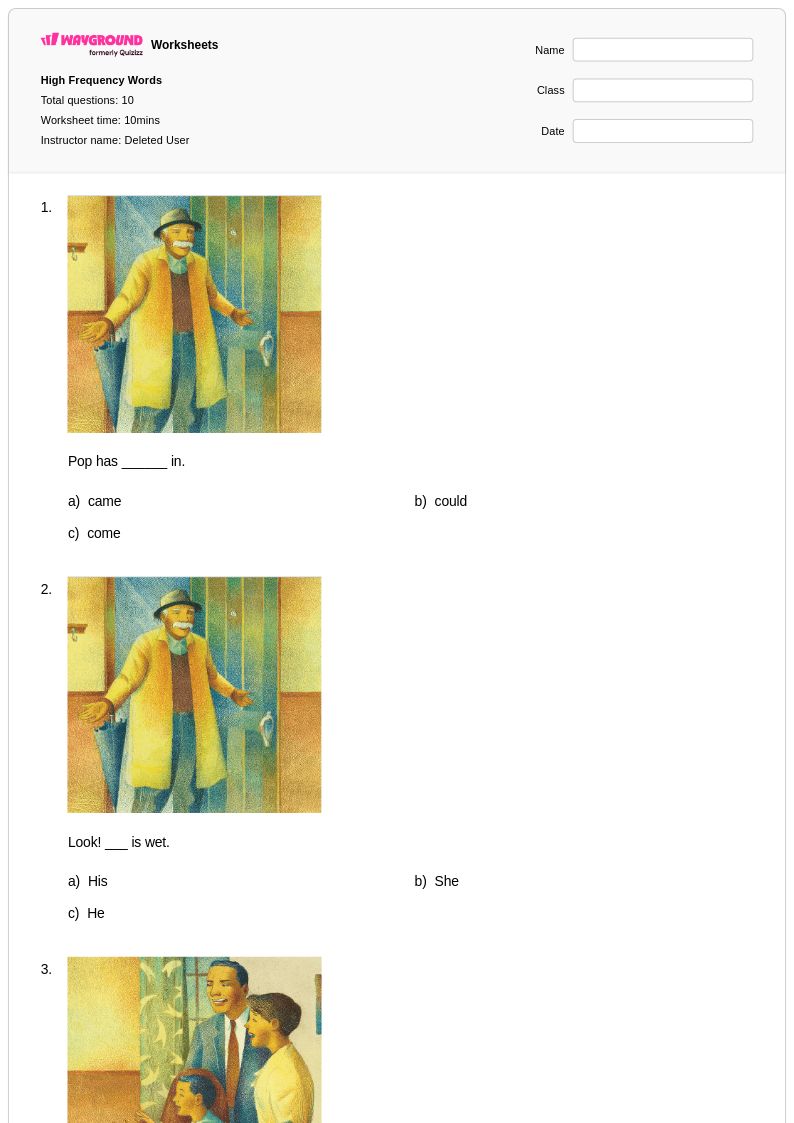
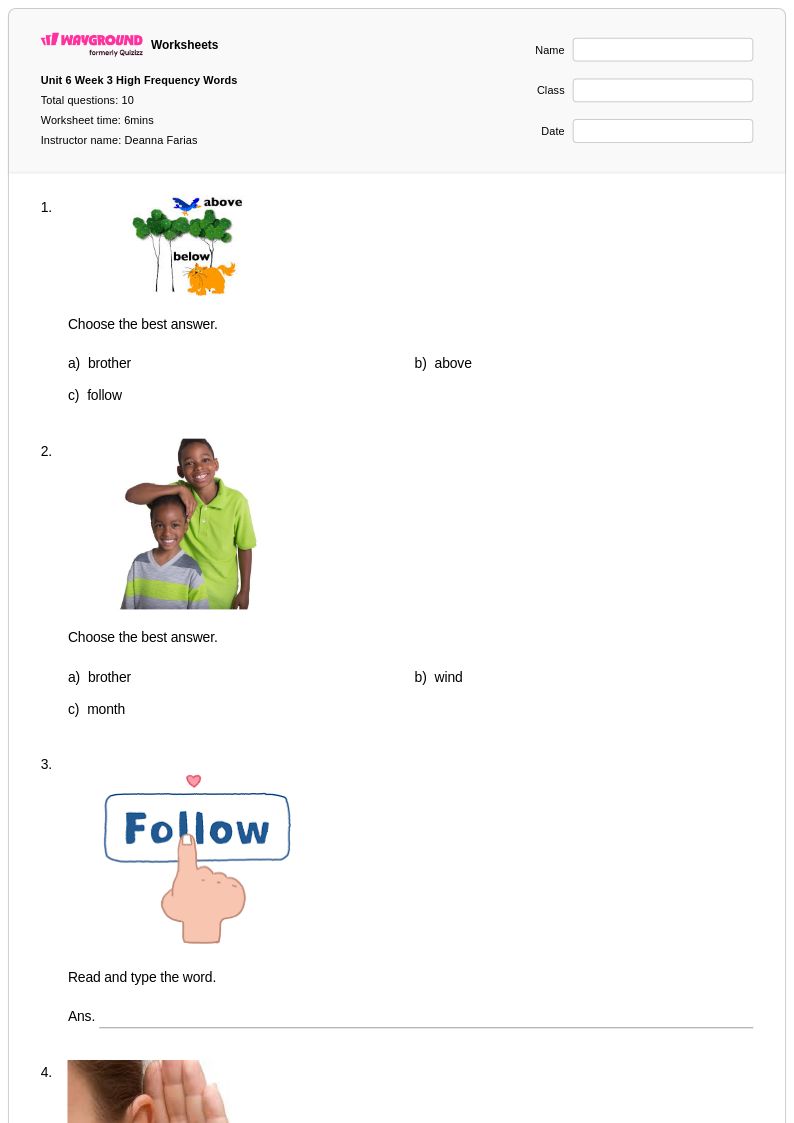
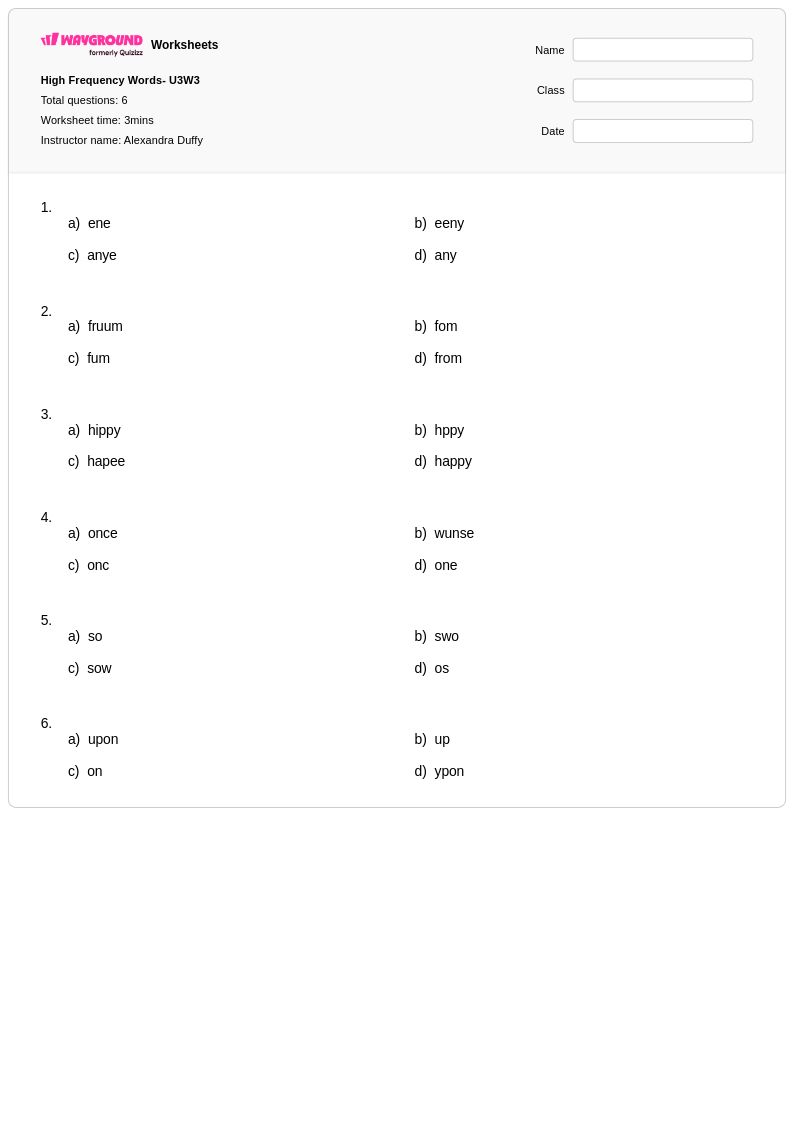
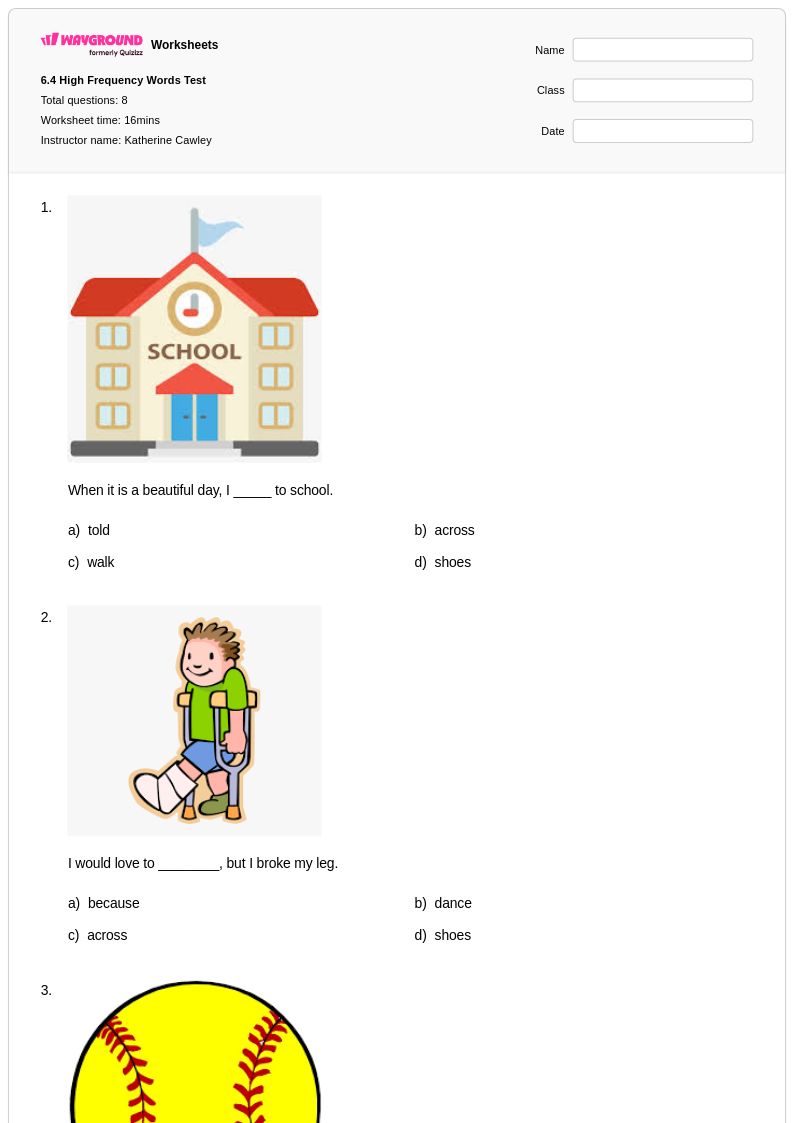
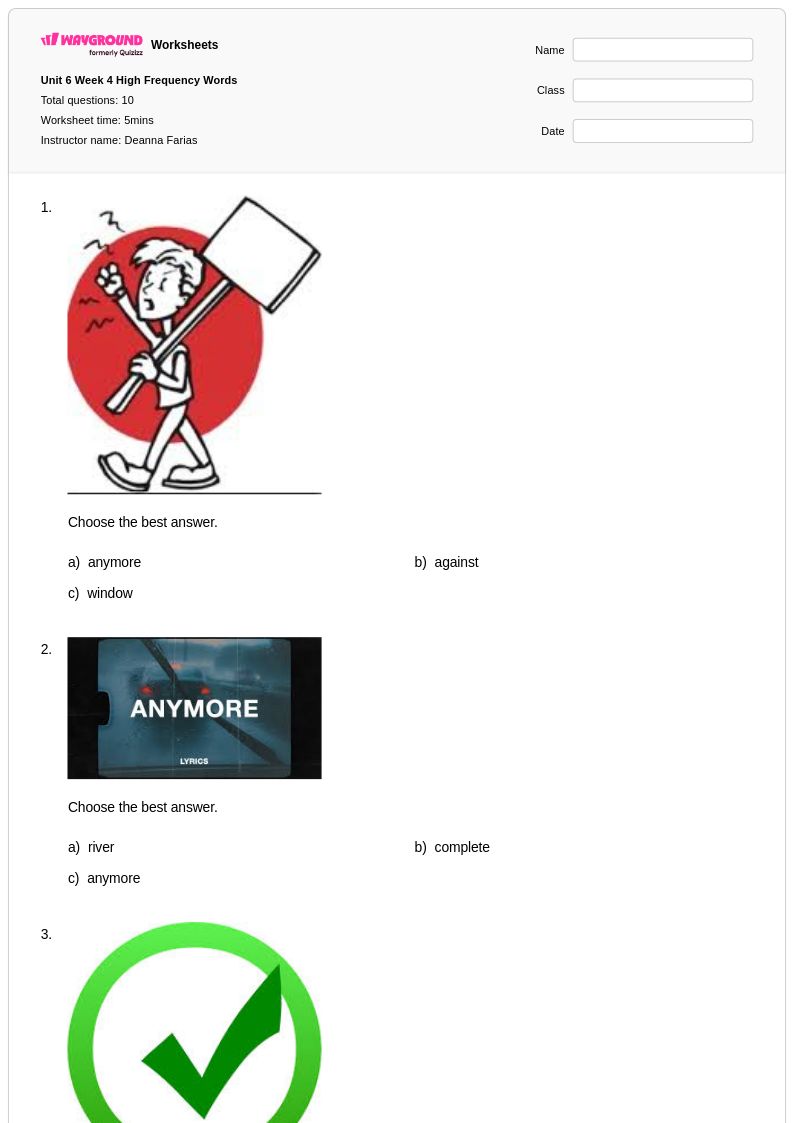
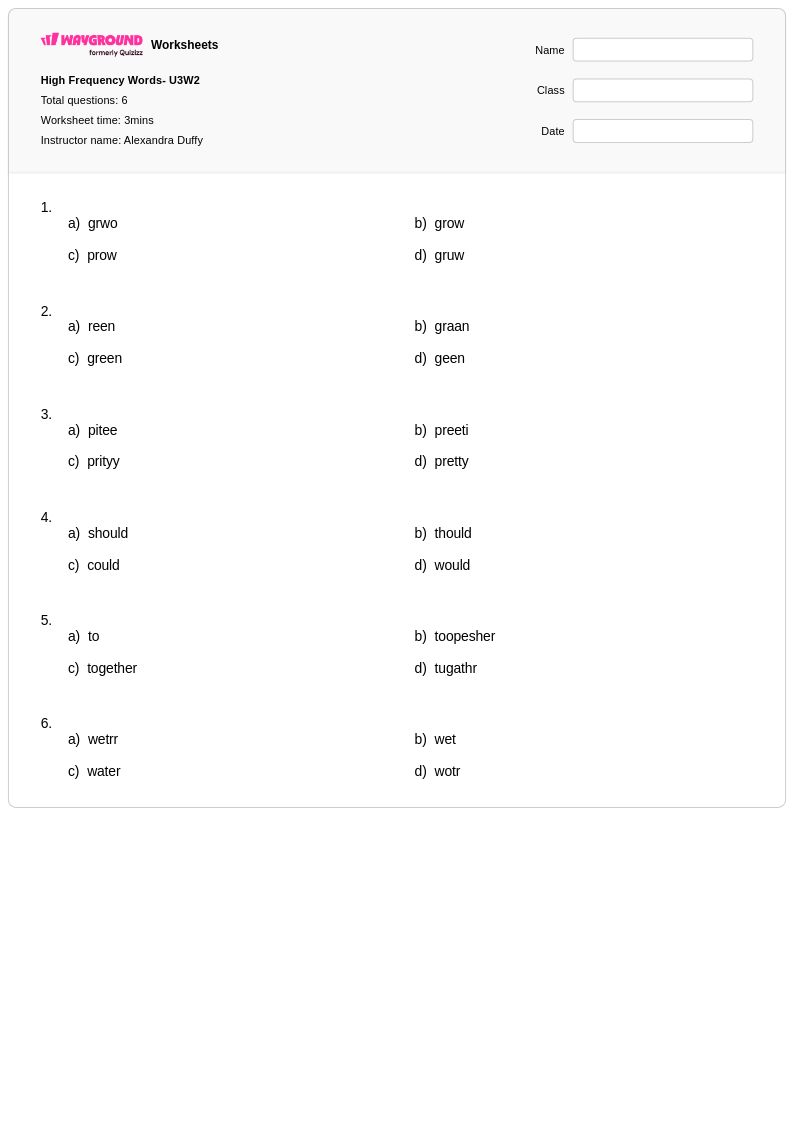
High frequency words form the foundation of early literacy development, and Grade 1 spelling worksheets focusing on these essential sight words provide students with targeted practice in recognizing and writing the most commonly used words in English. These comprehensive worksheet collections available through Wayground (formerly Quizizz) help first-grade students master critical words like "the," "and," "is," "to," and "you" through engaging activities that reinforce both visual recognition and correct spelling patterns. Each printable worksheet includes structured practice problems that guide young learners through repetitive exercises, tracing activities, and fill-in-the-blank challenges, with accompanying answer keys that enable teachers and parents to quickly assess student progress. These free resources emphasize the automatic recognition and spelling of high frequency words, building the essential vocabulary foundation that students need for reading fluency and writing confidence throughout their academic journey.
Wayground (formerly Quizizz) empowers educators with millions of teacher-created high frequency word spelling worksheets specifically designed for Grade 1 learners, offering robust search and filtering capabilities that allow teachers to locate materials perfectly aligned with their curriculum standards and individual student needs. The platform's differentiation tools enable teachers to customize worksheets for various skill levels within their classroom, supporting both remediation for struggling spellers and enrichment activities for advanced students. Available in both printable pdf formats and interactive digital versions, these resources provide flexible options for classroom instruction, homework assignments, and independent practice sessions. Teachers can efficiently plan their spelling instruction by accessing worksheets that target specific high frequency word lists, utilize the comprehensive answer keys for quick grading and feedback, and leverage the platform's organizational features to create systematic skill-building progressions that ensure all students develop strong foundational spelling abilities.
FAQs
How do I teach high frequency words effectively in the classroom?
Effective high frequency word instruction relies on repeated, multisensory exposure rather than one-time memorization. Strategies such as word walls, choral reading, flashcard drills, and embedded practice within connected text help students build automatic recognition. Because many high frequency words follow irregular phonetic patterns, explicit instruction paired with frequent review is essential for building lasting fluency.
What exercises help students practice high frequency words?
Practice exercises that combine recognition and production are most effective for high frequency words. Useful formats include fill-in-the-blank sentences, word sorting, spelling dictation, and tracing or writing activities that reinforce both visual memory and motor recall. Varied practice across multiple sessions is more effective than massed repetition in a single sitting.
What mistakes do students commonly make when learning high frequency words?
The most common error students make is misreading visually similar high frequency words, such as confusing 'was' with 'saw' or 'their' with 'there.' Students also frequently rely on partial letter cues, reading only the first letter and guessing, rather than processing the full word. Targeted review of commonly confused pairs and requiring full-word reading during practice helps correct these patterns.
How can I differentiate high frequency word instruction for struggling readers?
For struggling readers, reducing the number of target words per session and increasing the frequency of review intervals supports retention. On Wayground, teachers can apply accommodations such as Read Aloud so students hear words spoken aloud, and reduced answer choices to lower cognitive load for students who need additional scaffolding. These settings can be assigned to individual students without affecting the experience of the rest of the class.
How do I use Wayground's high frequency words worksheets in my classroom?
Wayground's high frequency words worksheets are available as printable PDFs for traditional classroom use and in digital formats for technology-integrated environments, including the option to host them as a quiz directly on Wayground. Teachers can use printable versions for independent seat work, small group intervention, or homework, while the digital format supports real-time feedback and self-paced practice. Each worksheet includes an answer key to streamline grading and feedback.
At what grade level should students have mastered high frequency words?
Most high frequency word lists, including Dolch and Fry words, are sequenced across Pre-K through Grade 3, with the expectation that students have automatic recognition of the most common words by the end of second grade. However, intervention with high frequency words is appropriate at any grade level where gaps in automatic word recognition are limiting reading fluency and comprehension. Regular screening can identify which students need targeted review beyond the primary grades.