
20 Q
12th - Uni
22 Q
10th - 12th
70 Q
9th - 12th
18 Q
12th
20 Q
12th - Uni
25 Q
9th - Uni
14 Q
12th - Uni
13 Q
12th - Uni
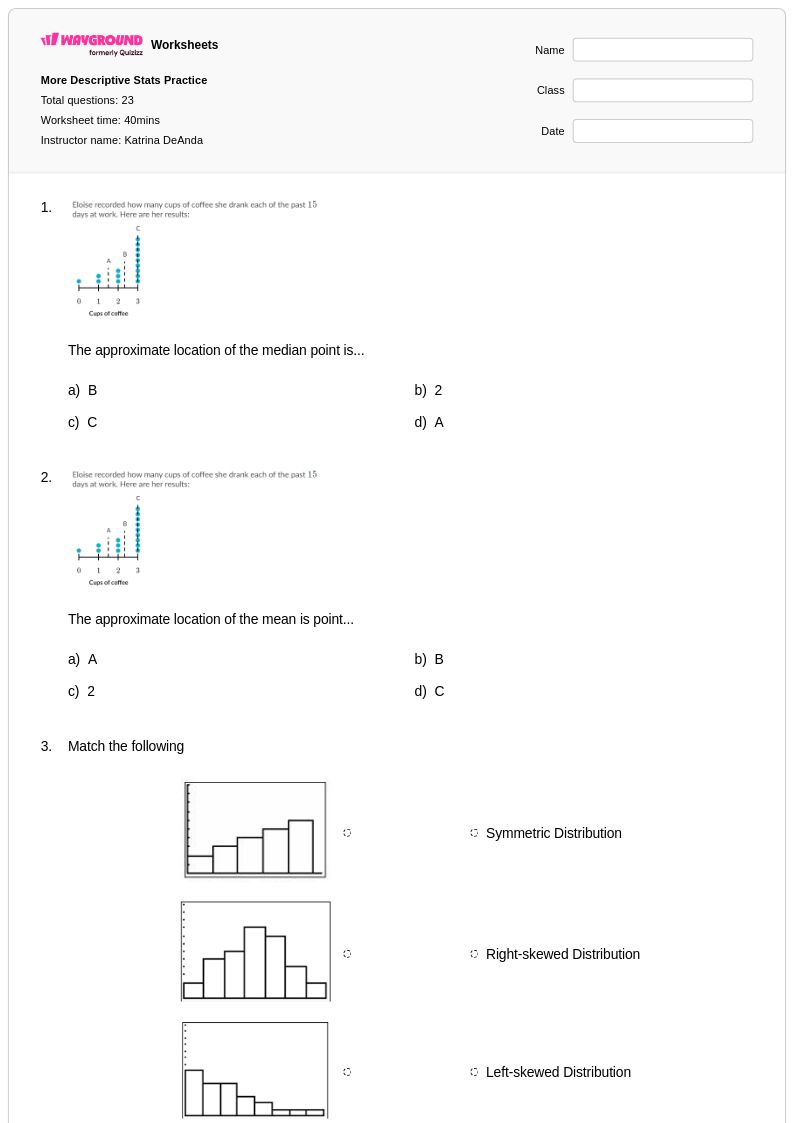
23 Q
12th
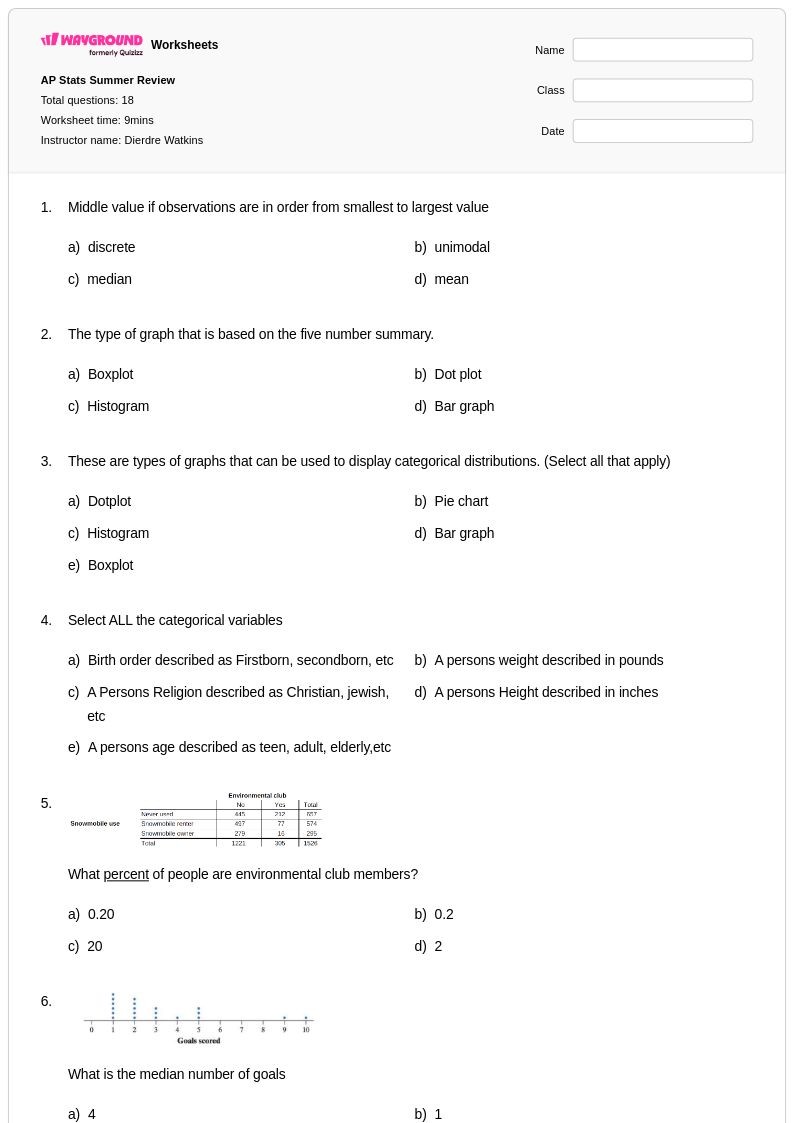
18 Q
12th
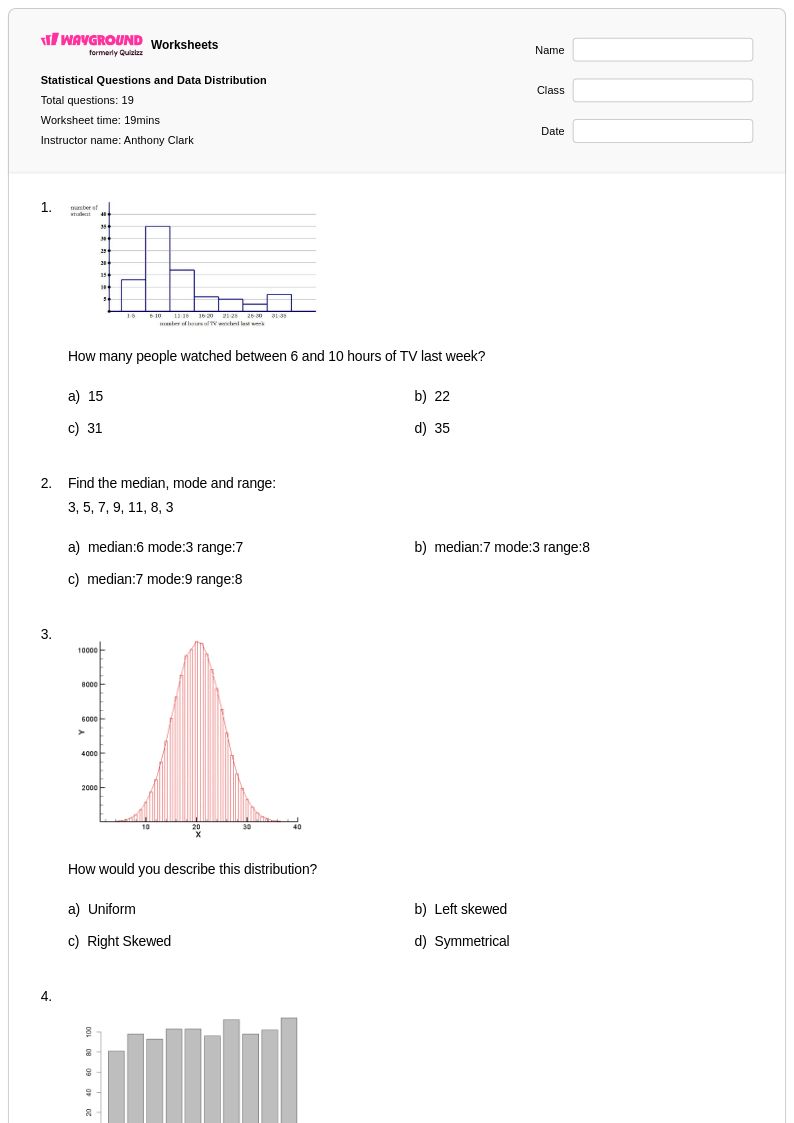
19 Q
6th - Uni
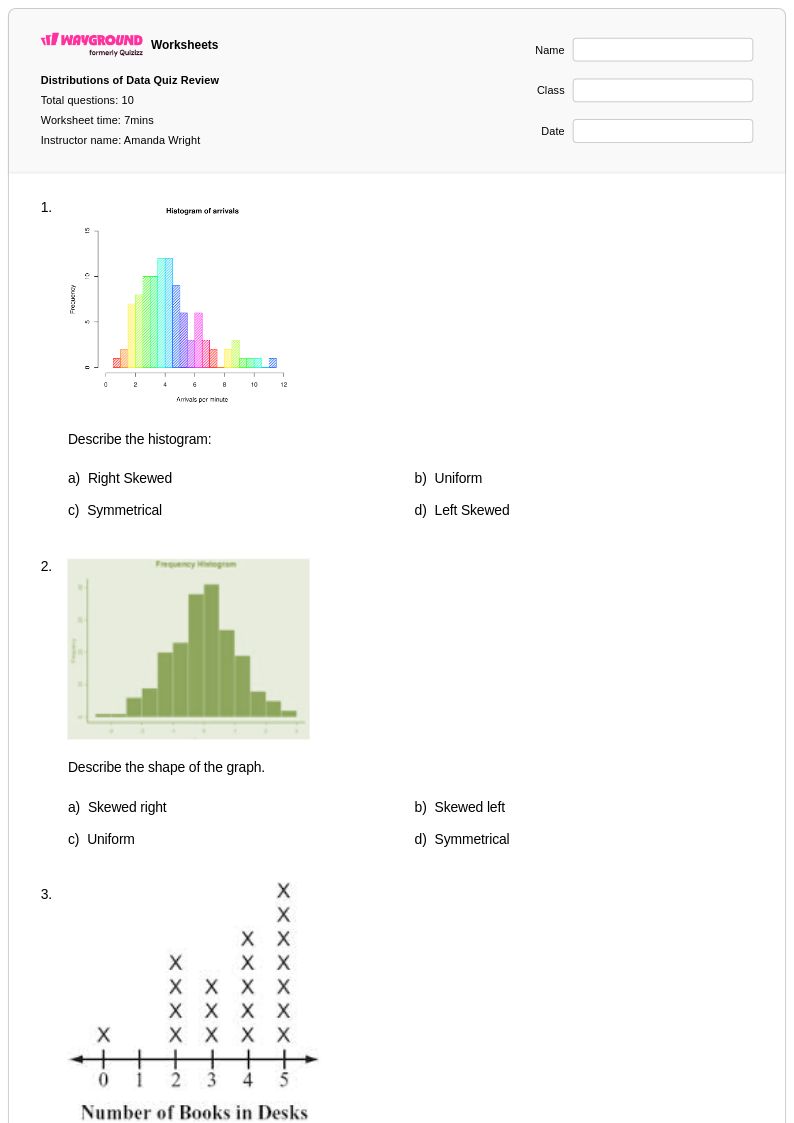
10 Q
9th - 12th
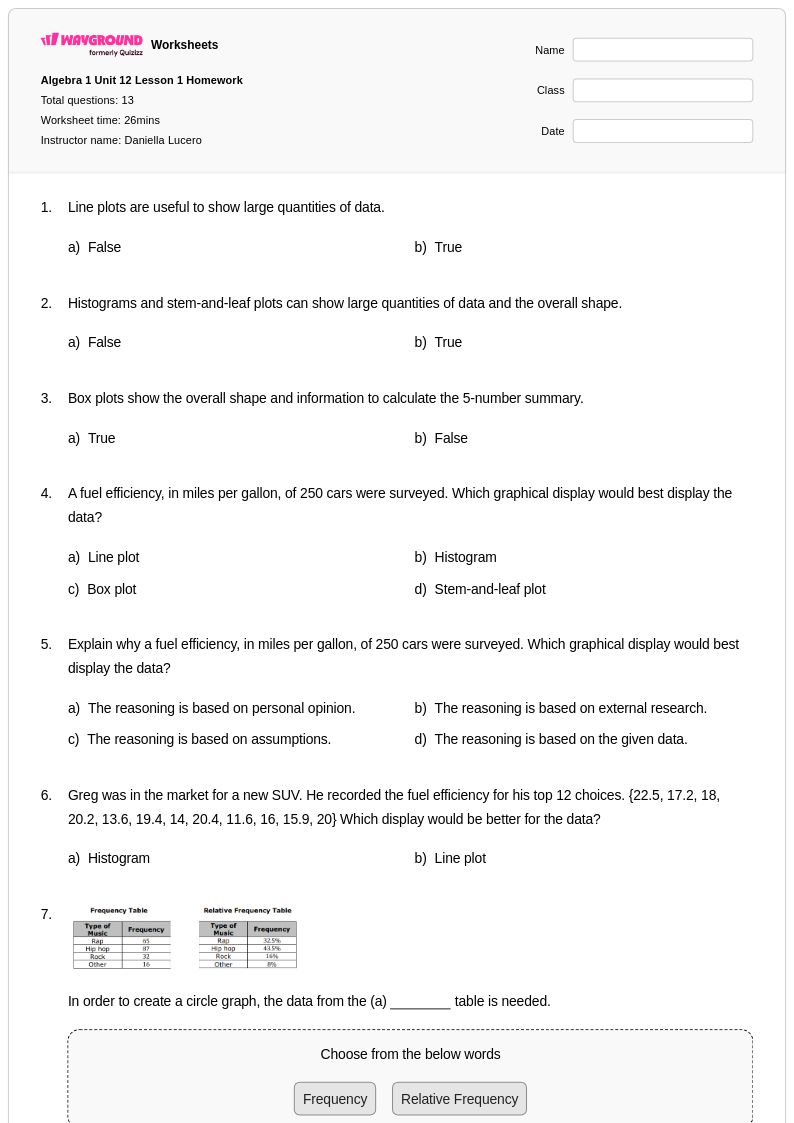
13 Q
6th - Uni
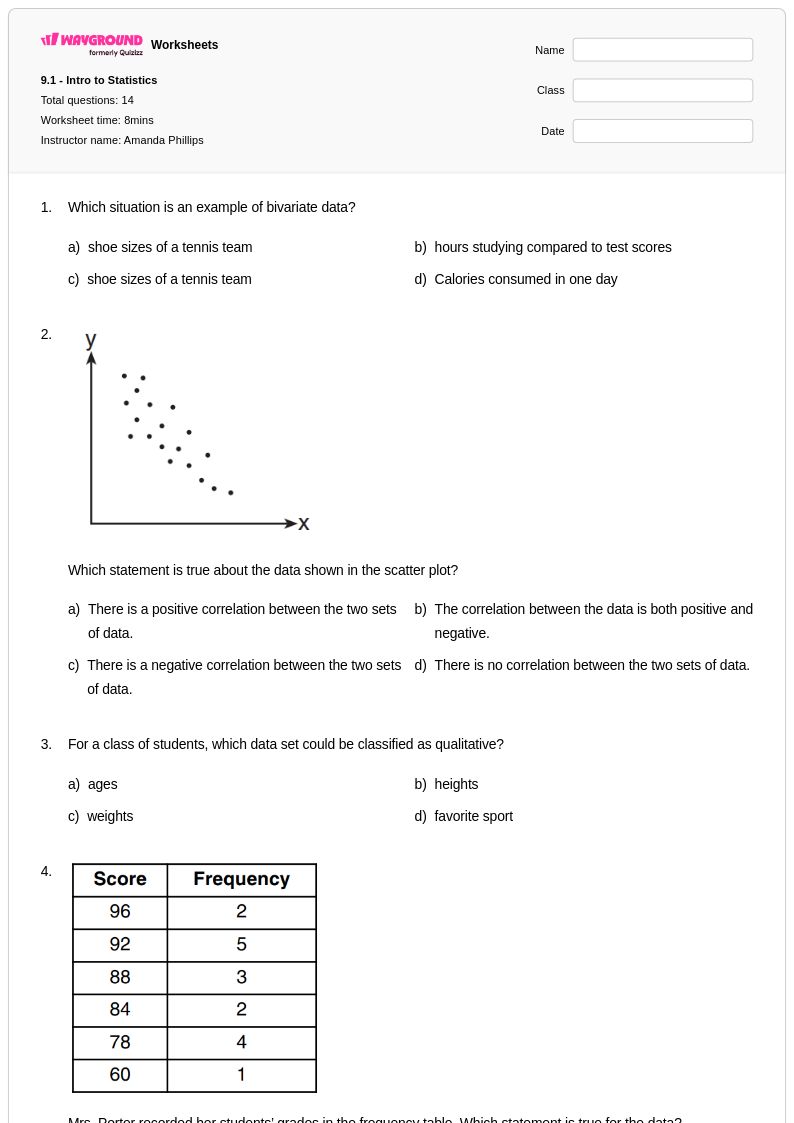
14 Q
9th - 12th
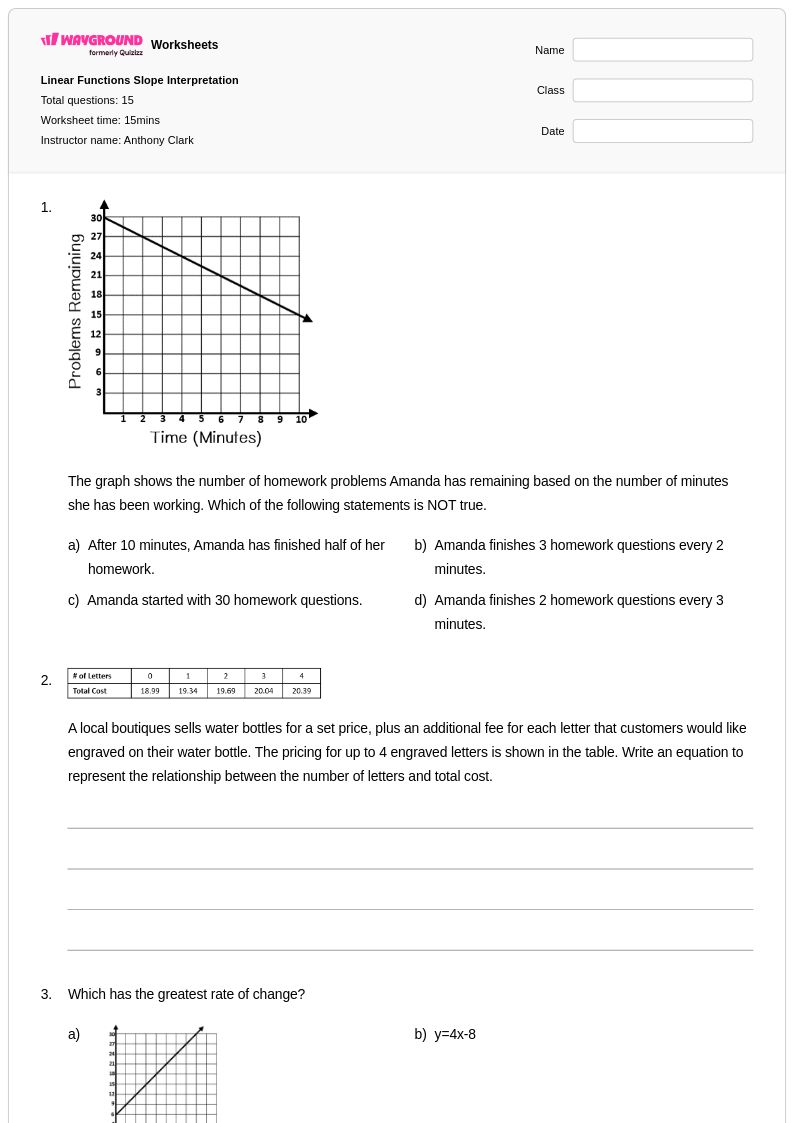
15 Q
9th - Uni
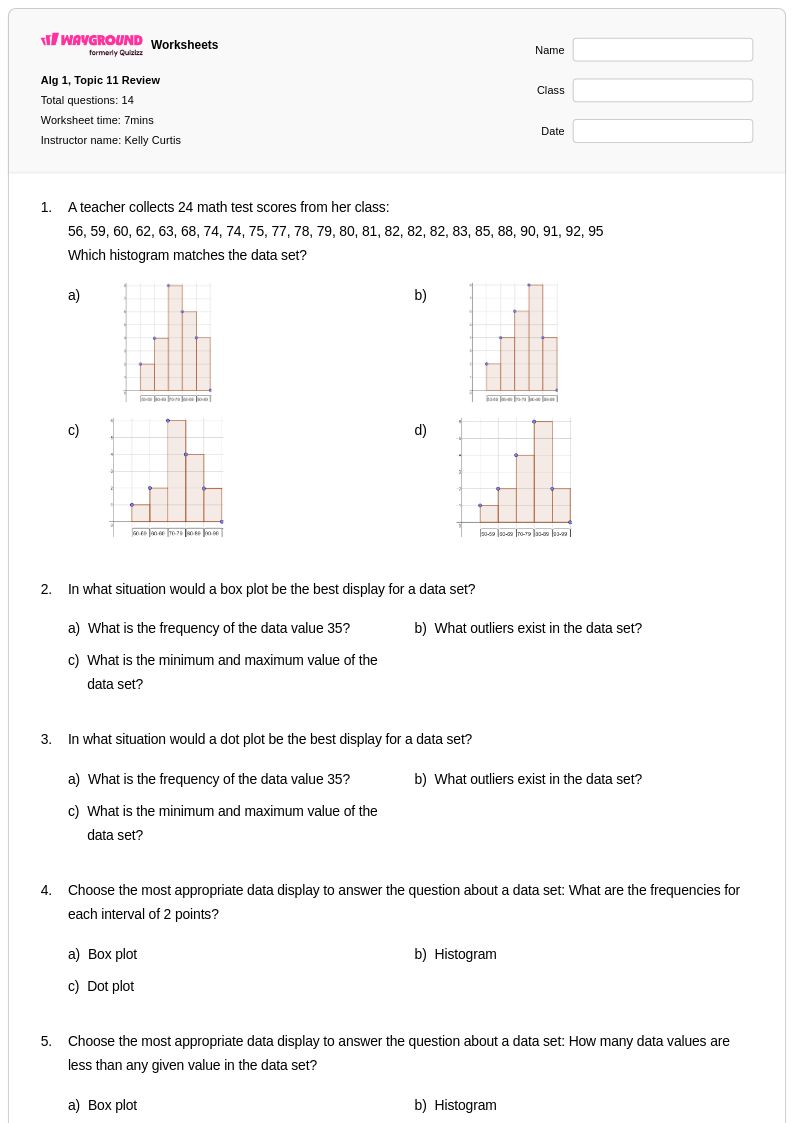
14 Q
9th - 12th
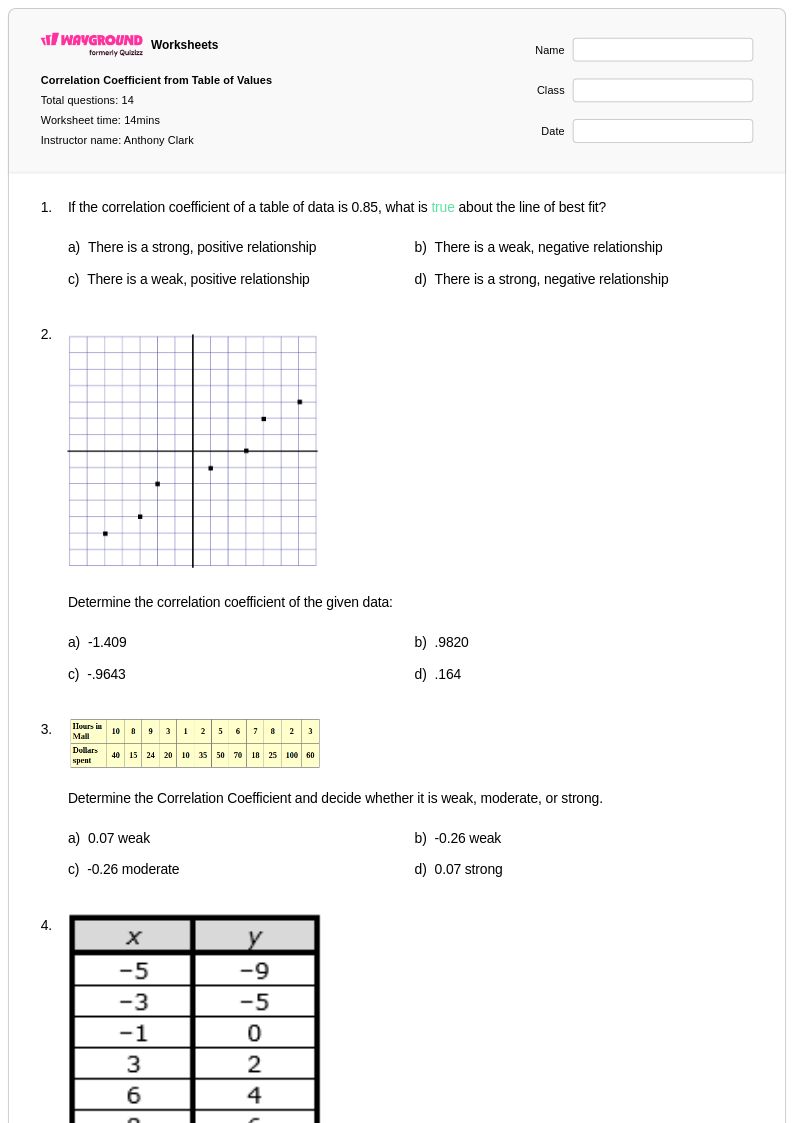
14 Q
9th - Uni
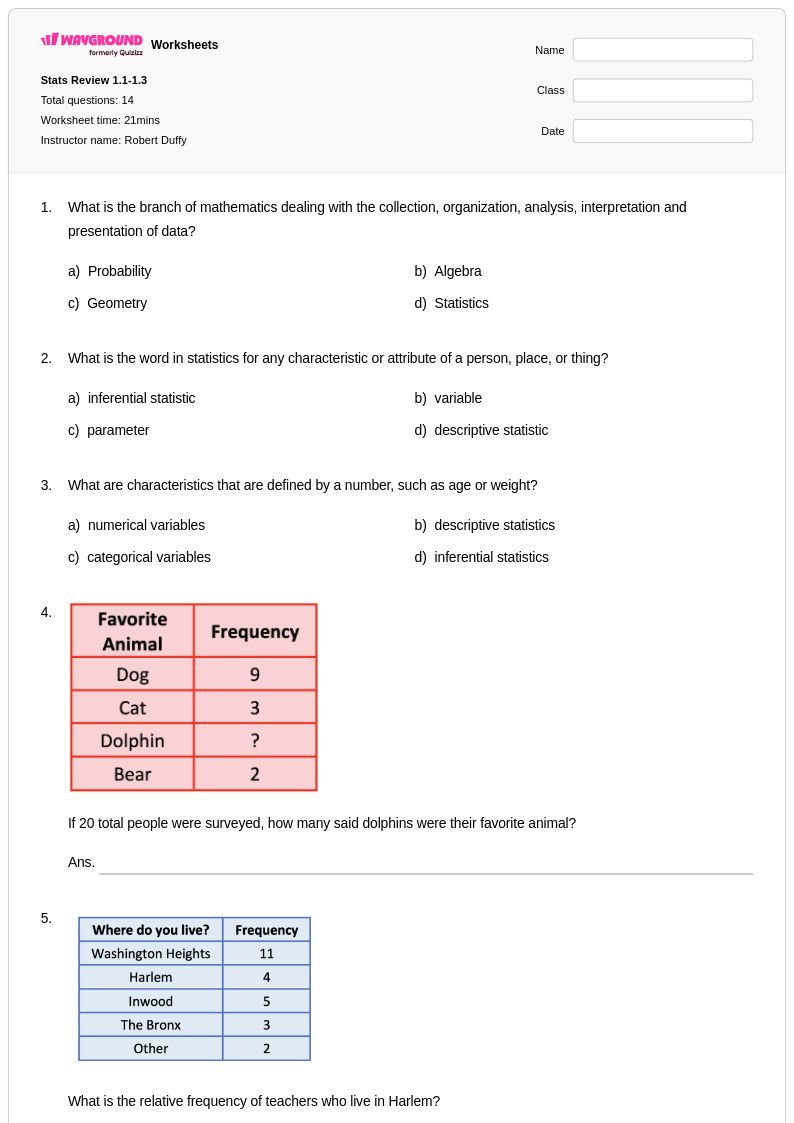
14 Q
12th
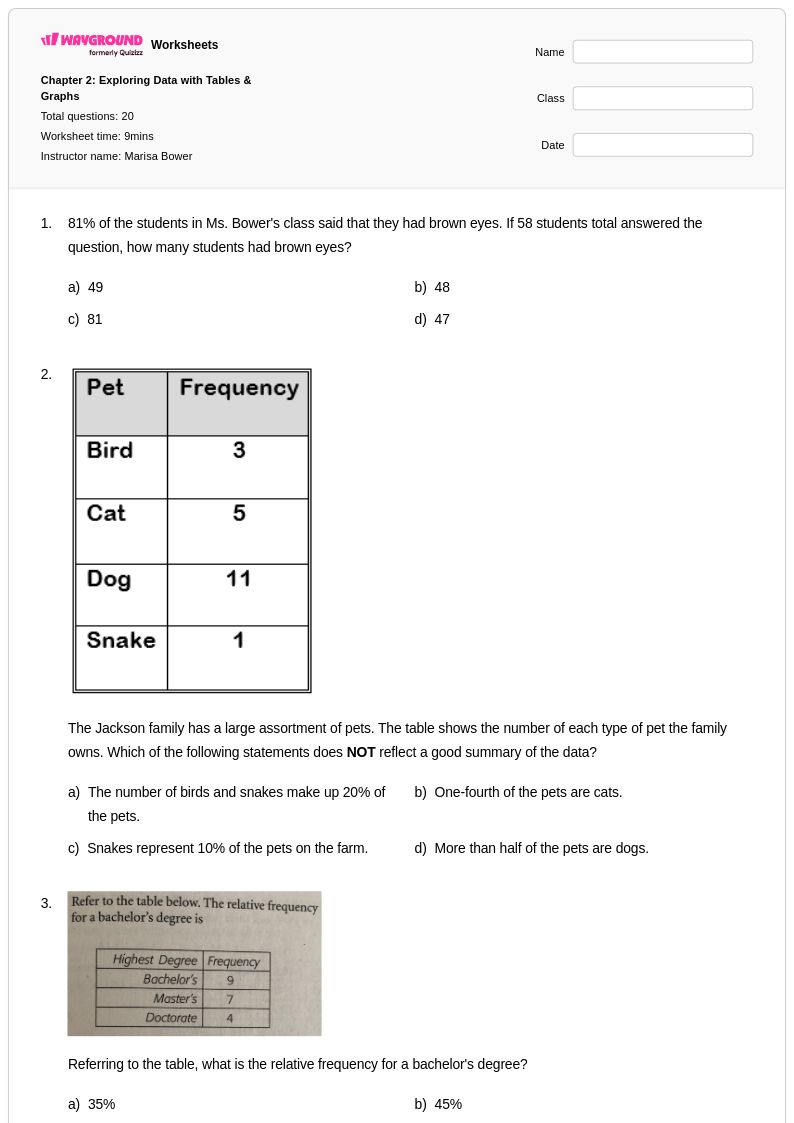
20 Q
9th - 12th
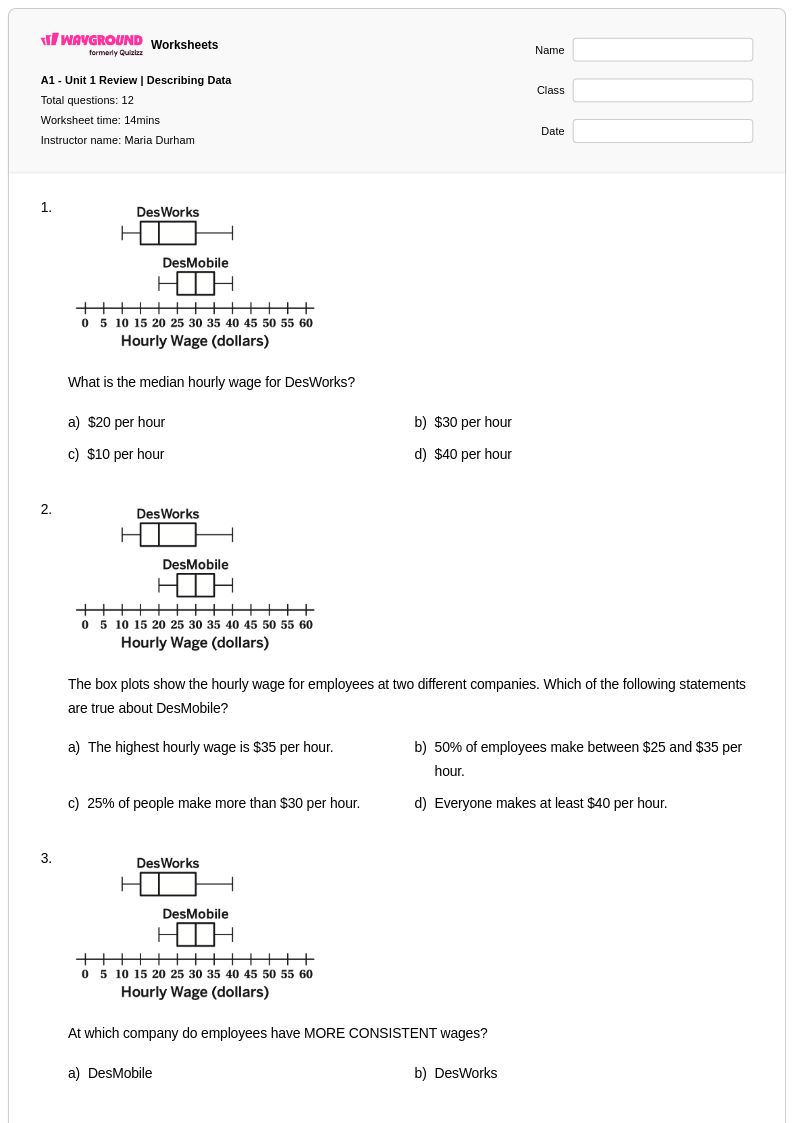
12 Q
9th - 12th
20 Q
9th - 12th
19 Q
9th - 12th
20 Q
12th - Uni
19 Q
9th - Uni
Explore Histogram Interpretation Worksheets by Grades
Explore Other Subject Worksheets for grade 12
Explore printable Histogram Interpretation worksheets for Grade 12
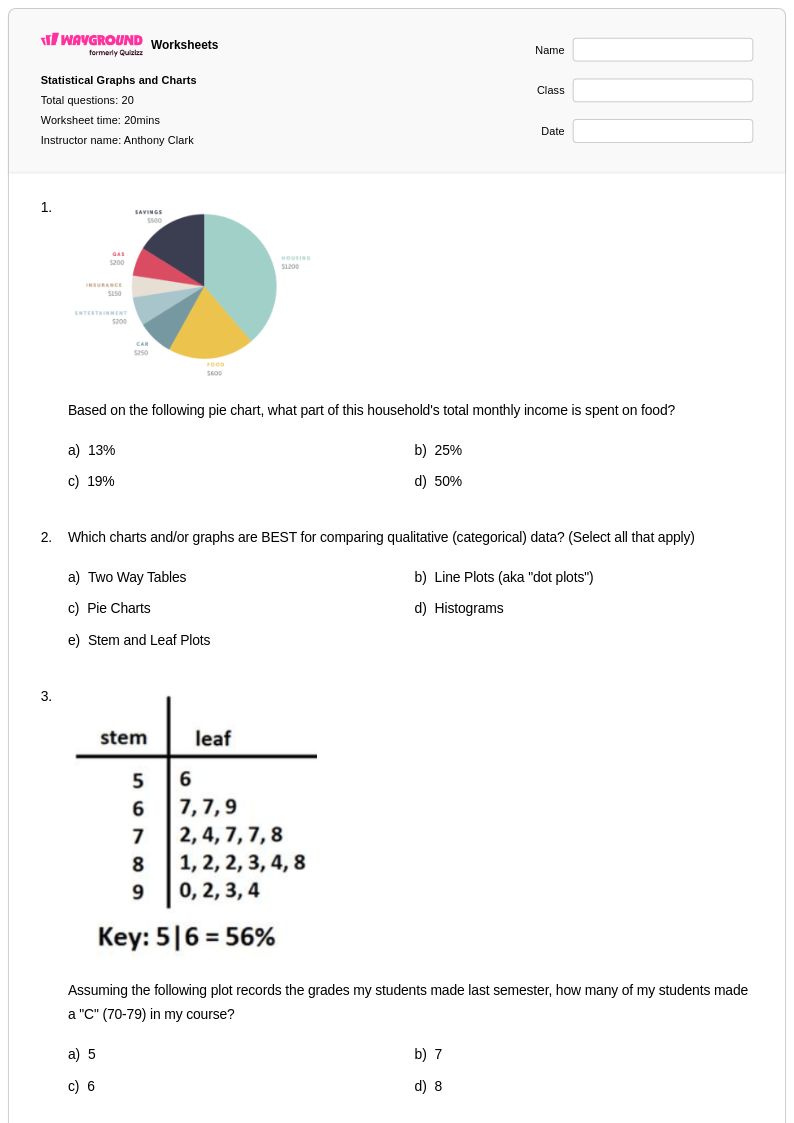
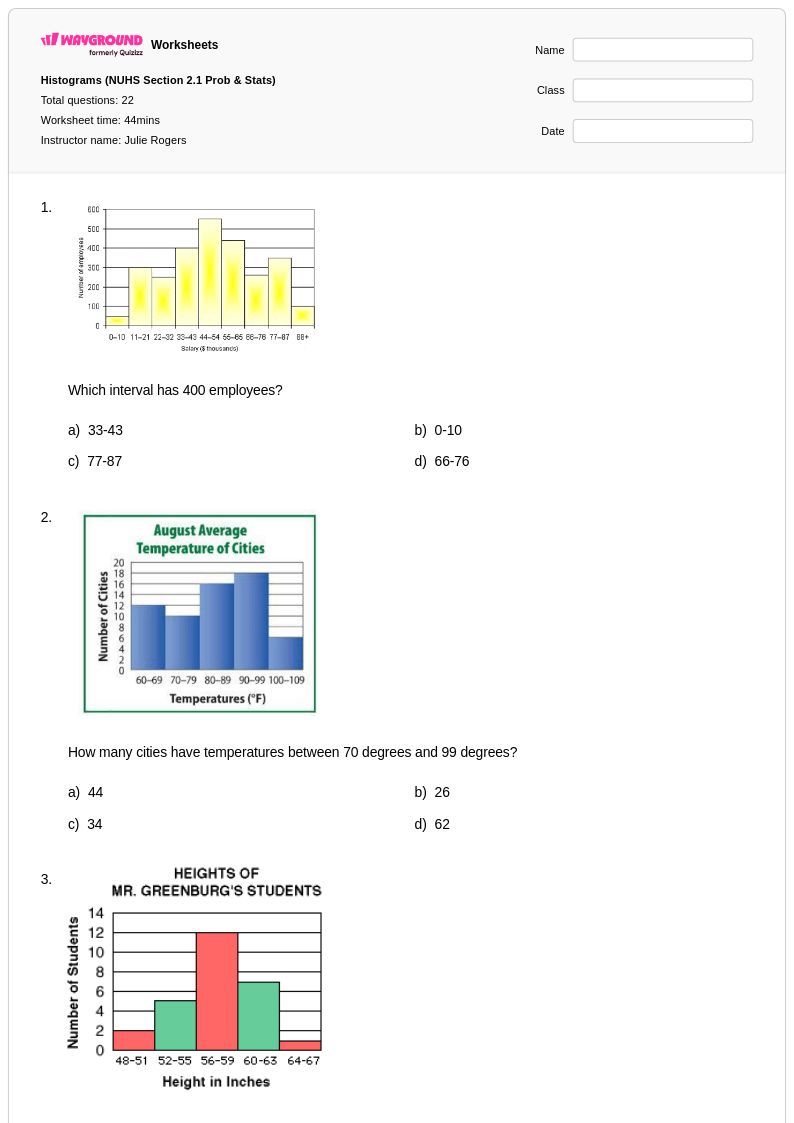
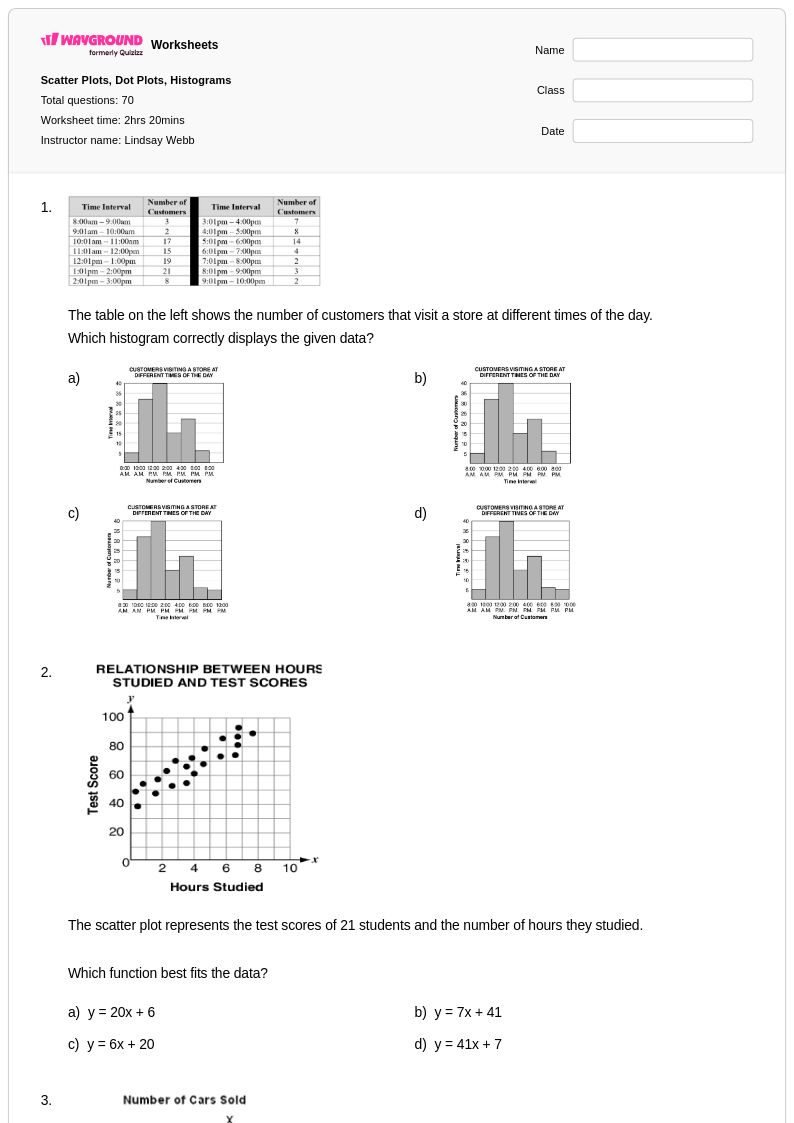
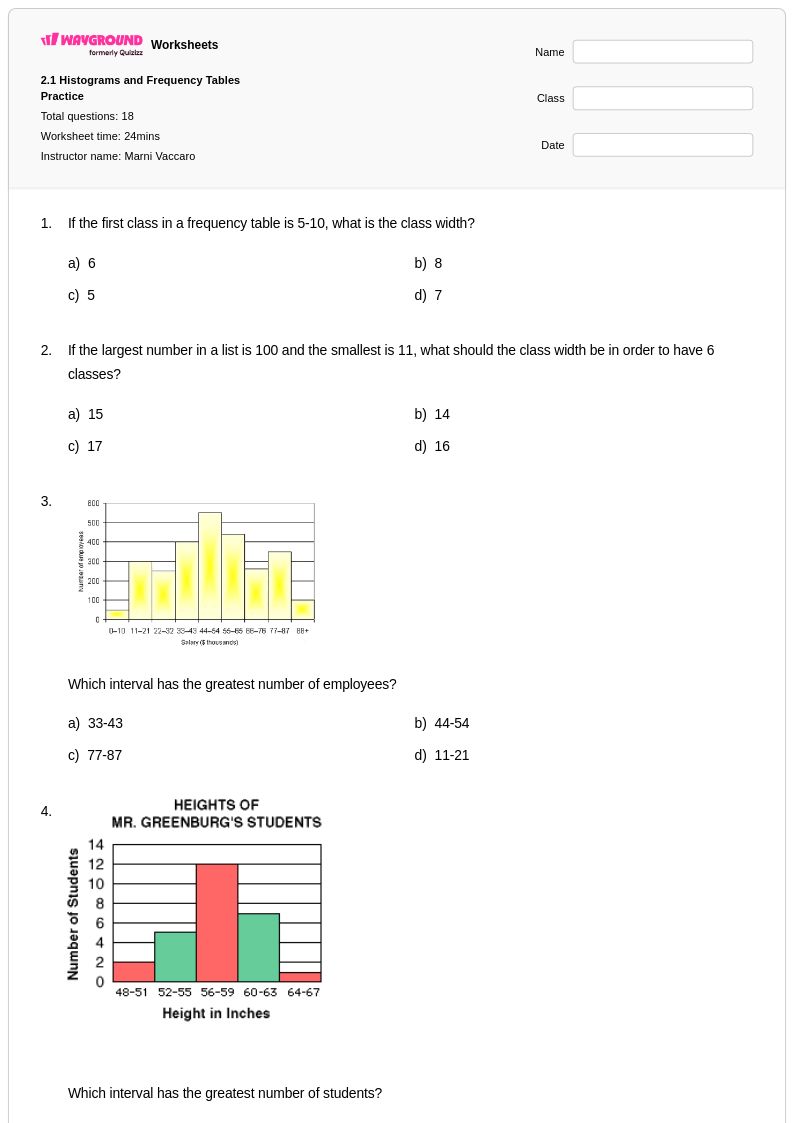
Histogram interpretation worksheets for Grade 12 mathematics provide students with essential practice in analyzing and drawing conclusions from frequency distribution graphs. These comprehensive resources available through Wayground (formerly Quizizz) focus on developing critical data analysis skills including reading histogram bars, calculating measures of central tendency from grouped data, identifying distribution shapes, and making statistical inferences. Students work through practice problems that challenge them to interpret real-world data sets, compare multiple histograms, and articulate their findings using appropriate mathematical language. Each worksheet includes detailed answer keys that support independent learning and self-assessment, while the free printable pdf format ensures accessibility for both classroom instruction and home study.
Wayground (formerly Quizizz) empowers educators with millions of teacher-created histogram interpretation resources specifically designed for Grade 12 mathematics instruction. The platform's robust search and filtering capabilities enable teachers to locate worksheets that align with specific curriculum standards and match their students' diverse learning needs. Differentiation tools allow instructors to customize difficulty levels and modify problems to support both remediation for struggling learners and enrichment opportunities for advanced students. Available in both printable and digital formats including downloadable pdfs, these resources seamlessly integrate into lesson planning while providing flexible options for skill practice, formative assessment, and targeted intervention strategies that strengthen students' statistical reasoning abilities.
FAQs
How do I teach advanced histogram interpretation to Grade 12 students?
What exercises build Grade 12 histogram interpretation skills?
What errors do Grade 12 students make when interpreting histograms?
How can I use these Grade 12 histogram interpretation worksheets for assessment?
How does Grade 12 histogram analysis connect to Common Core mathematics?
Can I differentiate Grade 12 histogram worksheets without lowering the rigor?
What level of histogram interpretation is expected in Grade 12?