
19 Q
6th
5 Q
6th
14 Q
6th
37 Q
6th
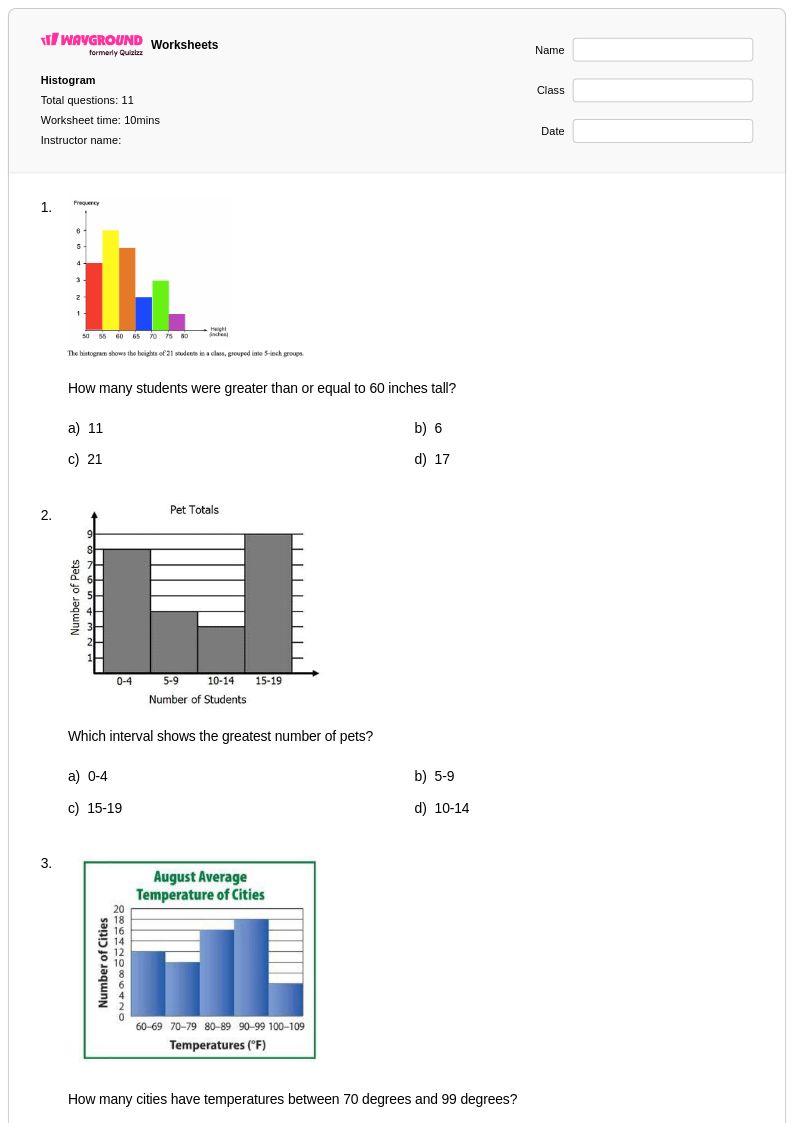
11 Q
5th - 6th
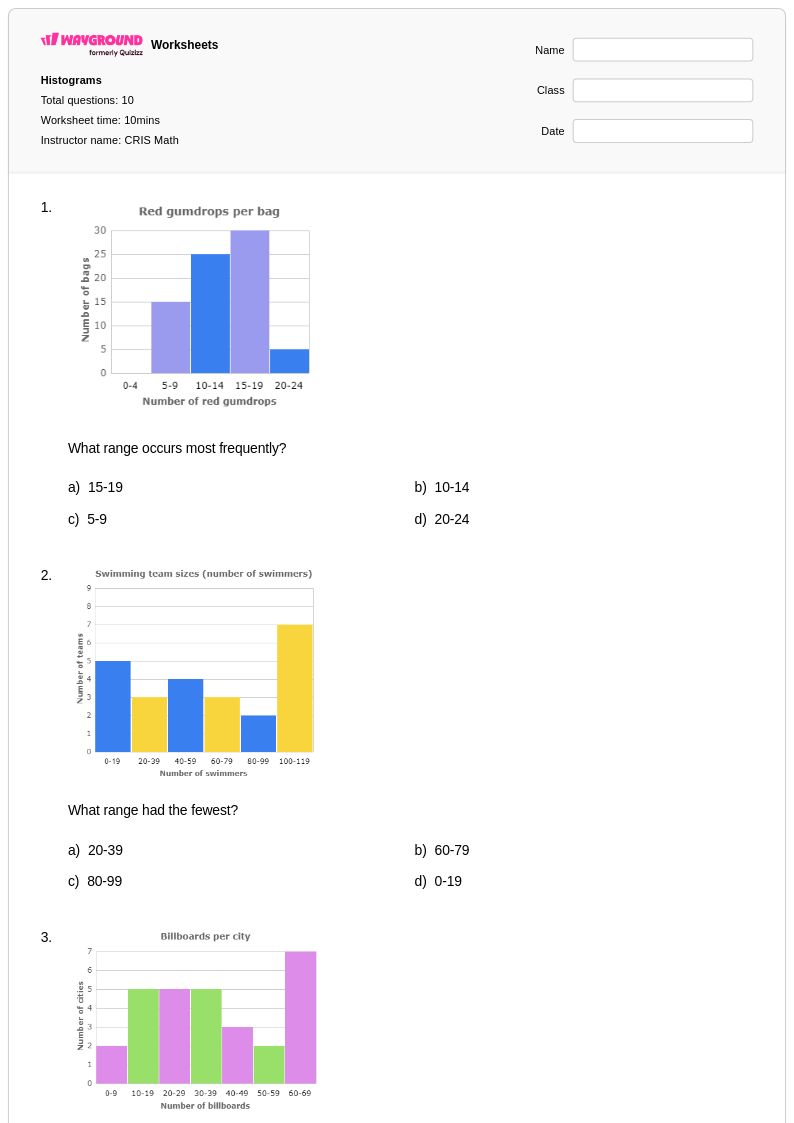
10 Q
6th
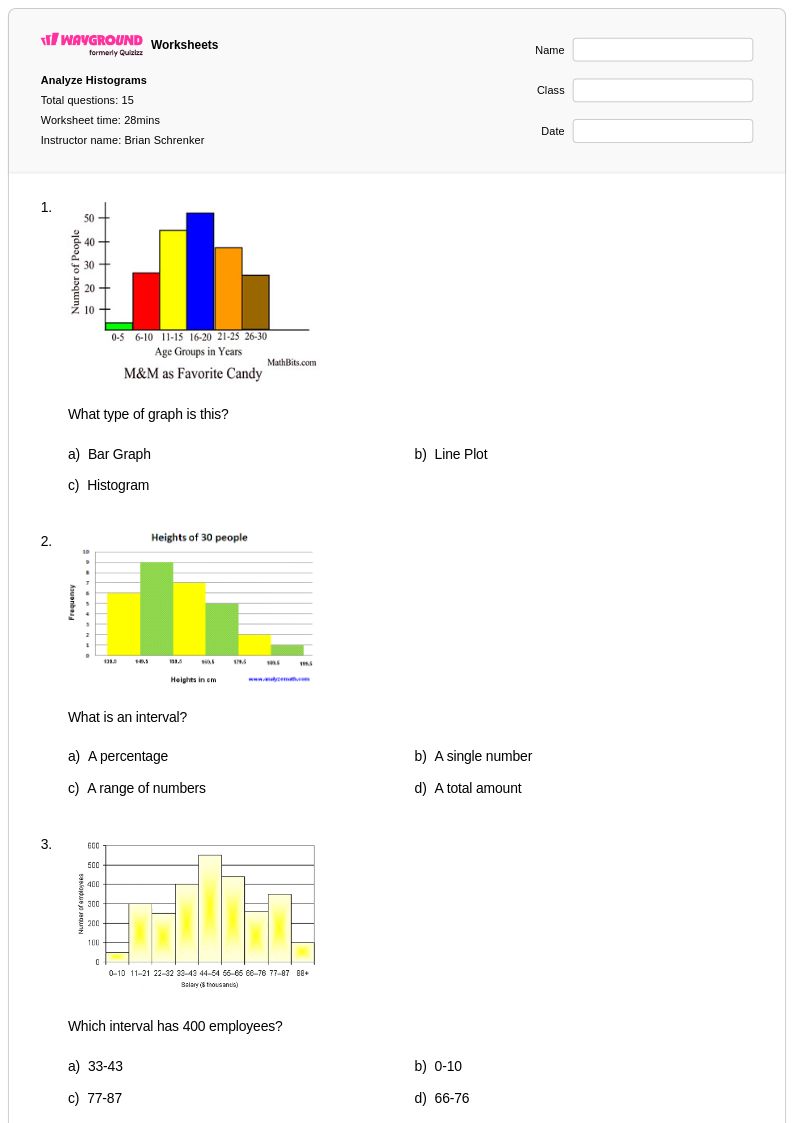
15 Q
6th
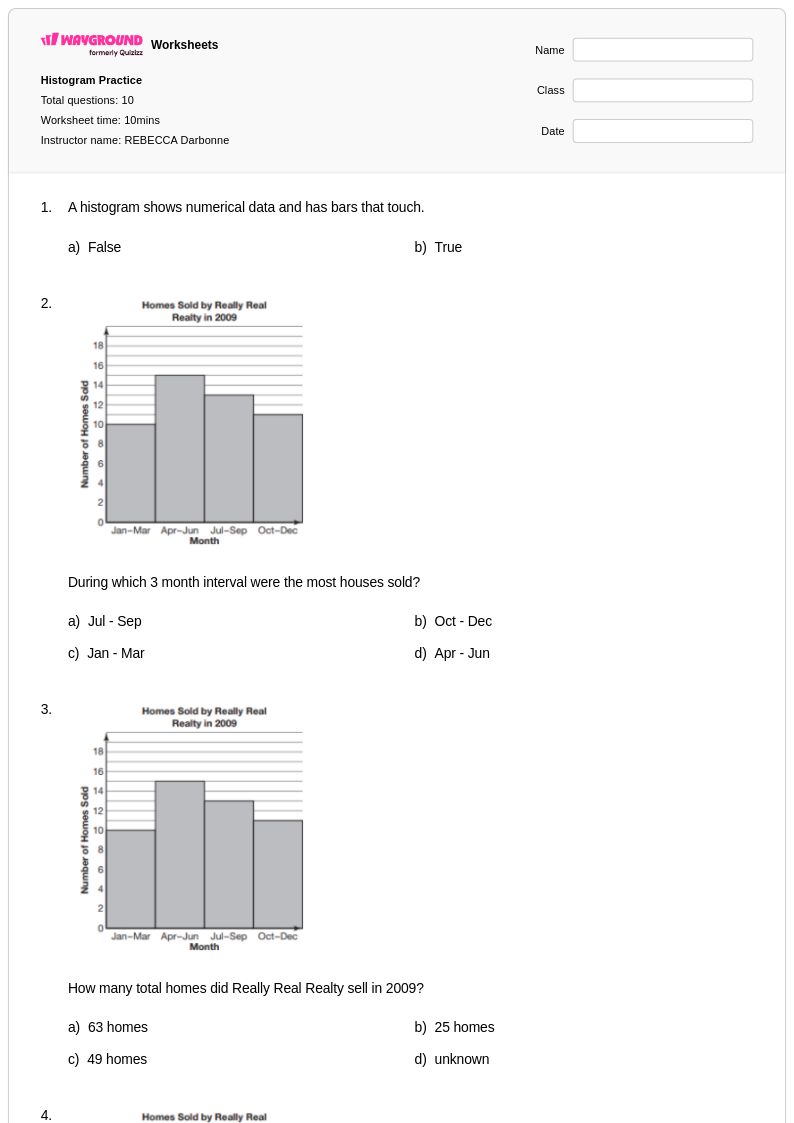
10 Q
5th - 8th
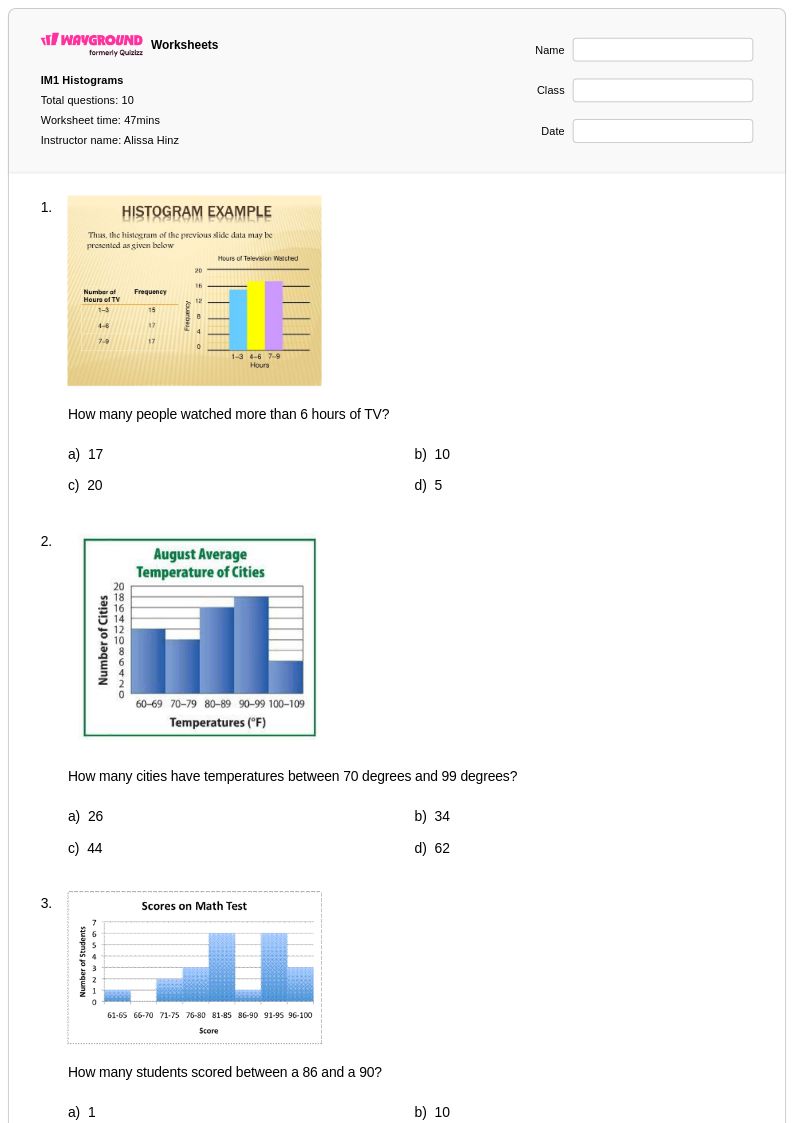
10 Q
6th
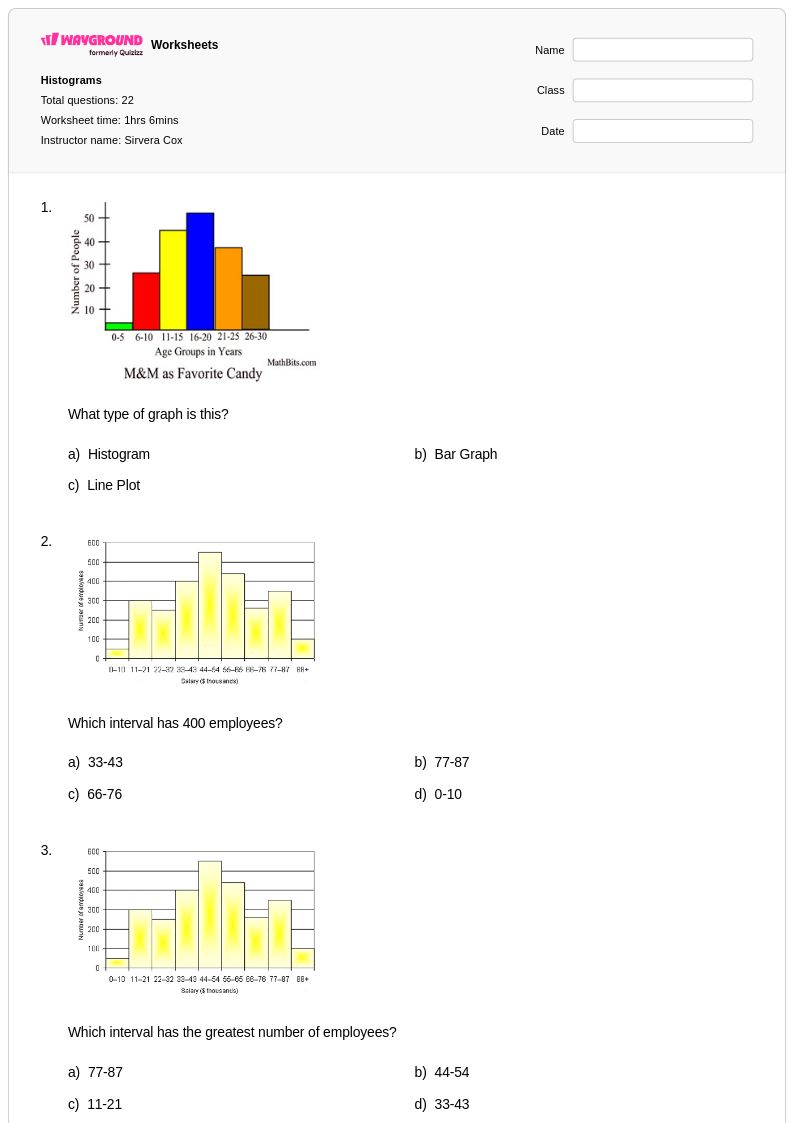
22 Q
6th
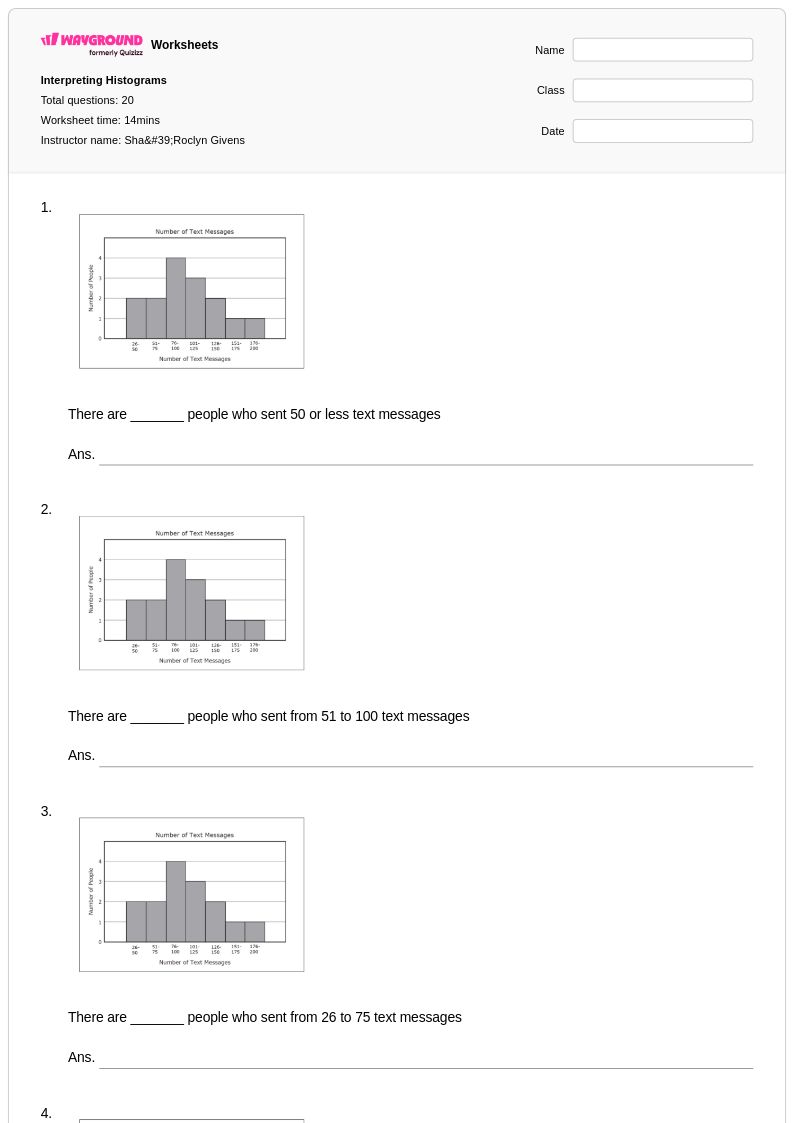
20 Q
6th
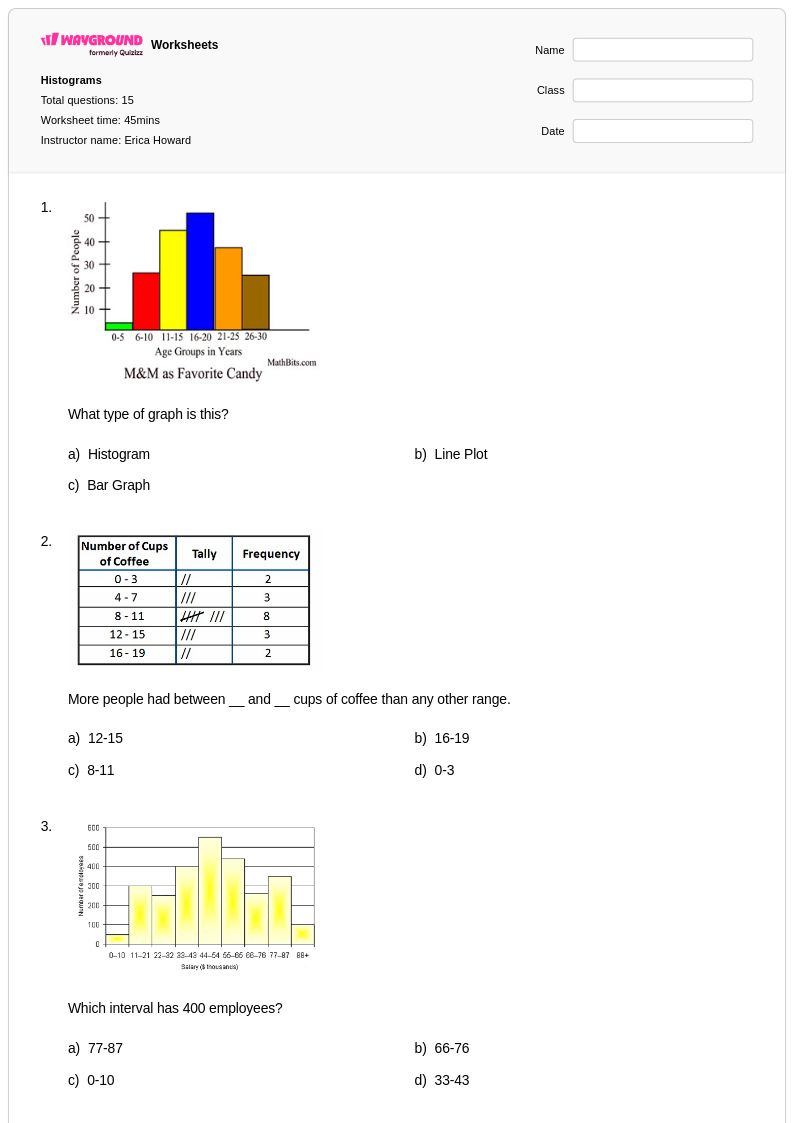
15 Q
6th
21 Q
6th
20 Q
6th
16 Q
6th
15 Q
6th
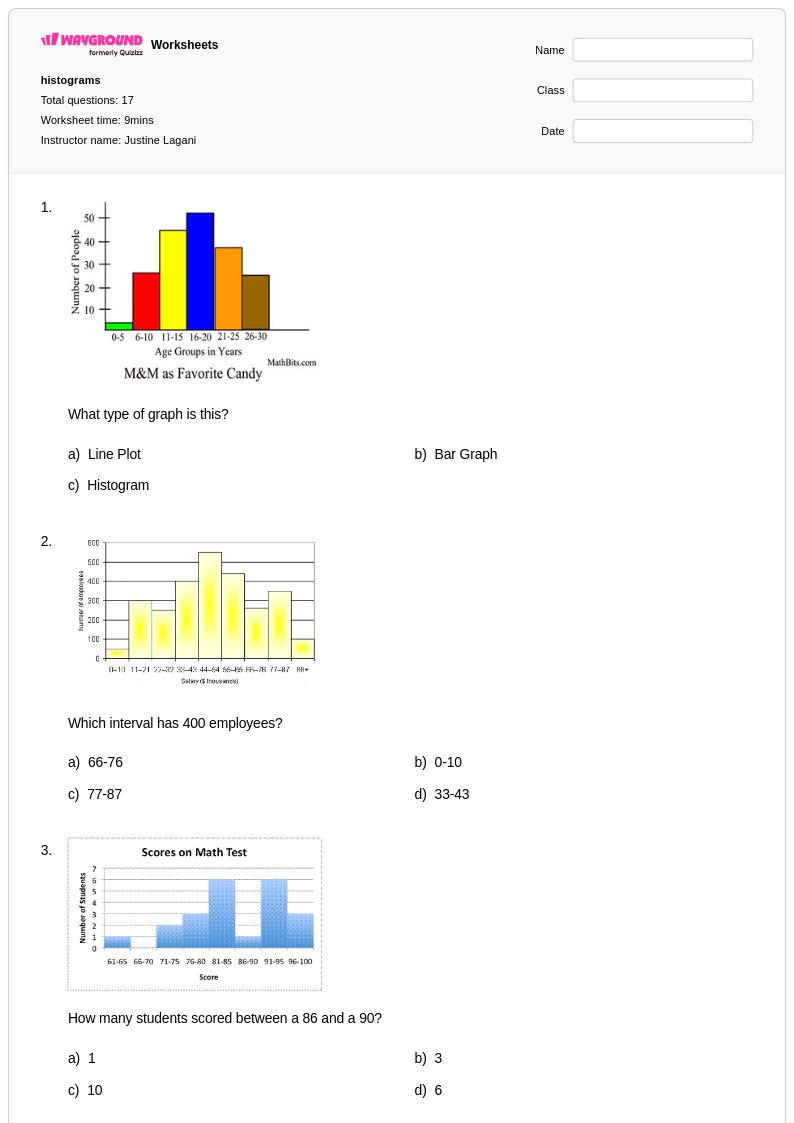
17 Q
6th
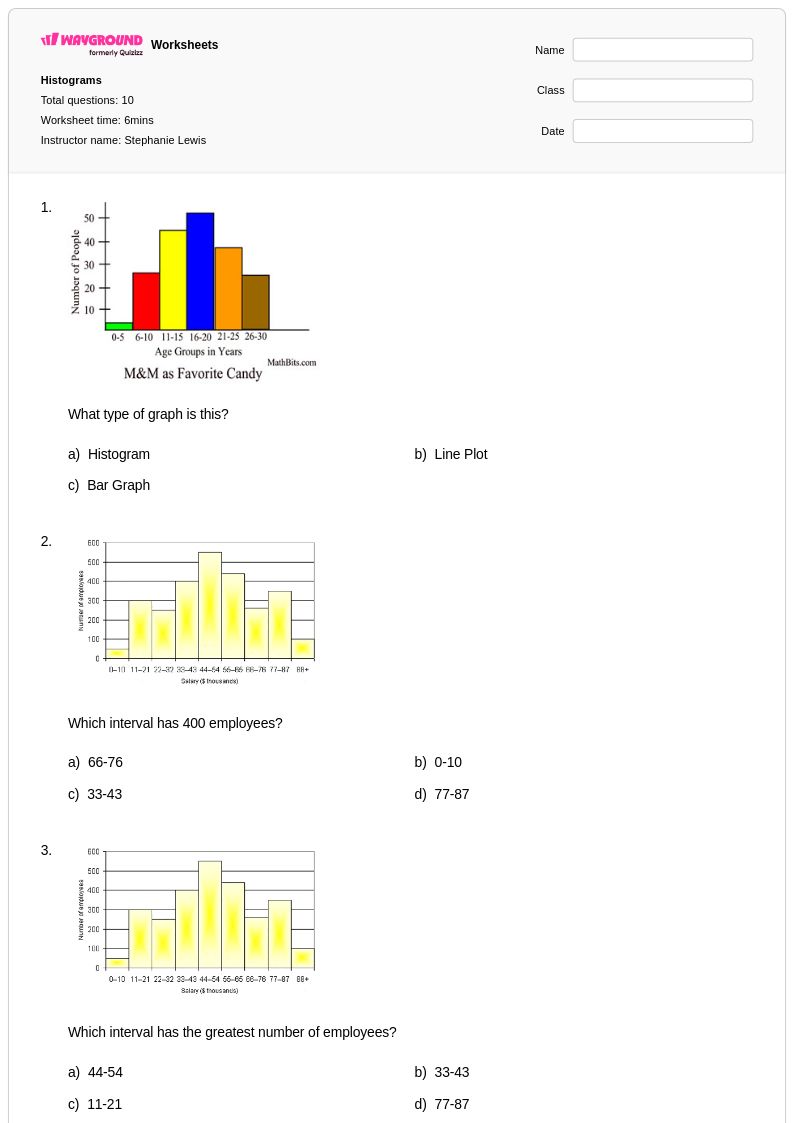
10 Q
6th
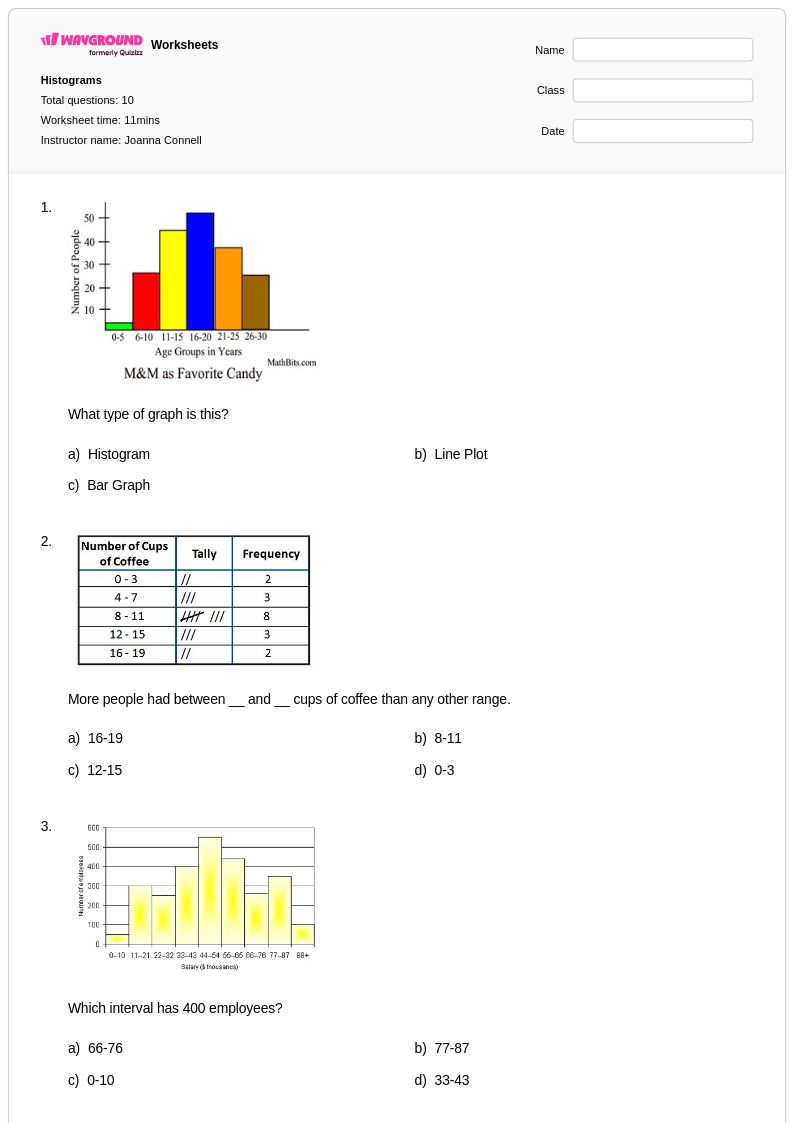
10 Q
6th
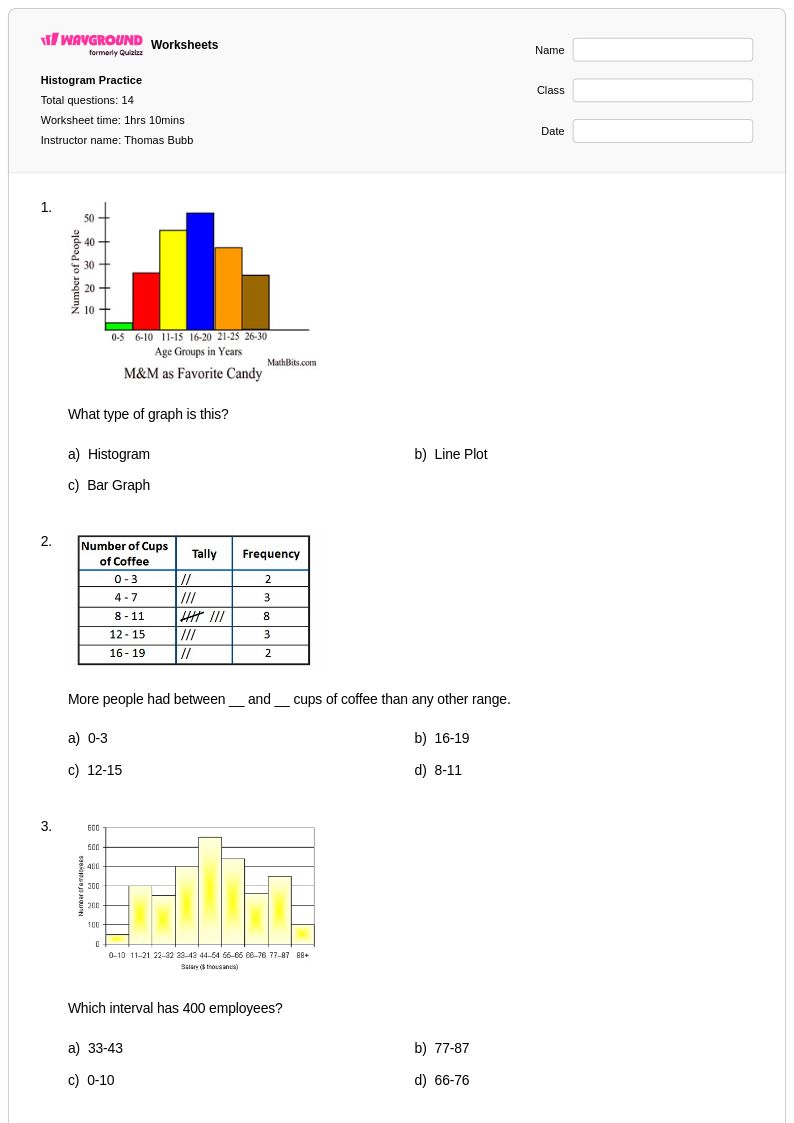
14 Q
6th
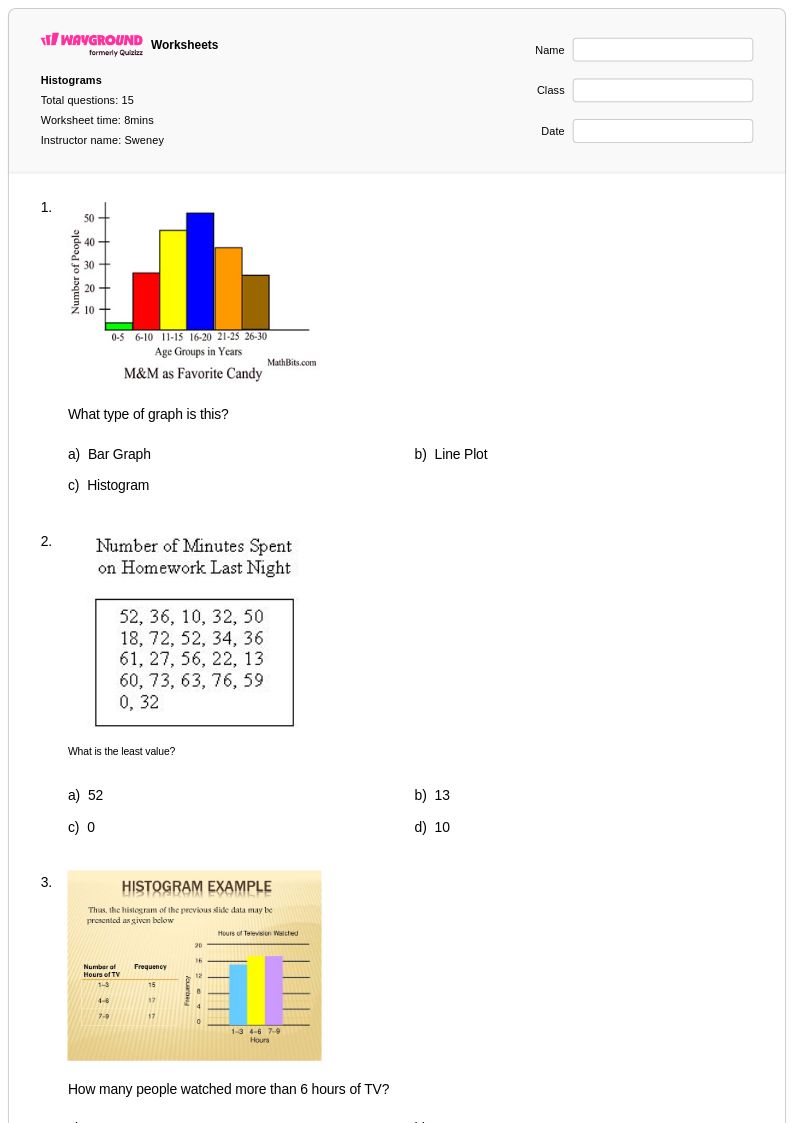
15 Q
6th
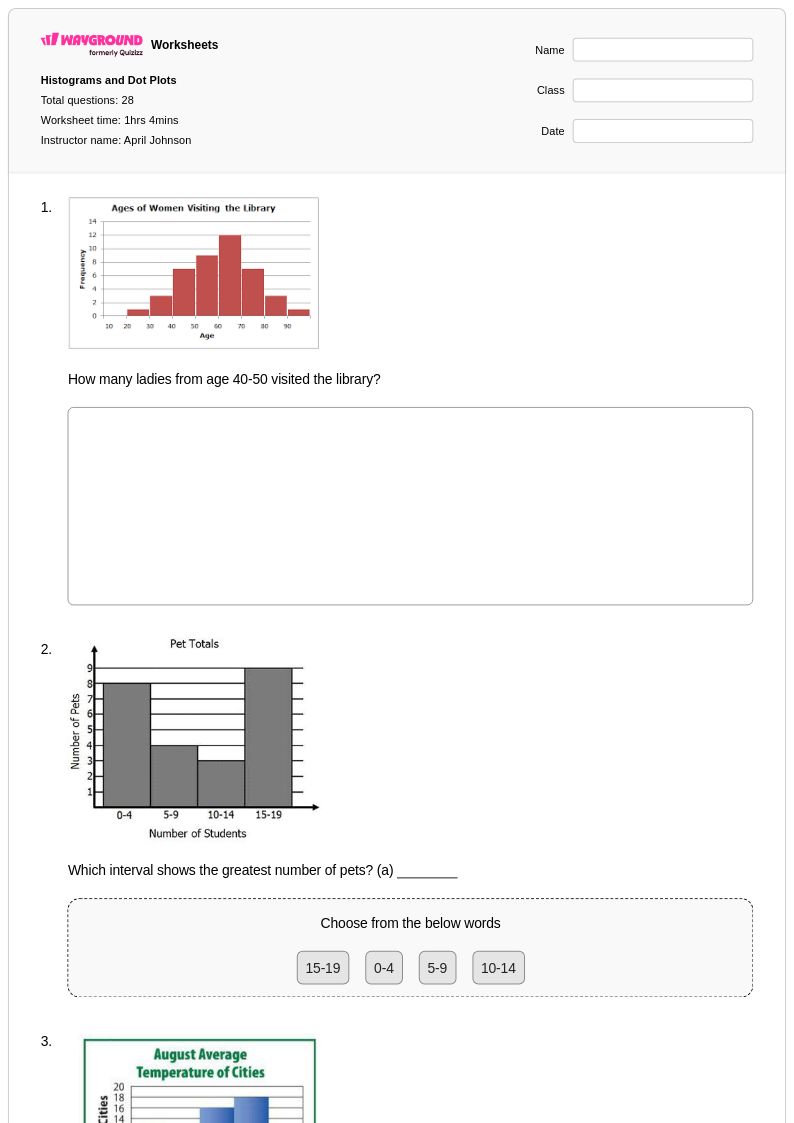
28 Q
6th
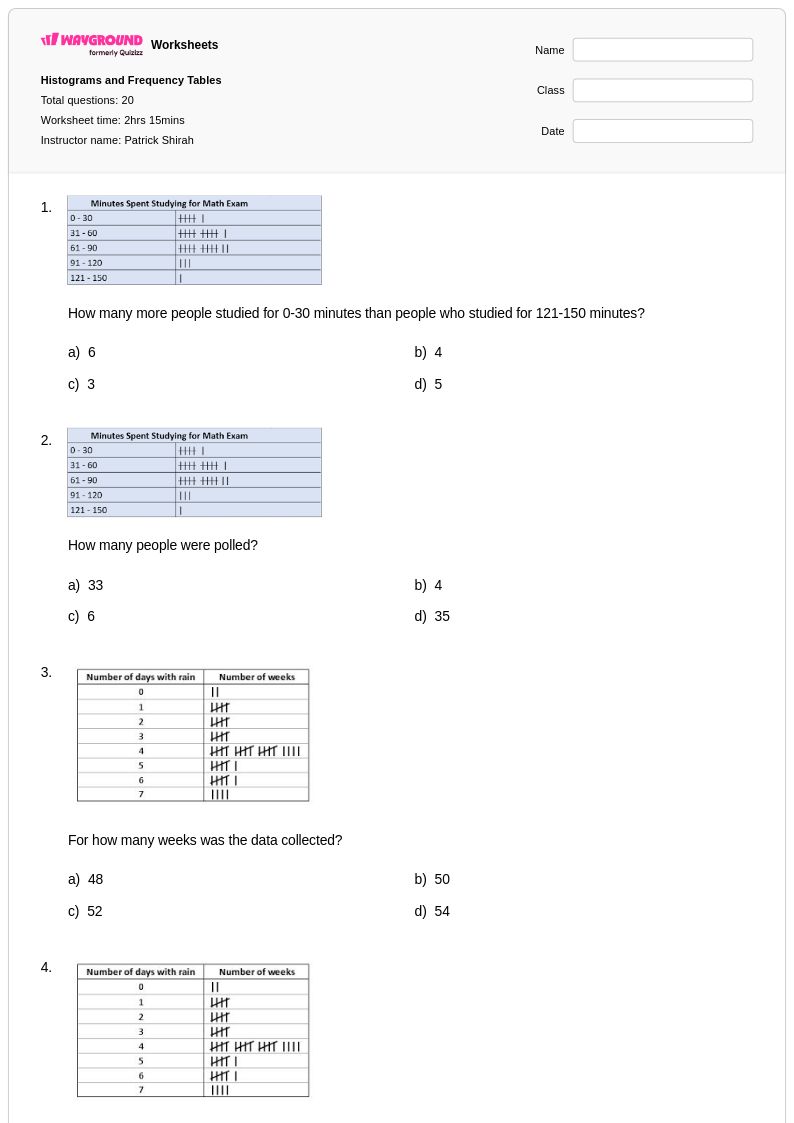
20 Q
6th
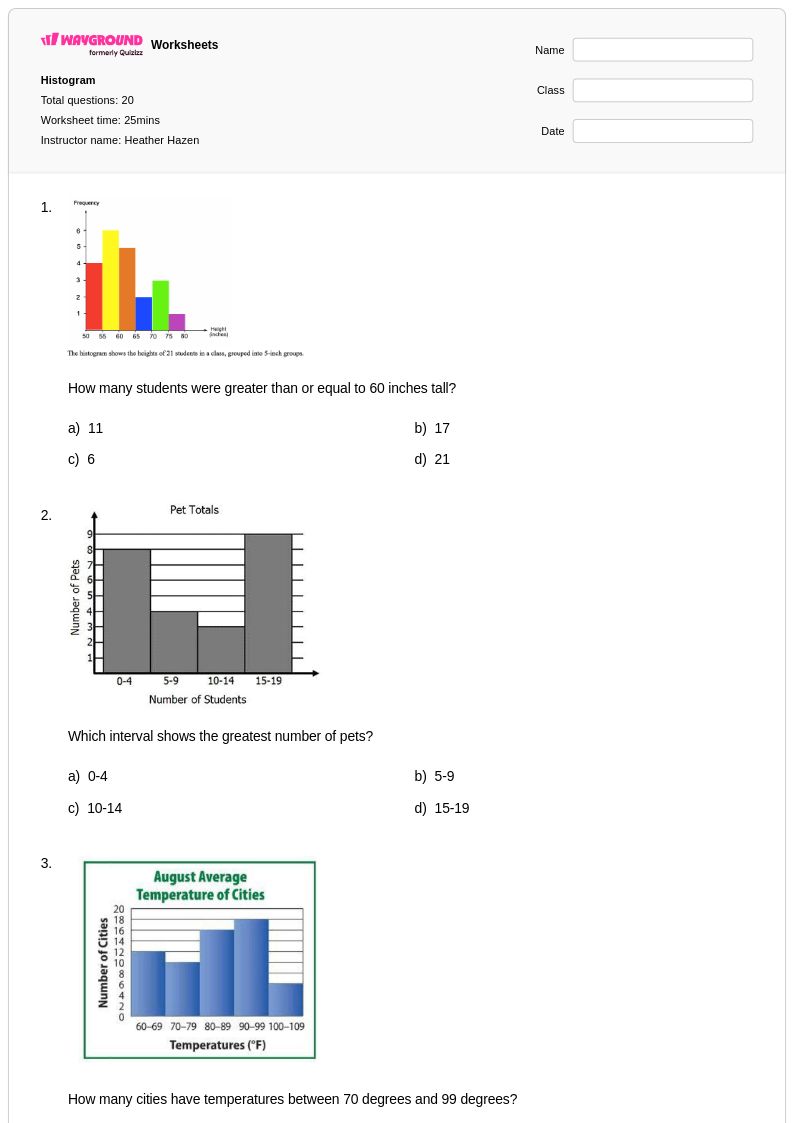
20 Q
6th
Explore Histogram Interpretation Worksheets by Grades
Explore Other Subject Worksheets for grade 6
Explore printable Histogram Interpretation worksheets for Grade 6
Histogram interpretation worksheets for Grade 6 students available through Wayground (formerly Quizizz) provide essential practice in reading, analyzing, and drawing conclusions from these vertical bar graphs that display frequency data across intervals. These carefully designed practice problems strengthen critical mathematical skills including identifying intervals, determining frequency values, comparing data sets, and making inferences about distribution patterns. Students work through free printable exercises that challenge them to extract meaningful information from histograms representing real-world scenarios such as test scores, heights, temperatures, and survey results. Each worksheet collection includes comprehensive answer keys and pdf formats that support independent learning while building confidence in data interpretation skills essential for advanced mathematical concepts.
Wayground (formerly Quizizz) empowers educators with millions of teacher-created histogram interpretation resources specifically aligned with Grade 6 mathematics standards and learning objectives. The platform's robust search and filtering capabilities allow teachers to quickly locate worksheets that match their students' skill levels and curriculum requirements, while differentiation tools enable customization for diverse learning needs. These comprehensive collections are available in both printable and digital formats, including downloadable pdf versions that facilitate seamless integration into lesson planning, homework assignments, and assessment preparation. Teachers can leverage these versatile resources for targeted remediation with struggling learners, enrichment activities for advanced students, and regular skill practice that reinforces data analysis concepts throughout the academic year.
FAQs
What grade do students learn about histograms?
How should I introduce histograms to 6th graders?
What kind of practice is best for 6th graders learning histograms?
What are the most common errors 6th graders make with histograms?
How do histograms align with 6th-grade math standards?
How can I use this 6th-grade histogram worksheet?