
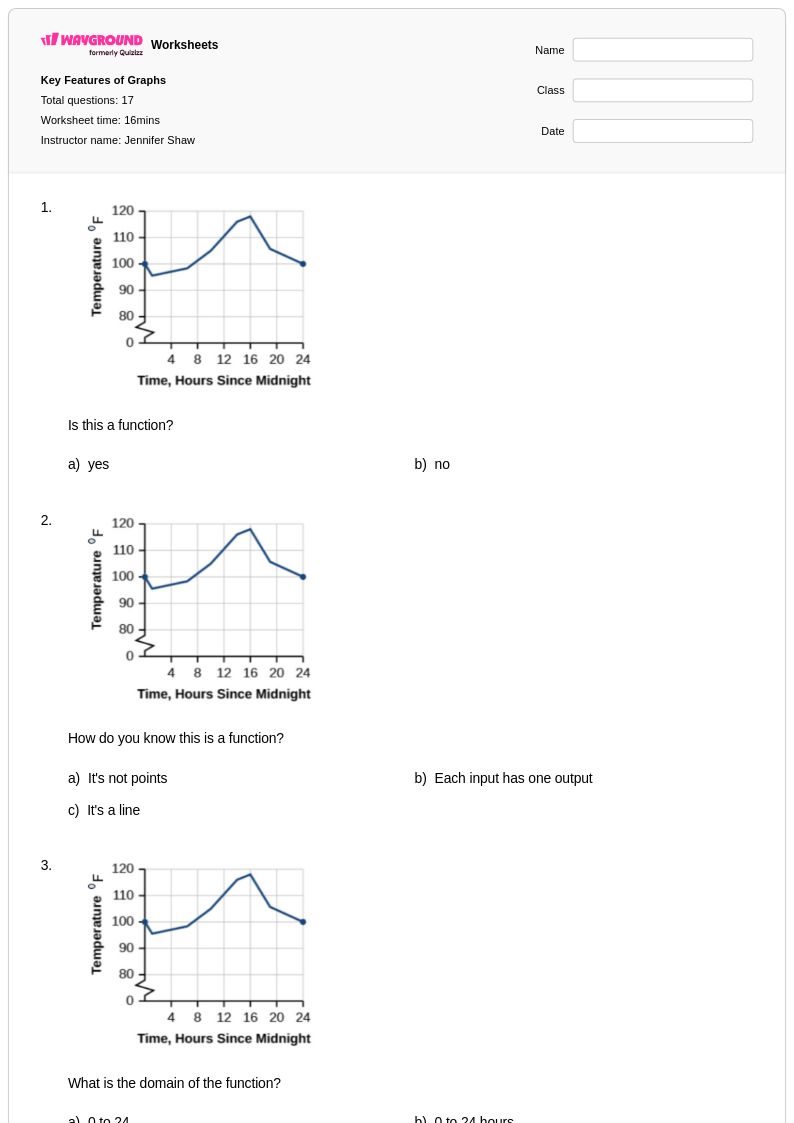
17 Q
6th - 10th

17 Q
6th
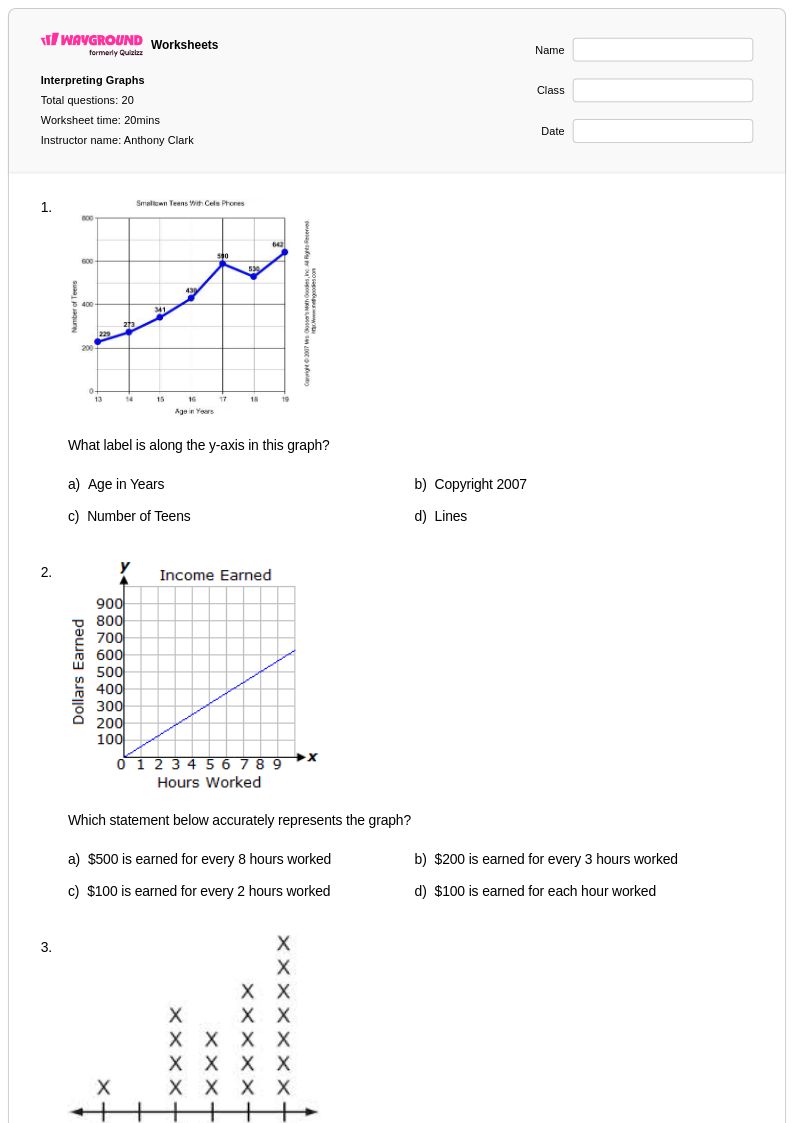
20 Q
6th - Uni
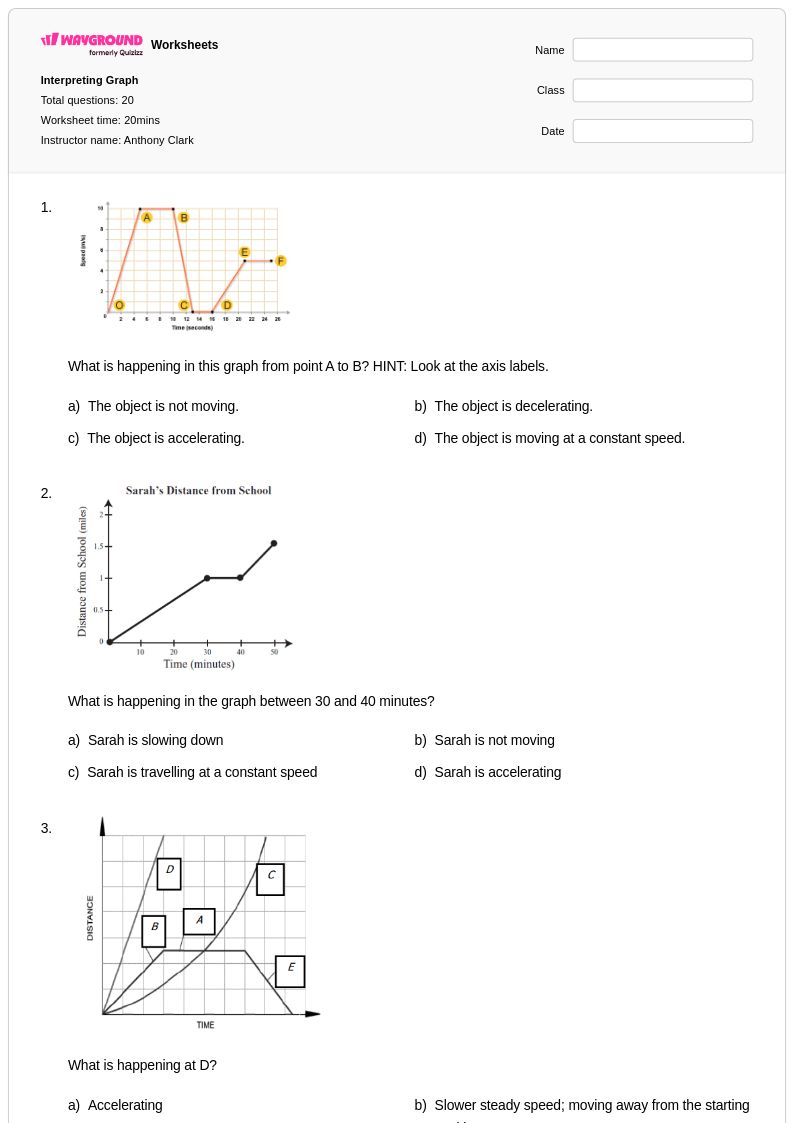
20 Q
6th - Uni
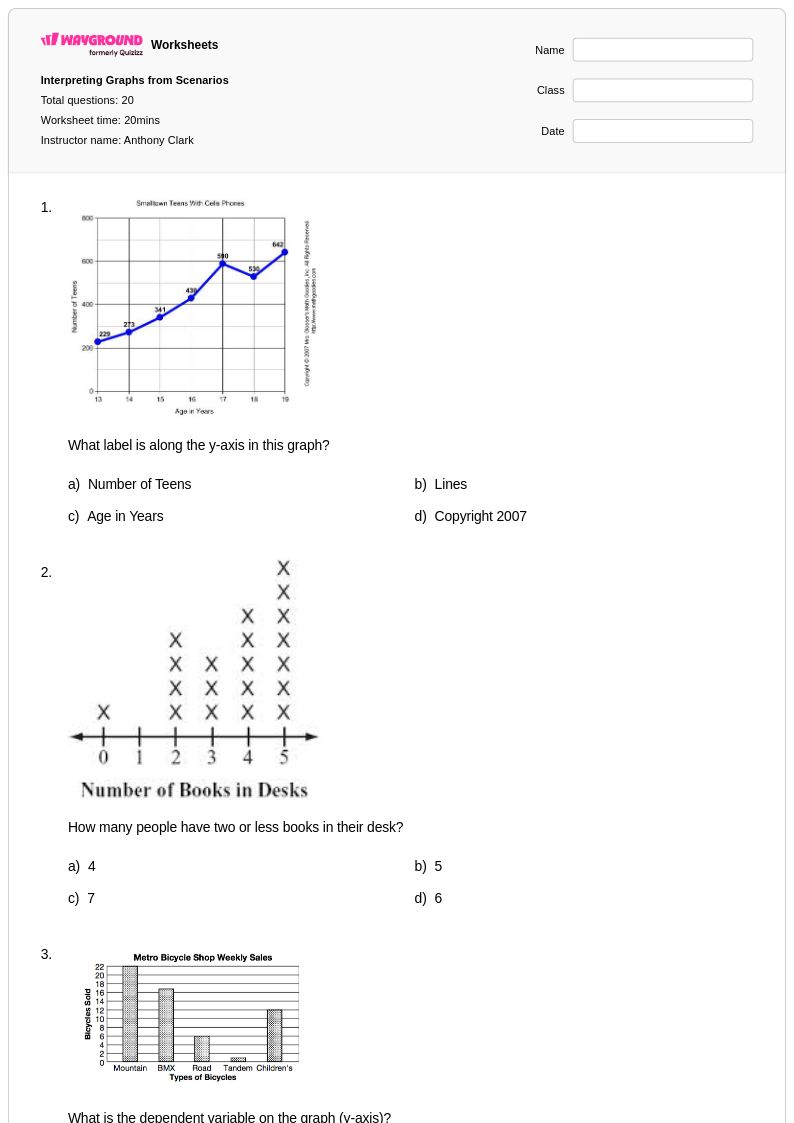
20 Q
6th - Uni
20 Q
6th - 7th
23 Q
6th - 7th
20 Q
6th - Uni
11 Q
6th
10 Q
6th
20 Q
6th - Uni
19 Q
6th
20 Q
6th - Uni
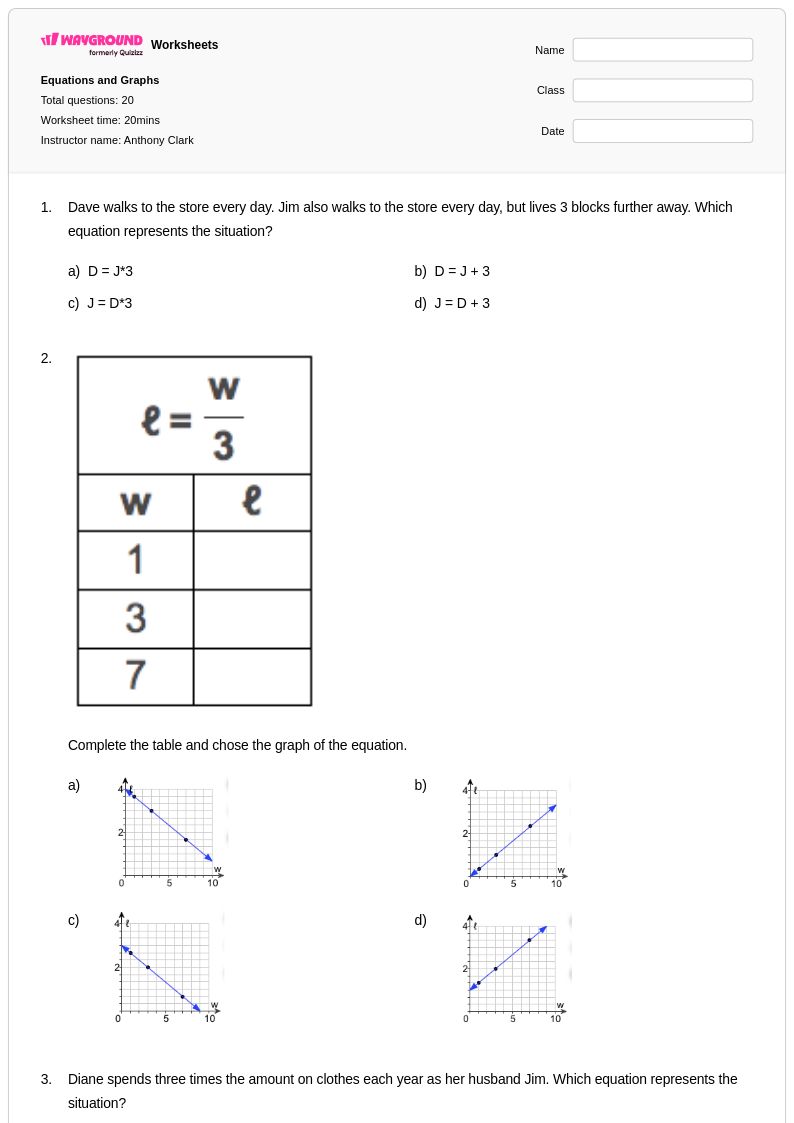
20 Q
6th - Uni
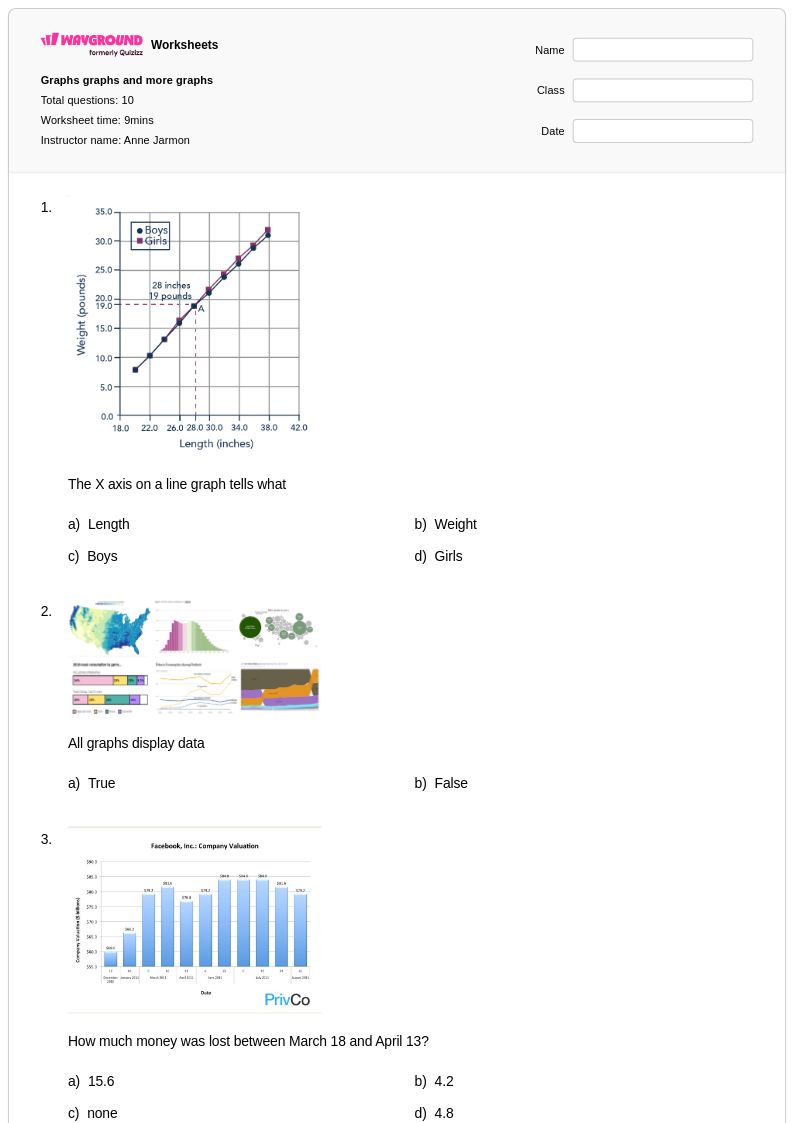
10 Q
6th - 8th
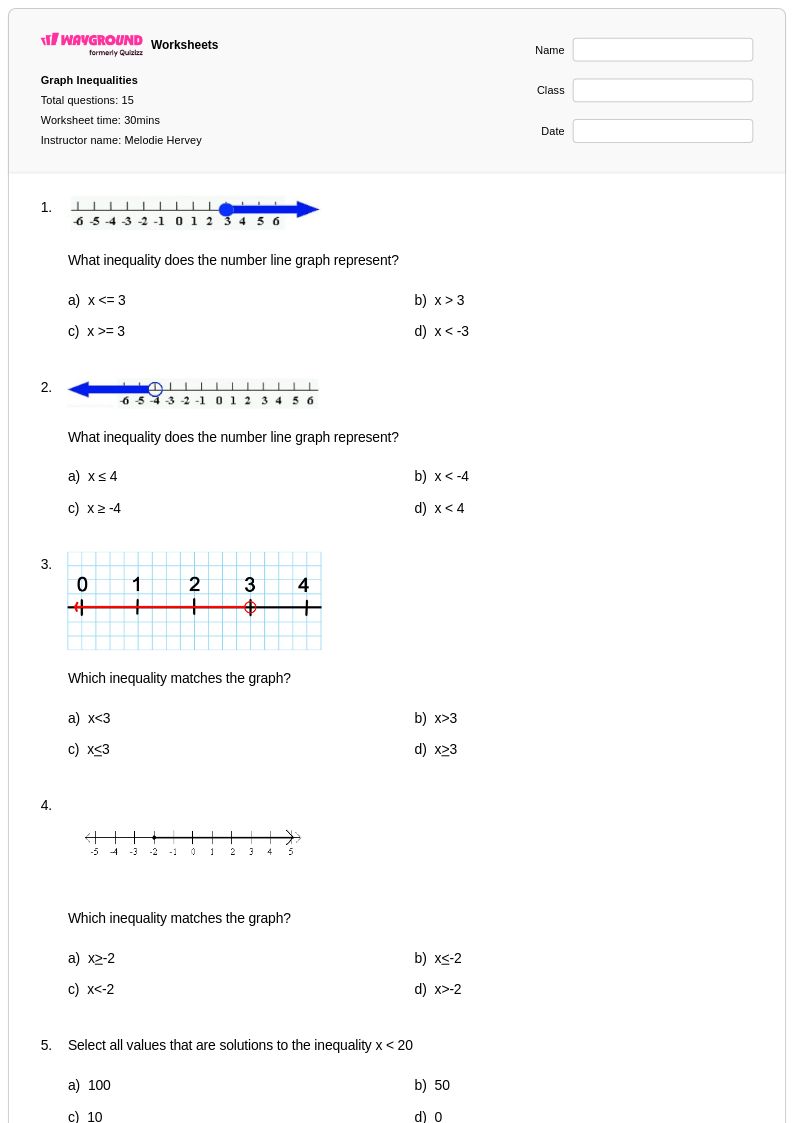
15 Q
6th
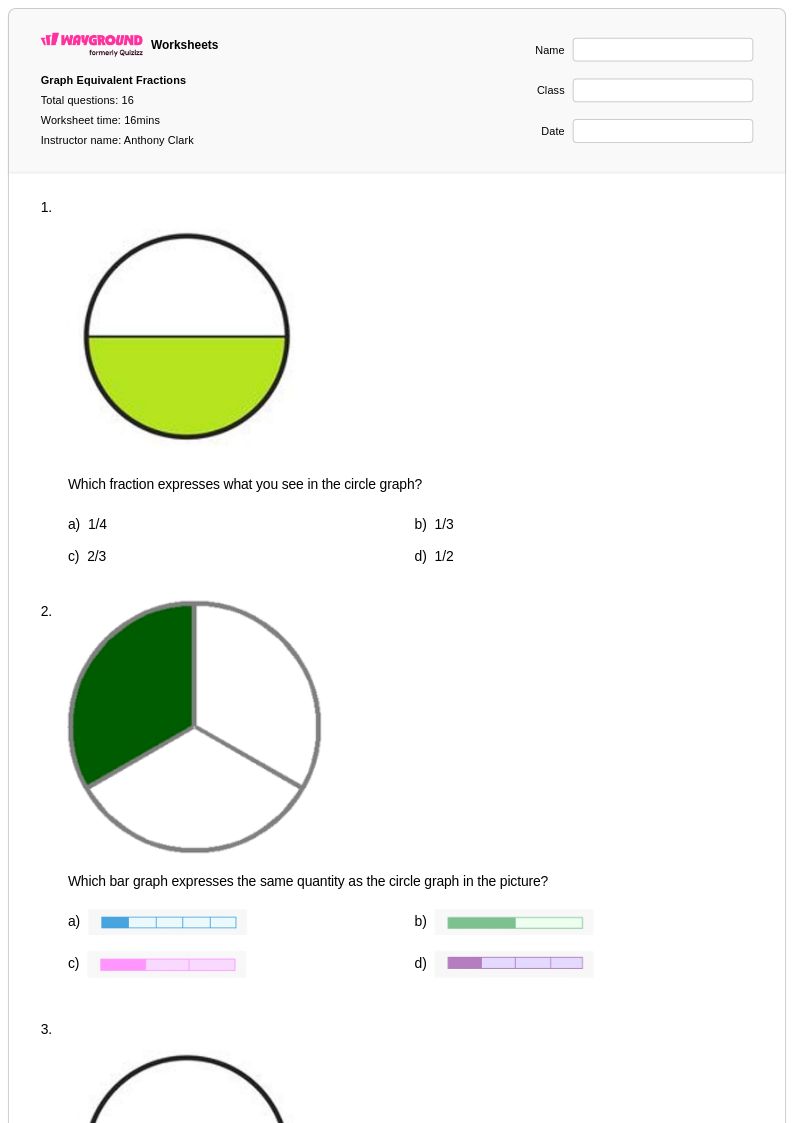
16 Q
4th - Uni
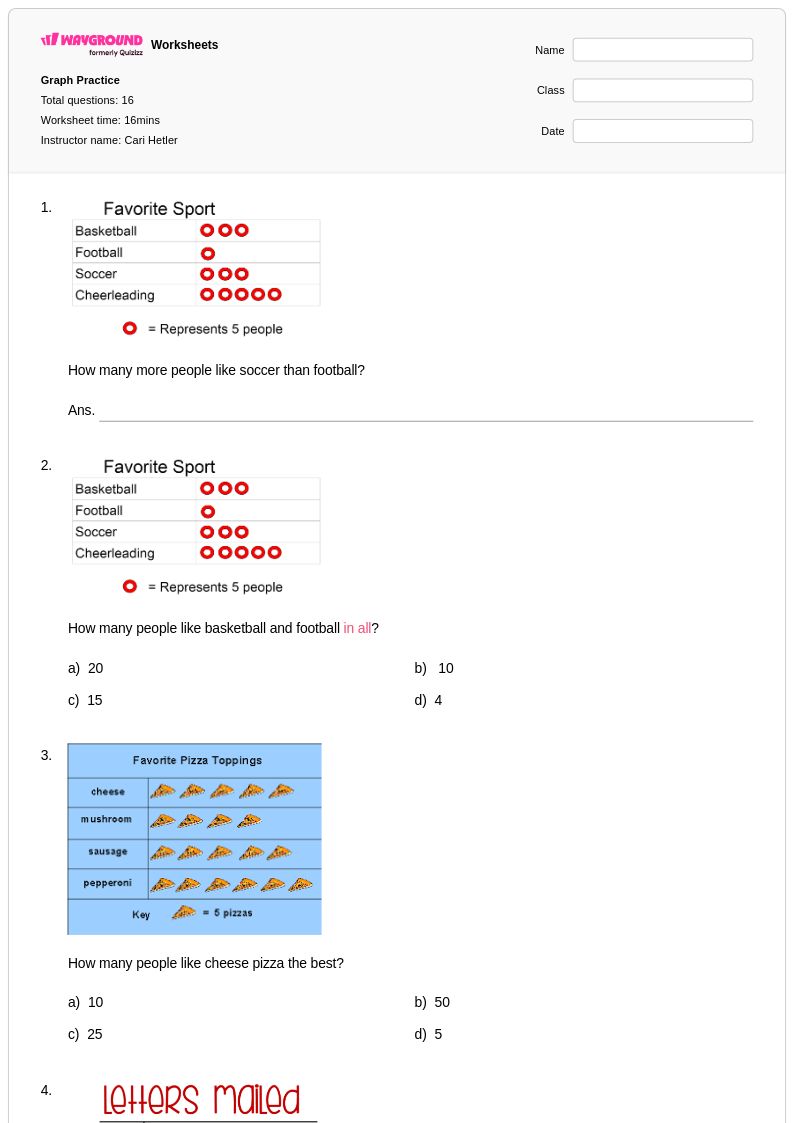
16 Q
5th - 6th
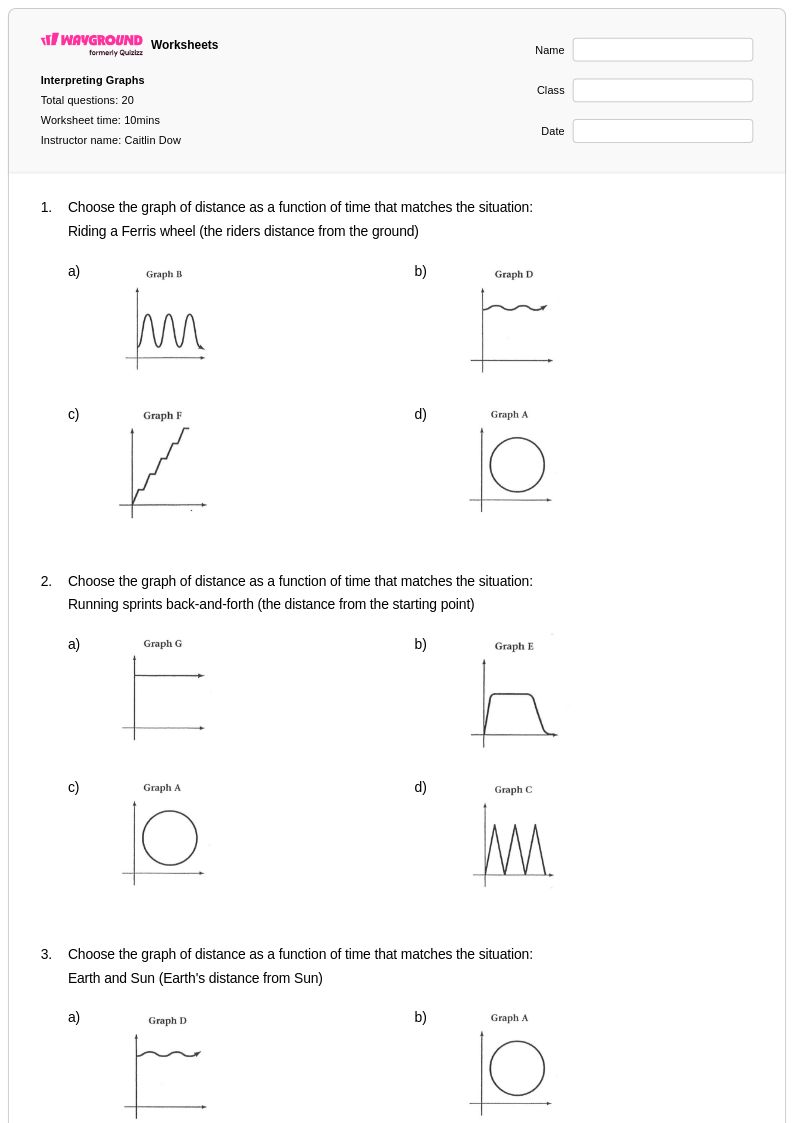
20 Q
6th - 8th
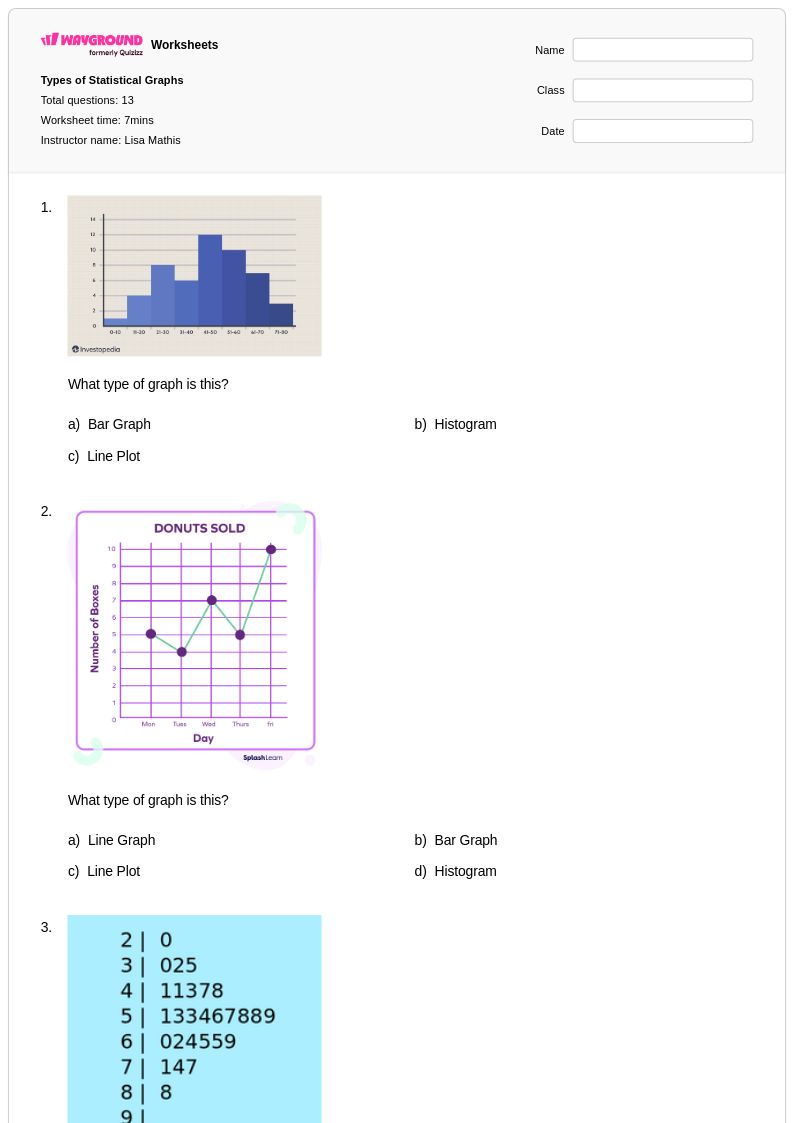
13 Q
6th
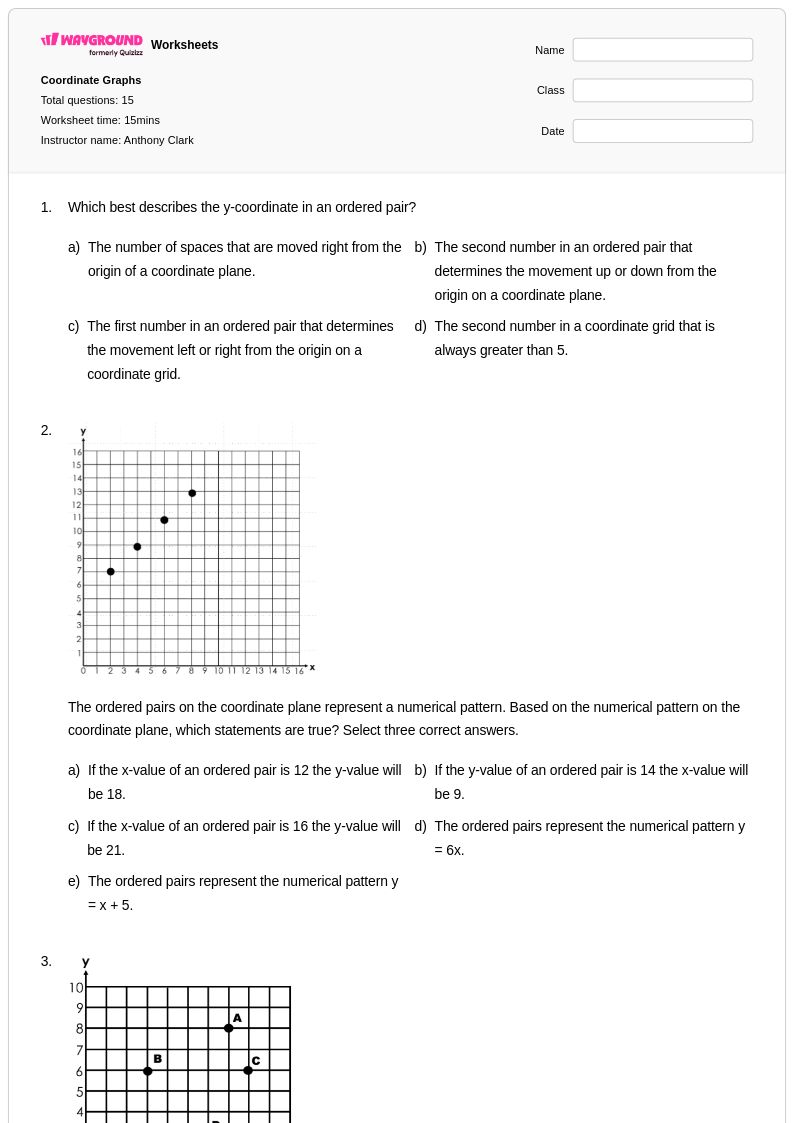
15 Q
5th - Uni
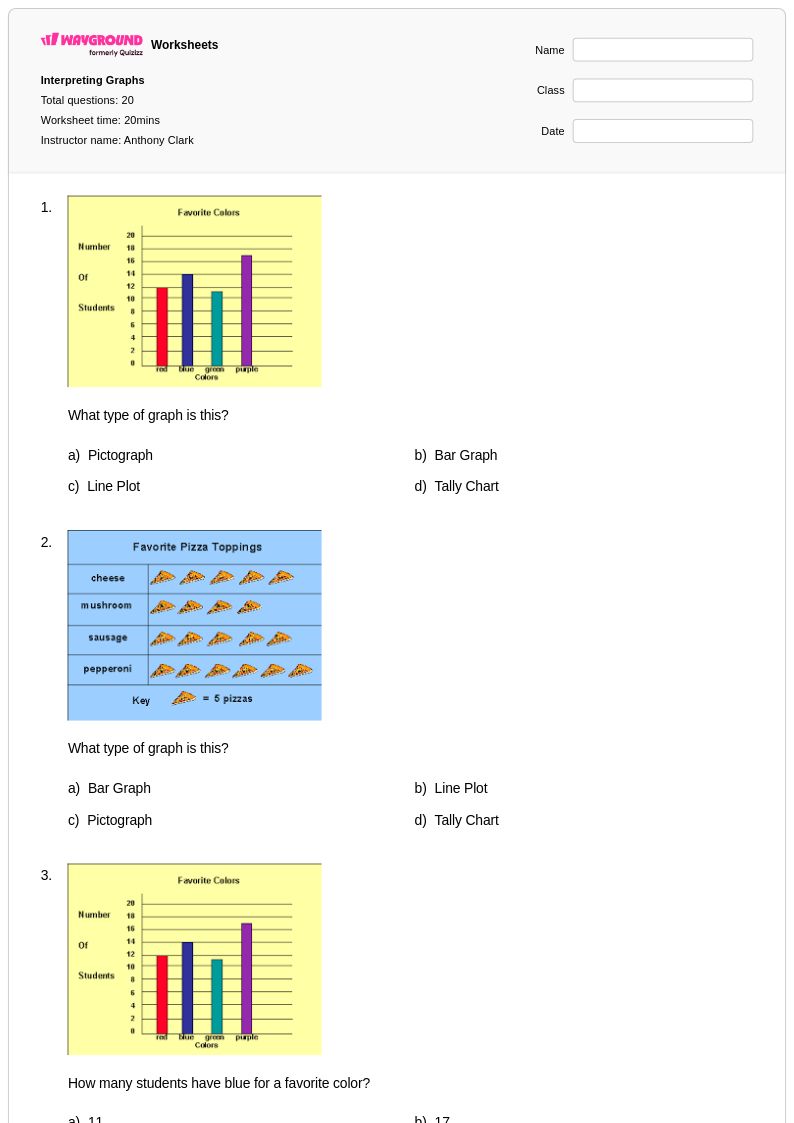
20 Q
3rd - Uni
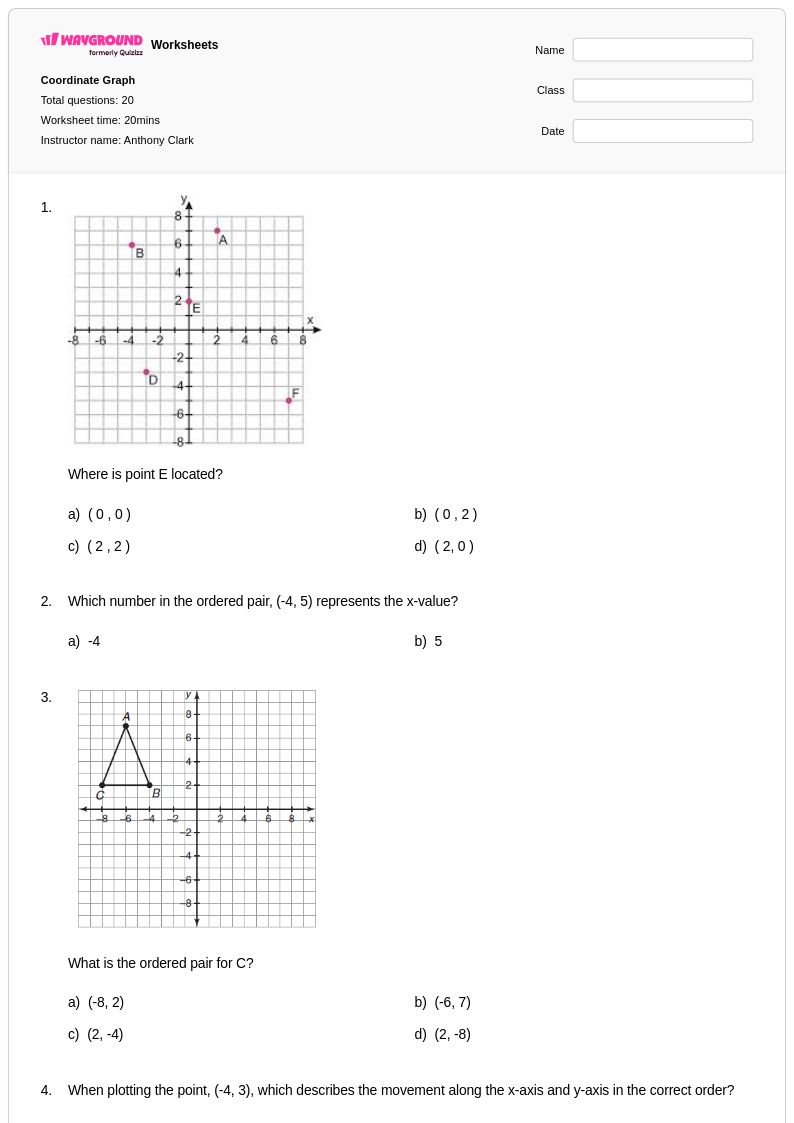
20 Q
6th - Uni
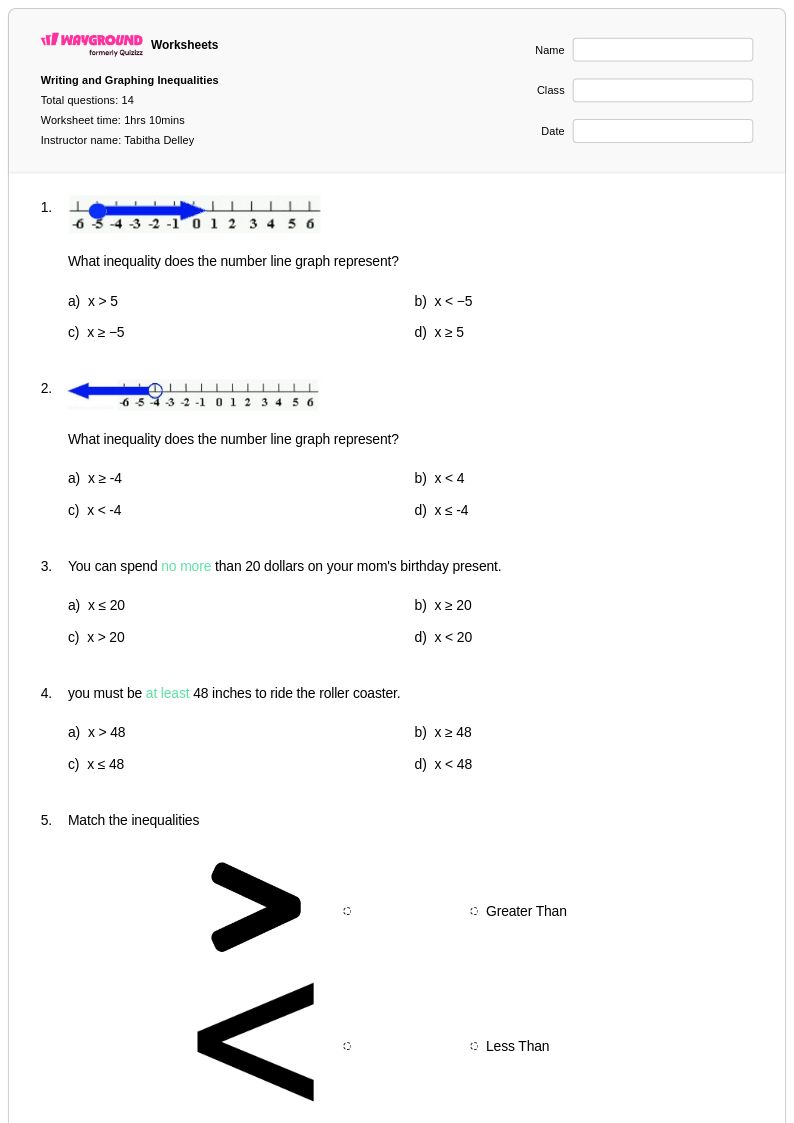
14 Q
6th - 8th
Explore Key Features of Graphs Worksheets by Grades
Explore Other Subject Worksheets for grade 6
Explore printable Key Features of Graphs worksheets for Grade 6
Key Features of Graphs worksheets for Grade 6 students provide essential practice in analyzing and interpreting the fundamental components that make data visualizations meaningful and accurate. These comprehensive worksheets guide students through identifying critical graph elements including titles, axis labels, scales, legends, and data trends, while developing their ability to extract meaningful information from various graph types such as bar graphs, line graphs, and pictographs. The practice problems systematically build students' analytical skills as they learn to recognize patterns, compare data sets, and draw conclusions based on graphical representations. Each worksheet includes detailed answer keys that support independent learning and self-assessment, with printable pdf formats ensuring easy classroom distribution and homework assignments that reinforce these fundamental data literacy concepts.
Wayground, formerly Quizizz, empowers educators with an extensive collection of millions of teacher-created Key Features of Graphs resources specifically designed for Grade 6 mathematics instruction. The platform's robust search and filtering capabilities enable teachers to quickly locate worksheets that align with specific curriculum standards and learning objectives, while differentiation tools allow for seamless customization to meet diverse student needs and ability levels. Teachers can access these materials in both printable and digital formats, including downloadable pdf versions, making them ideal for traditional classroom instruction, remote learning environments, and hybrid educational models. This flexibility supports comprehensive lesson planning while providing targeted resources for remediation, enrichment activities, and ongoing skill practice that helps students master the critical ability to analyze and interpret graphical data representations.
FAQs
What new types of graphs do students learn in 6th grade?
How do I explain the difference between a bar graph and a histogram?
What practice do 6th graders need for analyzing statistical graphs?
What are common misconceptions when 6th graders work with statistical plots?
How can I use this Grade 6 worksheet for practice or assessment?
How does this topic align with the Grade 6 Common Core standards?