
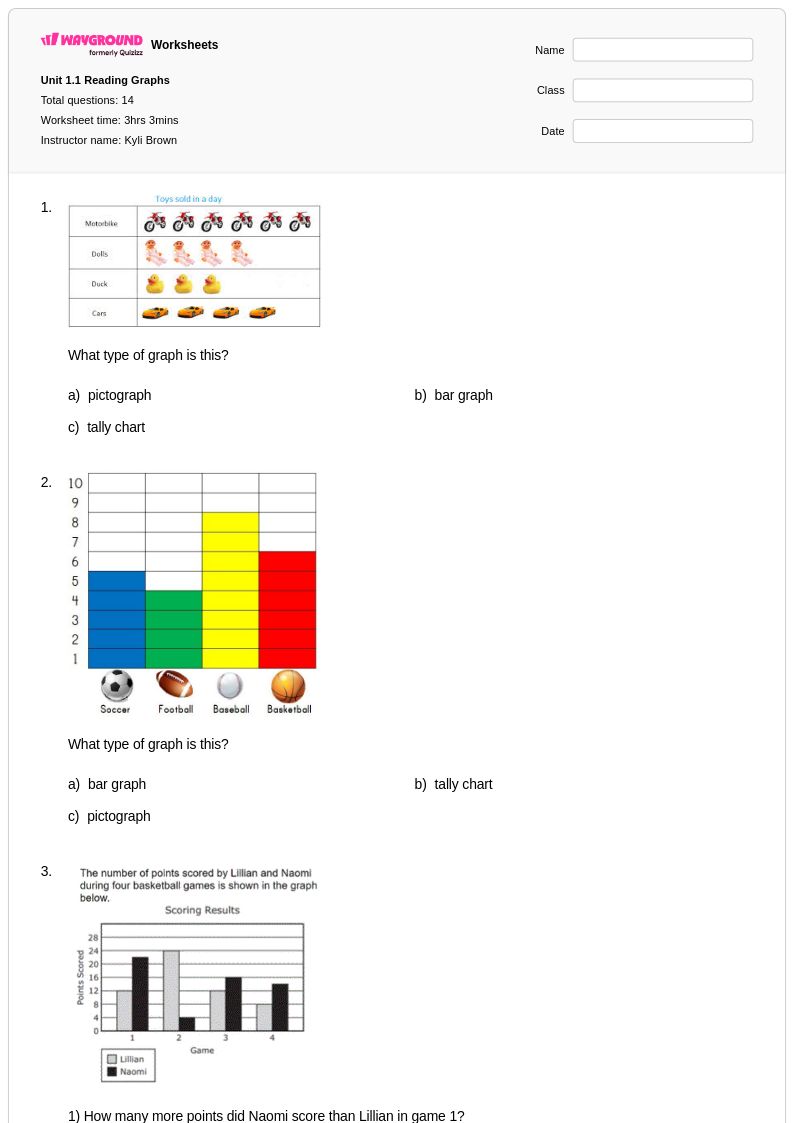
14 Q
6th - 8th
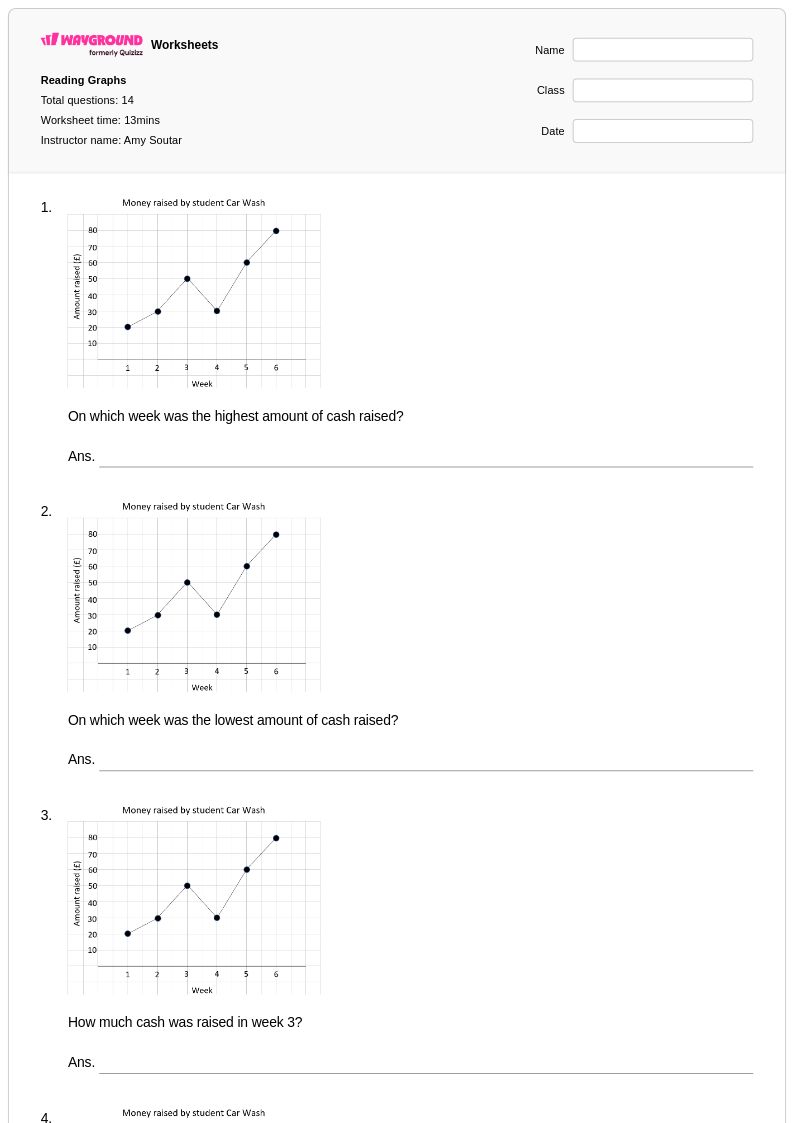
14 Q
1st - 10th
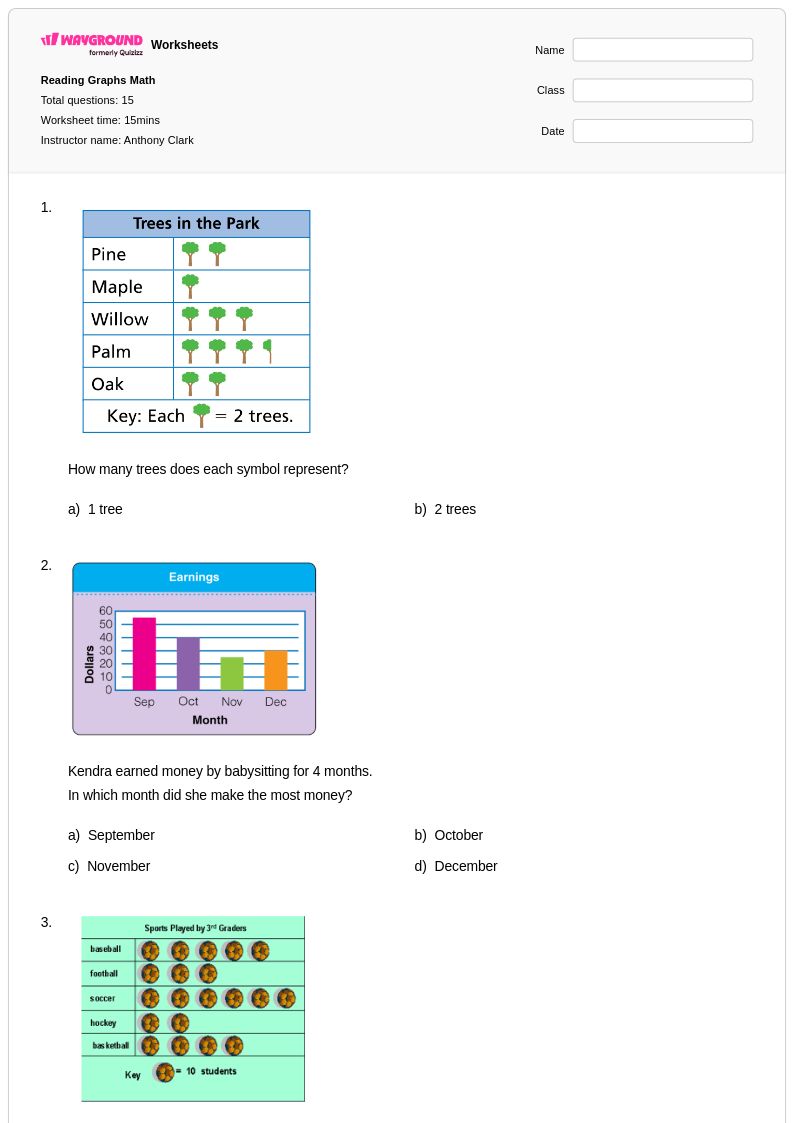
15 Q
2nd - Uni
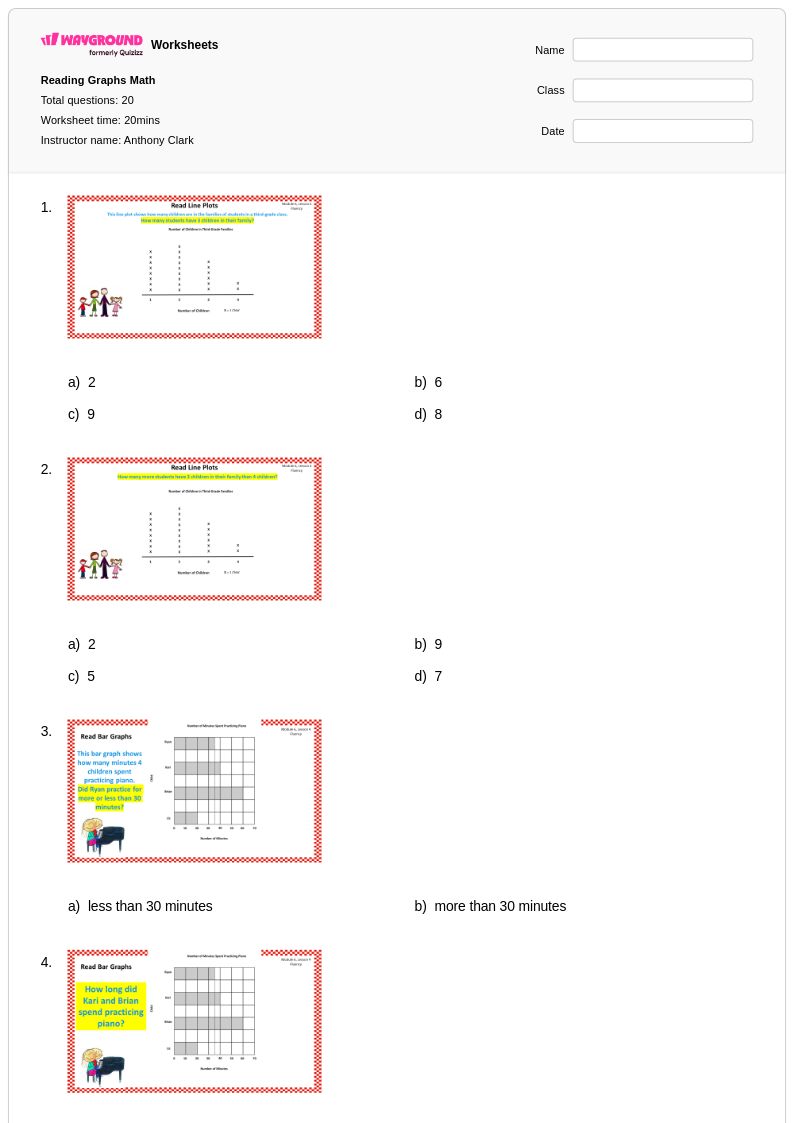
20 Q
2nd - Uni
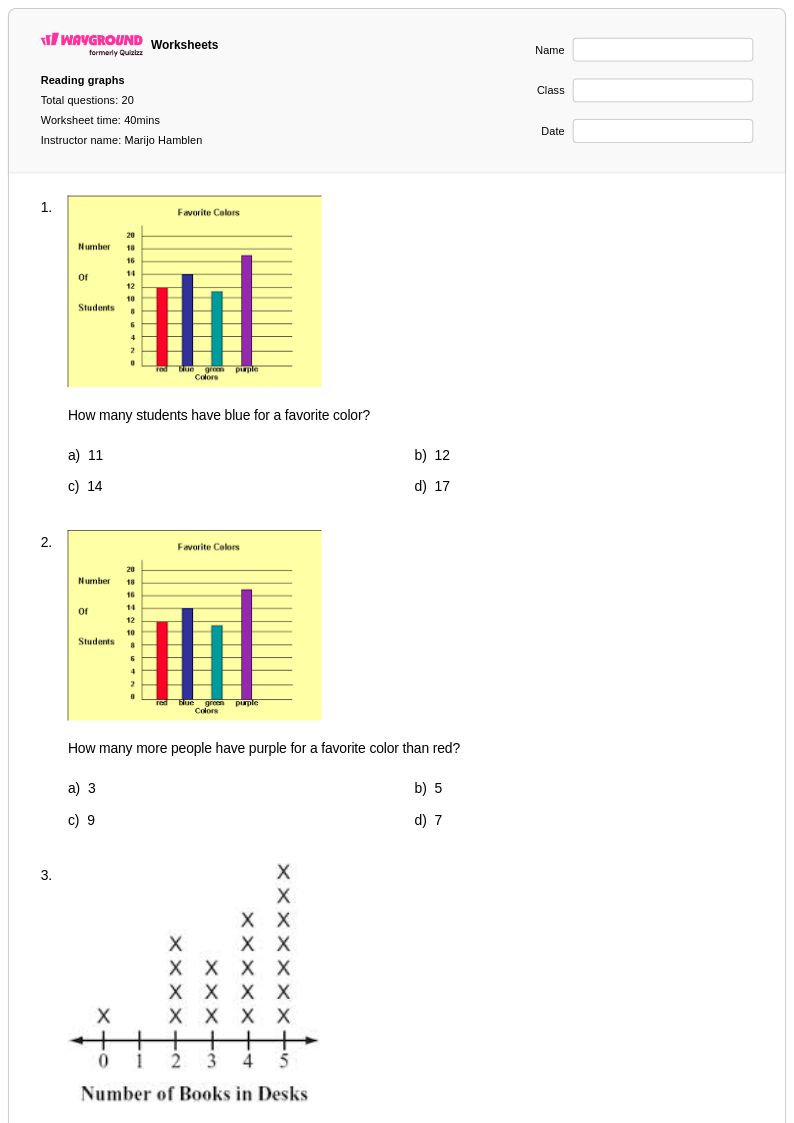
20 Q
6th
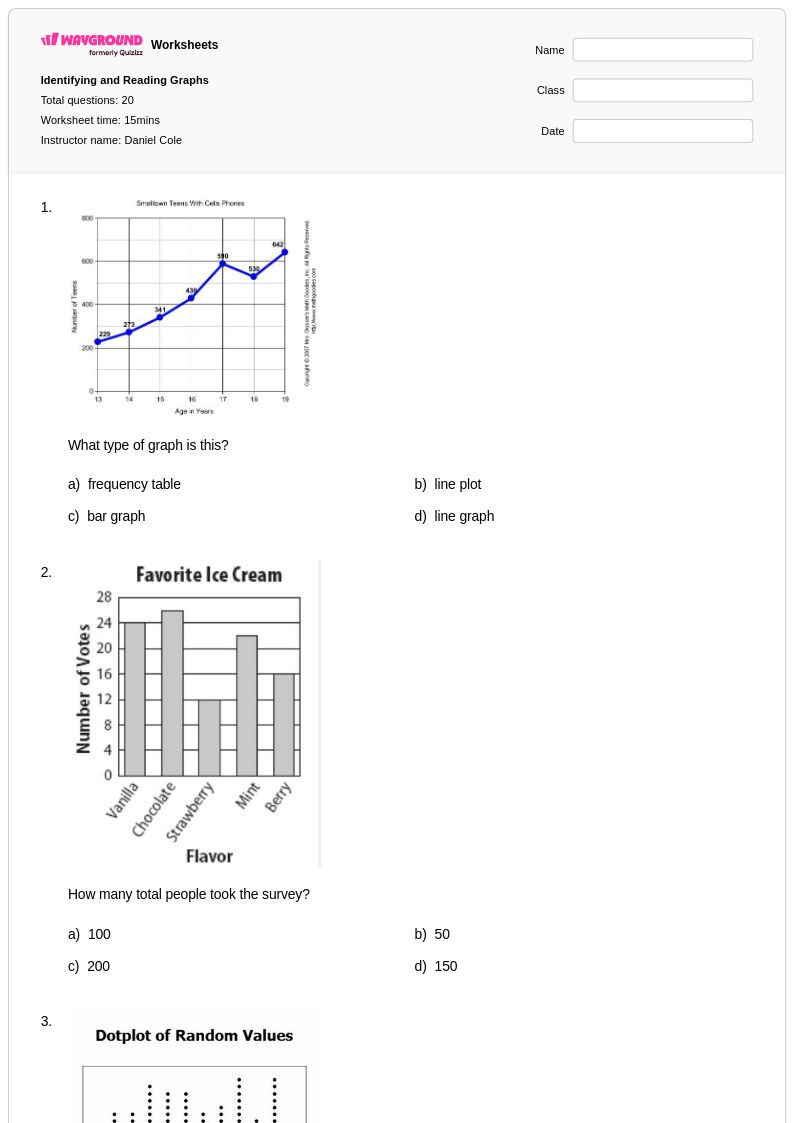
20 Q
6th
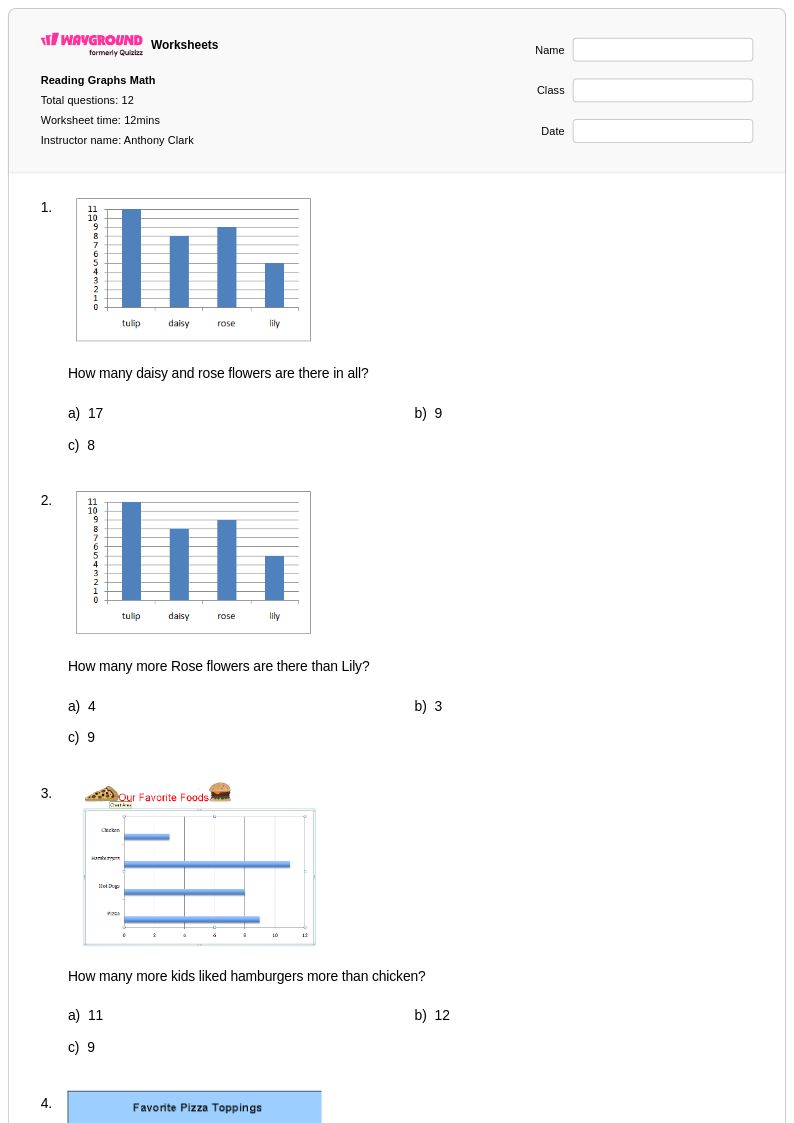
12 Q
2nd - Uni
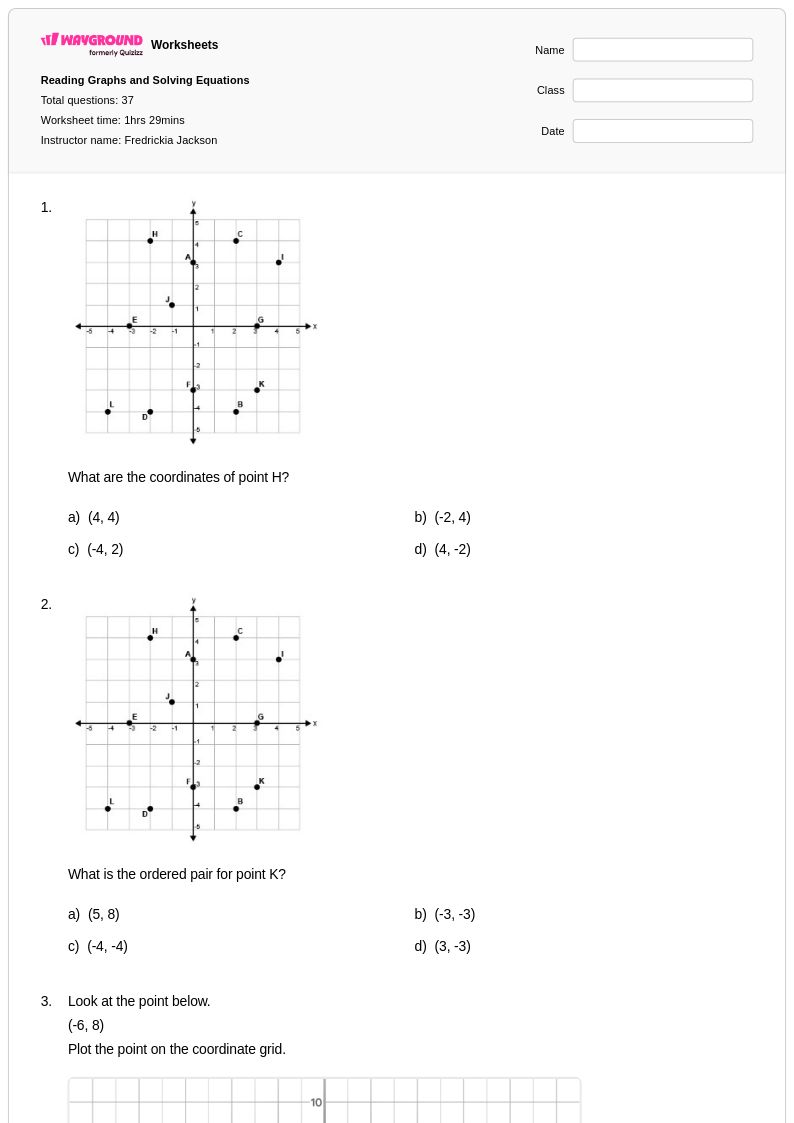
37 Q
6th - Uni
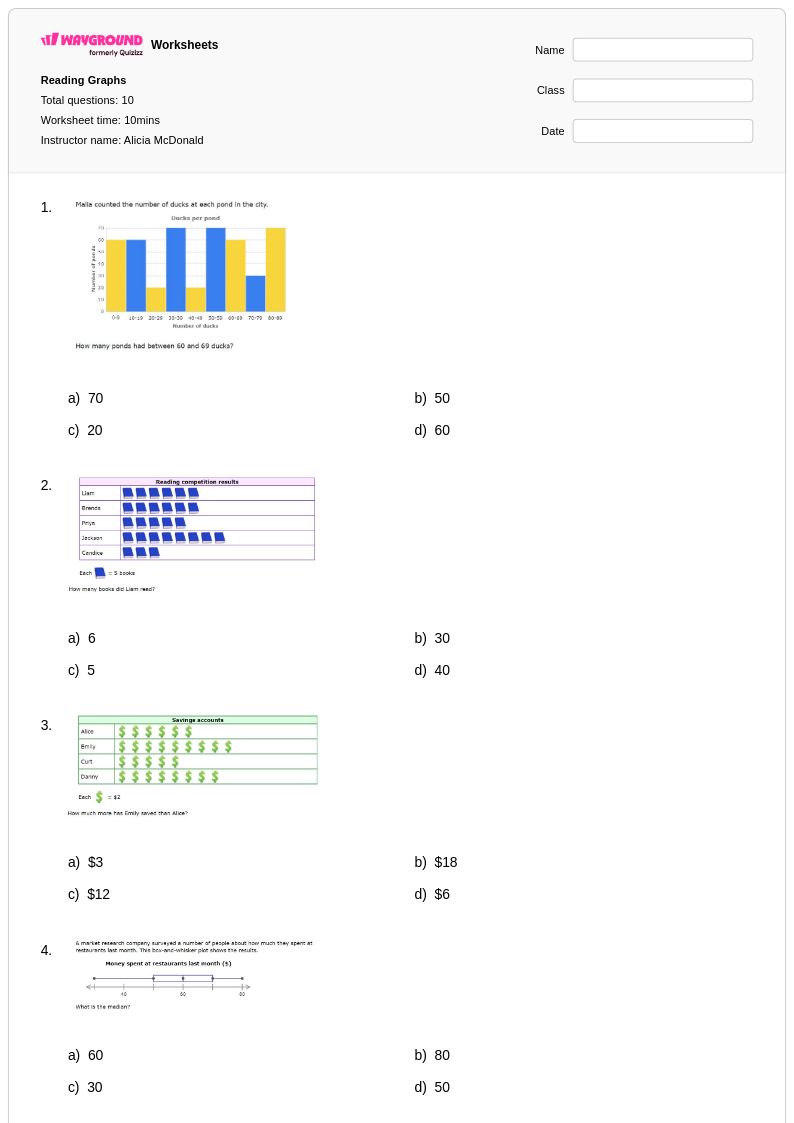
10 Q
6th
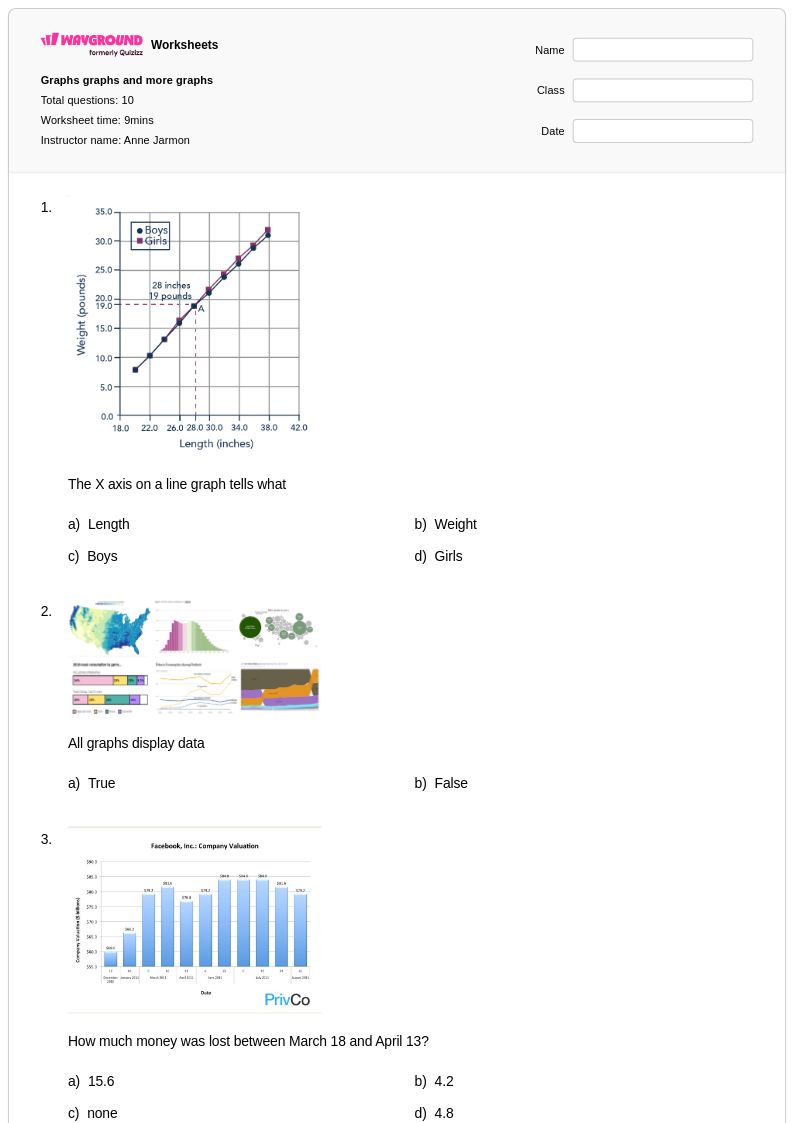
10 Q
6th - 8th
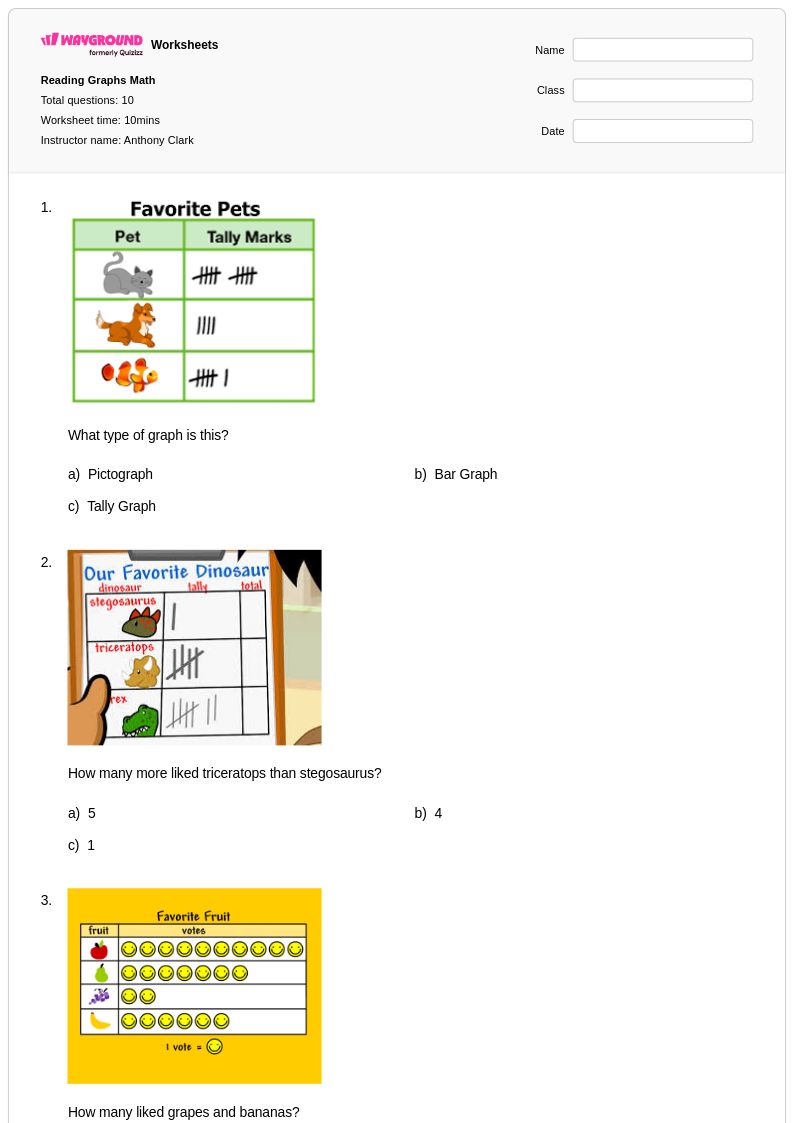
10 Q
2nd - Uni
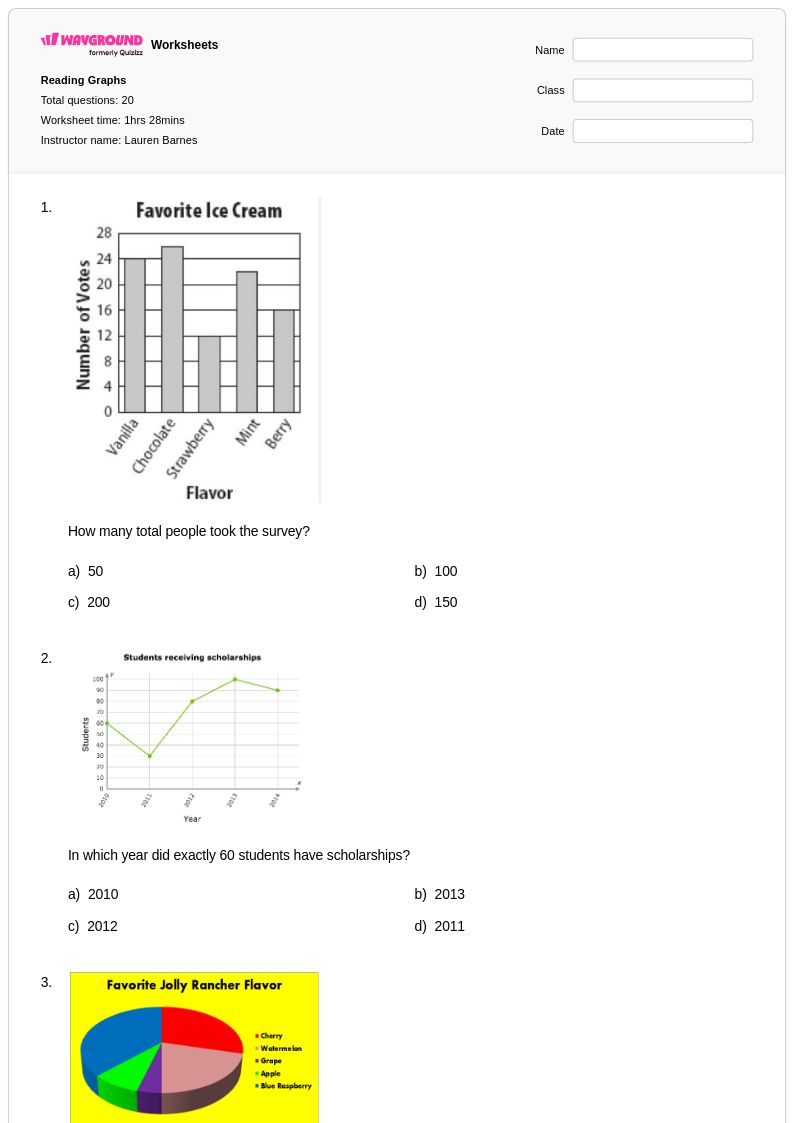
20 Q
6th
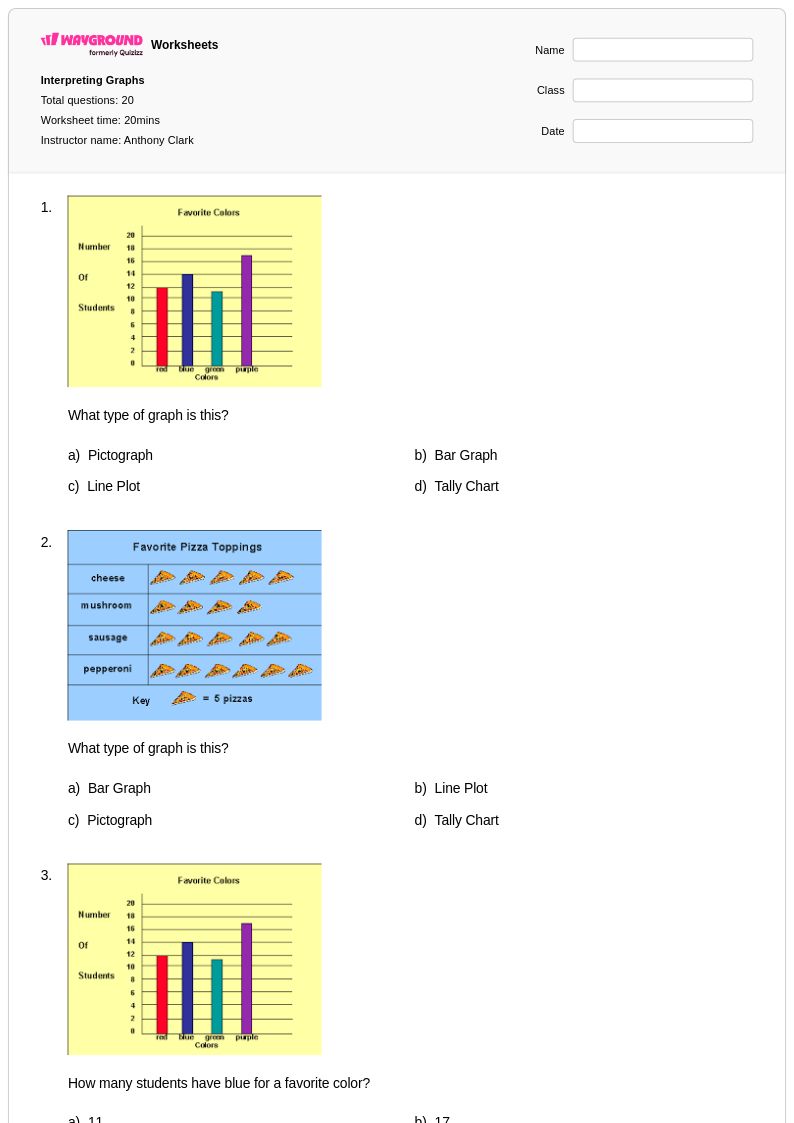
20 Q
3rd - Uni
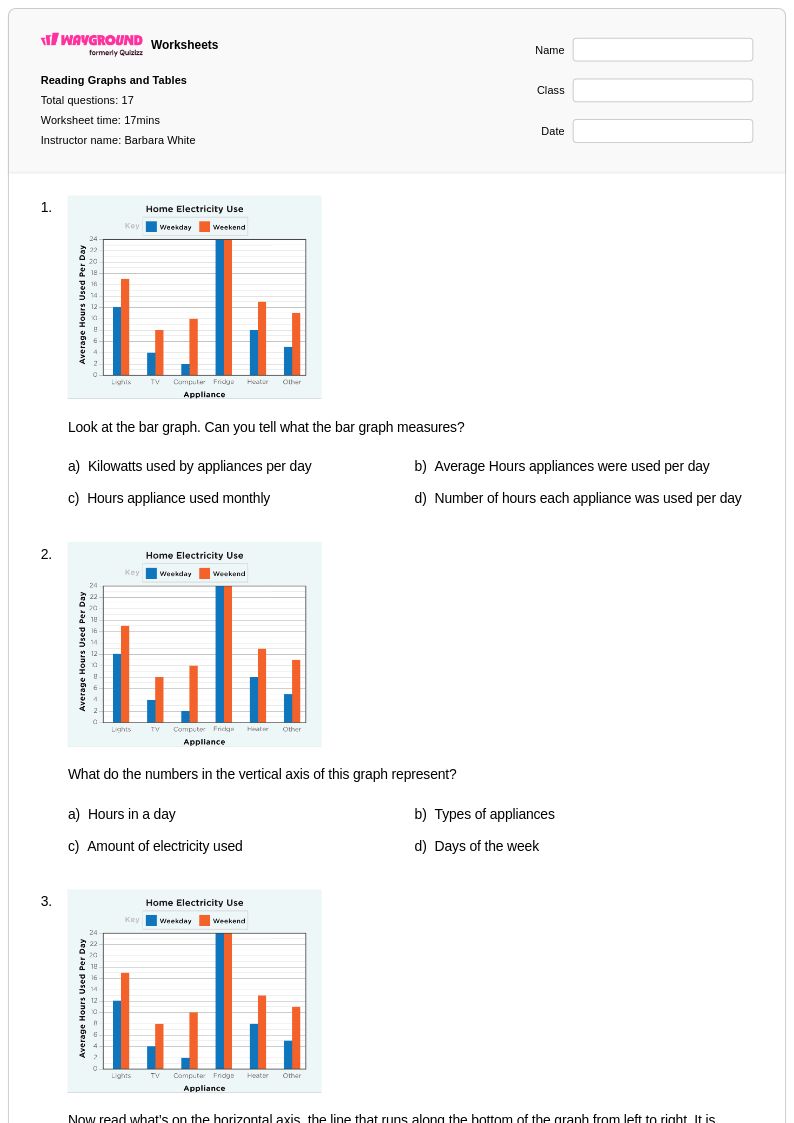
17 Q
6th - 10th
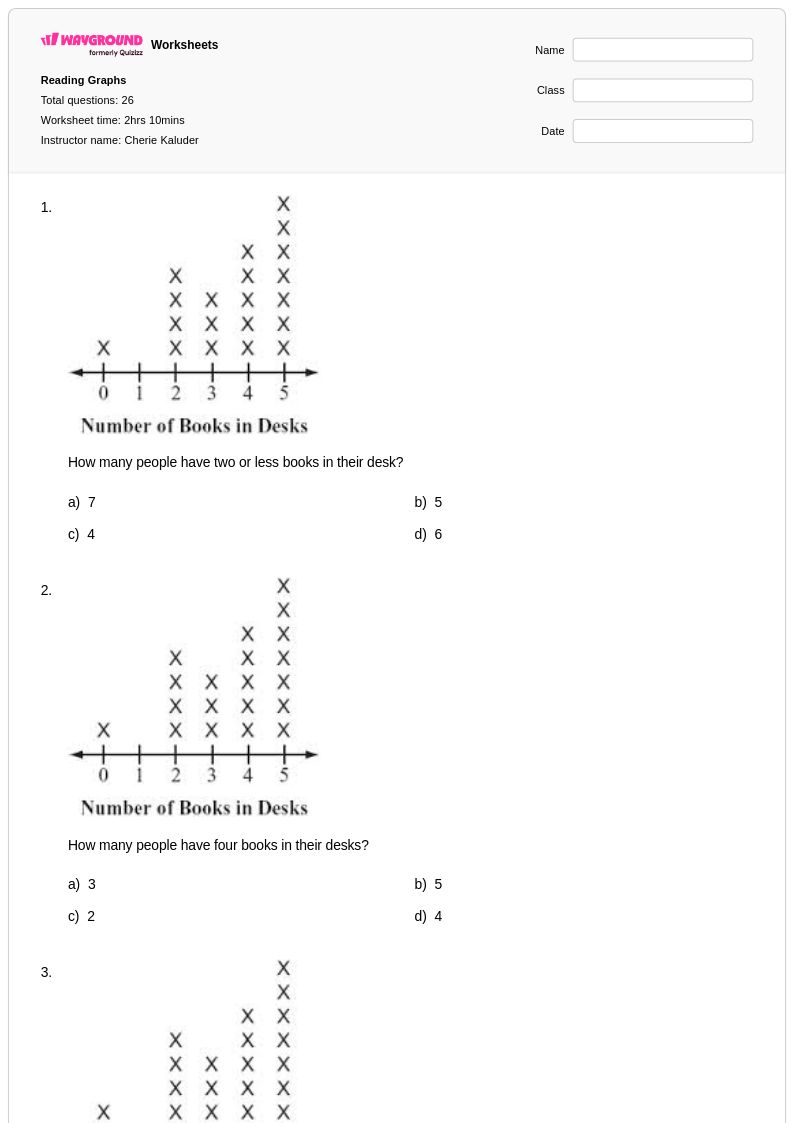
26 Q
6th
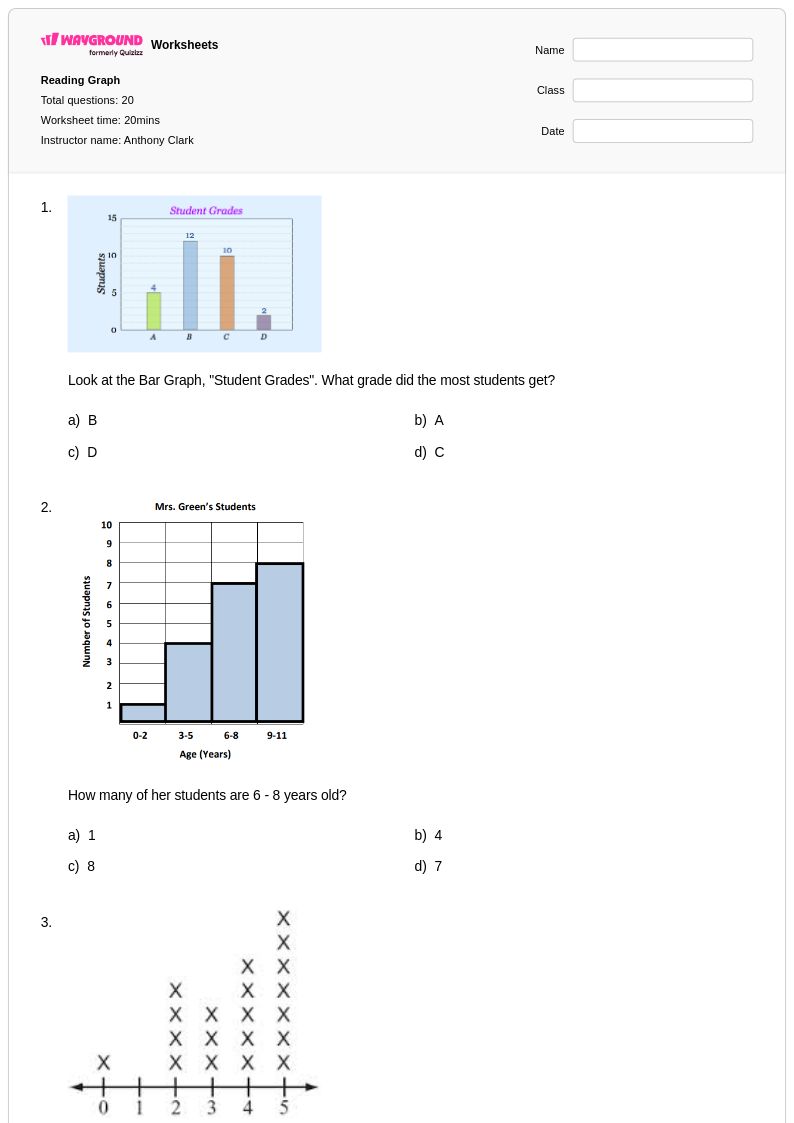
20 Q
4th - Uni
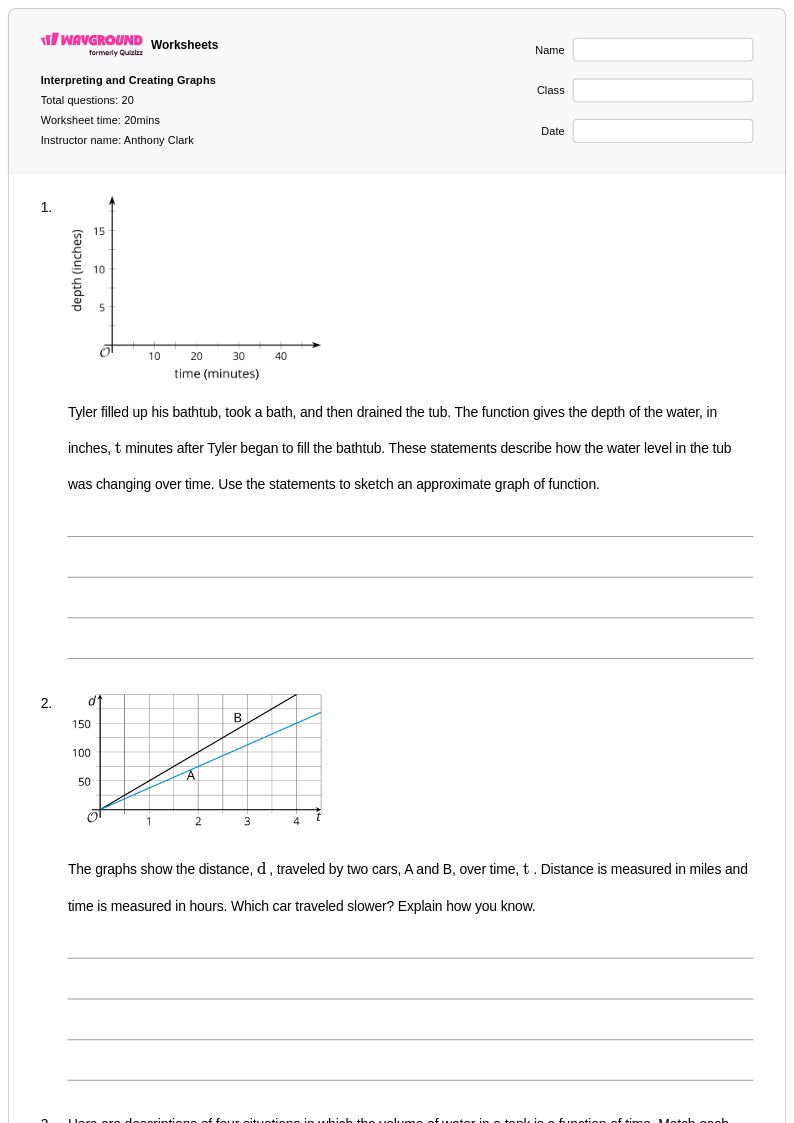
20 Q
6th - Uni
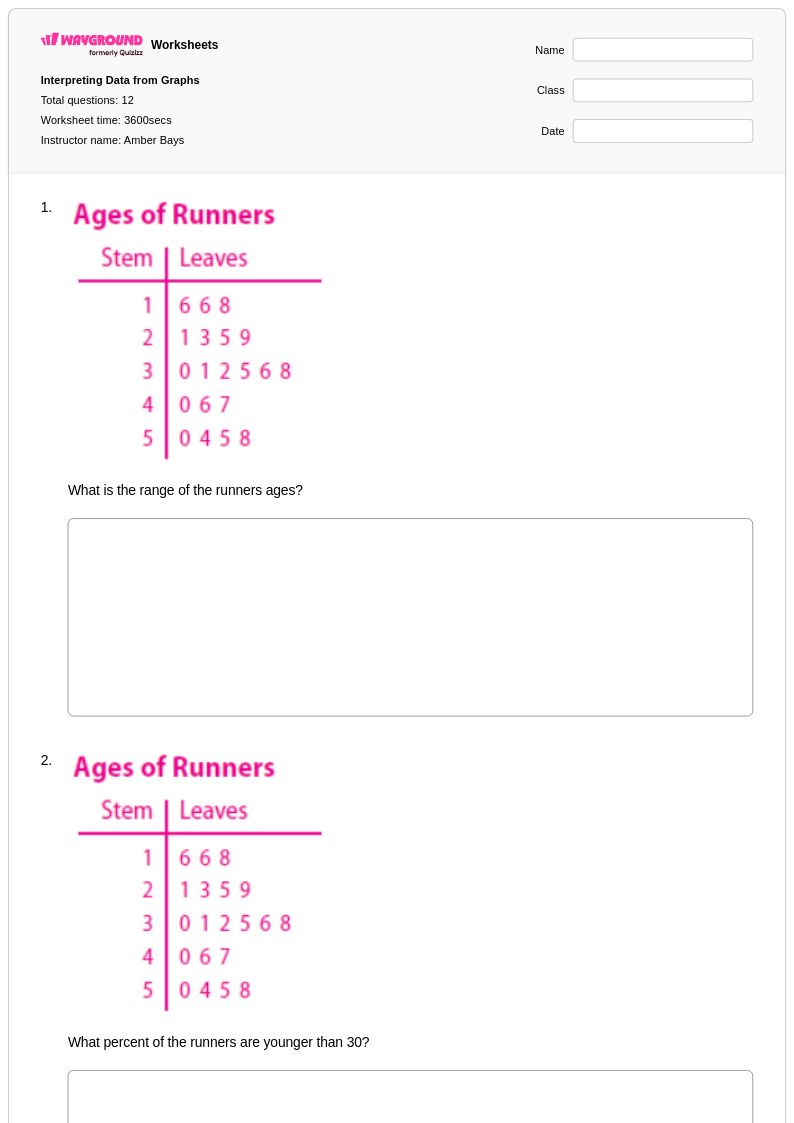
12 Q
6th
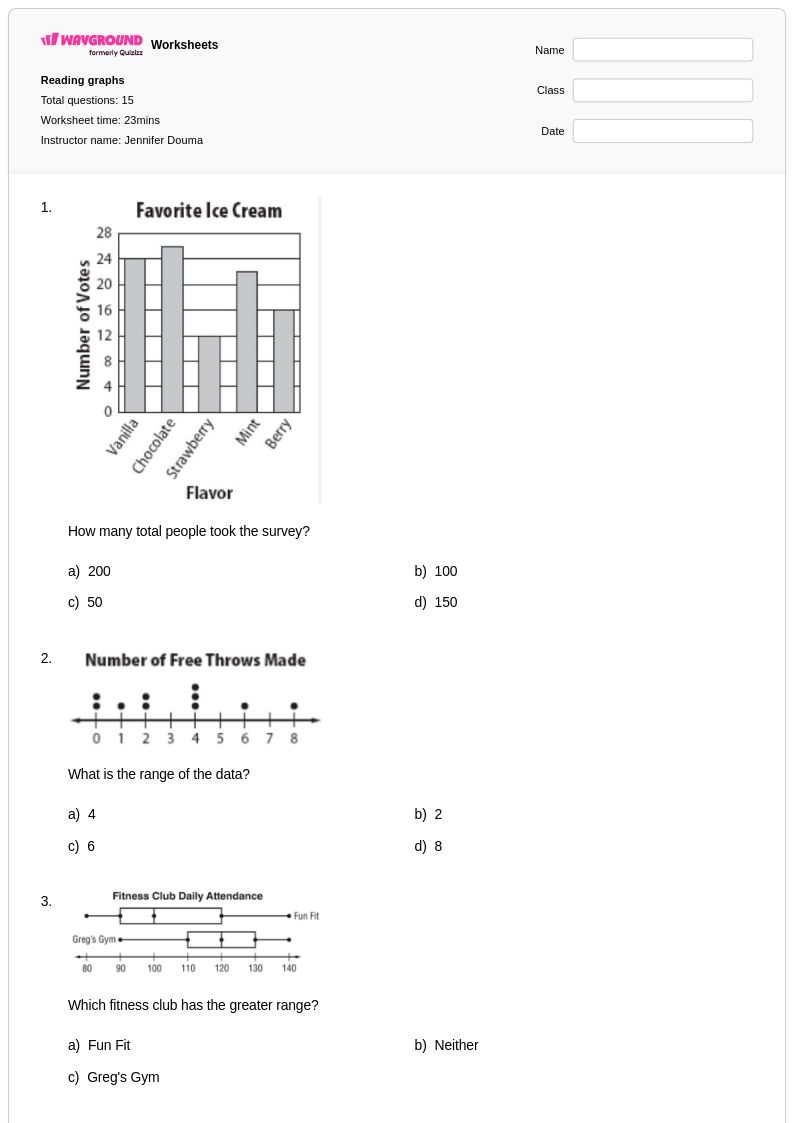
15 Q
6th

20 Q
4th - Uni
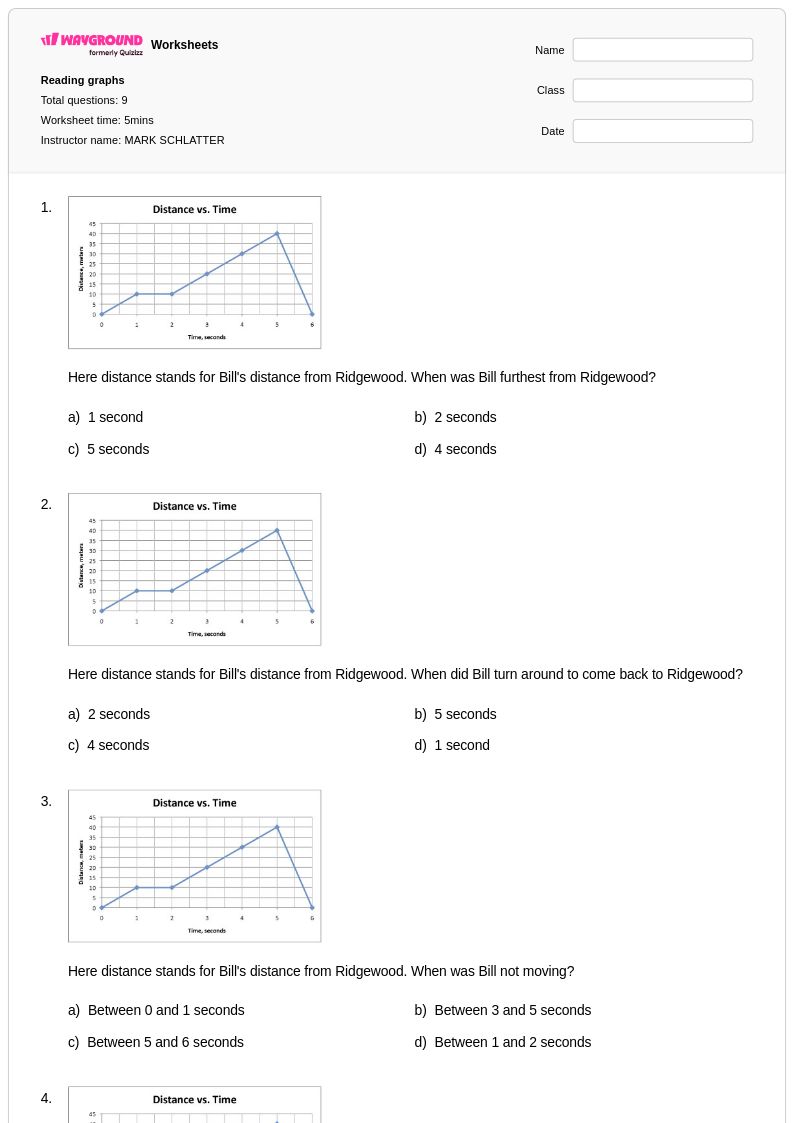
9 Q
6th
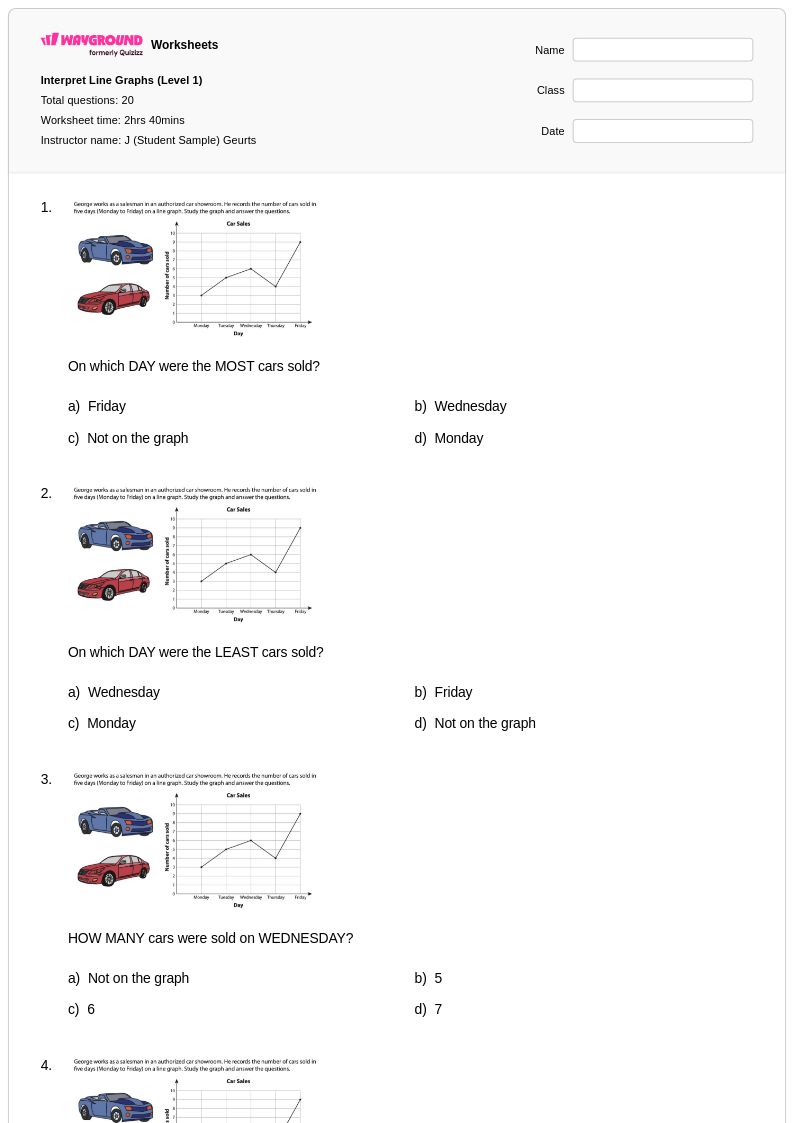
20 Q
6th - 8th
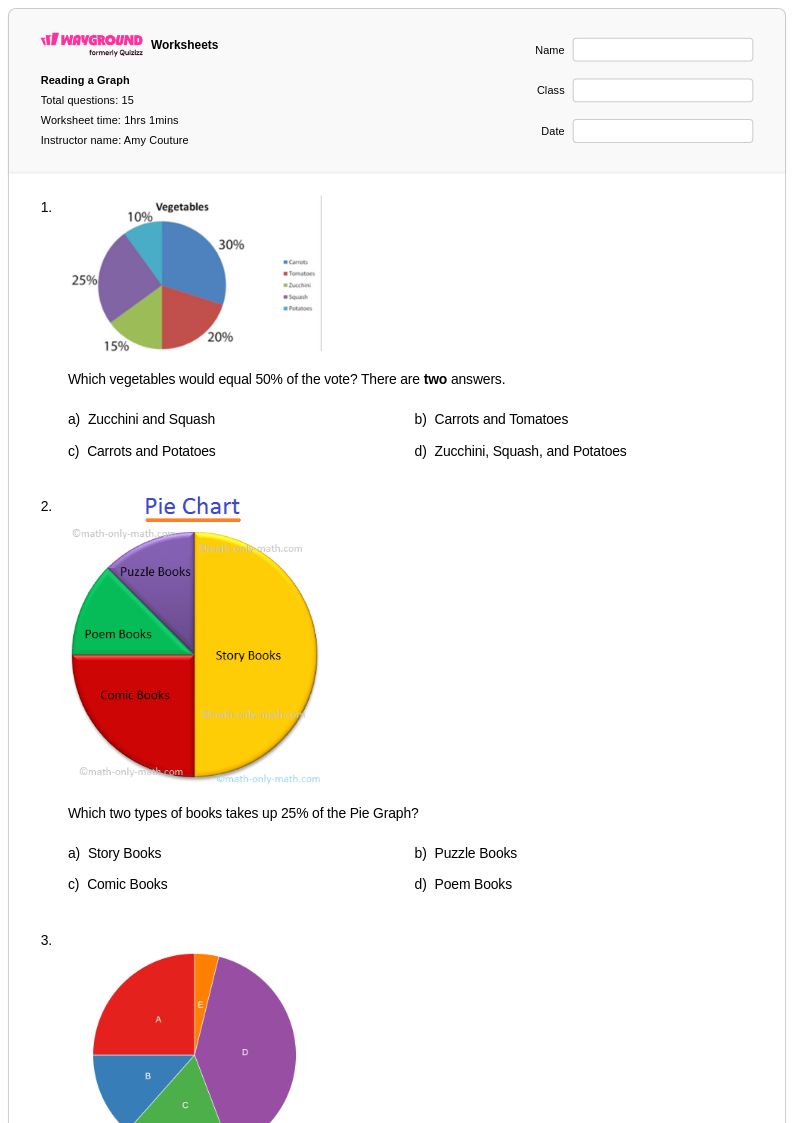
15 Q
6th - 8th
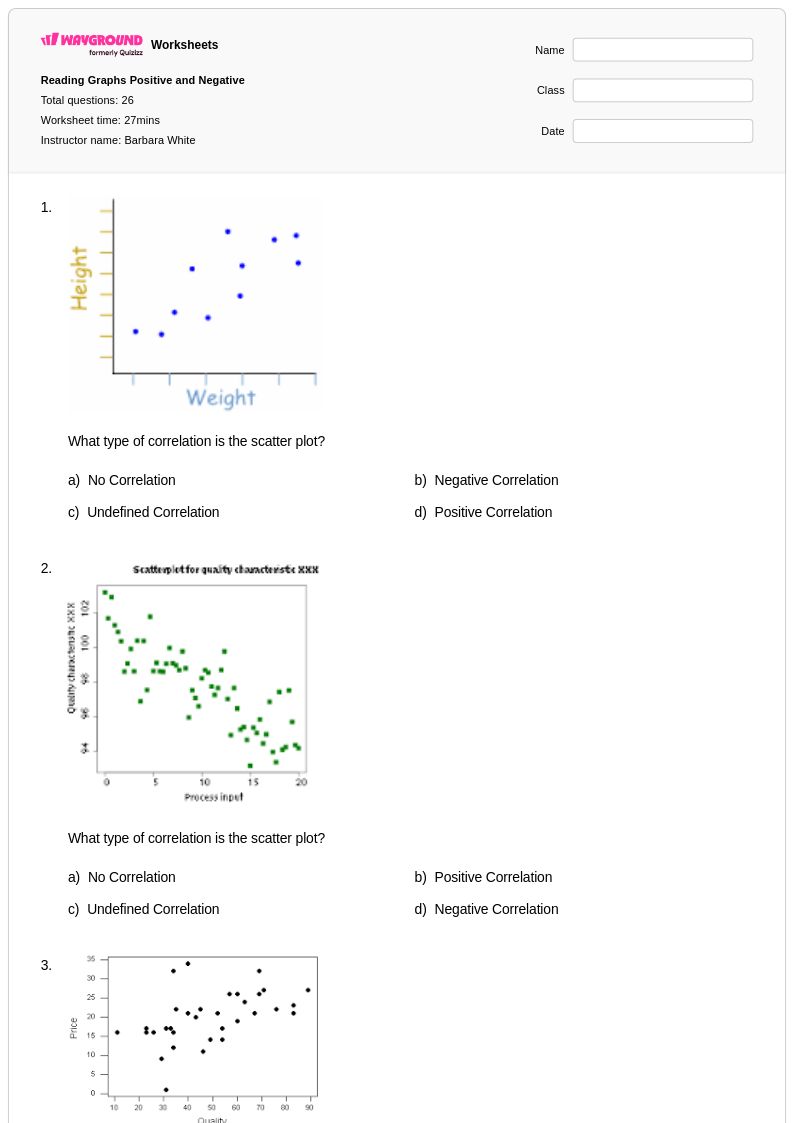
26 Q
6th - 8th
Explore Reading Graphs Worksheets by Grades
Explore Other Subject Worksheets for grade 6
Explore printable Reading Graphs worksheets for Grade 6
Reading Graphs worksheets for Grade 6 students available through Wayground (formerly Quizizz) provide comprehensive practice in interpreting and analyzing various types of visual data representations. These educational resources strengthen essential mathematical skills including extracting information from bar graphs, line graphs, pie charts, and pictographs, while developing students' ability to identify trends, compare data sets, and draw logical conclusions from graphical displays. The collection includes diverse practice problems that challenge sixth graders to read coordinates, interpret scales, analyze data relationships, and answer questions based on graphical information, with each worksheet featuring a complete answer key to support independent learning and immediate feedback. These free printables offer structured opportunities for students to master the critical skill of graph interpretation that forms the foundation for more advanced data analysis concepts.
Wayground (formerly Quizizz) empowers educators with millions of teacher-created Reading Graphs resources specifically designed for Grade 6 mathematics instruction, featuring robust search and filtering capabilities that allow teachers to quickly locate materials aligned with curriculum standards and learning objectives. The platform's differentiation tools enable instructors to customize worksheets based on individual student needs, whether for remediation of struggling learners or enrichment of advanced students, while the flexible format options include both printable pdf versions for traditional classroom use and digital formats for technology-integrated learning environments. These comprehensive features streamline lesson planning by providing ready-to-use materials that support systematic skill practice, formative assessment opportunities, and targeted intervention strategies, allowing teachers to efficiently address diverse learning needs while ensuring all students develop proficiency in reading and interpreting graphical data representations.