
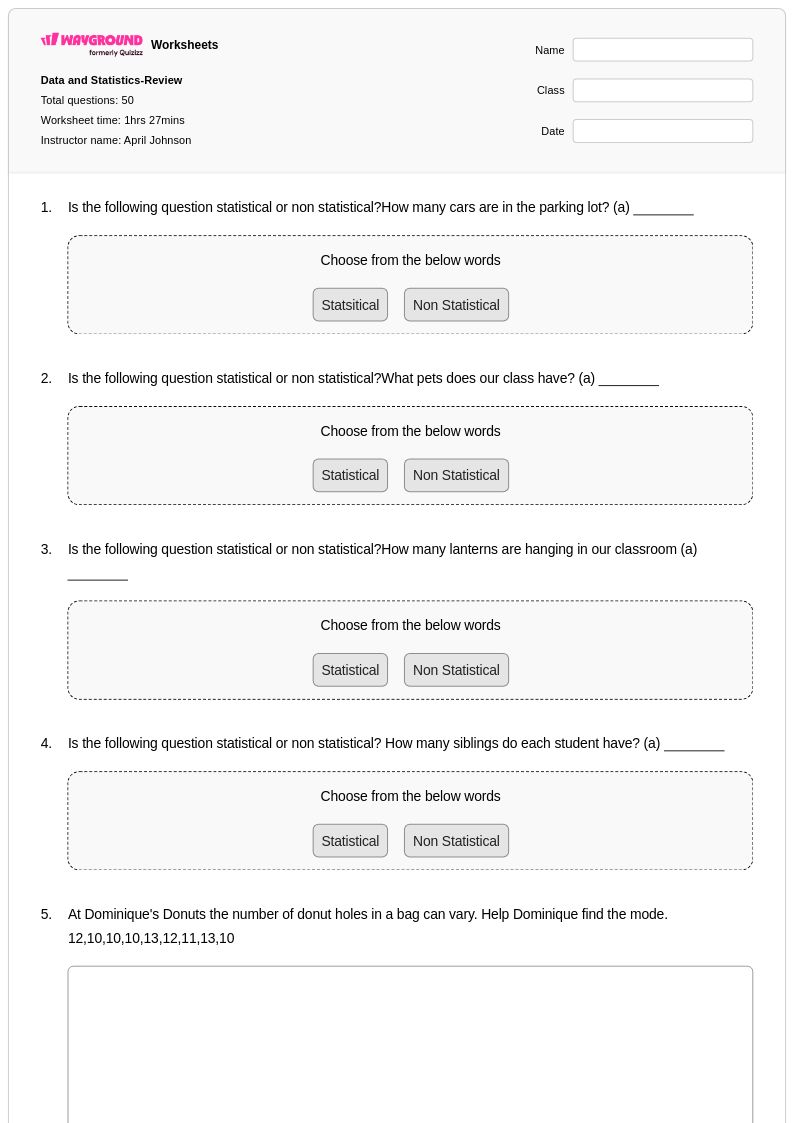
50 Q
6th
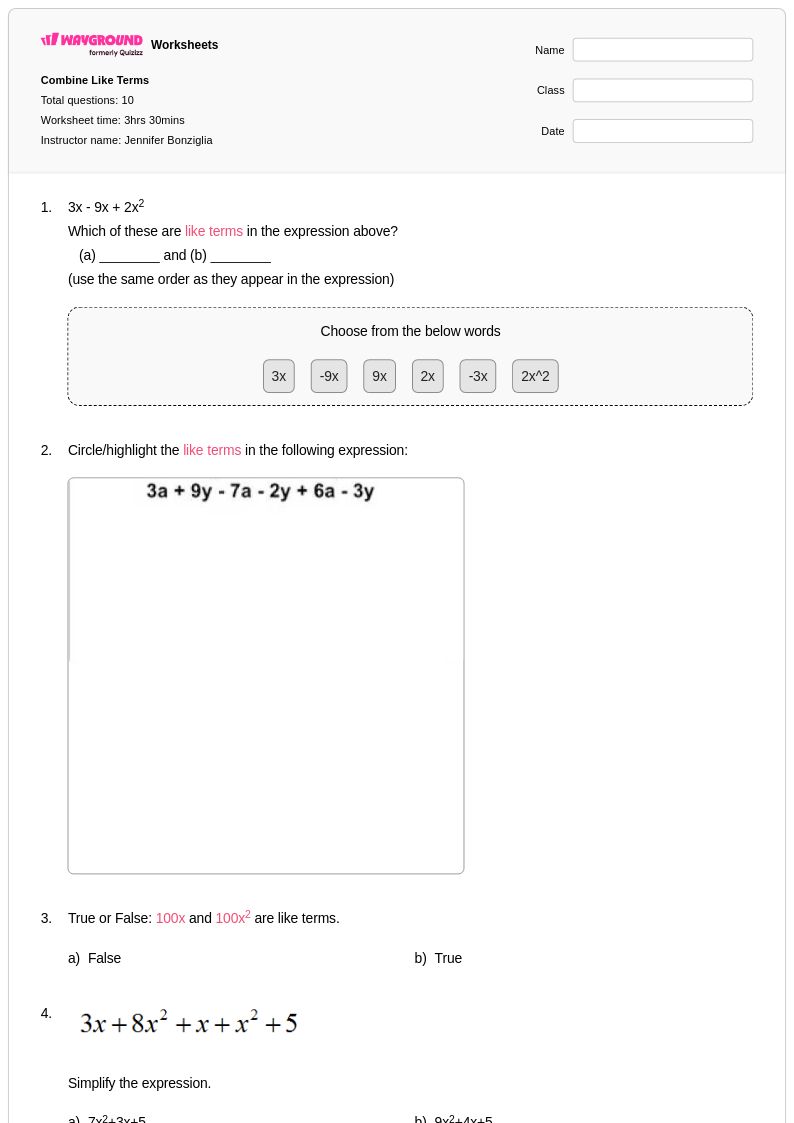
10 Q
6th - 8th
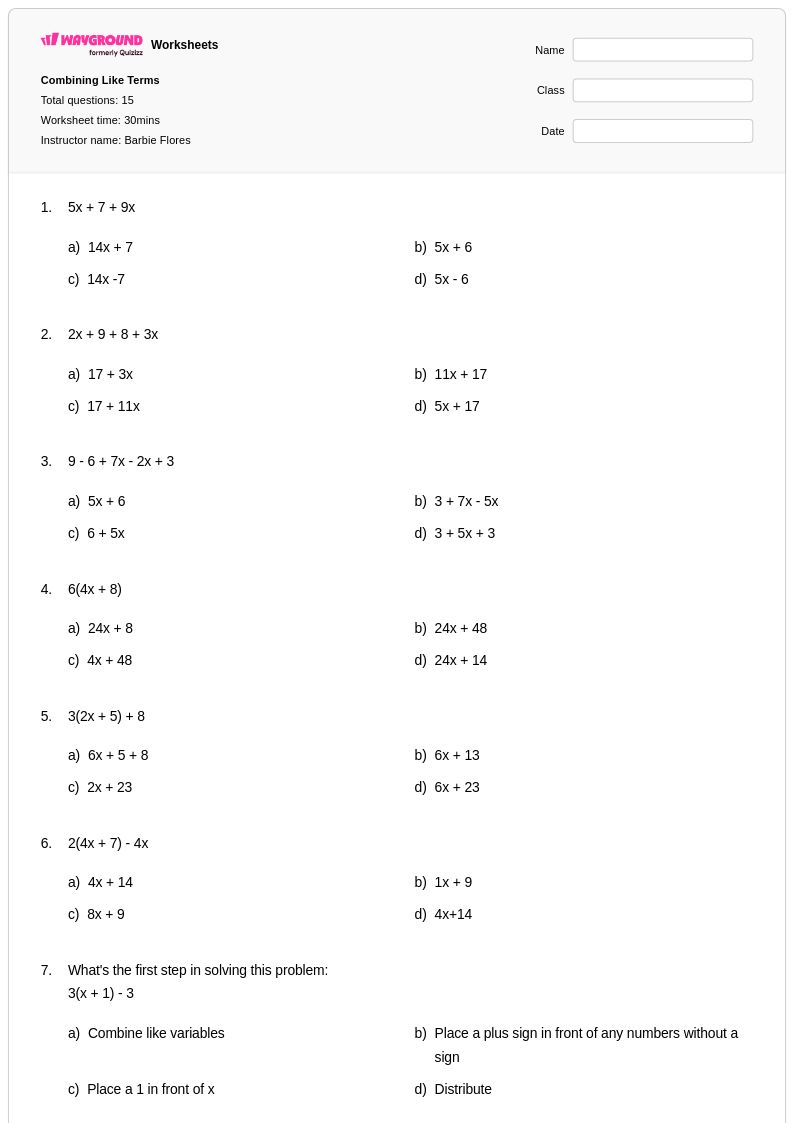
15 Q
6th
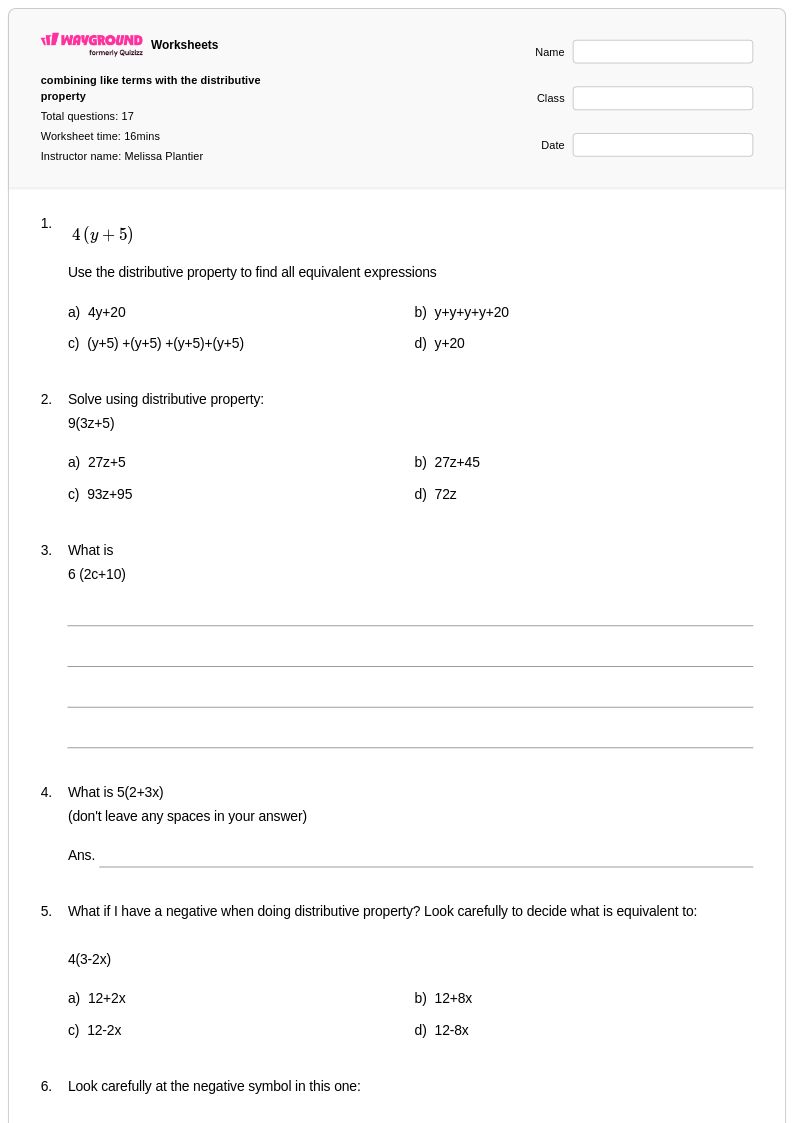
17 Q
6th
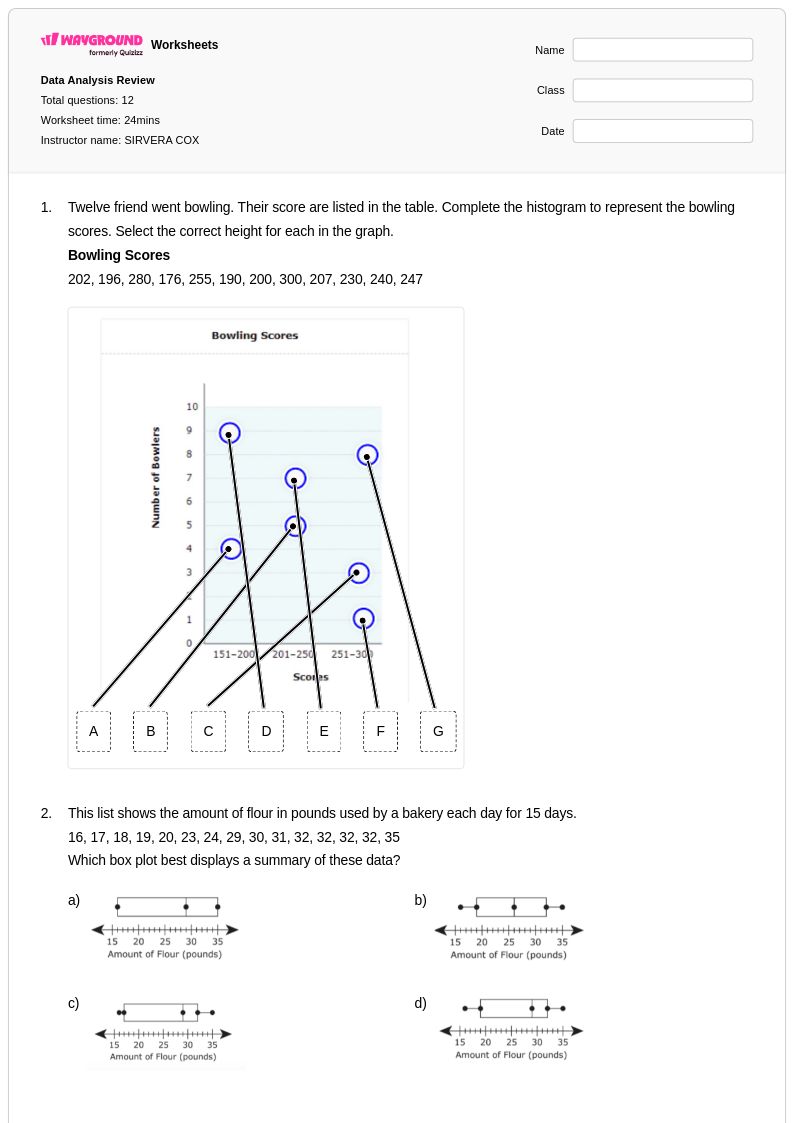
12 Q
6th
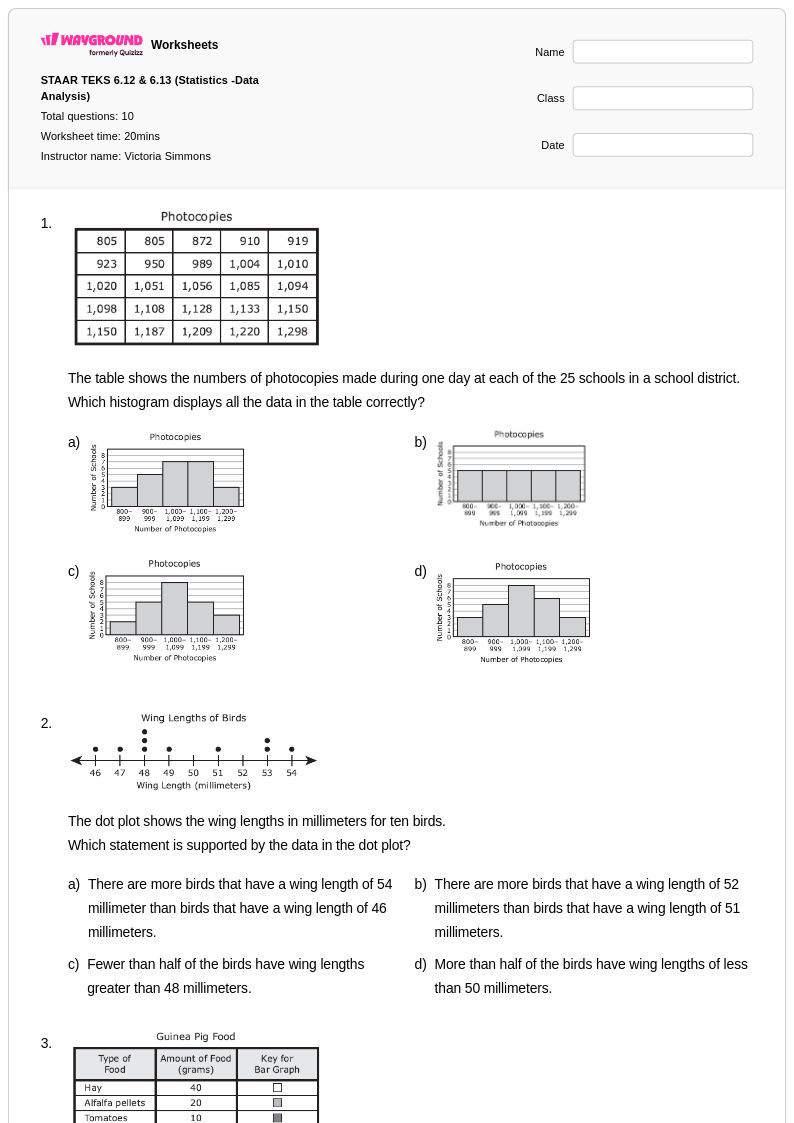
10 Q
6th
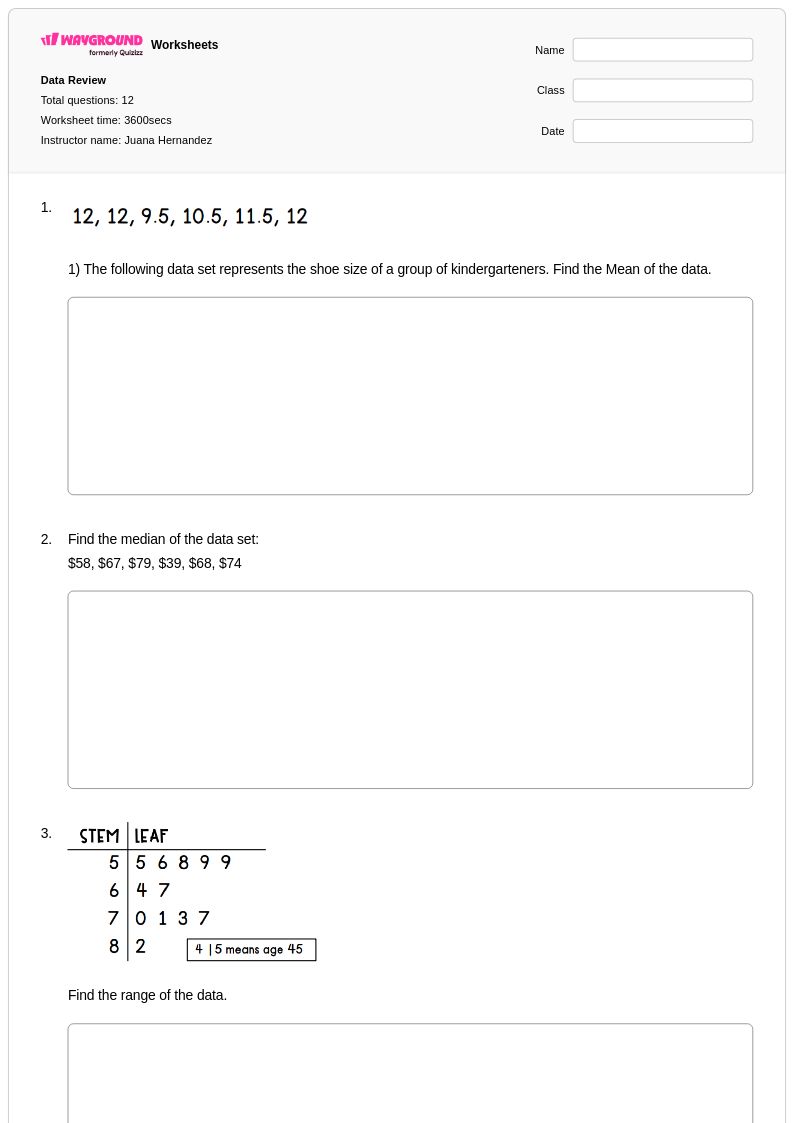
12 Q
6th
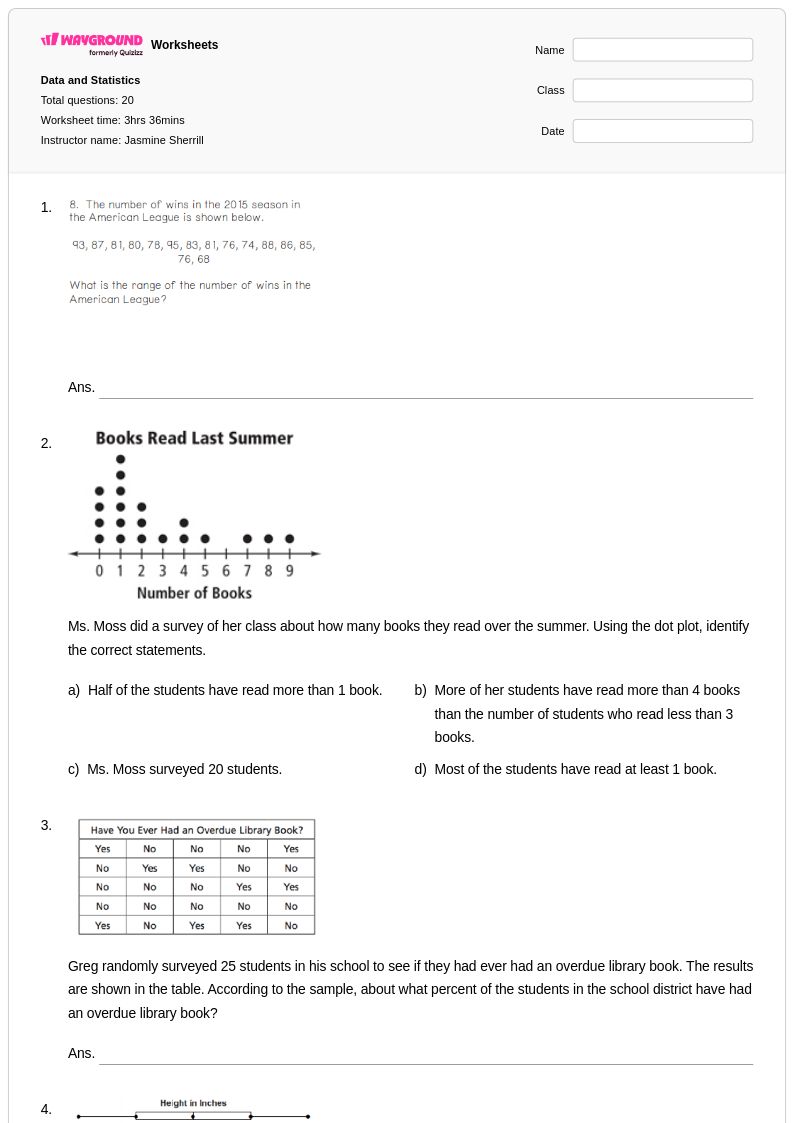
20 Q
6th
20 Q
3rd - Uni
80 Q
6th
20 Q
6th - 8th
16 Q
6th - 8th
19 Q
6th
15 Q
6th - 7th
16 Q
6th - 8th
25 Q
6th
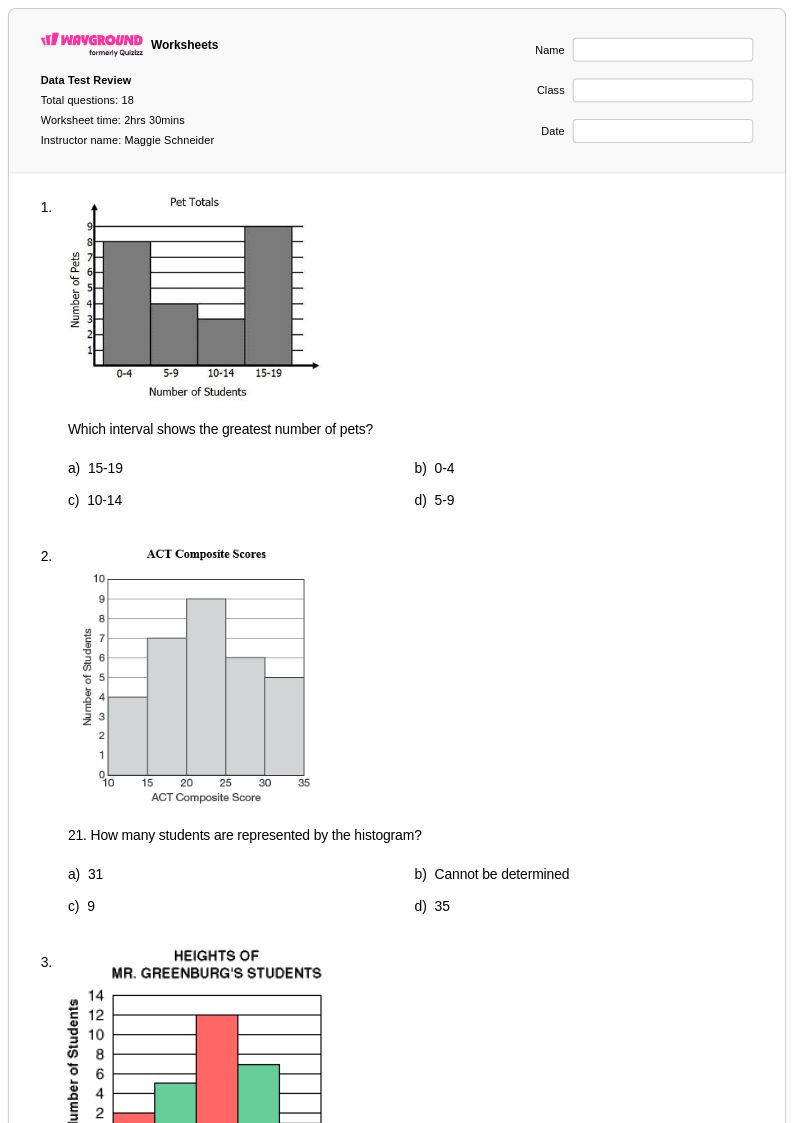
18 Q
6th
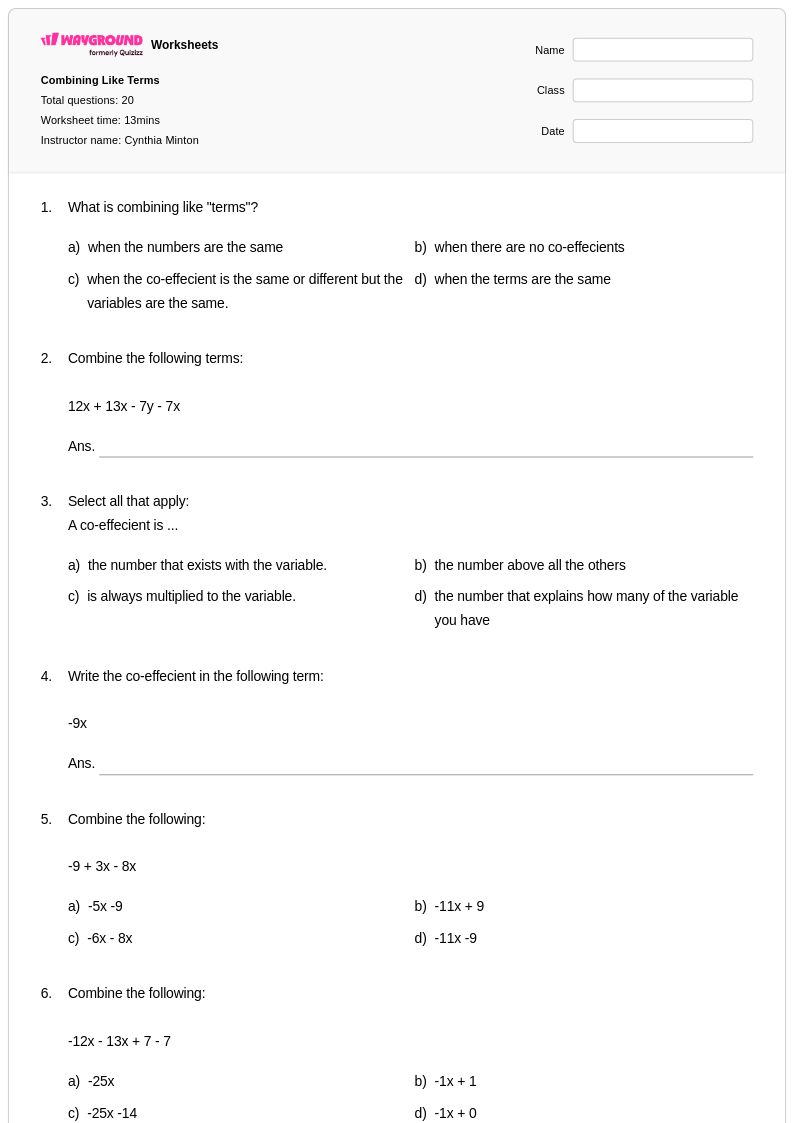
20 Q
6th
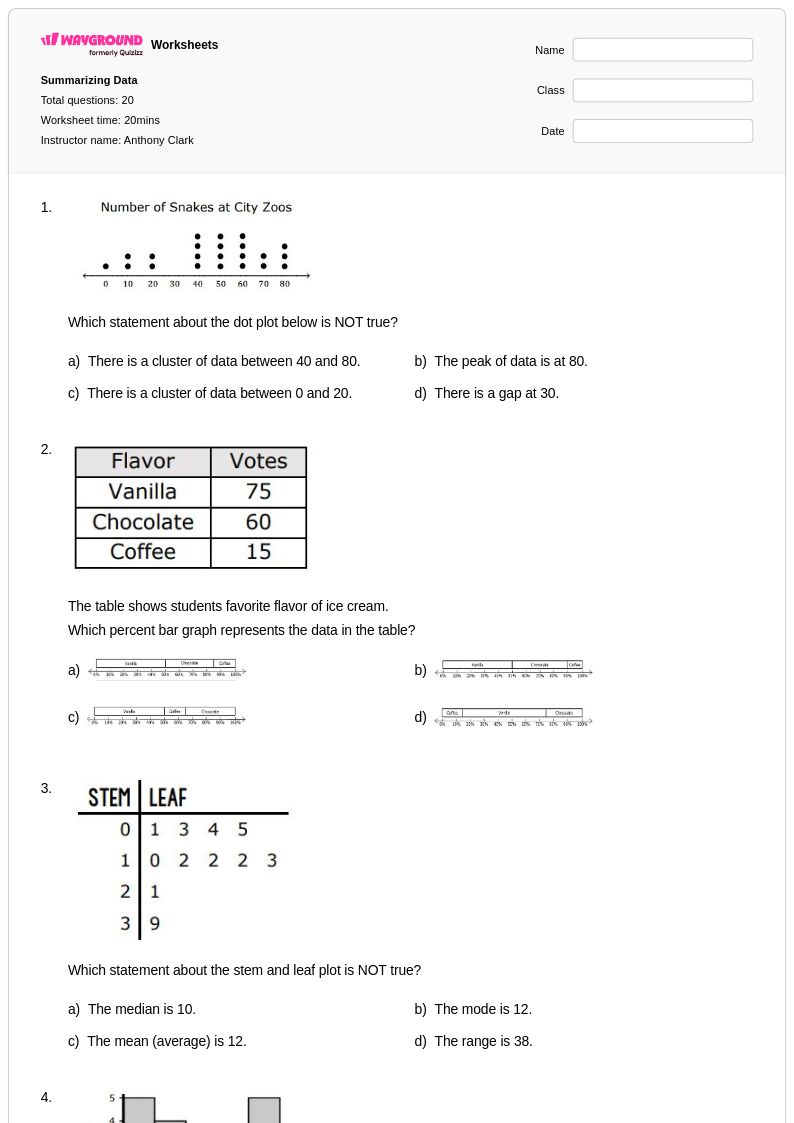
20 Q
6th - Uni
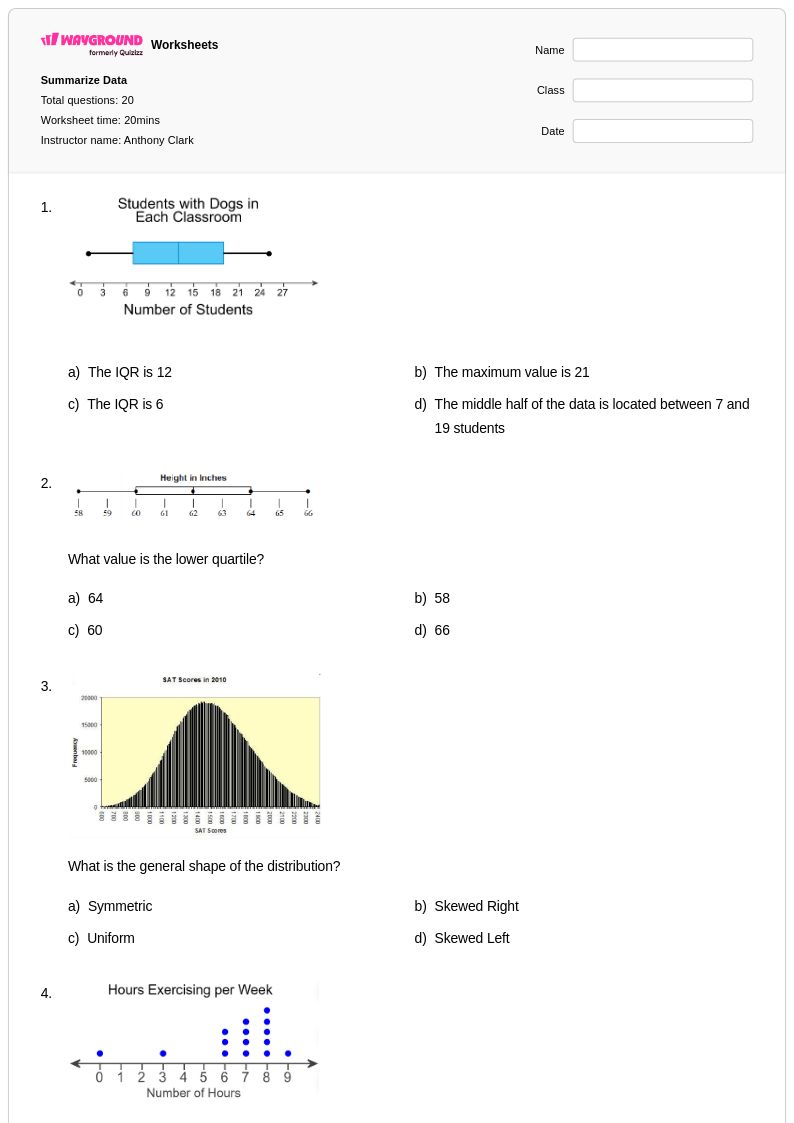
20 Q
6th - Uni
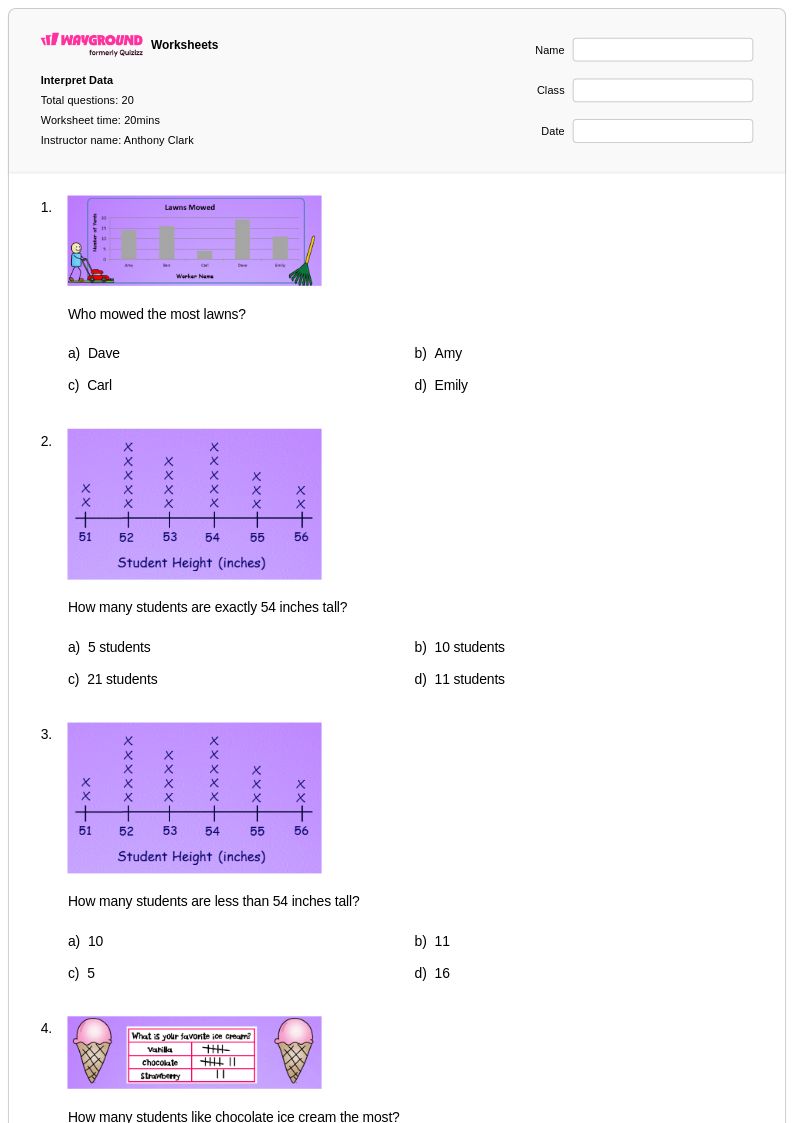
20 Q
5th - Uni
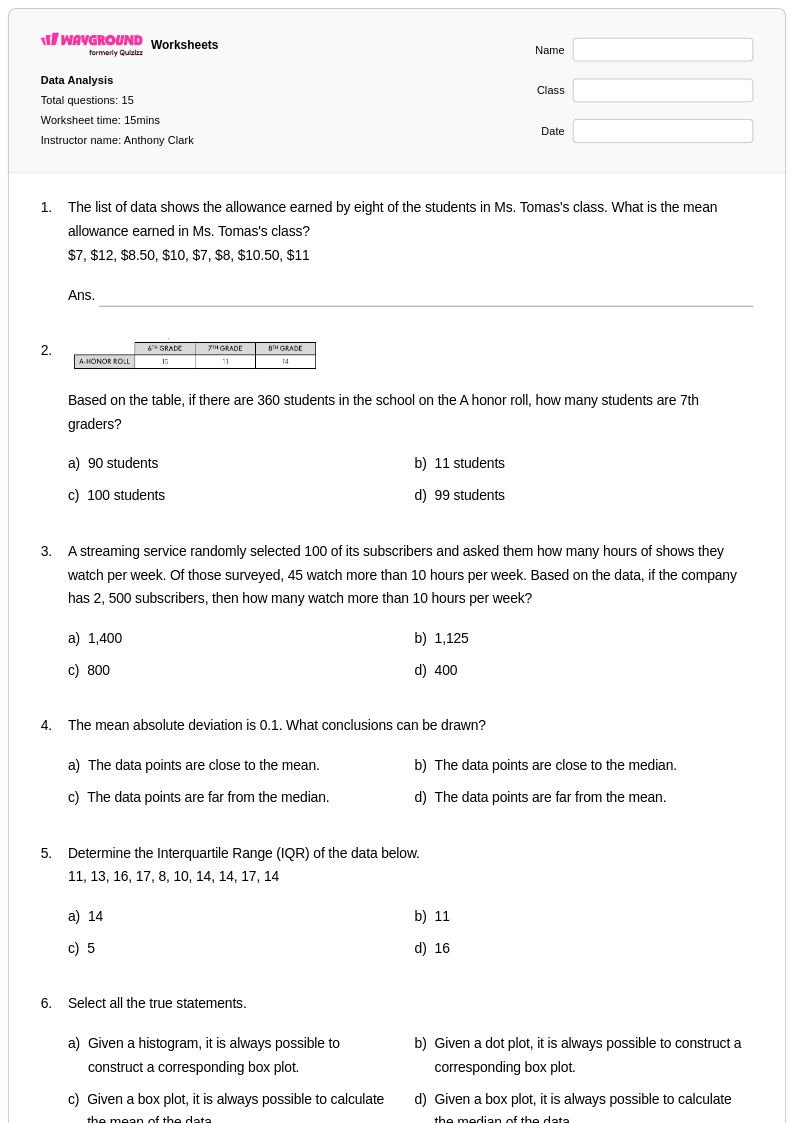
15 Q
6th - Uni
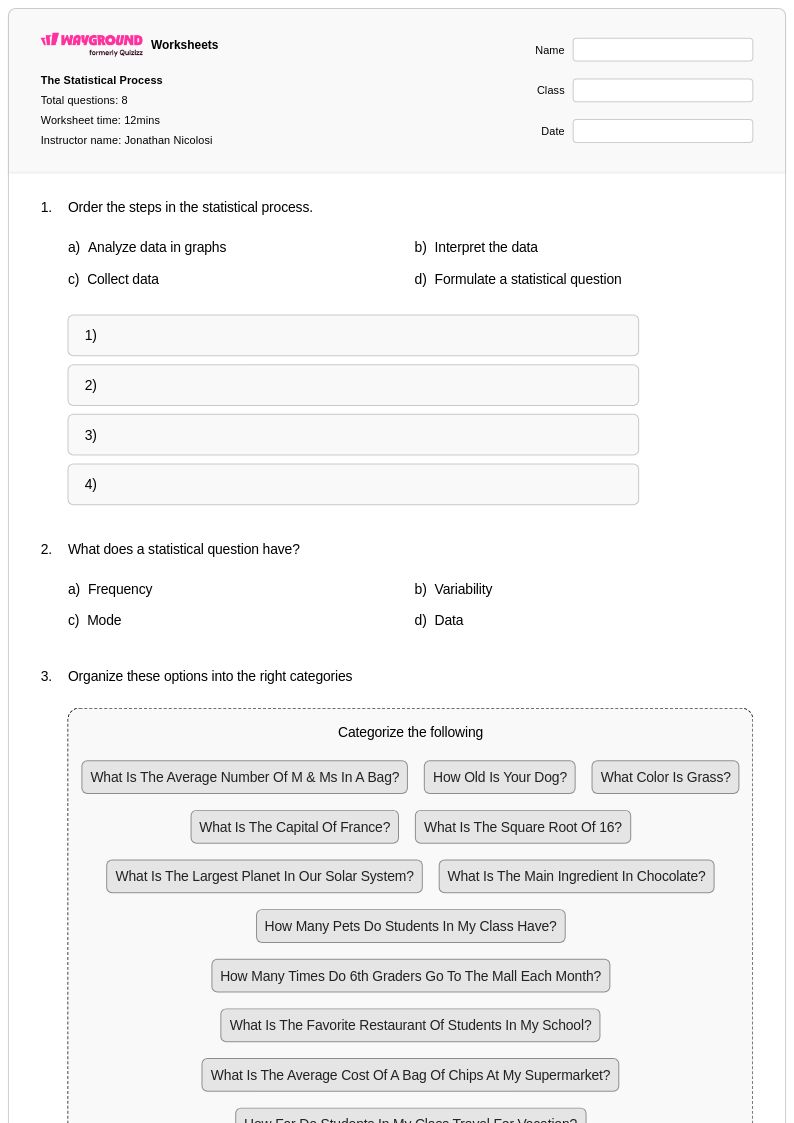
8 Q
6th

15 Q
5th - Uni
Explore Other Subject Worksheets for grade 6
Explore printable Combining Data worksheets for Grade 6
Combining data worksheets for Grade 6 students available through Wayground (formerly Quizizz) provide comprehensive practice in merging, analyzing, and interpreting information from multiple sources. These expertly designed worksheets strengthen essential mathematical skills including data synthesis, pattern recognition, and comparative analysis while building students' ability to draw meaningful conclusions from combined datasets. Each worksheet features carefully structured practice problems that guide sixth-grade learners through the process of organizing disparate information, identifying relationships between different data sets, and presenting unified findings through tables, charts, and graphs. The collection includes detailed answer keys and free printable pdf resources that support both independent study and classroom instruction, ensuring students develop confidence in handling complex data scenarios they will encounter in advanced mathematics courses.
Wayground (formerly Quizizz) empowers educators with an extensive library of millions of teacher-created combining data worksheets specifically aligned with Grade 6 mathematics standards and curriculum requirements. The platform's robust search and filtering capabilities enable teachers to quickly locate resources that match their specific instructional needs, while built-in differentiation tools allow for seamless customization based on individual student abilities and learning objectives. These comprehensive worksheet collections are available in both printable and digital pdf formats, providing flexibility for various classroom environments and teaching approaches. Teachers can effectively utilize these resources for targeted skill practice, remediation support for struggling learners, enrichment opportunities for advanced students, and streamlined lesson planning that addresses the complex mathematical thinking required for successful data combination and analysis.
FAQs
How do I teach combining data to sixth graders?
What combining data exercises are appropriate for Grade 6?
What mistakes do Grade 6 students make when combining data?
How can I use a Grade 6 combining data worksheet on Wayground?
How does combining data align with Common Core Grade 6 math?
How can I differentiate Grade 6 combining data worksheets?
What grade do students learn to combine and analyze complex datasets?