Free Printable Human Population Growth Worksheets for Grade 7
Explore Grade 7 human population growth worksheets and printables that help students analyze demographic trends, population dynamics, and environmental impacts through engaging practice problems with comprehensive answer keys.
Explore printable Human Population Growth worksheets for Grade 7
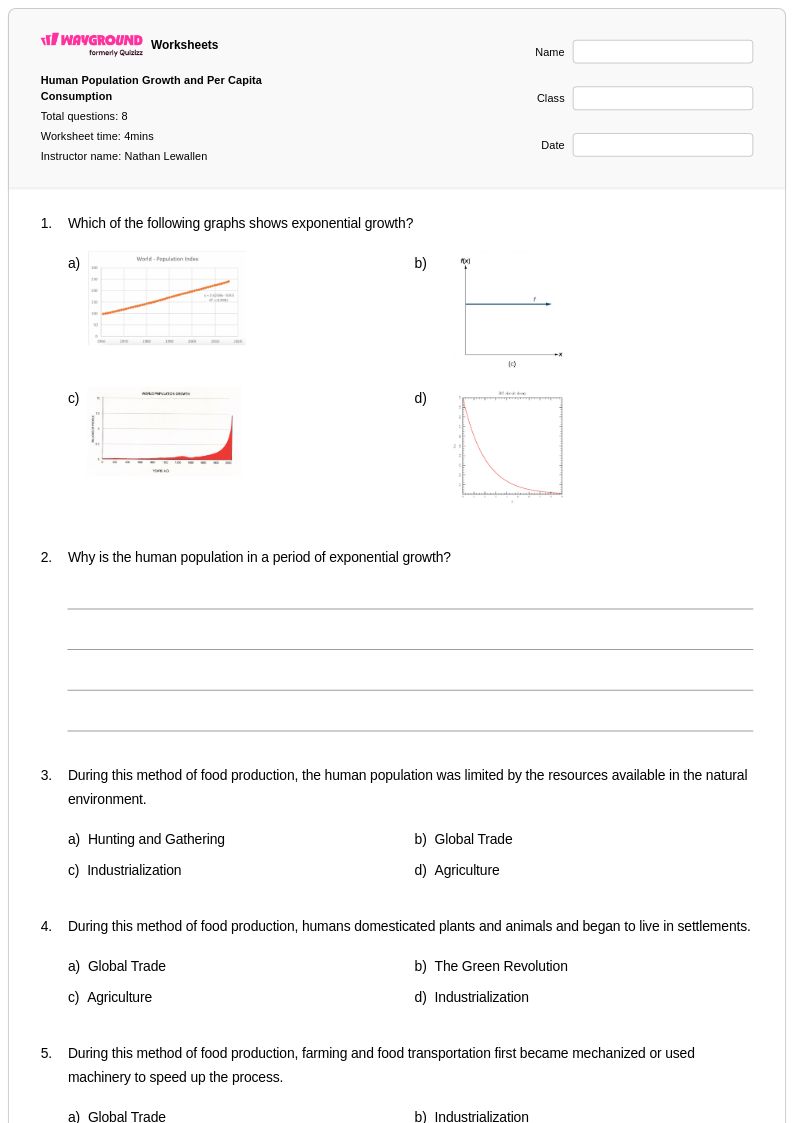
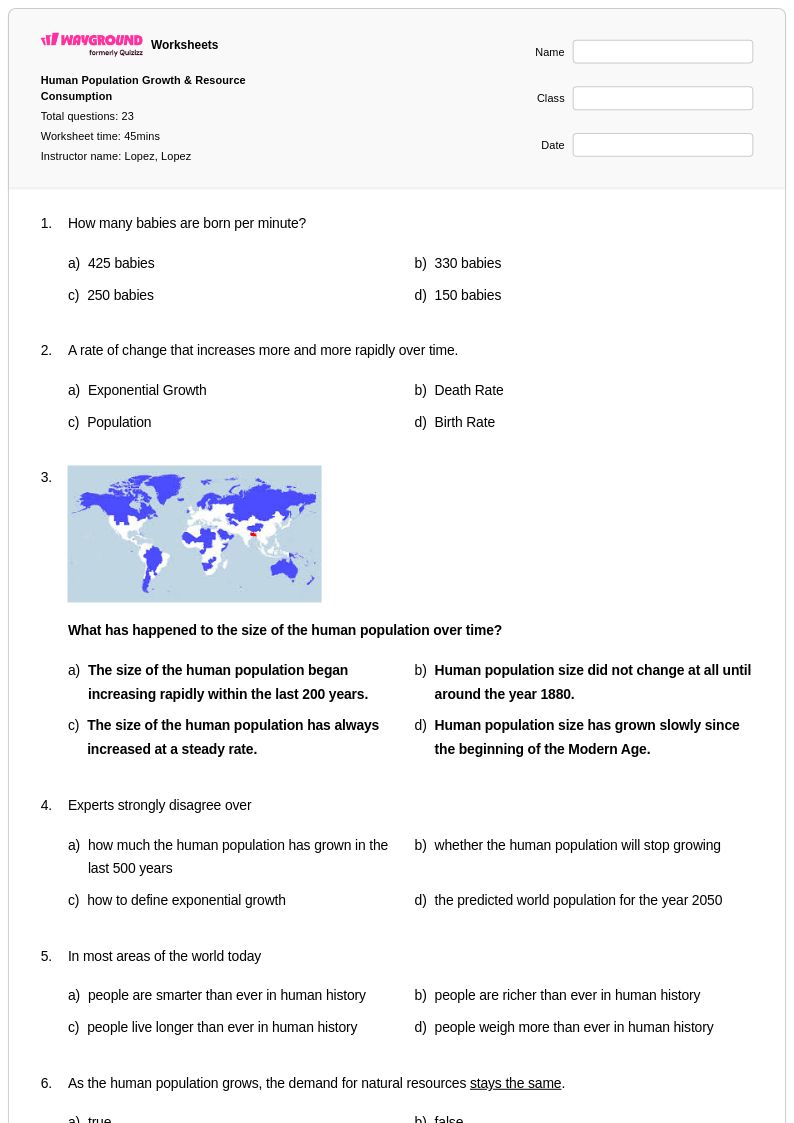
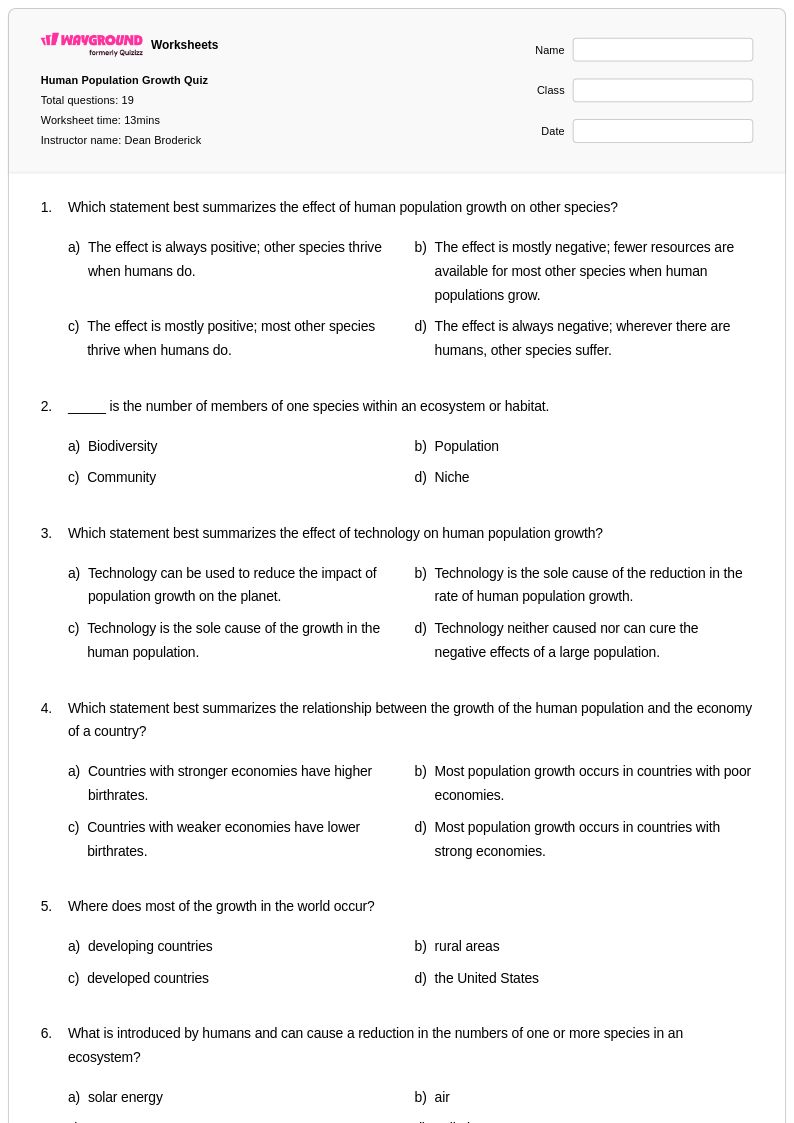
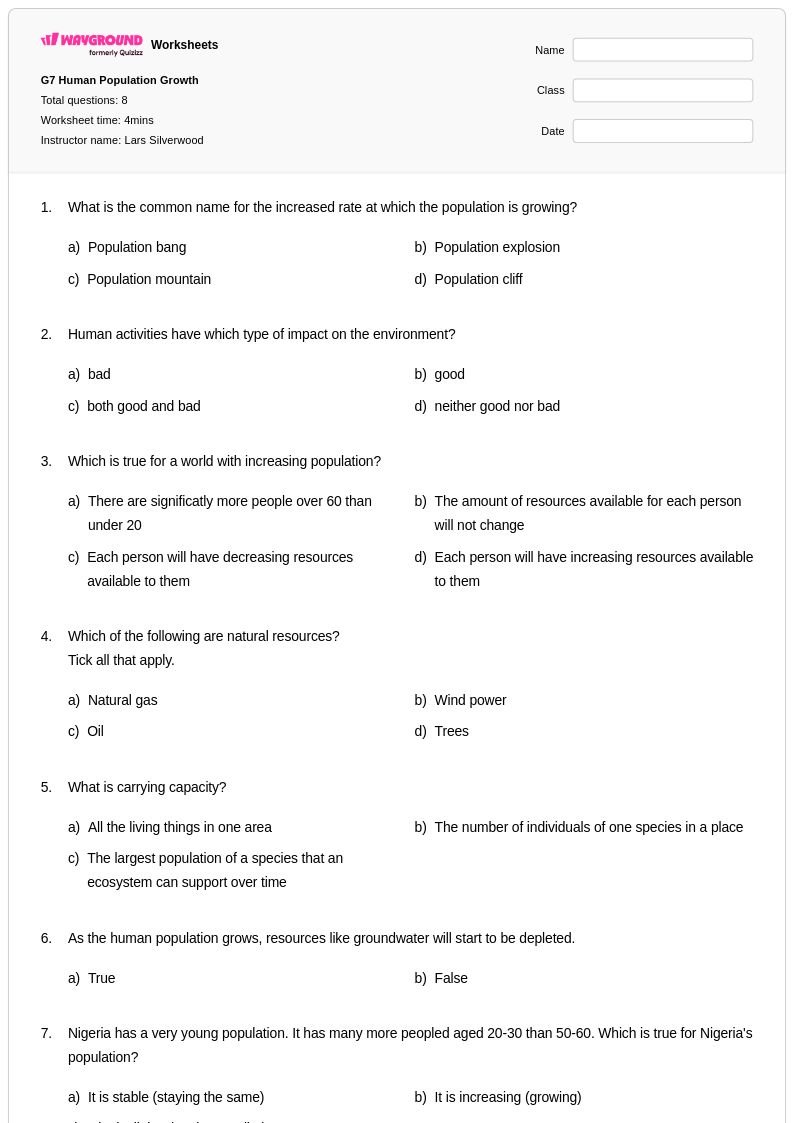
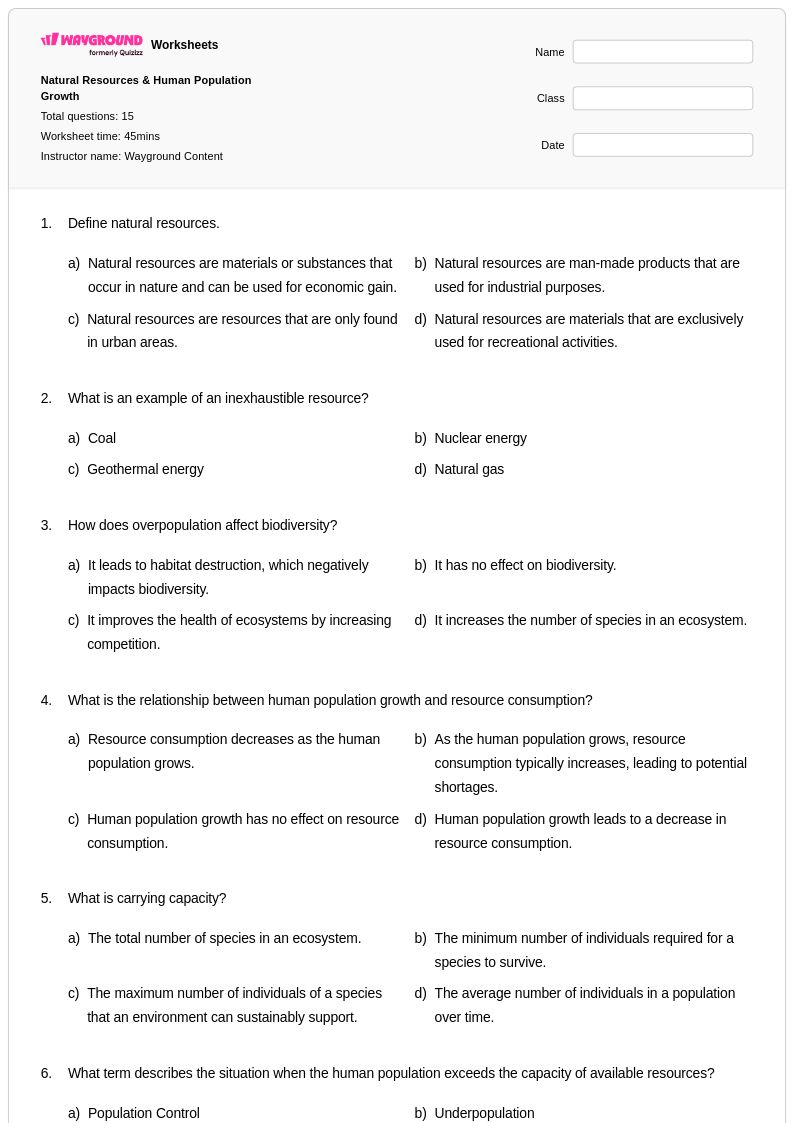
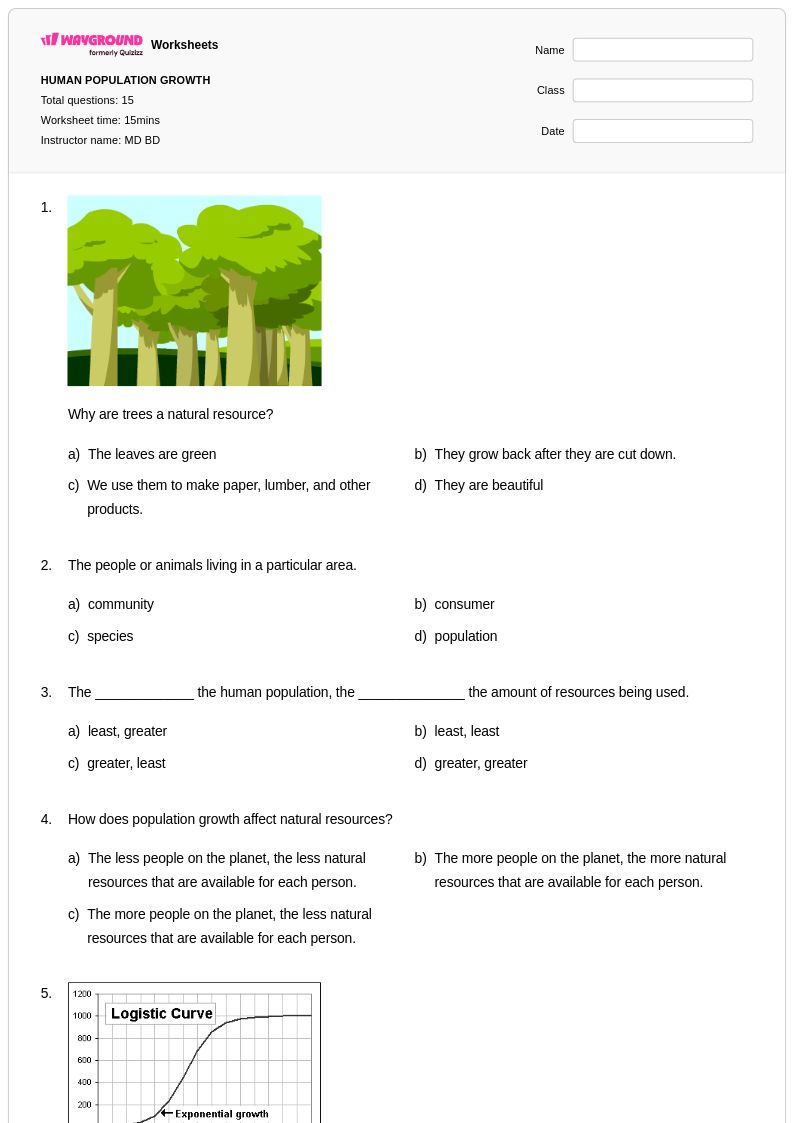
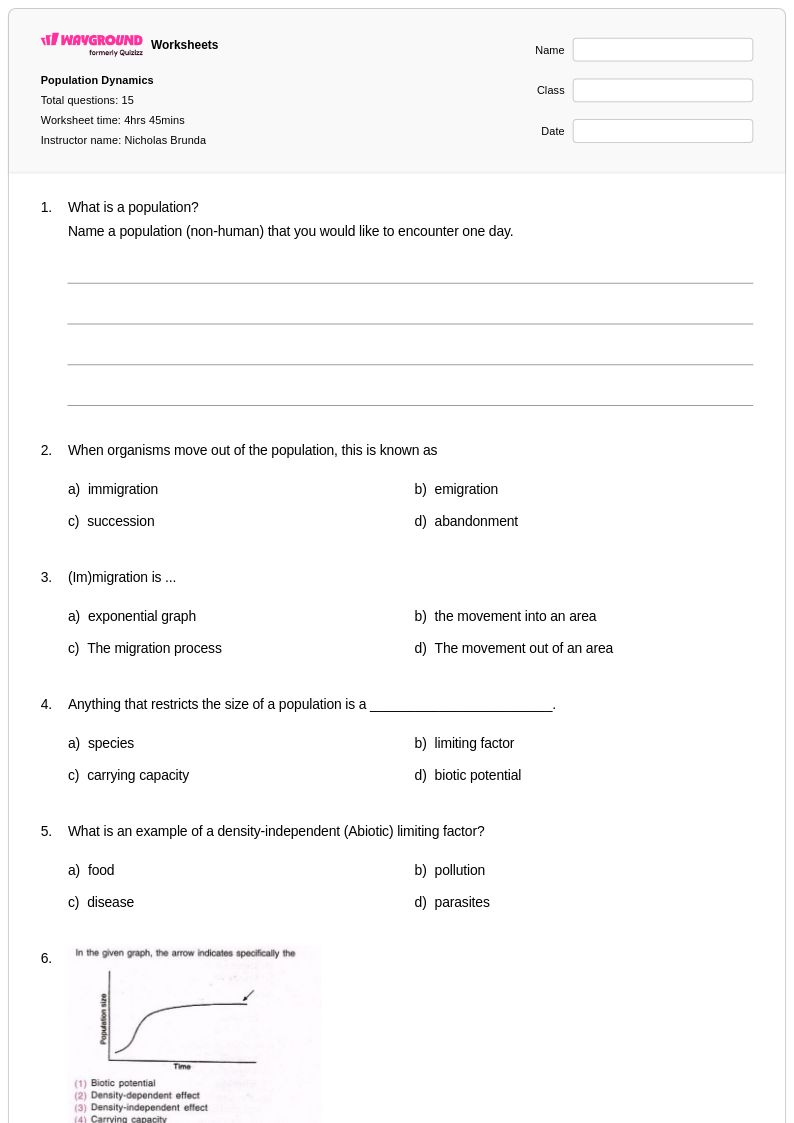
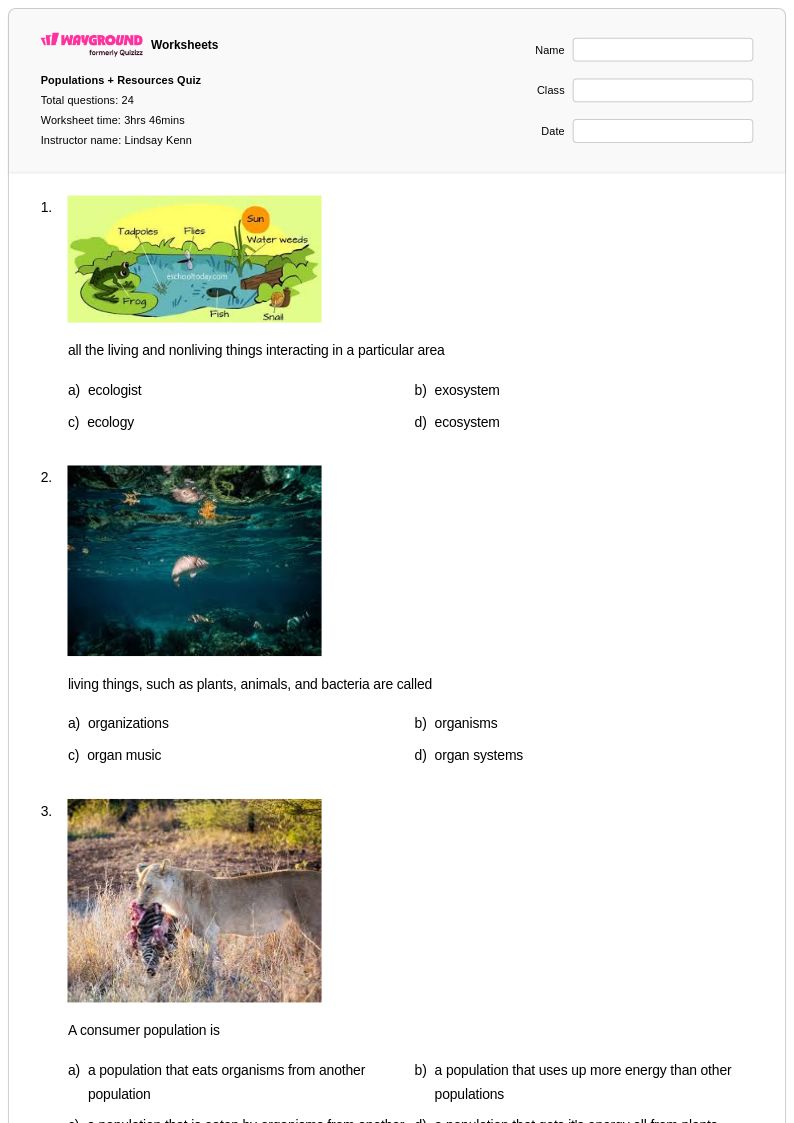
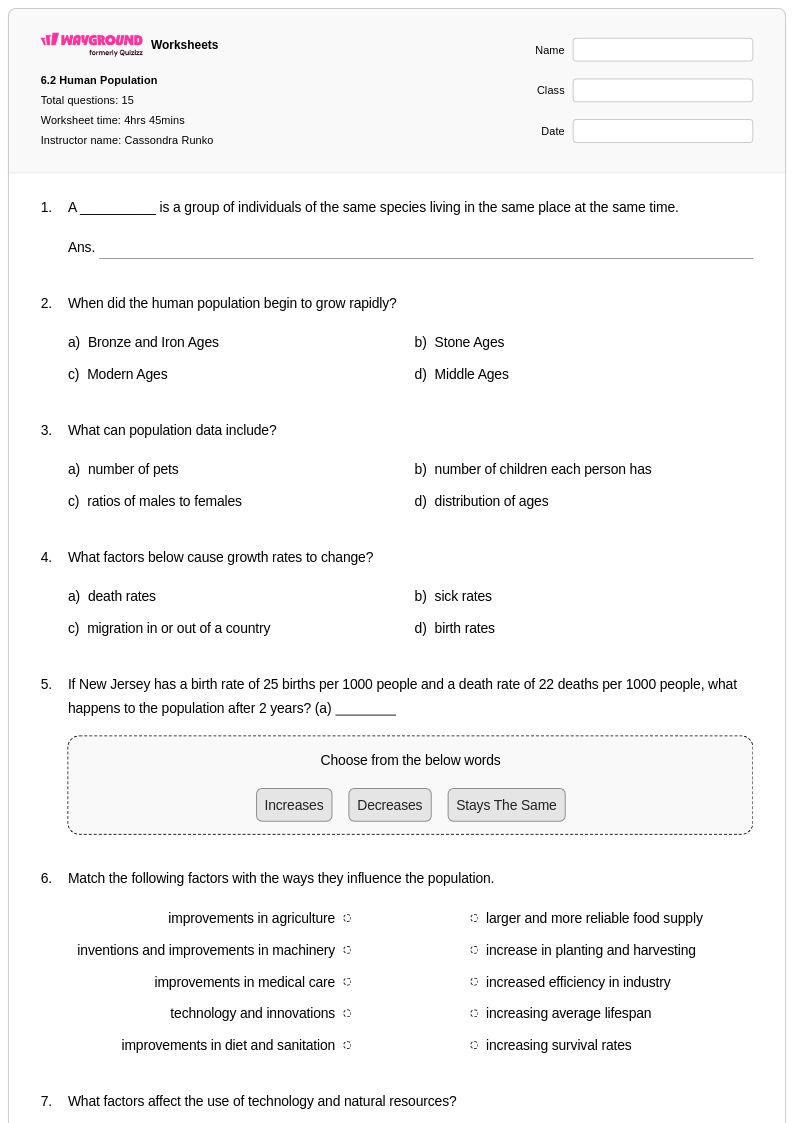
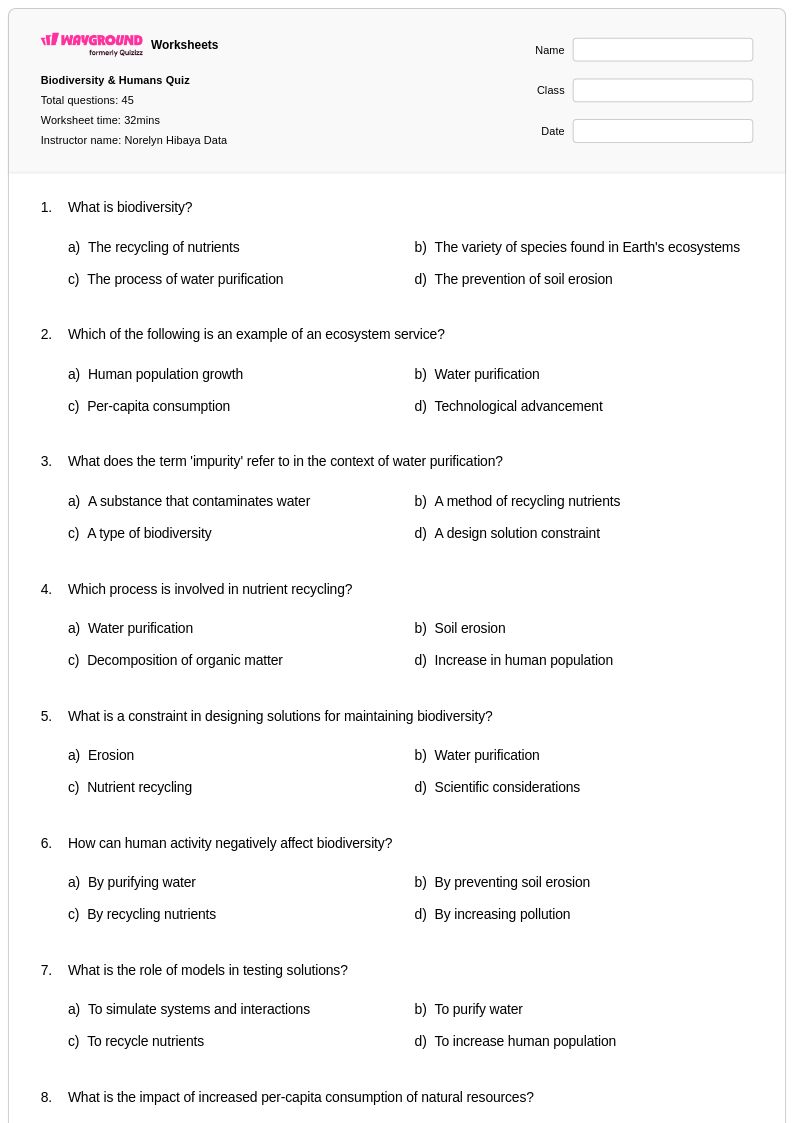
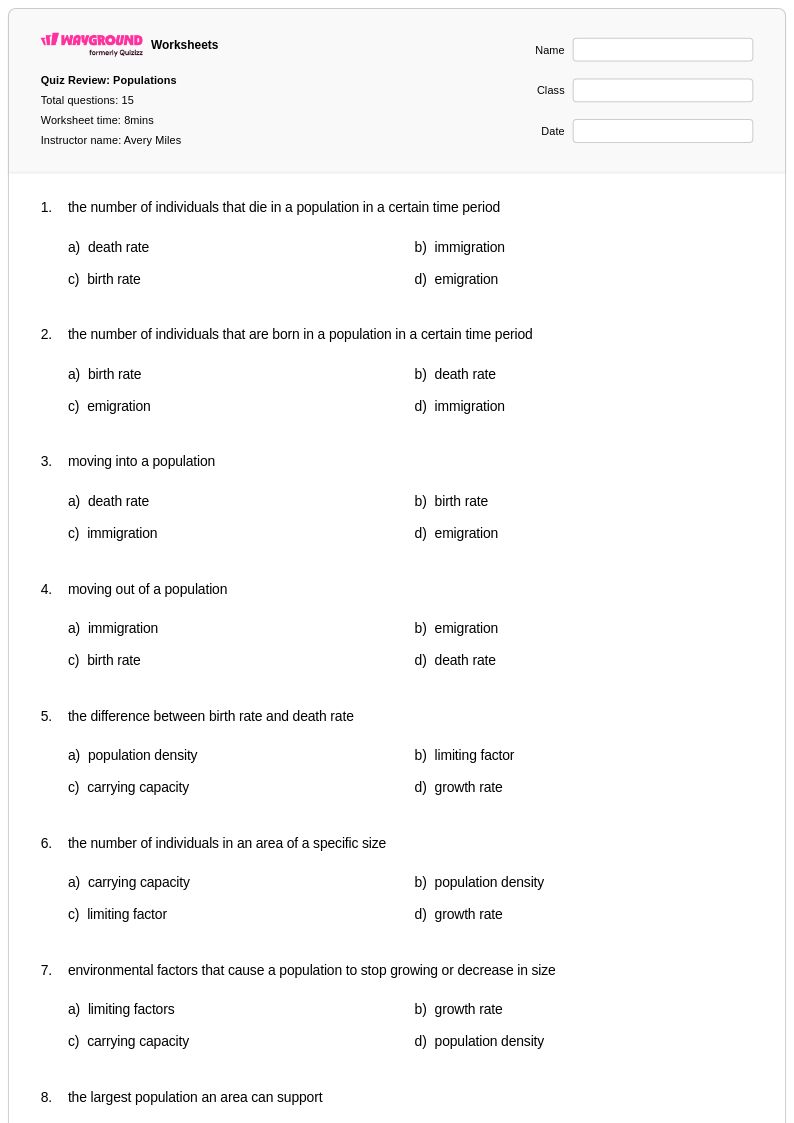
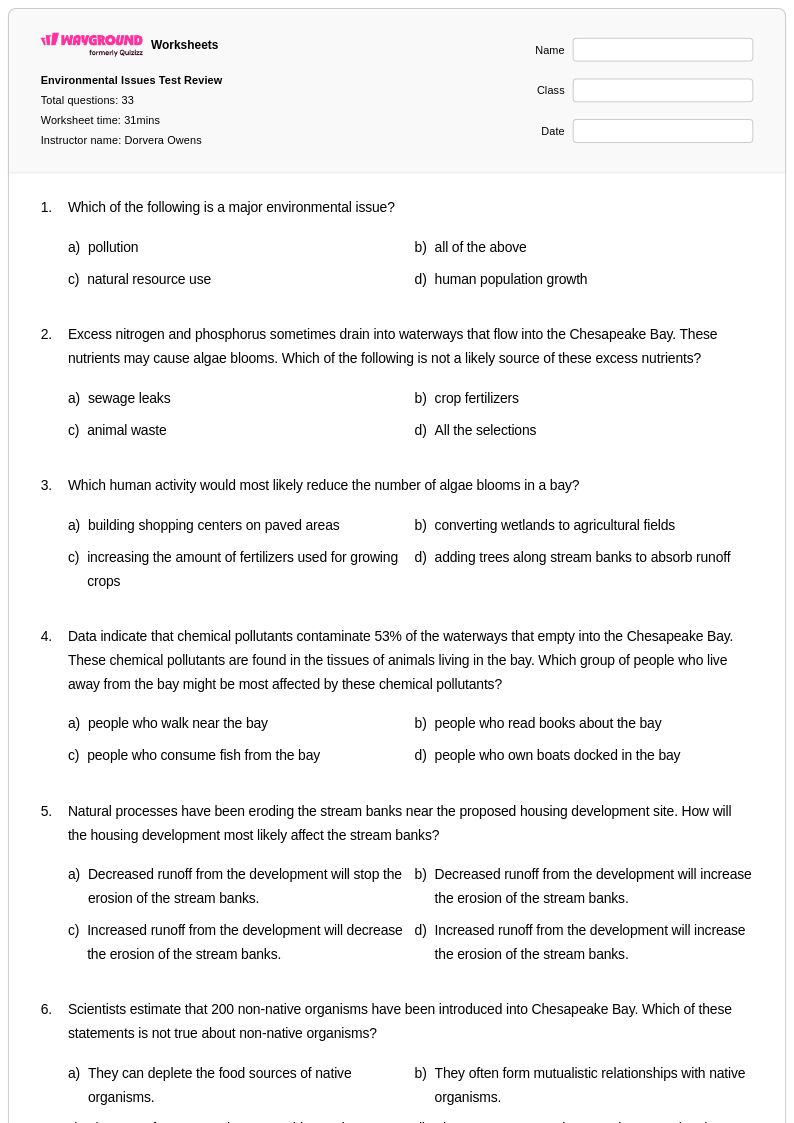
Human population growth worksheets for Grade 7 students through Wayground (formerly Quizizz) provide comprehensive practice with analyzing demographic trends, understanding carrying capacity, and exploring the environmental impacts of expanding human populations. These carefully designed resources strengthen critical thinking skills as students examine population pyramids, calculate growth rates, and investigate the relationship between population density and resource availability. The worksheets include practice problems that challenge students to interpret real-world data about birth rates, death rates, and migration patterns while developing their ability to predict future population scenarios. Each worksheet comes with a detailed answer key and is available as a free printable pdf, making it easy for educators to incorporate meaningful demographic analysis into their Earth and Space Science curriculum.
Wayground (formerly Quizizz) supports teachers with an extensive collection of millions of teacher-created human population growth resources that can be easily accessed through powerful search and filtering tools designed specifically for Grade 7 Earth and Space Science instruction. The platform's standards alignment ensures that worksheets meet curriculum requirements while differentiation tools allow educators to customize content complexity for diverse learners. Teachers can seamlessly switch between printable pdf formats for traditional classroom use and digital versions for interactive learning experiences, making lesson planning more flexible and efficient. These comprehensive resources prove invaluable for targeted skill practice, remediation of challenging demographic concepts, and enrichment activities that deepen students' understanding of how human population dynamics affect Earth's systems and natural resources.
FAQs
How do I teach human population growth in a science class?
Teaching human population growth is most effective when students move from abstract numbers to real-world consequences. Start with the demographic transition model to show how birth and death rates shift as societies develop, then layer in concepts like carrying capacity and exponential versus logistic growth. Connecting population data to outcomes like resource depletion, urbanization, and ecosystem stress gives students a concrete framework for understanding why these trends matter.
What exercises help students practice analyzing population growth data?
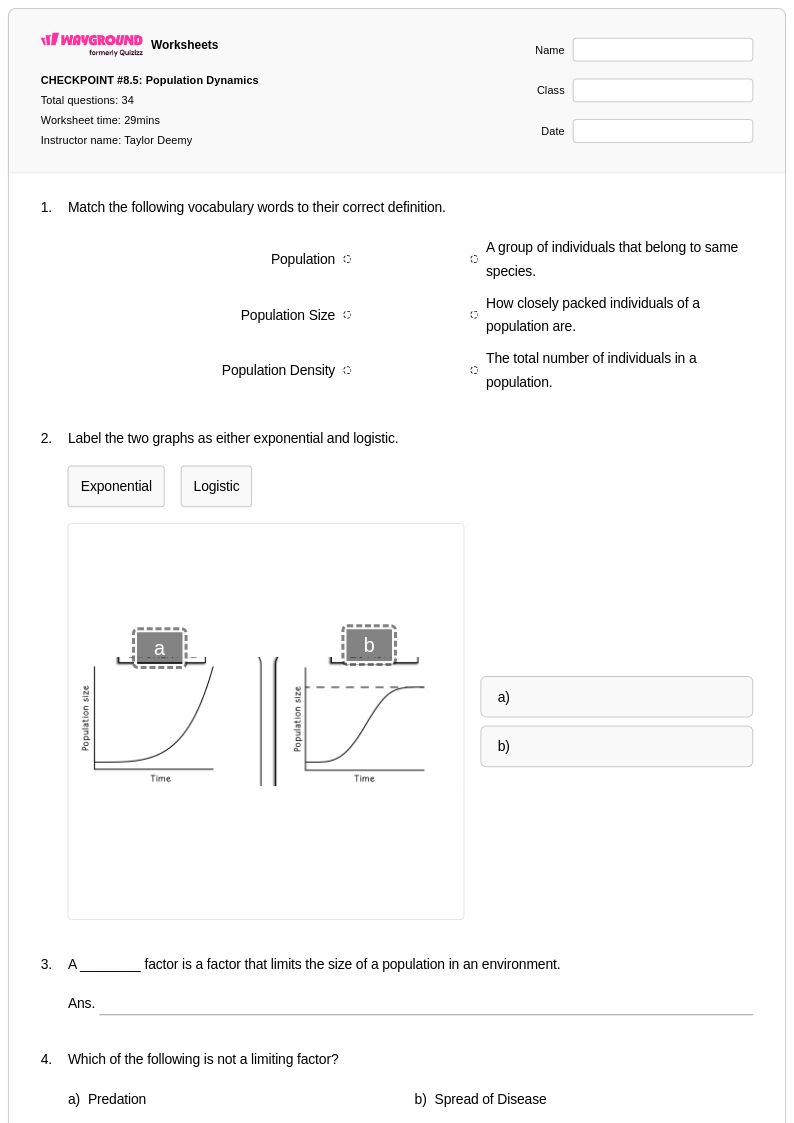
Practice problems that ask students to calculate doubling time, interpret J-curves and S-curves, and compare birth and death rates across countries build strong quantitative skills. Worksheets that present real demographic data and ask students to identify growth stages or predict future trends push beyond rote recall into genuine analysis. Mixing graph interpretation with short-answer questions ensures students can both read data and explain its implications.
What common mistakes do students make when learning about human population growth?
A frequent misconception is confusing population growth rate with total population size — students often assume the country with the most people is growing fastest, when in fact growth rate and absolute size are independent measures. Students also commonly conflate carrying capacity with a fixed number rather than understanding it as a dynamic threshold influenced by technology and resource use. Another error is treating exponential growth as indefinitely sustainable rather than recognizing the environmental and resource limits that drive logistic growth patterns.
How do I differentiate human population growth lessons for students at different skill levels?
For students who need additional support, simplifying data sets and reducing the number of variables in population problems can lower cognitive load without removing rigor. More advanced students benefit from open-ended tasks that ask them to evaluate competing models or assess the validity of population projections using current data. On Wayground, teachers can apply accommodations such as reduced answer choices or read-aloud support to individual students, ensuring that differentiation happens at the student level without disrupting the rest of the class.
How can I use Wayground's human population growth worksheets in my classroom?
Wayground's human population growth worksheets are available as printable PDFs for traditional classroom use and in digital formats for technology-integrated environments, making them adaptable for in-person, hybrid, or remote instruction. Teachers can also host worksheets directly as a quiz on Wayground, enabling real-time student responses and immediate feedback. Each worksheet includes a complete answer key, so they work equally well for guided practice, independent review, or assignment preparation.
How does human population growth connect to environmental science standards?
Human population growth is a foundational concept in environmental science because it links directly to resource consumption, habitat loss, climate change, and biodiversity decline — all of which appear prominently in state and national science standards. Understanding demographic trends helps students analyze cause-and-effect relationships in Earth systems, which is a core practice in Next Generation Science Standards (NGSS). Worksheets that integrate population data with ecosystem impact scenarios are particularly effective for building the cross-disciplinary reasoning these standards require.