Free Printable Hydrologic Cycle Worksheets for Grade 2
Explore Grade 2 hydrologic cycle worksheets and free printables from Wayground that help students learn about water's journey through evaporation, condensation, and precipitation with engaging practice problems and answer keys.
Explore printable Hydrologic Cycle worksheets for Grade 2
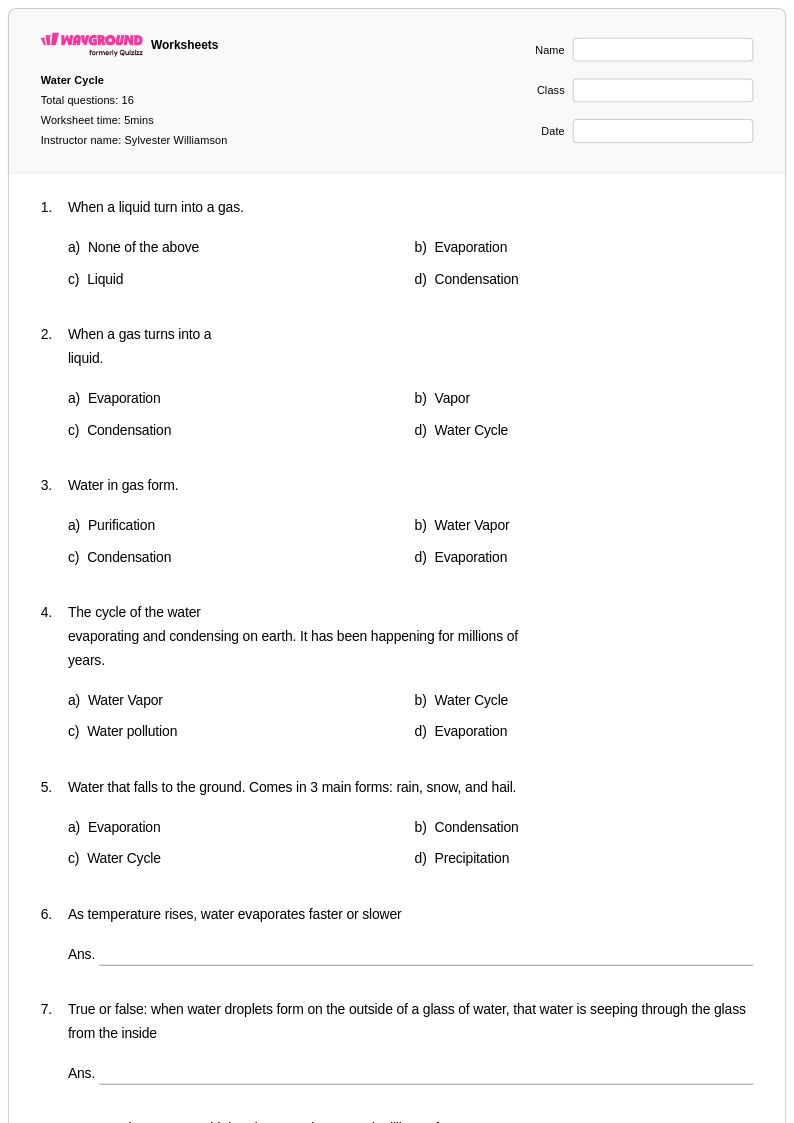
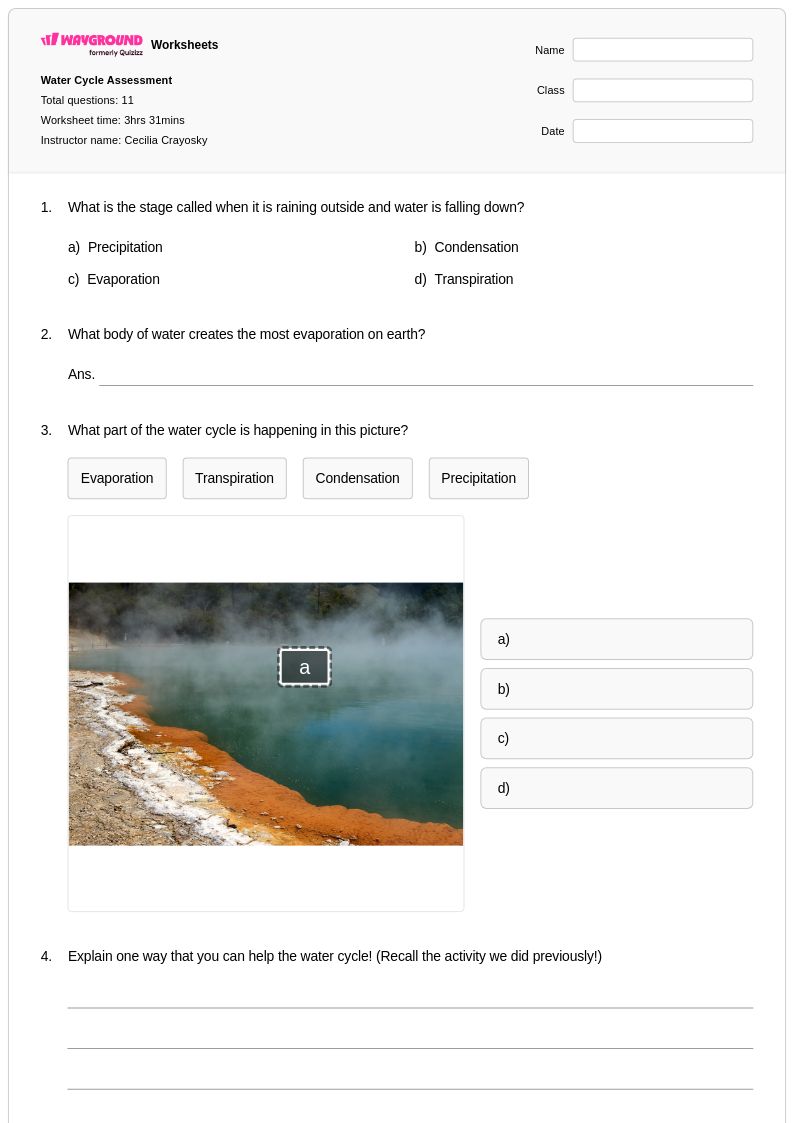
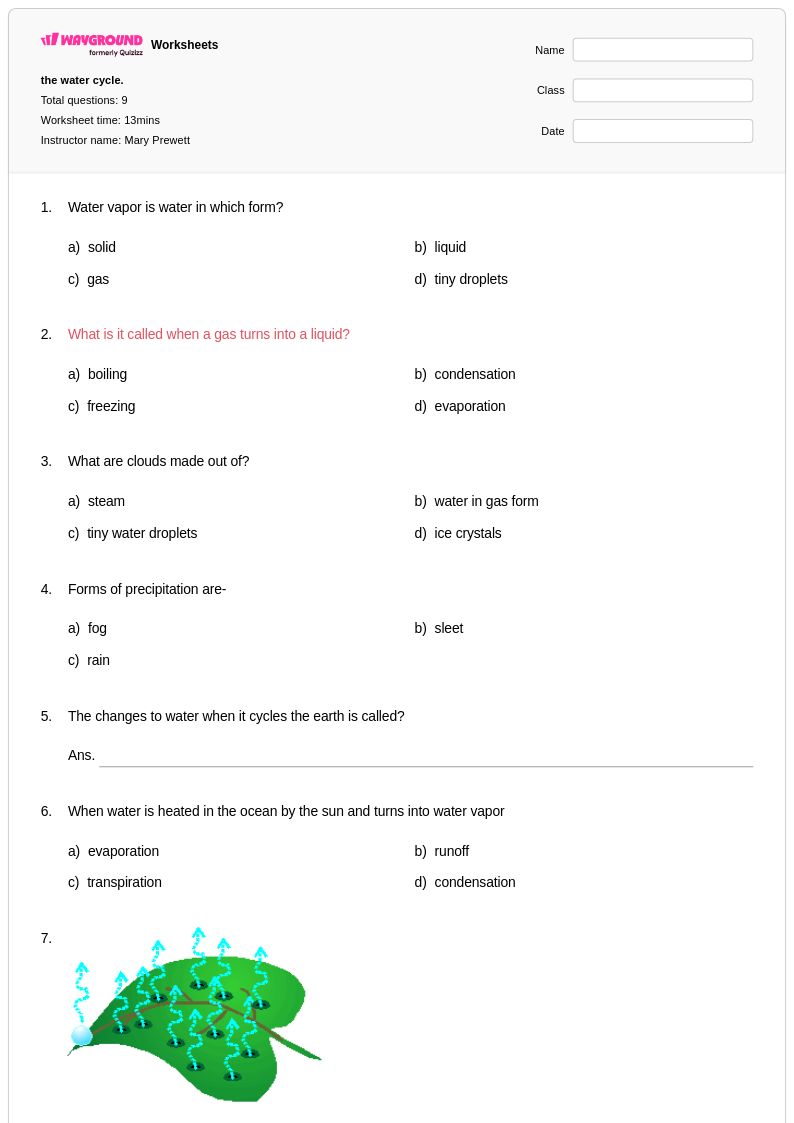
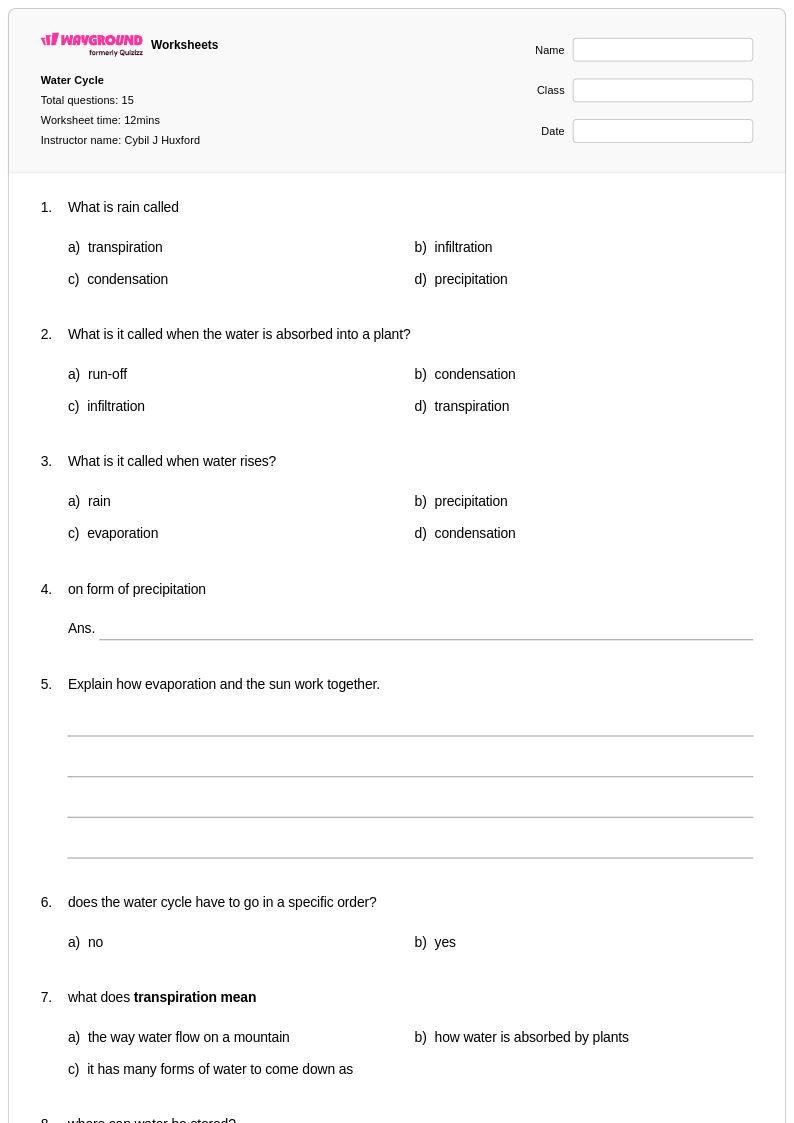
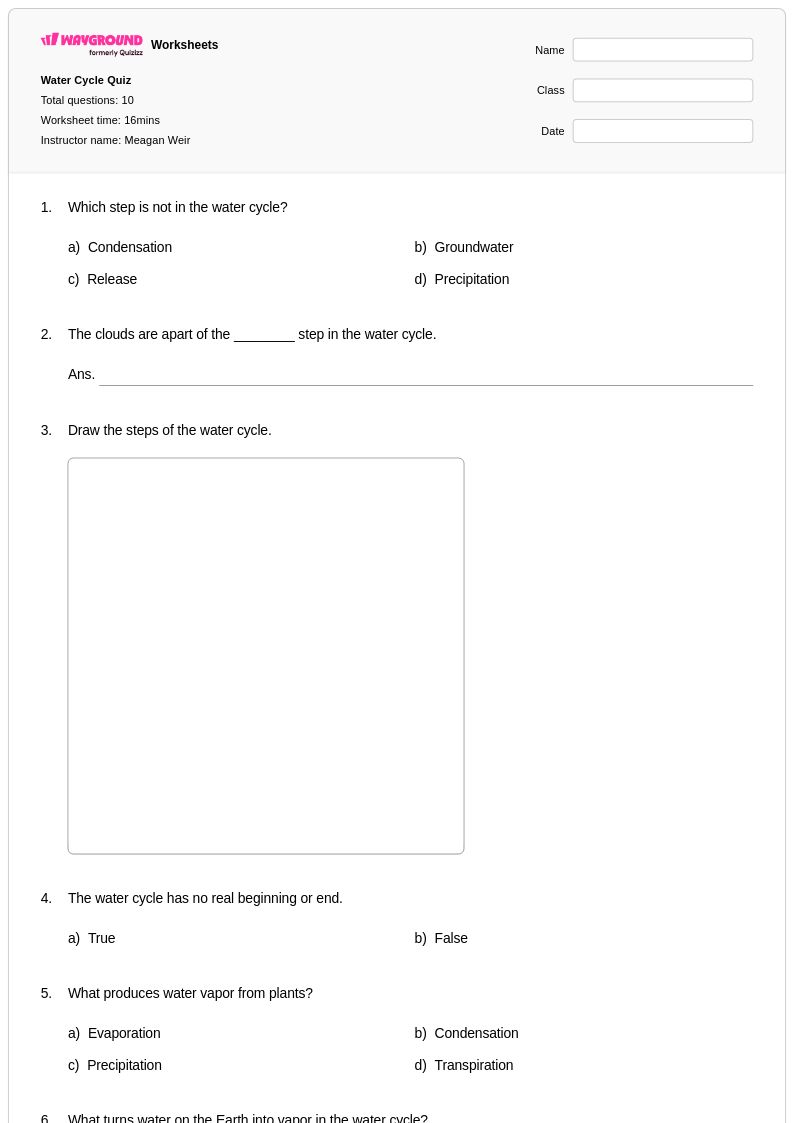
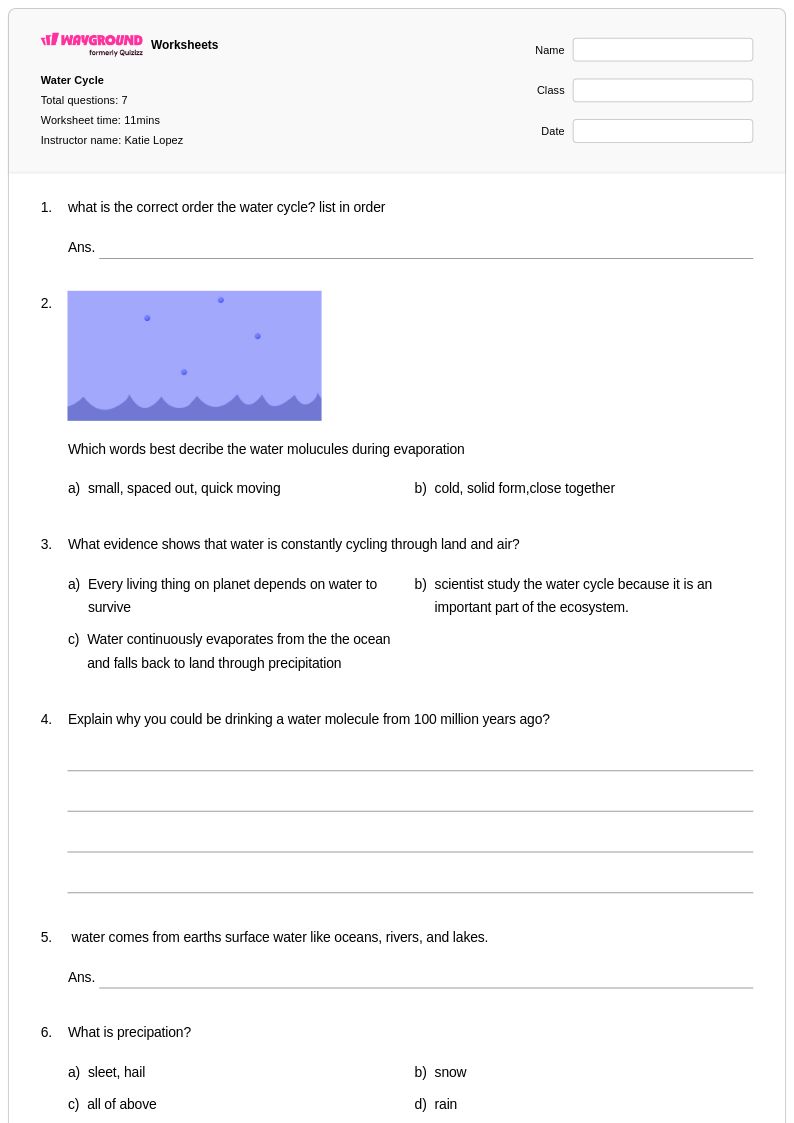
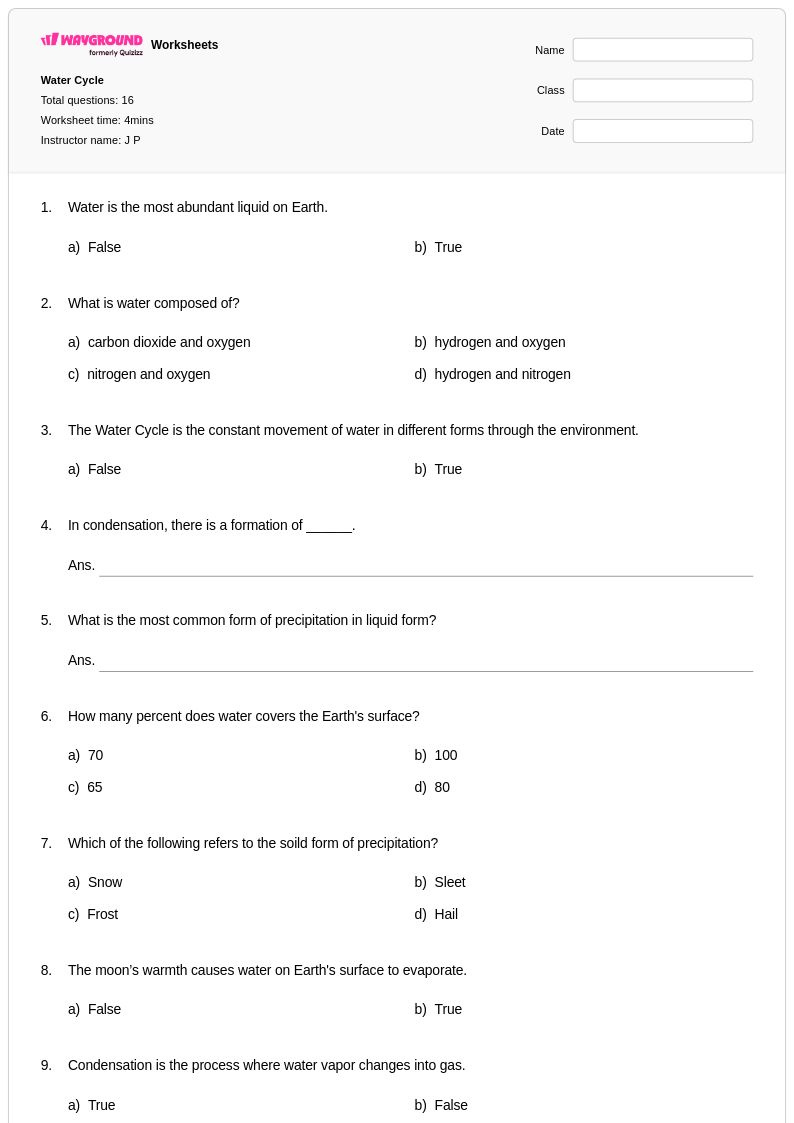
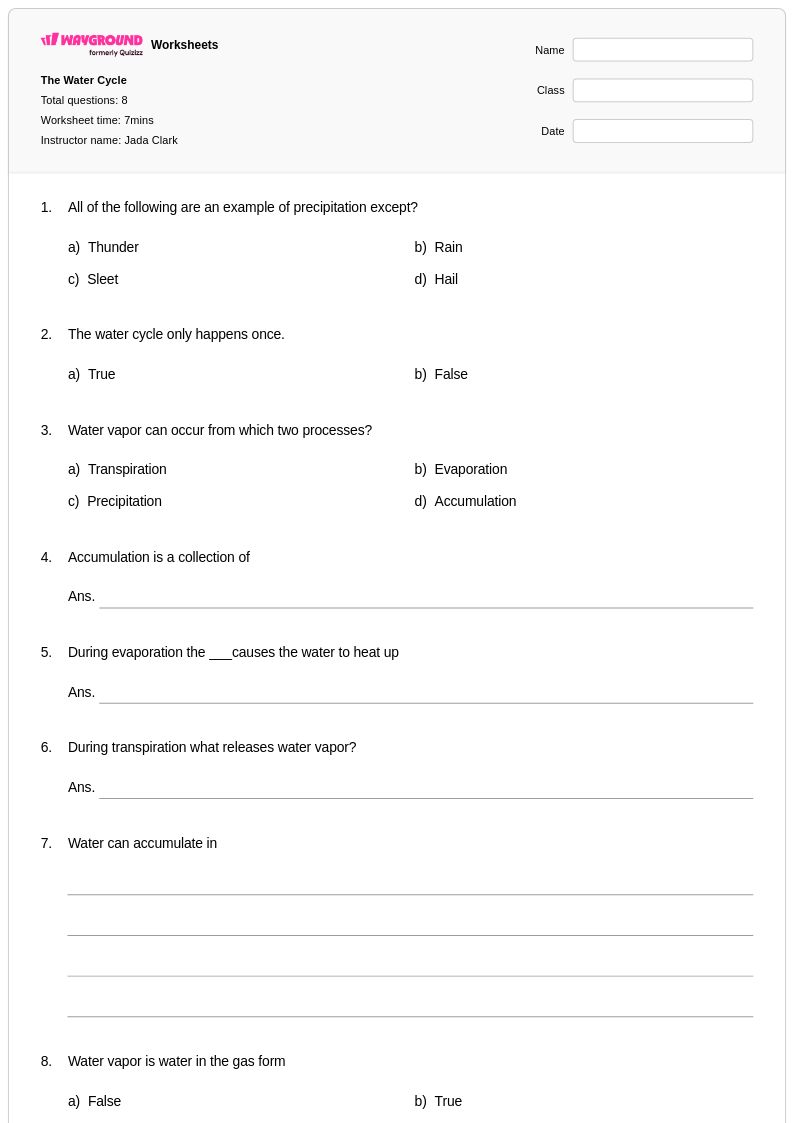
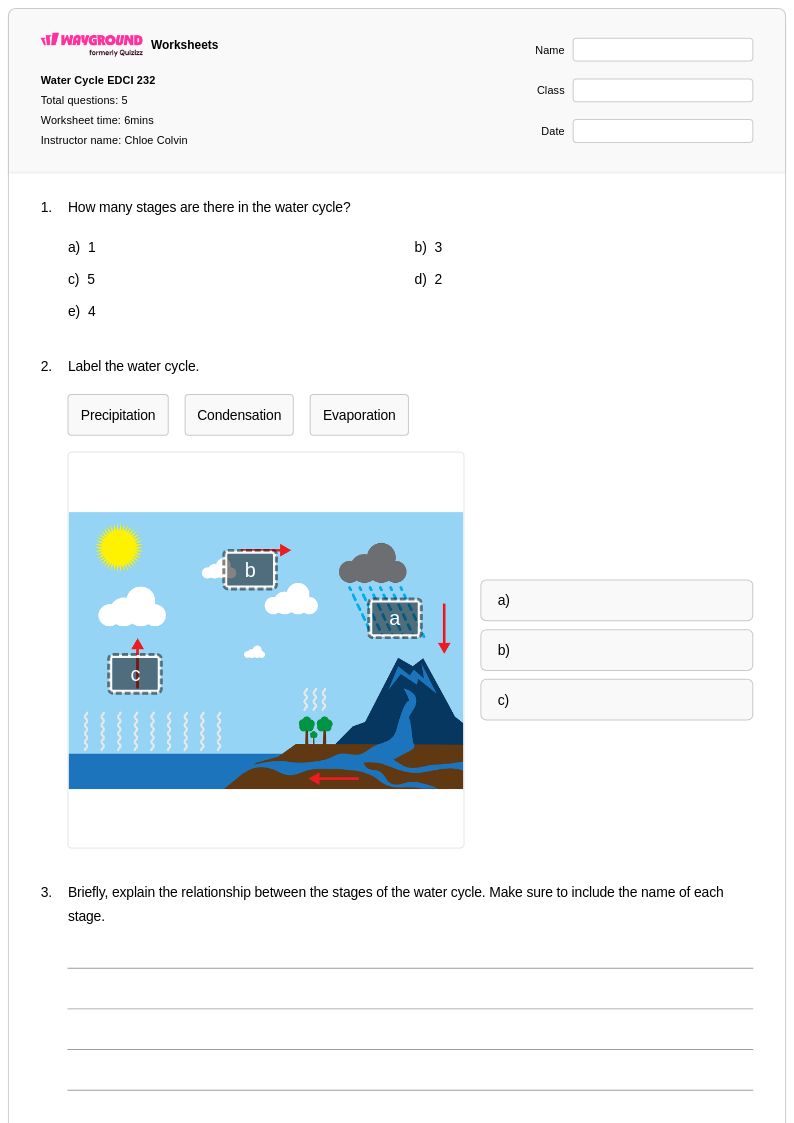
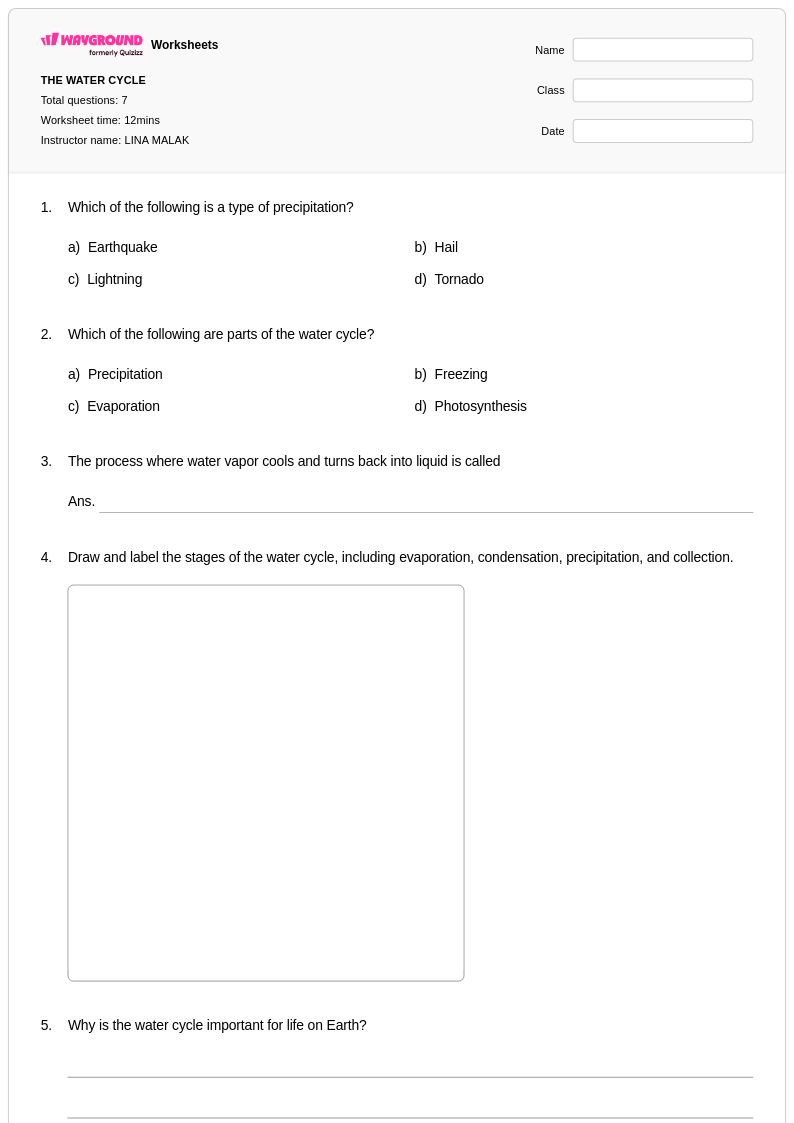
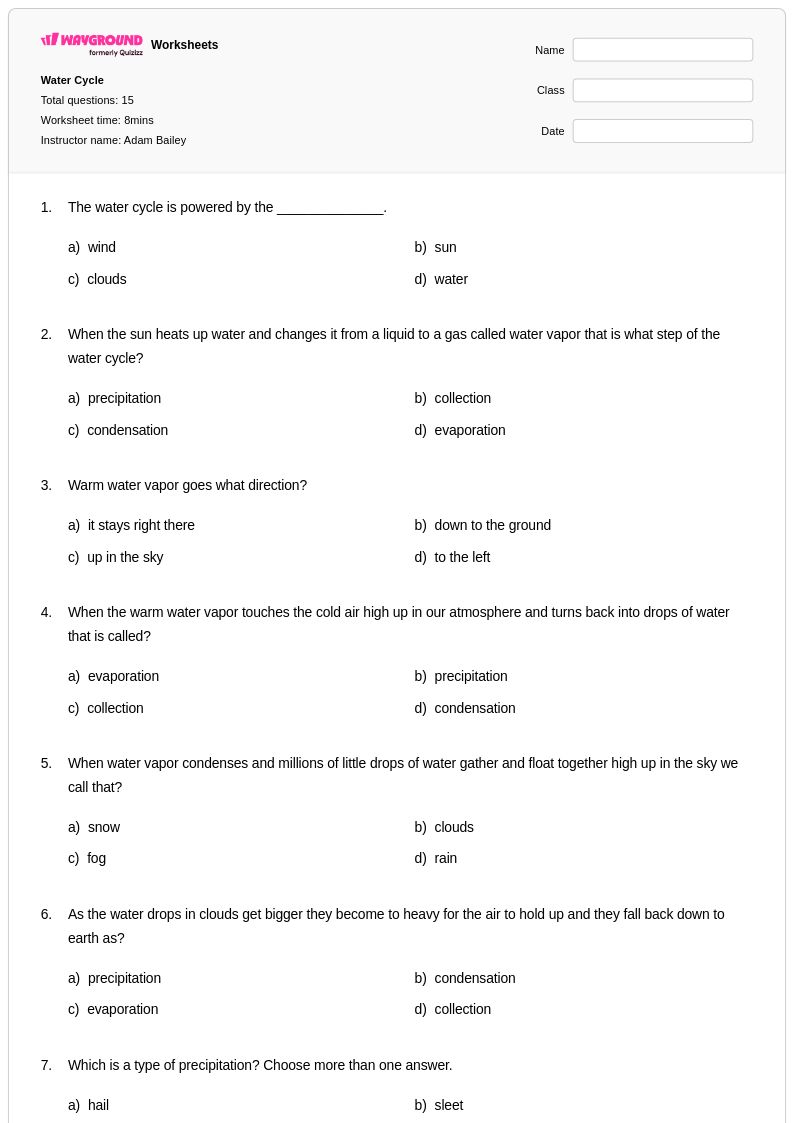
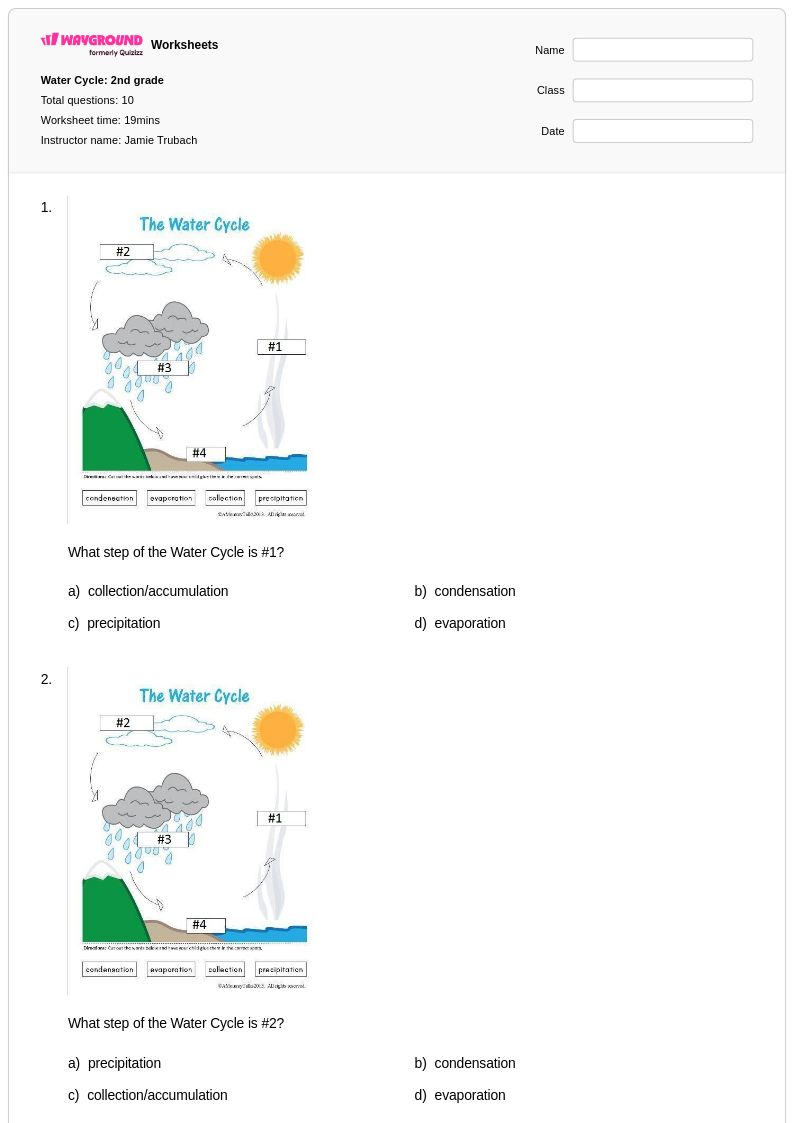
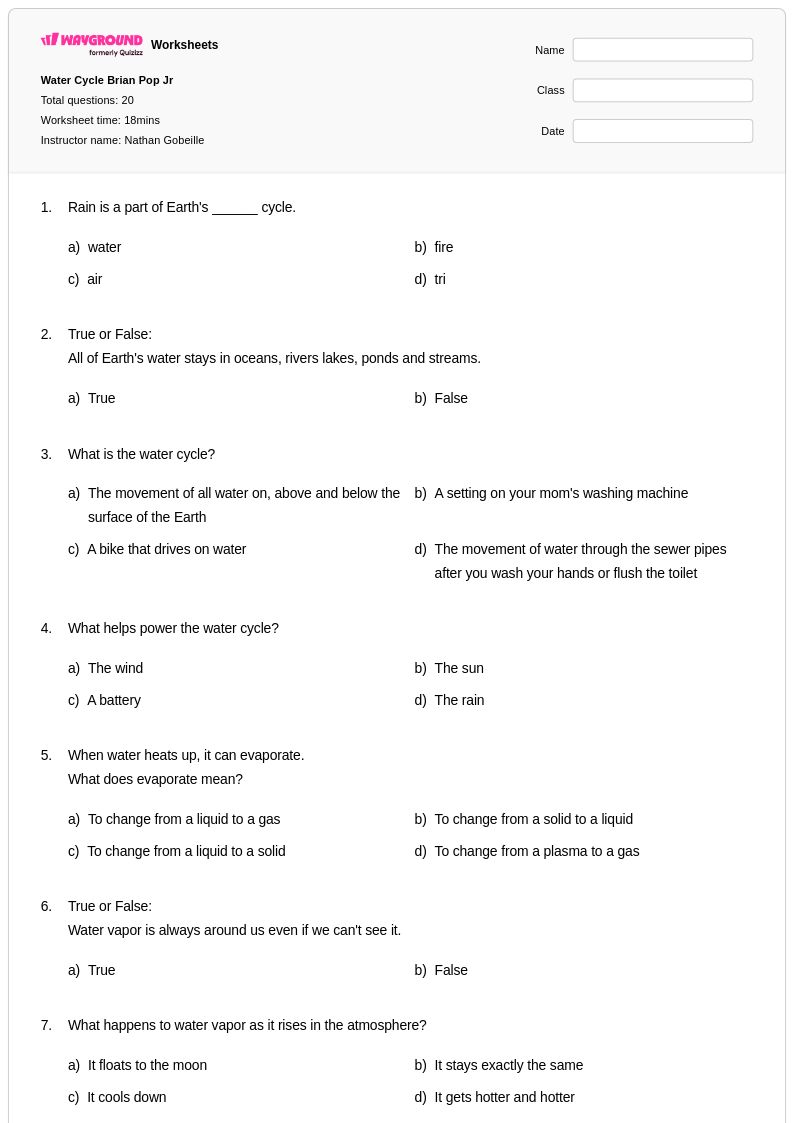
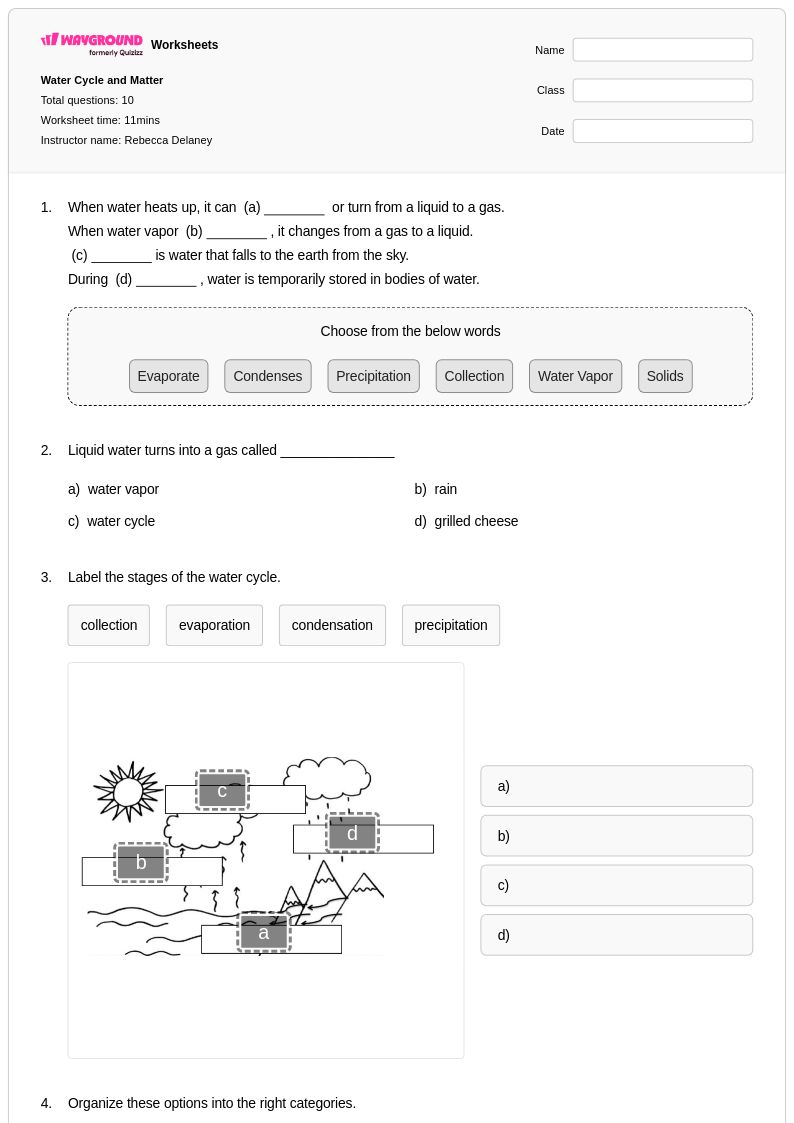
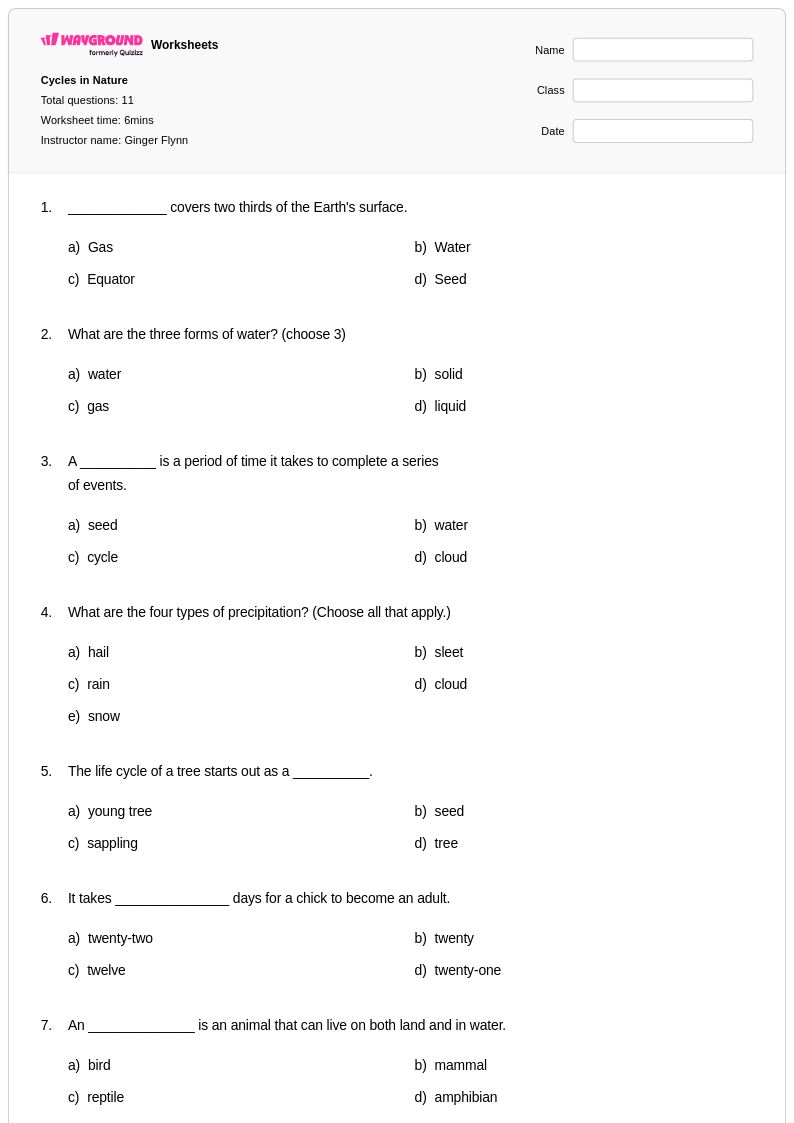
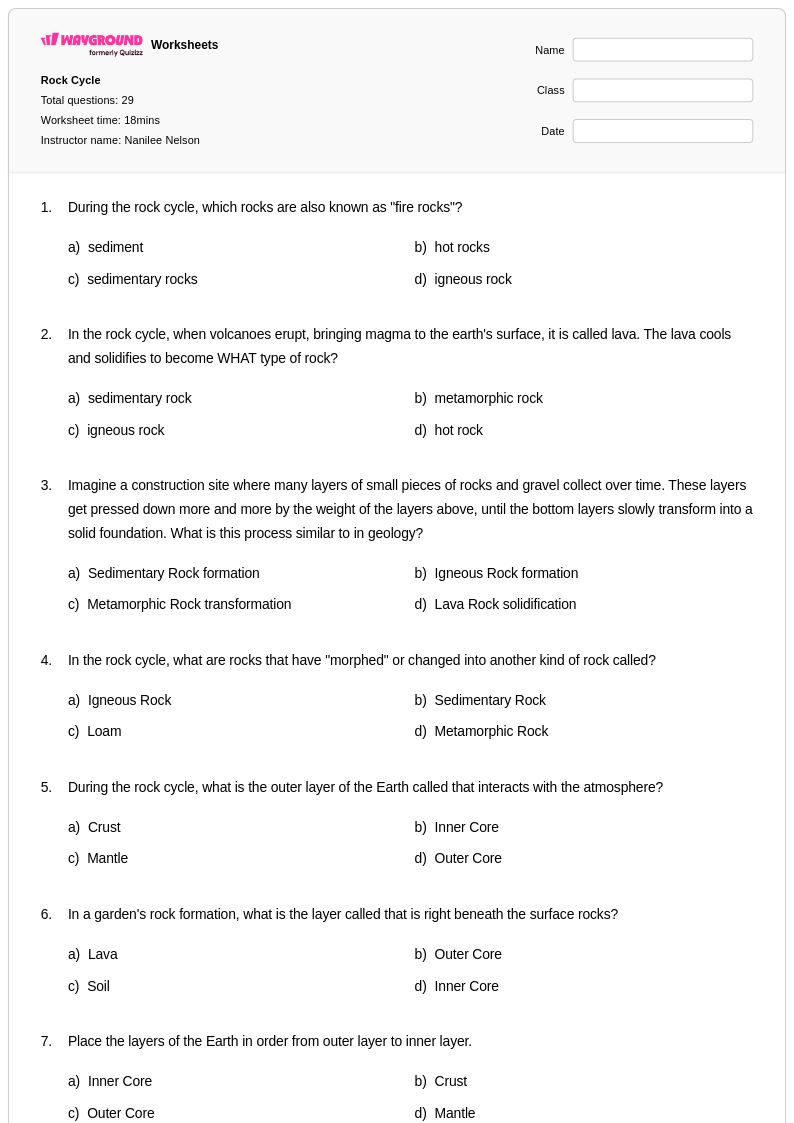
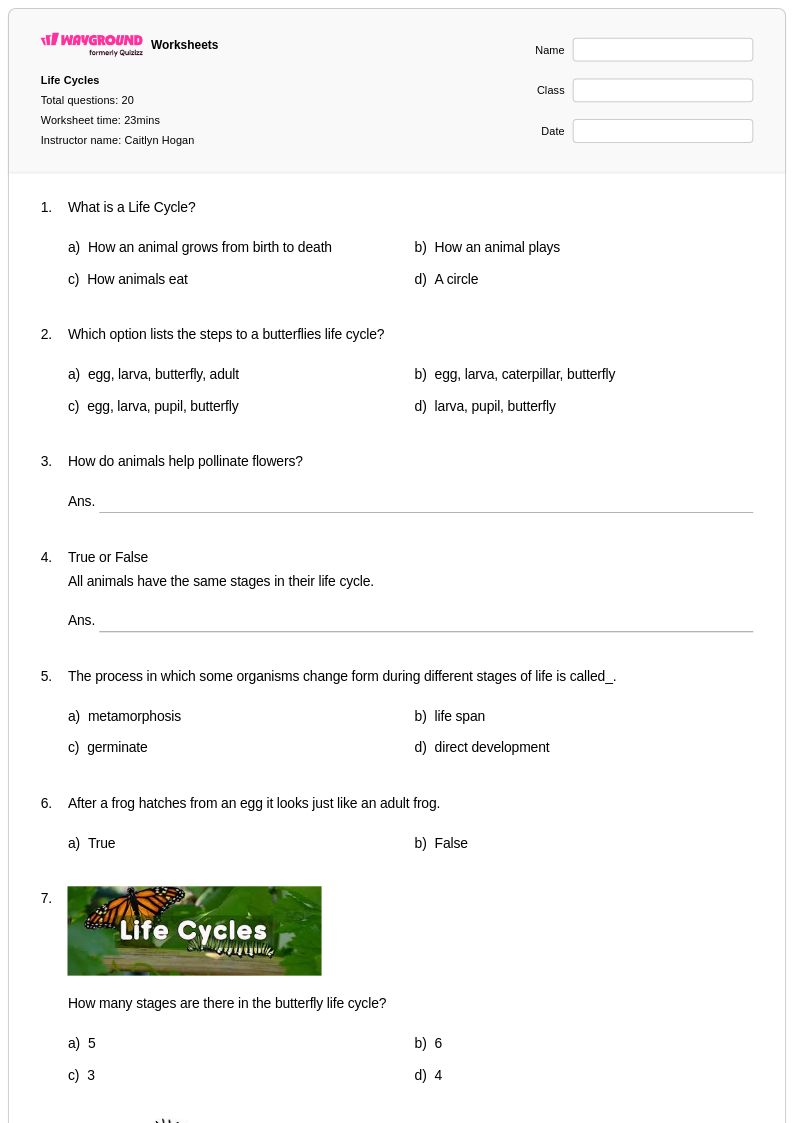
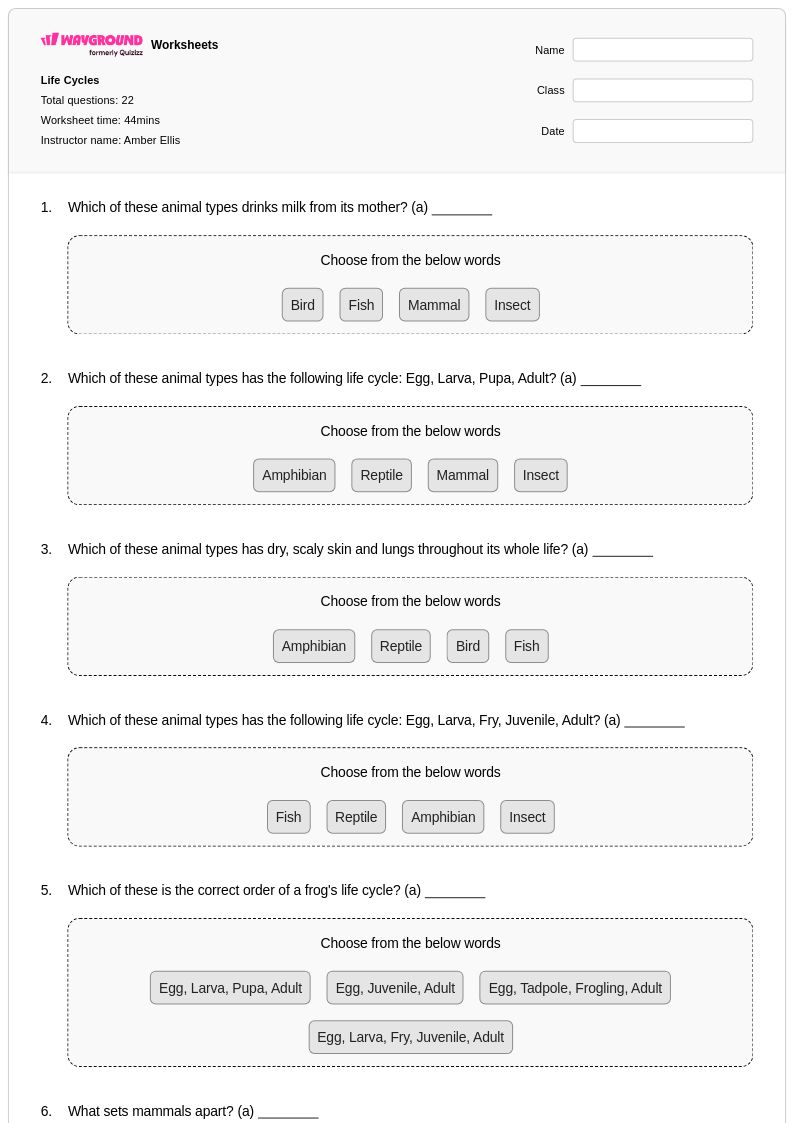
Hydrologic cycle worksheets for Grade 2 students available through Wayground (formerly Quizizz) provide young learners with engaging opportunities to explore how water moves through Earth's systems in age-appropriate ways. These carefully designed resources help second graders develop foundational understanding of evaporation, condensation, and precipitation through visual activities, simple diagrams, and hands-on practice problems that make complex scientific concepts accessible. The worksheet collection strengthens observational skills, scientific vocabulary development, and critical thinking abilities as students learn to identify different stages of the water cycle in everyday situations. Each printable resource includes comprehensive answer keys and is available as free pdf downloads, making it easy for educators to implement effective science instruction that builds essential earth and space science knowledge.
Wayground (formerly Quizizz) supports teachers with an extensive collection of millions of teacher-created hydrologic cycle resources specifically curated for elementary science education. The platform's robust search and filtering capabilities allow educators to quickly locate materials that align with specific learning standards and match their students' developmental needs, while differentiation tools enable seamless customization for diverse learning styles and abilities. Teachers can access these materials in both printable and digital pdf formats, providing flexibility for classroom instruction, homework assignments, and independent study sessions. These comprehensive worksheet collections serve multiple educational purposes, from introducing new concepts during initial instruction to providing targeted practice for skill reinforcement, remediation support for struggling learners, and enrichment opportunities for advanced students ready to explore water cycle concepts in greater depth.
FAQs
How do I teach the hydrologic cycle to students?
Start by grounding students in the key processes — evaporation, condensation, precipitation, infiltration, and runoff — before connecting them into a continuous system. Using diagrams that require students to label and trace water molecules through each stage helps build conceptual understanding rather than rote memorization. Pairing visual activities with real-world examples, such as how drought or urbanization disrupts natural water movement, gives students meaningful context for why the cycle matters.
What exercises help students practice the hydrologic cycle?
Effective practice exercises include tracing water molecule pathways through labeled diagrams, analyzing energy transfers that drive evaporation and condensation, and answering scenario-based questions about how human activities like deforestation or dam construction alter natural water movement. Worksheets that combine diagram labeling with short-answer analysis push students beyond identification toward genuine process understanding.
What mistakes do students commonly make when learning the hydrologic cycle?
A common misconception is that the cycle has a fixed starting point, when in reality it is continuous with no single origin. Students also frequently confuse condensation with precipitation, or fail to account for infiltration and groundwater as part of the cycle. Another frequent error is overlooking the role of energy — particularly solar radiation and gravity — as the forces that drive water movement between reservoirs.
How do hydrologic cycle worksheets help students understand water's movement through Earth's systems?
Hydrologic cycle worksheets reinforce understanding by requiring students to actively trace water through interconnected pathways rather than passively reading about them. Well-designed problems challenge students to analyze what happens to water at each stage, identify which processes transfer energy, and explain how disruptions in one part of the cycle affect others. This kind of structured practice builds the systems thinking needed to understand Earth science at a deeper level.
How can I use Wayground's hydrologic cycle worksheets in my classroom?
Wayground's hydrologic cycle worksheets are available as printable PDFs for traditional classroom use and in digital formats for technology-integrated learning environments, including the option to host them as a quiz directly on Wayground. This flexibility makes them suitable for whole-class instruction, independent practice, homework assignments, or remote learning. Teachers can also apply built-in accommodation settings — such as read aloud, extended time, or reduced answer choices — to support students with diverse learning needs without disrupting the rest of the class.
How can I differentiate hydrologic cycle instruction for students at different skill levels?
For foundational learners, start with simplified diagrams that focus on the four or five primary processes before introducing energy transfers or human impacts. Advanced students can be challenged with scenario-based questions that require them to predict how changes like increased greenhouse temperatures or urban sprawl affect precipitation patterns and groundwater recharge. On Wayground, teachers can assign accommodations such as reduced answer choices or read aloud to individual students, ensuring all learners access the same content at an appropriate level of support.