
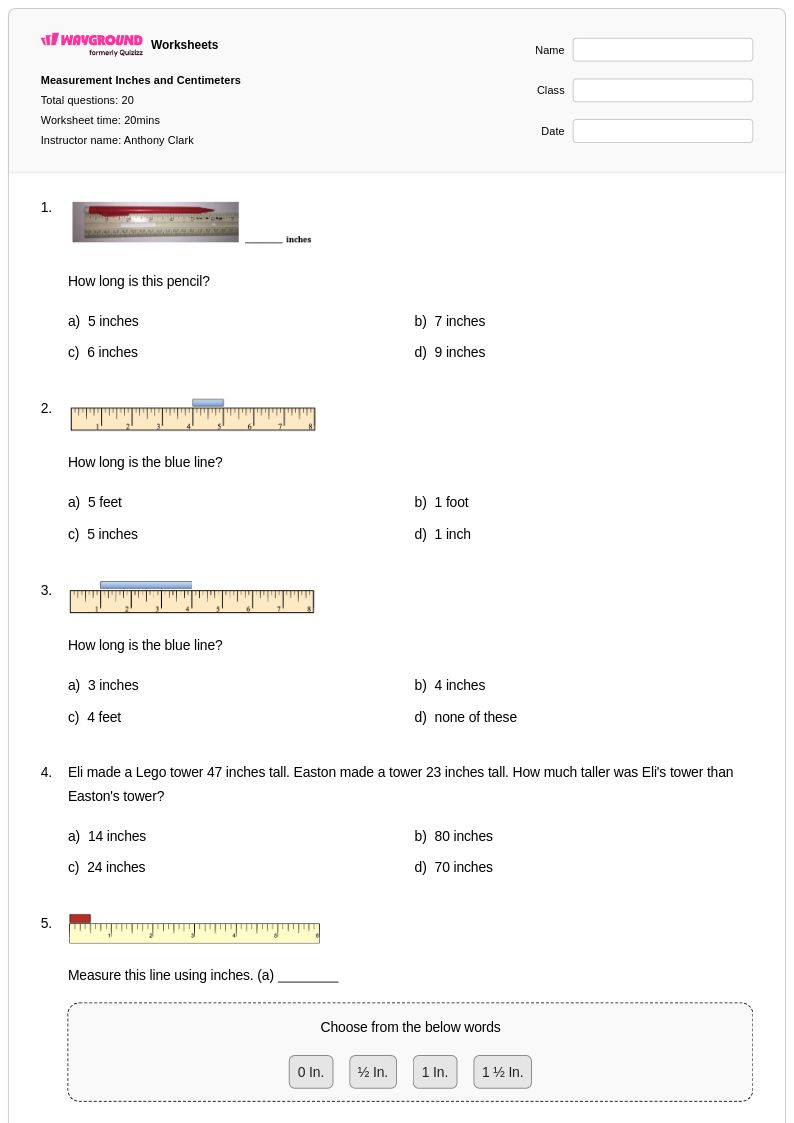
20 Q
2nd - Uni
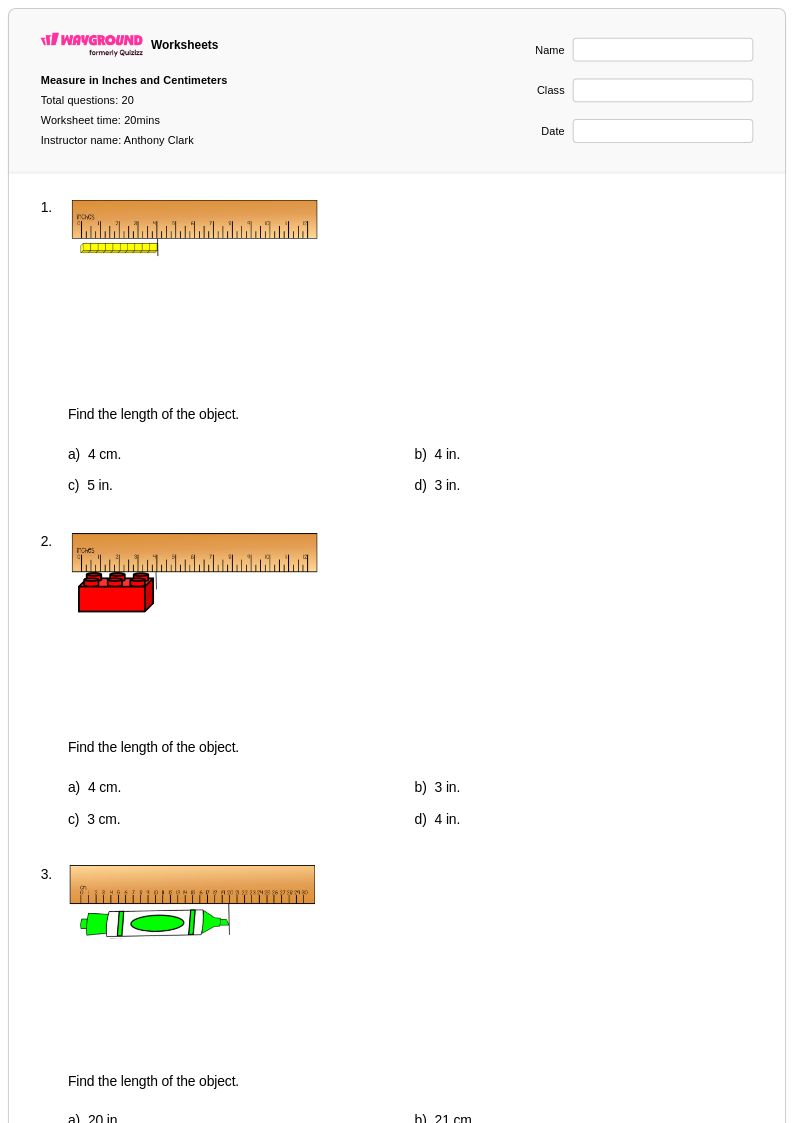
20 Q
2nd - Uni
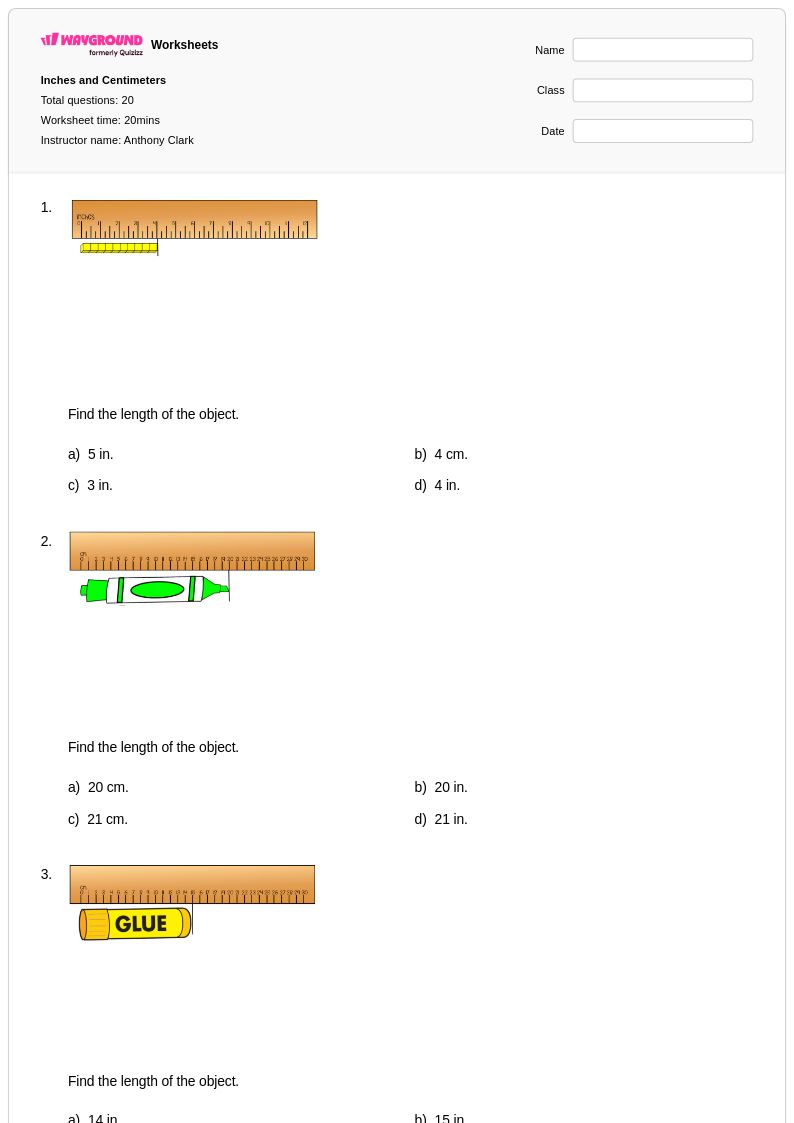
20 Q
2nd - Uni
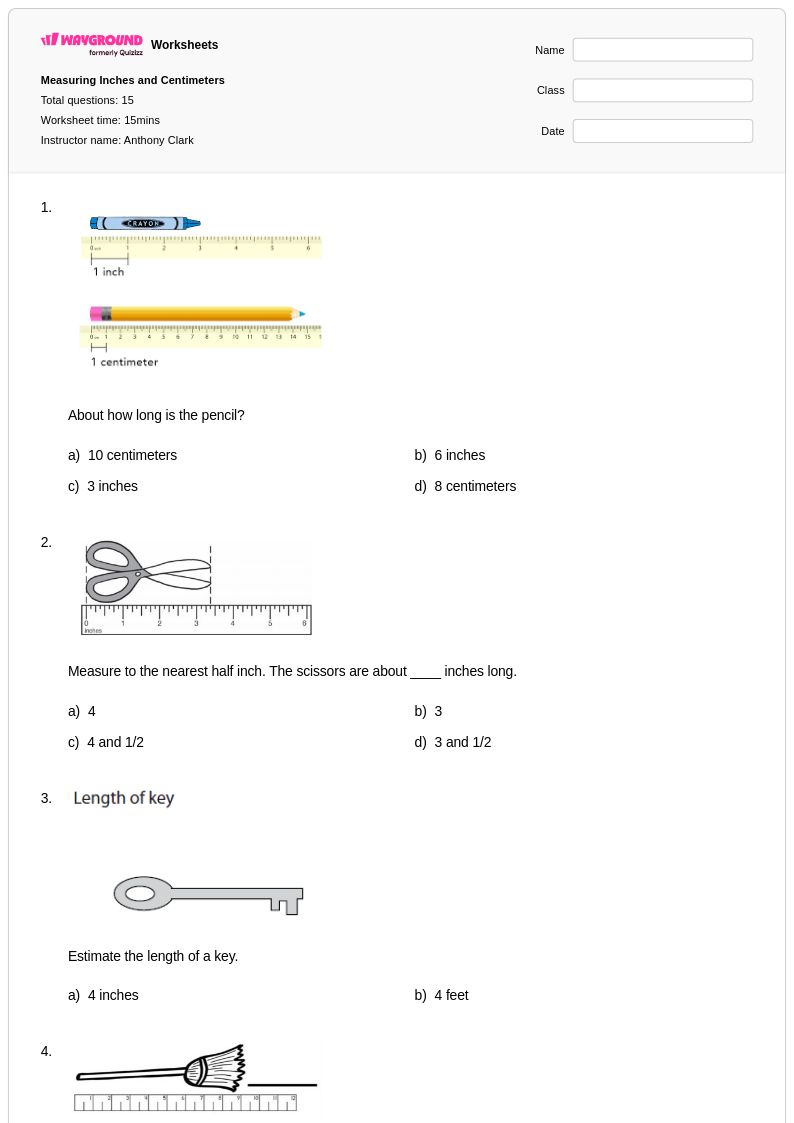
15 Q
2nd - Uni
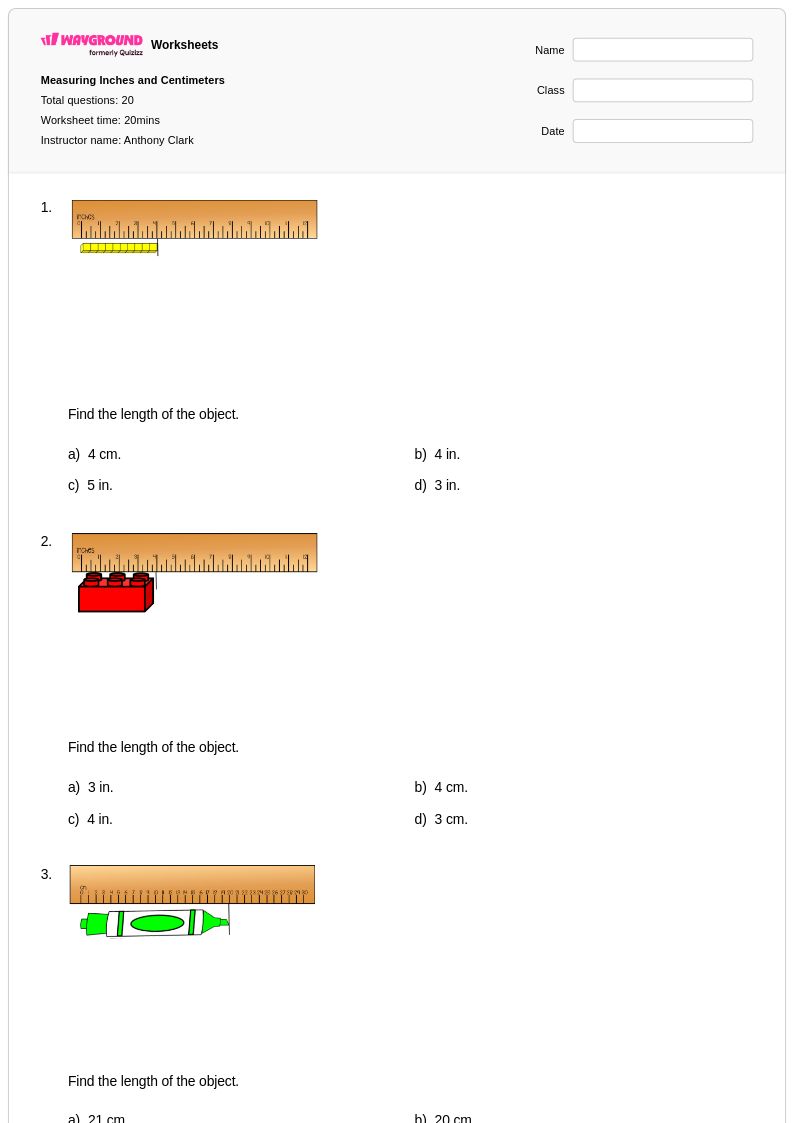
20 Q
2nd - Uni
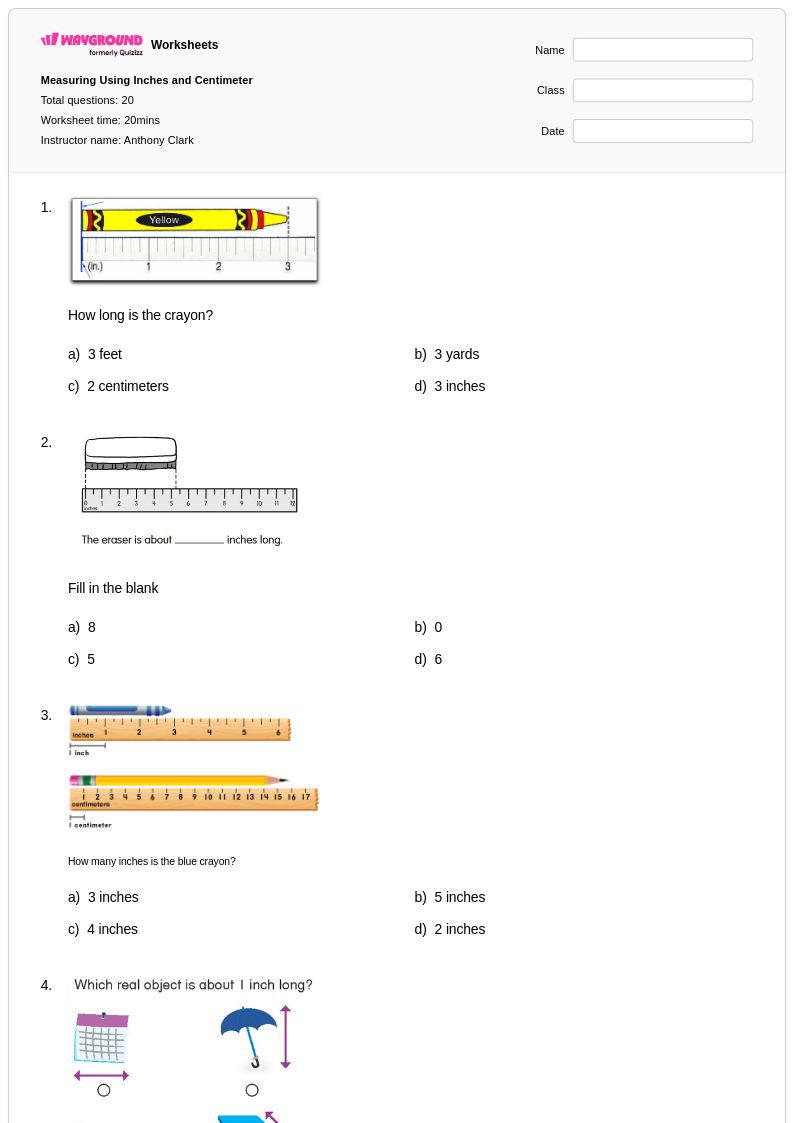
20 Q
2nd - Uni
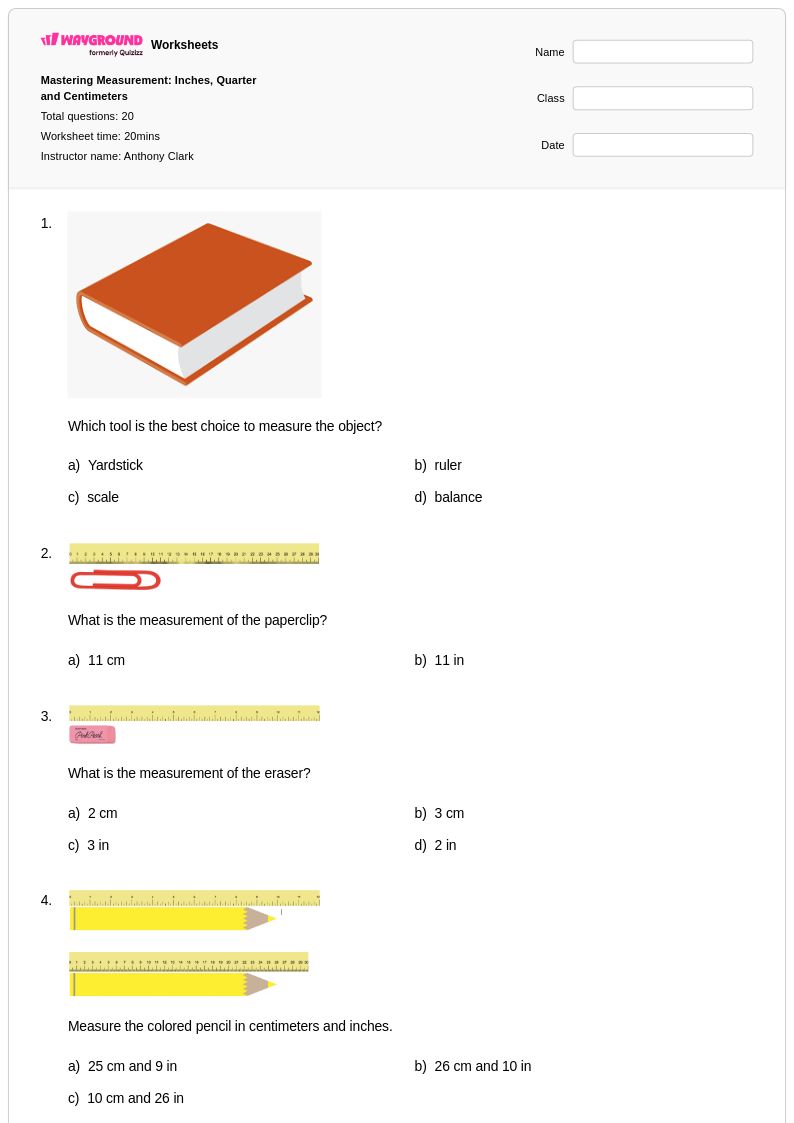
20 Q
2nd - Uni
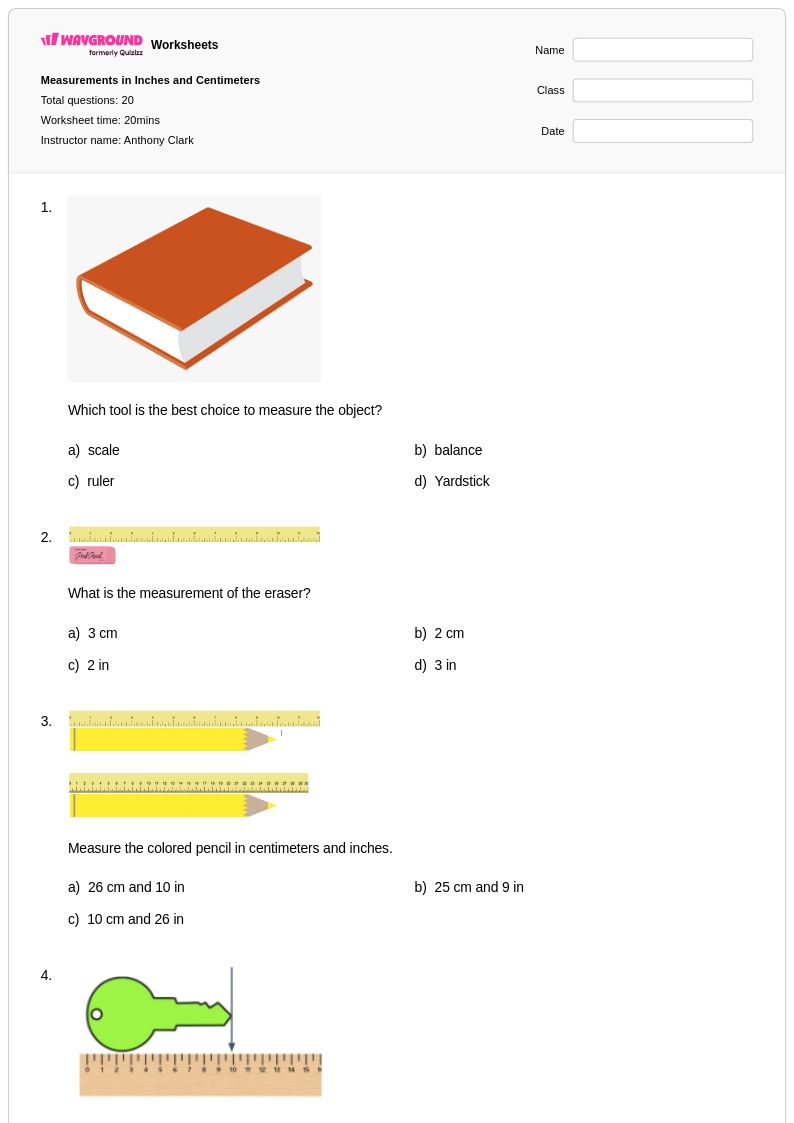
20 Q
2nd - Uni
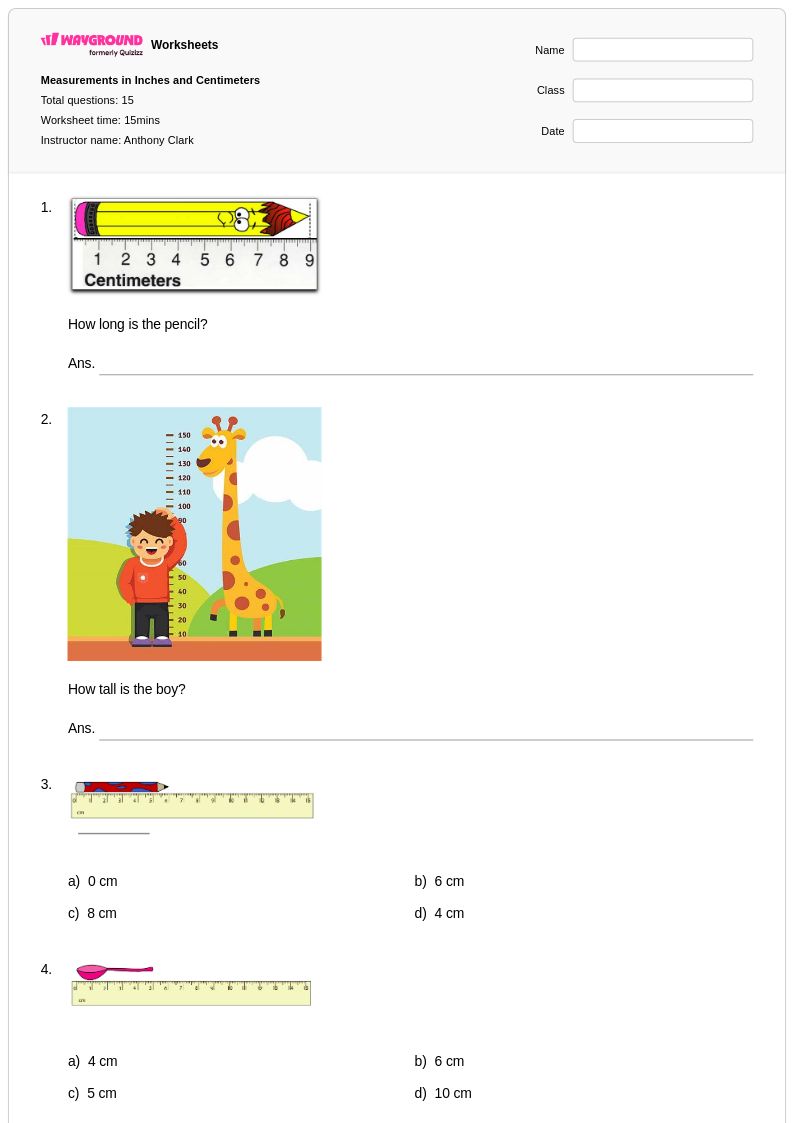
15 Q
2nd - Uni
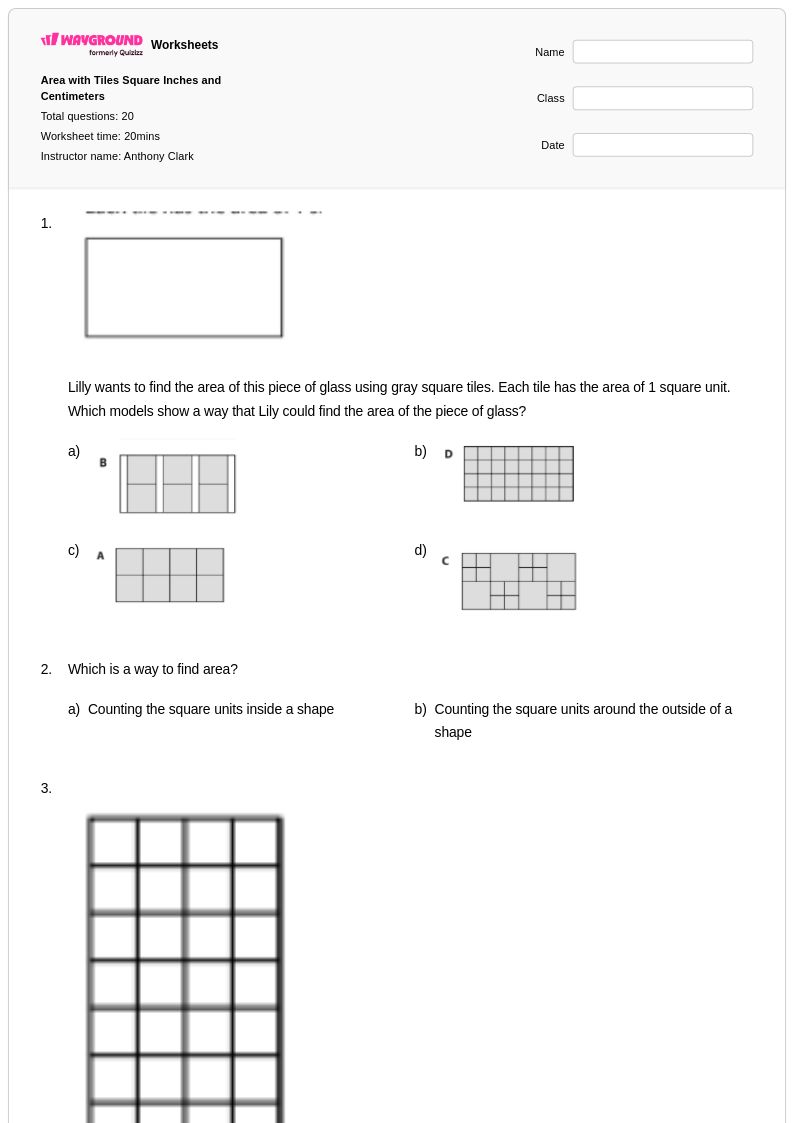
20 Q
3rd - Uni
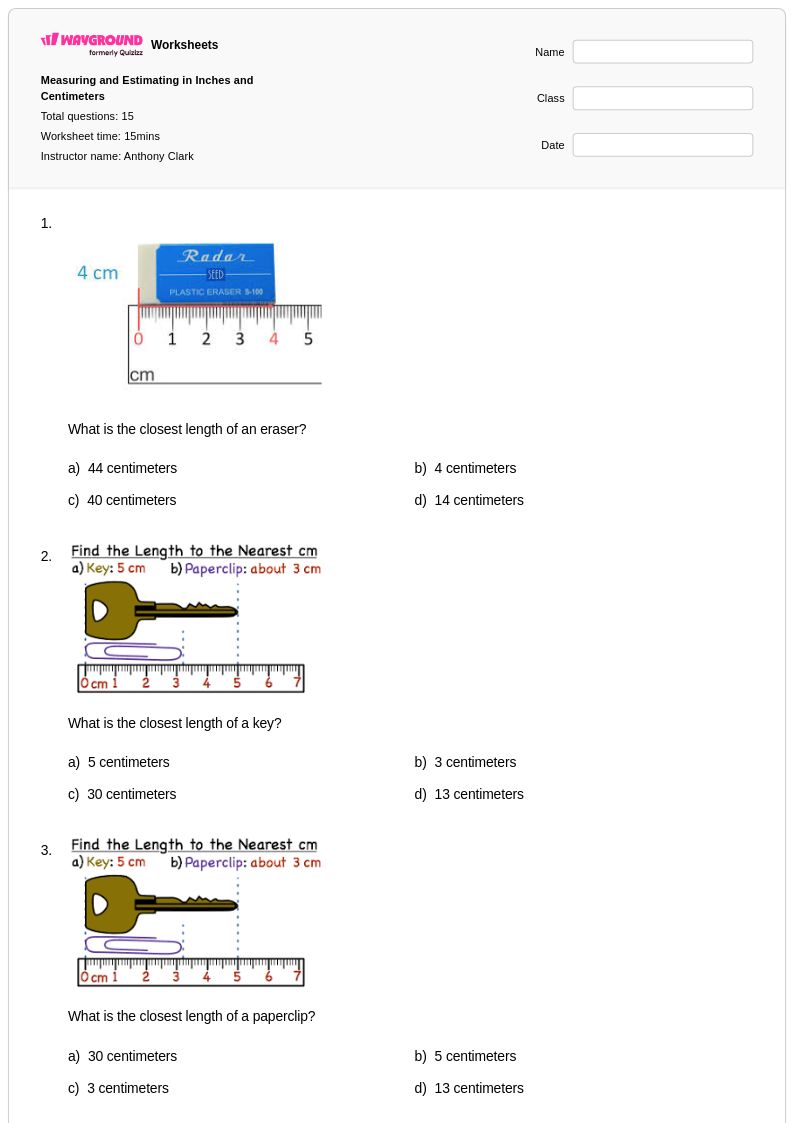
15 Q
2nd - Uni
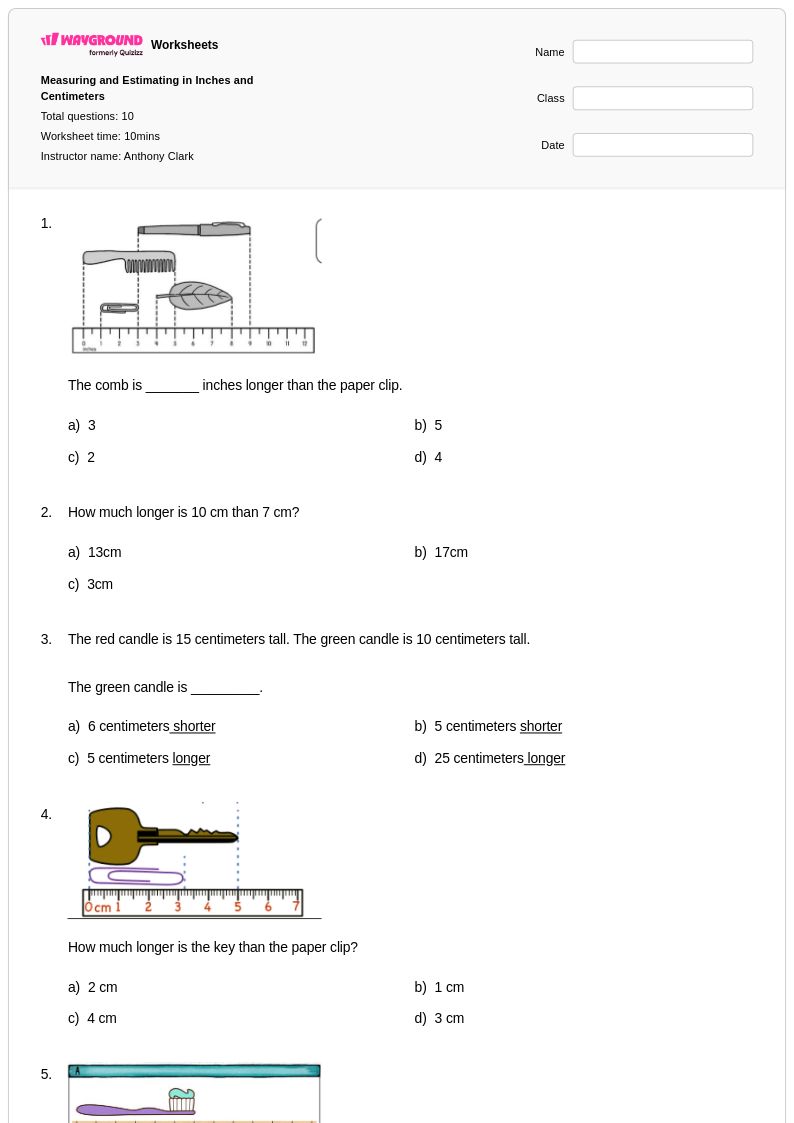
10 Q
2nd - Uni
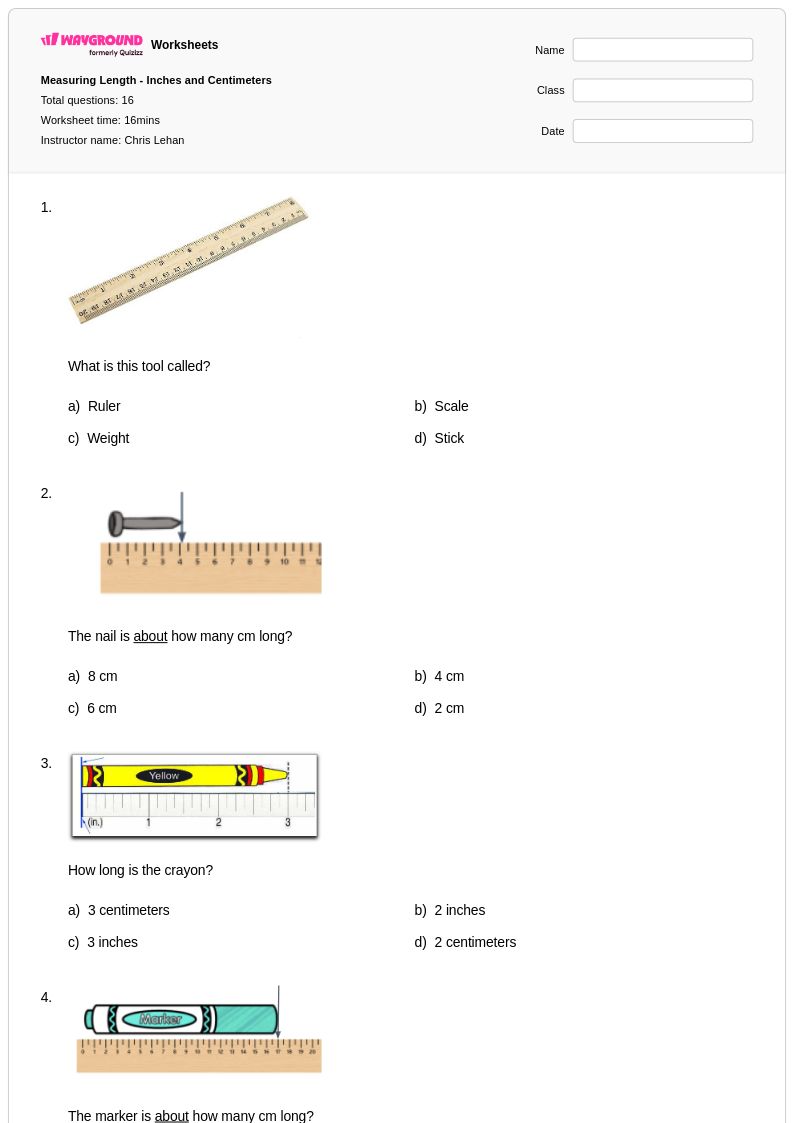
16 Q
3rd
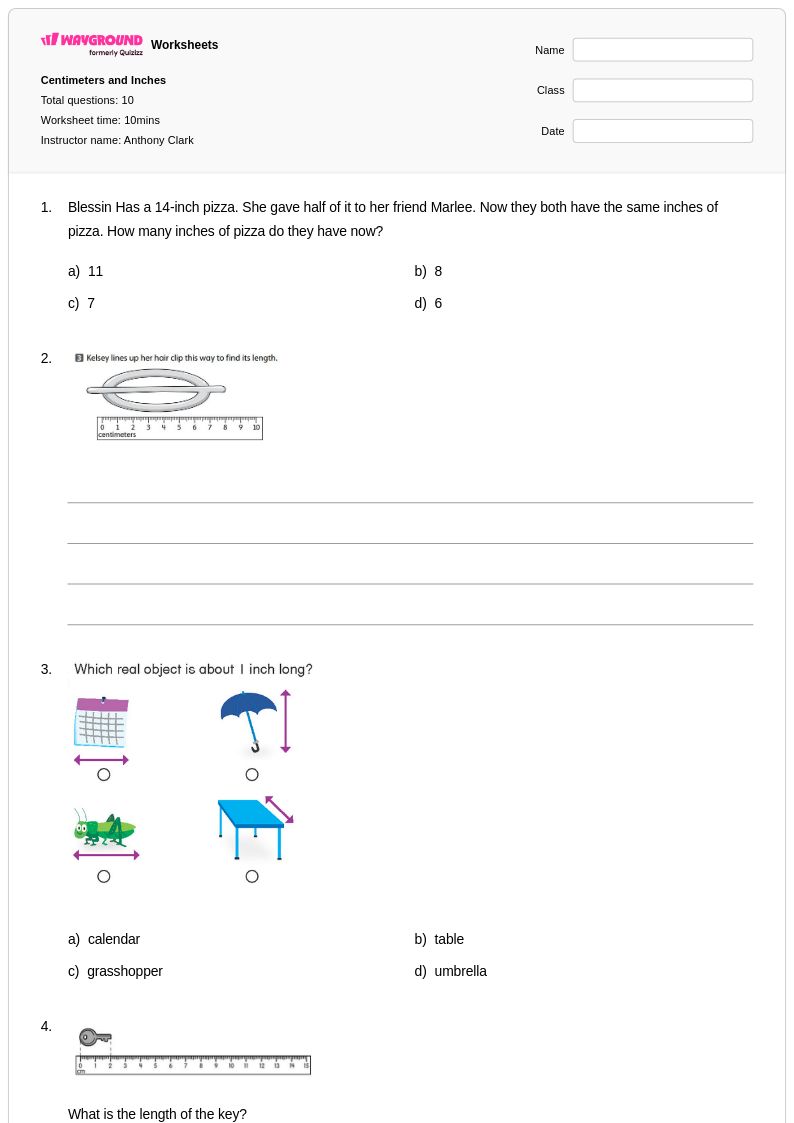
10 Q
2nd - Uni
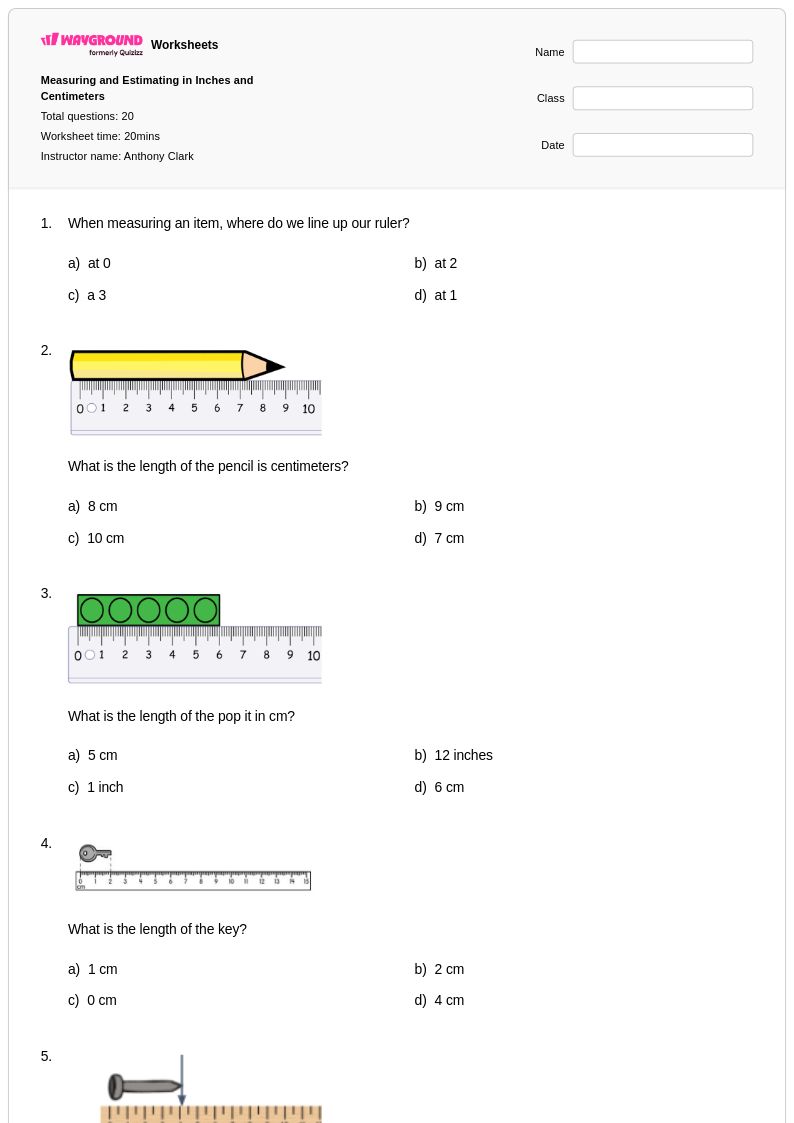
20 Q
2nd - Uni
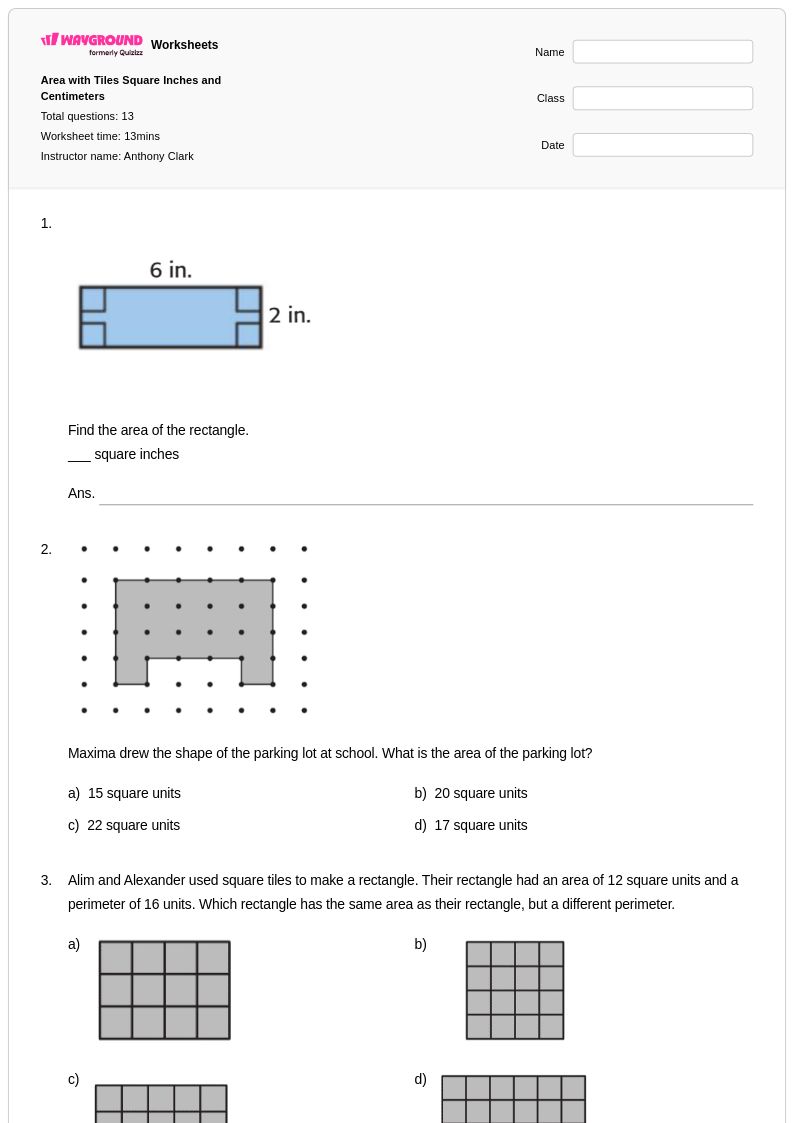
13 Q
3rd - Uni
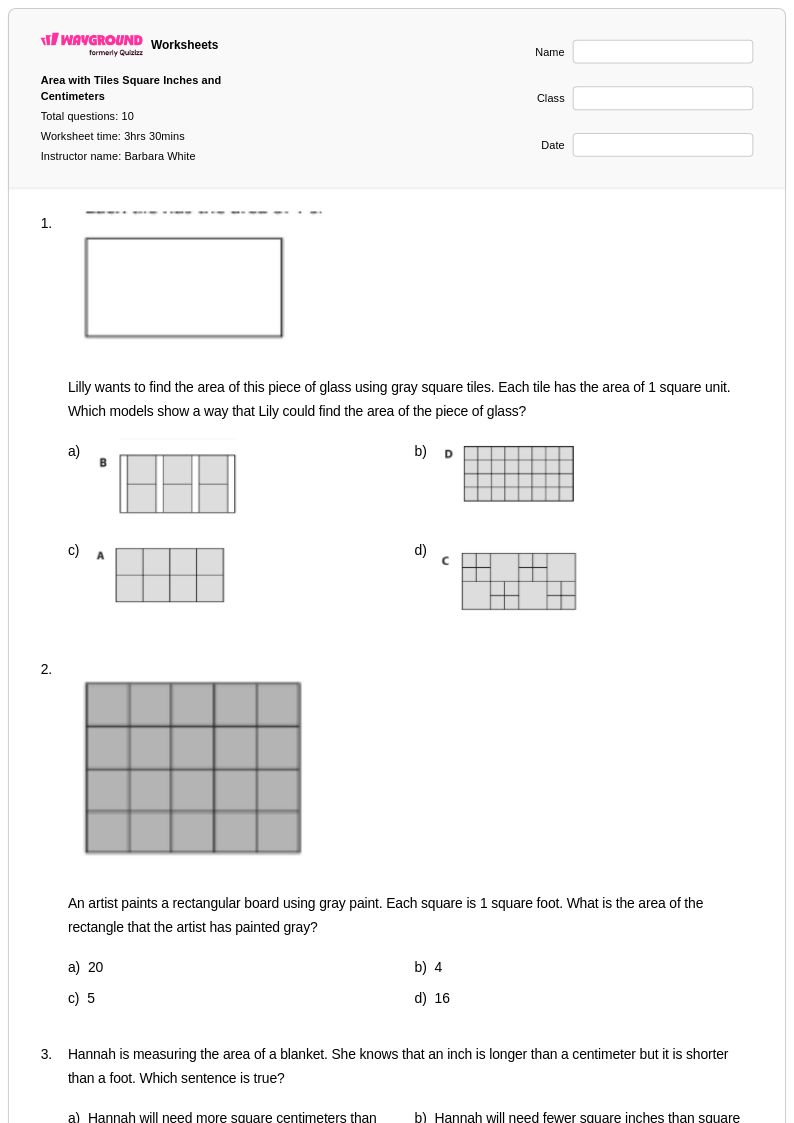
10 Q
3rd
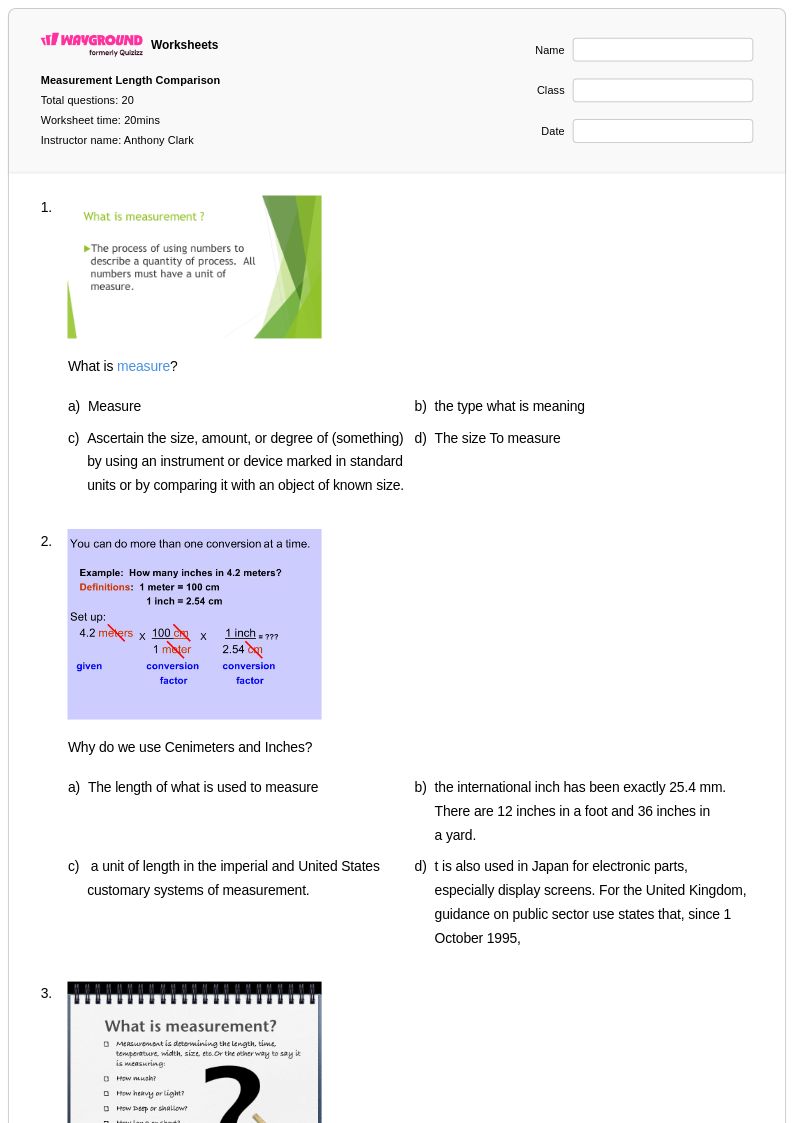
20 Q
2nd - Uni
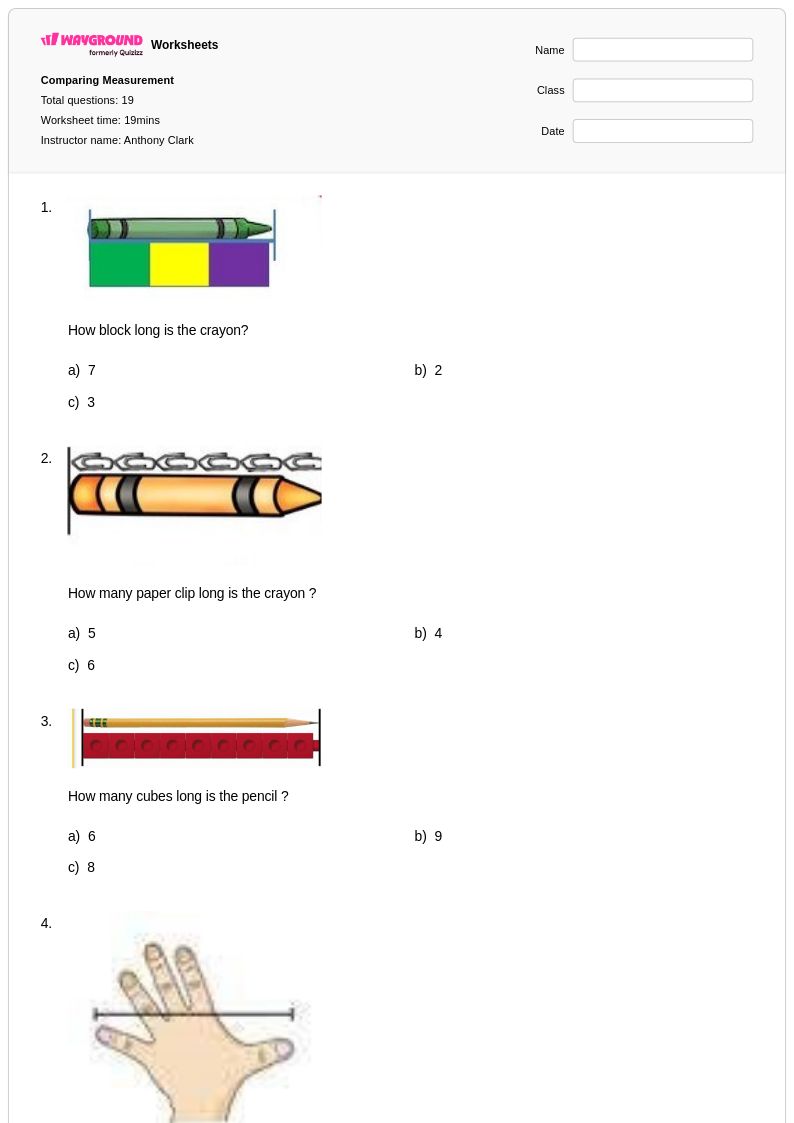
19 Q
3rd - Uni
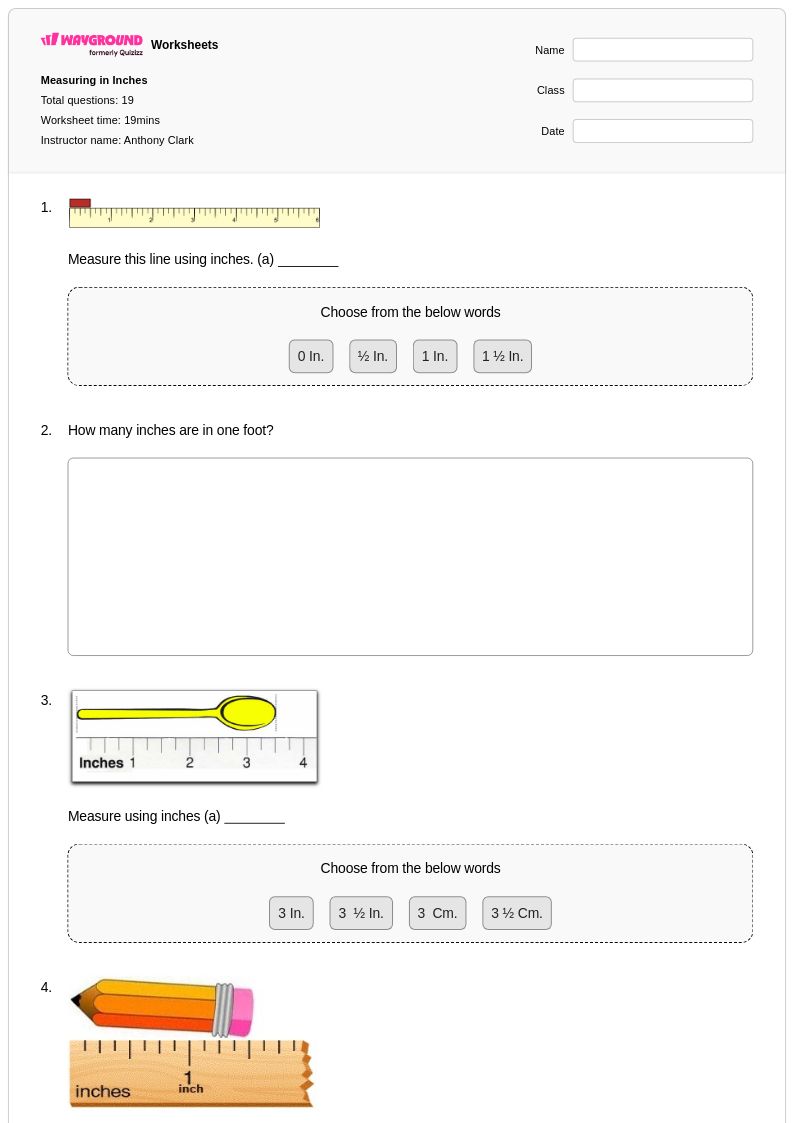
19 Q
3rd - Uni
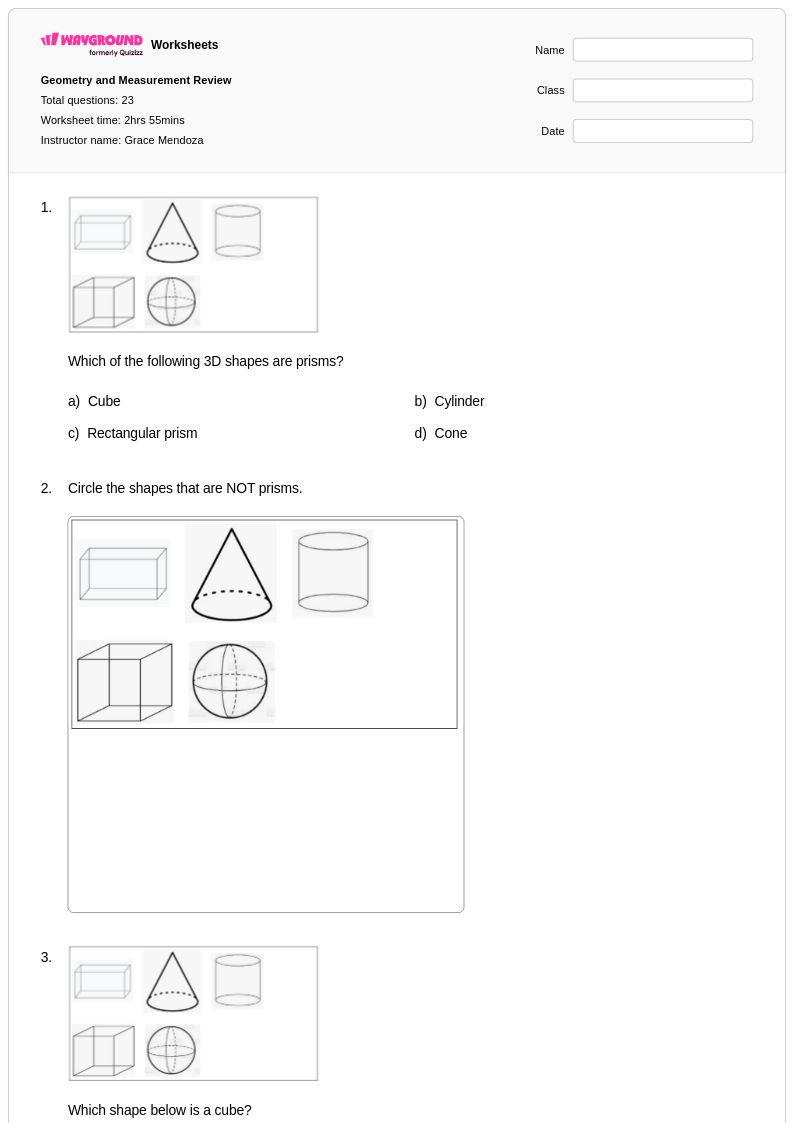
23 Q
2nd - Uni
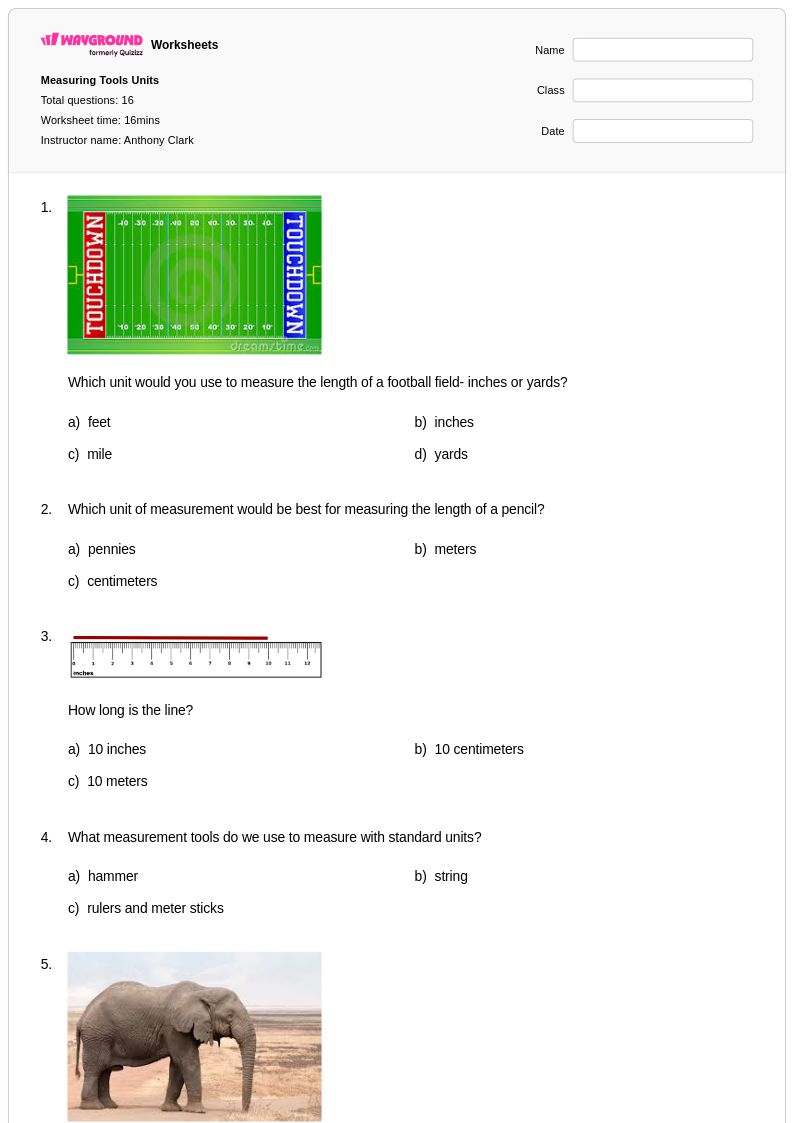
16 Q
2nd - Uni
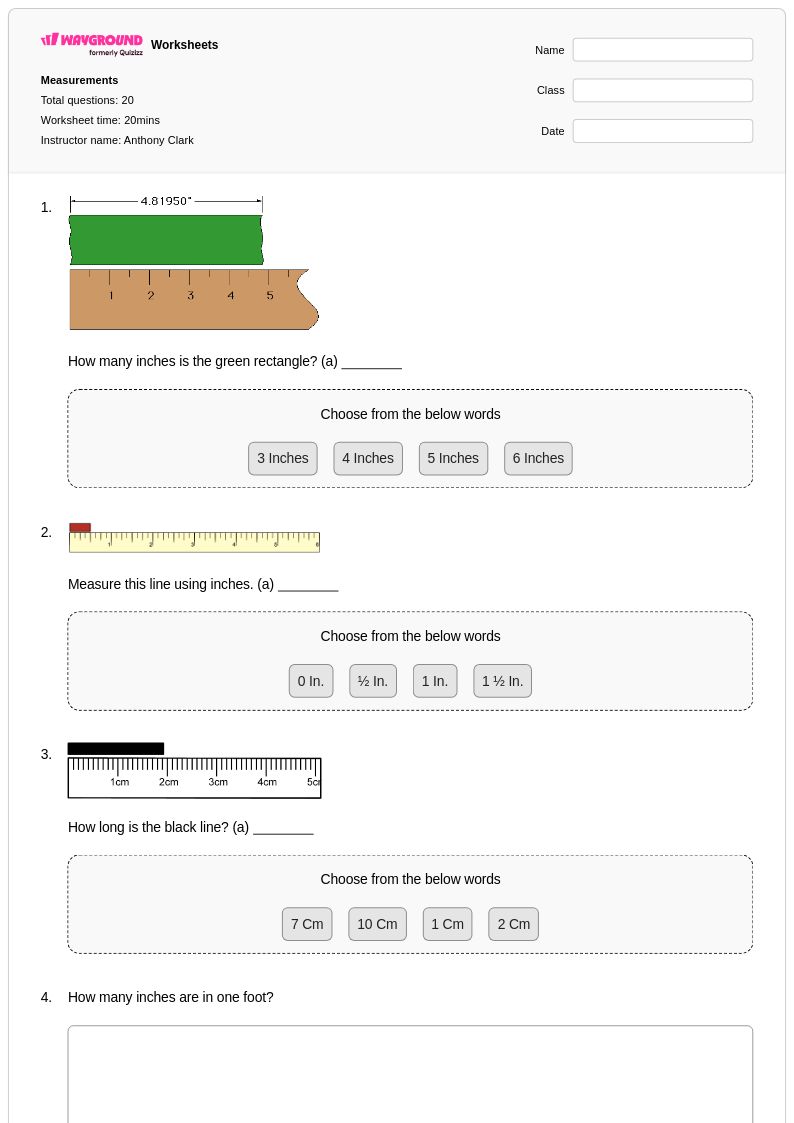
20 Q
3rd - Uni
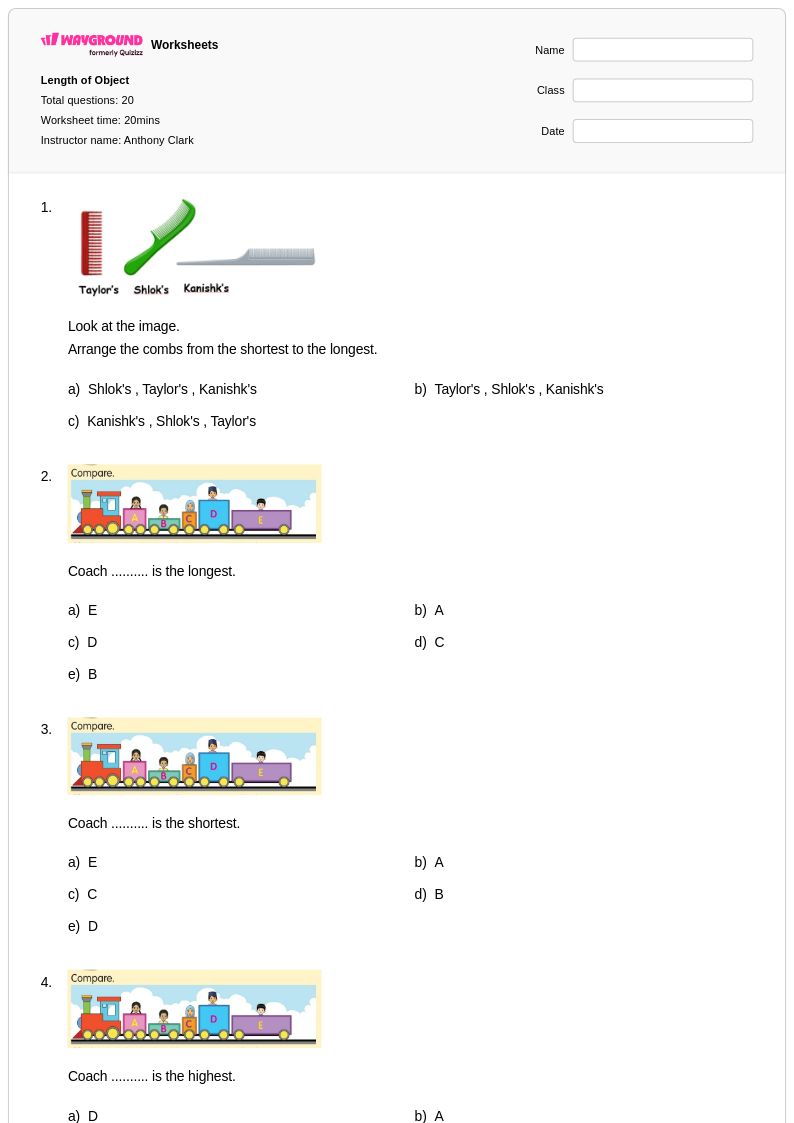
20 Q
2nd - Uni
Explore Other Subject Worksheets for grade 3
Explore printable Inches and Centimeters worksheets for Grade 3
Inches and centimeters worksheets for Grade 3 students available through Wayground (formerly Quizizz) provide essential practice for developing measurement skills and understanding the relationship between imperial and metric units. These comprehensive worksheets strengthen students' ability to measure objects using both inches and centimeters, convert between the two units, and compare measurements across different systems. The practice problems guide third graders through hands-on activities where they measure classroom objects, ruler reading exercises, and real-world applications that make abstract measurement concepts concrete and meaningful. Each worksheet collection includes a complete answer key and is available as free printable pdf resources, making it easy for teachers to incorporate consistent measurement practice into their mathematics instruction.
Wayground (formerly Quizizz) supports educators with millions of teacher-created measurement worksheets that can be easily searched and filtered to match specific Grade 3 learning objectives and standards alignment requirements. The platform's differentiation tools allow teachers to customize inches and centimeters worksheets based on individual student needs, whether for remediation support or enrichment challenges, while maintaining focus on core measurement competencies. These flexible resources are available in both printable and digital formats, including downloadable pdf versions, enabling seamless integration into lesson planning for classroom instruction, homework assignments, or independent skill practice. Teachers can efficiently locate age-appropriate measurement activities that progress systematically from basic ruler reading to more complex unit conversion problems, supporting comprehensive skill development in linear measurement concepts.
FAQs
How should I introduce unit conversion to third graders?
What skills do these Grade 3 measurement worksheets focus on?
What's a common challenge for third graders with measurement?
How can I use this inches and centimeters worksheet with my third graders?
How does this align with third-grade math standards?