Free Printable Inherited and Acquired Traits Worksheets for Grade 8
Explore Grade 8 inherited and acquired traits worksheets and printables that help students distinguish between genetic characteristics and learned behaviors through engaging practice problems, free PDF downloads, and comprehensive answer keys.
Explore printable Inherited and Acquired Traits worksheets for Grade 8
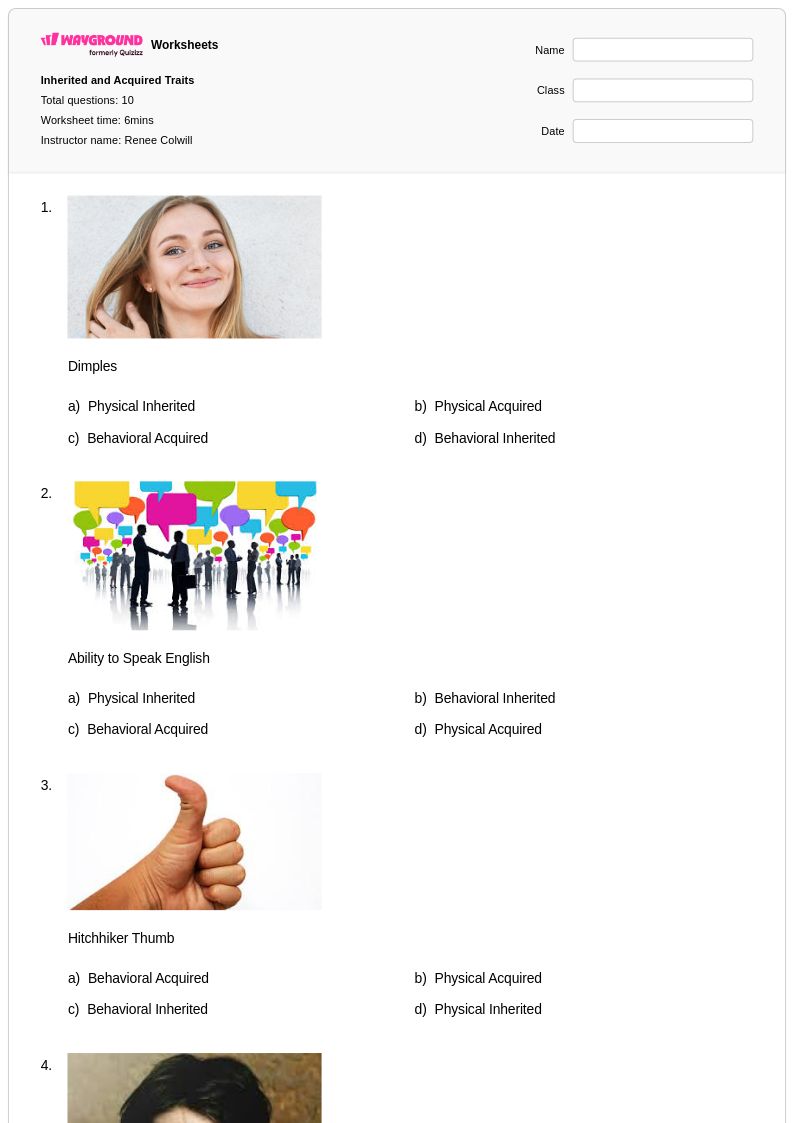
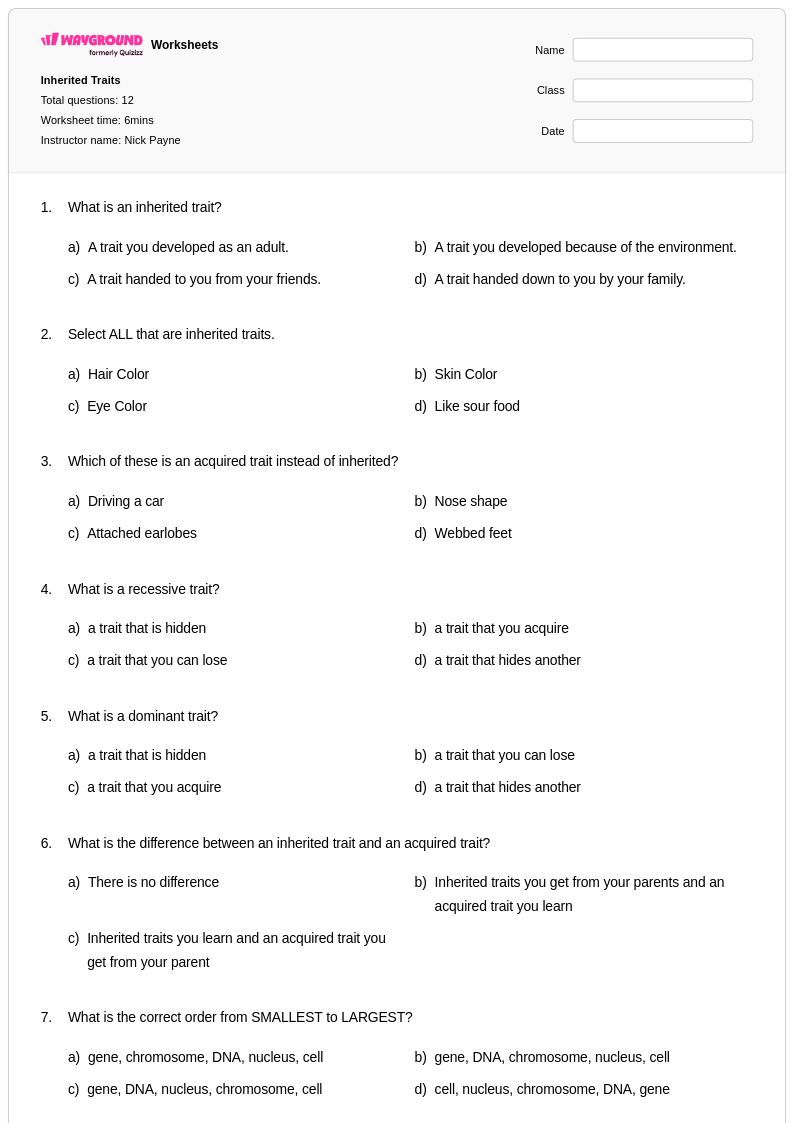
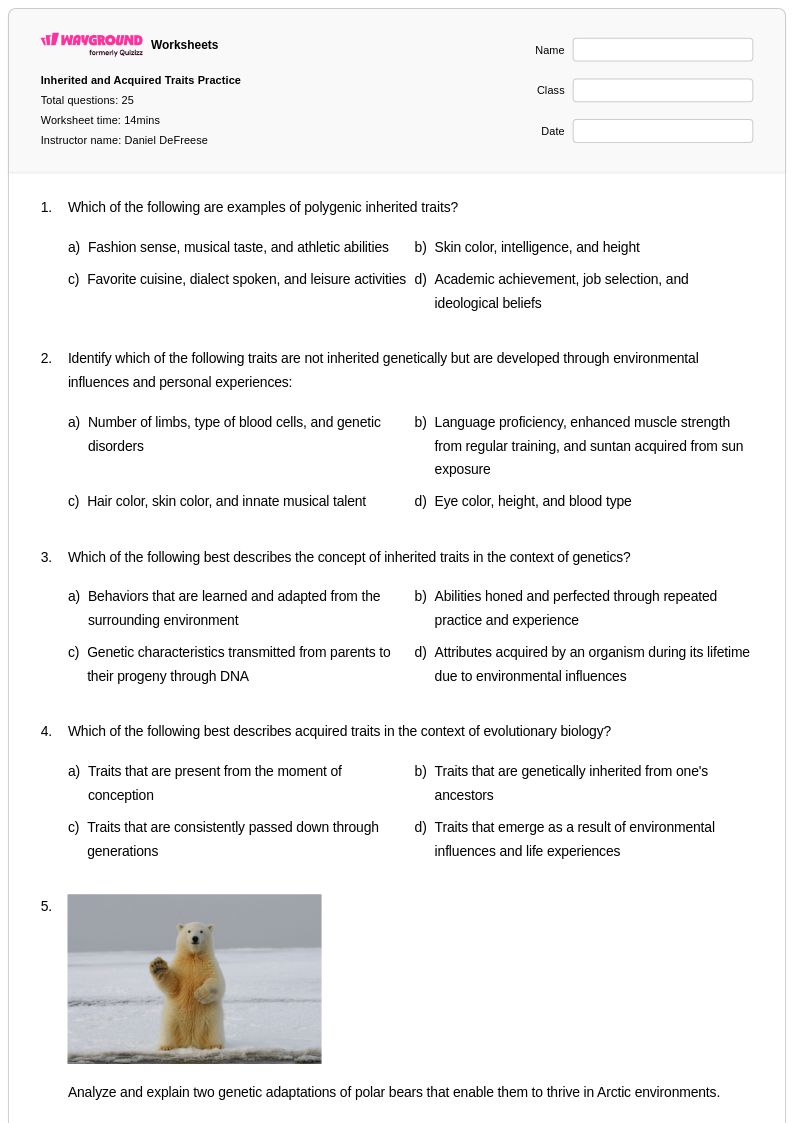
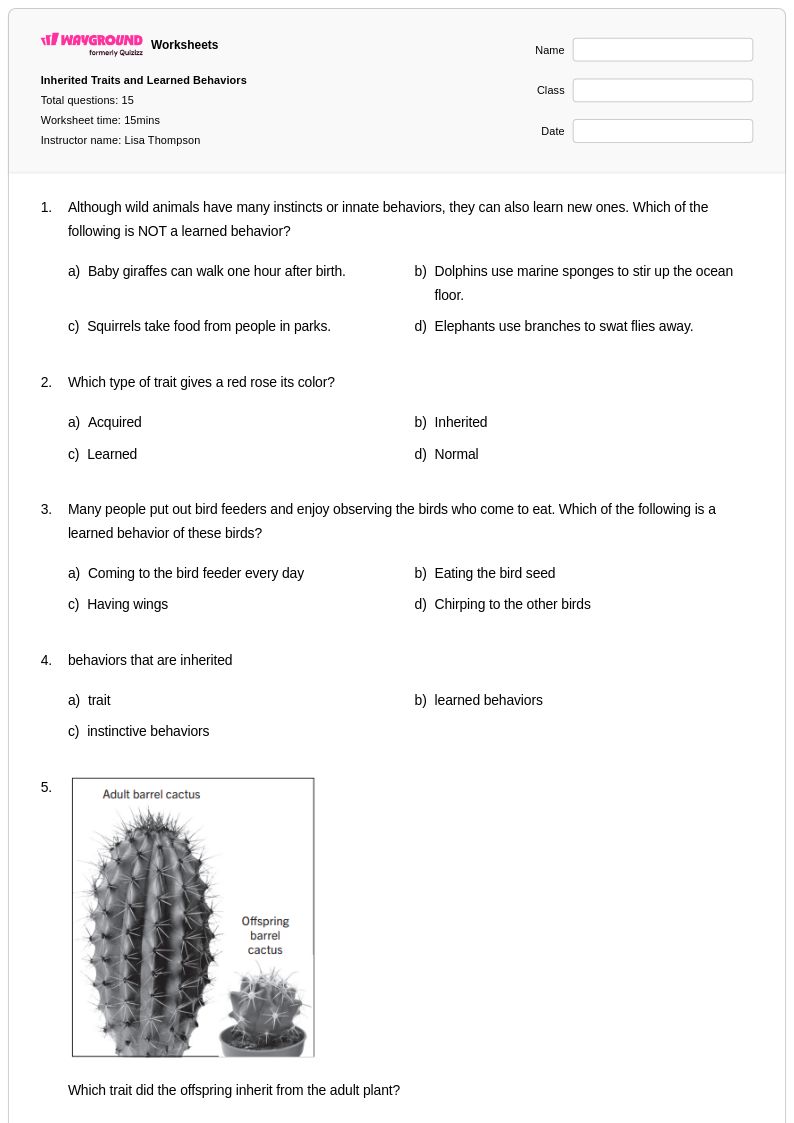
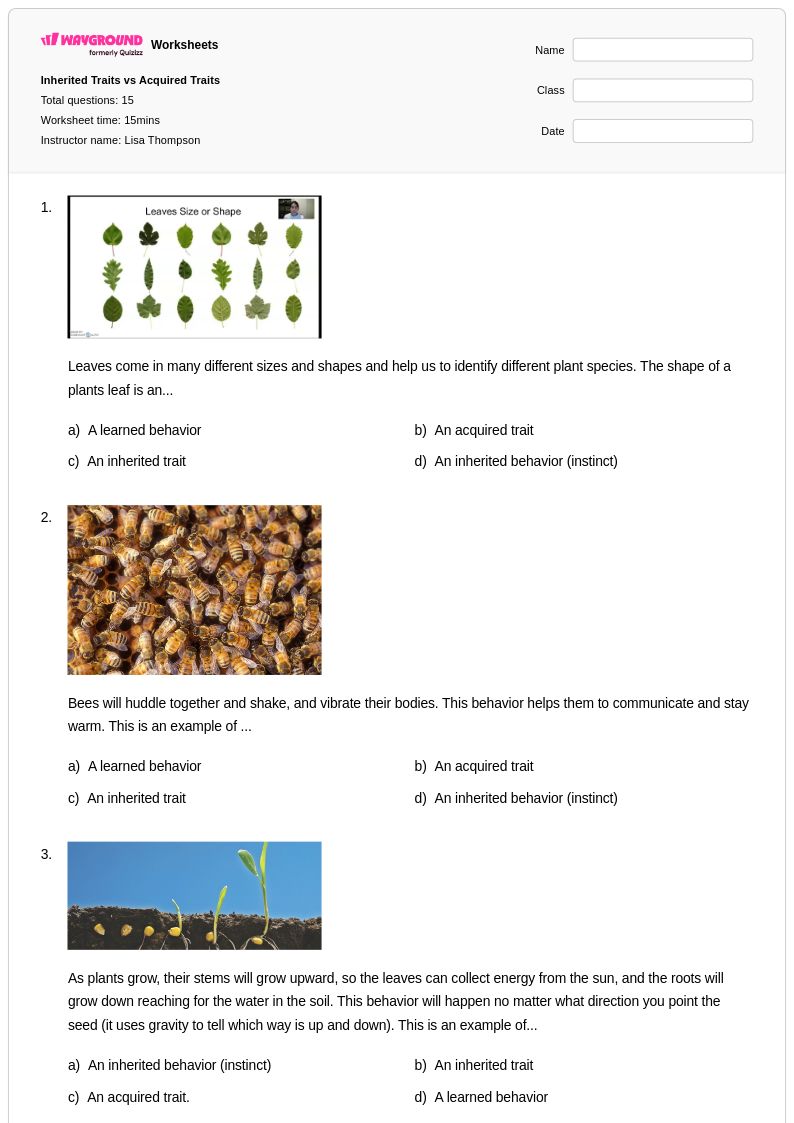
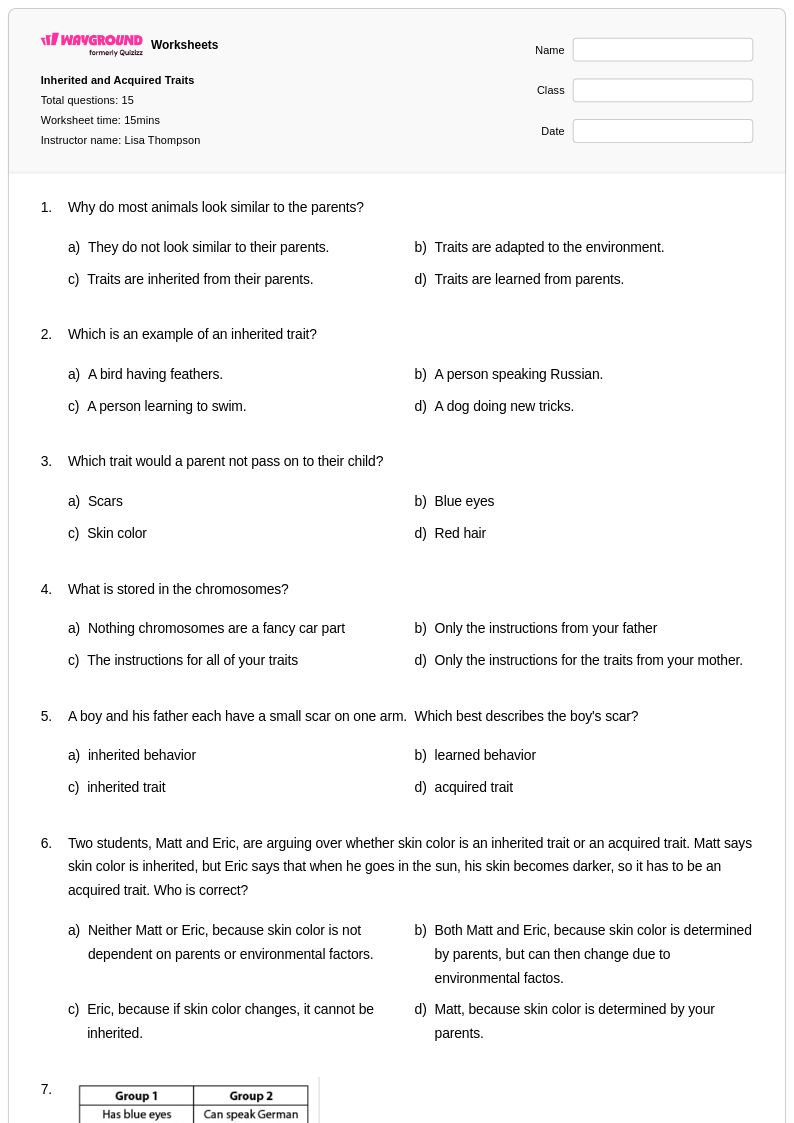
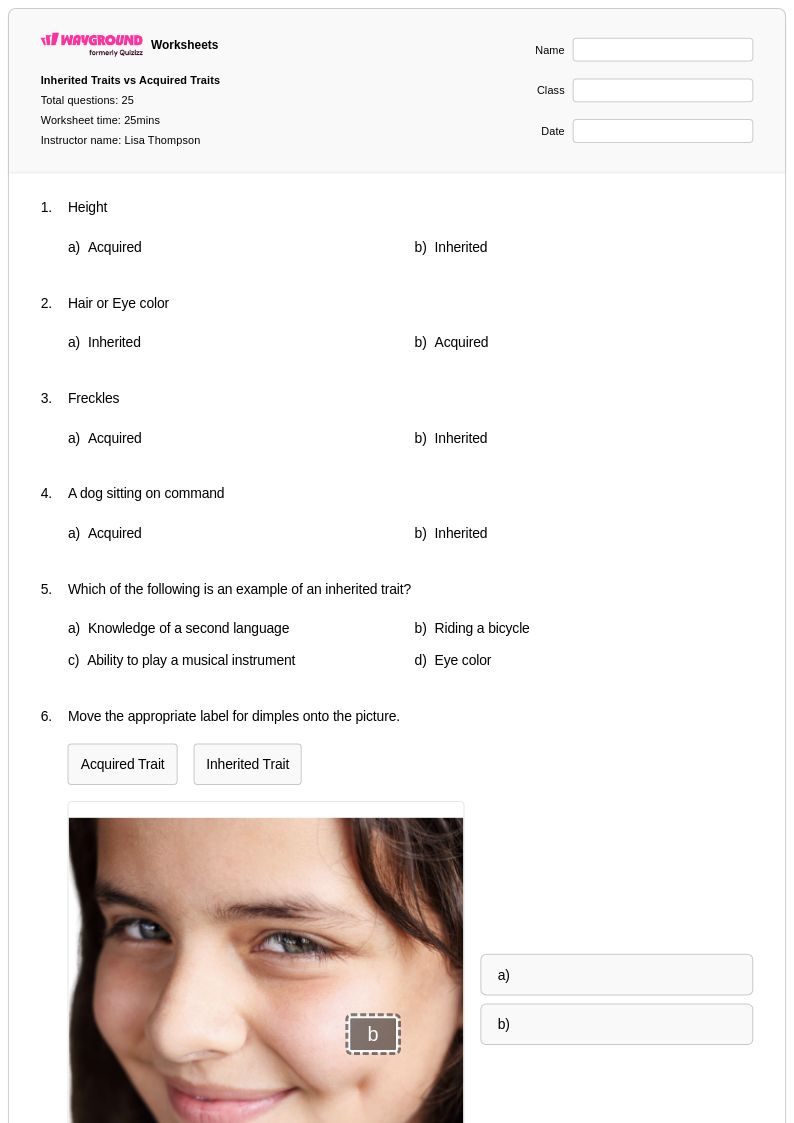
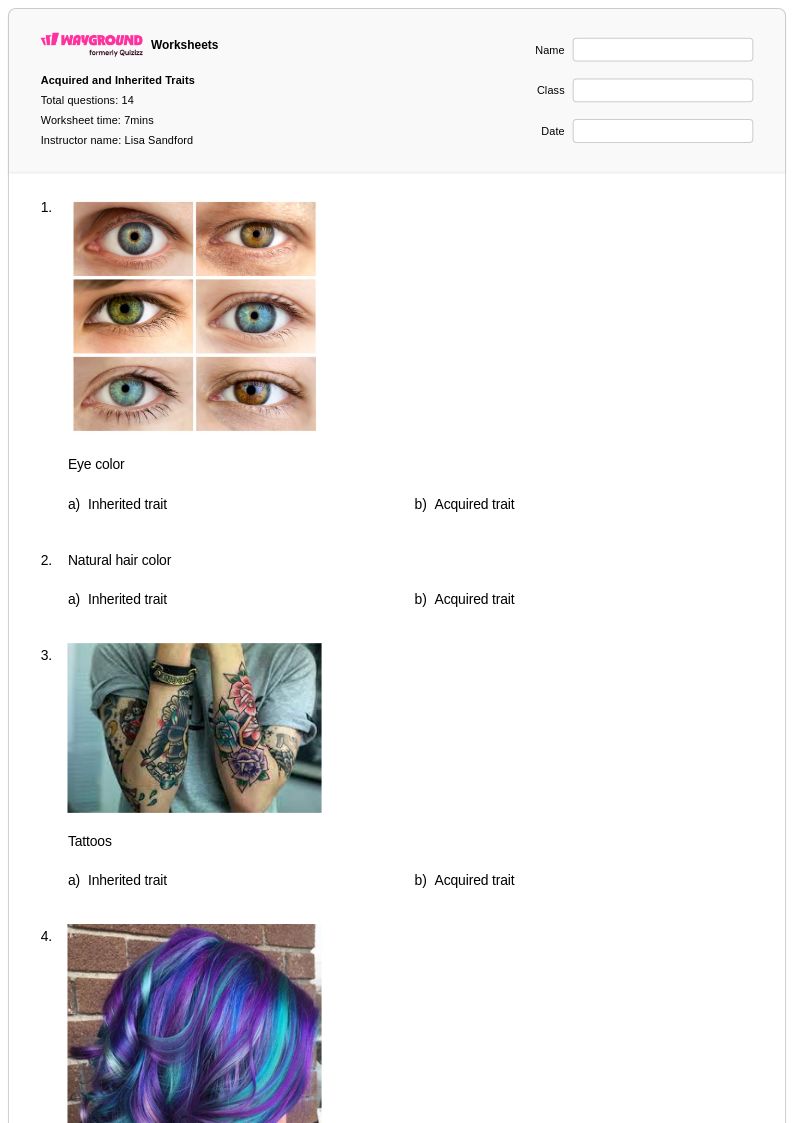
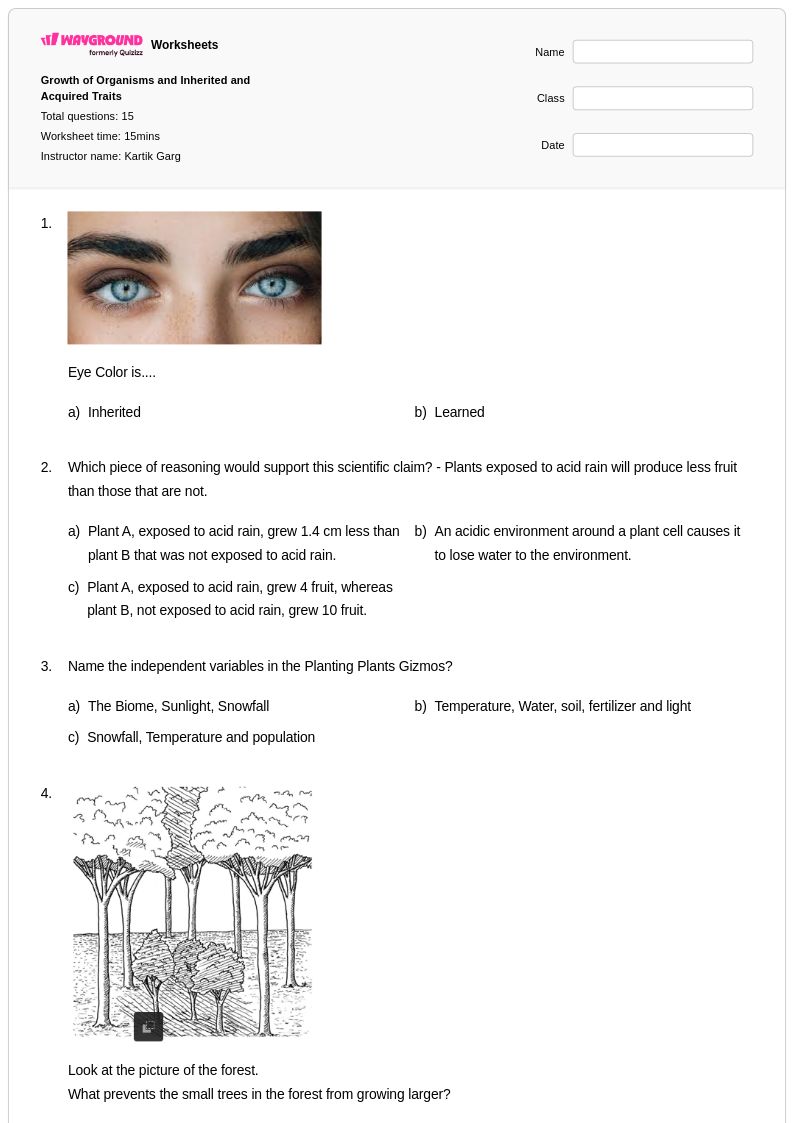
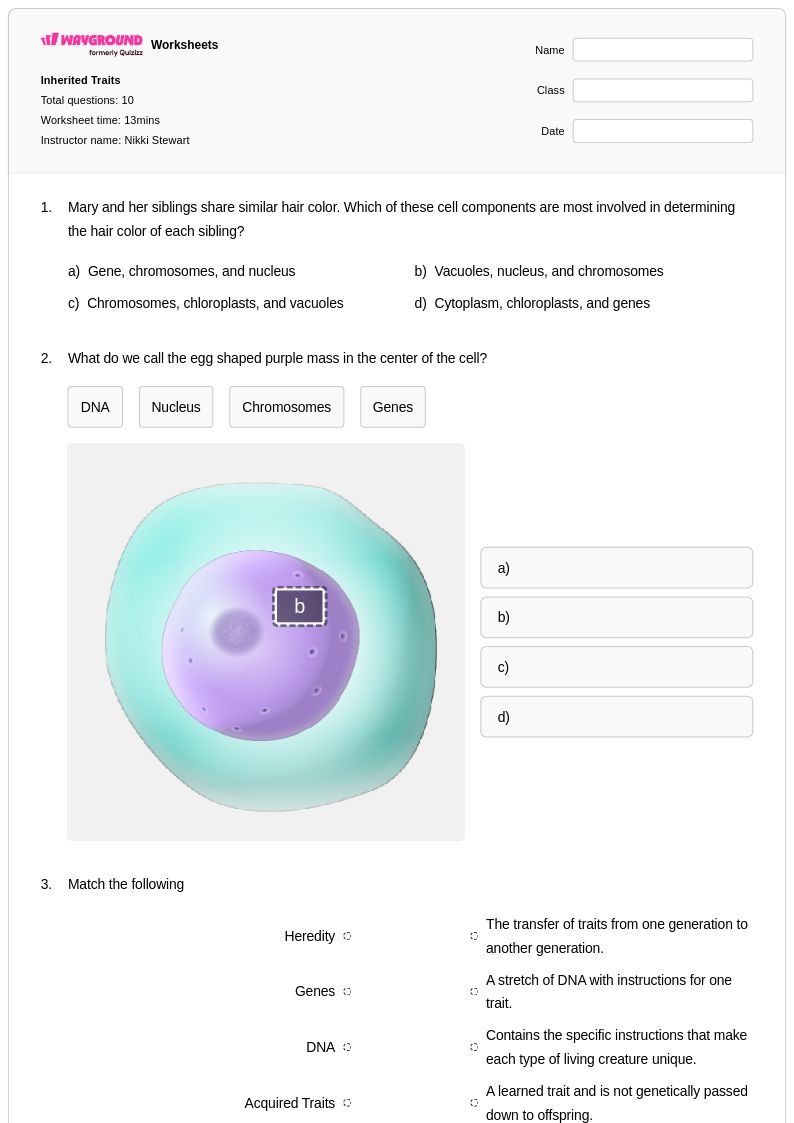
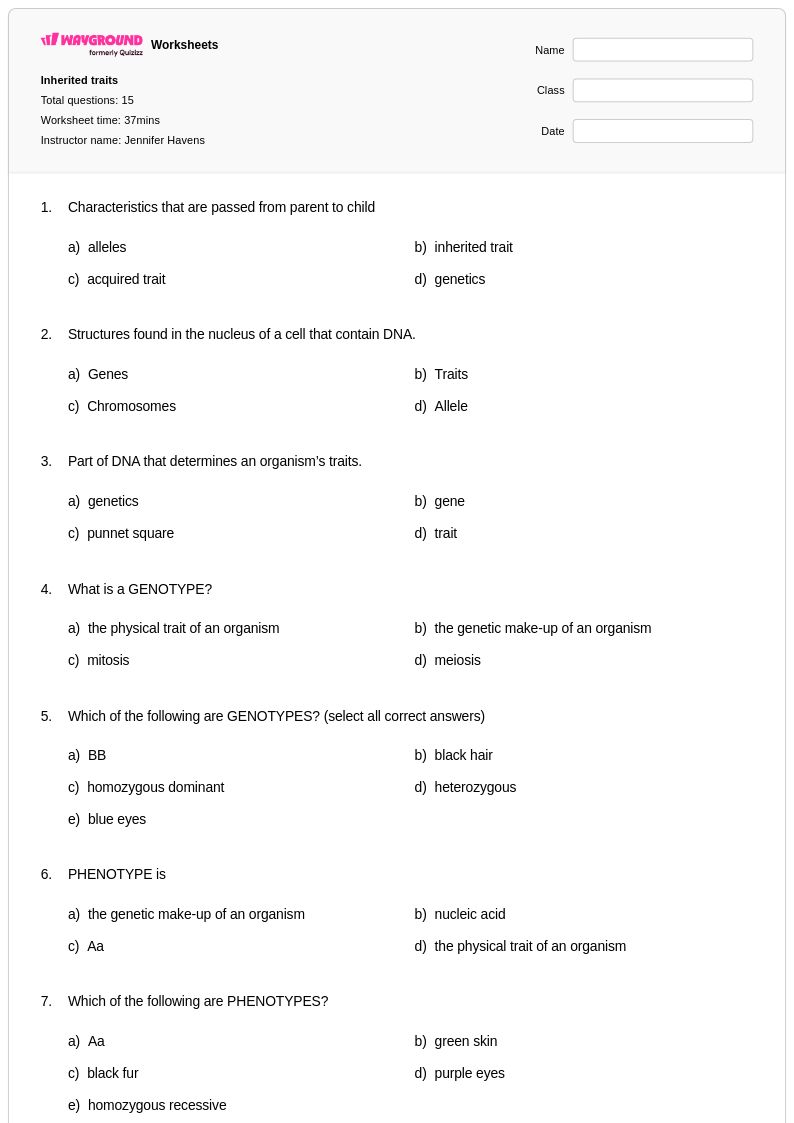
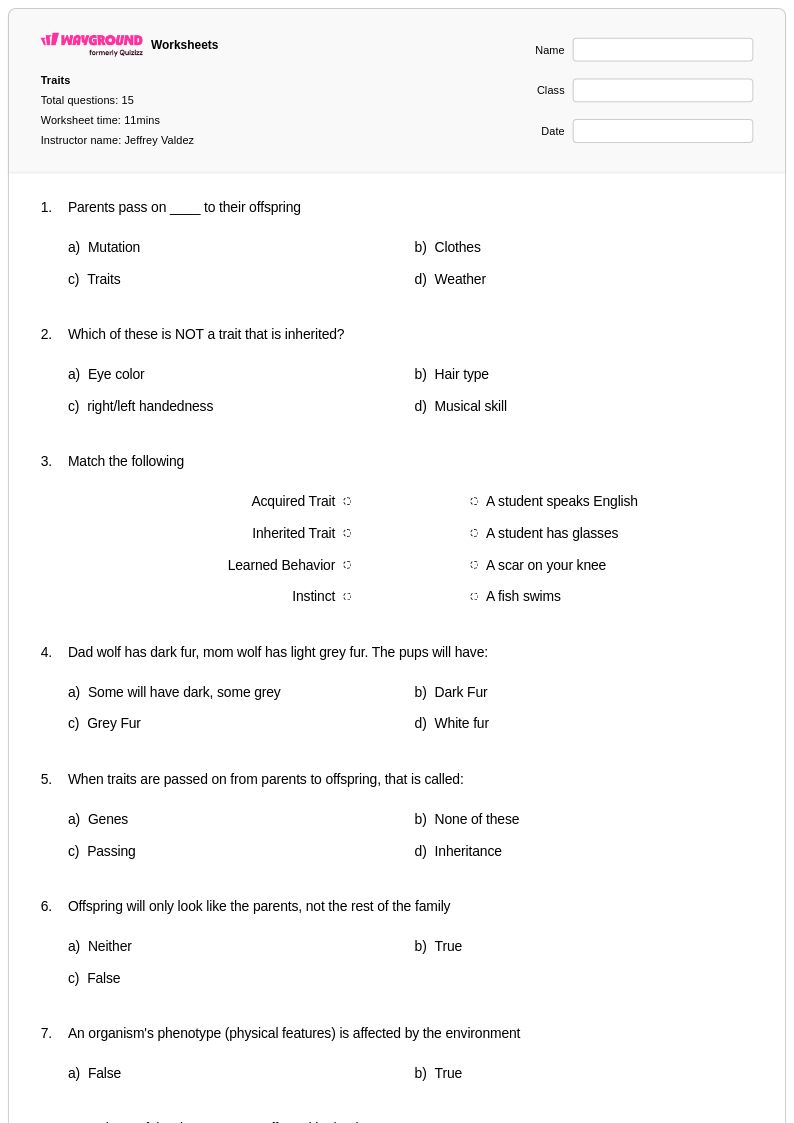
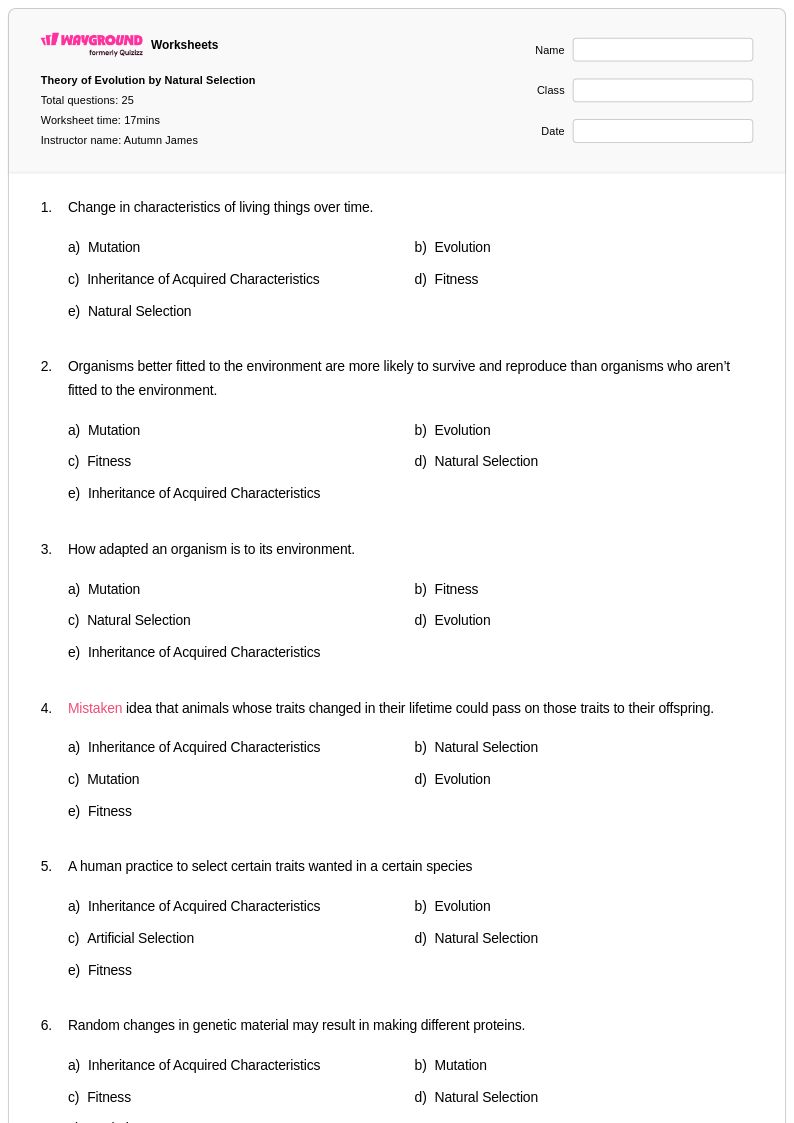
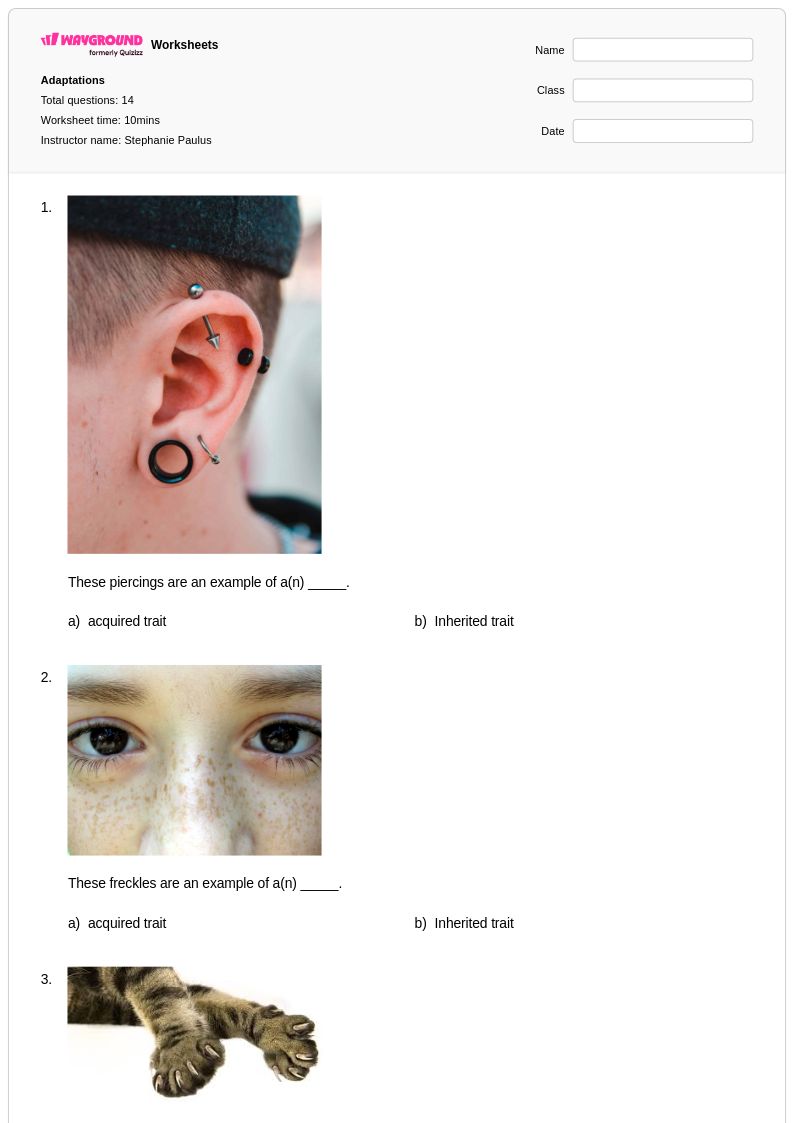
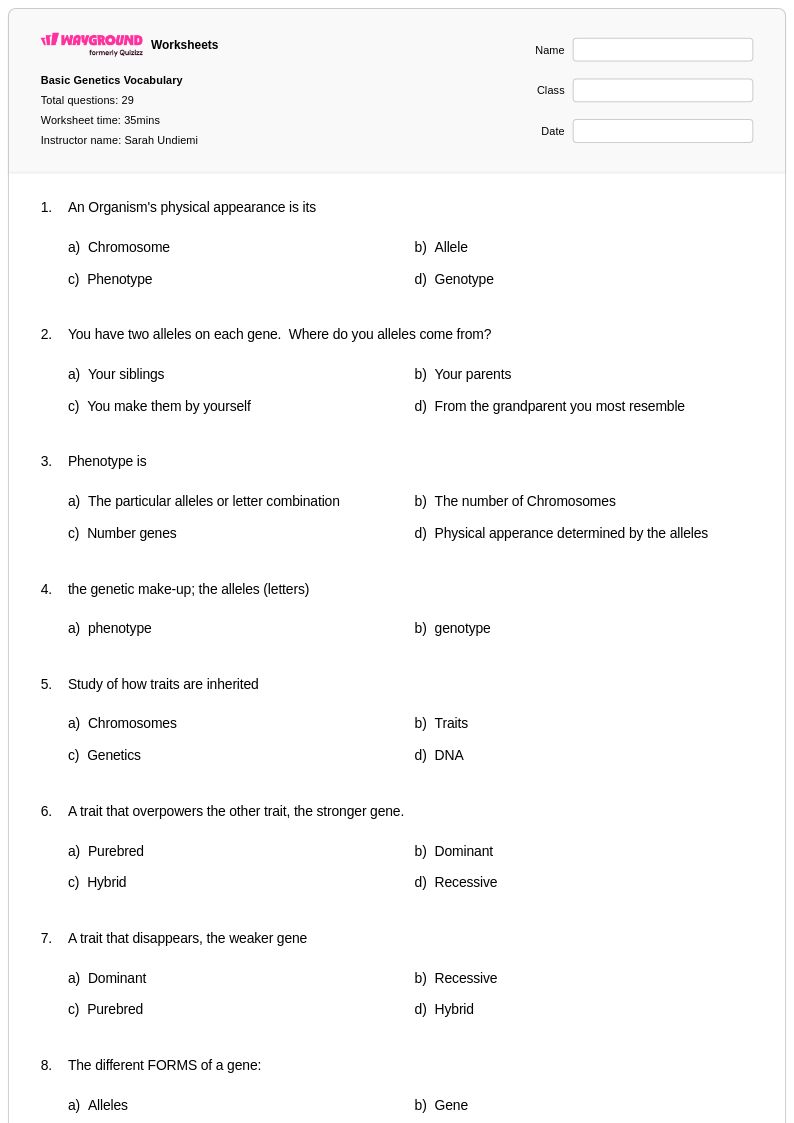
Inherited and Acquired Traits worksheets for Grade 8 students available through Wayground (formerly Quizizz) provide comprehensive educational resources that help students distinguish between characteristics passed down through genetics and those developed through environmental influences or personal experiences. These carefully designed worksheets strengthen critical thinking skills by challenging students to analyze real-world scenarios, classify various traits in organisms, and understand the fundamental mechanisms of heredity versus learned behaviors. Each worksheet collection includes detailed answer keys that support both independent study and classroom instruction, while the free printable format ensures accessibility for diverse learning environments. Practice problems range from basic identification exercises to complex analysis tasks that require students to explain the biological basis for trait inheritance and acquisition.
Wayground (formerly Quizizz) empowers educators with millions of teacher-created resources specifically focused on inherited and acquired traits concepts, featuring robust search and filtering capabilities that align with state and national science standards for Grade 8 biology curriculum. The platform's differentiation tools enable teachers to customize worksheets based on individual student needs, offering both remediation support for struggling learners and enrichment opportunities for advanced students. These comprehensive collections are available in both printable pdf formats for traditional classroom use and digital formats for interactive learning experiences. Teachers can efficiently plan lessons, assess student understanding, and provide targeted skill practice through these versatile resources, which seamlessly integrate into existing curriculum frameworks while supporting diverse instructional approaches from direct instruction to inquiry-based learning.
FAQs
How do I teach students the difference between inherited and acquired traits?
Start by anchoring instruction in concrete, familiar examples: eye color, blood type, and attached earlobes are inherited, while a scar, a learned language, or a developed skill like playing piano are acquired. Use sorting activities where students classify trait cards into 'inherited' or 'acquired' columns before moving to more ambiguous cases like height, which involves both genetics and nutrition. Introducing the nature vs. nurture framework early helps students build a conceptual scaffold they can apply across increasingly complex scenarios.
What exercises help students practice identifying inherited vs. acquired traits?
Scenario-based classification tasks are especially effective — present students with short descriptions of characters or organisms and ask them to identify and justify which traits are inherited and which are acquired. Data analysis activities using family trait charts reinforce the genetic inheritance side, while case studies involving twins raised in different environments help students grapple with environmental influence. These practice formats build both recall and scientific reasoning simultaneously.
What misconceptions do students commonly have about inherited and acquired traits?
One of the most common errors is assuming that any physical trait must be inherited — students often misclassify things like muscle mass or skin tan as purely genetic when they are partially or fully acquired. Another frequent misconception is that acquired traits can be passed on to offspring, a holdover from Lamarckian thinking that contradicts modern genetics. Addressing these errors directly with counterexamples and evidence-based reasoning activities helps students correct their mental models before they solidify.
How do I use inherited and acquired traits worksheets in my classroom?
Wayground's inherited and acquired traits worksheets are available as printable PDFs for traditional classroom use and in digital formats for technology-integrated environments, including the option to host them as a quiz directly on Wayground. The printable versions work well as structured independent practice or take-home review, while the digital format allows for interactive use on student devices with real-time feedback. Complete answer keys are included, making it straightforward to use these materials for both formative practice and graded assignments.
How can I differentiate inherited and acquired traits instruction for students at different levels?
For struggling learners, reduce cognitive load by focusing first on clear-cut examples before introducing borderline traits influenced by both genetics and environment. Advanced students can be challenged with enrichment scenarios involving complex genetic concepts such as gene-environment interactions or epigenetics. On Wayground, teachers can apply individual accommodations such as read aloud support, extended time, or reduced answer choices to specific students, ensuring all learners can access the same core material without disrupting the rest of the class.
How do inherited and acquired traits connect to broader biology standards?
Inherited and acquired traits are foundational to understanding heredity, natural selection, and adaptation — concepts that appear across multiple life science standards from upper elementary through middle school. Mastery of this distinction prepares students to engage with Mendelian genetics, Punnett squares, and eventually evolutionary biology with a clearer conceptual foundation. Grounding trait classification in real-world examples also supports scientific practices like evidence-based reasoning and data interpretation.