Free Printable Passive Transport Worksheets for Grade 8
Explore free Grade 8 passive transport worksheets and printables from Wayground that help students master diffusion, osmosis, and cellular membrane processes through engaging practice problems with comprehensive answer keys.
Explore printable Passive Transport worksheets for Grade 8
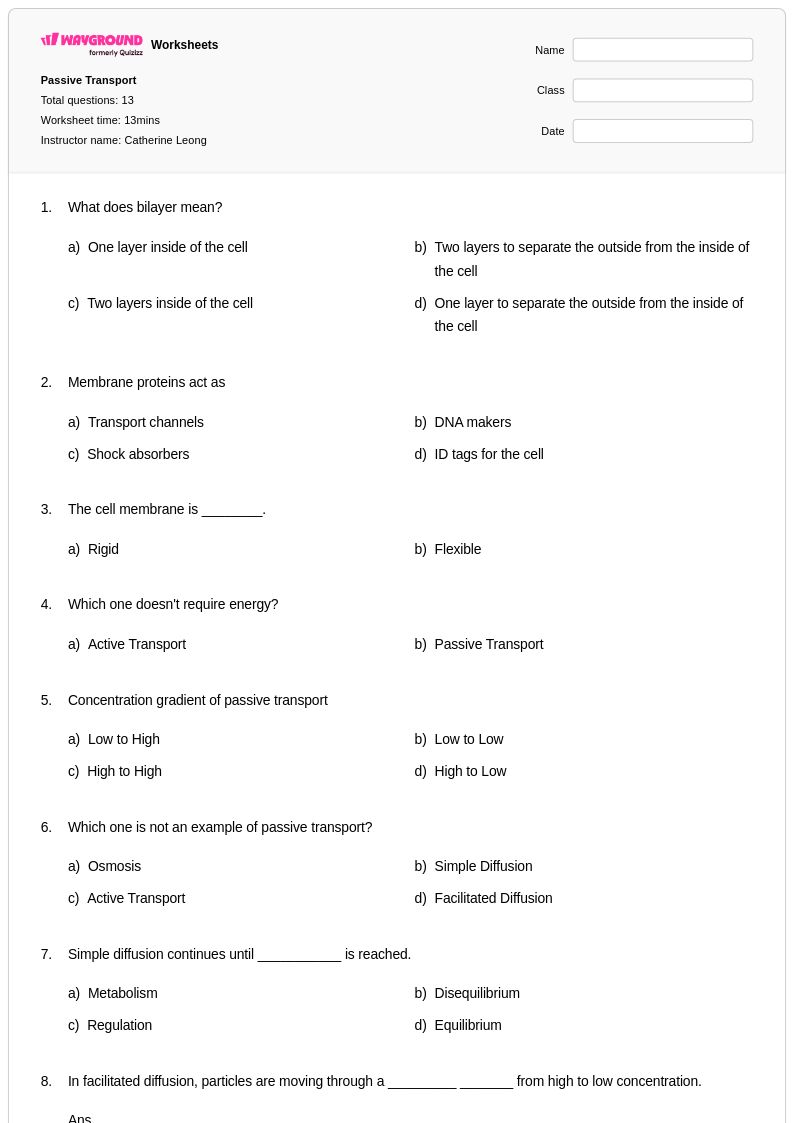
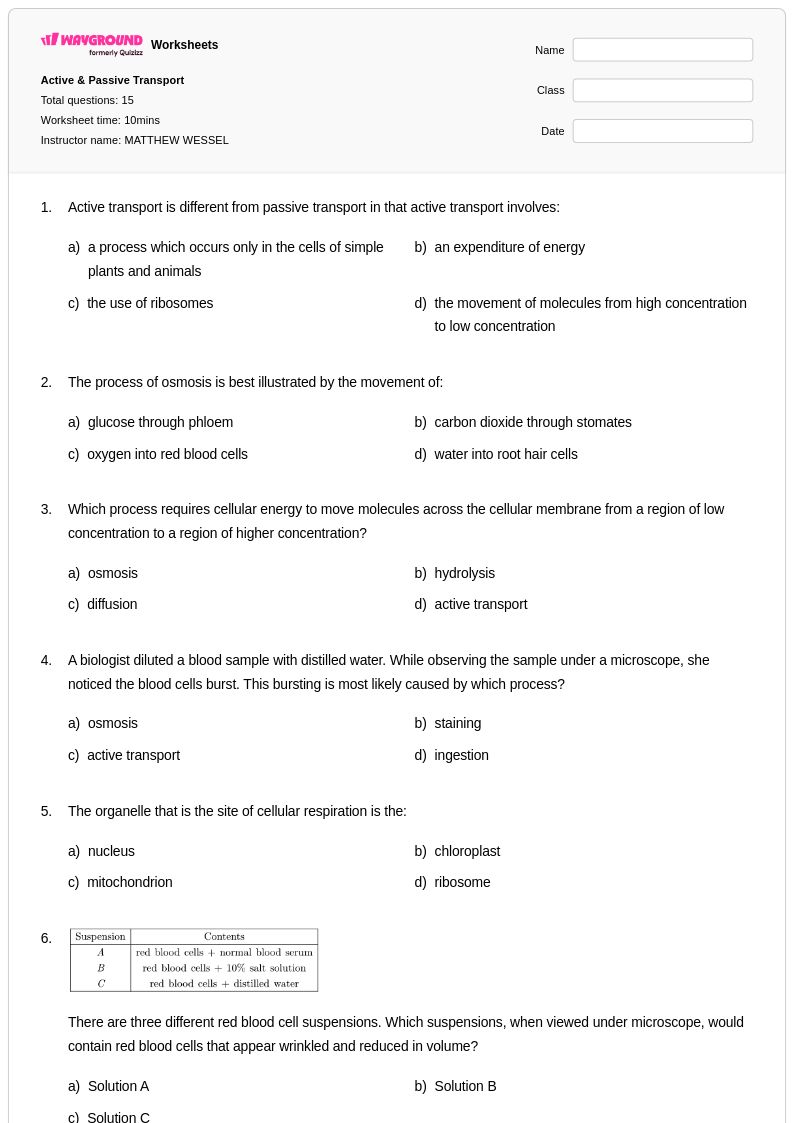
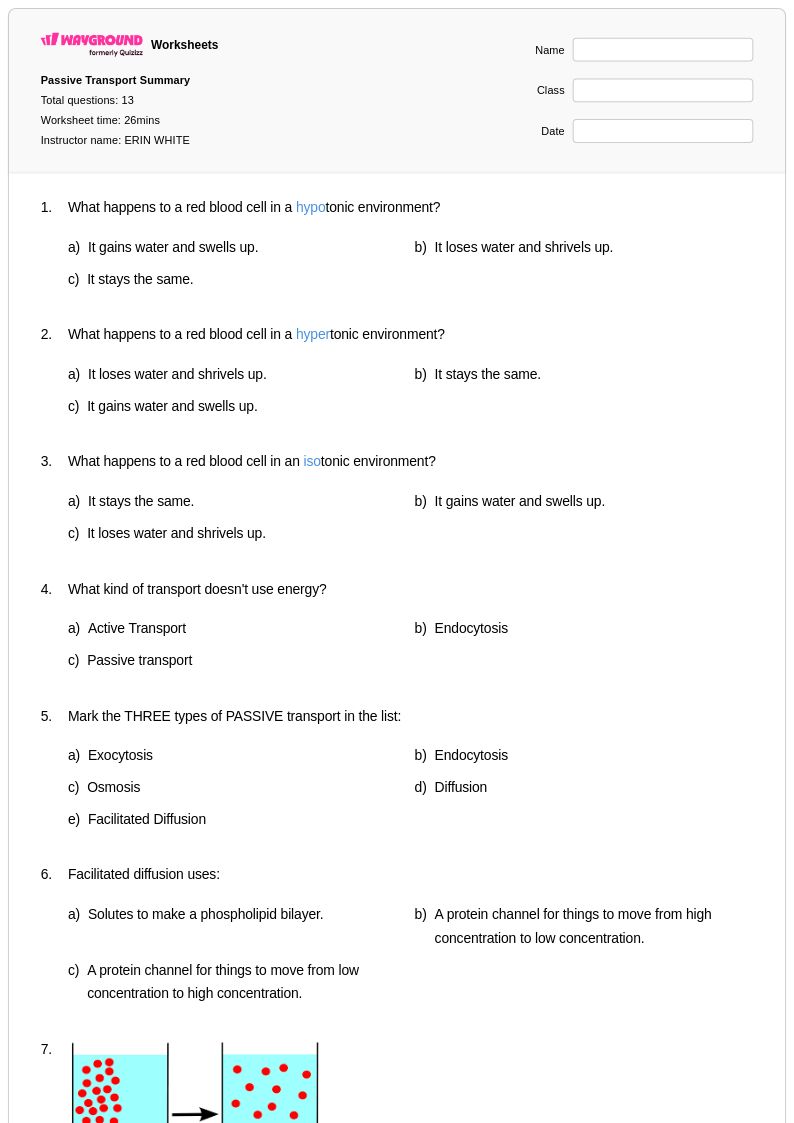
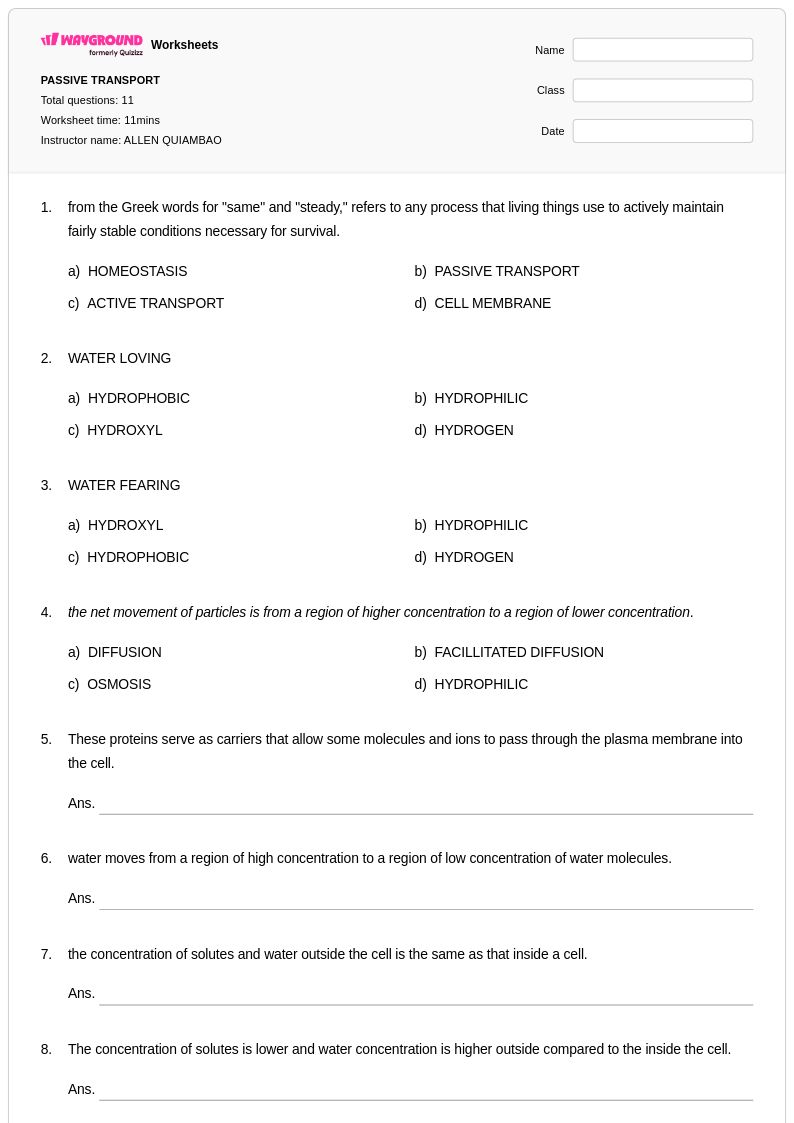
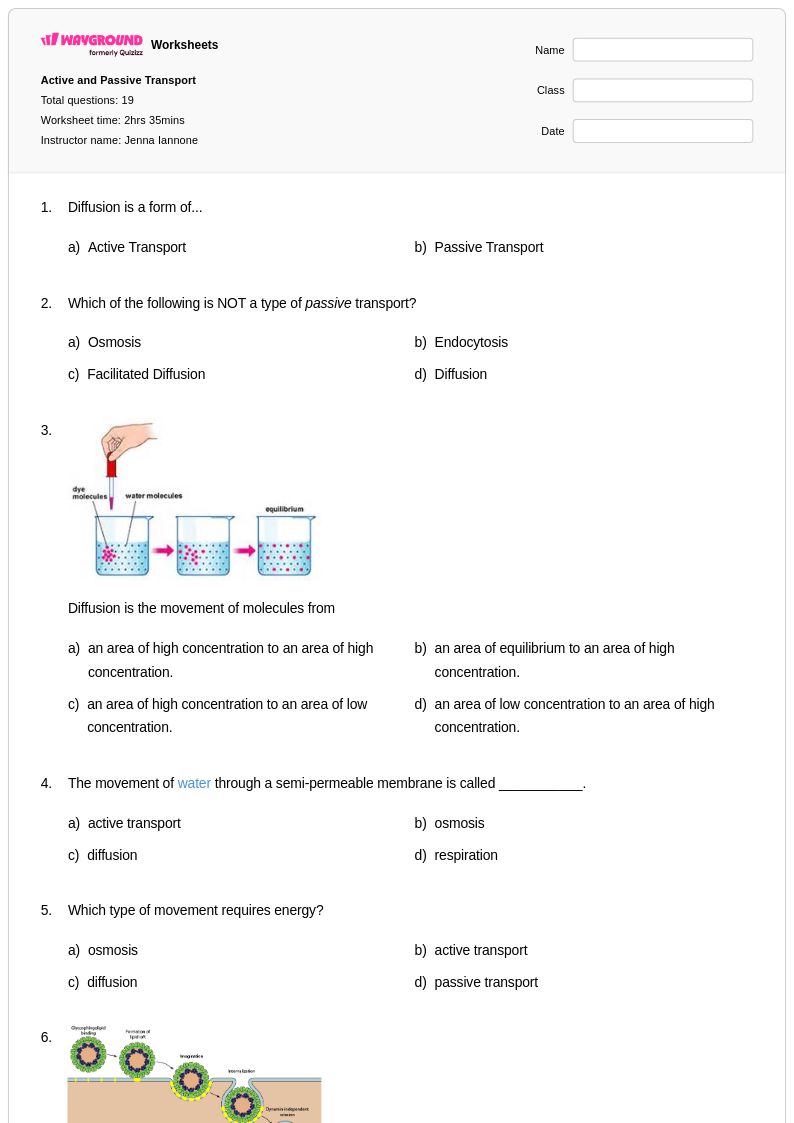
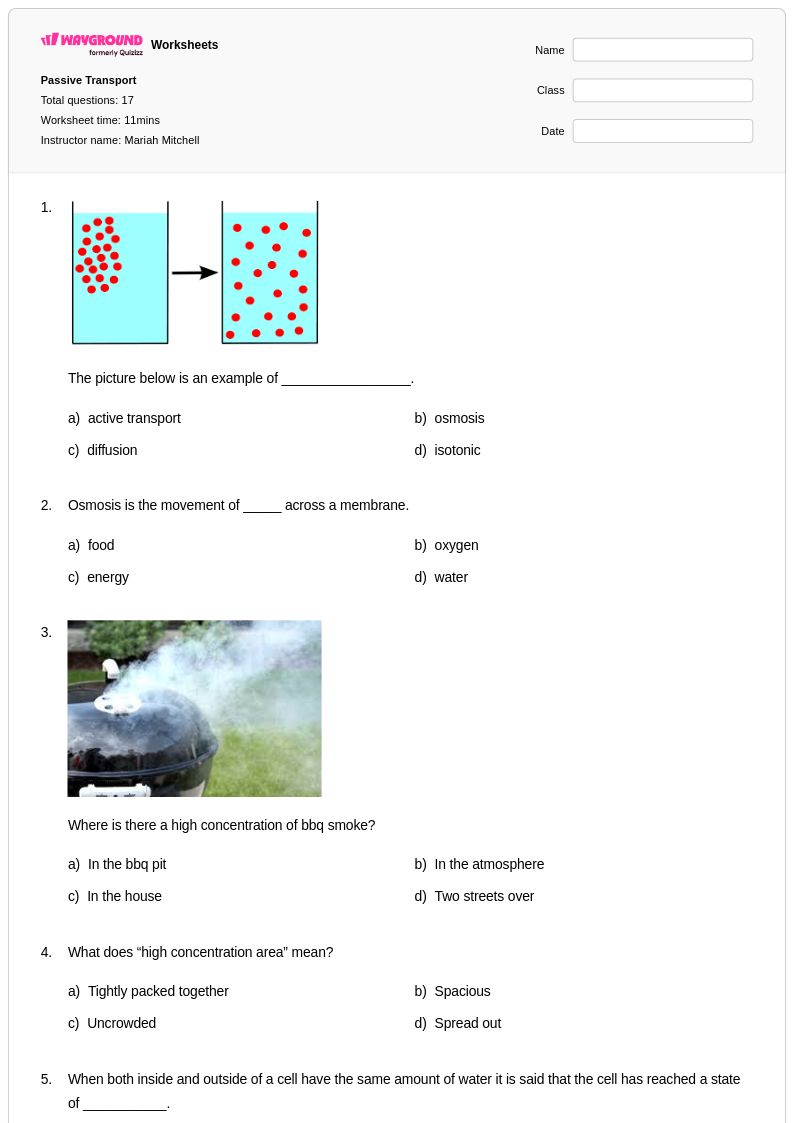
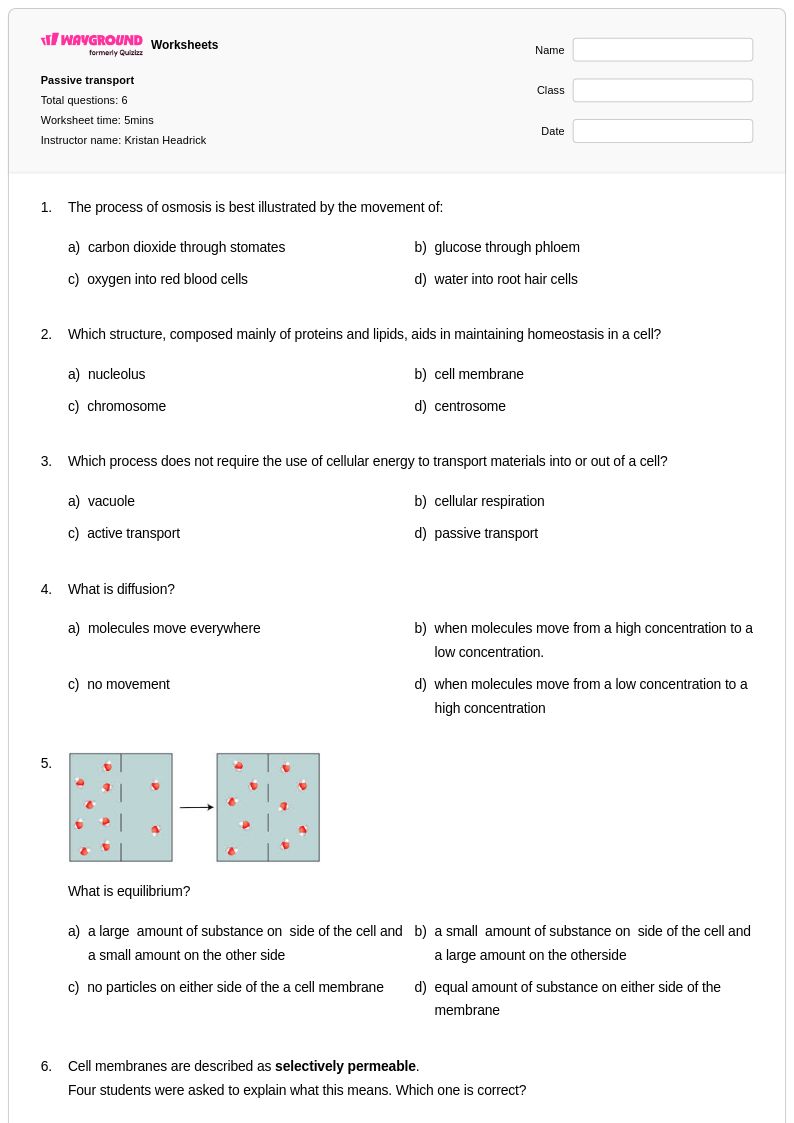
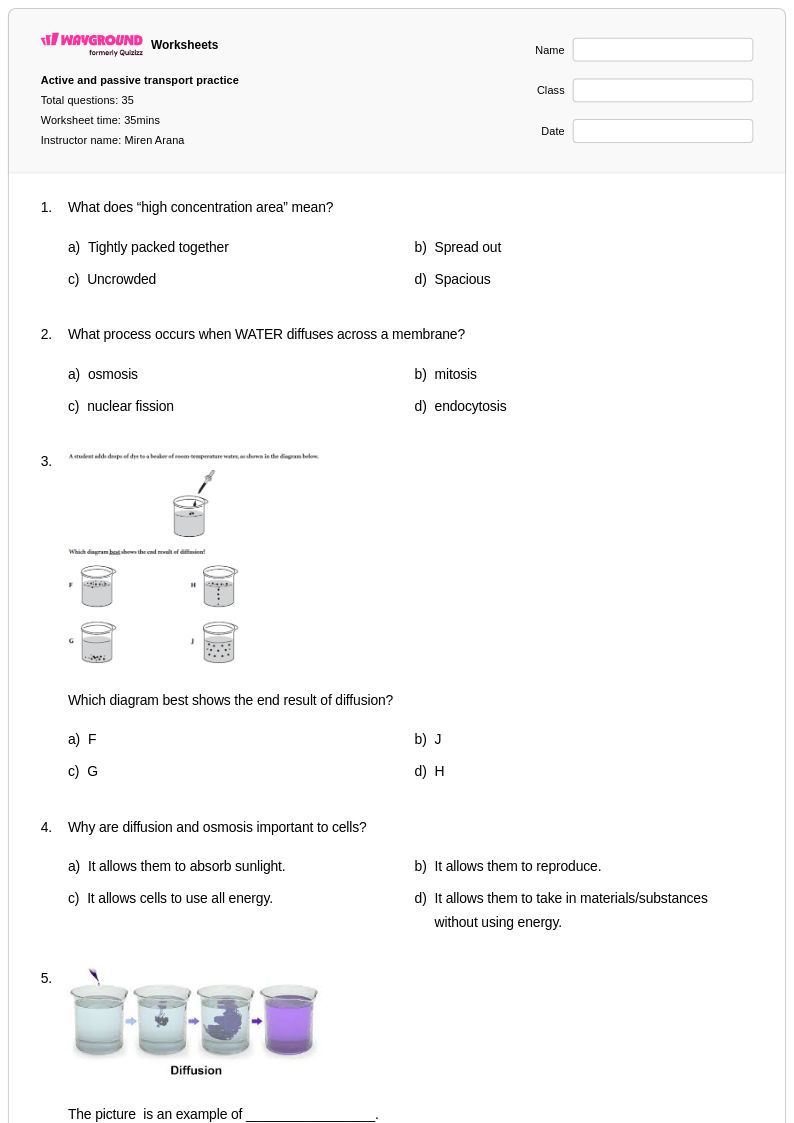
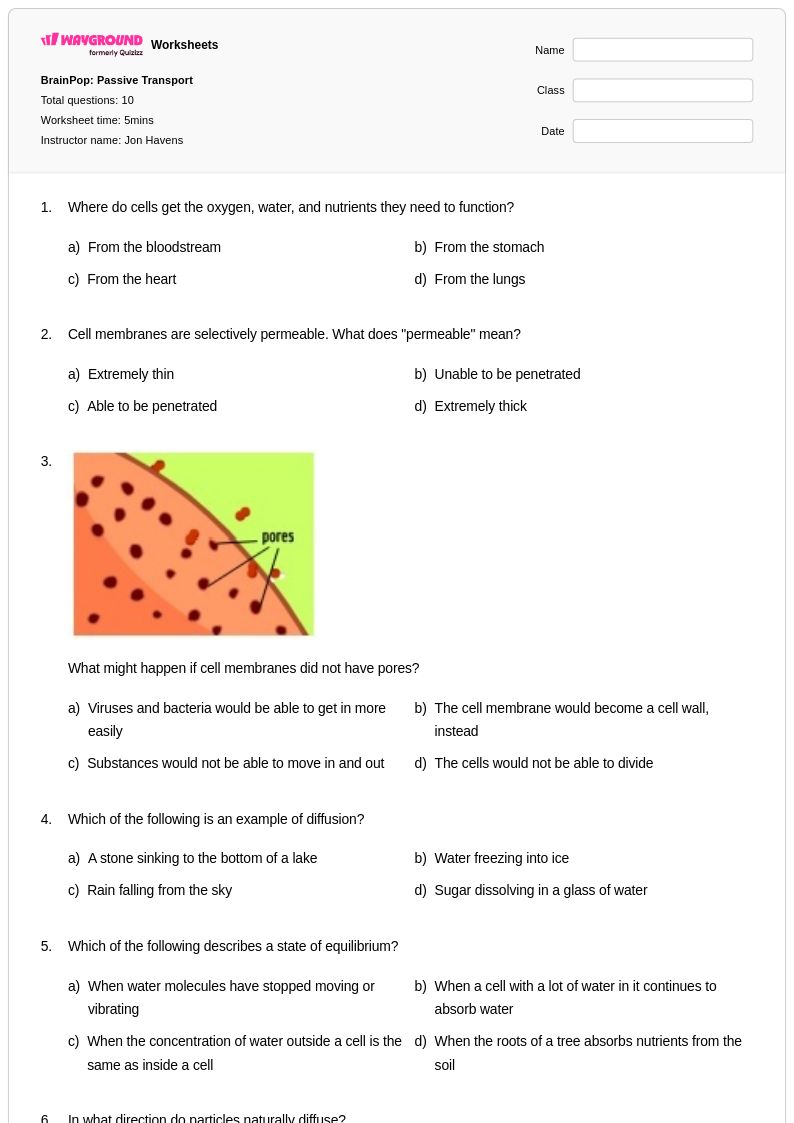
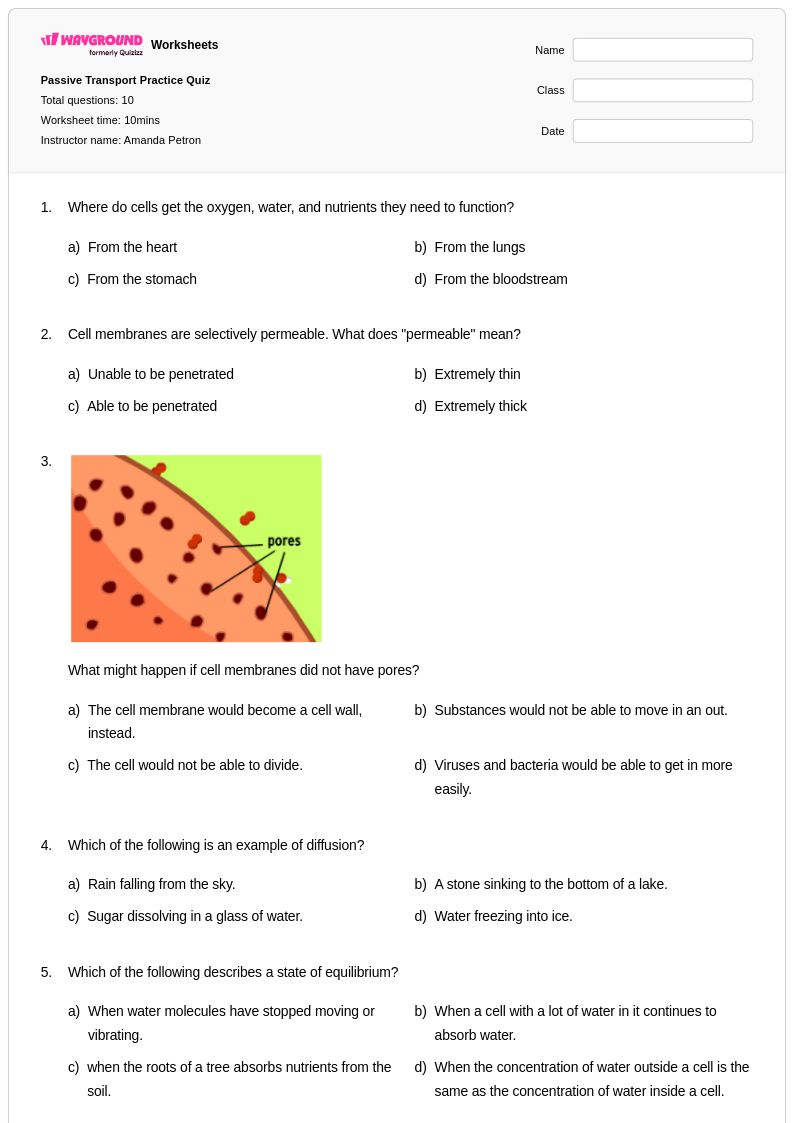
Passive transport worksheets for Grade 8 students available through Wayground (formerly Quizizz) provide comprehensive coverage of this fundamental biological process that allows substances to move across cell membranes without requiring cellular energy. These expertly designed resources help students master the key mechanisms of passive transport, including simple diffusion, facilitated diffusion, and osmosis, while strengthening their understanding of concentration gradients, membrane permeability, and equilibrium states. The collection includes detailed practice problems that challenge students to analyze real-world examples of passive transport, from oxygen entering red blood cells to water movement in plant cells. Each worksheet comes with a complete answer key and is available as a free printable pdf, enabling students to work through complex scenarios involving molecular movement and develop critical thinking skills essential for advanced biology concepts.
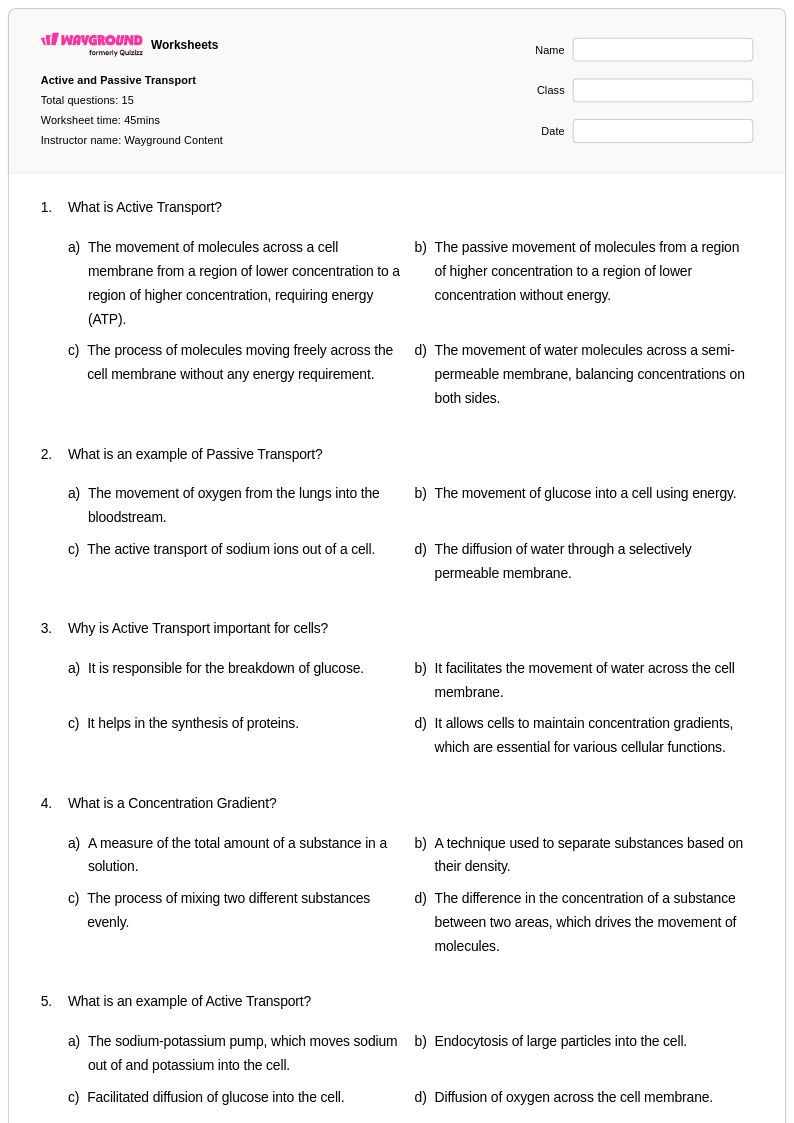
Wayground (formerly Quizizz) supports educators with an extensive library of millions of teacher-created passive transport worksheets specifically aligned with Grade 8 science standards and curriculum requirements. The platform's robust search and filtering capabilities allow teachers to quickly locate resources that match their specific instructional needs, whether focusing on osmosis in plant cells, diffusion rates across different membrane types, or comparative analysis of active versus passive transport mechanisms. These differentiation tools enable seamless customization for diverse learning levels, supporting both remediation for struggling students and enrichment opportunities for advanced learners. Available in both printable pdf format and interactive digital versions, these worksheets streamline lesson planning while providing targeted skill practice that reinforces cellular biology concepts and prepares students for more complex topics in molecular biology and physiology.
FAQs
How do I teach passive transport to biology students?
Start by establishing the concept of concentration gradients before introducing specific types of passive transport — simple diffusion, facilitated diffusion, and osmosis. Use visual analogies like a crowded room emptying into a hallway to help students intuitively grasp why molecules move from high to low concentration without energy input. From there, build toward membrane structure and the role of channel and carrier proteins in facilitated diffusion, so students understand why some molecules require assistance even when no energy is used.
What exercises help students practice passive transport concepts?
Effective practice for passive transport includes labeling diagrams of the lipid bilayer and identifying where simple diffusion versus facilitated diffusion occurs, as well as solving osmosis scenarios involving hypertonic, hypotonic, and isotonic solutions. Fill-in-the-blank and short-answer questions that ask students to predict molecular movement based on concentration gradients reinforce the underlying logic rather than rote memorization. Passive transport worksheets on Wayground provide these varied question formats alongside answer keys, making them useful for both guided practice and independent review.
What mistakes do students commonly make when learning about passive transport?
The most common misconception is confusing passive transport with active transport — students often assume that any movement across a membrane requires energy. Another frequent error is misapplying osmosis to solutes rather than water: students sometimes describe solutes as moving via osmosis instead of recognizing that osmosis specifically refers to water movement through a semi-permeable membrane. Students also frequently struggle with tonicity, incorrectly predicting whether a cell will swell or shrink in a given solution because they confuse the solute concentration inside and outside the cell.
How do I differentiate passive transport instruction for students with different learning needs?
For students who struggle with reading-heavy content, visual diagrams and annotated membrane models help make abstract molecular movement concrete. On Wayground, teachers can apply individual accommodations such as Read Aloud to have questions read to students, Reduced answer choices to lower cognitive load, and extended time to give struggling learners more processing time per question. These settings can be applied per student without affecting the rest of the class, making differentiation practical in a mixed-ability biology course.
How can I use passive transport worksheets in my classroom?
Passive transport worksheets on Wayground are available as printable PDFs for traditional classroom use and in digital formats for technology-integrated environments, including the option to host them as a quiz directly on Wayground. Printable versions work well as guided notes, homework assignments, or in-class review activities, while digital formats allow for self-paced practice with immediate feedback. Each worksheet includes an answer key, so teachers can use them for formative assessment or students can use them for independent self-checking.
How do I help students understand the difference between diffusion and osmosis?
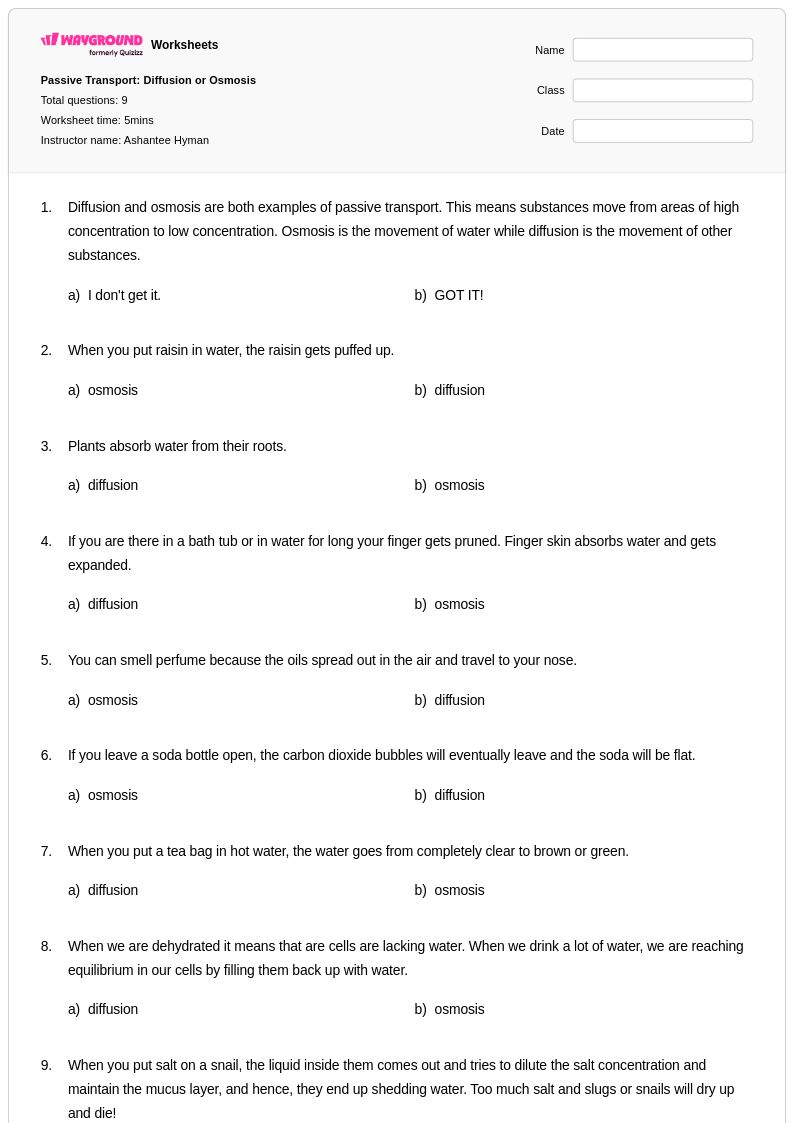
Clarify that osmosis is a specific type of diffusion that applies exclusively to water moving across a semi-permeable membrane, while diffusion is the broader term for any substance moving from high to low concentration. A common teaching strategy is to contrast the two side by side using the same membrane diagram — one showing a small nonpolar molecule diffusing through the lipid bilayer and the other showing water molecules moving in response to a solute gradient. Reinforcing that both processes are driven by concentration gradients, but involve different molecules and sometimes different membrane pathways, helps students distinguish them without conflating the concepts.