Free Printable Interactions in an Ecosystem Worksheets for Grade 1
Enhance Grade 1 students' understanding of interactions in an ecosystem with Wayground's free biology worksheets, featuring engaging printables, practice problems, and complete answer keys in convenient PDF format.
Explore printable Interactions in an Ecosystem worksheets for Grade 1
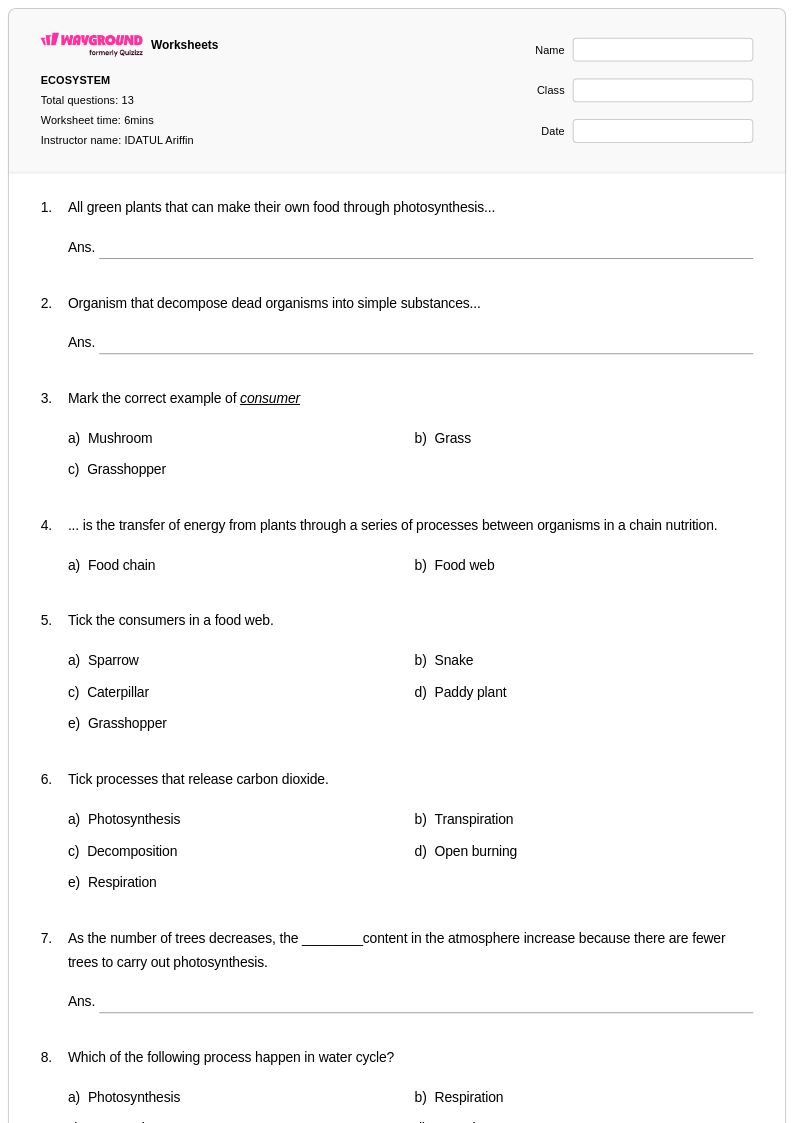
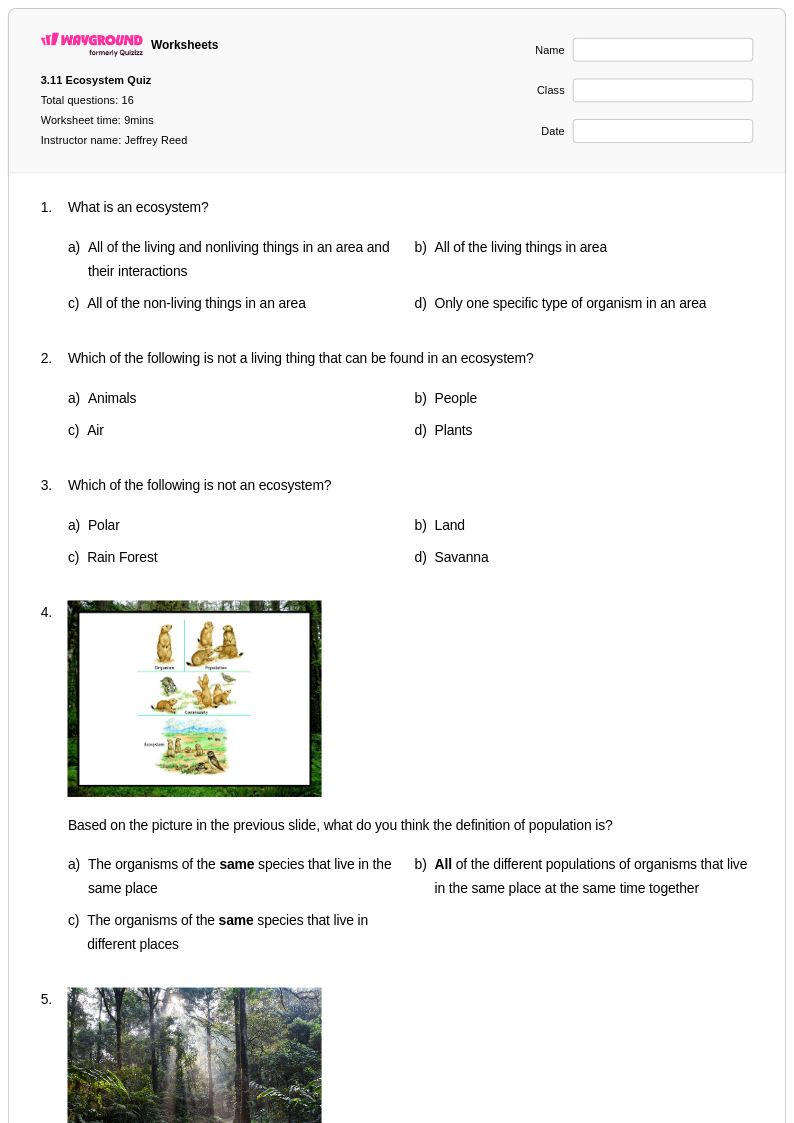
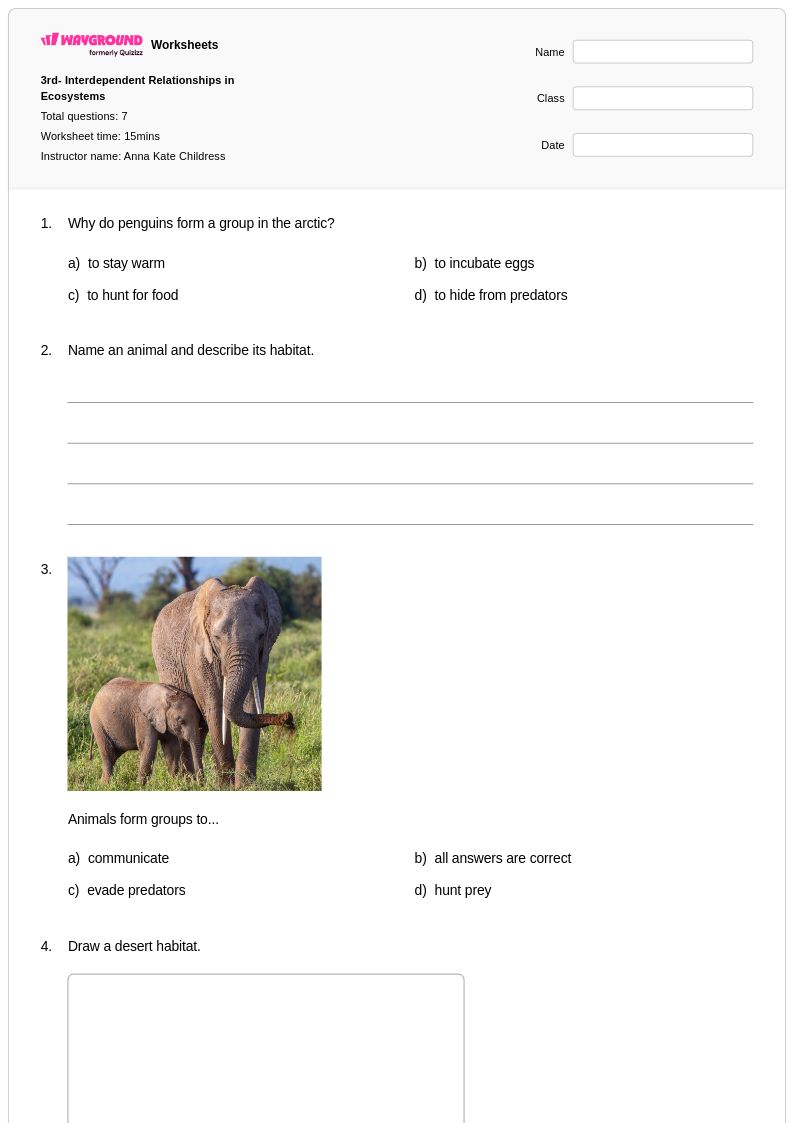
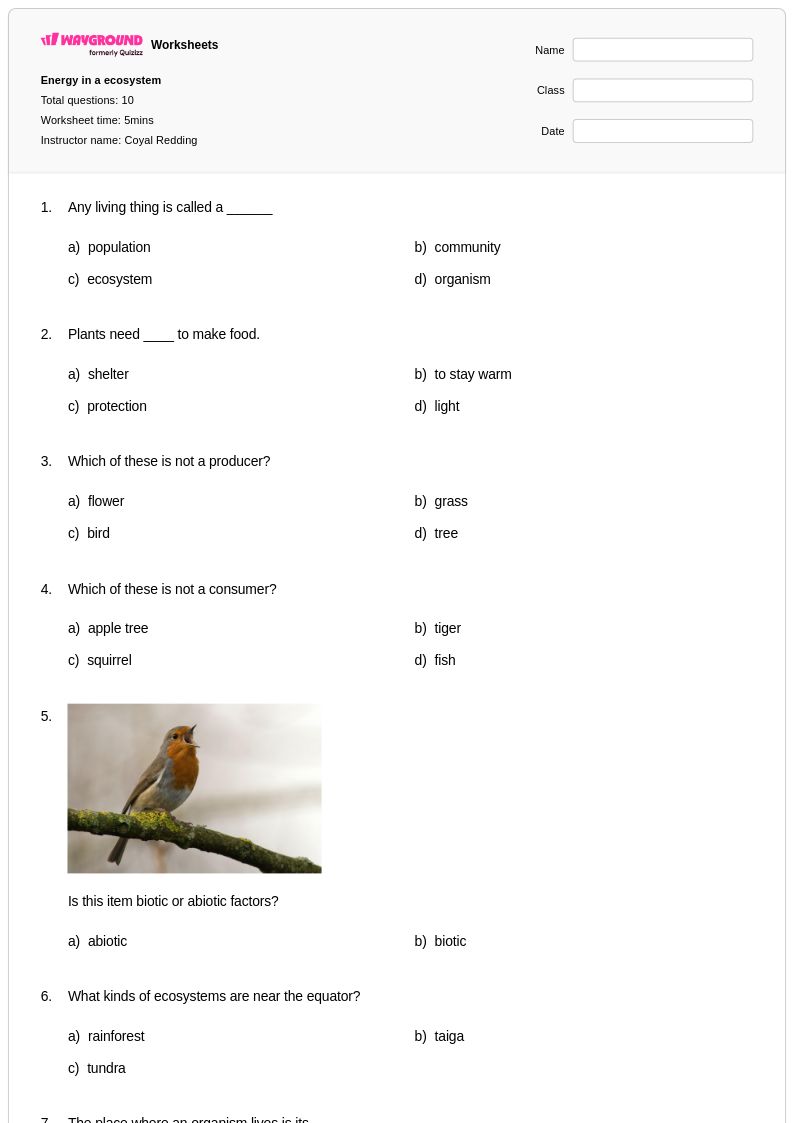
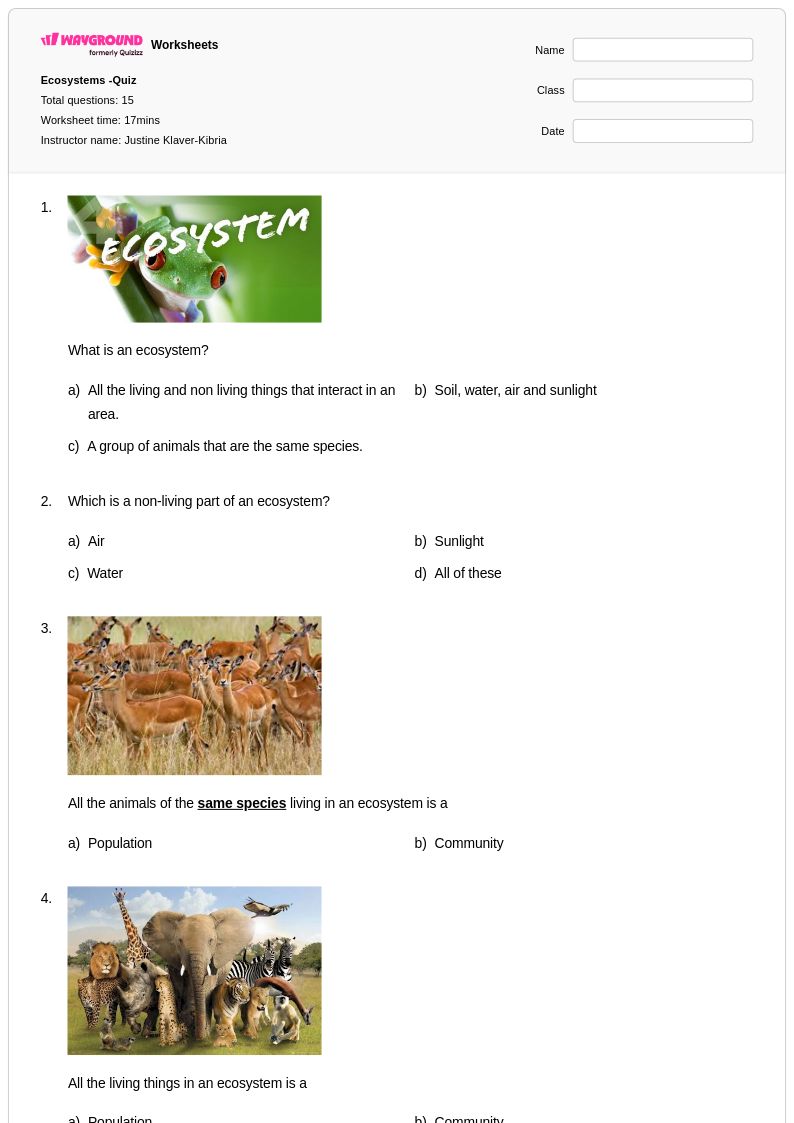
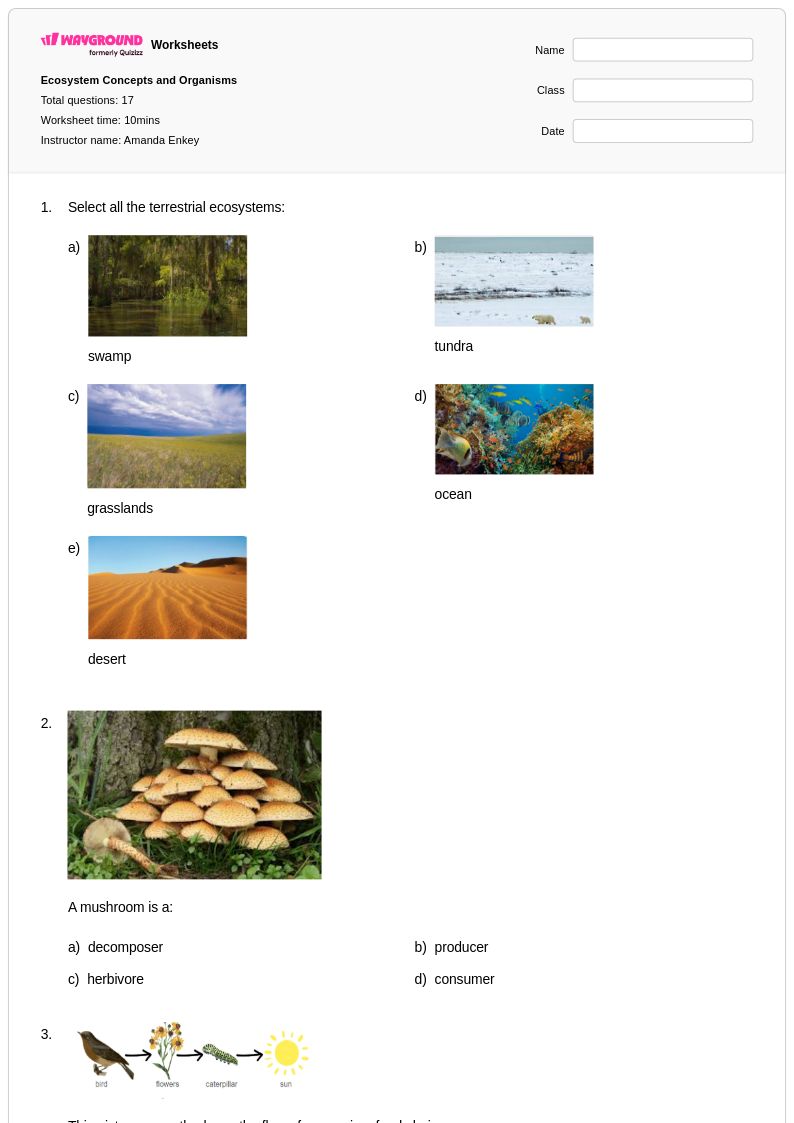
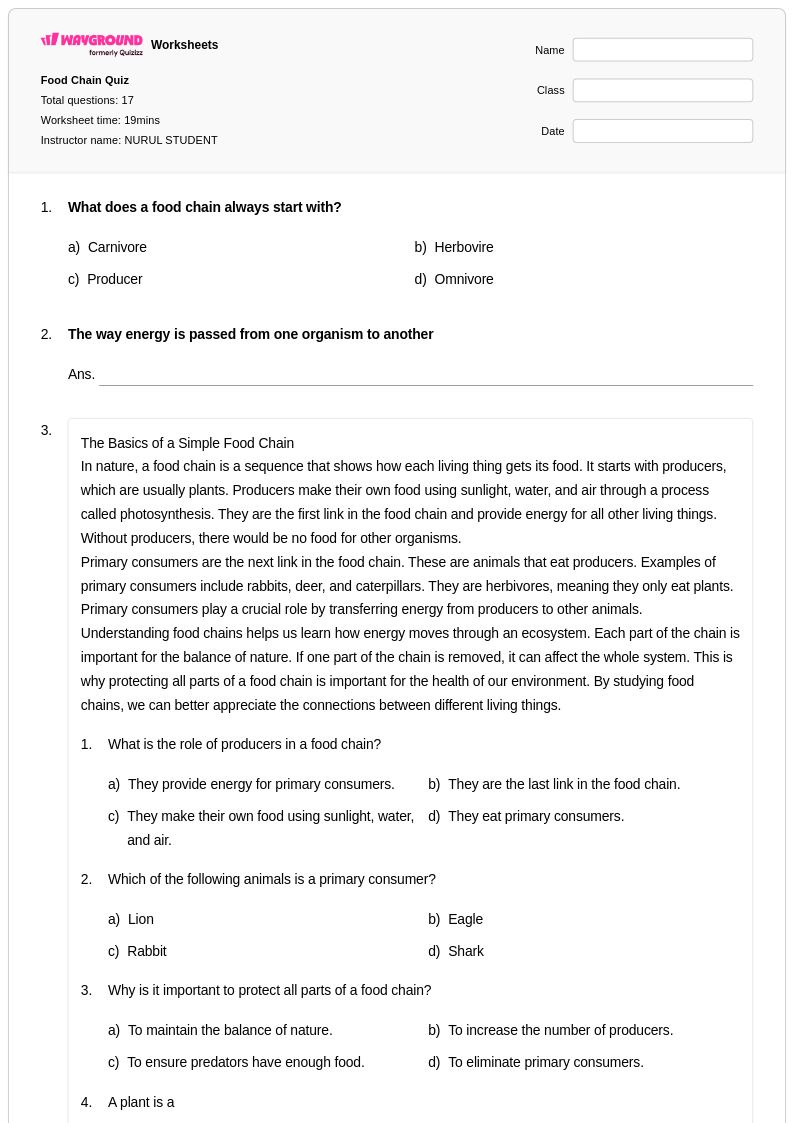
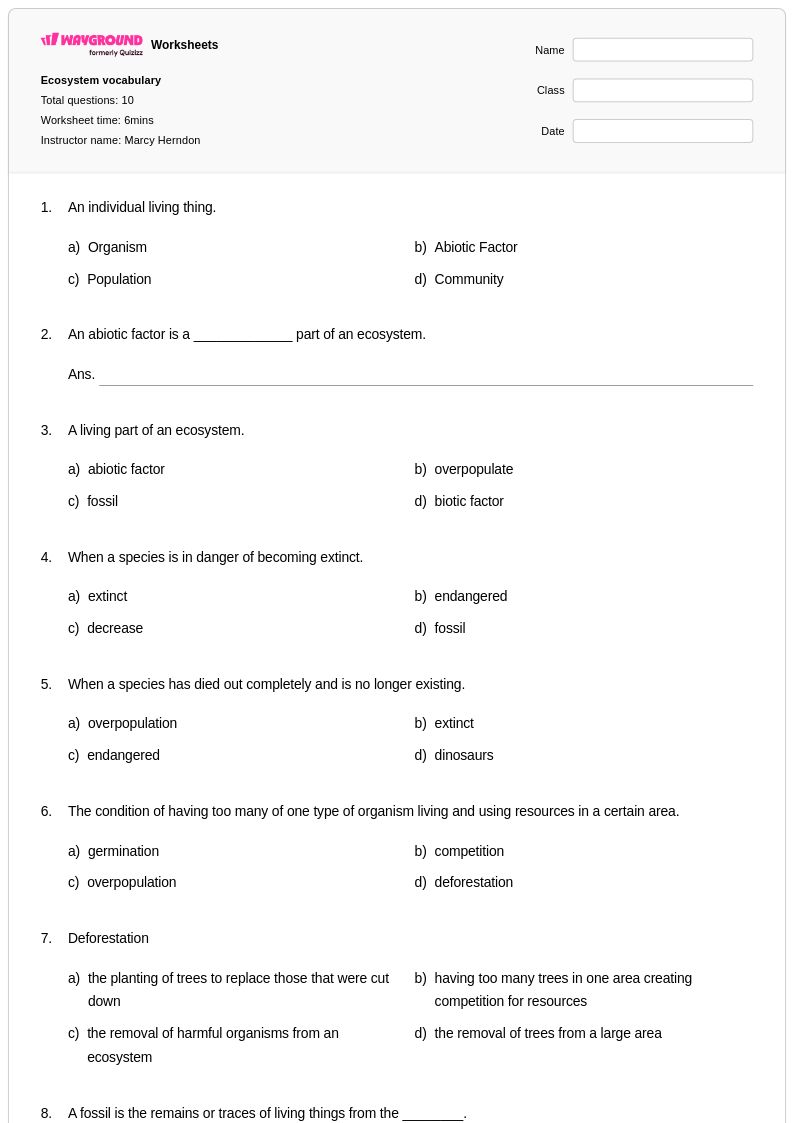
Grade 1 interactions in an ecosystem worksheets available through Wayground (formerly Quizizz) introduce young learners to the fundamental relationships between living and nonliving things in their environment. These carefully designed educational resources help first-grade students develop observation skills and basic scientific thinking as they explore how plants and animals depend on each other and their surroundings for survival. The worksheets feature age-appropriate activities that guide students through identifying simple food chains, recognizing animal habitats, and understanding how organisms meet their basic needs. Each printable resource includes clear visual elements and hands-on practice problems that make complex ecological concepts accessible to beginning readers, with comprehensive answer keys provided to support both independent learning and teacher-guided instruction. These free educational materials strengthen foundational science skills while building vocabulary related to ecosystem interactions through engaging pdf formats that can be easily distributed in any classroom setting.
Wayground (formerly Quizizz) empowers educators with an extensive collection of millions of teacher-created resources specifically designed to support Grade 1 ecosystem learning objectives. The platform's advanced search and filtering capabilities allow teachers to quickly locate worksheets that align with specific curriculum standards and match their students' developmental needs. Teachers can easily differentiate instruction by selecting from various difficulty levels and activity types, then customize materials to address individual learning goals or accommodate diverse classroom requirements. The flexible format options include both printable pdf versions for traditional paper-based activities and digital formats for technology-integrated lessons, making it simple to incorporate ecosystem interaction practice into daily instruction. These comprehensive tools support effective lesson planning while providing targeted resources for remediation, enrichment, and ongoing skill practice that helps young scientists build confidence in understanding the natural world around them.
FAQs
How do I teach interactions in an ecosystem to biology students?
Start by grounding students in the concept of ecological roles before introducing relationship types such as predator-prey dynamics, competition, and symbiosis. Use real-world case studies like wolf reintroduction in Yellowstone or coral reef food webs to show how one change ripples through an entire ecosystem. Scaffolding instruction from individual organism relationships toward whole-system energy flow helps students build conceptual depth before tackling complex scenarios.
What kinds of practice problems help students understand predator-prey relationships and food webs?
Effective practice includes interpreting food web diagrams to trace energy flow, analyzing population graphs to identify predator-prey cycles, and predicting what happens to a food web when one species is removed. Scenario-based problems that ask students to evaluate the consequences of an invasive species or habitat loss are particularly strong for applying ecological reasoning. These question types mirror the analytical thinking required on biology assessments.
What misconceptions do students commonly have about symbiosis and ecological relationships?
A common error is treating all close species interactions as mutualistic, when commensalism and parasitism are equally prevalent. Students also frequently confuse competition with predation, or assume that predators always reduce prey populations to extinction rather than maintaining dynamic balance. Another persistent misconception is that energy transfers between trophic levels are efficient, when in reality only about 10% is passed on, which directly shapes ecosystem structure.
How can I use ecosystem interaction worksheets to assess student understanding?
Ecosystem interaction worksheets work well as formative checks after introducing each relationship type, and as summative tools once the full unit on ecological dynamics is complete. Tasks that ask students to annotate food webs, classify relationships from field-study descriptions, or predict population consequences reveal whether students can apply concepts, not just recall definitions. Answer keys allow teachers to give targeted feedback quickly and identify which ecological concepts need reteaching.
How do I use Wayground's interactions in an ecosystem worksheets in my classroom?
Wayground's ecosystem interaction worksheets are available as printable PDFs for traditional classroom use and in digital formats for technology-integrated or hybrid environments, and teachers can also host them as a quiz directly on Wayground. The platform's search and filtering tools let teachers locate worksheets targeting specific concepts such as symbiosis, energy flow, or population dynamics, making it straightforward to match materials to a lesson's exact focus. For students who need accommodations, Wayground supports settings such as extended time, read-aloud, and reduced answer choices, all configurable per student without notifying the rest of the class.
How do I differentiate ecosystem interaction worksheets for students at different skill levels?
For students who need additional support, start with worksheets that present pre-labeled food web diagrams and ask students to classify single relationships before moving to multi-organism scenarios. More advanced students benefit from open-ended analysis tasks such as designing a food web for a specific biome or evaluating real ecological data. On Wayground, teachers can apply accommodations including reduced answer choices and read-aloud at the individual student level, so differentiation happens within a single shared assignment without singling any student out.