Free Printable Vertebrates and Invertebrates Worksheets for Grade 1
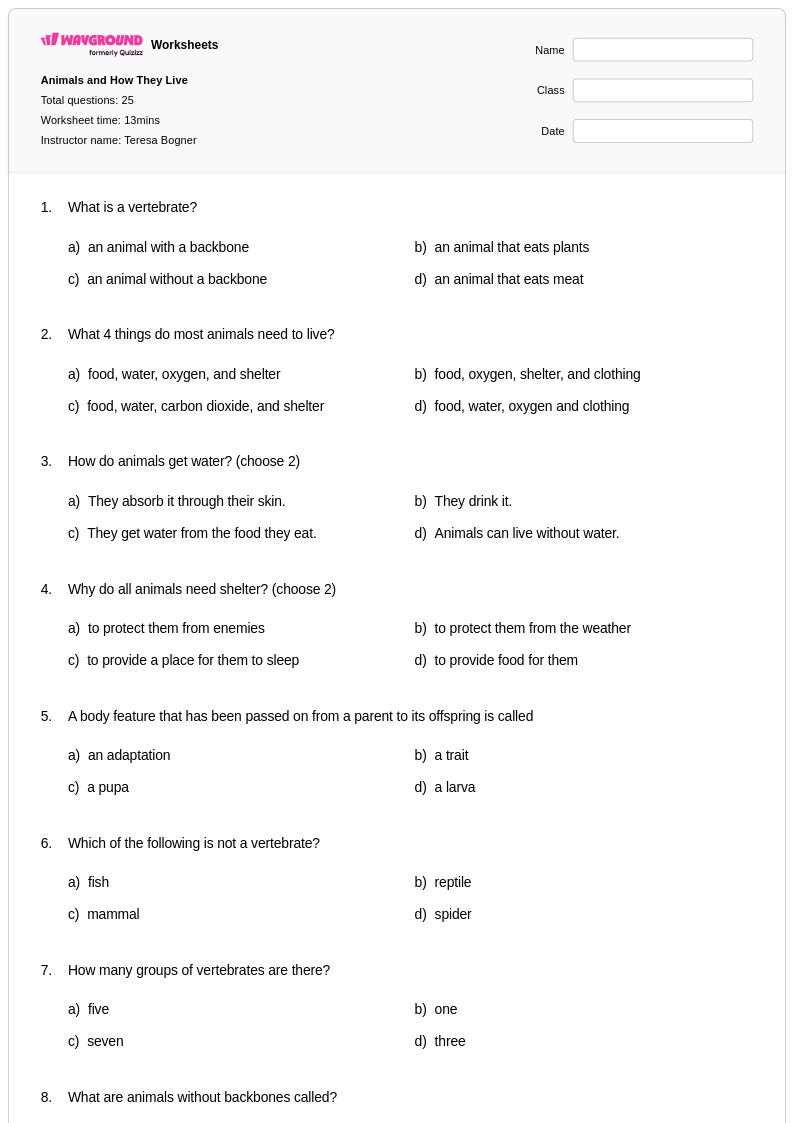
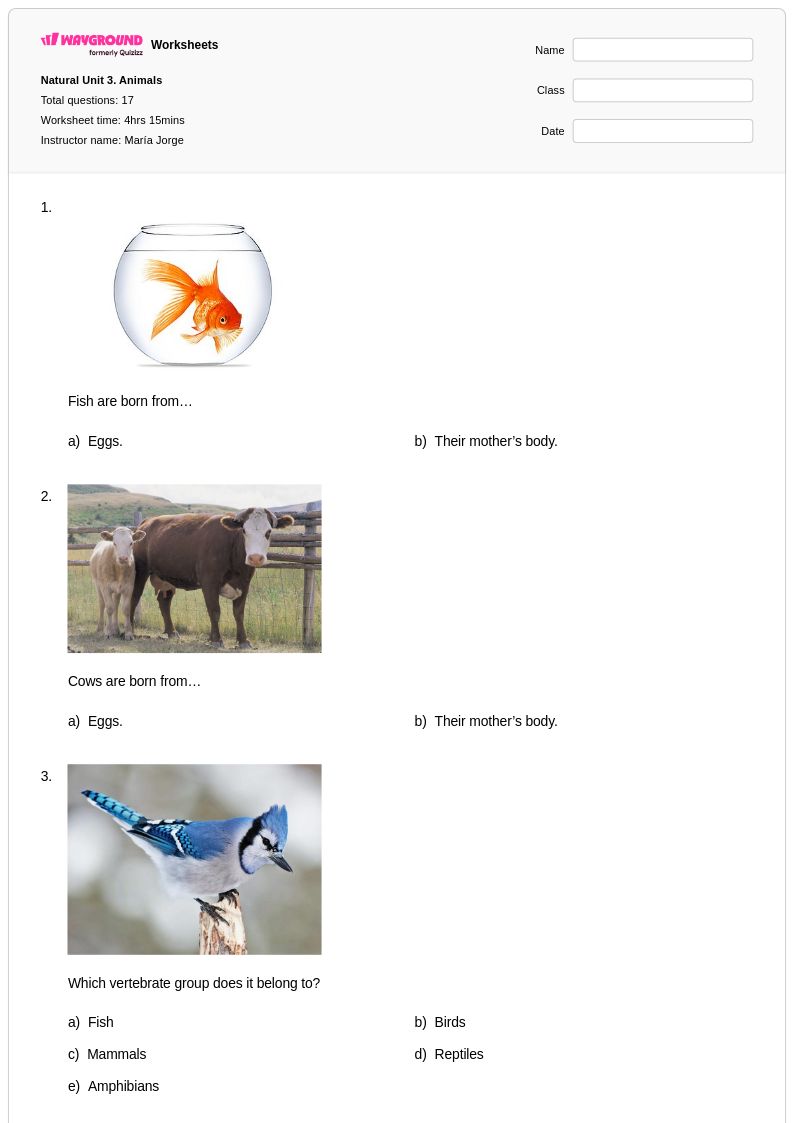
Grade 1 vertebrates and invertebrates worksheets from Wayground help young students classify animals through engaging printables, practice problems, and free PDF resources with complete answer keys.
Explore printable Vertebrates and Invertebrates worksheets for Grade 1
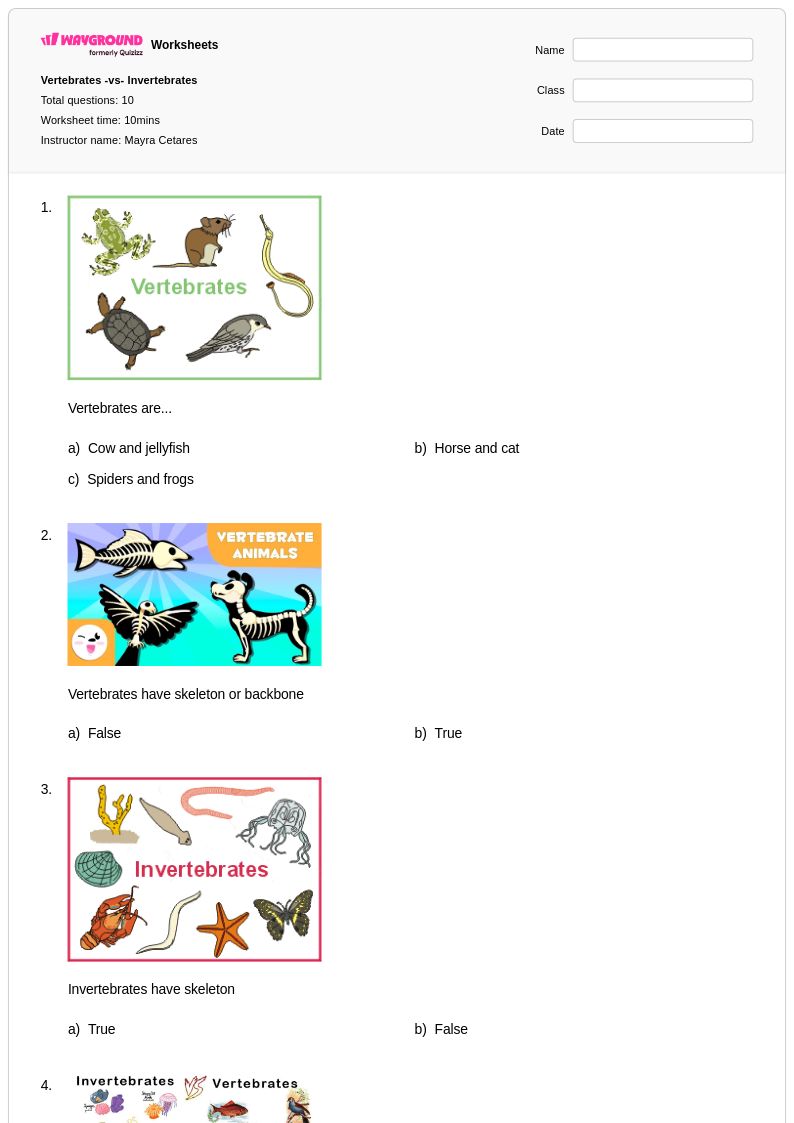
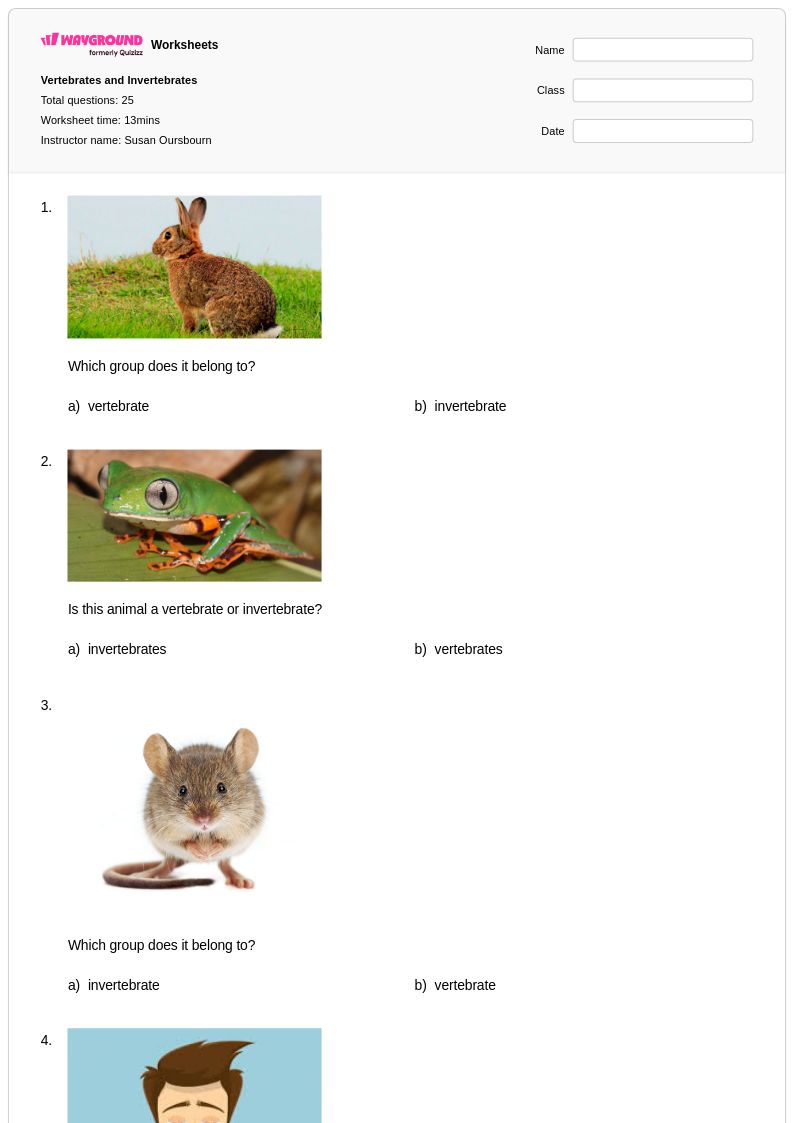
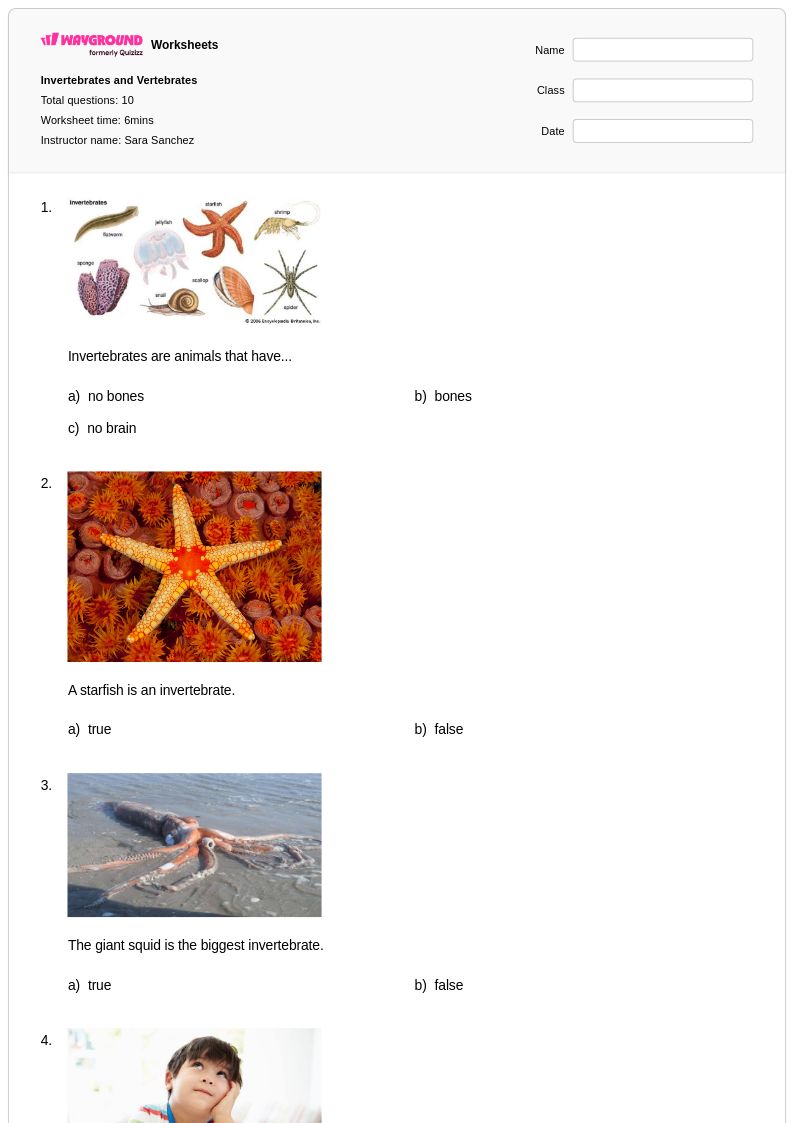
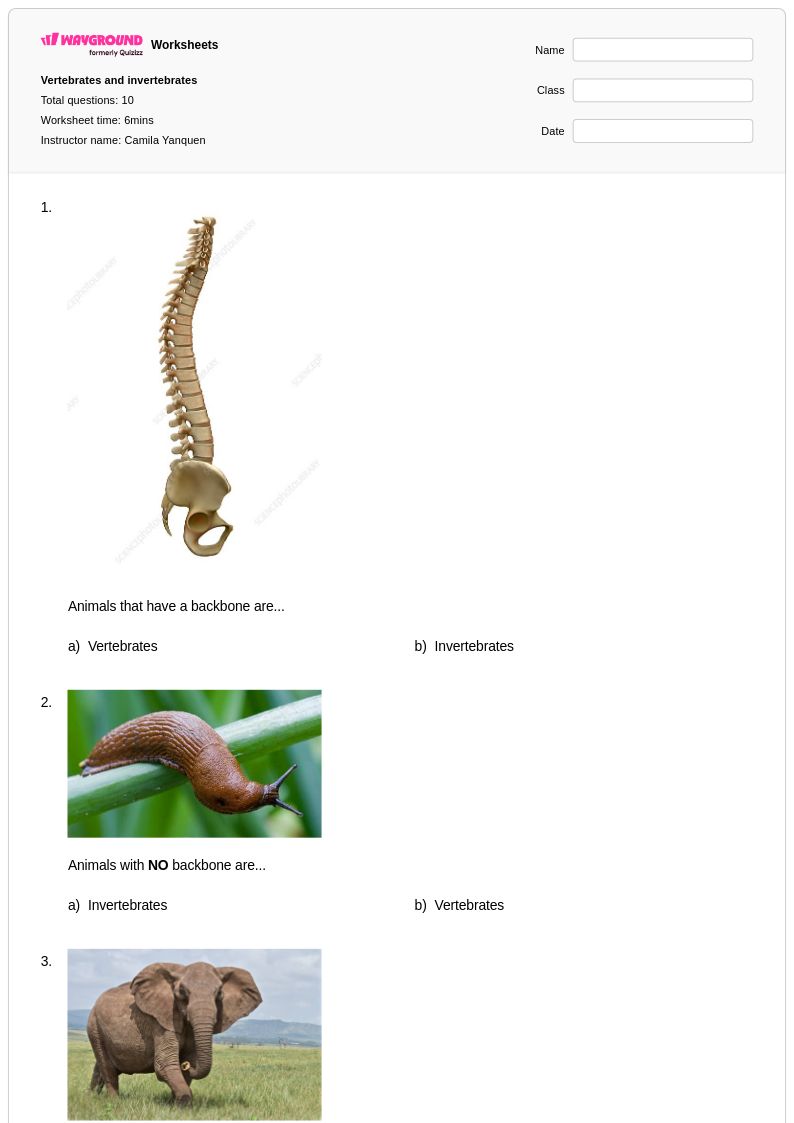
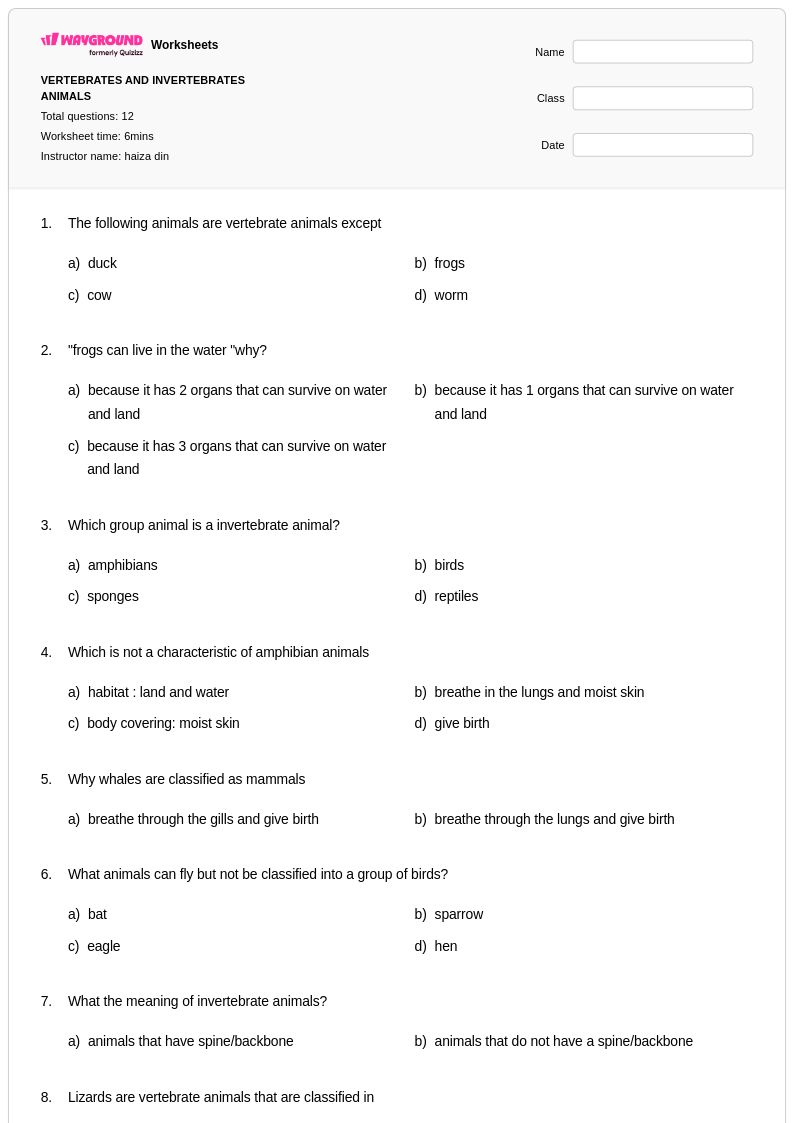
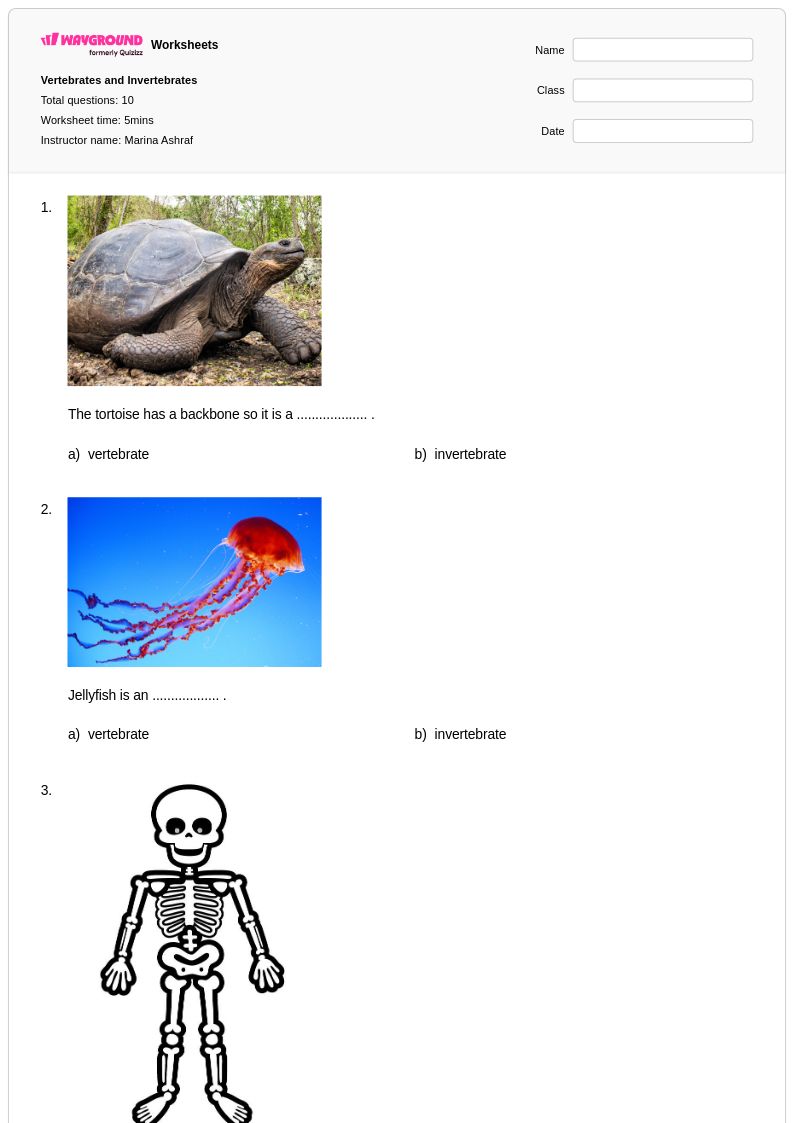
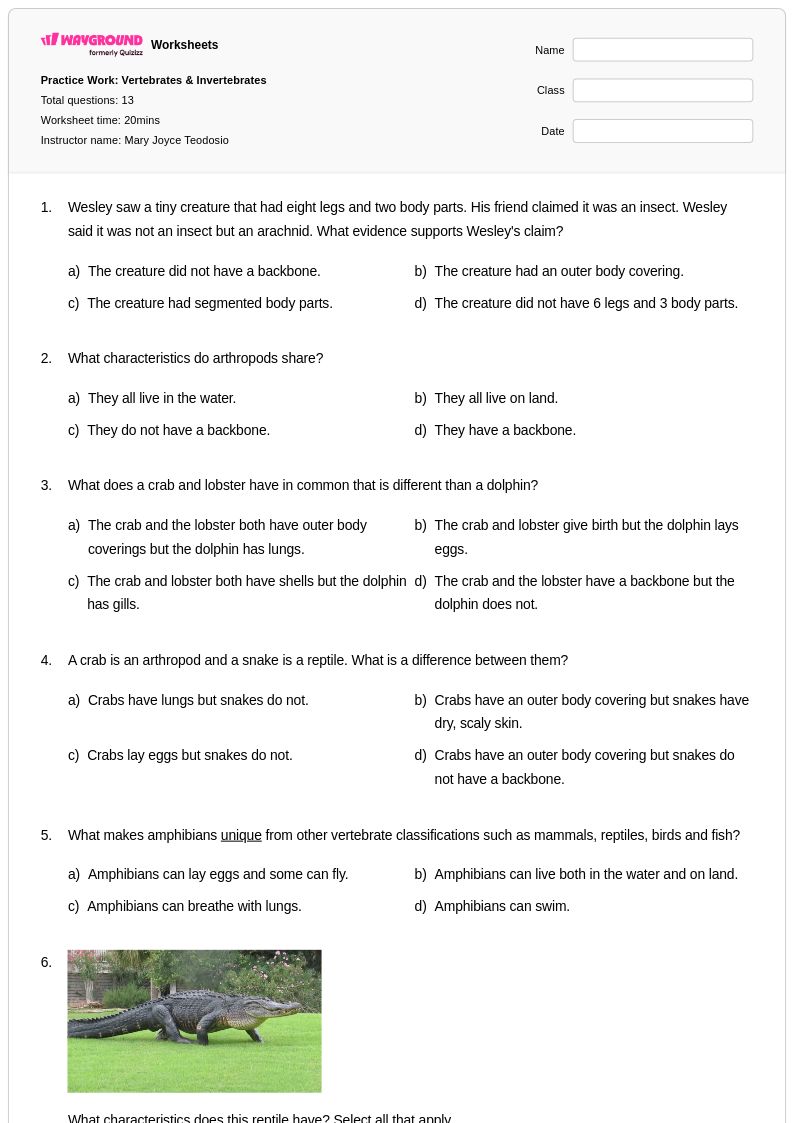
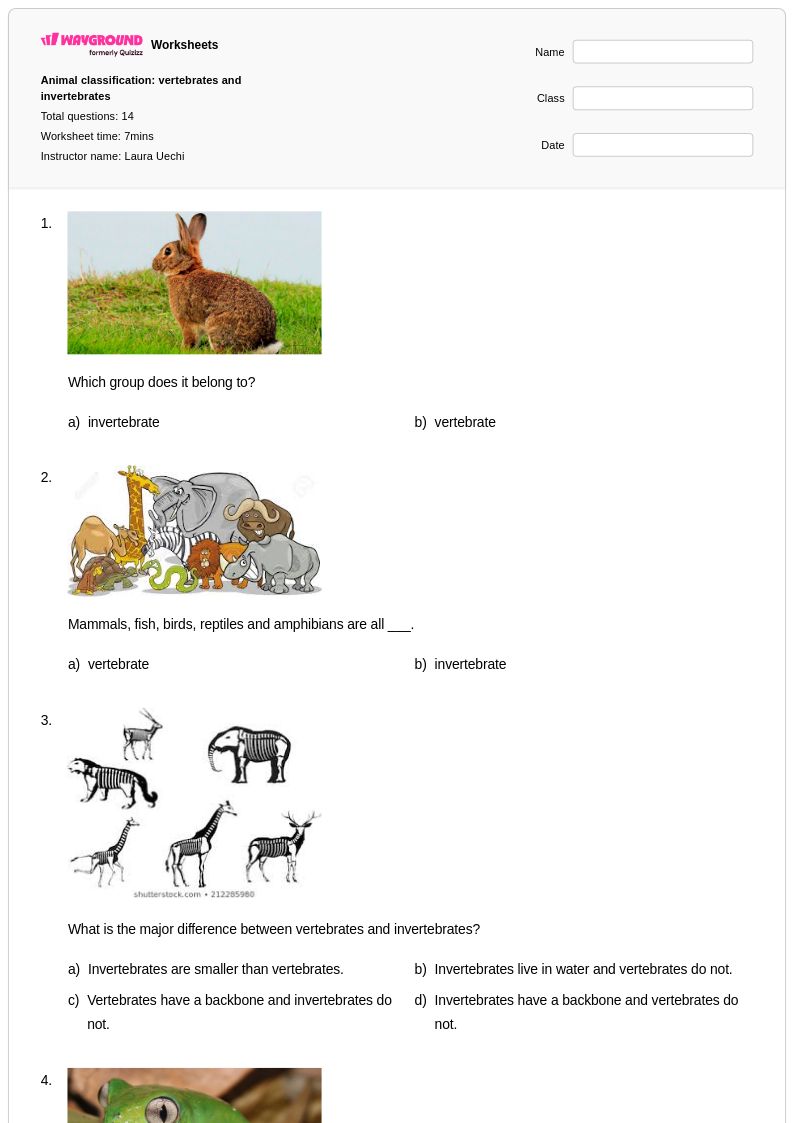
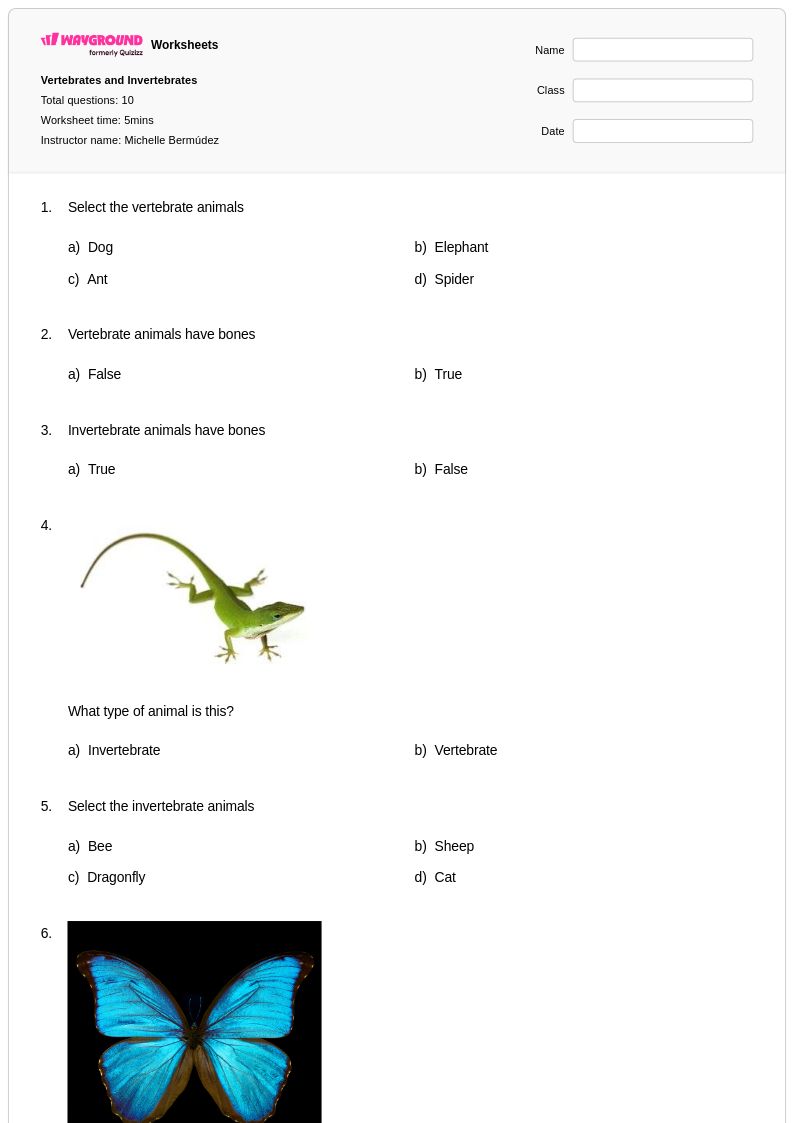
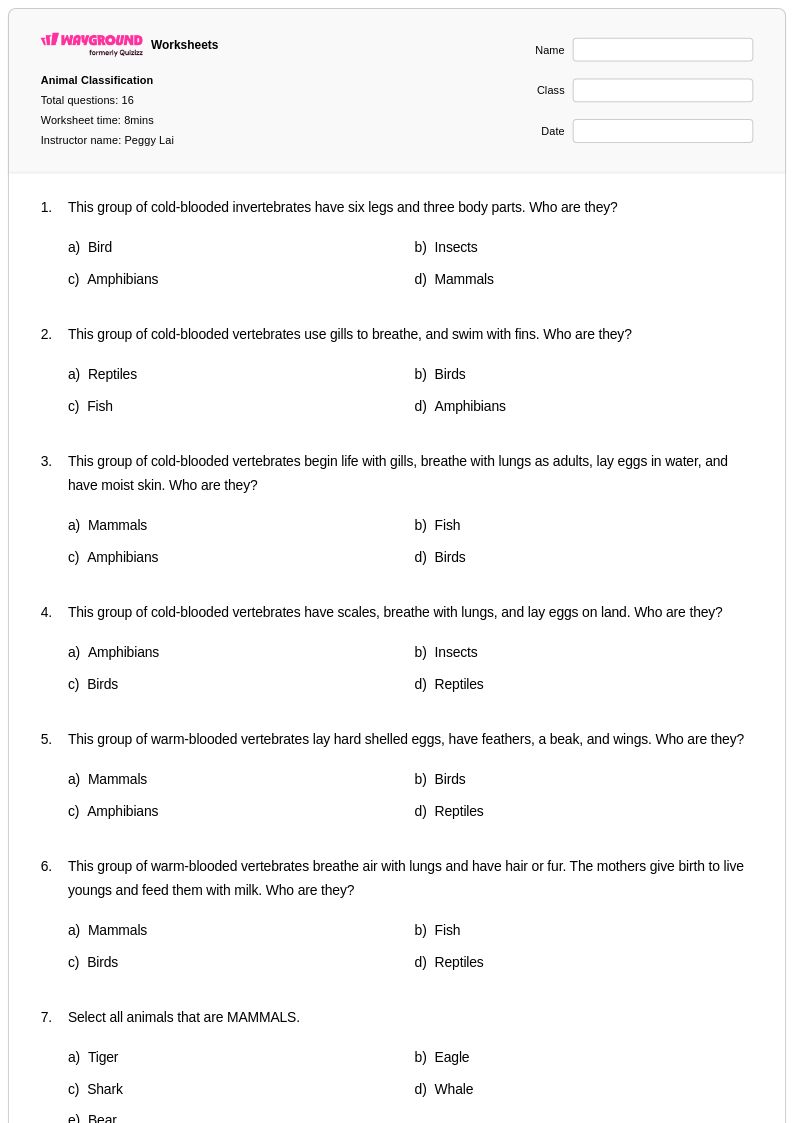
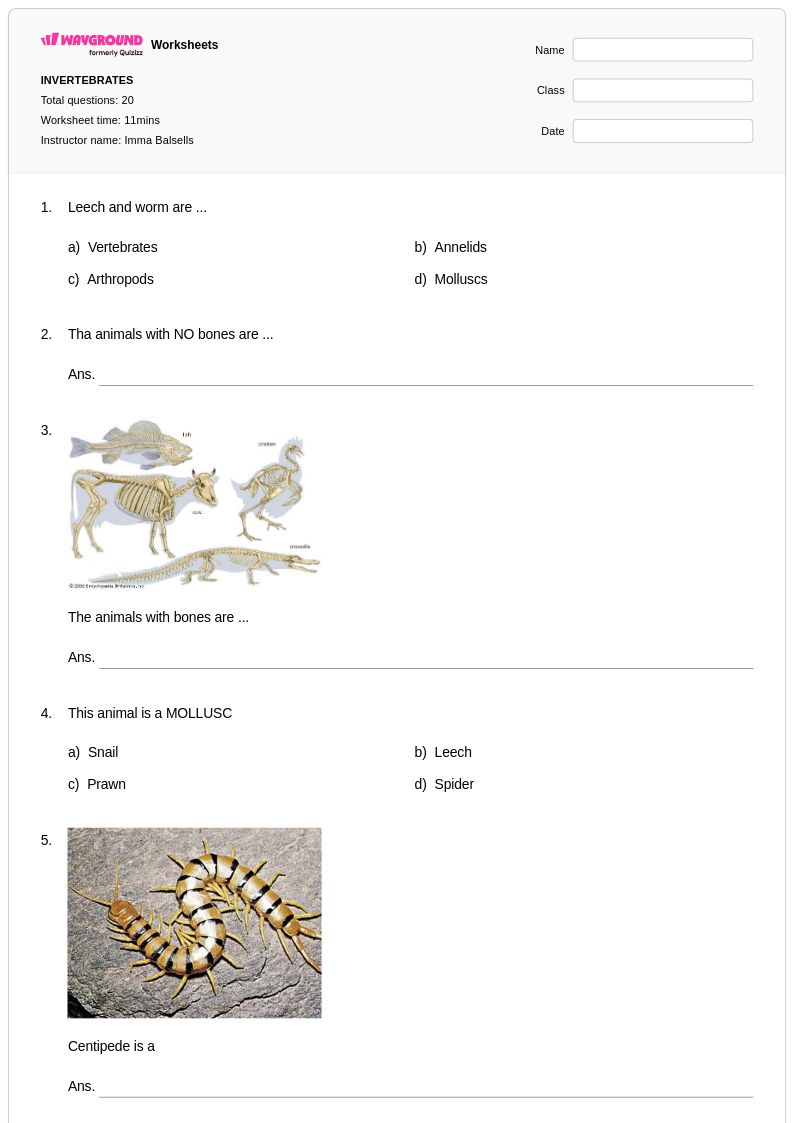
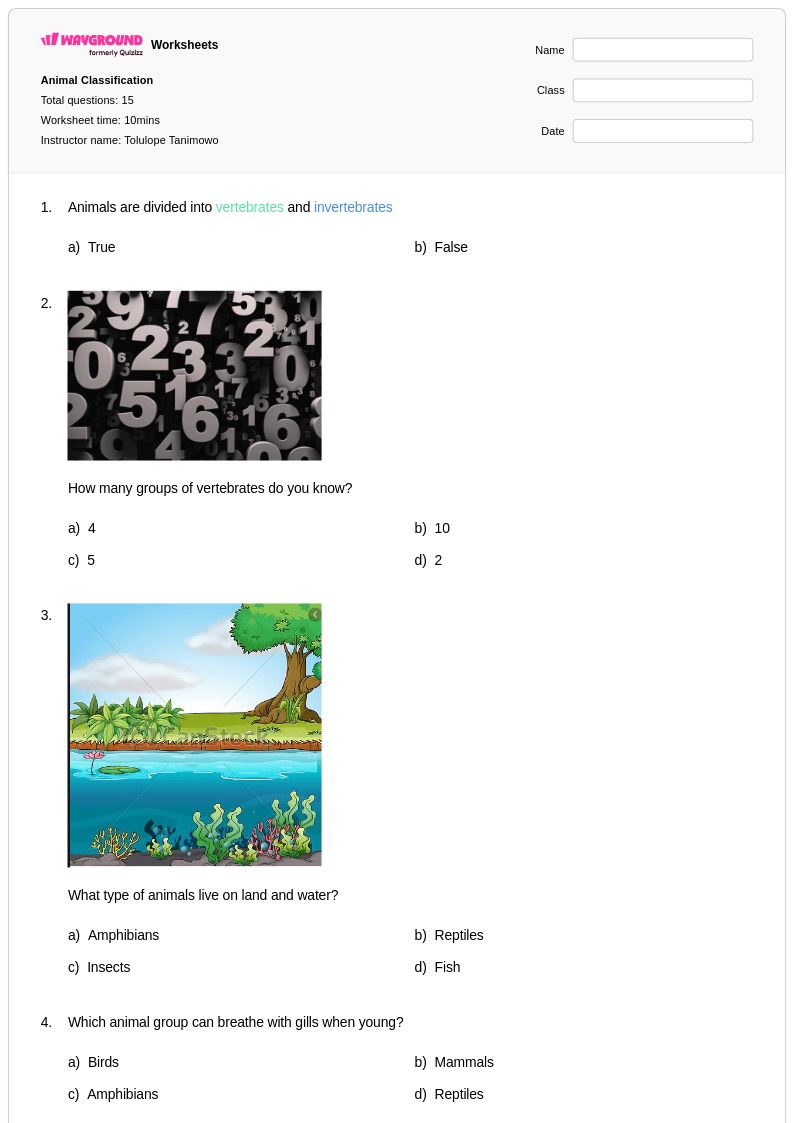
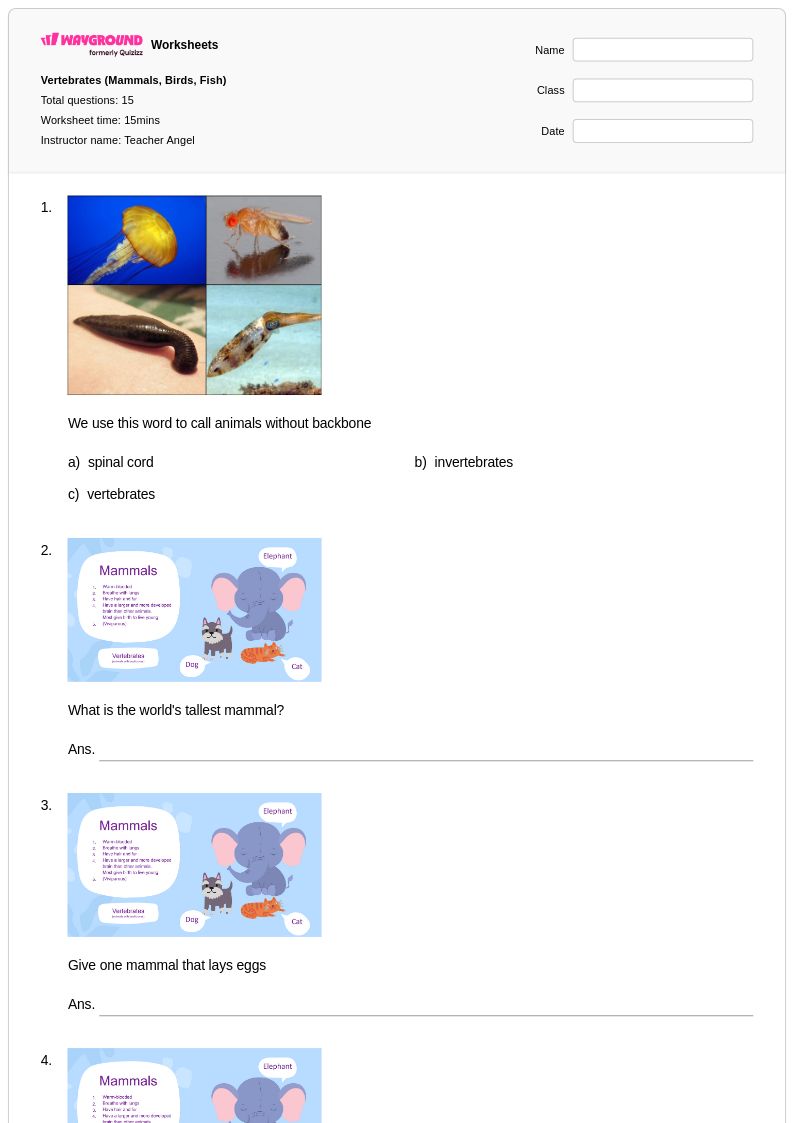
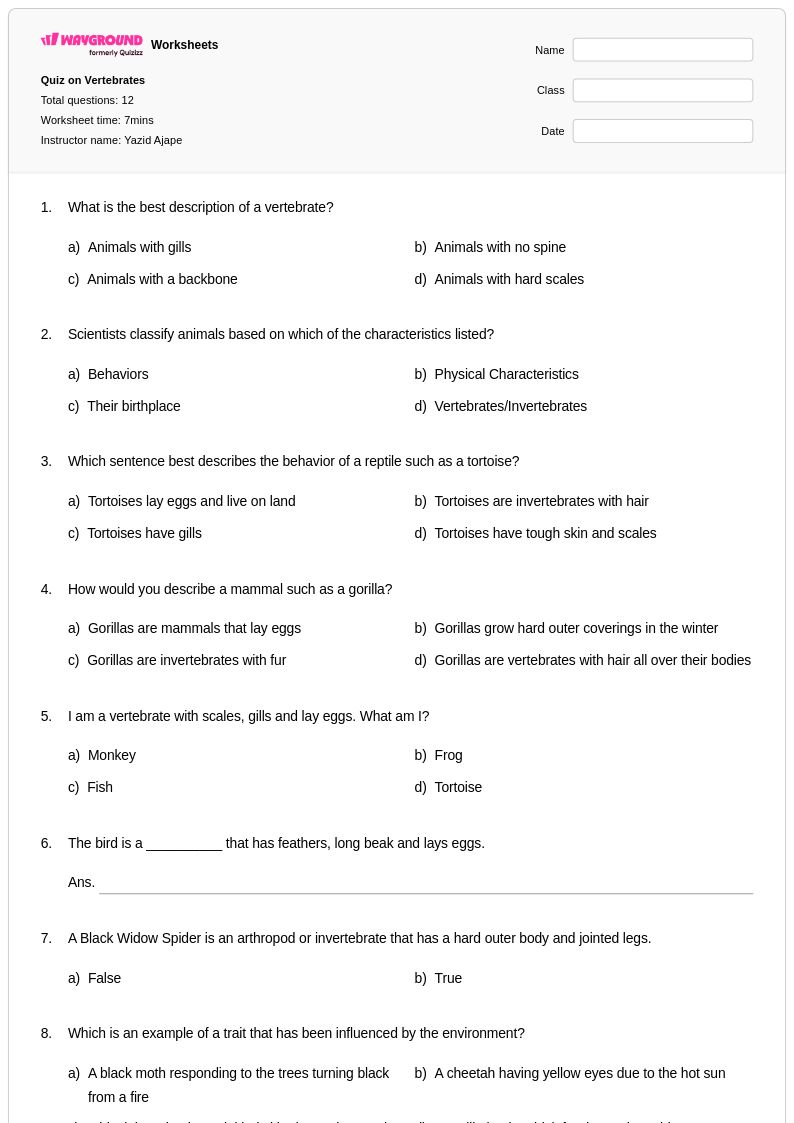
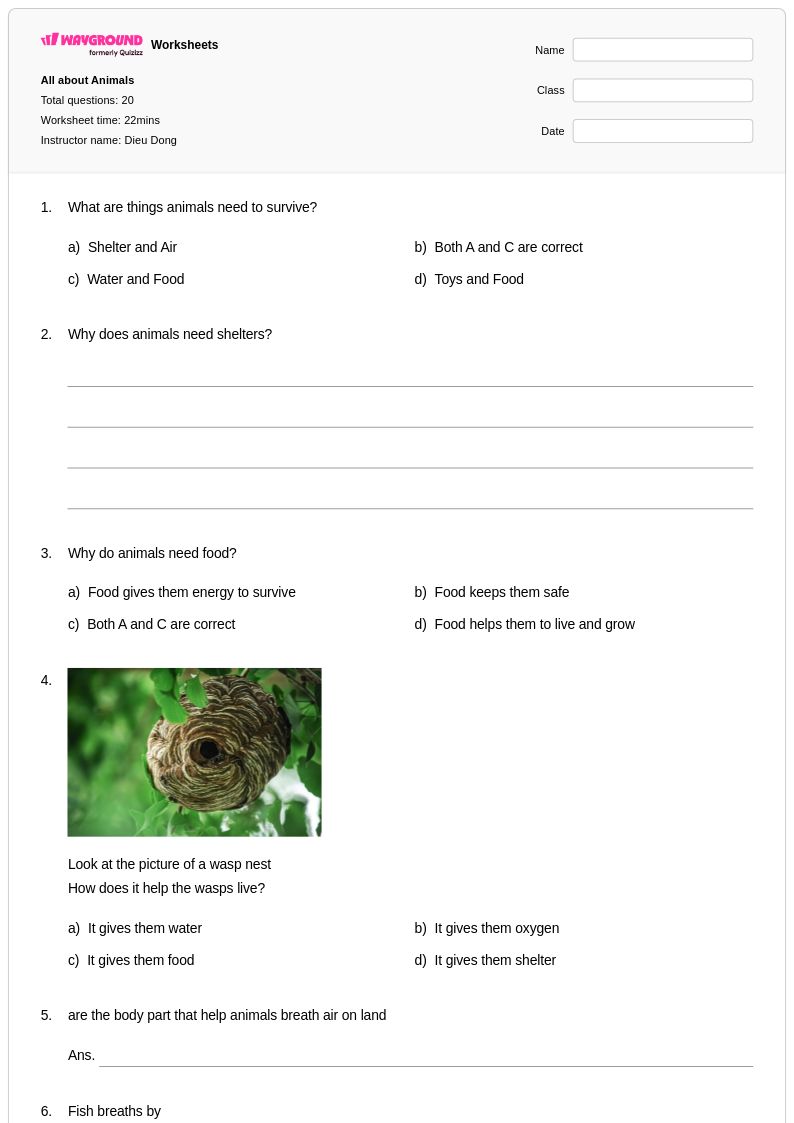
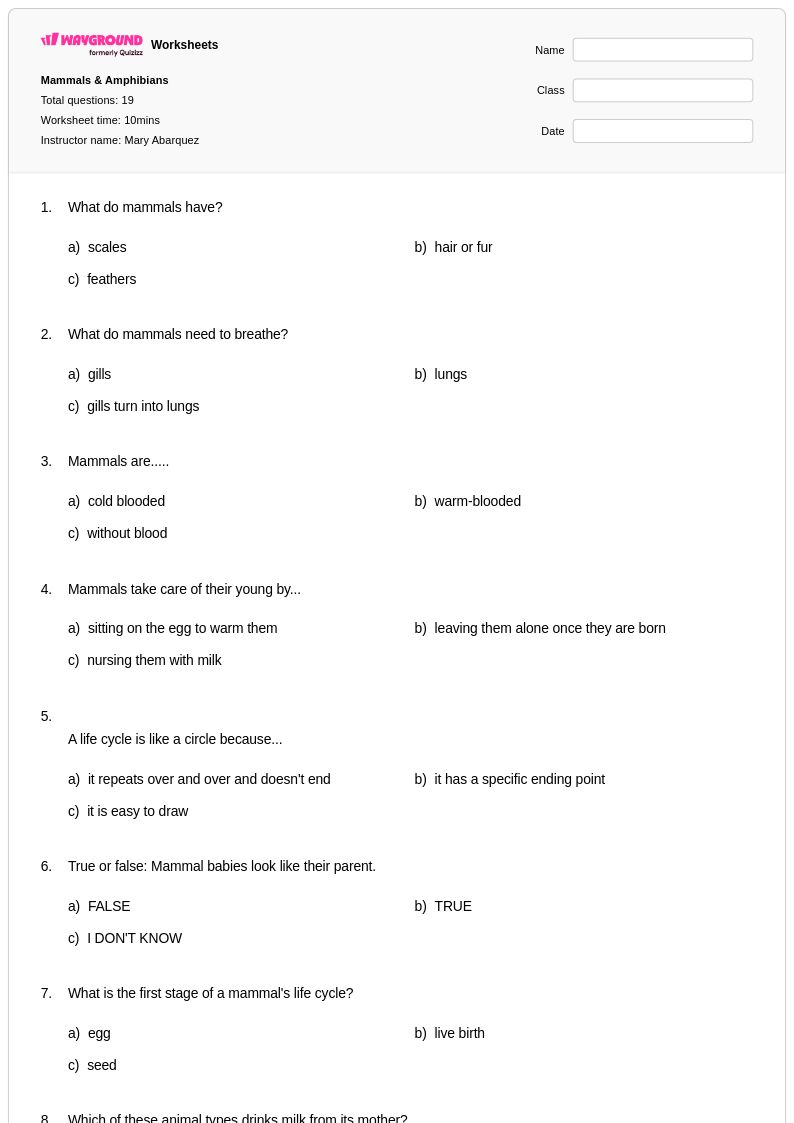
Vertebrates and invertebrates worksheets for Grade 1 students available through Wayground (formerly Quizizz) introduce young learners to the fundamental classification of animals based on the presence or absence of a backbone. These carefully designed educational materials help first-grade students develop critical observation skills as they learn to distinguish between animals with spines, such as birds, fish, and mammals, and those without spines, including insects, spiders, and worms. The worksheets feature age-appropriate activities that strengthen scientific vocabulary, classification abilities, and analytical thinking through engaging practice problems that make learning about animal groups both accessible and enjoyable. Each worksheet comes complete with an answer key, and teachers can access these valuable resources as free printables in convenient pdf format, making classroom implementation seamless and cost-effective.
Wayground (formerly Quizizz) empowers educators with an extensive collection of millions of teacher-created resources specifically designed to support vertebrates and invertebrates instruction at the Grade 1 level. The platform's robust search and filtering capabilities allow teachers to quickly locate worksheets that align with specific learning standards and match their students' developmental needs. These comprehensive differentiation tools enable educators to customize content for diverse learners, while the flexible format options provide both printable pdf versions for traditional classroom use and digital formats for interactive learning experiences. Teachers can effectively utilize these resources for lesson planning, targeted remediation for struggling students, enrichment activities for advanced learners, and ongoing skill practice that reinforces essential biological concepts, ensuring that every first-grade student builds a strong foundation in animal classification.
FAQs
How do I teach vertebrates and invertebrates to students?
Start by anchoring instruction around a single defining criterion: the presence or absence of a backbone. From there, build outward by introducing major animal groups on each side of the classification, using comparative examples students already know, such as fish and insects, to make the distinction concrete. Visual sorting activities and classification charts are especially effective at helping students organize new vocabulary alongside familiar animals before moving to independent practice.
What activities help students practice classifying vertebrates and invertebrates?
Worksheets that ask students to sort animals into vertebrate and invertebrate categories, identify distinguishing anatomical features, and explain their reasoning are among the most effective practice formats. Adding comparative analysis tasks, where students examine structural differences across animal groups, deepens understanding beyond simple memorization. Repeated low-stakes practice with varied animal examples builds both accuracy and confidence in applying classification criteria.
What mistakes do students commonly make when classifying vertebrates and invertebrates?
The most frequent error is relying on size or familiarity rather than anatomical structure, leading students to misclassify animals like worms or jellyfish. Some students also conflate 'invertebrate' with 'insect', not realizing that invertebrates encompass a far broader range of organisms including mollusks, echinoderms, and crustaceans. Targeted practice that forces students to justify each classification decision, rather than just label it, is the most reliable way to correct these patterns.
How do I use a vertebrates and invertebrates worksheet effectively in my classroom?
These worksheets work well as structured practice following direct instruction, as a formative check during a classification unit, or as a review tool before an assessment. Wayground's vertebrates and invertebrates worksheets are available as printable PDFs for traditional classroom use and in digital formats for technology-integrated environments, and can also be hosted as a quiz directly on Wayground. Answer keys are included with each worksheet, supporting independent work, self-assessment, and easy teacher review.
How can I differentiate vertebrates and invertebrates worksheets for students with different ability levels?
For students who need additional support, reduce the number of answer choices on classification questions to lower cognitive load, or enable the Read Aloud feature so questions are read to them. Advanced learners benefit from tasks that move beyond labeling, such as analyzing evolutionary relationships or comparing anatomical structures across multiple animal groups. Wayground allows teachers to apply these accommodations at the individual student level, so the rest of the class works with default settings without disruption.
What is the difference between vertebrates and invertebrates, and why does it matter in life science?
Vertebrates are animals that possess a vertebral column, or backbone, while invertebrates lack this structure entirely. This distinction is foundational in life science because it underpins the study of animal body plans, evolutionary biology, and comparative anatomy. Understanding this classification helps students build a framework for organizing the diversity of animal life, which is a prerequisite skill for more advanced biological concepts in later grades.