Free Printable Interrogatives Worksheets for Grade 8
Explore Wayground's comprehensive collection of Grade 8 interrogatives worksheets with printable PDFs, free practice problems, and answer keys to help students master question words, question formation, and interrogative sentence structures in English.
Explore printable Interrogatives worksheets for Grade 8
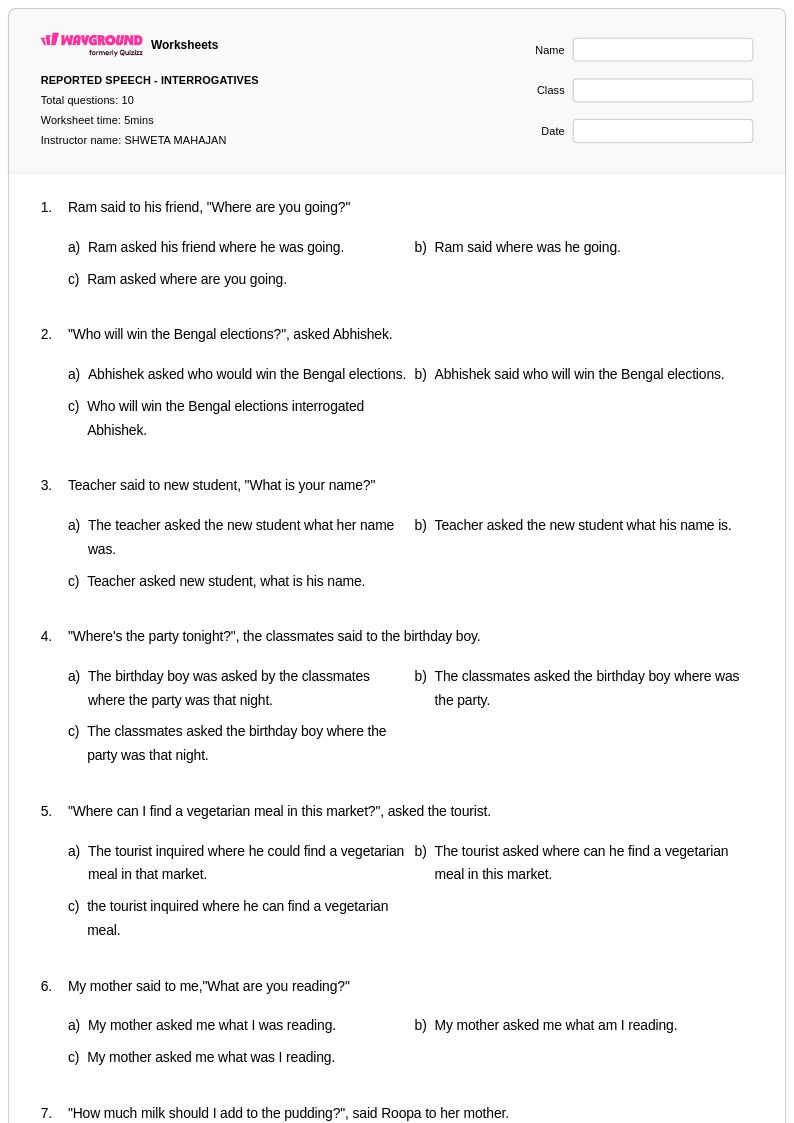
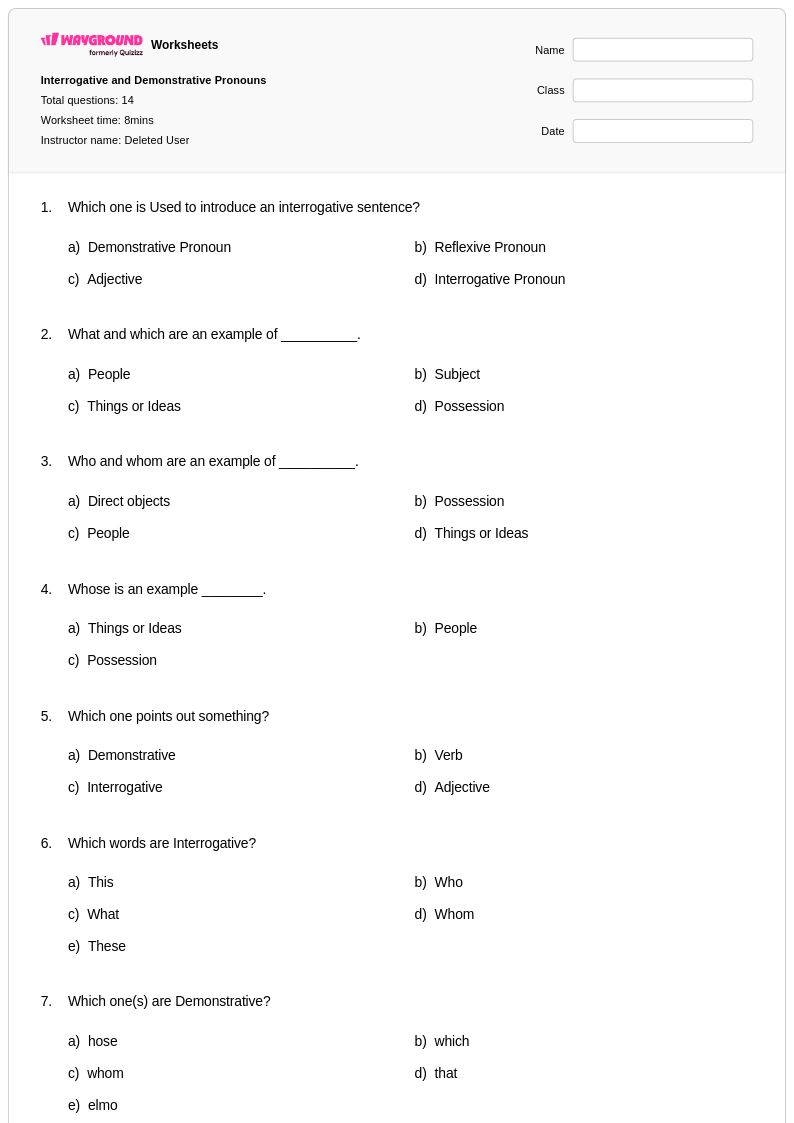
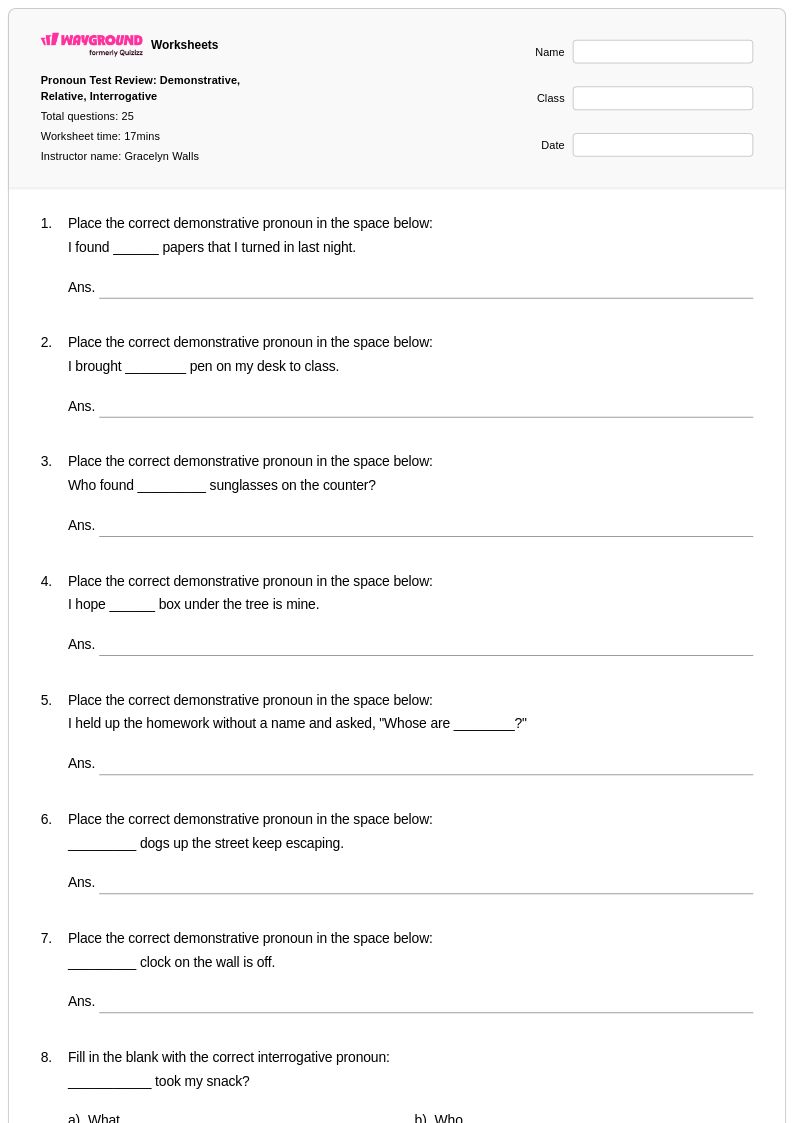
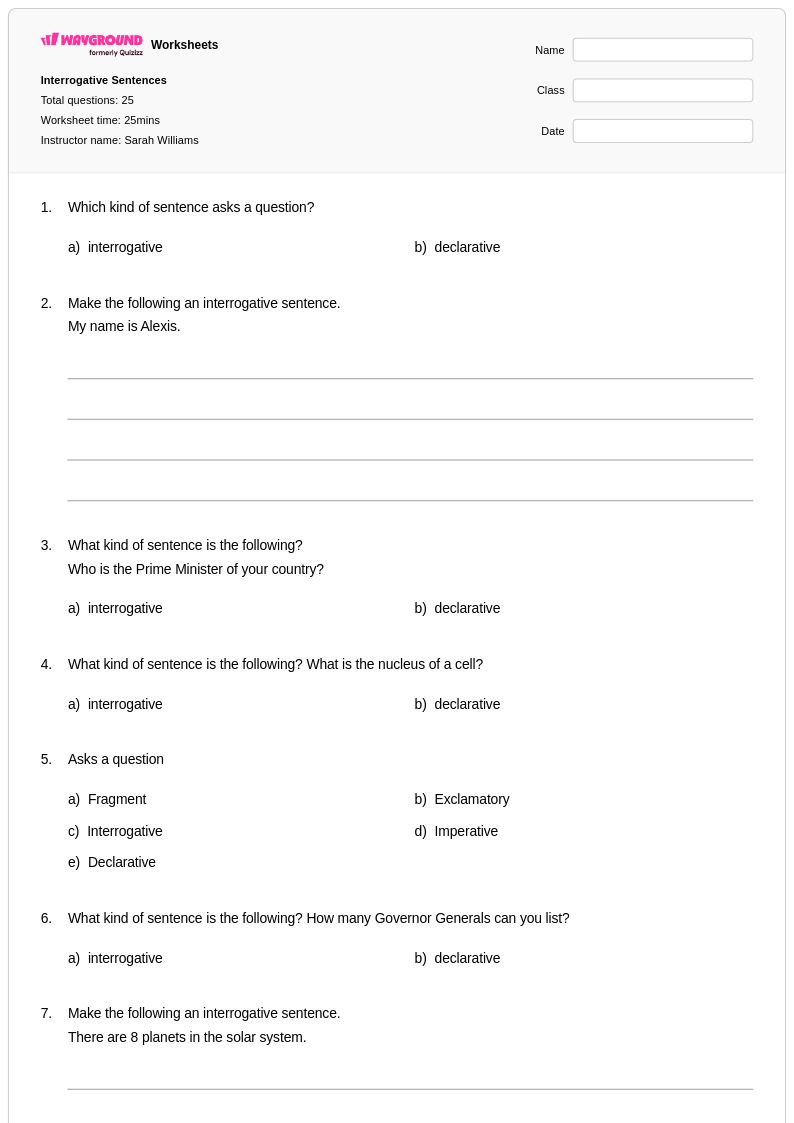
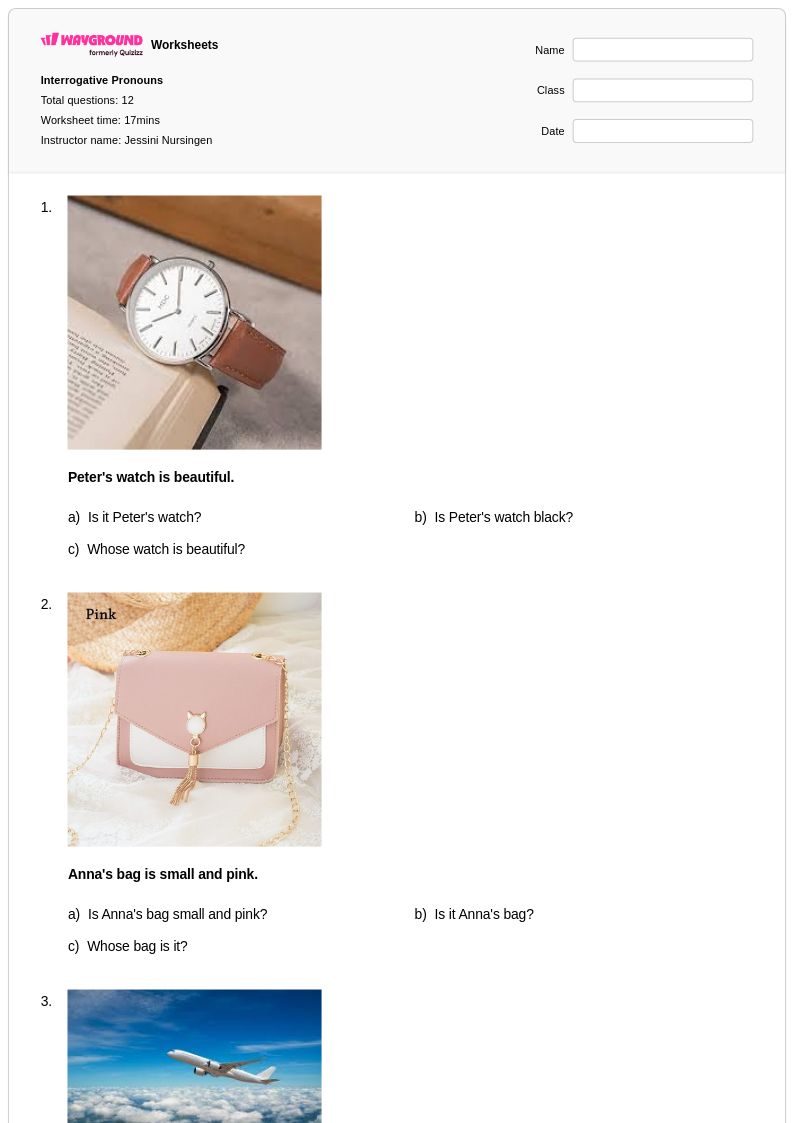
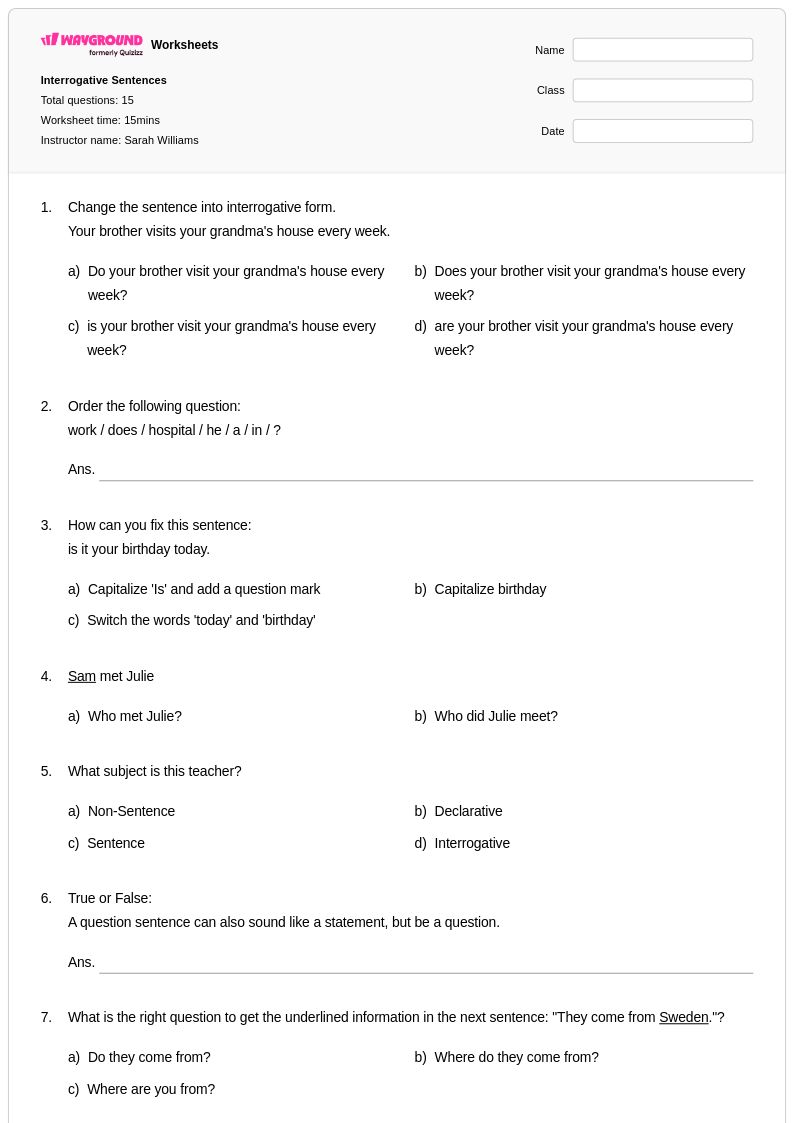
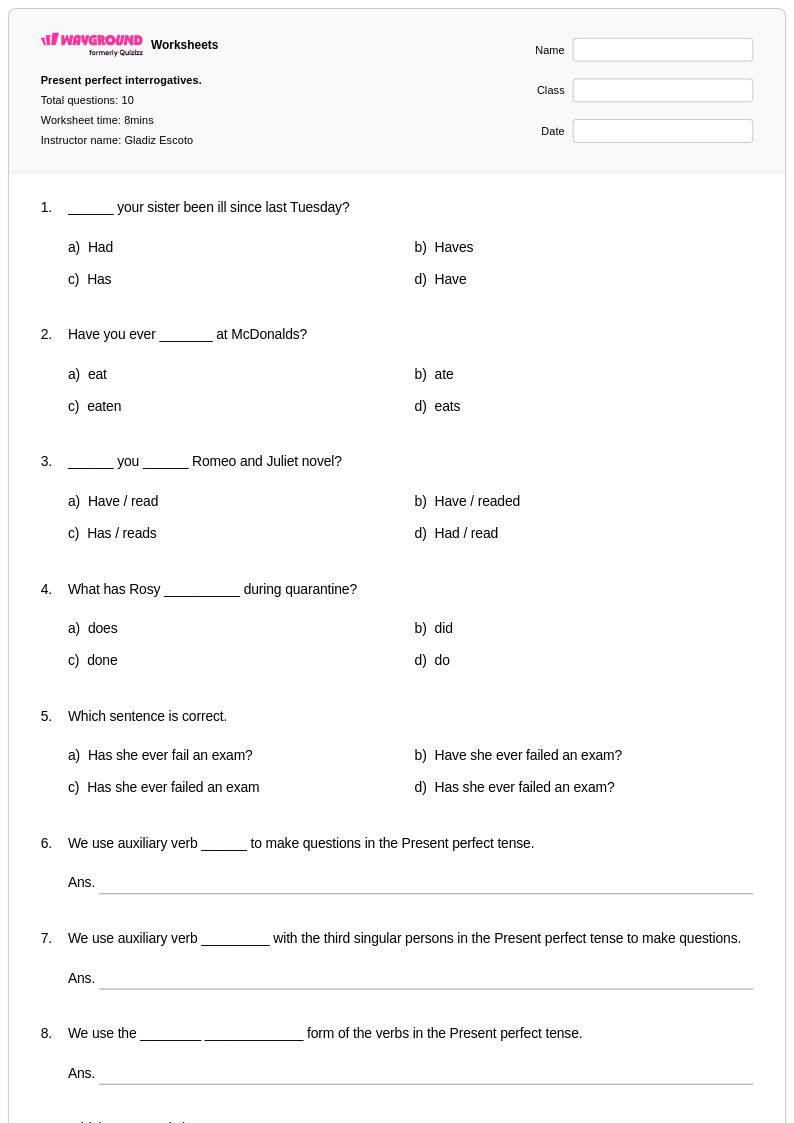
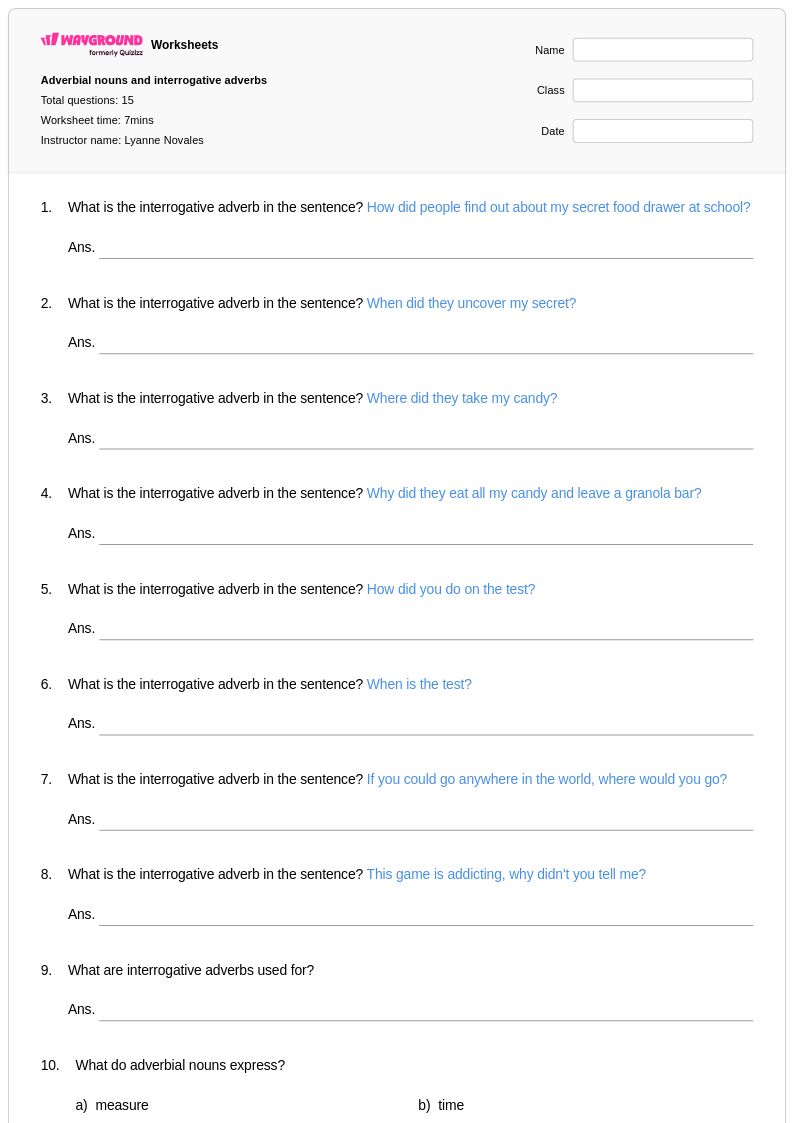
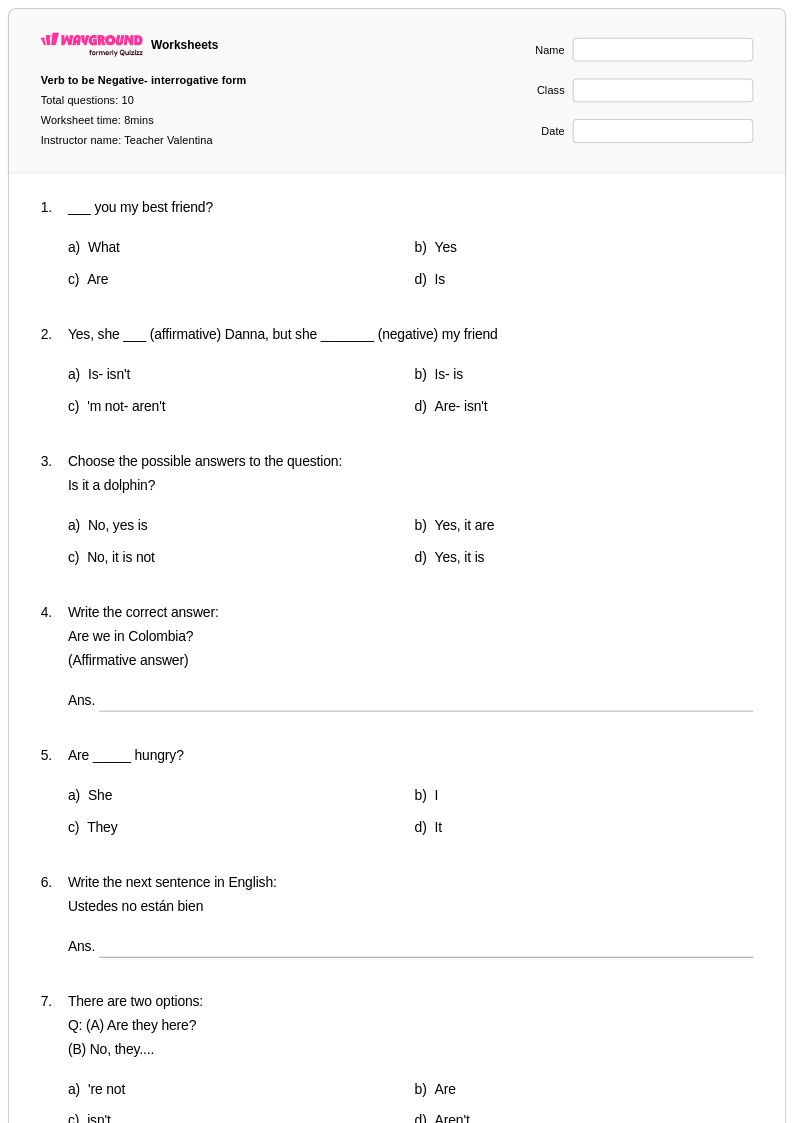
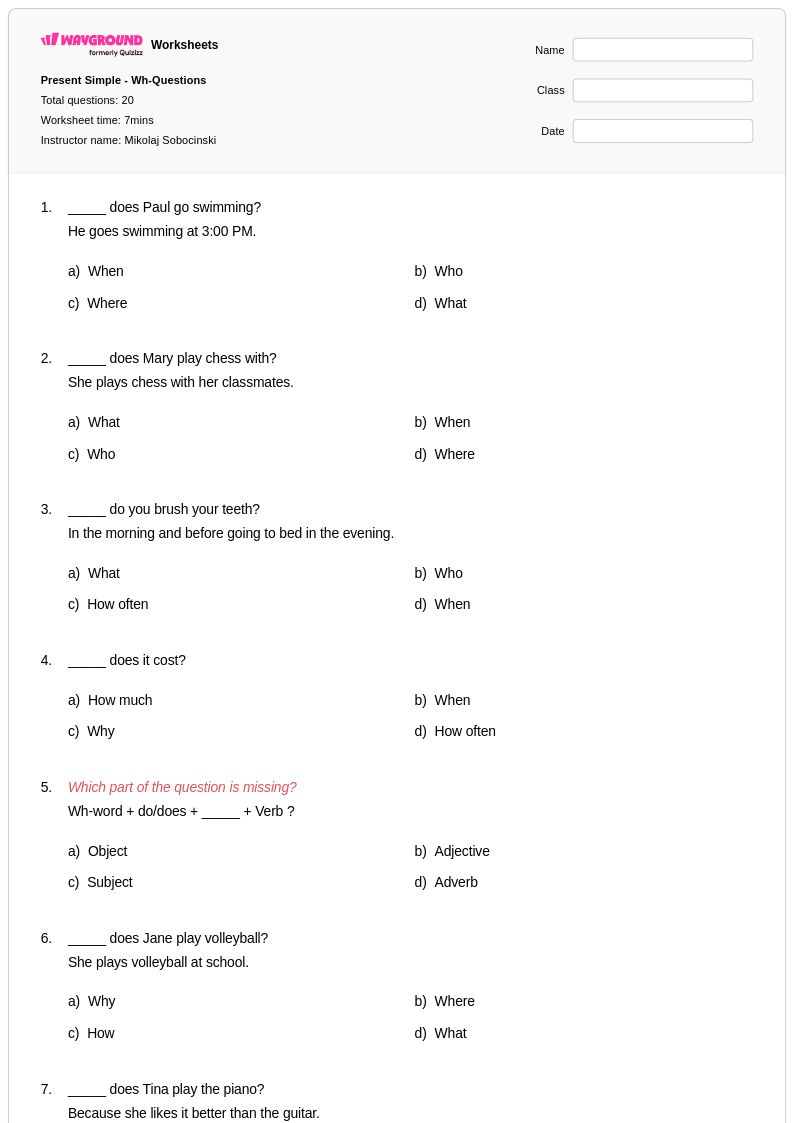
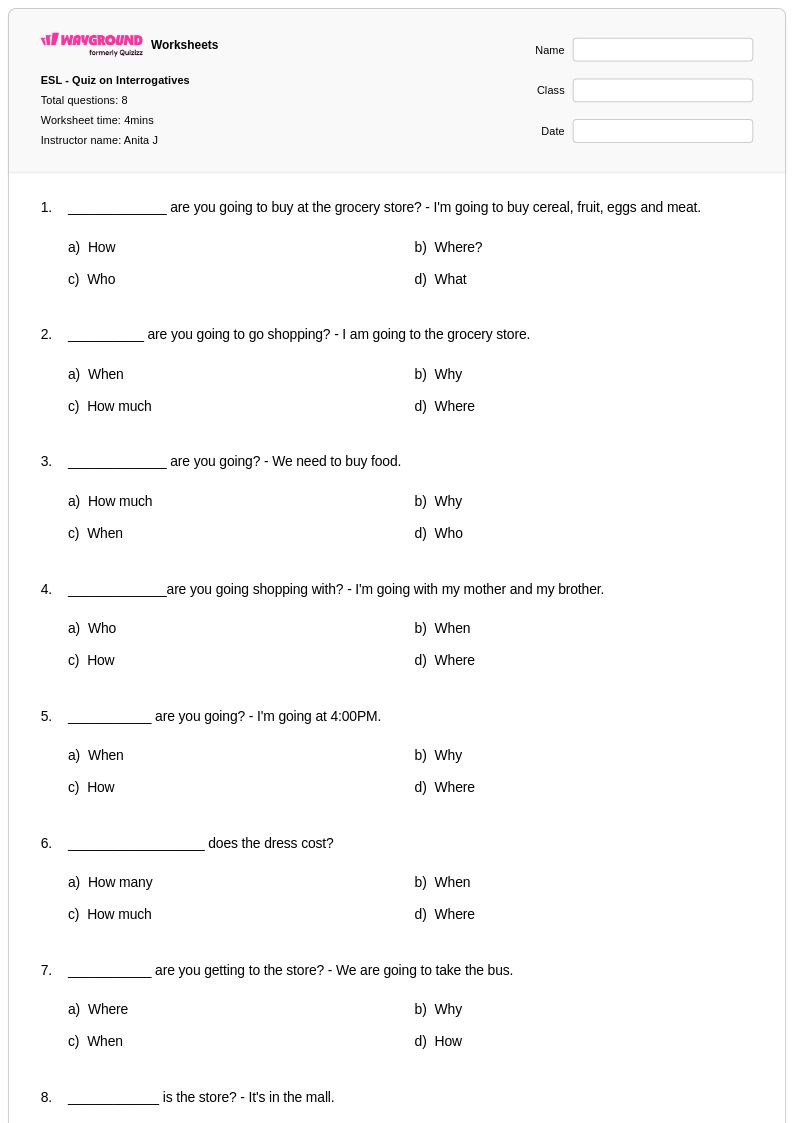
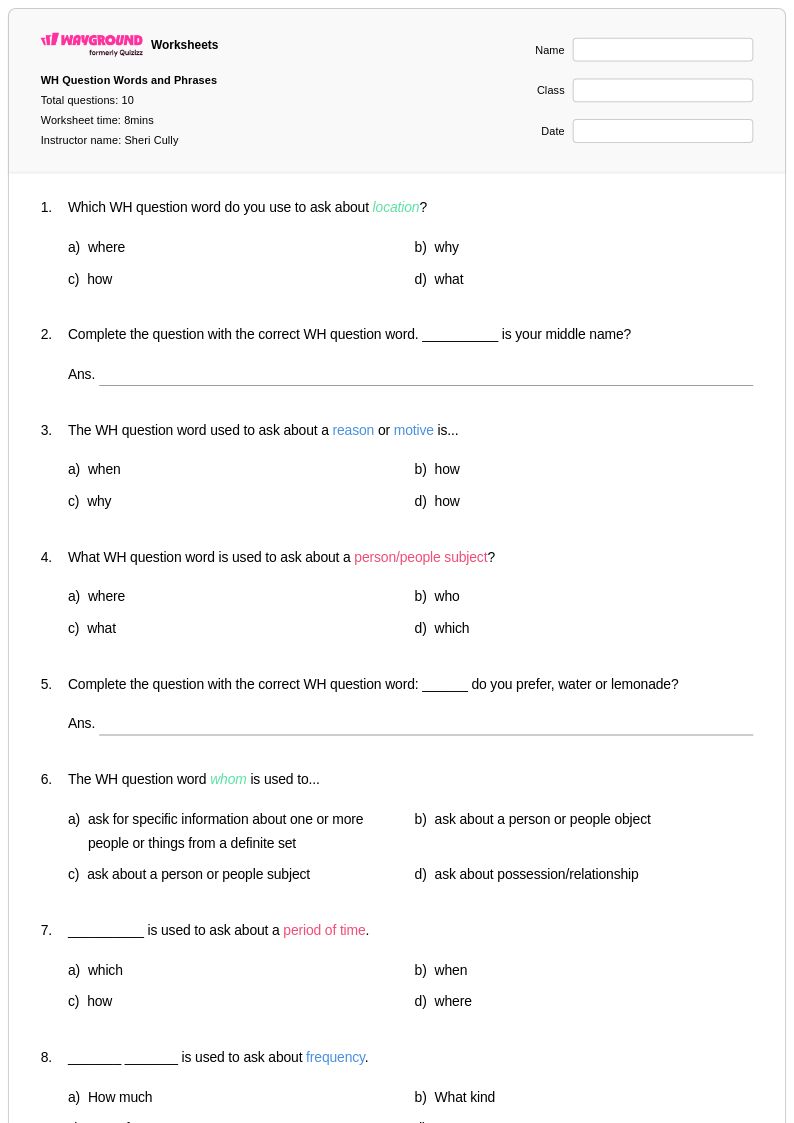
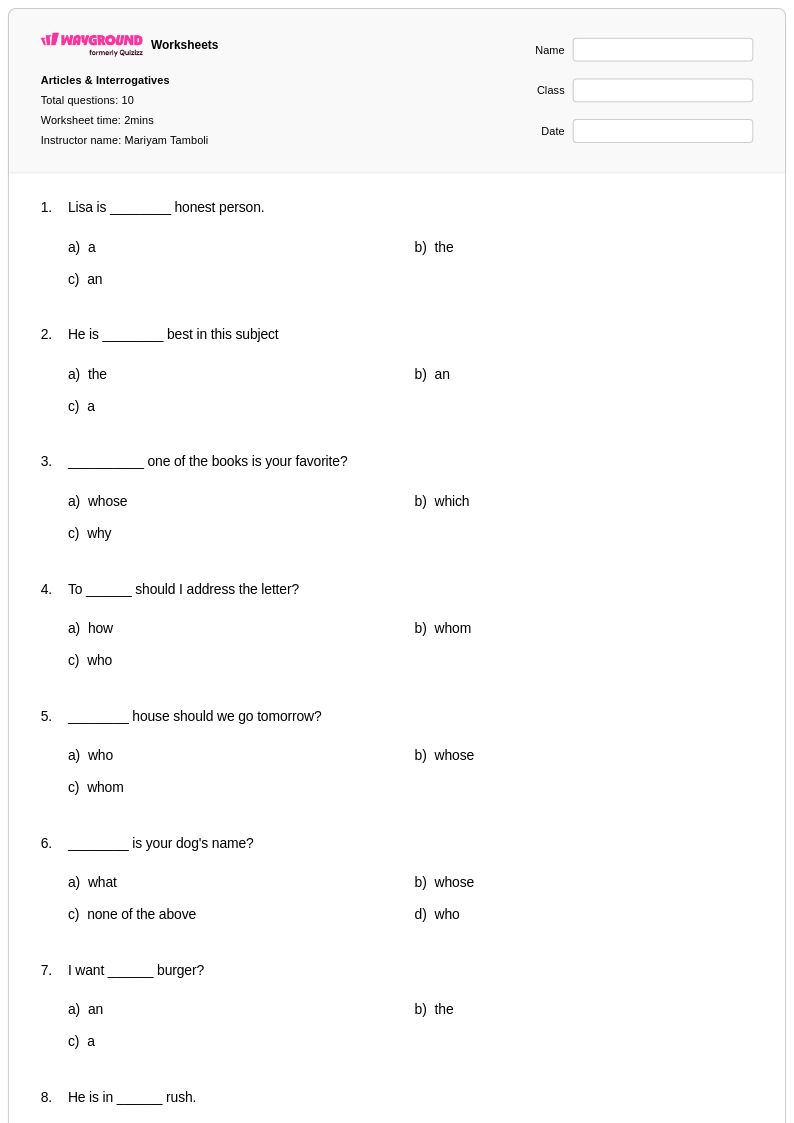
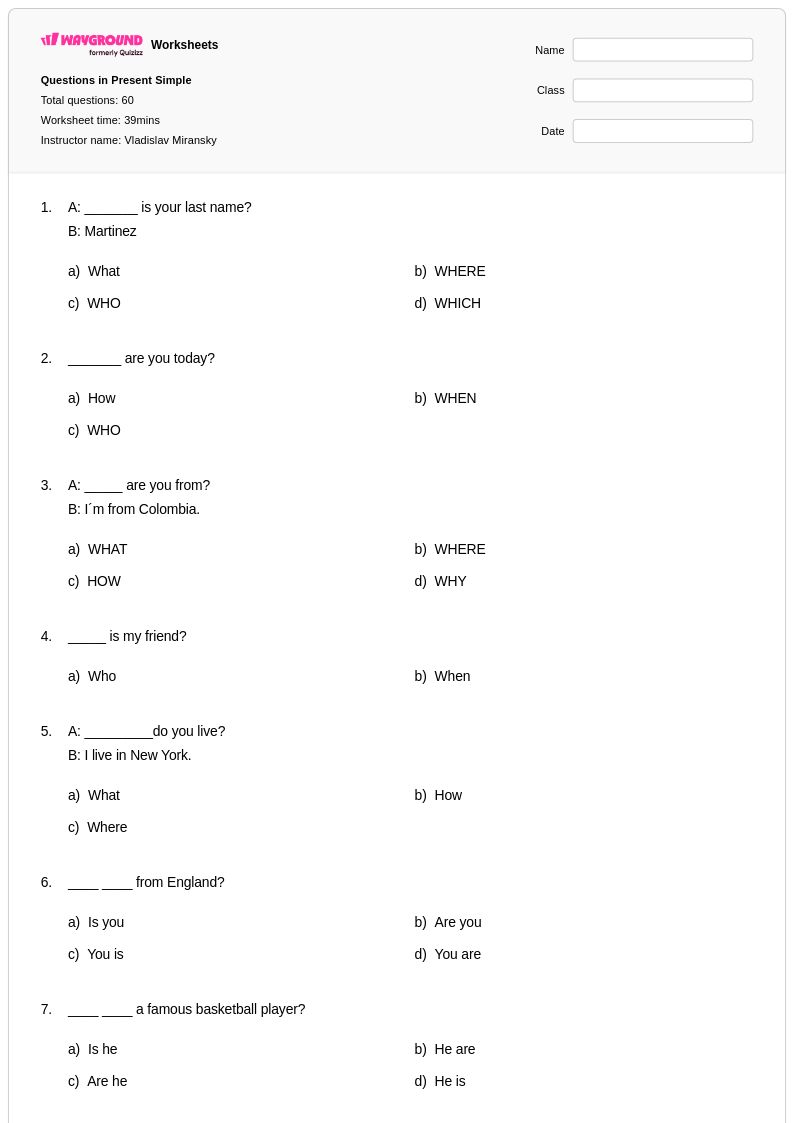
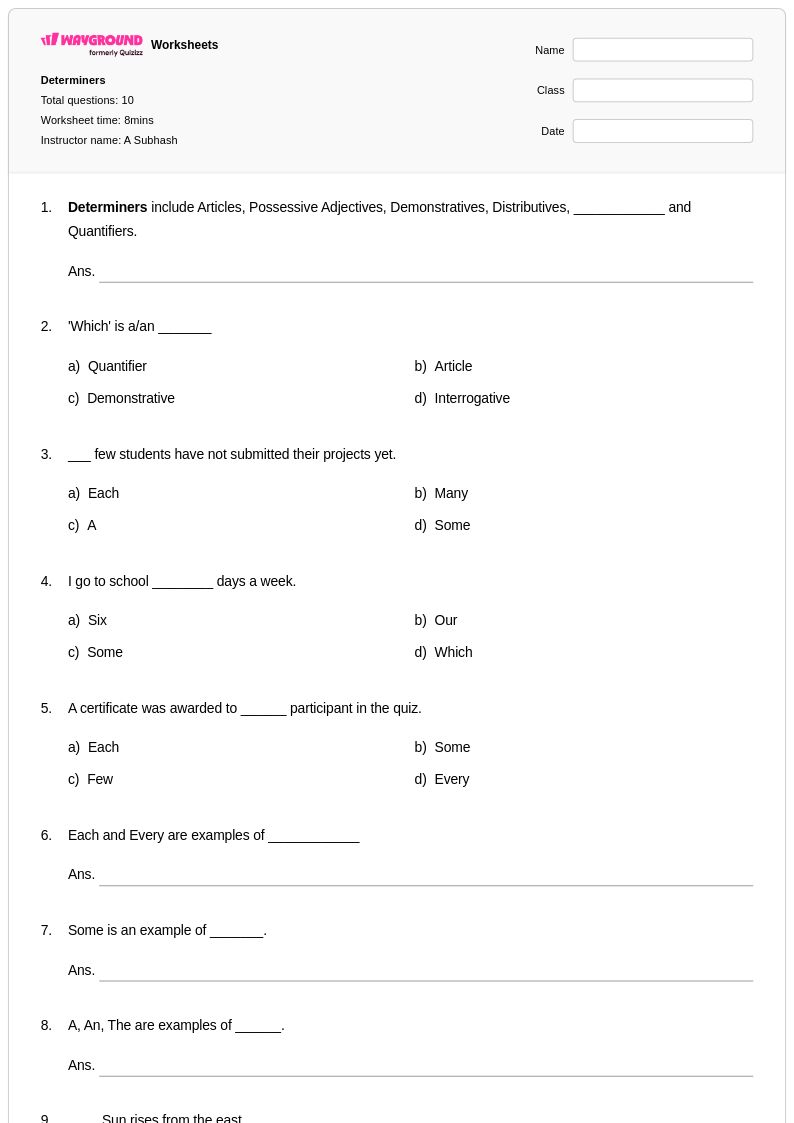
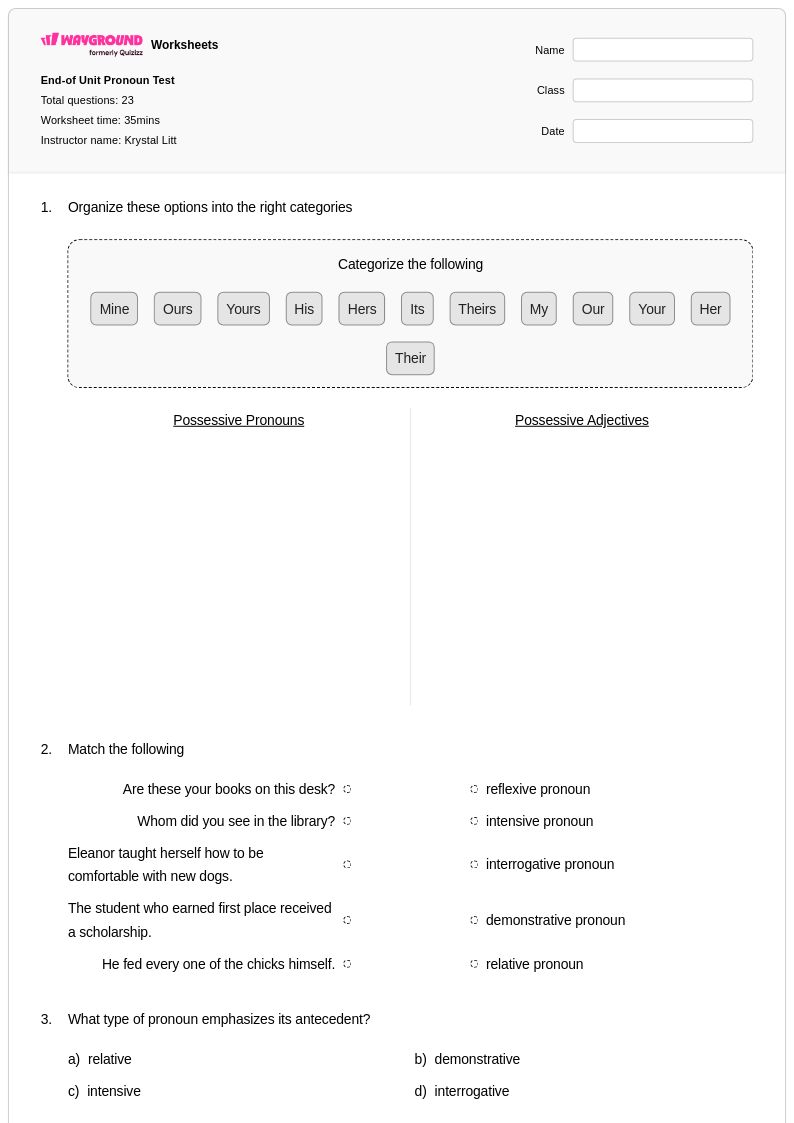
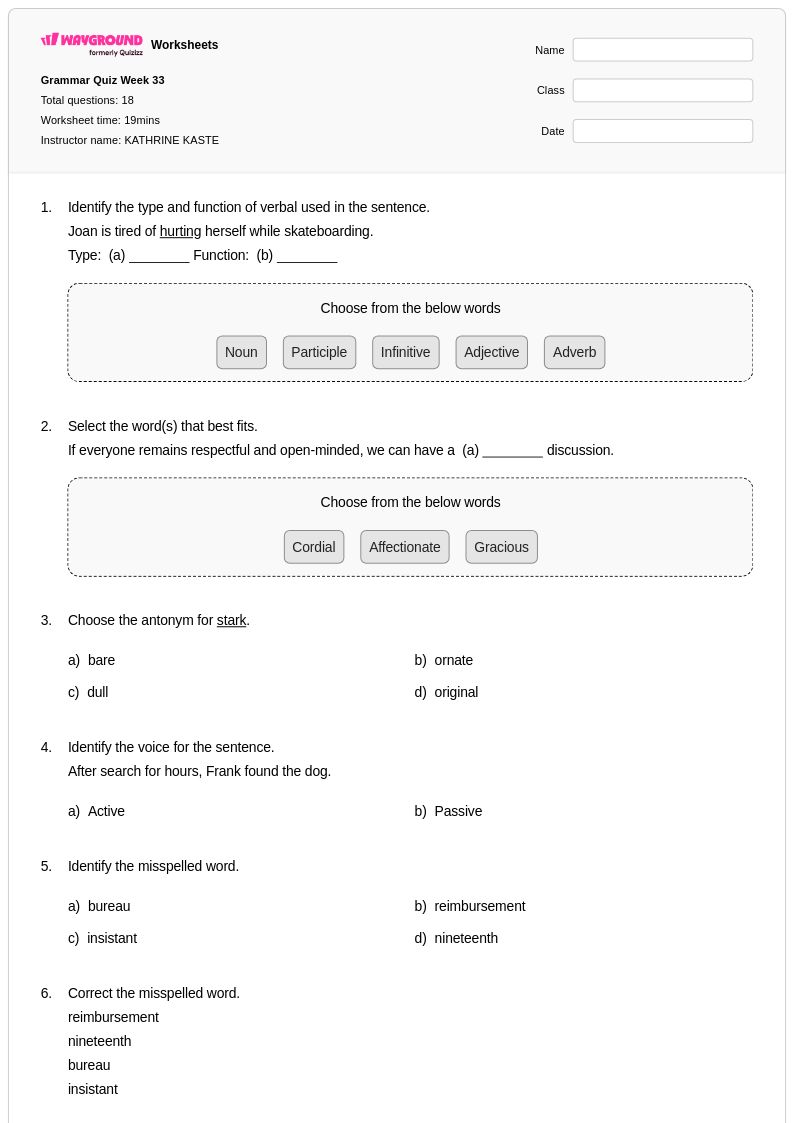
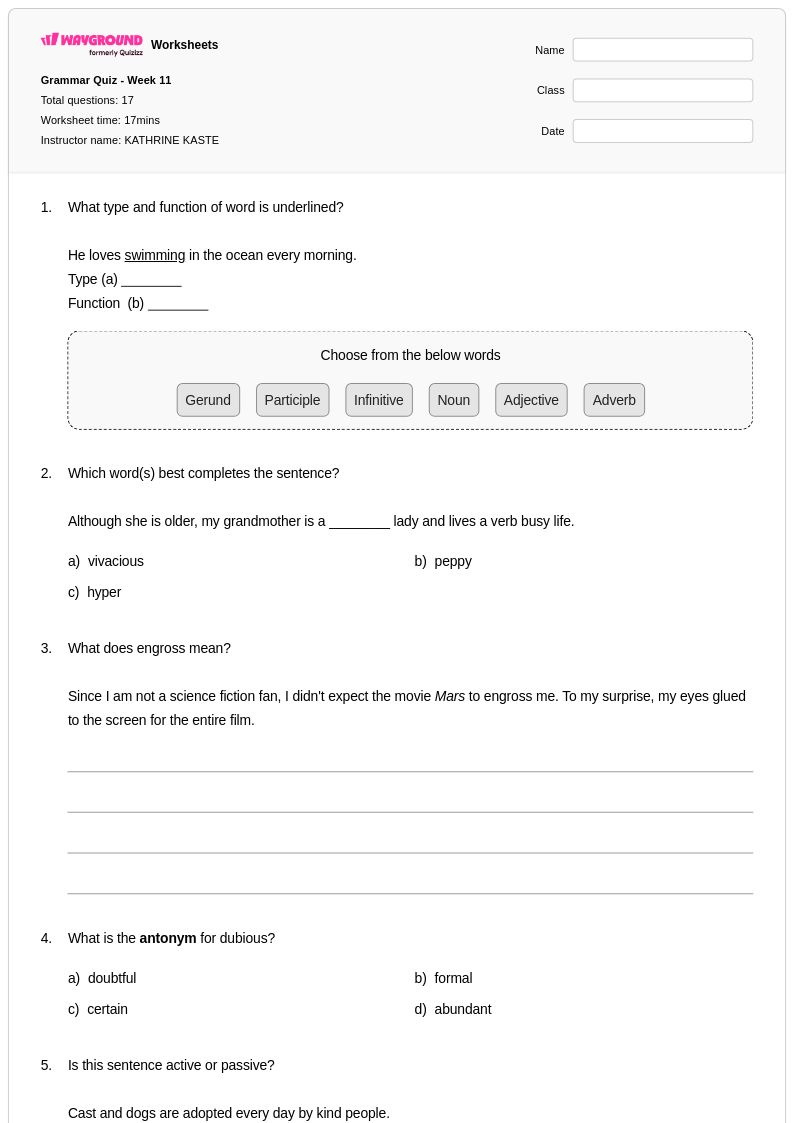
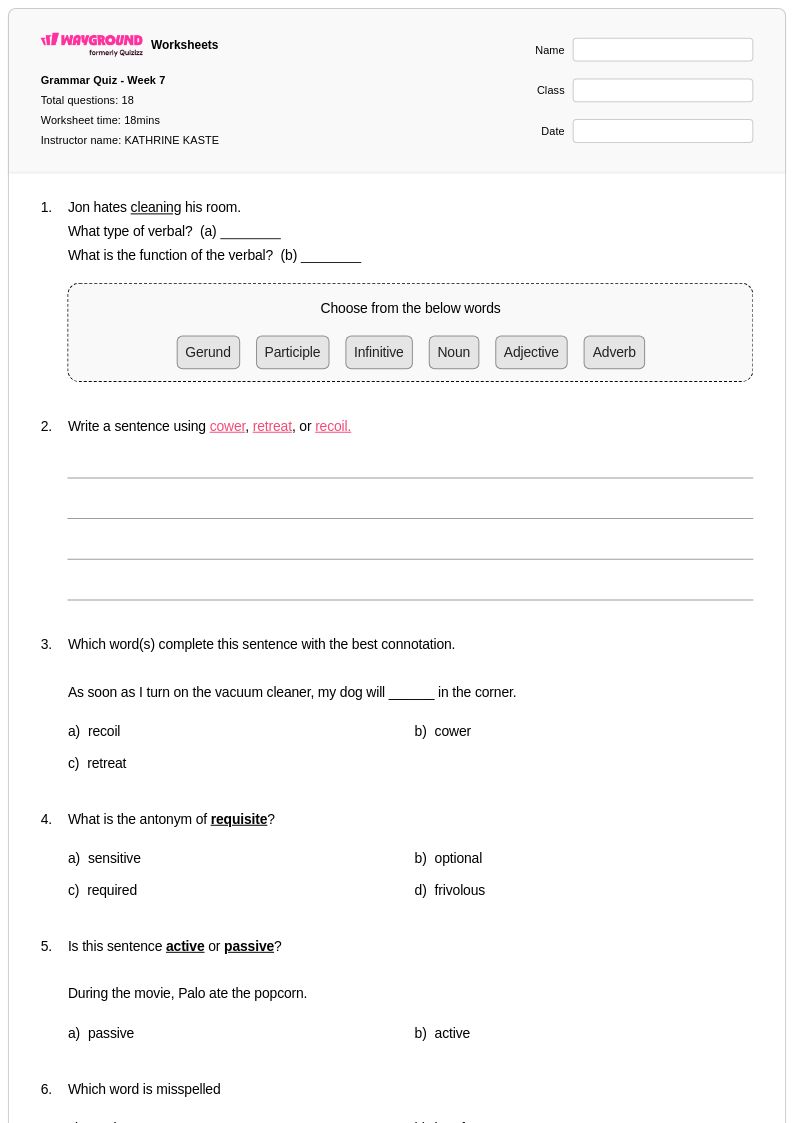
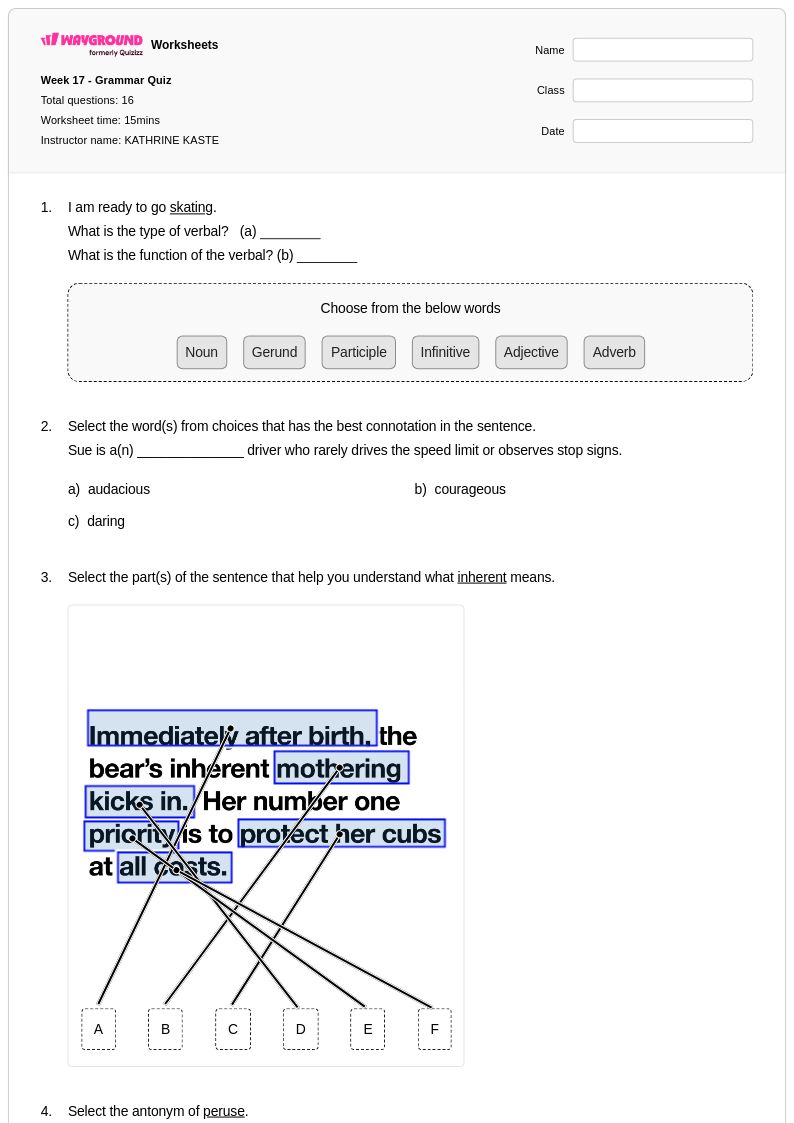
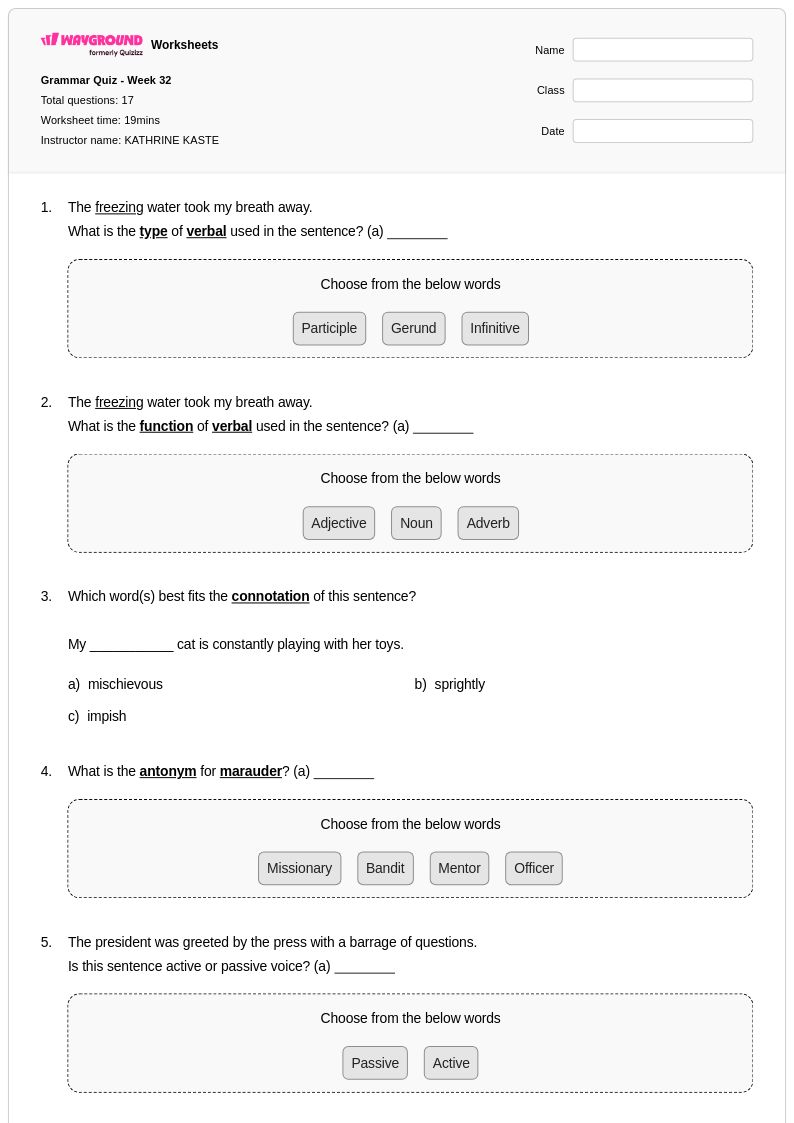
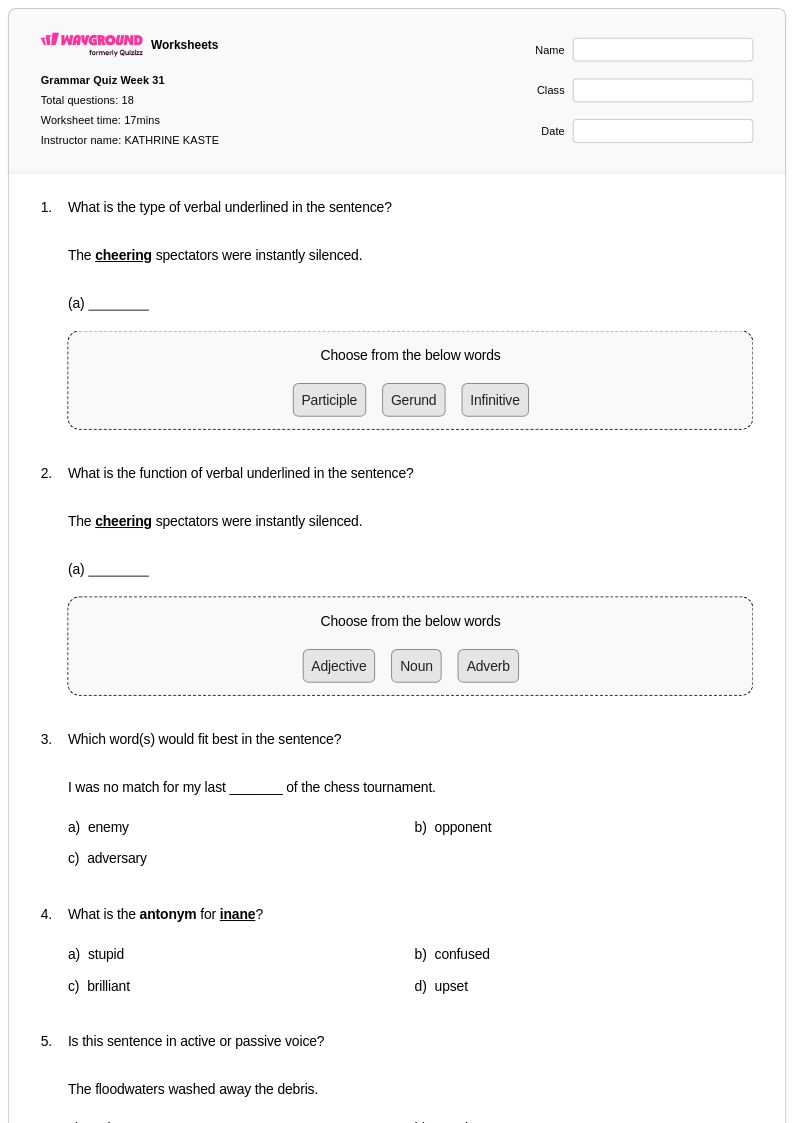
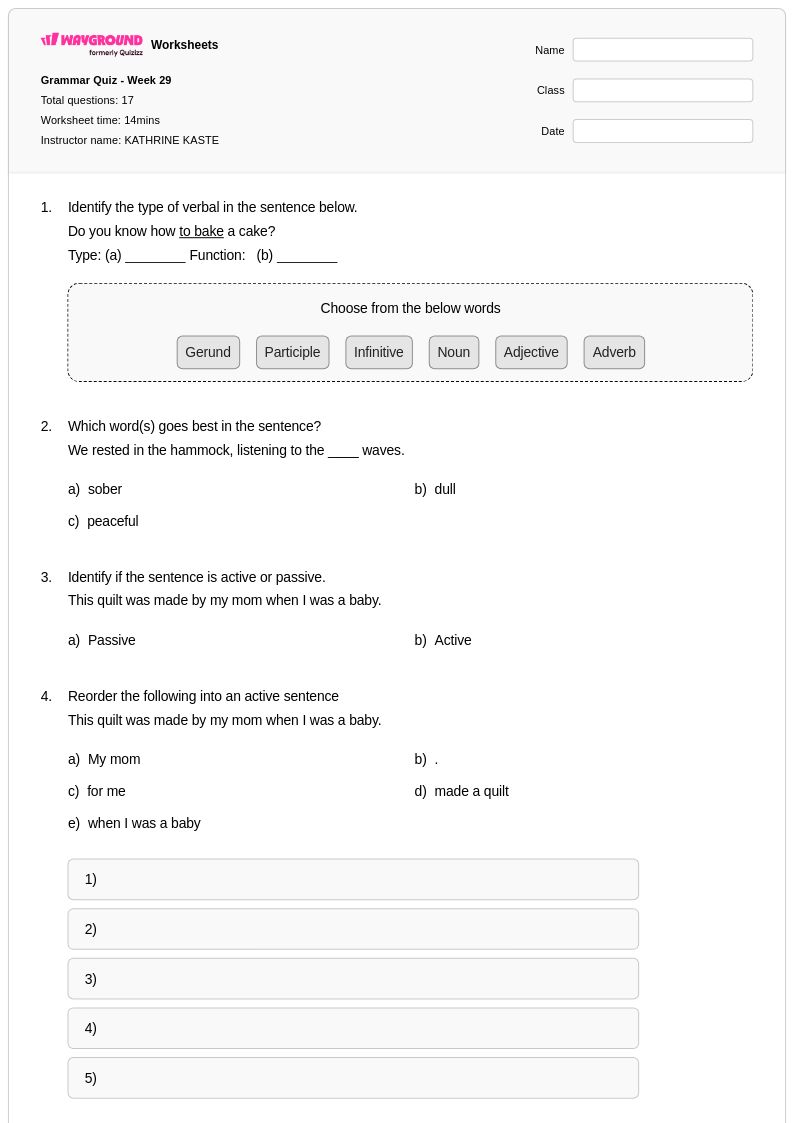
Interrogatives worksheets for Grade 8 students available through Wayground (formerly Quizizz) provide comprehensive practice in understanding and using question words, question formation, and interrogative sentence structures. These educational resources strengthen students' ability to identify and properly construct questions using who, what, when, where, why, and how, while also developing their skills in transforming declarative statements into interrogative forms. The worksheets include varied practice problems that challenge eighth-grade students to analyze interrogative pronouns, adverbs, and determiners within complex sentence structures, helping them master both direct and indirect question formation. Each worksheet comes with a complete answer key and is available as a free printable pdf, allowing teachers to seamlessly integrate these materials into their grammar instruction and assessment routines.
Wayground (formerly Quizizz) supports educators with an extensive collection of teacher-created interrogatives worksheets, drawing from millions of professionally developed resources that align with grade-appropriate language arts standards. The platform's robust search and filtering capabilities enable teachers to quickly locate materials that match their specific instructional needs, whether focusing on basic interrogative pronouns or advanced question formation techniques. These differentiation tools allow educators to customize worksheets for various learning levels within their Grade 8 classrooms, supporting both remediation for struggling students and enrichment opportunities for advanced learners. Available in both printable pdf format and interactive digital versions, these interrogatives resources streamline lesson planning while providing flexible options for skill practice, formative assessment, and targeted grammar intervention throughout the academic year.
FAQs
How do I teach interrogatives to English language learners?
Start by introducing the five W's and one H (who, what, when, where, why, and how) as the foundational question words, using real-world examples students encounter daily. Model how each interrogative word targets a specific type of information — who identifies a person, when identifies time, where identifies place — so students build a functional mental map before attempting question formation. From there, move from recognition tasks to production tasks, having students first identify interrogatives in text before constructing their own questions in context.
What exercises help students practice forming questions with interrogatives?
Effective practice moves from identification to construction: begin with exercises where students match interrogative words to appropriate answers, then progress to gap-fill activities where they supply the correct question word, and finally advance to open-ended tasks where they generate original questions. Sentence transformation exercises — converting statements into questions — are particularly useful because they require students to apply both interrogative word choice and correct grammatical word order simultaneously. Interrogatives worksheets that scaffold this progression give students the structured repetition they need to internalize these patterns.
What mistakes do students commonly make when using interrogative words?
The most frequent error is confusing 'who' and 'whom,' especially in formal writing, because students often rely on spoken intuition rather than grammatical rule. Students also commonly misuse 'what' and 'which,' not recognizing that 'which' implies a limited set of options while 'what' is open-ended. A third common error involves word order: students learning English as a second language often omit auxiliary verb inversion, producing constructions like 'Where you are going?' instead of 'Where are you going?' Targeted practice that isolates each of these error patterns helps students self-correct more reliably.
How can I use interrogatives worksheets in my classroom?
Interrogatives worksheets on Wayground are available as printable PDFs for traditional classroom use and in digital formats for technology-integrated environments, accommodating a range of instructional settings and student preferences. You can assign them as independent practice, use them for whole-class guided instruction on a projector, or host them as a quiz directly on Wayground for instant scoring and feedback. Each worksheet includes a complete answer key, making them equally effective for teacher-led review or self-directed student practice.
How do I differentiate interrogatives instruction for students at different skill levels?
For beginning learners, focus on recognition and matching tasks using familiar vocabulary so cognitive load stays on the grammar, not the content. Intermediate students benefit from sentence-level construction tasks with clear context clues, while advanced learners can be challenged with open-ended writing tasks that require selecting the most precise interrogative for nuanced questions. On Wayground, differentiation tools allow teachers to customize worksheets to individual student needs — including reduced answer choices to lower cognitive load for struggling learners — so the same topic can be addressed at multiple levels without requiring separate lesson plans.
Why is mastering interrogatives important for student writing and communication?
Interrogatives are foundational to both academic writing and critical thinking because they are the grammatical tools students use to ask questions, gather information, and structure inquiry. In writing, students who cannot form precise questions struggle with research, interview-based tasks, and reflective prompts that ask them to 'question the text.' In conversation, incorrect interrogative use disrupts comprehension and signals a gap in grammatical fluency. Mastering the five W's and one H gives students a transferable framework they apply across subjects and communication contexts.