Grade 7 Italian worksheets and printables help students master essential language skills through engaging practice problems, free PDF resources, and comprehensive answer keys for effective learning.
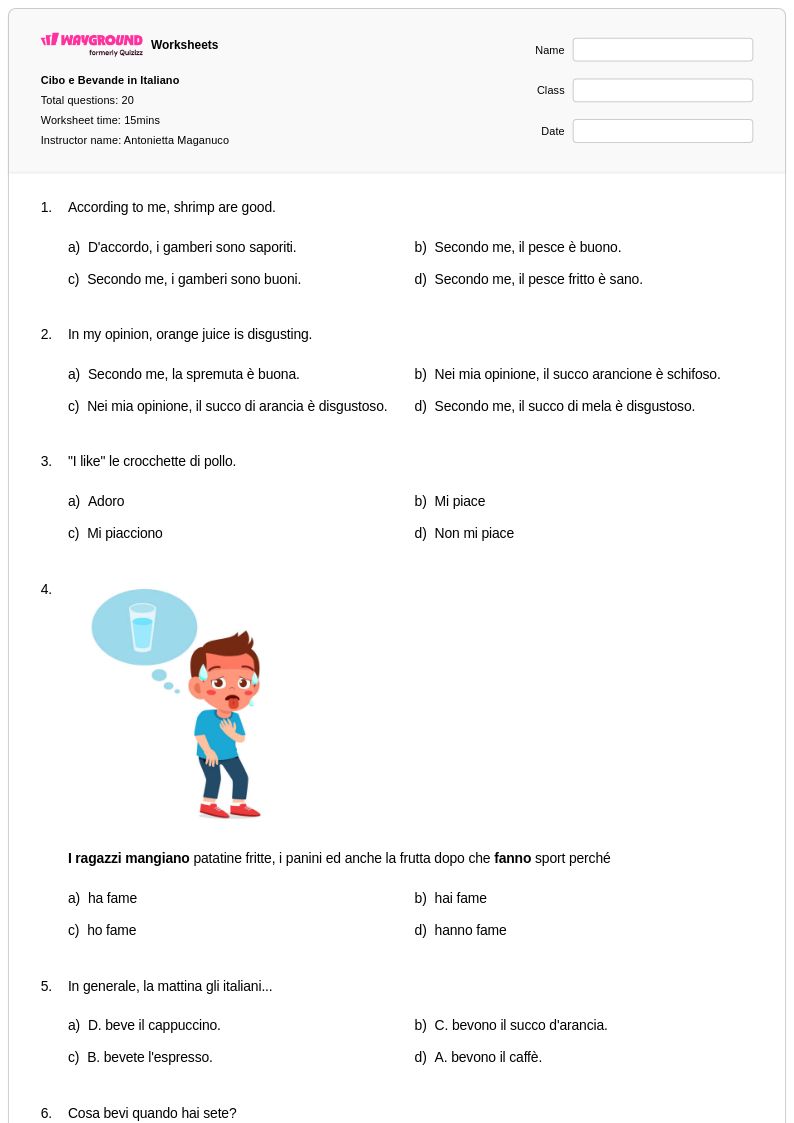
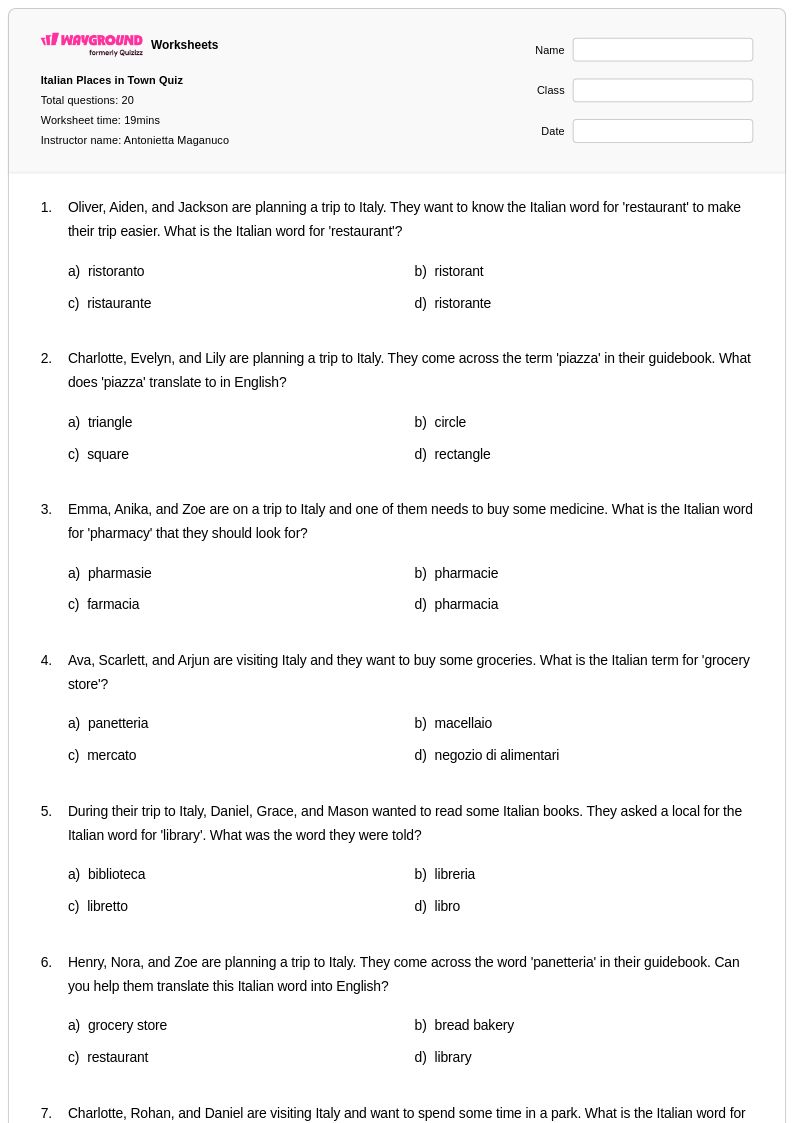
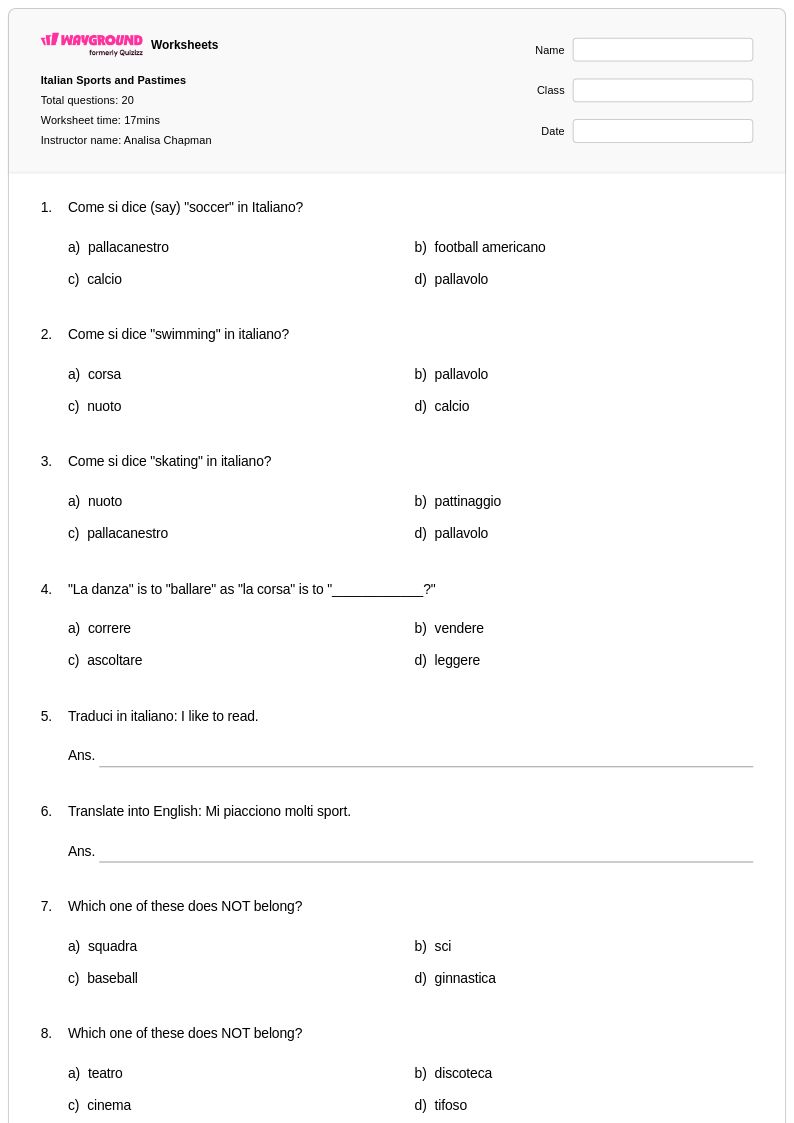
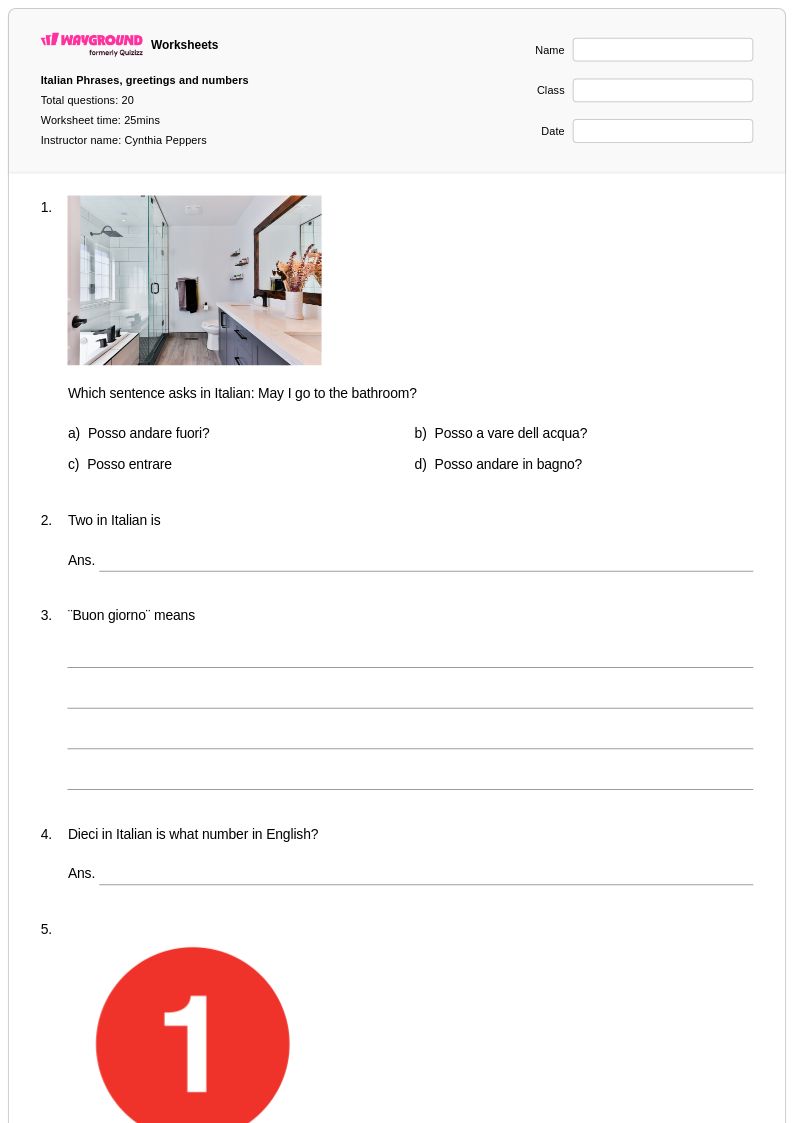
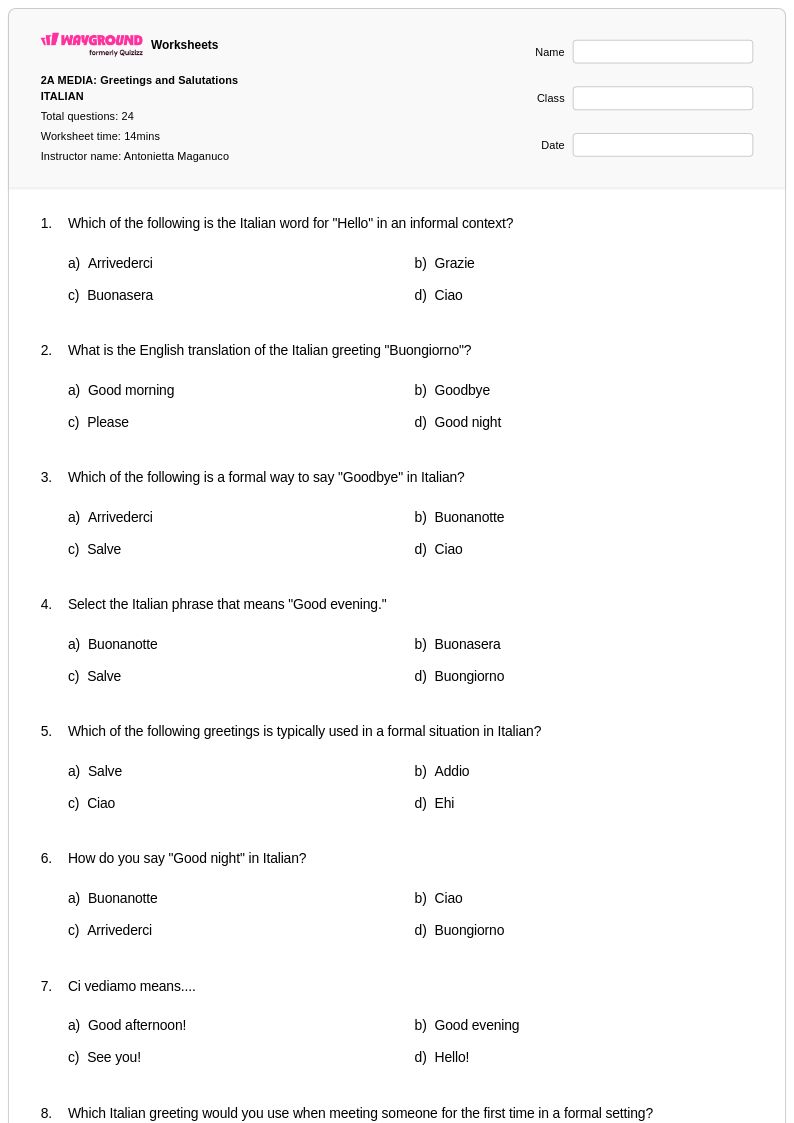
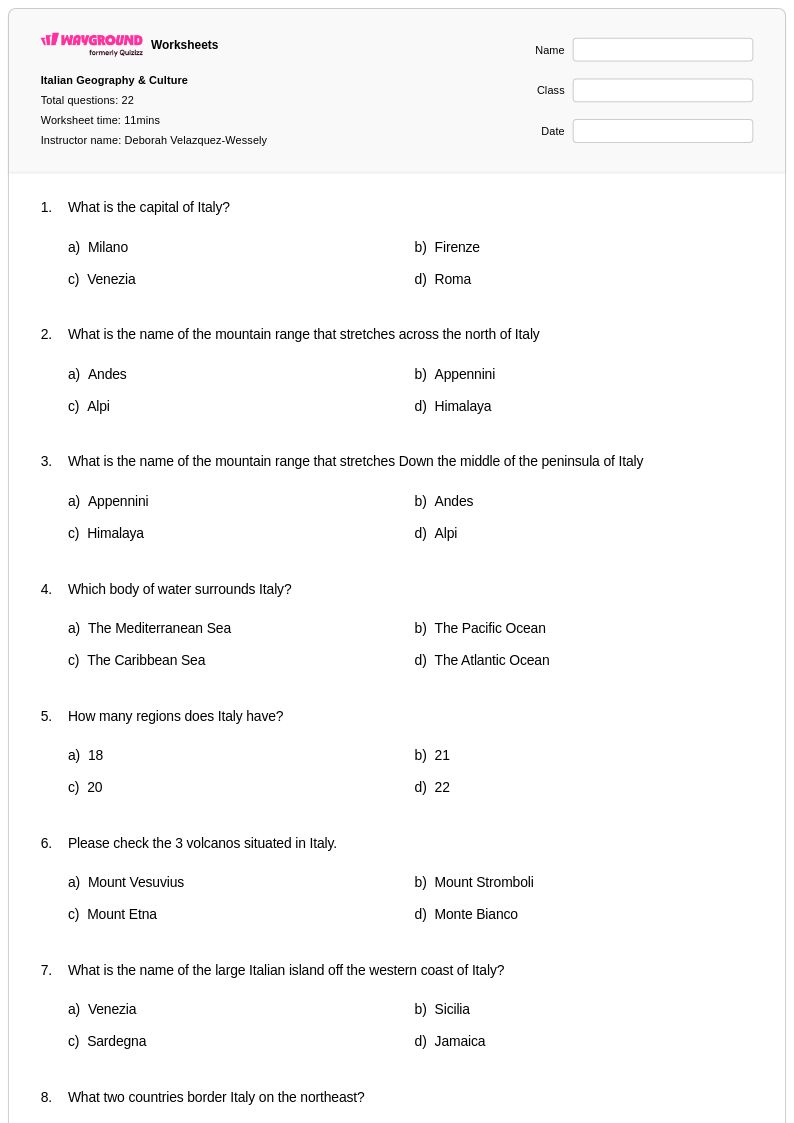
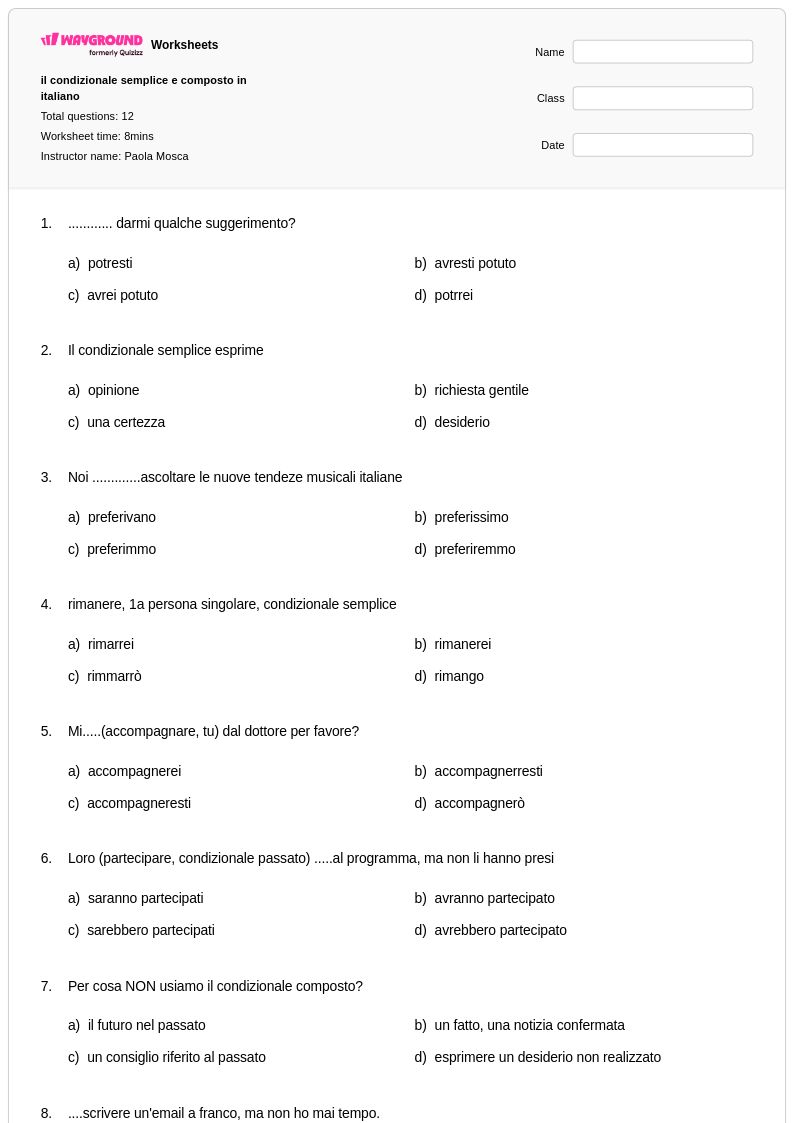
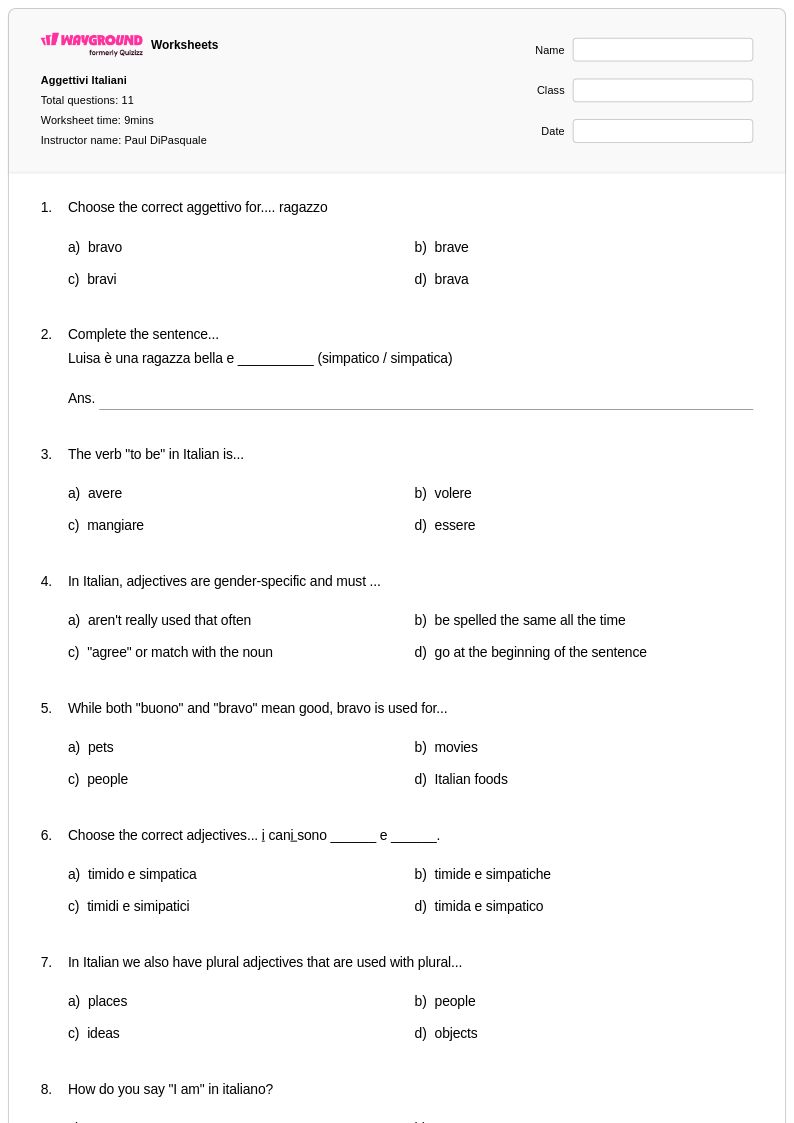
Italian language worksheets for Grade 7 students available through Wayground (formerly Quizizz) provide comprehensive practice opportunities that develop essential communication skills in listening, speaking, reading, and writing. These carefully designed resources focus on fundamental Italian grammar concepts including verb conjugations, noun-adjective agreement, and sentence structure while building practical vocabulary for everyday situations such as family, school, food, and travel. Each worksheet collection includes detailed answer keys that enable students to check their progress independently, and the free printable format allows for flexible classroom use or homework assignments. Practice problems range from basic vocabulary matching and fill-in-the-blank exercises to more complex reading comprehension passages and writing prompts that challenge seventh-grade learners to apply their developing Italian language skills in meaningful contexts.
Wayground (formerly Quizizz) empowers educators with access to millions of teacher-created Italian language resources specifically aligned with Grade 7 learning objectives and national world language standards. The platform's advanced search and filtering capabilities allow teachers to quickly locate worksheets that match their specific curriculum needs, whether focusing on particular grammar topics, cultural themes, or proficiency levels. Differentiation tools enable instructors to customize content for diverse learning styles and abilities, supporting both remediation for struggling students and enrichment opportunities for advanced learners. These versatile resources are available in both printable pdf formats for traditional classroom activities and digital formats for interactive online learning, making lesson planning more efficient while providing targeted skill practice that helps students build confidence and proficiency in Italian language acquisition.
FAQs
How do I teach Italian grammar to beginners?
Start with noun gender and article agreement before moving into verb conjugations, since Italian sentence structure depends heavily on these foundations. Introduce high-frequency verbs like essere and avere early, and reinforce patterns through repetition across multiple contexts. Connecting grammar to conversational phrases helps students see immediate, practical use of the rules they are learning.
What are the most effective exercises for practicing Italian vocabulary?
Vocabulary practice is most effective when it progresses from recognition tasks, such as matching and fill-in-the-blank, to production tasks where students use words in original sentences or dialogues. Grouping vocabulary by theme, such as food, family, or daily routines, builds semantic networks that improve retention. Worksheets that pair vocabulary with cultural context further reinforce meaning and give students a reason to remember the words.
What common mistakes do students make with Italian verb conjugations?
Students frequently overapply regular conjugation patterns to irregular verbs, particularly with high-frequency verbs like fare, andare, and stare. Mixing up the conjugations for essere and avere as auxiliary verbs in past tense constructions is another persistent error. Targeted practice that isolates irregular verb families and requires students to distinguish between auxiliary choices in context helps correct these patterns before they become entrenched.
How can I use Italian worksheets to support students at different skill levels?
For beginner students, worksheets focused on basic vocabulary recognition and simple present-tense conjugations provide essential scaffolding. Intermediate learners benefit from exercises on pronoun usage, reflexive verbs, and compound tenses, while advanced students can work with subjunctive mood and complex sentence structures. On Wayground, teachers can apply accommodations such as read aloud, reduced answer choices, and extended time to individual students, allowing the same worksheet session to serve a mixed-ability class without disrupting the experience for others.
How do I use Wayground's Italian worksheets in my classroom?
Wayground's Italian worksheets are available as printable PDFs for traditional classroom and homework use, and in digital formats for technology-integrated environments, including the ability to host them as a quiz directly on the platform. Teachers can use them for direct instruction reinforcement, independent practice, or formative assessment. The included answer keys support self-assessment and allow students to review independently, reducing the grading burden on teachers.
How do I teach Italian pronunciation to English-speaking students?
Italian pronunciation is more consistent than English because it follows predictable phonetic rules, which means early explicit instruction on letter-sound correspondences pays off quickly. Focus first on vowel sounds, double consonants, and letter combinations like gli, gn, and sc, since these differ most significantly from English. Pairing pronunciation worksheets with listening activities reinforces the connection between written and spoken forms.