
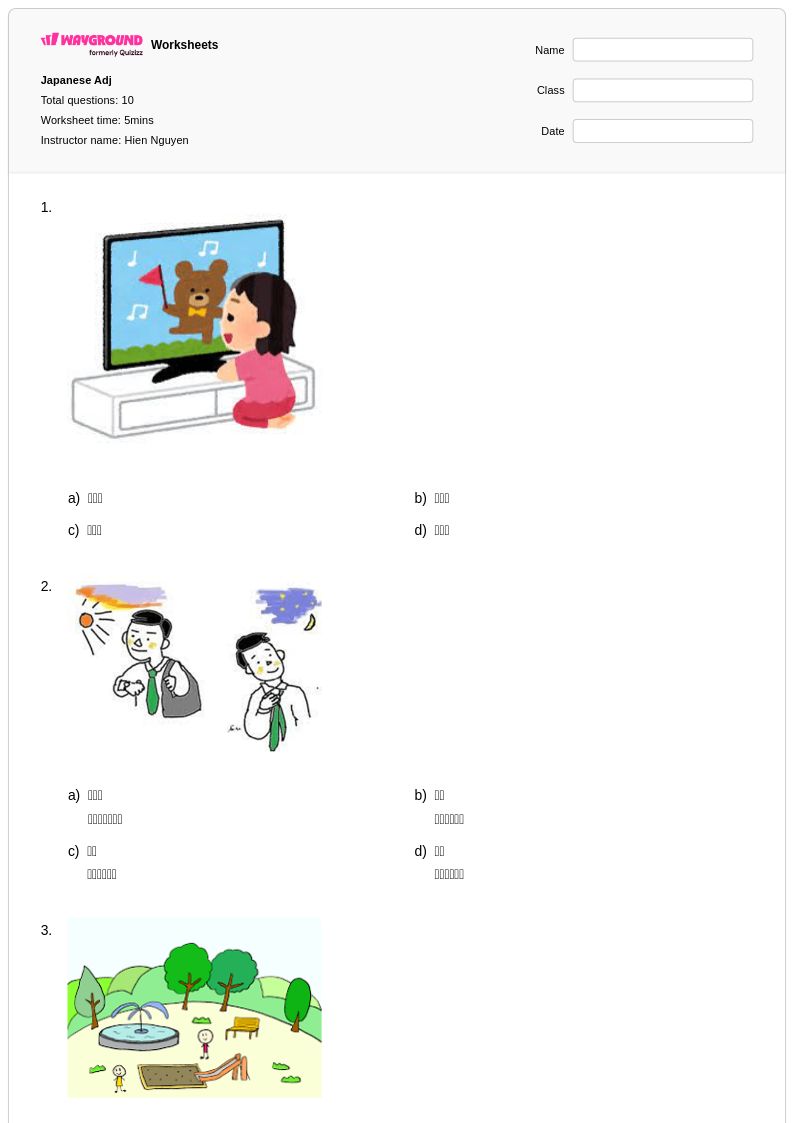
10 Q
1st - 5th
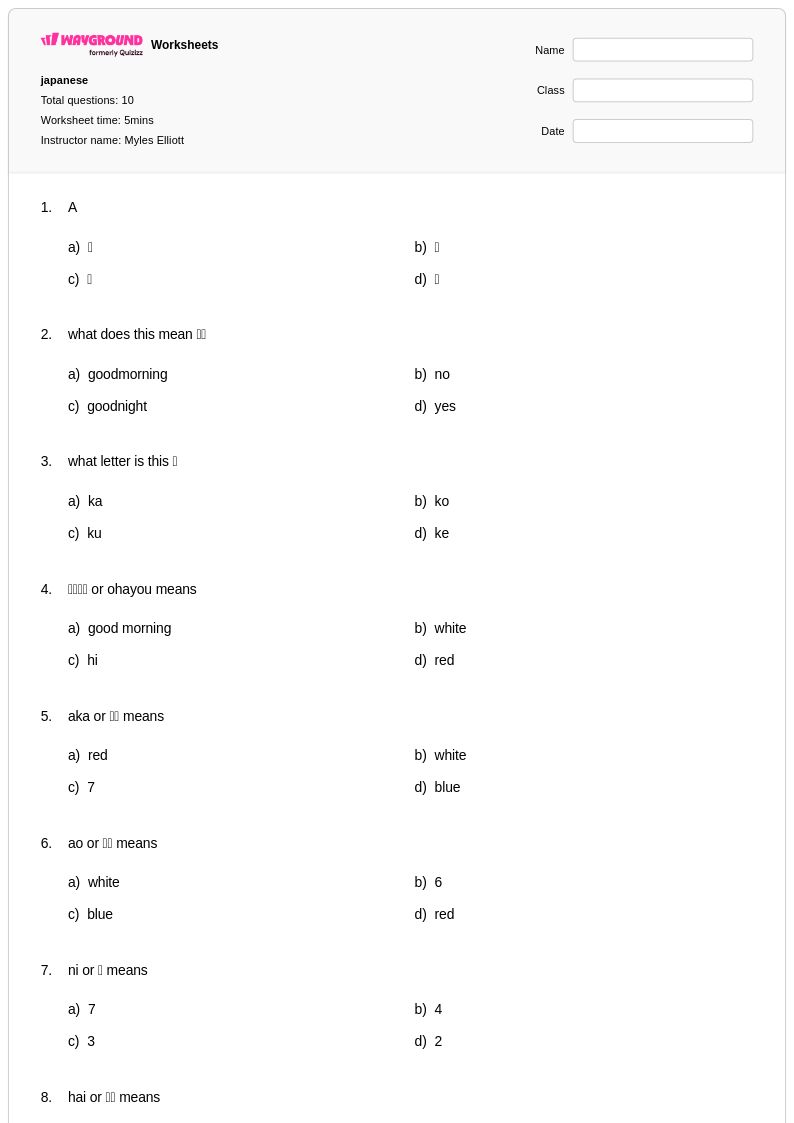
10 Q
1st - Uni
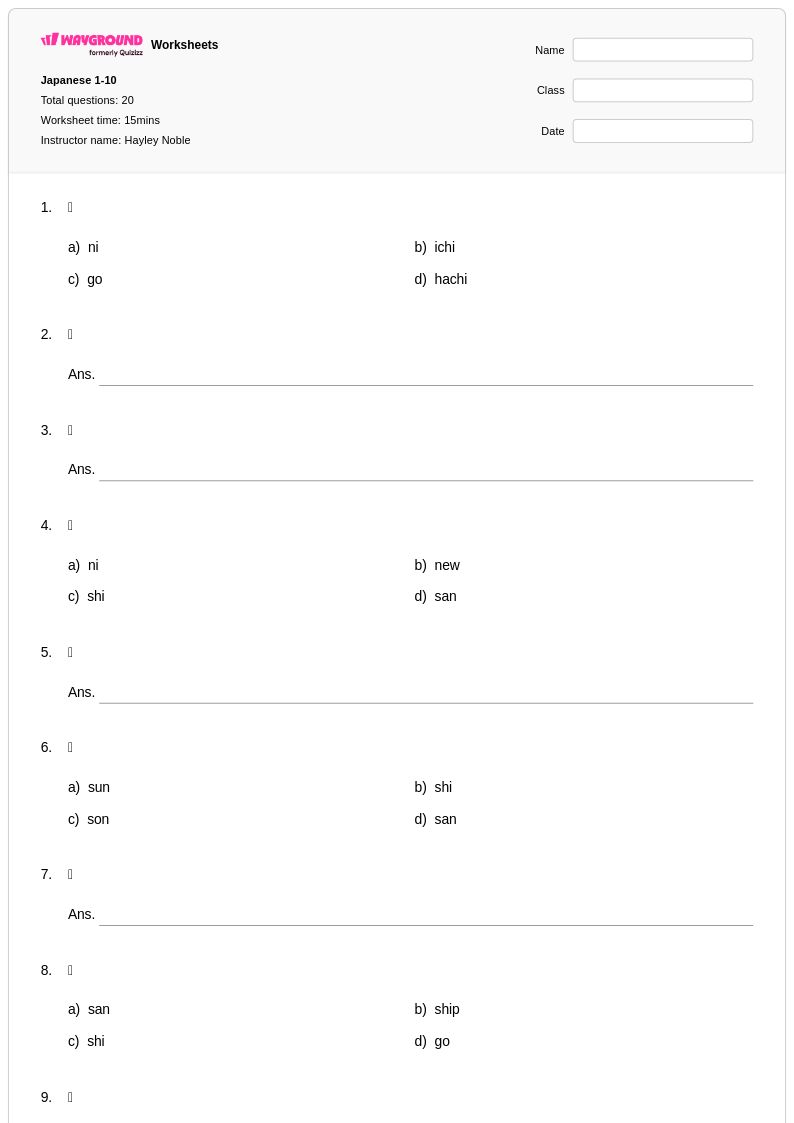
20 Q
1st - 5th
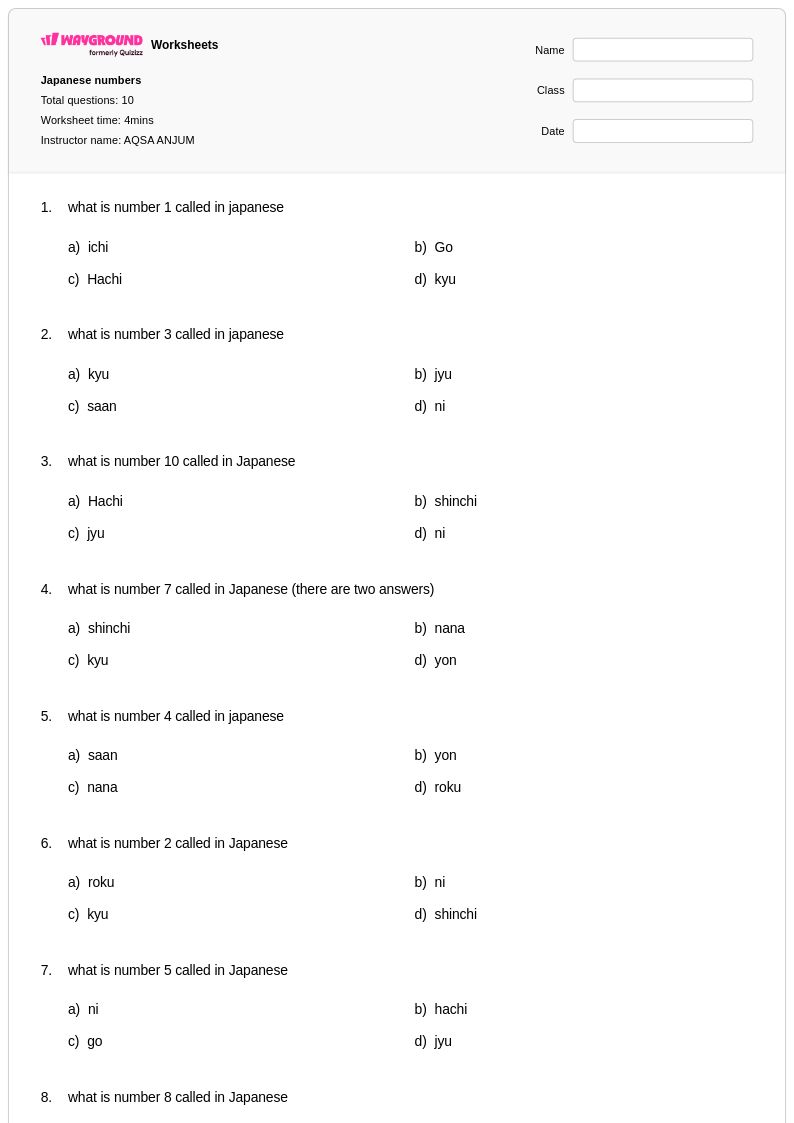
10 Q
KG - Uni
16 Q
1st - 12th
24 Q
1st - 5th
15 Q
1st - Uni
20 Q
KG - PD
20 Q
1st - PD
13 Q
1st - 2nd
15 Q
1st - 6th
15 Q
2nd - 9th
12 Q
2nd - 8th
6 Q
2nd - 4th
10 Q
2nd
8 Q
1st - 5th
10 Q
1st - 5th
10 Q
1st - 5th
)
6 Q
KG - PD
10 Q
2nd
12 Q
1st - 5th
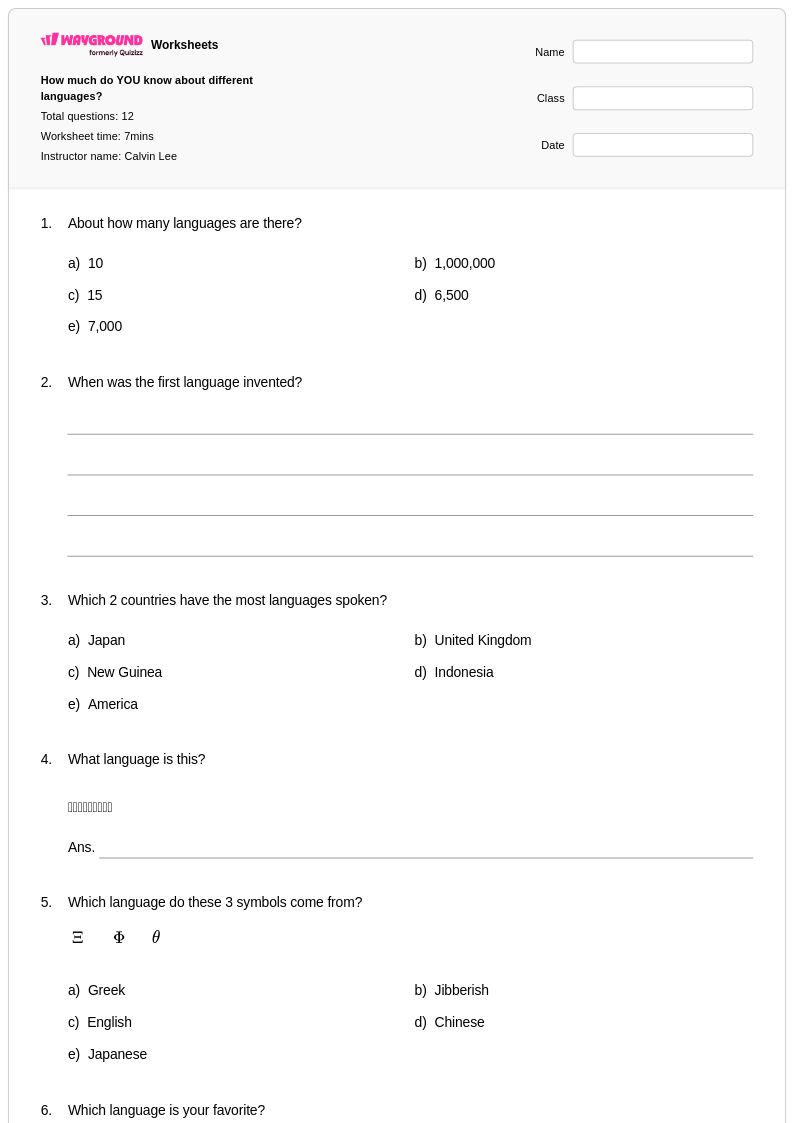
12 Q
KG - PD
![[Languages] - Printable Japanese Worksheets Grade 2 - Wayground](https://quizizz-static.s3.amazonaws.com/_media/worksheets-new/62b6242e0655c0001ec461d9-languages)
11 Q
2nd - 4th
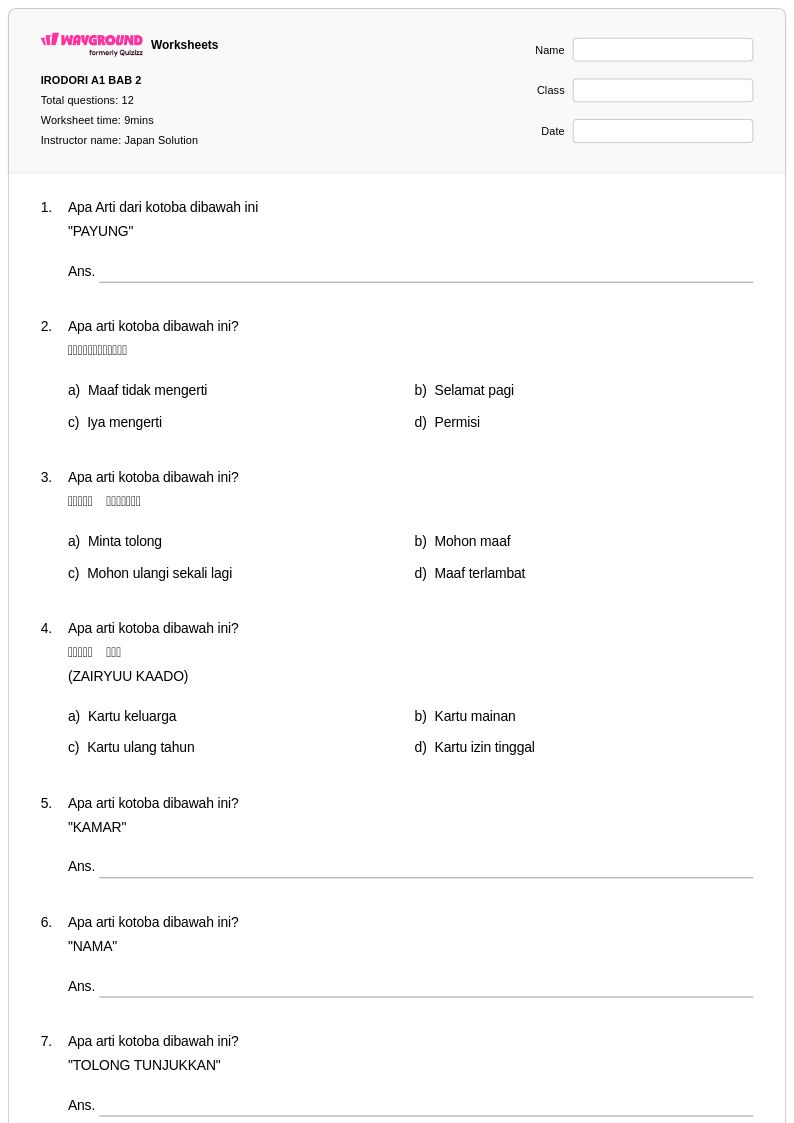
12 Q
1st - 5th
Explore Japanese Worksheets by Grades
Explore Other Subject Worksheets for grade 2
Explore printable Japanese worksheets for Grade 2
Grade 2 Japanese worksheets available through Wayground (formerly Quizizz) provide young learners with engaging, age-appropriate introductions to the Japanese language and culture. These carefully crafted educational resources focus on foundational elements essential for second-grade students, including basic hiragana character recognition, simple vocabulary related to colors, numbers, family members, and everyday objects, as well as fundamental greetings and polite expressions. The worksheets strengthen critical early language acquisition skills such as visual discrimination between Japanese characters, phonetic awareness of Japanese sounds, cultural appreciation, and basic communication abilities. Teachers can access comprehensive materials that include detailed answer keys for efficient grading, free printable options for classroom flexibility, and well-structured practice problems that reinforce learning through repetition and visual association, making these pdf resources invaluable for introducing elementary students to this beautiful and complex language.
Wayground (formerly Quizizz) supports educators with an extensive collection of teacher-created Japanese learning resources, drawing from millions of high-quality worksheets developed by experienced language instructors and early childhood education specialists. The platform's robust search and filtering capabilities allow teachers to quickly locate materials aligned with specific learning objectives and state world language standards, while differentiation tools enable customization based on individual student needs and varying levels of language exposure. These flexible resources are available in both printable and digital formats, including downloadable pdf versions, making them suitable for traditional classroom instruction, homework assignments, or remote learning environments. The comprehensive worksheet collection facilitates effective lesson planning by providing structured skill practice opportunities, supports targeted remediation for students struggling with character recognition or pronunciation, and offers enrichment activities for advanced learners ready to explore more complex Japanese language concepts and cultural elements.
FAQs
How do I teach hiragana and katakana to beginners?
What are the most common mistakes students make when learning Japanese characters?
What exercises help students practice Japanese vocabulary effectively?
How do I differentiate Japanese language instruction for mixed-ability classrooms?
How can I use Japanese worksheets from Wayground in my classroom?
How do I introduce basic Japanese grammar structures to students with no prior experience?