Free Printable Light Energy Worksheets for Grade 11
Explore comprehensive Grade 11 light energy worksheets and printables that help students master wave properties, electromagnetic spectrum, and optical phenomena through engaging practice problems with complete answer keys available as free PDF downloads.
Explore printable Light Energy worksheets for Grade 11
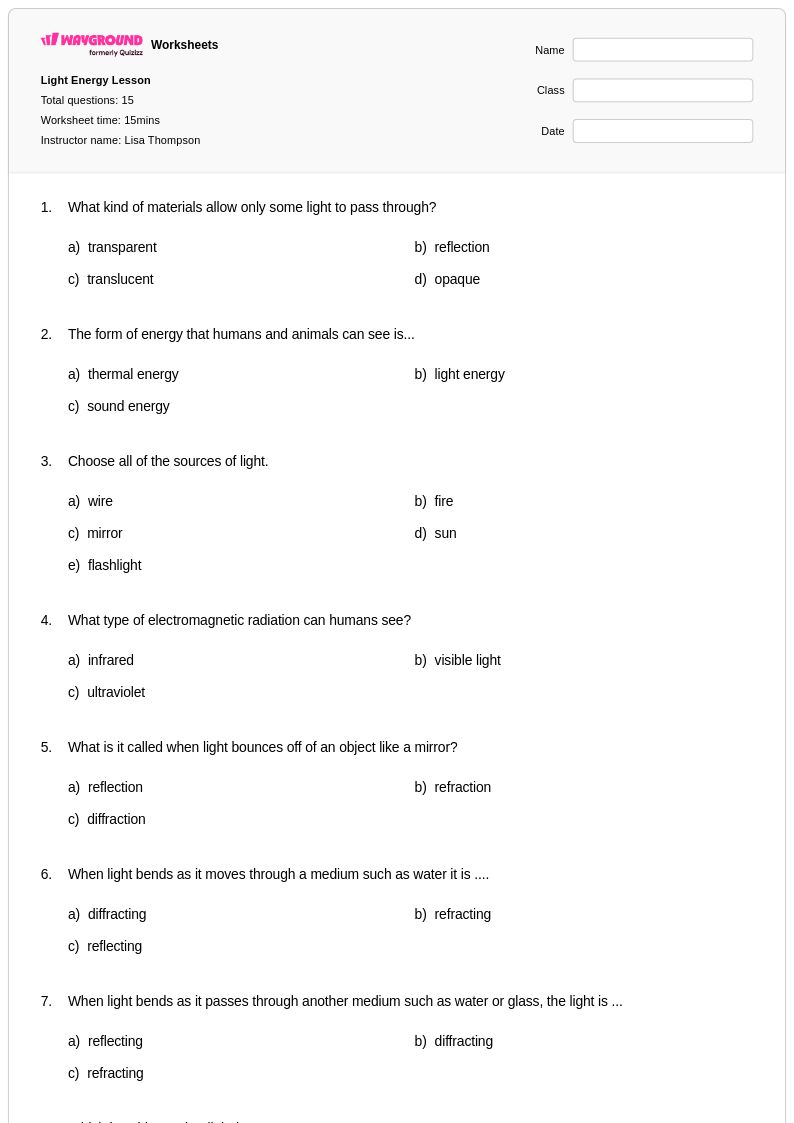
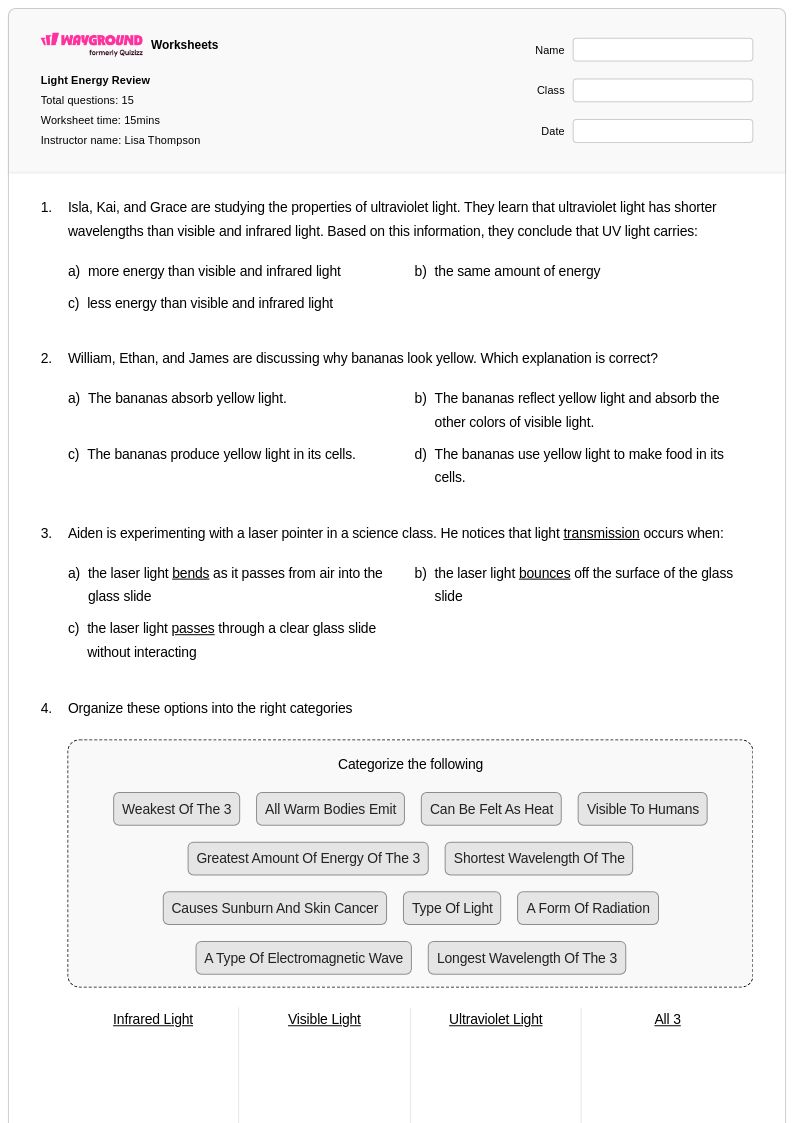
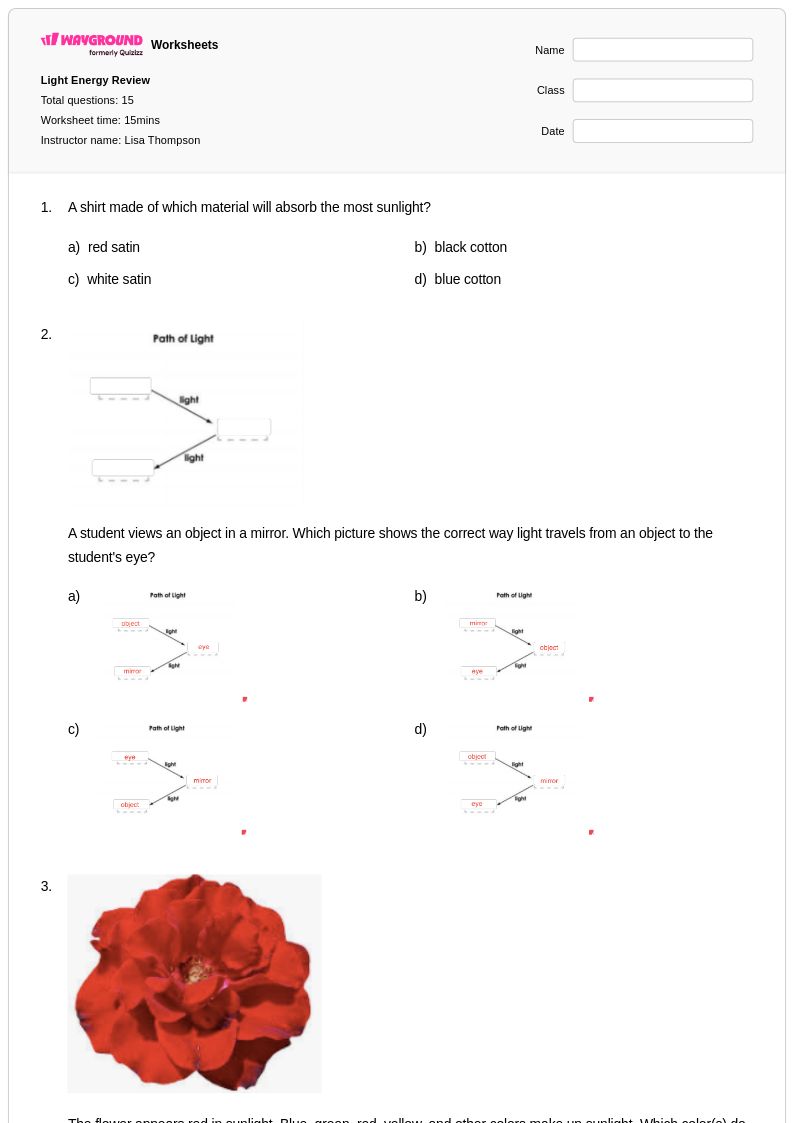
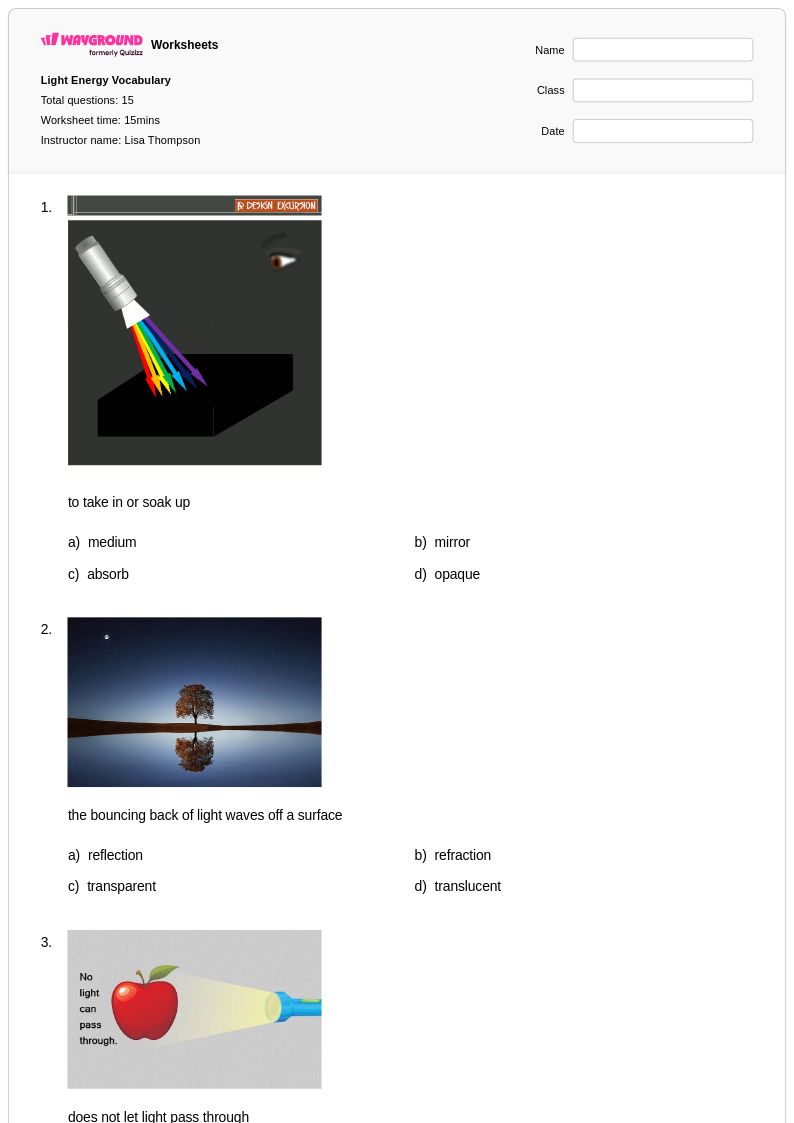
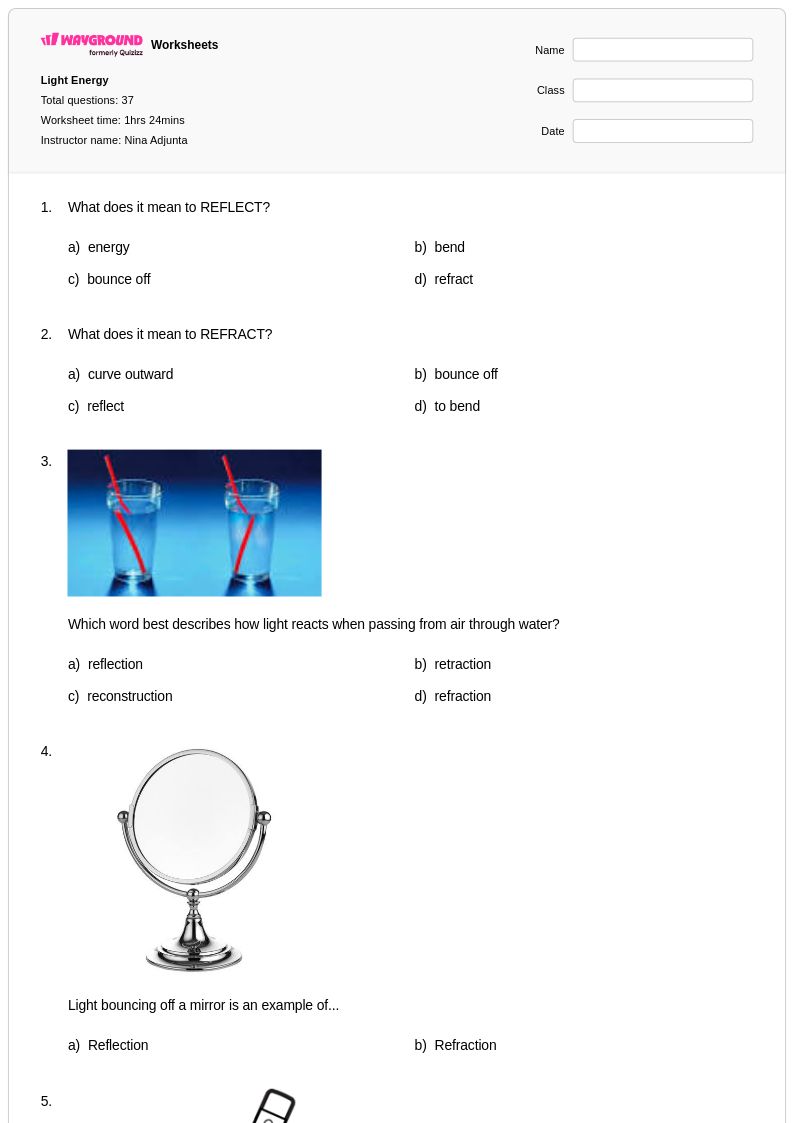
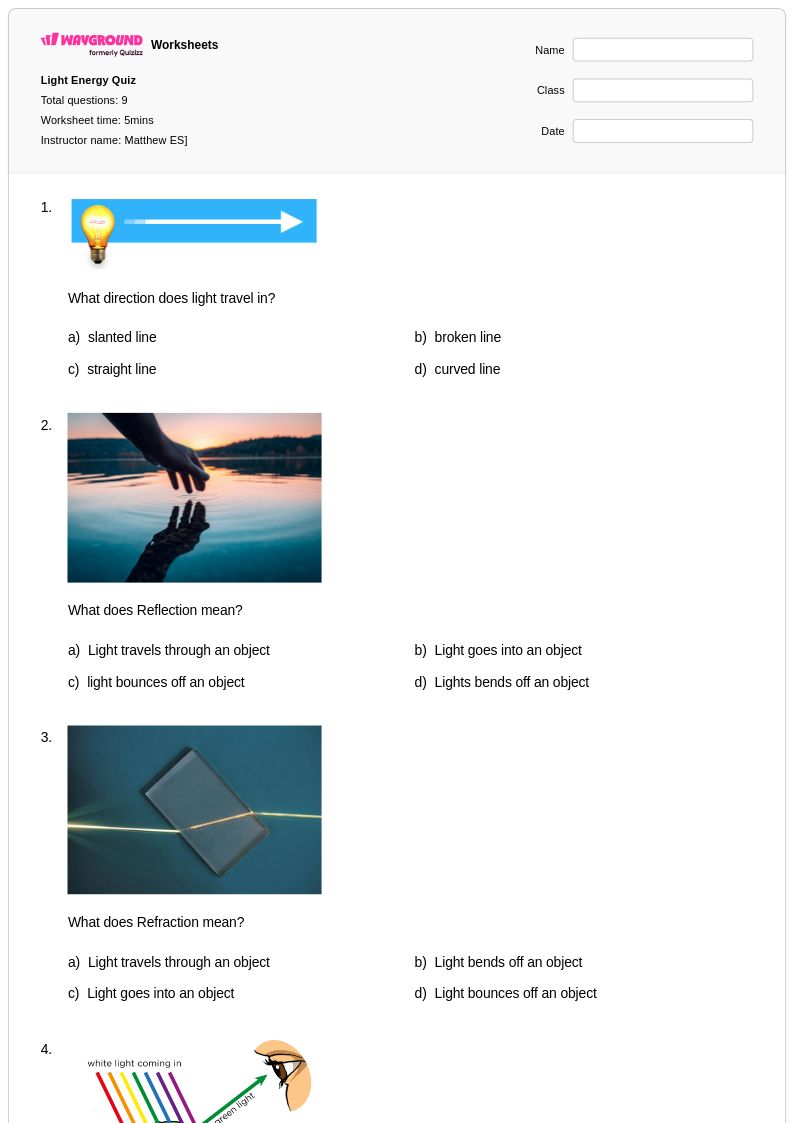
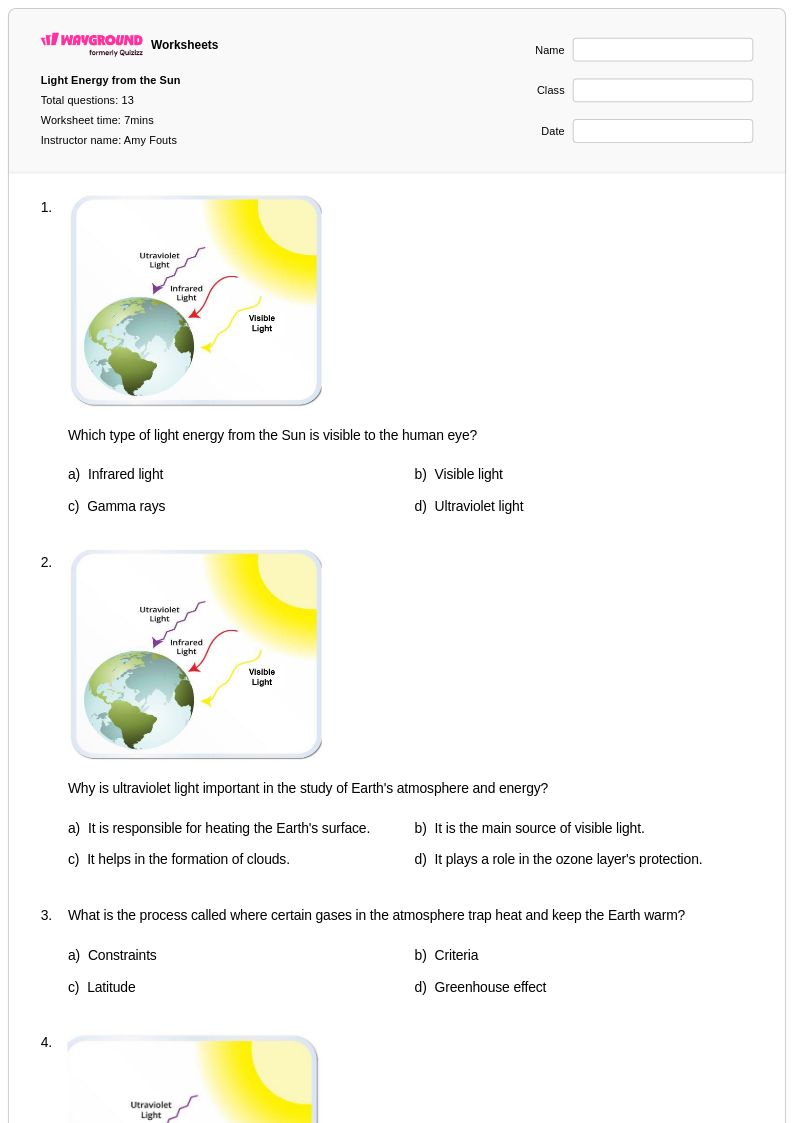
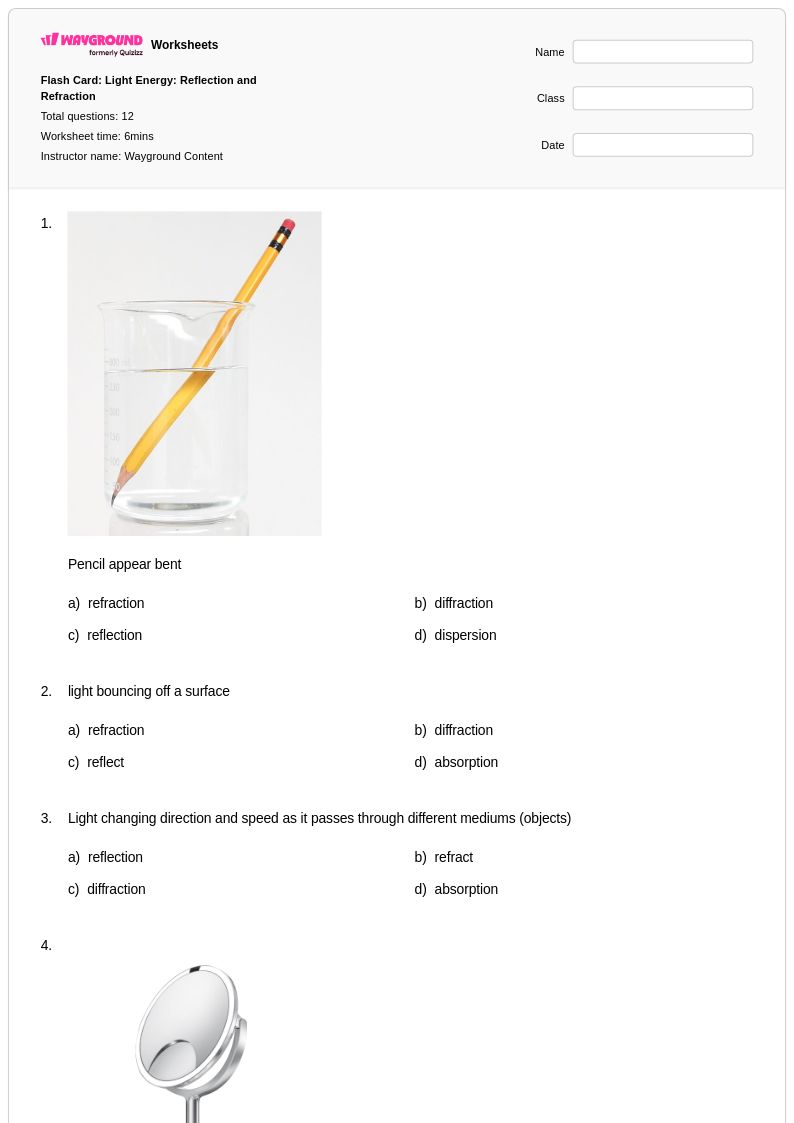
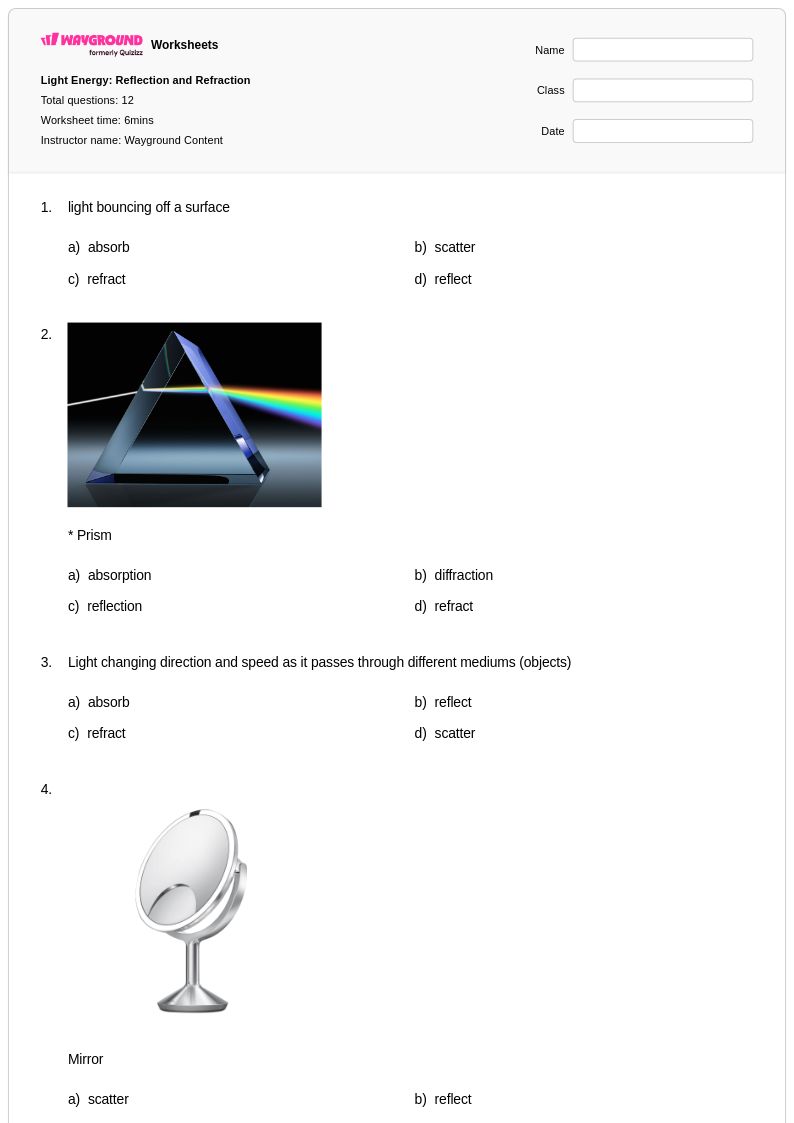
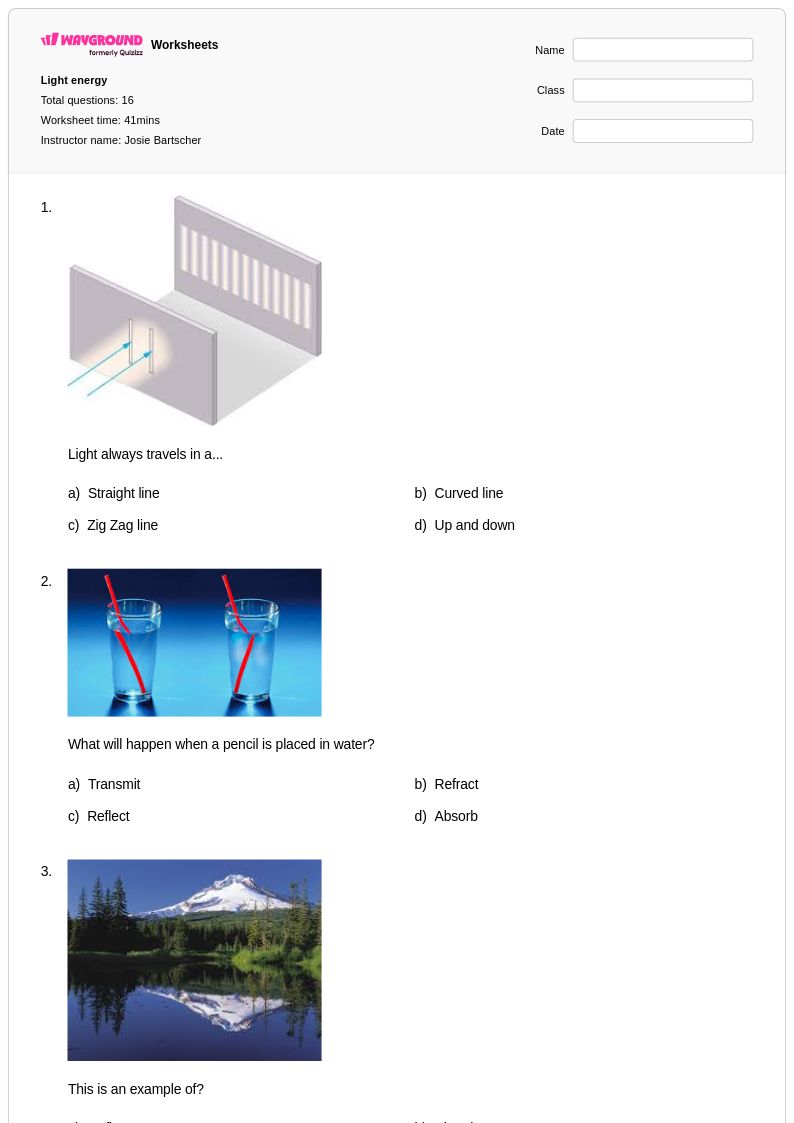
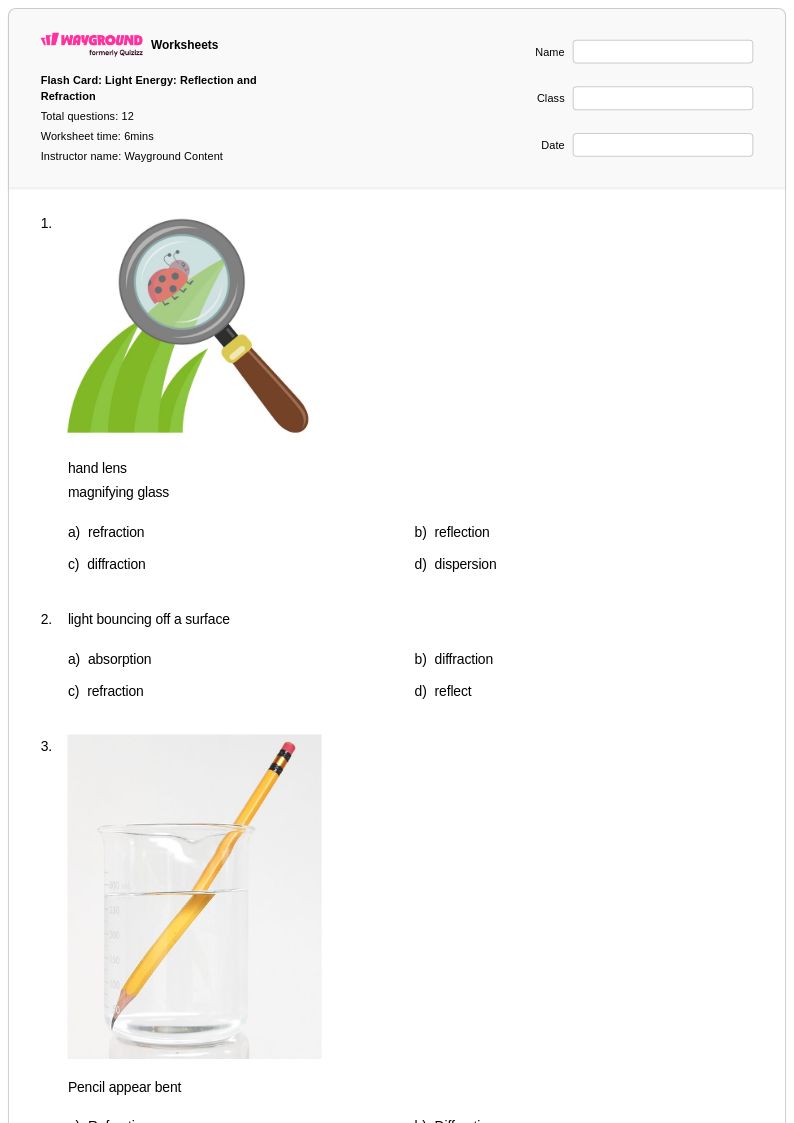
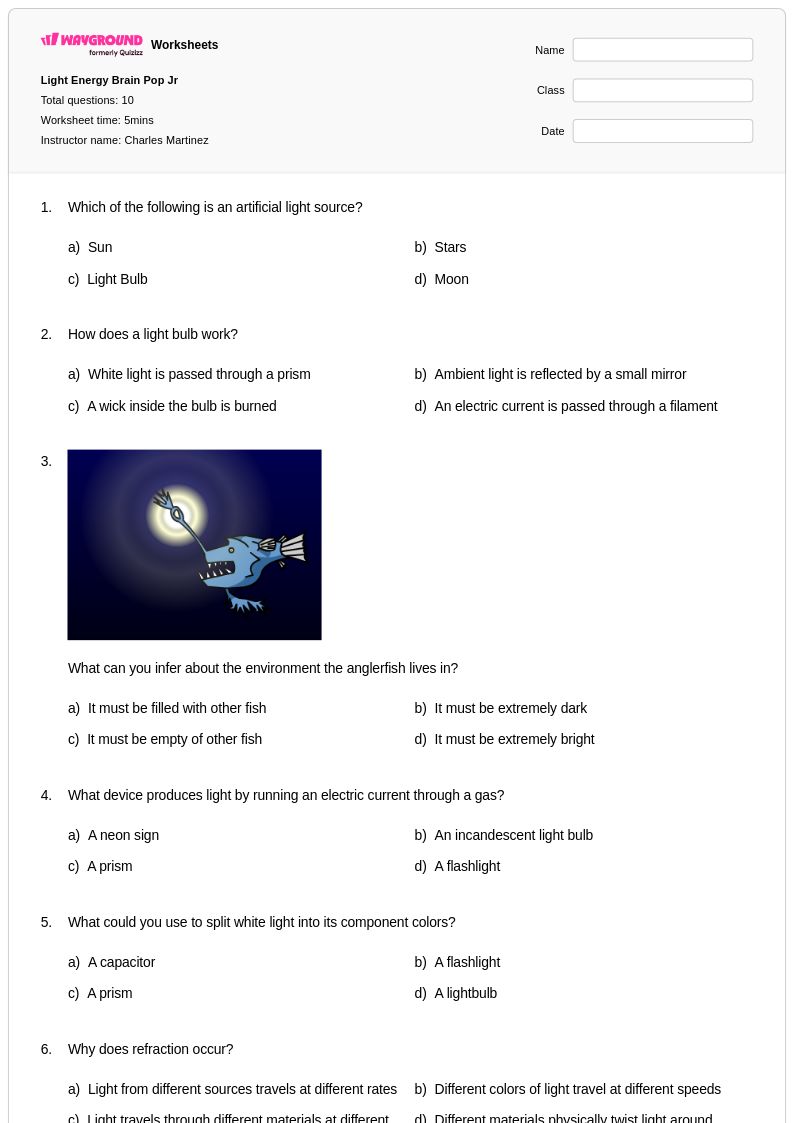
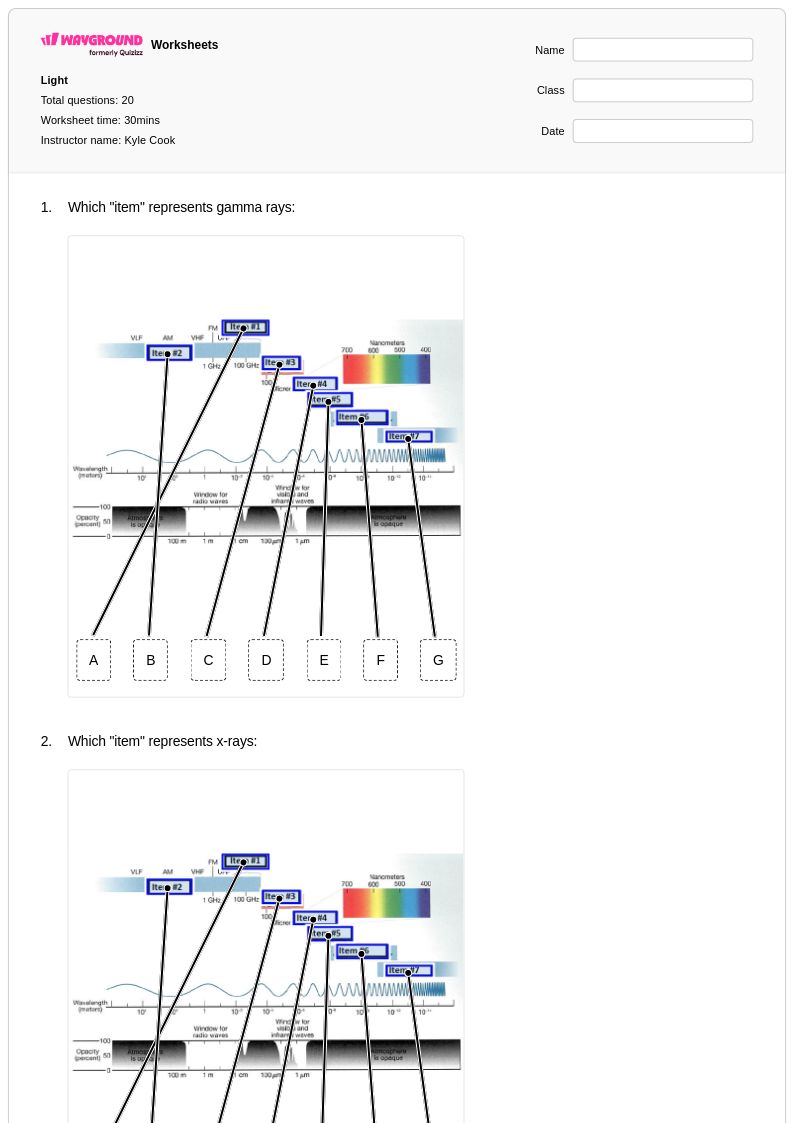
Light energy worksheets for Grade 11 students available through Wayground (formerly Quizizz) provide comprehensive coverage of electromagnetic radiation principles, wave-particle duality, and photon behavior essential for advanced physics understanding. These carefully designed practice problems guide students through complex concepts including the electromagnetic spectrum, energy quantization, photoelectric effect, and light interaction with matter. Each worksheet strengthens critical analytical skills by challenging students to calculate photon energies, analyze wave properties, and solve real-world applications involving light phenomena. The collection includes detailed answer keys that support independent learning and self-assessment, while printable pdf formats ensure accessibility for both classroom instruction and home study sessions.
Wayground's extensive library draws from millions of teacher-created resources specifically aligned with Grade 11 physics curricula, offering educators powerful search and filtering capabilities to locate worksheets that match specific learning objectives and standards requirements. The platform's differentiation tools enable teachers to customize light energy content for varying ability levels, supporting both remediation for struggling students and enrichment opportunities for advanced learners. These versatile resources are available in both digital and printable formats, allowing seamless integration into diverse teaching environments while facilitating targeted skill practice in electromagnetic theory, quantum mechanics fundamentals, and mathematical problem-solving techniques. The comprehensive worksheet collections streamline lesson planning by providing ready-to-use materials that reinforce theoretical concepts through structured practice and immediate feedback opportunities.
FAQs
How do I teach light energy to students who struggle with abstract wave concepts?
Start with concrete, observable phenomena before moving to abstract models. Use demonstrations like prisms splitting white light or straw refraction in water to anchor the ideas of reflection, refraction, and transmission in physical reality. Once students can describe what they observe, introduce the wave model to explain why it happens. Connecting wavelength and frequency to visible color is an effective bridge between the observable and the theoretical.
What exercises help students practice the relationship between wavelength, frequency, and energy?
Photon energy calculation problems are the most direct way to practice this relationship, requiring students to apply the equations E = hf and c = λf together. Worksheets that sequence these problems from single-step to multi-step reinforce procedural fluency while building conceptual understanding. Including electromagnetic spectrum labeling tasks alongside calculation problems helps students connect numerical values to real-world regions like visible light, UV, and infrared.
What are the most common misconceptions students have about light energy?
One of the most persistent misconceptions is that light requires a medium to travel, which students infer by analogy with sound. Another common error is conflating brightness with energy, when in fact energy is determined by frequency, not intensity. Students also frequently confuse reflection and refraction, particularly when both occur at the same surface. Targeted practice problems that isolate each behavior help students distinguish these concepts before applying them together.
How do I use light energy worksheets to support students with different skill levels?
Differentiation is most effective when scaffolding is embedded in the task itself. For struggling learners, provide partially completed diagrams or formula reference boxes alongside calculation problems. For advanced students, open-ended extension problems involving optical technologies or real-world applications of the electromagnetic spectrum add appropriate challenge. On Wayground, teachers can apply accommodations such as read aloud, reduced answer choices, and extended time to individual students without disrupting the experience for the rest of the class.
How can I use Wayground's light energy worksheets in both in-person and remote learning settings?
Wayground's light energy worksheets are available as printable PDFs for traditional classroom use and in digital formats for technology-integrated or remote learning environments. Teachers can also host worksheets as a live or assigned quiz directly on Wayground, giving students an interactive experience while automatically collecting responses. This flexibility means the same resource can be used for whole-class instruction, independent practice, or homework without reformatting.
What light energy topics should I cover before introducing wave-particle duality?
Students should have a solid grasp of basic wave properties, including wavelength, frequency, and amplitude, before encountering wave-particle duality. They should also understand how light behaves as a wave through phenomena like reflection, refraction, and the electromagnetic spectrum. Once these behaviors are internalized, introducing the photon model and the photoelectric effect gives duality concrete grounding rather than appearing as an arbitrary theoretical claim.