Free Printable Macroeconomics Worksheets for Grade 9
Grade 9 macroeconomics worksheets from Wayground offer comprehensive printables and practice problems that help students master economic indicators, fiscal policy, and national economic systems with detailed answer keys and free PDF resources.
Explore printable Macroeconomics worksheets for Grade 9
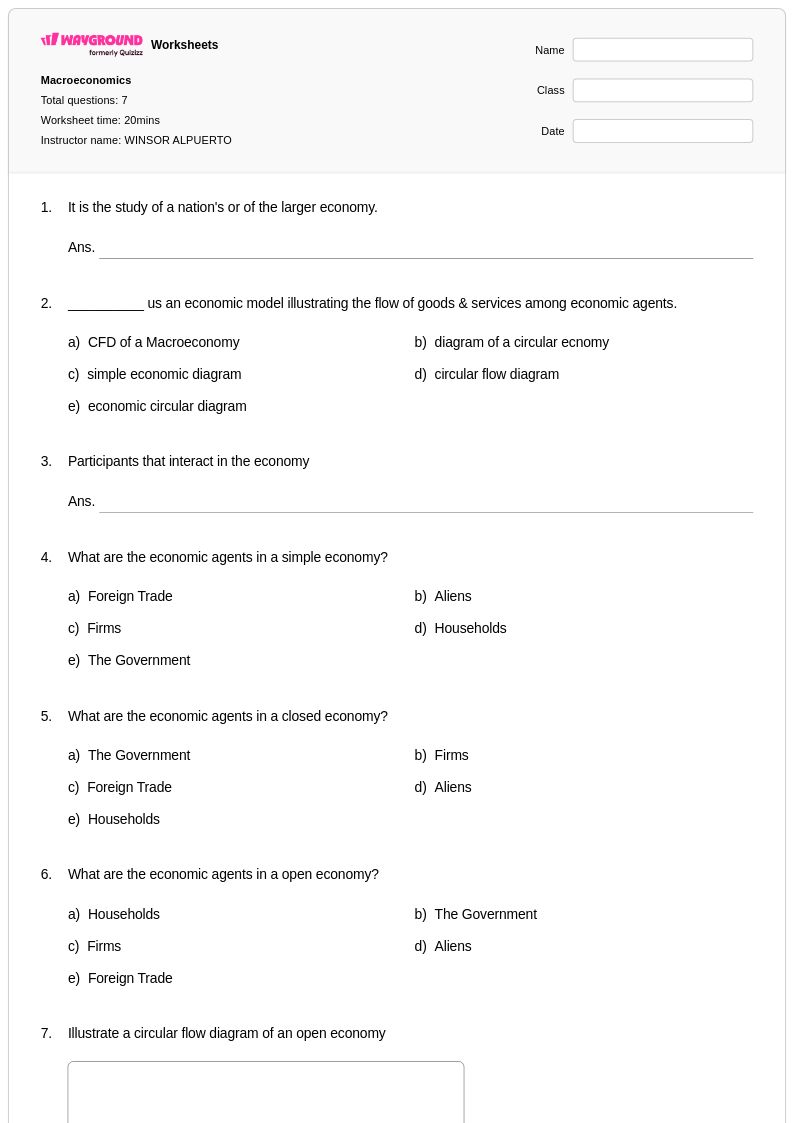
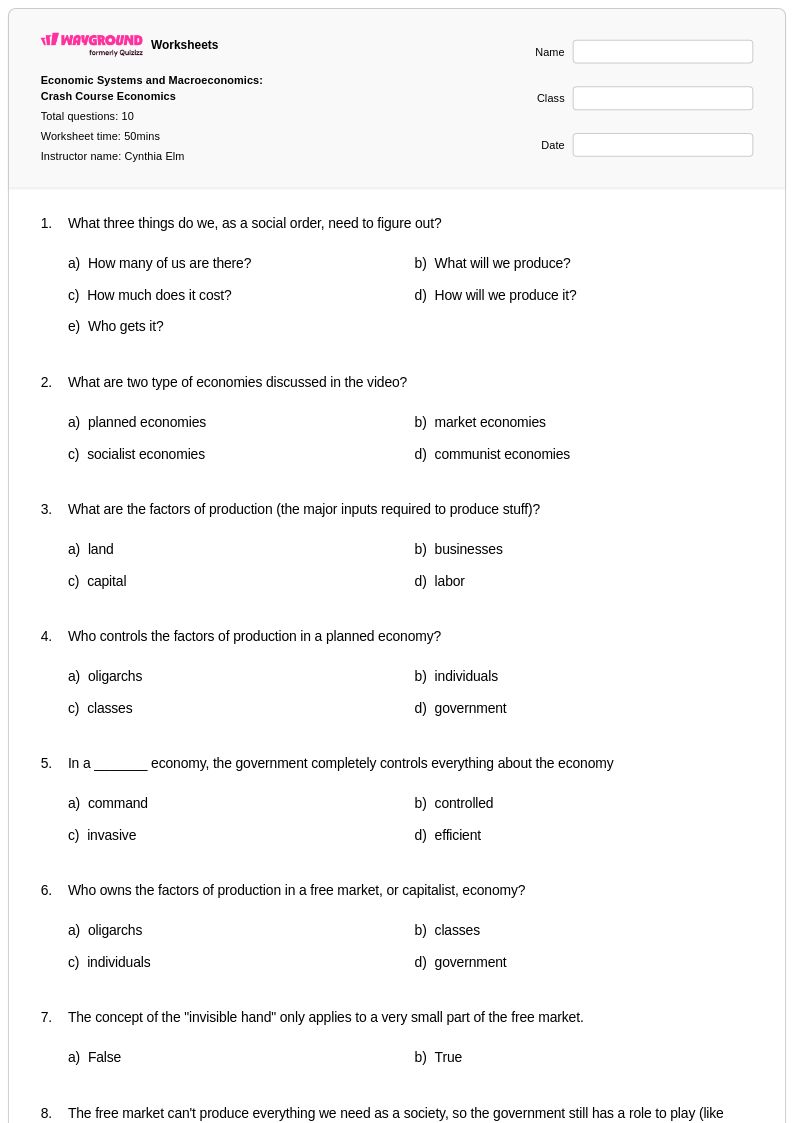
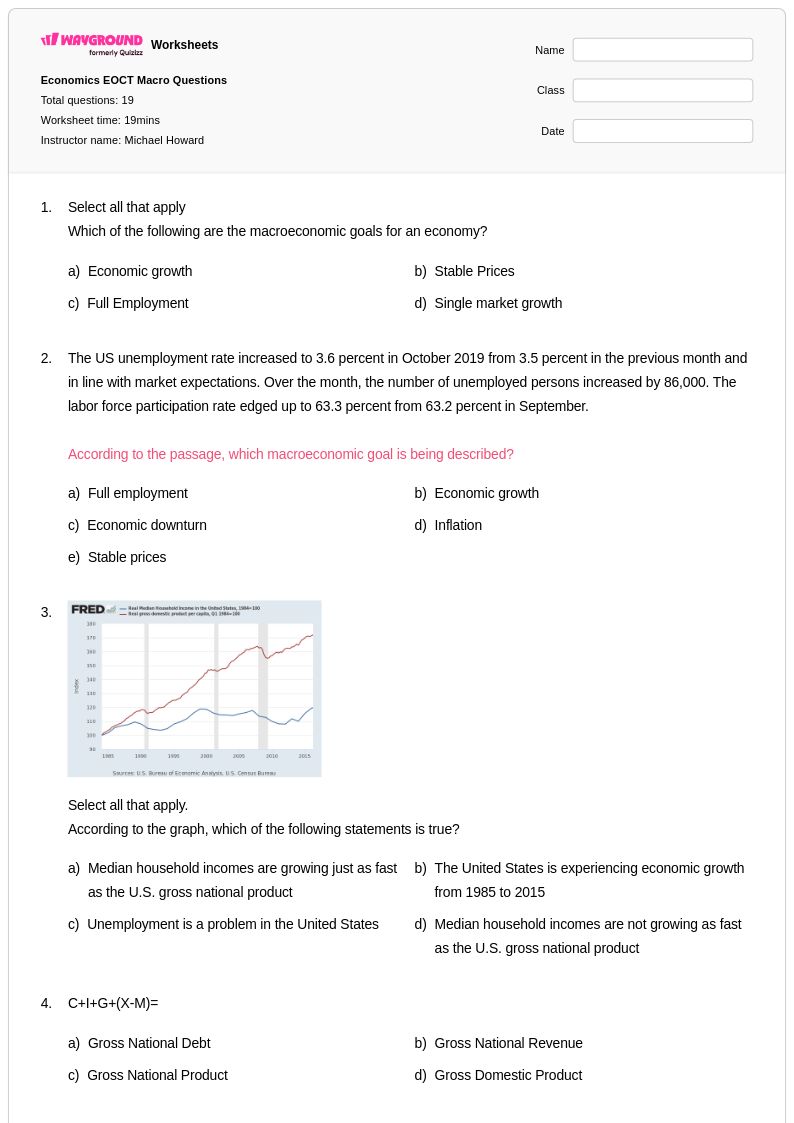
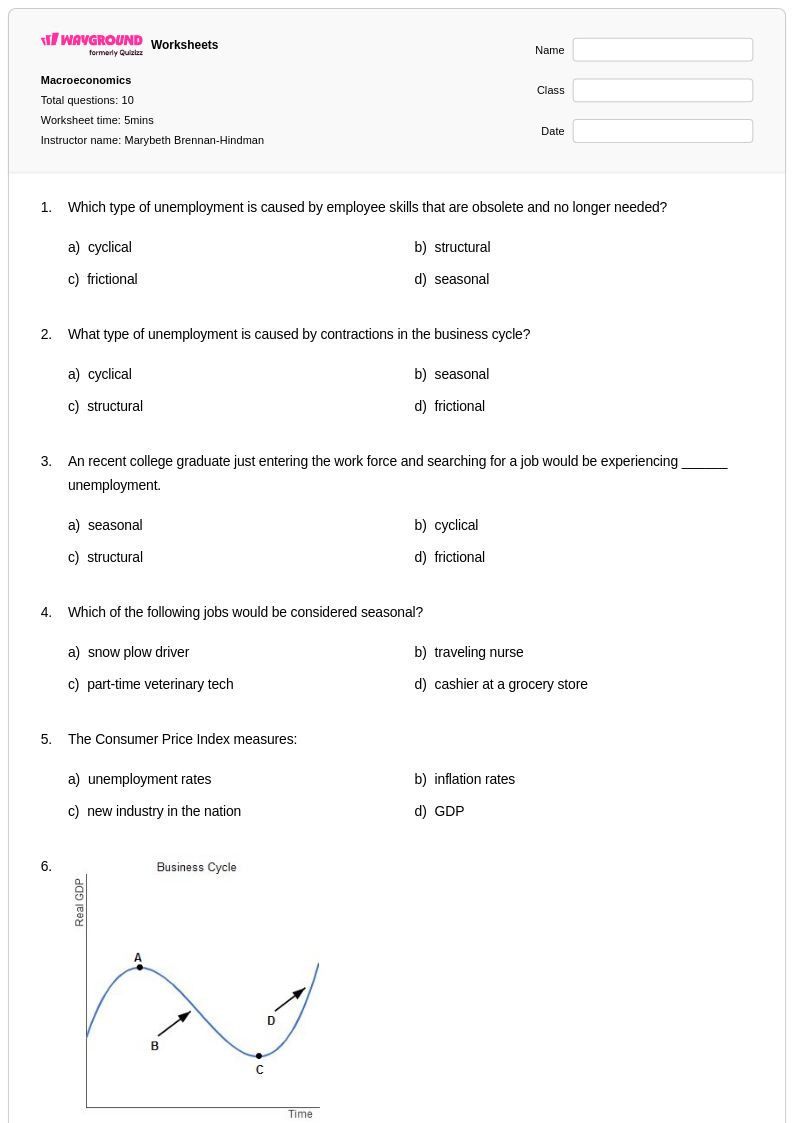
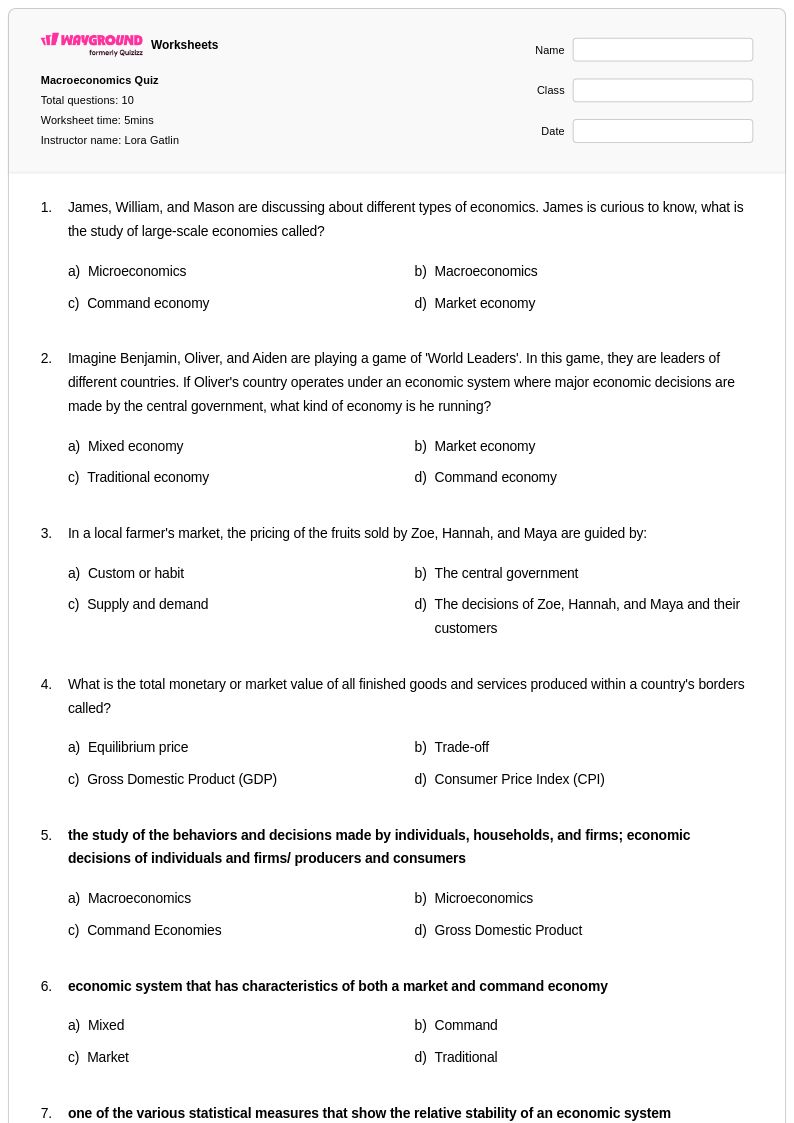
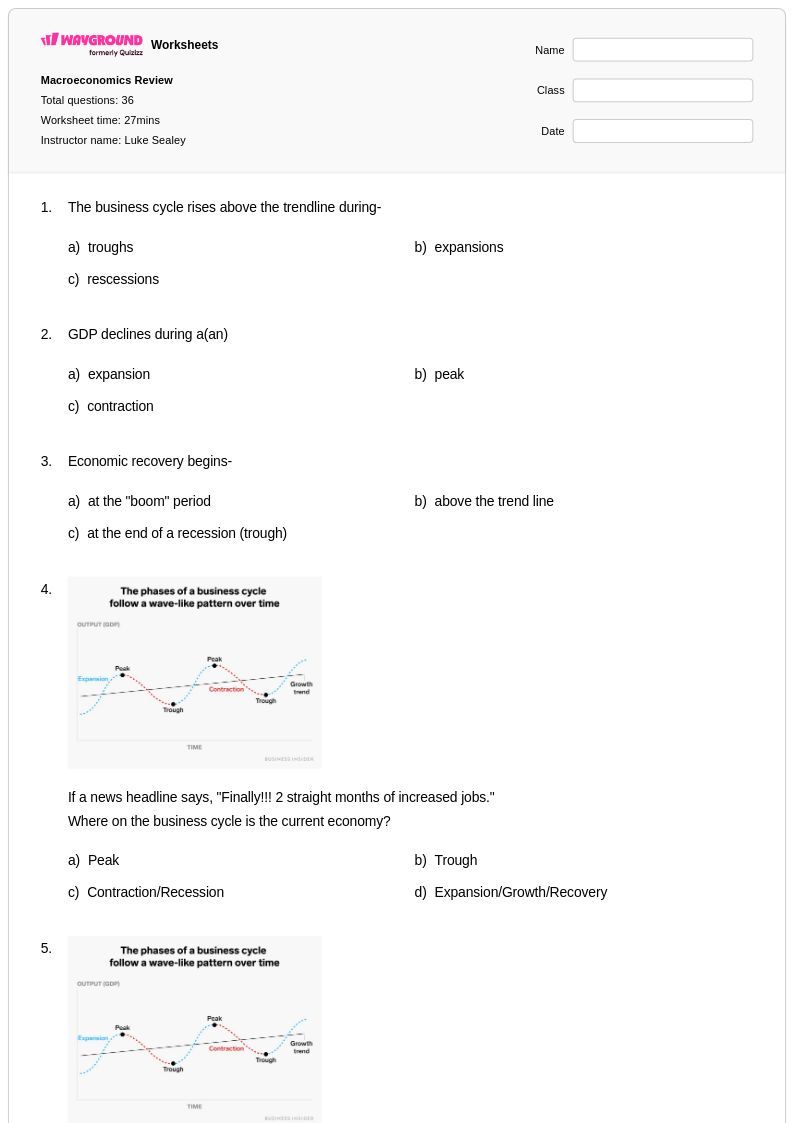
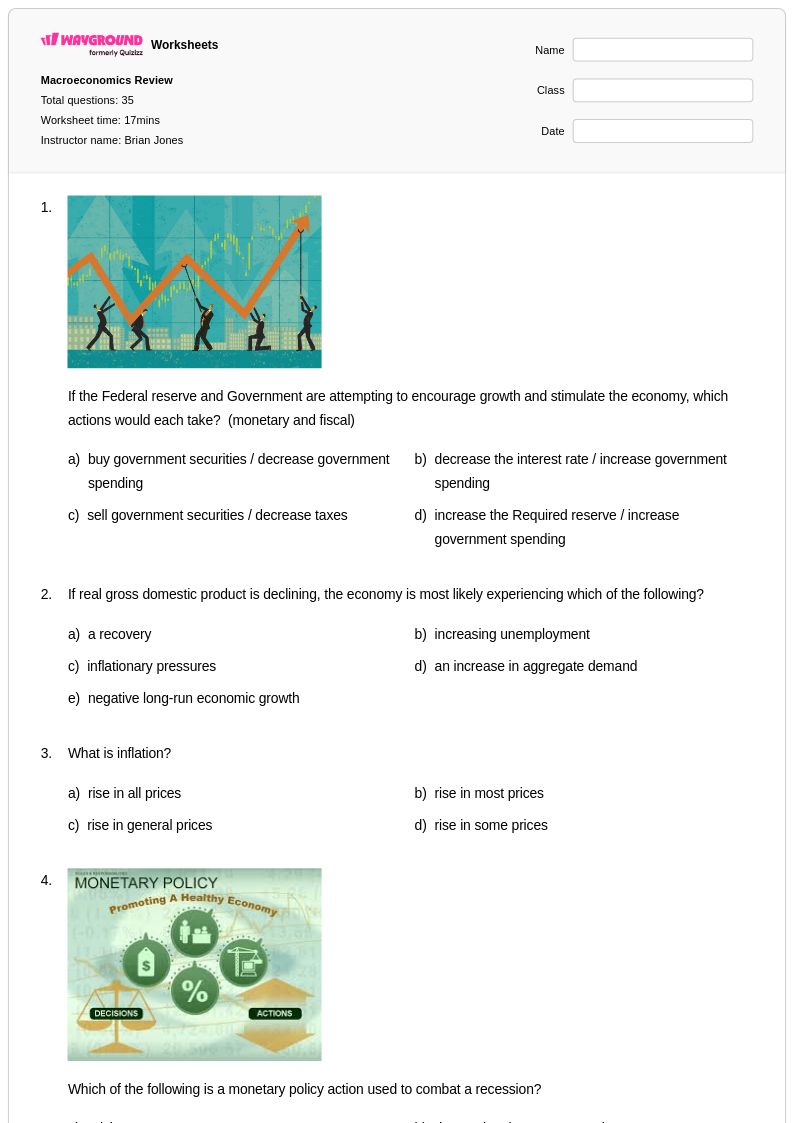
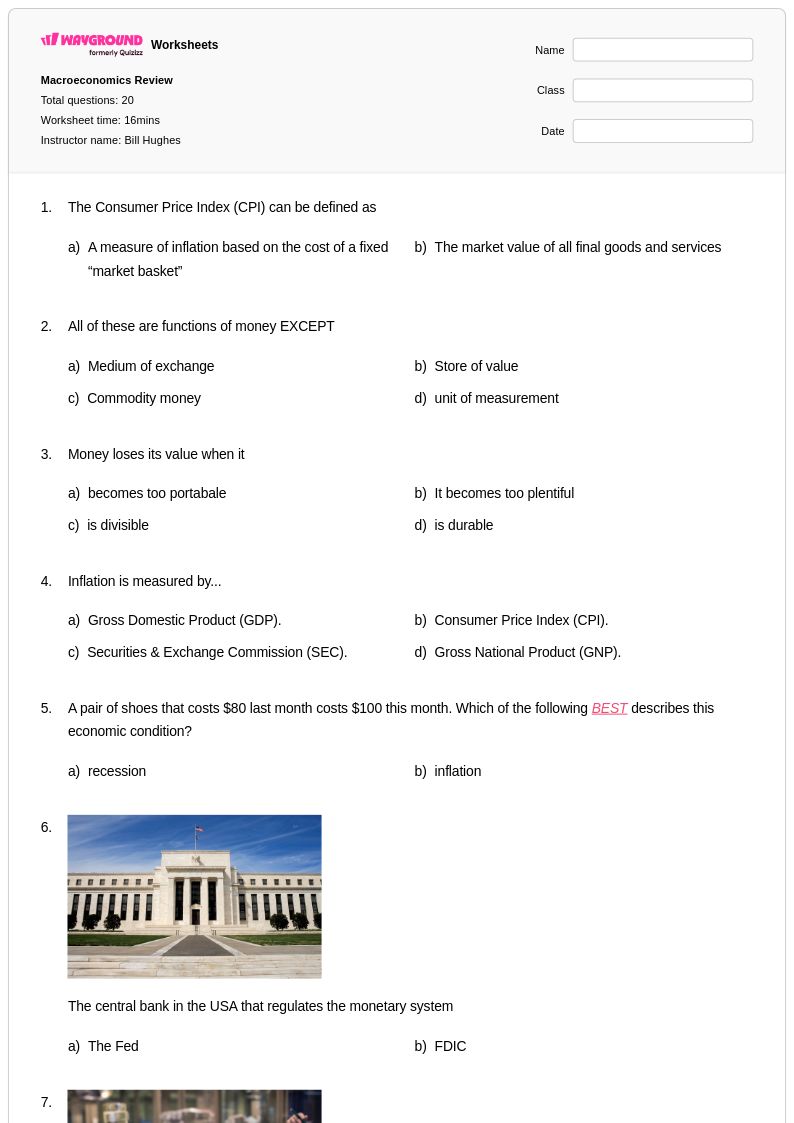
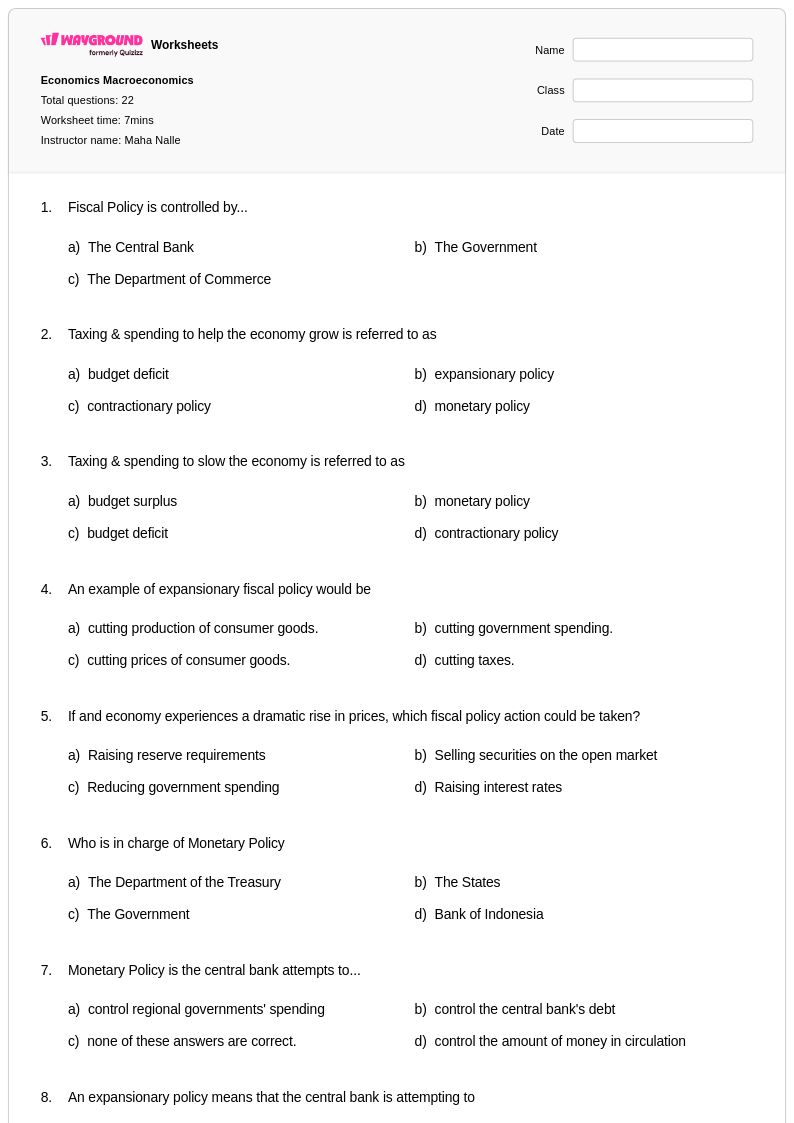
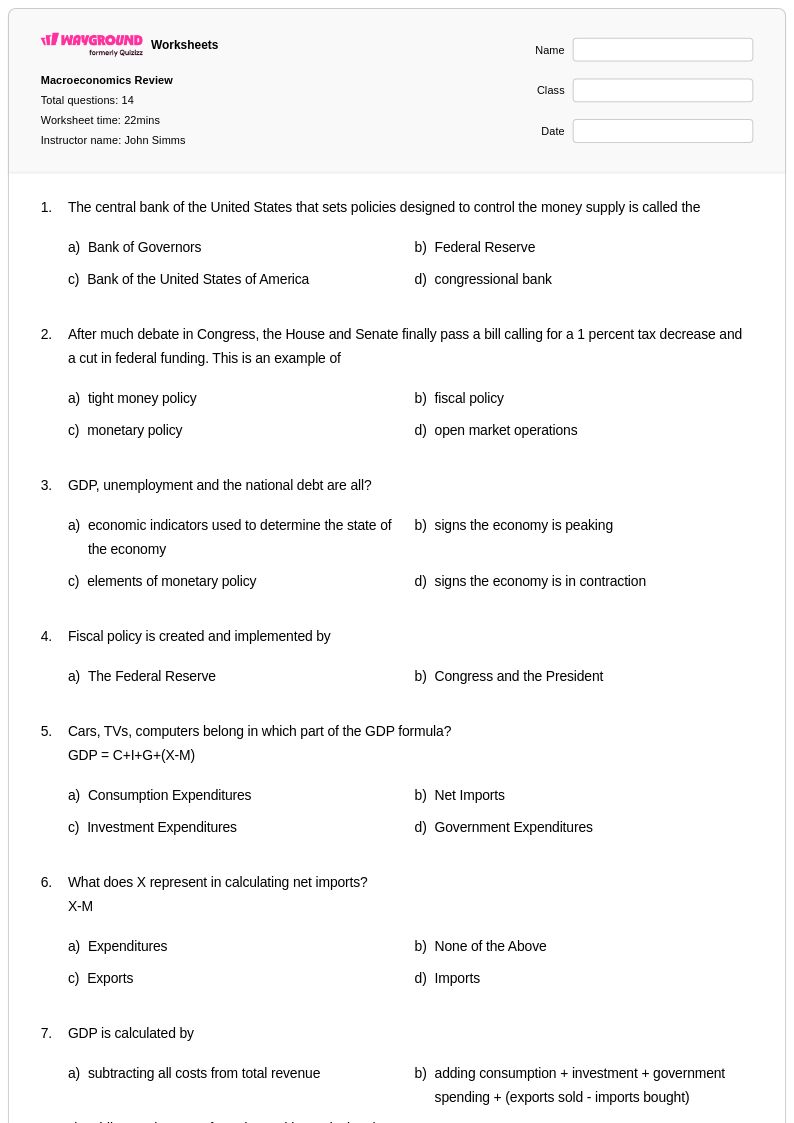
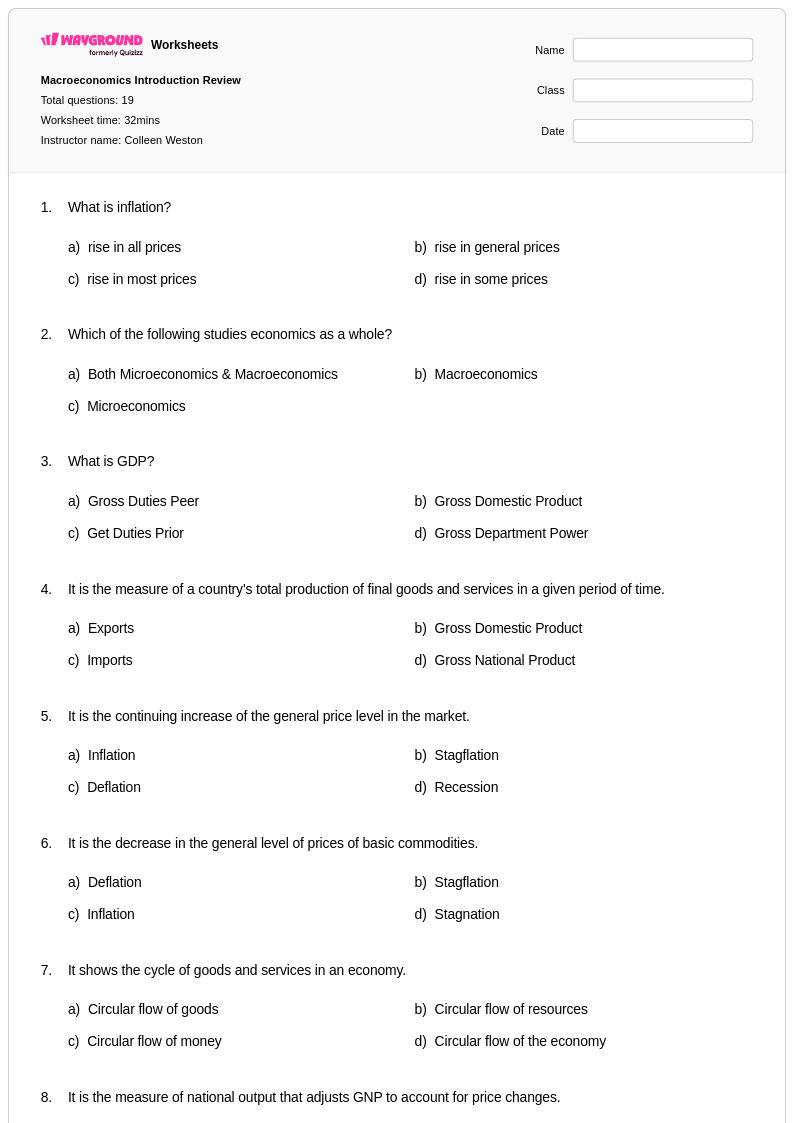
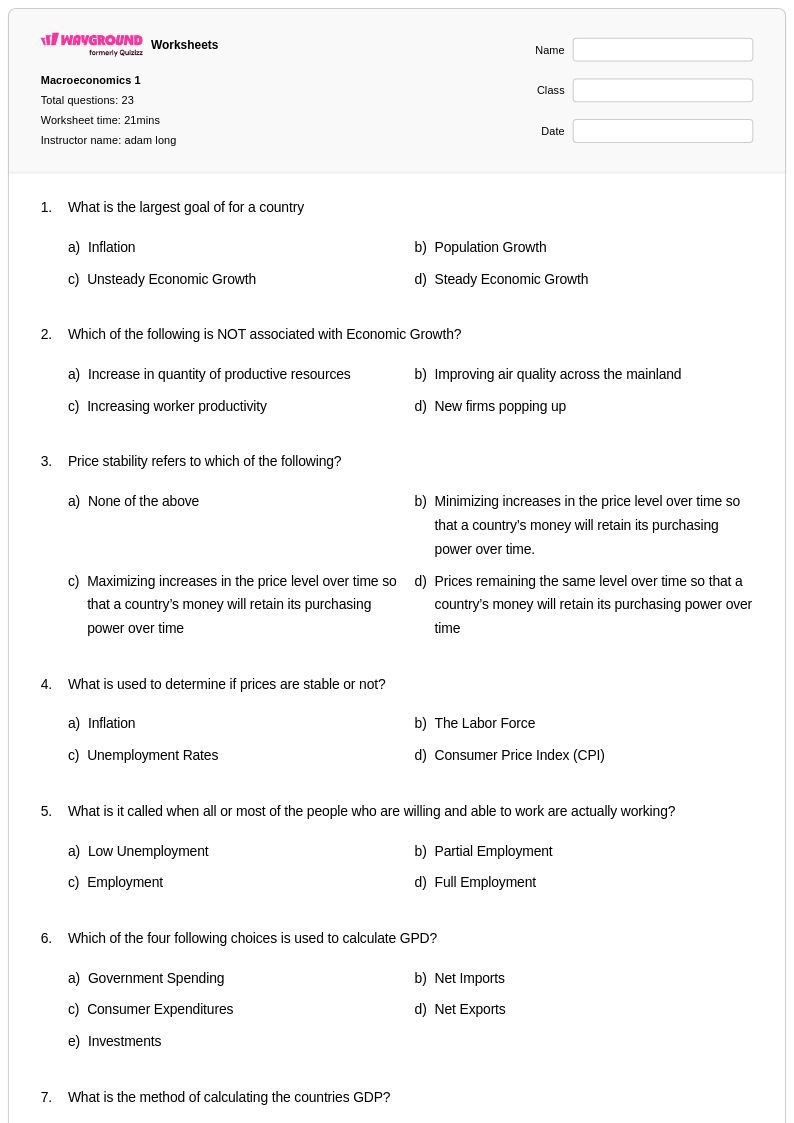
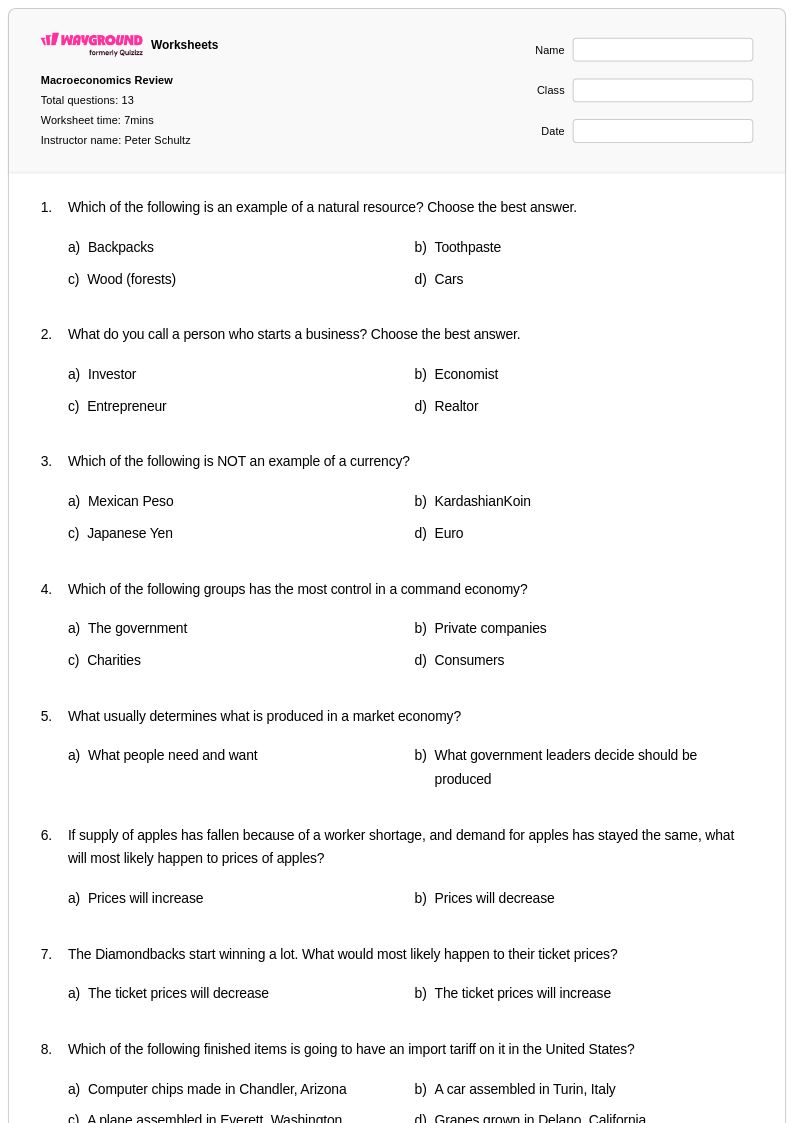
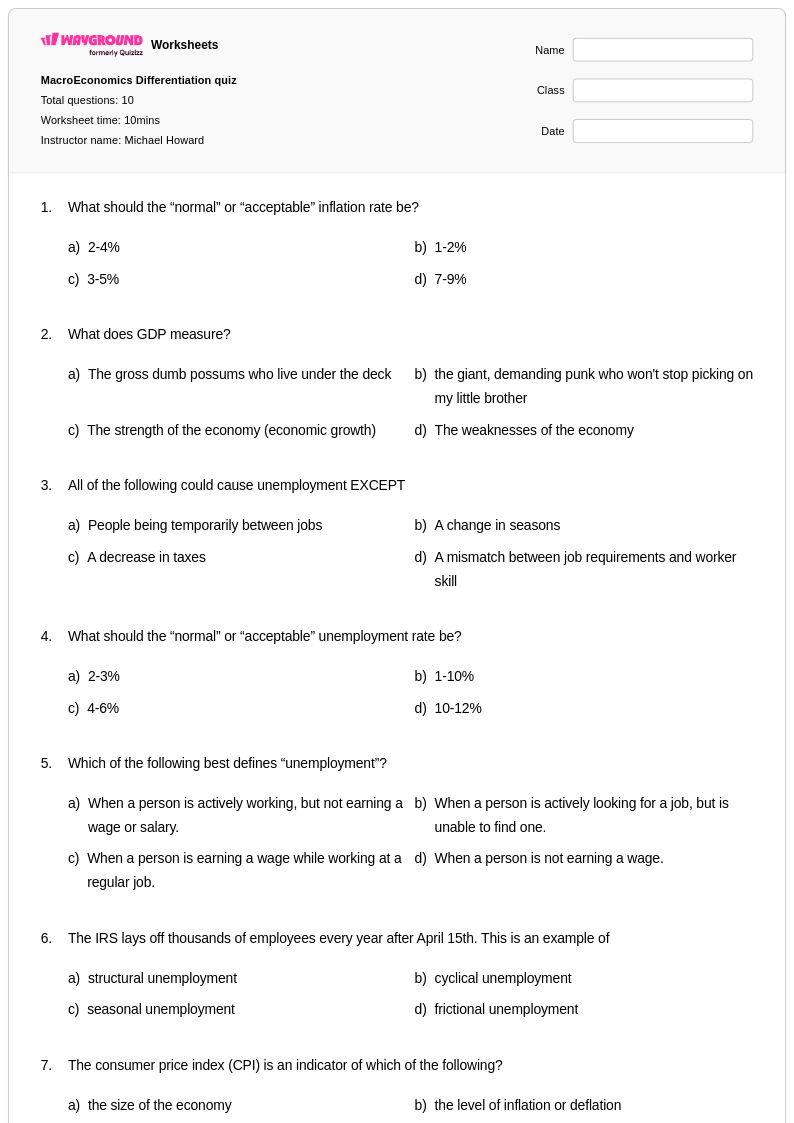
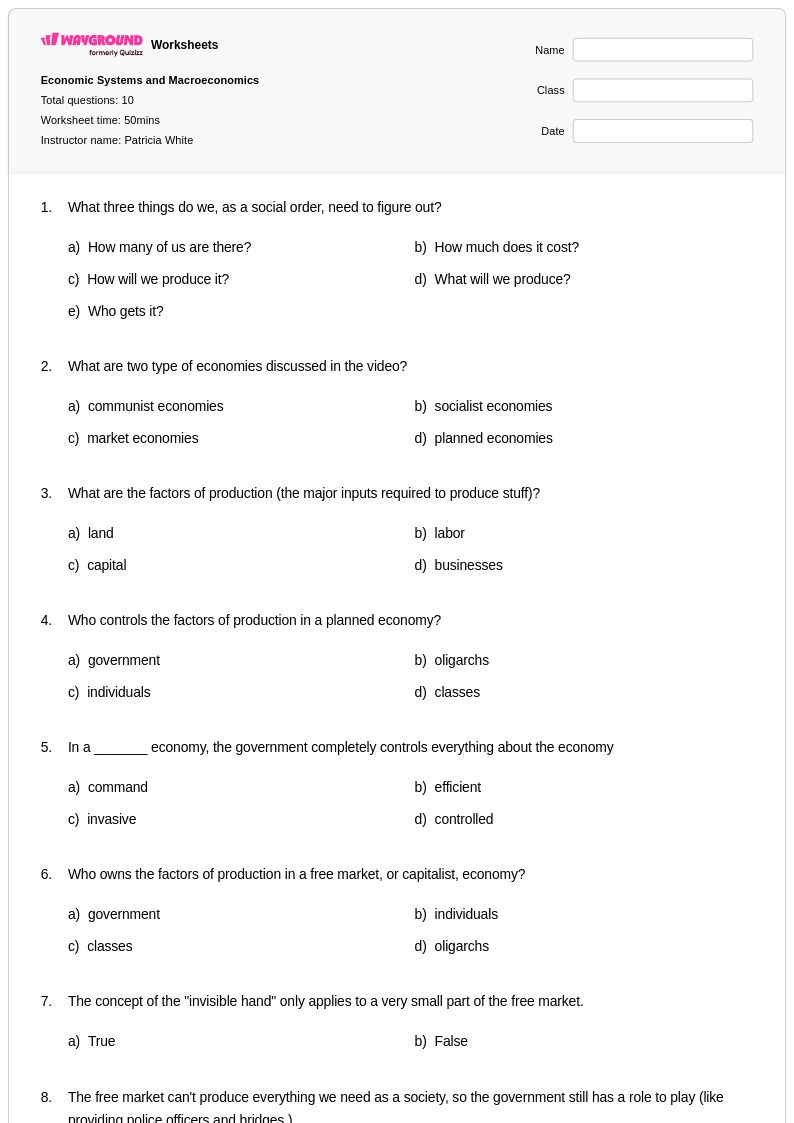
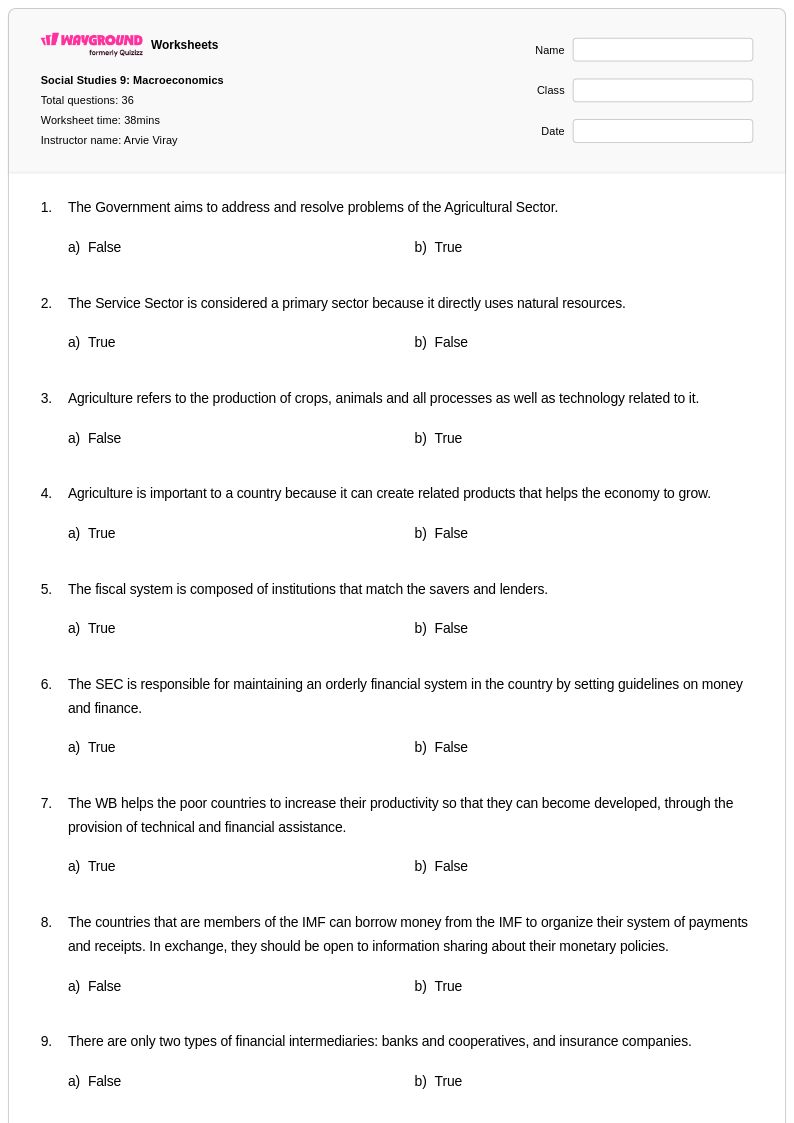
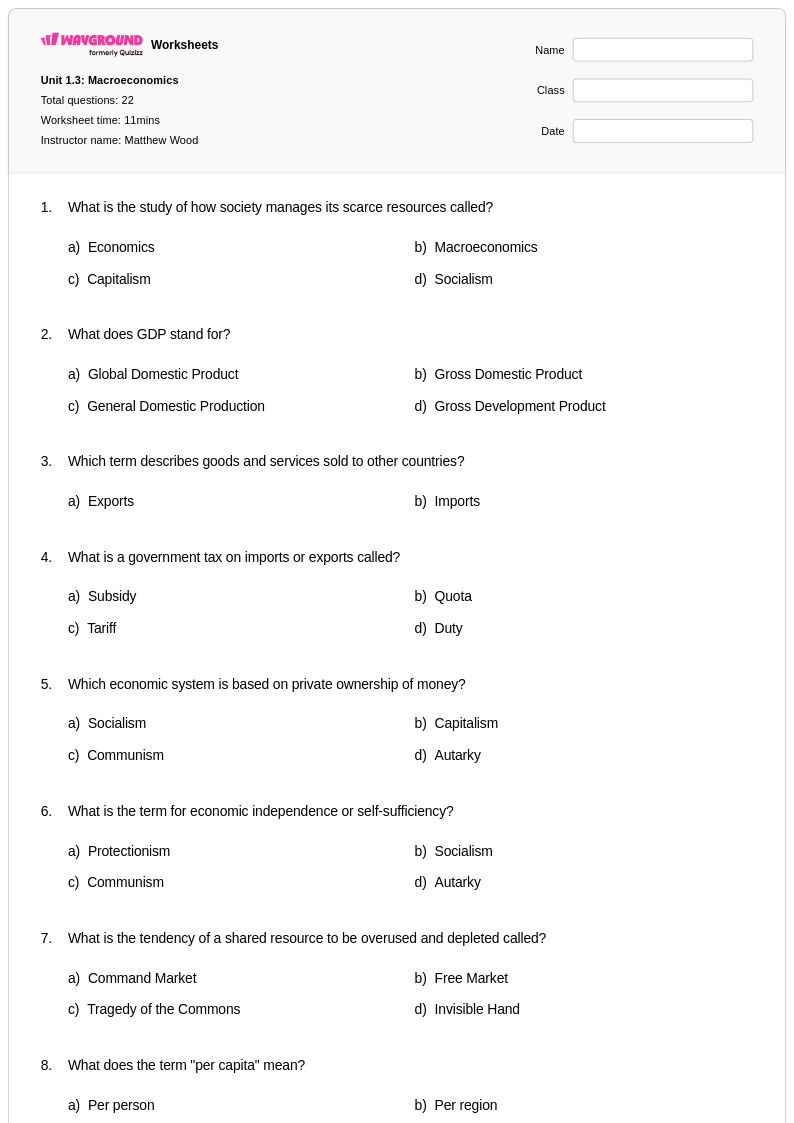
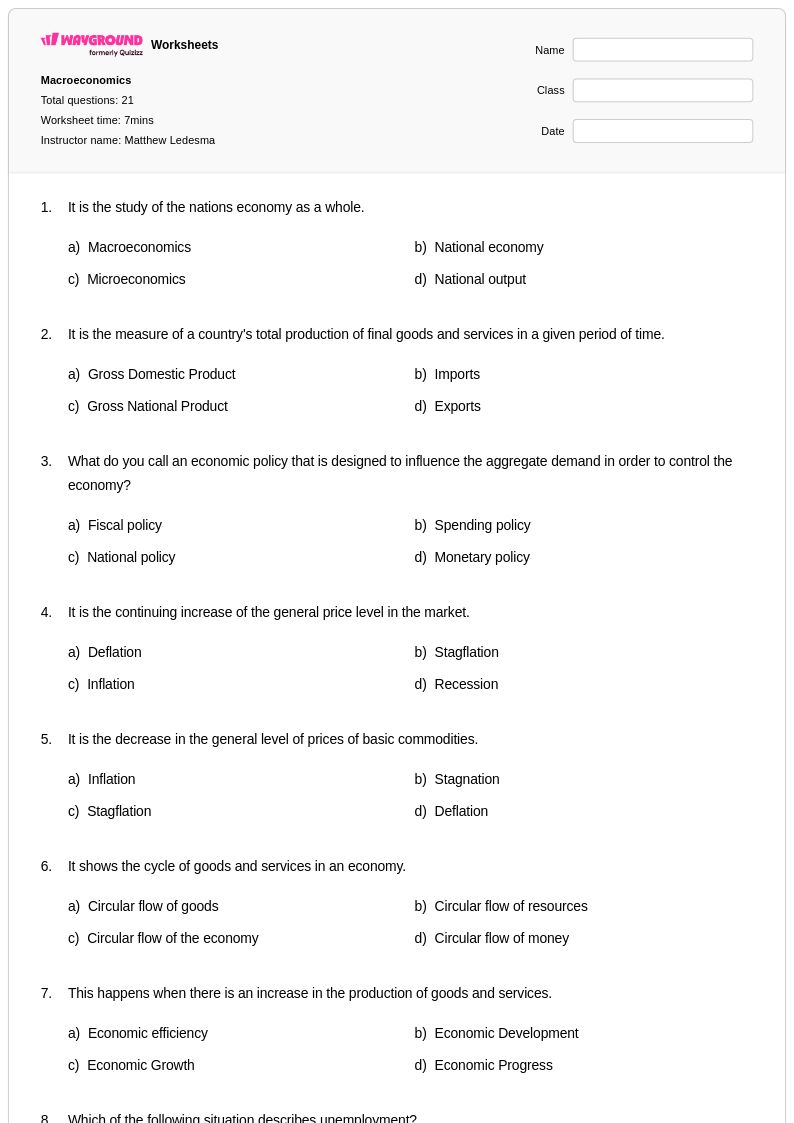
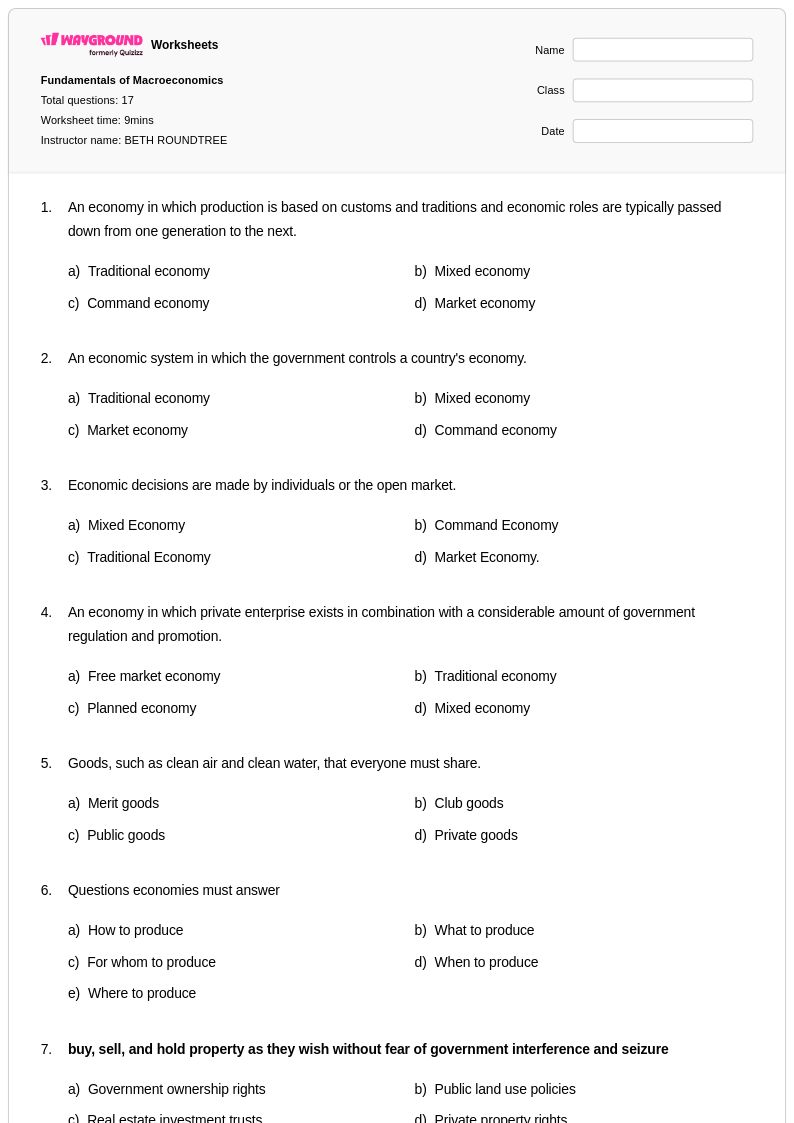
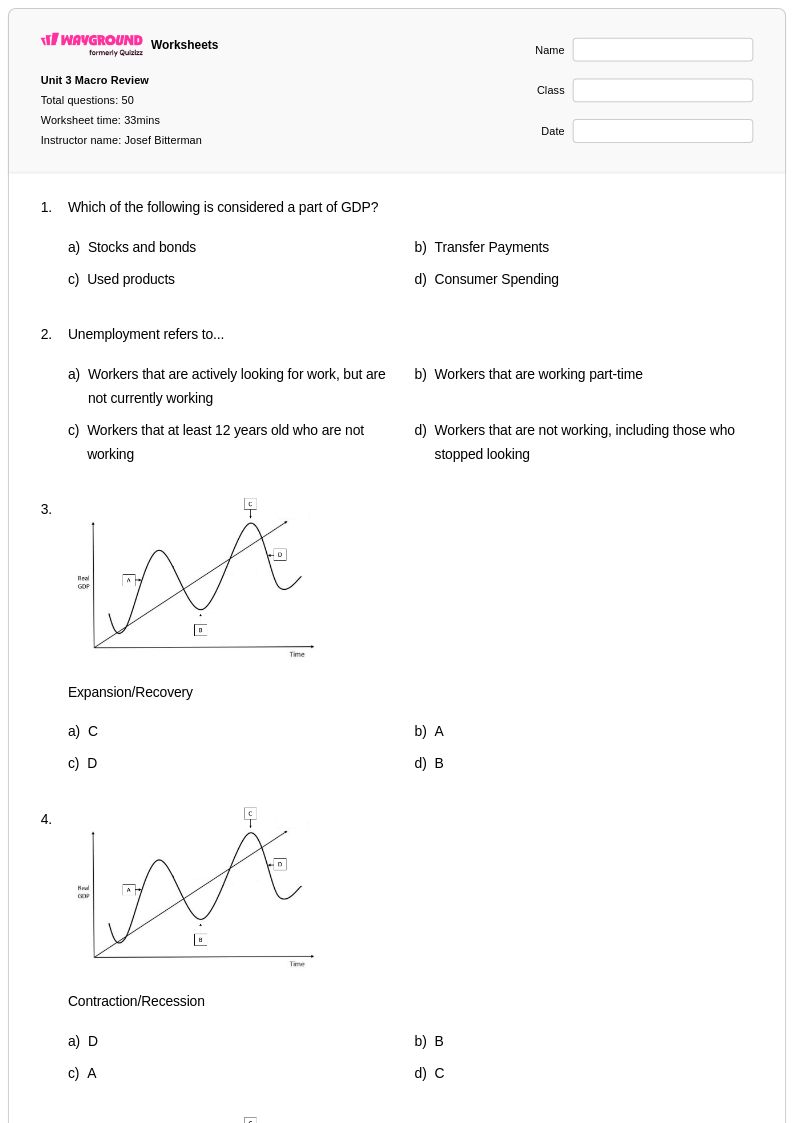
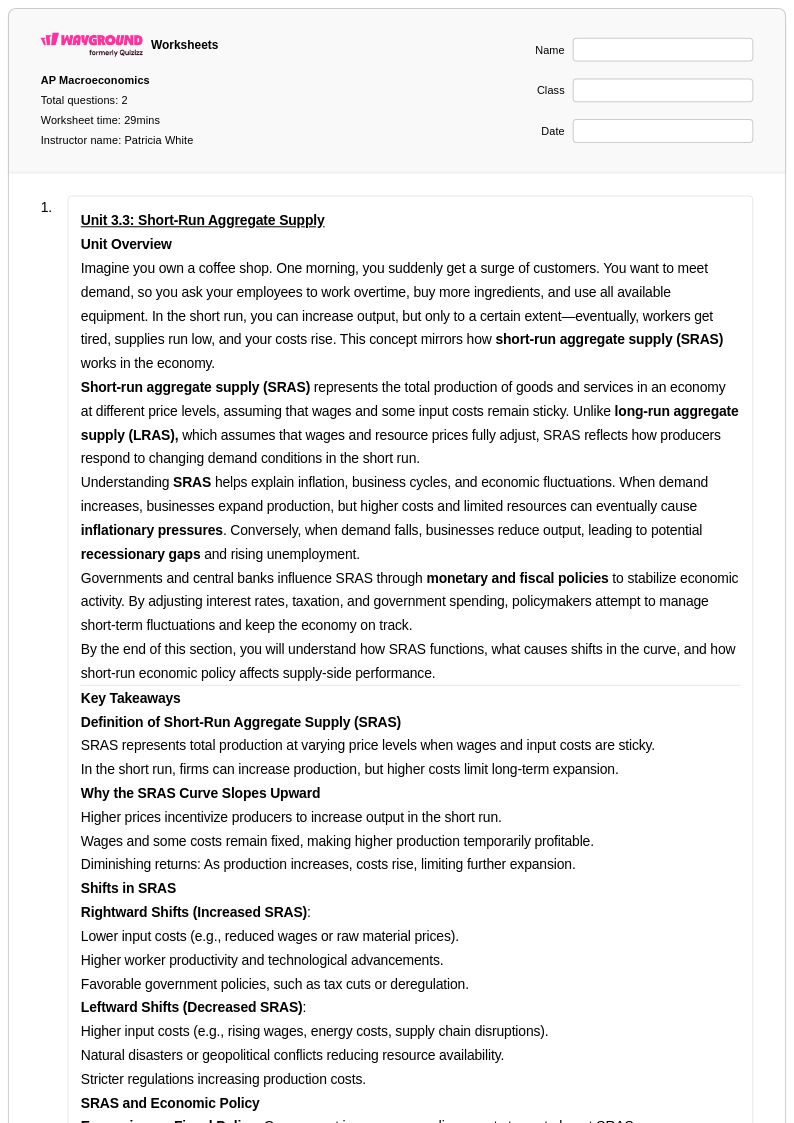
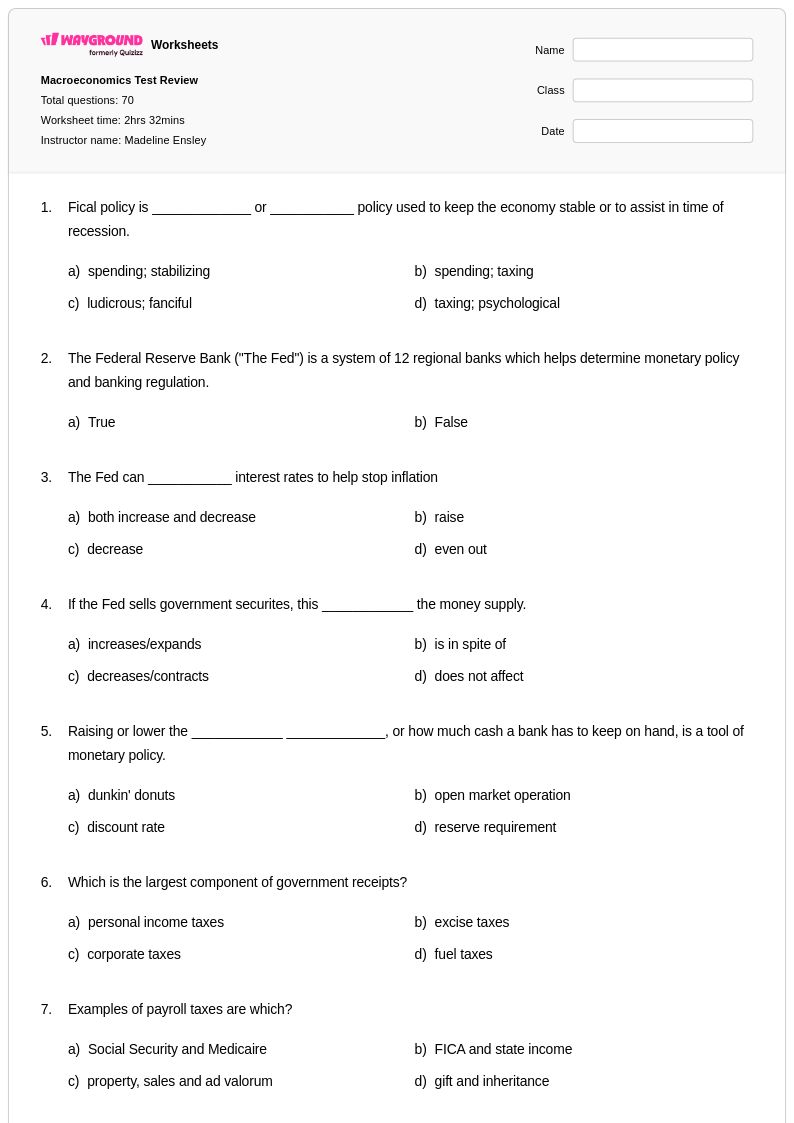
Grade 9 macroeconomics worksheets available through Wayground (formerly Quizizz) provide comprehensive coverage of large-scale economic concepts that form the foundation of economic literacy. These educational resources focus on essential macroeconomic principles including gross domestic product, inflation, unemployment, fiscal policy, monetary policy, and economic growth cycles. Students develop critical analytical skills through practice problems that examine real-world economic indicators, government spending decisions, and Federal Reserve actions. The worksheets strengthen quantitative reasoning abilities as students calculate economic metrics, interpret economic data graphs, and analyze the relationships between different macroeconomic variables. Each resource includes detailed answer keys that support independent learning and enable students to check their understanding of complex economic theories, while printable pdf formats ensure accessibility for both classroom instruction and homework assignments.
Wayground (formerly Quizizz) empowers educators with millions of teacher-created macroeconomics worksheet collections that streamline lesson planning and enhance student engagement with economic concepts. The platform's robust search and filtering capabilities allow teachers to quickly locate resources aligned with specific curriculum standards and learning objectives, whether focusing on Keynesian economics, supply-side theory, or international trade impacts. Advanced differentiation tools enable instructors to customize worksheets for varying skill levels within Grade 9 classrooms, supporting both remediation for struggling learners and enrichment opportunities for advanced students. Teachers can seamlessly transition between digital interactive formats for technology-enhanced learning and traditional printable versions for paper-based practice, ensuring flexible implementation across diverse classroom environments. These comprehensive resources facilitate targeted skill practice in economic analysis while providing educators with the assessment tools necessary to track student progress in understanding macroeconomic principles.
FAQs
How do I teach macroeconomics concepts to high school students?
Effective macroeconomics instruction starts with grounding abstract concepts in real-world data — use current GDP reports, unemployment statistics, and inflation figures to make theory tangible. Sequence instruction by building from foundational concepts like national income accounting before moving into fiscal and monetary policy. Connecting policy decisions to visible economic outcomes, such as interest rate changes affecting consumer borrowing, helps students see the cause-and-effect logic that underpins macroeconomic analysis.
What exercises help students practice macroeconomics skills?
Practice exercises that require students to interpret aggregate demand and supply graphs, calculate GDP components, or analyze the effects of fiscal policy on the business cycle are especially effective for reinforcing macroeconomic reasoning. Data analysis problems using real economic indicators build the kind of applied thinking that standardized assessments and college economics courses reward. Mixing multiple question formats, including short answer, graph interpretation, and scenario-based problems, ensures students develop both conceptual understanding and analytical skill.
What mistakes do students commonly make when learning macroeconomics?
One of the most common errors is conflating microeconomics and macroeconomics, leading students to apply individual-level reasoning to national economic questions. Students frequently confuse the effects of expansionary versus contractionary fiscal and monetary policy, especially when both tools are discussed together. Another recurring misconception is treating GDP as a measure of societal well-being rather than an output measure, which can distort how students evaluate economic policy outcomes.
How do I use macroeconomics worksheets to assess student understanding?
Macroeconomics worksheets work well as formative checkpoints after introducing concepts like inflation, unemployment, or aggregate supply and demand, allowing teachers to catch misconceptions before they solidify. Use scenario-based problems that ask students to recommend policy responses to economic conditions as a higher-order assessment of whether they can apply theory, not just recall it. Including data interpretation questions alongside conceptual ones gives a more complete picture of where each student's understanding gaps lie.
How do I use Wayground's macroeconomics worksheets in my classroom?
Wayground's macroeconomics worksheets are available as printable PDFs for traditional classroom use and in digital formats for technology-integrated learning environments, giving teachers flexibility in how they deliver instruction. Teachers can also host worksheets as a live quiz on Wayground, making them suitable for whole-class review sessions or independent practice. Each worksheet includes a complete answer key, which supports efficient grading and allows students to self-check their work during independent study.
How can I differentiate macroeconomics instruction for students at different levels?
For struggling students, focus practice on foundational vocabulary and single-variable analysis, such as how one policy tool affects one indicator, before introducing multi-factor scenarios. Advanced learners benefit from open-ended policy analysis tasks that require them to weigh trade-offs between inflation control and unemployment reduction. On Wayground, teachers can apply accommodations such as reduced answer choices or read-aloud support to individual students, ensuring that differentiation is built into the assignment rather than retrofitted after the fact.