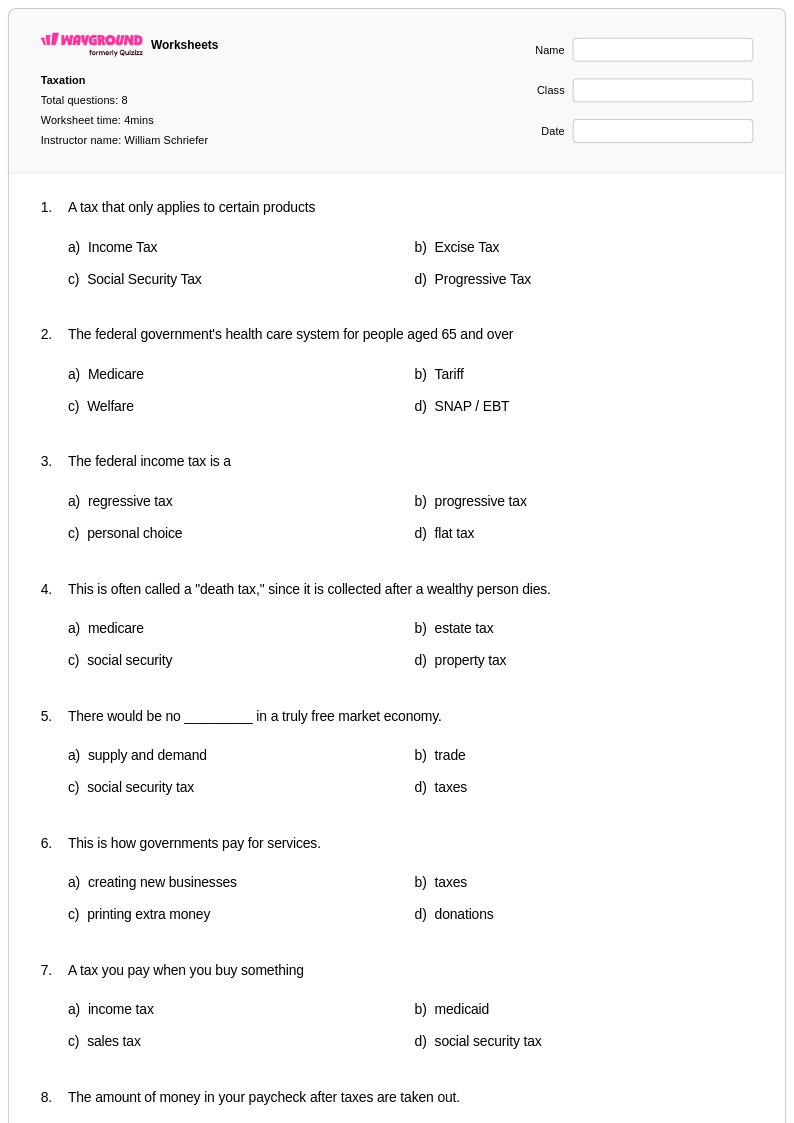
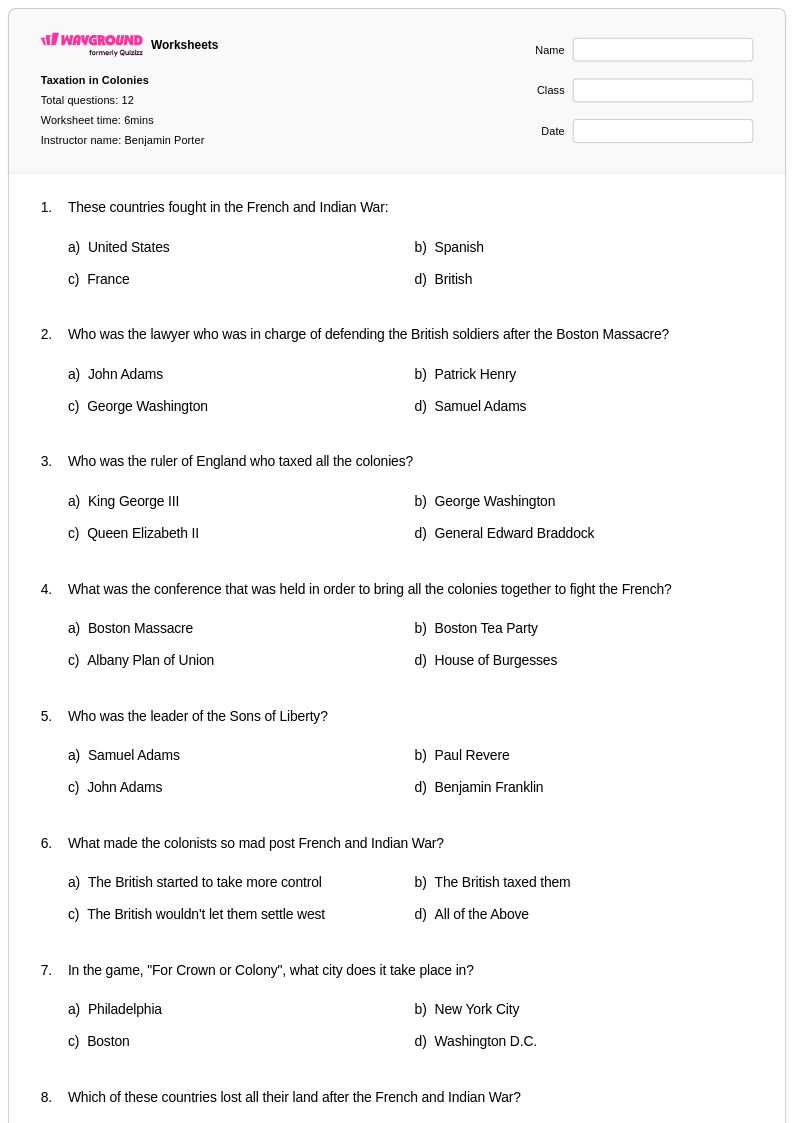
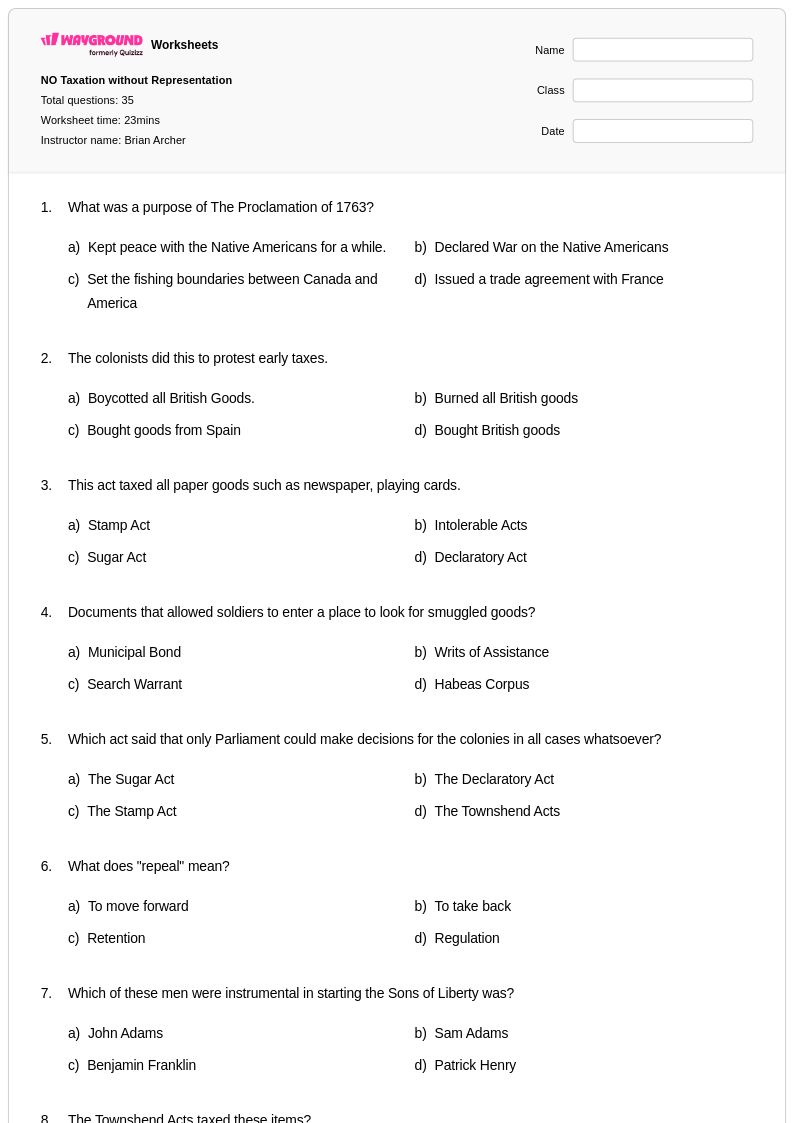
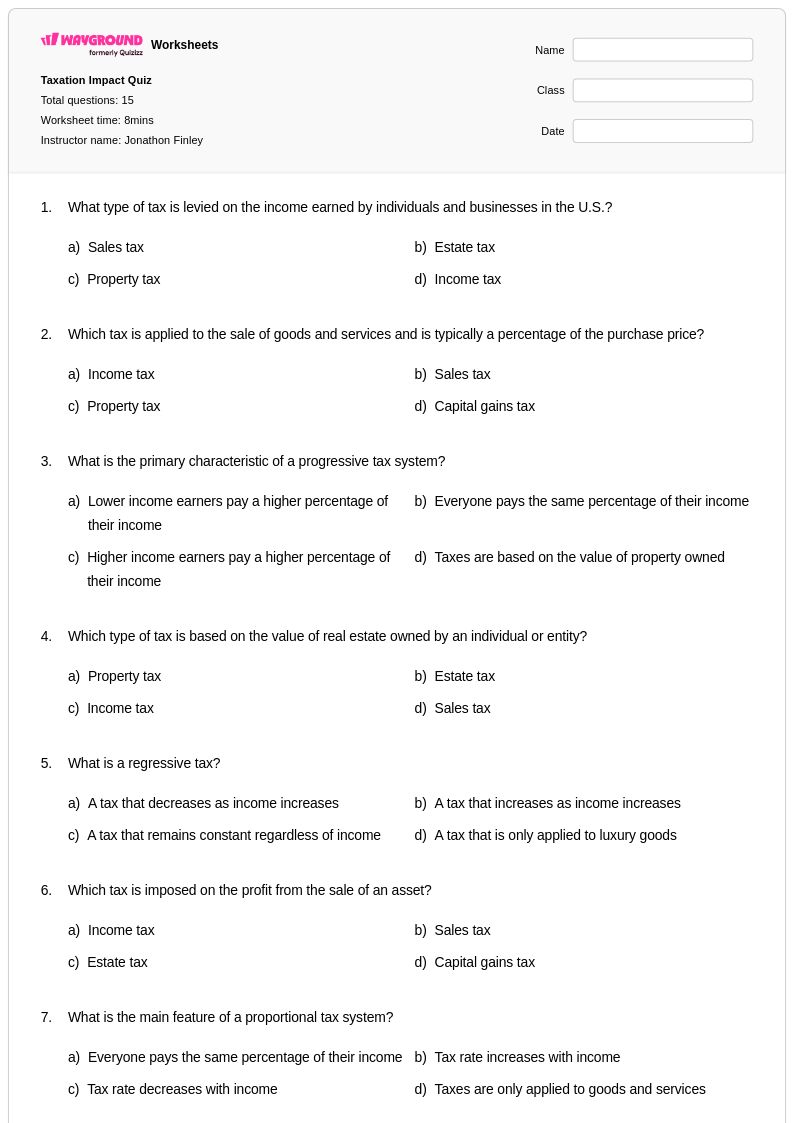
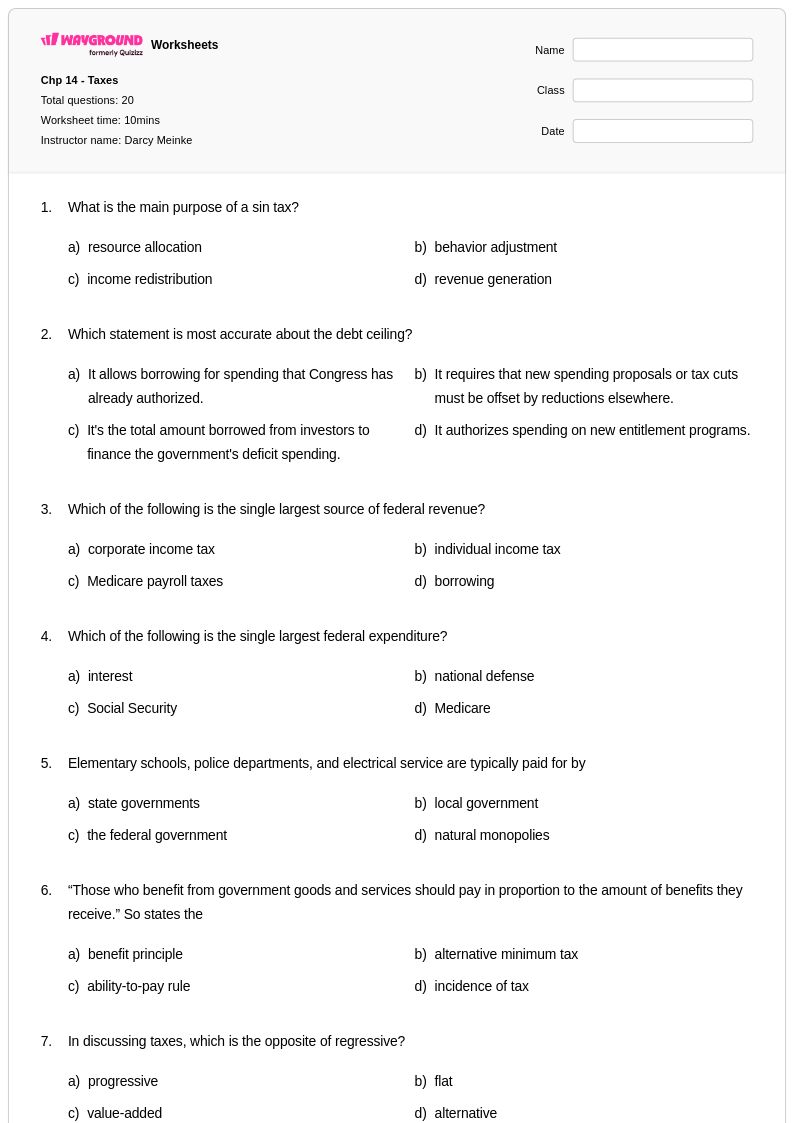
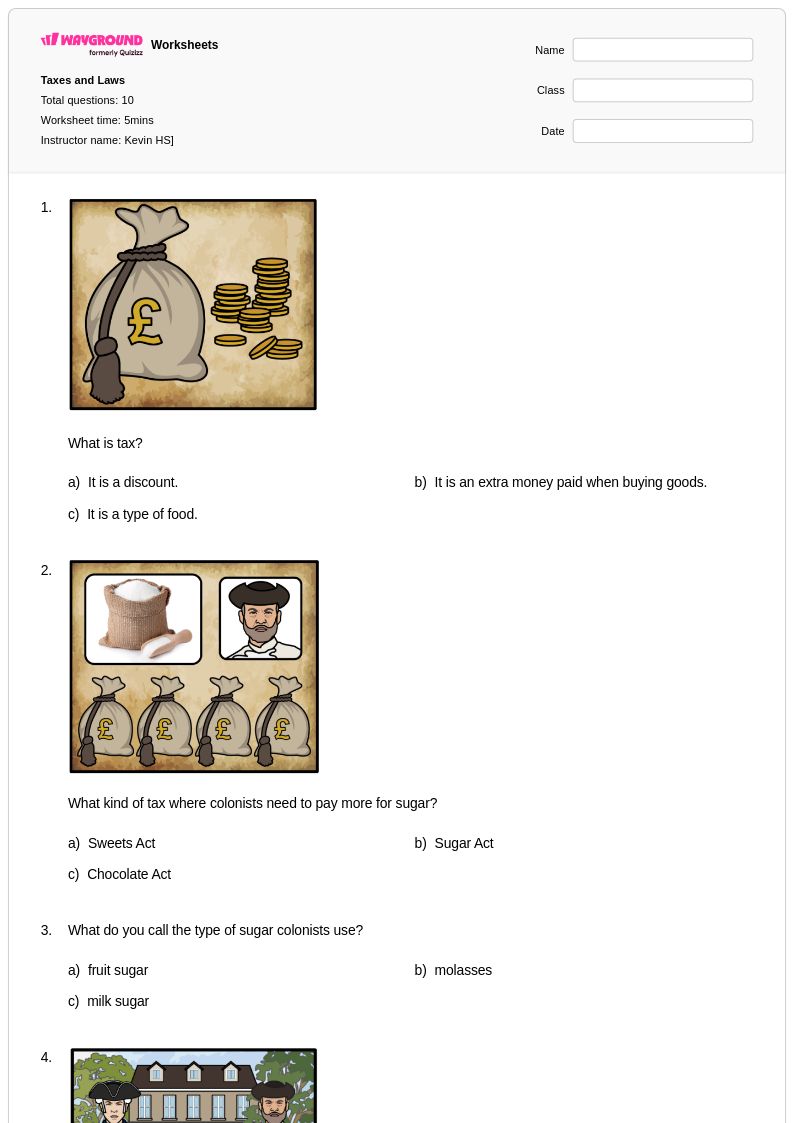
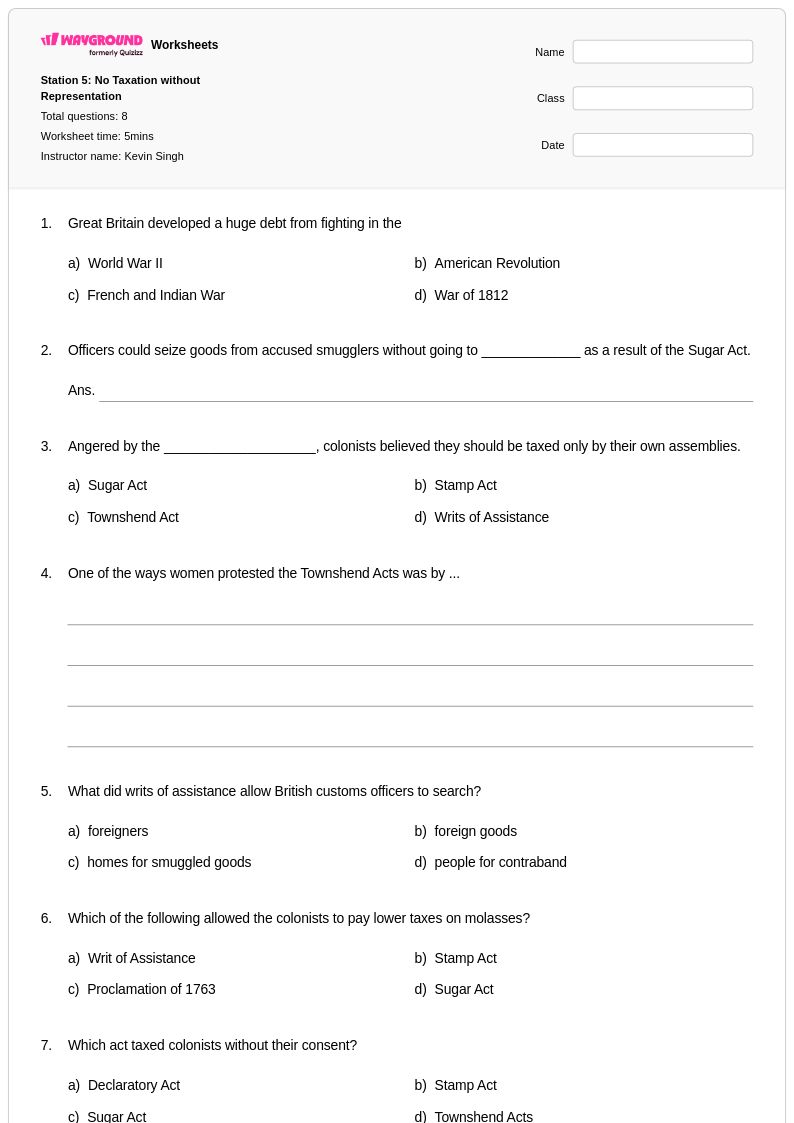
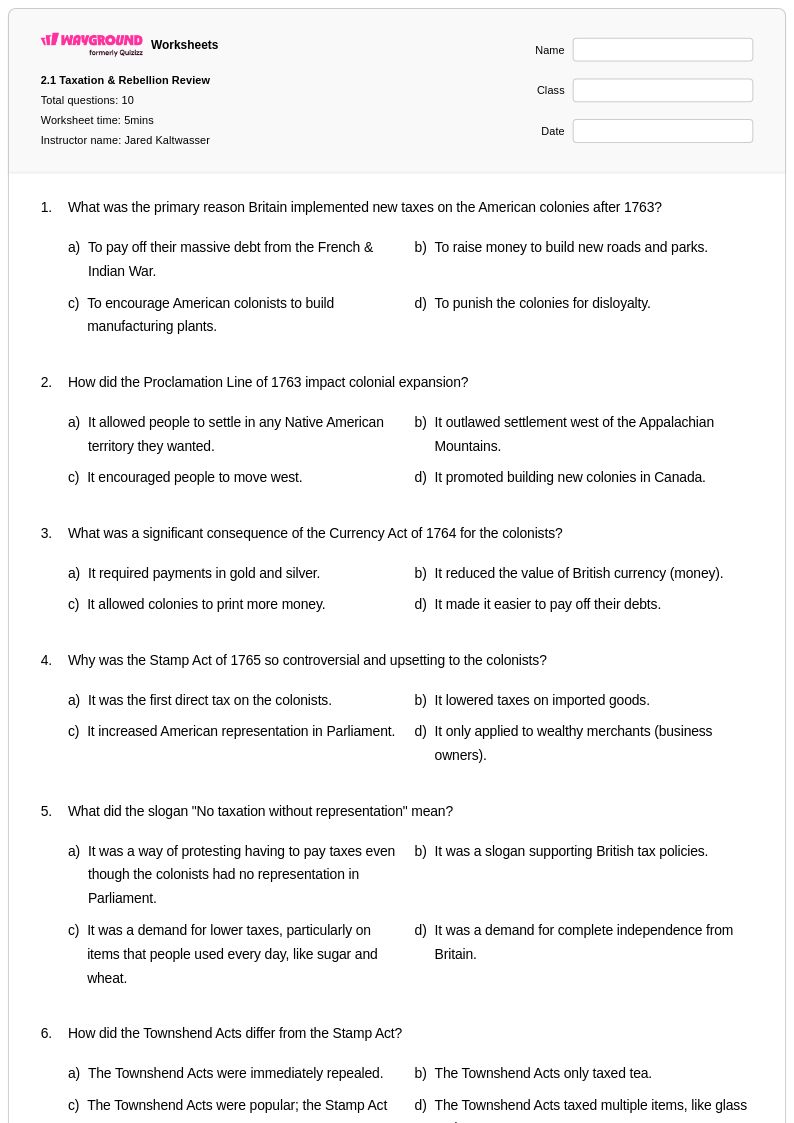
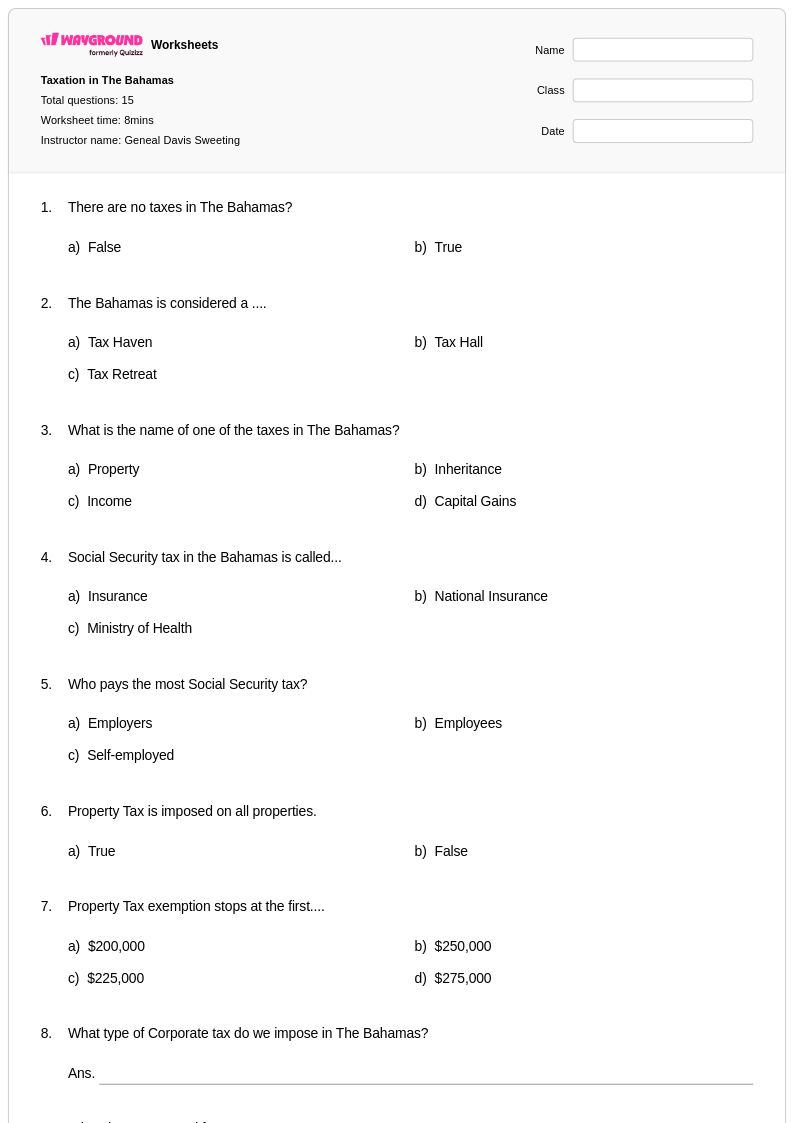
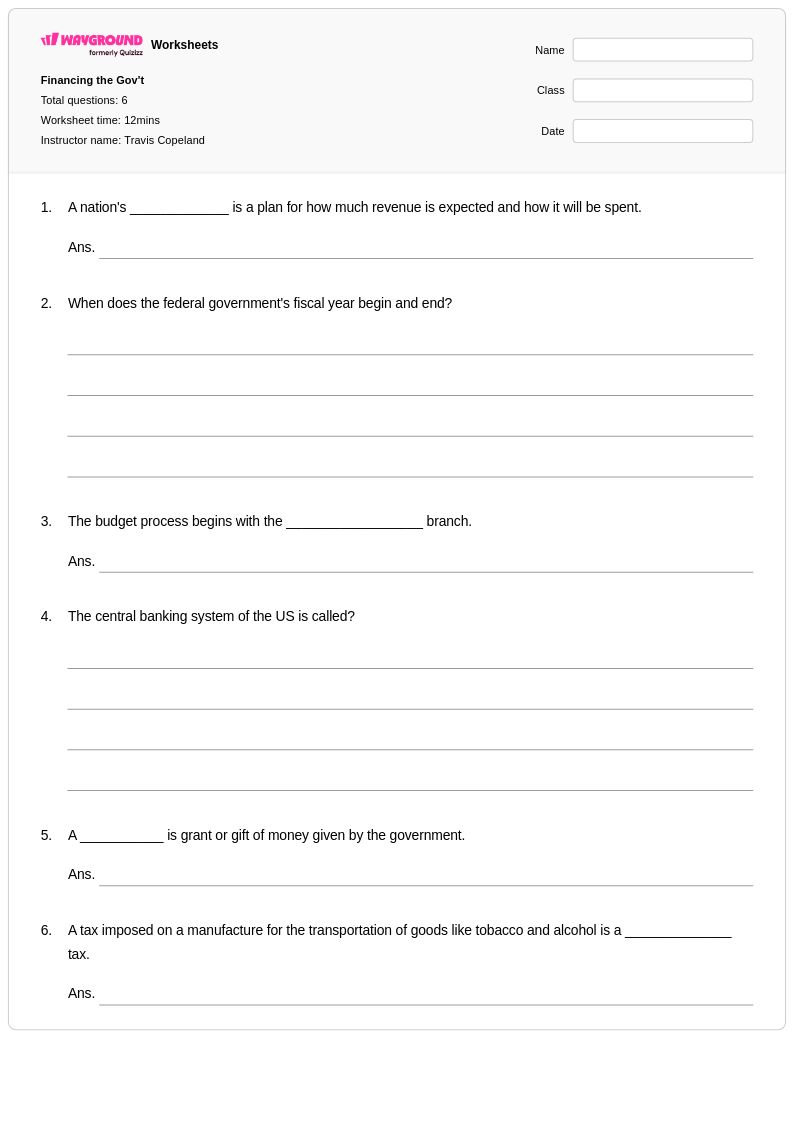
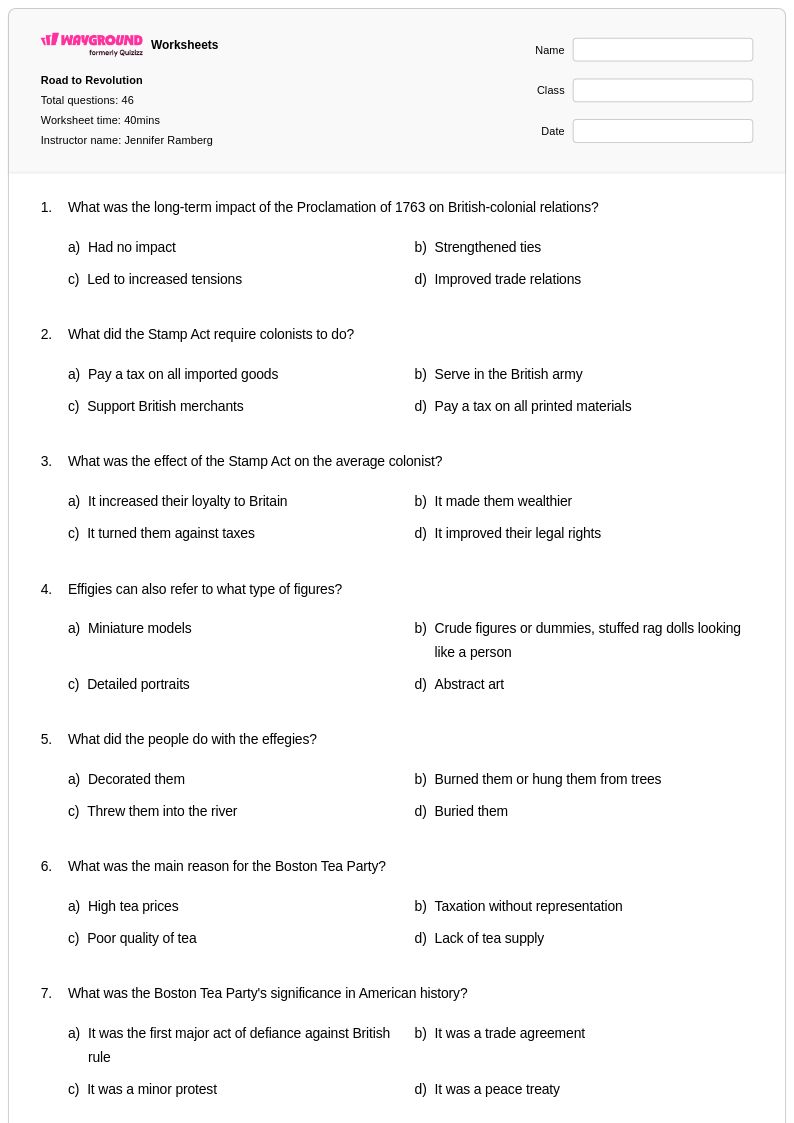
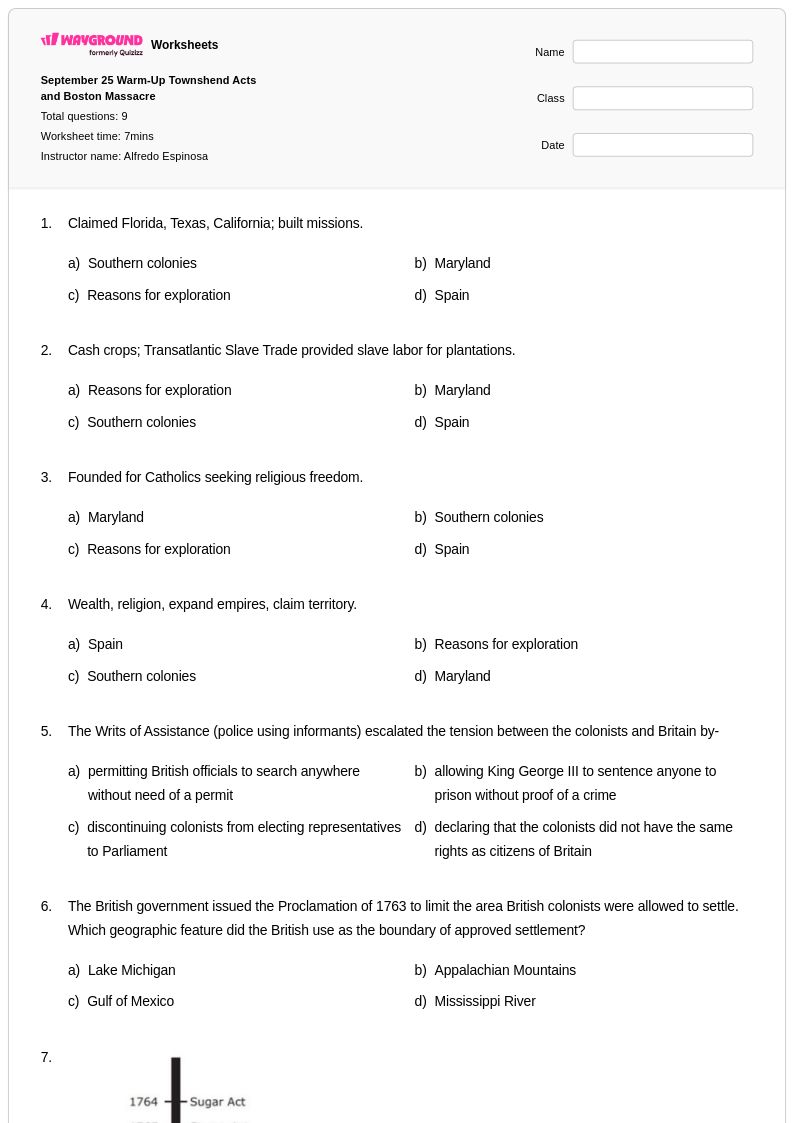
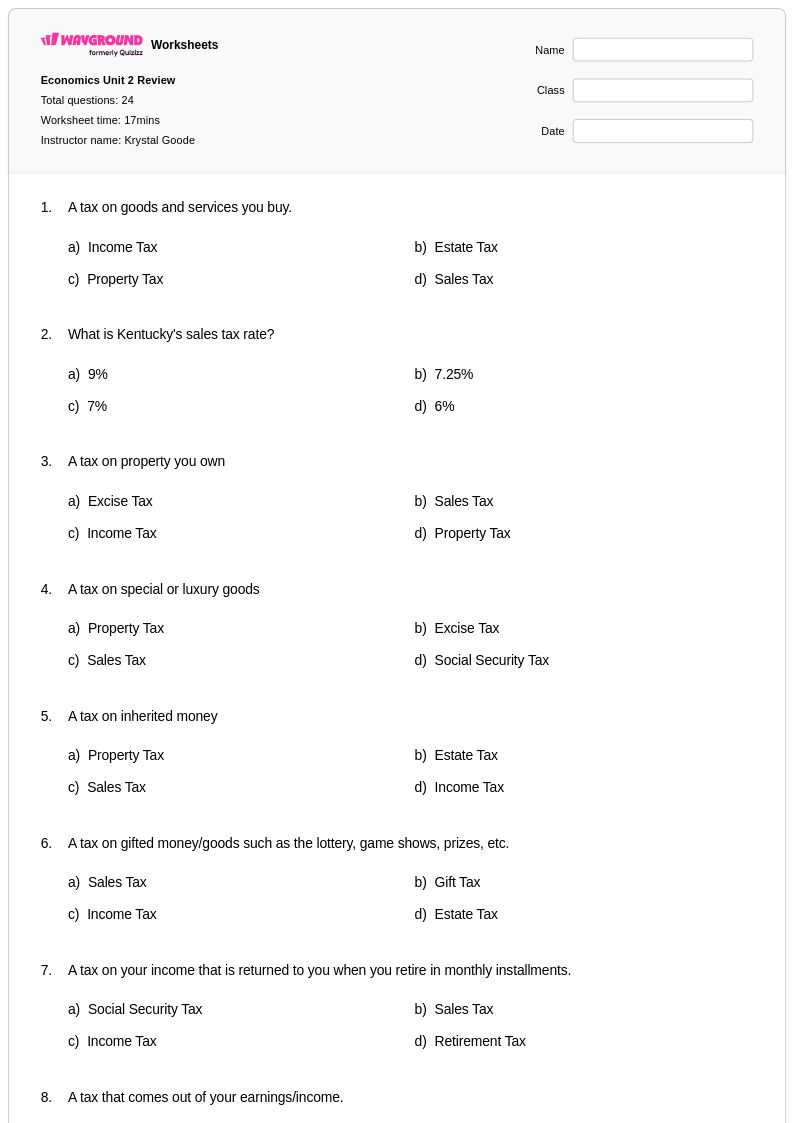
Grade 9 taxation worksheets from Wayground provide comprehensive printables and practice problems to help students master economic concepts including tax types, calculations, and government revenue systems with complete answer keys.
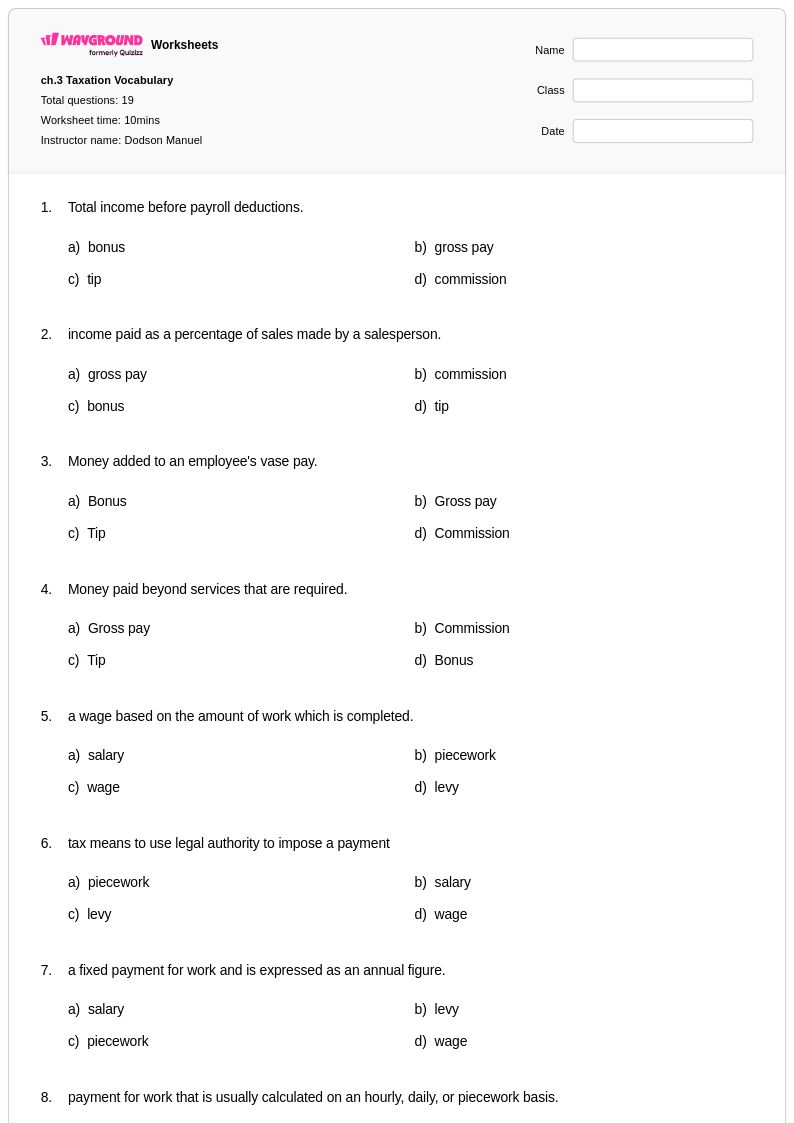
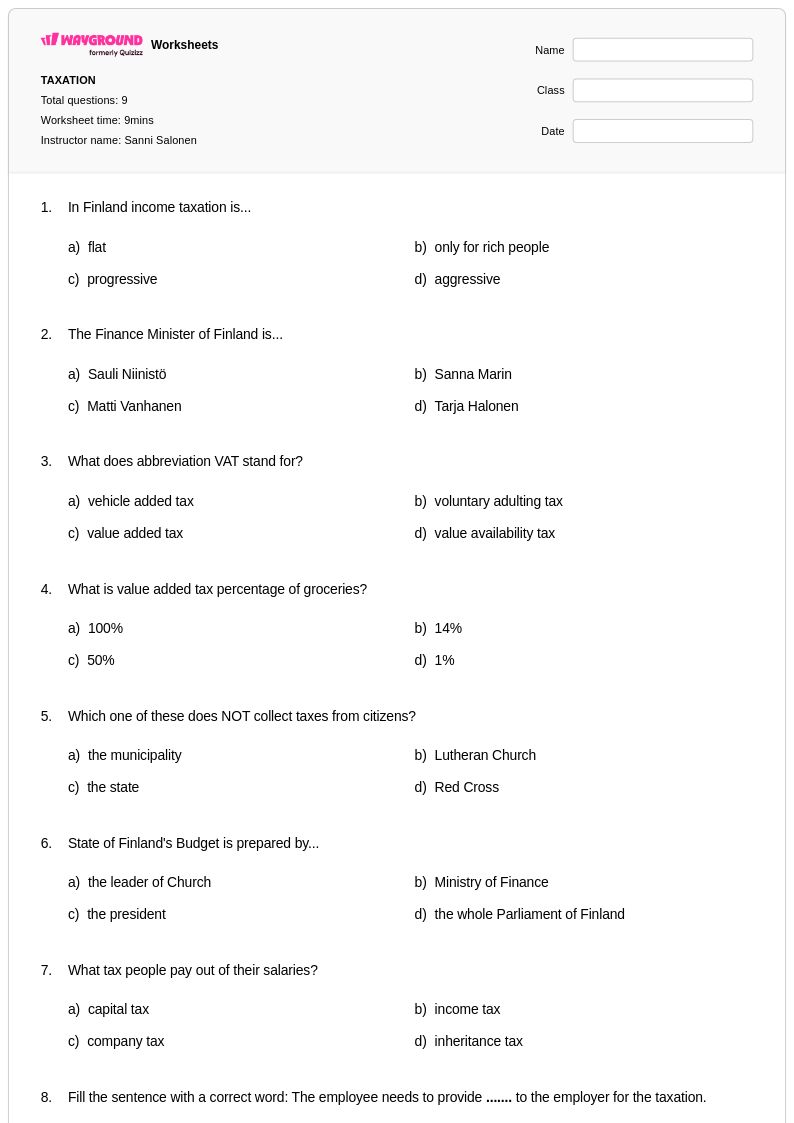
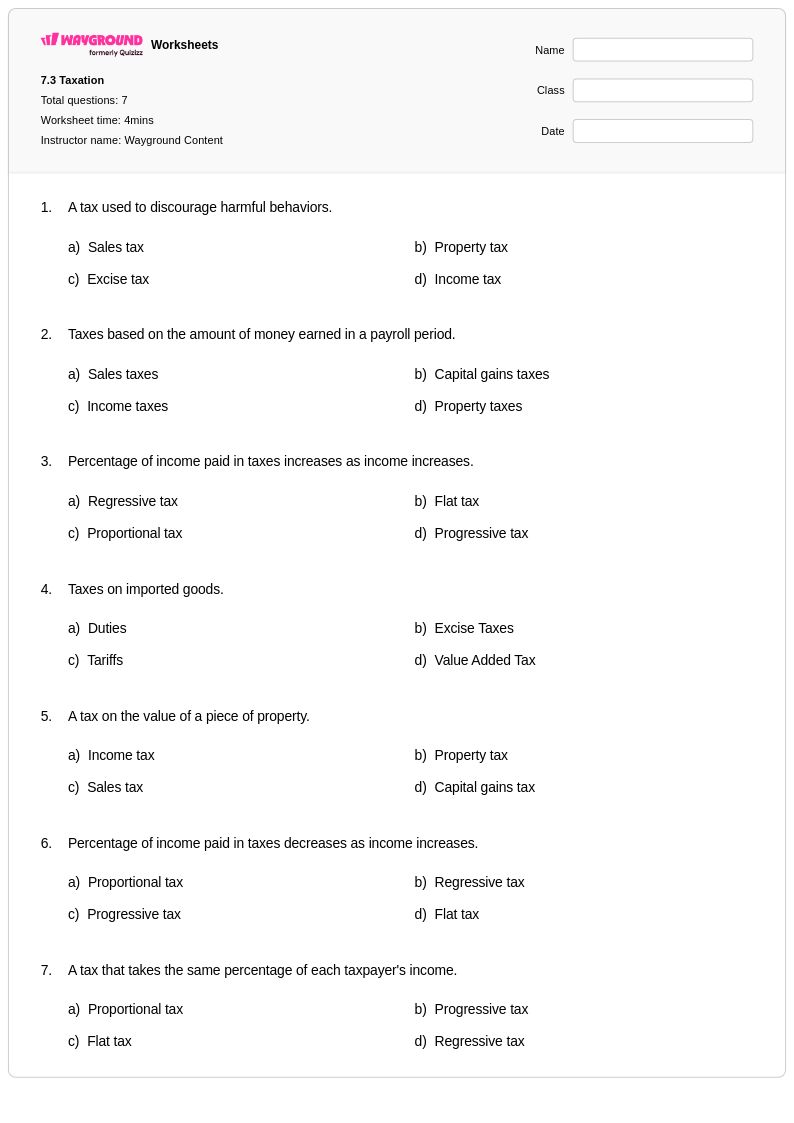
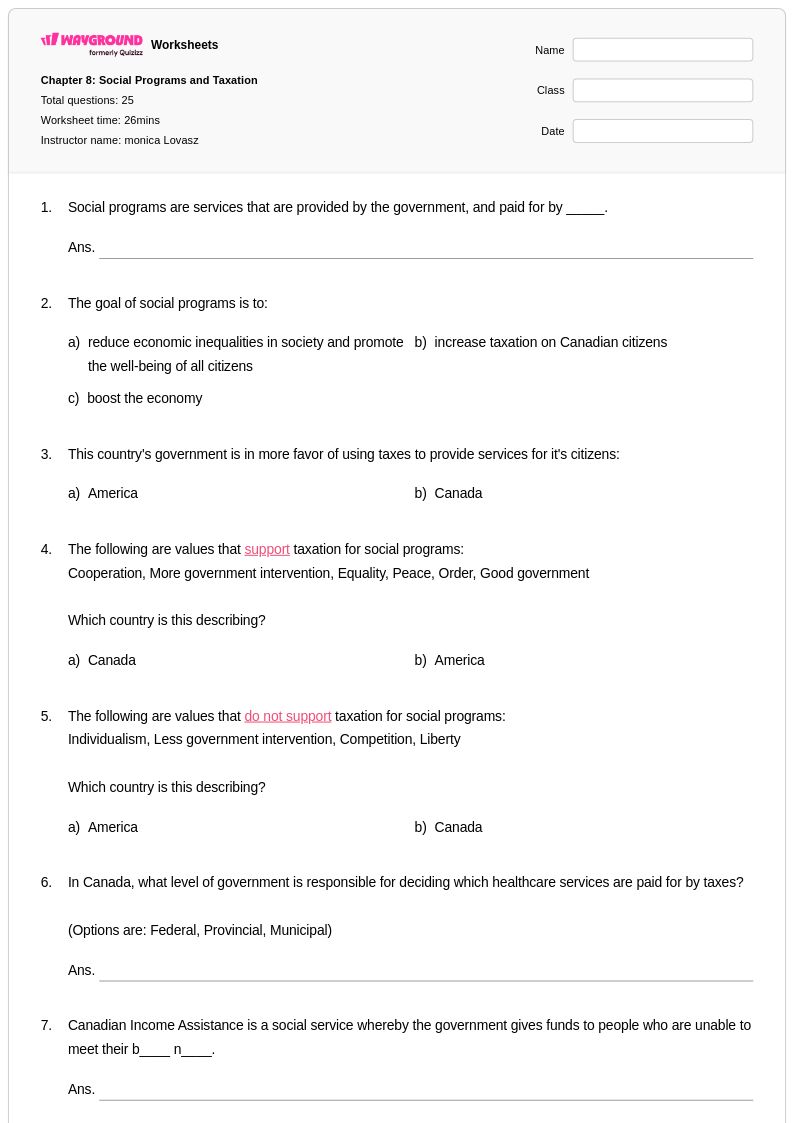
Grade 9 taxation worksheets available through Wayground (formerly Quizizz) provide comprehensive coverage of fundamental tax concepts that form the cornerstone of economic literacy for high school students. These educational resources strengthen critical thinking skills by exploring various types of taxes including income, sales, property, and corporate taxes, while examining their impact on individuals, businesses, and government revenue generation. Students engage with practice problems that demonstrate tax calculation methods, analyze progressive versus regressive tax structures, and evaluate the relationship between taxation and public services. The collection includes detailed answer keys and free printable materials that guide learners through complex scenarios involving tax brackets, deductions, and the broader economic implications of fiscal policy decisions.
Wayground (formerly Quizizz) empowers educators with access to millions of teacher-created taxation resources that support diverse instructional needs and learning objectives. The platform's robust search and filtering capabilities enable teachers to locate materials aligned with specific academic standards while offering differentiation tools that accommodate varying skill levels within Grade 9 classrooms. These customizable worksheet collections are available in both printable PDF formats and interactive digital versions, providing flexibility for traditional classroom instruction, remote learning environments, and hybrid educational models. Teachers utilize these comprehensive resources for targeted skill practice, remediation of challenging concepts, enrichment activities for advanced learners, and systematic lesson planning that builds student understanding of taxation's role in modern economic systems.
FAQs
How do I teach different types of taxes to students?
Start by distinguishing progressive, regressive, and proportional tax systems using concrete income examples so students can see how tax burden shifts across income levels. Use real-world scenarios like comparing a flat sales tax on groceries versus a graduated income tax bracket to make the concepts tangible. Once students grasp the structural differences, connect each system to its policy implications — who bears the greater burden and why governments choose one structure over another.
What exercises help students practice calculating tax burdens?
Practice problems that require students to calculate taxes owed under progressive, regressive, and proportional systems are the most effective, because they force direct application of each structure rather than passive recognition. Scenarios involving income taxes, sales taxes, and property taxes give students exposure to the full range of tax types they will encounter in real civic life. Worksheets that layer complexity — starting with single-rate calculations and building toward multi-bracket income tax problems — build procedural fluency alongside conceptual understanding.
What mistakes do students commonly make when learning about taxation?
The most frequent error is confusing marginal tax rates with effective tax rates — students often assume that moving into a higher bracket means all income is taxed at that rate, not just income above the threshold. Students also frequently conflate regressive and progressive systems, especially when the distinction is tested in unfamiliar contexts like sales taxes or payroll taxes. Requiring students to explain their reasoning in writing, not just calculate an answer, helps surface and correct these misconceptions early.
How do taxation worksheets connect to fiscal policy concepts?
Taxation is the revenue side of fiscal policy, so worksheets that ask students to analyze tax structures naturally lead into discussions about government spending priorities and budget decisions. When students calculate how changes in tax rates affect revenue collection, they begin to see the direct relationship between taxation policy and public services. This connection is especially valuable in economics and social studies courses where students are expected to evaluate trade-offs in government decision-making.
How can I use Wayground's taxation worksheets in my classroom?
Wayground's taxation worksheets are available as printable PDFs for traditional classroom use and in digital formats for technology-integrated or remote learning environments, accommodating a range of instructional setups. Each worksheet includes a complete answer key, which supports independent student practice as well as efficient teacher review. Teachers can also host these worksheets as a quiz directly on Wayground, making it straightforward to assign, collect, and assess student work within a single platform.
How do I differentiate taxation instruction for students at different skill levels?
For students who struggle with the abstract nature of tax policy, reduce cognitive load by using simplified income scenarios with round numbers before introducing multi-bracket or multi-tax-type problems. On Wayground, teachers can apply accommodations such as reduced answer choices or read aloud settings for individual students, which is particularly helpful when tax vocabulary creates a barrier to demonstrating content knowledge. Higher-readiness students benefit from open-ended analysis tasks that ask them to evaluate the equity or efficiency of a given tax policy rather than simply calculate outcomes.