Free Printable Making Connections in Fiction Worksheets for Grade 8
Enhance Grade 8 students' fiction reading skills with Wayground's free printable worksheets focused on making connections in fiction, featuring engaging practice problems and comprehensive answer keys in PDF format.
Explore printable Making Connections in Fiction worksheets for Grade 8
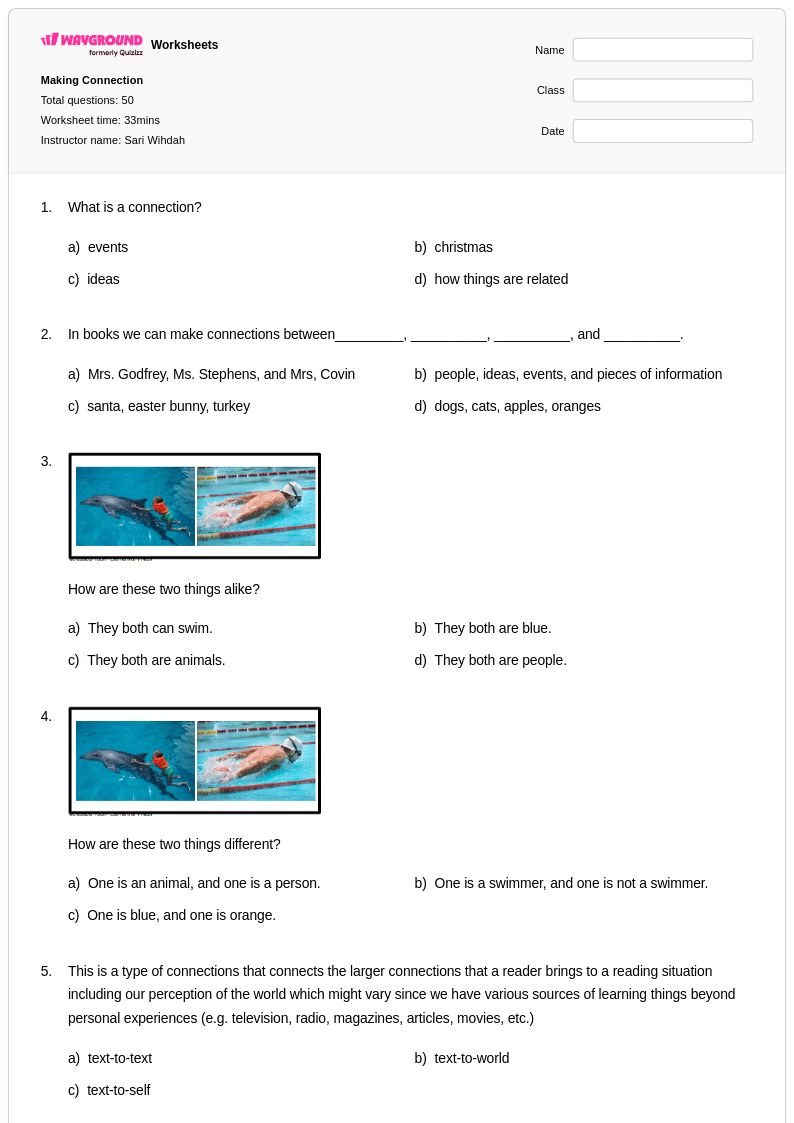
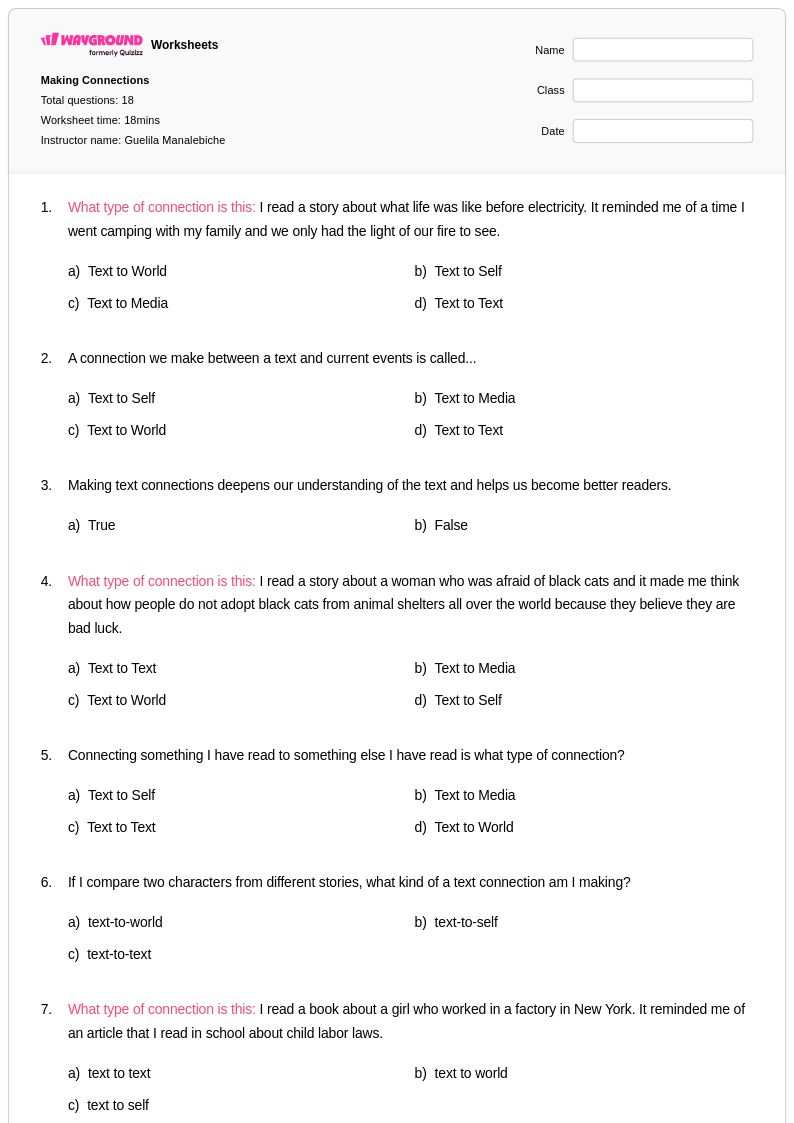
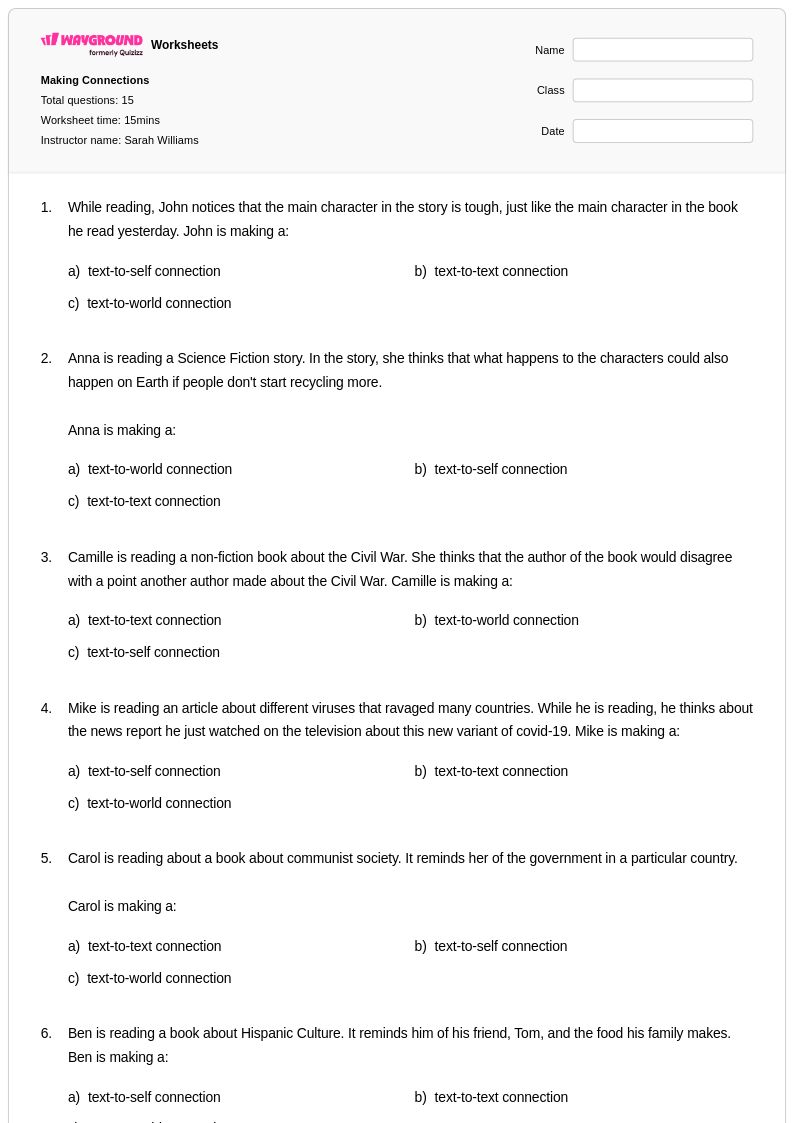
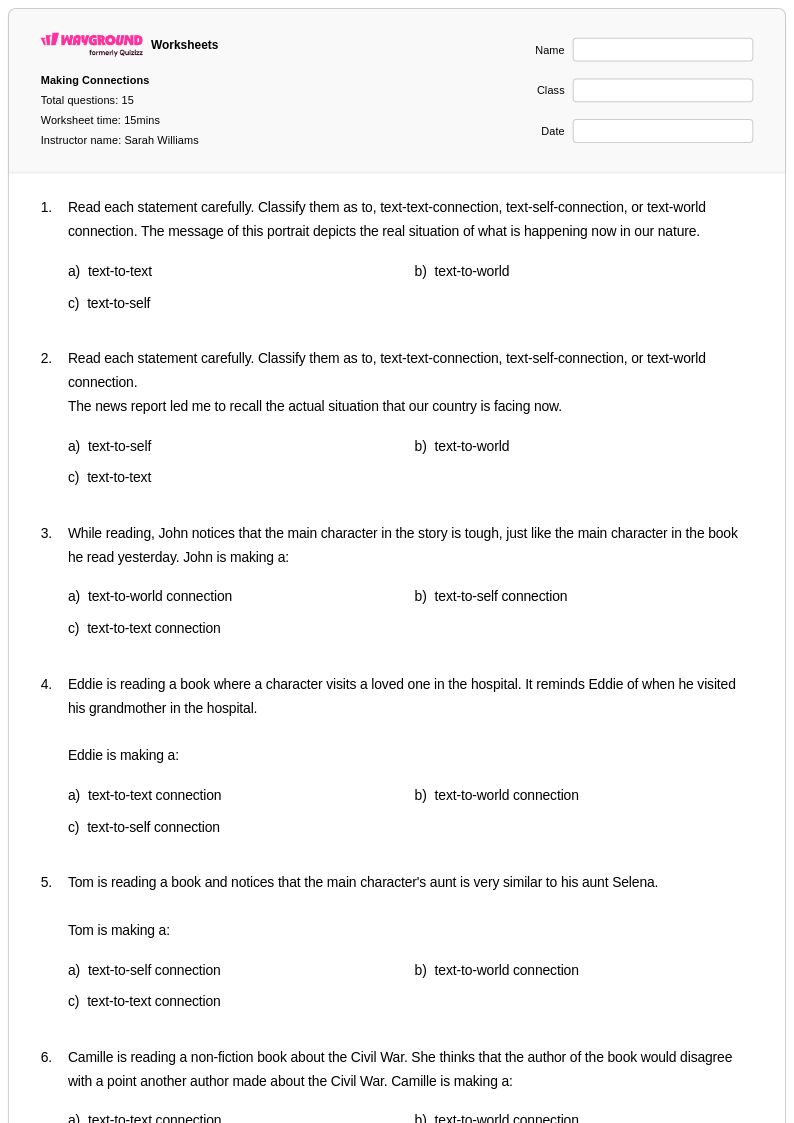
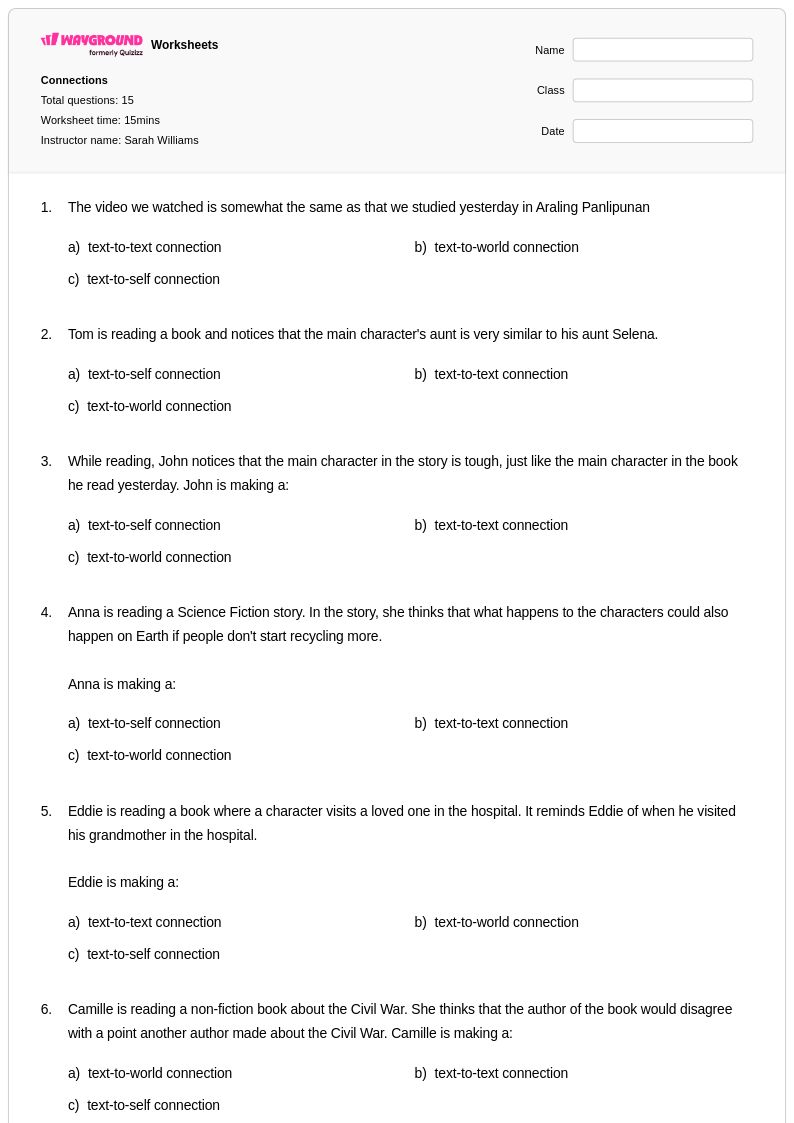
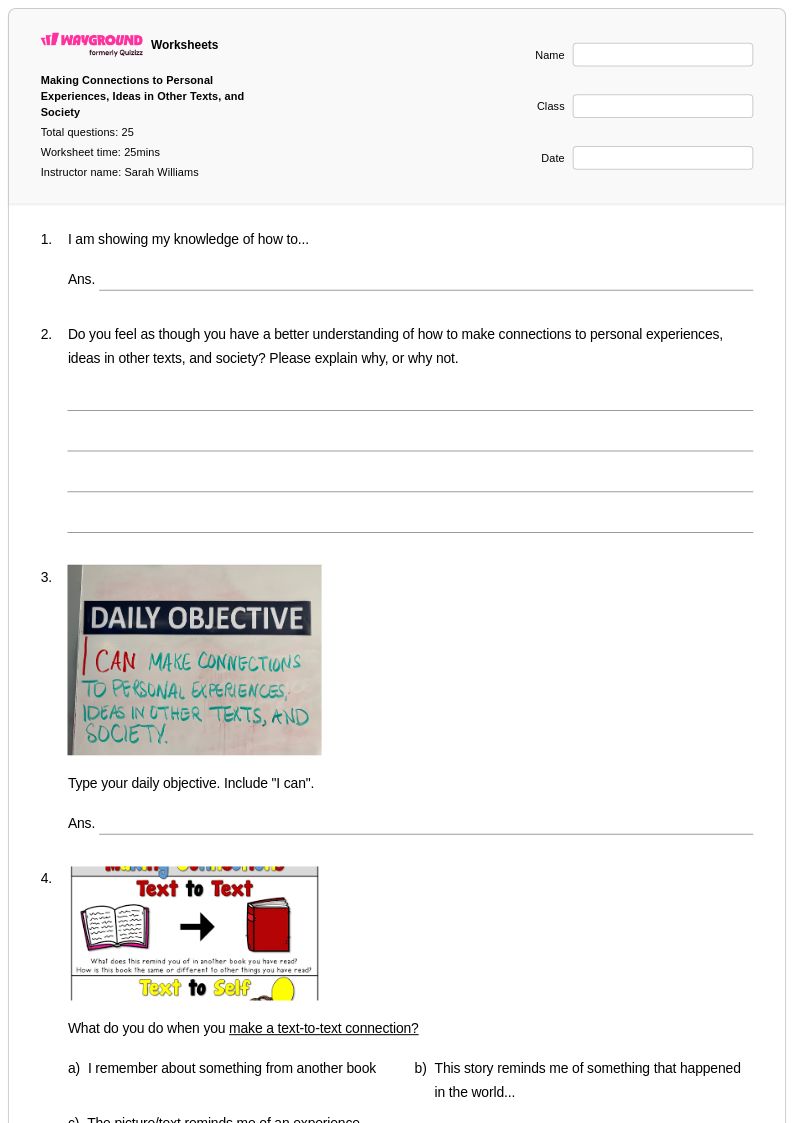
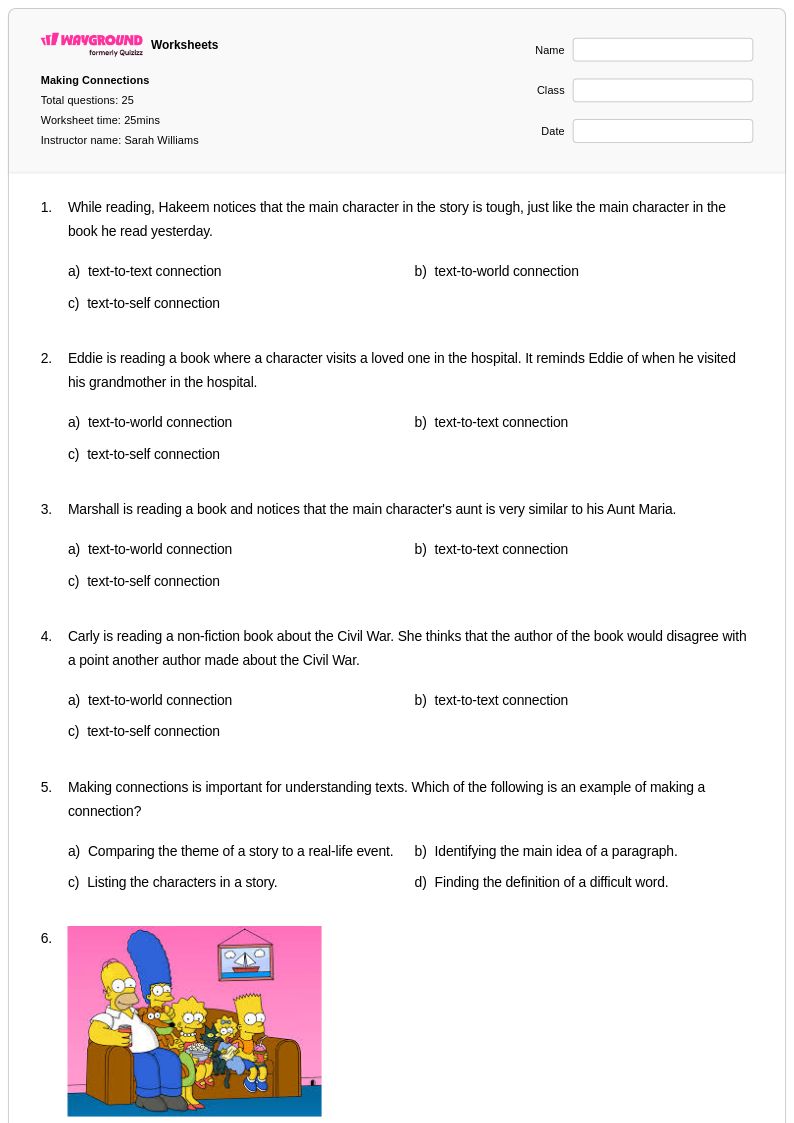
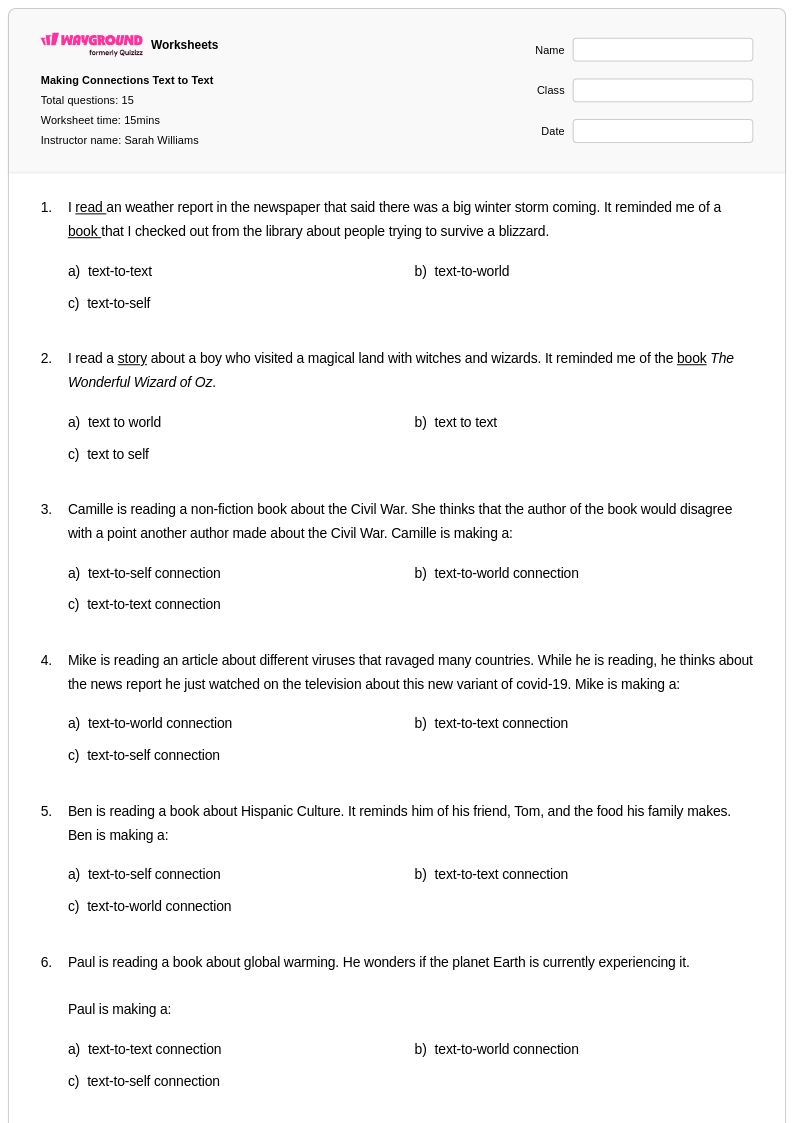
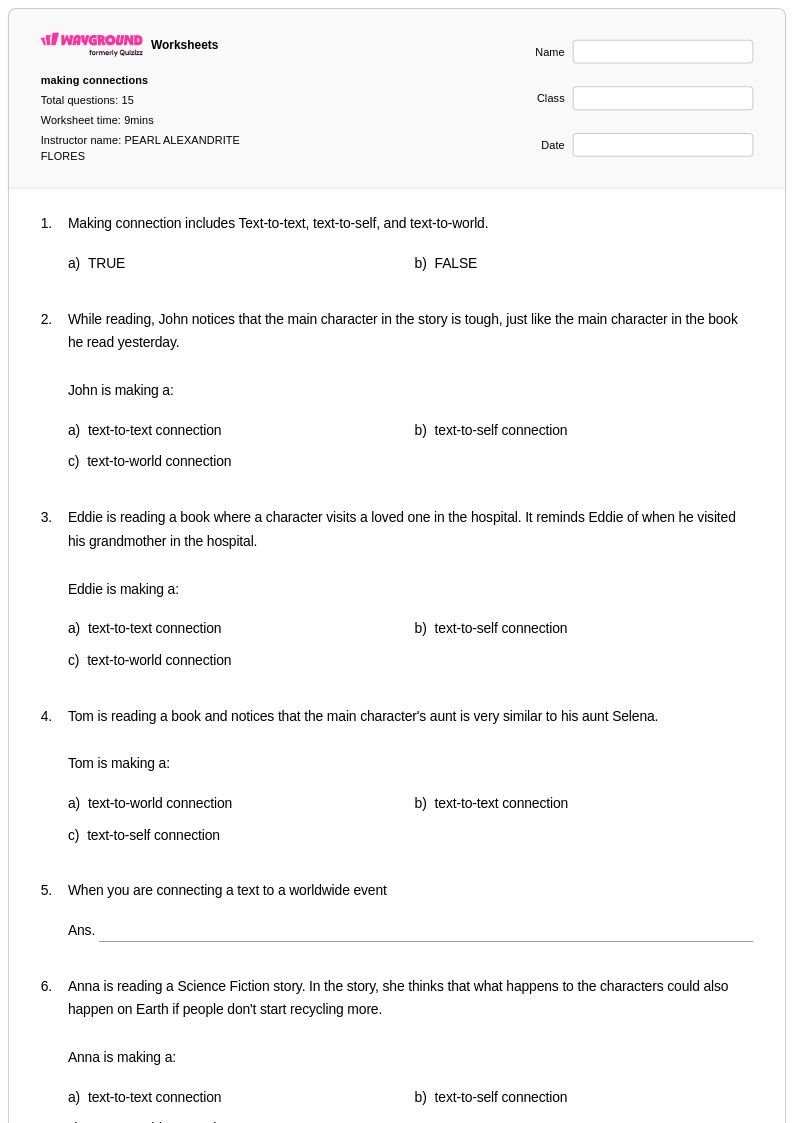
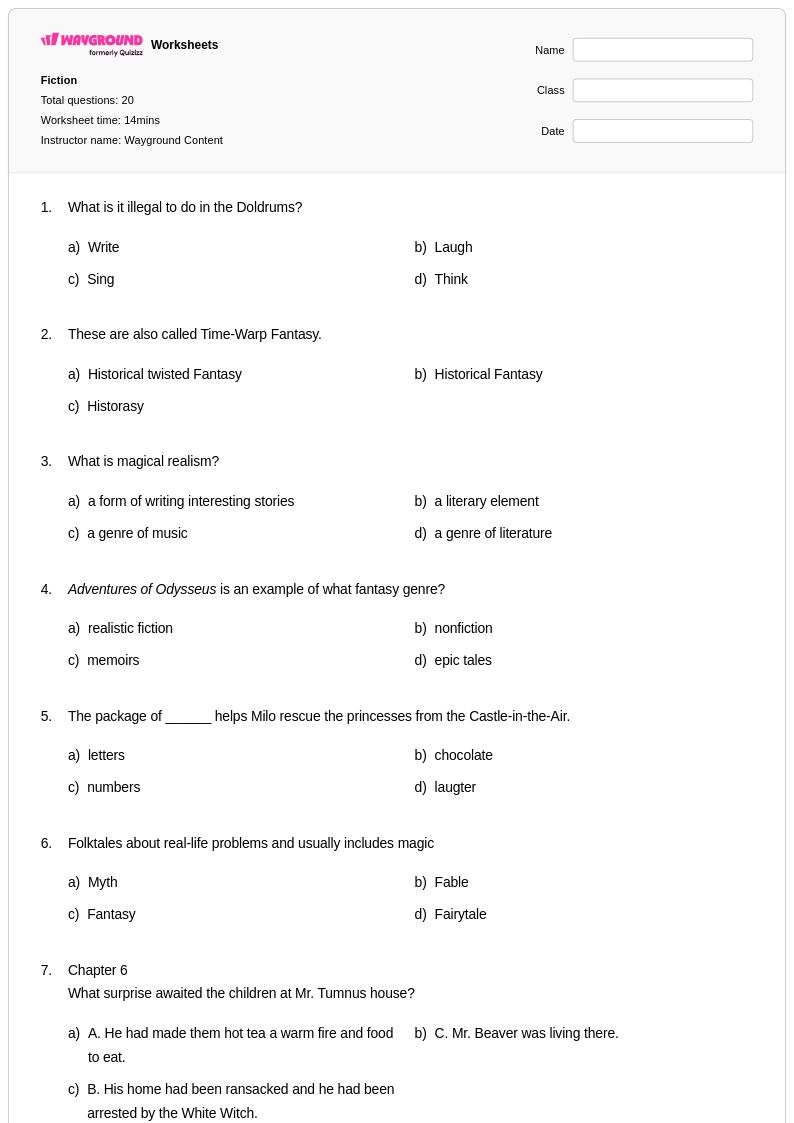
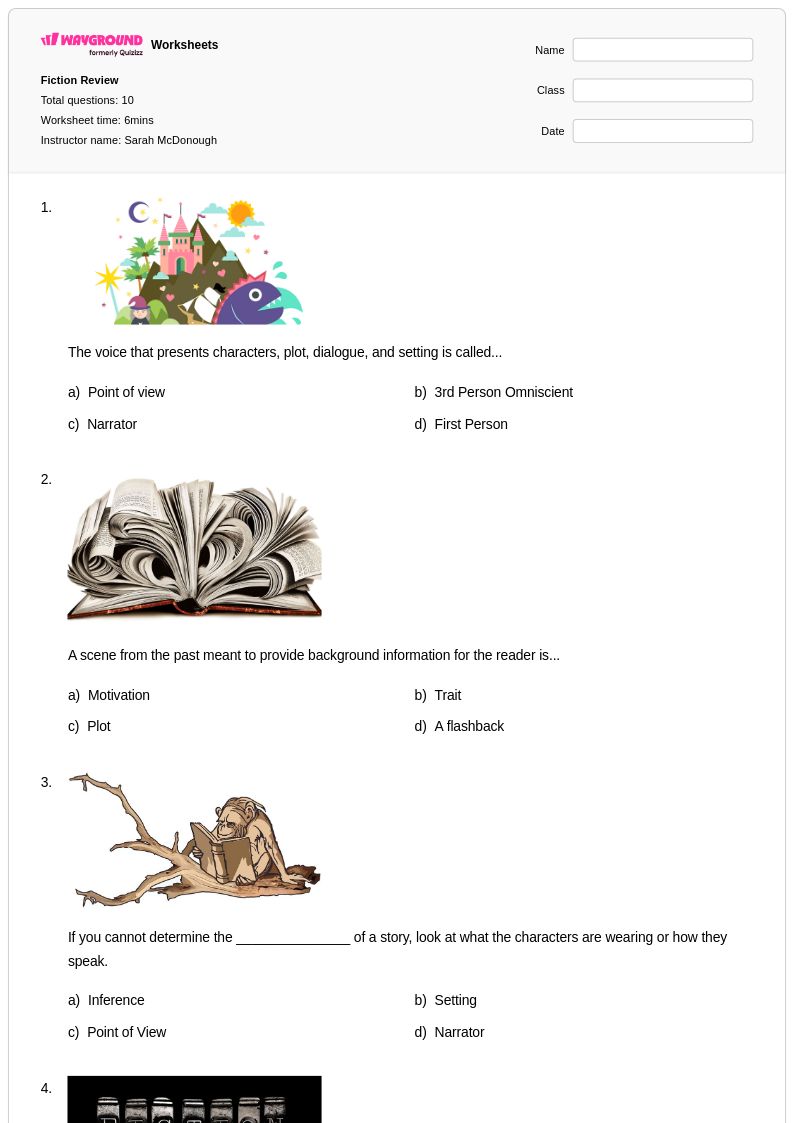
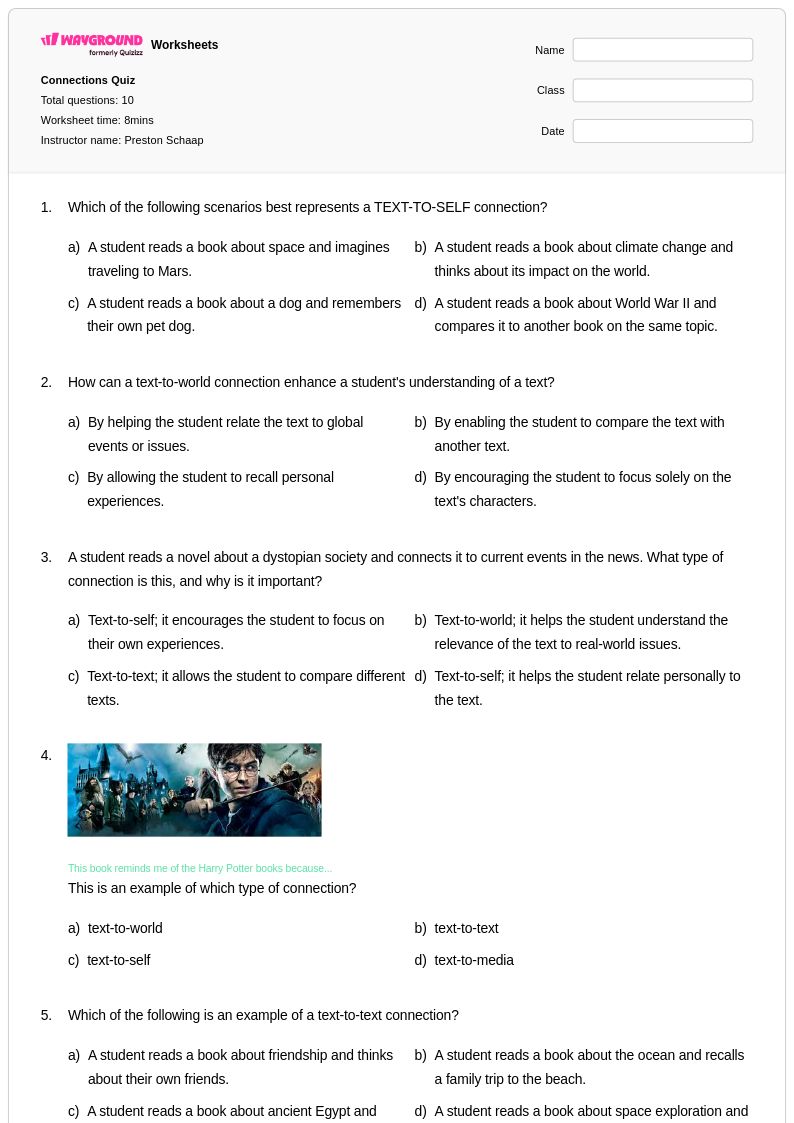
Making connections in fiction represents a fundamental reading comprehension skill that Grade 8 students must master to develop deeper literary analysis abilities. Wayground's extensive collection of making connections in fiction worksheets provides students with structured practice opportunities to identify and analyze text-to-self, text-to-text, and text-to-world connections while reading various fictional works. These comprehensive worksheets strengthen critical thinking skills by guiding students through the process of relating their personal experiences, prior knowledge, and understanding of other texts to the stories they encounter. Each worksheet includes detailed answer keys and practice problems that help students recognize how these connections enhance their comprehension and engagement with fictional narratives, while the free printable pdf format ensures easy accessibility for classroom and independent study use.
Wayground's robust platform supports educators with millions of teacher-created resources specifically designed for making connections in fiction instruction at the Grade 8 level. The platform's advanced search and filtering capabilities allow teachers to quickly locate worksheets that align with specific learning standards and match their students' varying skill levels. These differentiation tools enable instructors to customize content for remediation, enrichment, and targeted skill practice, ensuring that all students can successfully develop their connection-making abilities. The flexible format options, including both printable and digital versions with pdf availability, streamline lesson planning while providing teachers with the resources needed to effectively assess student progress and adjust instruction based on individual learning needs in this essential reading comprehension area.
FAQs
How do I teach students to make connections while reading fiction?
Start by explicitly modeling all three connection types — text-to-self, text-to-text, and text-to-world — using a shared read-aloud so students can hear your thinking process before attempting it independently. Use anchor charts to define each connection type with concrete examples from familiar stories, then gradually release responsibility by having students practice with structured prompts before open-ended reflection. The goal is to make connection-making a habitual, automatic part of how students engage with any fictional text.
What are the three types of connections students should make when reading fiction?
The three core connection types are text-to-self (linking story events or characters to personal experiences), text-to-text (connecting the current text to another book, poem, or story the student has read), and text-to-world (relating story themes or events to broader real-world knowledge or current events). Teaching all three explicitly helps students move beyond surface-level reading and develop the analytical thinking needed for deeper literary comprehension.
What exercises help students practice making connections in fiction?
Structured worksheets with guided prompts are highly effective — students respond to specific questions that direct them toward each connection type rather than leaving the task entirely open-ended. Connection journals, double-entry logs where students record a passage alongside a personal or world connection, and graphic organizers that sort examples into the three connection categories all reinforce this skill systematically. Repeated practice across multiple genres and complexity levels helps students internalize the habit of active, connective reading.
What mistakes do students commonly make when identifying connections in fiction?
The most frequent error is confusing a surface-level reaction ('I liked this part') with a genuine connection ('This reminds me of when I moved schools, just like the main character'). Students also tend to default exclusively to text-to-self connections and avoid the more challenging text-to-text and text-to-world types, which require broader schema activation. Another common misconception is treating any tangentially related thought as a meaningful connection — teachers should emphasize that strong connections must genuinely deepen understanding of the text, not just interrupt it.
How can I differentiate making-connections instruction for struggling and advanced readers?
For struggling readers, reduce cognitive load by focusing on text-to-self connections first, using shorter fiction passages and sentence-starter prompts to scaffold responses. Wayground supports individual student accommodations including Read Aloud, which can audio-read questions and passages for students who need it, and reduced answer choices to lower the complexity of guided-response tasks. Advanced readers benefit from being pushed toward text-to-world connections that require them to draw on historical context, current events, or thematic comparisons across multiple texts.
How do I use Making Connections in Fiction worksheets from Wayground in my classroom?
Wayground's making connections in fiction worksheets are available as printable PDFs for traditional classroom use and in digital formats for technology-integrated environments, giving you flexibility depending on your lesson setup. You can also host them as an interactive quiz directly on Wayground, which enables immediate feedback for students. The worksheets include complete answer keys, so they work equally well for guided practice, independent work, or review sessions without requiring additional prep on your part.