Free Printable Map Elements Worksheets for Grade 5
Explore our comprehensive collection of Grade 5 map elements worksheets and printables that help students master essential geography skills including reading legends, understanding scale, and identifying compass directions through engaging practice problems with answer keys.
Explore printable Map Elements worksheets for Grade 5
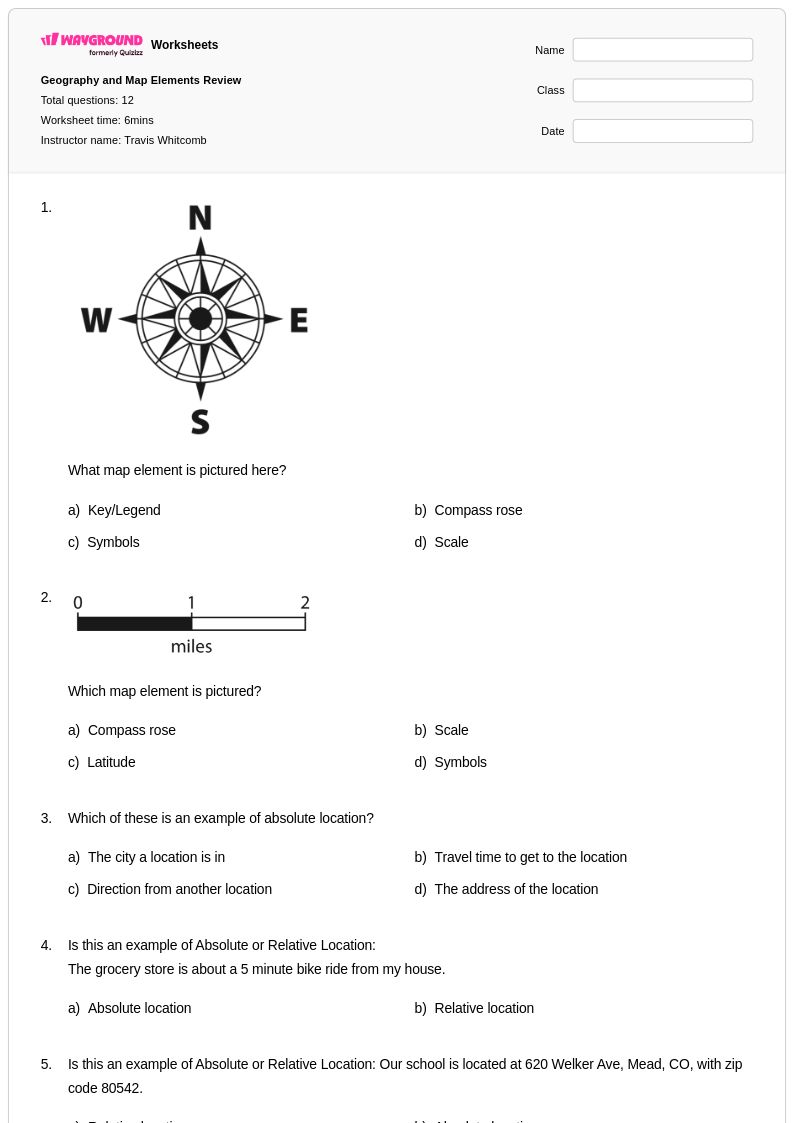
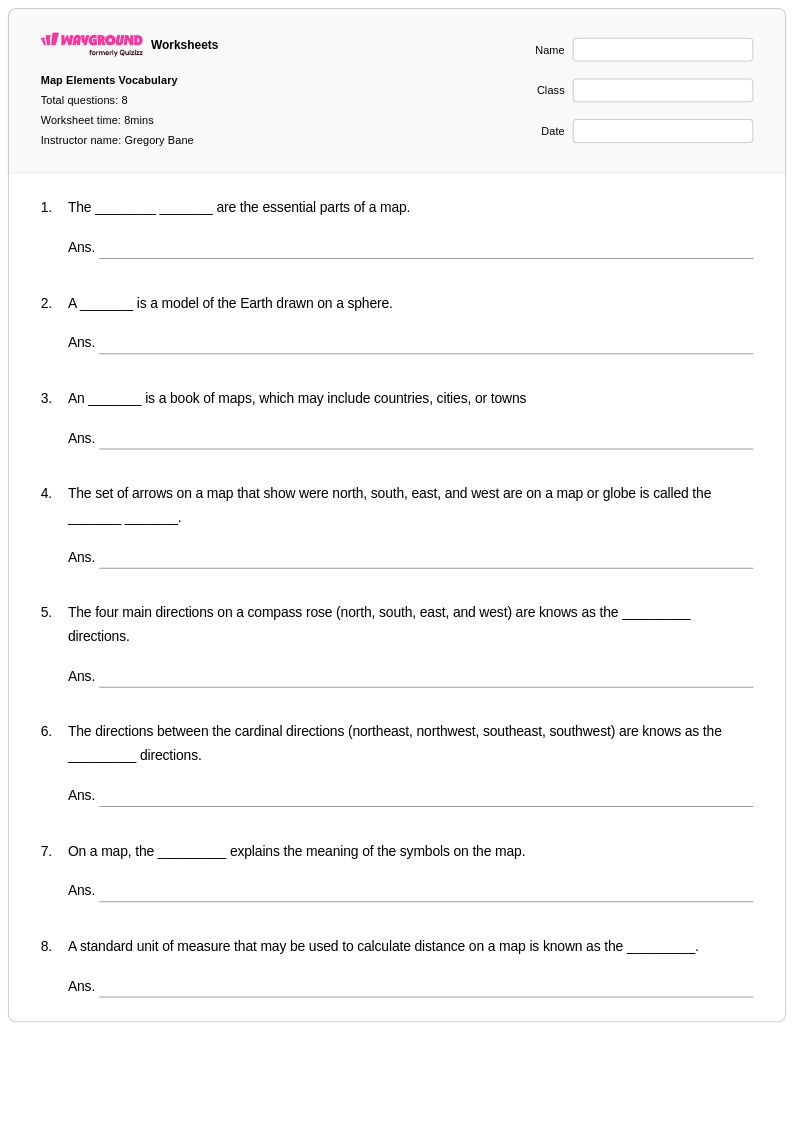
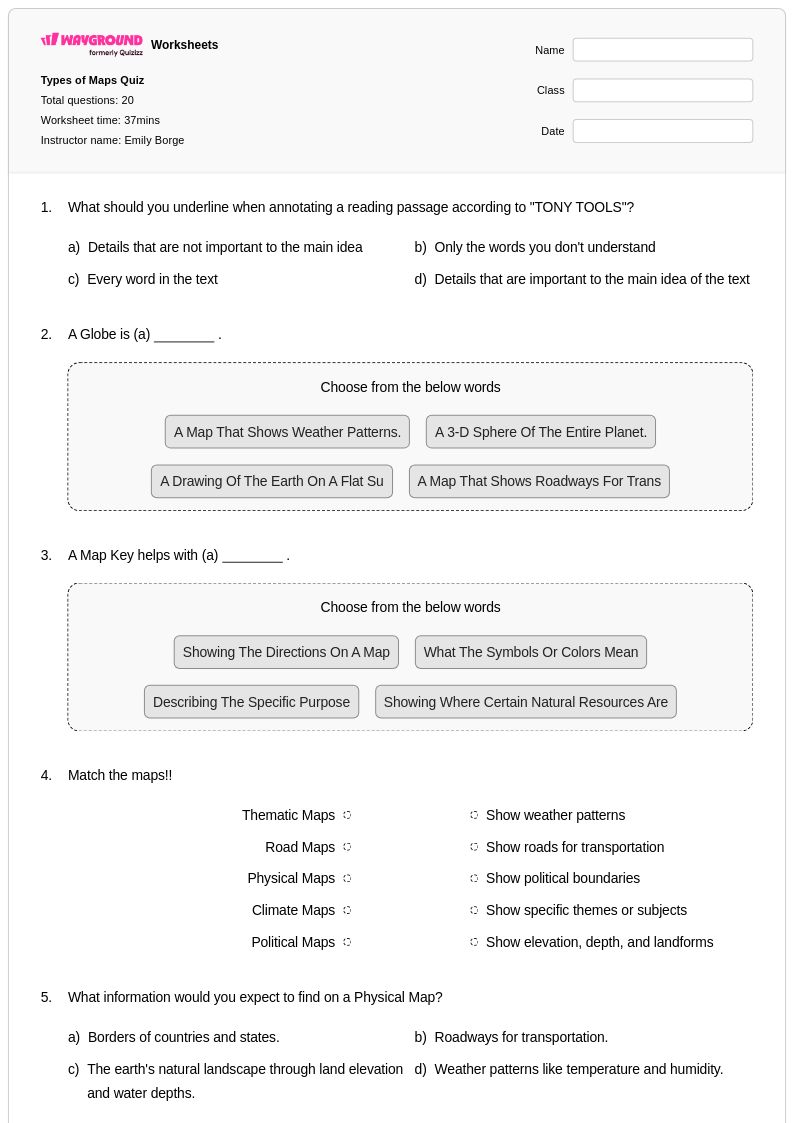
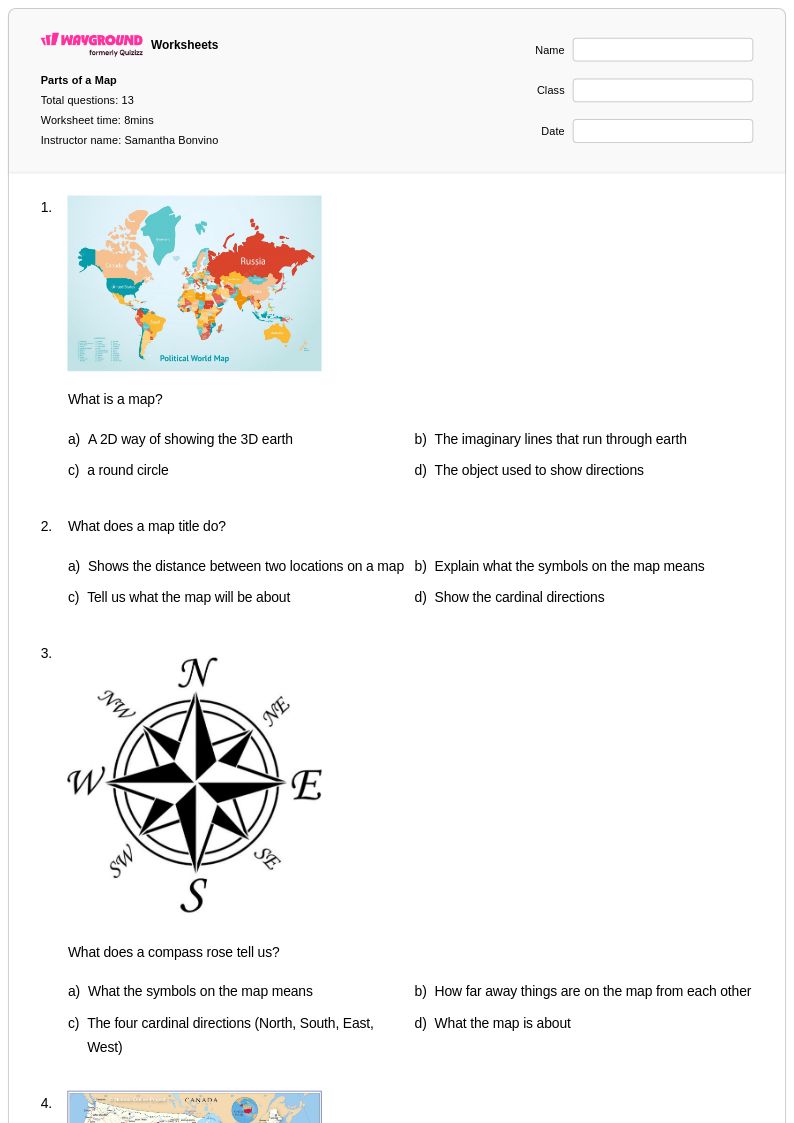
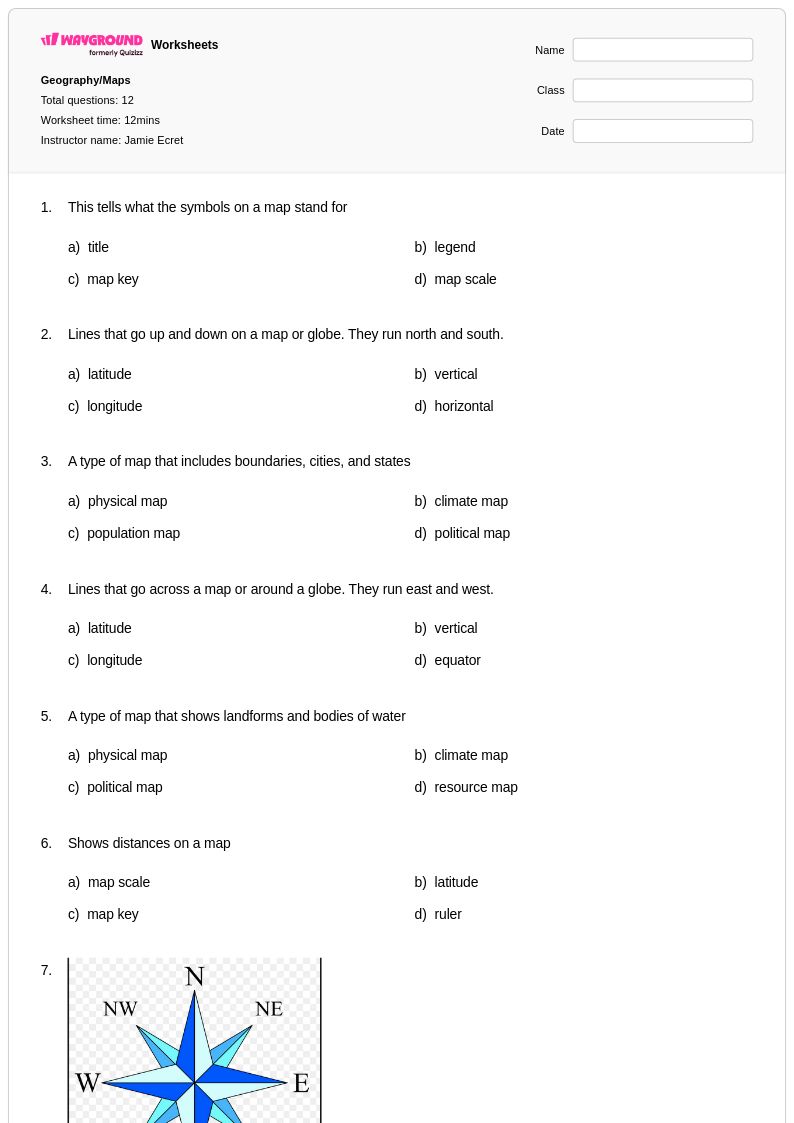
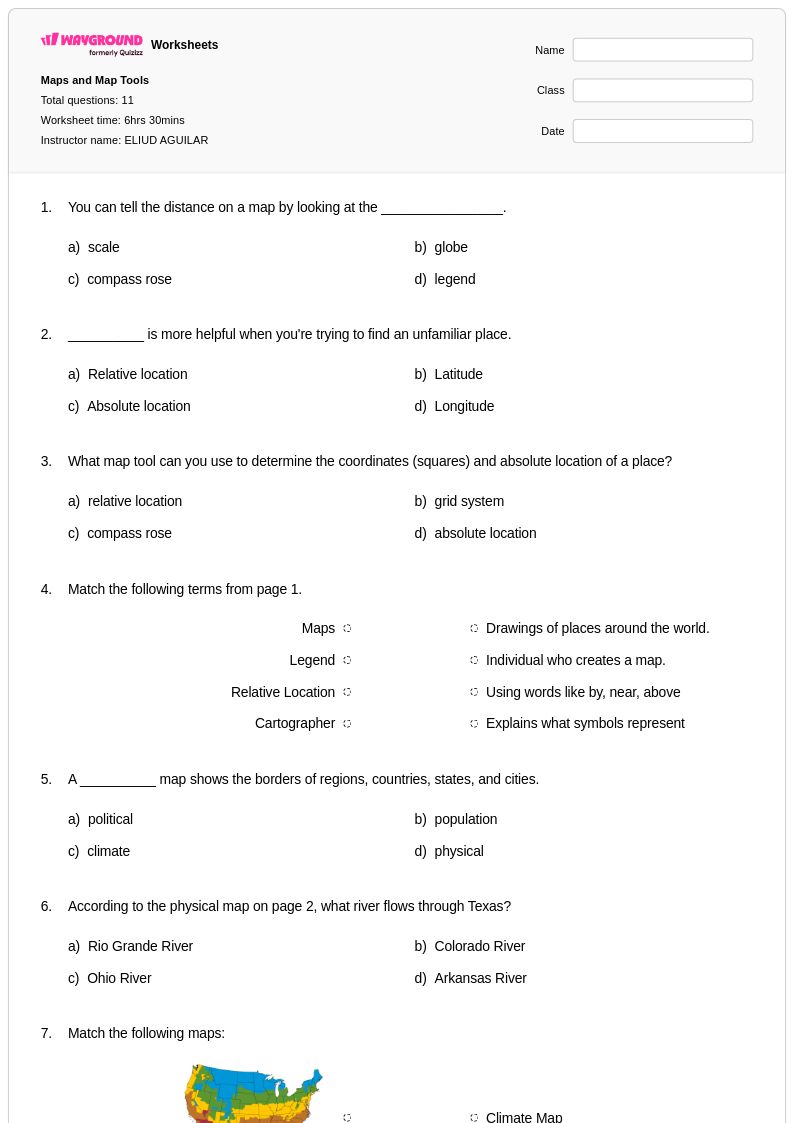
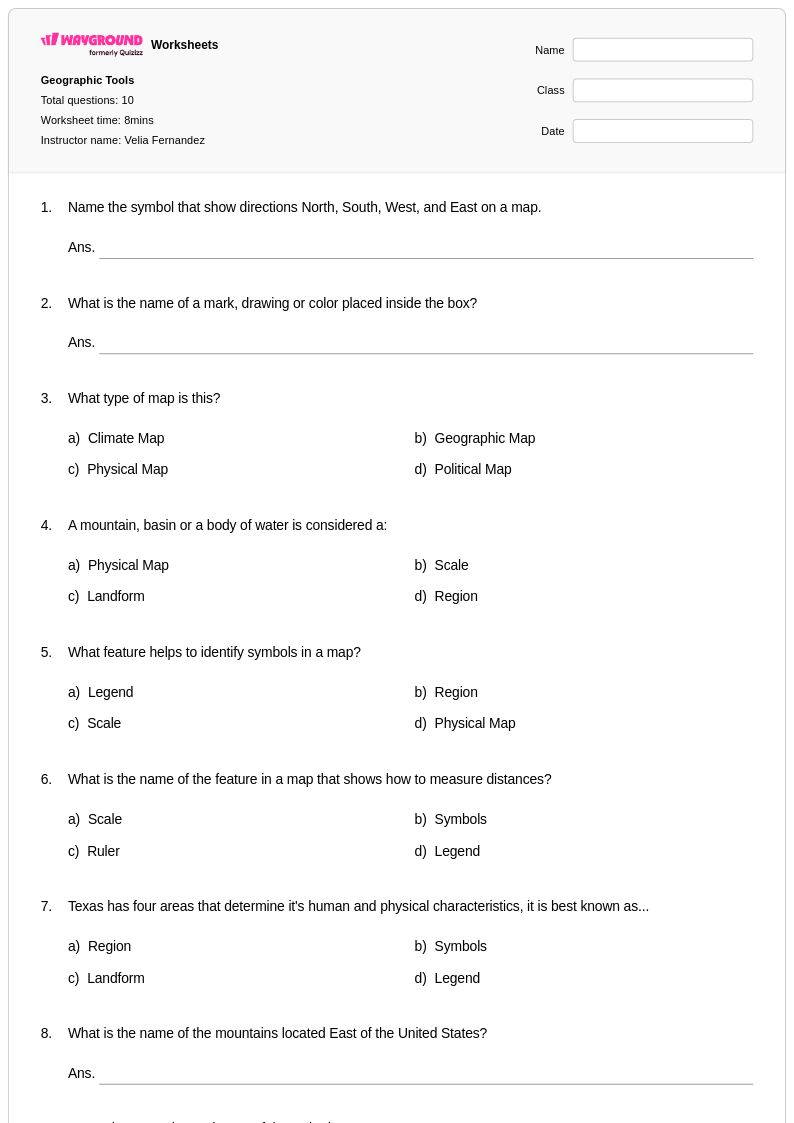
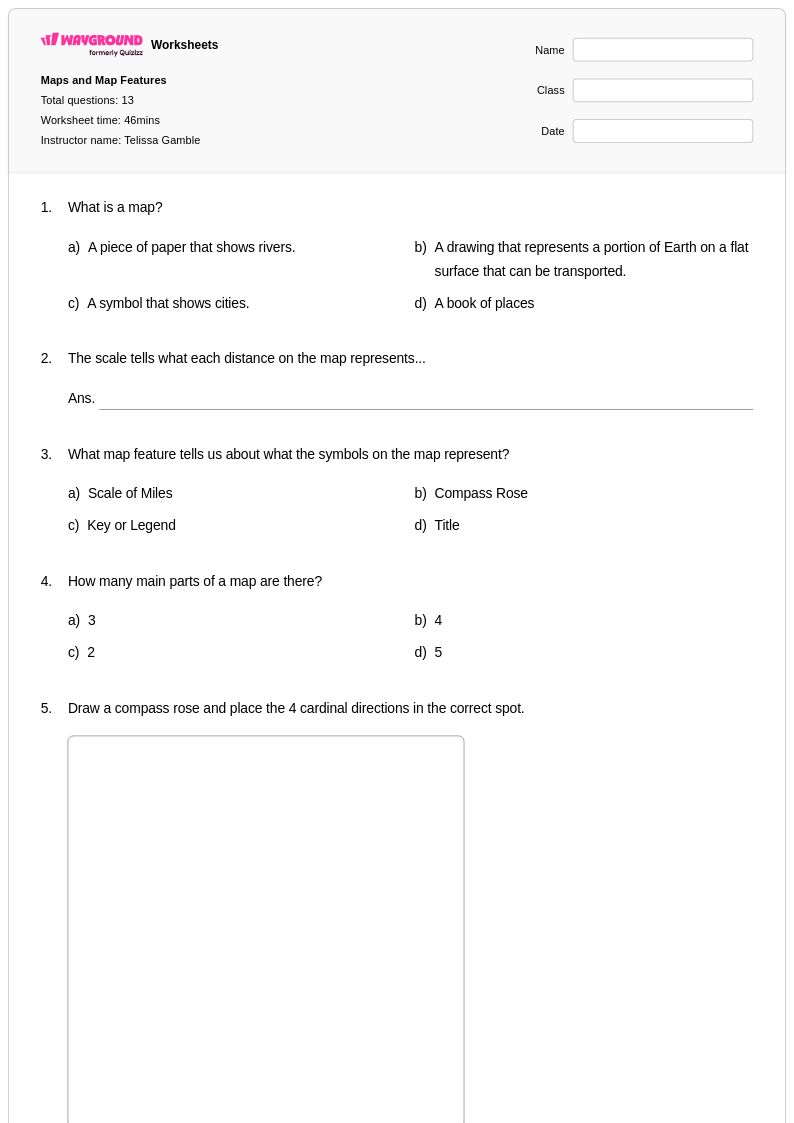
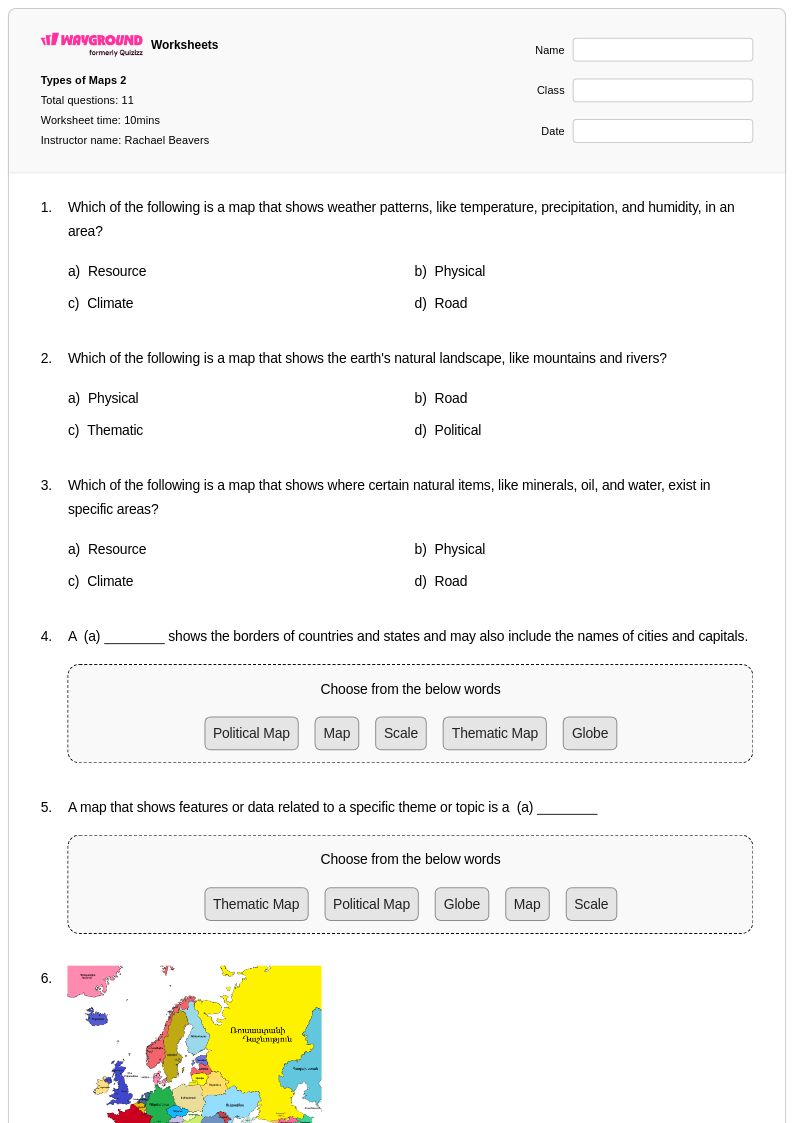
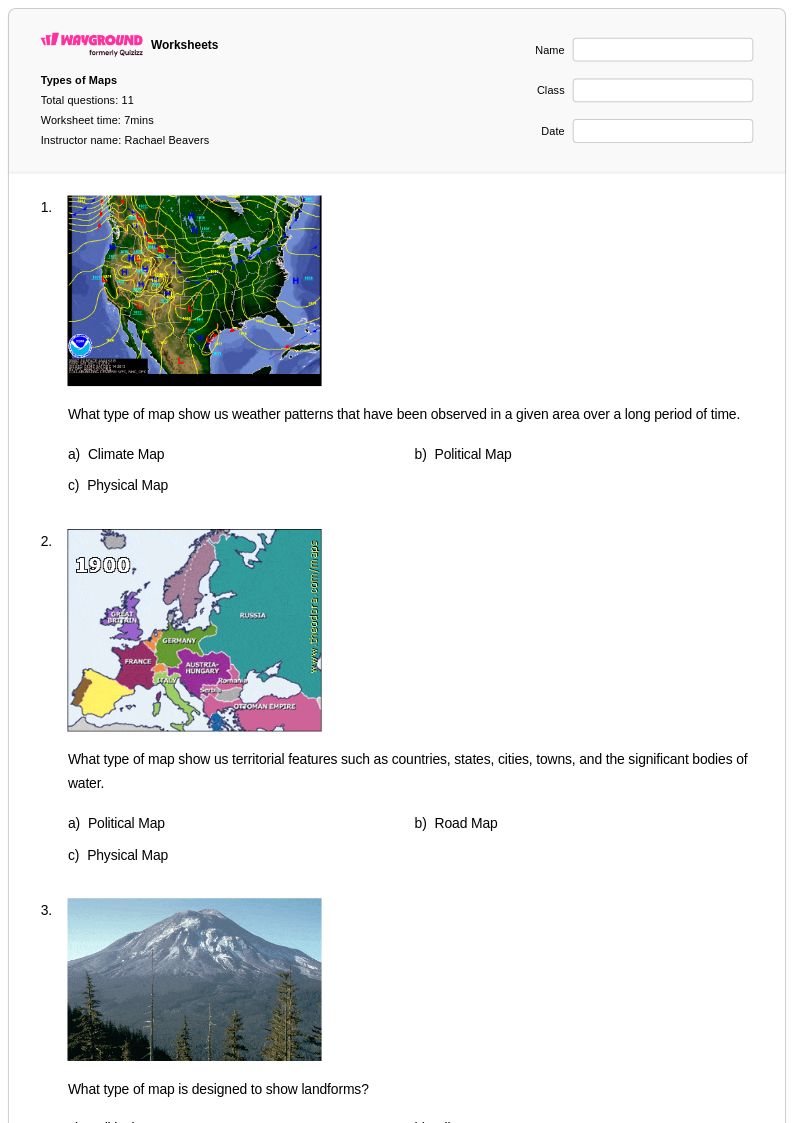
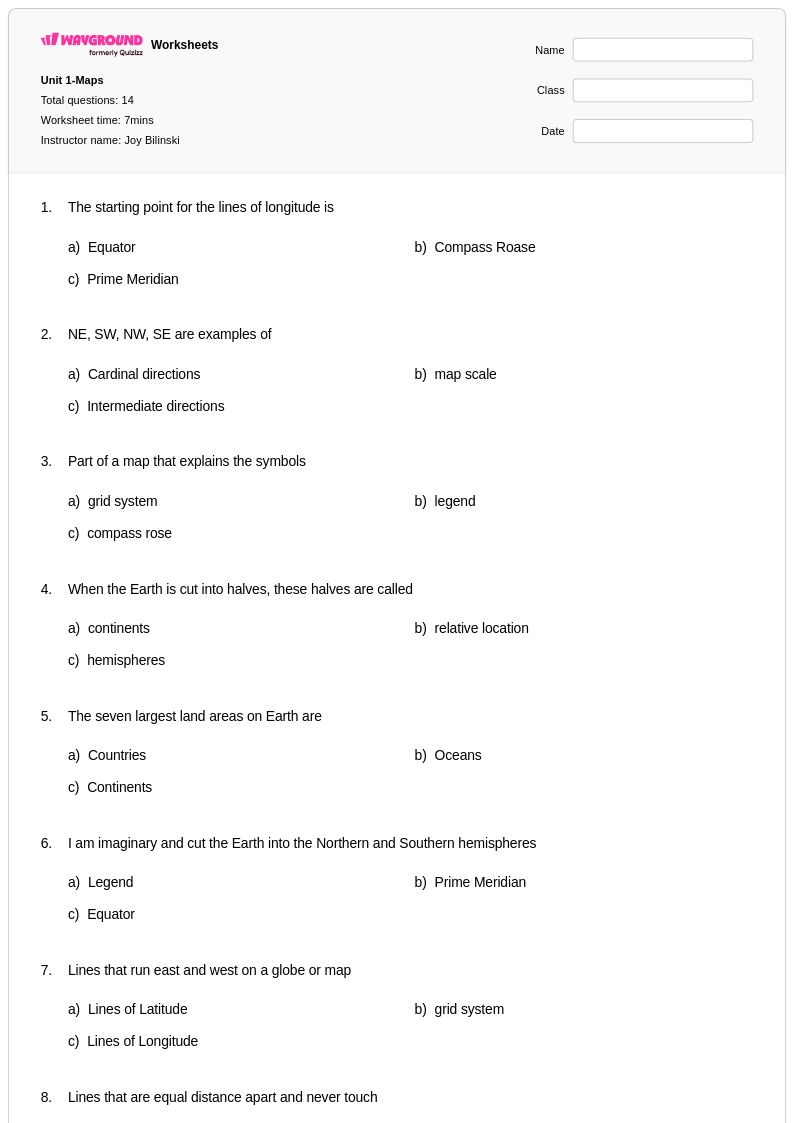
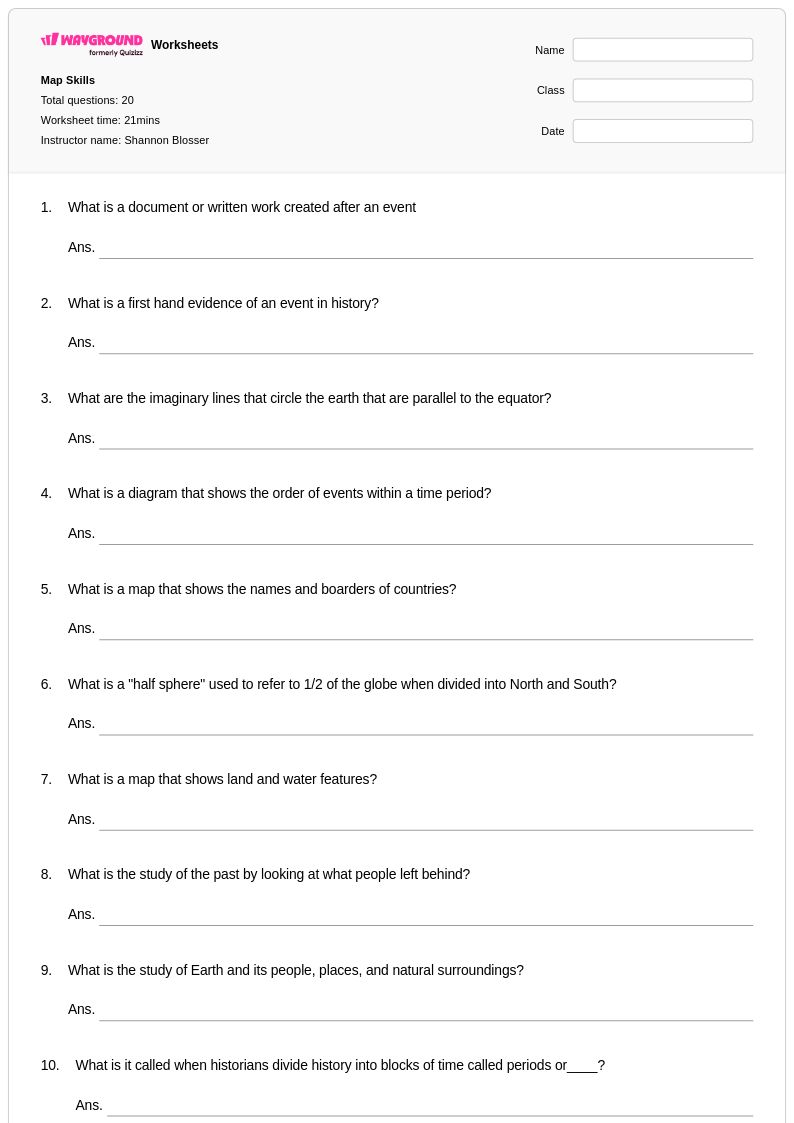
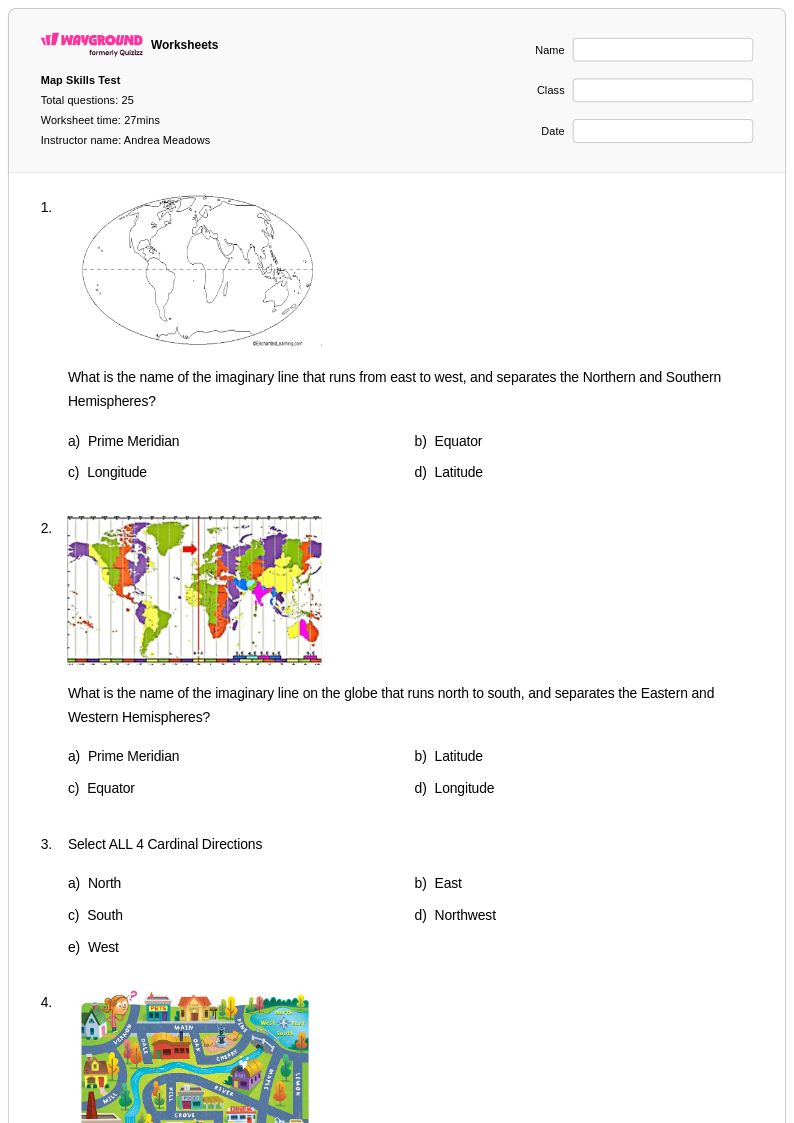
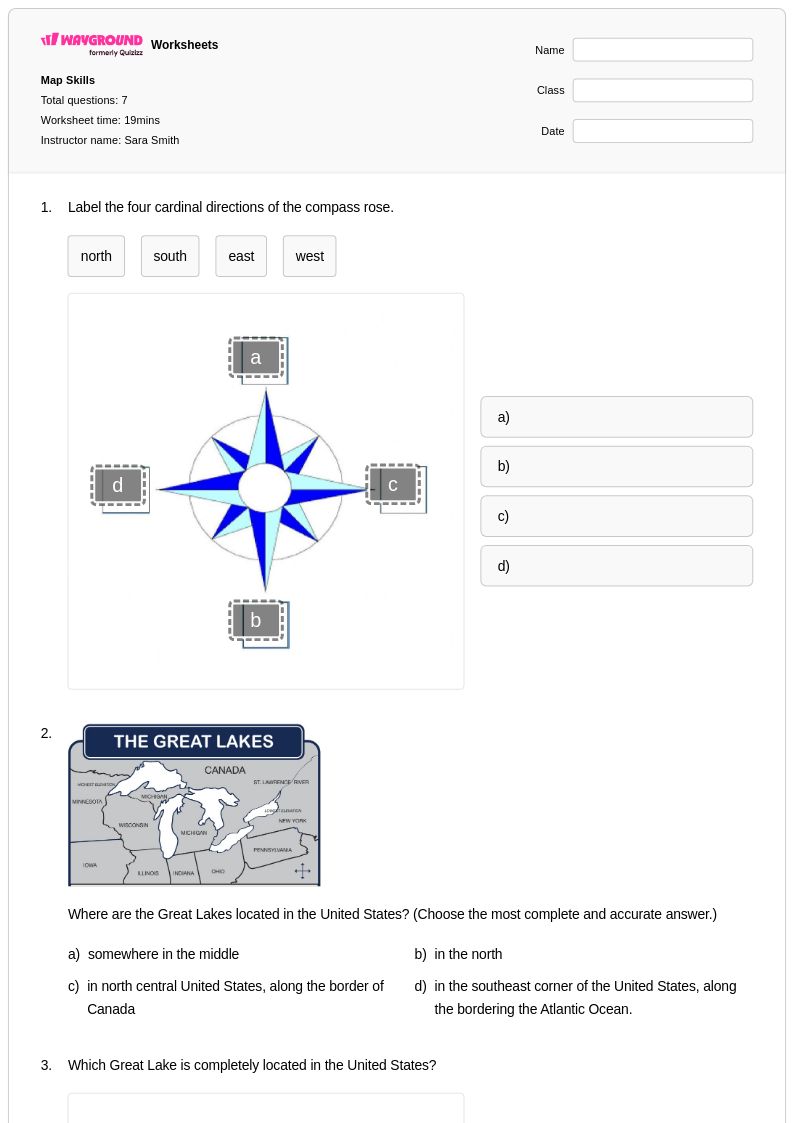
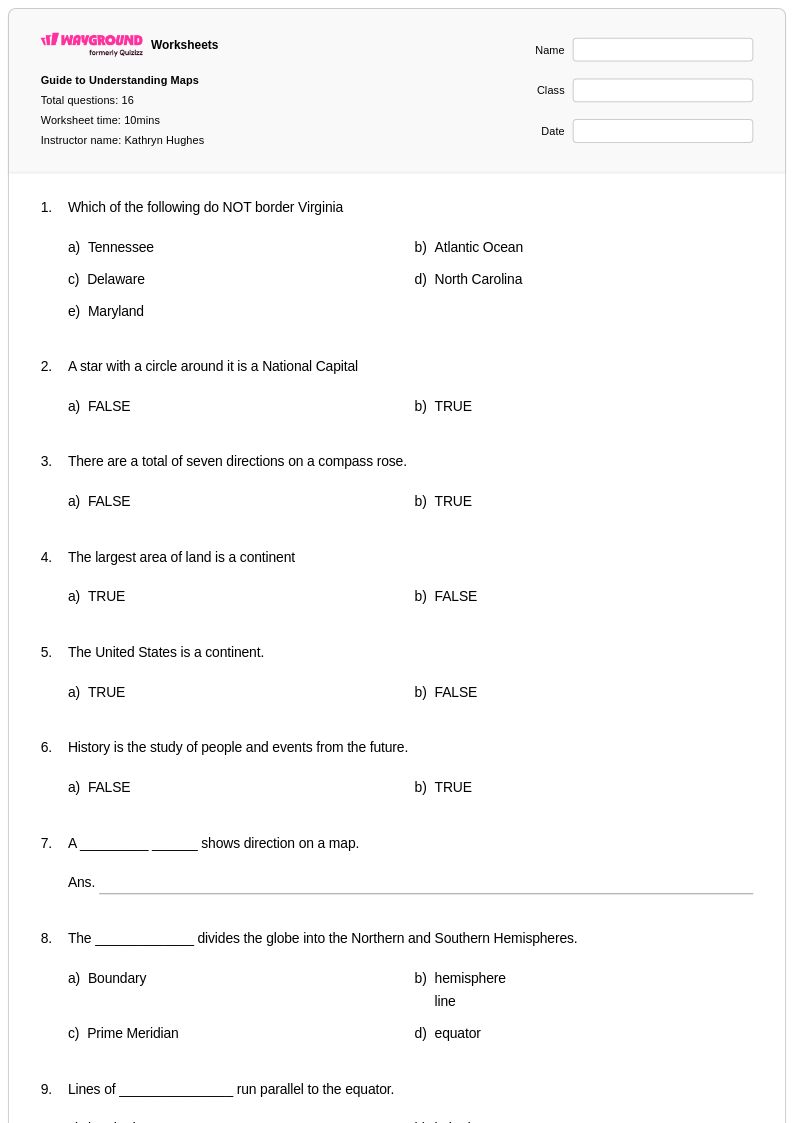
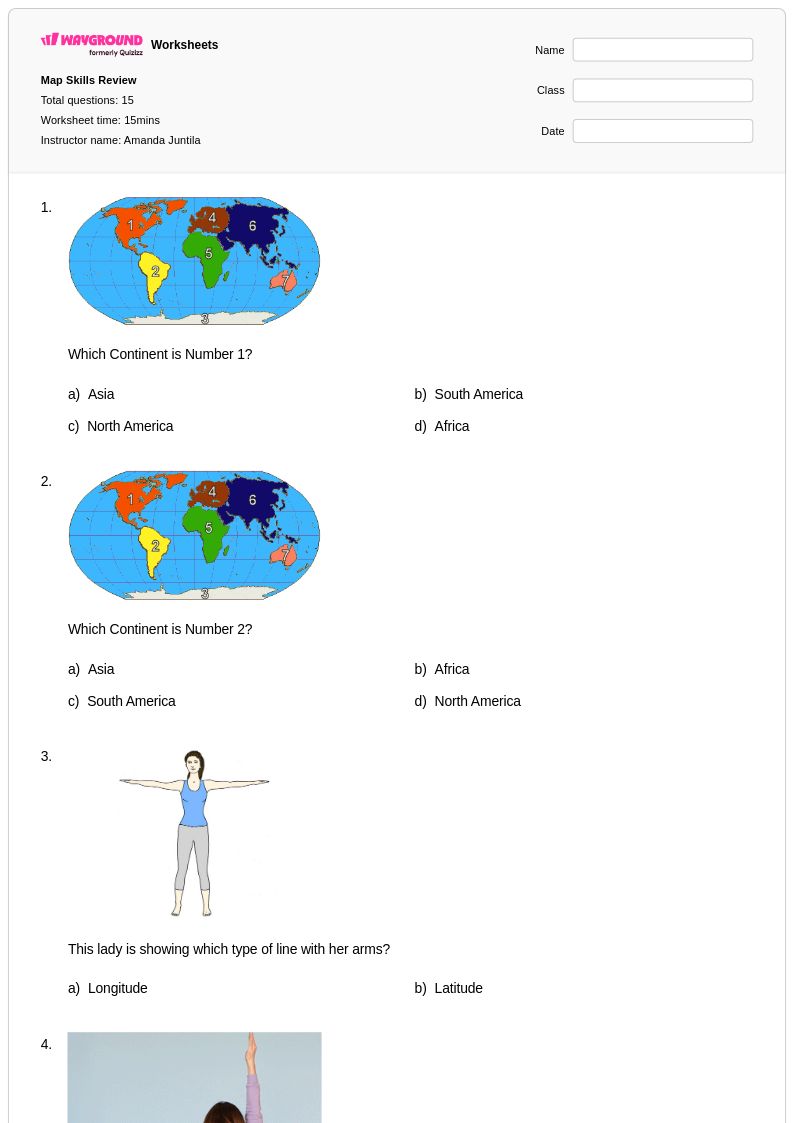
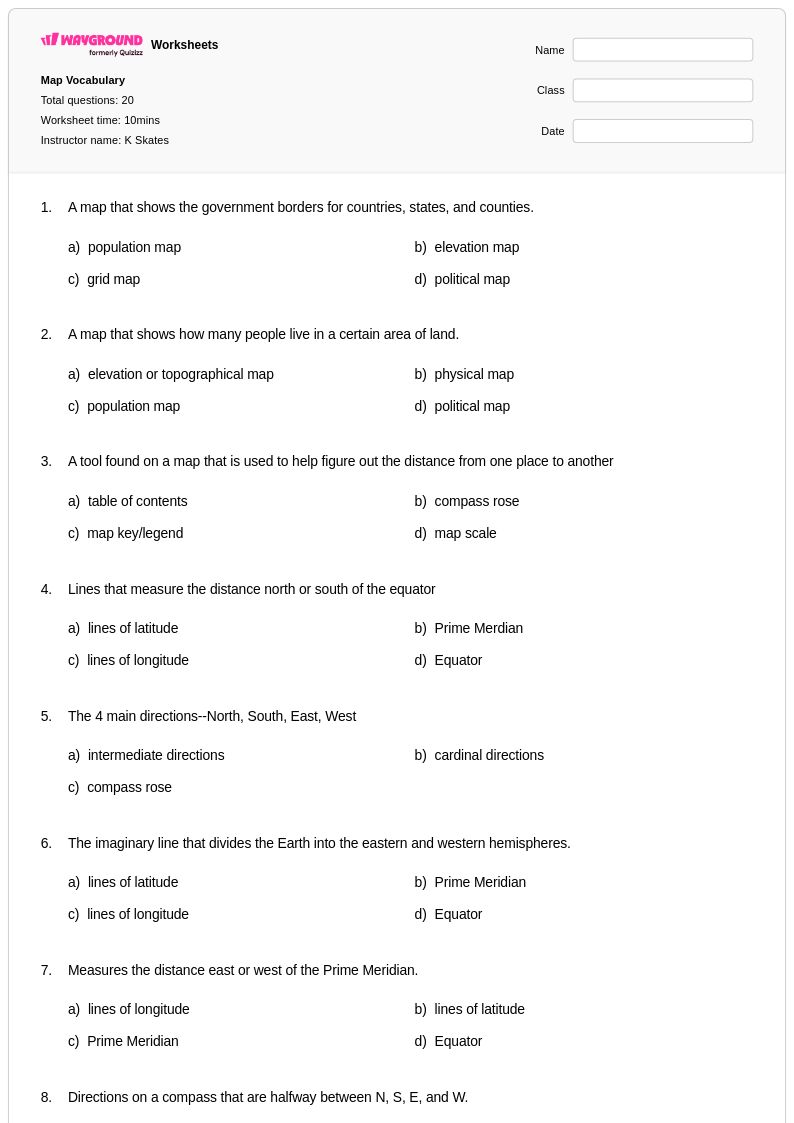
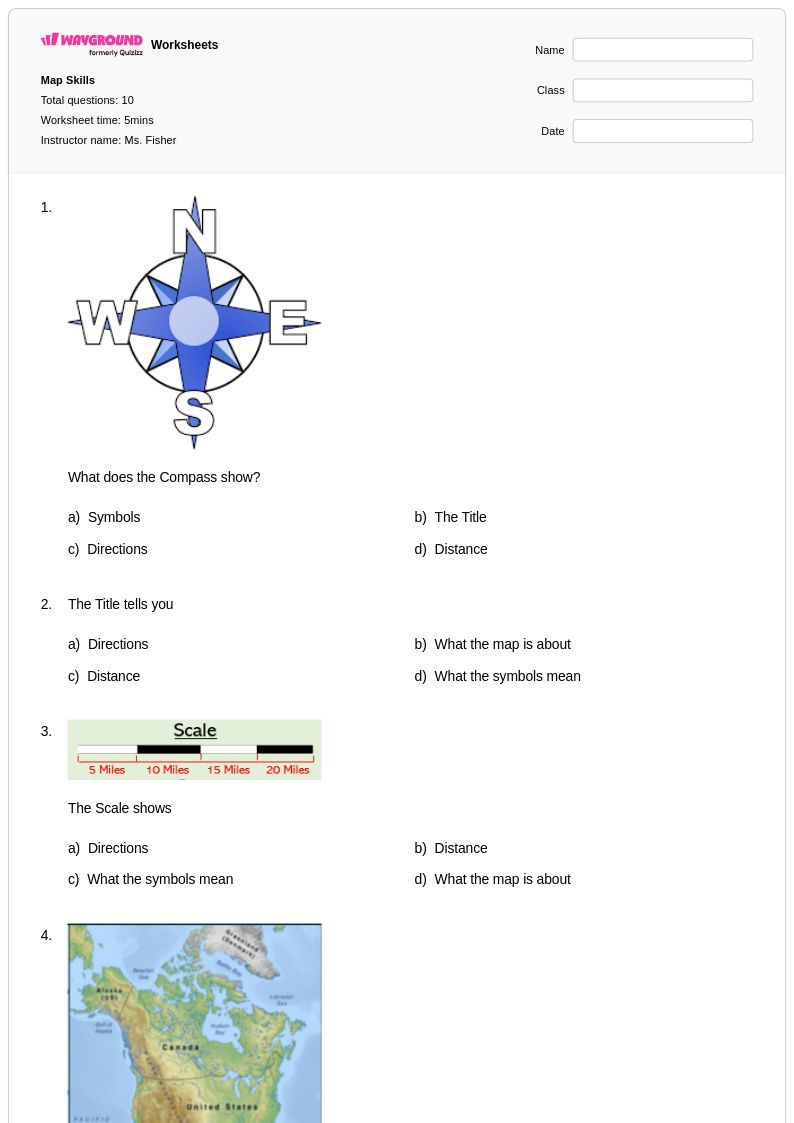
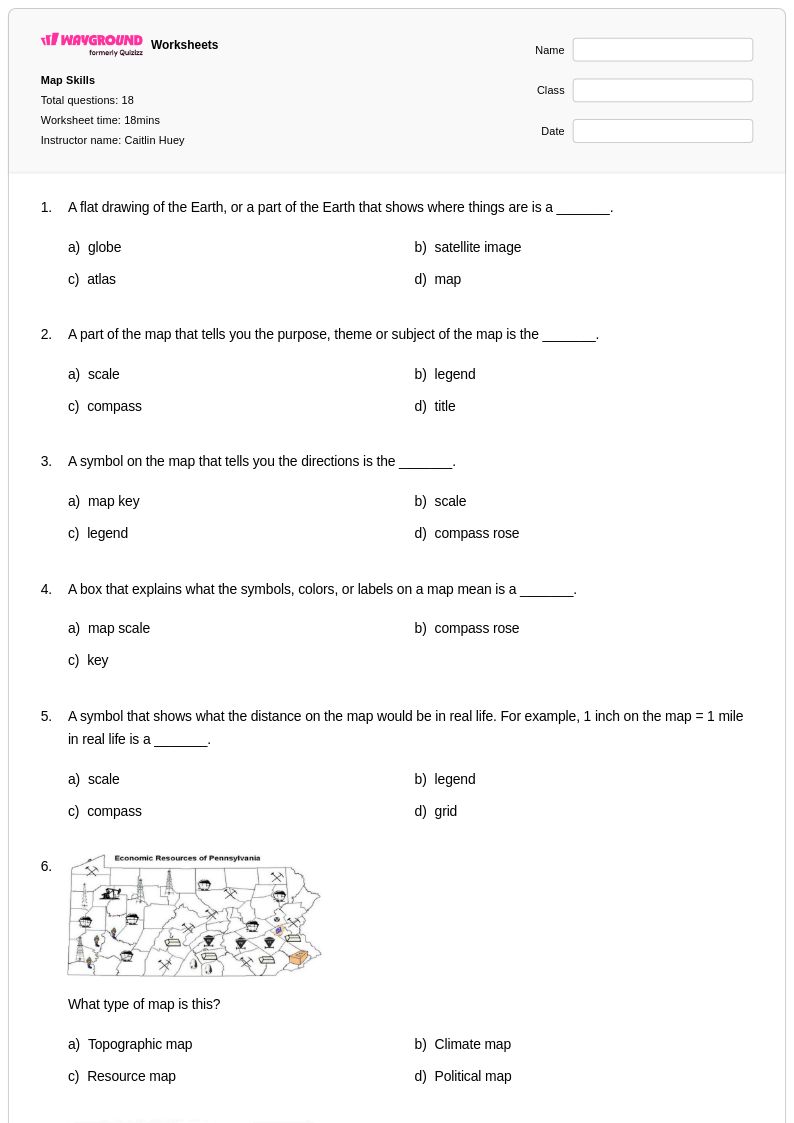
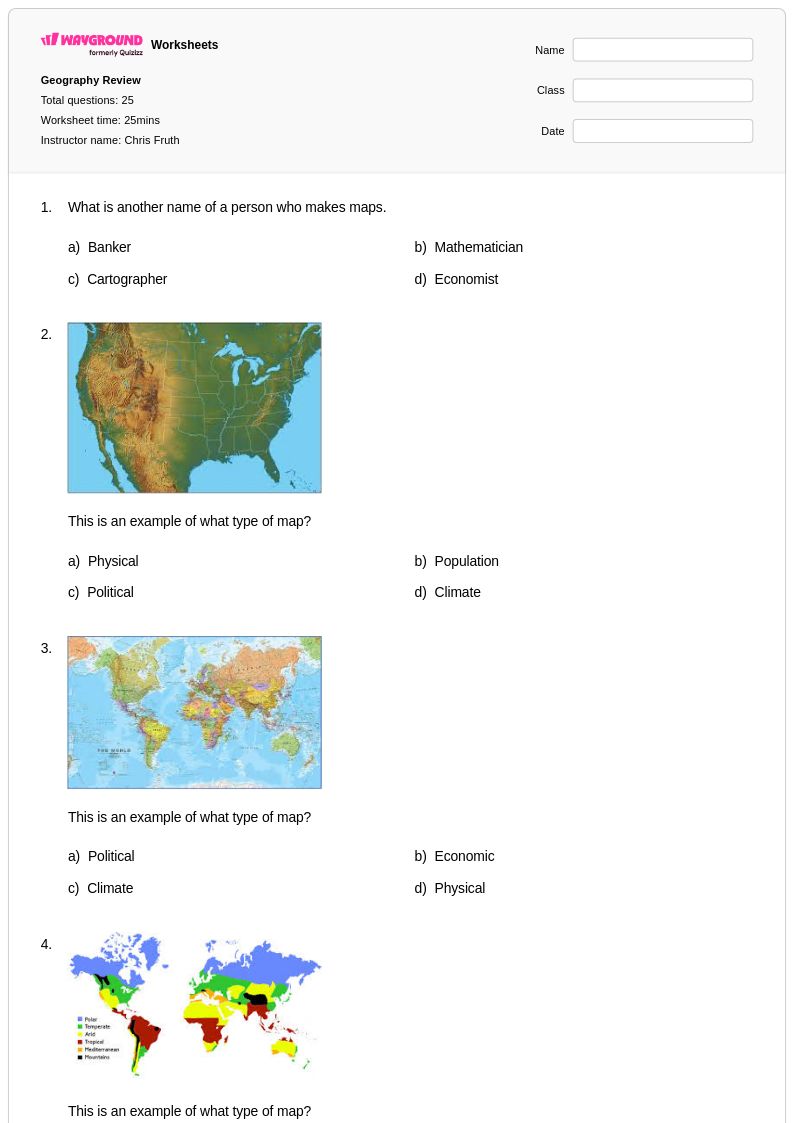
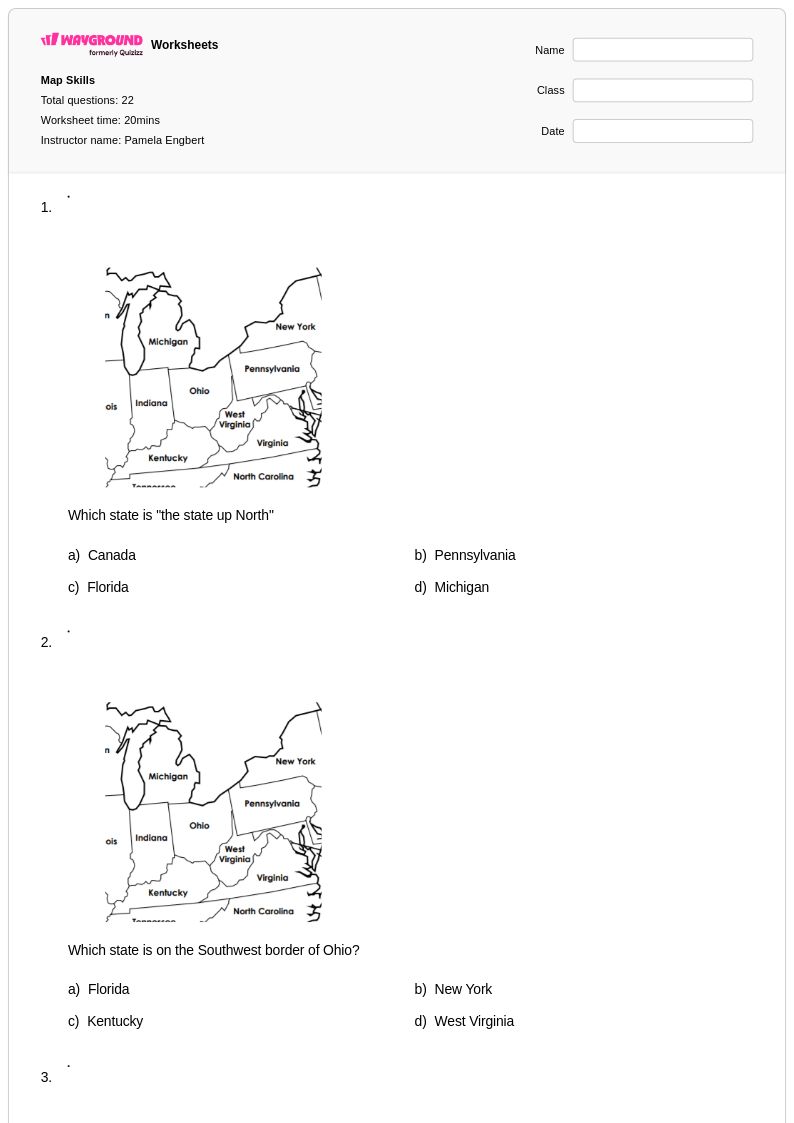
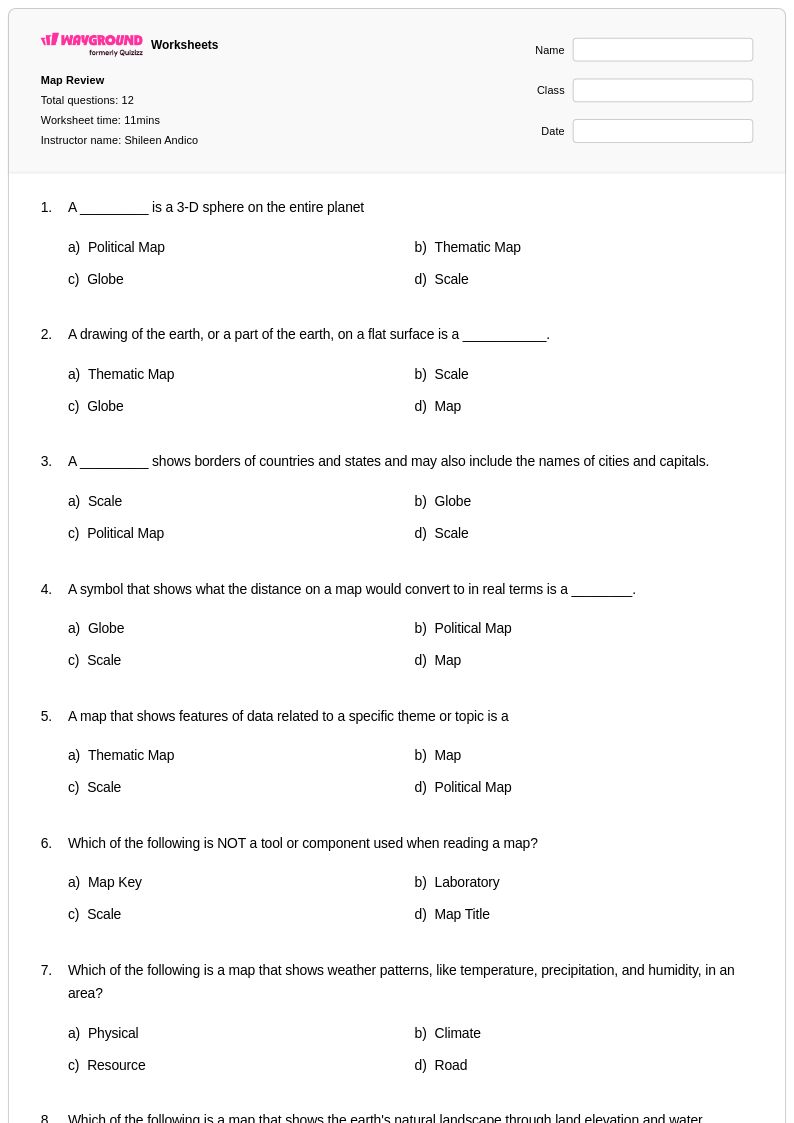
Map elements worksheets for Grade 5 students available through Wayground (formerly Quizizz) provide comprehensive practice with the fundamental components that make maps effective communication tools. These educational resources focus on developing students' understanding of essential cartographic features including legends, compass roses, scale bars, grids, and various symbols used to represent geographic information. The worksheets strengthen critical geographic literacy skills by teaching students how to interpret and utilize these map components to extract meaningful information about locations, distances, directions, and spatial relationships. Each printable resource includes structured practice problems that guide students through identifying different map elements and understanding their specific functions, with answer keys provided to support independent learning and teacher assessment.
Wayground (formerly Quizizz) supports educators with an extensive collection of teacher-created map elements worksheets that can be easily accessed through robust search and filtering capabilities. The platform's millions of educational resources allow teachers to find materials that align with specific curriculum standards and accommodate diverse learning needs through built-in differentiation tools. These customizable worksheets are available in both printable pdf formats and interactive digital versions, enabling flexible implementation for classroom instruction, homework assignments, or assessment purposes. Teachers can efficiently plan geographic skills lessons, provide targeted remediation for struggling learners, offer enrichment opportunities for advanced students, and create consistent practice experiences that build students' confidence in reading and interpreting maps across various social studies contexts.
FAQs
How do I teach map elements to students who have never read a map before?
Start by introducing one element at a time, beginning with the title and compass rose before moving to legends, scales, and grids. Anchor each element to a real-world purpose — for example, explain that a legend is like a key that unlocks the meaning of every symbol on the map. Once students understand each component individually, use a single reference map that contains all elements and have them identify each one in context. Building this layered familiarity before asking students to apply skills like calculating distance or locating coordinates significantly reduces confusion.
What exercises help students practice reading map scales and calculating distances?
Effective practice starts with having students measure the distance between two labeled points using a ruler, then convert that measurement using the given scale ratio or bar scale. Gradually increase complexity by asking students to calculate multi-segment routes or estimate real-world distances across different map types. Map elements worksheets that include structured practice problems with answer keys allow students to self-check their work and identify where their calculations go wrong, which reinforces the procedural steps rather than just the final answer.
What mistakes do students commonly make when interpreting map legends?
One of the most common errors is assuming that symbols are universal — students often apply meanings from one map's legend to a different map without checking. Another frequent mistake is ignoring the legend entirely and guessing at symbol meanings based on appearance, which leads to systematic misreadings. Students also struggle to distinguish between area symbols (like shading used to show land use) and point symbols (like icons marking cities), treating them as interchangeable. Targeted practice with varied legend formats helps students develop the habit of consulting the legend first before interpreting any map feature.
How can I differentiate map elements instruction for students at different skill levels?
For students who are still building foundational skills, reduce the number of map elements introduced at once and provide maps with simpler layouts and fewer symbols. More advanced students can work with maps that include coordinate grids, multiple projection types, and complex legends requiring multi-step interpretation. On Wayground, teachers can apply accommodations such as reduced answer choices to lower cognitive load for individual students, or enable Read Aloud so that questions and content are read to students who need additional support, all without disrupting the rest of the class.
How do I use Wayground's map elements worksheets in my classroom?
Wayground's map elements worksheets are available as printable PDFs for traditional classroom use and in digital formats for technology-integrated environments, giving teachers flexibility depending on their setup. Teachers can also host worksheets directly as a quiz on Wayground, which allows for real-time student interaction and progress tracking. Each worksheet includes a complete answer key, making them practical for independent practice, guided instruction, or remediation sessions without additional prep work.
How do I use a compass rose to teach cardinal and intermediate directions?
Begin with the four cardinal directions — north, south, east, and west — before introducing the four intermediate directions (northeast, northwest, southeast, southwest). Use a physical or projected compass rose and have students practice giving directions between labeled points on a simple map. A common anchor phrase like 'Never Eat Soggy Waffles' helps students recall clockwise cardinal order, but pairing it with actual navigation tasks on a map reinforces the concept spatially rather than just mnemonically. Once cardinal directions are secure, intermediate directions can be introduced as combinations of the two adjacent cardinals.