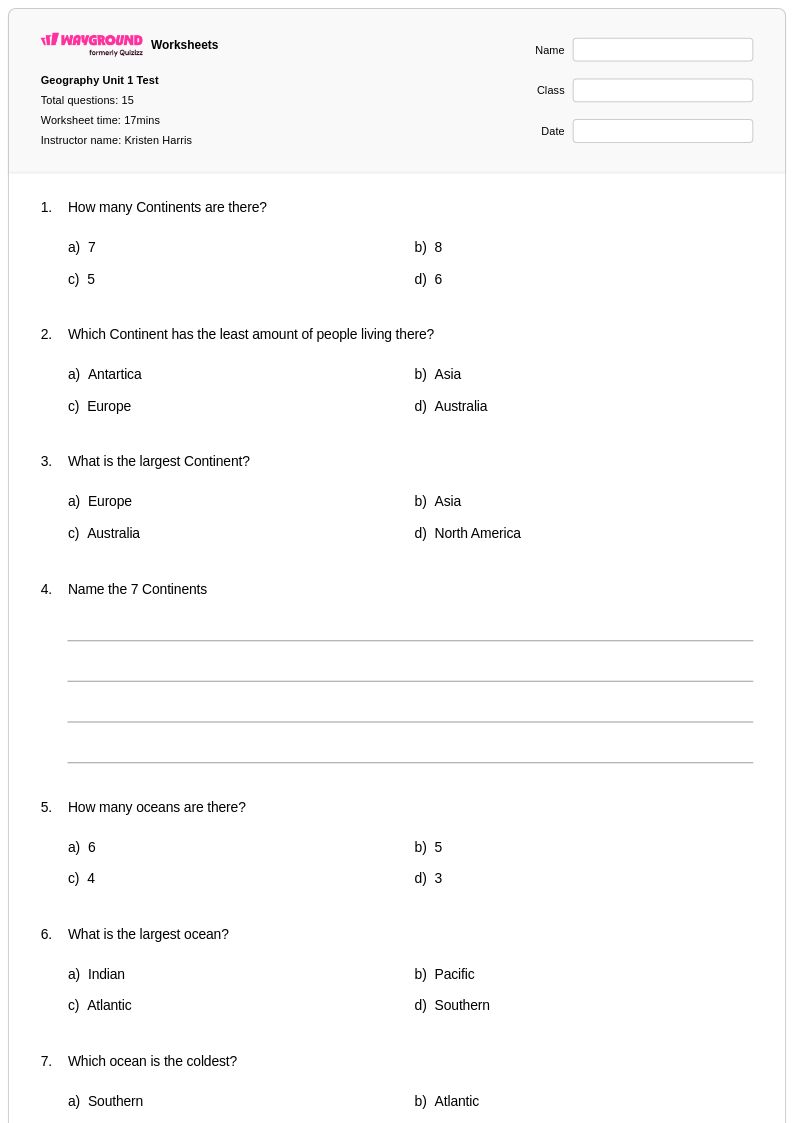
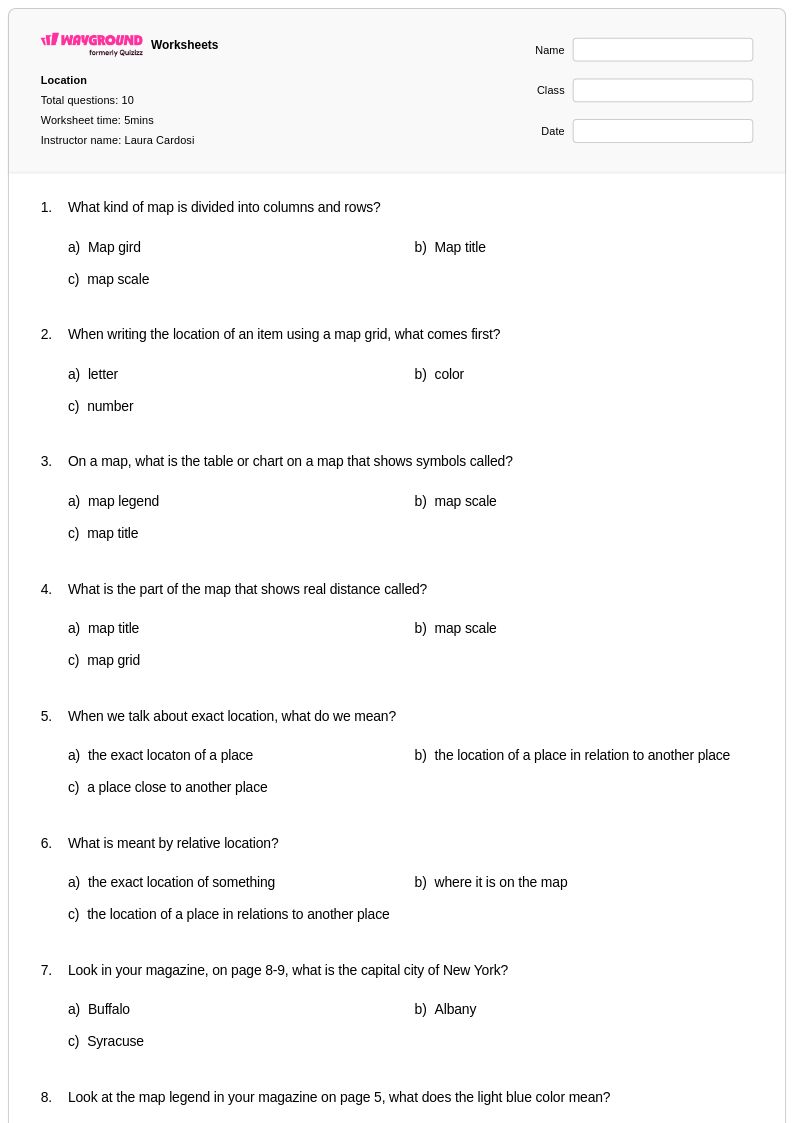
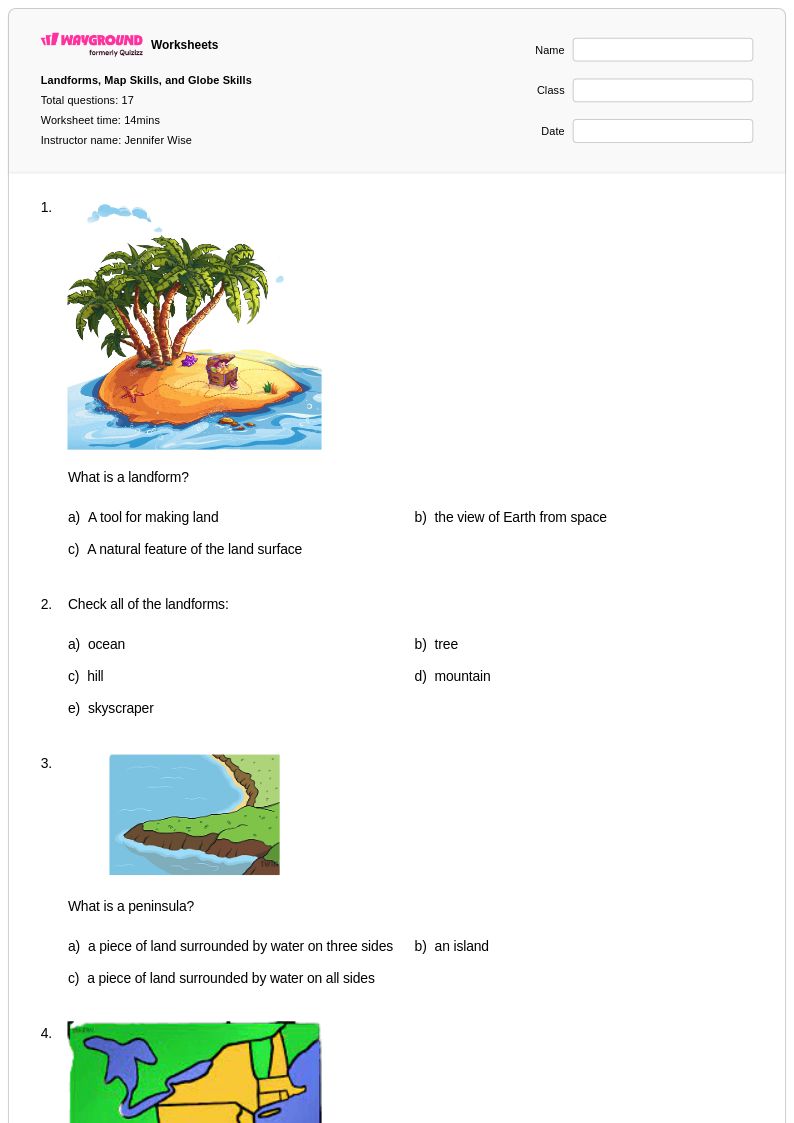
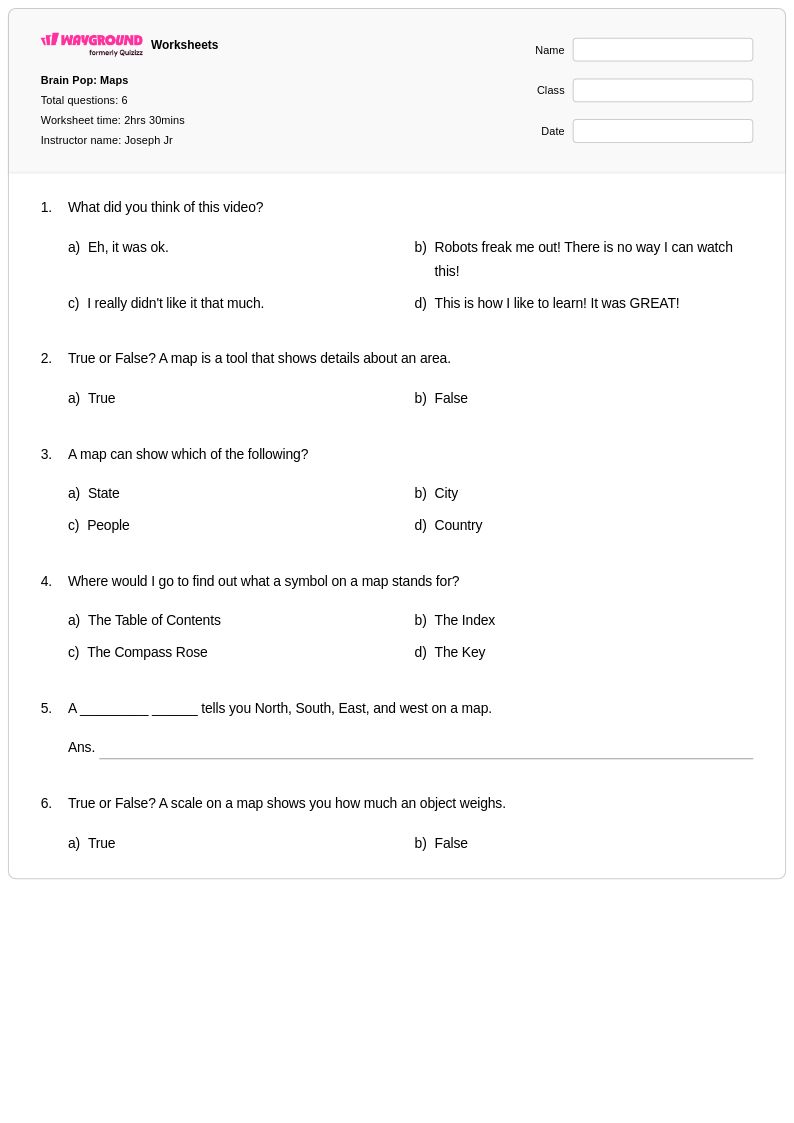
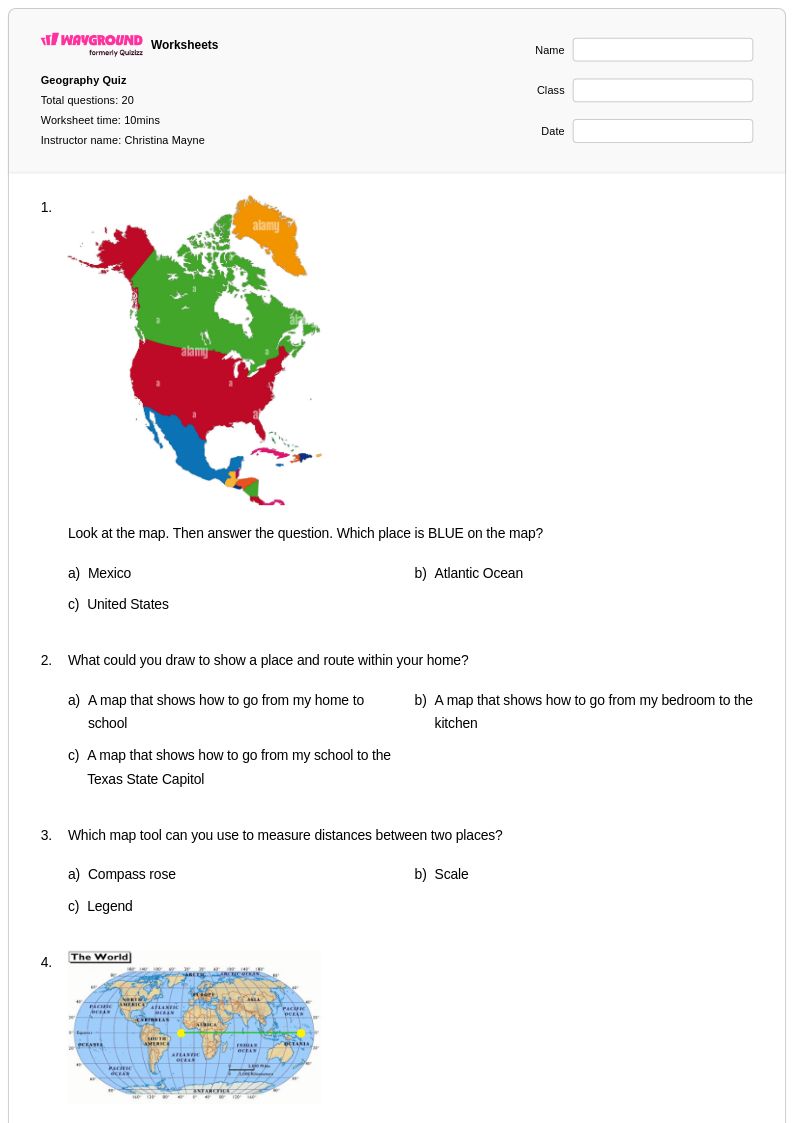
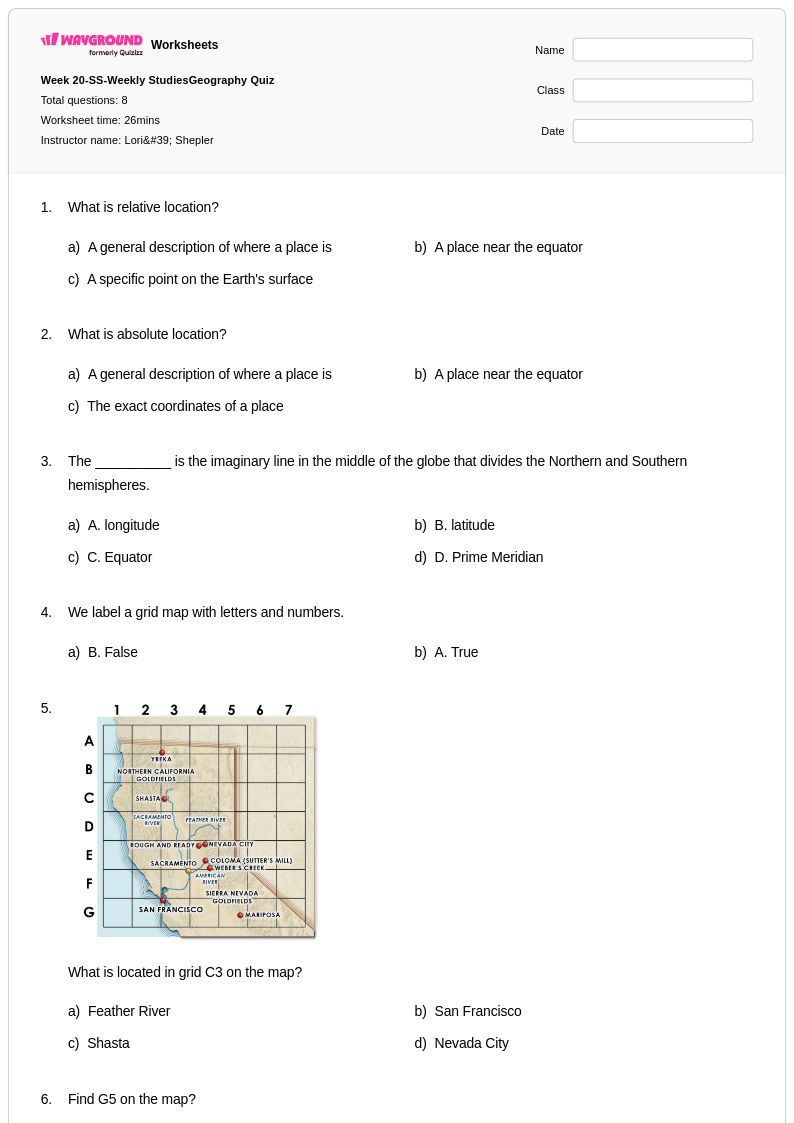
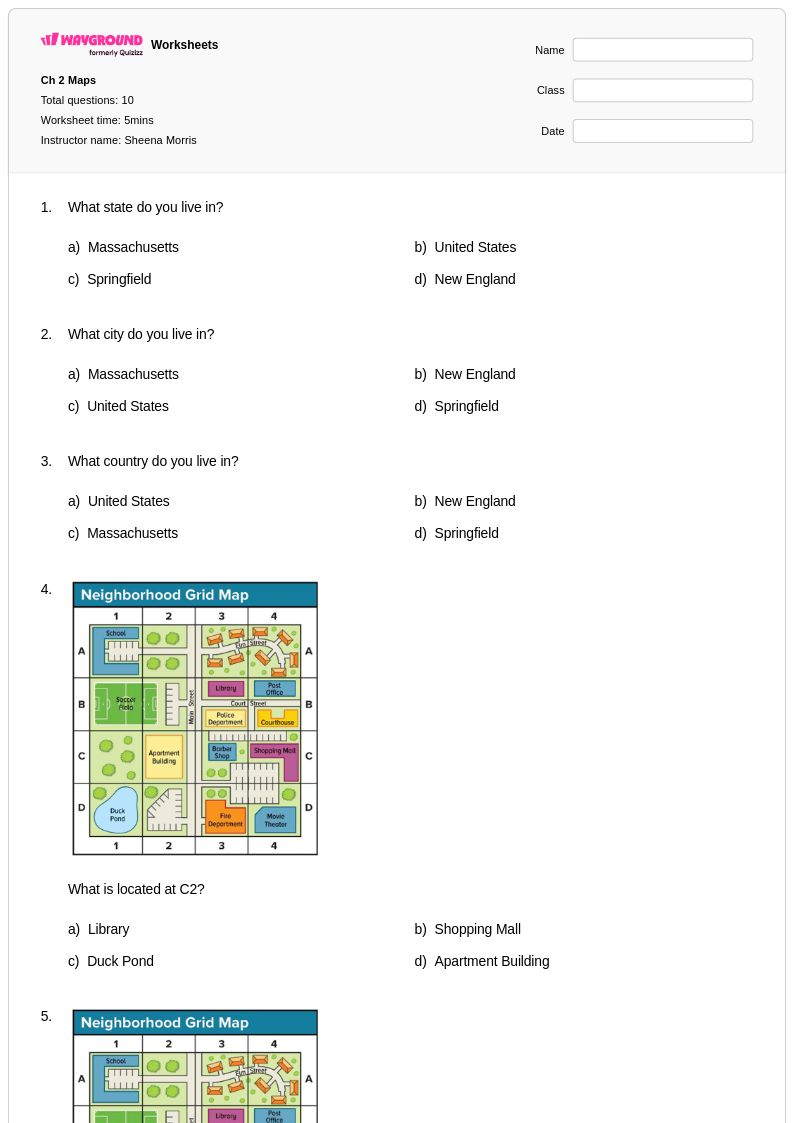
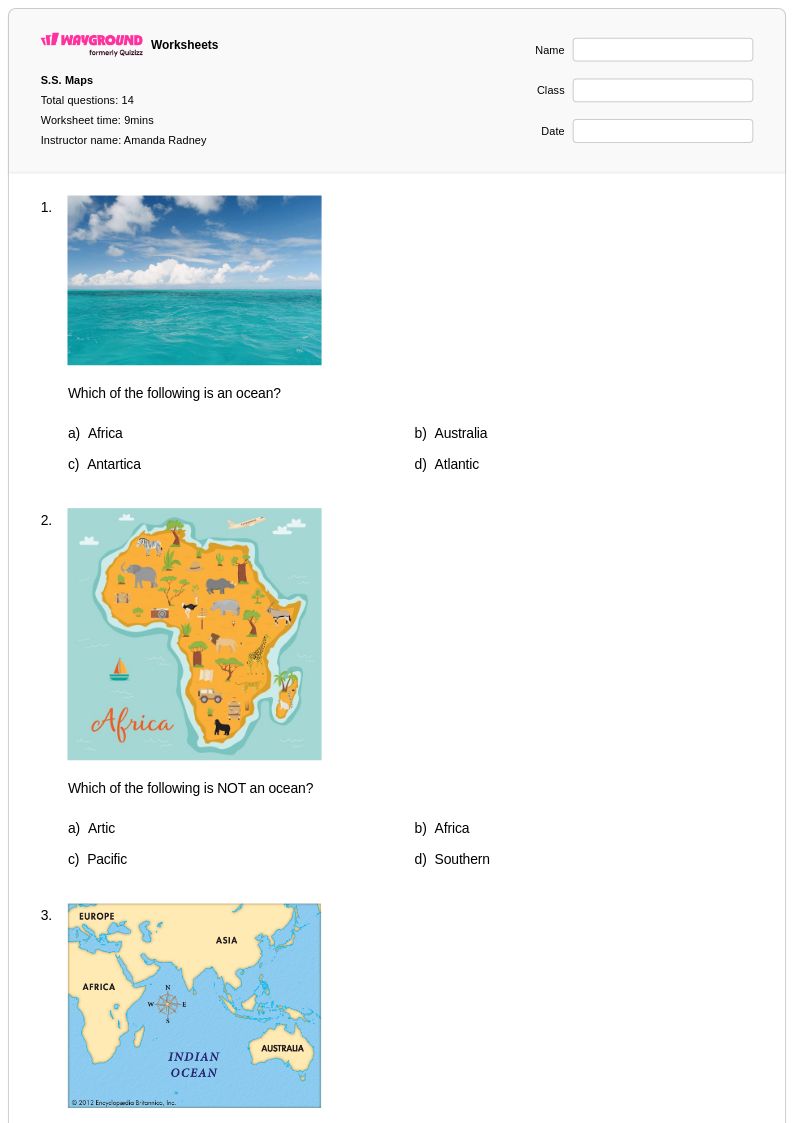
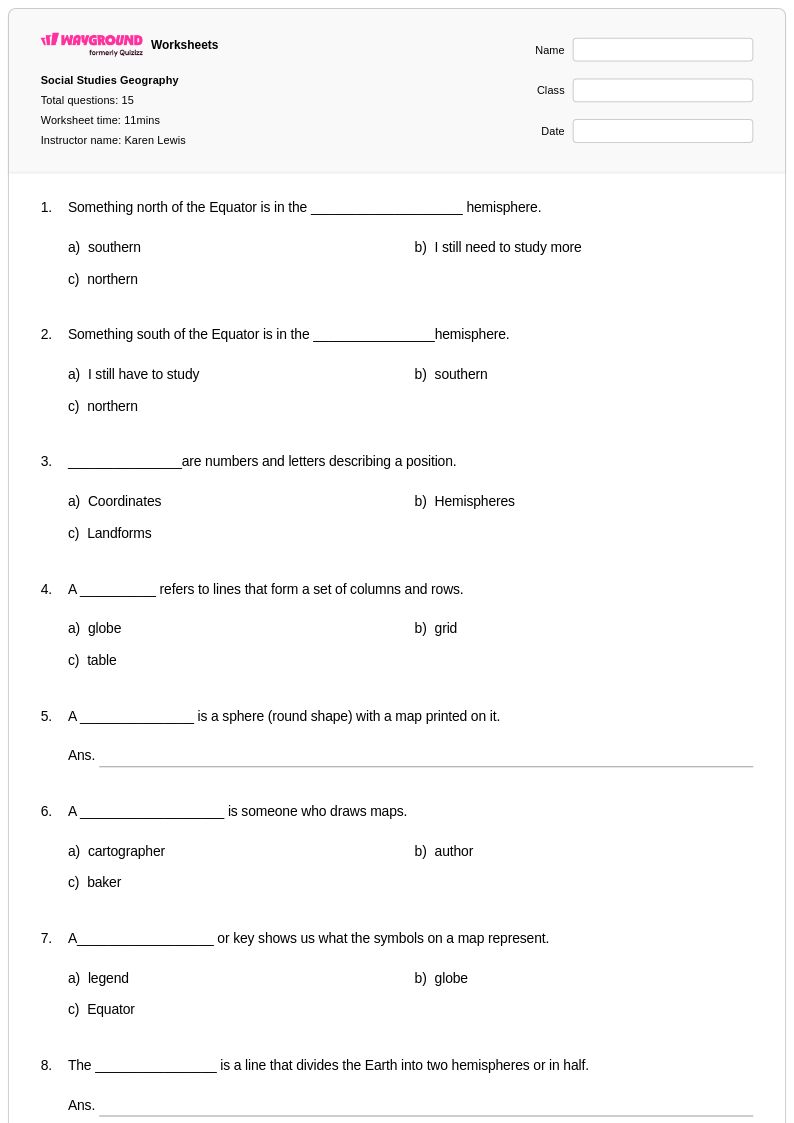
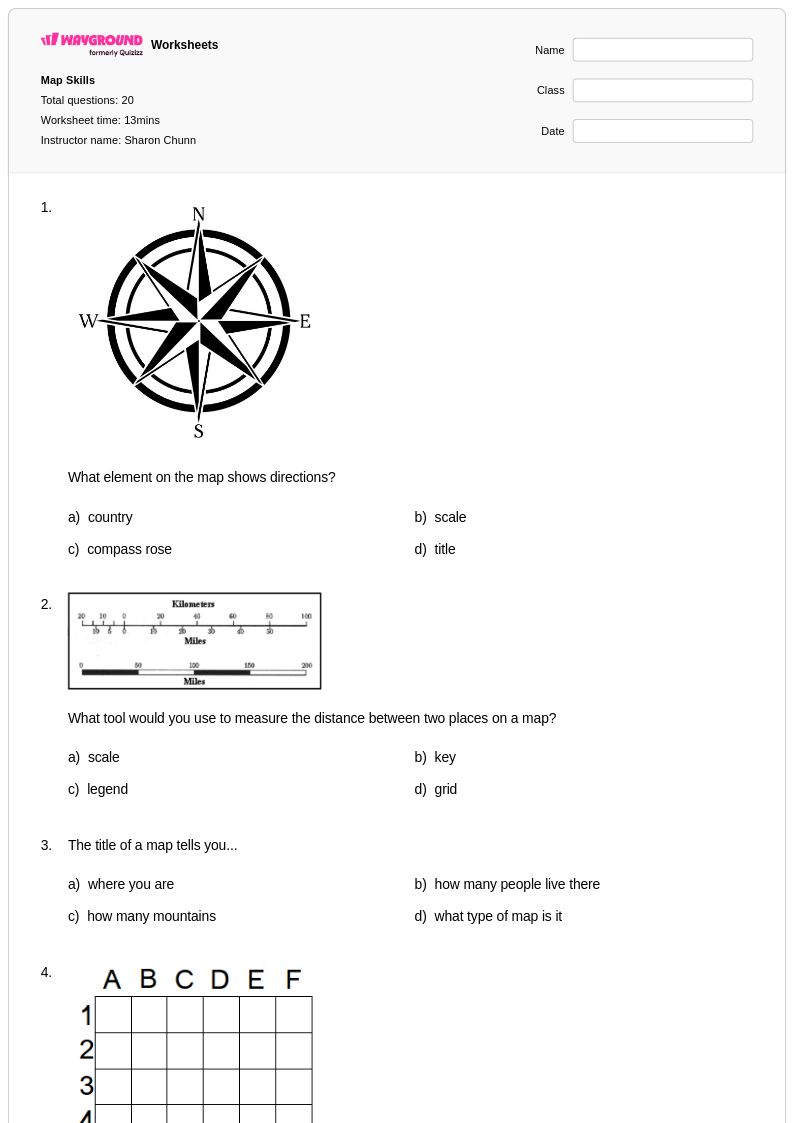
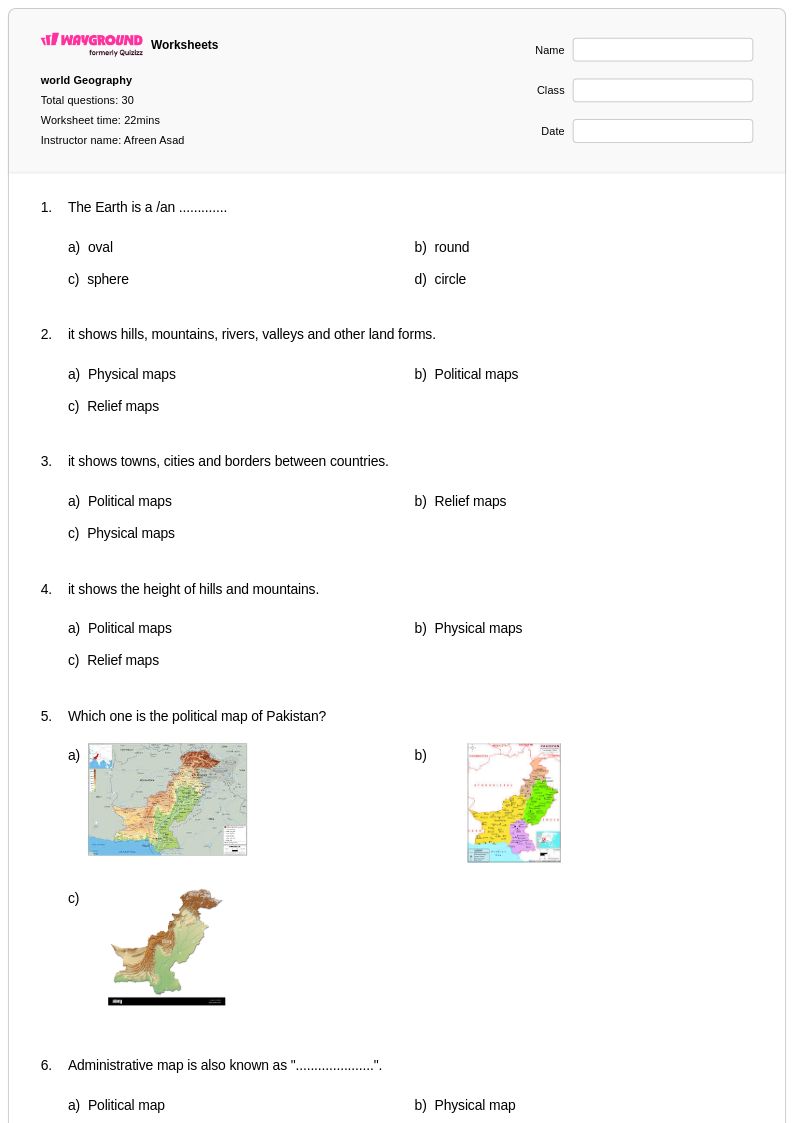
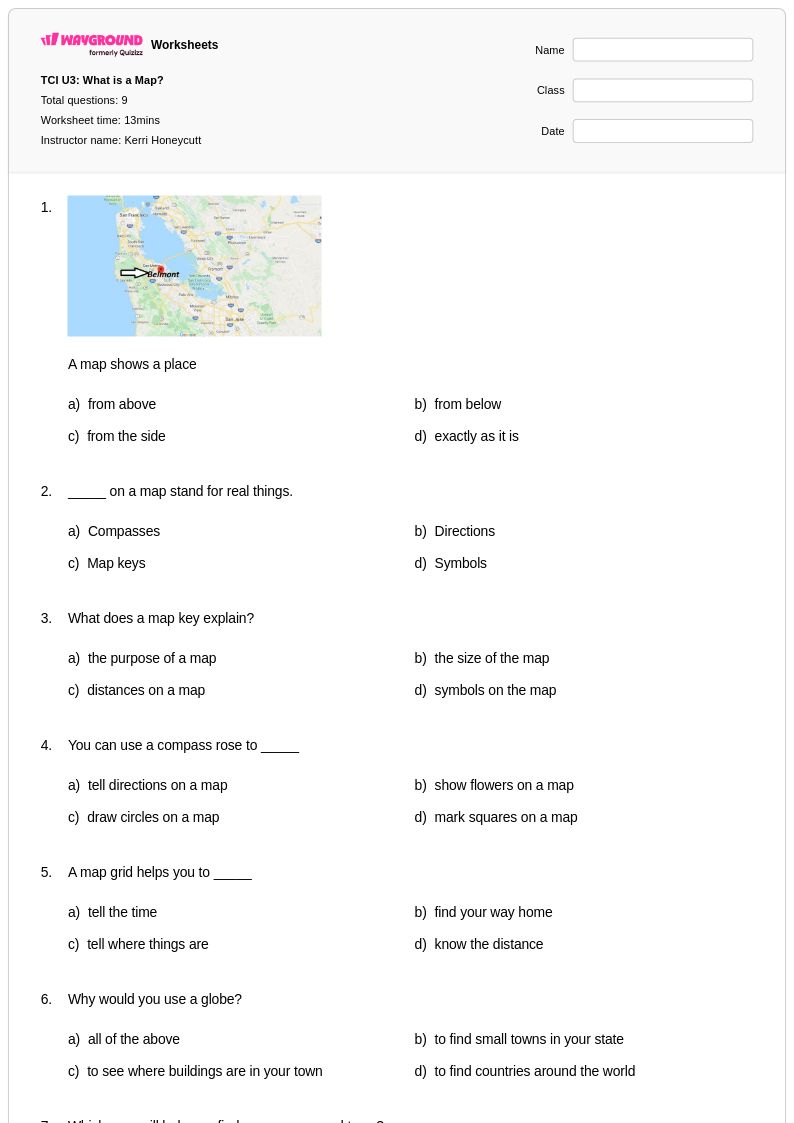
Enhance Grade 2 students' geography skills with our free map grid worksheets and printables, featuring practice problems and answer keys to help young learners master coordinate systems and spatial reasoning.
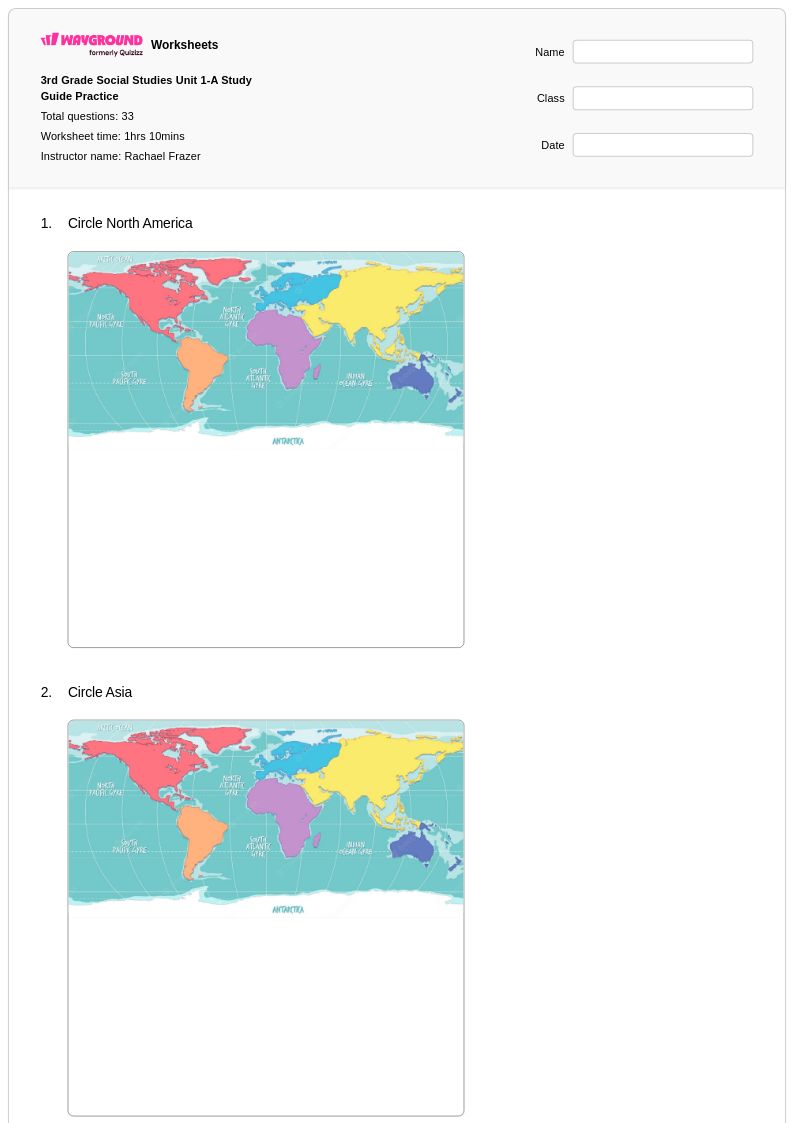
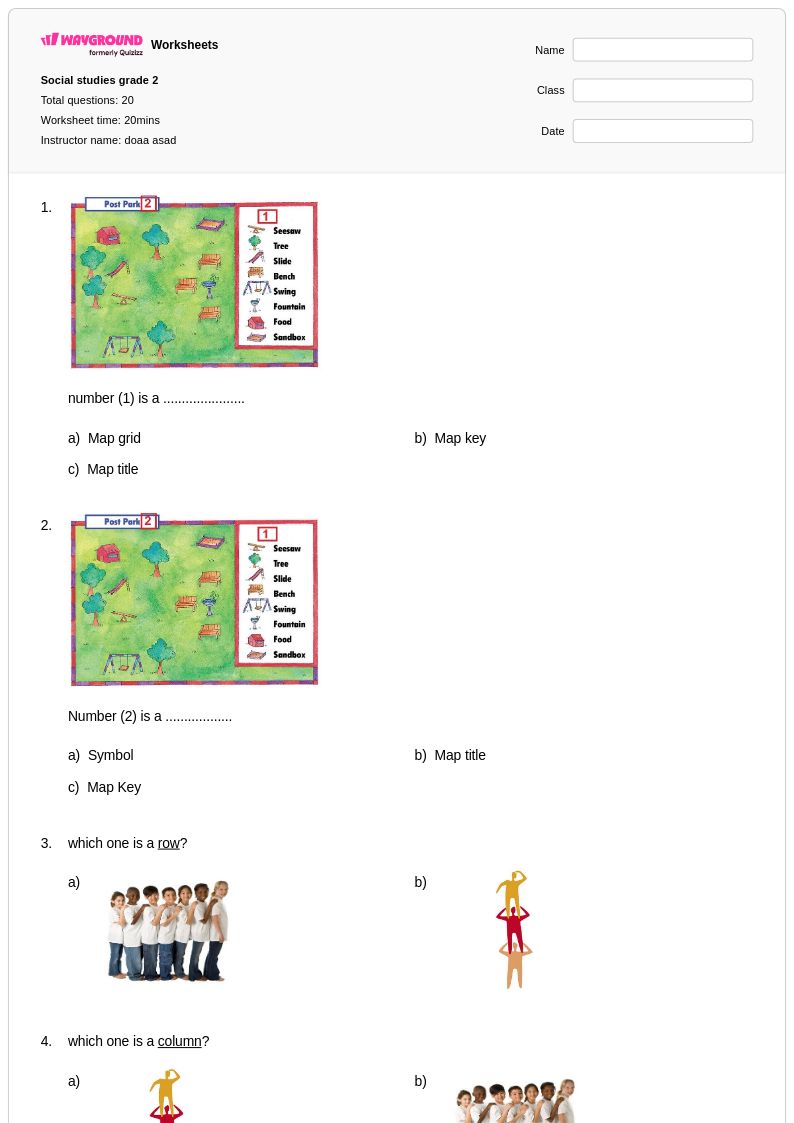
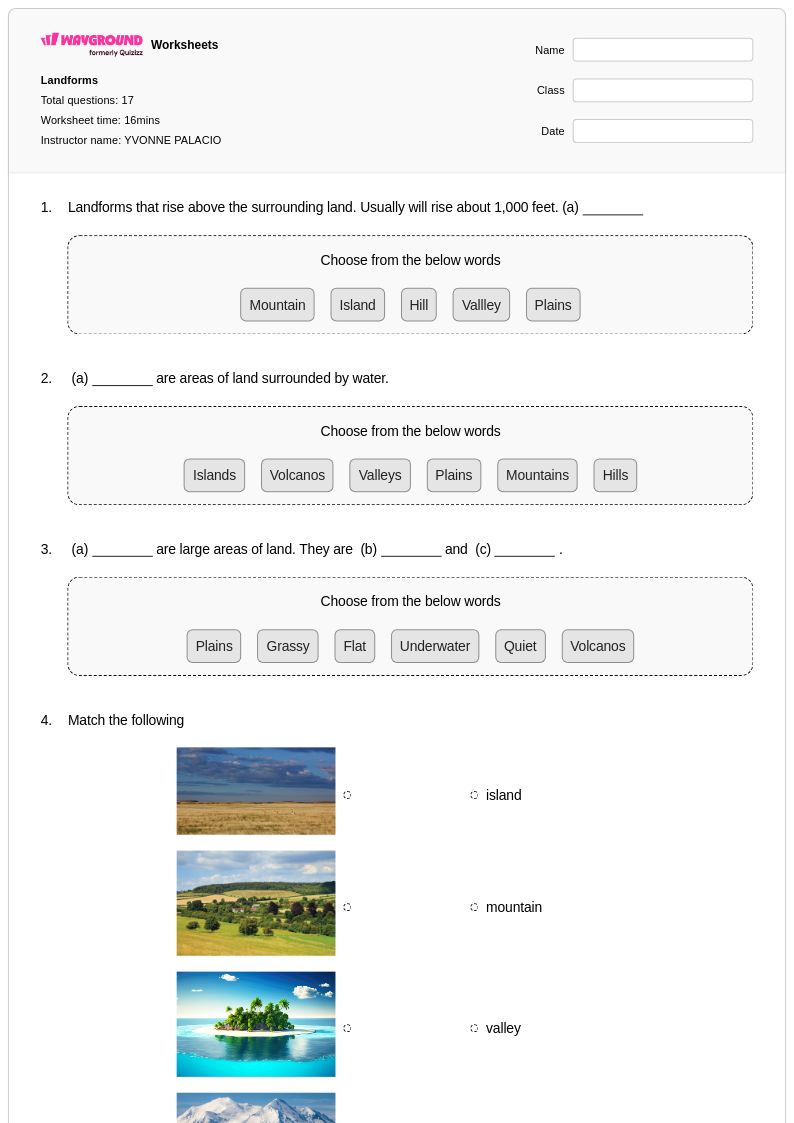
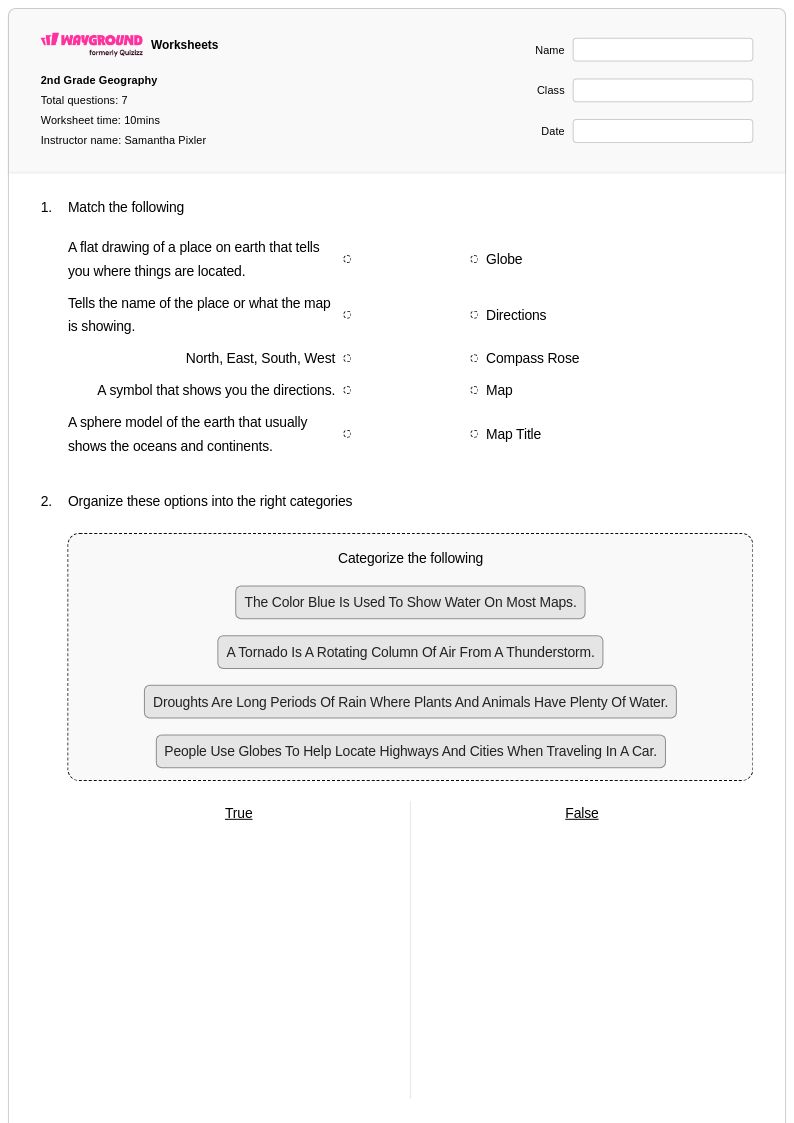
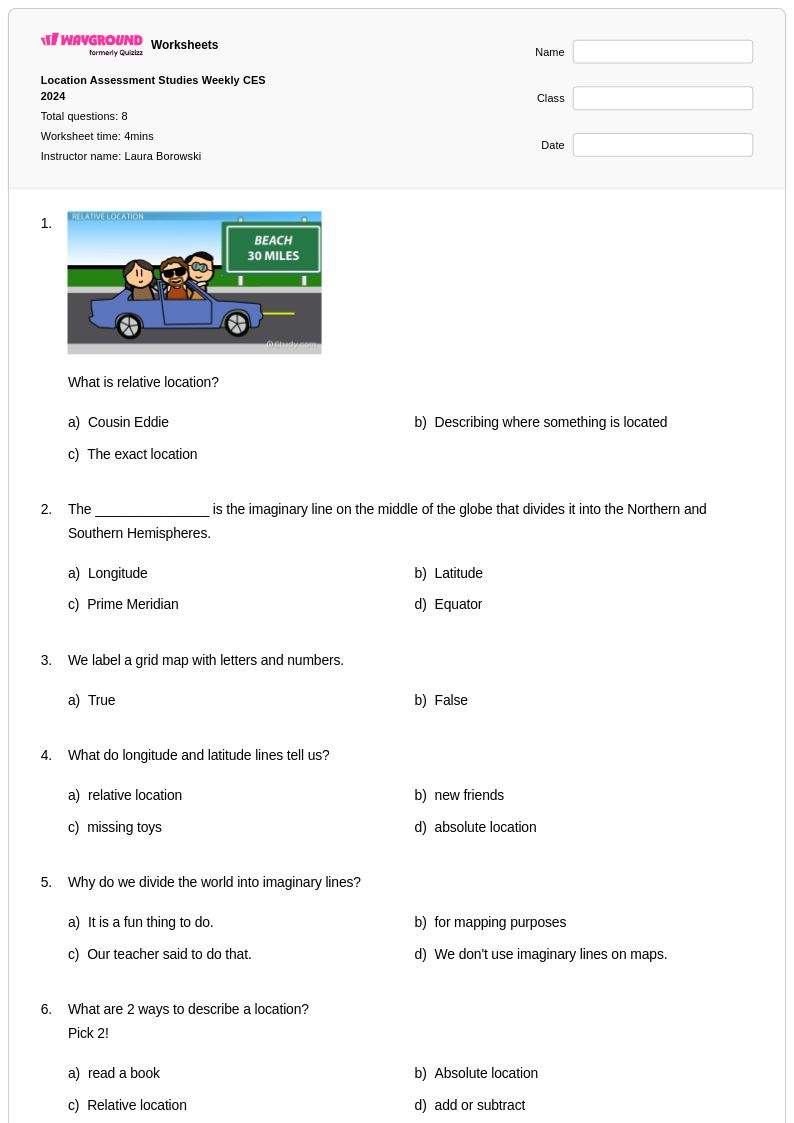
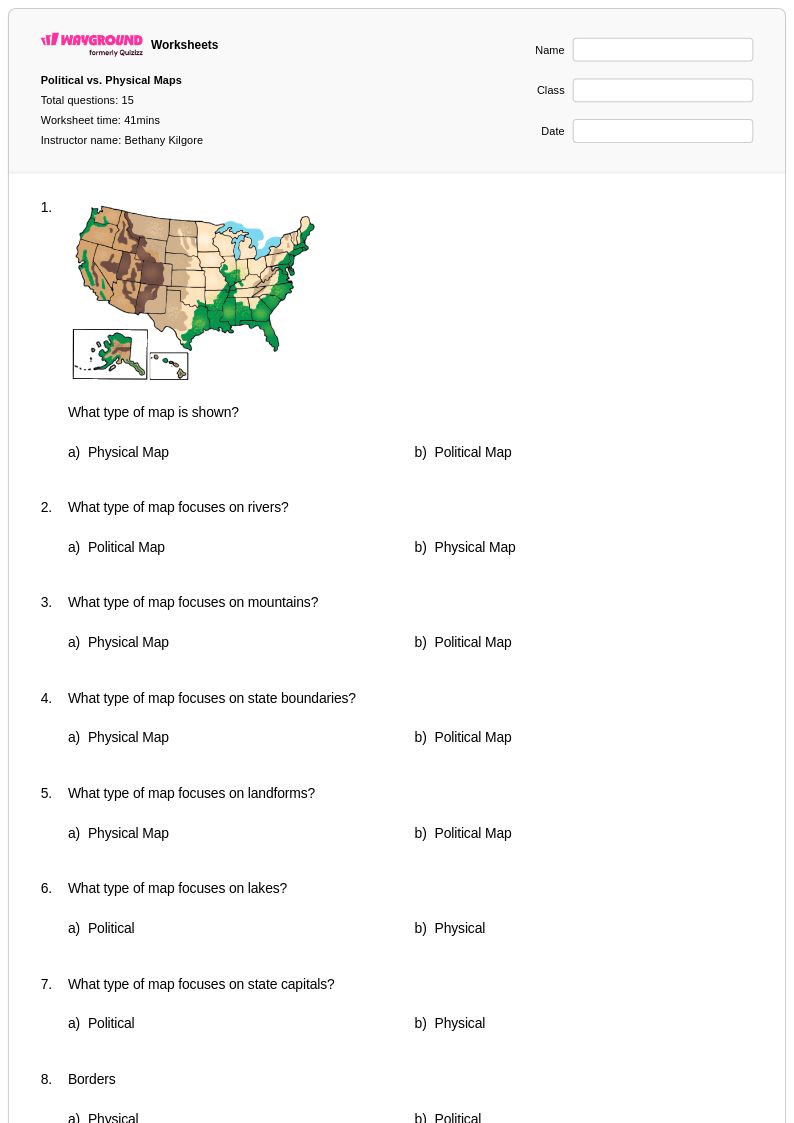
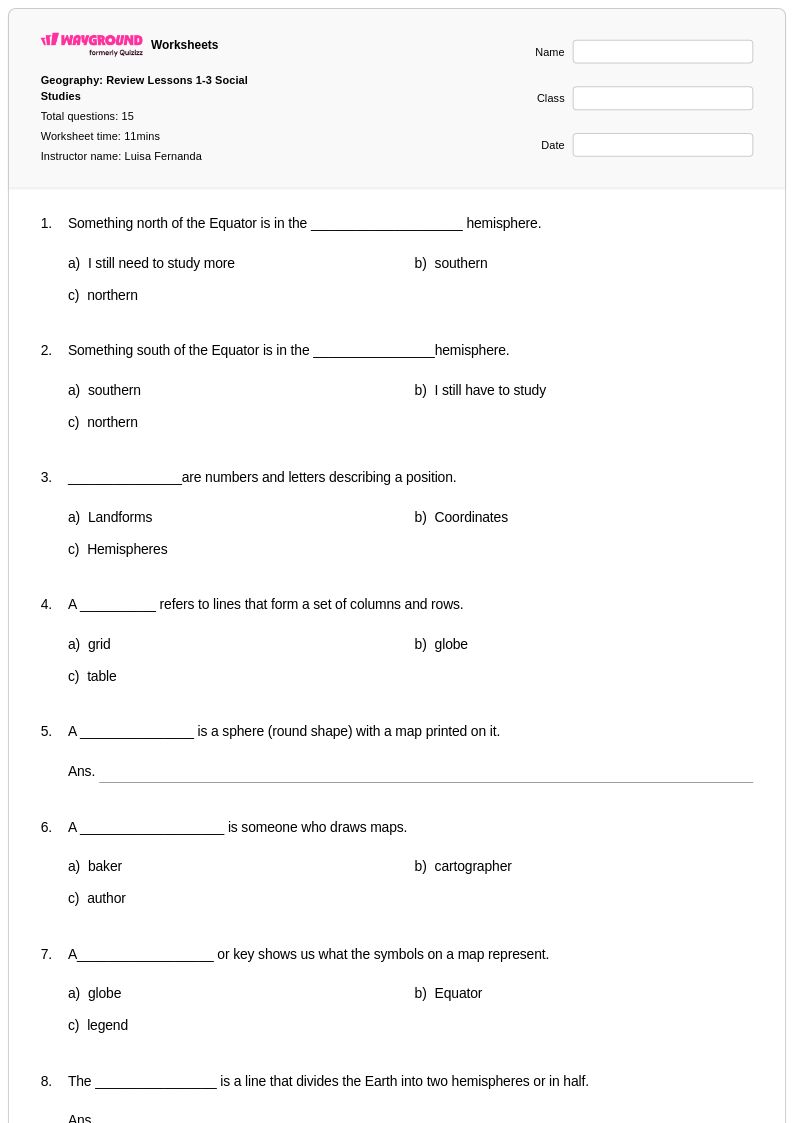
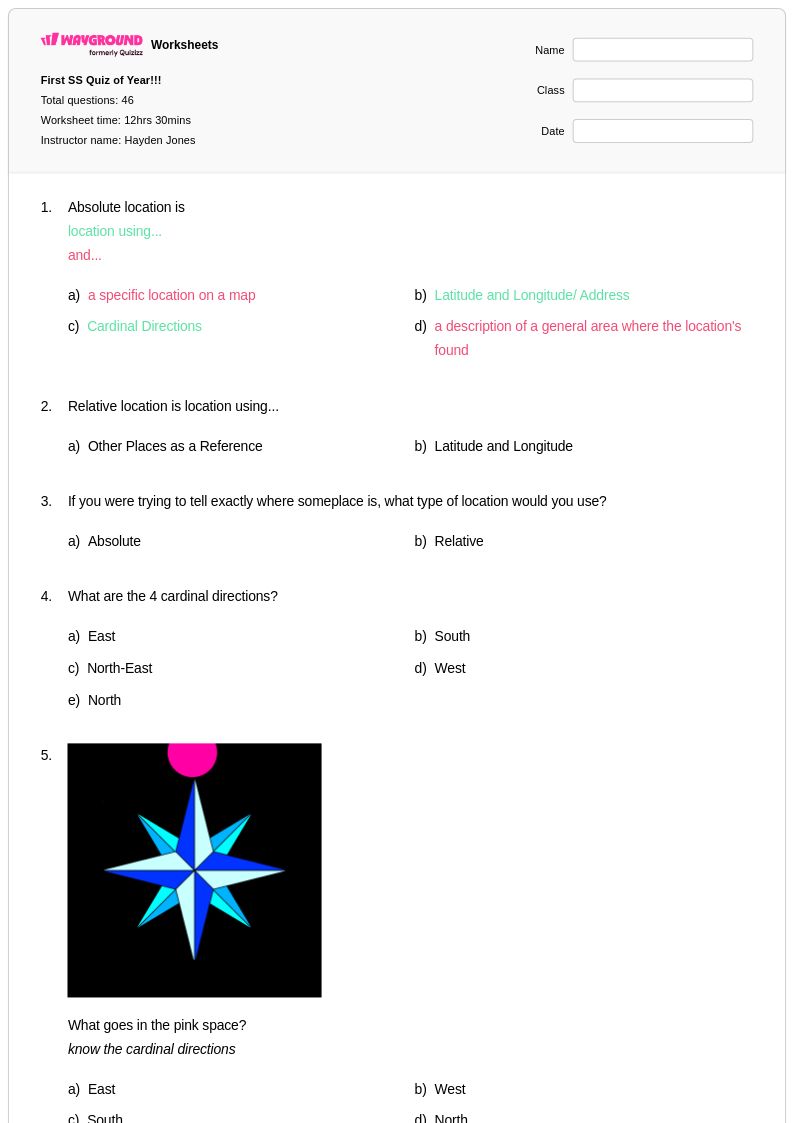
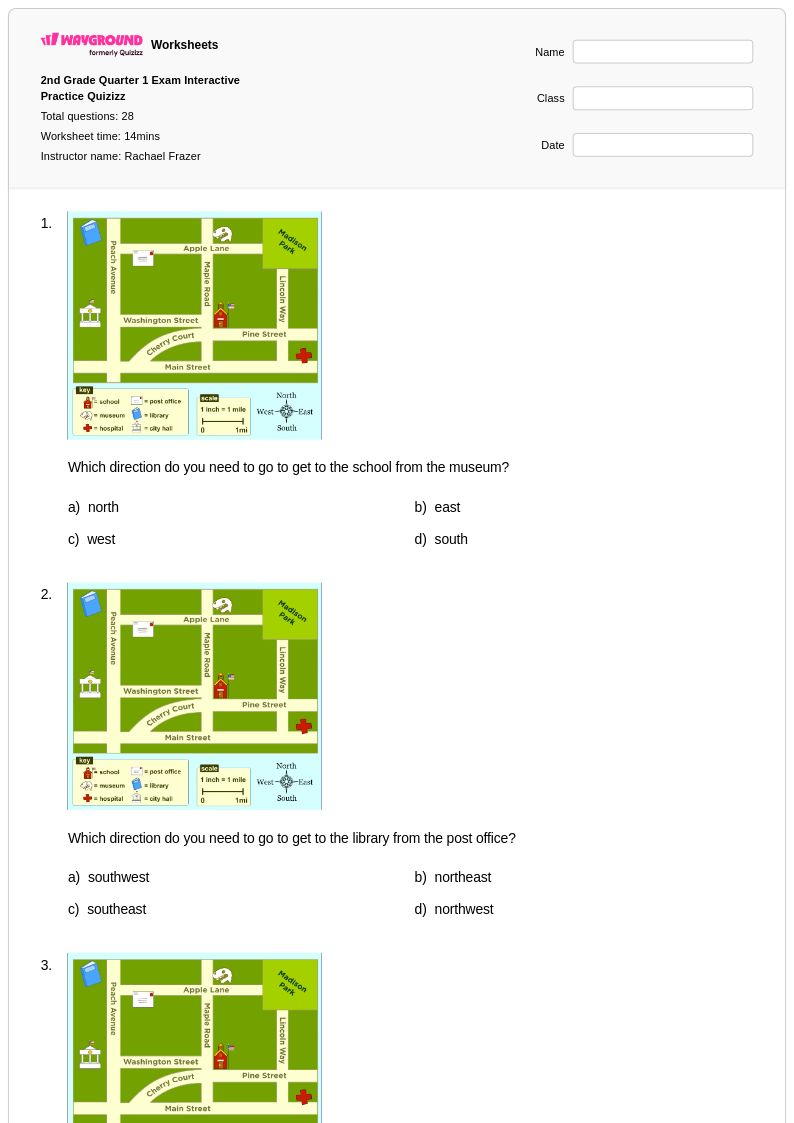
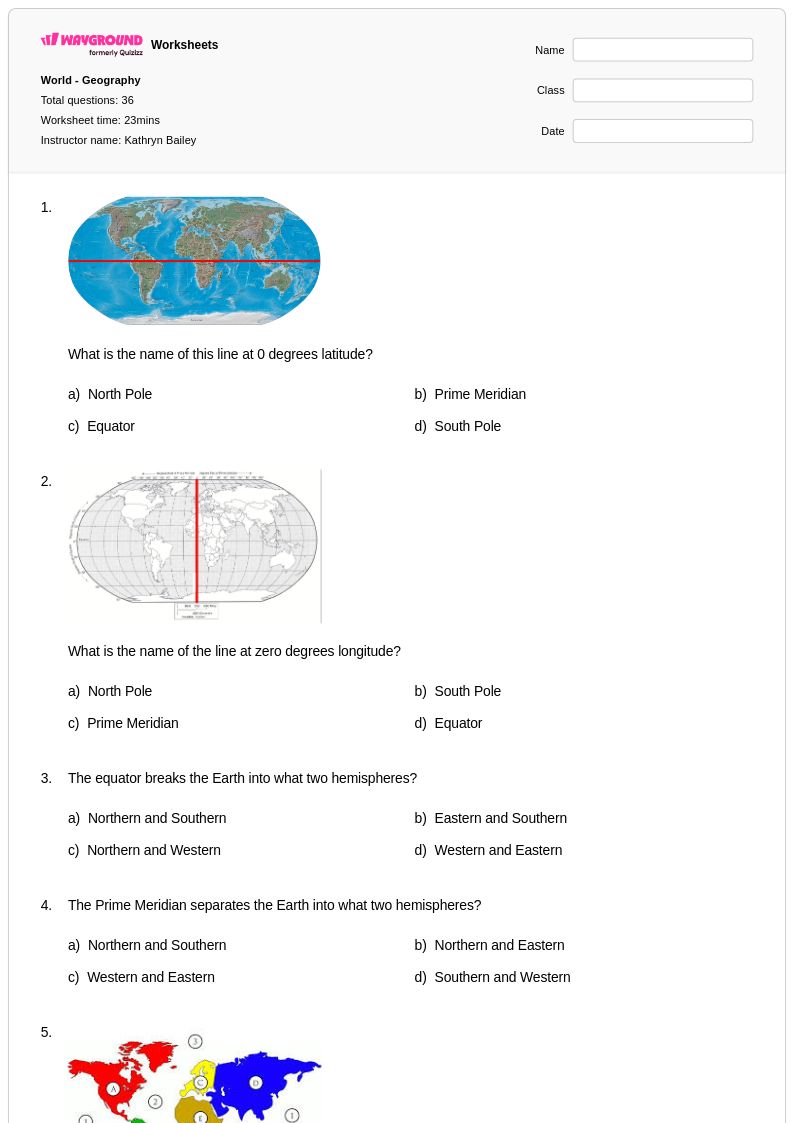
Map grid worksheets for Grade 2 students through Wayground (formerly Quizizz) provide essential foundation-building exercises that teach young learners how to navigate and interpret coordinate systems on maps. These carefully designed printables focus on developing spatial reasoning skills by introducing students to the concept of using letters and numbers to locate specific places on a grid system. The worksheets feature age-appropriate activities that guide second graders through identifying grid squares, finding coordinates, and understanding how map grids organize geographic information in a systematic way. Each worksheet comes with a comprehensive answer key to support both independent practice and guided instruction, while the free pdf format ensures easy access for classroom use and homework assignments. Through these practice problems, students build the foundational mapping skills necessary for more advanced geographic concepts while strengthening their ability to follow directions and think spatially about their world.
Wayground (formerly Quizizz) empowers educators with access to millions of teacher-created map grid resources specifically designed for Grade 2 instruction, featuring robust search and filtering capabilities that allow teachers to quickly locate materials aligned with their curriculum standards and learning objectives. The platform's differentiation tools enable instructors to customize worksheets based on individual student needs, whether providing additional support for struggling learners or offering enrichment opportunities for advanced students ready for more complex grid navigation challenges. Teachers can seamlessly integrate these resources into their lesson planning workflow, utilizing both printable pdf versions for traditional paper-based activities and digital formats for interactive classroom experiences. This comprehensive collection supports varied instructional approaches including whole-group instruction, small group remediation, independent skill practice, and formative assessment, giving educators the flexibility to address diverse learning styles while ensuring all students master essential map grid concepts fundamental to geographic literacy.
FAQs
How do I teach map grid coordinates to students who have never used a grid before?
Start by introducing the concept of alphanumeric grid references using a simple, familiar context such as a classroom seating chart or a basic town map before moving to geographic maps. Teach students the convention of reading across (columns) before reading up (rows) using the phrase 'go along the corridor, then up the stairs.' Once students can locate grid squares reliably, introduce coordinate pairs and progress toward latitude and longitude. Scaffolding from concrete to abstract is essential for building lasting spatial reasoning skills.
What practice exercises help students get better at reading map grids?
Effective practice moves from basic grid identification to multi-step tasks such as plotting coordinates, measuring distances between grid references, and analyzing geographic patterns within mapped regions. Worksheets that vary the context, such as city maps, physical geography maps, and thematic maps, help students generalize the skill rather than memorizing a single format. Progressing through problems of increasing complexity builds both accuracy and confidence in spatial reasoning.
What mistakes do students commonly make when using map grid coordinates?
The most frequent error is reversing the order of coordinates, reading the y-axis value before the x-axis value instead of following the standard horizontal-then-vertical convention. Students also commonly place a point on the grid line itself rather than within the correct grid square, especially at early stages. A third common misconception is confusing alphanumeric grid references with true coordinate pairs, which becomes problematic when students transition to latitude and longitude. Targeted practice that explicitly addresses each of these errors helps prevent them from becoming entrenched habits.
How do I use map grid worksheets in my classroom?
Map grid worksheets on Wayground are available as printable PDFs for traditional classroom use and in digital formats for technology-integrated learning environments, making them suitable for in-class work, homework, and remote learning. Teachers can also host worksheets as a quiz directly on Wayground, allowing for interactive digital practice with automatic grading. Each worksheet includes a comprehensive answer key, supporting both independent student practice and teacher-led instruction. Wayground's accommodation settings allow teachers to enable features such as extended time or read-aloud support for individual students without disrupting the experience for the rest of the class.
How do map grid skills connect to broader geography and STEM learning?
Map grid literacy forms the foundation of geographic literacy, underpinning students' ability to interpret maps, understand latitude and longitude, and engage with geographic information systems (GIS) later in their education. Spatial reasoning developed through grid practice also supports STEM skills including data visualization, coordinate geometry in mathematics, and navigation concepts in science and engineering contexts. Building fluency with grid systems early gives students the tools to approach complex geographic and analytical tasks with confidence.
How can I differentiate map grid instruction for students at different skill levels?
For struggling learners, begin with large, clearly labeled grids using alphanumeric references and limit the number of answer choices to reduce cognitive load. For on-level students, introduce coordinate pairs and tasks that require plotting and distance calculation. Advanced learners can be challenged with multi-step problems that involve analyzing geographic patterns or working with real-world latitude and longitude data. On Wayground, teachers can apply accommodations such as reduced answer choices or extended time to individual students, allowing a single worksheet to serve an entire mixed-ability class without requiring separate materials.