Explore Wayground's free kindergarten matter worksheets and printables that help young learners discover the properties of solids, liquids, and gases through engaging practice problems with complete answer keys.
Explore printable Matter worksheets for Kindergarten
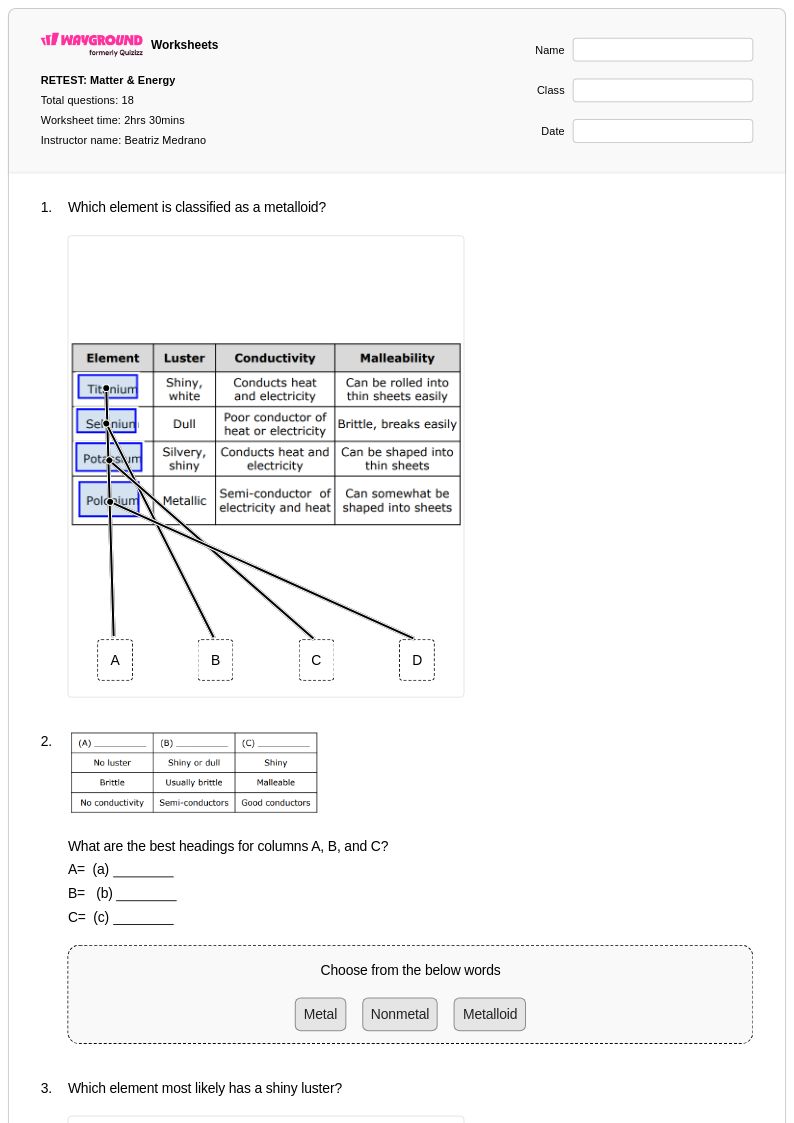
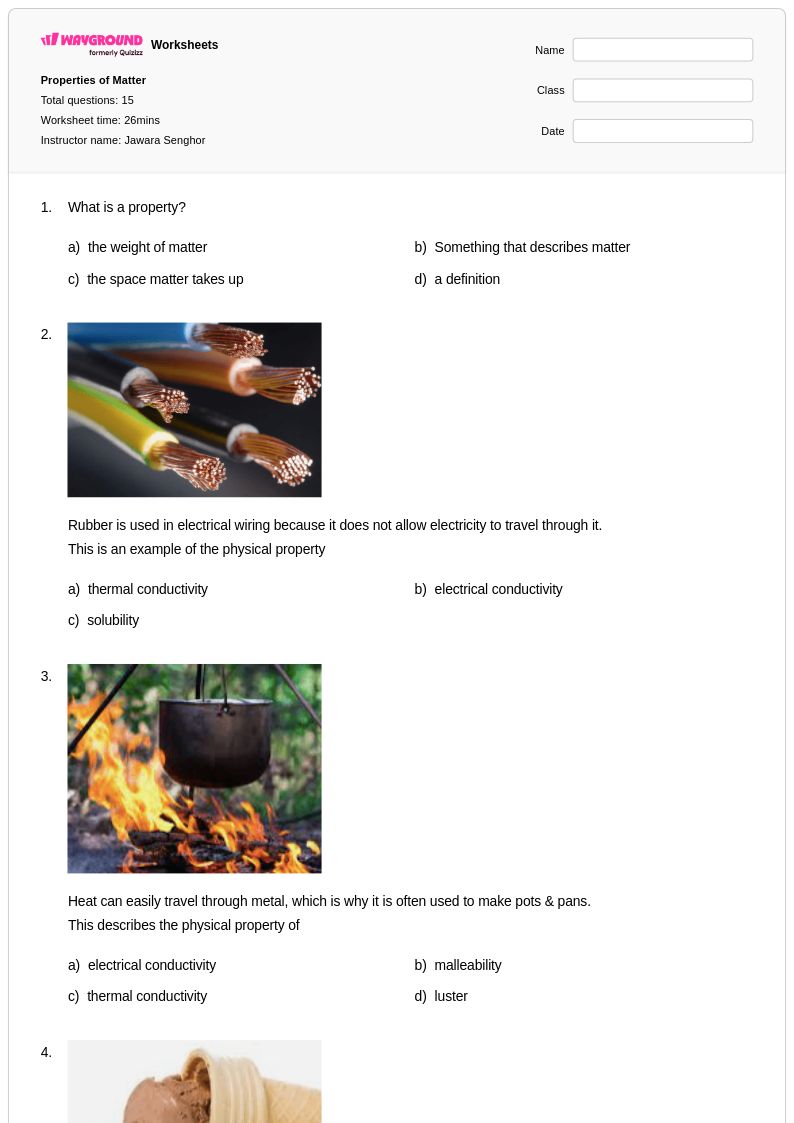
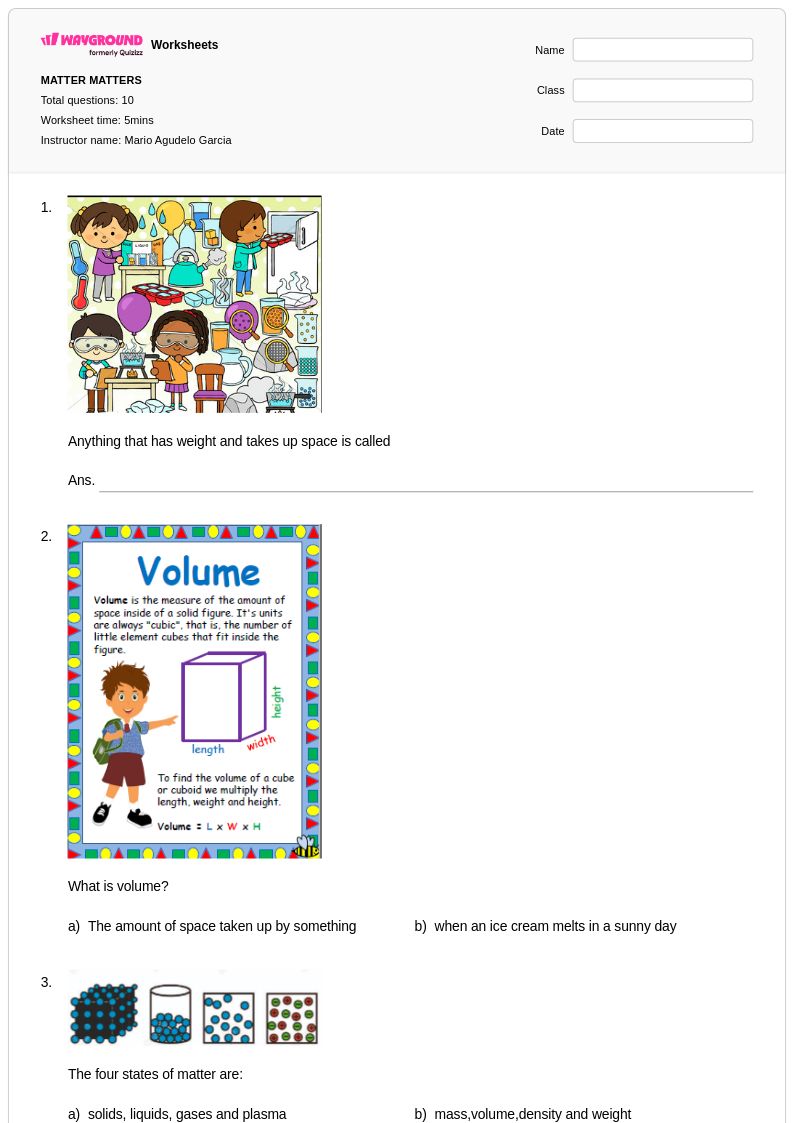
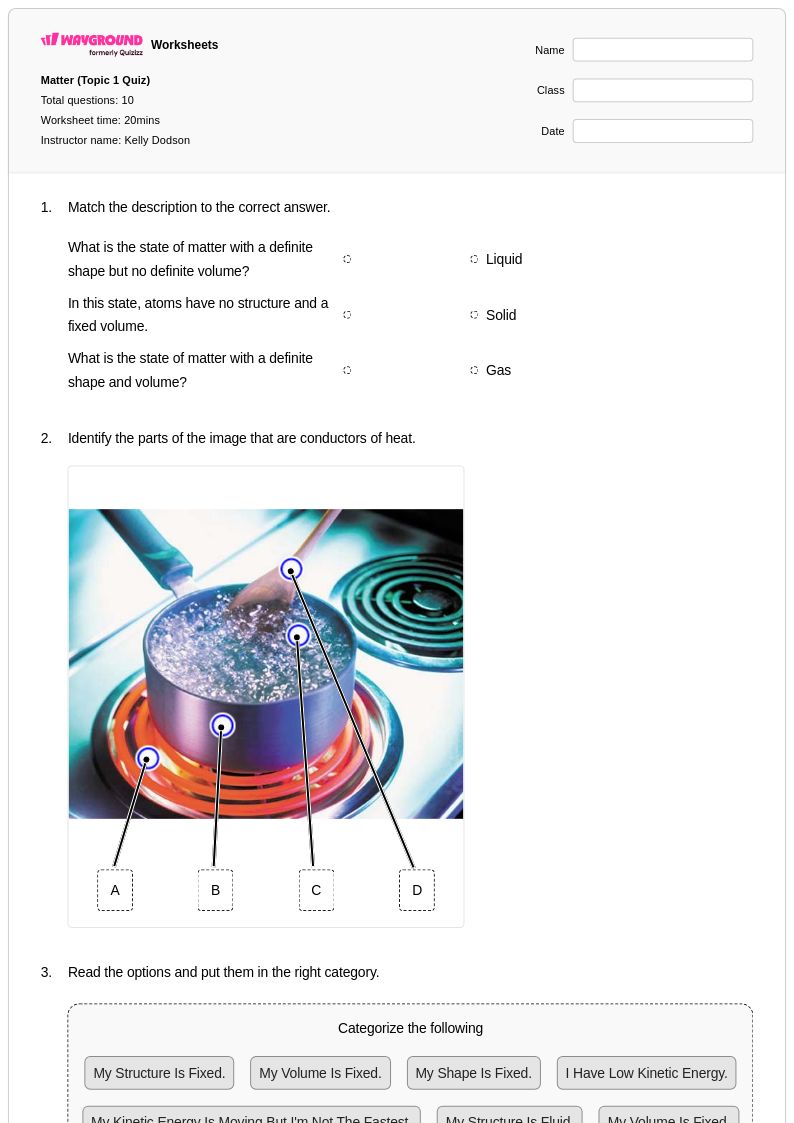
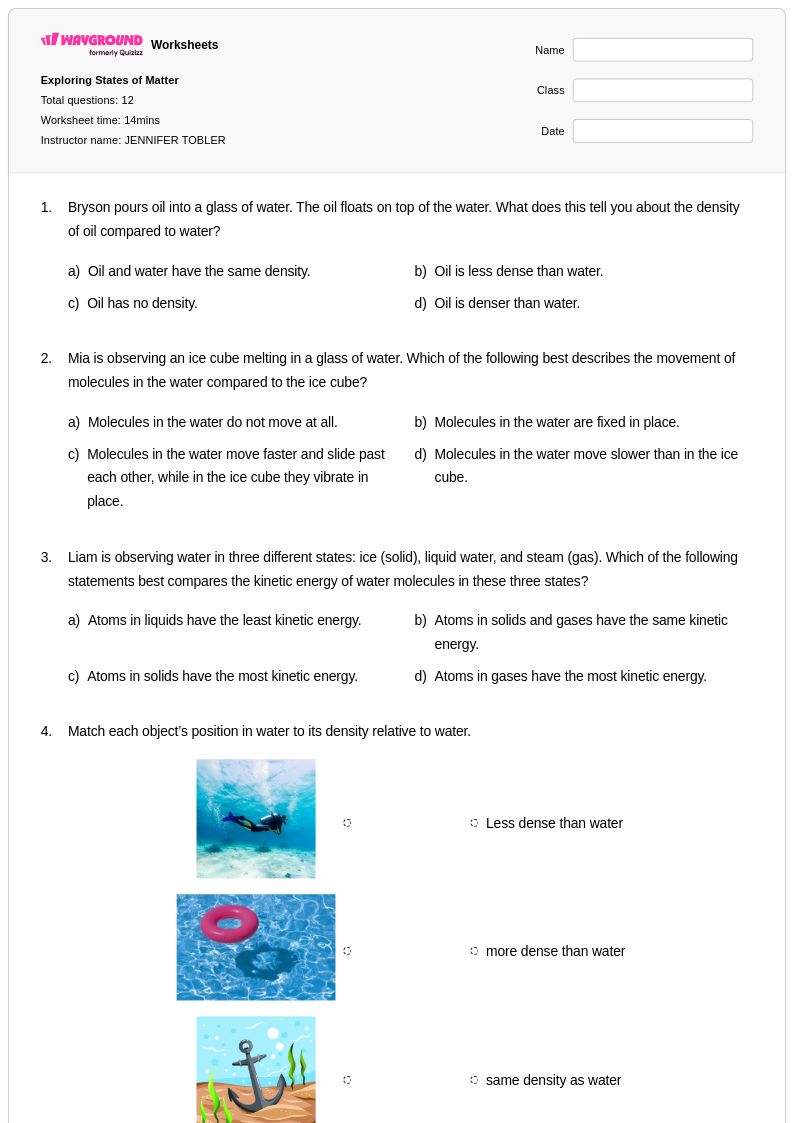
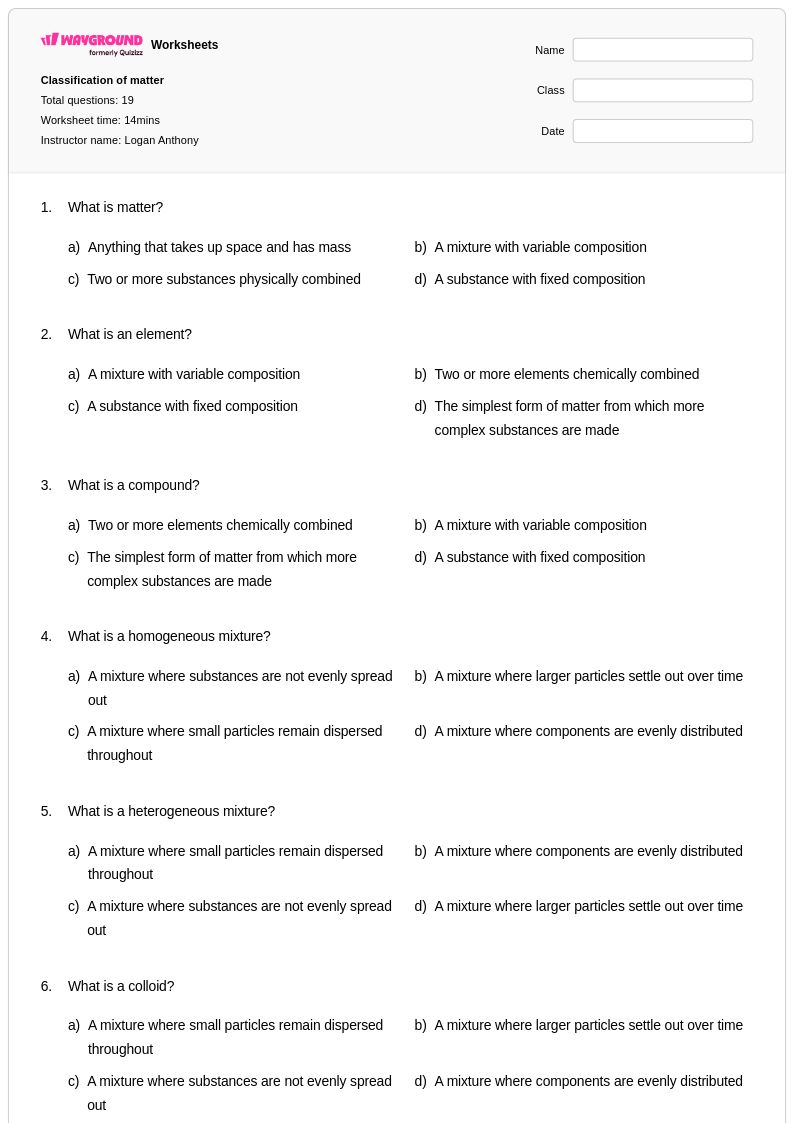
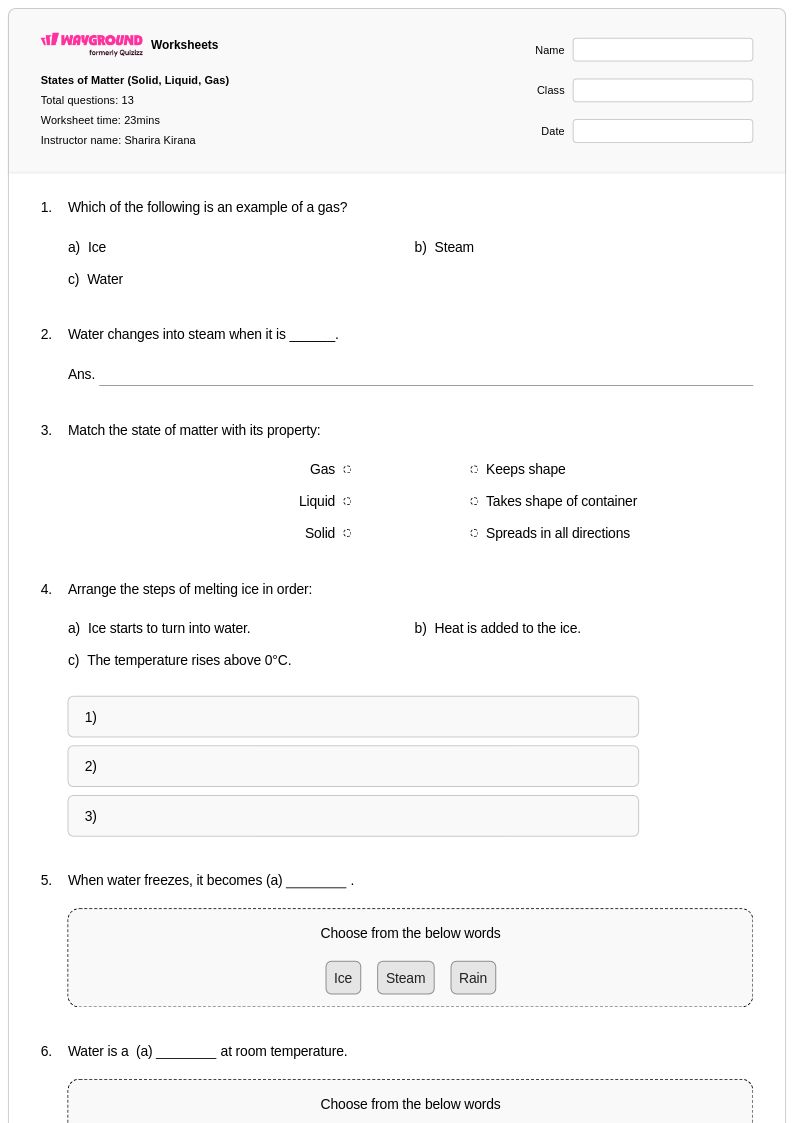
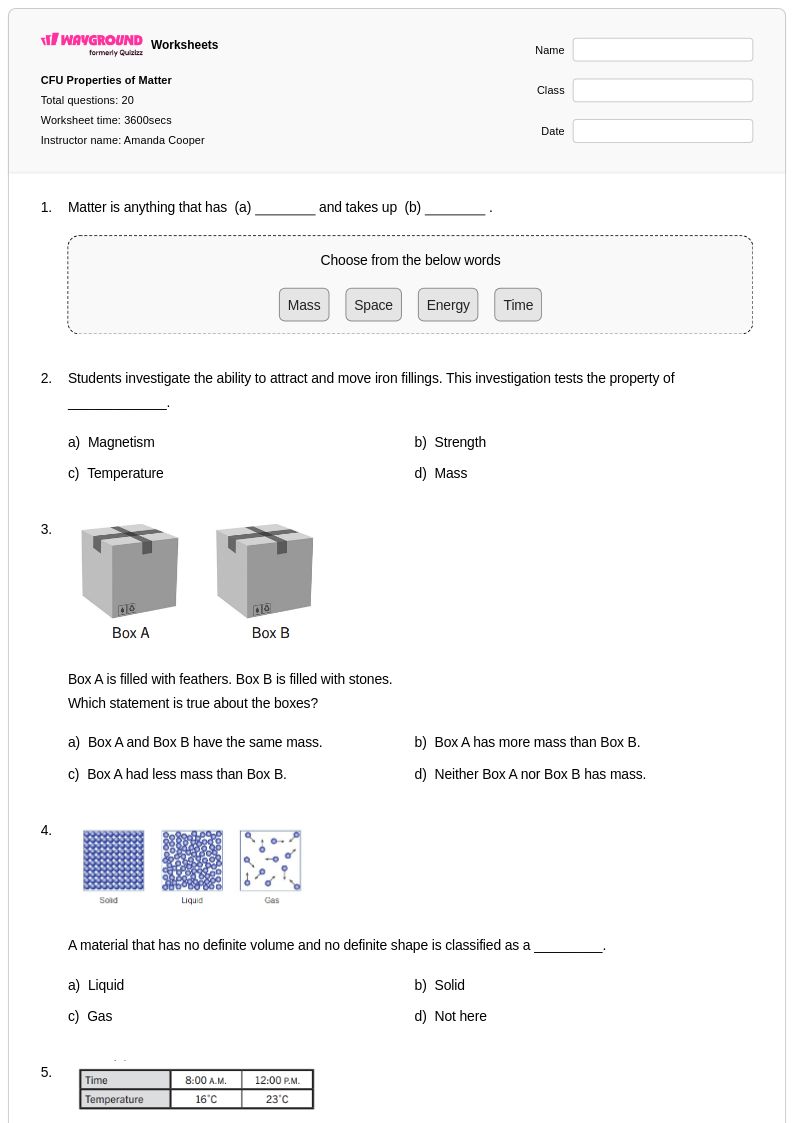
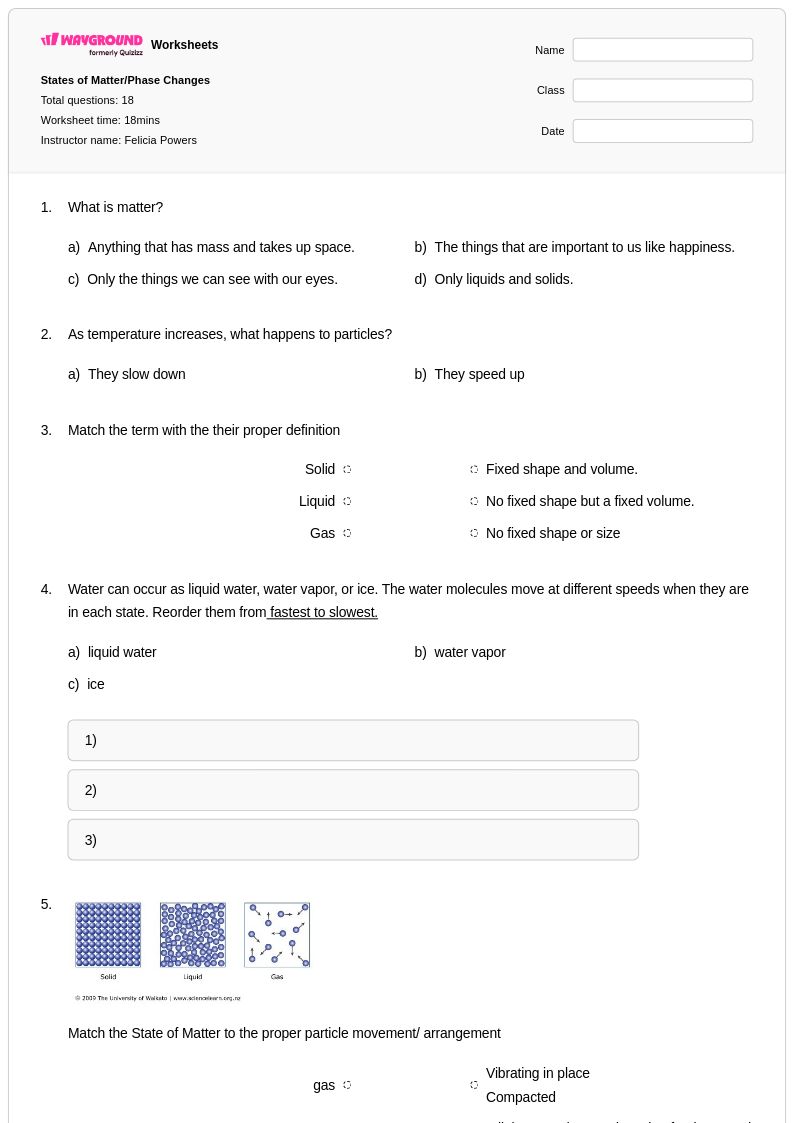
Matter worksheets for kindergarten students available through Wayground (formerly Quizizz) introduce young learners to the fundamental building blocks of physical science through age-appropriate activities and observations. These educational resources help kindergarten students develop essential scientific thinking skills by exploring the basic properties of solids, liquids, and gases through hands-on investigations and visual identification exercises. The worksheets strengthen observation skills, vocabulary development, and critical thinking abilities as students learn to classify different materials and describe their characteristics. Teachers can access comprehensive collections that include answer keys for efficient grading, printable pdf formats for classroom distribution, and free resources that support practice problems focused on identifying matter in everyday objects and understanding how materials can change form.
Wayground (formerly Quizizz) empowers educators with an extensive library of millions of teacher-created matter worksheets specifically designed for kindergarten physical science instruction. The platform's robust search and filtering capabilities allow teachers to quickly locate resources that align with state science standards and match their students' developmental needs. Differentiation tools enable instructors to modify worksheets for various learning levels, while flexible customization options support both remediation for struggling learners and enrichment activities for advanced students. Available in both printable and digital formats including downloadable pdfs, these matter worksheets seamlessly integrate into lesson planning and provide consistent skill practice opportunities that help young scientists build foundational understanding of the physical world around them.
FAQs
How do I teach states of matter to middle school students?
Start by grounding students in the particle model — solids have tightly packed particles with fixed positions, liquids have particles that flow but remain close, and gases have particles that move freely and spread out. Use phase change diagrams to show how matter transitions between states as temperature and pressure change. Connecting these transitions to real-world examples like ice melting or water boiling helps students see the concept in action before moving into more abstract ideas like sublimation or plasma.
What exercises help students practice identifying properties of matter?
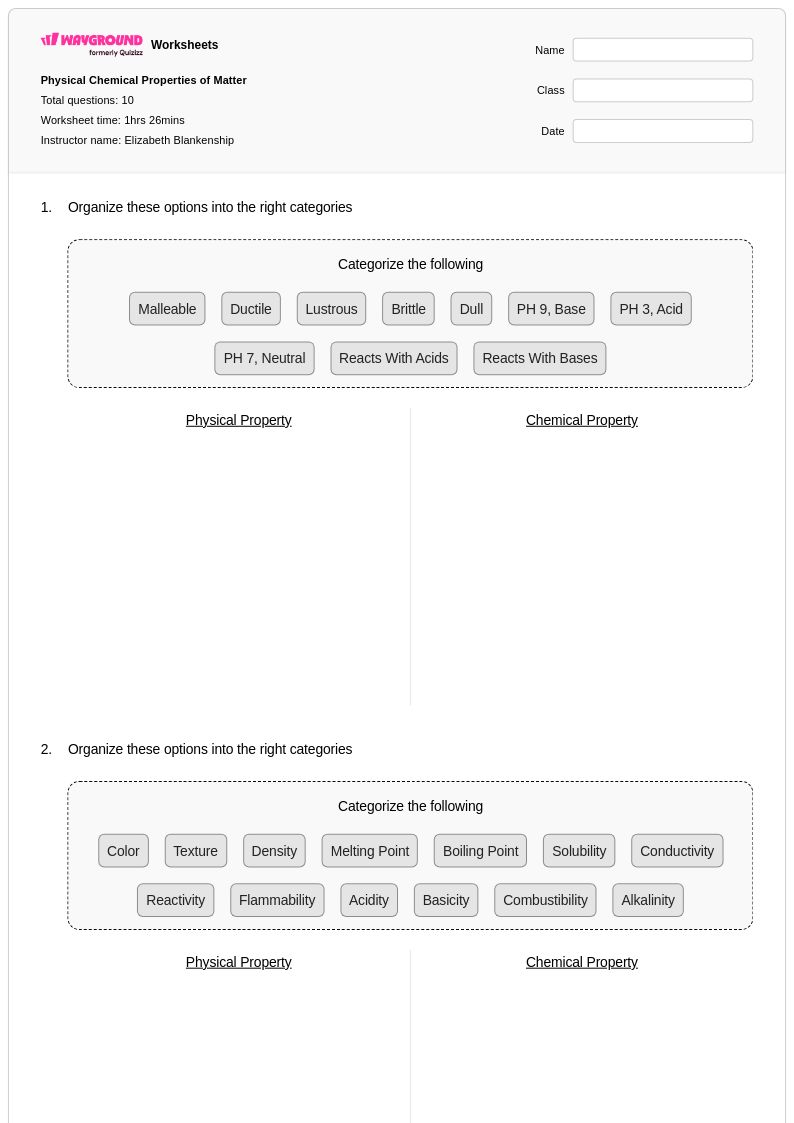
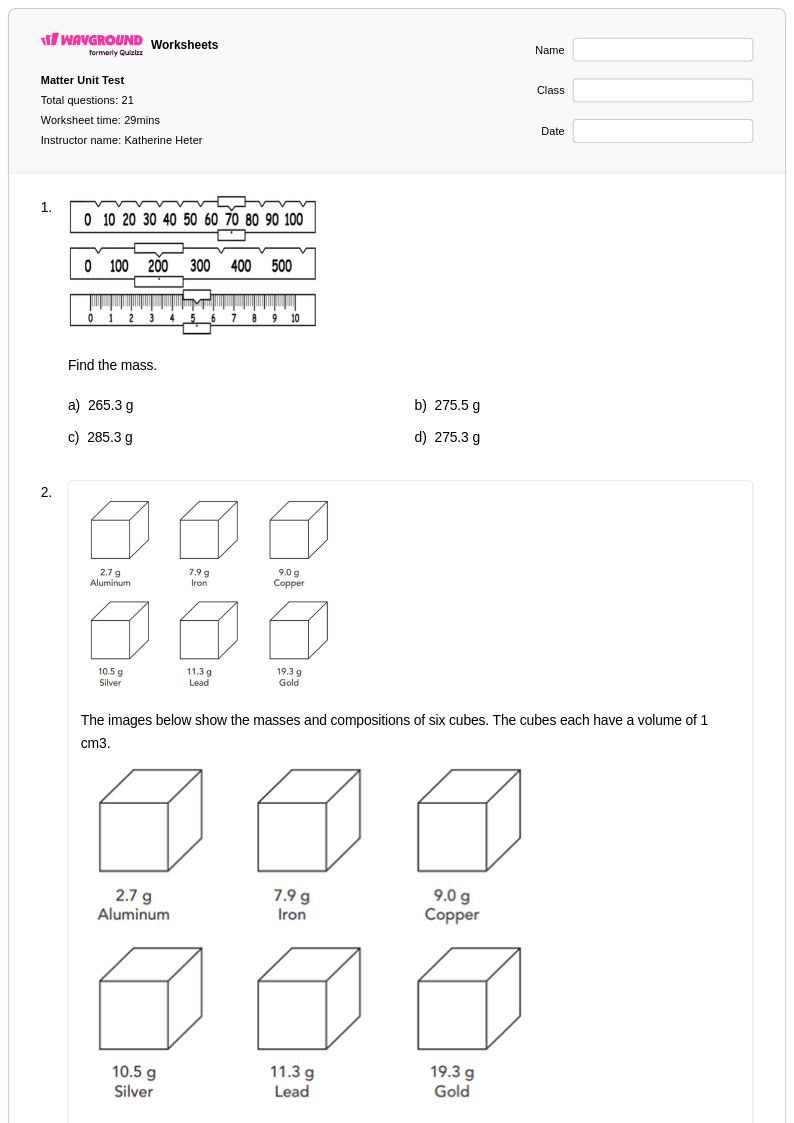
Worksheets that ask students to classify matter by physical and chemical properties — such as density, solubility, flammability, and reactivity — are effective because they require students to apply definitions rather than just recall them. Practice problems that distinguish between physical and chemical changes, or that ask students to calculate density using mass and volume data, reinforce both conceptual understanding and quantitative skills. Mixing classification tasks with short-answer explanation questions pushes students to articulate their reasoning, not just select an answer.
What mistakes do students commonly make when learning about matter and its properties?
One of the most persistent misconceptions is confusing physical changes with chemical changes — students often assume that a dramatic visual change, like dissolving or breaking, must be chemical. Another common error is conflating mass and weight, or misapplying density by assuming that larger objects are always denser. Students also frequently struggle with phase changes, mistakenly believing that temperature continues to rise during a change of state rather than remaining constant while energy is absorbed or released.
How can I use matter worksheets to differentiate instruction for different skill levels?
For struggling learners, focus on worksheets that isolate one concept at a time — such as identifying states of matter from diagrams — before introducing multi-step problems. Advanced students benefit from problems that require them to interpret phase change graphs, calculate density from experimental data, or explain molecular behavior during phase transitions. On Wayground, teachers can apply accommodations such as read aloud, reduced answer choices, and extended time to individual students, ensuring the same worksheet can serve the full range of learners in one class without requiring separate materials.
How do I use Wayground's matter worksheets in my classroom?
Wayground's matter worksheets are available as printable PDFs for traditional classroom use and in digital formats for technology-integrated settings, giving teachers flexibility for in-class assignments, homework, and remote learning. Teachers can also host worksheets as an interactive quiz directly on Wayground, where student responses are collected and scored automatically. This makes them practical for both formative checks during a unit and summative review before assessments.
How do I help students understand the relationship between temperature, pressure, and volume in gases?
Use guided practice problems that walk students through each gas law individually — Boyle's Law (pressure and volume), Charles's Law (temperature and volume), and Gay-Lussac's Law (temperature and pressure) — before introducing combined scenarios. Visual models showing particles in a container responding to changes in temperature or pressure help students build intuition before working with equations. A common sticking point is unit conversion, particularly between Celsius and Kelvin, so building that step explicitly into early practice problems prevents it from becoming a recurring error.