Free Printable Physical Changes Worksheets for Kindergarten
Discover free kindergarten physical changes worksheets and printables that help young students explore how materials can change shape, size, and form through engaging practice problems with answer keys.
Explore printable Physical Changes worksheets for Kindergarten
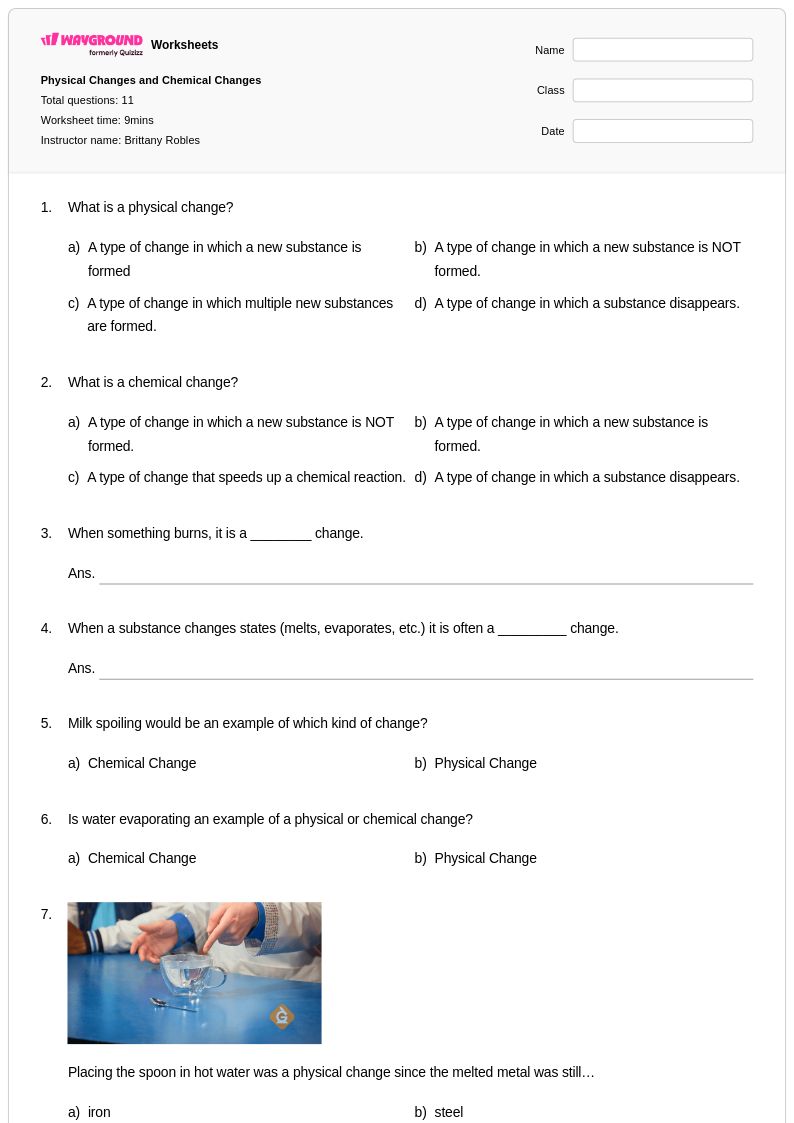
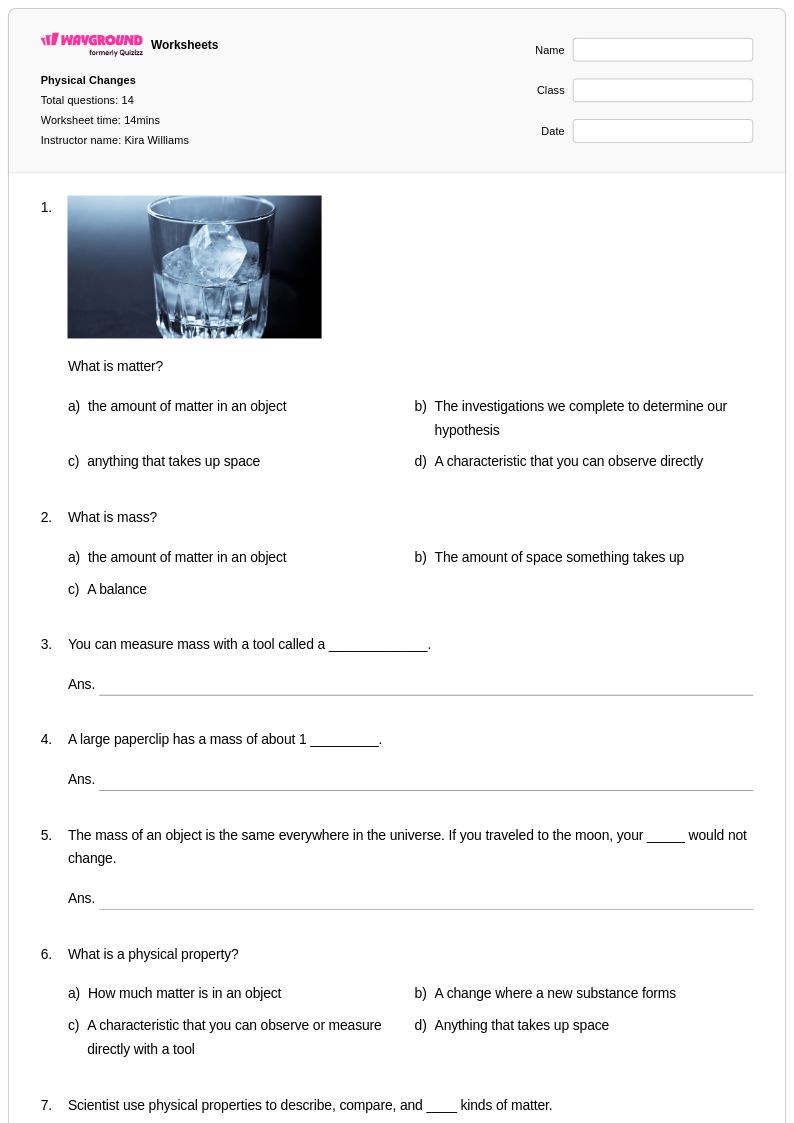
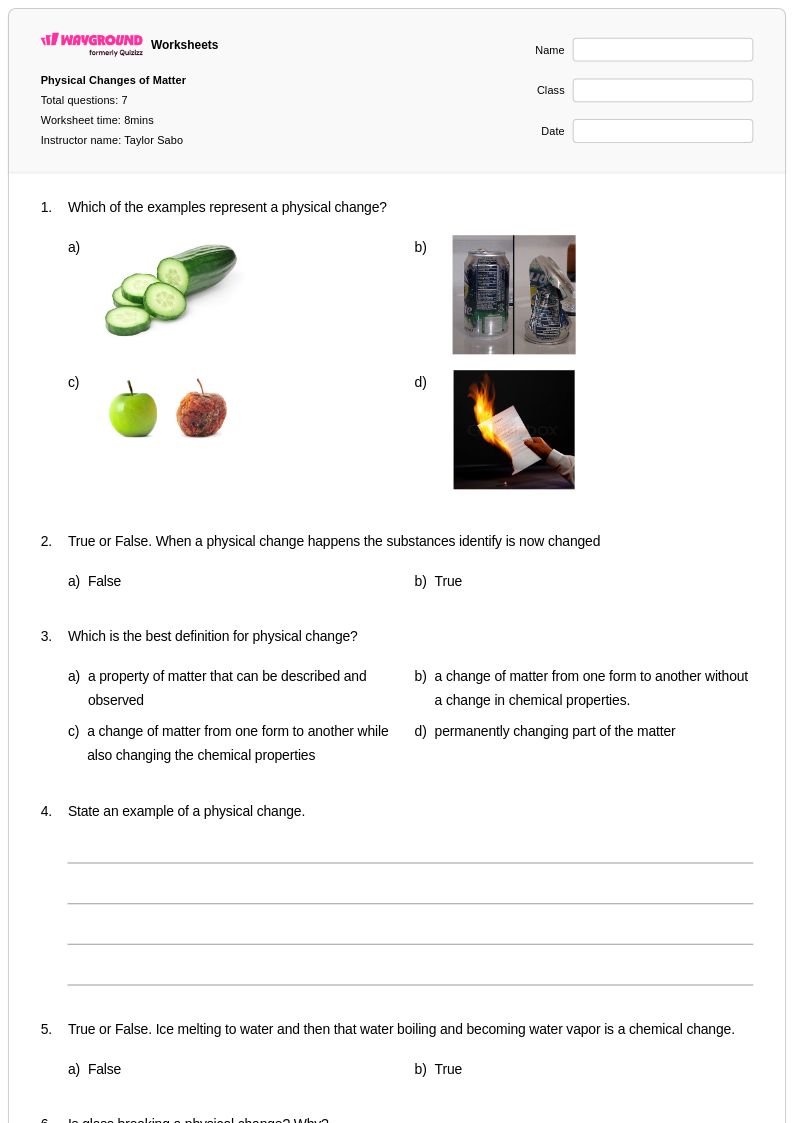
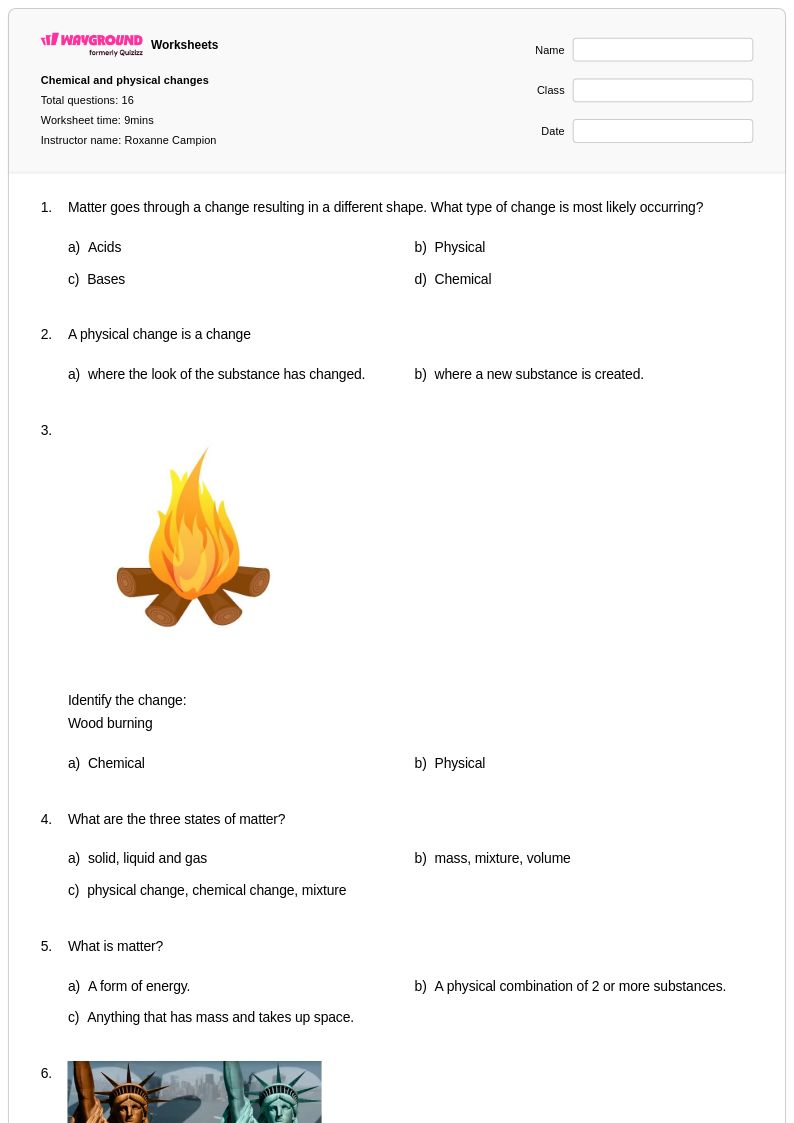
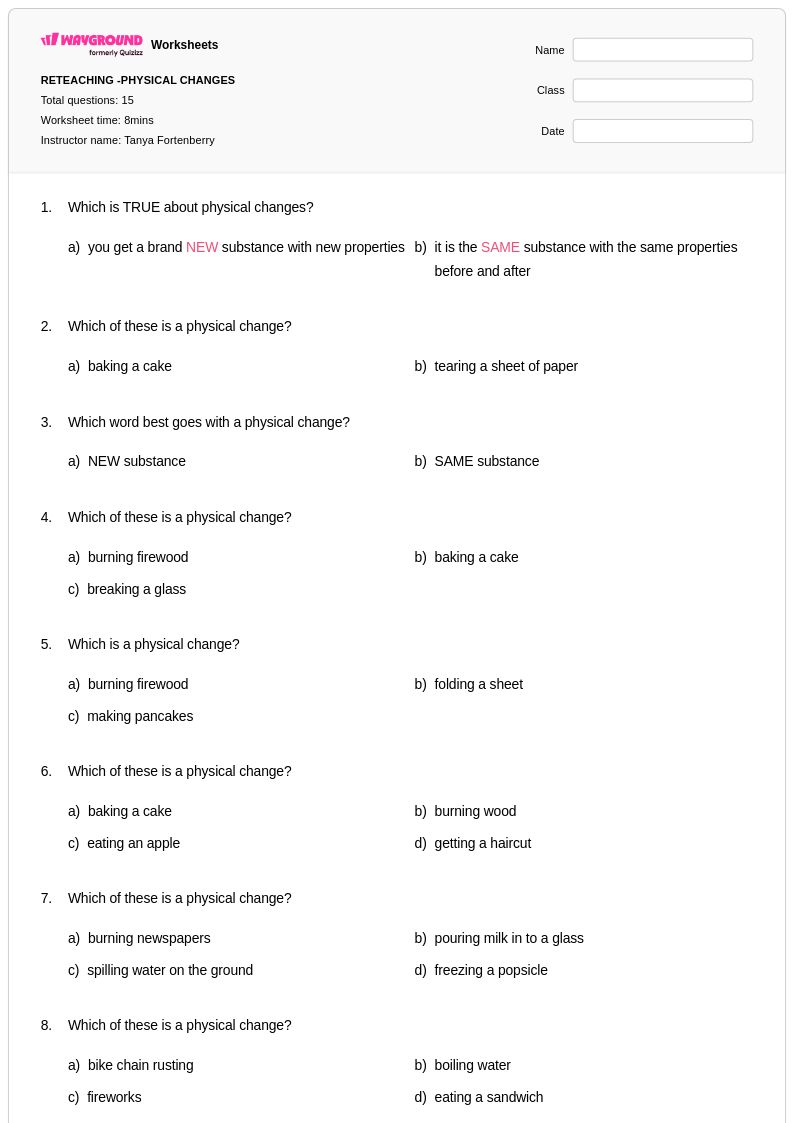
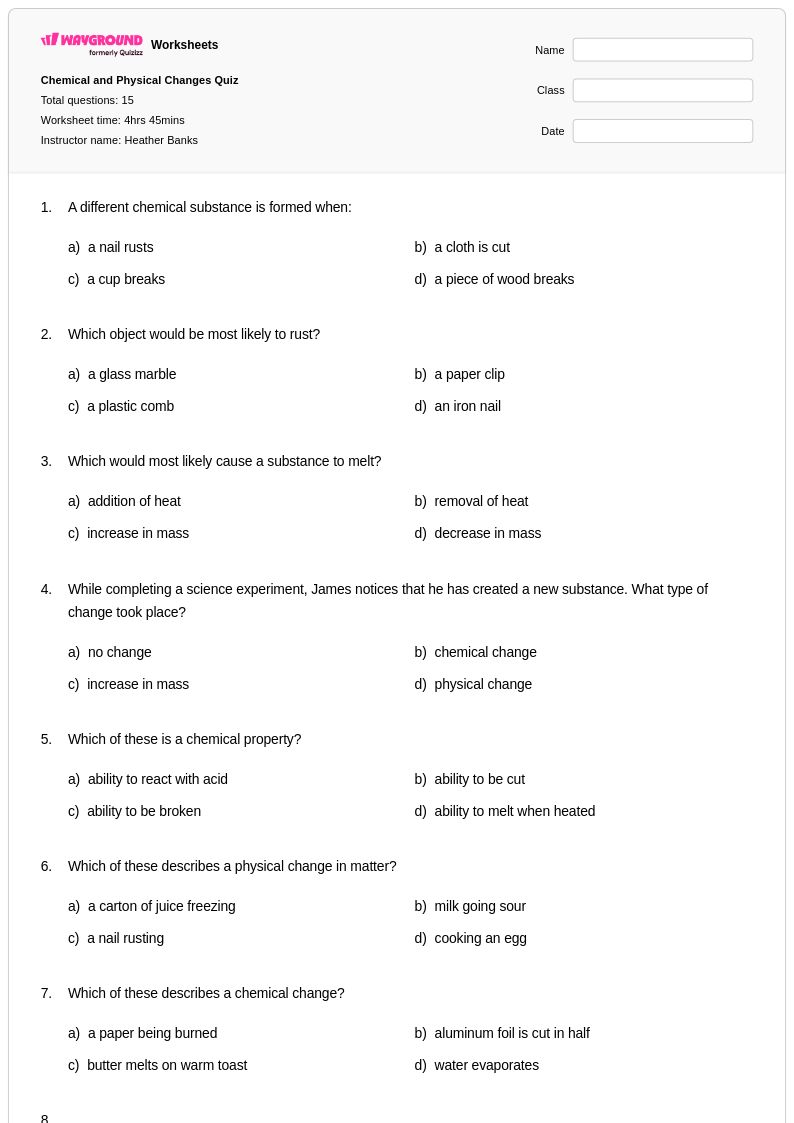
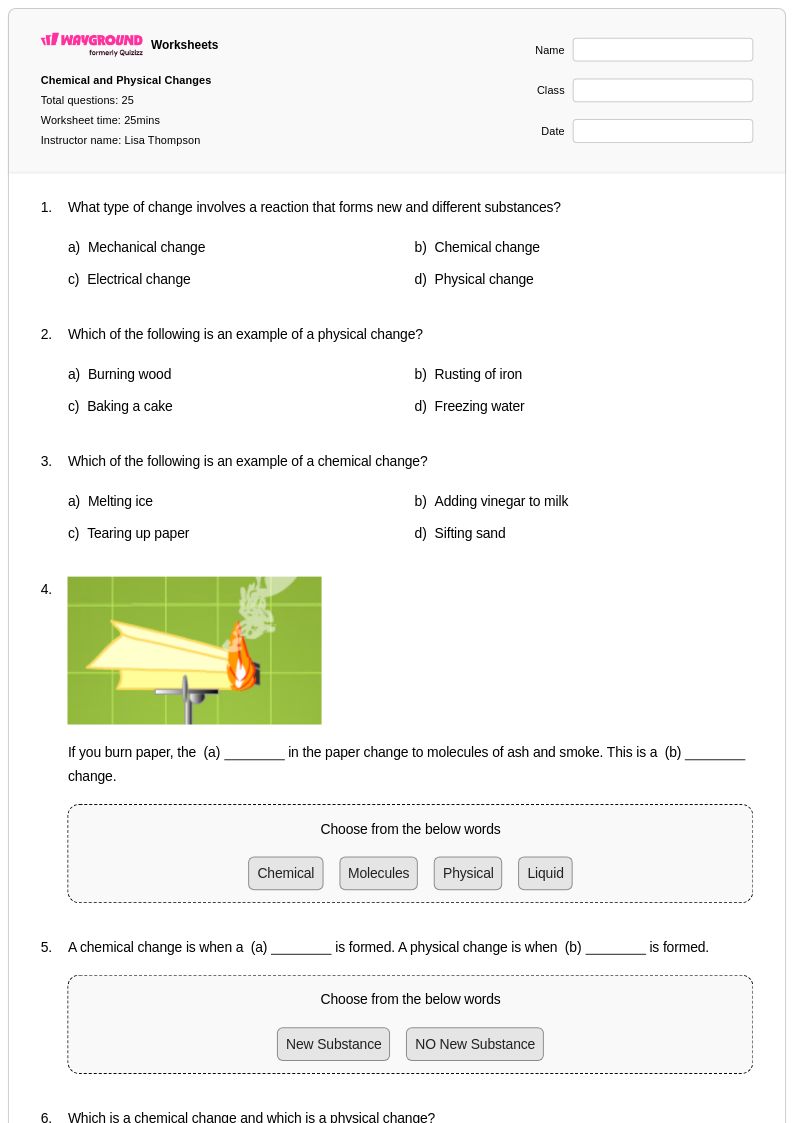
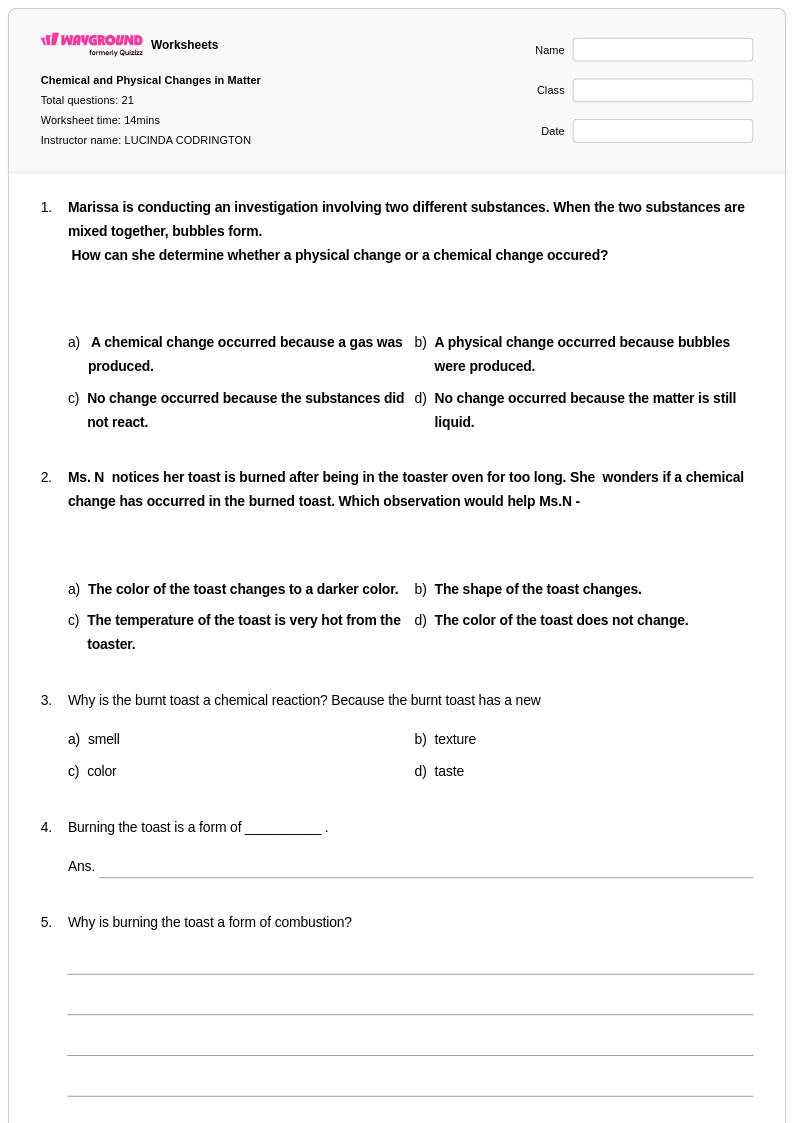
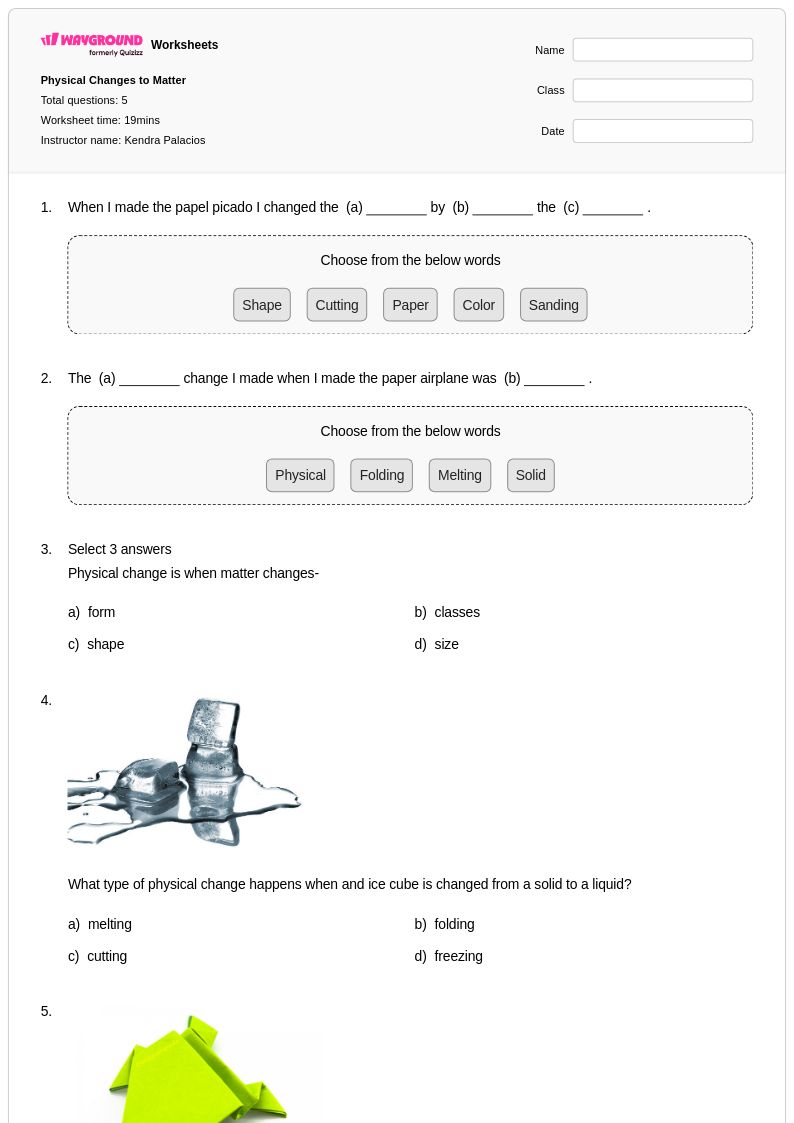
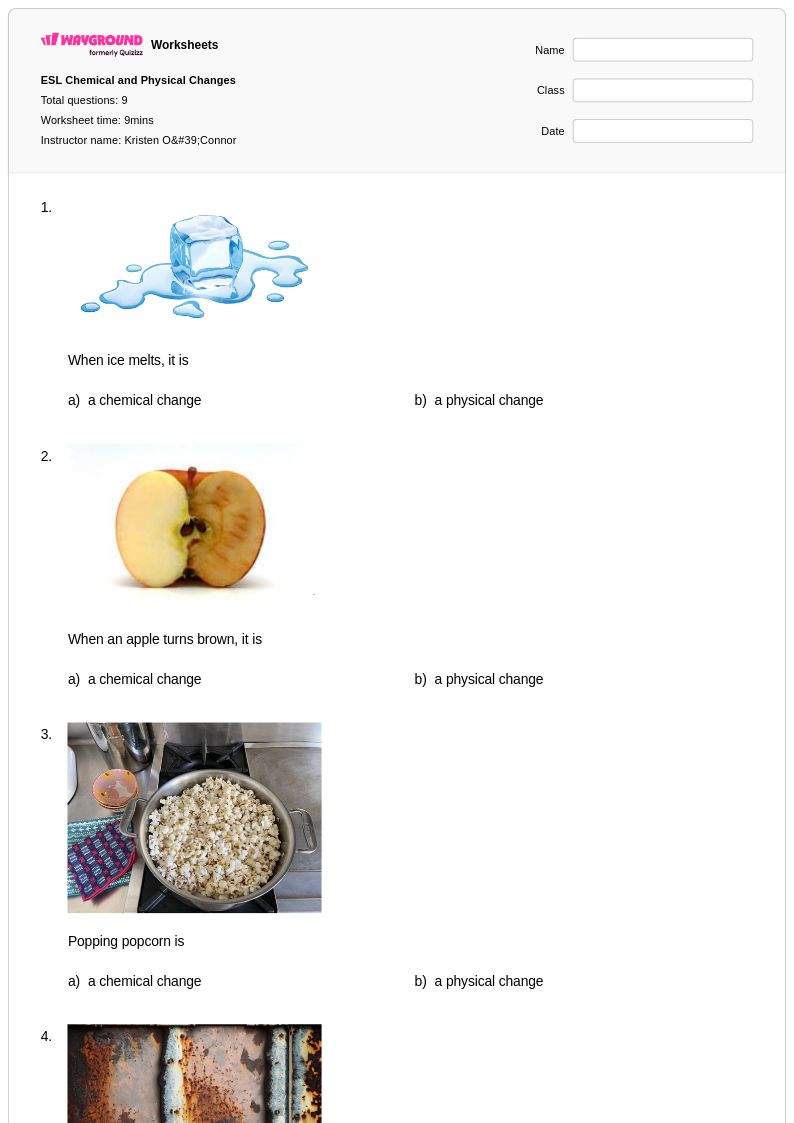
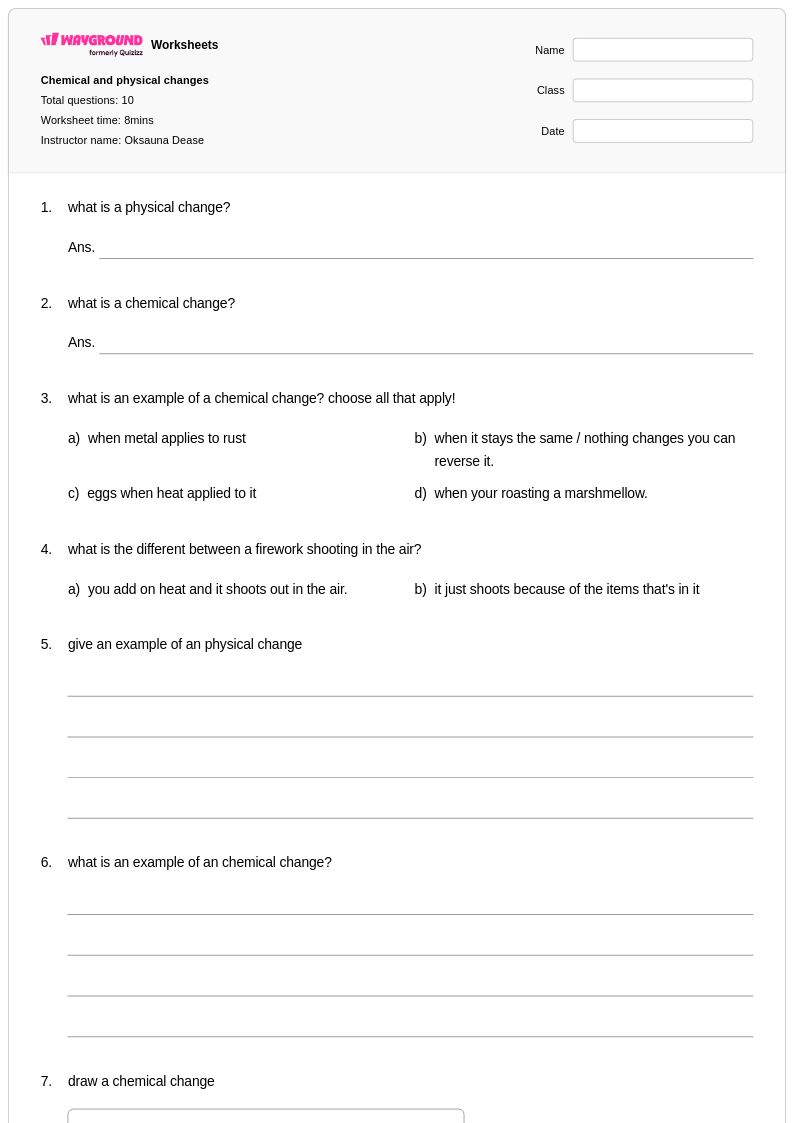
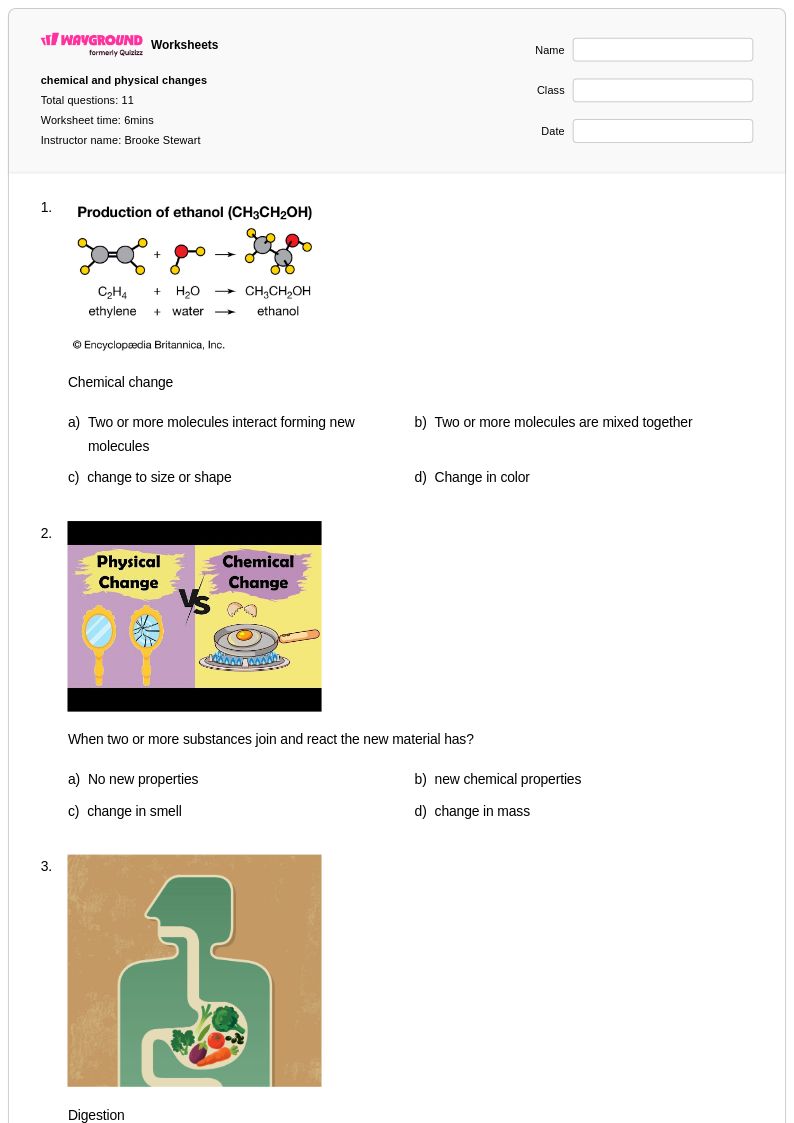
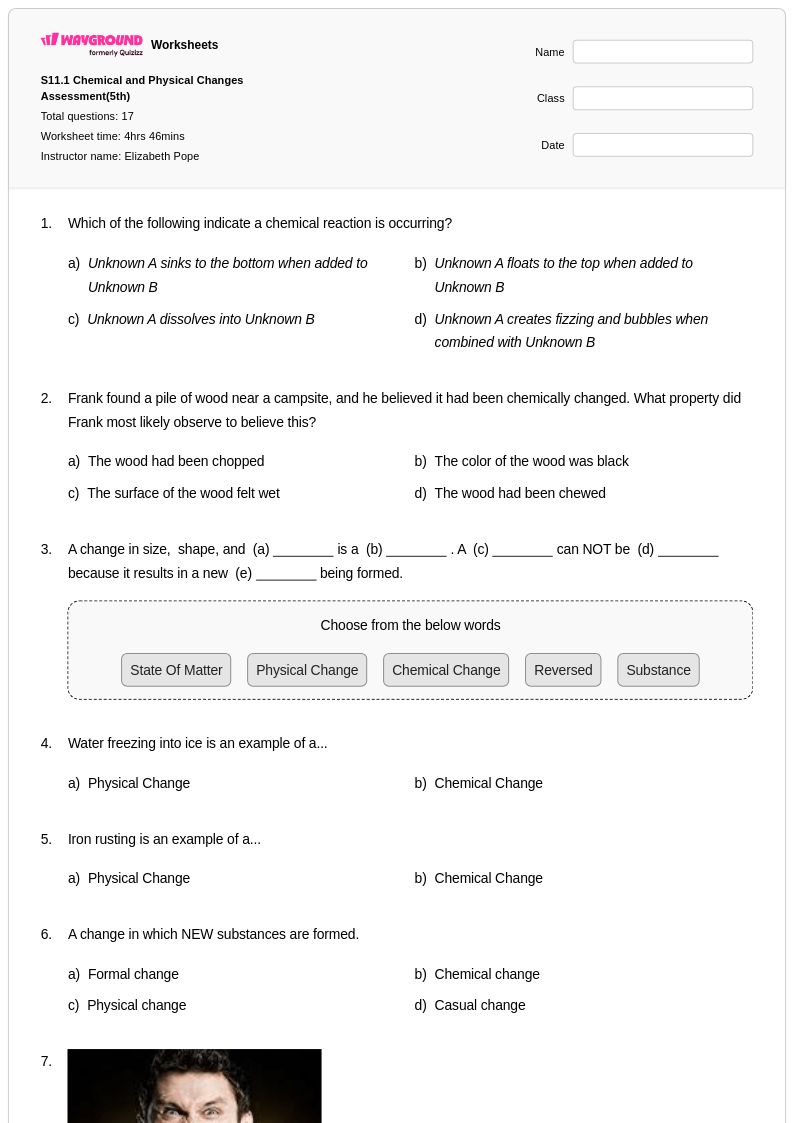
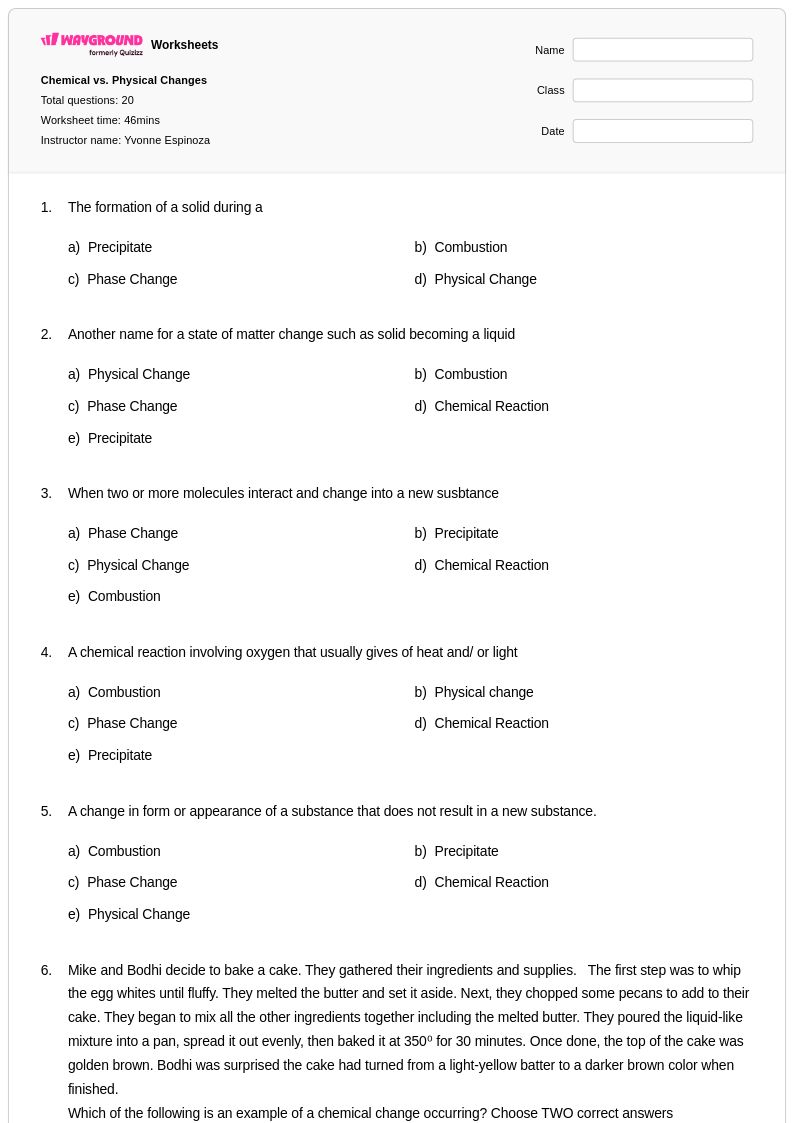
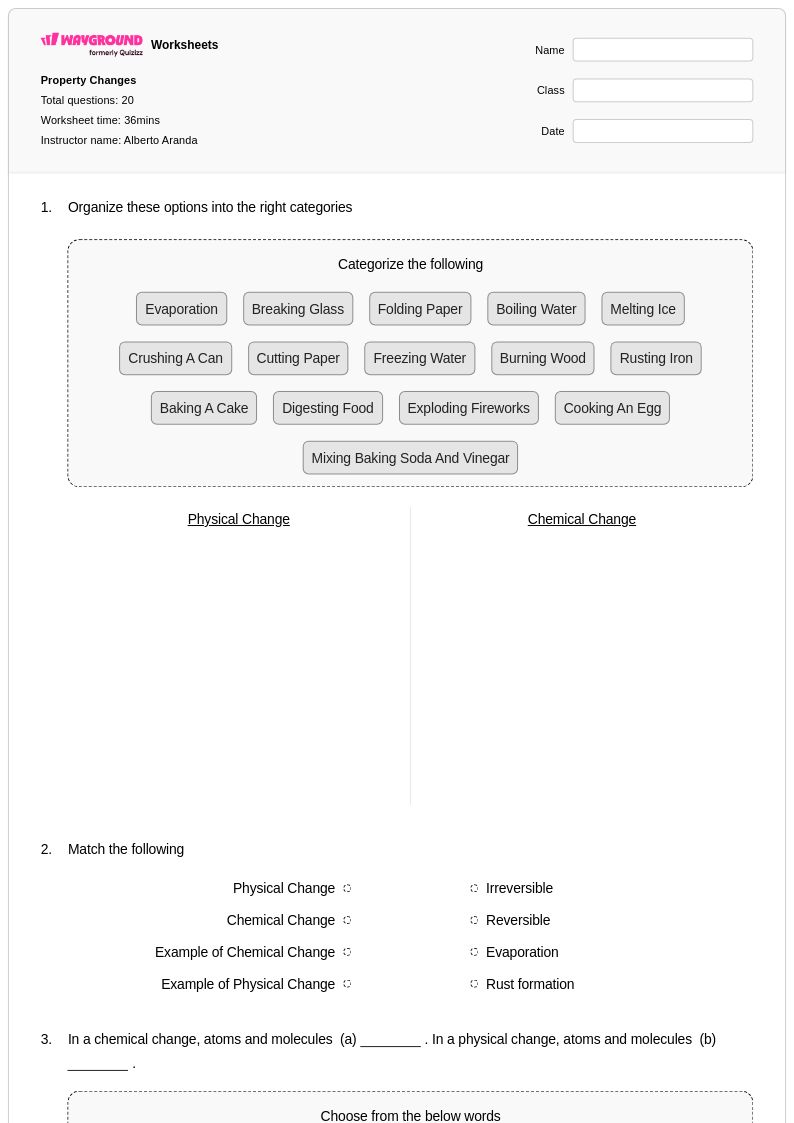
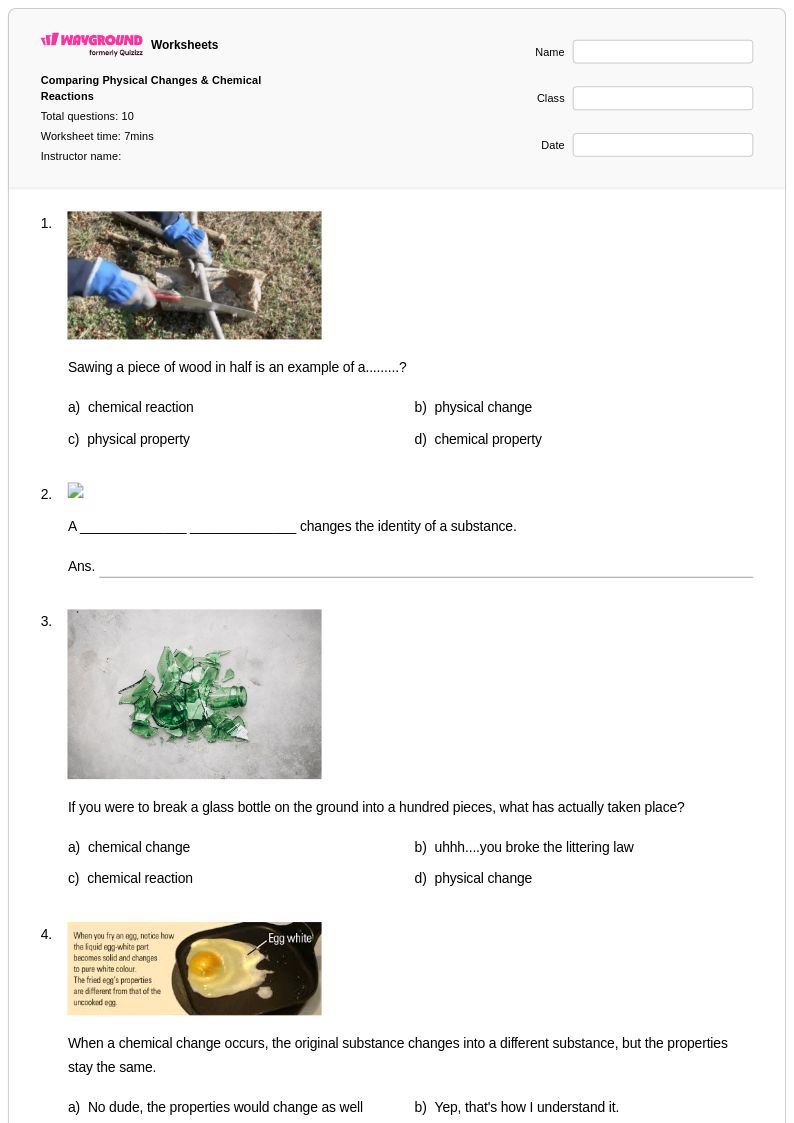
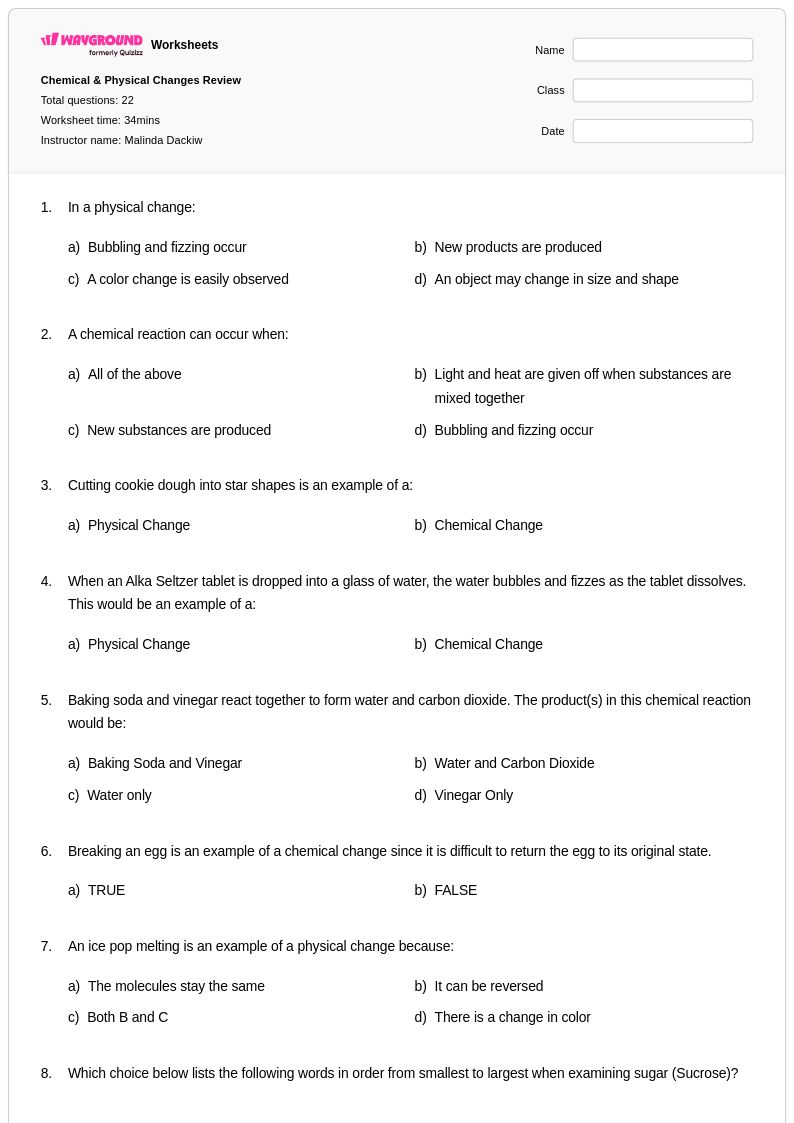
Physical changes worksheets for kindergarten students available through Wayground (formerly Quizizz) introduce young learners to fundamental scientific concepts through age-appropriate activities and observations. These carefully designed educational resources help kindergarten students develop critical thinking skills by exploring how materials can change their form, shape, or state while remaining the same substance. The collection includes engaging practice problems that guide children through hands-on exploration of concepts like melting ice, tearing paper, mixing colors, and reshaping clay. Each worksheet comes with a comprehensive answer key to support accurate assessment, and teachers can access these valuable printables as free pdf downloads that accommodate various learning styles and classroom needs.
Wayground (formerly Quizizz) empowers educators with millions of teacher-created resources specifically designed to support kindergarten physical science instruction through robust search and filtering capabilities. The platform's extensive worksheet collection aligns with educational standards while offering powerful differentiation tools that allow teachers to customize content based on individual student needs and learning objectives. These versatile materials are available in both printable and digital formats, including convenient pdf options that facilitate seamless integration into lesson plans for skill practice, remediation, and enrichment activities. Teachers can efficiently locate age-appropriate physical changes content through intuitive filtering systems, ensuring that instructional materials match their specific curriculum requirements and support comprehensive student understanding of basic scientific principles.
FAQs
How do I teach students the difference between physical and chemical changes?
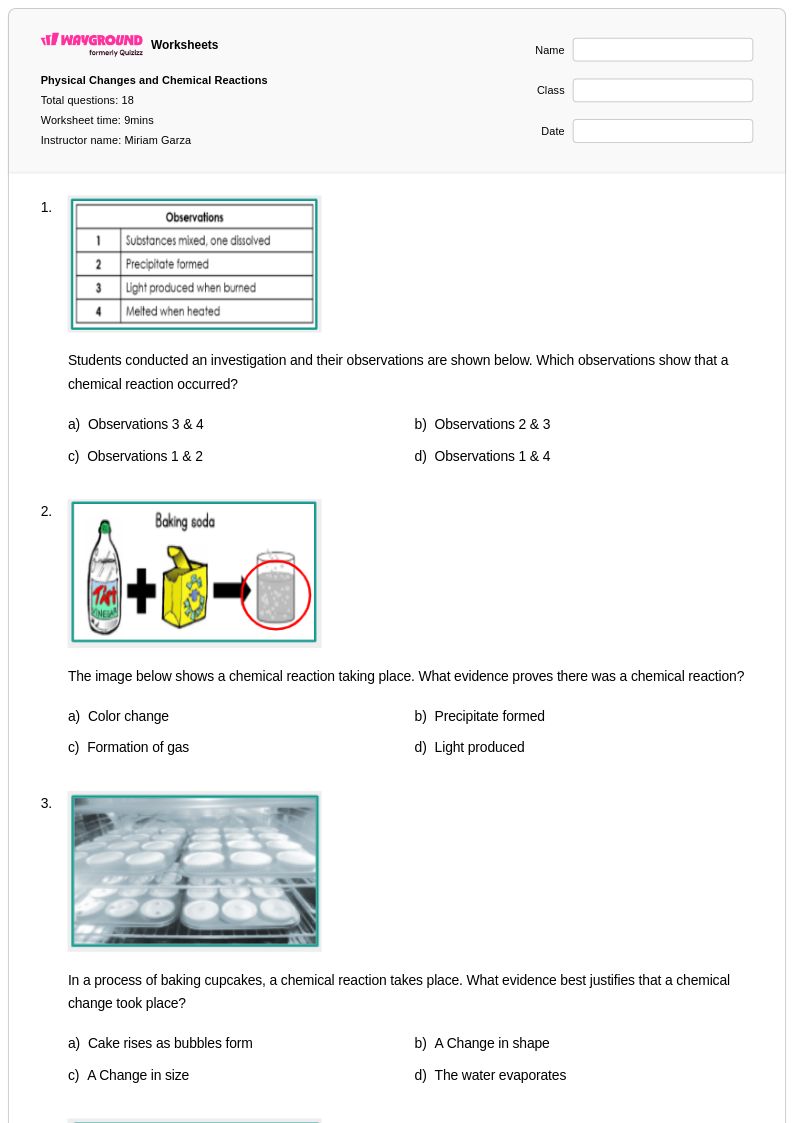
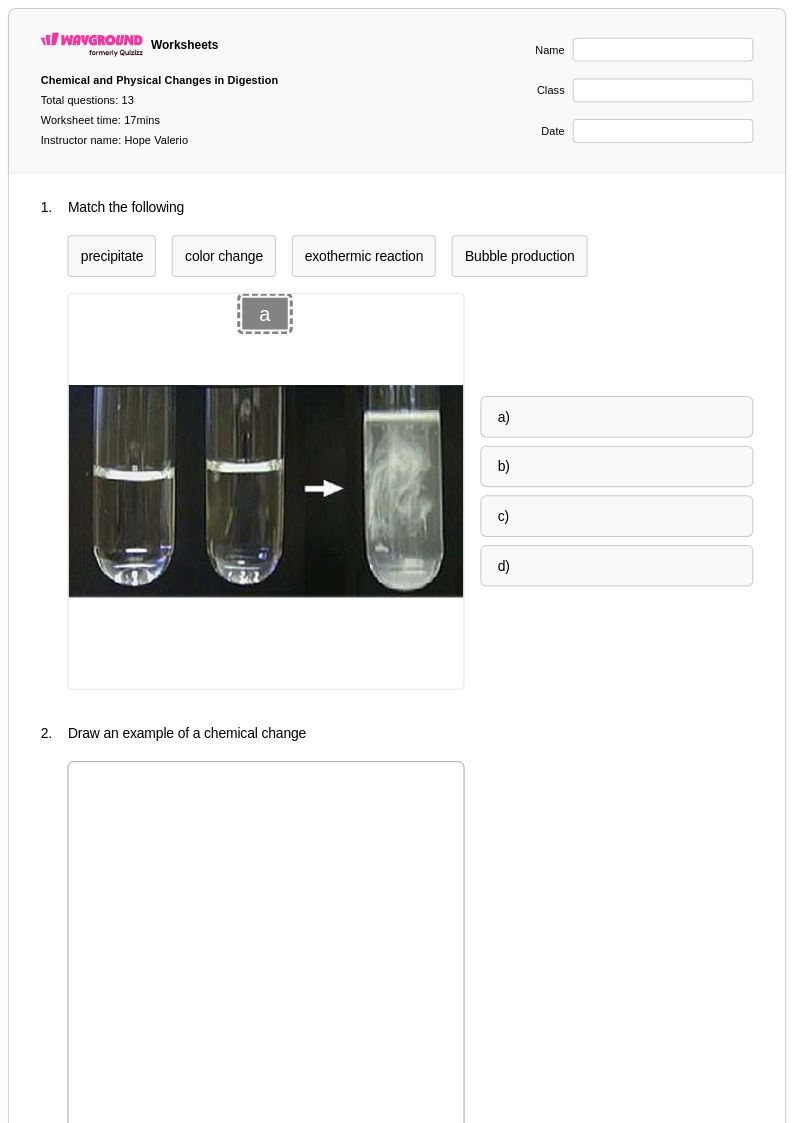
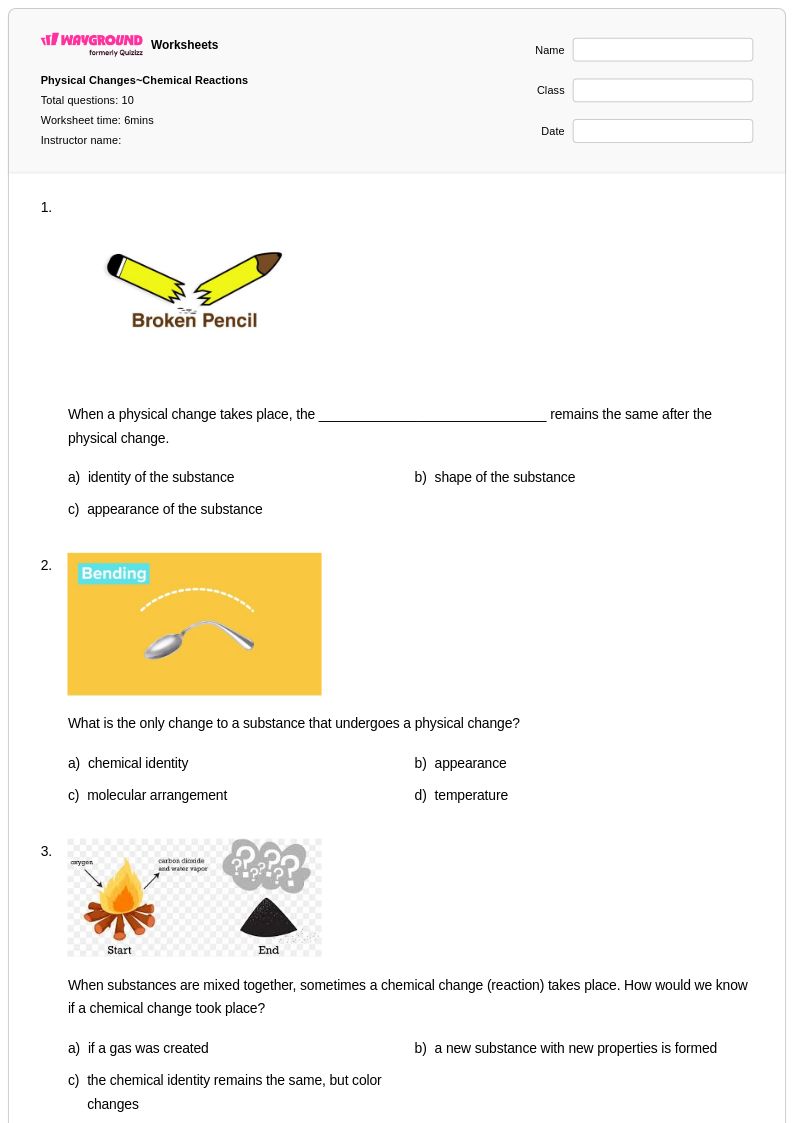
Start by anchoring the distinction in a clear, testable rule: a physical change alters the form or appearance of matter but does not change its chemical composition, while a chemical change produces a new substance. Use concrete, familiar examples like cutting paper (physical) versus burning paper (chemical) so students can test the rule themselves. Once students can apply the principle to everyday scenarios, move to more ambiguous cases like dissolving salt in water to build deeper reasoning skills.
What exercises help students practice identifying physical changes?
Effective practice involves presenting students with real-world scenarios and asking them to classify each as a physical or chemical change with a written justification. Scenarios like melting ice, bending a paperclip, and cutting fruit are strong starting points because the evidence for a physical change is observable and intuitive. Worksheets that require students to explain their reasoning, not just circle an answer, build the analytical habits that transfer to more complex physical science topics.
What mistakes do students commonly make when learning about physical changes?
The most common misconception is that dissolving a substance in liquid is a chemical change because it disappears from view. Students need guided practice with examples that make reversibility the key test: if the original substance can be recovered, the change is typically physical. Another frequent error is confusing a change in temperature with a change in chemical identity, so exercises that separate these two concepts are especially valuable.
How can I differentiate physical changes instruction for students at different learning levels?
For students who are still building foundational understanding, reduce the complexity of scenarios and focus on changes of state such as melting, freezing, and evaporation before introducing shape and texture changes. Advanced learners benefit from ambiguous cases and open-ended questions that require them to defend a classification. On Wayground, teachers can apply accommodations such as read aloud support, reduced answer choices, and extended time to individual students without disrupting the experience for the rest of the class.
How do I use Wayground's physical changes worksheets in my classroom?
Wayground's physical changes worksheets are available as printable PDFs for traditional classroom use and in digital formats for technology-integrated learning environments, including the option to host them as a live quiz on Wayground. Teachers can filter the library to match specific curriculum standards and learning objectives, then assign worksheets as independent practice, homework, or assessment prep. Each worksheet includes a complete answer key, so grading and providing feedback is straightforward.
How do I incorporate physical changes into a broader unit on matter and its properties?
Physical changes are best introduced after students have a working understanding of states of matter, since most physical changes involve transitions between solid, liquid, and gas. Position the physical-versus-chemical change distinction as a conceptual milestone that prepares students for later work on chemical reactions and conservation of mass. Worksheets that use real-world scenarios like melting ice or cutting paper help students connect the abstract concept to observable, everyday phenomena before they encounter more complex content.