
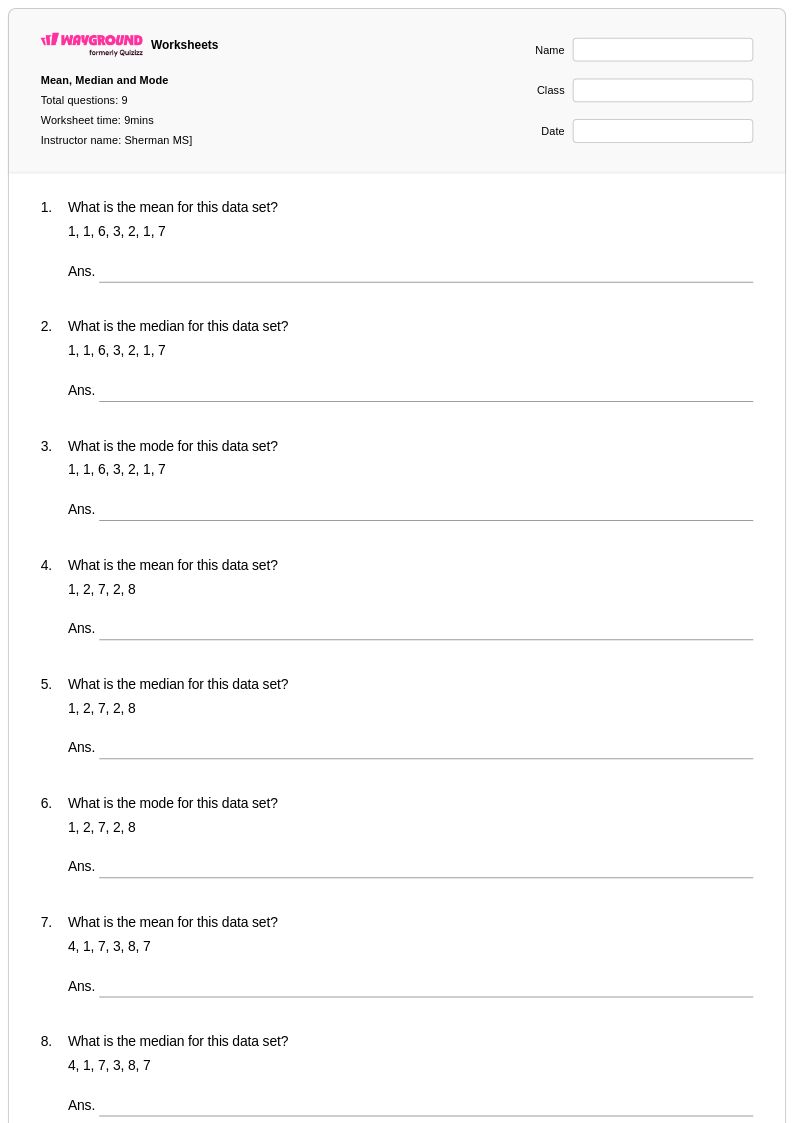
9 T
3rd - 6th
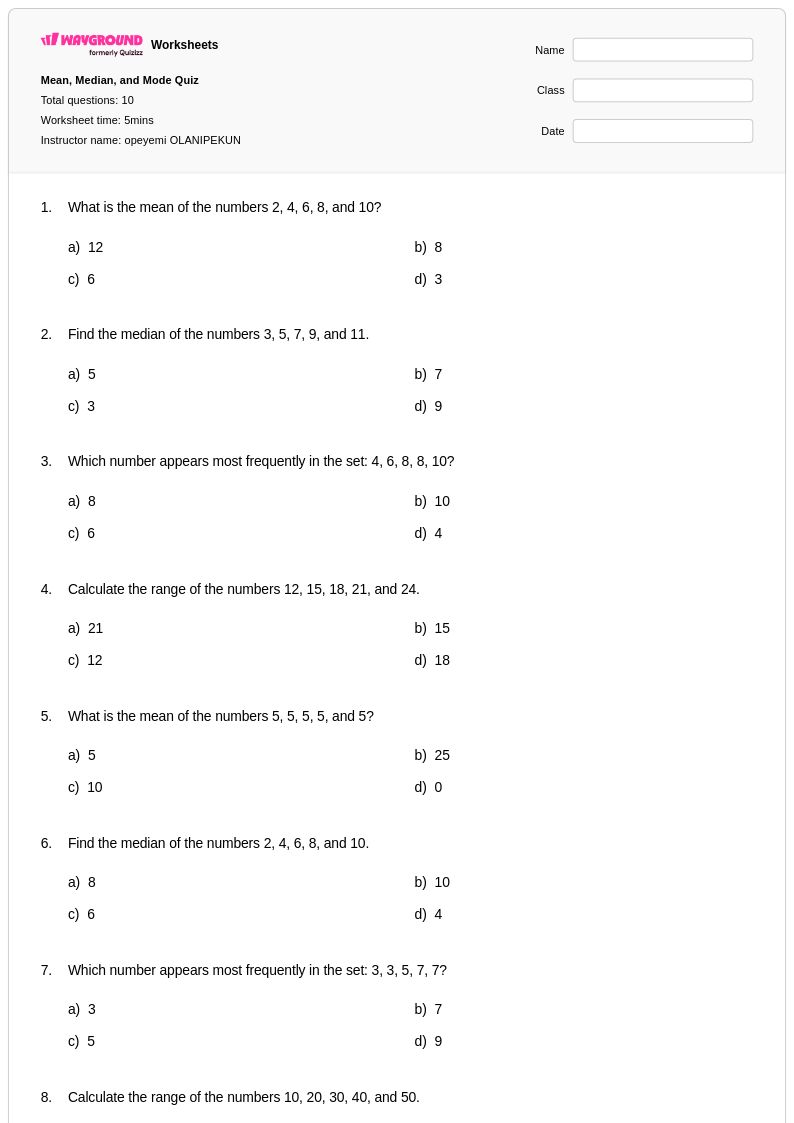
10 T
3rd
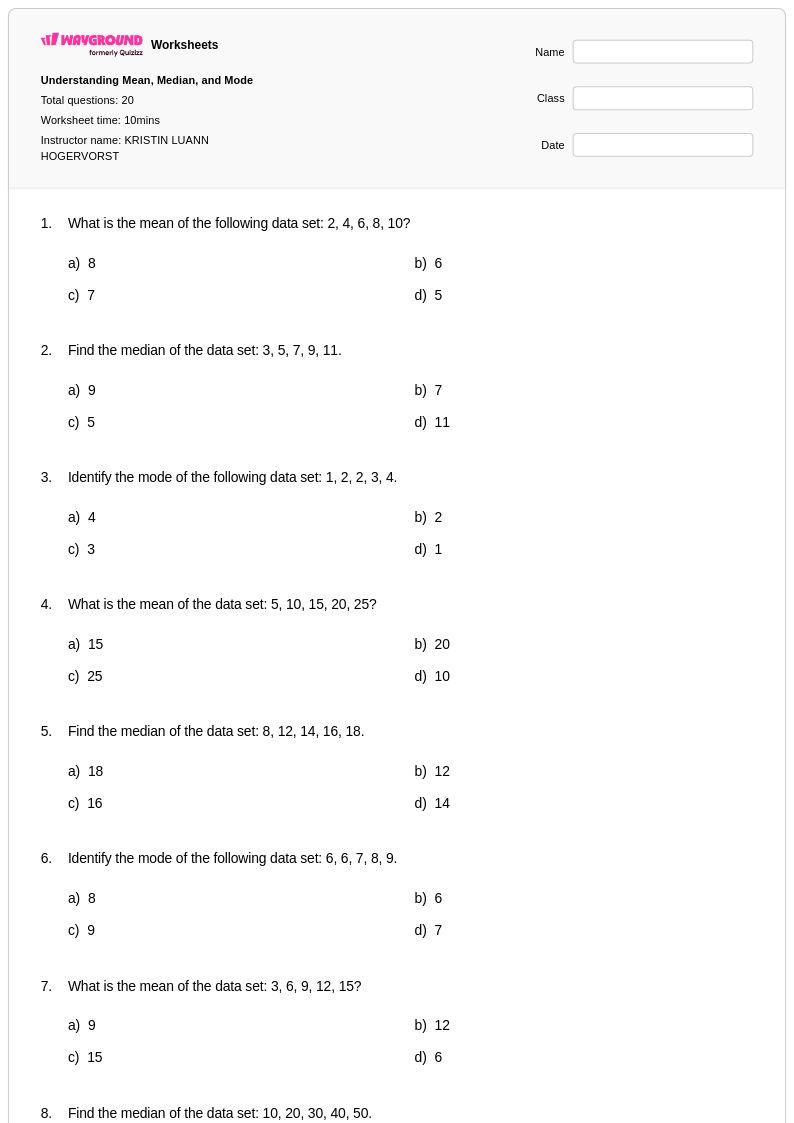
20 T
3rd
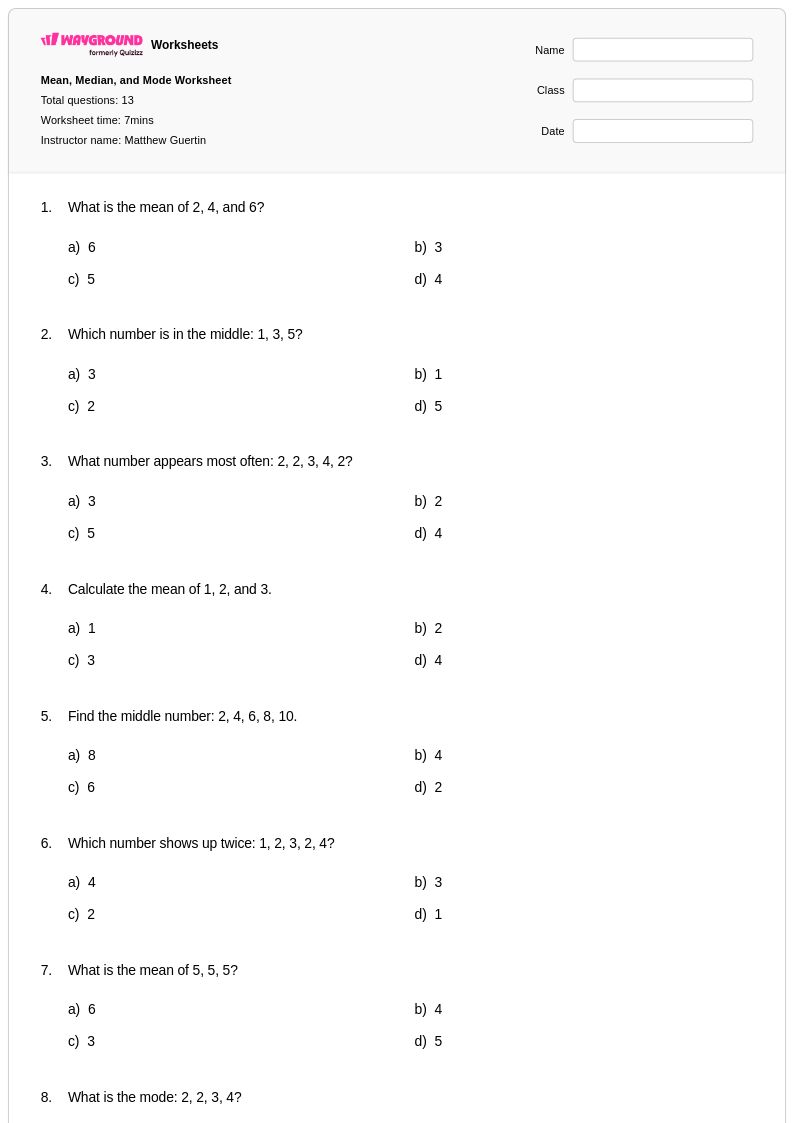
13 T
3rd
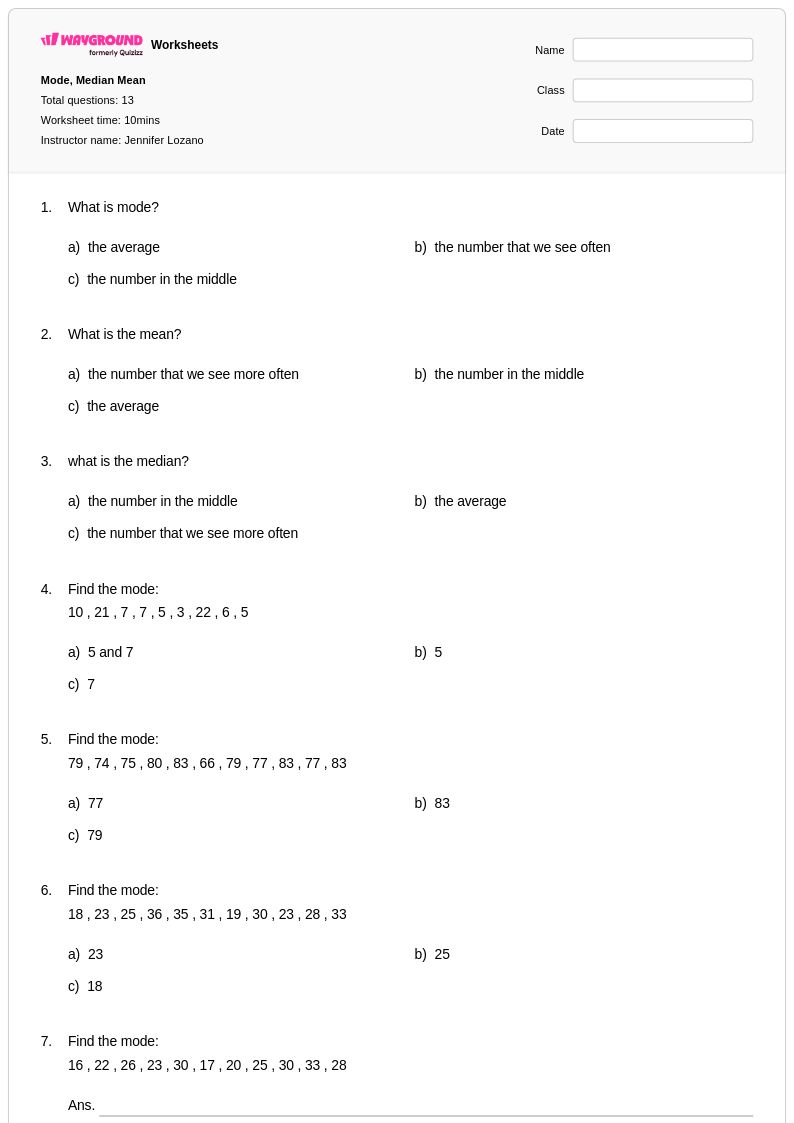
13 T
1st - 4th
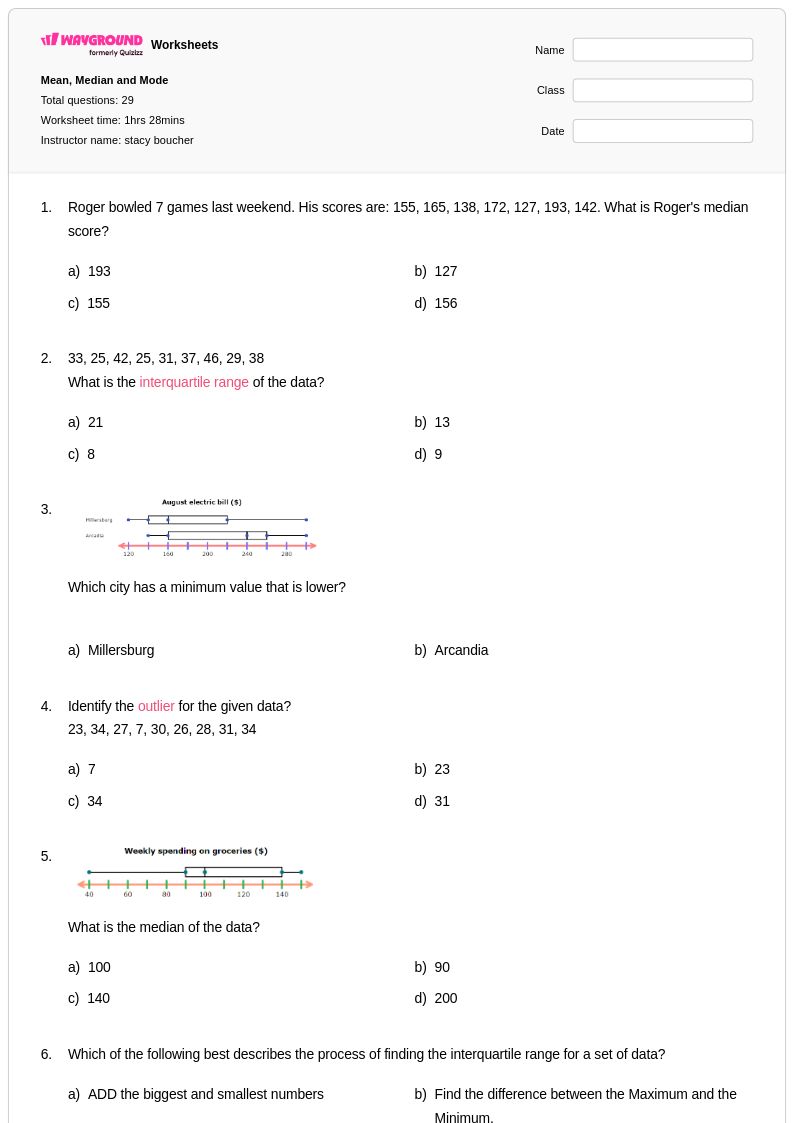
29 T
KG - Uni
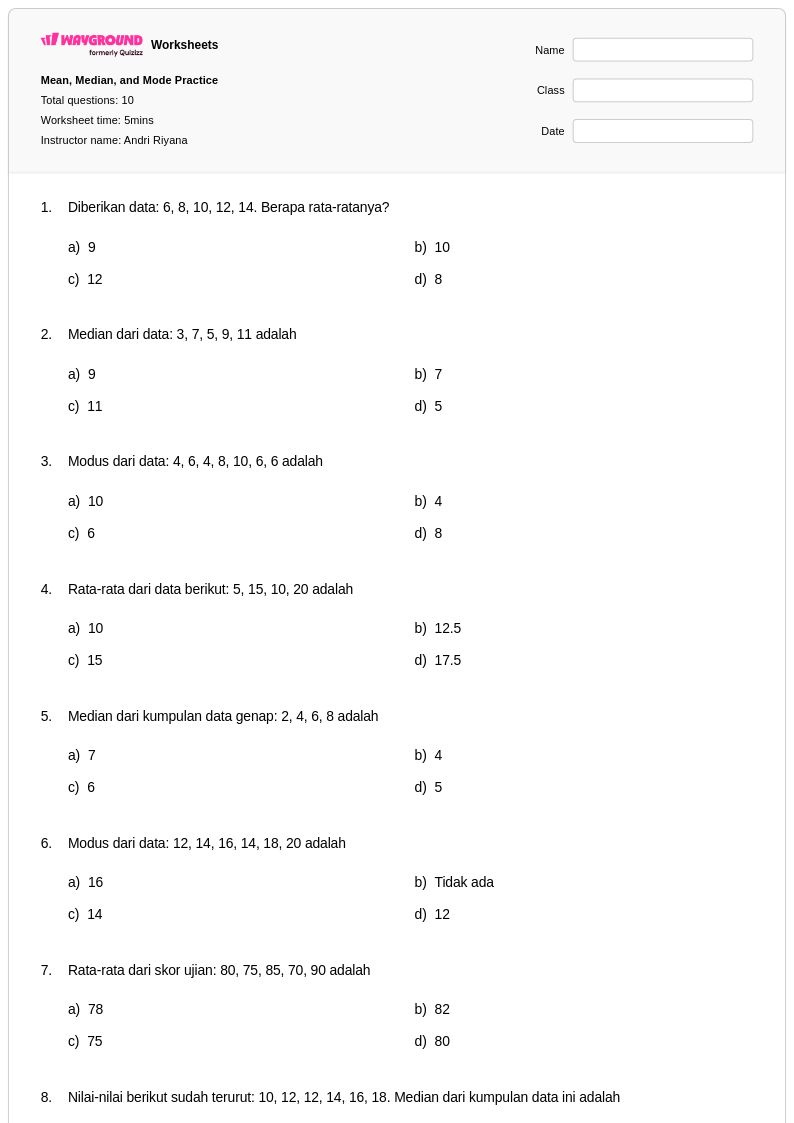
10 T
3rd
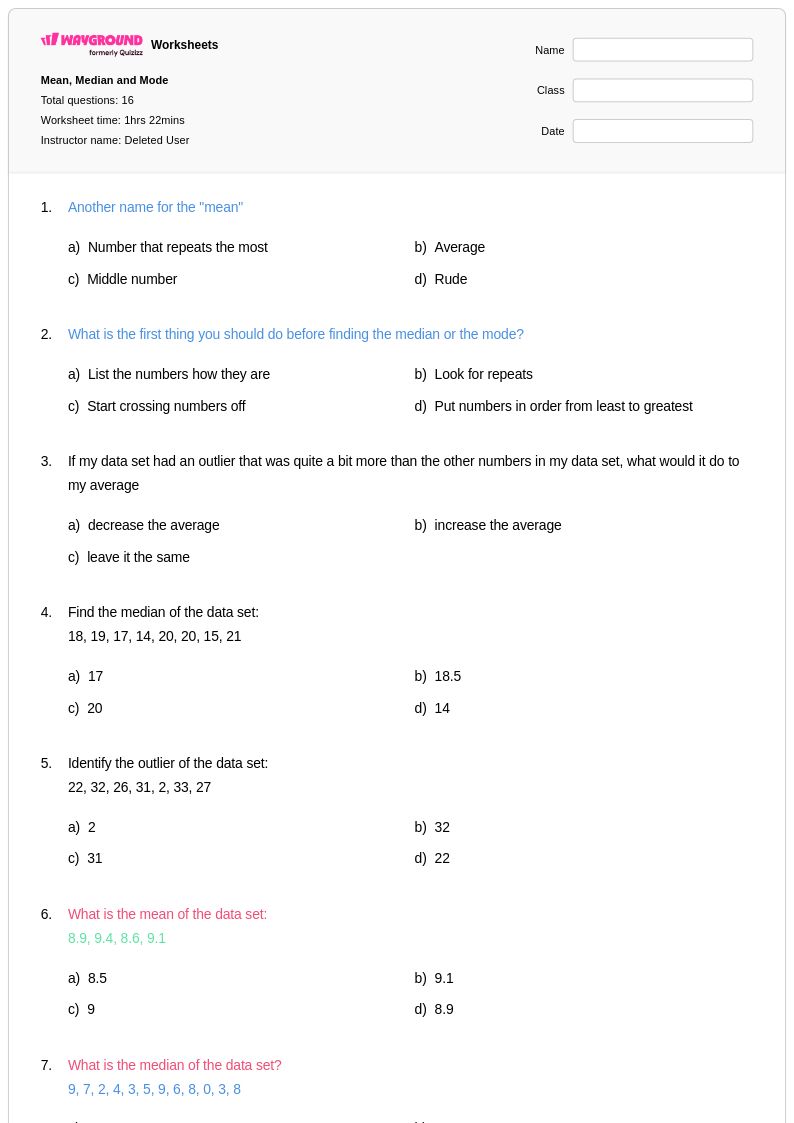
16 T
KG - PD
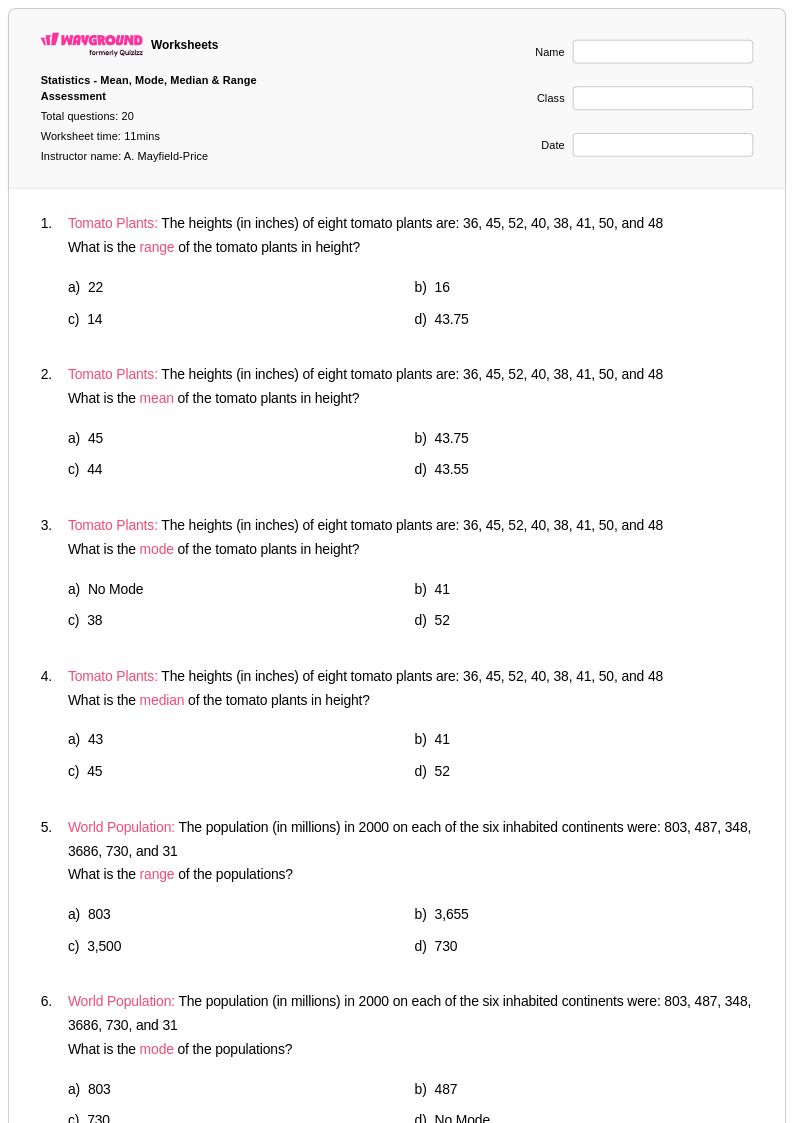
20 T
3rd - 5th
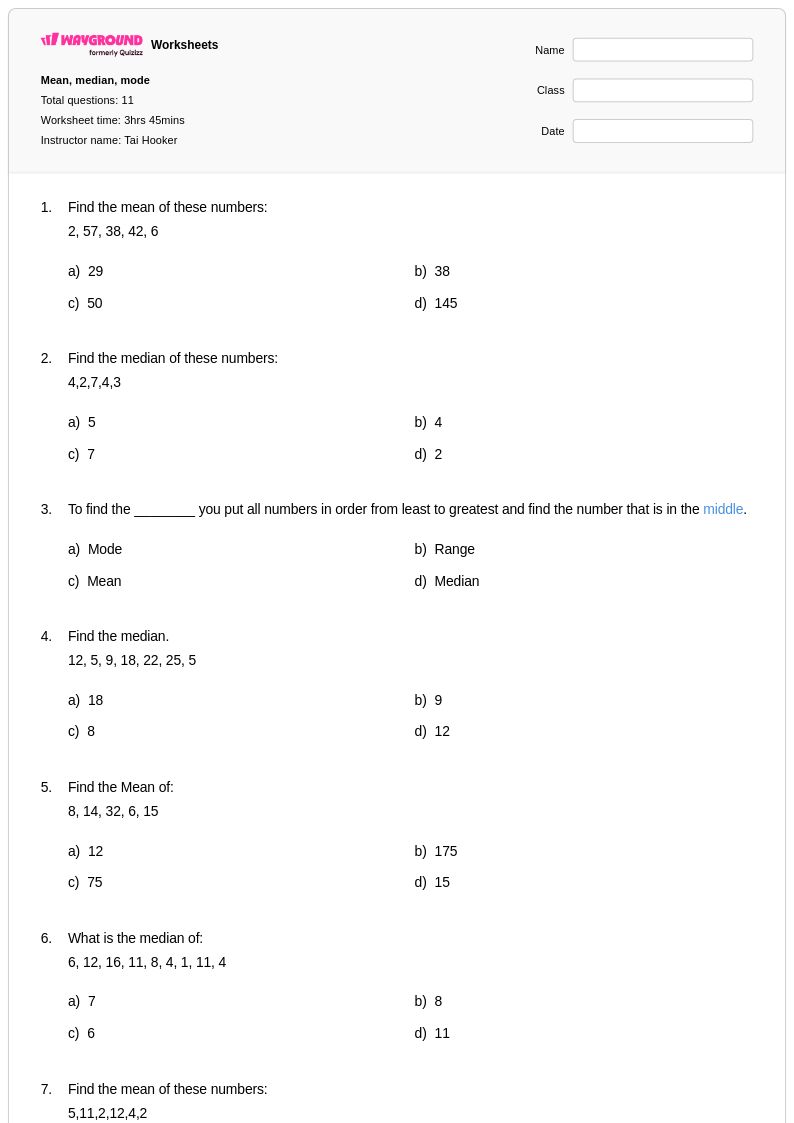
11 T
3rd - 8th
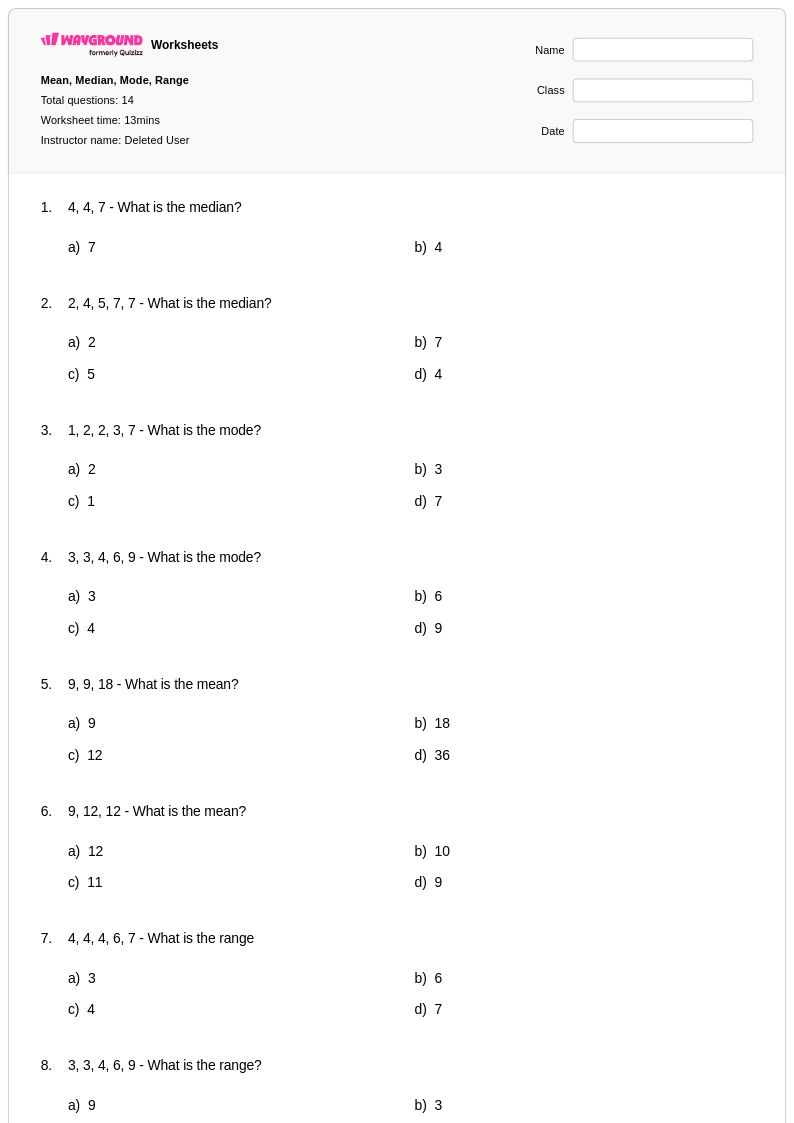
14 T
3rd
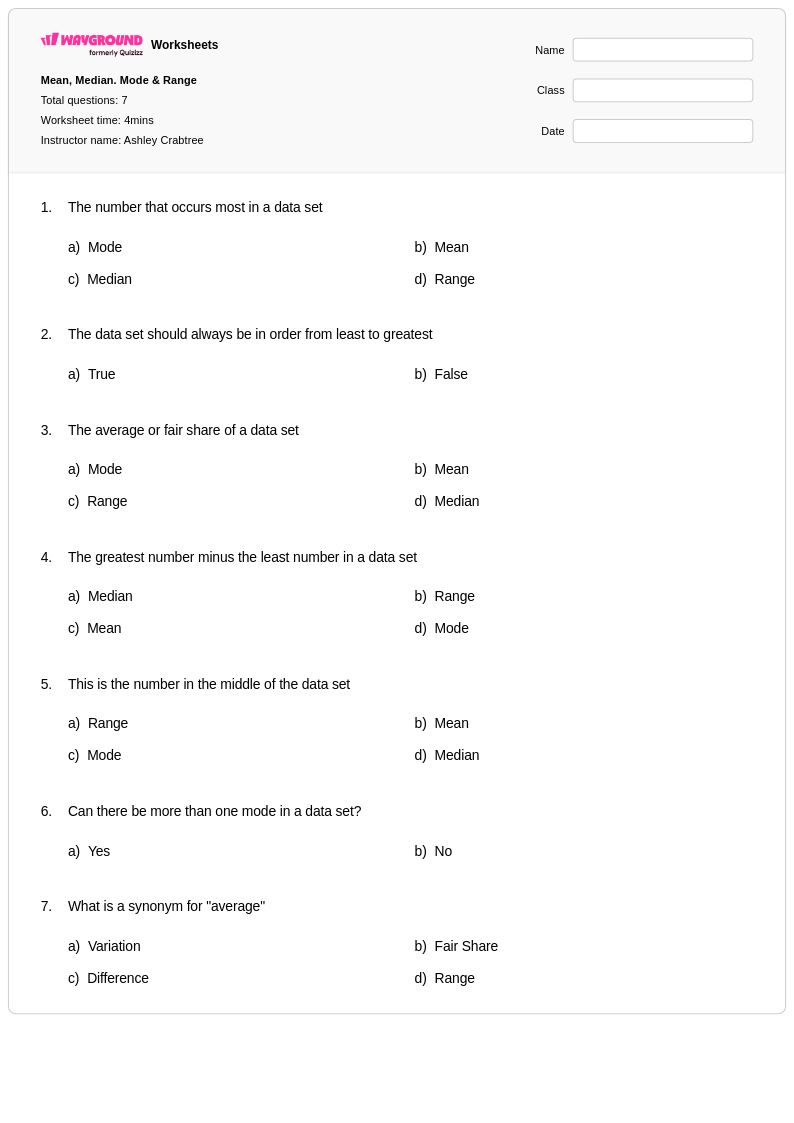
7 T
3rd - 5th
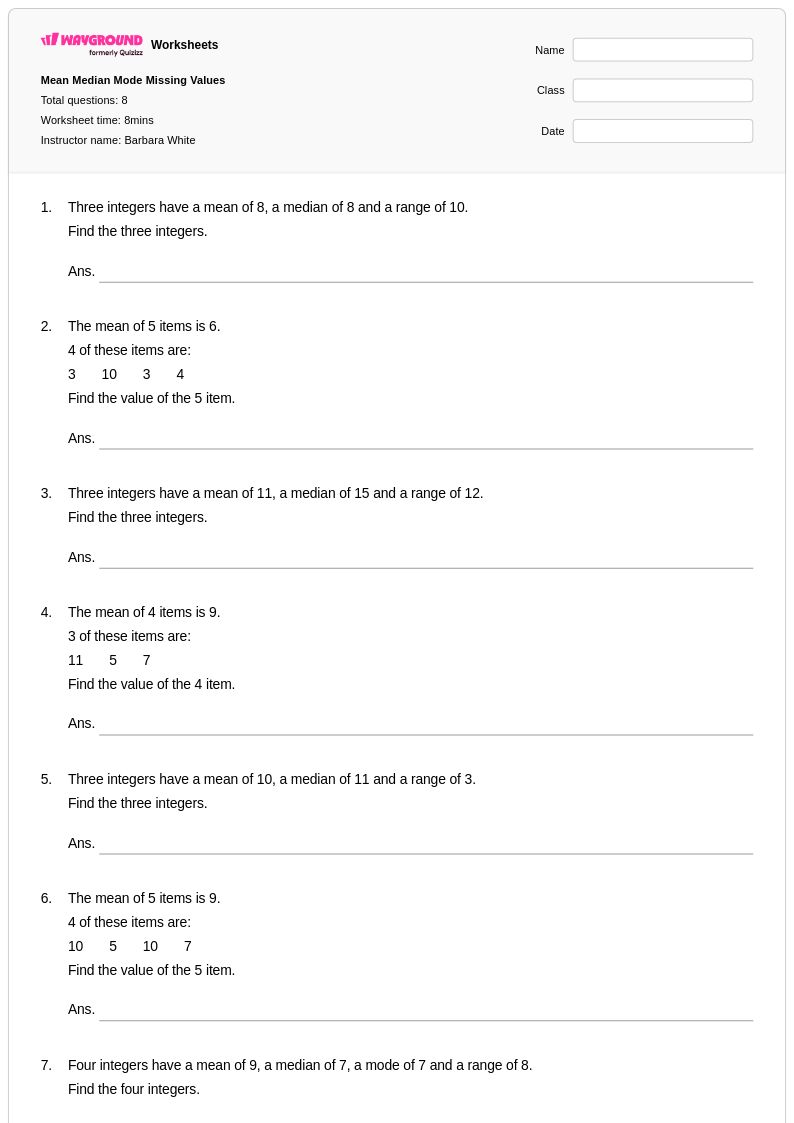
8 T
3rd
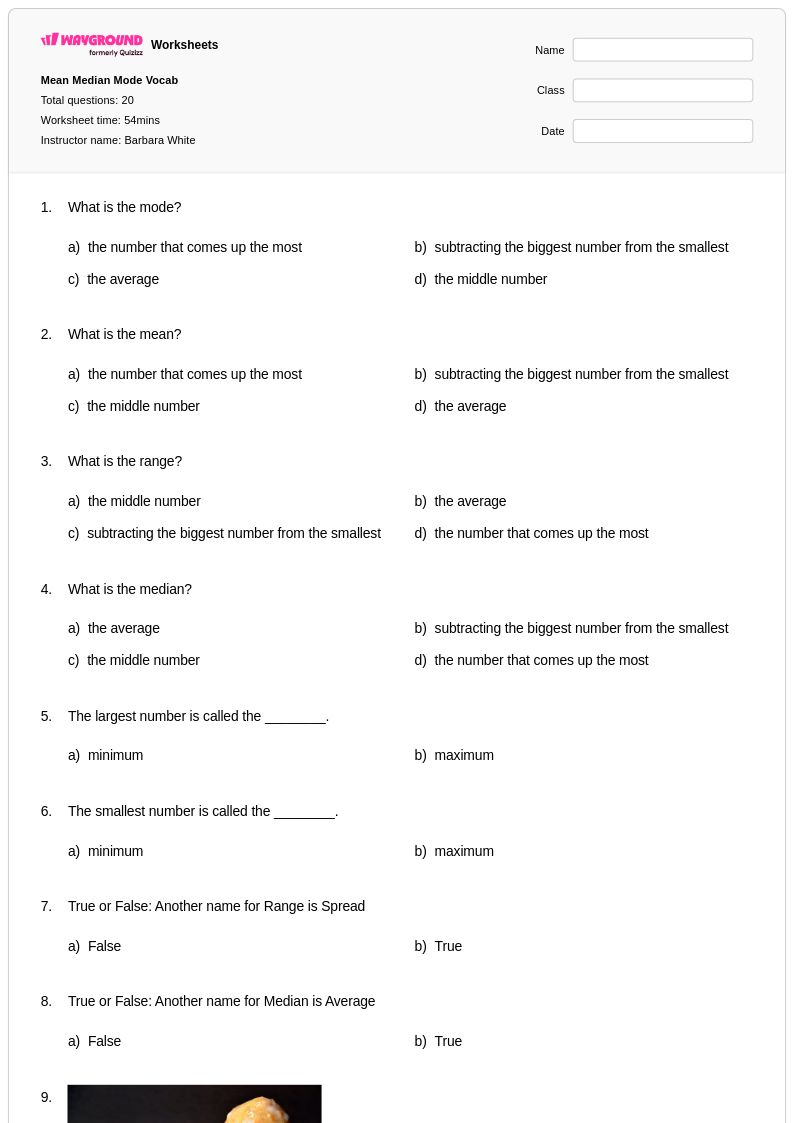
20 T
3rd - 5th
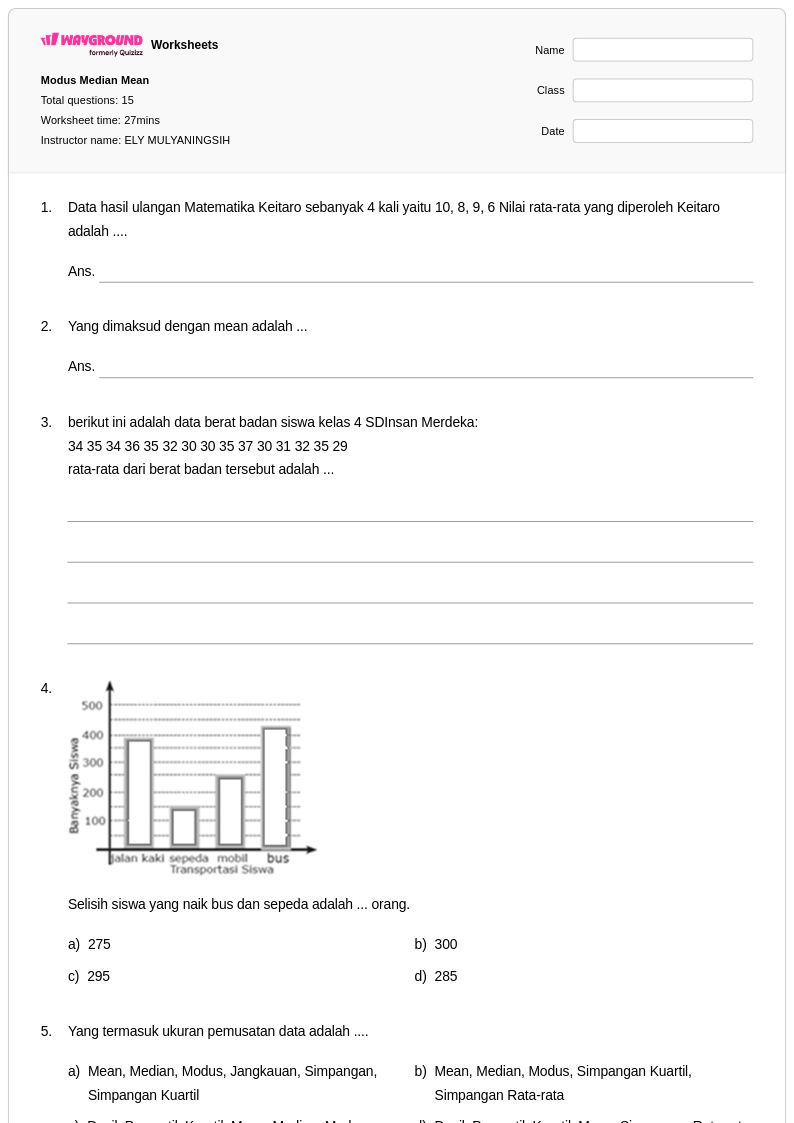
15 T
1st - 5th
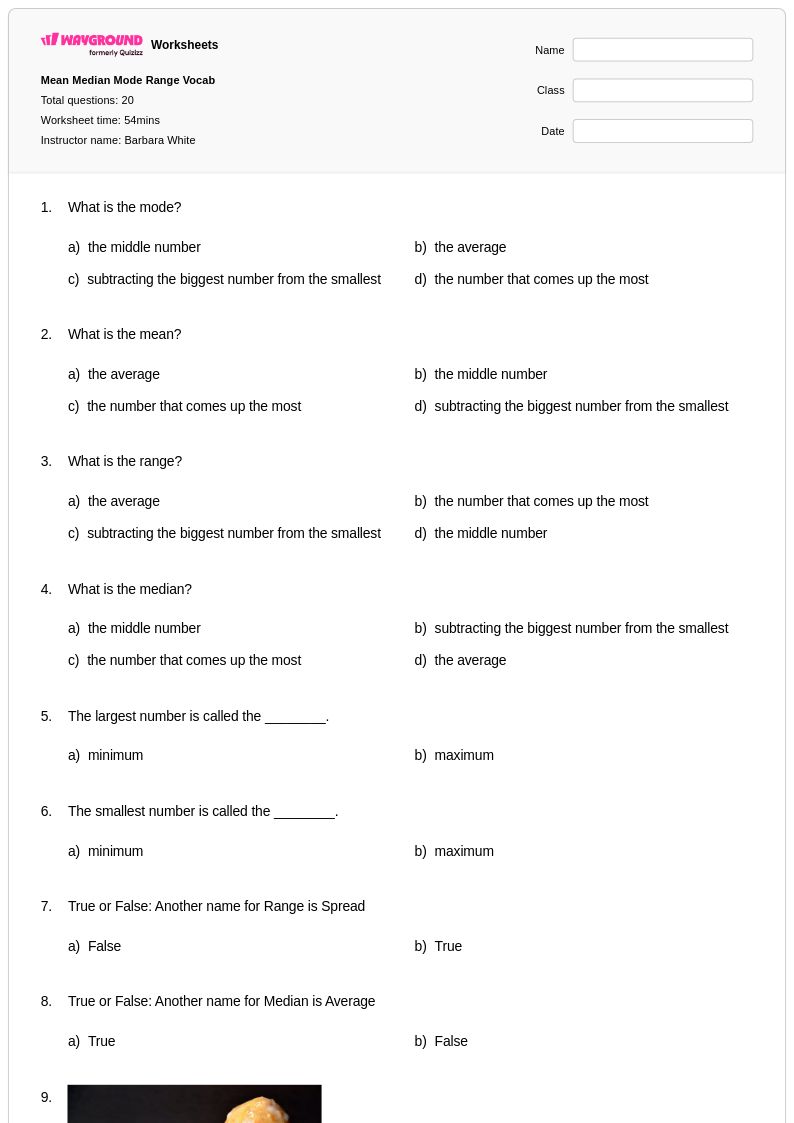
20 T
3rd - 5th
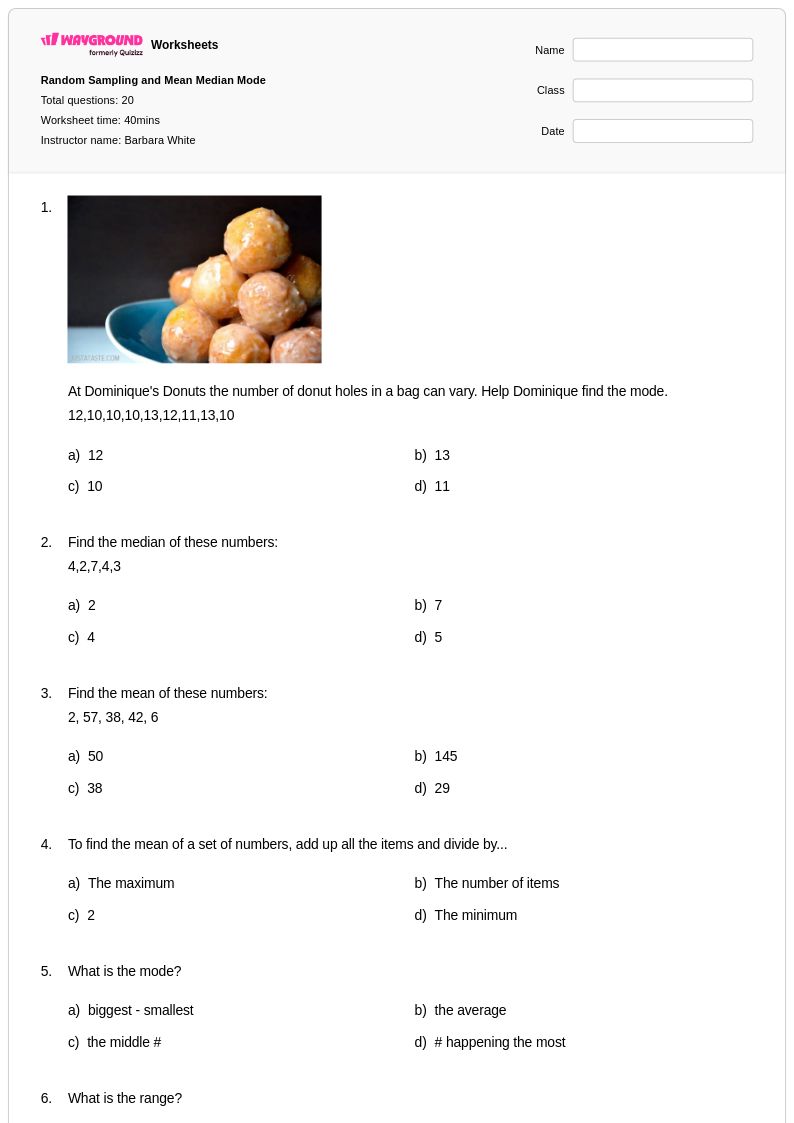
20 T
3rd - Uni
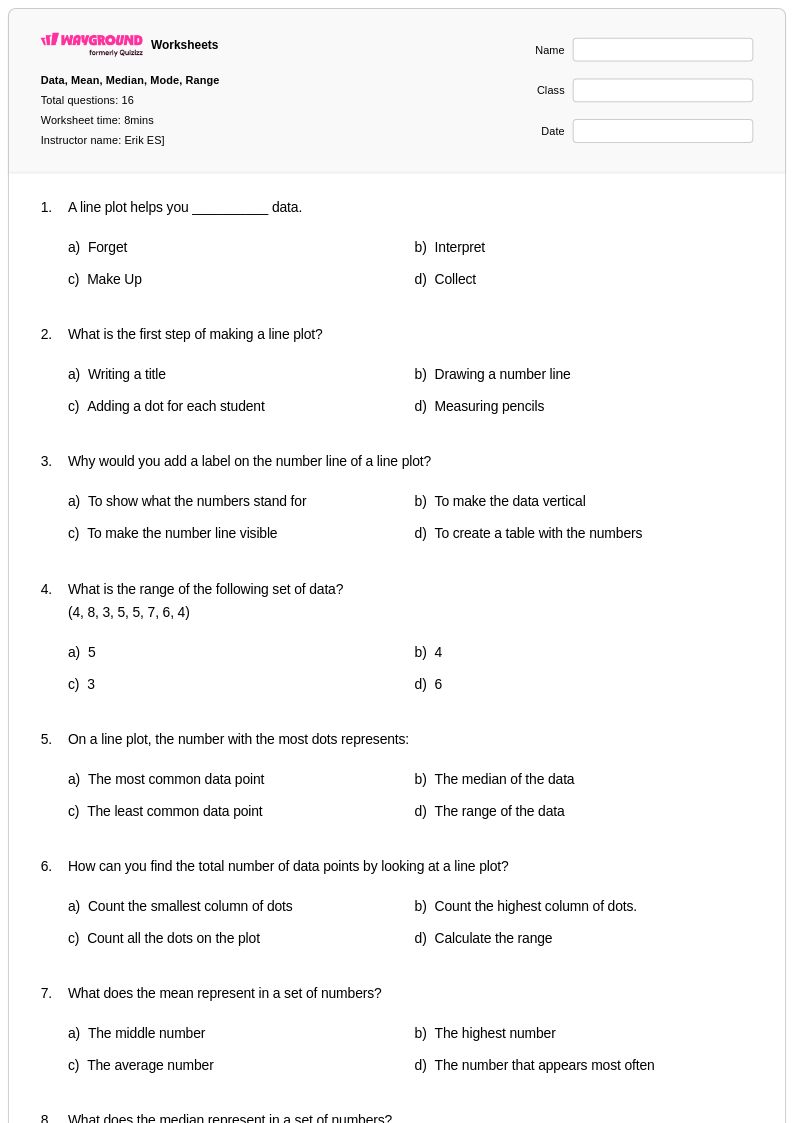
16 T
3rd - 8th
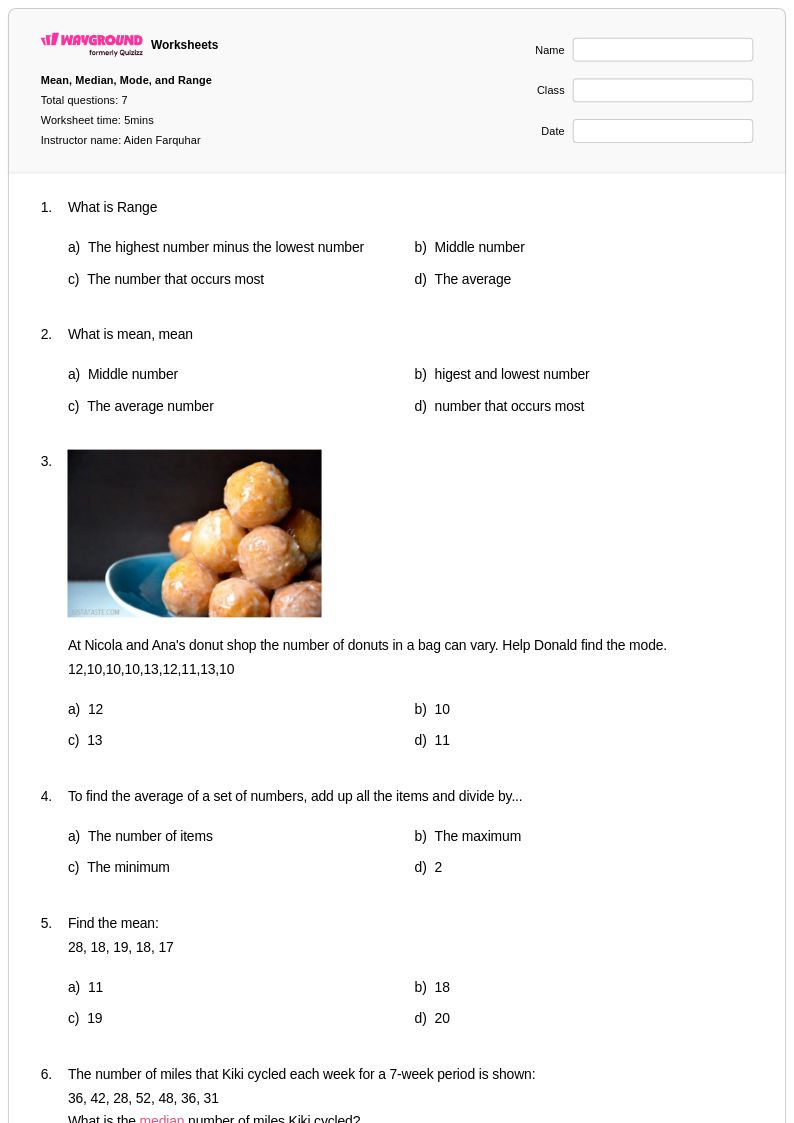
7 T
3rd - 6th
16 T
3rd
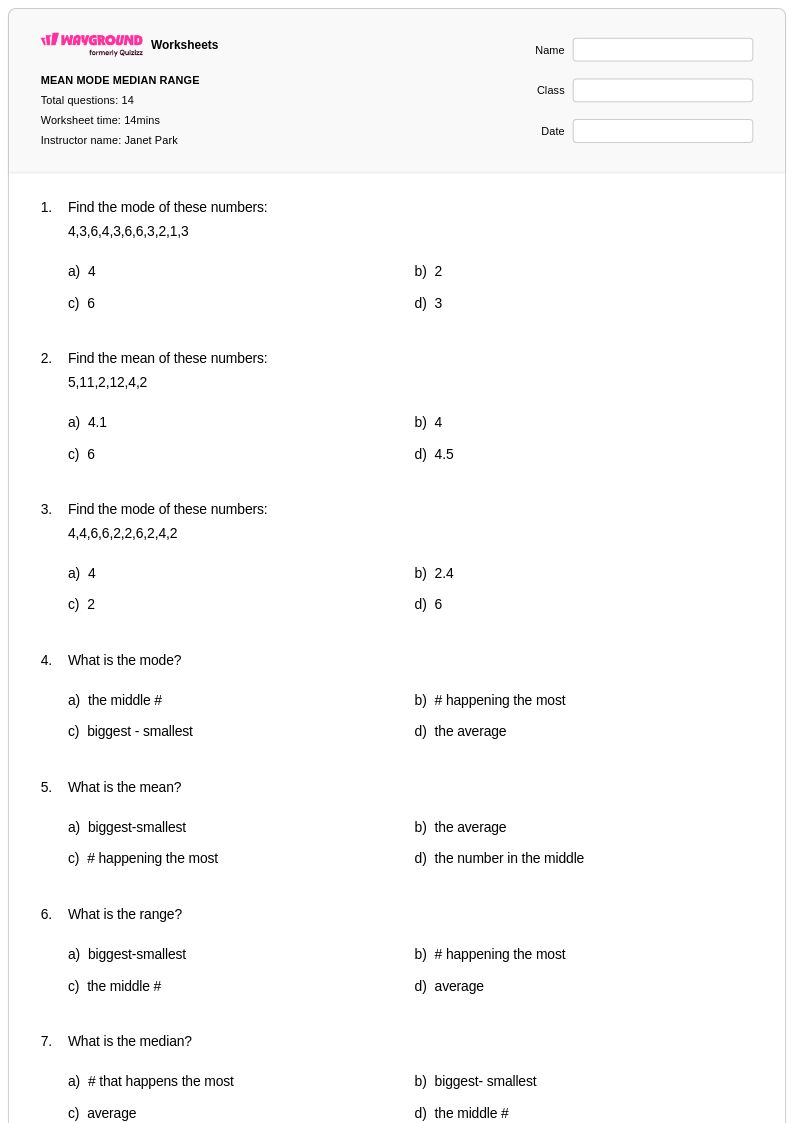
14 T
3rd - 8th
21 T
3rd
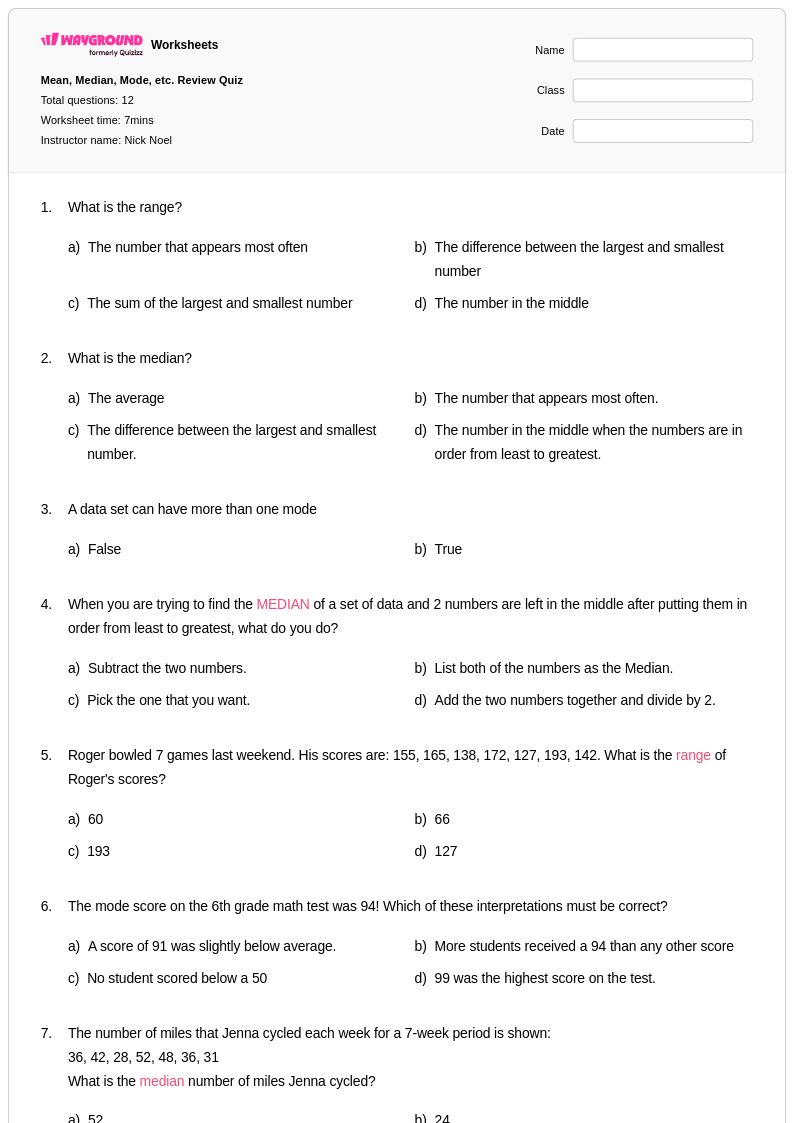
12 T
3rd - 5th
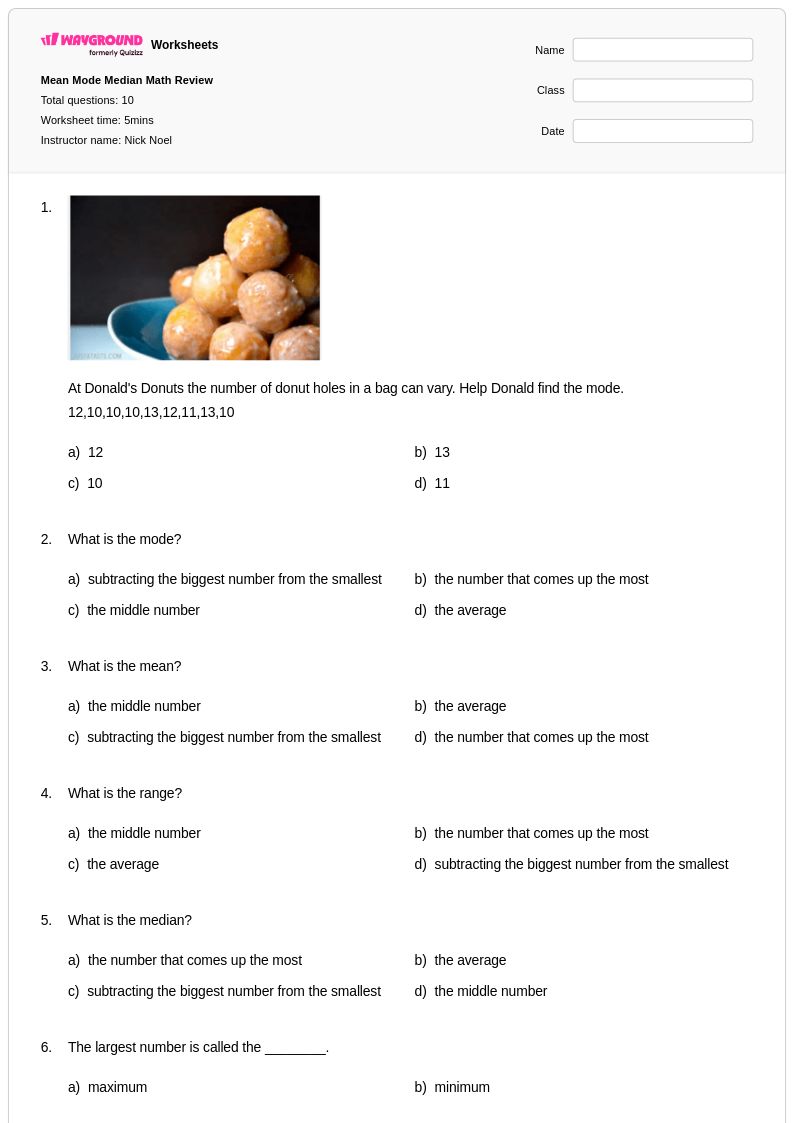
10 T
3rd - 5th
Jelajahi Mean, Median, and Mode Lembar Kerja berdasarkan Nilai
Jelajahi Lembar Kerja Mata Pelajaran Lainnya untuk grade 3
Explore printable Mean, Median, and Mode worksheets for Grade 3
Mean, median, and mode worksheets for Grade 3 students through Wayground (formerly Quizizz) introduce young learners to fundamental concepts of central tendency in an age-appropriate and engaging manner. These carefully crafted worksheets help third graders develop essential statistical thinking skills by working with small data sets, typically involving familiar objects like toys, pets, or classroom items. Students practice identifying the most frequently occurring value in a set (mode), finding the middle value when numbers are arranged in order (median), and calculating the average of a group of numbers (mean) using simple addition and division. Each worksheet collection includes comprehensive answer keys and is available as free printables in convenient PDF format, making it easy for educators to provide meaningful practice problems that build mathematical reasoning and data analysis foundations.
Wayground (formerly Quizizz) empowers teachers with access to millions of educator-created resources specifically designed to support Grade 3 statistics instruction, featuring robust search and filtering capabilities that allow quick identification of materials aligned to curriculum standards and learning objectives. The platform's differentiation tools enable teachers to customize worksheets based on individual student needs, offering various complexity levels within mean, median, and mode concepts to ensure appropriate challenge and support for diverse learners. These versatile resources are available in both printable PDF formats for traditional classroom use and digital formats for interactive learning experiences, providing educators with flexible options for lesson planning, targeted remediation sessions, enrichment activities, and regular skill practice that reinforces statistical concepts through repeated application and varied problem-solving opportunities.
FAQs
What grade do students learn mean, median, and mode?
How do I introduce mean, median, and mode to third graders?
What are good practice exercises for 3rd graders learning mean, median, and mode?
What are common difficulties for third graders with these concepts?
How can I use this Grade 3 worksheet for mean, median, and mode?
How does learning mean, median, and mode in 3rd grade prepare students for later math?