
Recommended Topics for you
- Area Calculation
- Capacity Conversion
- Comparing Measurement
- Converting Customary Units
- Converting Units
- Customary Capacity
- Customary Conversions
- Customary Units of Capacity
- Customary Units of Length
- Estimating Length
- Length Comparison
- Length Conversion
- Mass Conversion
- Measurement Tools and Strategies
- Measuring Distance
- Measuring Length
- Measuring Mass
- Measuring to the Nearest Quarter Inch
- Measuring Volume
- Measuring Weight
- Metric Conversion
- Metric System Conversion
- Reading a Ruler
- Reading a Tape Measure
- Reading Meters
- Reading Metric Ruler
- Reading Scales
- Scale and Conversions
- Size Comparison
- Standard and Nonstandard Units
- Units of Measurement
- Weight Comparison
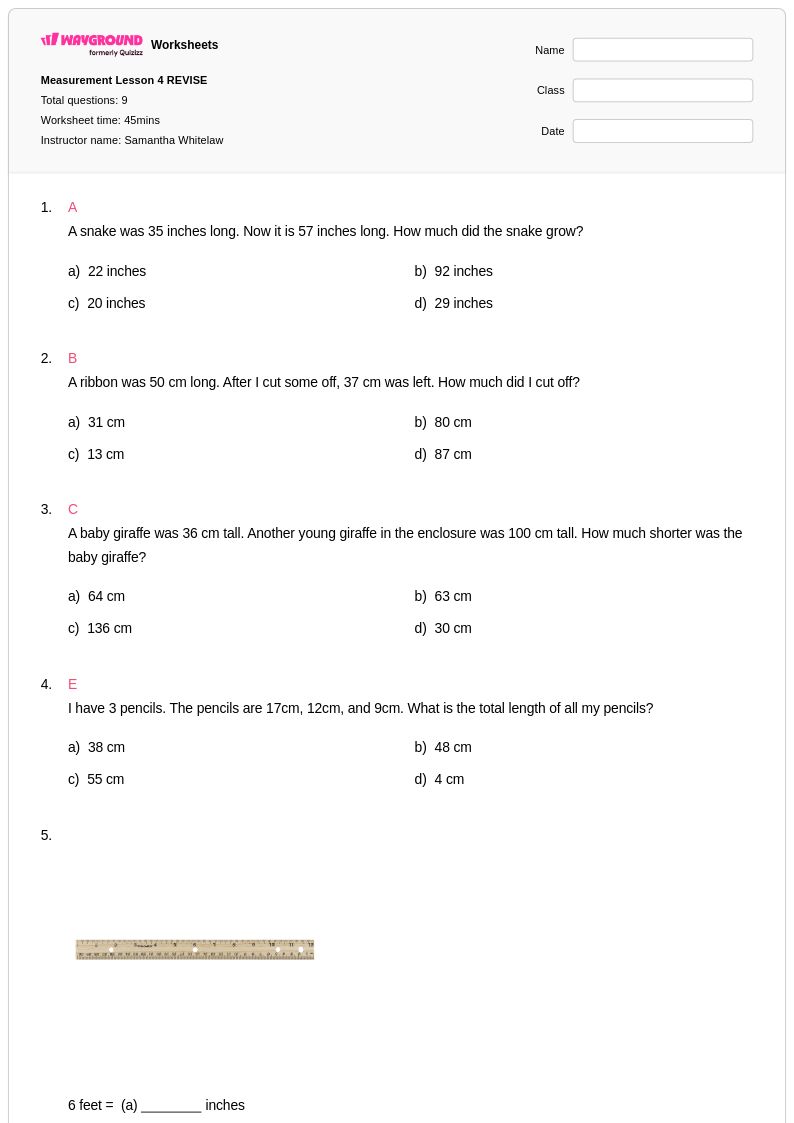
9 Q
4th
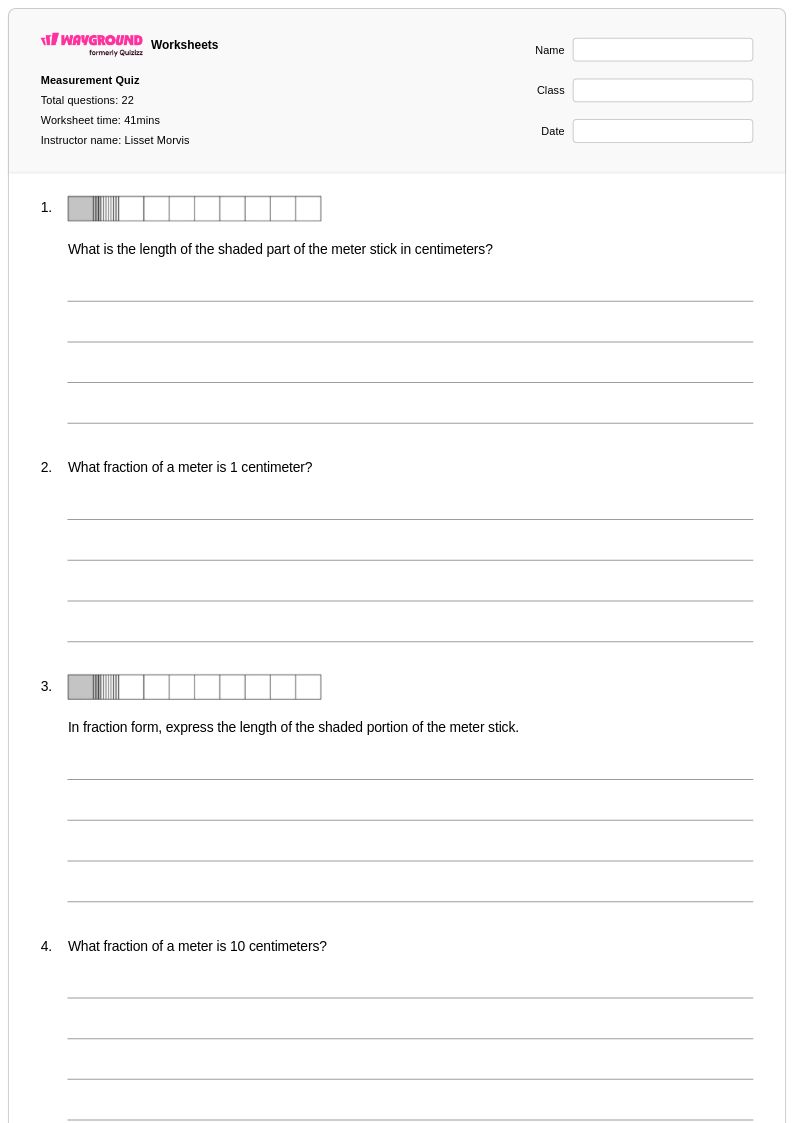
22 Q
4th
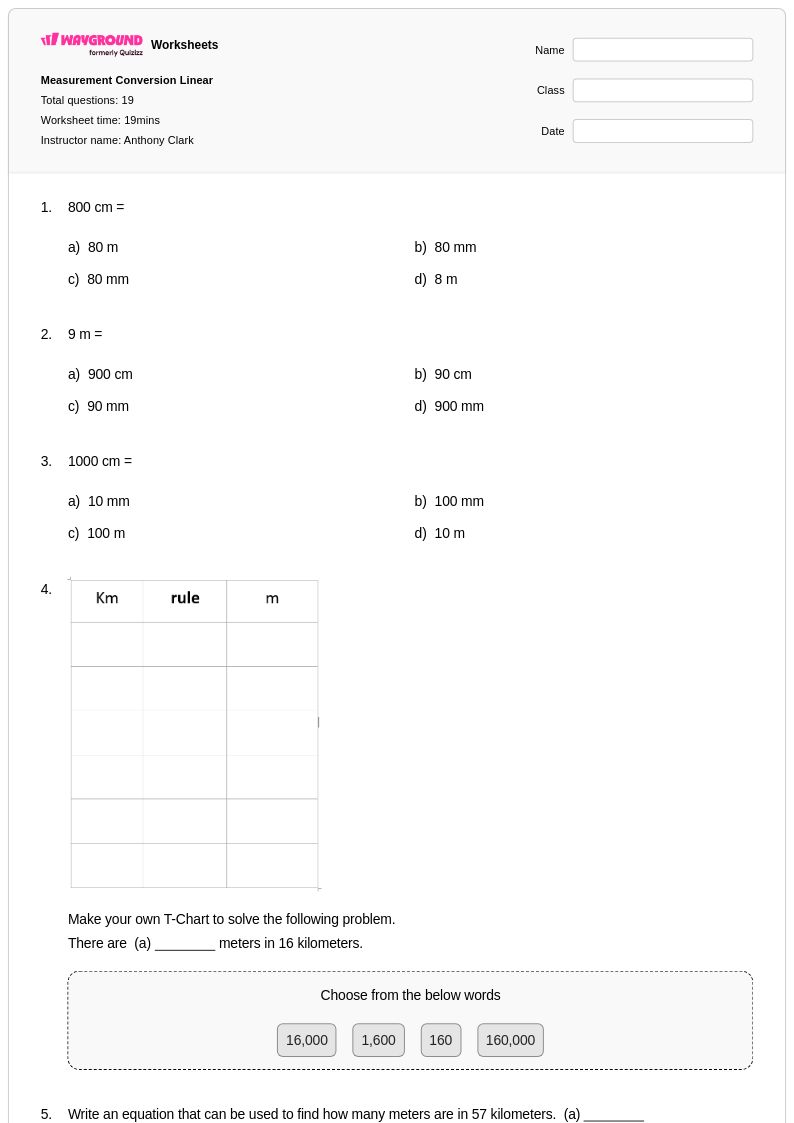
19 Q
4th - Uni
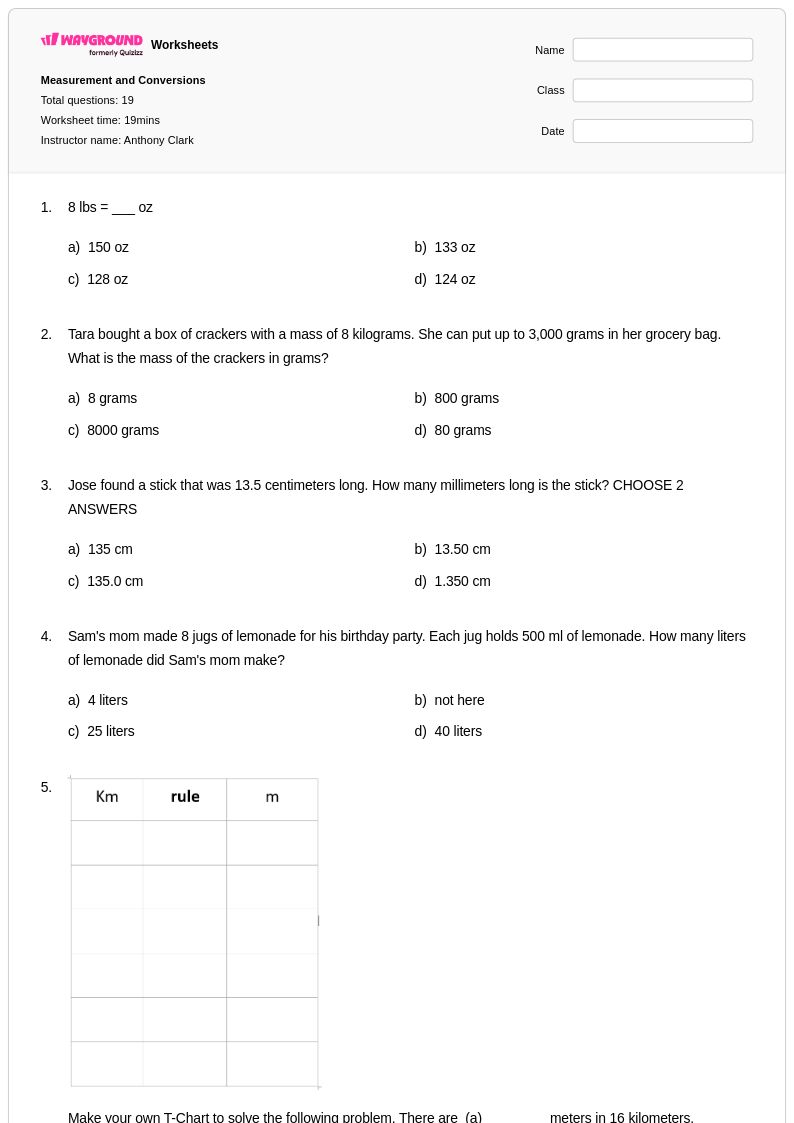
19 Q
4th - Uni
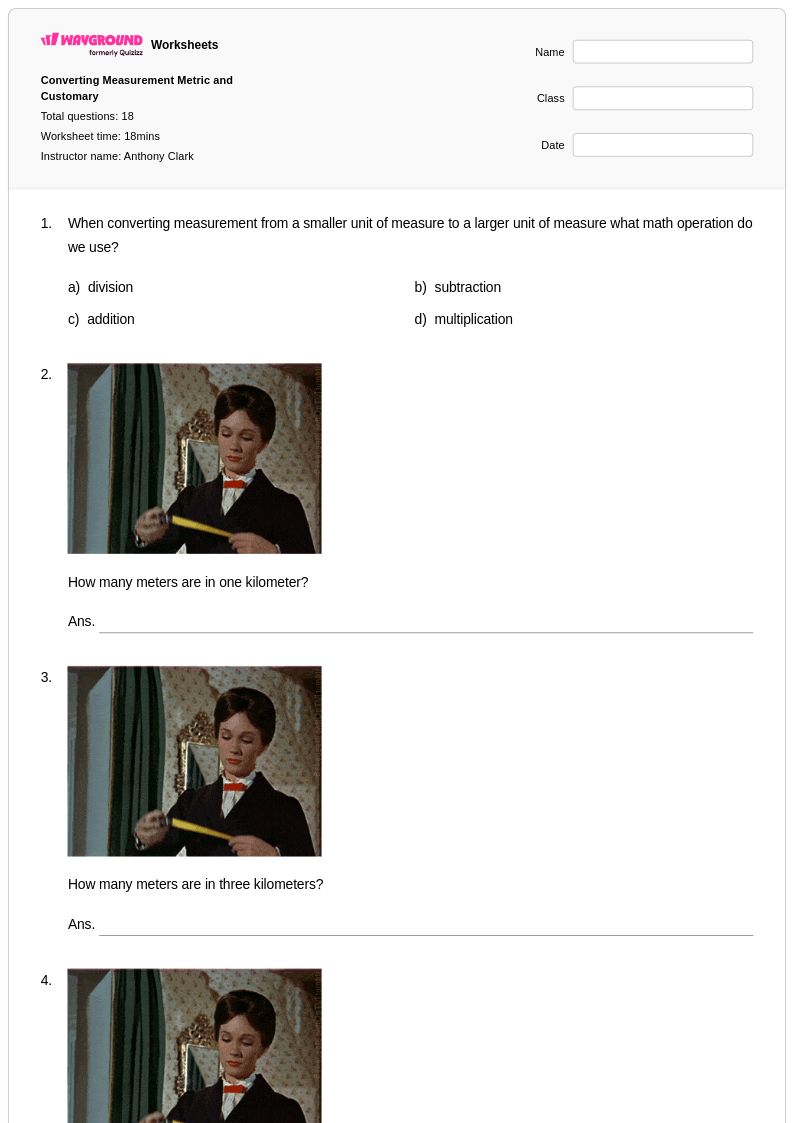
18 Q
4th - Uni
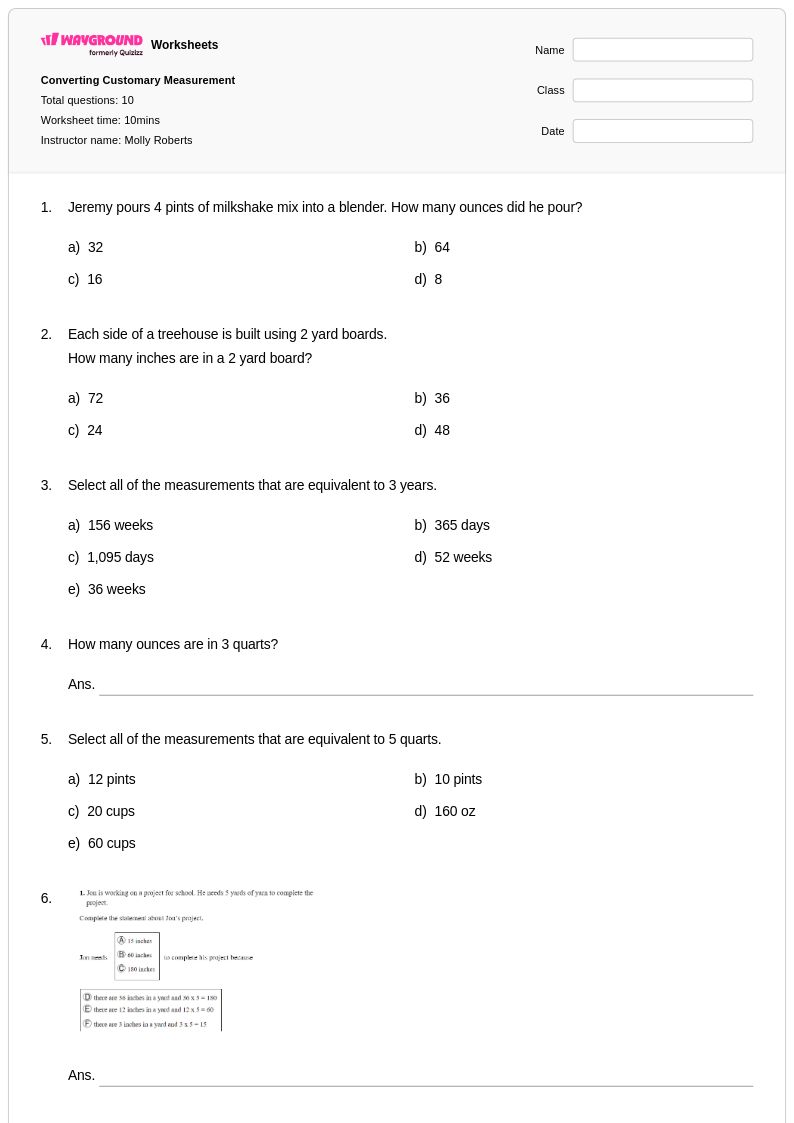
10 Q
4th
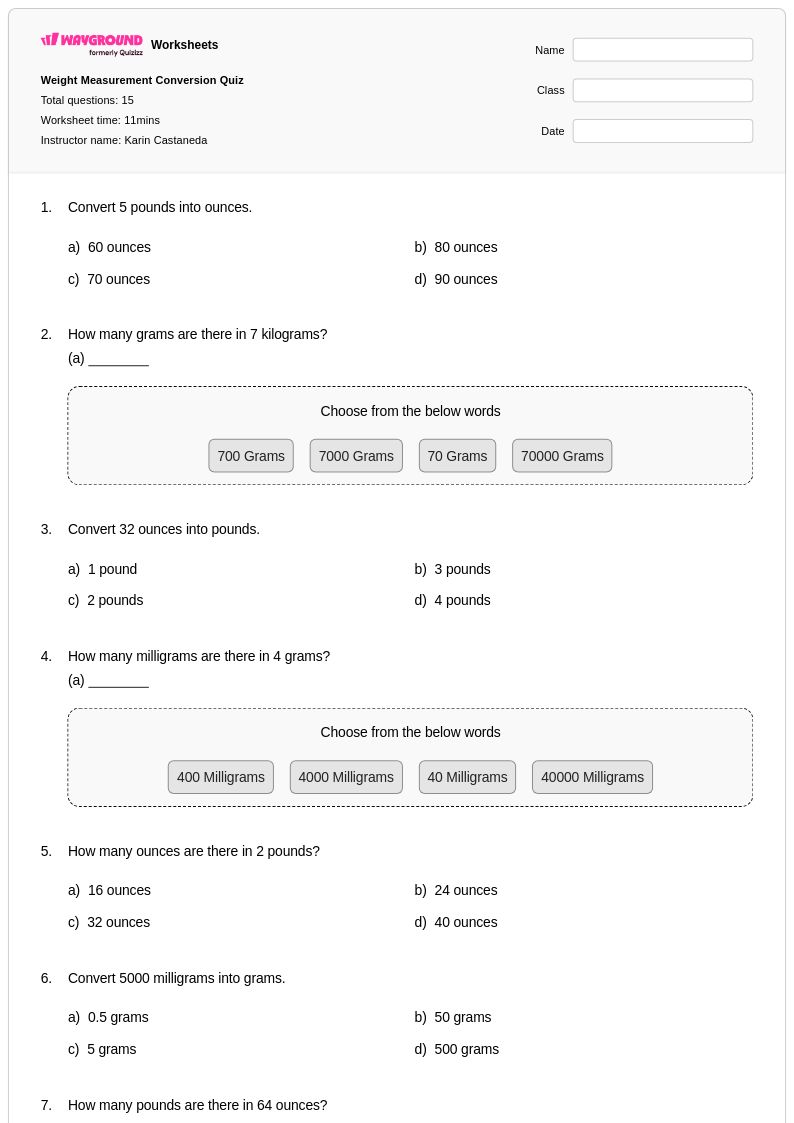
15 Q
4th
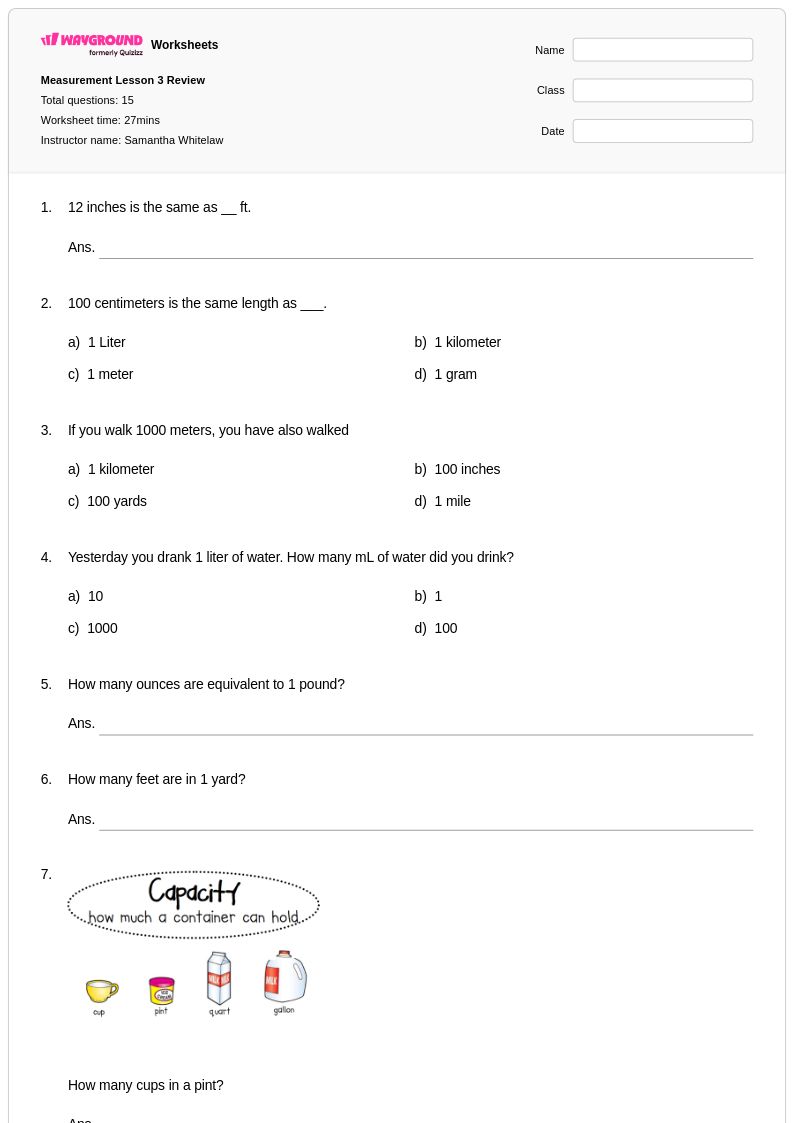
15 Q
4th
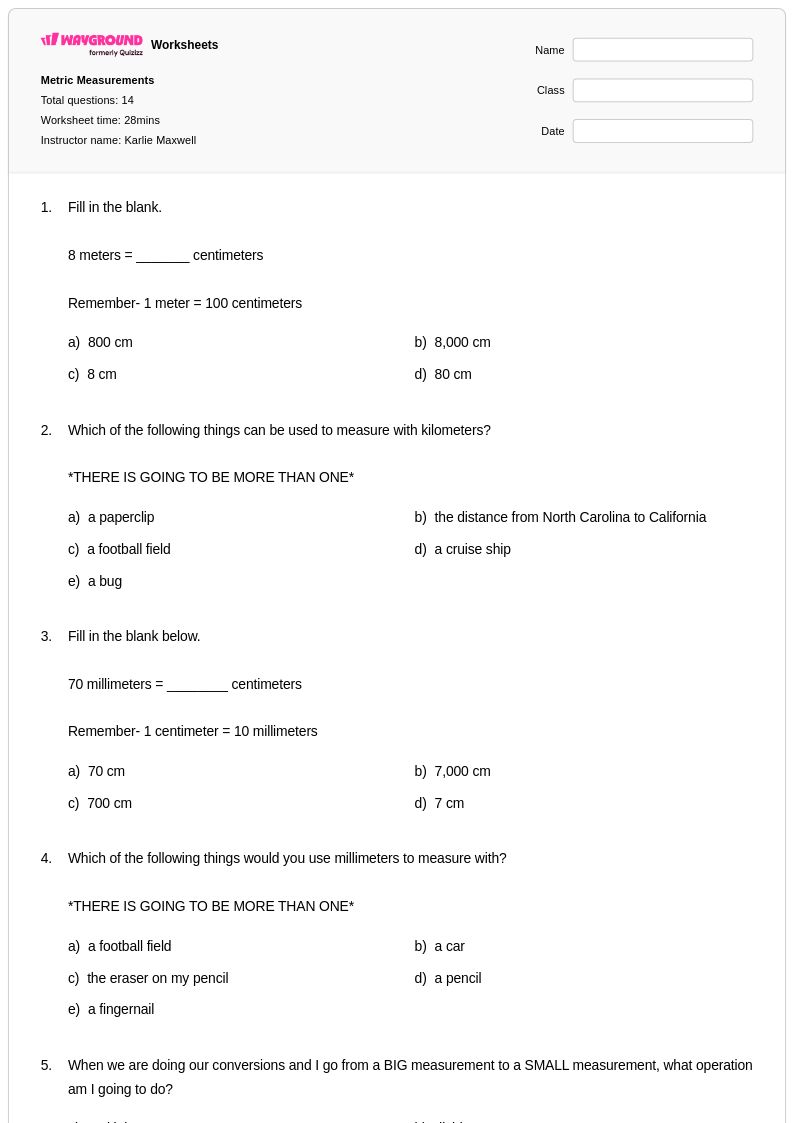
14 Q
4th
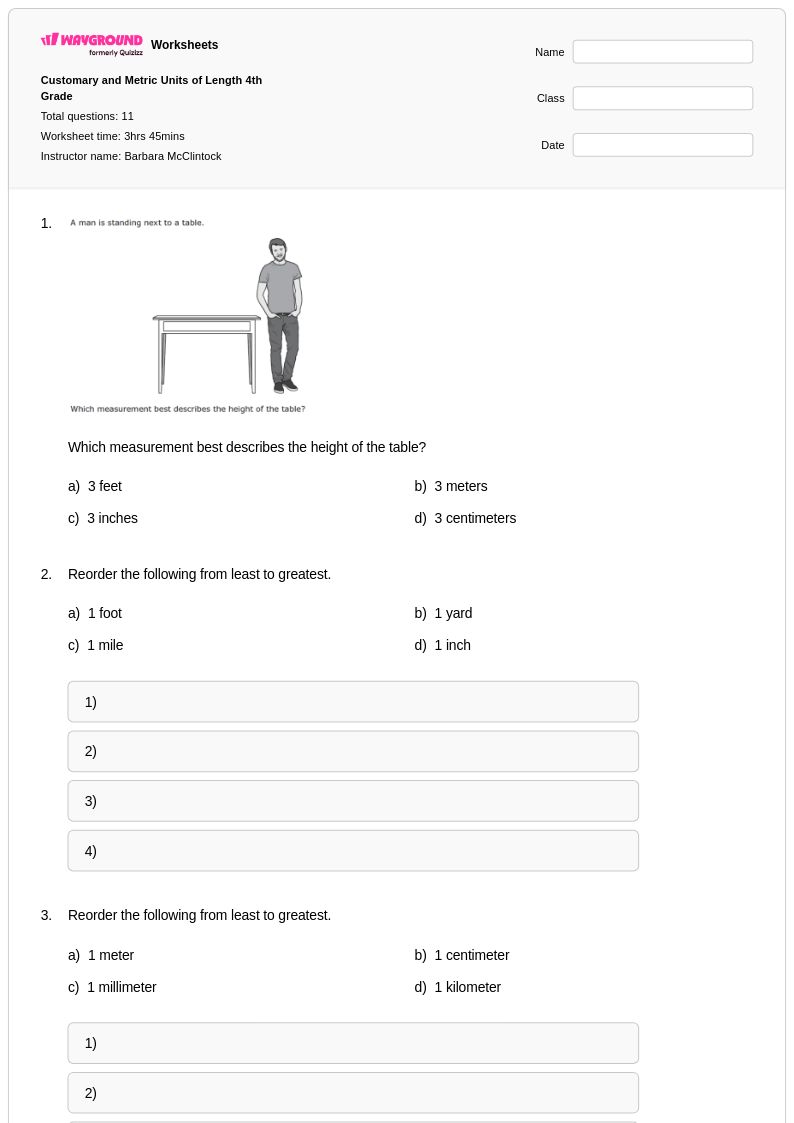
11 Q
4th
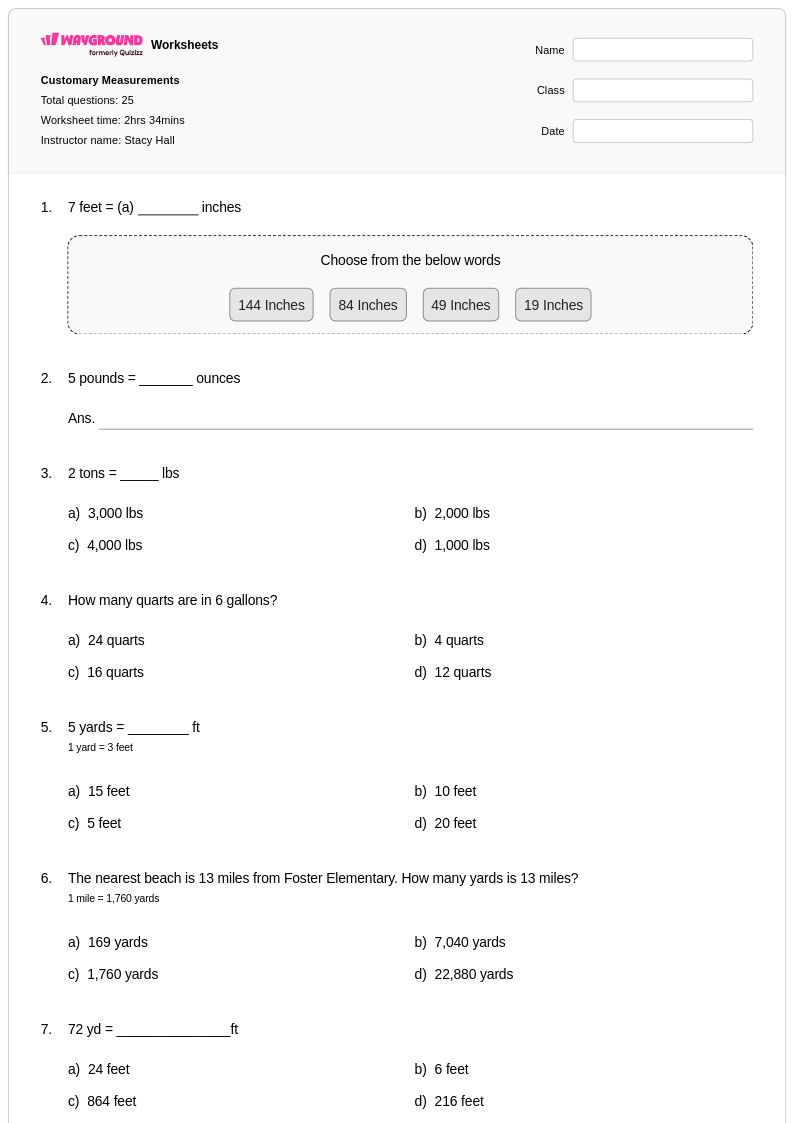
25 Q
4th
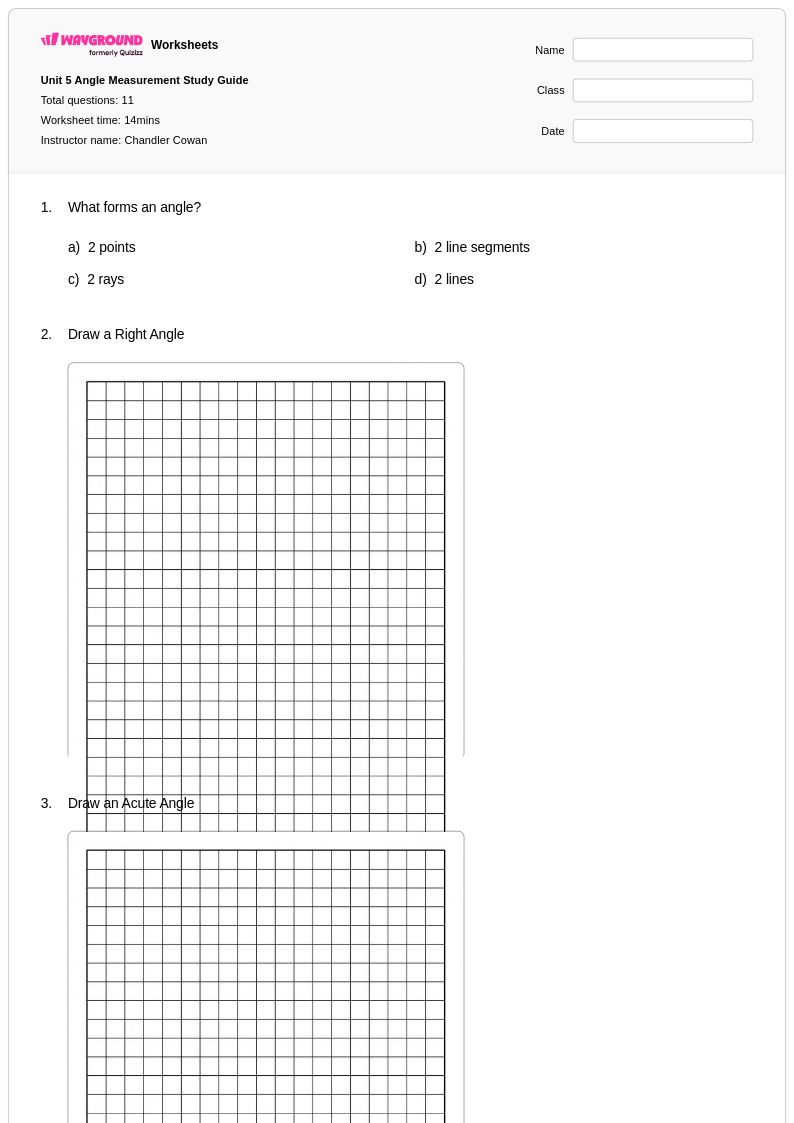
11 Q
4th
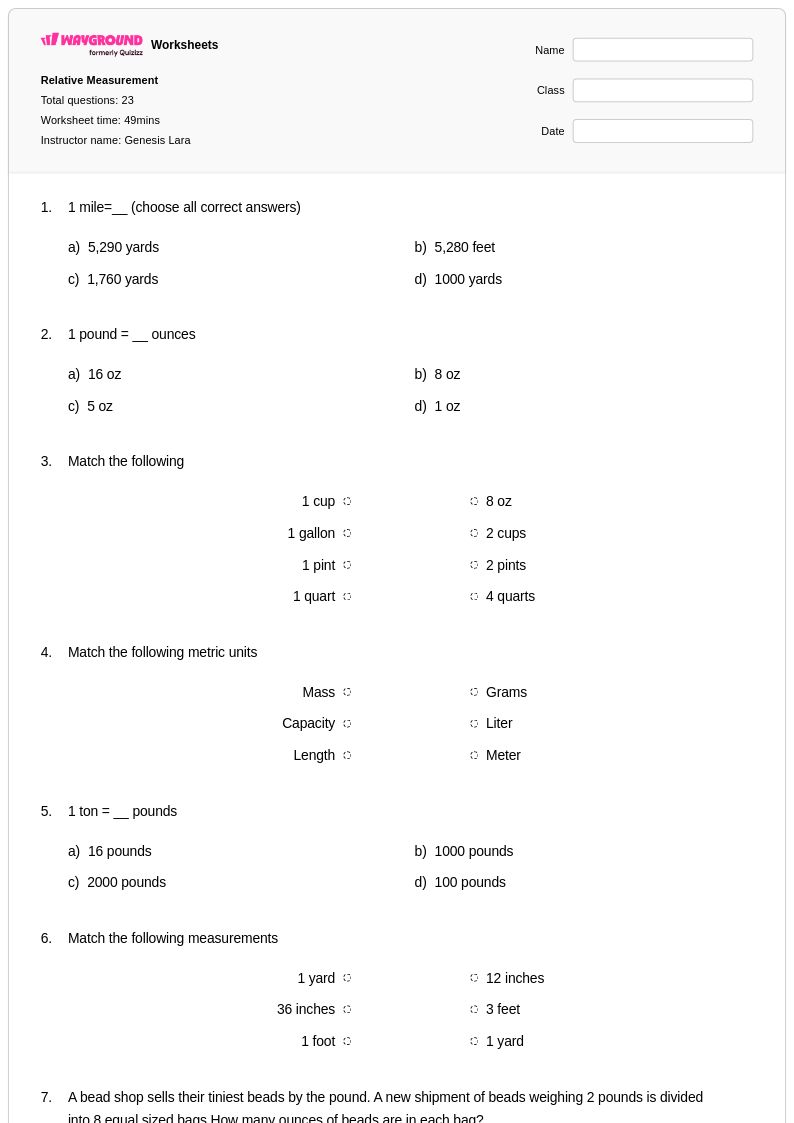
23 Q
4th
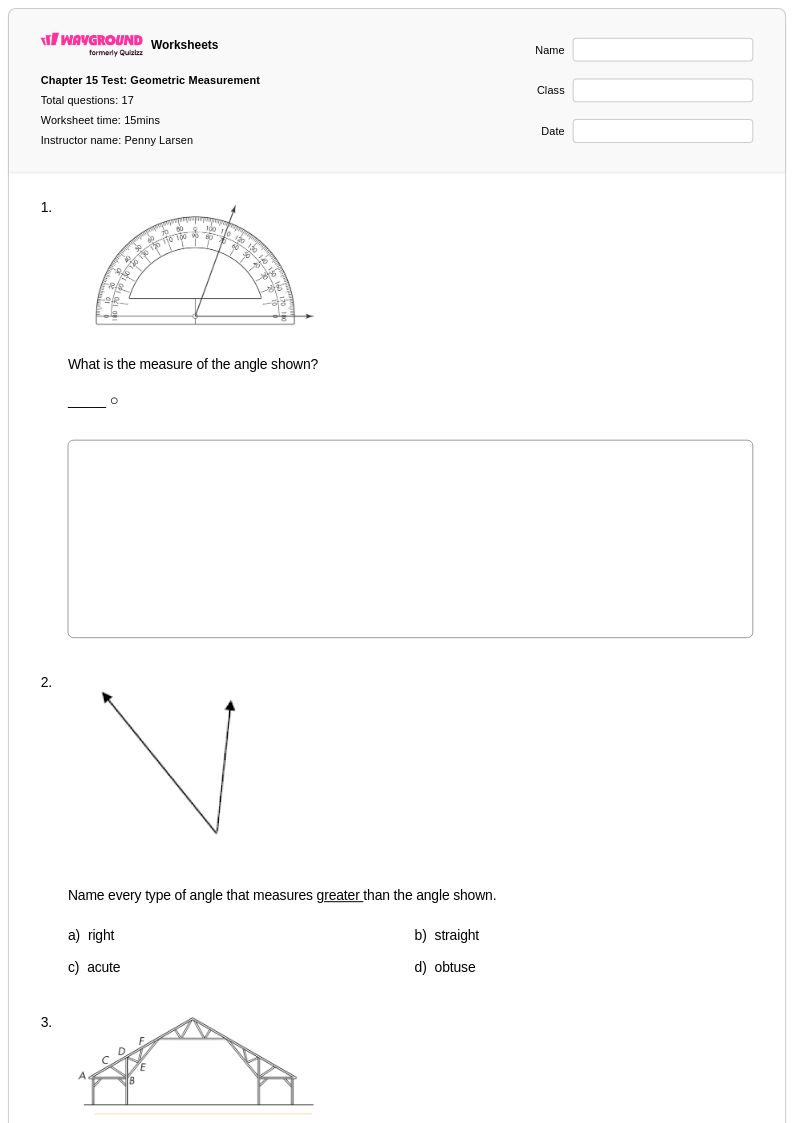
17 Q
4th
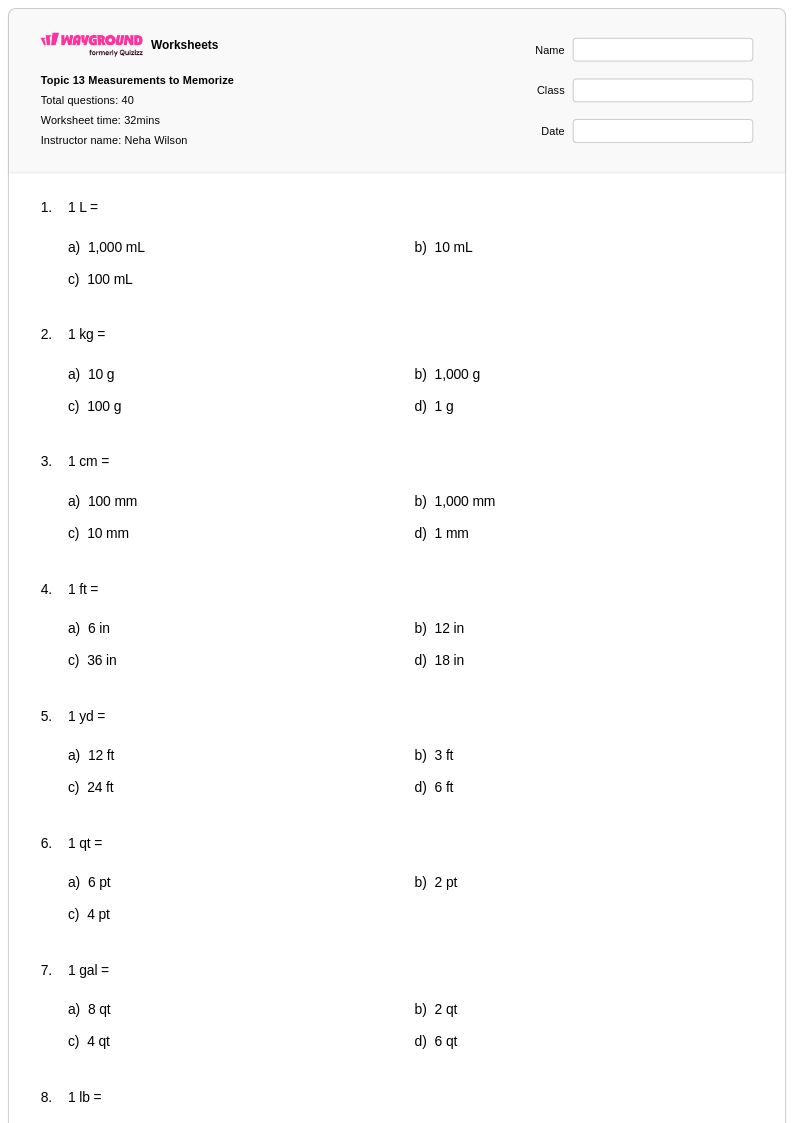
40 Q
4th
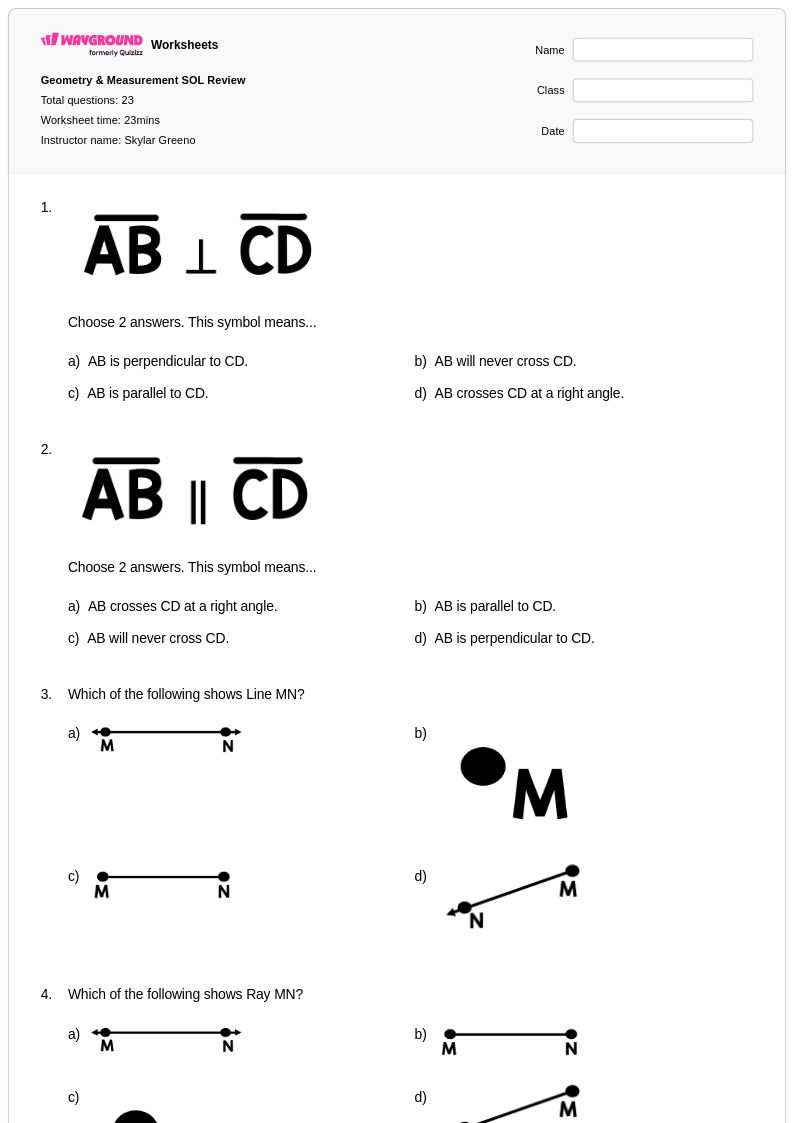
23 Q
4th
15 Q
4th - Uni
15 Q
4th - Uni
19 Q
3rd - Uni
15 Q
4th - Uni
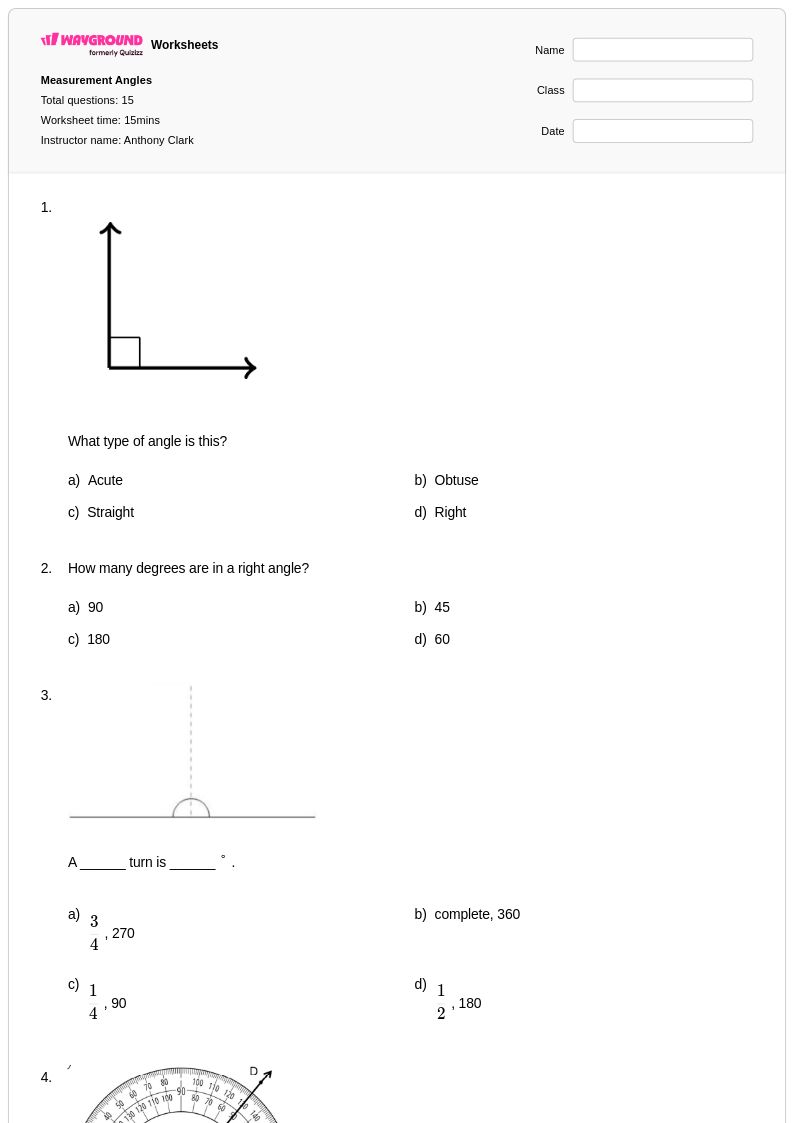
15 Q
4th - Uni
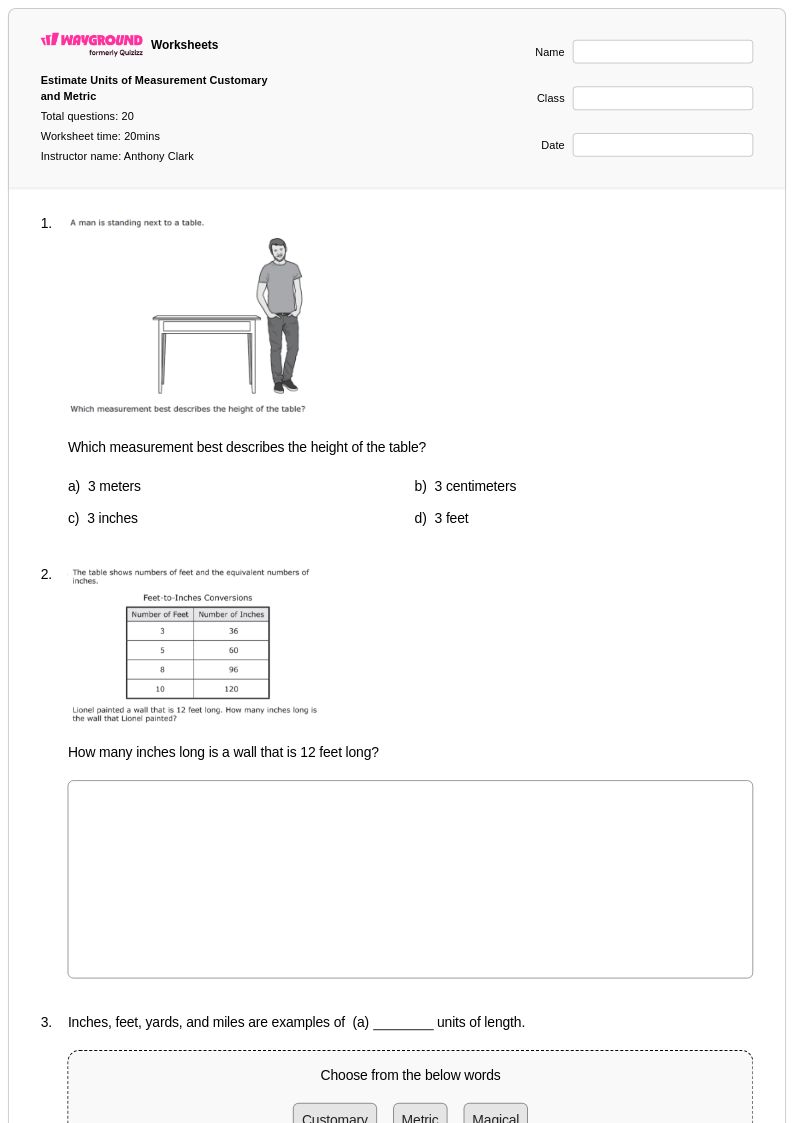
20 Q
4th - Uni
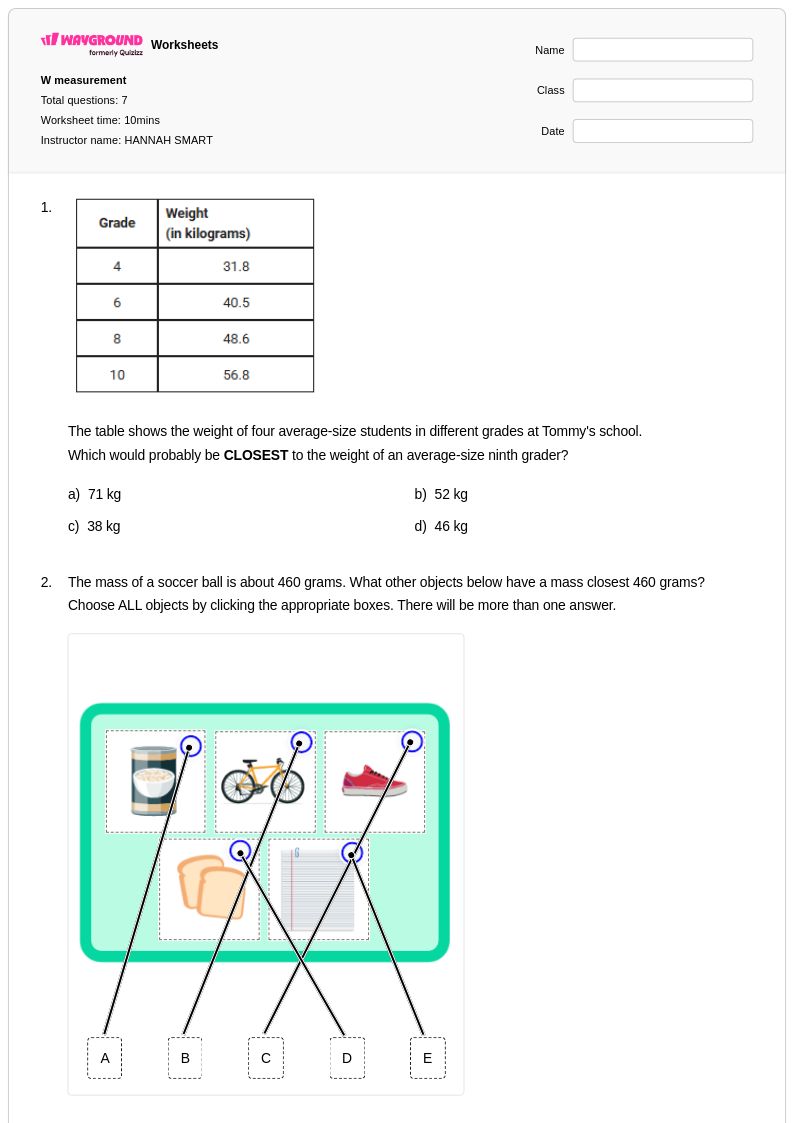
7 Q
4th
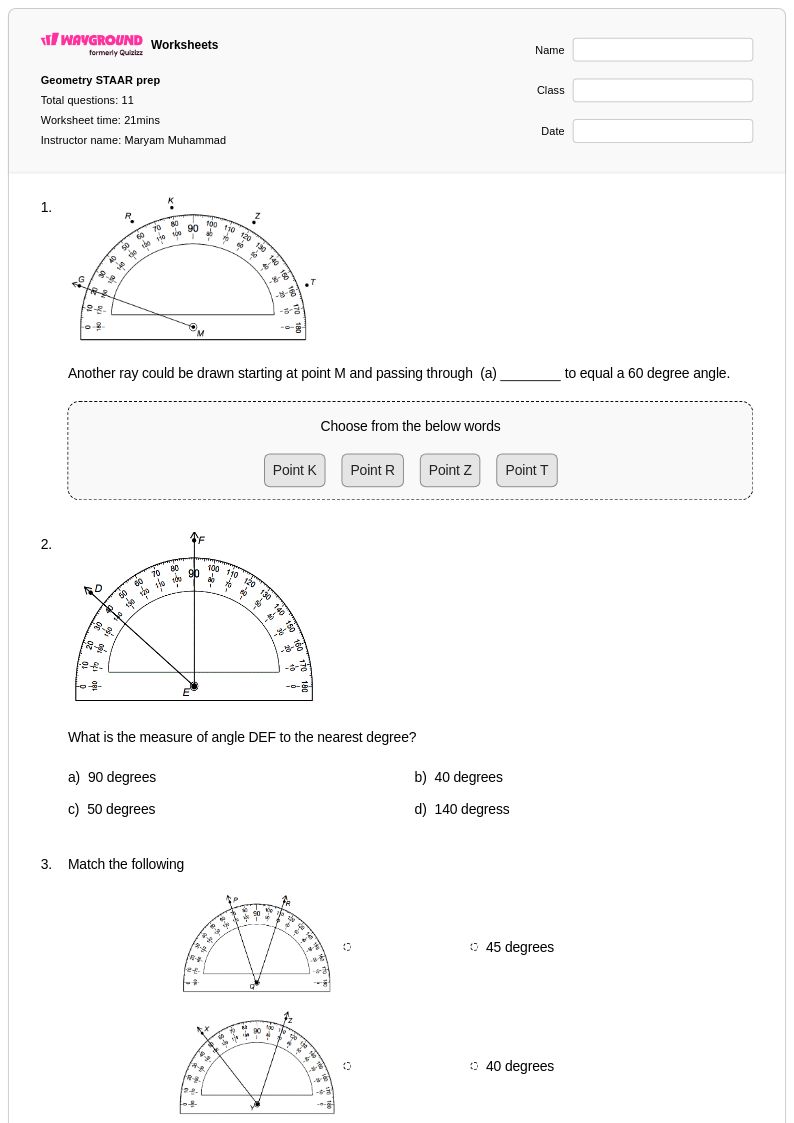
11 Q
4th
Explore Measurement Worksheets by Grades
Explore Measurement Worksheets for grade 4 by Topic
- Area Calculation
- Capacity Conversion
- Comparing Measurement
- Converting Customary Units
- Converting Units
- Customary Capacity
- Customary Conversions
- Customary Units of Capacity
- Customary Units of Length
- Estimating Length
- Length Comparison
- Length Conversion
- Mass Conversion
- Measurement Tools and Strategies
- Measuring Distance
- Measuring Length
- Measuring Mass
- Measuring to the Nearest Quarter Inch
- Measuring Volume
- Measuring Weight
Explore Other Subject Worksheets for grade 4
Explore printable Measurement worksheets for Grade 4
Grade 4 measurement worksheets available through Wayground (formerly Quizizz) provide comprehensive practice opportunities that strengthen students' understanding of length, weight, capacity, time, and area concepts. These carefully designed resources help fourth-grade learners master essential measurement skills including converting between standard and metric units, reading various measurement tools, and solving real-world problems involving measurement calculations. Each worksheet collection includes detailed answer keys and is available as free printables in pdf format, making it easy for educators to incorporate targeted practice problems into their mathematics instruction while supporting students who need additional reinforcement of measurement concepts.
Wayground (formerly Quizizz) empowers teachers with access to millions of educator-created measurement worksheets that can be easily discovered through robust search and filtering capabilities aligned to state and national mathematics standards. These differentiation tools allow instructors to customize content based on individual student needs, offering both printable pdf versions for traditional classroom use and digital formats for interactive learning experiences. The platform's flexible resources support comprehensive lesson planning by providing materials suitable for initial skill introduction, targeted remediation for struggling learners, and enrichment activities for advanced students, ensuring that all fourth-grade students can develop confidence and proficiency in measurement skills through varied and engaging practice opportunities.
FAQs
How should I teach measurement to fourth graders?
What exercises help fourth graders practice measurement?
What measurement mistakes do fourth graders commonly make?
How can I use these Grade 4 measurement worksheets?
How does Grade 4 measurement fit into the Common Core progression?
How can I differentiate Grade 4 measurement practice?
What measurement skills are typically taught in fourth grade?