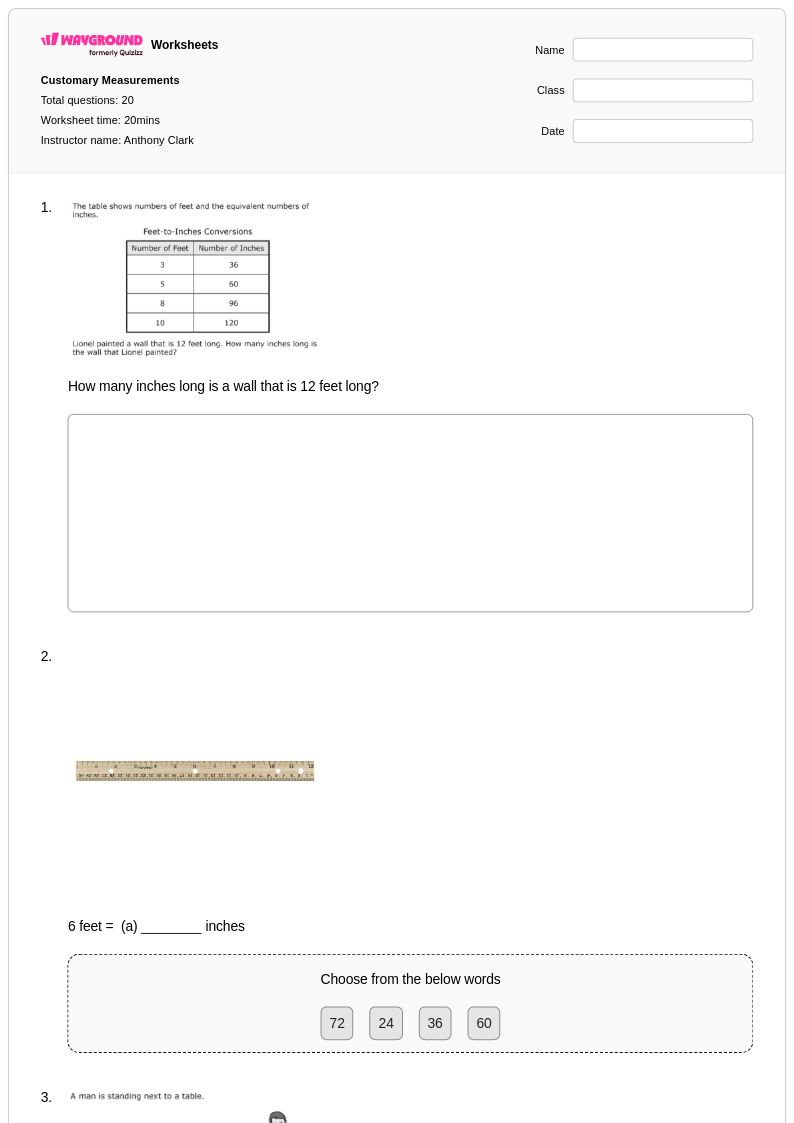
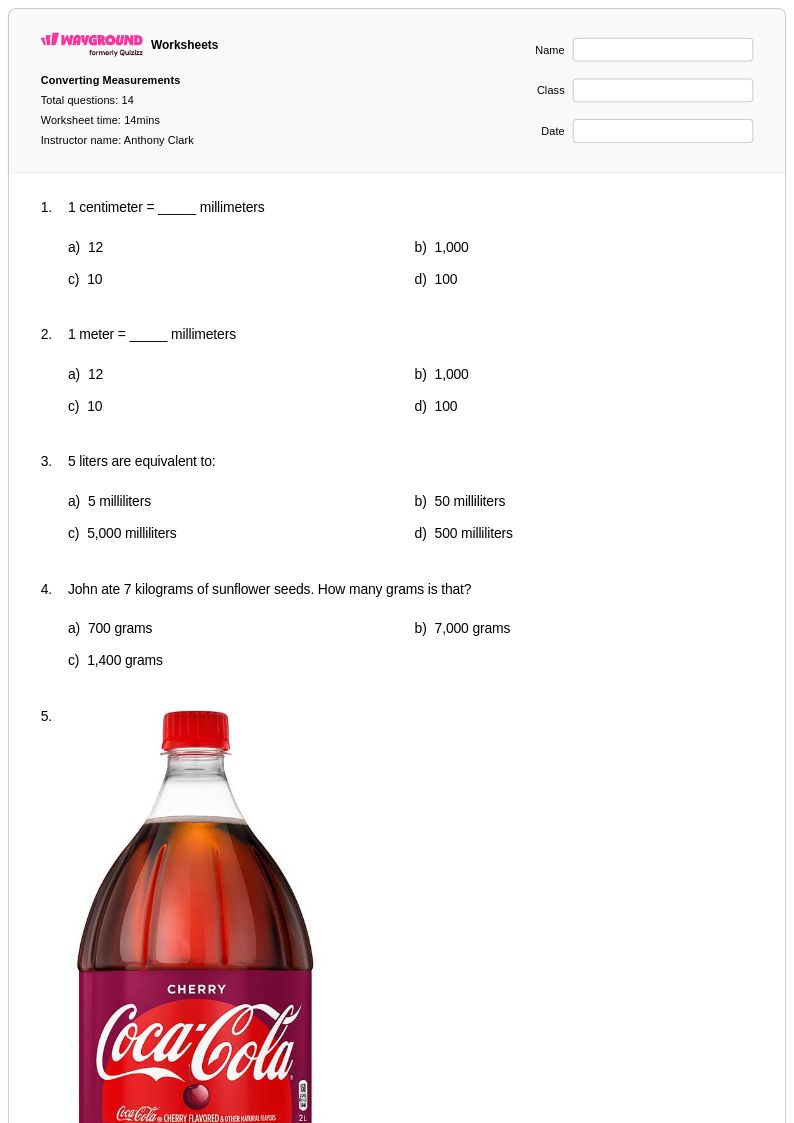
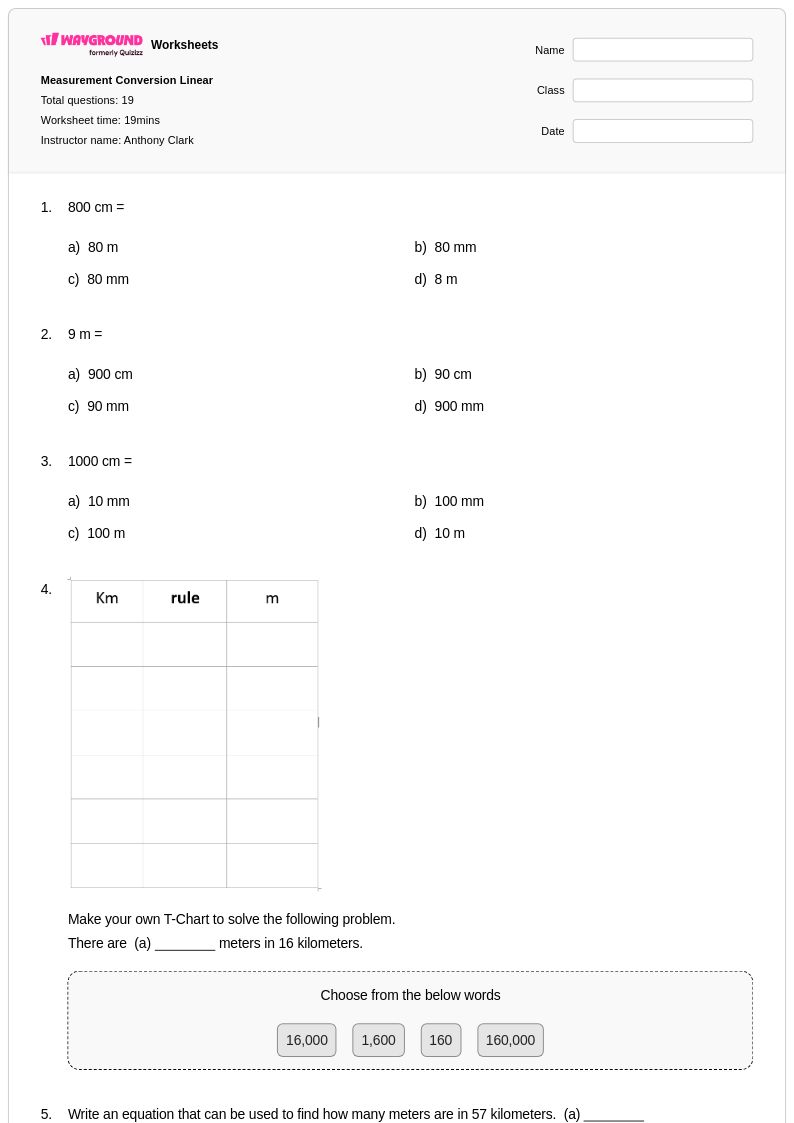
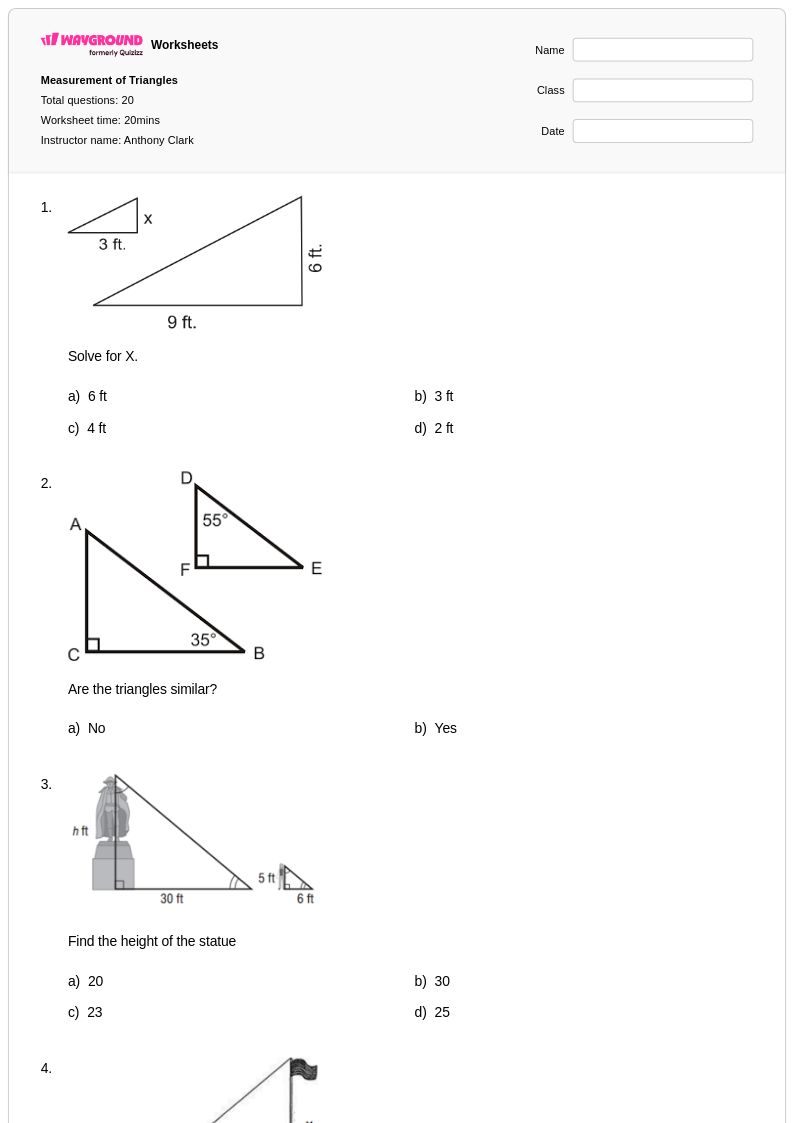
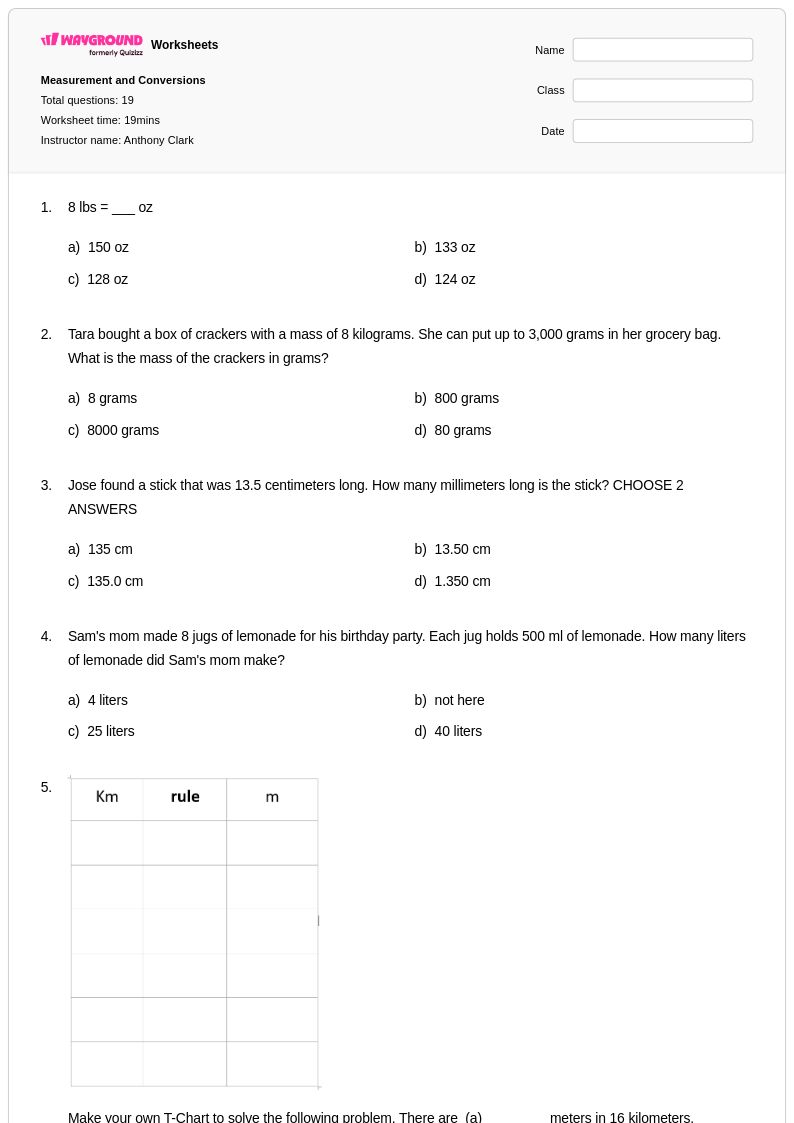
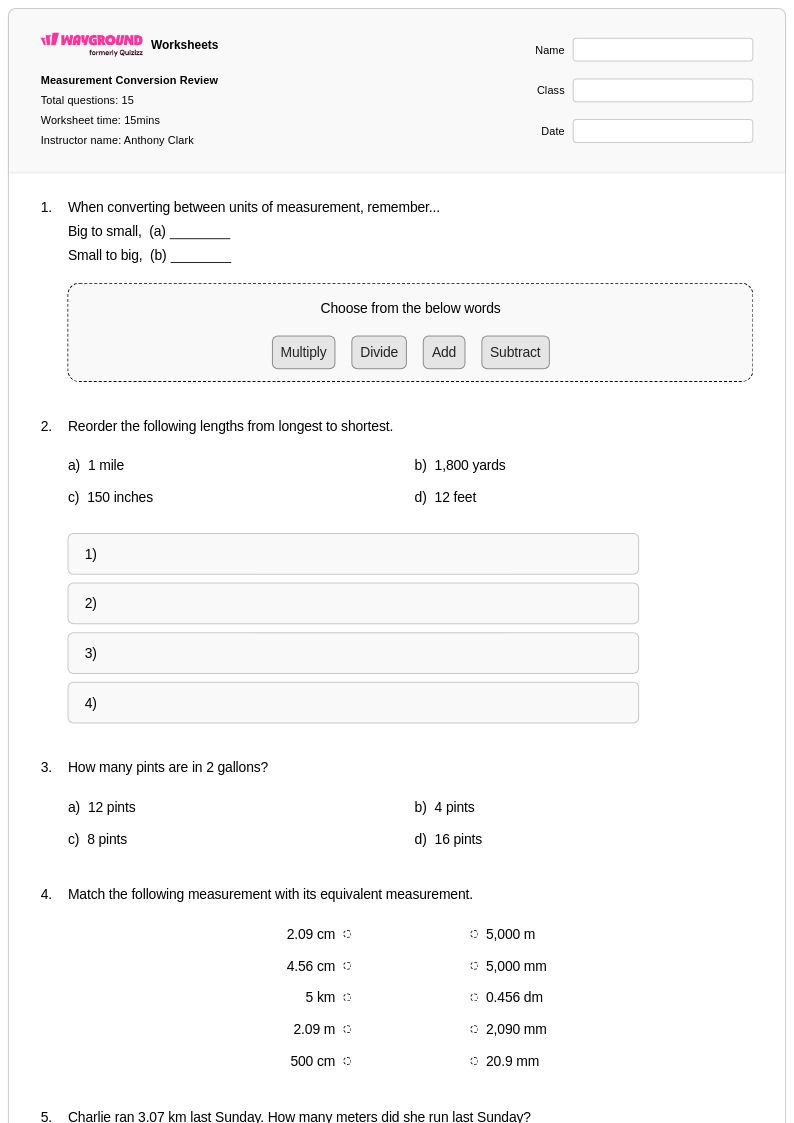
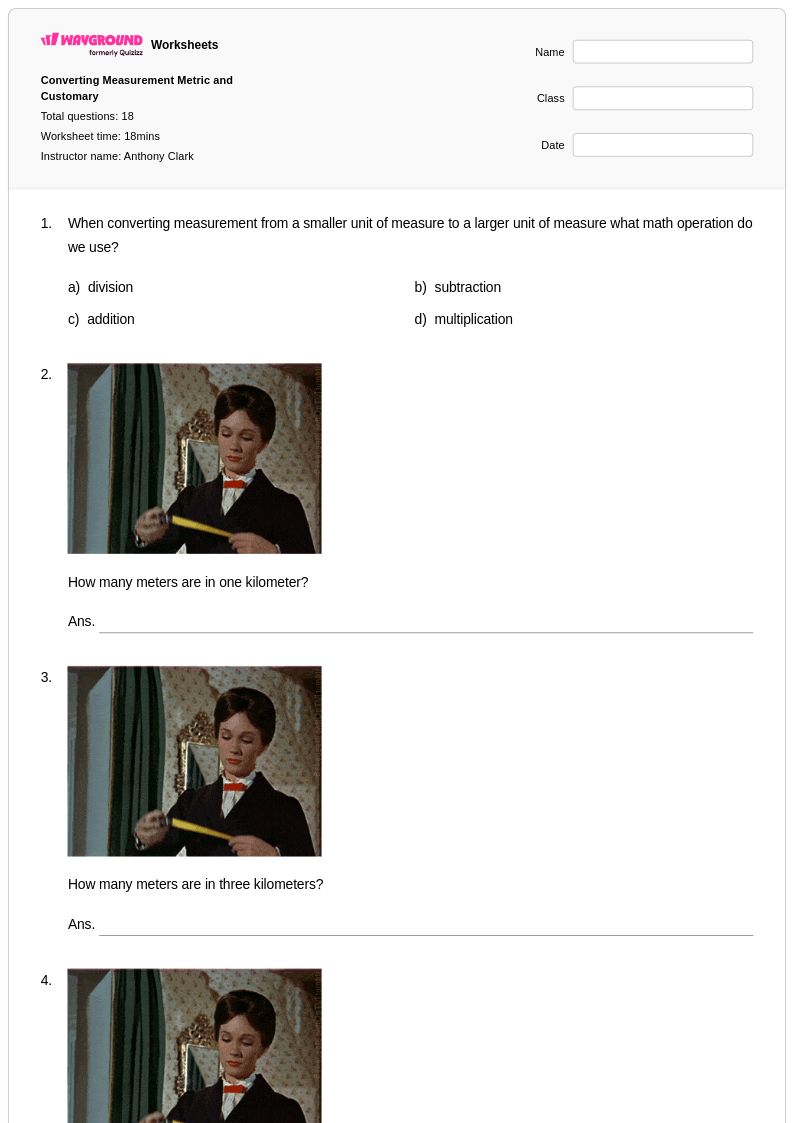
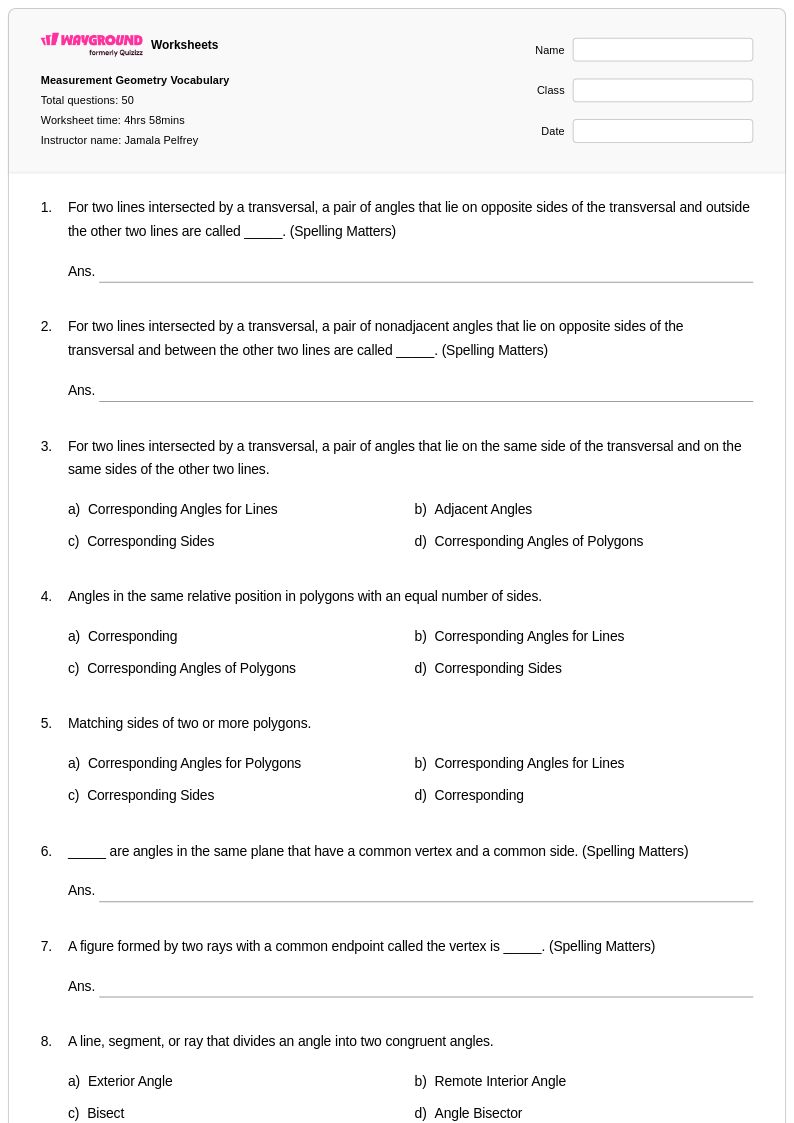
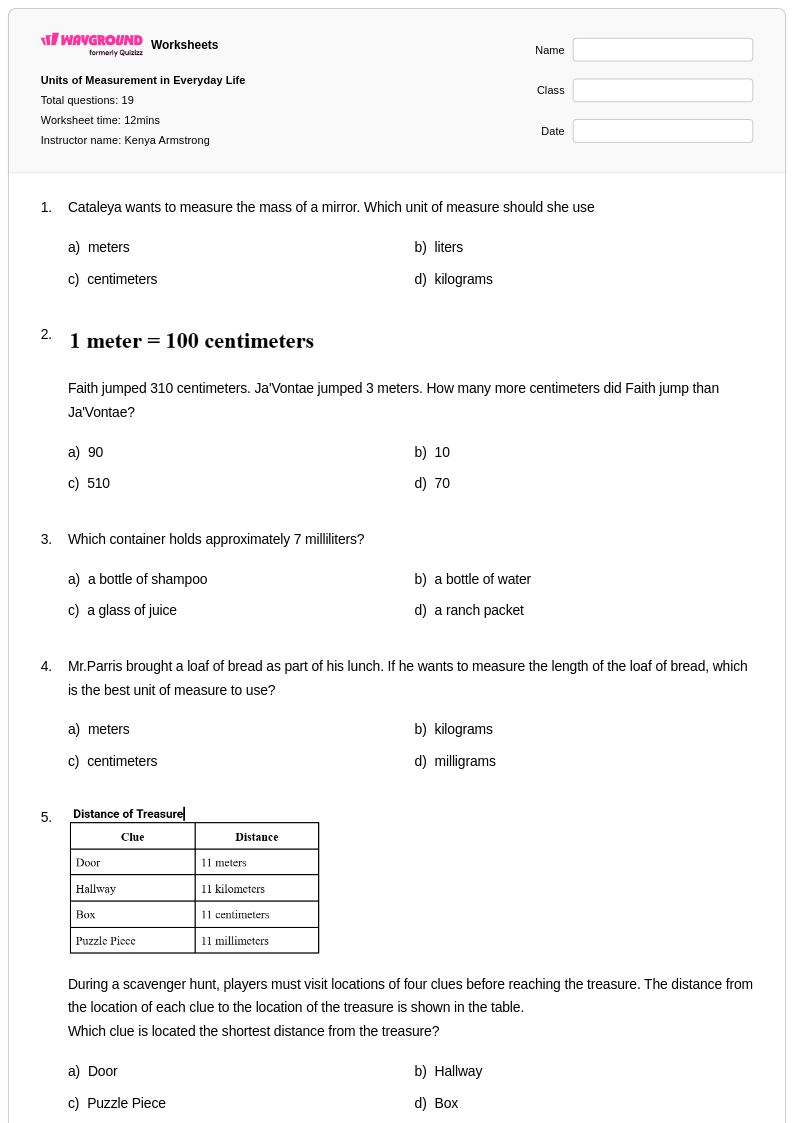
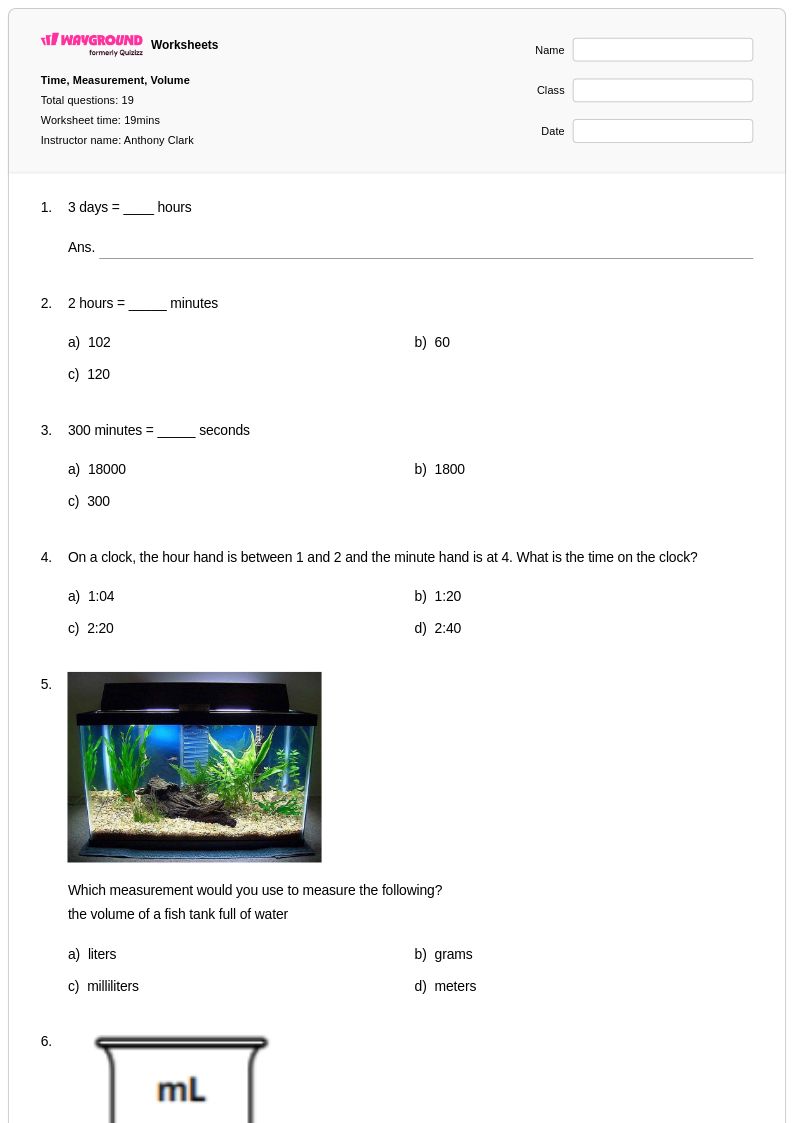
Grade 9 measurement worksheets from Wayground offer comprehensive printables and practice problems covering area, volume, and unit conversions, complete with answer keys to help students master essential mathematical measurement skills.
Explore printable Measurement worksheets for Grade 9
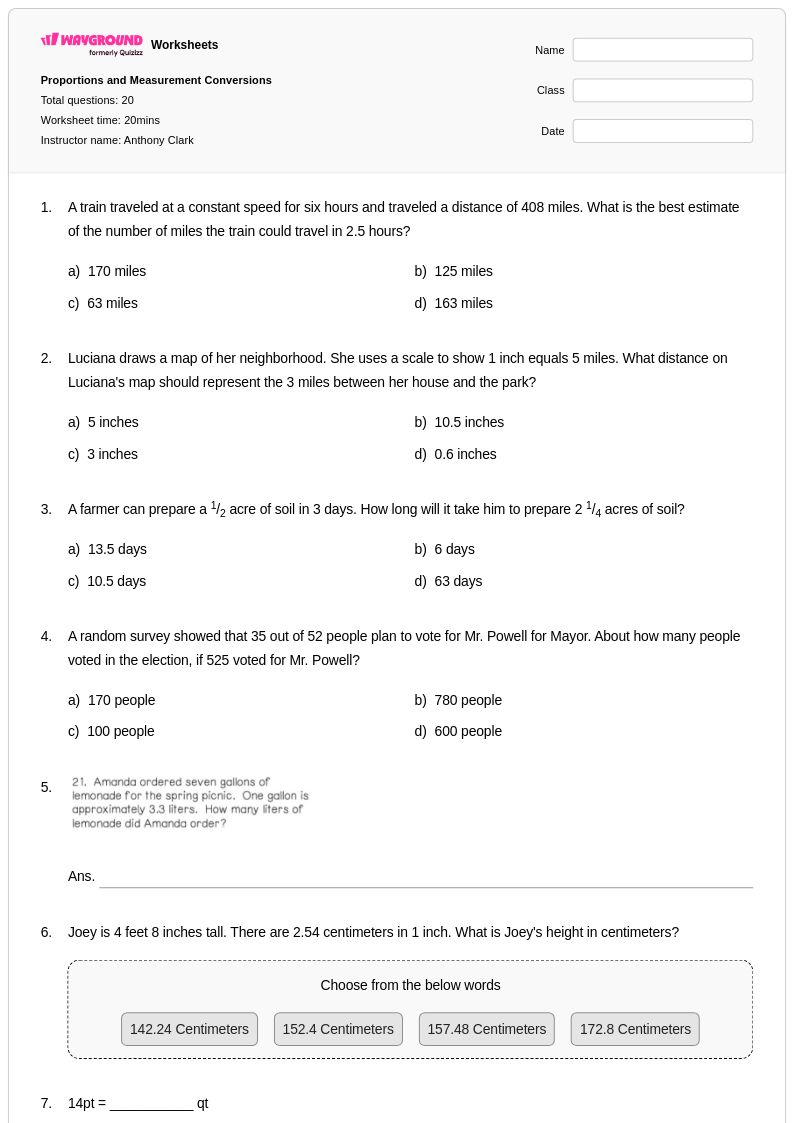
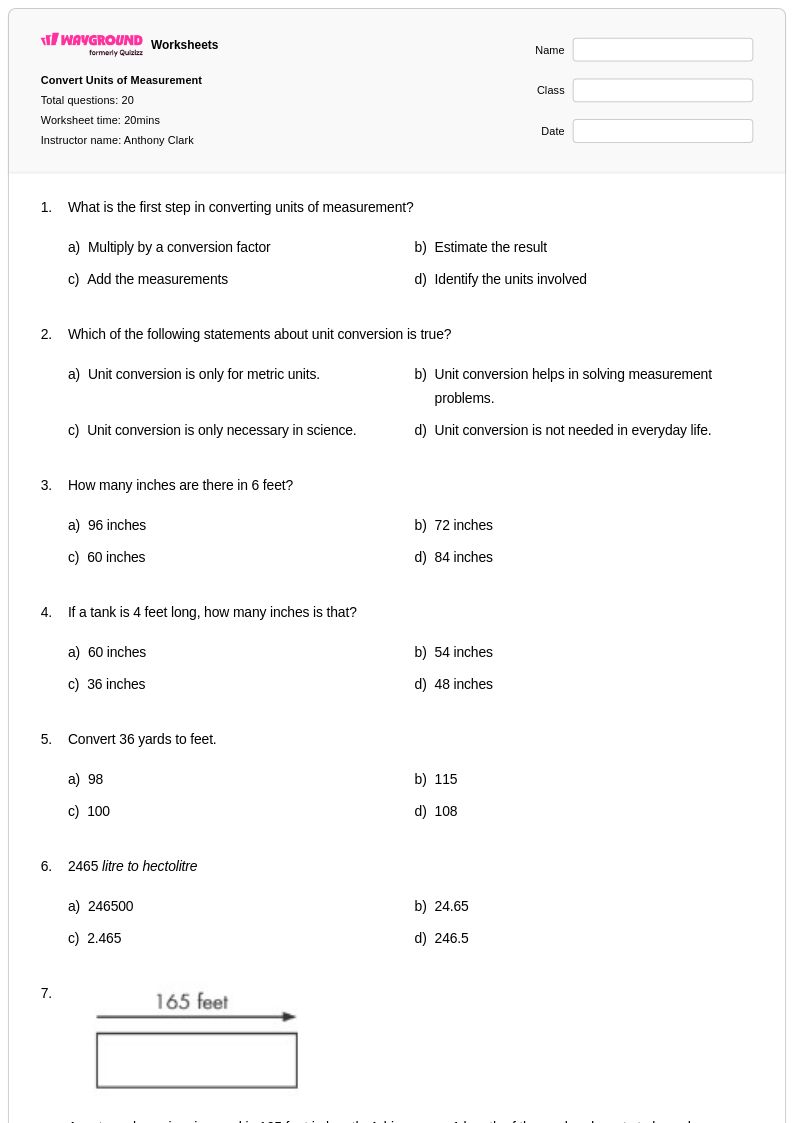
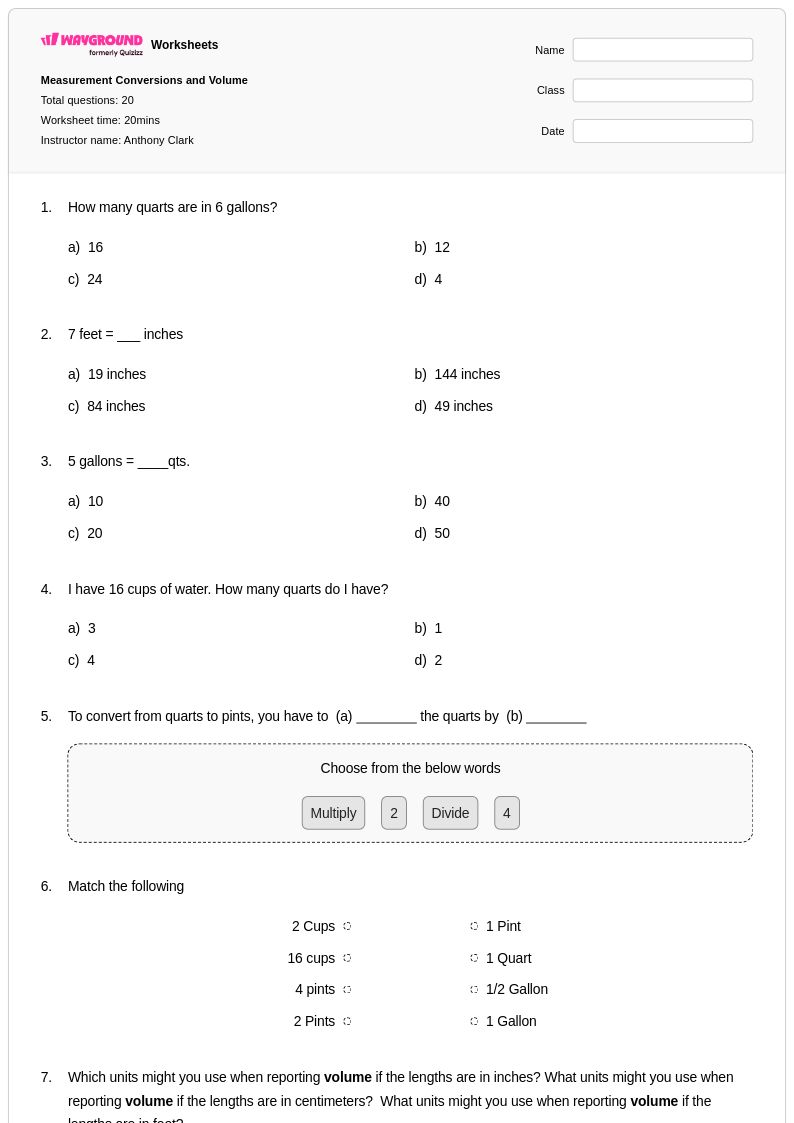
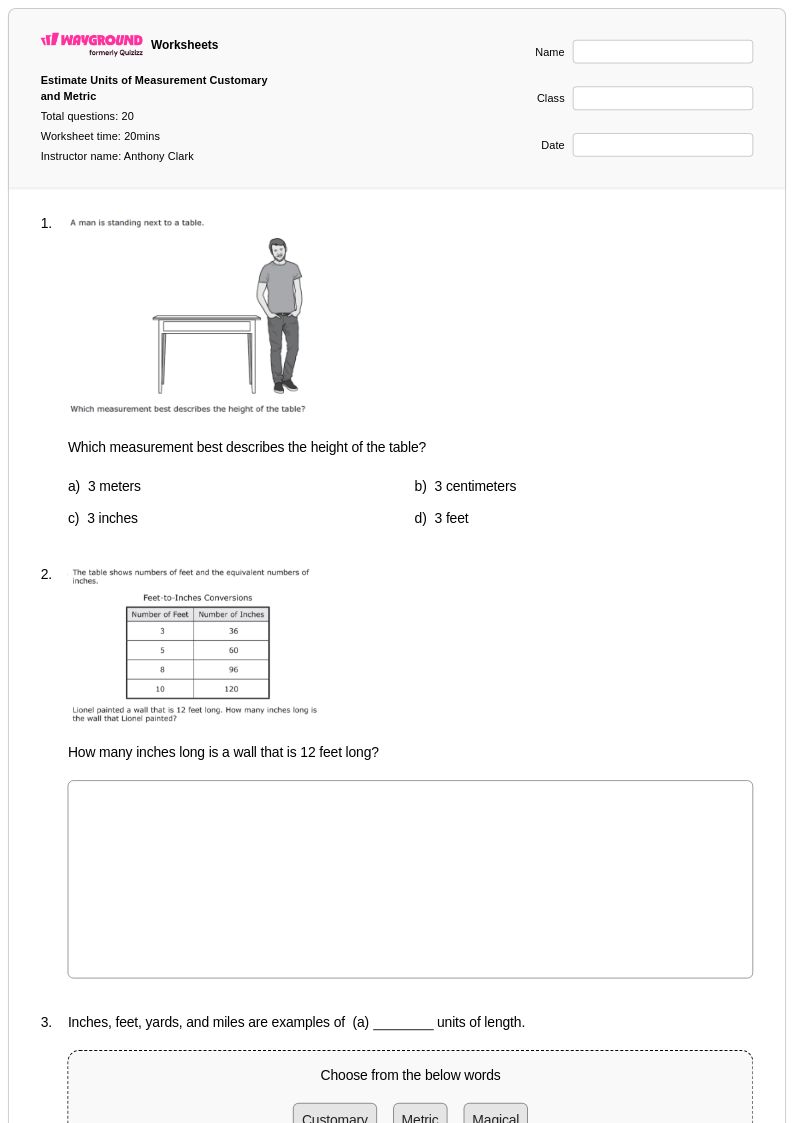
Grade 9 measurement worksheets available through Wayground (formerly Quizizz) provide comprehensive coverage of advanced measurement concepts that build upon foundational skills while introducing more sophisticated applications. These expertly designed resources strengthen students' abilities to work with complex units of measurement, including conversions between metric and imperial systems, calculations involving area and volume of irregular shapes, and real-world problem solving scenarios that require multiple measurement operations. The collection includes practice problems that challenge students to apply measurement principles in contexts such as architecture, engineering, and scientific applications, with each worksheet featuring detailed answer keys that support both independent study and classroom instruction. Teachers can access these free printables in convenient pdf format, making it easy to distribute materials for homework, assessment, or targeted skill practice.
Wayground's extensive library draws from millions of teacher-created resources specifically designed to support Grade 9 measurement instruction across diverse classroom needs and learning objectives. The platform's robust search and filtering capabilities allow educators to quickly locate worksheets aligned with specific curriculum standards, whether focusing on geometric measurements, unit conversions, or applied measurement problems in scientific contexts. Teachers benefit from built-in differentiation tools that help them customize worksheet difficulty levels and problem types to meet individual student needs, supporting both remediation for struggling learners and enrichment opportunities for advanced students. The flexible format options, including both printable pdf versions and interactive digital worksheets, streamline lesson planning while providing multiple pathways for students to engage with measurement concepts through structured practice and skill development activities.
FAQs
How do I teach measurement conversions to elementary and middle school students?
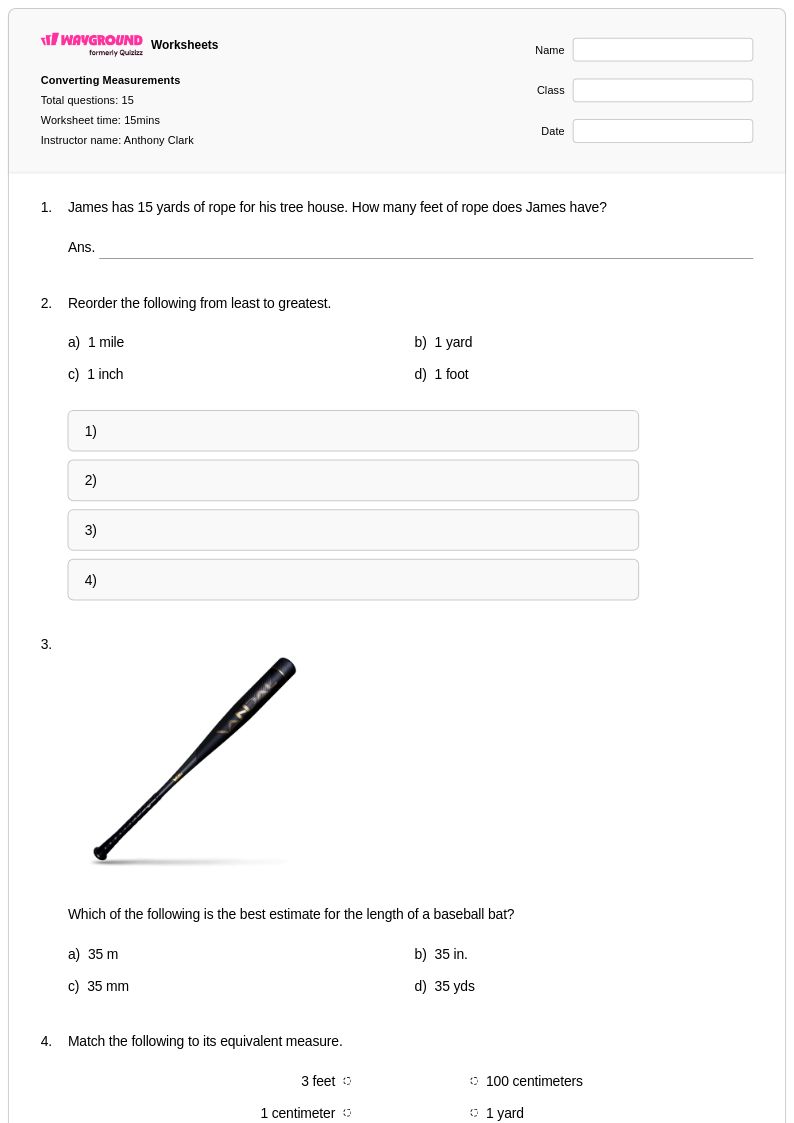
Start by grounding conversions in tangible, real-world contexts — comparing inches to feet using a ruler students can hold, or liters to milliliters using classroom containers. Teach one unit system at a time before introducing cross-system comparisons, and use conversion charts as scaffolds before requiring students to memorize relationships. Conversion graphs and visual anchor charts help students see proportional relationships rather than treating conversions as isolated memorization tasks. Once students grasp the logic of scaling up and scaling down, multi-step conversion problems become far more approachable.
What exercises help students practice reading rulers, tape measures, and dial calipers accurately?
Students benefit most from repeated, low-stakes practice with labeled diagrams of measurement tools before handling physical instruments. Worksheets that show ruler close-ups and ask students to identify measurements to the nearest quarter inch, half inch, or millimeter are particularly effective for building precision. Reading a tape measure and dial caliper require additional practice because the scales are denser and less intuitive — targeted worksheets that isolate each tool reduce confusion. Pairing tool-reading practice with estimation activities helps students develop number sense around length and builds self-checking habits.
What are the most common mistakes students make when converting between customary and metric units?
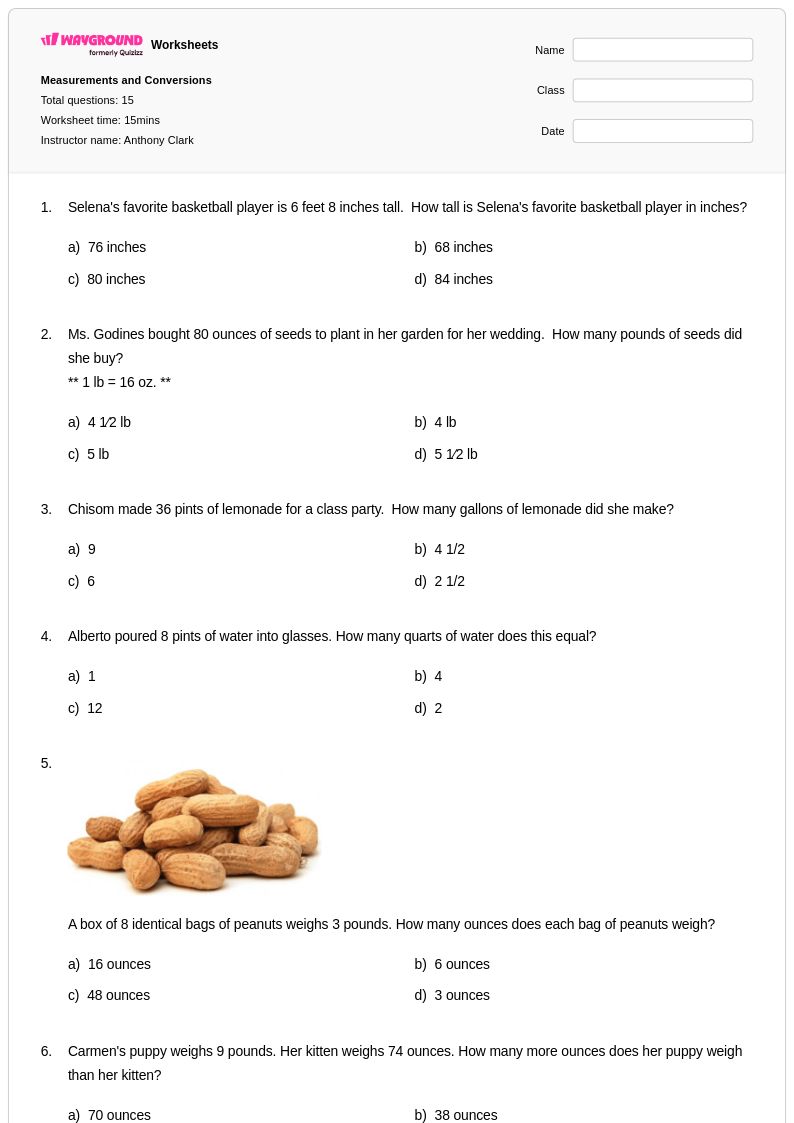
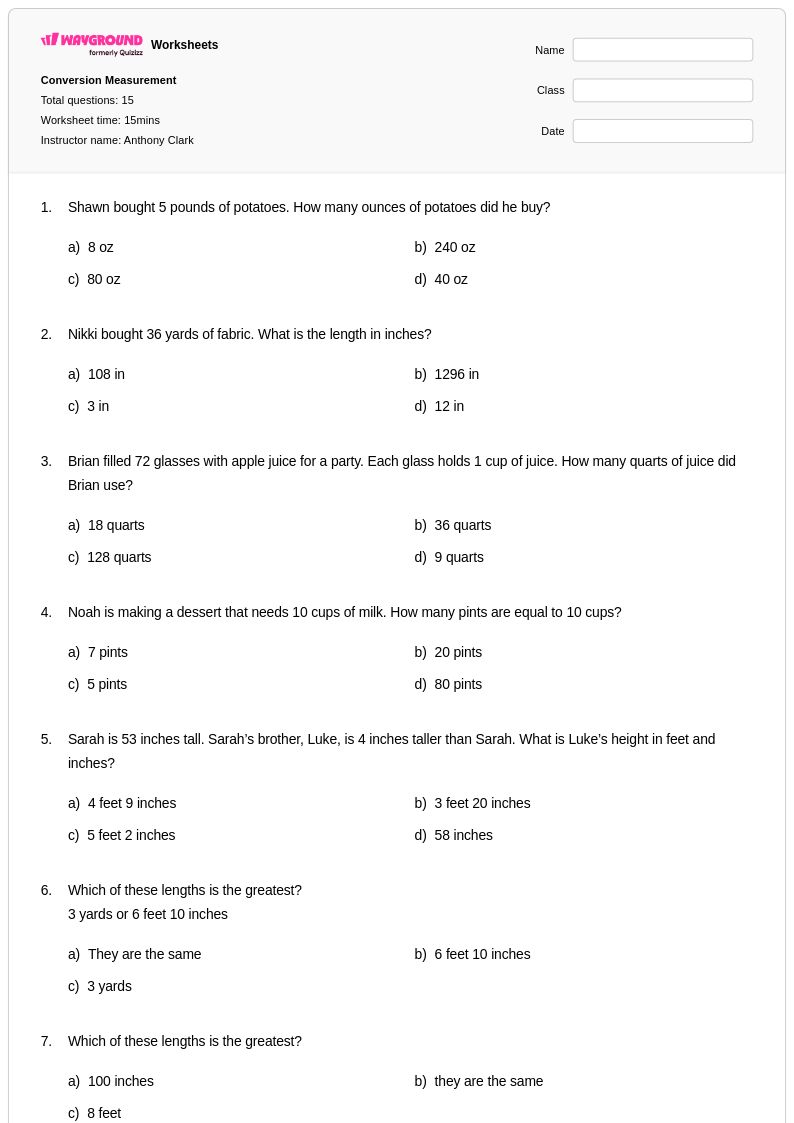
The most frequent error is multiplying when students should divide, or vice versa — students often apply conversion factors in the wrong direction because they haven't internalized which unit is larger. Mixing up unit systems is also common, such as applying metric prefixes to customary units or confusing fluid ounces with ounces of mass. Students frequently forget to carry the correct unit label through multi-step problems, leading to dimensionally inconsistent answers. Targeted practice with unit analysis (dimensional analysis) and clearly labeled conversion problems helps students build procedural accuracy alongside conceptual understanding.
How do I help students understand the difference between mass and weight in a measurement unit?
Mass measures the amount of matter in an object and remains constant regardless of location, while weight measures the gravitational force acting on an object and can vary. Many students use these terms interchangeably, which creates confusion when they encounter problems involving grams versus newtons or metric versus customary weight comparisons. Anchor the distinction with a concrete example — an astronaut's mass stays the same on the moon, but their weight decreases because gravity is weaker. Once students understand the conceptual difference, mass conversion and weight comparison worksheets become more meaningful rather than purely procedural.
How do I use Wayground's measurement worksheets in my classroom?
Wayground's measurement worksheets are available as printable PDFs for traditional classroom use and in digital formats for technology-integrated environments, so they work whether students are at desks or on devices. Teachers can also host worksheets as a quiz directly on Wayground, giving students an interactive experience while automatically collecting responses. All worksheets include answer keys, which reduces grading time significantly across a topic as broad as measurement. Wayground also supports individual student accommodations — such as read aloud, extended time, and reduced answer choices — which are especially useful for measurement topics that involve dense visual content like reading scales or interpreting conversion graphs.
How do I differentiate measurement worksheets for students at different skill levels in the same class?
Start by identifying which measurement sub-skills each student has mastered — students may fluently read a ruler but struggle with metric conversion, so a single worksheet level rarely fits the whole class. On Wayground, teachers can apply student-level accommodations such as reduced answer choices to lower cognitive load for struggling learners, or extended time for students who need additional processing support. For advanced students, multi-step problems involving speed, distance, and time or area and volume calculations provide appropriate challenge. Grouping students by targeted skill gaps rather than general ability allows more precise remediation and enrichment within a single lesson.
What measurement skills should students master before moving on to more advanced math topics like geometry or physics?
Before advancing to geometry, students should confidently measure length using both customary and metric units, convert within and between unit systems, and calculate area and perimeter accurately. Volume and capacity concepts are foundational for both geometry and early science work, while an understanding of mass and weight prepares students for physics and chemistry applications. Speed, distance, and time problems bridge measurement with algebraic reasoning, making them a critical transition skill. Students who struggle with unit conversion or tool reading at this stage will face compounding difficulties in topics that assume measurement fluency.